You do not need a gym to build stronger, more defined arms. With a pair of dumbbells and a little floor space, you can target your biceps, triceps, and shoulders effectively at home. This workout covers eight exercises, from warm-up to cool-down, plus a weekly schedule and tips to keep your form safe and your progress steady.
Key Takeaways
- Choose a dumbbell weight that lets you complete 8 to 15 reps with good form.
- Do arm workouts 2 to 3 times per week on non-consecutive days.
- Rest 30 to 90 seconds between sets for strength and muscle growth.
- Warm up with arm circles and cool down with a cross-body stretch.
- Expect visible results in 4 to 8 weeks with consistent effort and nutrition.
1. 1. Warm-Up: Arm Circles
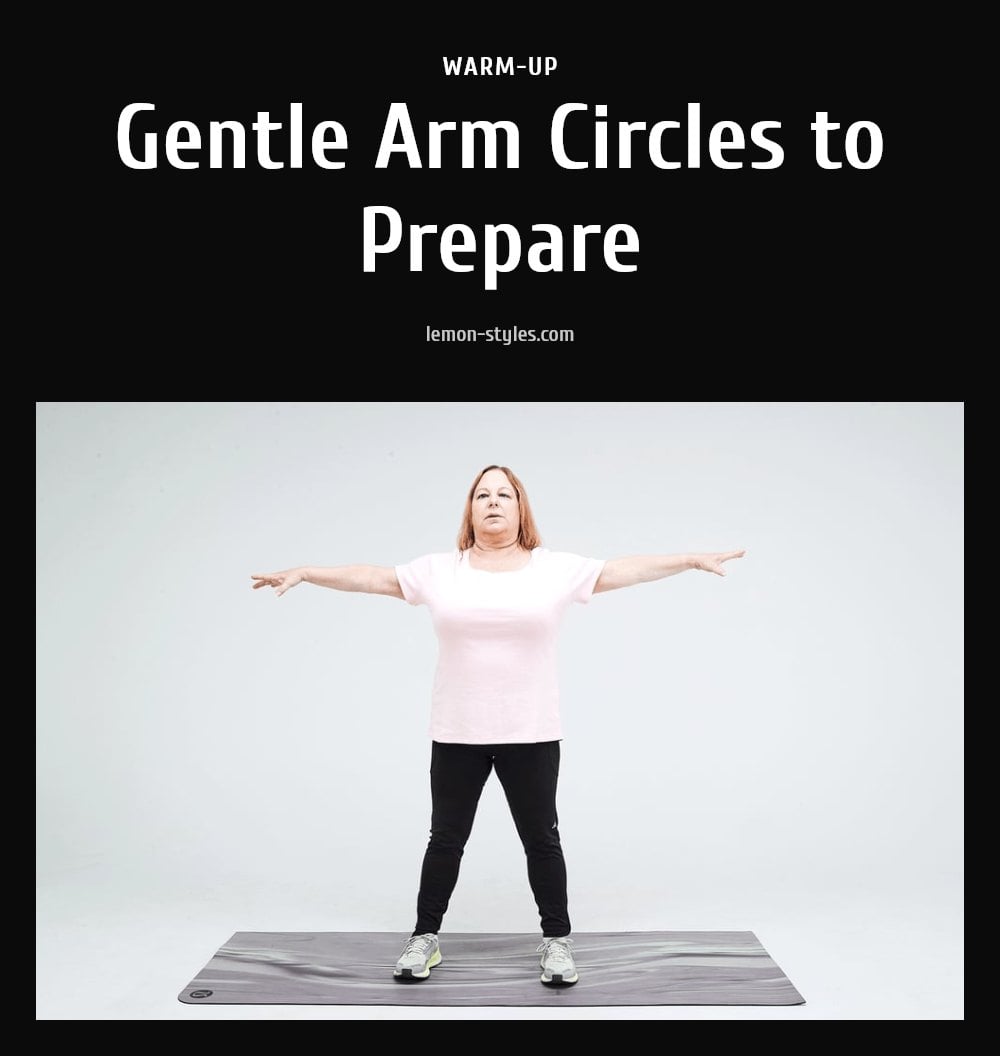
Stand tall with your feet shoulder-width apart and extend your arms straight out to your sides at shoulder height. Start with small forward circles, then gradually make them bigger as your shoulders loosen up. Keep the movement controlled rather than fast, so your shoulder joints and arm muscles are ready for the work ahead.
- Sets and reps: 10-15 circles forward, then 10-15 backward.
- Form cue: Stay tall and keep your ribs down instead of arching your back as the circles grow.
- Make it easier or harder: Shrink the circles if you feel a pinch, or widen them to shoulder height for more range.
2. 2. Bicep Curls
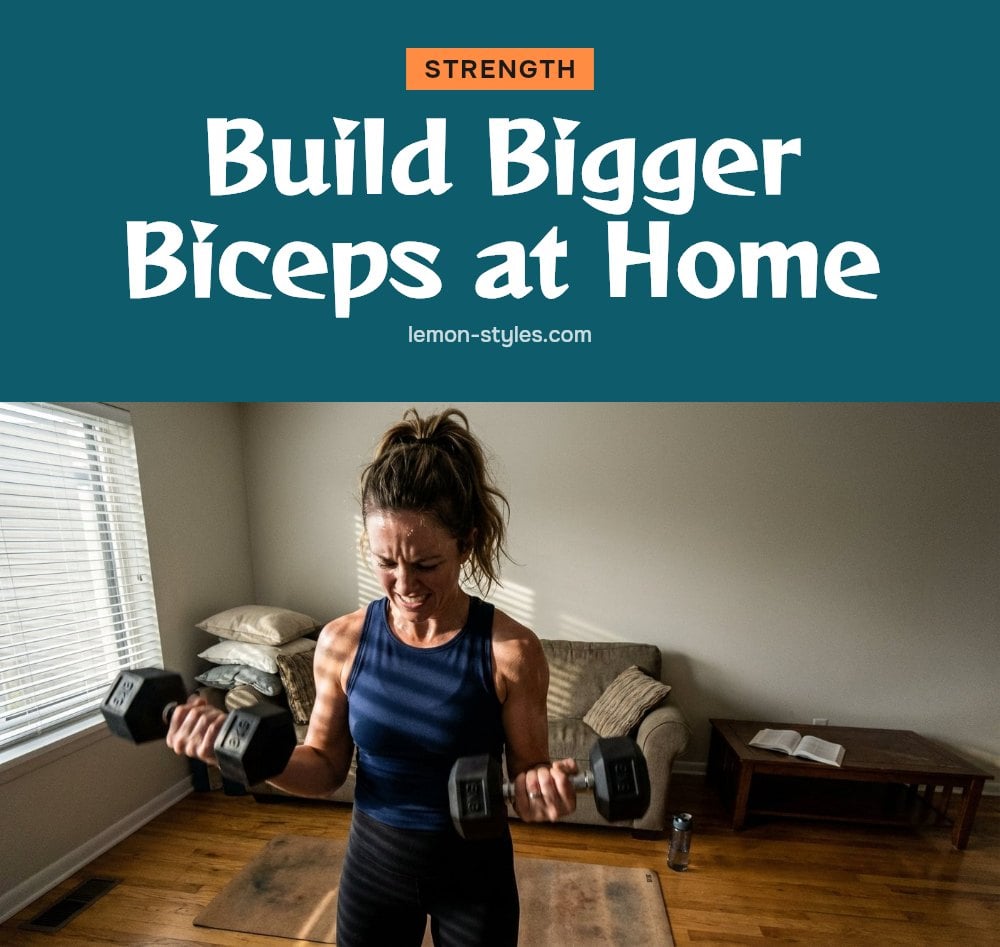
Stand or sit with a dumbbell in each hand, palms facing forward and arms extended down by your sides. Keeping your elbows close to your torso, curl the weights up toward your shoulders and squeeze your biceps at the top. Lower the dumbbells slowly back to the start with control.
- Sets and reps: 3 sets of 10-12 repetitions.
- Form cue: Pin your elbows to your ribs so only the forearms move.
- Make it easier or harder: Drop to a lighter pair if you have to swing, or add a slow three-count on the way down.
My tip: Avoid swinging the weights and let your biceps do the work.
3. 3. Overhead Triceps Extension
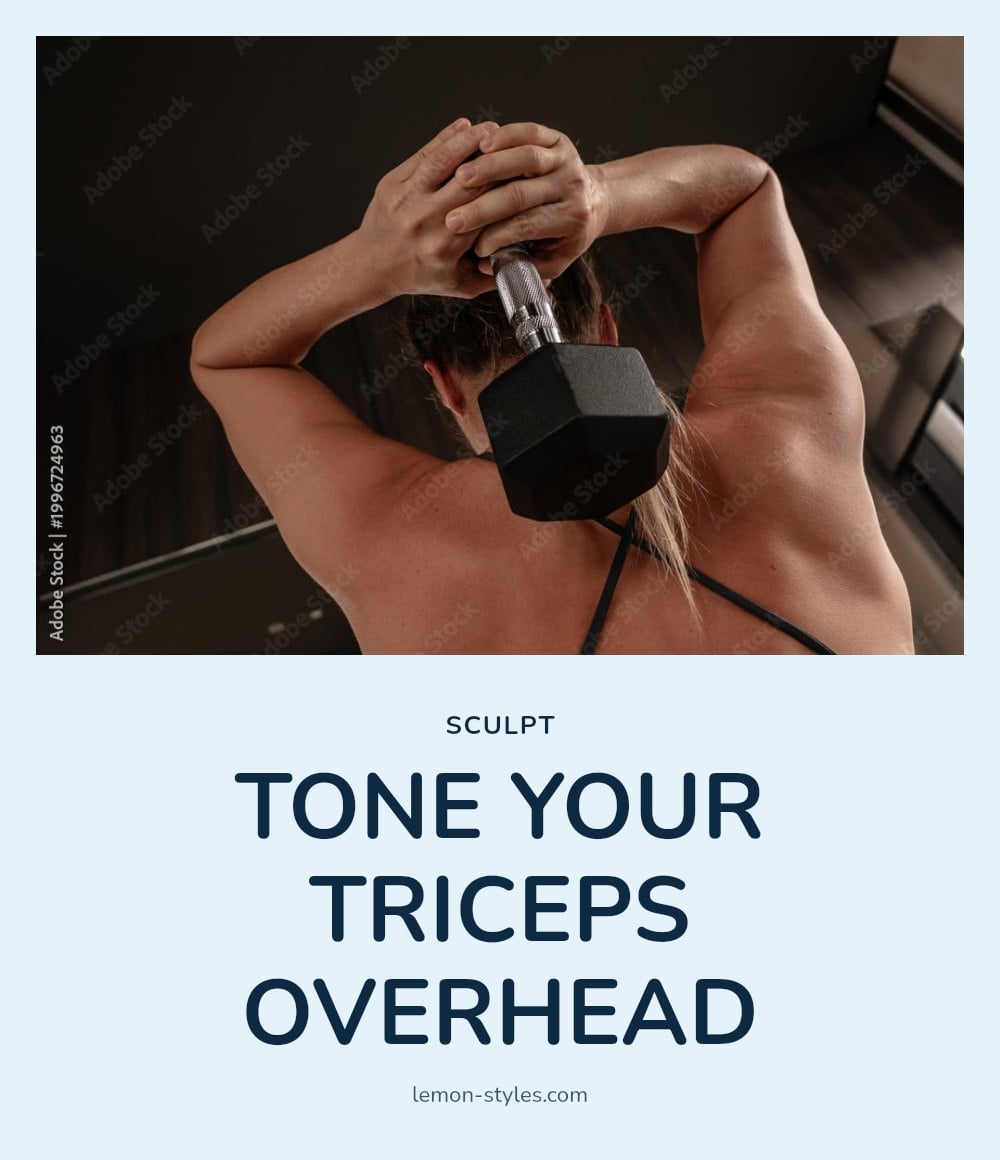
Hold one dumbbell with both hands, gripping one end, and press it overhead. Keeping your elbows pointing forward and close to your head, slowly lower the dumbbell behind your head by bending your elbows. Extend your arms to push it back up, feeling the stretch and contraction in your triceps.
- Sets and reps: 3 sets of 10-12 repetitions.
- Form cue: Keep your elbows narrow and pointing forward rather than flaring out to the sides.
- Make it easier or harder: Use a lighter weight or sit on a chair with back support; go heavier only if your elbows stay tucked.
My tip: Keep your core engaged to stabilize your body and prevent your back from arching.
4. 4. Hammer Curls
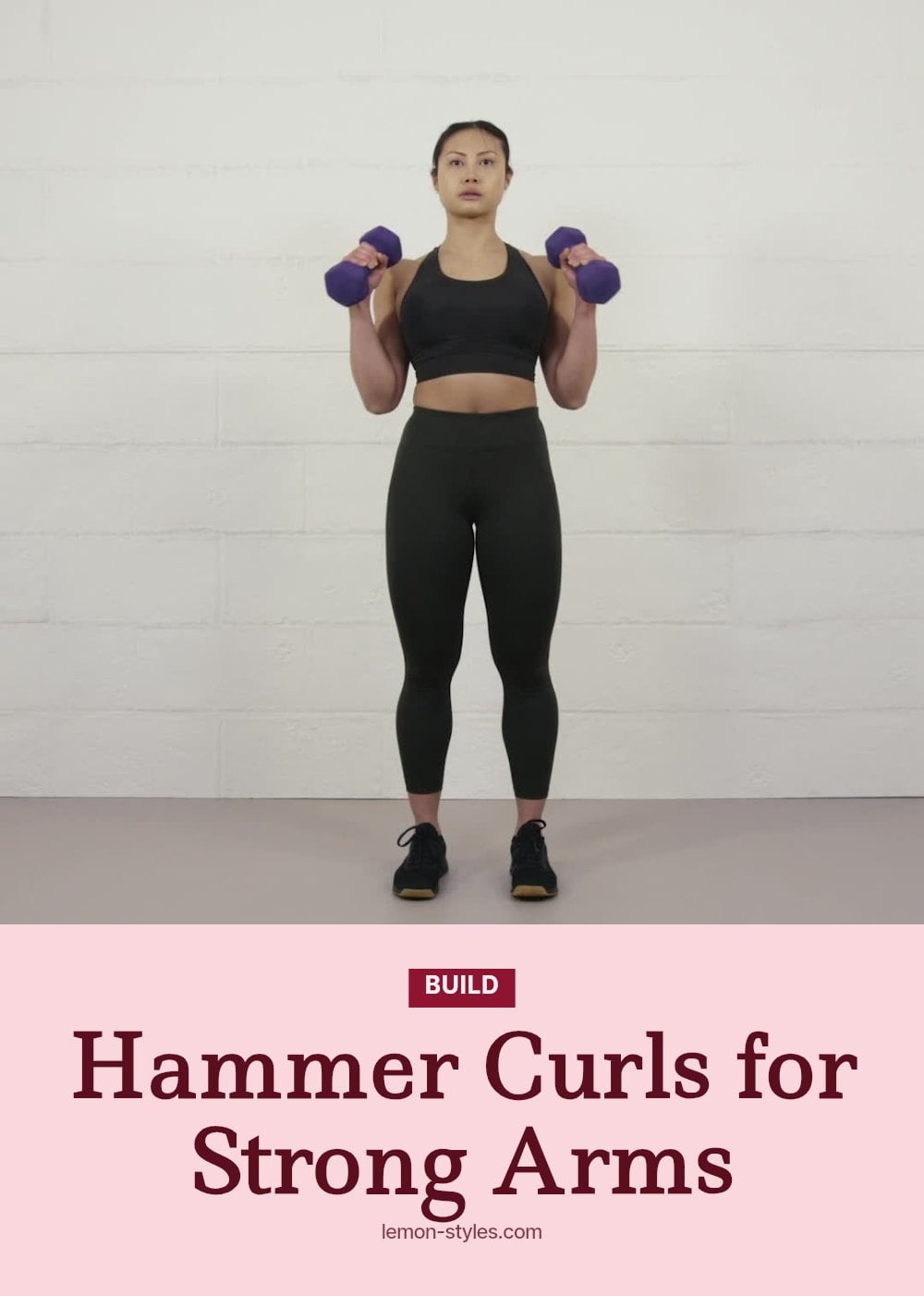
Hold a dumbbell in each hand with a neutral grip, palms facing each other, and arms extended down by your sides. Curl the dumbbells up toward your shoulders, keeping your palms facing each other the whole way. Lower the weights slowly back to the start with control.
- Sets and reps: 3 sets of 10-12 repetitions.
- Form cue: Keep your wrists straight and your elbows still, so the forearms do the lifting.
- Make it easier or harder: Start with lighter dumbbells than your regular curls, or pause for a second at the top.
This variation targets both the biceps and forearms, giving you a slightly different muscle engagement than traditional curls.
5. 5. Triceps Kickbacks
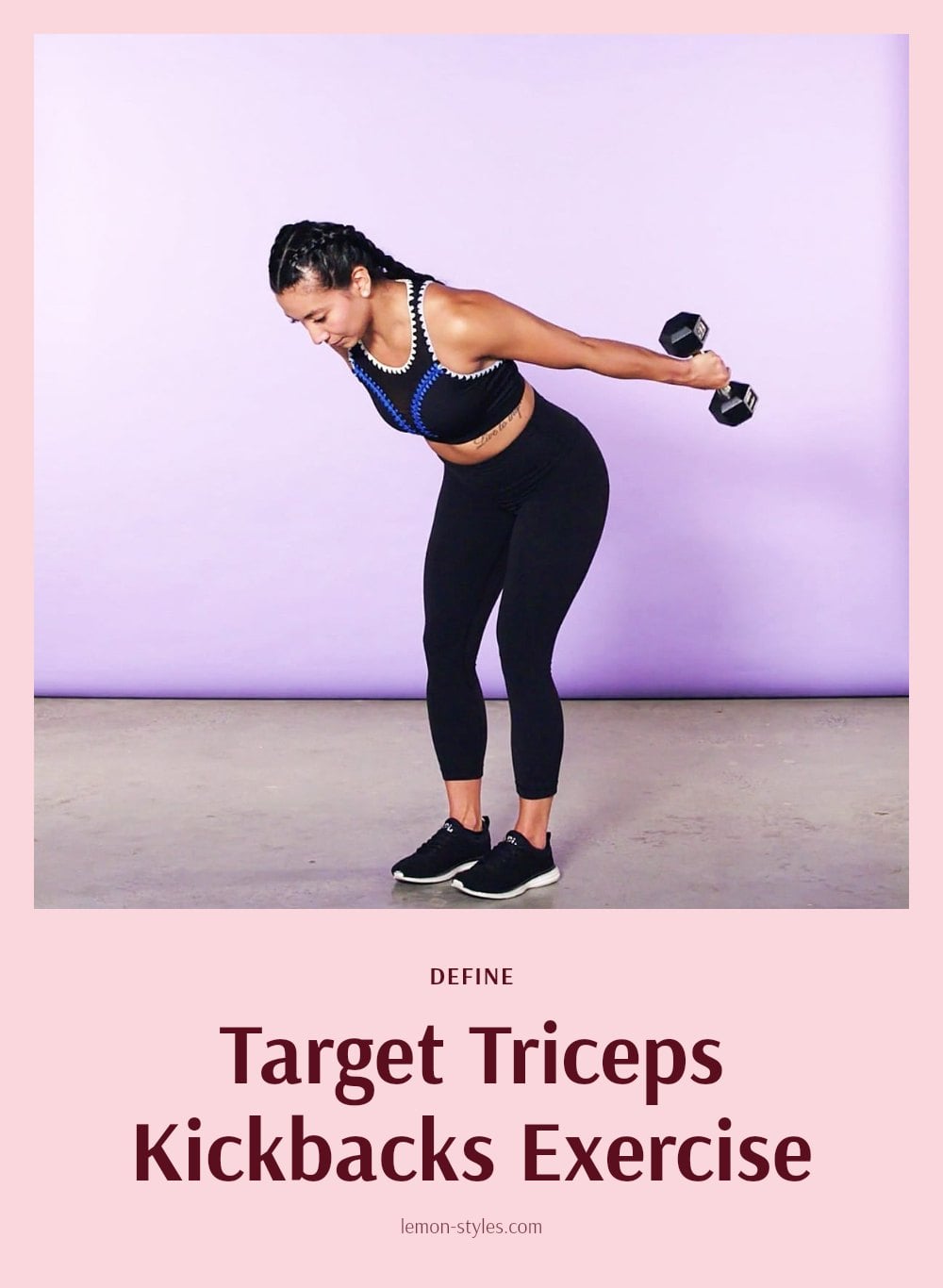
Hold a dumbbell in each hand and hinge forward at your hips, keeping your back straight and core tight, until your torso is almost parallel to the floor. Keep your elbows tucked close to your body and bent at a 90-degree angle, with your upper arms parallel to the floor. Extend your forearms straight back, squeezing your triceps at the top, then slowly return to the starting position.
- Sets and reps: 3 sets of 12-15 repetitions.
- Form cue: Focus on isolating the triceps and avoid swinging your entire arm.
- Make it easier or harder: Use lighter dumbbells for better control, or increase weight once you can complete 15 reps with good form.
6. 6. Dumbbell Shoulder Press
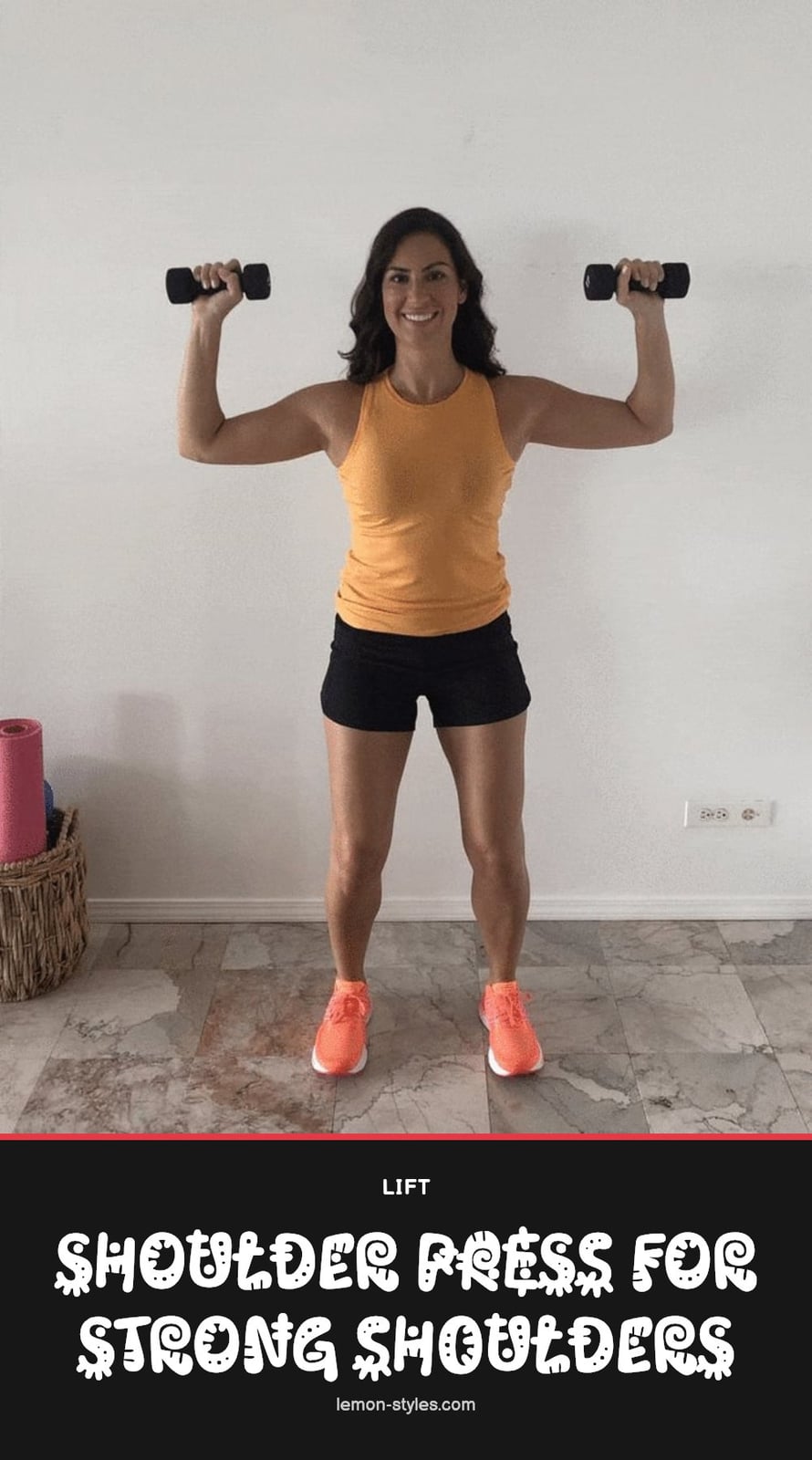
Sit or stand with a dumbbell in each hand, resting them on your shoulders with palms facing forward or toward each other. Press the dumbbells straight overhead until your arms are fully extended, but do not lock your elbows. Slowly lower them back to the starting position on your shoulders.
- Sets and reps: 3 sets of 8-10 repetitions.
- Form cue: Keep your core engaged to prevent arching your back.
- Make it easier or harder: Use lighter weights to master the motion, or add heavier dumbbells once you can press smoothly.
7. 7. Lateral Raises
Stand with a dumbbell in each hand, arms extended down by your sides and palms facing your body. Keeping a slight bend in your elbows, raise the dumbbells out to your sides until your arms are parallel to the floor, forming a ‘T’ shape. Slowly lower them back down with control.
- Sets and reps: 3 sets of 12-15 repetitions.
- Form cue: Imagine pouring water out of a pitcher at the top of the movement to engage your side deltoids even more.
- Make it easier or harder: Use lighter dumbbells to avoid swinging, or increase weight once you can keep control through all reps.
8. 8. Cool-Down: Cross-Body Arm Stretch
Extend one arm straight out in front of you. Use your other hand to gently pull the extended arm across your body toward your opposite shoulder. Hold the stretch for 20-30 seconds, feeling it in your shoulder and triceps, then repeat on the other side.
- Time: 20-30 seconds per side.
- Form cue: Keep your shoulders relaxed and avoid pulling too hard.
- Make it easier or harder: Shorten the hold if you feel discomfort, or deepen the stretch by pulling slightly more once your muscles warm up.
9. Your Weekly Arm Workout Schedule
This sample schedule helps you integrate arm workouts into your week, allowing for adequate rest and recovery. Remember, consistency is key to seeing results.
| Day | Activity | Notes |
|---|---|---|
| Monday | Full arm workout | Complete exercises 1-8 |
| Tuesday | Rest or light cardio | Walk, stretch, or yoga |
| Wednesday | Full arm workout | Focus on controlled form |
| Thursday | Rest or active recovery | Gentle movement, foam rolling |
| Friday | Full arm workout | Try increasing weight or reps |
| Saturday | Rest or full-body activity | Swim, hike, or dance |
| Sunday | Complete rest | Allow muscles to recover fully |
Adjust the schedule based on your energy levels and other weekly commitments. Listen to your body and skip a workout if you feel excessive soreness or fatigue.
10. Common Arm Workout Mistakes to Avoid
Using Momentum, Not Muscles: Many people swing the weights using their body’s momentum, especially during bicep curls or triceps extensions. Instead, choose a weight that allows you to perform the exercise slowly and with control, feeling the muscle work through the entire range of motion.
Neglecting Triceps: It’s easy to focus solely on biceps, but your triceps make up two-thirds of your upper arm mass. Skipping triceps exercises can lead to imbalanced arm development. Always include a variety of exercises that target both biceps and triceps for balanced strength and aesthetics.
Skipping Warm-Up and Cool-Down: Jumping straight into heavy lifting without a warm-up can increase your risk of injury, while skipping cool-down stretches can hinder flexibility and recovery. Always dedicate 5-10 minutes to dynamic warm-ups and static stretches.
Ignoring Progressive Overload: If you always lift the same weight for the same number of reps, your muscles won’t have a reason to grow stronger. Gradually increase your weight, repetitions, or sets over time to continually challenge your muscles and stimulate progress.
11. Frequently Asked Questions
Can I combine arm workouts with other exercises?
Yes, you can combine arm workouts with other exercises, but it is best to schedule them on separate days or after your main workout to avoid overtraining. For example, do arm exercises after a leg session or on a different day. Just make sure to allow at least 48 hours of rest before working the same muscles again.
What should I eat to support muscle growth?
Focus on adequate protein intake, as it supports muscle repair and growth. Include protein-rich foods in your meals and snacks, and eat a balanced diet with plenty of vegetables and whole grains. Staying hydrated is also important. For personalized nutrition advice, consult a registered dietitian.
What are the best arm exercises for women at home?
The best exercises are those that target all major arm muscles: biceps, triceps, and shoulders. This workout includes bicep curls, hammer curls, overhead triceps extensions, triceps kickbacks, shoulder presses, and lateral raises. These cover all areas and can be done with dumbbells at home.
How do I know if I’m using the right weight?
You should be able to complete 8 to 15 repetitions with good form, feeling challenged but not struggling to finish. If you can easily do more than 15 reps, the weight is too light; if you can’t complete 8 with proper form, it’s too heavy. Adjust as needed.
Is it normal to feel sore after arm workouts?
Yes, muscle soreness (DOMS) is common after new or intense workouts and typically peaks 24 to 72 hours later. It should feel like a dull ache, not sharp pain. If you experience sharp pain, dizziness, or nausea, stop and consult a healthcare professional.
12. Final Thoughts
My tip: start with a weight that feels almost too easy, master the controlled movement, and only then add a little resistance. Aim for two to three sessions a week on non-consecutive days, and give each workout your full focus for about 20 to 30 minutes. Visible changes usually start to show in 4 to 8 weeks, so stay consistent and patient. Listen to your body, take rest days when you need them, and remember that progress is built one rep at a time.
This information is for general educational purposes only and is not a substitute for professional medical advice. Always consult a healthcare professional before starting a new exercise program, especially if you have pre-existing health conditions or injuries. Stop immediately if you experience pain, dizziness, or nausea.