Dressing for work gets easier once warmth is treated as a shape, not a pile of layers. A tactile collar, a long coat, or a deeper tone can make an outfit feel grounded, but only if there is still a clear line at the shoulder, waist, or hem. That balance lets winter work outfits feel composed and comfortable without relying on visual heaviness.
Begin with the part that needs the most support – a long trouser line, a short hem, or a close-fitting knit – and build around that decision. Then adjust one quality at a time: soften the undertone, add a measured layer, or sharpen a small accent. The final outfit has more presence when its warmth comes from intention rather than from several pieces all asking to be noticed.
1. White Coat Over A Black Skirt
The long white coat creates a bright, clean outer column over a white ribbed turtleneck, while the black skirt and sheer tights give the lower half a sharp dark anchor. Gloves and a small dark bag repeat that contrast without adding new colors. The coat’s length is doing important work: it makes the shorter hem feel deliberate by framing it in a much longer, lighter line.
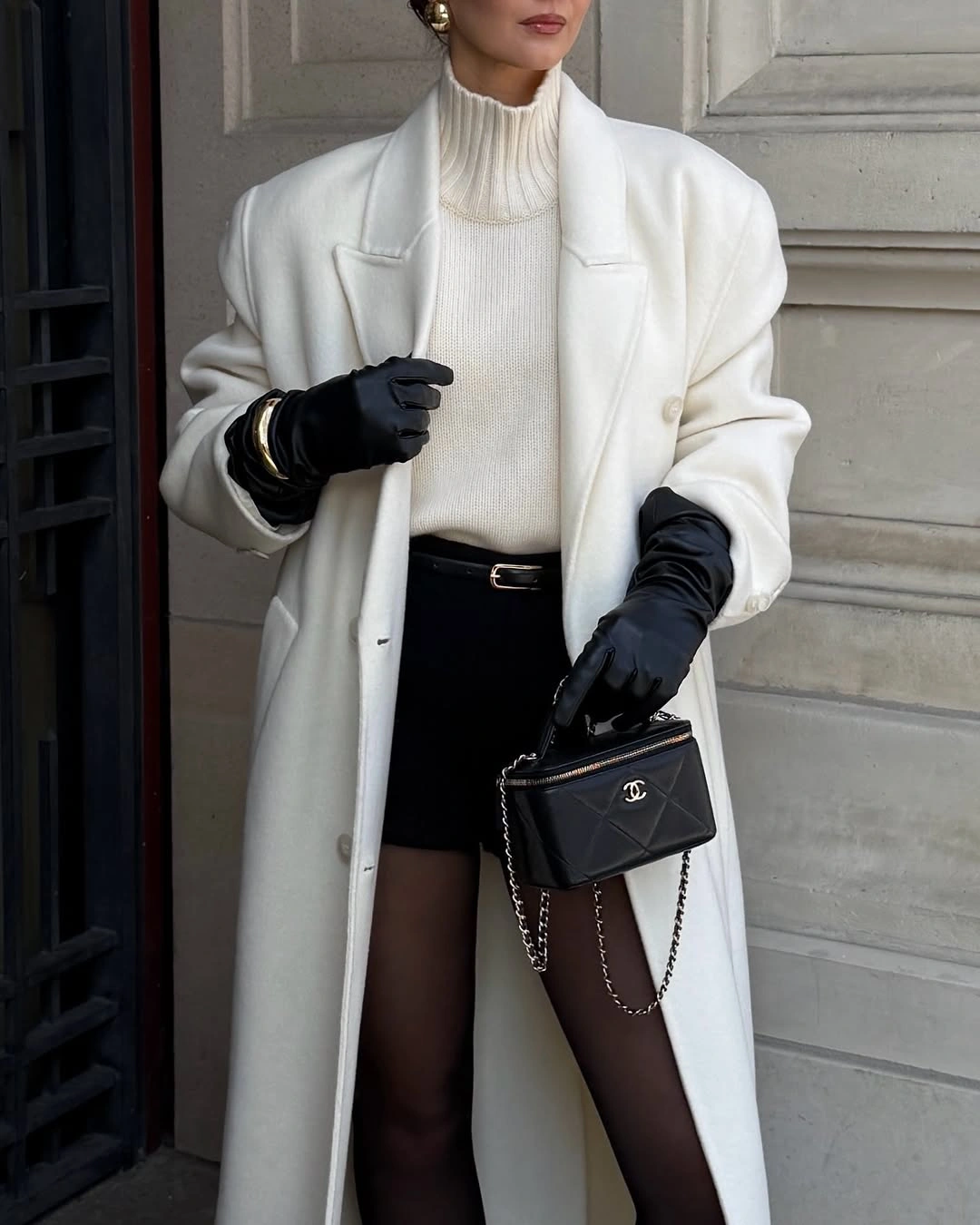
This look is useful when you want a winter layer to feel polished rather than bulky. Keep the inner top close enough to the body that it does not bunch beneath the coat, then let the dark skirt or trousers provide a narrow counterweight. A white or light gray trouser would soften the contrast, but the black lower half gives this version its crisp, graphic finish.
The main consideration is that a pale coat asks for more care around doorways, transit, and everyday surfaces. If that feels impractical, a soft stone or light gray coat can preserve the same open effect with less visible upkeep. The gloves are a small but useful detail because they connect the dark lower half to the hands without making the outfit feel over-accessorized.
2. Structured Brown Blazer With Black Trousers
A structured brown blazer gives this dark outfit warmth at the shoulders, while black trousers keep the lower line calm and uninterrupted. Sunglasses and a compact bag add a firm, tailored note, but the blazer’s subtle texture is what makes the combination feel richer than a plain black jacket. The brown is deep enough to sit beside black without looking like a separate color story.
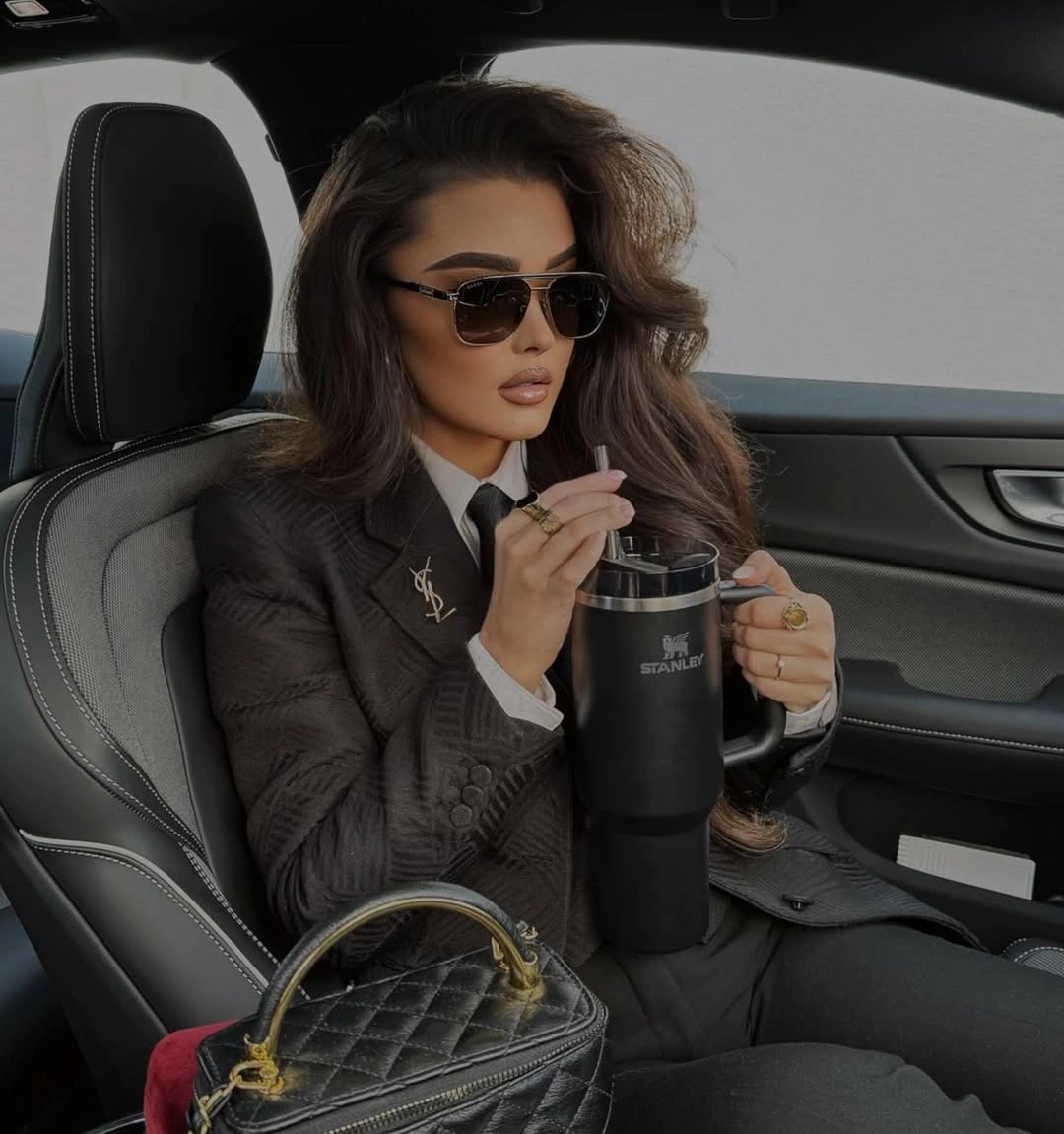
For women’s business casual dressing, this is an easy way to introduce depth without relying on a bright accent. Choose a blazer that holds its shape at the shoulder and pair it with trousers that fall straight rather than clinging through the leg. A fine black knit under the jacket would keep the line compact, while a bright white shirt would make the contrast more pronounced and less muted.
The outfit works because brown is allowed to be the only warm element. Adding tan boots, a rust scarf, and a patterned bag all at once could make the blazer lose its quiet authority. If black trousers feel too severe, charcoal is a softer alternative, but keep the overall values dark enough that the blazer remains the defining visual decision.
3. Cream Suit With A Warm Shoe Accent
The cream suit creates a long, gentle column, and the pointed orange shoes introduce a warm note right at the end of that line. A light top keeps the jacket and trousers connected without creating a high-contrast break at the waist. The suit’s easy tailoring leaves some movement through the leg, which prevents the pale palette from looking overly formal or stiff.
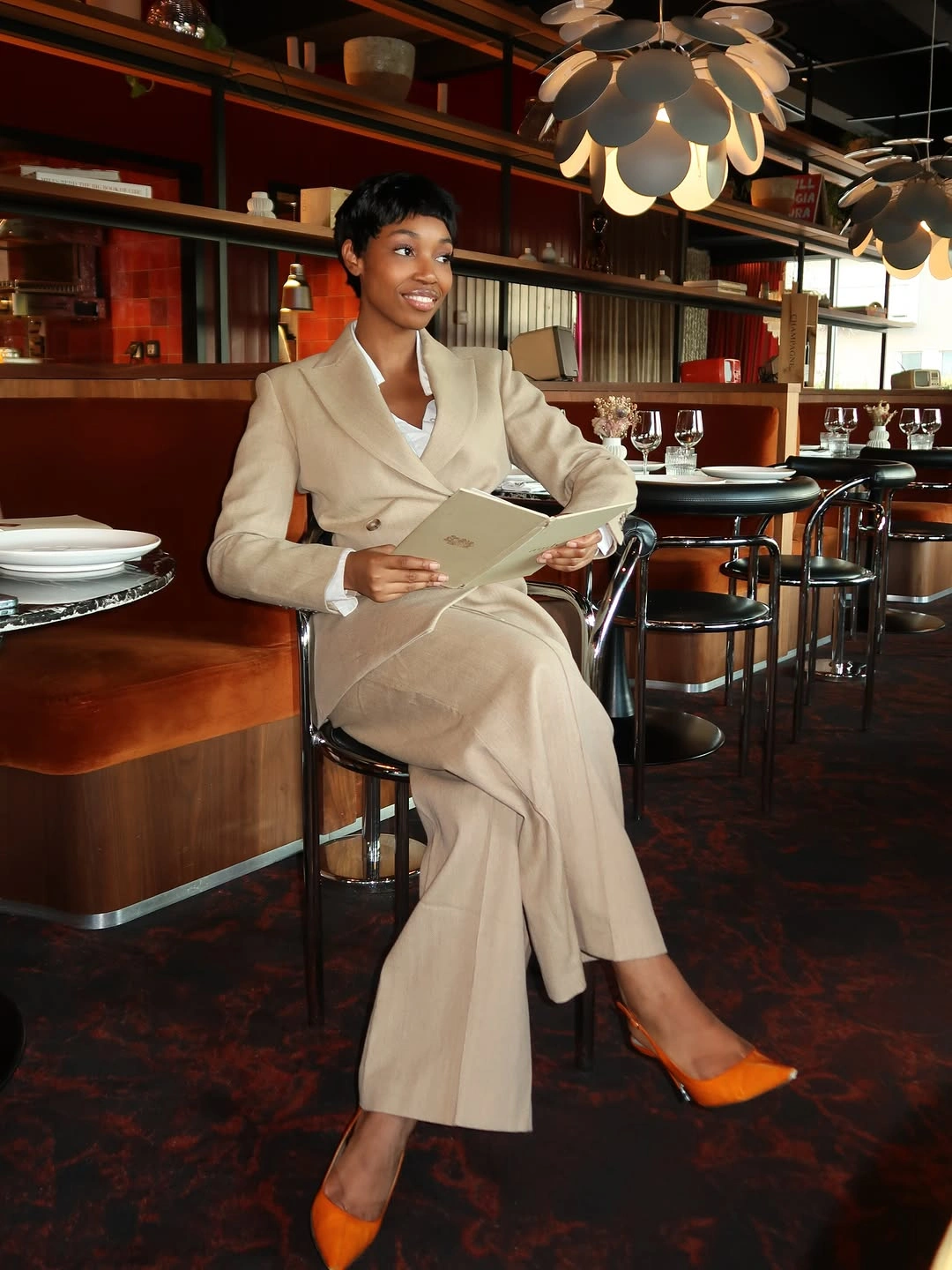
A single warm shoe can change a neutral outfit dramatically, but it works best when every other accessory stays quiet. Let the suit be close in tone from shoulder to ankle, then use the footwear as a small punctuation mark rather than matching it with a bright bag. If orange feels too lively, burgundy or deep red would keep the same grounded warmth with a more muted finish.
Light tailoring is versatile, although it may need more attention during a day with coffee, pens, or crowded surfaces. The relaxed trouser gives the outfit ease, so avoid pairing it with a very oversized coat that would hide the clean cream line. A darker coat layered over this base can work well, but choose one with a simple front so the suit’s pale shape still reads beneath it.
4. Gray Cropped Jacket With Dark Trousers
The cropped gray jacket places structure high on the body, with its buttons and collar creating a compact frame above dark trousers. The contrast is subtle rather than stark, which makes the silhouette feel composed without looking severe. Because the jacket ends well above the hip, the trousers are allowed to lengthen the line and keep the outfit from feeling boxy.
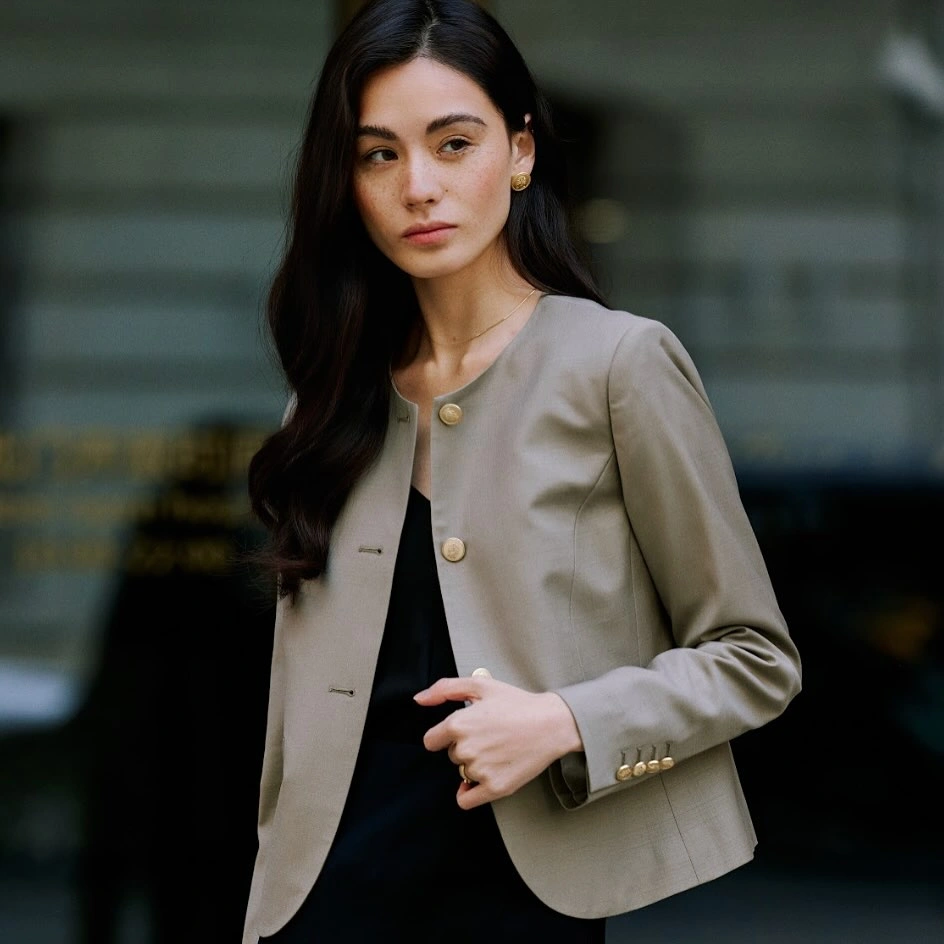
A short jacket works especially well with higher-waisted trousers, since the waist remains visible even when the upper layer is structured. Keep the inner top dark or close in value if you want the gray jacket to sit quietly above the pants. A pale shirt would add more separation, but it could also make the cropped hem feel more abrupt than the softer tonal version shown here.
The proportion has a clear advantage for anyone who finds long blazers overwhelming, though it can leave less room for thick layers underneath. Choose a fine knit or smooth blouse rather than a bulky sweater, then use a longer coat only for the commute. The gray reads clean and neutral, so one small warm accessory is enough if you want to make the outfit feel less monochrome.
5. Light Beige Double-Breasted Tailoring For Work
The light beige double-breasted blazer and matching trousers make a soft, uninterrupted suit, while the white top gives the neckline a clean point of brightness. Broad lapels and a longer jacket length add presence, but the pale palette keeps the shape gentle rather than imposing. The result feels refined because the structure is visible without being crowded by extra contrast.
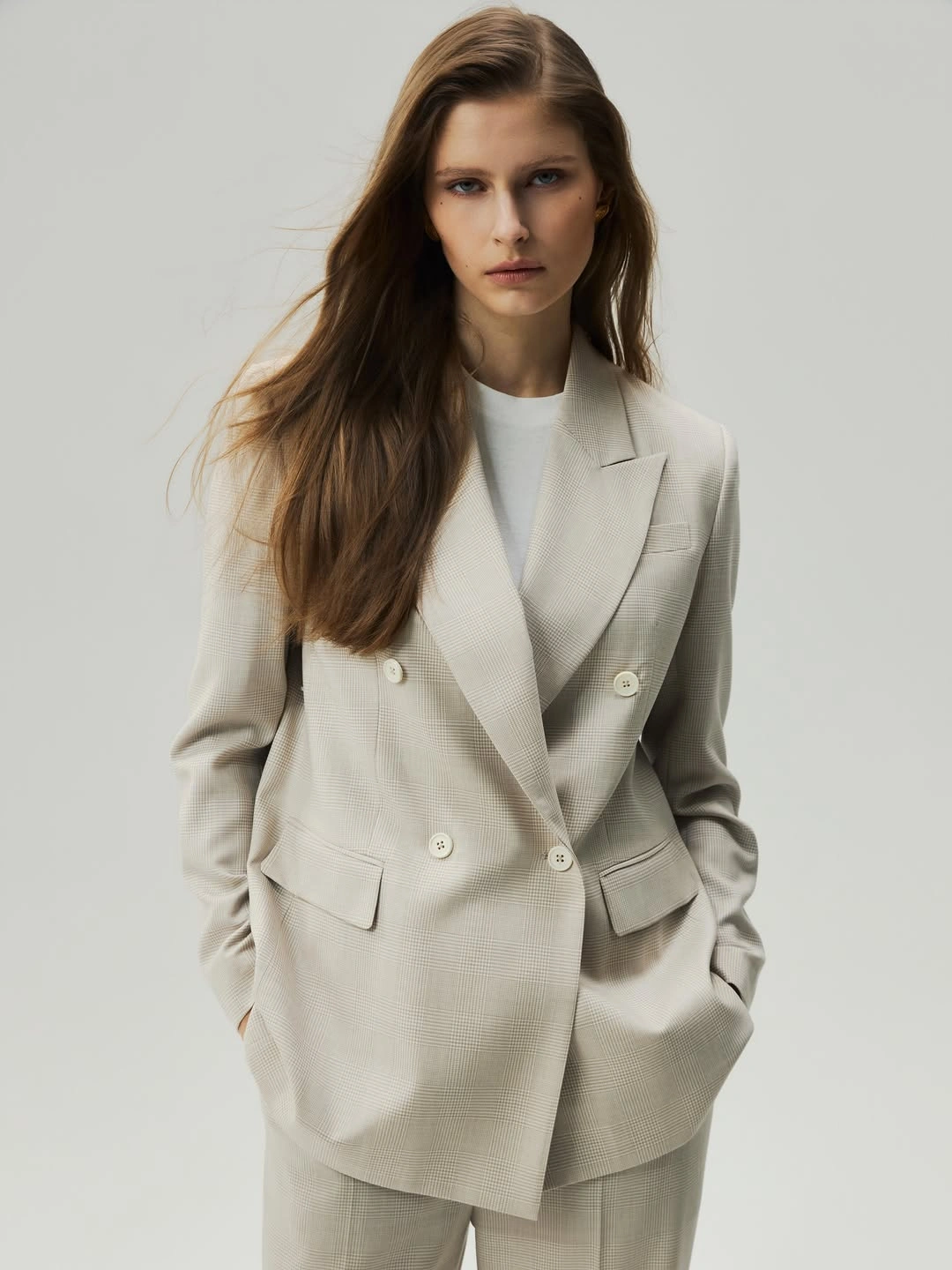
When wearing a pale suit, focus on fit through the shoulders and the break of the trouser before adding accessories. A smooth white top gives the lapels room to stand out, while a darker inner layer would make the suit feel more graphic and less airy. Minimal jewelry or a small bag can be enough, because the double-breasted front already provides a strong central detail.
The maintenance tradeoff is real, especially with long light trousers, but the visual payoff is a clear winter work look that does not depend on heavy color. If you want a more grounded version, choose oatmeal or mushroom tones instead of very light beige. Keep the outer coat simple and darker if needed, then let the suit reappear indoors as the quieter, lighter layer.
6. Belted Brown Cape With Wide Trousers
The brown cape-like top has a broad, draped shoulder line, while the belt brings that volume back toward the waist before the trousers widen below. This creates a measured hourglass effect without relying on a fitted blazer. The monochrome brown palette makes the unusual top shape feel intentional, and the dark bag adds a compact contrast at the side.
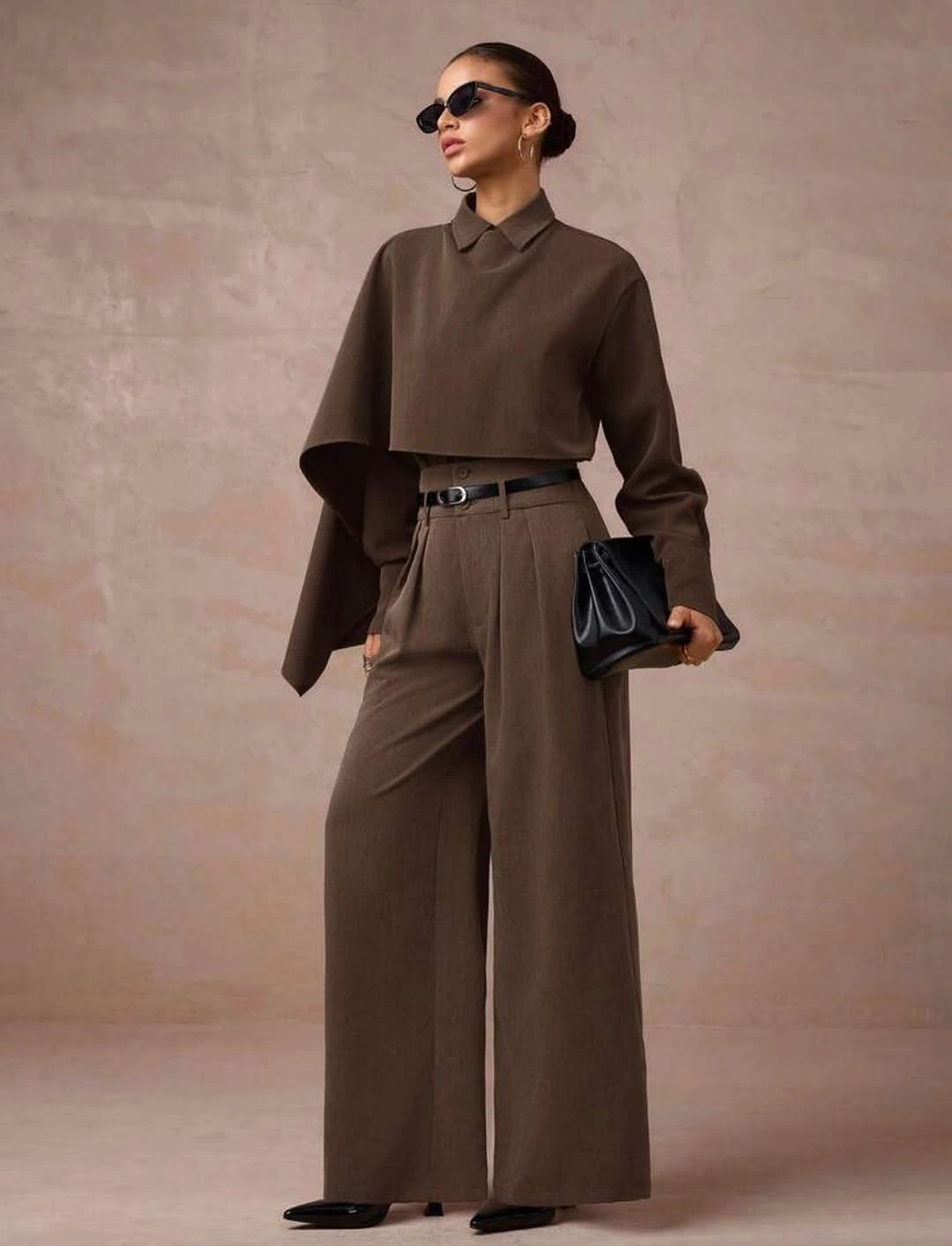
For a more directional office outfit, use one voluminous piece and keep the rest of the proportions steady. Wide trousers are a natural partner for a cape-like layer when the waist is defined; without that belt or seam, the silhouette could become too broad from shoulder to hem. A close knit in a matching tone would preserve the same warmth if a draped top feels less practical for your day.
Movement is the detail to consider here. A broad sleeve or cape panel can look graceful while standing but may be less convenient around desks, handles, or paperwork. Choosing a softer, shorter version will keep the visual idea while making it easier to wear. The brown color does not need matching shoes from head to toe; a dark neutral base keeps the outfit grounded.
7. Patterned Knit Set In Black And White
The black and white patterned knit cardigan and skirt create a coordinated set with texture built into the surface rather than added through separate layers. A row of buttons draws the eye down the center, while the short skirt keeps the pattern from becoming a large uninterrupted block. The high contrast is lively, but the matching pieces make it feel contained and deliberate.
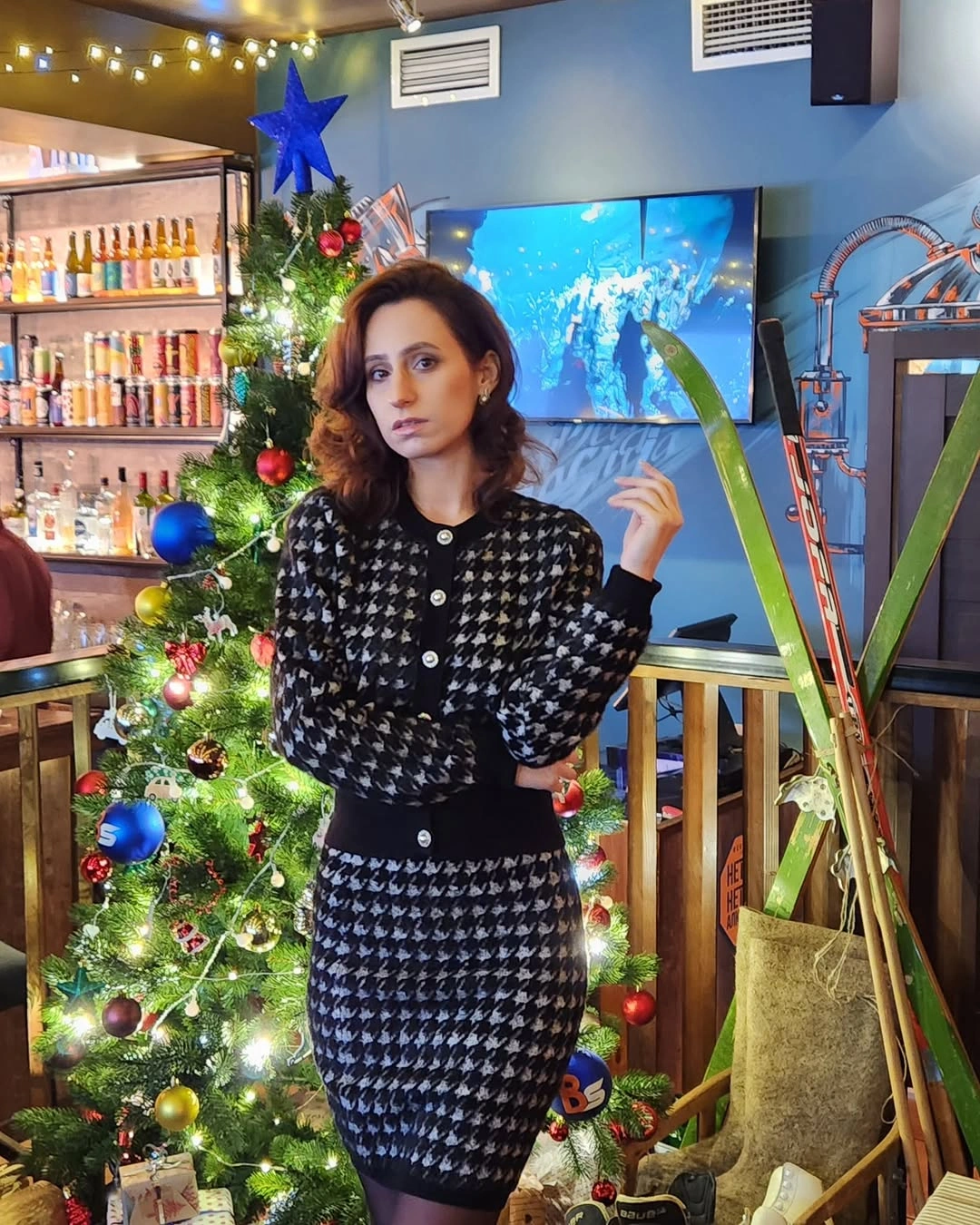
Patterned knitwear works at work when the shape stays clean and the accessories do not demand equal attention. Keep the shoes, bag, and outer layer mostly dark, then let the black-and-white pattern be the only active visual element. If a matching skirt feels too short for your comfort, use the cardigan over a black midi skirt or wide trousers and retain the same crisp contrast.
Texture can feel warm without using a heavy coat, which is part of this set’s appeal. Still, a dense knit may add visual width, especially when the print is high contrast. Choose a slimmer base layer beneath it and avoid a bulky scarf at the neckline. The buttons already establish a center line, so the outfit does not need extra jewelry to feel finished.
8. White Shirt With A Striped Scarf
A white button shirt provides a bright, straightforward base, while the black-and-white striped scarf creates a focused vertical accent at the chest. Beige trousers soften the contrast and make the outfit feel more relaxed than a black trouser would. The belt and sunglasses add definition, but the scarf is the feature that turns a familiar shirt-and-pants pairing into something more memorable.
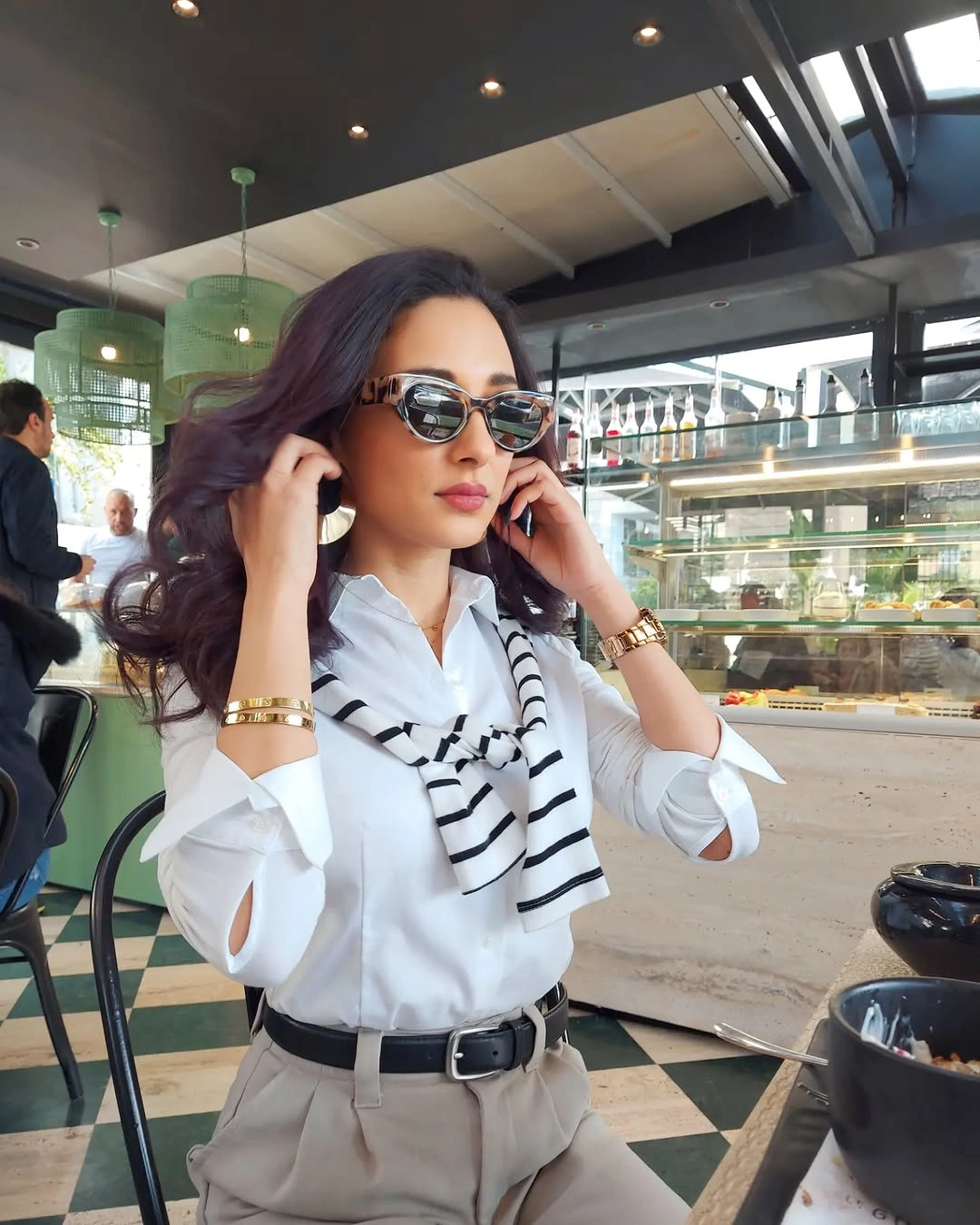
Scarves can be useful for winter work outfits when they are treated as one clear line instead of a large wrapped bundle. Choose a narrow or medium-width version and let the shirt collar remain visible, especially if the scarf has a strong pattern. Beige trousers create a gentle base; charcoal would make the black stripes feel sharper, while cream would keep the whole outfit lighter.
The practical question is whether the scarf stays in place during a full day. A soft knot or simple drape can look good, but a very long end may get in the way while working. If you prefer no scarf indoors, the white shirt and beige trouser still form a calm foundation. The striped piece can function as the outermost accent for arrival and departure instead.
9. Charcoal Jacket And Matching Mini Skirt
The charcoal button-front jacket and matching skirt create a compact suit shape, while the bright white collar makes the neckline immediately legible. Patch pockets and metal-like buttons add visible structure across the jacket, so the dark fabric does not look flat. The skirt keeps the outfit direct and tailored, with the collar providing a small flash of contrast near the face.
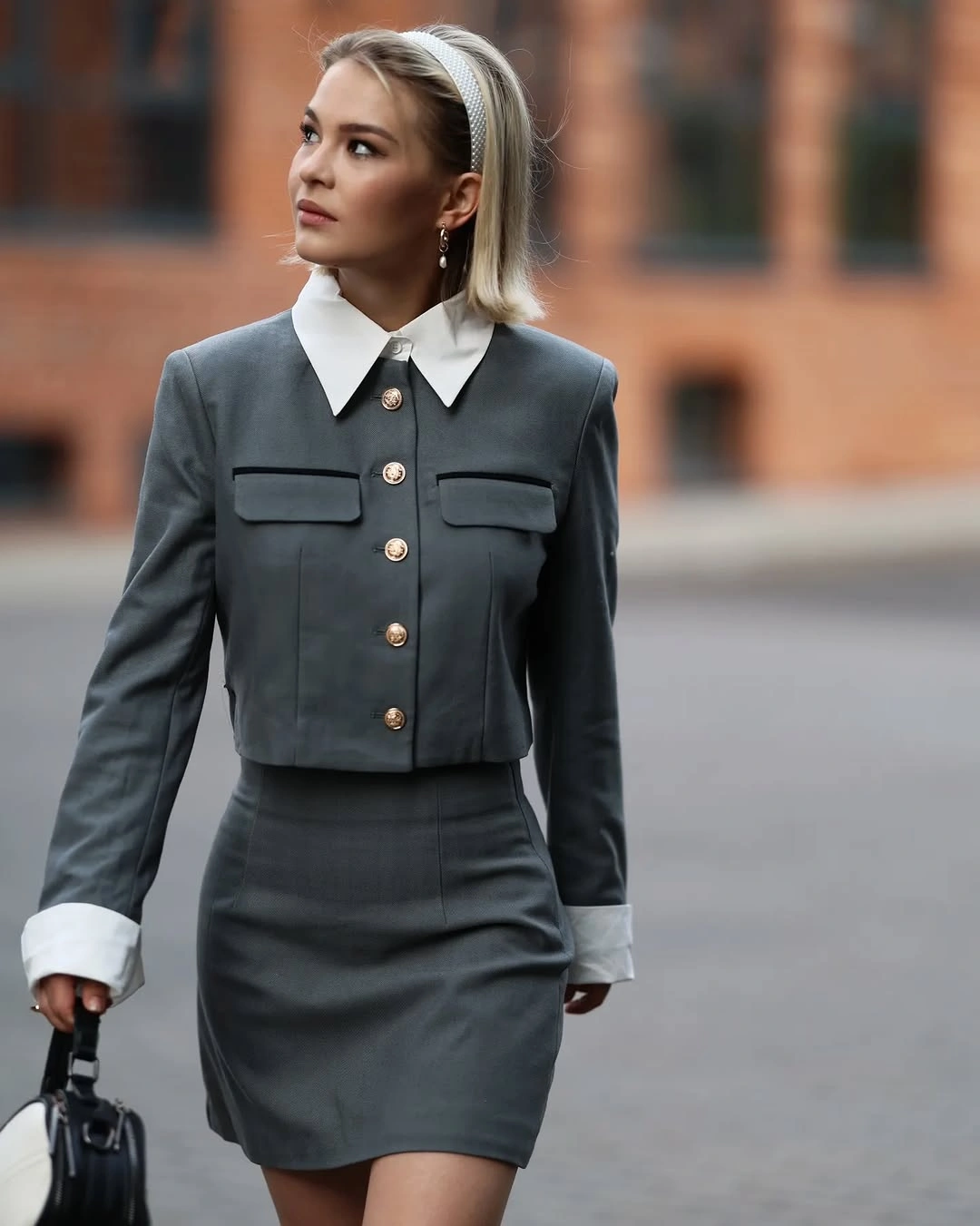
A matching set like this can be a polished alternative to a blazer and trousers when the jacket has enough definition on its own. Keep the blouse or collar simple, because the pockets and buttons already offer several details. Black tights and boots would extend the darker line in colder conditions, while a lighter shoe would make the short skirt appear even more prominent.
There is an honest coverage tradeoff with a shorter skirt, particularly for workplaces where you move between meetings or shared spaces. A charcoal midi skirt or slim trouser can preserve the jacket’s sharp shape while offering a different level of ease. The white collar is the visual key, so keep at least one light note at the neckline if you adapt the set.
10. Dark Blazer With Trainers And Tote
An oversized dark blazer and black trousers establish a long, calm outer line, while the light sweatshirt and trainers make the outfit feel less formal. The tote repeats the dark tone near the body, so the lighter shoe and inner layer can stand out without breaking the overall balance. It is a smart casual combination built around contrast in dress level rather than contrast in color.
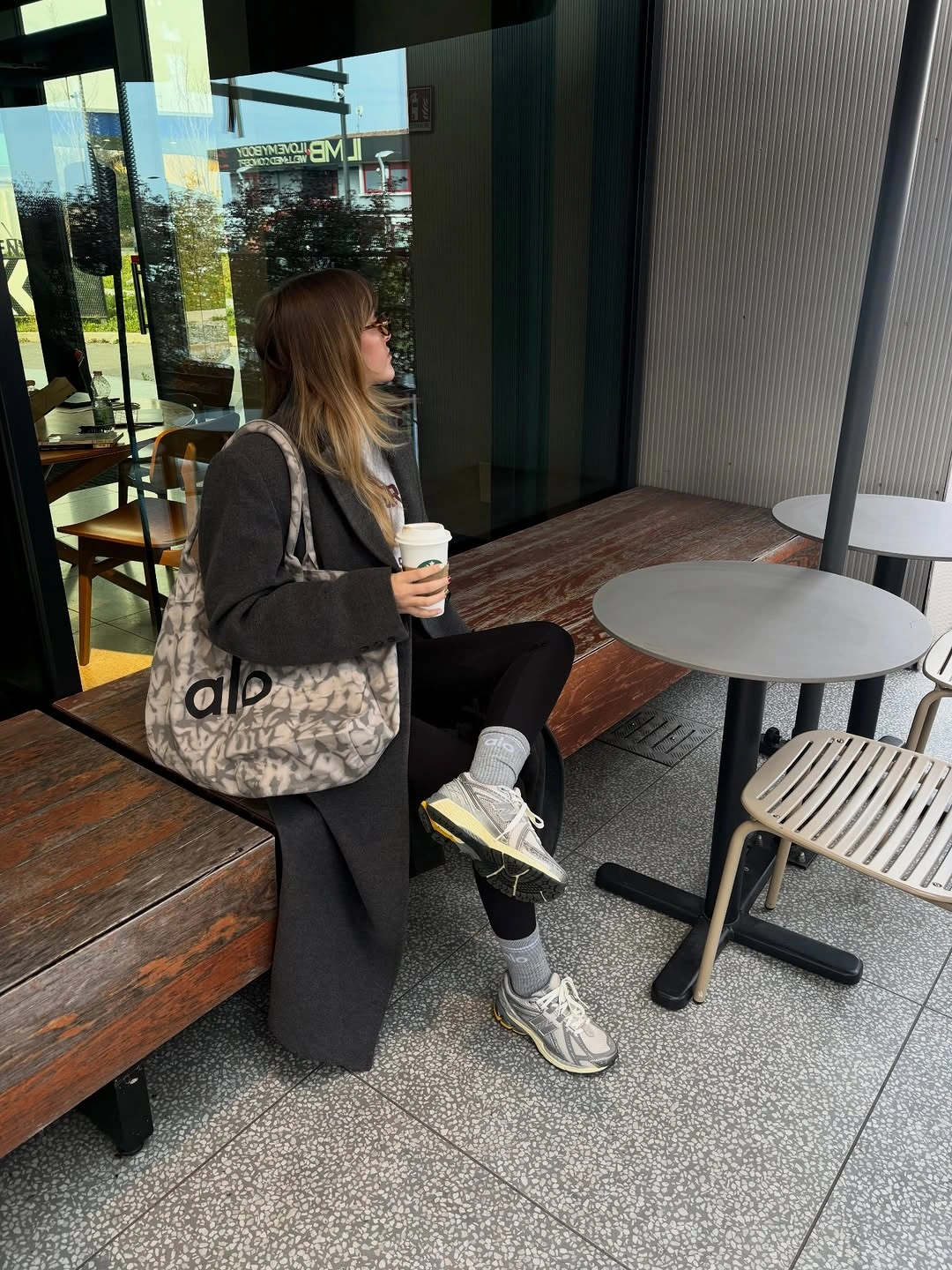
To make trainers work with tailoring, keep the trouser long and relaxed enough to acknowledge the shoe’s casual shape. A plain sweatshirt or fine crewneck is better than a loud graphic top, a useful starting point for work outfits with a relaxed edge. A black boot would make the outfit more uniform but would lose some of the easy tension.
This option is practical for a less formal office, although a very slouchy blazer can look untidy if the shoulders do not fit. Look for a jacket with a clear shoulder seam and enough room to layer a thin knit underneath. The tote is useful because it keeps the accessories functional and dark, allowing the sweatshirt-and-trainer pairing to feel intentional rather than accidental.
11. Olive Utility Jacket With Wide Pants
The olive utility jacket adds pockets and a relaxed outer texture to the brown top and loose dark trousers beneath it. The pants fall in a soft, wide line, which keeps the shorter jacket from making the upper body look too square. Together, the earthier shades feel grounded, but the visible waist area and open jacket front keep the silhouette from becoming dense.
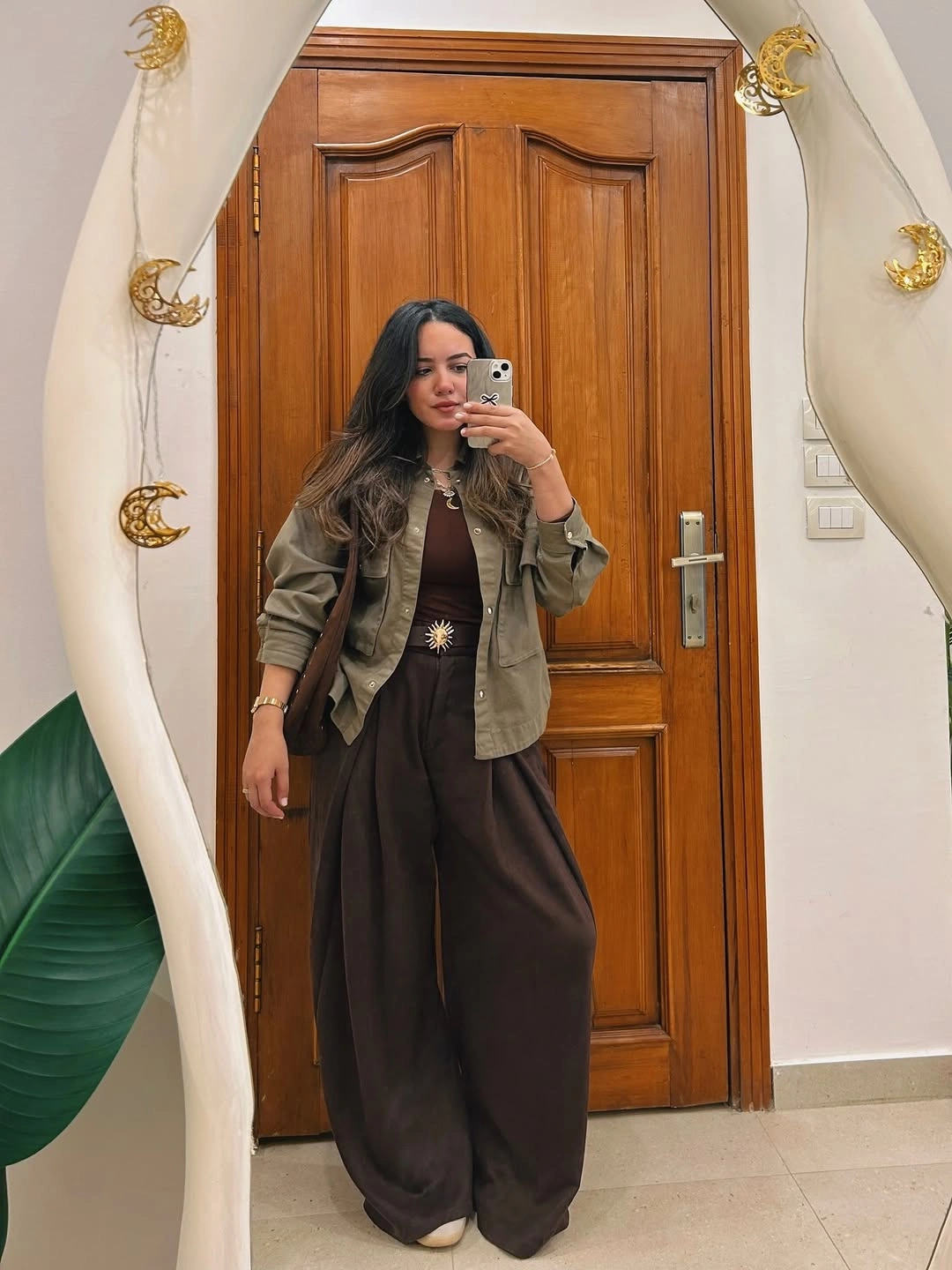
Earth tones can make a good work outfit when each piece has a distinct role: one olive outer layer, one deeper brown or black base, and a trouser with enough flow to balance the pockets above. A small belt or compact bag can help define the center, but avoid adding several more cargo details. The jacket already supplies the utilitarian note, so the rest should stay relatively clean.
Wide trousers offer movement and comfort, yet they can collect too much fabric around a bulky shoe. Choose a low-profile boot or simple sneaker so the hem falls naturally instead of stacking. If olive feels too casual for your workplace, a muted brown overshirt can create the same warm, practical effect with a slightly softer visual language.
12. Animal-Print Knit With Gray Trousers
The animal-print knit is the clearest point of texture in this outfit, while gray wide-leg trousers keep its bolder surface from taking over the whole silhouette. The darker top occupies a compact area above a long, quiet lower line, which is why the print feels controlled rather than loud. Simple dark shoes and a small bag let the knit remain the only real pattern.
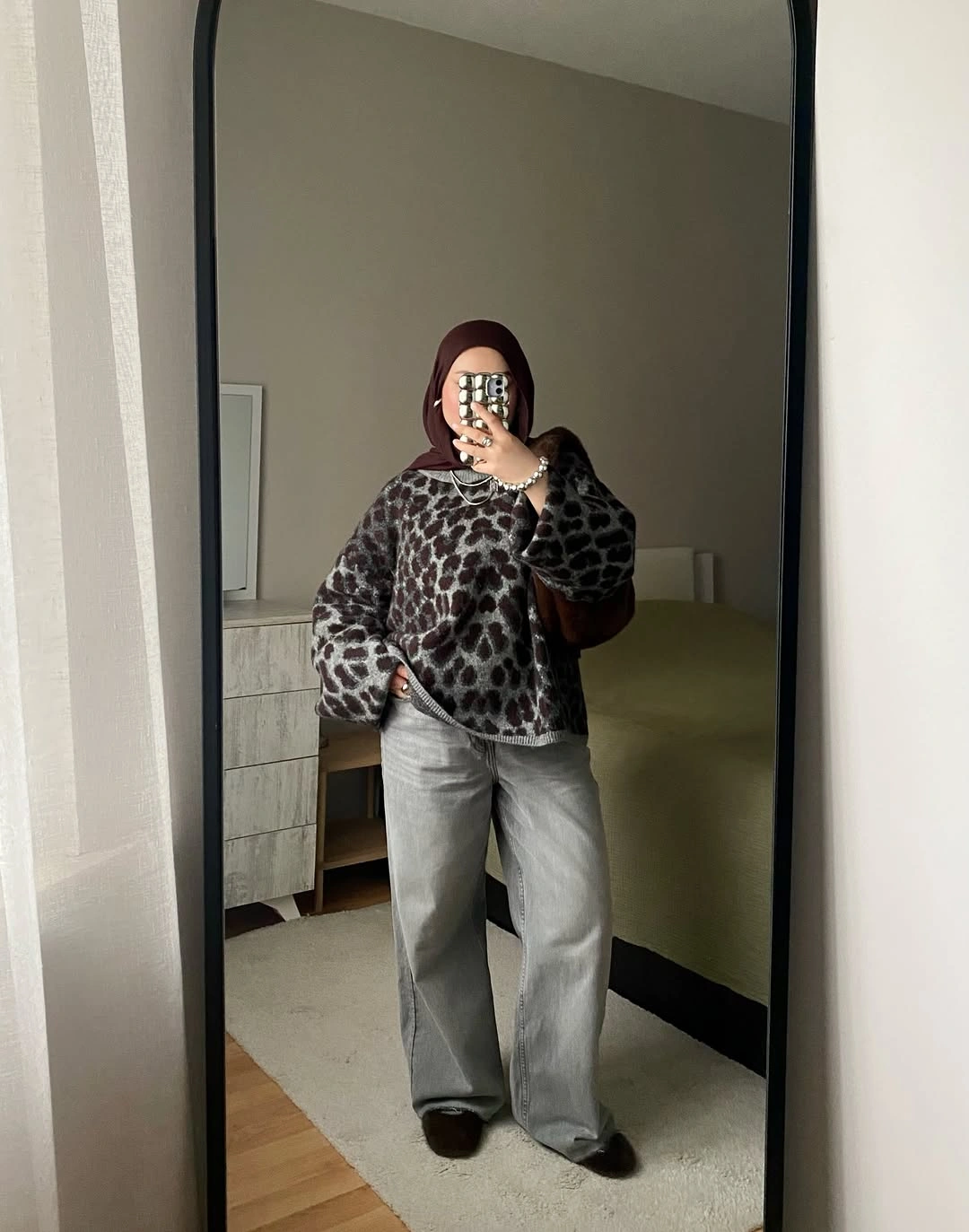
Pattern can work in women’s winter work outfits when it is balanced by trousers with a soft, solid color and a measured amount of volume. Gray is useful because it relates to the darker print without repeating black exactly. If you prefer a subtler result, choose a smaller-scale spotted pattern or a textured knit in two close tones, then keep the same wide gray trouser idea.
The sweater’s surface already creates visual movement, so be careful with layered scarves or patterned footwear. A plain coat in black, charcoal, or camel would frame the look more successfully than another print. Wide trousers are a good counterweight, though a very loose knit over them can become shapeless; a slight front tuck or shorter hem will restore the waist line.
13. Camel Jacket With White Wide Trousers
The camel cropped jacket brings warmth close to the face, while wide white trousers make the lower half feel fresh and spacious. A plaid scarf adds a small layer of pattern between those solid color blocks, and the dark bag gives the outfit a compact point of weight. The jacket’s shorter length is especially helpful because it lets the light trousers carry a long, continuous line.
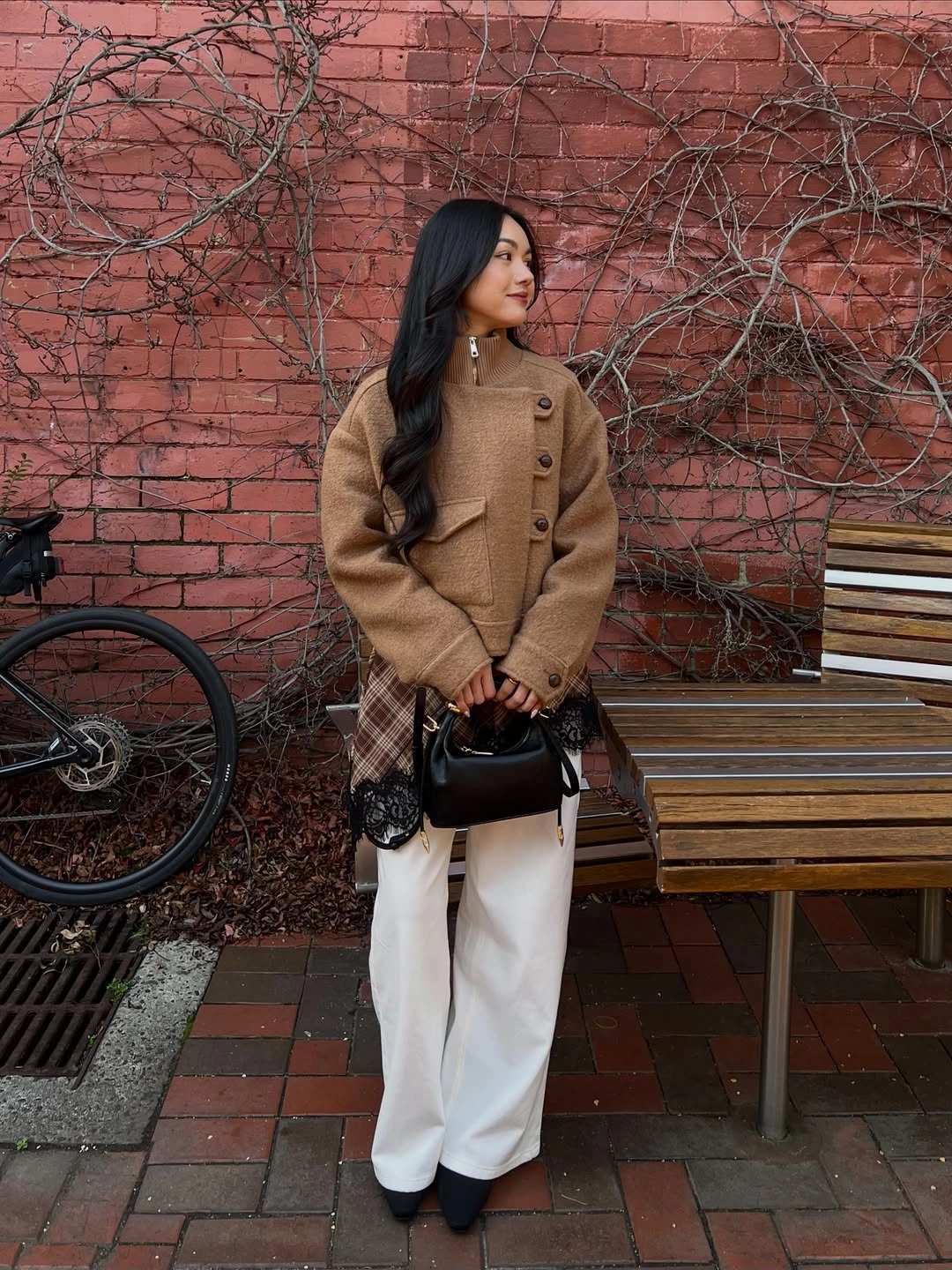
Pairing camel with white is a simple way to make winter dressing feel lighter without abandoning warmth altogether. Keep the scarf’s pattern modest and pick up one of its darker notes in the bag or shoe rather than introducing another color. If white trousers feel too high-maintenance, soft cream or pale stone can give a similar brightness while making everyday marks a little less noticeable.
The wide leg is elegant, but it needs a shoe that does not create a bulky stop at the hem. A low boot or streamlined loafer will keep the trouser’s movement clear, while a large sneaker may make the lower half feel heavier. The visual lesson is the short warm jacket against a light long pant – the scarf is a supporting detail, not a reason to over-layer.
14. Red Knit Beneath A Long Dark Coat
A saturated red knit becomes the focal point inside a long dark coat, creating warmth at the center without turning the full outfit into a bright statement. The coat and knee-high boots keep the outer line deep and vertical, while the red breaks that darkness at the chest. This is a useful color strategy when you want an accent to feel rich and intentional rather than scattered.
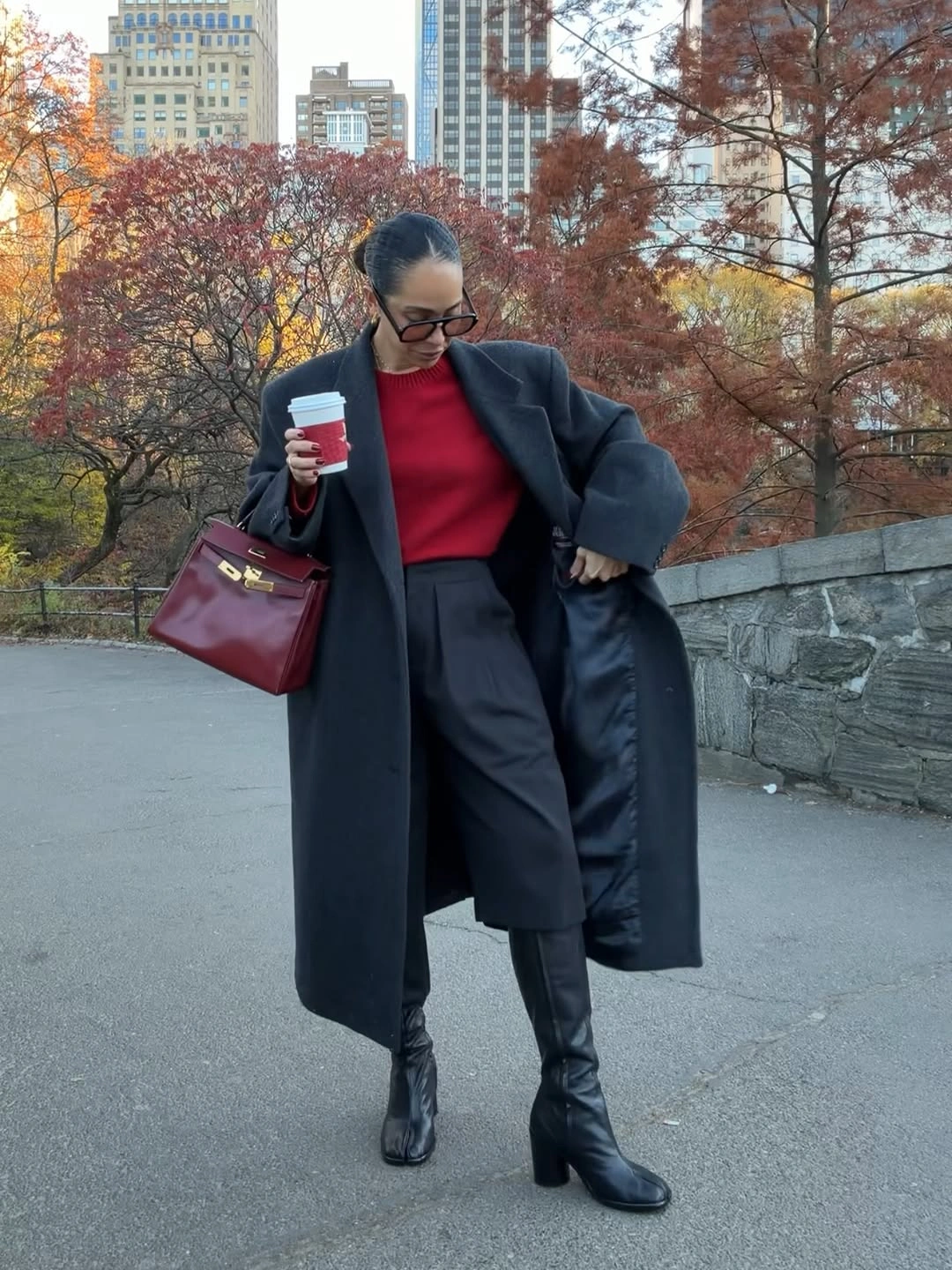
Use a red layer as the one visible color inside an otherwise dark base, then keep the bag and footwear close to the coat’s value. A deeper burgundy gives a softer version, while a brighter red increases the contrast but can still work if the rest remains quiet. Let the coat stay open enough for the knit to show; otherwise the color loses the role that makes the outfit feel lively.
Long coats can make a short inner layer feel balanced, but consider movement and coverage when choosing the bottom piece. A dark midi skirt or slim trouser would retain the same red-center effect if you want more ease during the day. The boots are visually helpful because they extend the coat’s depth down to the ground and prevent the red from feeling isolated.
15. Light Coat With Textured Collar Detail
The light beige coat has a textured collar area that makes its pale surface feel warmer and more dimensional, while dark tights create a clear lower contrast. Patterned boots add another concentrated point of detail at the ankle, but the coat remains the larger visual statement because of its length and light color. The result is soft without becoming vague, thanks to those darker edges.
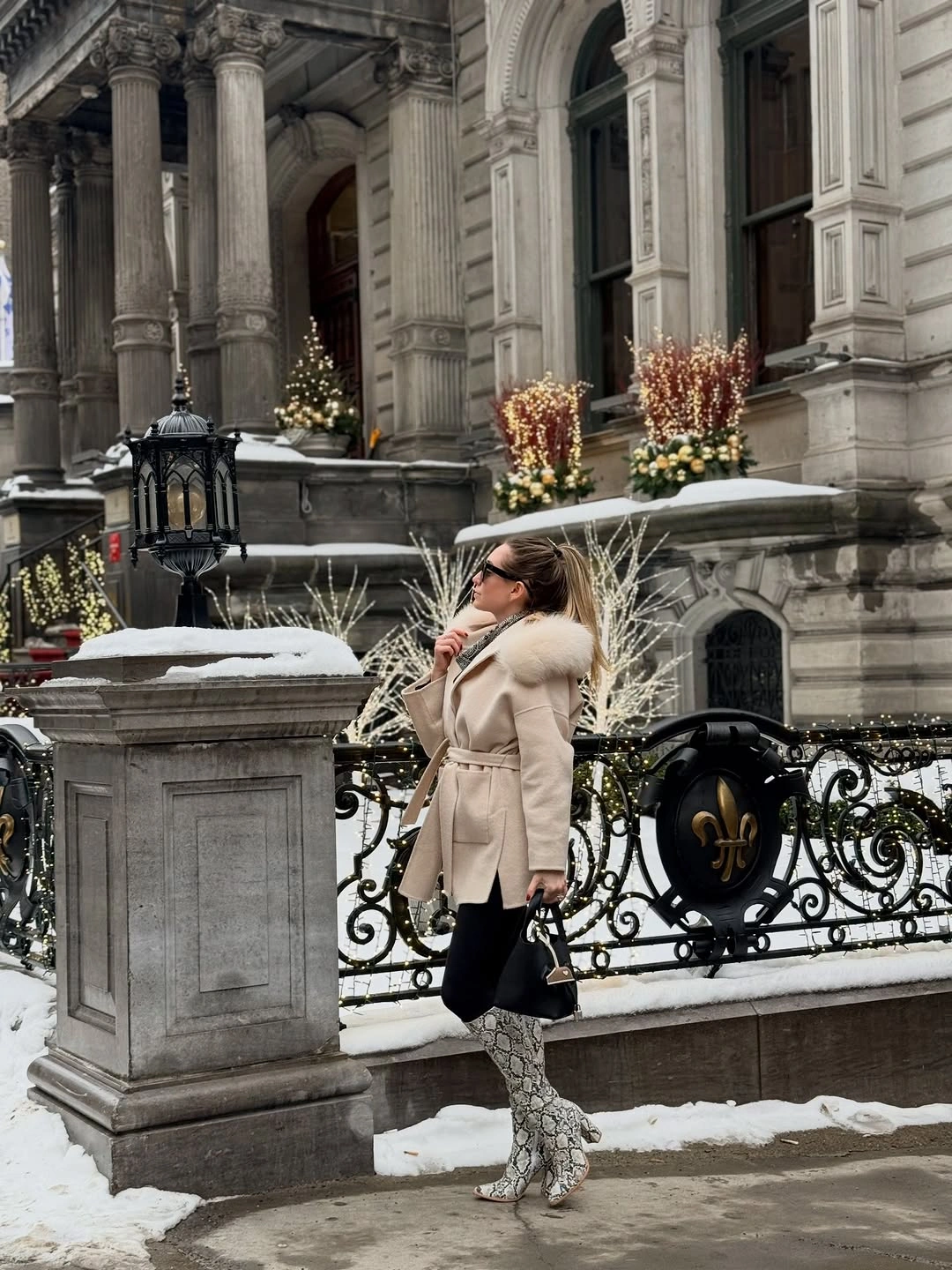
A textured collar is enough to add interest to a light outer layer, so the rest of the outfit benefits from restraint. Choose a dark skirt, dress, or trouser underneath if you want the coat to read as a bright frame, and keep the bag small and uncomplicated. If the boots have a pattern, avoid a patterned scarf as well; one detailed area near the ground is plenty.
Light coats can look especially clear against darker bases, though they are not the easiest pieces to keep pristine. A taupe or mushroom version will soften the maintenance concern while retaining the same gentle contrast, as with other winter layering ideas. One soft detail can give the long pale shape a more thoughtful finish.
16. Taupe Knit With Straight Blue Jeans
The taupe knit and medium-blue straight jeans make a quiet, familiar pairing, but the soft sweater texture gives the top half enough presence to feel intentional. The jeans are neither overly narrow nor extremely wide, which lets the knit’s relaxed volume sit comfortably above them. A simple silhouette like this can be one of the most useful building blocks in winter work dressing when the setting allows denim.
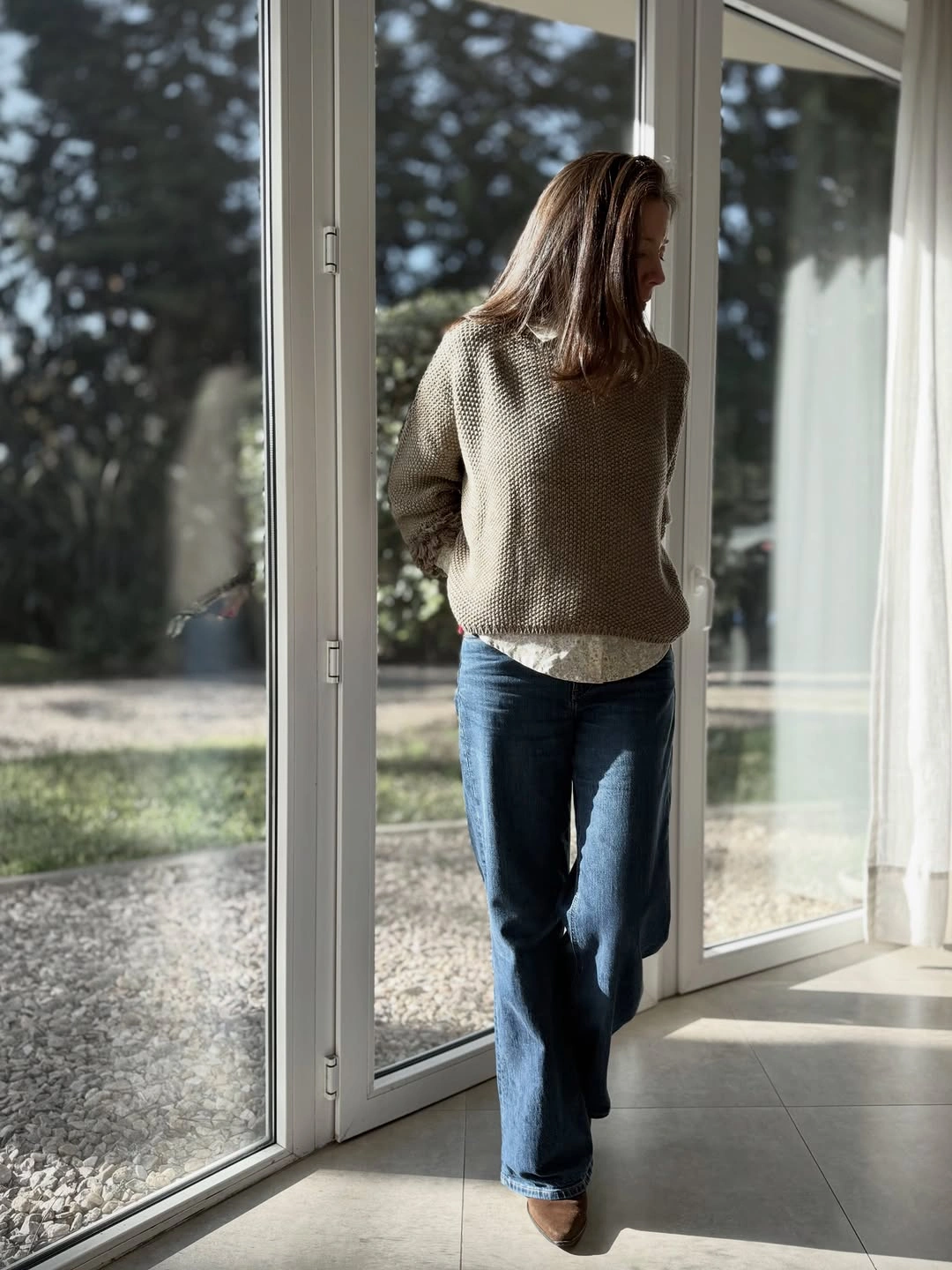
Keep the sweater hem near the upper hip or add a small front tuck if you want the waist to remain visible. Straight jeans are a good choice because they support a soft knit without creating the heavy, oversized effect that wider denim sometimes can. A dark loafer, ankle boot, or clean sneaker can each work; the decision changes the dress level more than the outfit’s basic balance.
The limitation is context: denim may be too relaxed for some offices, even when the rest of the look is neat. In that case, swap the jeans for dark navy trousers with a similarly straight leg and keep the taupe knit. The cozy-looking surface still gives warmth, while the cleaner trouser makes the same proportion feel more formal and ready for a structured day.
17. Long Black Coat And Wide Trousers
A long black coat worn with wide black trousers creates a deep, continuous column, while the sunglasses and small bag keep the accessories equally restrained. The coat’s length and the trouser’s movement make the outfit feel substantial, but the simple dark palette prevents all that volume from becoming visually noisy. It is a strong silhouette built on proportion rather than decorative detail.
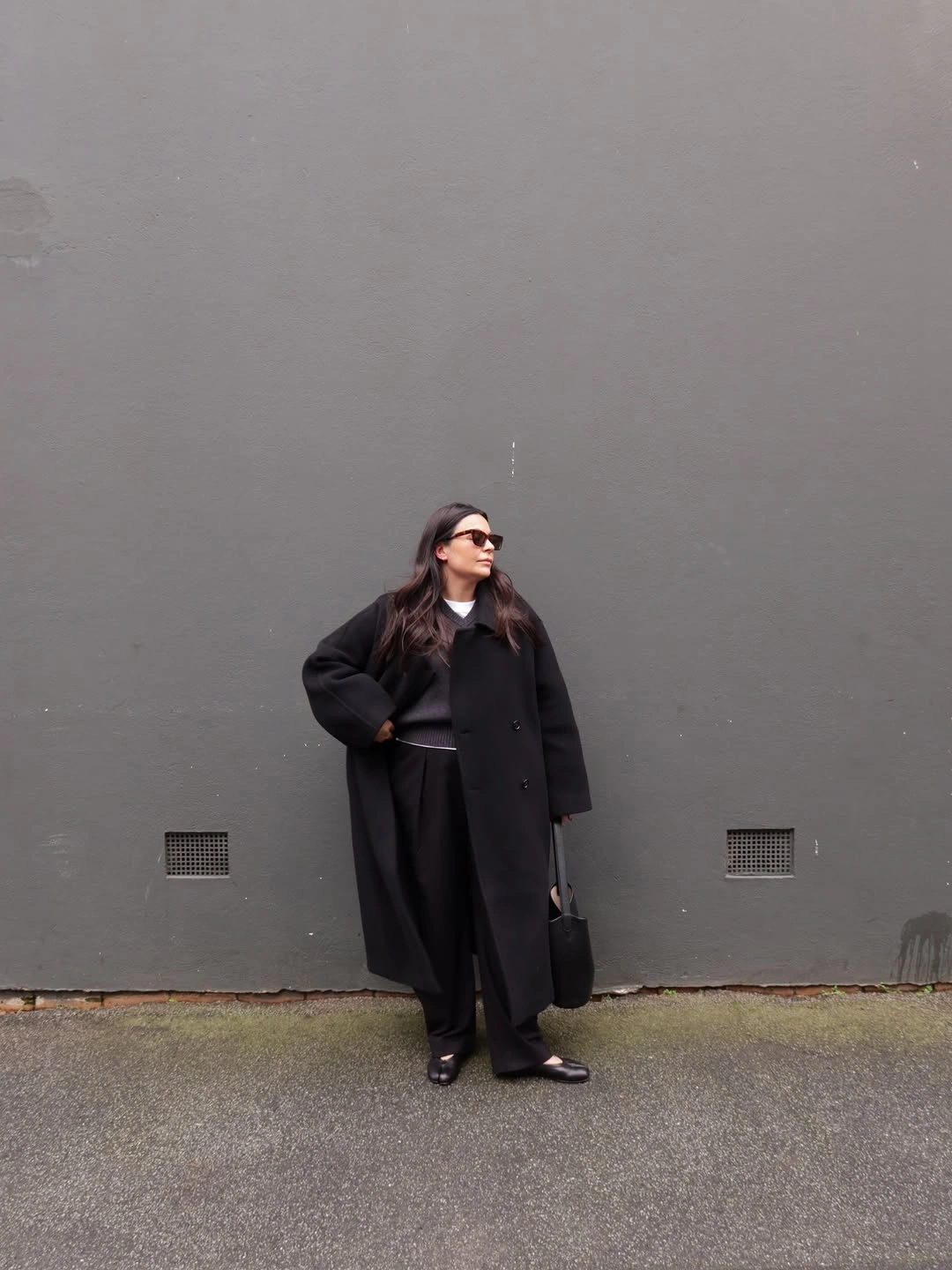
All-black winter work outfits benefit from variation in shape, and this pairing shows why. The coat gives a vertical outer boundary, while the trousers soften the lower line with more room through the leg. A lighter knit can be worn underneath if you want a break at the neckline, but keep it small in scale so the long dark column remains the outfit’s main visual idea.
Volume is the important tradeoff. A heavy coat over very wide trousers can feel overwhelming when both fabrics are stiff, so look for movement in at least one piece. A straighter pant is an easy alternative if you prefer less width. The sunglasses and bag are optional, yet their compact dark shapes reinforce the clean, uninterrupted mood without demanding attention.
18. Gray Outer Layer Over A Soft Knit
The long gray outer layer adds a smooth, cool-toned frame over a softer gray knit and black trousers. Keeping the top layers close in value makes the outfit feel calm, while the black pants give the lower half enough depth to anchor it. The bag repeats that dark note at the side, so the pale gray near the face remains the most open part of the silhouette.
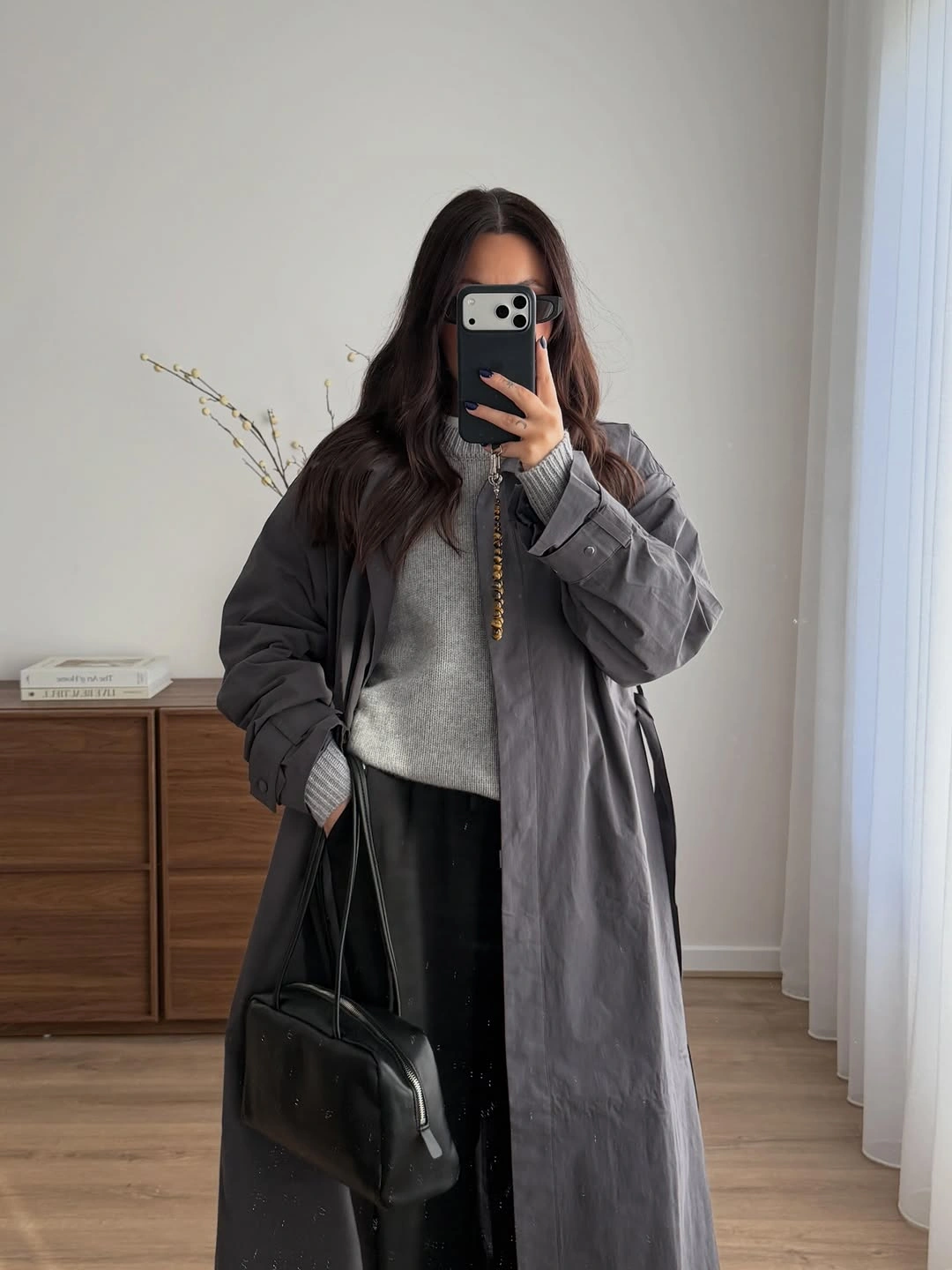
Tonal layering works well when the textures differ slightly, even if the colors are close. A smoother coat over a knit base creates that distinction without needing a contrast scarf or bright accessory. Choose black trousers with a clean, straight line, then let the gray layers remain the soft focus. If you replace black with charcoal, the result will be quieter but may lose some of the original depth.
This combination is comfortable-looking, though too many gray pieces can become flat if every surface is identical. A black bag, dark shoe, or narrow belt is enough to provide definition. Resist adding several metallic accents or a patterned scarf; the charm is in the calm transition from gray to black and the long, measured outer line.
19. Cream Vest With Flared Blue Jeans
The cream textured vest creates a soft, light upper layer, while flared blue jeans give the lower half a longer, more casual sweep. A pink cap adds a small warm accent near the face, and the pale vest keeps that color from feeling too isolated. The contrast between a bulky-looking upper layer and a flared hem is noticeable, but the denim’s clean line keeps it balanced.
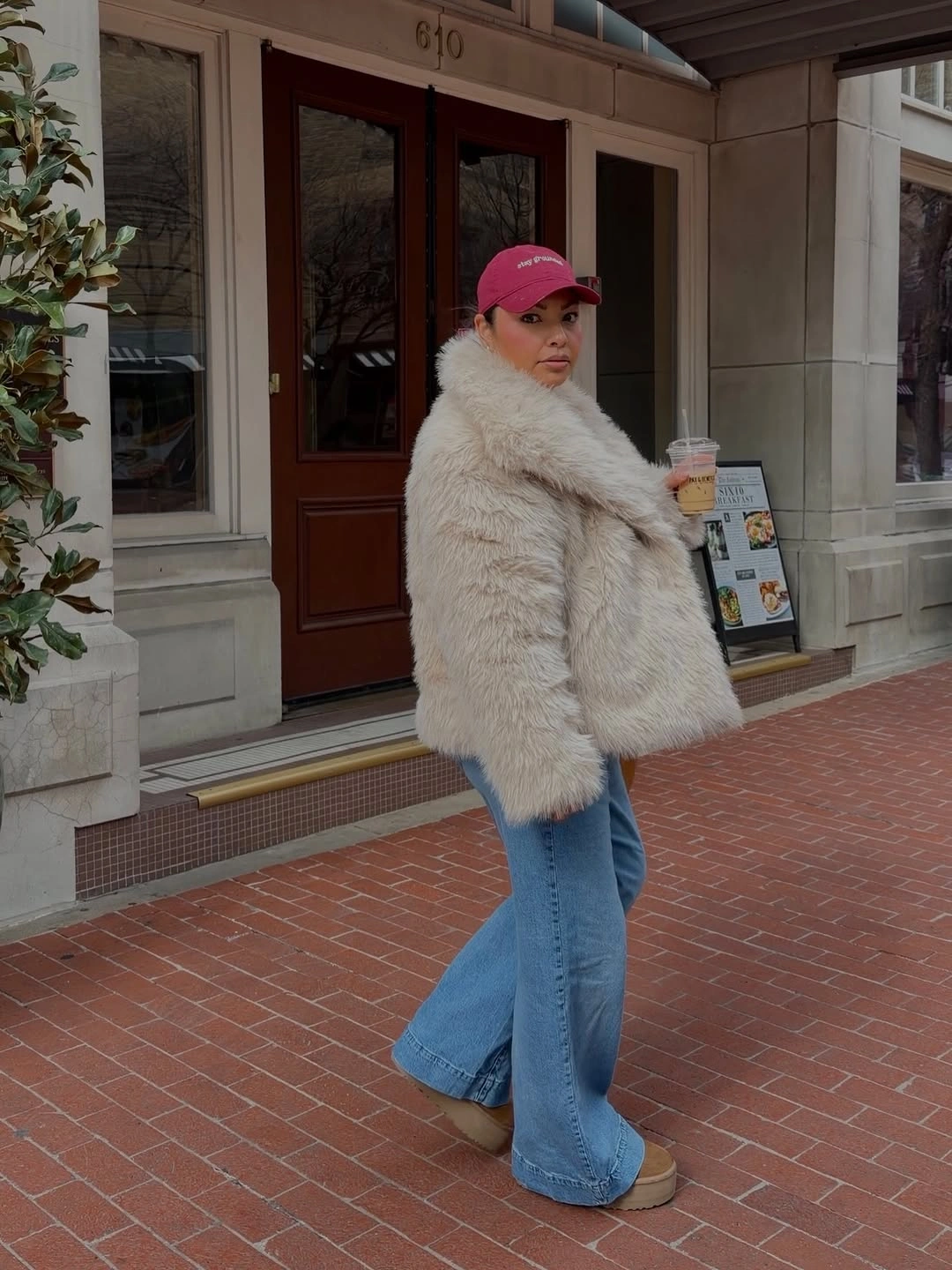
For a relaxed office or commute look, use one textured vest or jacket over a simple base and let the jeans provide the longer shape. The cap is optional, but its small color note shows how an accent can feel playful without needing to reappear everywhere. If pink is not your preference, a muted burgundy or olive cap could offer the same concentrated point of color.
The vest is visually warm, yet it may not be enough as a complete layer in every situation, so think of it as part of a flexible stack. A longer neutral coat can go over it without disrupting the blue jeans’ flare. Keep the footwear fairly low-profile; very bulky boots could make the flared hem bunch and take away from the easy long line.
20. Dark Brown Coat With Flared Denim
The long dark brown coat and narrow scarf create a rich vertical frame around flared blue jeans, balancing deeper outerwear with a lighter, more casual lower half. The scarf adds a slim central line instead of bulky volume, which makes the coat’s length feel clean and intentional. This is a grounded mix of tailored outerwear and denim rather than a fully formal look.
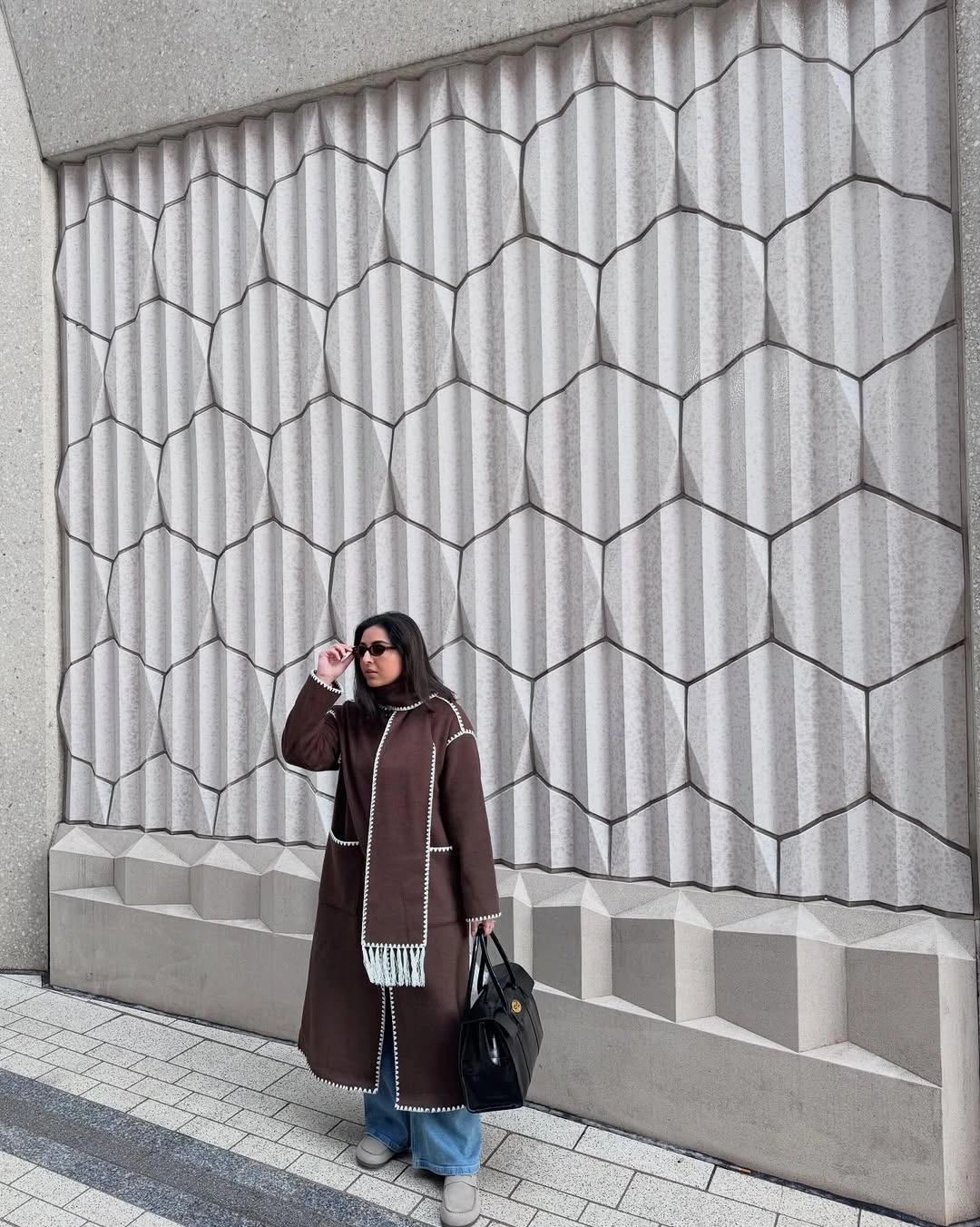
Brown outerwear pairs naturally with blue denim when you want a softer alternative to black. Keep the inner top neutral and the scarf close in value to the coat, then let the jeans supply the visible color shift near the bottom. A dark boot will make the outfit more cohesive, while a light sneaker would pull the look further toward a casual, weekend-like direction.
The flare needs enough length to skim over the shoe, but not so much that the hem drags or folds heavily. That is the small practical detail that keeps the long coat and long jean from looking cumbersome together. If flares are not your style, a straight jean can preserve the color balance, though it will not echo the coat’s movement in the same way.
21. Burgundy Texture With Cuffed Gray Denim
The deep burgundy textured jacket gives this outfit its warmest note, while cuffed gray jeans keep the lower half muted and slightly relaxed. Red shoes repeat the jacket’s color in a smaller, more surprising way, creating a clear connection from upper body to ankle. The gray denim is important here because it calms the burgundy rather than competing with it.
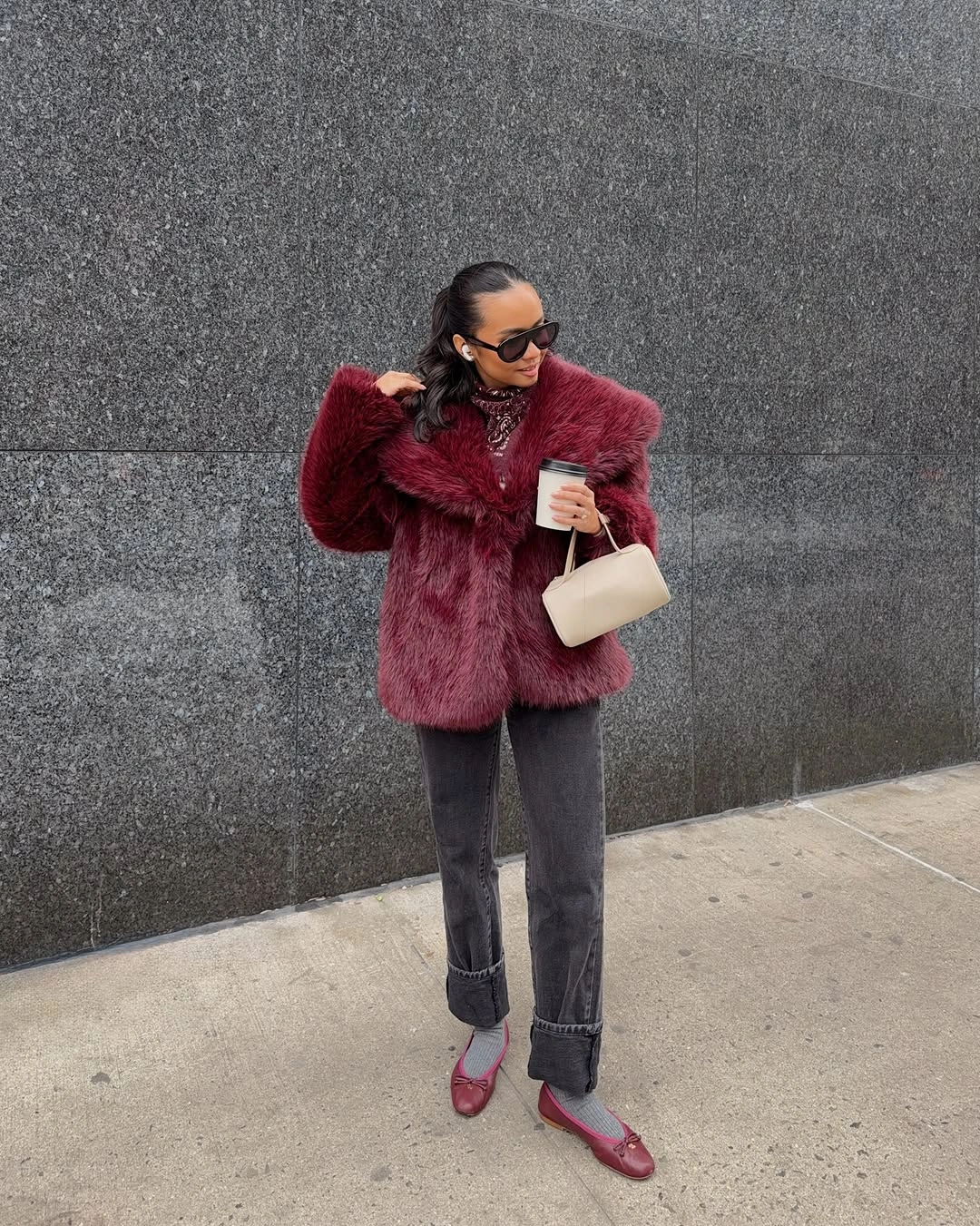
A rich jacket can carry an outfit when the jeans and top stay quiet. Choose gray or washed black denim if you want the burgundy to feel especially distinct, and keep the shoe in the same color family only if you enjoy a deliberate echo. A neutral shoe would make the jacket more subtle, while the matching red accent shown here creates a warmer, more playful finish.
The cuffs add character but also shorten the visible leg line, so consider the trouser length if you are balancing a fuller jacket. Uncuffed straight jeans would make the outfit look more continuous, while cropped pants would emphasize the shoe even more. The textured surface is already expressive, which is why a plain inner top and simple bag will keep the look from becoming overworked.
22. Tan Textured Coat With Wide Dark Jeans
The long tan textured coat has enough volume and surface interest to become the central piece, while wide dark jeans give it a relaxed, grounded base. A compact black clutch adds a clean shape at the side and repeats the jeans’ depth without pulling attention away from the coat. The difference between warm tan above and dark denim below makes the silhouette feel balanced rather than heavy.
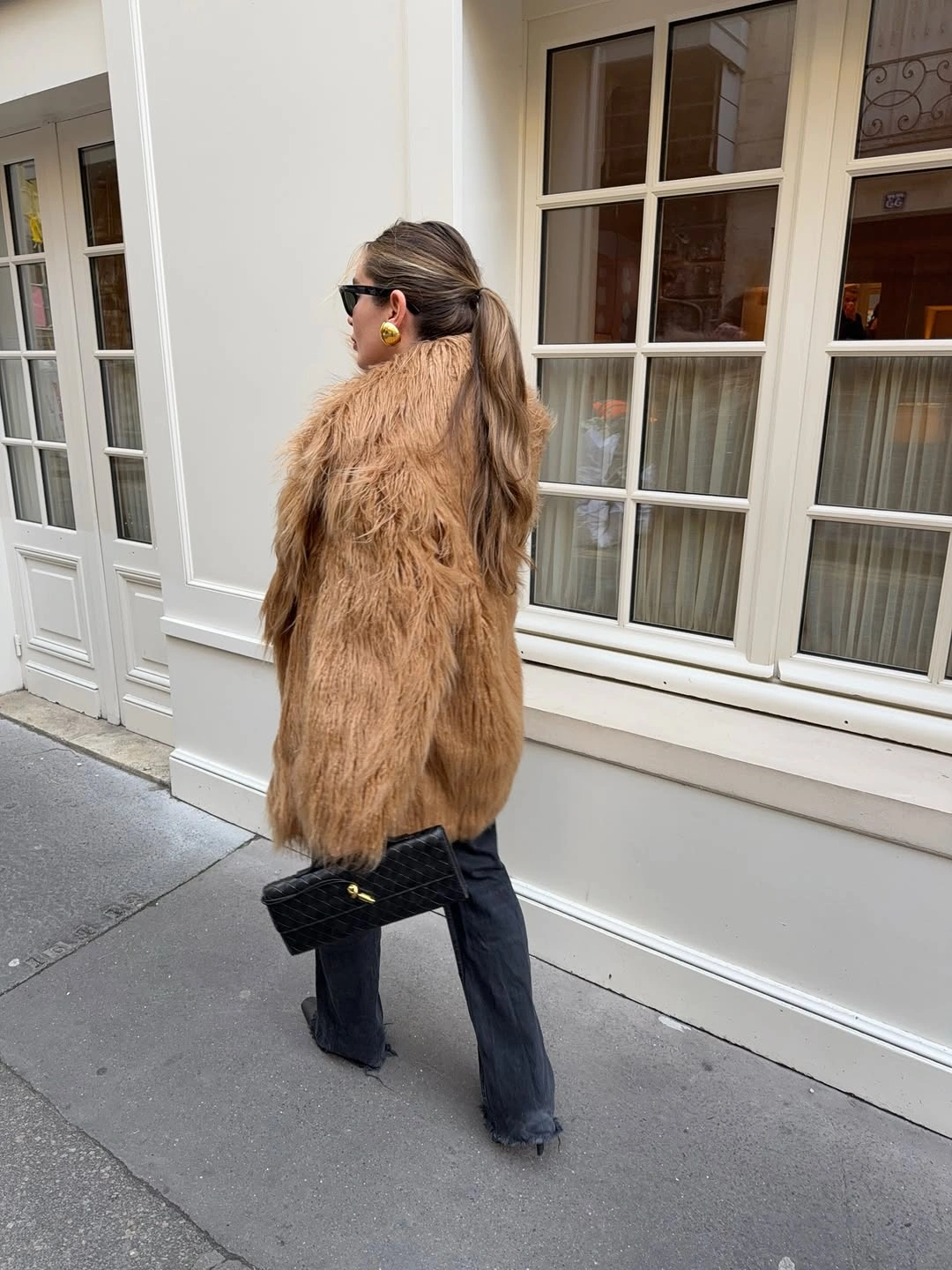
When an outer layer has a plush or visibly textured surface, wide jeans can work well as long as their color stays solid and their leg line remains clear. Keep the top underneath close to the body, then let the coat carry the softness and scale. A black bag is a smart choice because it anchors the darker lower half; a second tan accessory could make the outfit feel too matched.
This final proportion is warm-looking without depending on a thick stack of separate pieces. Still, a very voluminous coat may feel cumbersome in close quarters, so test the sleeve and hem movement before treating it as an everyday option. If you prefer a lighter version, use a shorter tan jacket with the same dark wide jeans and preserve the warm-to-deep color relationship.