Blue hair has moved past the punk phase into something more flexible: a solid navy gloss, a lived-in ash wave, a single streak tucked behind the ear. This year, soft face-framing layers and curtain bangs are the structures that make the color feel modern, not costumey.
20 Blue Hair Color Ideas covers the spectrum from a low-upkeep root shadow to a full mermaid blend, for straight, wavy, and coily textures alike. Fine hair that tends to fall flat, a visible grow-out line, or a fringe that won’t sit are the problems each section solves with a specific cut and tone.
1. Vivid Electric Blue Shoulder Length Waves
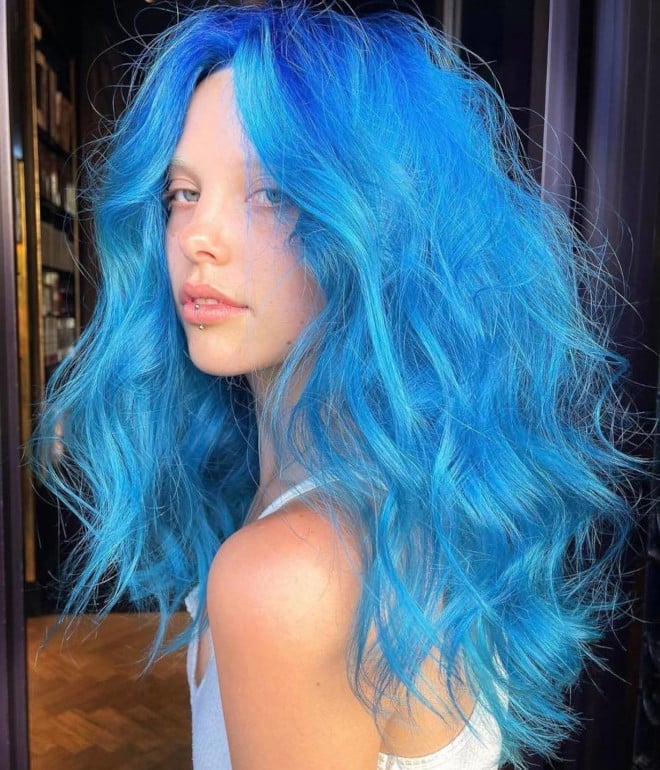
Electric blue at shoulder length is a color that shows every bend of a loose wave, which is why thick hair handles it better than fine hair does. The middle part and lack of bangs put all the attention on the shade itself. Ask your stylist for: shoulder length cut, vivid electric blue all over, loose waves. A middle part and this length below the chin create a lengthening effect for round face shapes, while oval and long face shapes carry it without any adjustment. Texture does the rest: thick, wavy hair holds the electric blue surface without going flat, and a texturizing spray on damp hair plus air drying or a diffuser keeps the wave lived-in. Plan a trim every six to eight weeks, because a shoulder length cut loses its shape fast once ends split.
2. Deep Navy Blue Mid-Back Straight Hair
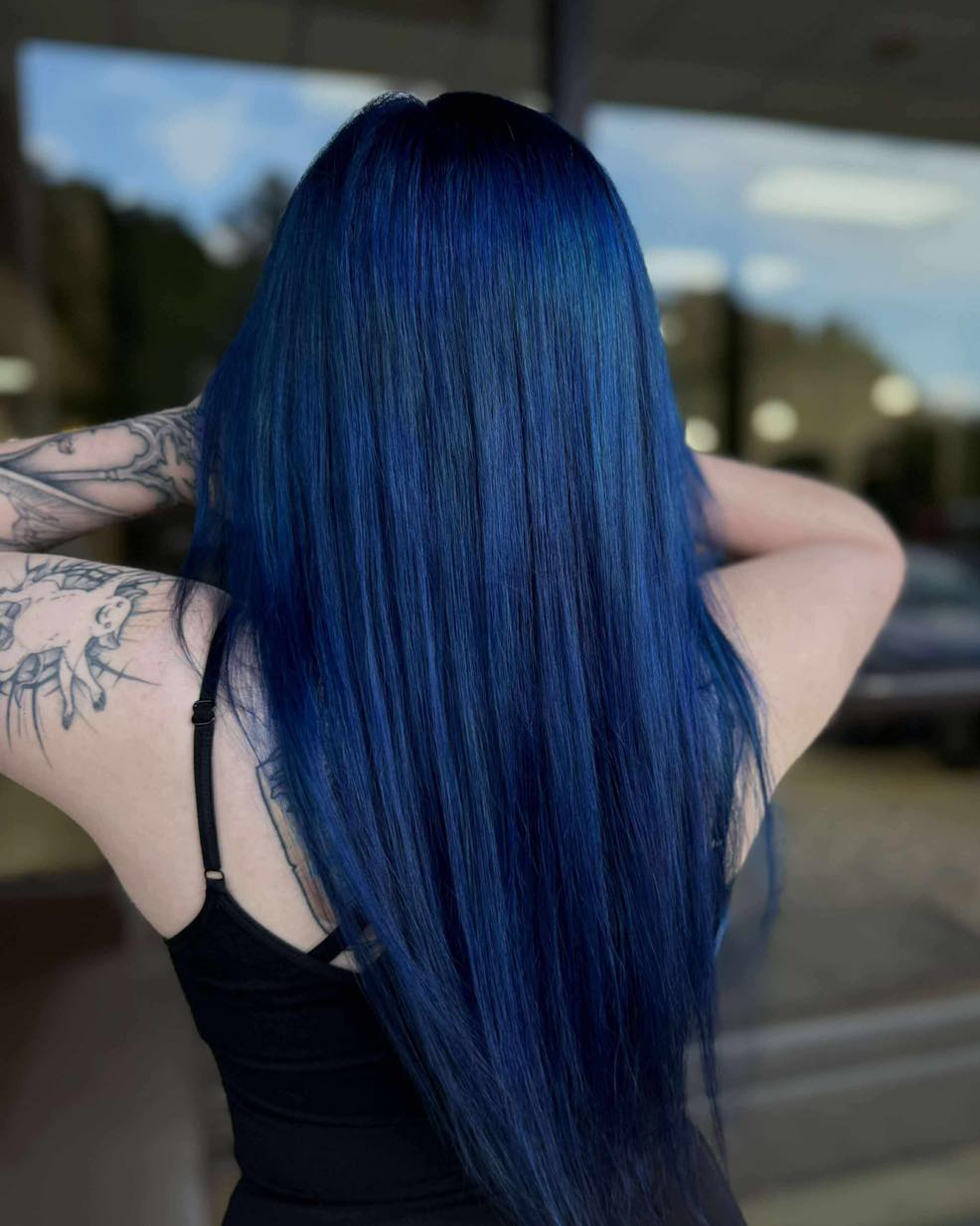
A uniform deep navy blue across a mid-back length only works when the canvas is even, and that is the part worth understanding before you sit down. Fine, straight hair takes color fast and reflects light hard, so any patchiness in the base shows up as streaks of lighter blue. Your colorist will pre-lighten the whole head to one consistent level first, then apply the navy over it in a single pass, section by section, so the mid-back and the ends land on the same depth. Ask your colorist for: deep navy blue all over, uniform base. A middle part and this length elongate a round face.
Upkeep is where navy earns its reputation. The shade sits dark enough that a root shadow is unnecessary, but blue pigment fades toward green over time, so a salon toning session every six to eight weeks keeps it navy instead of murky. Fine hair needs little styling: a smoothing serum before a blowout, a heat protectant if you straighten, and a trim every six to eight weeks to keep the poker straight finish clean at the ends.
3. Rich Deep Blue Mid-Back Wavy Hair
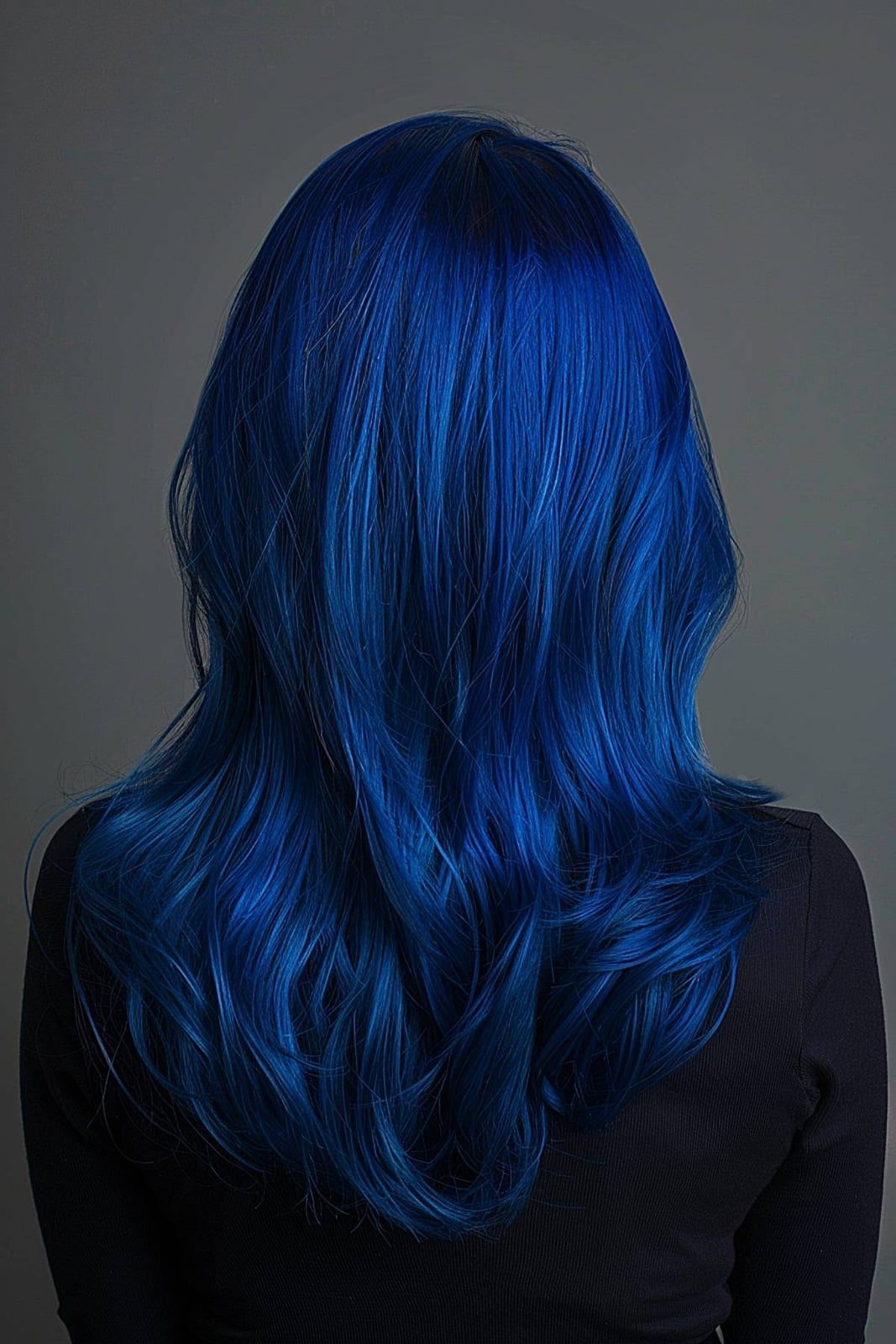
How do you ask for a deep blue that reads rich and solid instead of patchy? By naming the highlights, not just the base. This is a deep blue with subtle lighter blue highlights, and the lighter pieces are what keep the shade from turning into one flat block of pigment from root to mid-back length. Ask your colorist for:
- Mid-back length, deep blue base
- Subtle lighter blue highlights
- Soft, flowing waves
Bring the words subtle and lighter, because chunky highlights break up a rich blue and leave visible stripes down thick, wavy hair. Ask for the highlights to sit a level or two above the base, woven through the layers rather than placed in wide panels. Thick, wavy hair of mid-back length carries the depth without the color going muddy, and a middle part suits oval and long face shapes. The wavy blowout does the rest, and the lighter pieces show up clearly where the wave turns.
4. Shoulder Length Dark Blue Straight Thick Hair
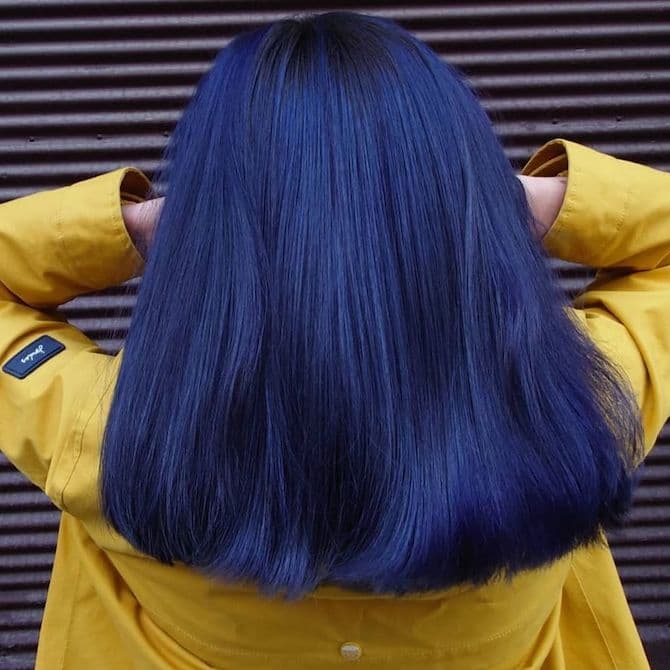
A straight edge at shoulder length gives dark blue a clean line to sit against, and thick hair keeps that line sharp rather than collapsing into the collarbone. The shade is dark blue with lighter blue undertones, so the depth reads almost black indoors and shows its blue in daylight. Ask your stylist for: shoulder length straight cut, dark blue with lighter blue undertones. A middle part suits oval and long face shapes.
Wear reality on this one is mostly about the grow-out line. Dark blue shows roots within a few weeks, and a straight, thick cut makes that line obvious because there is no wave to break it up. A root shadow buys about six weeks before the regrowth starts to show. Apply a heat protectant before straightening, and book a trim every six to eight weeks to keep the blunt edge from rounding off.
5. Ash Blue Collarbone Waves With Curtain Bangs
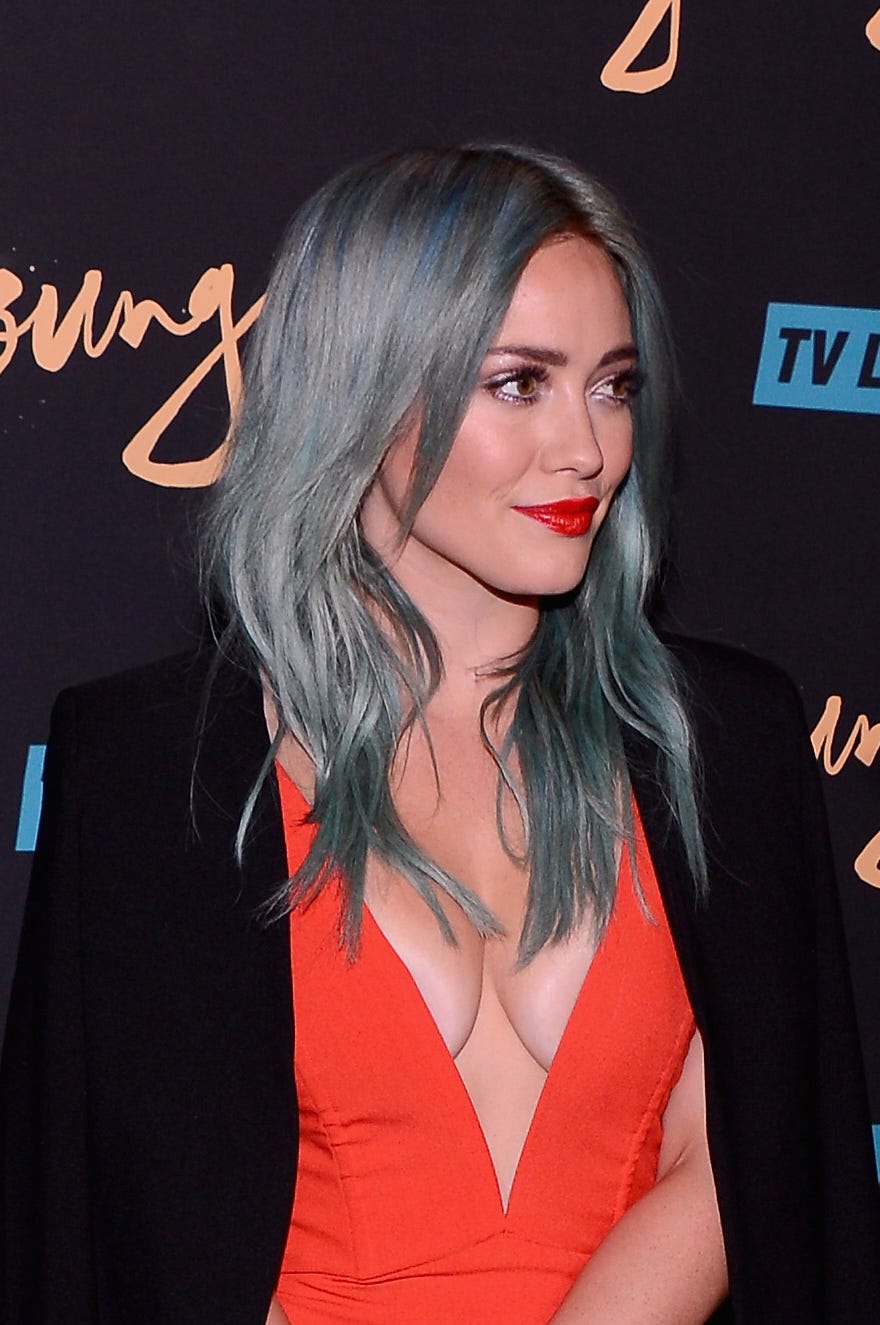
Set this against a saturated electric blue and the temperature differs: ash blue carries a gray, cool cast where electric blue runs bright and warm. The base here is ash blue with lighter blue highlights, blown out into soft waves at collarbone length, with curtain bangs framing the front. Fine, wavy hair handles the ash tone well because the gray cuts glare and the lighter highlights add dimension the base alone would not give. Curtain bangs soften square and round faces. Ask your stylist for: collarbone length bob, ash blue with lighter blue highlights, curtain bangs. For a shade that reads blue without announcing itself across a room, this is the version to bring in.
6. Layered Shoulder Length Dark Blue
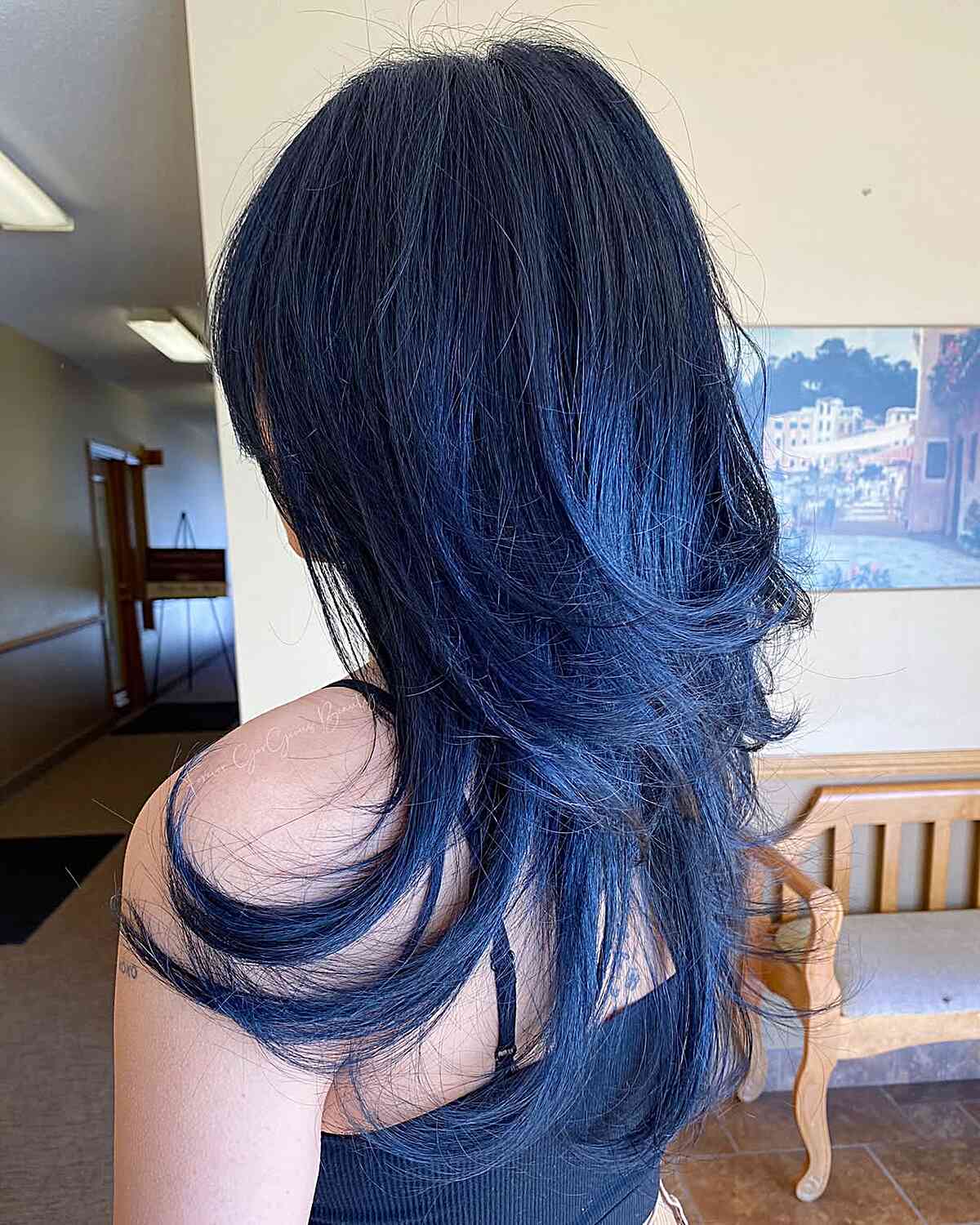
The design relies on a shoulder-length layered cut with a dark blue base and subtle lighter blue highlights woven through the face-framing pieces. That detail is exactly what gets lost when you try to replicate the look at home. The highlight placement needs a colorist’s eye to land on the right strands, or the result turns into a muddy blend. Fine, straight hair of shoulder length can pull this off, but only if the layers are kept soft enough to avoid looking sparse. Ask your colorist for: shoulder-length layered cut, dark blue with lighter blue highlights. The blowout finish is simple enough to manage yourself, though the layered shape demands a trim every six to eight weeks to hold its form.
7. Deep Vibrant Blue Mid-Back Straight With Long Layers
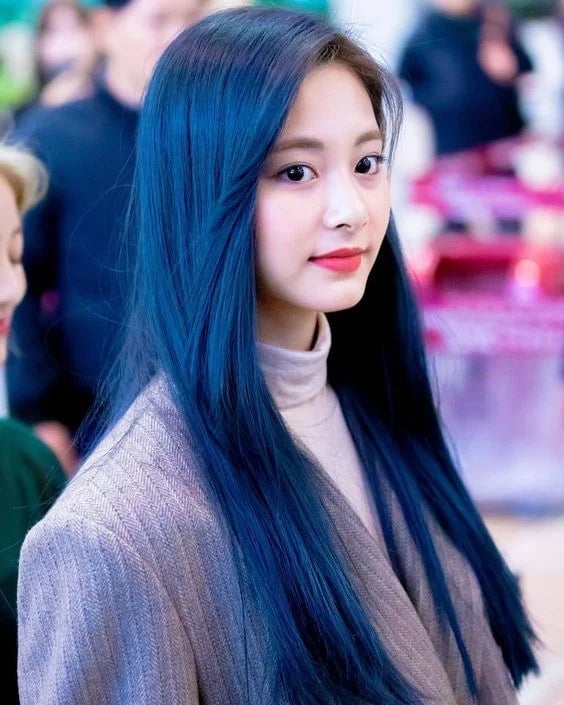
The deep vibrant blue base carries subtle lighter blue undertones that catch the eye, and on thick straight hair the long layers keep the color from feeling one-note. This is a shade that lands best in the cooler months, when natural light is softer and the blue appears rich. A middle part works well here. It lets the color sit symmetrically and suits oval or longer face shapes. Ask your colorist for: mid-back length, deep vibrant blue with subtle lighter blue undertones. The air-dried finish is deliberately low-effort: a smoothing cream keeps the texture polished, and a trim every six to eight weeks maintains the long layers without sacrificing length.
8. Blue and Purple Balayage Loose Waves
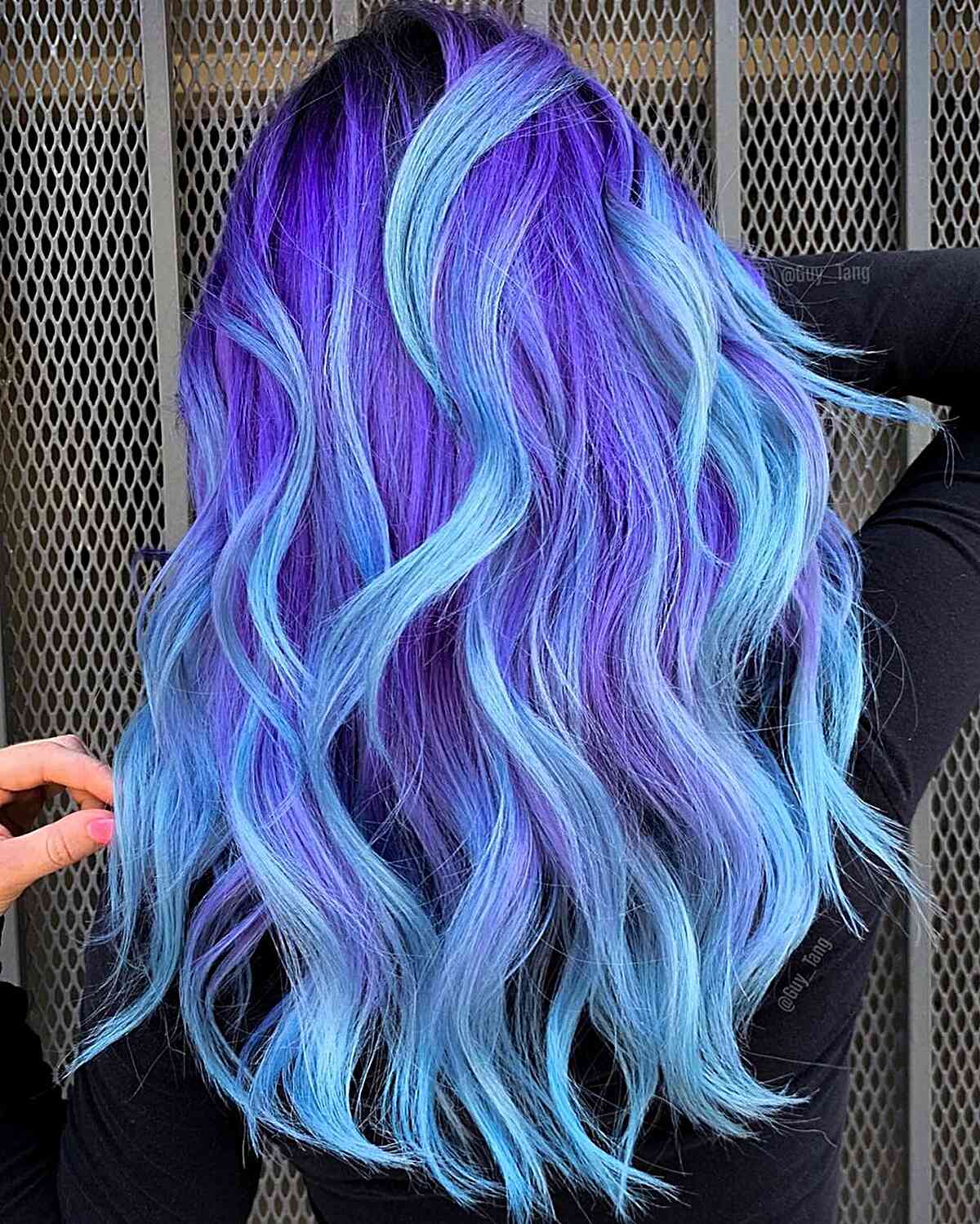
Wondering if a blue and purple balayage is worth the chair time? The blend looks incredible on thick wavy hair but demands a specific daily routine. The balayage technique paints the color freehand, so the blue and purple tones melt into each other without landing in stripes, and loose waves showcase that gradient better than straight hair ever could. Ask your colorist for: mid-back length, blue and purple balayage, loose waves. The purple tends to wash out faster than the blue, and a sulfate-free shampoo is the only thing that buys you a few extra weeks between toning appointments. The waving and color upkeep are a package deal.
9. Black With Bright Blue Ombré Waves
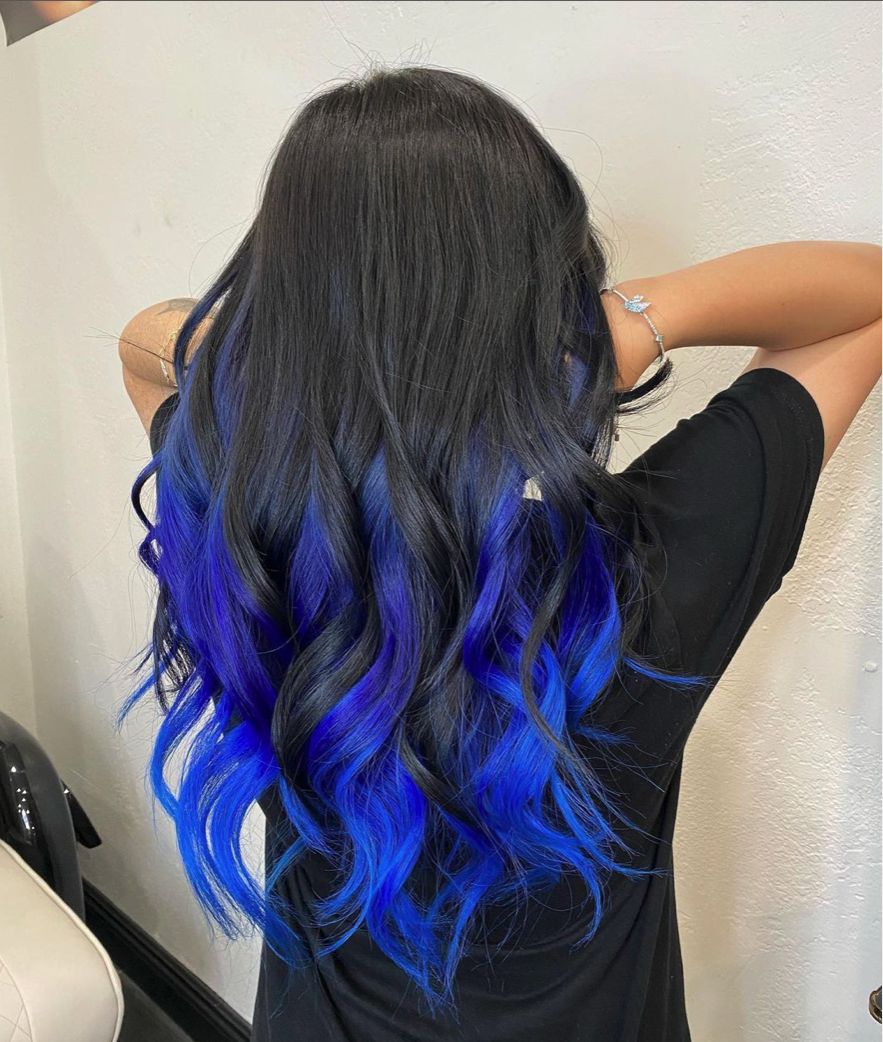
A black base with a bright blue ombré creates a sharp contrast that works best on thick wavy hair. The density is necessary: the dark root section needs enough bulk to read as intentional black rather than faded brown, and the loose waves help the blue ends move naturally without looking glued on. Ombré is forgiving for growth. The dark base hides new roots, so you can stretch salon visits to eight or ten weeks. Ask your colorist for: mid-back length, black base with bright blue ombré, loose waves. Skip this if your hair is fine or straight: the contrast can look stark rather than dimensional, and the blue may appear patchy without the wave pattern to diffuse it.
10. Teal to Bright Blue Ombré Blowout
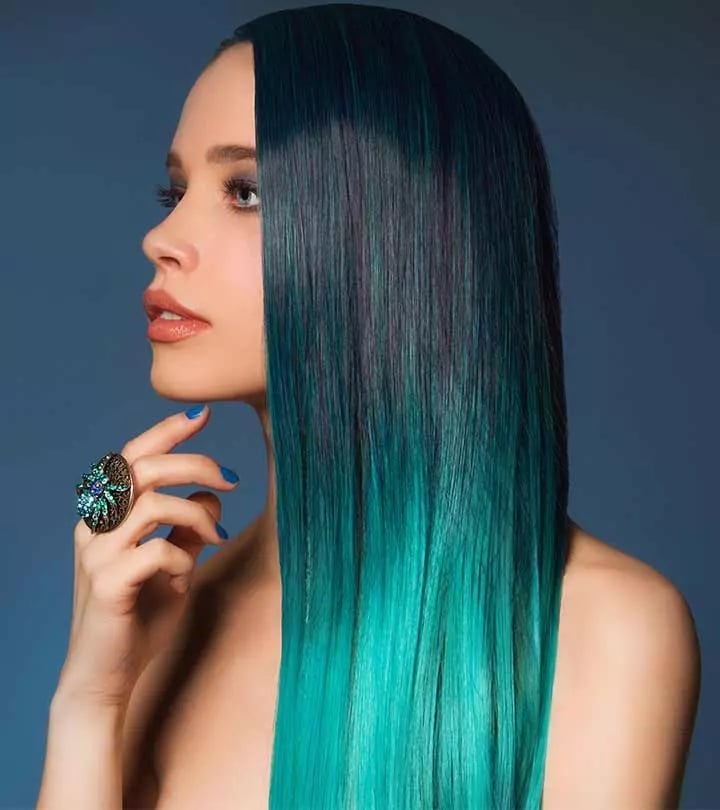
The ombré here moves from deep teal at the roots to bright blue at the ends, and it is the seamless gradient that makes the color work on thick straight hair. A smooth blowout is the right styling choice because it lets the eye travel down the length without interruption, any wave would break up the transition. The technique is balayage applied in two stages: the teal base goes in first, then the bright blue is painted lower, blended upward with a feathering motion. Ask your colorist for: mid-back length, teal to bright blue ombré, smooth blowout. A middle part balances the side view and keeps the gradient centered. Trim every eight to ten weeks; the ombré grows out gracefully, so the timeline is flexible.
11. Dark Base With Blue Highlights
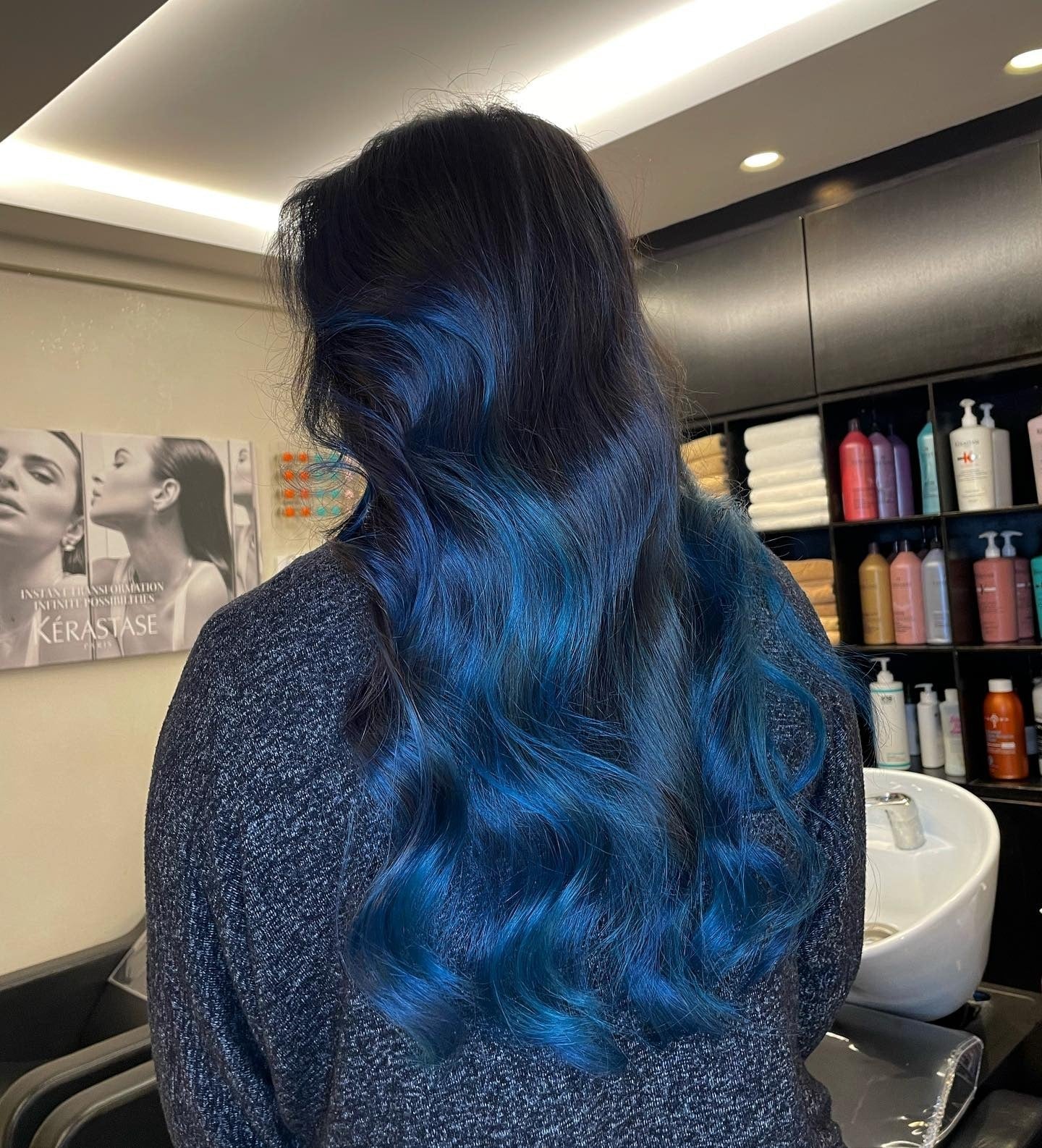
Wondering how to wear blue without going full mermaid? A dark base with blue highlights is the answer, especially on thick, wavy hair where the color shows at every bend. The mid-back length gives the highlights room to show as dimension, and the middle part lets both sides display the contrast.
Thick, wavy textures hold blue pigment unevenly, so the lighter pieces can fade faster than the base. Ask your colorist for: mid-back length, dark base with blue highlights, loose waves. A color-depositing conditioner keeps the blue from turning green, and a trim every six to eight weeks keeps the ends looking neat.
12. Dark Base With Teal and Blue Highlights, Mid-Back
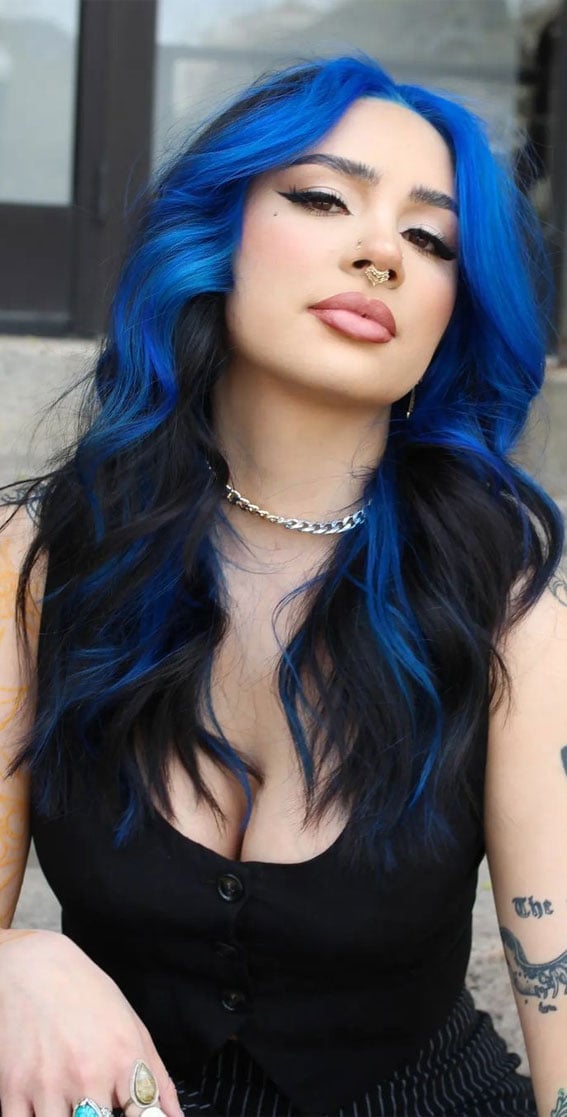
Two tones beat one when the goal is depth: a dark base with teal and blue highlights shifts the color story from simple to layered, with the vibrancy concentrated toward the ends. That placement gives the mid-back length movement. Single-tone highlights give a uniform wash, while this pairing gives thick, wavy hair a multi-dimensional finish that moves with each wave. Expect a long salon appointment: blending two shades across a dark base takes time. Ask your colorist for: mid-back length, dark base with teal and blue highlights, loose waves. This is a salon-only project, and the placement is too precise for a home kit.
13. Deep Midnight Teal Blue Air-Dried
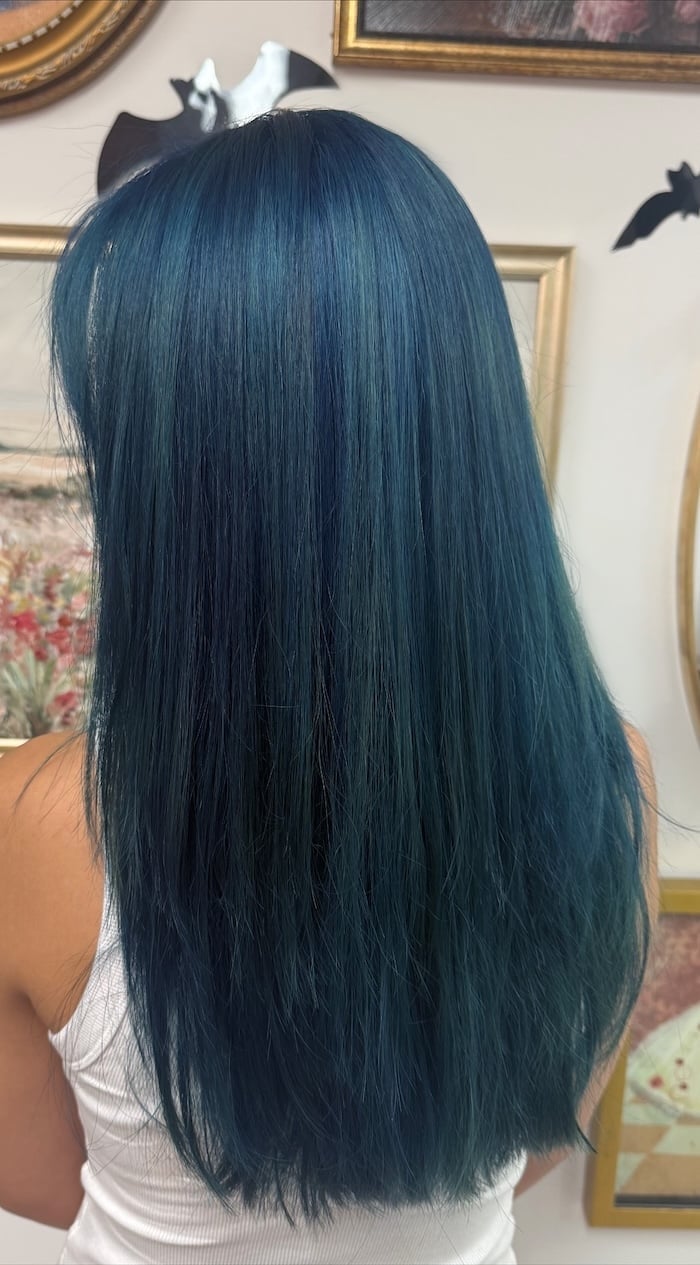
The color is deep midnight teal blue, dark enough to pass for a natural shade at a distance but unmistakably blue up close. On thick, straight mid-back hair, the air-dried finish keeps the gloss visible without the flatness of a blowout. A middle part suits oval and long face shapes by breaking up the length. Ask your colorist for: mid-back length, deep midnight teal blue, air-dried finish. The key is the undertone: you want the teal to lean cool, not green, so specify a blue-heavy formula. Detangle with a wide-tooth comb on damp hair to keep the straight texture smooth, and book a trim every six to eight weeks to preserve the shape.
14. Dark Brown to Teal Ombré Loose Waves
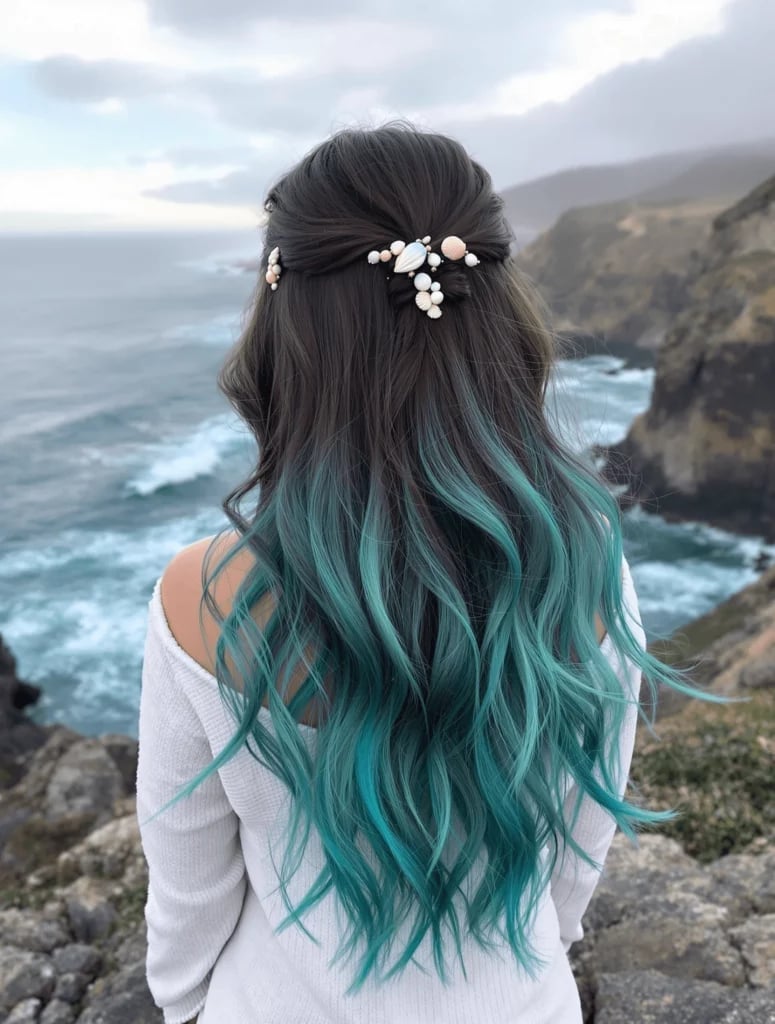
Ever had an ombré turn brassy? The dark brown to teal transition is forgiving on the roots, but the ends can pull green if the toner fades. On thick, wavy mid-back hair, the loose waves blur the gradient so the color melts rather than chops. The drawback is that teal is a high-maintenance tone: it fades faster than the brown base, and the brassiness shows up first at the ends. Ask your colorist for: mid-back length, dark brown to teal ombré, loose waves. A color-depositing conditioner in the teal family keeps the ends from going murky, and a trim every eight to ten weeks keeps the ombré line clean.
15. Vibrant Blue and Teal Blend Wavy Hair
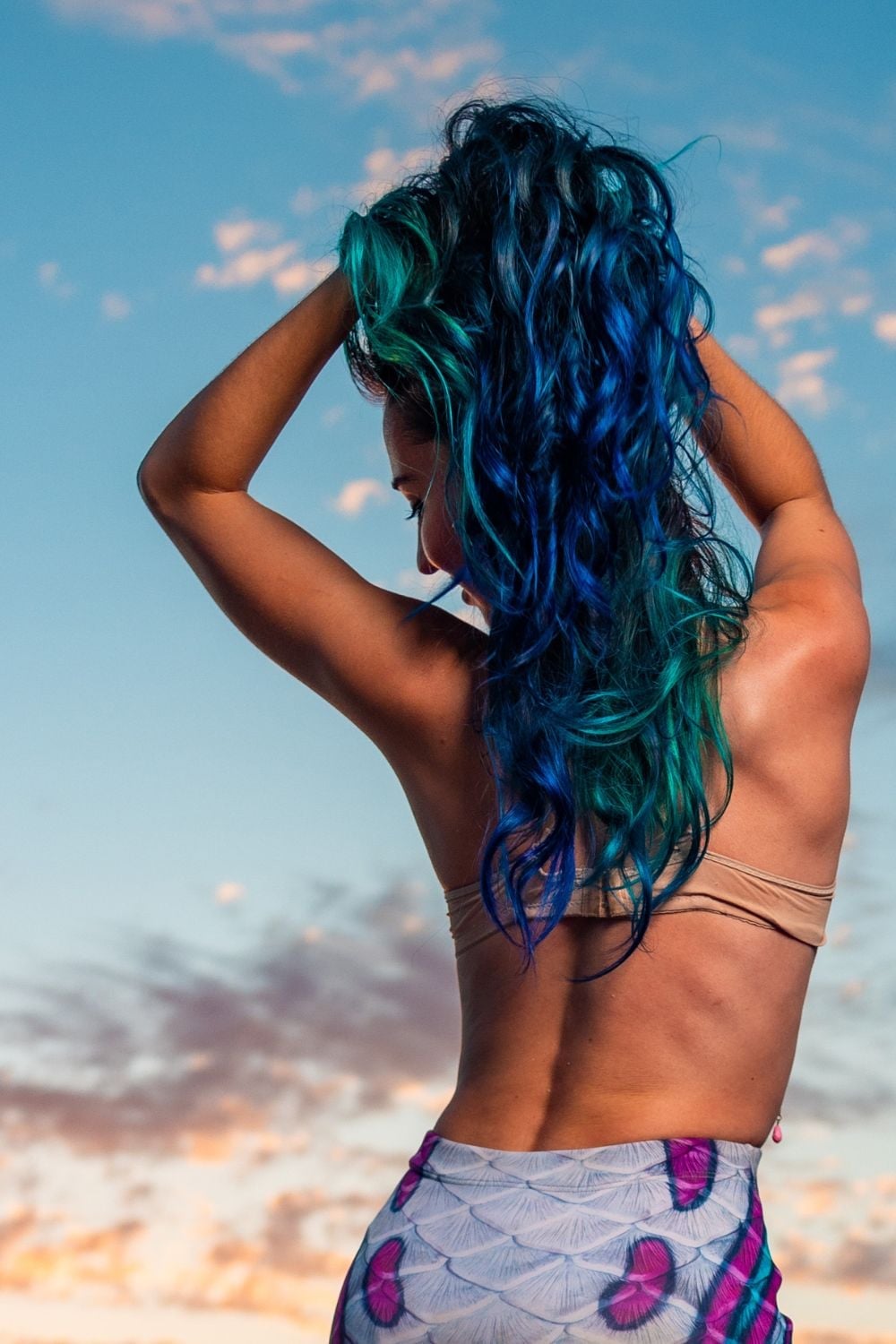
A vibrant blue and teal blend on thick, wavy mid-back hair is the closest you get to a mermaid effect without extensions. The two tones weave through loose waves, so the color shifts as the hair moves, and the volume of the texture keeps the blend from flattening into a single shade. This is a festival pick, or a summer statement when you want the hair to do the talking. Ask your colorist for: mid-back length, vibrant blue and teal blend, loose waves. The blend works on most face shapes because the mid-back length frames without overpowering. A weekly color-safe mask keeps the blend from dulling, and a trim every six to eight weeks keeps the waves from turning ragged.
16. Dark Base With Blue Ombré Waves
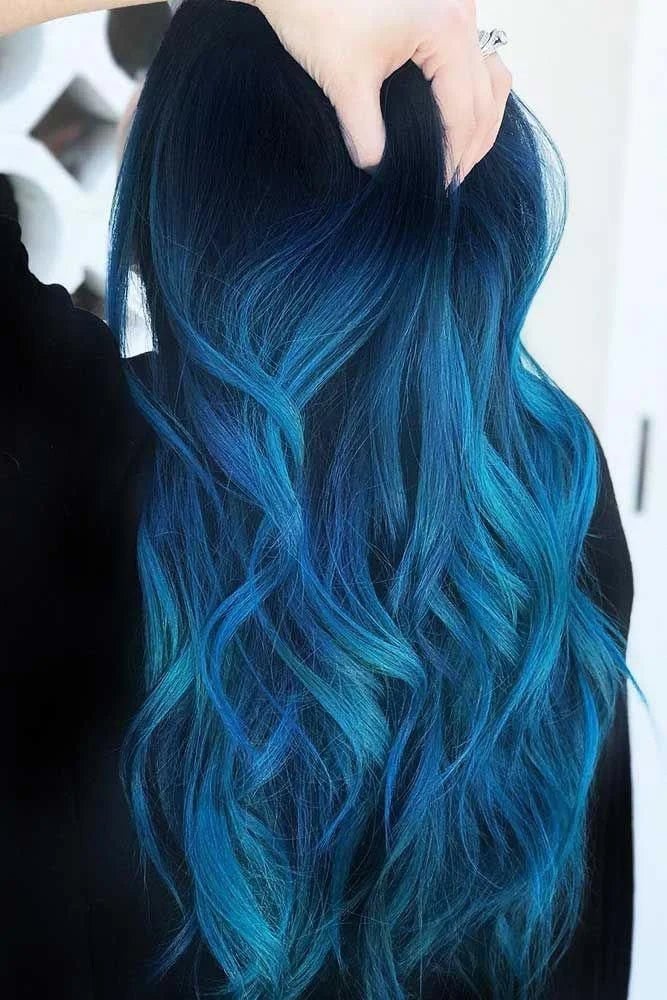
Do not attempt this one at home. A clean ombré on a dark base needs the mid-lengths and ends lightened in a controlled gradient, and box color over dark hair will not lift enough for the blue to show. Thick wavy texture holds the line well once it is set, so a hydrating serum on damp ends and a rough dry leave the loose waves intact without a round brush. This is a salon service, and the blue will need refreshing as it fades.
17. Blue to Light Blue Ombré Wavy Fine Hair
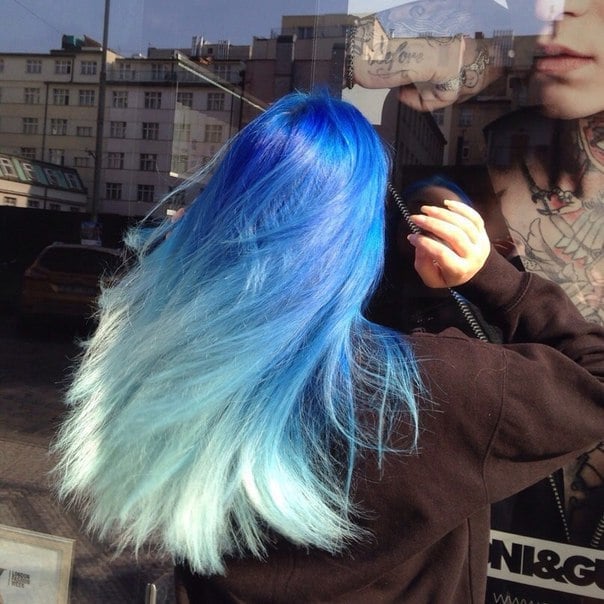
Will a blue ombré make fine hair look thinner? Handled as a gradient, no. The shift from a vibrant royal blue at the roots to a pale sky blue at the ends pulls the eye down the length, and the lighter ends add visual depth that a single flat shade cannot. Fine, wavy hair at mid-back carries this blue to light blue ombre well because the color does the volume work the texture cannot. Ask your colorist for: mid-back length, royal blue to pale sky blue ombré, loose waves. The lighter the ends go, the more the wave pattern shows, so an air-dried finish is enough on most days.
Who should pass? Fine hair that has already been lightened several times in the past year, since a double process on fragile ends asks a lot. Straight, low-density hair can wear it too, but the gradient is subtler without a bend to catch it. Faces with a strong jaw get a softener from the pale ends sitting near the chin. If your wave pattern drops out by mid-afternoon, a lightweight mousse on damp hair gives the loose waves something to hold.
18. Black Hair With Bright Blue Face-Framing
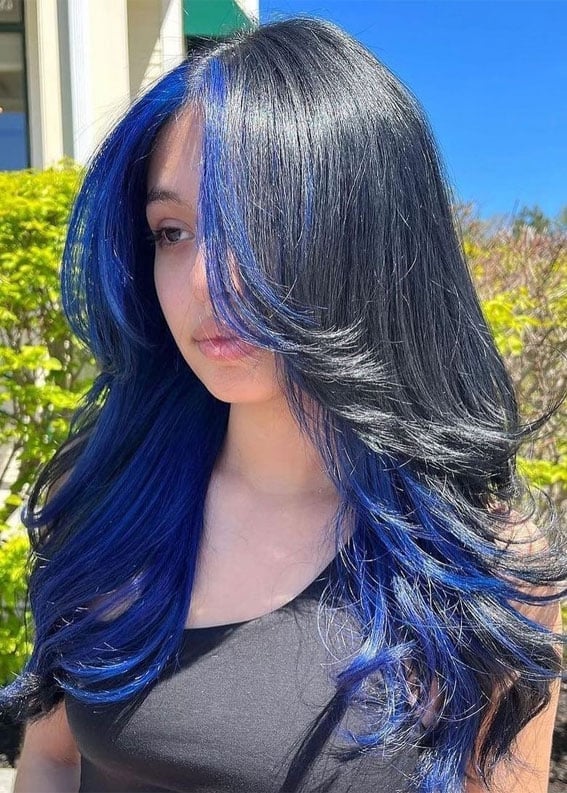
Ask your colorist for: long length, black with bright blue face-framing pieces, curtain bangs. The front sections have to be lightened first, since blue will not show over black, and the curtain bangs are cut to fall into the blue rather than across it. On thick, straight hair the contrast stays crisp, and a layered blowout keeps the pieces smooth. Trim every six to eight weeks to keep the bangs from crowding the eyes.
19. Deep Blue-Black Mid-Back Layers
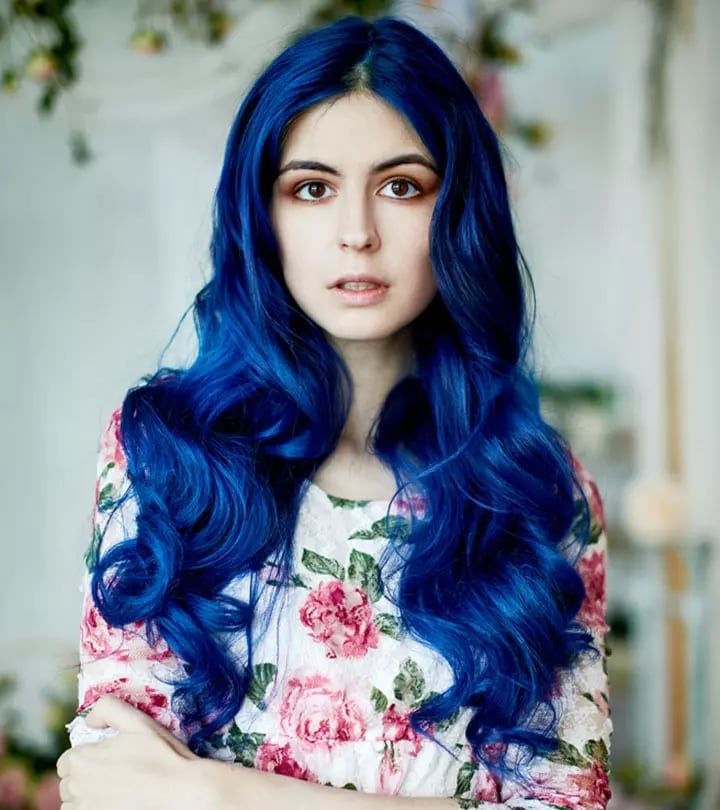
Wavy, thick hair holds this finish well because the bends catch light and make the blue visible without any styling tool. A shine serum on damp mid-lengths and ends is enough to keep the gloss, and a rough dry leaves the natural waves alone. The color is uniform from root to end, so there is no gradient to protect and no blending to worry about as it grows out. Expect the ends to lose their blue first, since they take the most washing and heat.
20. Chin Length Bob Blunt Blue Bangs
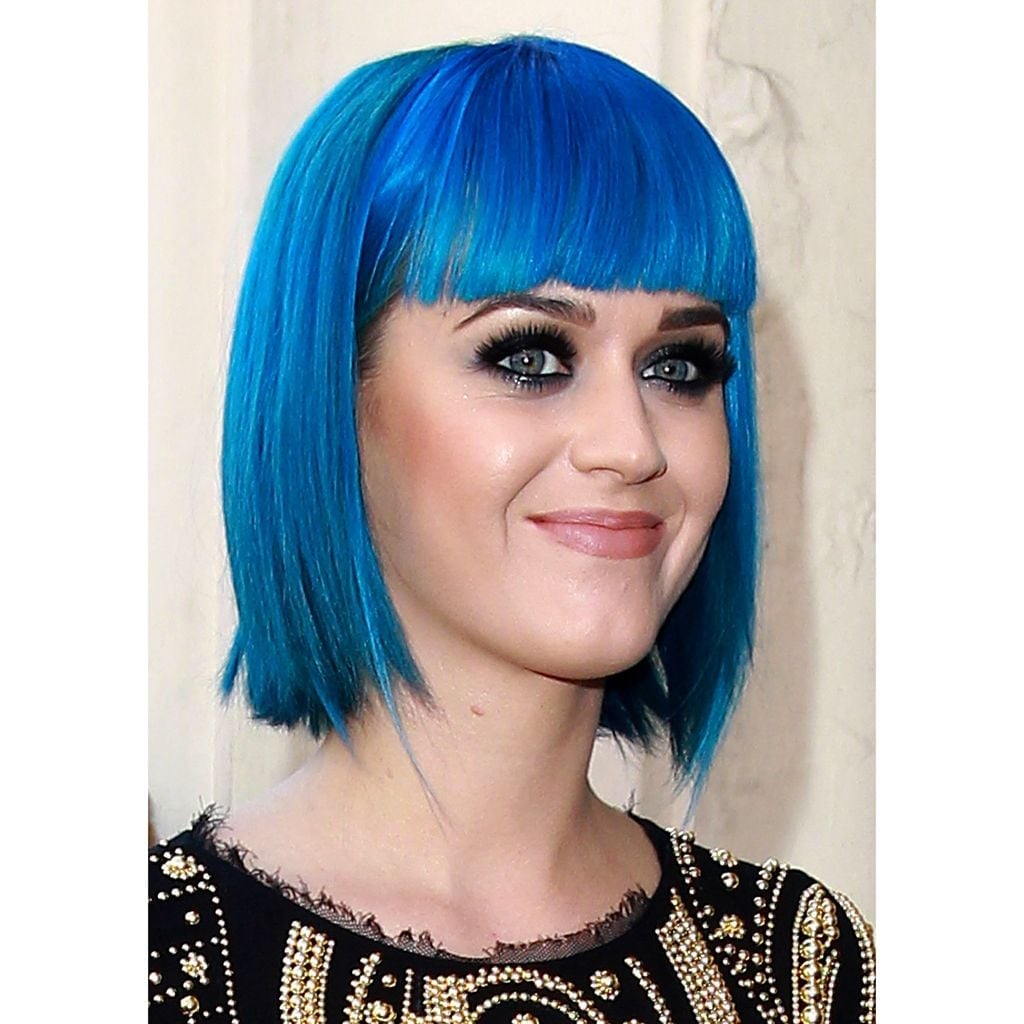
Ask your stylist for: chin length bob, blunt bangs, vibrant electric blue. Fine, straight hair keeps the cut sharp, and a side parting breaks up the blunt edge. This is a salon job on both counts, since a precise blunt line and an allover blue are hard to control at home. The drawback is the clock: blunt bangs need a trim every four to six weeks to stay off the brow.
21. Final Thoughts
Fine hair keeps its volume best with a solid blue or subtle highlights rather than heavy ombré. Thick hair can handle the dimension of a balayage or a two-tone fade without looking weighed down. Match the technique to your texture first, then pick the shade.
- Use color-safe shampoos and conditioners to preserve vibrancy.
- Wash hair with cool water to minimize color bleeding.
- Toning may be needed every 4-6 weeks for lighter blues.
- Deep condition weekly to maintain shine and health.
Embrace the bold and beautiful world of blue.