Braided hairstyles for natural hair are protective styles built from three-strand sections, and the current mood leans toward lived-in color and glossy natural texture instead of flat-ironed finishes. Length runs from chin-grazing bobs to mid-back ponytails, with beads and knots doing the decorative work.
This list covers 22 ideas, from low-upkeep cornrows to a full afternoon in the chair for micro braids. Fine or fragile textures do better with smaller, tension-light sections; thicker textures can carry the volume of larger braids and twists. If your braids go fuzzy by week two or a style pulls at the hairline, the right section size fixes both. Braided Hairstyles Natural Hair, sorted by length and hold.
1. Long Black Box Braids With Wooden Beads
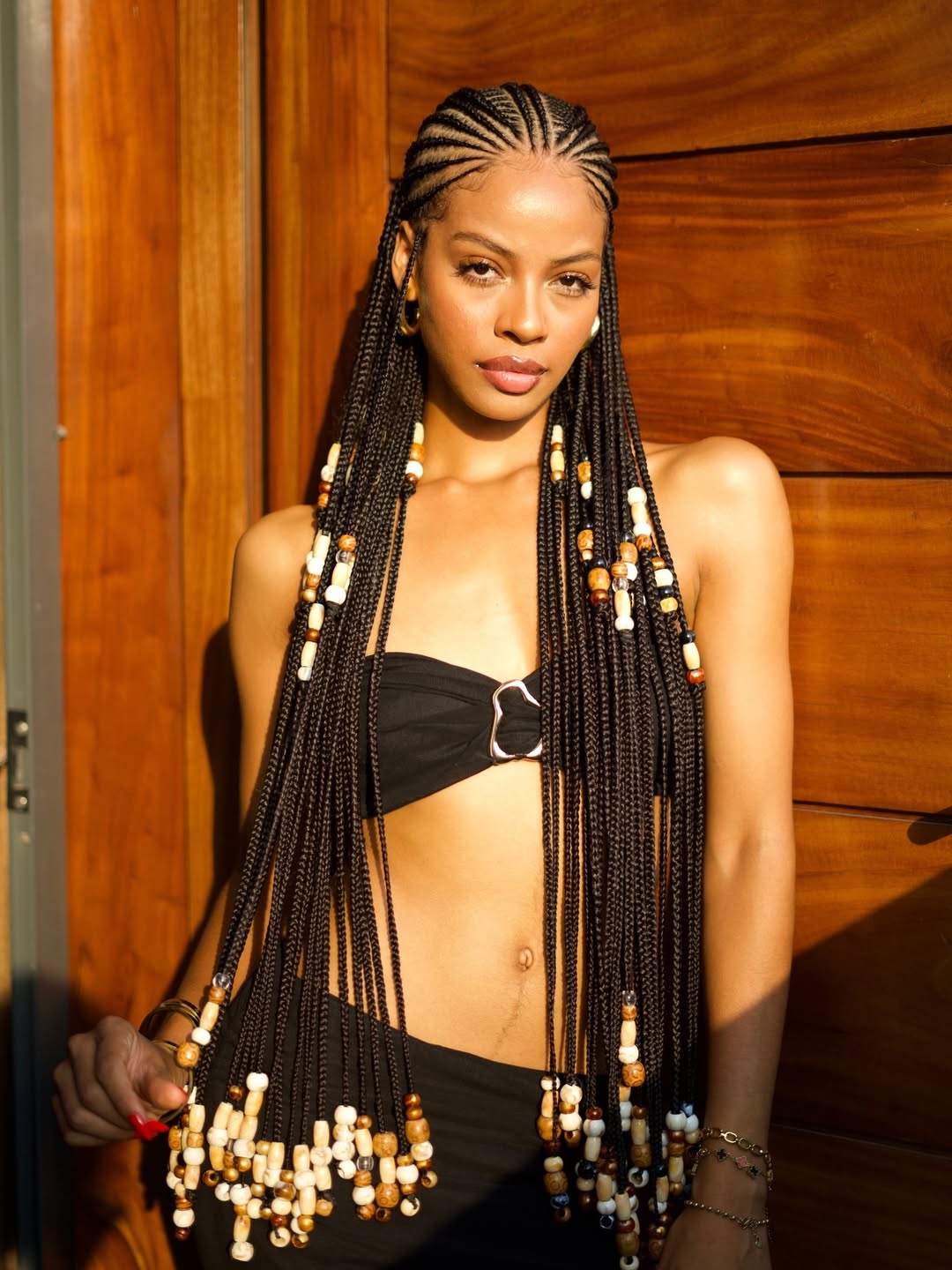
The wooden and white beads sit at the ends of each braid like little punctuation marks, spaced evenly enough that the rhythm reads as planned. These are mid-back box braids in black, parted down the middle and worn down, with a thickness that keeps the sections clean rather than fuzzy. Thick, straight natural hair handles the weight best, and you need mid-back length to start so the braids fall where they should. A round face gets some elongation from the middle parting and the length below the chin; a long face can carry the volume at the sides without looking narrow.
Ask your stylist for: mid-back box braids with wooden beads. Beads add weight at the ends, so keep an eye on your scalp at the part and ask for lighter wooden beads if the pull feels sharp. Styling is minimal: a little oil on the braids and a satin scarf at night. Book a trim of the frayed ends every 10 to 12 weeks, and have the beads checked at the same appointment so none slip off.
2. Intricate Black Cornrows Swirling Patterns
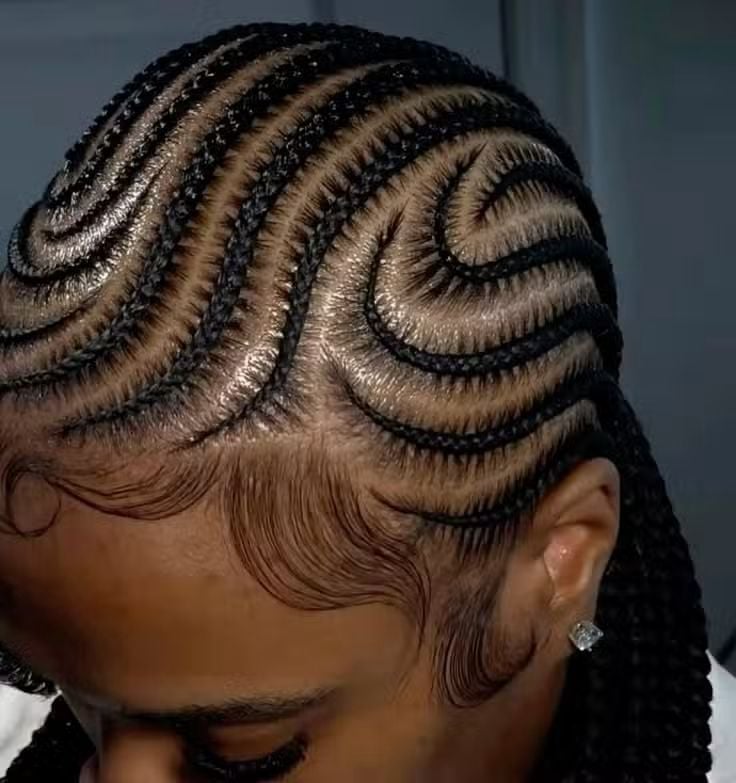
Every curve in these swirling cornrows is a decision made before the first stitch, because the parting has to split cleanly around each turn. The hair is short and black, with the middle parting holding the pattern symmetrical and the edges laid smooth. Thick, straight natural hair gives the braider enough density to keep the rows tight; fine hair tends to show scalp between curves. Ask your stylist for: short cornrows with swirling scalp patterns. Precision like this takes two to four hours, and the pattern only holds if the sections stay small and even.
3. Cornrows Transitioning to Long Braids
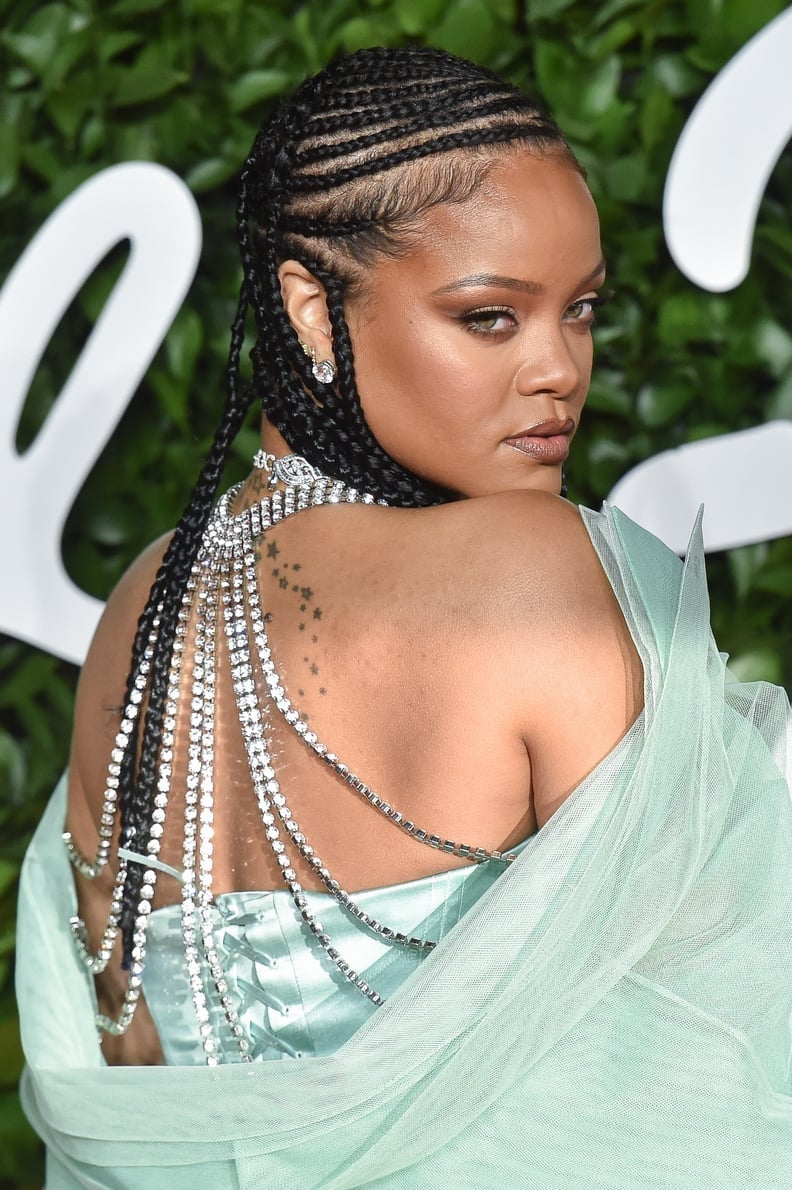
A full head of cornrows keeps the drama at the scalp; this version sends it down the back instead, with an ornate pattern at the front feeding into mid-back braids. Both are black and both need thick, straight natural hair, so the choice comes down to where you want the detail to live. Cornrows alone suit short hair and a close, graphic finish. The transition style asks for mid-back length and gives you movement, with the braids falling straight from the middle part.
Ask your stylist for: cornrows with mid-back length braids. Upkeep is mostly about the lengths: a light serum keeps the braids smooth, and a scarf at night protects the pattern at the scalp. Book a trim for split ends every 12 weeks, and plan on a re-do at the scalp before the braids start to loosen, usually around the six to eight week mark.
4. Mid-Back Braids With Wooden Bead Accents, Close-Up Take
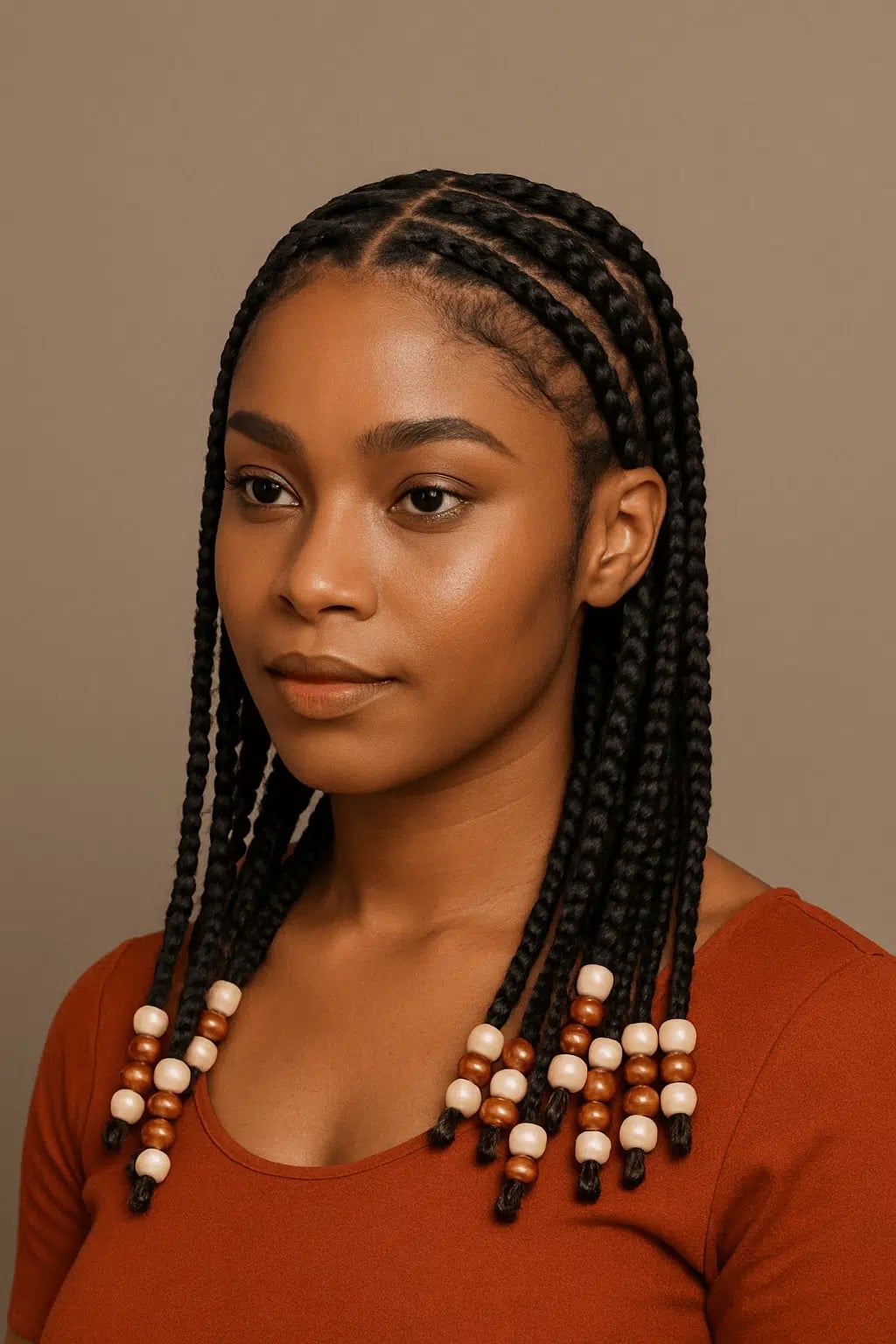
So you want the beads to look scattered, not stacked? Then say so before the first braid is placed. Black braids falling to mid-back, parted down the middle and worn straight, give the wooden accents room to breathe, but only if the placement is mapped out. Thick, straight natural hair at mid-back length carries the weight. Ask your stylist for: mid-back braids with wooden beads. Name the bead size, how far up from the ends they sit, and whether they cluster in a row or alternate braids. A front view shows every bead at once, so uneven spacing is the first thing anyone notices. Ask for a quick look at the layout before the install starts.
5. Braided Updo With Decorative Gold Beads
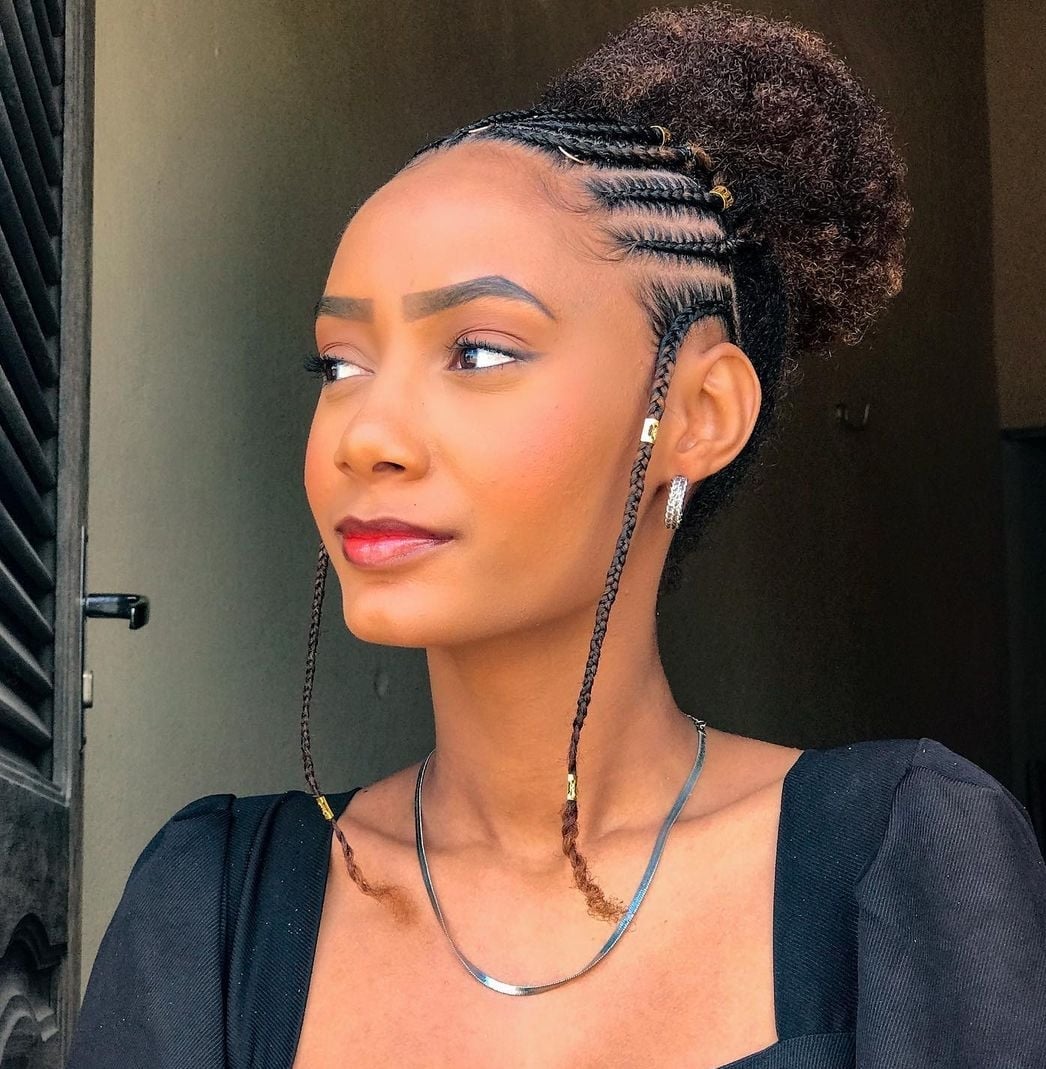
Cornrows run back from the hairline into a high bun, and a few thin decorative braids drop down the side with gold beads weighing their tips. The whole thing is black, built on natural braided texture, and it needs mid-back length to feed the bun without pulling tight at the temples. Thick hair holds the shape; fine hair needs more pins than you would guess.
Ask your stylist for: braided updo with gold bead accents. This is a formal style, the kind that works for a wedding, a graduation or any event where you want the back of your head to be the interesting part. The wear reality is flyaways: the small braids near the side will frizz first, so a light hairspray and a few extra pins in your bag handle it. Secure the bun firmly, and expect the gold beads to need a check before you leave the house. Take it down within a week or two to give the scalp a rest.
6. Geometric Braids High Ponytail
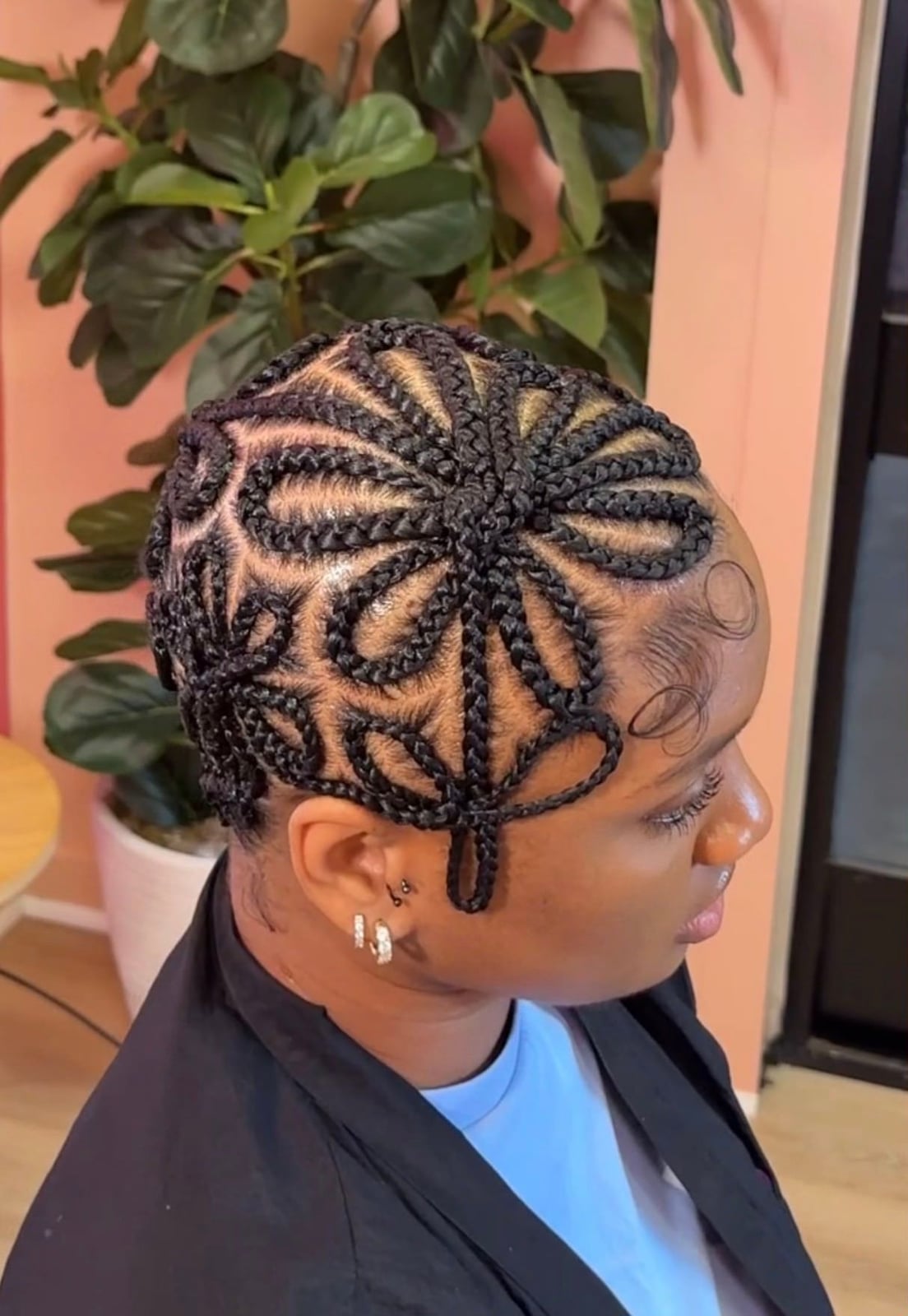
A geometric braided pattern swept into a high ponytail gives thick, coily hair a sculptural quality that holds its shape for days. The side view shows how the middle part anchors the design while defined baby hairs soften the hairline. Ask your stylist for: geometric braids into a high ponytail with baby hairs. This arrangement works best on mid-back length or longer natural hair, where the weight of the ponytail pulls the scalp pattern taut. Apply a hold gel to the baby hairs with a fine toothbrush; a strong hold hairspray keeps the ponytail base smooth through movement.
7. Shoulder Length Box Braids With Natural Texture
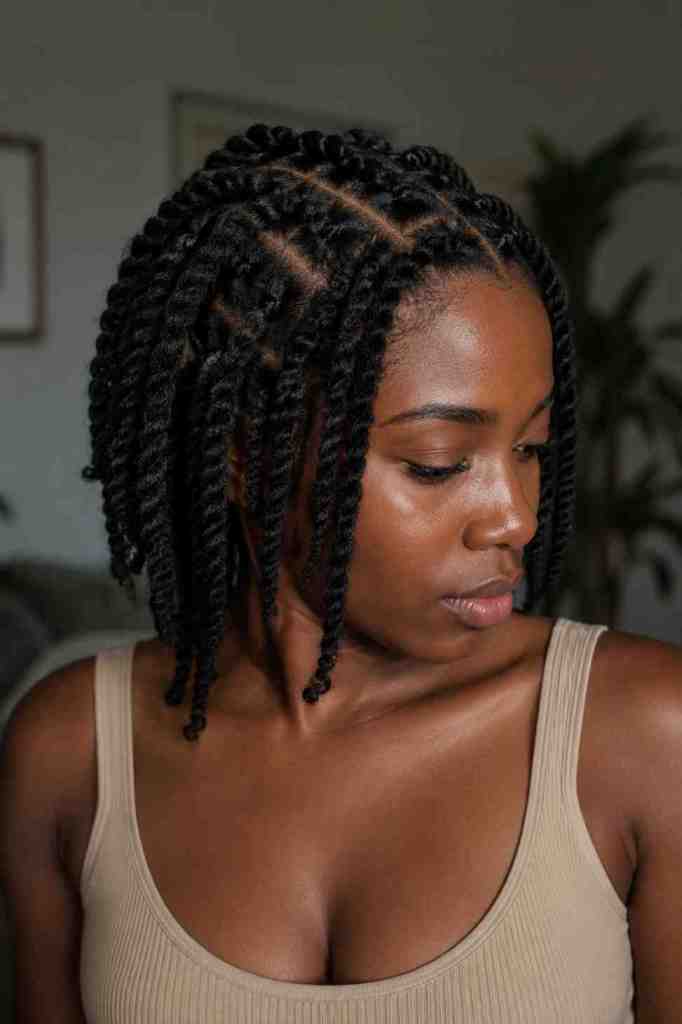
Shoulder-length box braids with a grid part and slightly wavy ends look less polished than their sleek counterparts, which is the point. The natural texture at the tips keeps the style from feeling stiff. Ask your stylist for: shoulder length box braids with a natural texture. This is strictly a salon project. Each section needs even tension to prevent the grid from shifting. The trade-off for the relaxed finish is that shorter braids can feel heavier than longer ones, especially on a dense head of natural hair.
8. Long Flowing Coily Box Braids
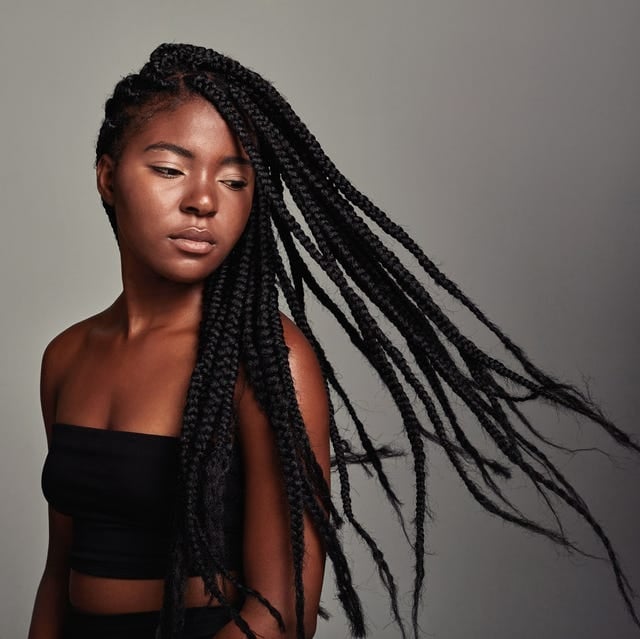
Loose, long box braids read as casual compared to the tight, uniform rows many braided styles demand. The middle part and coily, thick texture let the braids move like unbraided hair would, with flyaways that are more feature than flaw. Ask your stylist for: long flowing coily box braids.
Upkeep is where the reality sets in. These braids need air drying after every wash to keep the coily pattern from frizzing at the roots. A braid balm on the ends prevents dryness, and a trim every eight weeks keeps the tips from fraying. Mid-back length means a salon appointment of about three hours for the install.
9. Braids With Voluminous Curly Ends
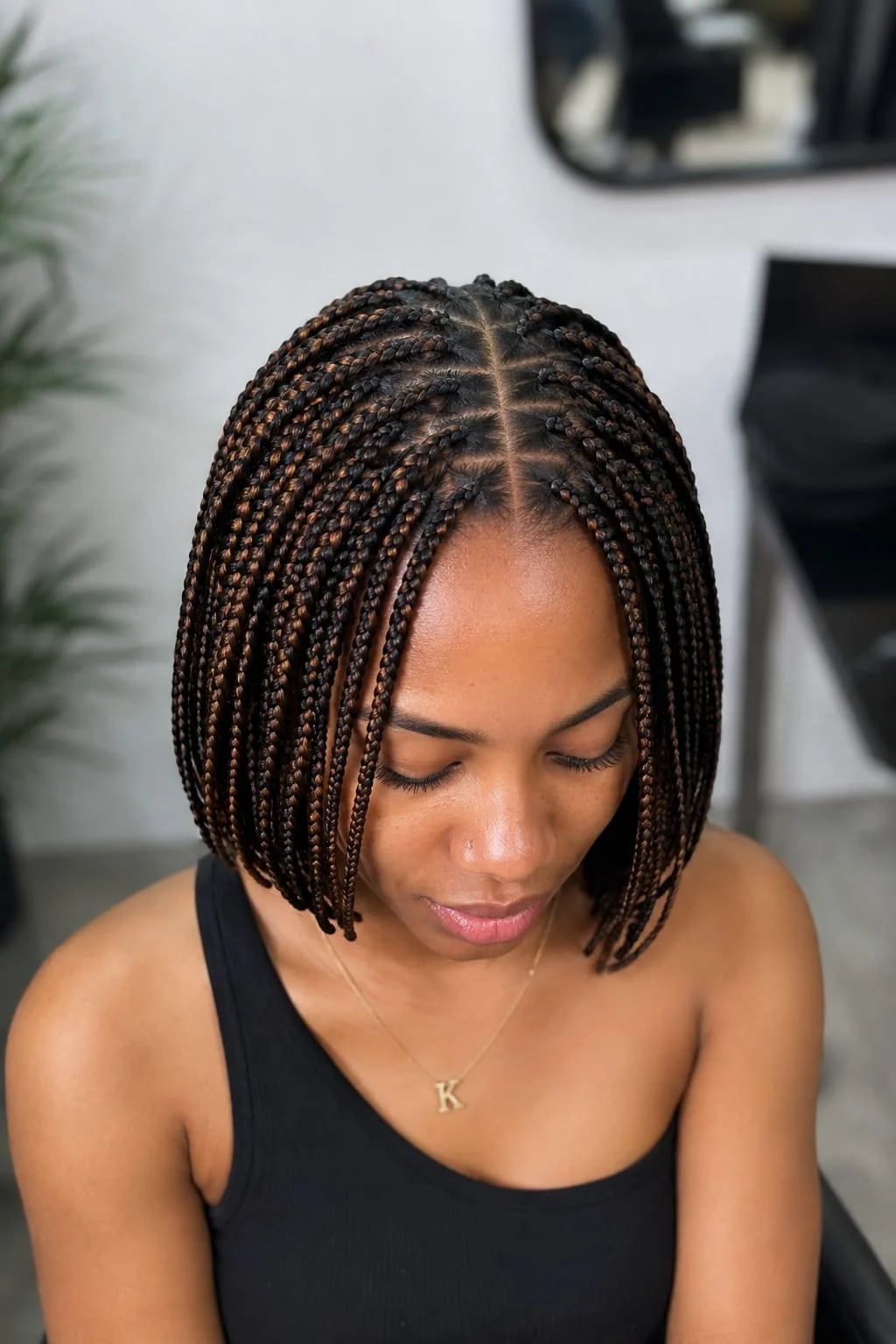
Braids that end in loose curls need the right extension texture, not a rushed transition. Ask your stylist for: braids with voluminous curly extensions. The top sections are braided neat and close to the scalp, while the lower half switches to a curly texture that matches the thickness of your natural hair. Specify a curl pattern that mirrors your own coil, looser spirals if your hair is wavy, tighter ringlets if it is coily. A curl-defining cream on the ends maintains bounce between washes.
10. Sleek Collarbone Bob With Cornrows
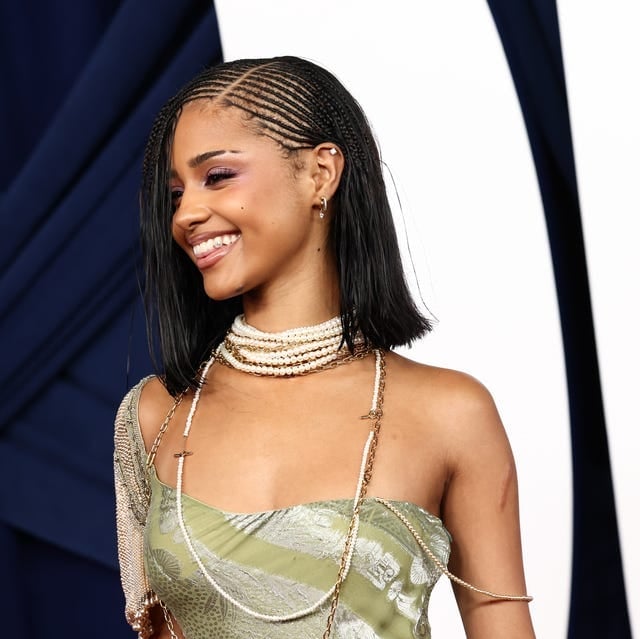
A collarbone bob with cornrows on the top and sides lands as a protective style that does not look protective. It is a deliberate cut. The middle part and straight, blunt baseline keep the silhouette clean, making this a strong pick for warmer months when you want hair off your neck without losing structure. Ask your stylist for: collarbone bob with cornrows. A smoothing serum on the blunt ends polishes the shape, and a dry scalp spray refreshes the cornrows between washes. The bob length shortens install time compared to longer braided styles.
11. Mid-Back Cornrows and Loose Curls
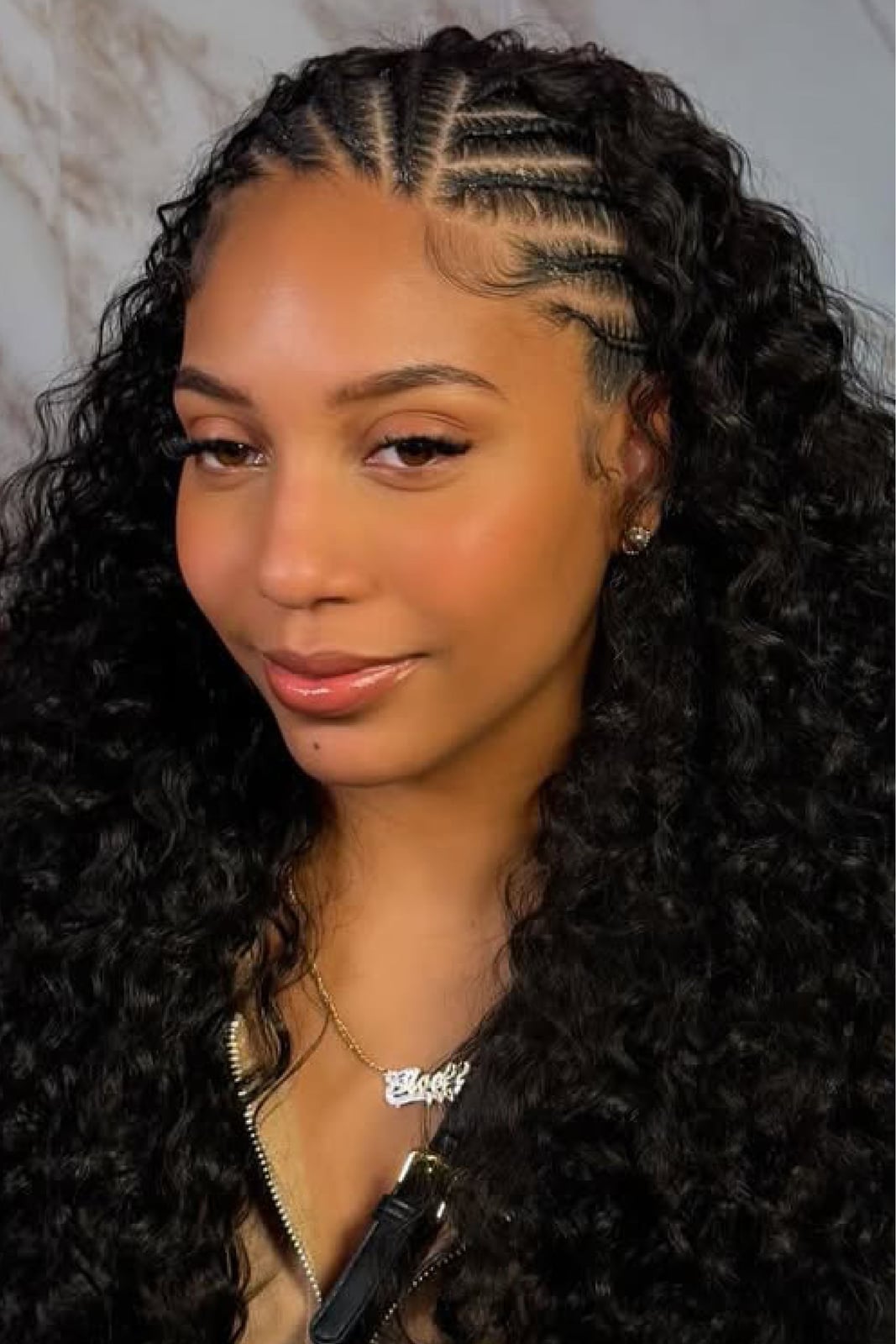
The design starts with small cornrows along the hairline, then releases the rest into loose, voluminous curls that reach mid-back. This combination works best on thick, curly natural hair long enough to show contrast between the two textures. Ask your stylist for: cornrows transitioning into loose curls throughout.
Styling the curls requires a curl custard or mousse for definition, while the braided sections need a light oil to stay moisturized. The middle parting keeps the look balanced, and the absence of bangs means the face-framing comes from the natural curl pattern alone. Expect the style to hold for about a week with proper care, though the loose curls may need refreshing every few days.
12. Box Braids High Ponytail Dark Brown
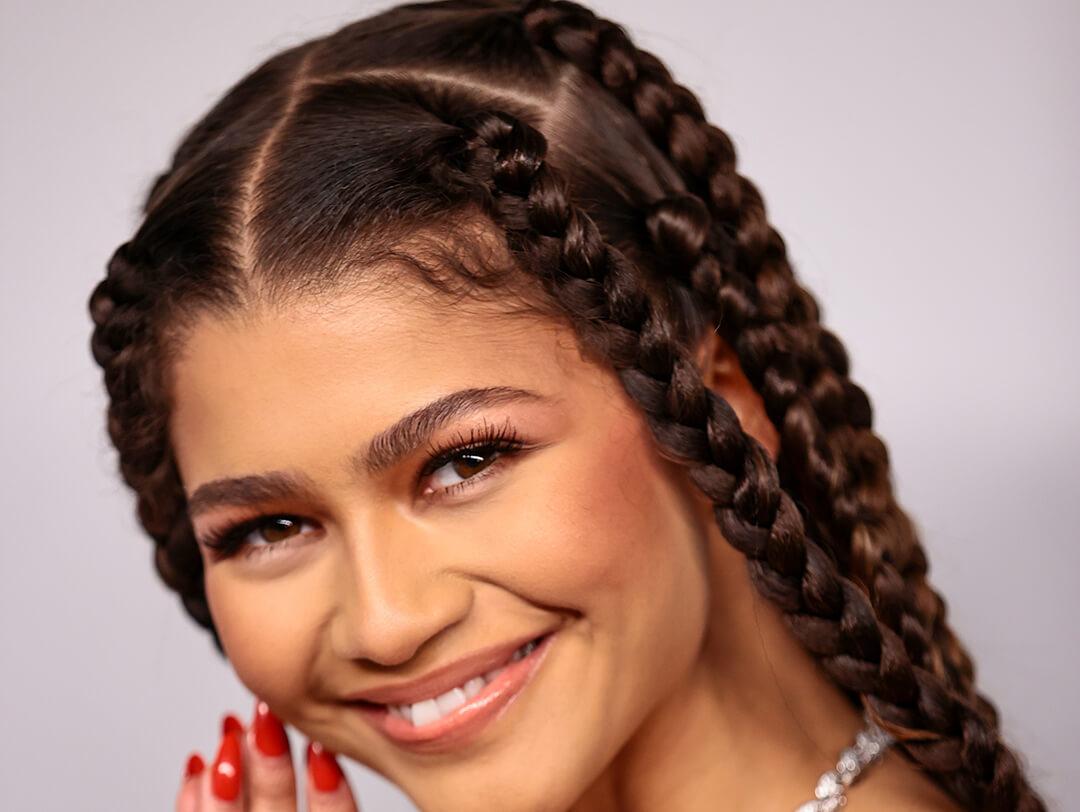
Long, thick box braids in a dark brown shade are gathered at the crown. The polished finish and neat edges make this style a strong choice for straight, thick natural hair of mid-back length or longer. Ask your stylist for: mid-back box braids in a high ponytail.
A high ponytail of this kind draws attention upward, which can balance rounder or softer jawlines. The clean middle parting keeps the hair off the face without any bangs. This is a low-fuss option for work or athletic settings, though the braids may feel noticeable by the end of a long day.
13. Shoulder Length Twists With Blonde Highlights
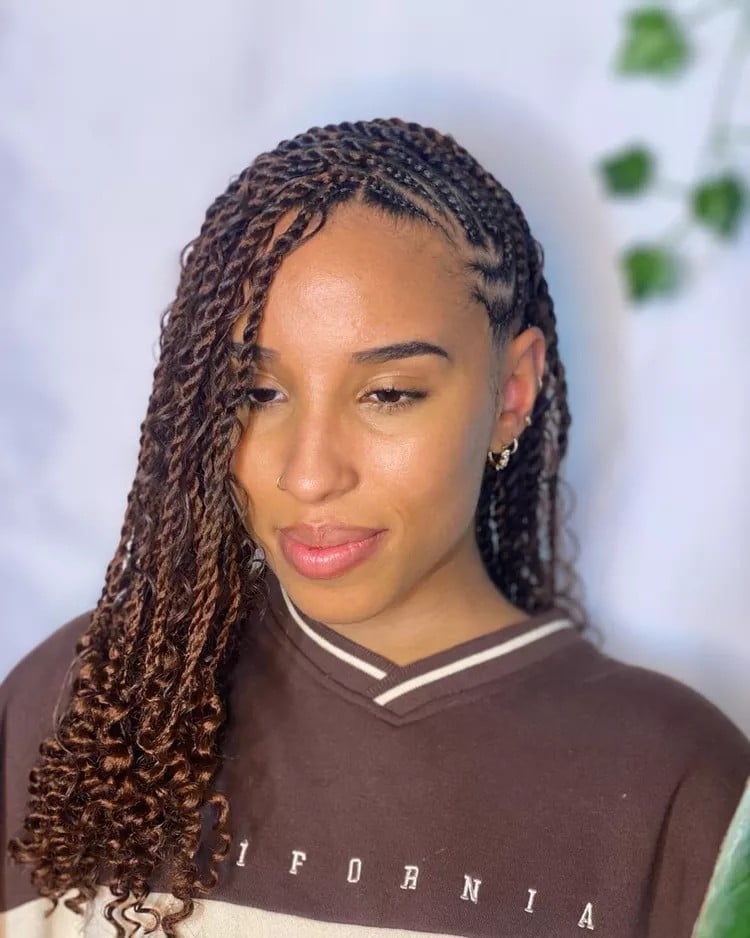
Shoulder-length braids and twists in a rich brown base with blonde highlights offer a softer alternative to uniform box braids. The side-swept parting and loose, curly tendrils around the face keep the look from feeling too structured. Ask your stylist for: shoulder length twists with blonde highlights and face-framing tendrils.
This style can be achieved at home if you have experience with twist-outs, but the highlights are best done in a salon to avoid uneven color. The mixed textures mean less precision is required, which works in your favor when time is short. A texturizing spray helps the wavy and curly components hold their shape.
14. Mid-Back Dark Brown Twist Braids Ponytail
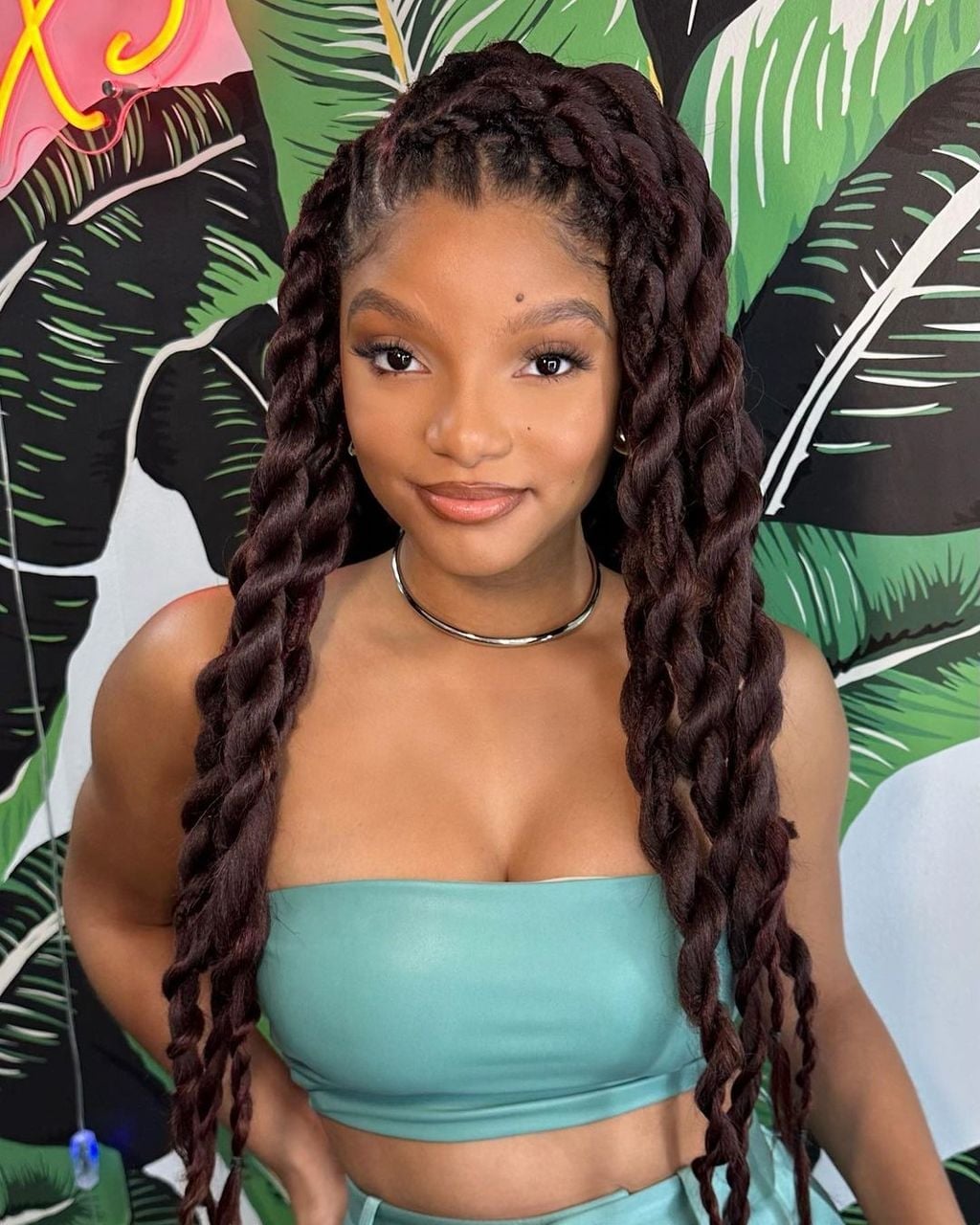
Large, thick twist braids in a dark brown hue are gathered into a high ponytail, with a wavy texture that adds volume through the length. The middle parting and absence of bangs keep the silhouette clean and practical. Ask your stylist for: mid-back dark brown twist braids in a high ponytail.
The trade-off with larger twist braids is drying time: they hold moisture longer than smaller braids, so plan for several hours of air-dry or a hooded dryer session. The twists also make this style feel heavier than box braids. On the upside, a moisturizing spray keeps them soft, and the ponytail stays secure without much fuss. A trim every eight weeks prevents the ends from fraying.
15. Shoulder Length Micro Braids Updo
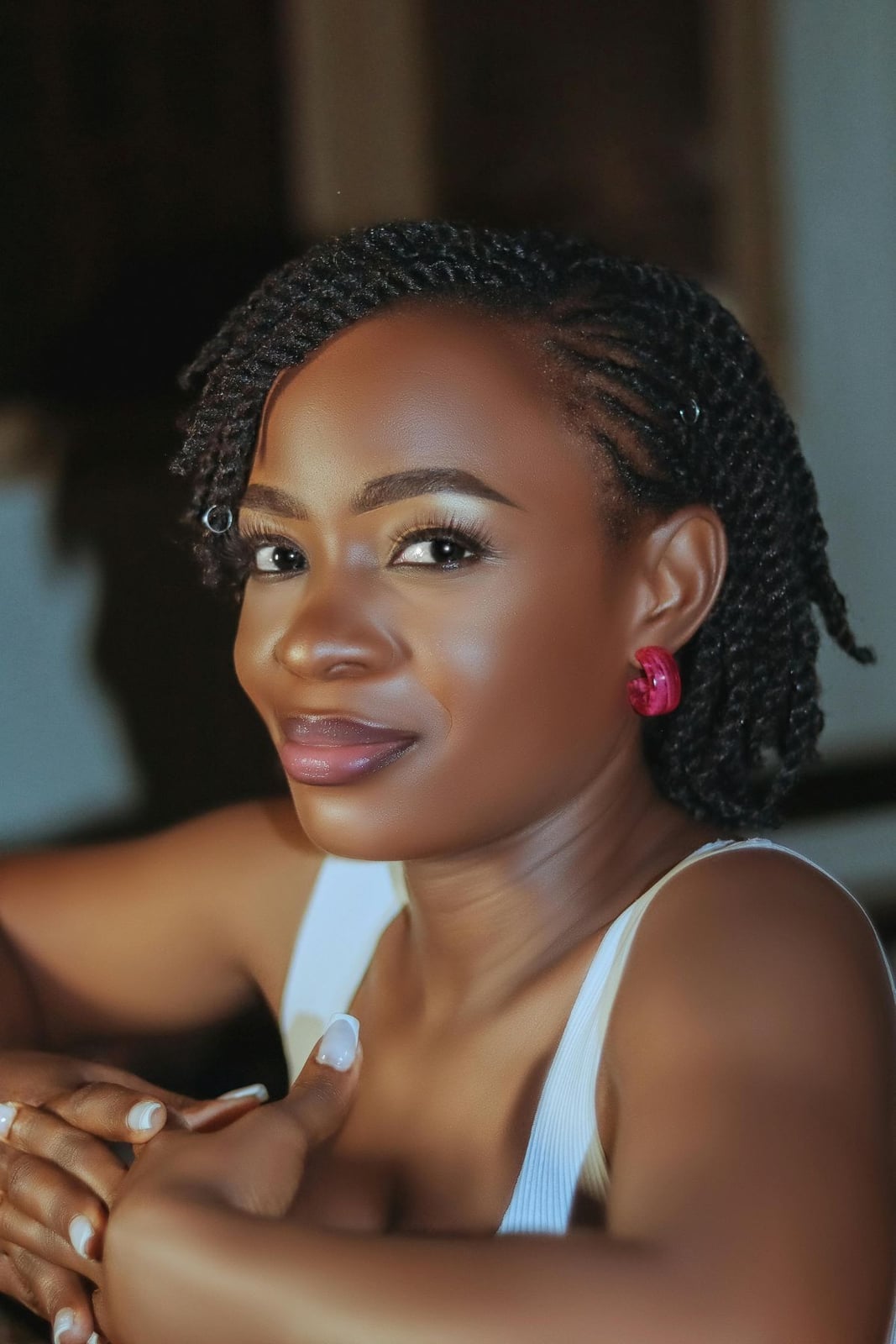
Fine black micro braids, shoulder length, are swept upward into a neat bun or knot at the back. The delicate size of each braid allows for a dense, intricate pattern that looks more refined than chunkier styles. Ask your stylist for: shoulder length micro braids into an updo.
This technique requires patience: sectioning and braiding fine strands takes longer at the salon, but the result is a lightweight updo that holds well for formal occasions. The micro braids also reduce bulk, making it easier to pin the hair into a smooth knot. A light finishing spray is all needed to keep flyaways in check. No bangs means the middle part and the braiding pattern do the work.
16. Mid-Back Box Braids With Amber Beads
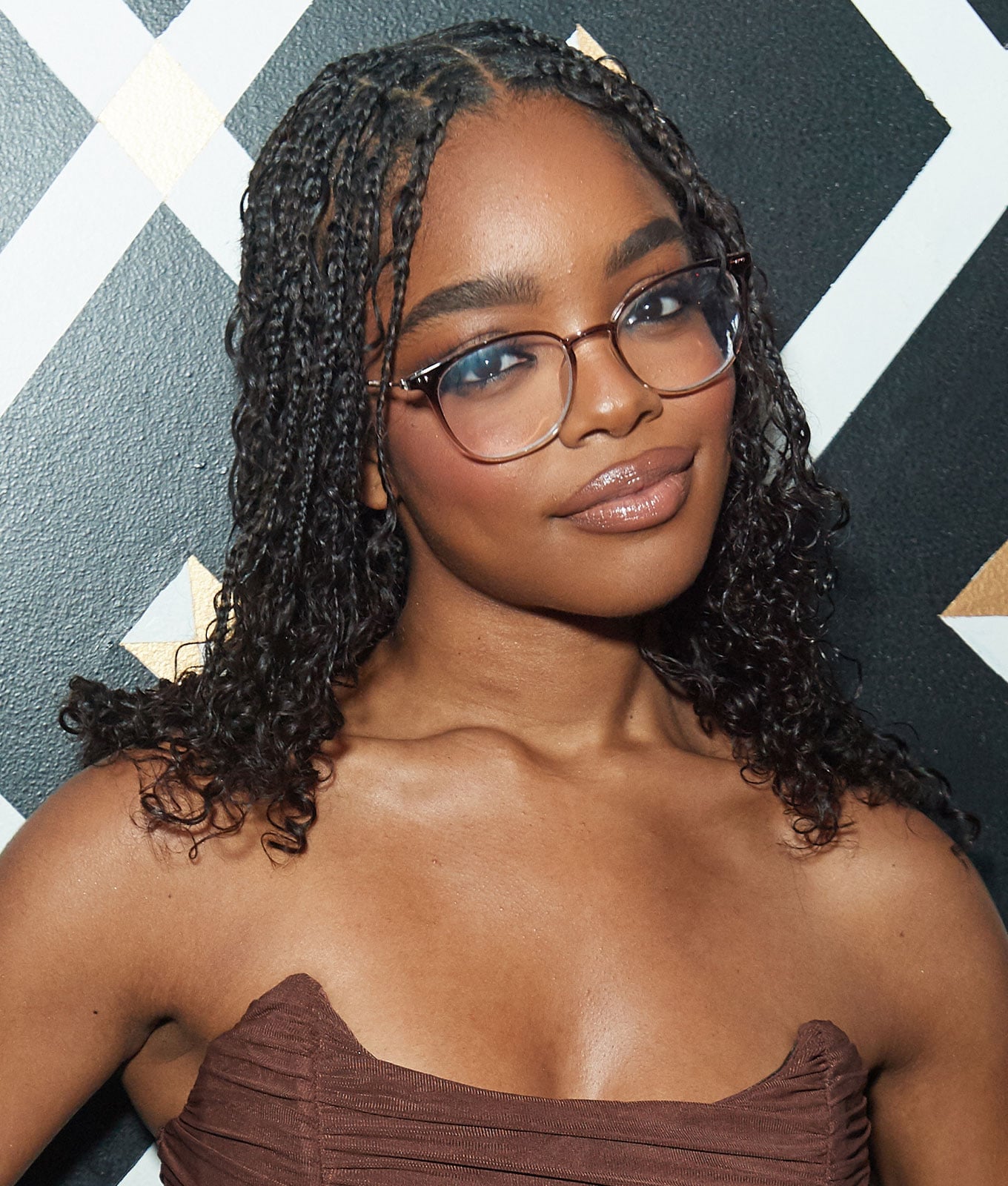
Ask your stylist for mid-back box braids with amber and clear beads, specifying both the color and the material during the consultation so they order the right size. The black box braids fall straight to mid-back with a middle parting, the beads threaded onto the last inch of each braid. This works best on thick, straight natural hair that is already at least mid-back length. The beads need to be clamped on tightly, and a braid sheen spray keeps the synthetic or human hair extensions from looking dull between appointments.
17. Half Up Half Down Box Braids With Curls
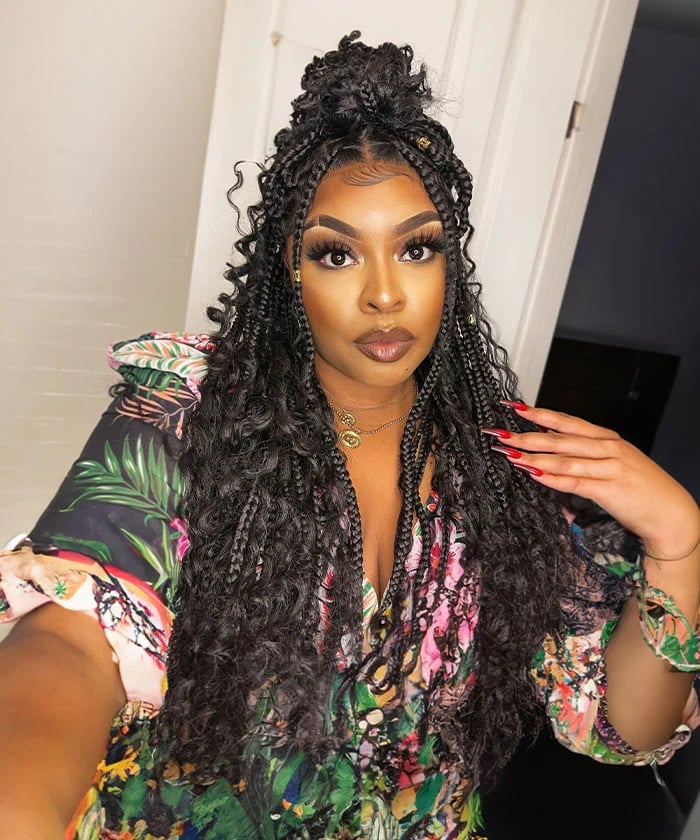
The top knot changes a standard braid install into something that looks deliberate. Mid-back box braids in black are pulled into a half-up top knot, while the rest falls loose with wavy tendrils mixed in and small gold beads threaded onto a few braids. Ask your stylist for half up half down box braids with curls and a top knot. The volume at the crown draws the eye upward, which suits round and square face shapes by adding vertical height. The wavy tendrils around the face soften the overall line for longer face shapes. Secure the top knot firmly with a hair tie, then use a light hold spray on the tendrils so they stay wavy and do not revert straight by midday. A trim every eight weeks keeps the ends from looking frayed.
18. Chin Length Bob Twisted Braids
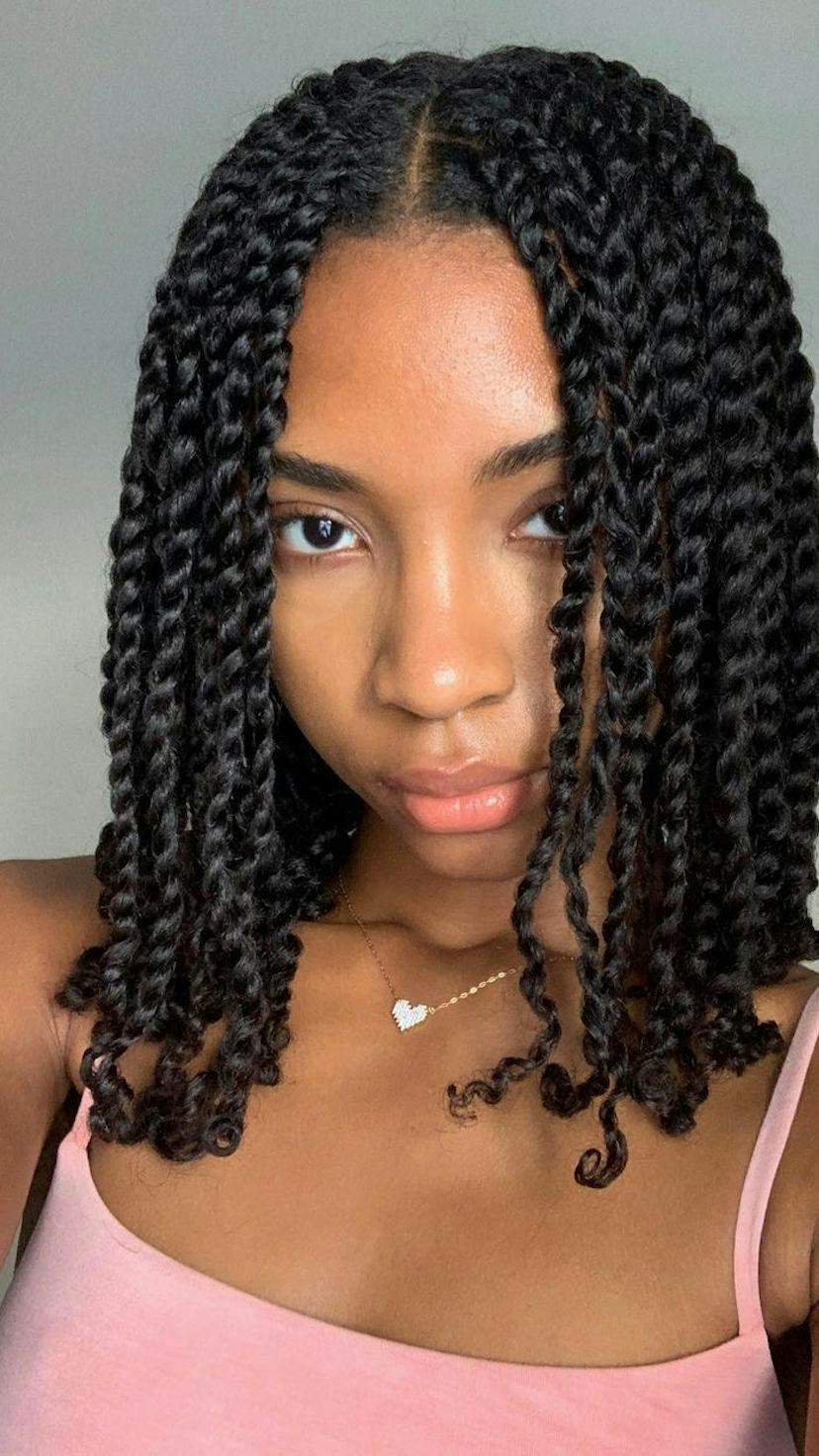
A chin-length bob made of thick, coily twisted braids offers the density of a full braid install without the weight of longer hair. The black twisted braids are parted in the middle and end right at the chin, the coily texture giving the bob a rounded, full silhouette. Ask your stylist for a chin length bob with thick coily twisted braids. The real work is in the daily upkeep: you need a braid balm on the ends every morning to keep the twists defined and compact, otherwise the coily texture starts to unravel into a frizzy halo by day three. A middle parting and chin length can widen a round face, so this works best on oval or long face shapes.
19. Shoulder Length Dense Micro Braids, Black
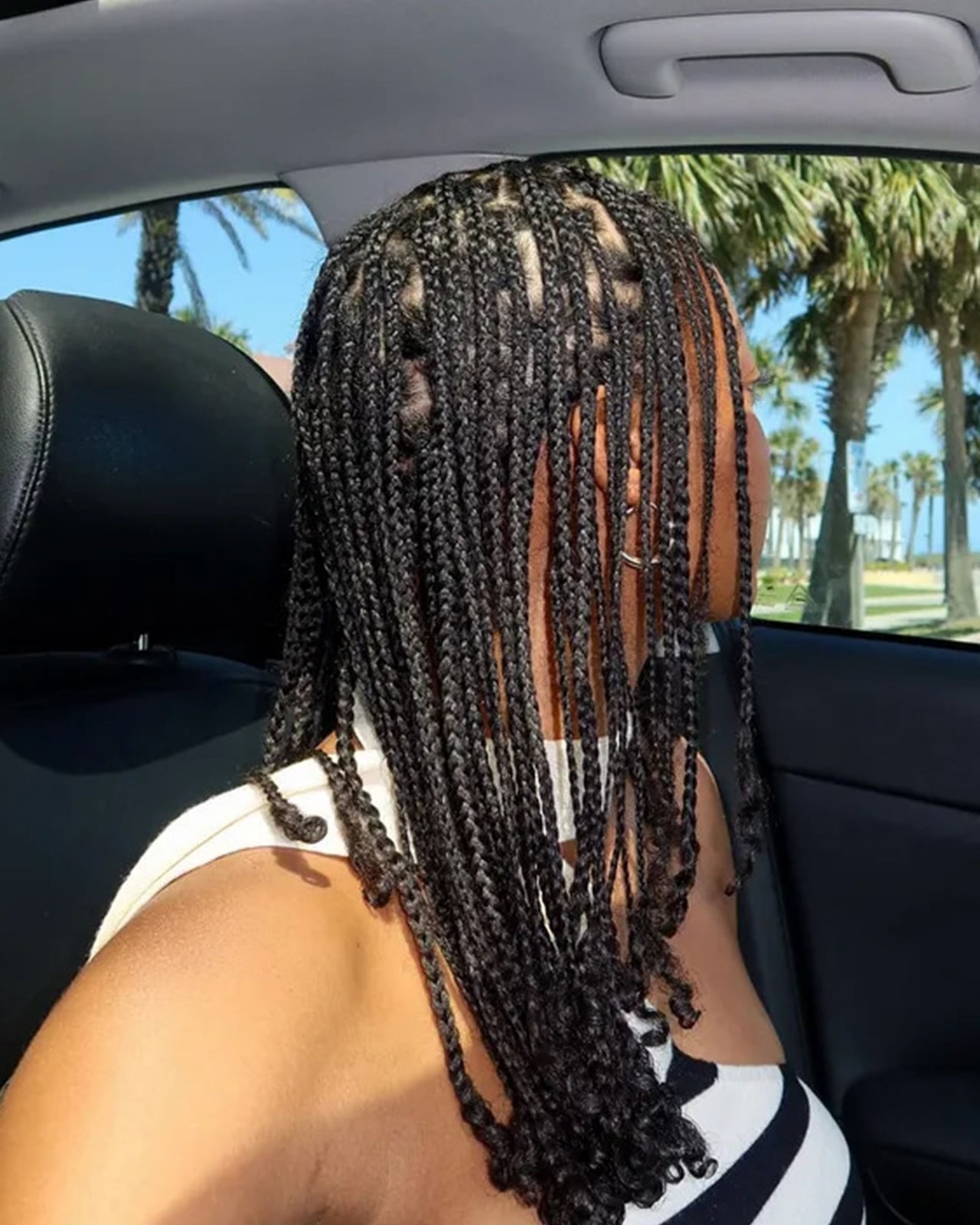
Micro braids at this density are a commitment, not a weekend project. The black hair is sectioned into dozens of tiny square parts, each one braided from the root to the ends, resulting in a uniform shoulder-length style with loose, coily tips. Ask your stylist for shoulder length dense micro braids with loose ends. The process takes six to ten hours in the chair depending on the thickness of your natural hair, which is why most people book it as a two-day install. The back view shows the precise grid pattern of the parts, and the coily ends keep the style from looking too stiff. This is a salon-only style unless you have a very patient friend and eight hours to spare.
20. Shoulder Length Braids With Bantu Knots
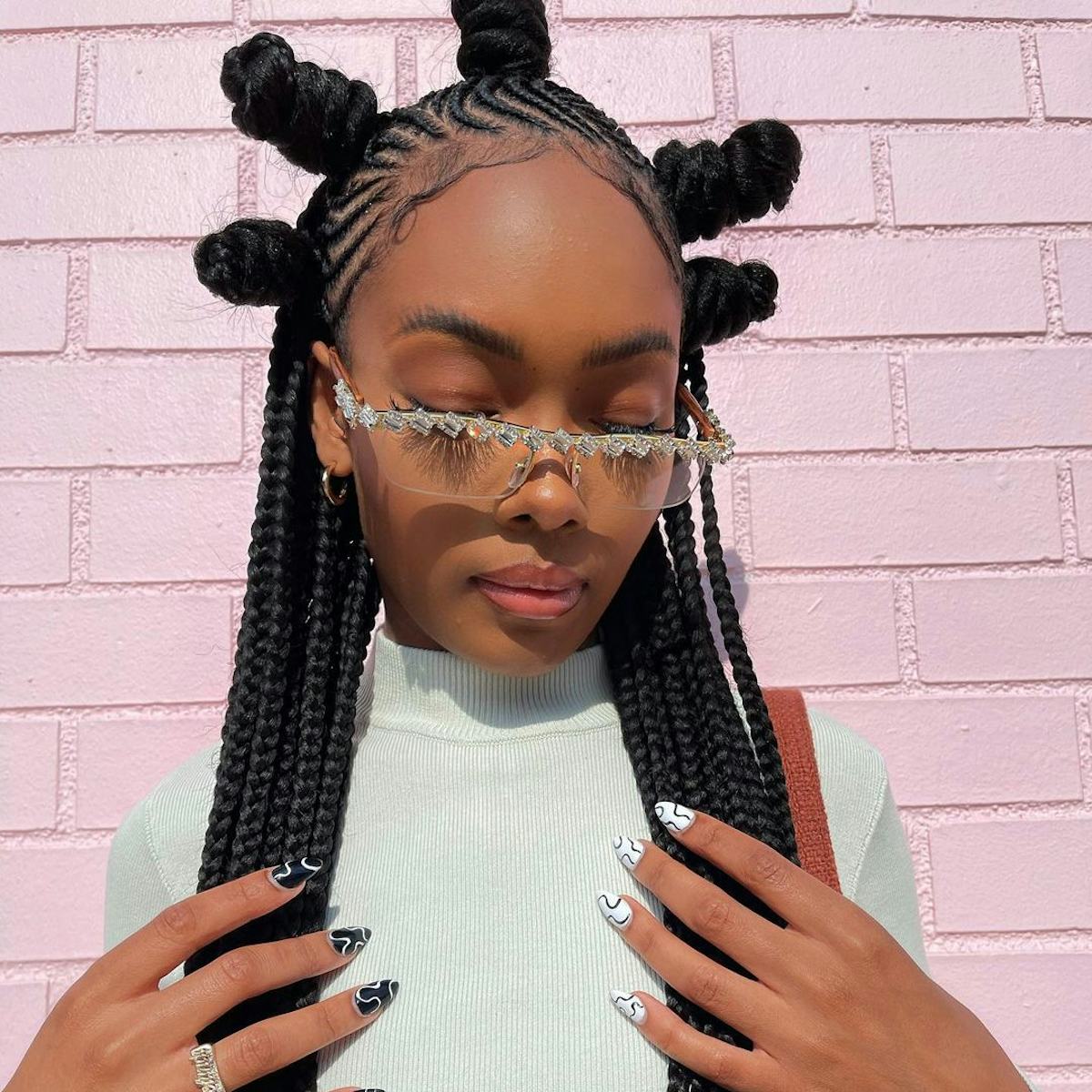
Bantu knots on top of braids solve the problem of what to do with the crown when you want the braids below the shoulders but need the scalp to breathe. Thick, dense black braids fall to shoulder length with a center part, while five or six bantu knots sit on top of the head in a neat row. Ask your stylist for shoulder length braids with bantu knots on top. The knots keep the hair off the neck, making this a strong choice for summer festivals or humid days when a full braid install feels heavy. The wavy texture of the braids blends into the coiled knots, so the transition from braid to knot looks smooth. Apply a setting spray to the knots to help them hold their shape for the full day.
21. Mid-Back Wavy Braids
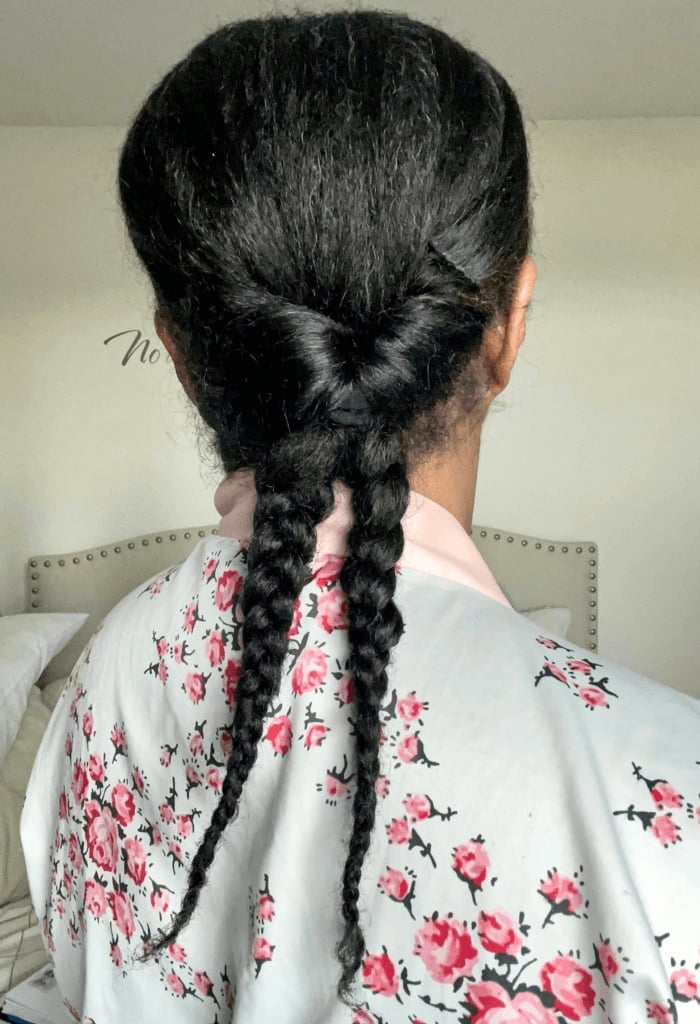
Straight braids read as sleek and architectural; wavy ones read as soft and lived-in. Both hang to mid-back, both start from a middle part, and both come in black, so the difference is texture and what it does to volume. A wavy set gives the braids definition you can see from across a room, and the pattern breaks up the length so mid-back hair does not hang like a curtain. Pick waves if you want movement without adding curls at the ends. Pick straight braids if sharp lines matter more to you than body.
Ask your stylist for: mid-back wavy braids. The wave needs a starting length of mid-back to show its pattern, and it works best on natural hair with some density, since fine hair can let the wave collapse into the braid. Styling is minimal: a braiding balm worked through the ends keeps the wave defined, and too much handling flattens it. Book a touch-up every six to eight weeks to keep the root line neat. This is a salon job, not a kitchen-table one.
22. Mid-Back Box Braids High Ponytail Curly Ends
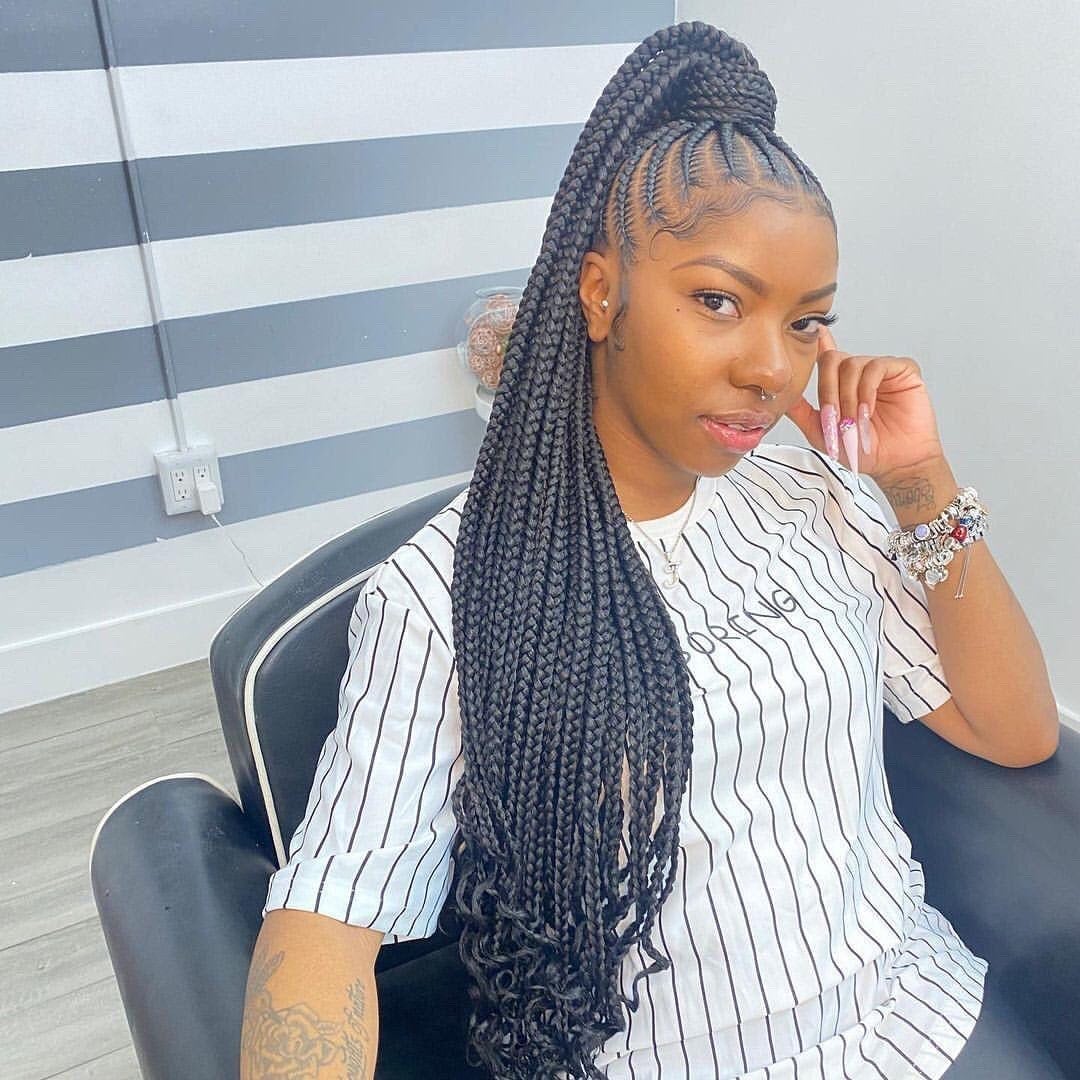
Ask your stylist for: mid-back box braids, high ponytail, curly ends, baby hairs. It suits naturally thick, straight hair that can carry the weight of a mid-back ponytail without the base pulling. Here is the drawback: those curled ends need attention. A strong hold spray keeps the spirals through the day, but humidity or a night on a cotton pillowcase will loosen them, and re-curling with flexi-rods or an iron adds time to your morning. If you want a style you can sleep on and forget, ask for straight ends instead. Skip the ponytail entirely if your scalp is tender at the crown, since all that weight sits in one spot.
23. Final Thoughts
Pick by density first. Fine or delicate natural hair does best with smaller braids like micro braids or neat cornrows, which keep tension low. Thicker textures can carry larger braids and twists for volume and definition.
- Touch up cornrows and tight braids every four to six weeks.
- Moisturize weekly with a lightweight leave-in or braid spray.
- Wrap braids in a satin bonnet at night to limit frizz.
- Cleanse the scalp gently with diluted shampoo between full washes.
Embrace the artistry of braids for your natural hair.