The braided ponytail is a shape that keeps finding new ways to surprise you. A crown braid or a single cornrow can turn a five-minute pony into something that holds all day, and the 2027 version leans into lived-in color and glossy natural texture instead of stiff, polished finishes.
These 15 looks cover the range from a thirty-second twist to an hour-long scalp pattern, so you can pick the one that fits your morning and your hair type. Fine hair that loses volume, a grow-out line that needs hiding, or a fringe that will not sit still: the right braided ponytail solves all three without asking you to start over.
1. Voluminous Blonde Braided Crown Ponytail
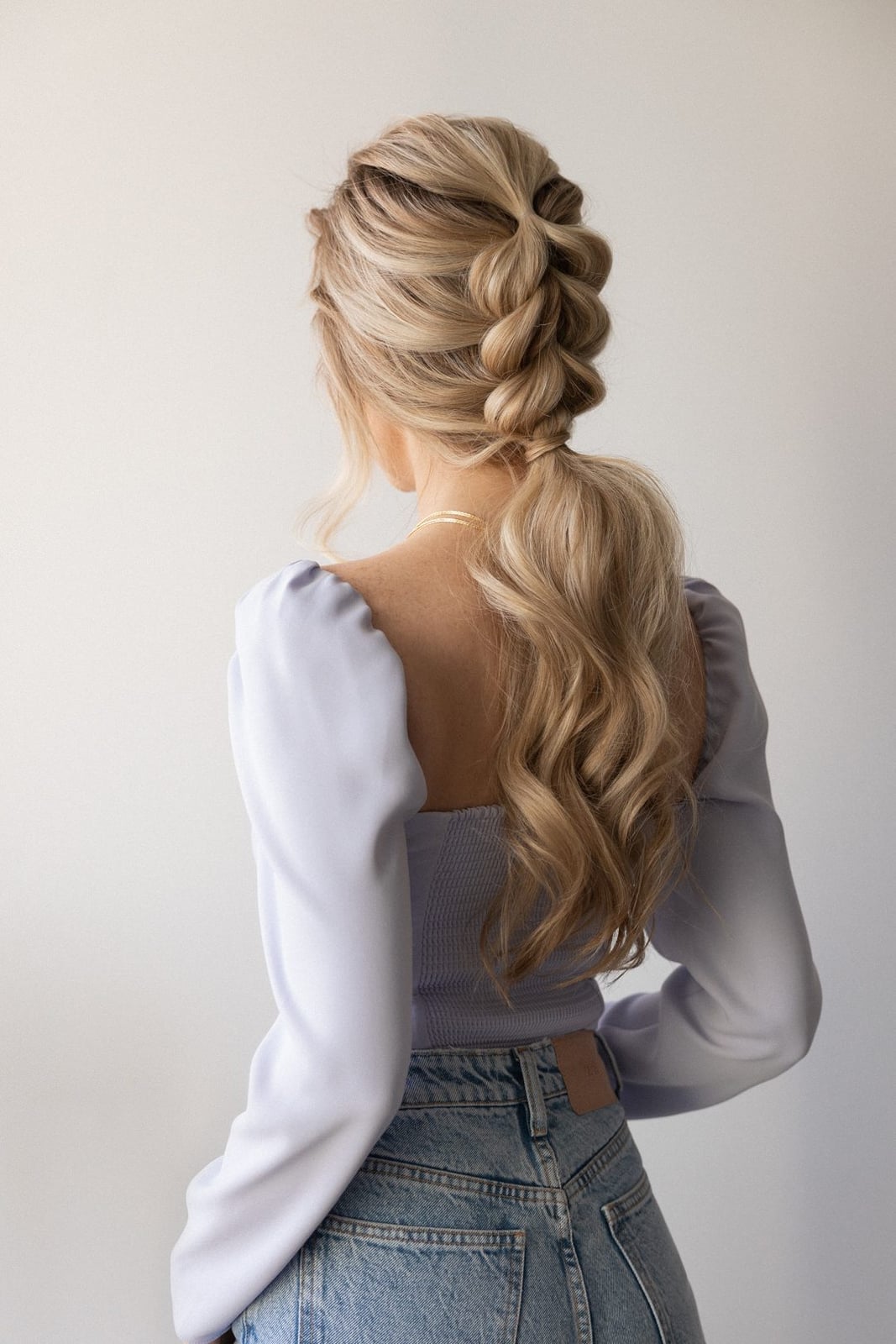
That braided crown does not circle the head. It sits forward at the hairline and feeds directly into a high ponytail, so the volume stays at the top of the skull instead of spreading across the back. The loose waves that follow are a deliberate contrast: tight braid work above, soft movement below. Thick, wavy hair starting at mid-back gives the braid something to hold onto, and the middle part keeps the symmetry clean. Ask your stylist for: voluminous braided crown ponytail with loose waves. A texturizing spray on the waves prevents them from collapsing by hour three, and the base needs a trim every eight weeks to keep the ends from fraying against the braid.
2. High Black Braided Ponytail With Curly Extensions
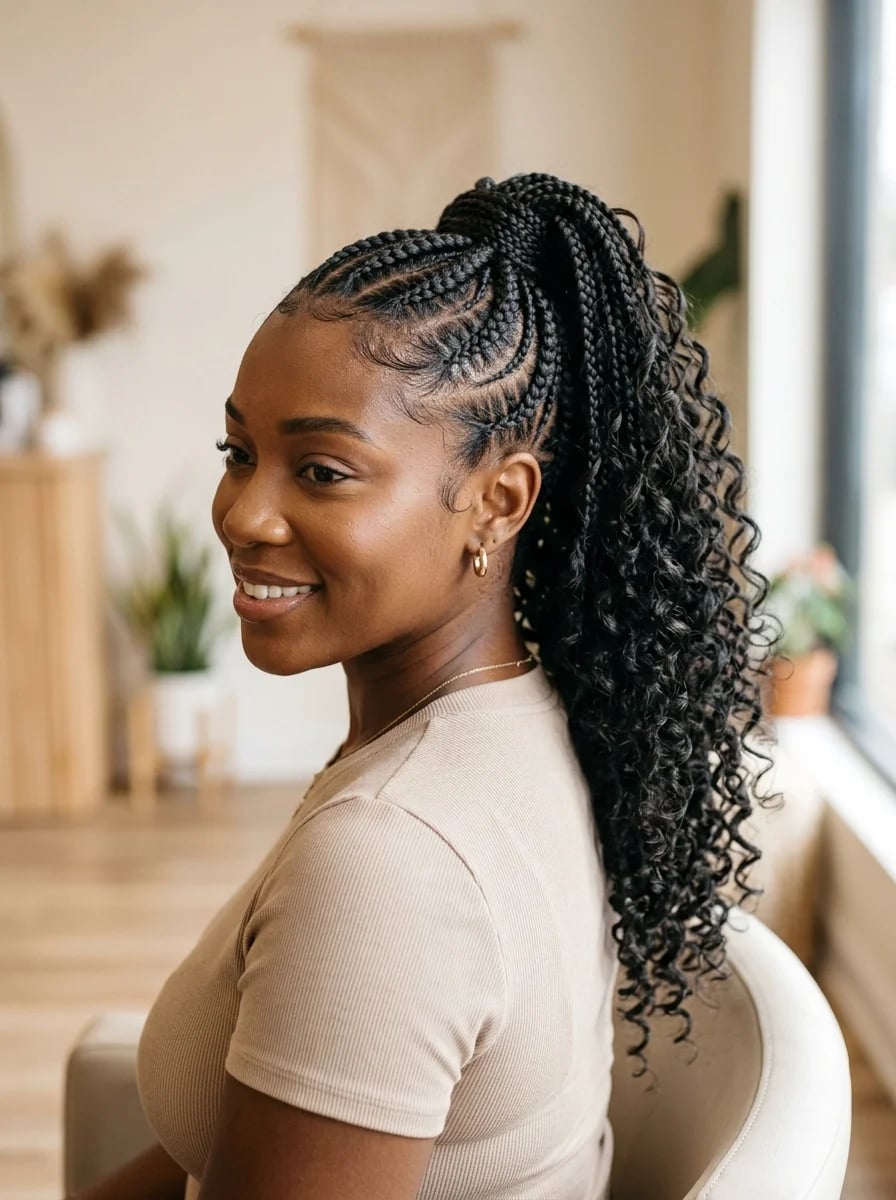
Does your hair hold a curl for about twenty minutes before giving up? This is not the style for that. The cornrows on the scalp require thick, coily or curly texture to grip properly, and the ponytail relies on extensions for its dramatic length, so your natural hair needs enough density to anchor the braids. A middle part keeps the scalp pattern readable, and the side view reveals how the sleek cornrows transition into loose, voluminous curls. Ask your stylist for: high ponytail with cornrow scalp braids and long curly extensions. The extensions need weekly detangling to stay tangle-free, and the cornrows will start lifting at the hairline around day five.
3. Copper Twisted Braided Ponytail
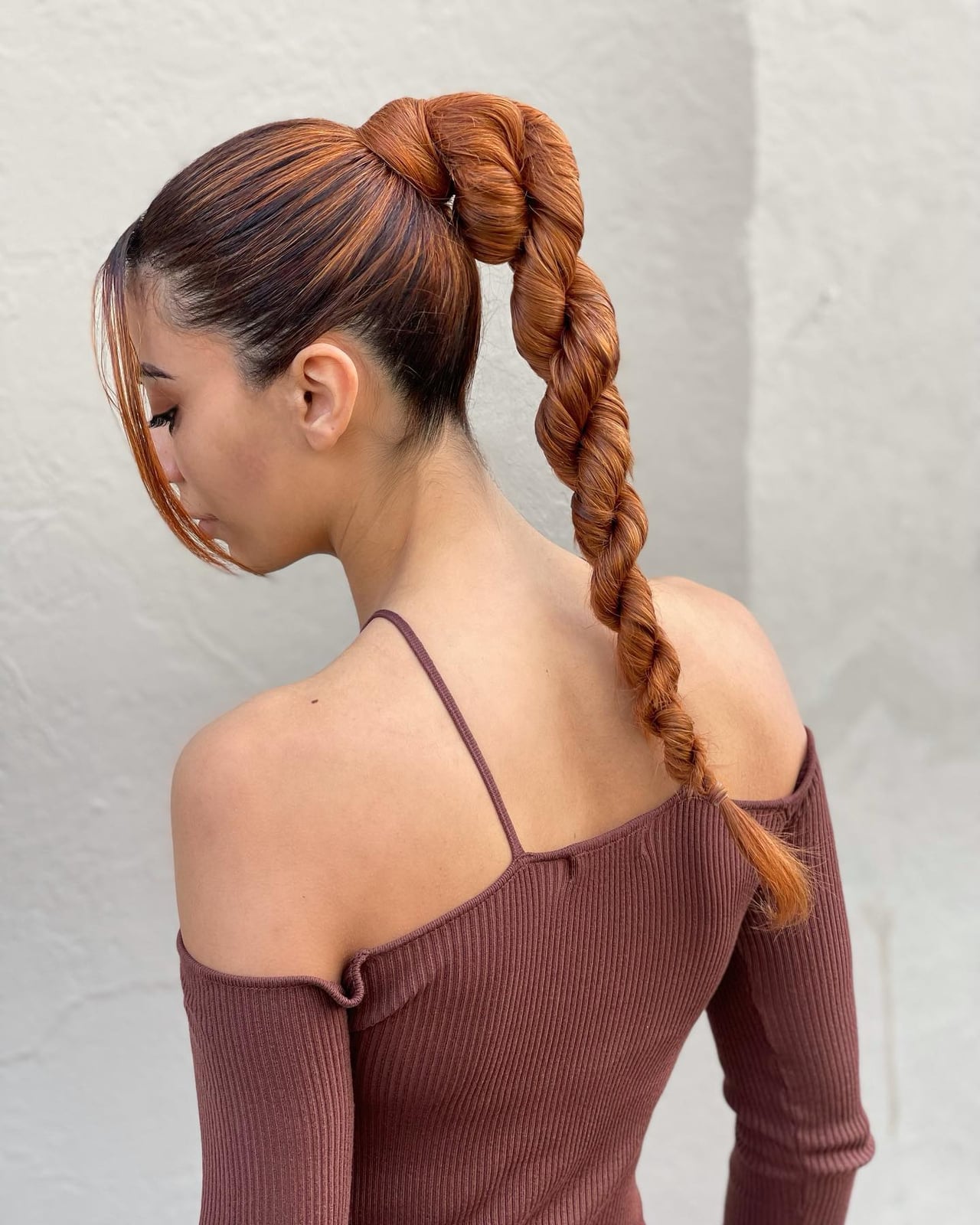
The twisted braid here is built from two strands, not three, which gives it a flatter, more rope-like profile than a classic plait. A high ponytail base keeps the twist centered down the back. The face-framing pieces are left unbraided to soften the hairline. Thick, wavy hair at mid-back works best because the twist holds its shape without slipping. Ask your stylist for: copper high ponytail with an intricate twisted braid and face-framing pieces. The copper base with subtle highlights adds dimension to the twist, making each turn of the rope visible even in low light.
4. Brown Braided Crown Ponytail With Curtain Bangs
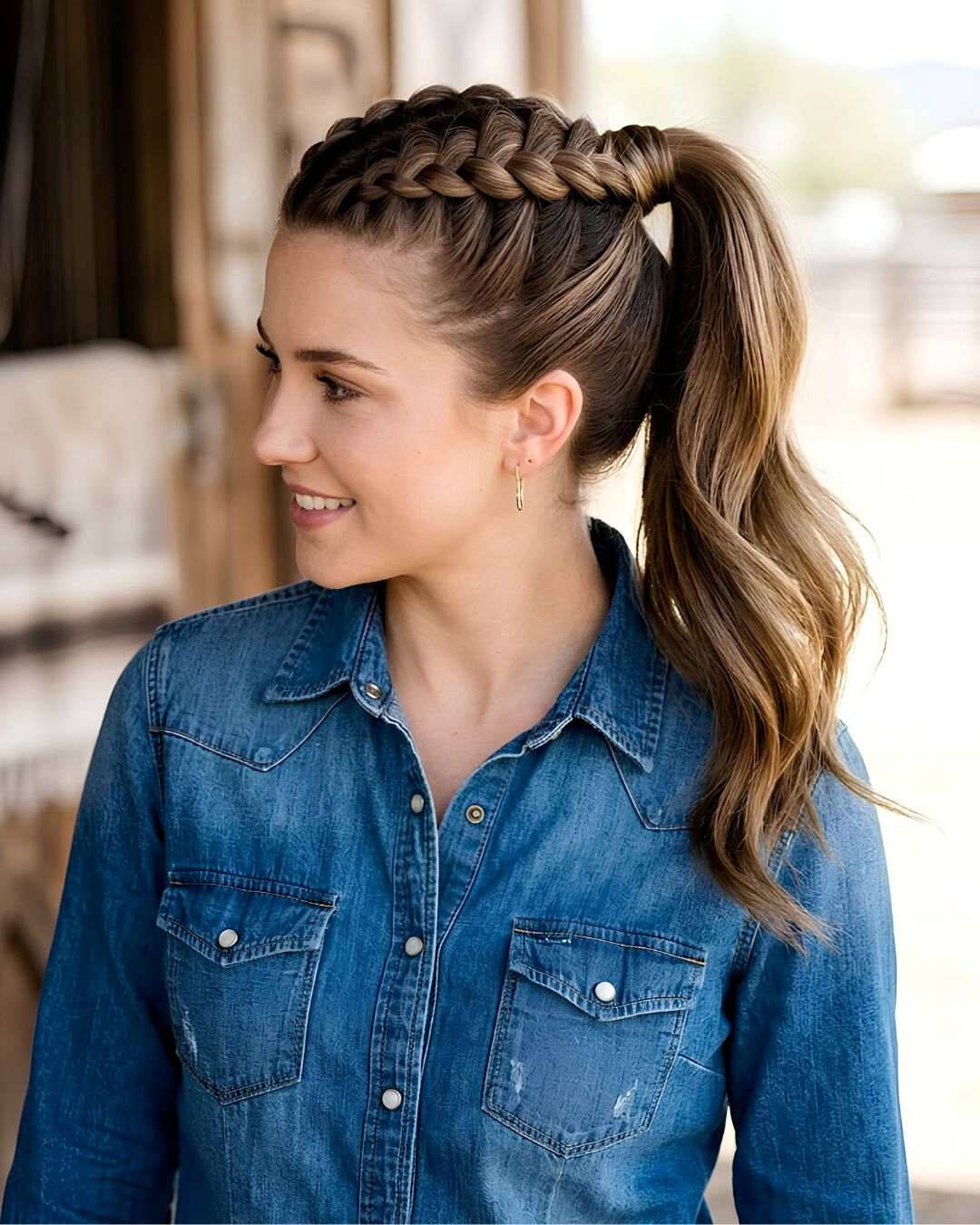
Where a scalp-to-tip braided ponytail reads as structured and formal, this version swaps in curtain bangs for a softer entrance. The braid sits at the crown only, it does not travel down the ponytail, so the majority of the length stays smooth and simple. Thick, wavy hair starting at collarbone gives the bangs enough weight to drape rather than stick out, and the subtle brown highlights keep the braid distinct from the surrounding hair. Ask your stylist for: high ponytail with braided crown and curtain bangs. Round and oval faces benefit most from the curtain bangs, which frame without shortening the visual line of the ponytail.
5. Black Braided Ponytail With Geometric Scalp Braids
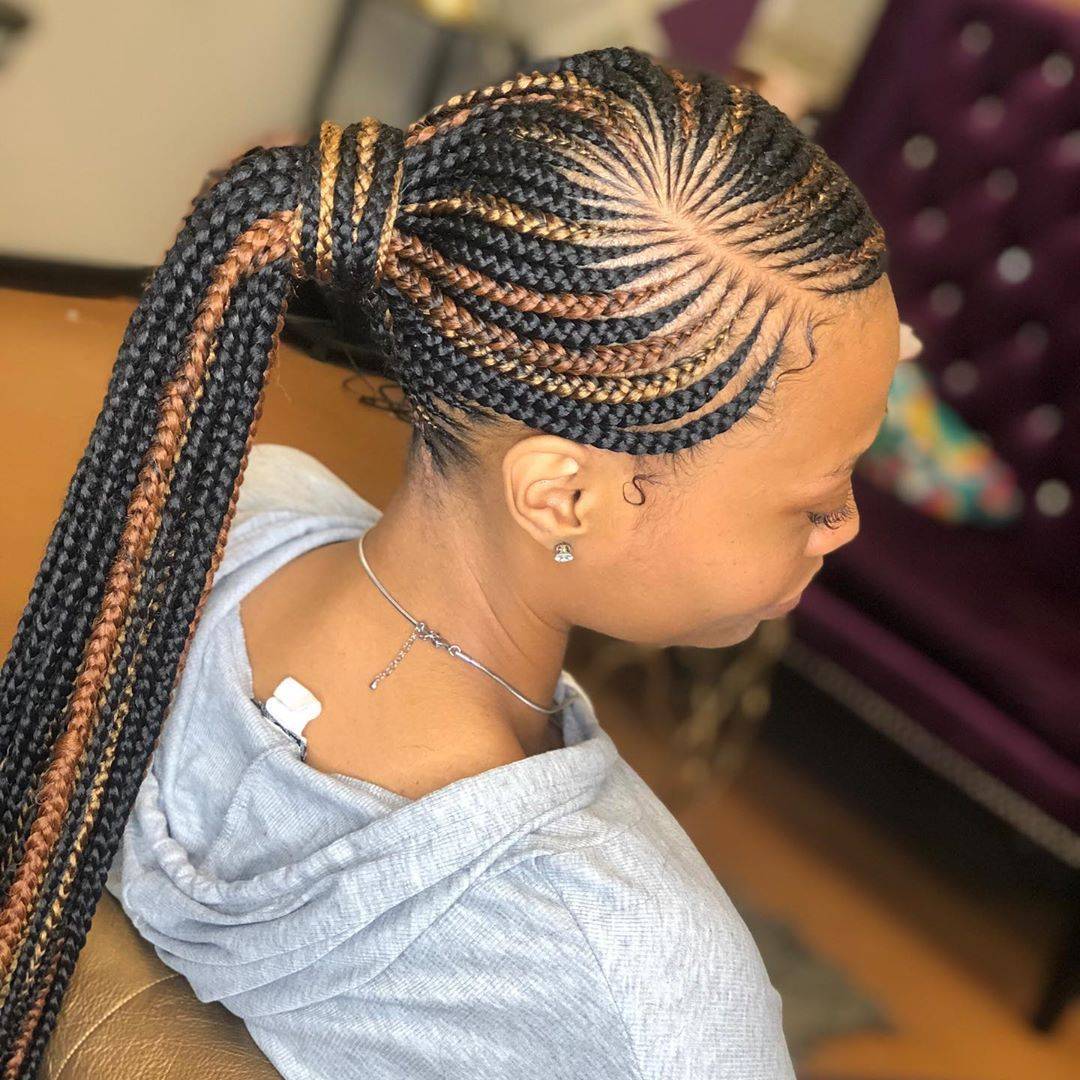
The geometric scalp braids here follow precise angles, straight lines that meet at sharp corners rather than curving with the skull. Strands of blonde and brown are woven into the braids, so the pattern reads even against black hair. The braids continue into the ponytail itself, creating one continuous design from root to tip. Thick, straight hair at mid-back handles the tension of tight scalp braids without excess bulk. Ask your stylist for: high ponytail with geometric scalp braids and woven highlights. Edge control at the hairline keeps the base polished, and the style holds its shape for several days with minimal touch-ups.
6. Sleek Dark Brown Thick Braid Ponytail
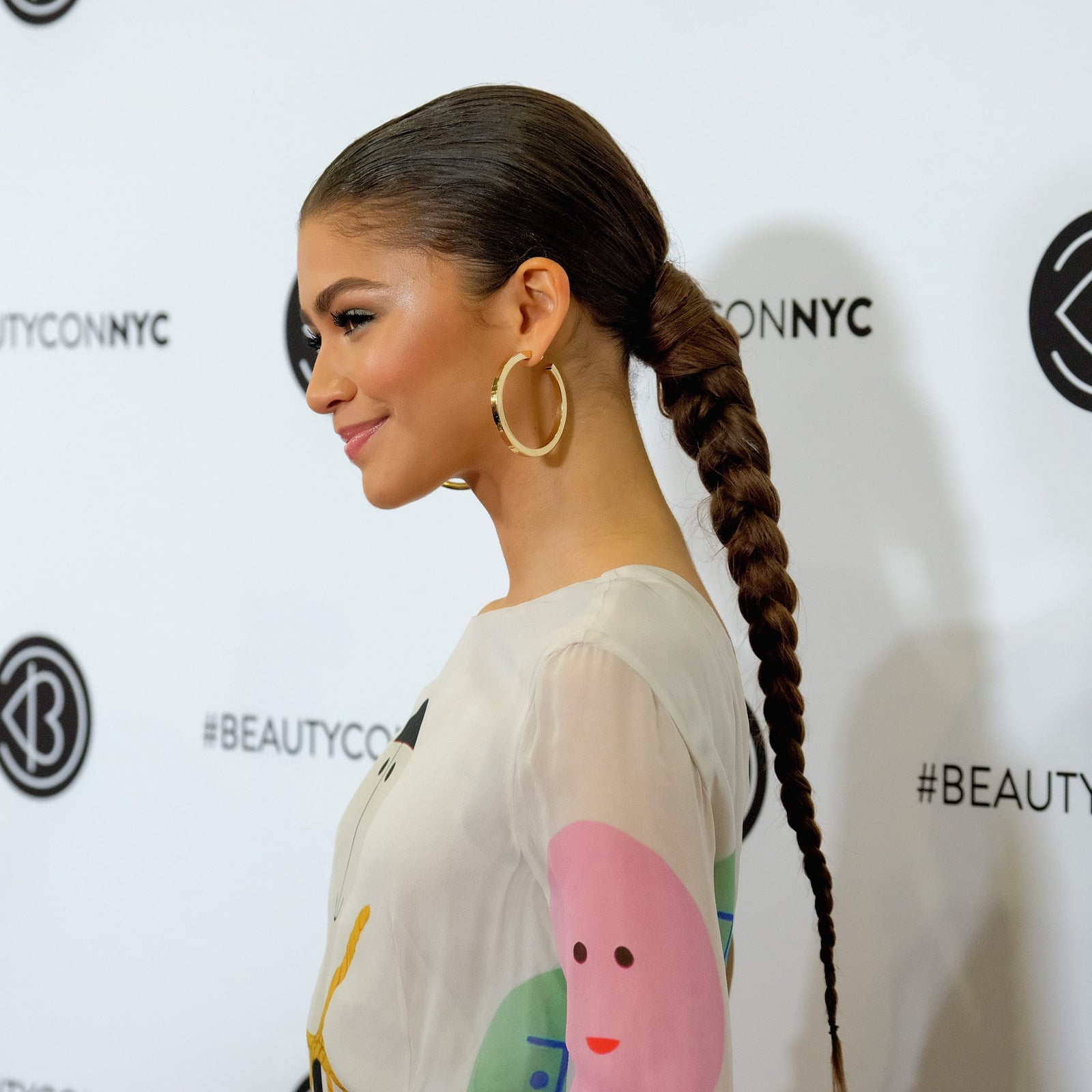
A braid this dense shows every stray fiber. A boar bristle brush and a strong-hold hairspray help get the surface glassy before you braid. A secure elastic and a few pins at the crown keep the braid anchored for a full day of wear. Trim the very end of the braid every eight weeks to keep the shape clean.
7. Black Braided Ponytail With Top Knot
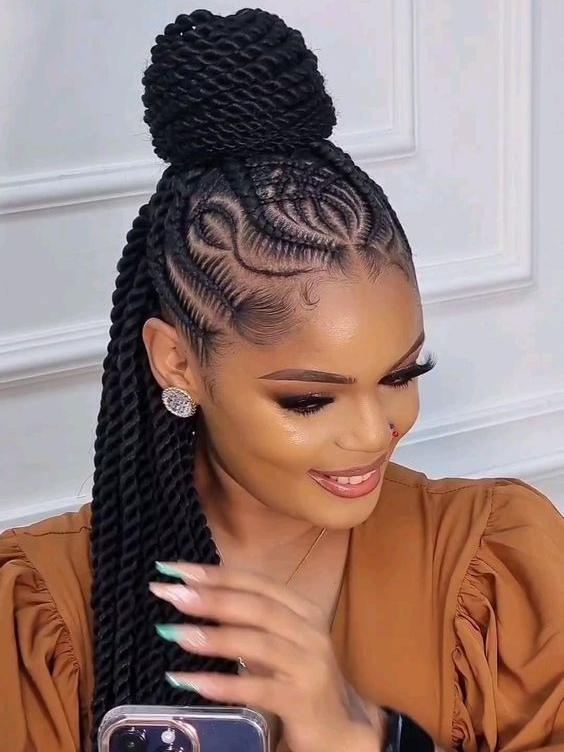
What do you do when a regular ponytail feels too simple but a full braid feels too expected? You add a top knot. This black braided ponytail with a top knot starts with intricate scalp braids that feed into long rope braids, all gathered into a high bun at the crown. Blonde highlights woven through the braids add dimension against the black base. The high placement works particularly well for long faces, and the structure is strong enough for a full day of events or a night out. Ask your stylist for: a high ponytail with intricate scalp braids, rope braids, and a top knot bun. Secure the top knot with pins and a strong-hold spray; refresh the scalp braids weekly to keep the partings crisp.
8. Black Braided Ponytail Heart Pattern
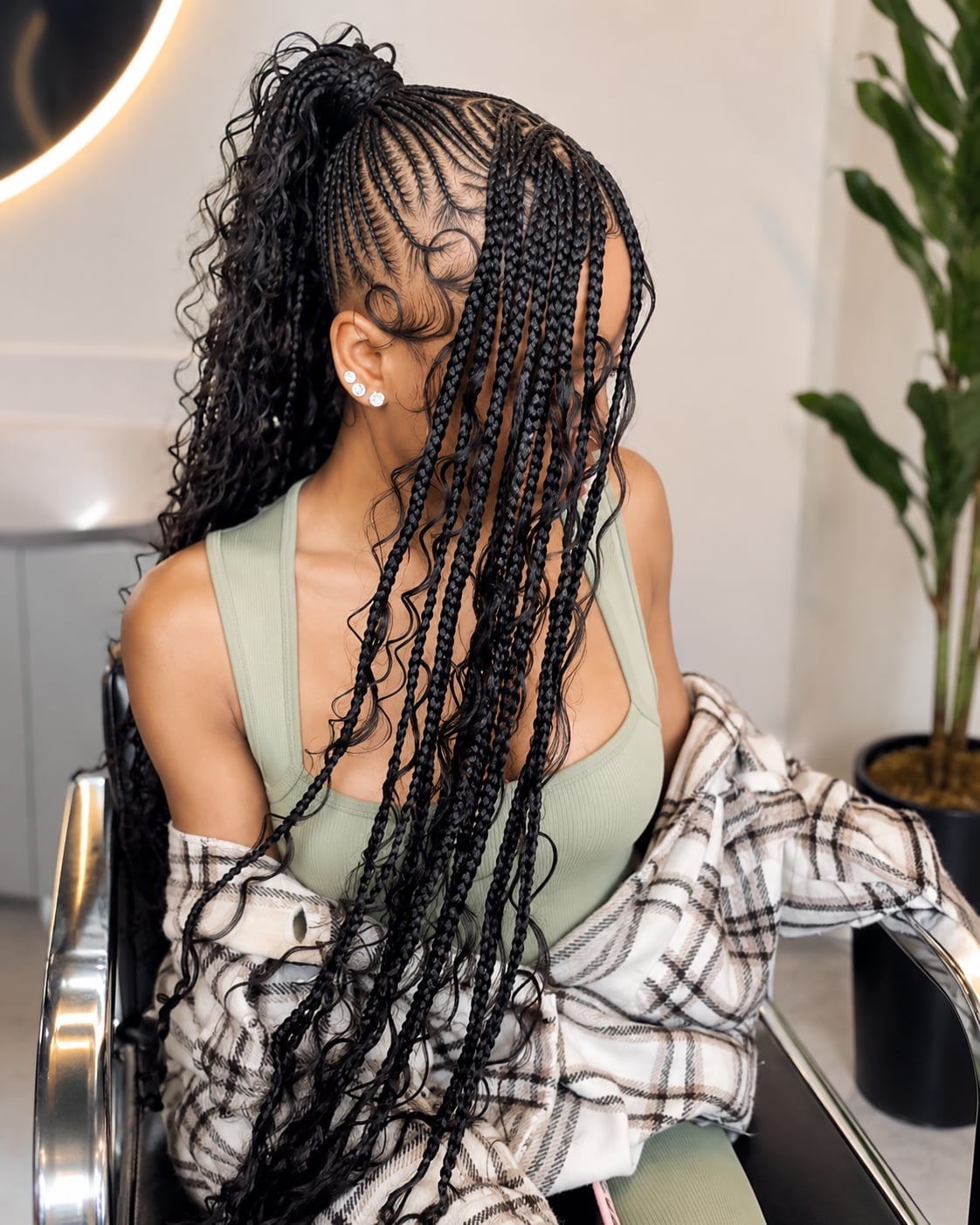
Cornrows that trace a heart shape at the hairline turn a high ponytail into a deliberate design statement. The scalp braids are laid in a clean heart pattern before the hair is gathered high and finished with long, loose curly extensions. This is a salon-only feat: the geometry of the heart requires even tension and precise parting that is nearly impossible to replicate on your own head. Ask your stylist for: a high ponytail with a heart-shaped cornrow pattern and curly extensions. The contrast between the flat cornrows and the voluminous curls is the whole point, so apply a sheen spray to the extensions to keep the texture separate. For the scalp braids, a lightweight oil along the parts prevents itchiness as the style wears.
9. Sophisticated Black Cornrow Ponytail
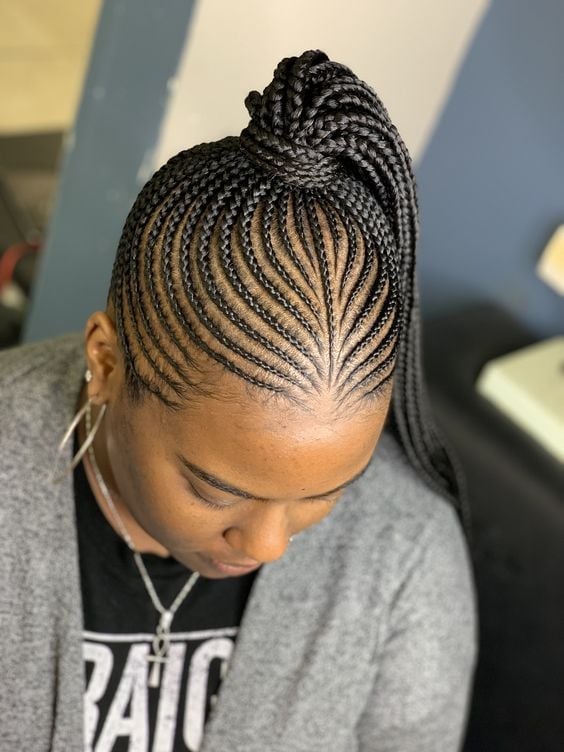
This version keeps the cornrows intricate but consistent, converging into a sleek high ponytail of dense, straight black hair that falls to mid-back. The middle part is clean and centered. Ask your stylist for: a high ponytail with intricate cornrows converging into a sleek ponytail. The cornrows require a stylist who works slowly, since rushing the parting lines leads to crooked rows. A non-flaking gel at the roots keeps flyaways in check, and a silk scarf at night preserves the set for about a week.
10. Sleek Black Single Braid Ponytail
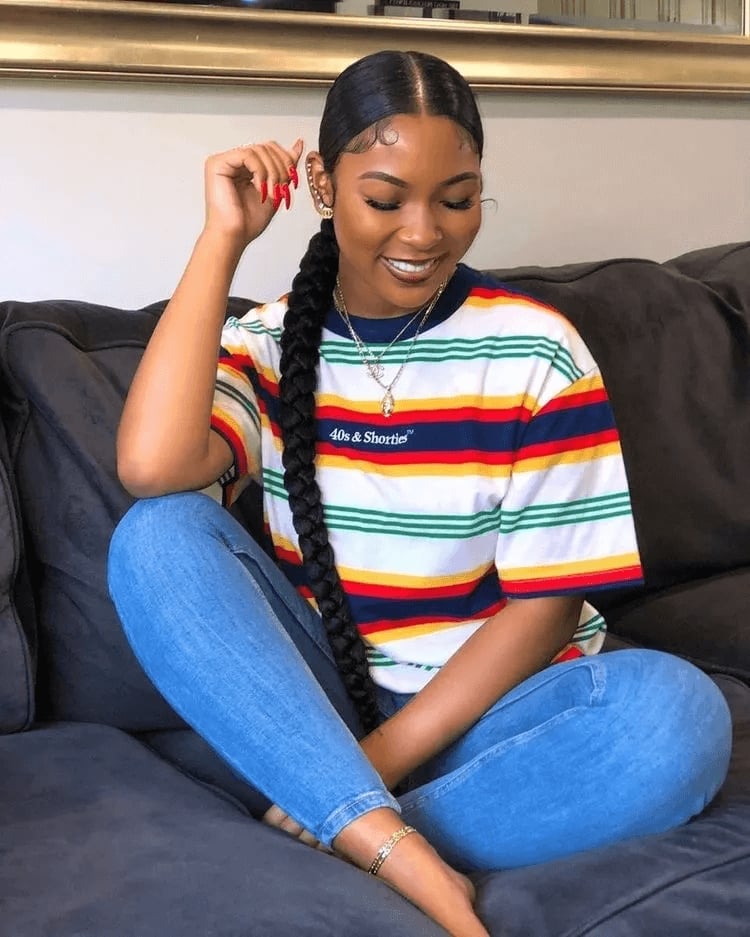
A single thick braid is a fair trade: it is straightforward to request, holds all day and works for the office or a casual weekend. But it is honest about its needs. This black version is parted in the middle and pulled into a high ponytail, then braided tight from the base to the ends. The sleek finish demands a silk serum applied before braiding; a matte texture will look undone. Ask your stylist for: a high ponytail with a single, long, thick braid. The upkeep is minimal: trim the end every eight weeks to prevent fraying, and wrap the braid in a silk scarf at night to keep the edges smooth.
11. Black Braided Ponytail With Wavy Ends
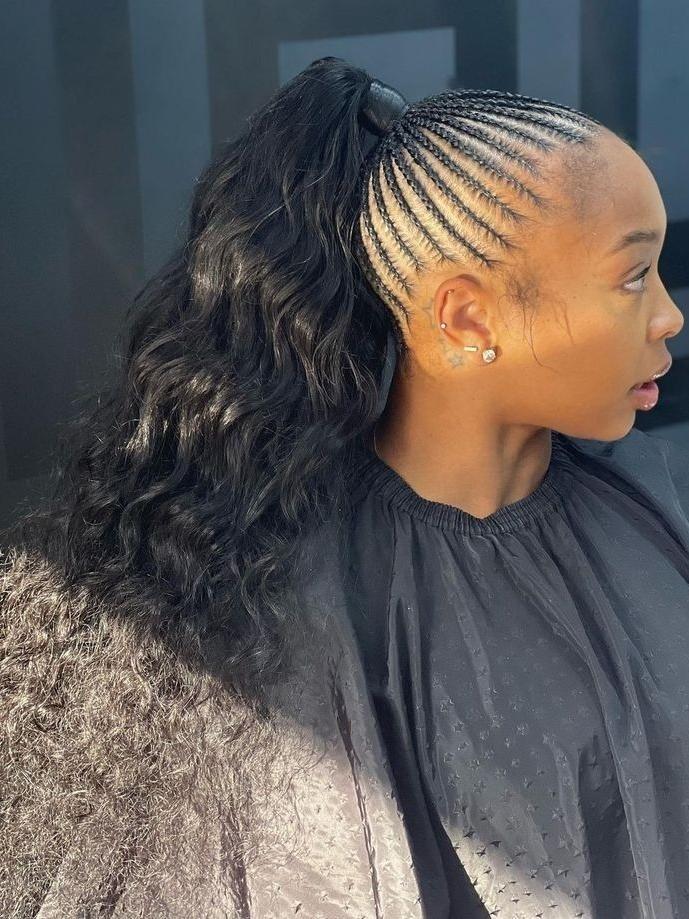
The scalp is fully braided, and the length below the tie is not: it spills out in loose waves. That split is the whole point of this look, and it changes what you are signing up for. Cornrows laid tight against the head stay flat and neat for a week or more, while the wavy ends need a heat protectant spray and a quick pass with a curling iron on day one. Texture does the rest.
Ask your stylist for: high ponytail with cornrow scalp braids and loose wavy ends. The style needs thick hair starting at mid-back so the braid has enough weight to sit high, and the scalp pattern suits any face shape. Colour matters here too: on black hair the tight cornrows and the free waves catch light differently, which is half the visual payoff. Budget a salon visit for the braiding itself, then plan a refresh on the cornrows every two to three weeks as new growth comes in.
12. Two-Tone Braided Ponytail
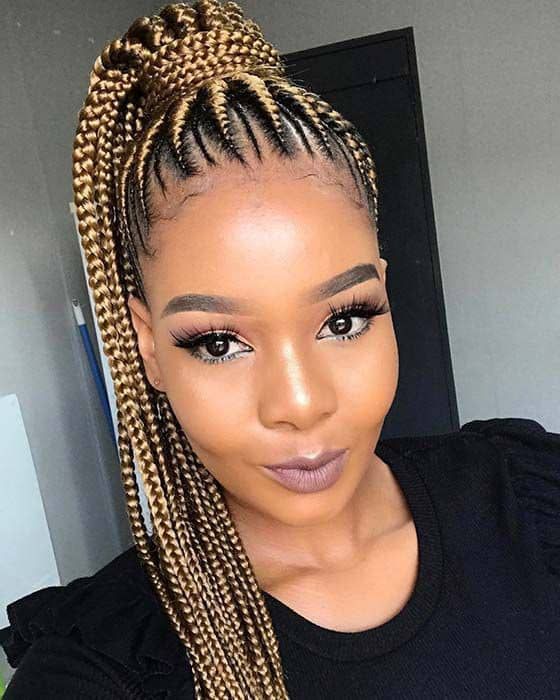
How do you actually ask for a braid that switches from black to blonde without it looking accidental? You get specific, and you bring a reference. The scalp cornrows and the long thick braids are one continuous structure, so the colour has to be planned from root to tip before anyone starts braiding. Thick hair at long length gives the braid enough body to carry two shades.
Ask your stylist for: high ponytail with two-tone black and blonde cornrows and braids. A short list to bring into the appointment:
- The exact point where black should end and blonde should begin
- Whether the blonde is a cool or warm shade
- How the two-tone braided ponytail should read from the front
- Whether extensions are needed for the length
Colour-safe shampoo and conditioner keep both shades from fading at different rates, which is the usual failure point with two-tone braids. Texture stays braided and sleek, and hold depends on a tight scalp section.
13. Chunky Black Braided Ponytail
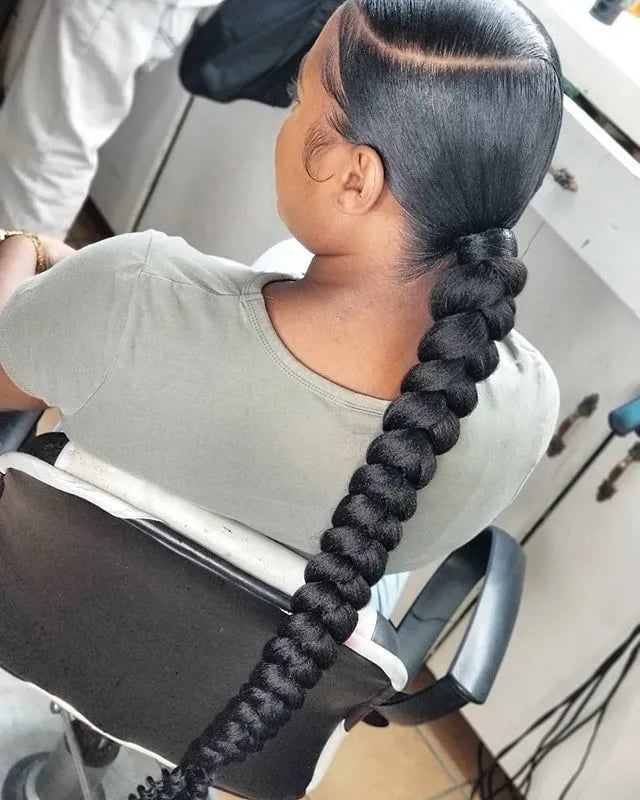
A single oversized plait sits high on the head, thick enough that the braid reads as one solid column down the back. The edges are laid sleek against the scalp, so the volume comes from the braid itself and not from loose hair around the face. Black hair shows off that density well.
Ask your stylist for: chunky, voluminous braided ponytail with sleek edges. It suits thick hair starting at mid-back, and the volume works on oval and square faces where a wider silhouette balances the jaw. Fine or low-density hair will not fill a chunky braid on its own, so extensions usually enter the conversation. A thick plait that size pulls at the scalp, and a high placement can leave the hairline tender by the end of a long day. A firm-hold gel keeps the edges sharp, and a shine spray keeps the braid from looking dry.
14. Black Braided Ponytail With Beads
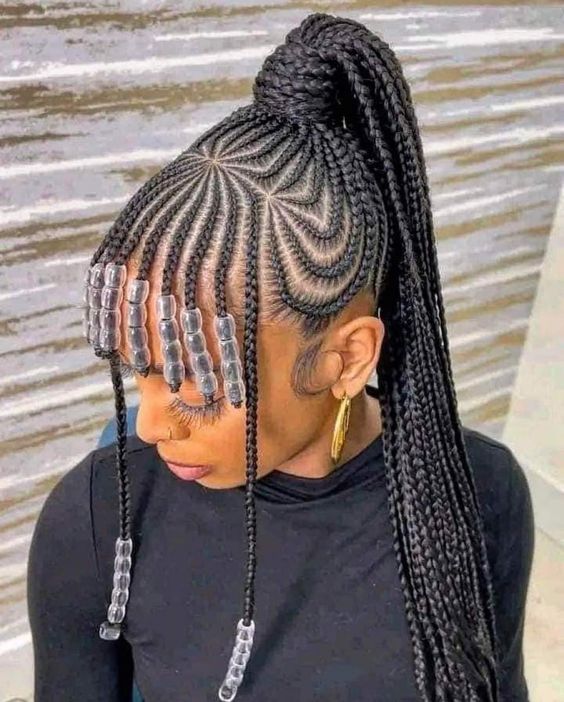
Ask your stylist for: high ponytail with intricate cornrows and decorative beads. The geometric pattern is the technical demand here, so book with someone who braids regularly and expect a long appointment. It suits thick, coily hair starting at mid-back; the beads sit best on braids with enough density to hold them without slipping. Ask for the beads to be secured firmly at the base so they stay put through the week. Keep hands off the beaded sections, since tugging loosens the pattern and stresses the braid underneath. Hold is excellent: a well-set cornrow pattern lasts two to three weeks before a refresh.
15. Low Side Braided Ponytail
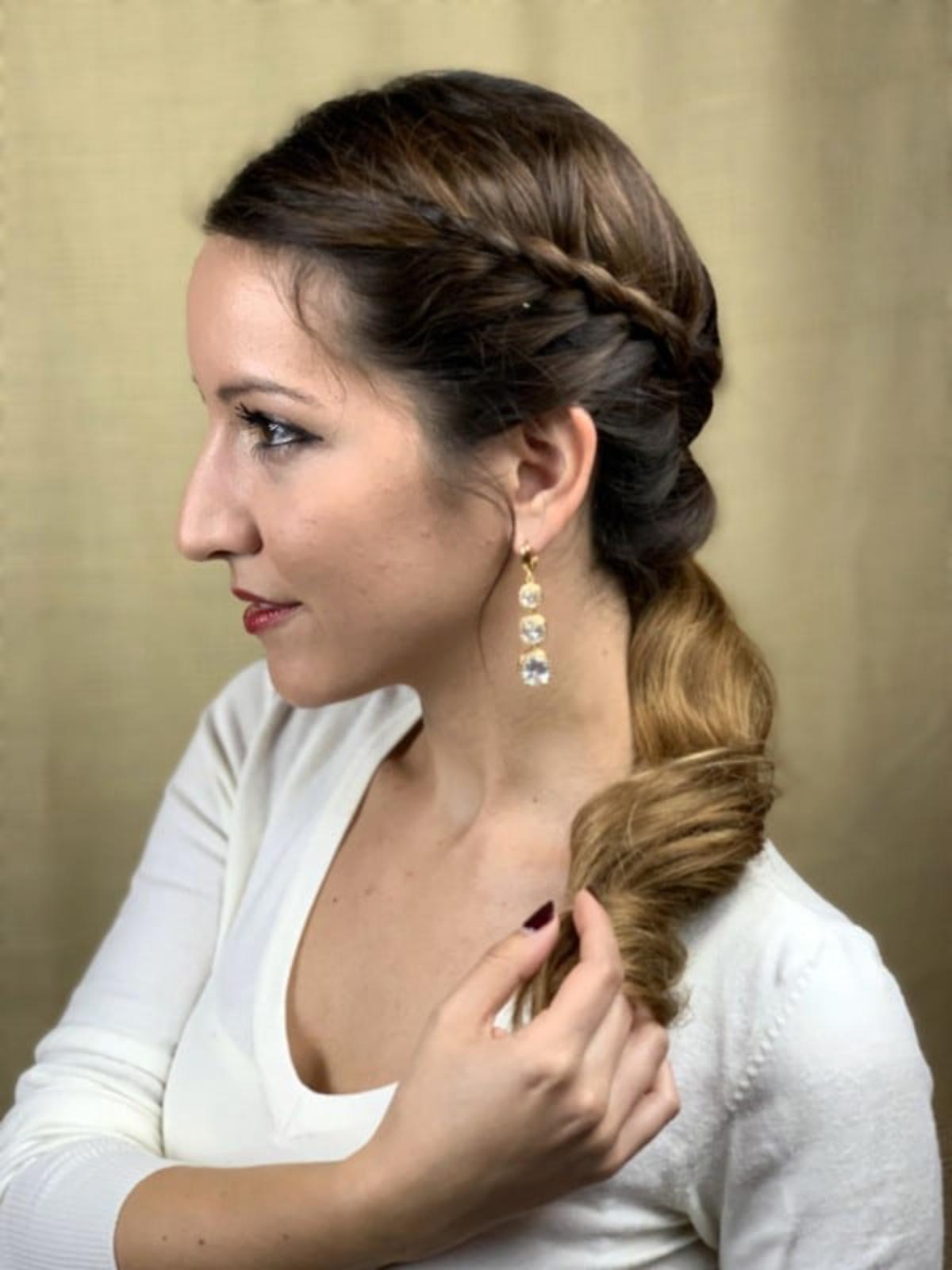
A high ponytail is the obvious move for a braided style; a low side version is the quieter one, and it earns its place in fall and winter when everything else gets heavier. The braid starts at a side parting and wraps around into a ponytail sitting low at the nape, with thick wavy brown hair and subtle highlights running through the length. Collarbone length keeps it from dragging.
Ask your stylist for: low side ponytail with a prominent wrap-around braid. The side placement suits round and square faces, and thick wavy texture gives the braid grip without extra product. A smoothing cream controls frizz around the parting, and a tight braid holds through a workday or a dinner. The brown base with subtle highlights keeps it warm without high contrast, which is why it reads polished rather than loud.
16. Final Thoughts
For a low-maintenance braided ponytail, skip the intricate scalp work and go with a single thick braid or a sleek smooth style that brushes back in under a minute. If you want maximum impact, lean into cornrows, extensions, and patterns that take time but last all week.
- Maintain scalp braids with regular touch-ups every one to two weeks, depending on growth.
- Deep condition weekly to keep extensions or natural hair hydrated and smooth.
- Use a silk scarf or bonnet at night to preserve the braid’s texture and prevent frizz.
- Trim ends every six to eight weeks if the ponytail is left loose, or as needed to maintain braid integrity.
The braided ponytail offers infinite creative potential.