The business casual dress code for women is often clearest in the space between strict formal suiting and ordinary casual dressing. It is not a single corporate law, and it does not need to erase personal style. The useful test is visual balance: one piece can bring structure while another softens the outfit, so the result feels intentional without becoming rigid.
A blazer, button-up, sharp trouser line, or defined waist can create the business side, while denim, sneakers, loose volume, softer color, or relaxed layering can shift the mood. Proportion shows whether the outfit is crisp or loose, color balance controls contrast, and shoes and bags finish the signal. That framework makes business casual outfits for women easier to read without pretending every workplace uses the same standard.
1. Black Tailoring With White Shirt Contrast
The first outfit builds its business casual reading from a black tailored suit shape set against a bright white blouse. The jacket and trousers create a dark frame, while the open neckline of the blouse keeps the center from becoming one solid block. Because the person is seated with one leg crossed, the pointed black shoes also become part of the same sharp vertical line.
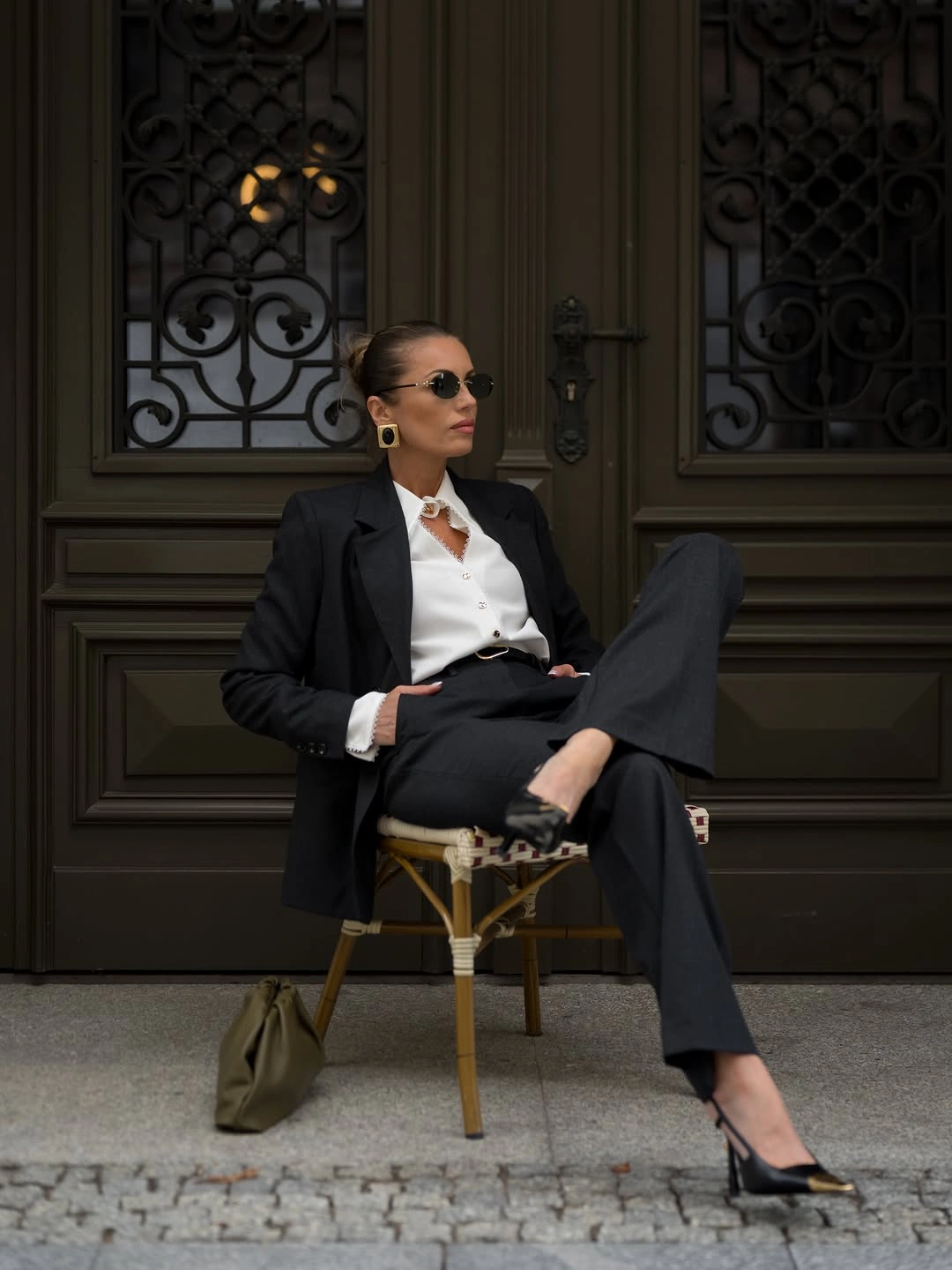
Photo via Instagram
Small accessories carry much of the contrast here, especially the dark sunglasses, gold-toned earrings, necklace detail, and the olive-toned bag placed low beside the chair. They add brightness and shape without competing with the black-and-white base. The dark doorway behind the outfit makes the white blouse and metal accents stand out more clearly.
This is a useful example of business attire language handled through contrast rather than extra color. The outfit reads controlled because the base is limited, and the accessories stay small enough to support the tailoring instead of taking over it.
2. Crisp White Shirt With Wide Black Trousers
The second look uses a crisp white button-up as the clear upper structure, then lets wide black trousers carry the weight below. The tucked shirt exposes the waistband and belt, so the center line stays defined even with a roomy trouser leg. That balance between fitted placement and wider volume gives the outfit a sharp business casual shape without needing a jacket.
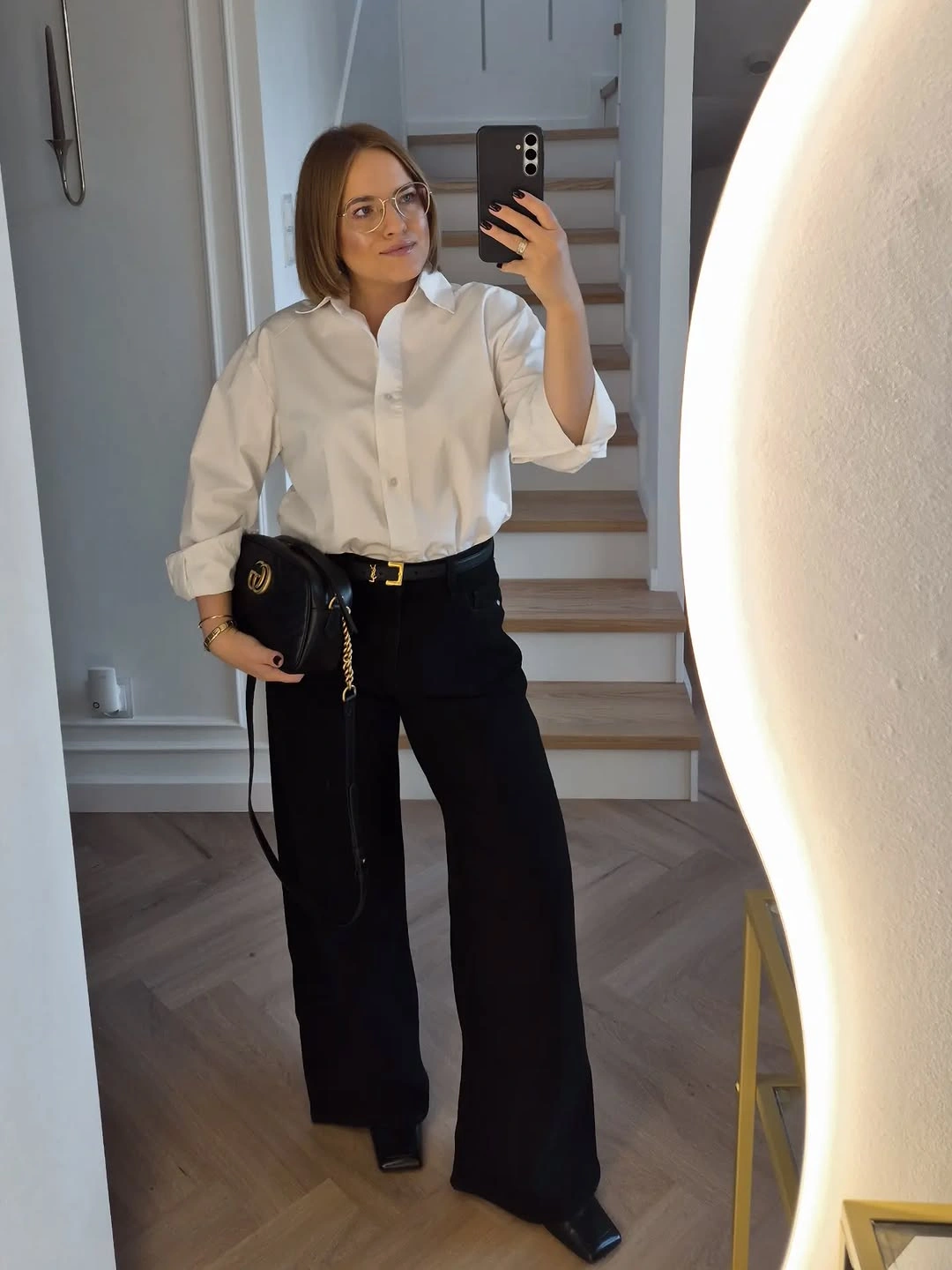
Photo via Instagram
The black belt, handbag, and pointed dark shoes create a controlled accessory set that repeats the dark lower half instead of adding unrelated contrast. Glasses add another precise line near the face, while the rolled or pushed sleeves keep the white shirt from looking stiff. The mirror setting shows the full proportion from collar to hem without proving any specific dress code.
For business casual outfits for women, this look makes the shirt and trouser relationship the main idea. The strongest detail is the clean divide between bright top and dark bottom, with accessories reinforcing that divide.
3. Neutral Capsule With Pleated Midi Movement
This arrangement places a white double-breasted blazer next to a brown or taupe pleated midi skirt, creating a neutral base with movement at the lower half. The black camisole repeats the dark tone found in the bags, sunglasses, and shoes, so the pieces appear connected rather than scattered. The pleats add visible rhythm while the blazer supplies the structured edge.
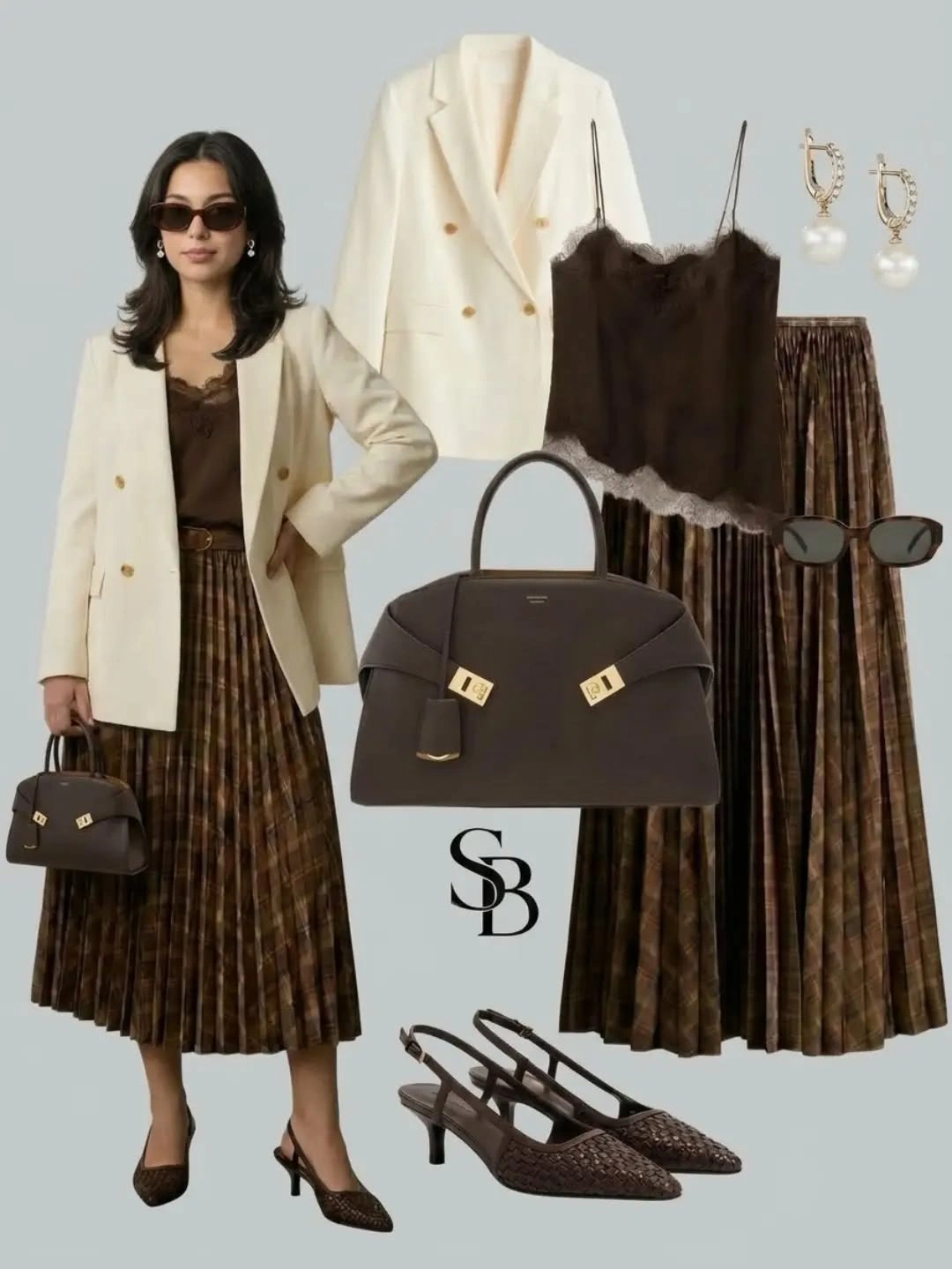
Photo via Instagram
The accessories matter because they keep the palette narrow: black handbags, dark sunglasses, and dark shoes echo one another around the lighter jacket and warmer skirt. A small jewelry detail and pointed shoes add polish, but the main business casual argument comes from balance between tailored outer shape and softer skirt movement. The arrangement stays focused on visible coordination: jacket, camisole, skirt, bags, sunglasses, and shoes, all connected through neutrals and dark accents.
This neutral capsule is useful because it shows how business casual can be built from repetition rather than strong color. The skirt carries motion, the blazer carries structure, and the black accessories tie the two parts together.
4. White Trim Framing a Black Outfit
The fourth outfit centers on a black cardigan or jacket with white trim, worn over a light blouse and a black lower half. The trim draws a clear border down the front and across the lower edge, giving the torso a neat vertical frame. Because the white edging repeats the light blouse, the contrast feels deliberate rather than accidental.
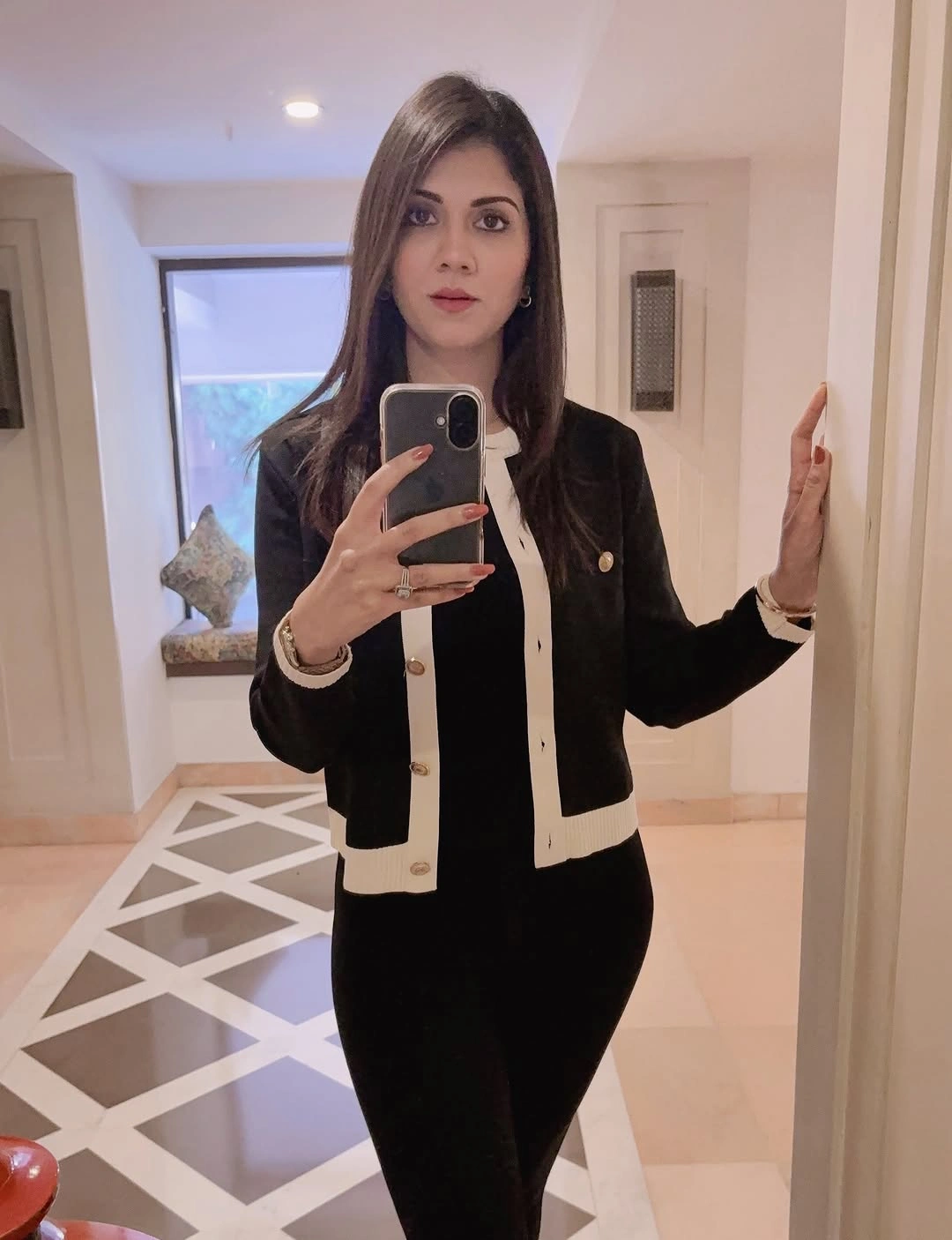
Photo via Instagram
The gold-toned button detail adds a small point of brightness on the dark layer, while the black bottom keeps the lower half visually quiet. The piece reads as a dark outer frame with contrast borders, so the visual interest stays on the edging, front opening, and neat color separation. The mirror portrait also makes the sleeve length and black lower shape easy to compare.
For a smart work outfit idea, the strongest feature is the border created by contrast trim. It turns a simple black-and-light combination into a cleaner vertical composition without adding print or a strong accessory story.
5. Monochrome Layers With a Long Black Line
The fifth outfit relies on a mostly black column, with a sleeveless or tailored-looking layer placed over a light blouse. The long dark shape continues into a wide lower silhouette, making the outfit read taller and more unified from shoulder to hem. The light blouse is visible at the neckline and sleeve area, which prevents the black layering from becoming flat.
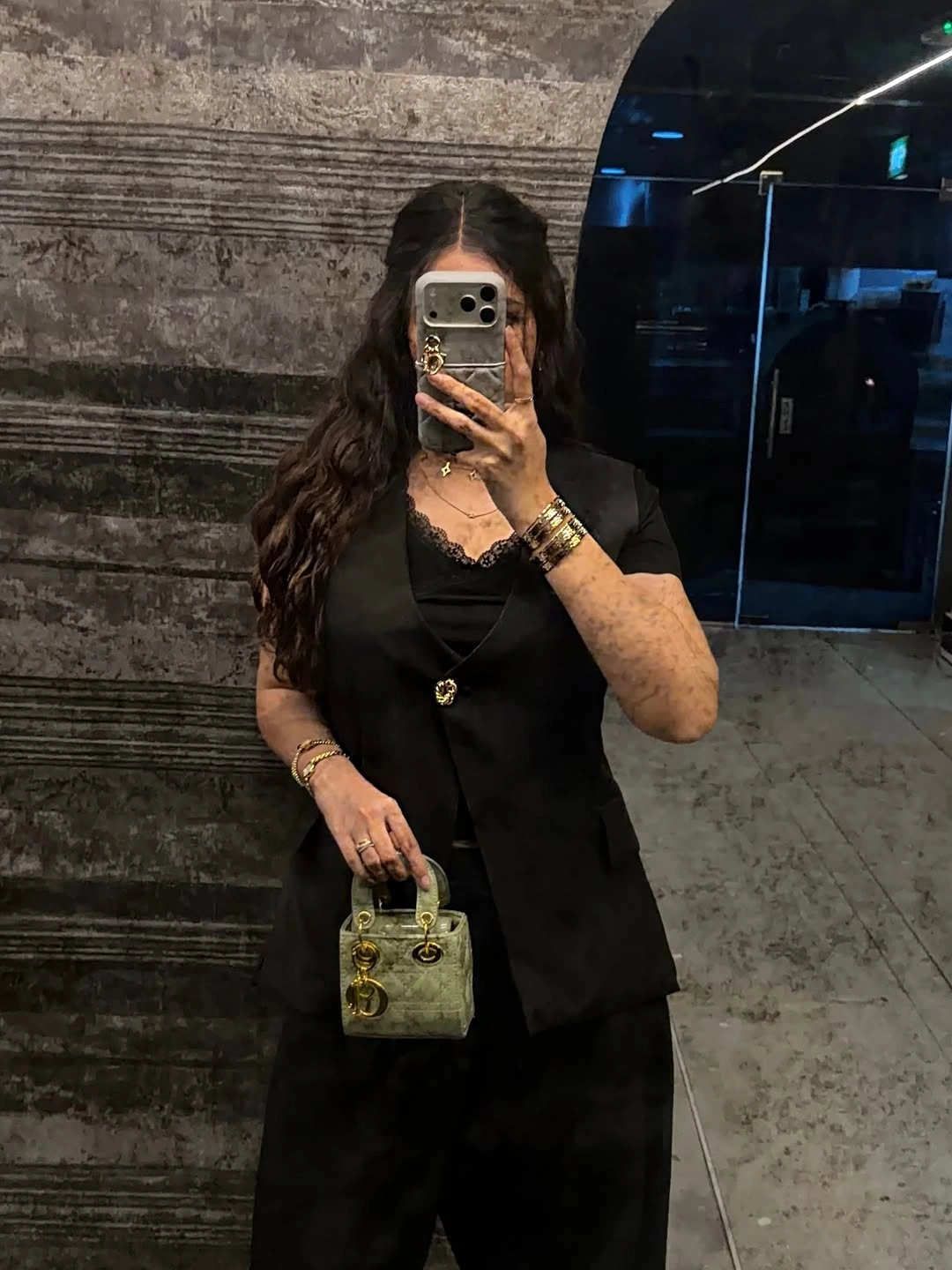
Photo via Instagram
The small handbag, stacked bracelets, necklace, and ring details bring smaller points of shine against the monochrome base. The outfit does not need strong color because the dark outer piece, pale inner layer, and wide black lower shape already create separation. Together they create a business casual outfit that depends on length and tone more than color variety.
This look makes monochrome feel layered instead of plain. The long black line gives the outfit its main structure, while the light blouse and jewelry keep the center visually open.
6. Blue Stripes Sharpen a Denim Base
The sixth outfit turns the blazer into the strongest organizing piece through vivid blue stripes over a plain white top. The stripes run through the sleeves and body, so the jacket gives direction to the look before the light denim comes into focus. Because the jeans are narrow and pale, the tailored layer carries more visual energy than the base below it.
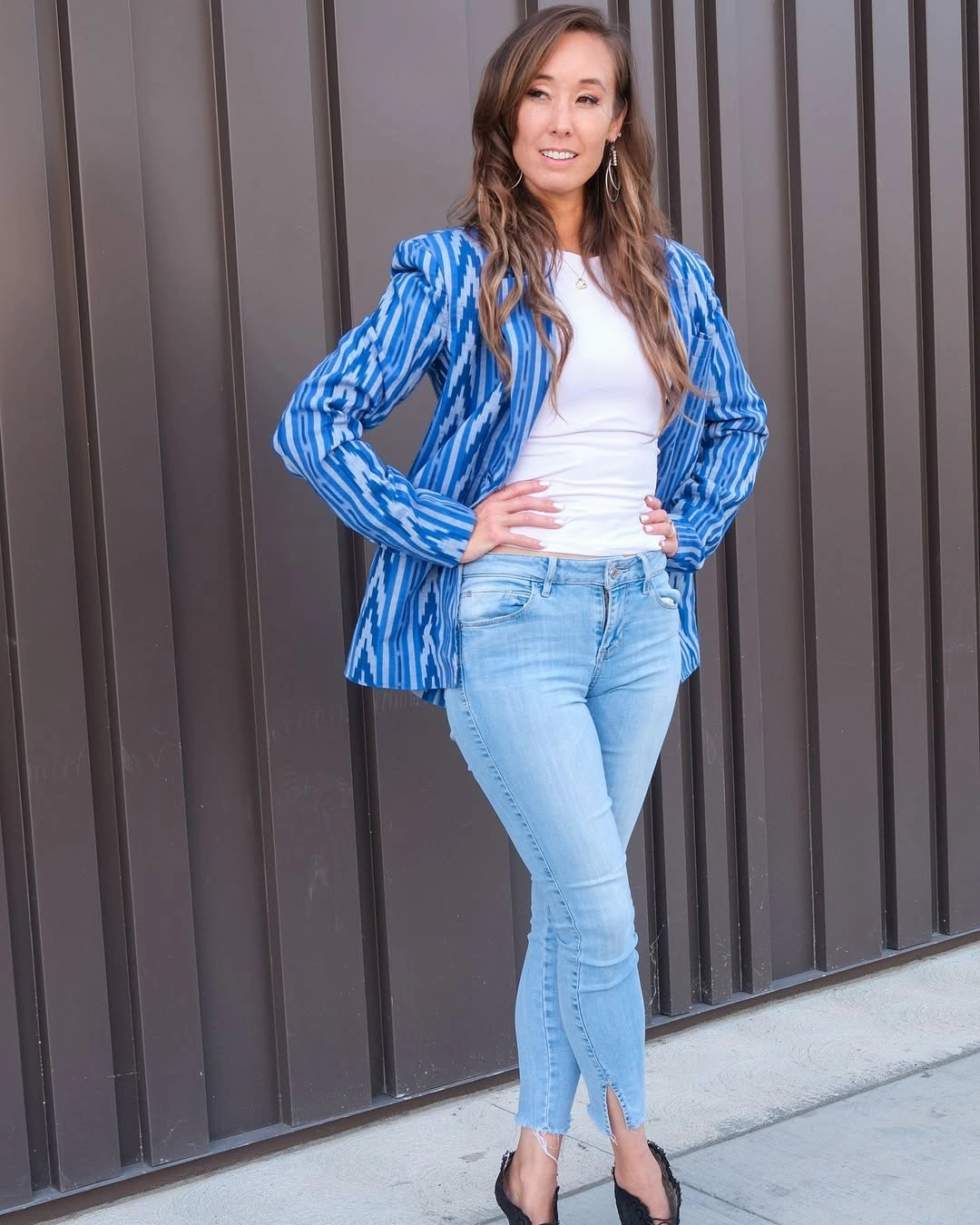
Photo via Instagram
Dark pointed shoes add a final sharp note at the floor, which keeps the pale jeans from feeling visually unfinished. The white top also matters because it leaves a clean break between the striped jacket and the blue lower half, making the outfit easier to read. As business casual outfits for women go, the strength comes from patterned tailoring placed over a relaxed base.
The blazer does not prove any fixed dress code, but it shows how stripes can do the organizing work in a smart casual dress code for women. The denim stays visible as the relaxed counterpoint, while the jacket supplies direction and shape.
7. Cream Layers Held by Dark Accessories
The seventh outfit creates a pale tonal field from the cream blazer, white shirt, and white trousers. Because the major pieces stay close in color, the shape of the blazer, the open shirt front, and the fall of the trousers become more important than color contrast. The dark belt then cuts a clear line at the waist, giving the light layers a firmer center.
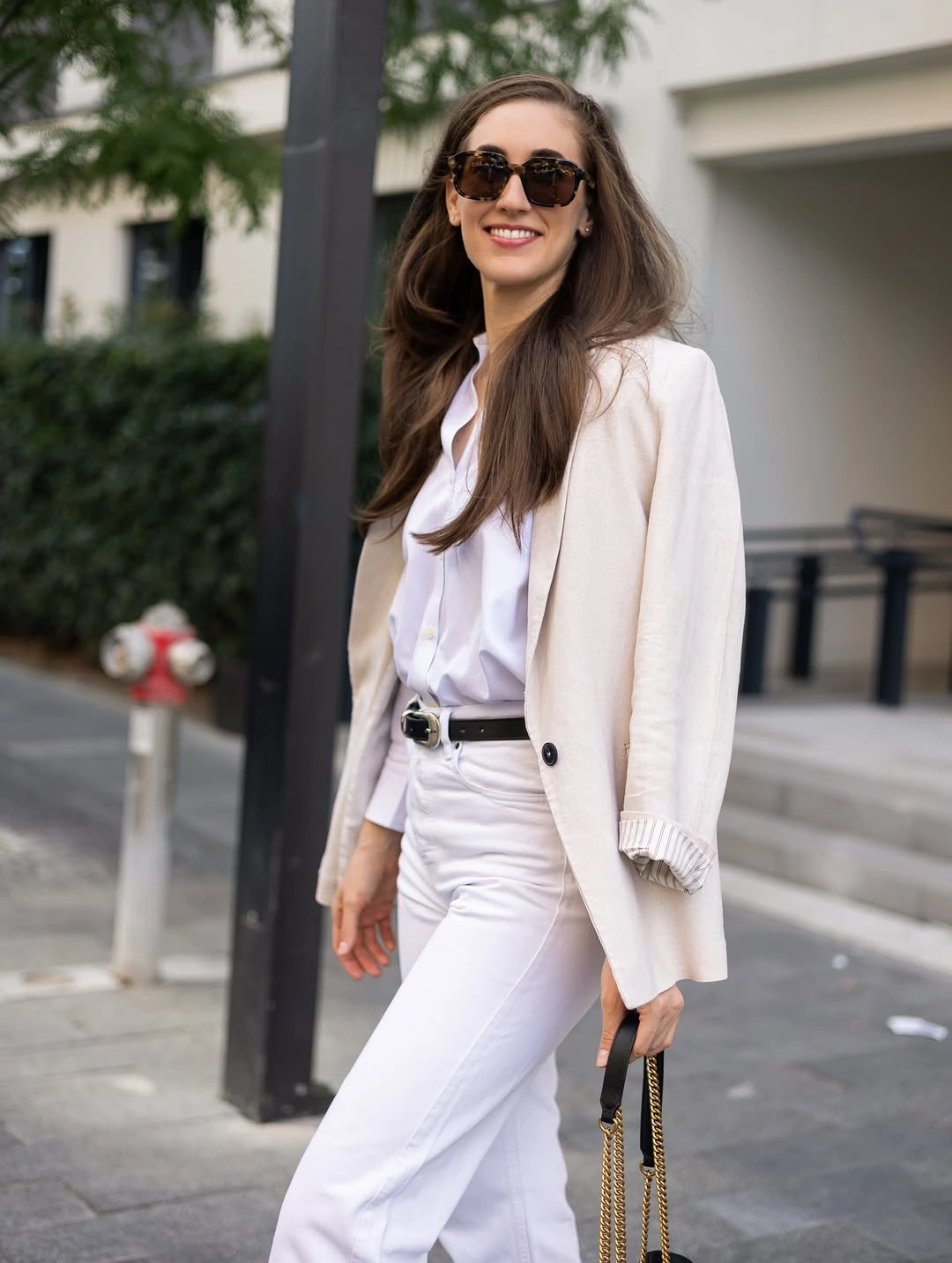
Photo via Instagram
The dark handbag repeats the belt tone, so the outfit has two clear anchor points instead of a scattered accessory story. Sunglasses add another dark note near the face, but the light clothing still dominates the overall proportion. This makes the look useful for business attire inspiration because it shows how pale pieces can feel structured when the accessories are placed with restraint.
Nothing in the look proves weather, setting, or fabric, so the reading should stay with color and proportion. The strongest idea is the way dark accessories hold together a light blazer, shirt, and trouser base.
8. Emerald Blazer Repeated Through the Bag
The eighth outfit puts a saturated green blazer at the center, with a white shirt opening and blue jeans underneath. The jacket surface appears plush or velvet-looking, but the supported visual point is the depth of the color and the tailored outline. Gold-toned buttons at the front and sleeves add small bright points that break up the green without changing the palette.
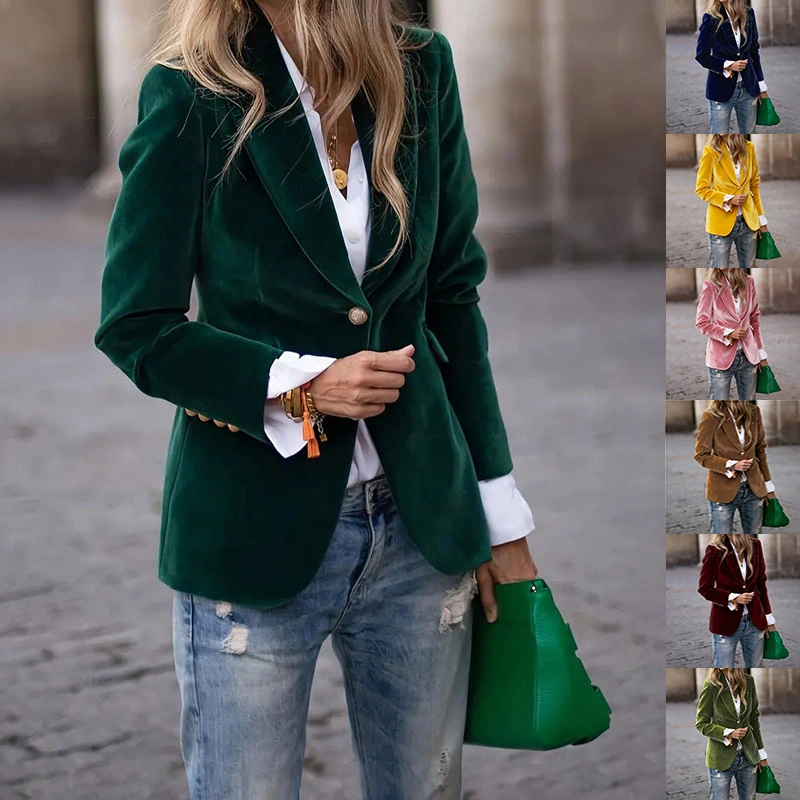
Photo via Instagram
The green handbag repeats the blazer color, so the outfit does not treat the jacket as a one-off statement. Blue jeans add a more relaxed lower half, while the white shirt creates a crisp layer between the two stronger colors. For smart work outfits, the interesting balance is not strict formality, but the way saturated tailoring and denim are tied together by the repeated green accessory.
This look separates itself from a plain blazer-and-jeans formula by repeating the color in the bag. The jeans remain casual in appearance, but the green jacket and matching accessory give the outfit a more deliberate visual rhythm.
9. Taupe Coordination With Soft Tailored Shape
The ninth outfit uses beige or taupe coordination across the jacket and trousers, with a light top keeping the center soft. The cropped or shorter jacket shape gives the upper half definition without making the look feel severe. Because the trousers follow the same muted family, the outfit reads as one tonal arrangement rather than separate pieces competing for attention.
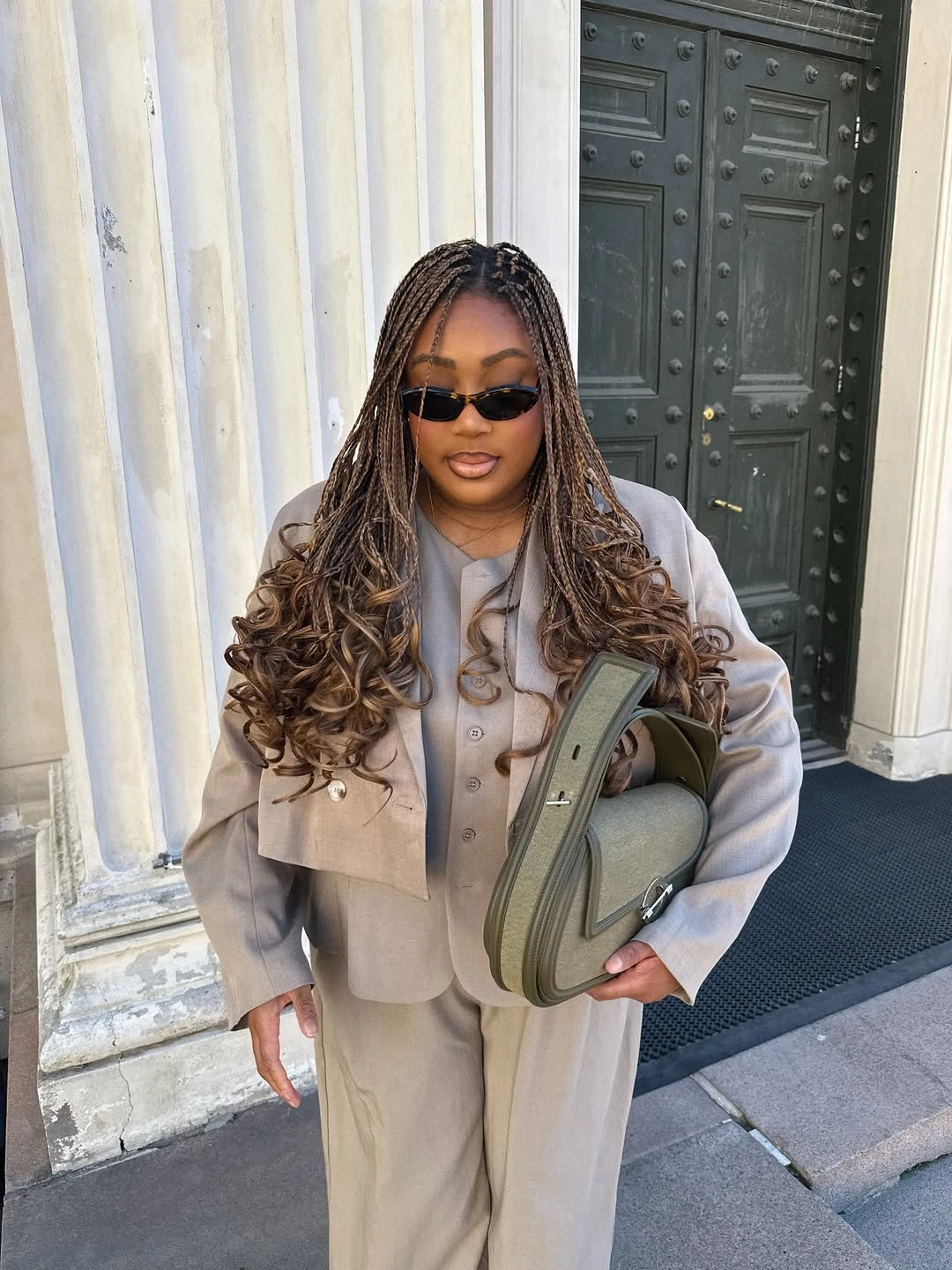
Photo via Instagram
A structured handbag adds a firmer accessory shape, while dark sunglasses create a small graphic break near the face. The muted colors are the main business casual language here, especially because the jacket and trousers stay connected without relying on a dark base. The effect is softened tailoring: organized enough to read polished, but not dependent on a sharp suit outline.
This outfit should be described through visible coordination, not through assumptions about profession or price. The useful detail is the way taupe tones, a light top, and a structured bag make the tailored pieces feel calmer.
10. Dark Blazer With Quiet Bag Detail
The tenth outfit keeps most of the upper half in dark tones, with a black blazer layered over a dark top. Instead of using a bright shirt to separate the pieces, the look lets the jacket shape, lapel area, and shoulder bag create the visible structure. The bag sits across the front, so its flap and small hardware detail become the main point of definition.
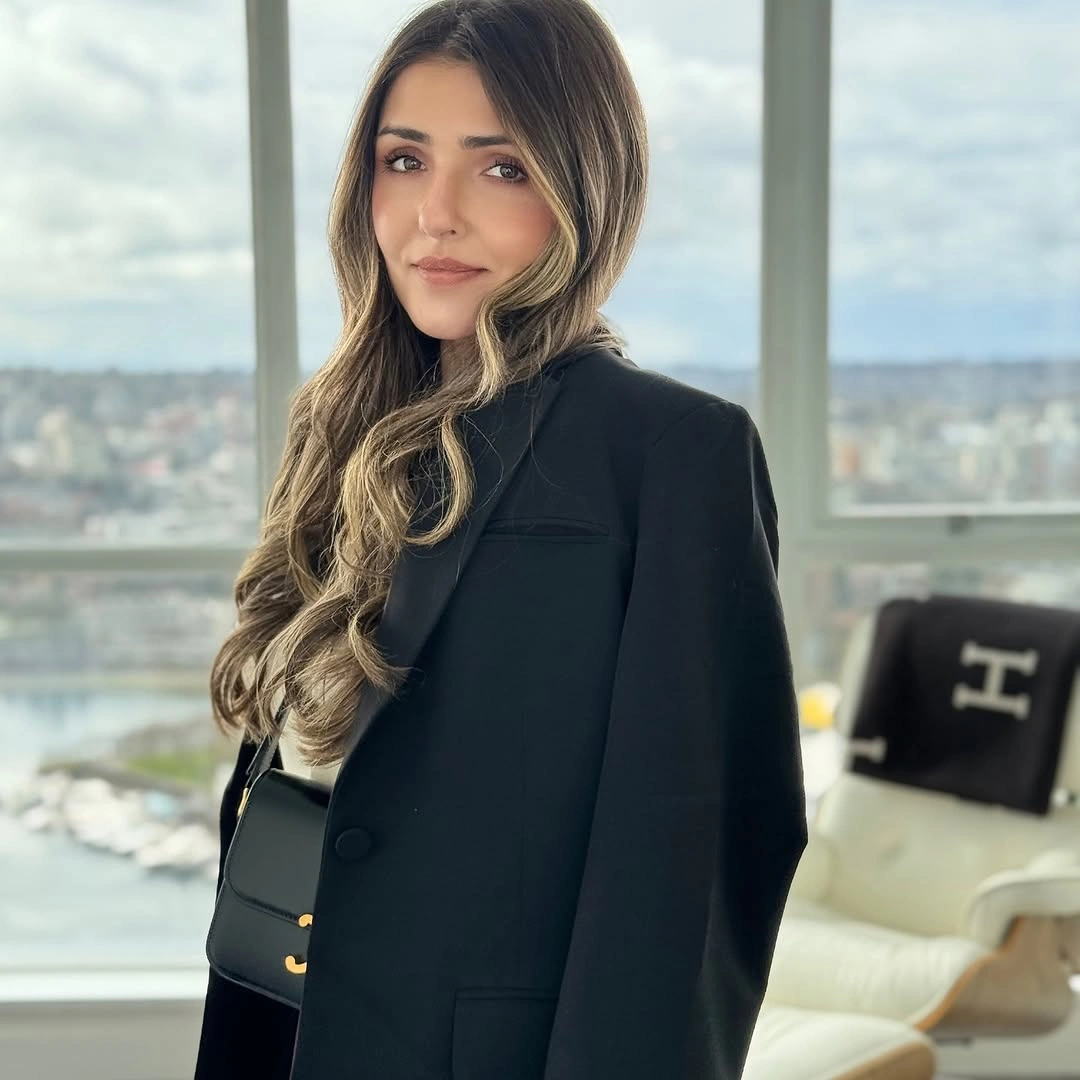
Photo via Instagram
The background includes large windows and a city-like view, but those details only give context and cannot prove an occupation or meeting. What is visibly supported is a dark tailored layer, a dark inner top, and a black shoulder bag placed where it interrupts the blazer. That near-monochrome approach can fit business casual outfit language when the focus stays on shape and accessory placement.
The outfit is strongest when read as controlled dark layering rather than as evidence of a setting. A small bag detail keeps the front from becoming visually flat, while the blazer gives the dark base its outline.
11. Floral Blouse With Light Trousers and Sneakers
The eleventh outfit brings pattern into the business casual conversation through a black blouse covered with small floral shapes. Its darker upper half contrasts with the pale trousers, so the print stays contained above the waist instead of spreading through the whole look. White sneakers interrupt the more polished blouse-and-trouser pairing with a visibly casual finish at the floor.
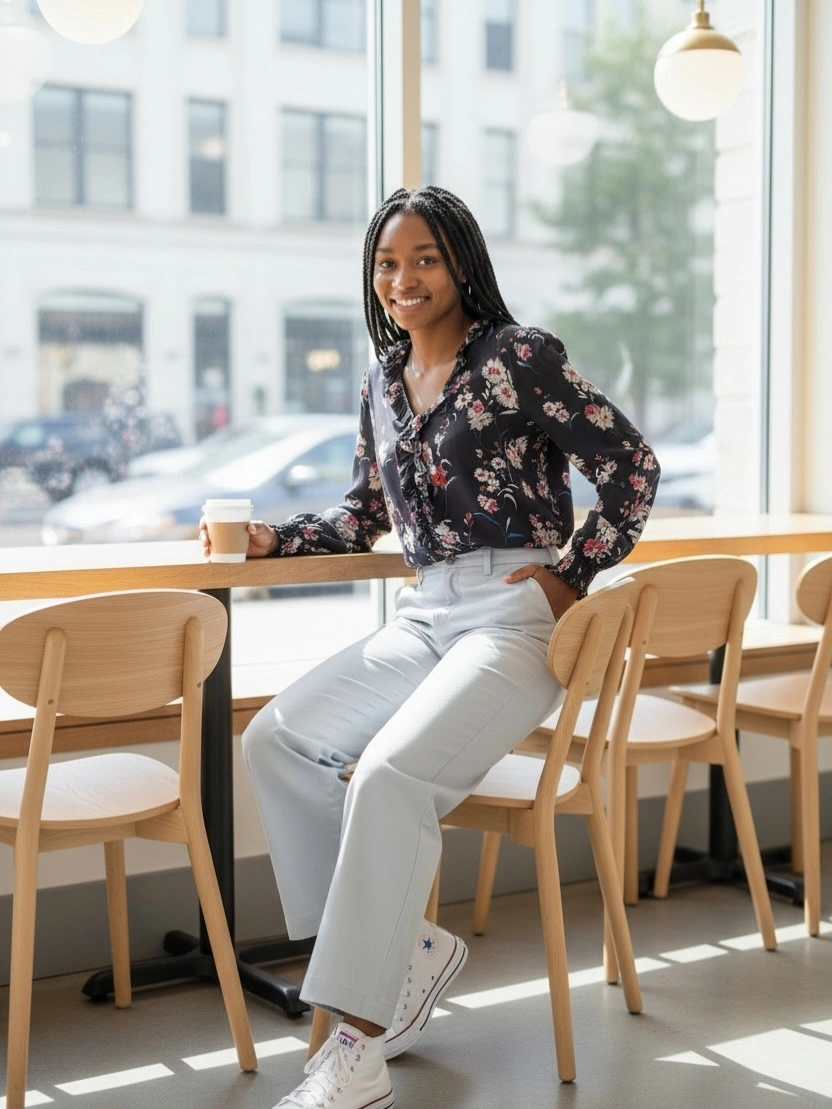
Photo via Instagram
The light trousers keep the lower half open and calm, which lets the floral blouse remain the main detail without making the outfit feel busy. The seated pose shows the sneakers clearly, and they change the reading of the outfit more than another dressier shoe would. The table, cup, and bright interior are context only, while the supported style argument comes from print, pale tailoring, and white footwear.
This section works best as a print-and-sneaker example, not as a claim about the setting. For business casual outfits for women, the visible lesson is how one patterned blouse can stay balanced when the rest of the outfit is lighter and simpler.
12. Soft Beige Layers With White Sneakers
The twelfth outfit keeps nearly everything in a beige and cream family, with a cardigan or sweater showing a knit-like texture over a light high-neck top. The large front buttons give the upper layer visible structure, while the trousers continue the pale palette below. White sneakers at the floor create a sharper break from the soft neutral clothing above them.
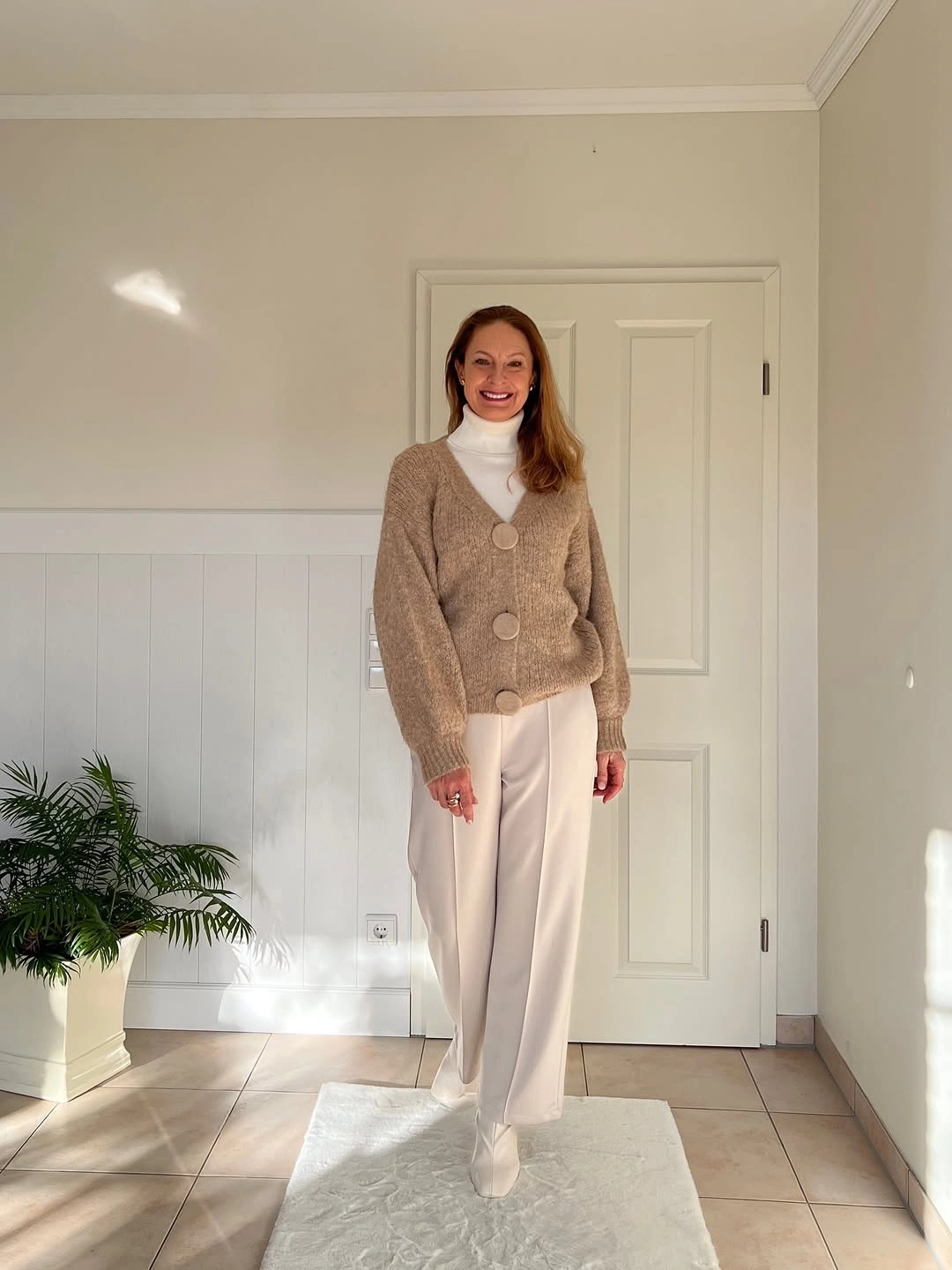
Photo via Instagram
Because the colors stay close, small details become more important: the high neckline, the rounded buttons, the sleeve shape, and the straight fall of the trousers. The sneakers repeat the light tone but bring a different visual category, making the outfit less formal than the upper layers alone might suggest. This is a useful business attire reference when the focus stays on soft layering, tonal restraint, and a clearly casual shoe.
The knit-like surface should be described carefully, without naming fiber or exact material. The outfit’s strongest point is the contrast between gentle neutral layers and the clean white sneaker finish.
13. Pink Blazer With Blue and Beige Balance
The thirteenth outfit uses three distinct color areas: a pink blazer, a blue shirt, and beige trousers. The blazer gives the upper body a tailored outline, while the shirt sits as a cooler middle layer between the jacket and the warm neutral lower half. Tan loafers continue the beige direction at the floor, so the strongest color remains concentrated at the jacket.
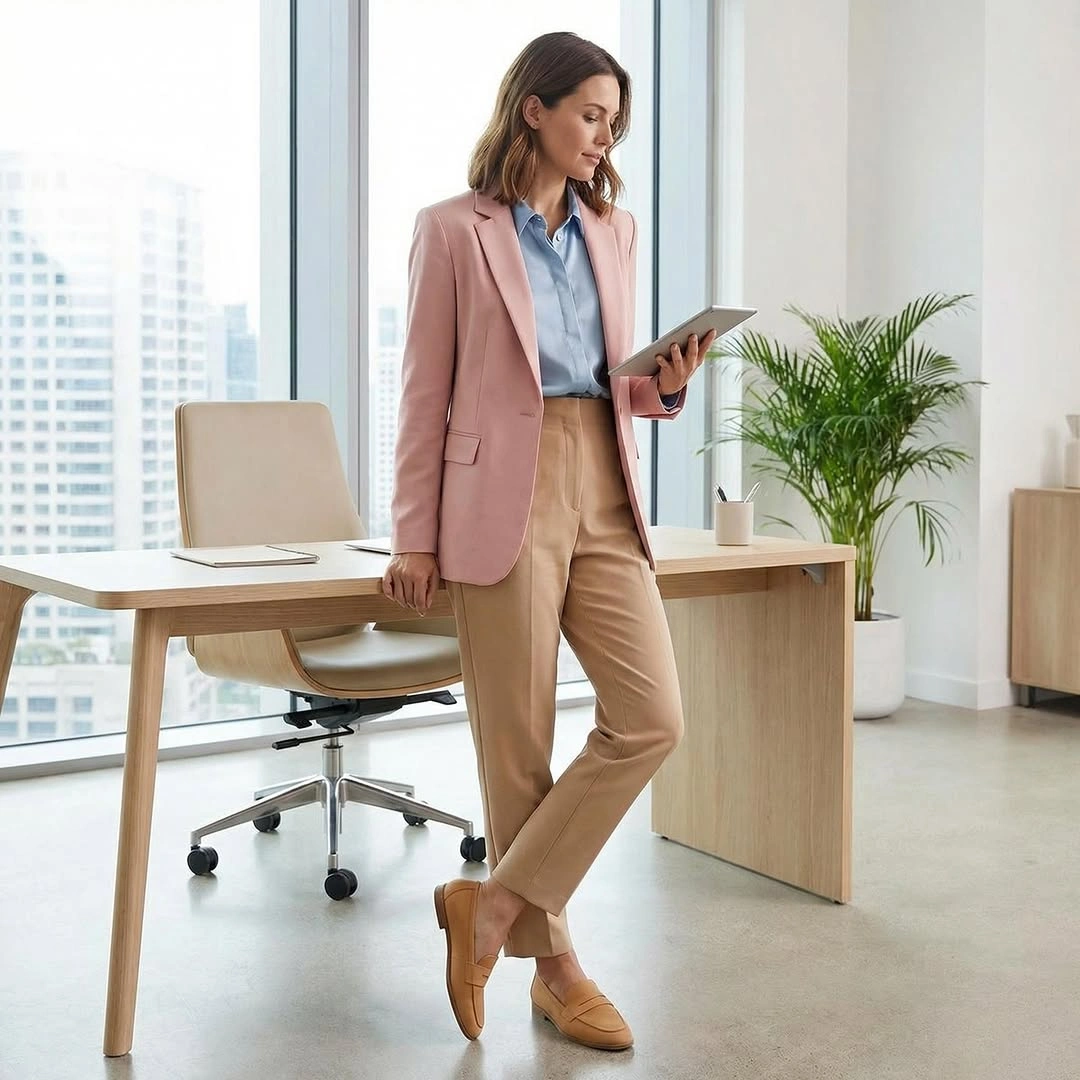
Photo via Instagram
The proportions are clear because the blazer ends above the trouser break, letting the beige lower section lengthen visually from waist to shoe. The shirt collar and front opening keep the center organized, while the loafers echo the trousers instead of adding a new competing color. The office-like interior can support the mood, but it does not prove a job, policy, or role.
This is a strong example of smart work outfits built through color placement rather than heavy contrast. The pink jacket leads, the blue shirt cools it down, and the beige trousers and loafers keep the lower half steady.
14. Black Collar Framing a White Blouse
The fourteenth outfit starts with a white blouse that is defined by a black collar, creating an immediate frame around the neckline. That collar detail connects visually to the darker trousers, so the outfit has a clear top-to-bottom relationship without needing a jacket. The blouse stays bright through the center, while the black accents sharpen the outline near the face.
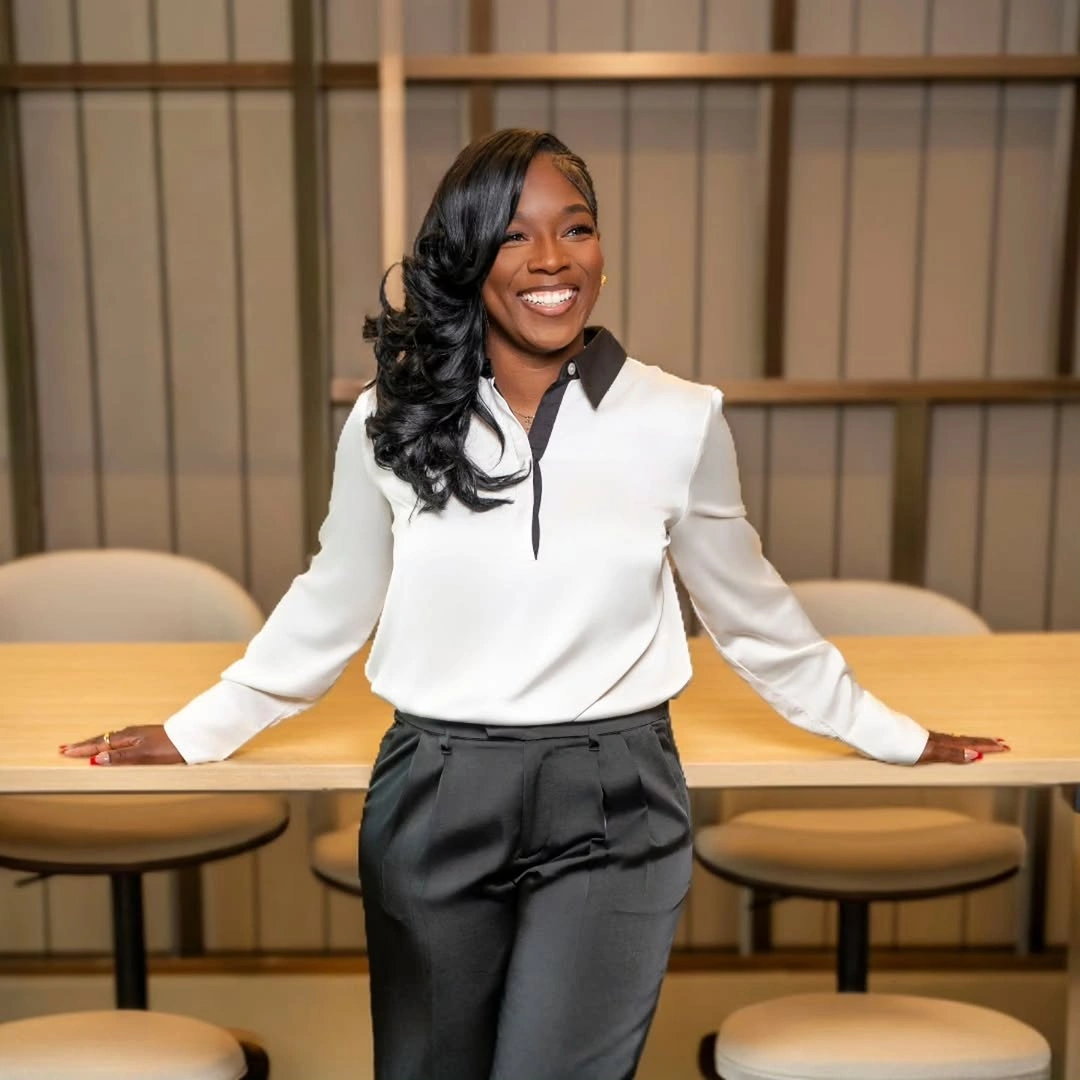
Photo via Instagram
The trousers appear in a dark gray or black family and include front pleats, giving the lower half a structured shape under the softer blouse. The sleeves fall simply, and the blouse opening stays minimal, so the contrast collar remains the main focus. The dining or office-like background should not be treated as proof of a uniform or role, because the visible evidence is the clothing itself.
The most useful detail is the collar, which creates business casual structure on a blouse rather than through an outer layer. The dark lower half supports that collar by repeating its tone in a broader, cleaner base.
15. Cream Cardigan Over Muted Green Trousers
The fifteenth outfit pairs a cream or beige cardigan with a white top, then shifts the lower half into muted olive-green trousers. That color change gives the outfit more depth than an all-light neutral base, while the cardigan keeps the upper half soft and open. The white top sits between the cardigan and trousers as a clean center layer.
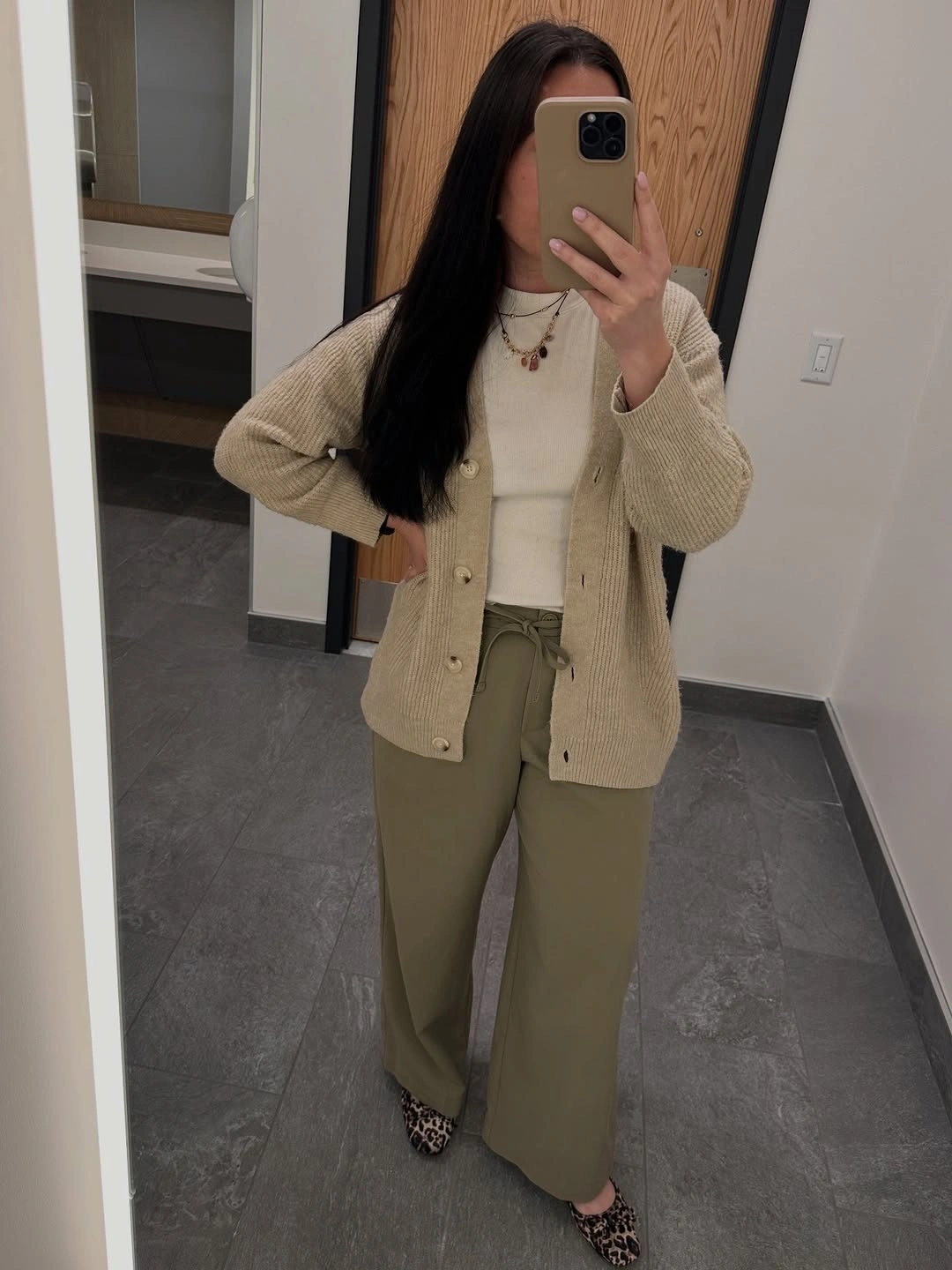
Photo via Instagram
The trousers have a relaxed, wider shape that contrasts with the shorter buttoned cardigan above them. Patterned pointed shoes add a final detailed note at the floor, bringing visual interest without requiring another bright garment. The mirror portrait also shows how the soft upper layers and green lower block meet at the waist, making the outfit easy to read through proportion.
This look is strongest when described through color blocking and proportion, not through assumptions about material. The cream upper layers soften the outfit, while the olive trousers create a grounded lower section with a quieter kind of contrast.
16. Houndstooth Blazer With Denim Restraint
The sixteenth outfit gets its structure from the small, repeating houndstooth pattern across the blazer, not from strong color contrast. The black top underneath gives the pattern a plain center, while the blue jeans keep the lower half visually separate from the jacket. Because the blazer is worn open, the pattern reads as a frame around the torso rather than as one uninterrupted block.
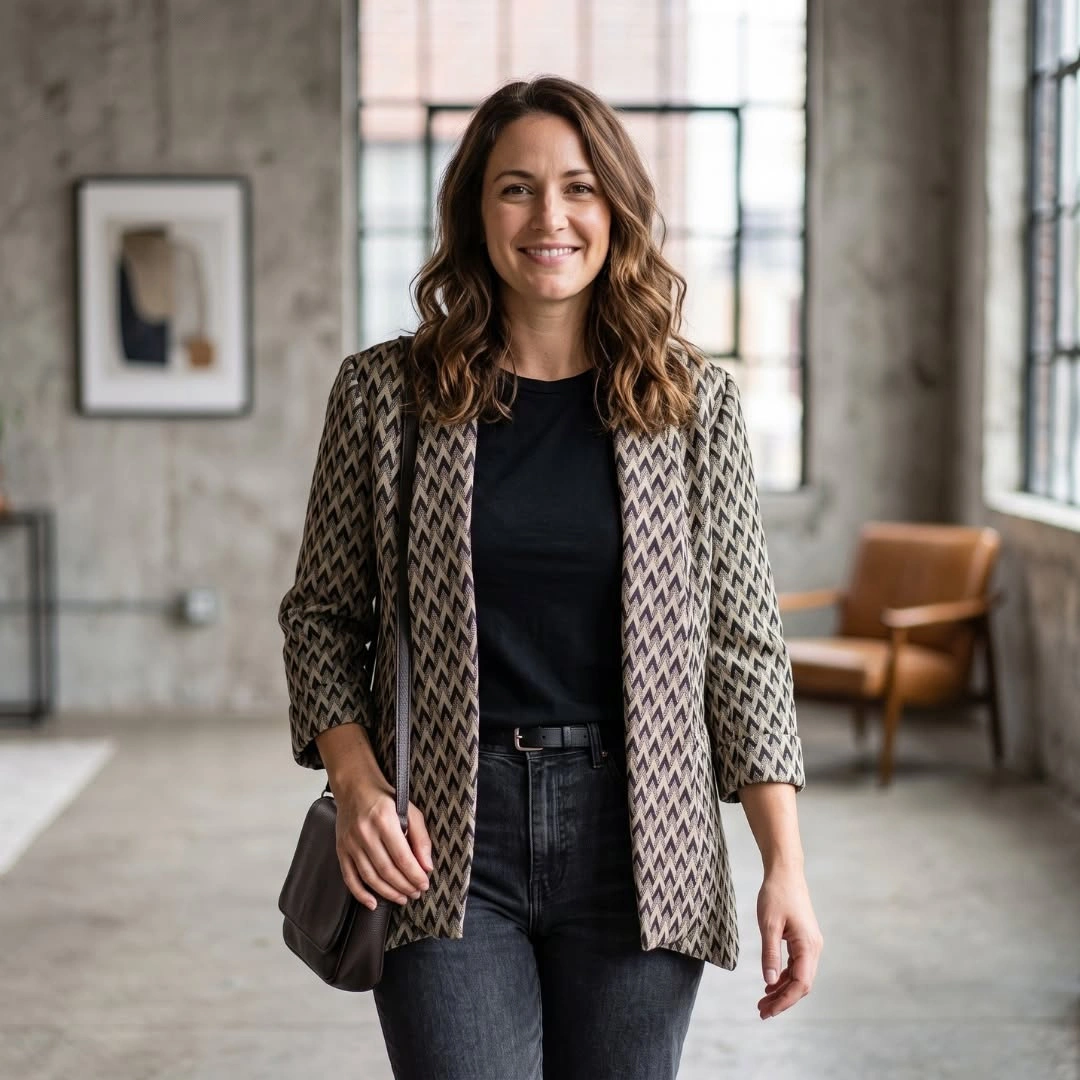
Photo via Instagram
The dark shoulder bag, black top, and dark belt area keep the accessories quiet, which lets the patterned blazer remain the focus. The jeans add a different surface and color family without pulling attention away from the jacket’s graphic repeat. As business casual outfits for women are interpreted visually, this look shows how print can supply structure while the rest of the styling stays restrained.
The look stays focused on pattern, denim, and accessory scale rather than on any specific place. Its most specific idea is the contrast between a busy tailored layer and a deliberately pared-back base.
17. White Shirt and Denim Reduced to Essentials
The seventeenth outfit strips the idea down to a white button-up shirt and light blue jeans, with no blazer or extra color layer taking over. The shirt provides the visible structure through its collar, button placket, cuffs, and tucked placement at the waist. The denim then keeps the lower half pale and steady, so the outfit depends on clean proportion rather than ornament.
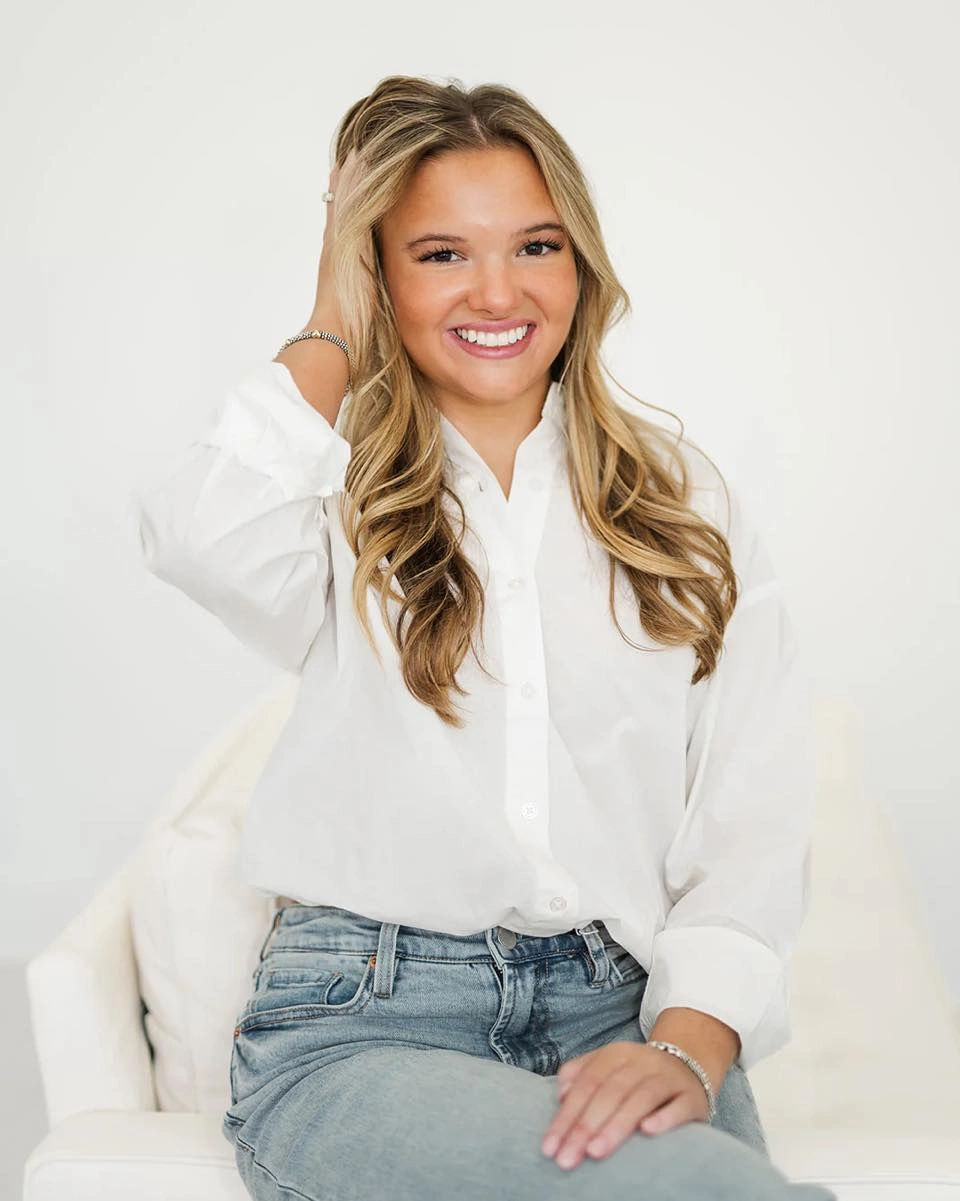
Photo via Instagram
The seated pose brings the shirt front, sleeve volume, and waistband into view, making the relationship between the two garments easy to follow. A small bracelet or watch detail adds a modest accent, but it does not change the main two-piece reading. This is a useful business casual reference only as contextual styling language, because the visible evidence is a simple shirt, denim, and minimal accessories.
The outfit stays spare rather than decorative, with the collared shirt setting the tone above the jeans. Its strength is the pared-down contrast between a white top and light denim, with very little else competing for attention.
18. Oversized Stripes Over Wide Denim
The eighteenth outfit changes the shirt-and-denim idea by adding much more volume through a light blue striped button-up and wide blue jeans. The vertical stripes on the shirt lengthen the upper shape, while the loose sleeves and open seated posture make the garment look larger than the body frame. The denim repeats the blue family but shifts the focus lower through its broad leg shape.
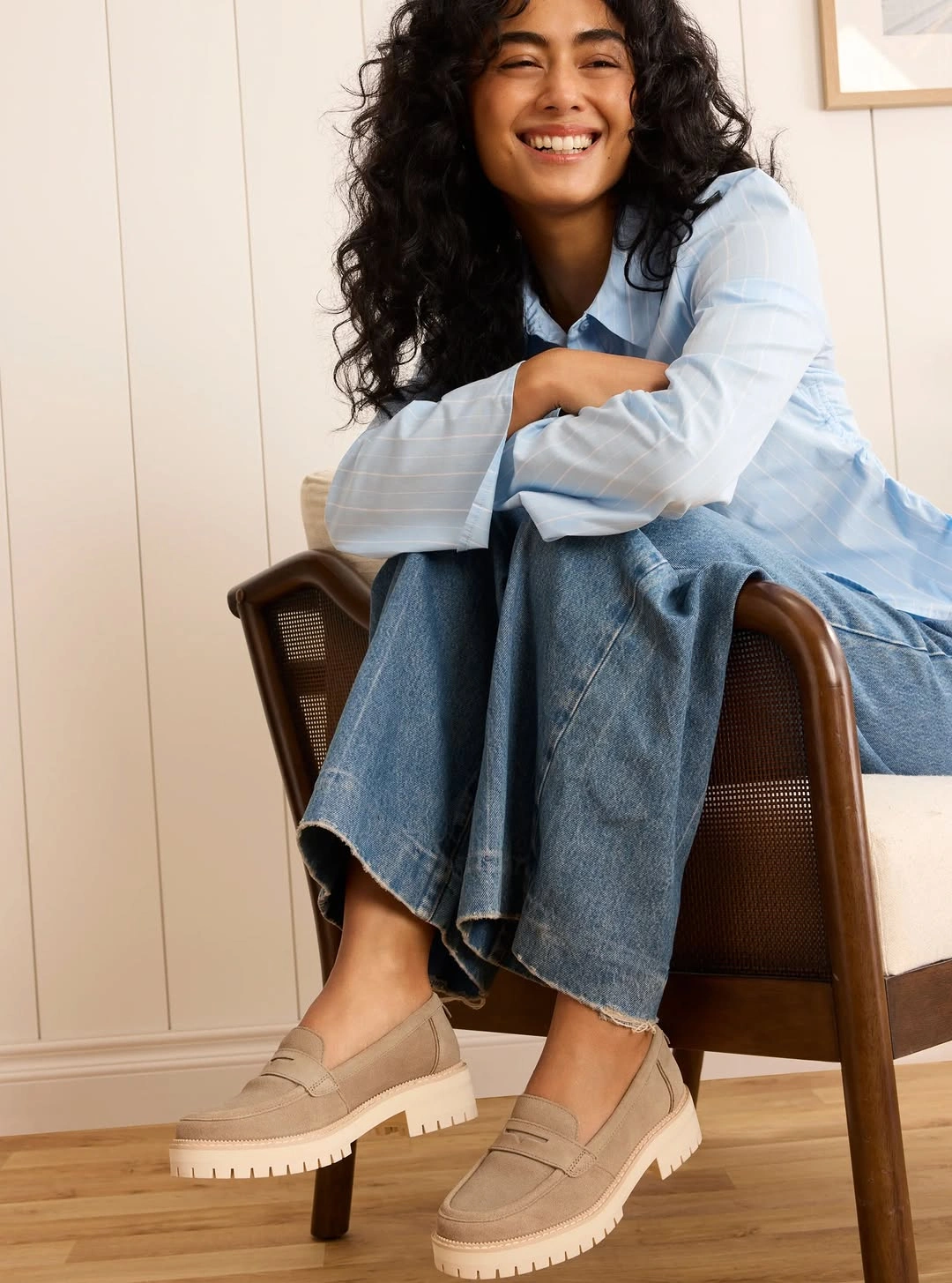
Photo via Instagram
Beige loafers give the outfit a grounded finish, with thick soles and a rounded upper that contrast with the softer drape of the jeans. This section is distinct from a striped blazer because the pattern belongs to the shirt itself, not a tailored outer layer. It is also different from the simpler white-shirt base because the main point is volume, stripe direction, and the way the shoes hold the wide lower half in place.
For a smart casual dress code for women, the visible idea is not formality but proportion management. The stripes organize the oversized shirt, the wide jeans extend the blue palette, and the loafers add a defined base.
19. Sculpted Beige Top Over Dark Trousers
The nineteenth outfit centers on a beige structured-looking sleeveless top placed over black trousers. The neckline appears wide and off-the-shoulder in shape, leaving the shoulders visually open while the front stays defined by buttons. Gold-toned buttons and a shaped lower edge draw attention to the front of the top, making it the most detailed part of the outfit.
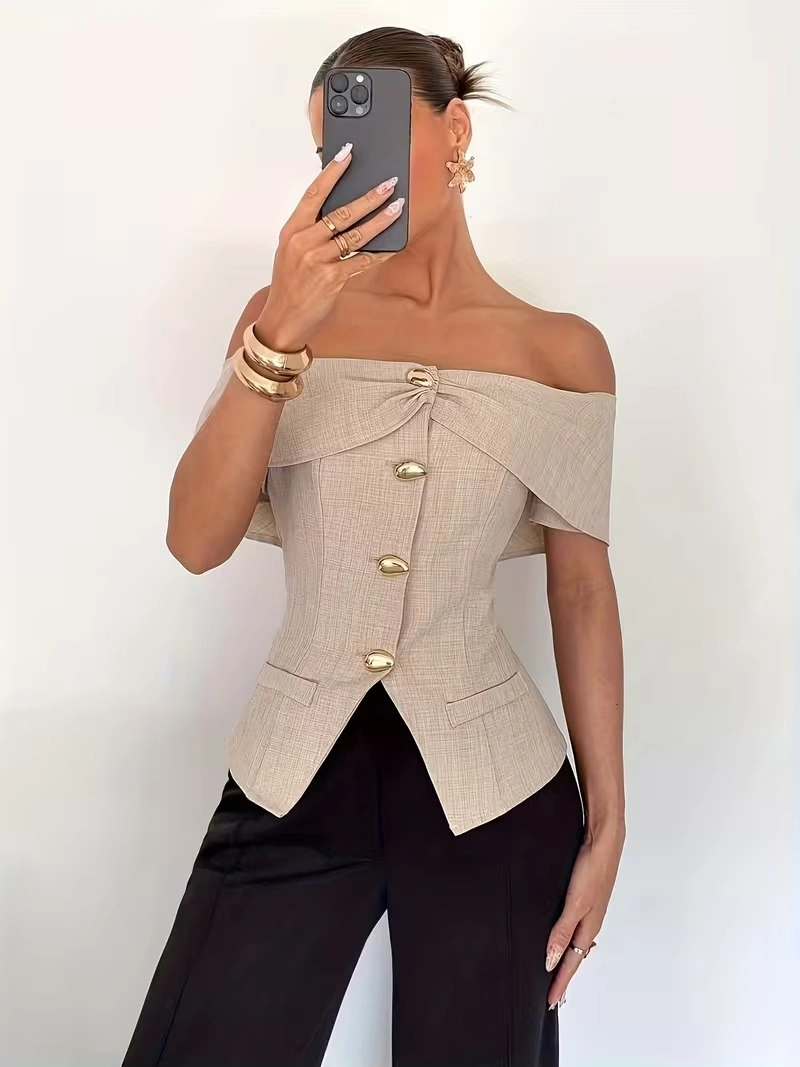
Photo via Instagram
The black trousers create a dark base under the pale upper piece, so the contrast sits at the waist and neckline instead of across many colors. A dark handbag continues the lower tone and keeps the accessory story close to the trousers. In business attire terms, the interest comes from the shaped upper layer, the button placement, and the deliberate separation between beige and black.
The pale upper shape gives the outfit its tension against the dark trousers. The buttons, wide neckline, and dark handbag keep the focus on front-facing structure rather than on extra color.
20. Yellow Blazer Against Cropped Denim
The twentieth outfit uses a yellow blazer as the brightest tailored accent, placing it over a light top and wide cropped blue jeans. The jacket brings a strong color block to the upper half, while the denim adds a looser lower shape that stops above the ankle. Because the person is seated, the cropped width of the jeans and the blazer’s buttoned sleeve detail are both easy to see.
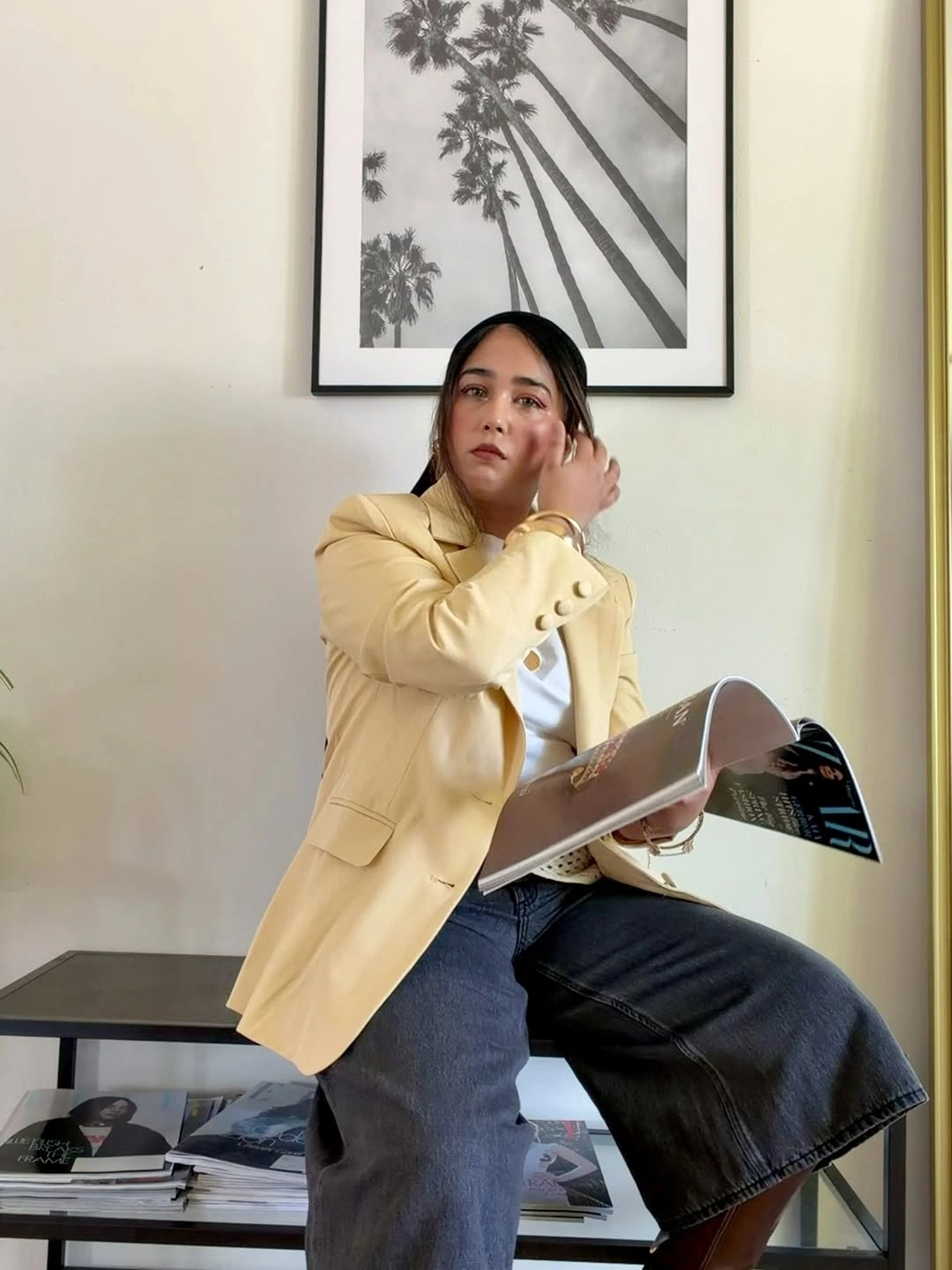
Photo via Instagram
The open magazine or newspaper is a visible prop, but it does not turn the outfit into proof of work or an event. The combination centers on a vivid blazer, pale inner layer, dark belt area, and relaxed denim shape. As business casual outfits for women, this look works as contextual inspiration for mixing a bright tailored piece with a less formal lower half.
The yellow blazer gives the look its strongest visual signal without needing another saturated garment. The cropped jeans and light top keep the outfit from becoming a full suit-like arrangement, while the seated pose emphasizes the contrast in proportion.
21. Light Blue Blazer Over a Dark Base
The twenty-first outfit builds controlled contrast by placing a light blue blazer over a black top and black trousers. The pale jacket frames the darker center clearly, so the eye reads the blazer shape first and then follows the uninterrupted dark base underneath. The seated position also shows how the blazer length and trouser line work together without needing extra color.

Photo via Instagram
A laptop and table are visible nearby, but they should stay as context rather than proof of a job, office, or meeting. The supported outfit detail is the contrast between blue tailoring and the black pieces beneath it, with a simple necklace adding a small bright point at the neckline. This makes the look useful for business casual outfits for women because the visual structure comes from color placement and layered proportion.
The light blazer does the main organizing work here, separating the upper outline from the dark interior. The dark top and trousers keep the rest of the outfit steady, so the contrast remains controlled instead of scattered.
22. Solid Black Blazer With Denim Contrast
The twenty-second outfit centers on a solid black blazer worn over a white button-up shirt, with blue jeans bringing in the relaxed lower half. This separates it from the earlier striped blazer because the outer layer is plain, dark, and more direct. It also differs from a shirt-and-jeans base because the blazer adds a defined shoulder line and a stronger frame around the white shirt.
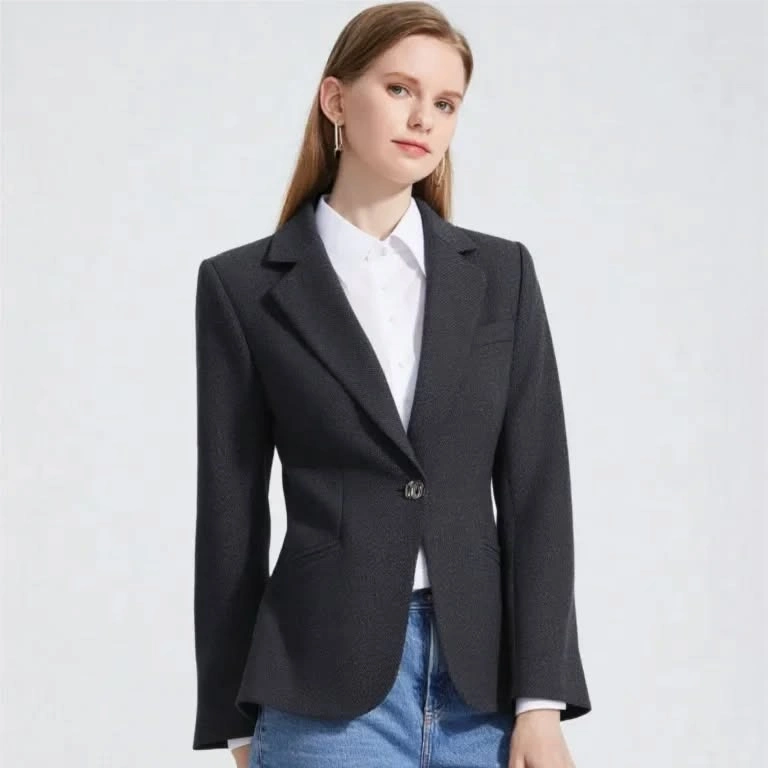
Photo via Instagram
The front-facing pose makes the garment relationships clear: dark blazer outside, white shirt through the middle, and denim below. The shirt collar and button placket brighten the center, while the jeans keep the lower portion visibly separate from the tailored upper layer. As smart casual dress code for women inspiration, the outfit reads through a classic blazer-and-denim balance rather than through setting or occupation.
The strongest detail is the plain black outer layer, which gives the white shirt more definition. The jeans keep the outfit from becoming a full tailored set, while the blazer keeps the denim from controlling the whole impression.
23. Pale Layers With One Linear Accent
The final outfit uses a pale tonal foundation, with a cream cardigan or jacket over a white blouse and light beige trousers. The lower half stays clean and quiet through the pale trouser line and white shoes, so the outfit does not depend on strong contrast at the hem. Instead, the most noticeable interruption is the narrow striped piece near the front, which adds one darker linear detail.
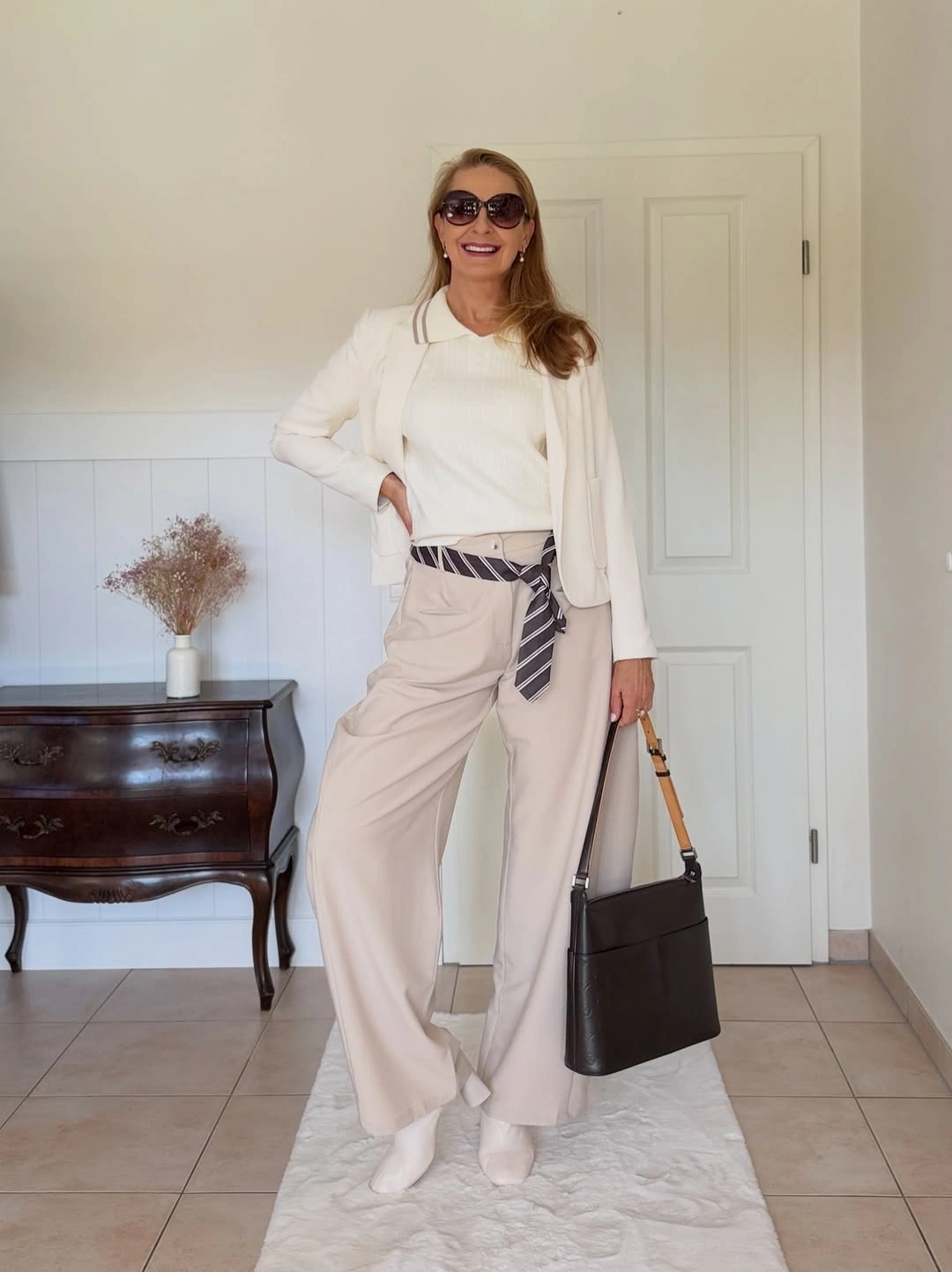
Photo via Instagram
That striped accent should stay cautiously described because it could read as tie-like, belt-like, or another narrow accessory depending on the view. The black handbag repeats the darker note without overwhelming the cream, white, and beige clothing. In business attire terms, the visible idea is a controlled pale base with one slim graphic line and one darker accessory to keep the look from becoming too uniform in tone.
This section works because the outfit is mostly soft and light, then sharpened by a single narrow stripe. The white shoes and beige trousers keep the lower silhouette clean, while the black handbag gives the pale layers a clear finishing point.