Cornrows are a protective style built on clean parts and even tension, with the pattern itself doing the work. The current shift favors softer edges and lived-in color, so your scalp design can be as intricate or as simple as you want without looking severe.
This collection of 17 Cornrows Hairstyles for Black Women covers everything from short braided ponytails to mid-back lengths, with options for beads, rings, cuffs, and wavy ends. If you have fine hair that loses definition fast or a visible grow-out line you want to hide, these styles hold their shape and keep the parts crisp longer than most braided looks.
1. Cornrows With Heart Pattern And Long Braids
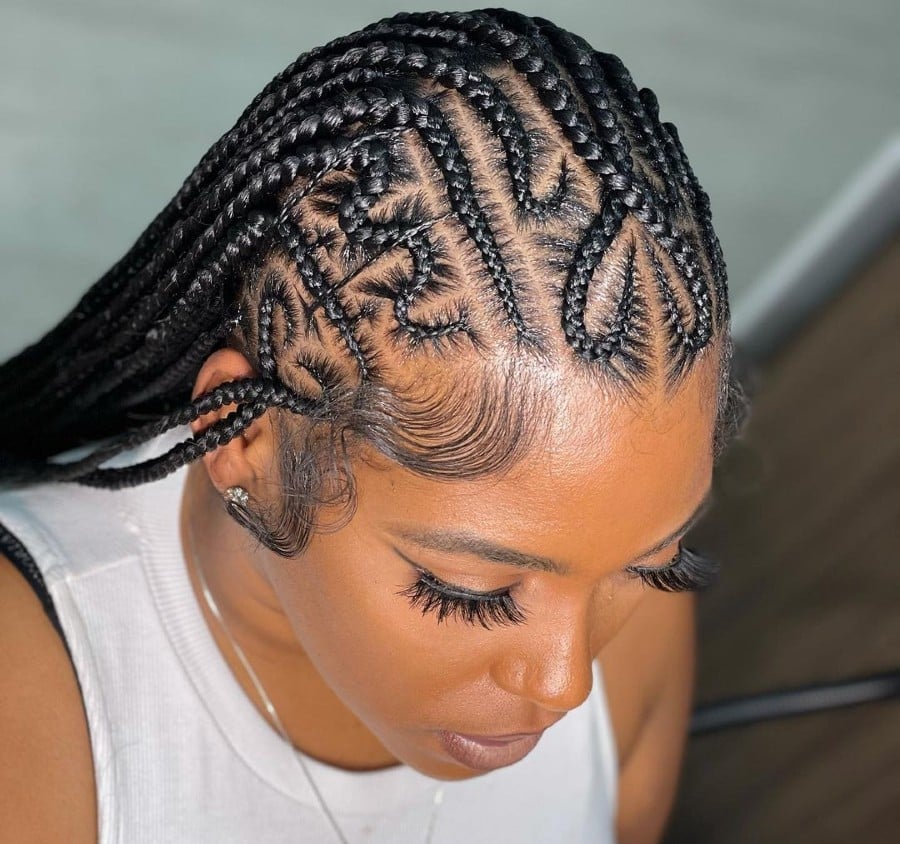
A heart worked into cornrows is a braid pattern you cannot fake, because every curve has to sit at the same scale on both sides of the middle parting. The stylist builds the outline first, then fills the interior with clean, straight rows that feed into long braids reaching the mid-back. Black hair, straight braided extensions, a front view that holds the shape: the design reads clearly because nothing puffs up around it. Ask your stylist for: cornrows with a heart pattern and long straight braids. It suits Black women who want an artistic scalp design and have enough length, mid-back or with extensions, to carry the long braids. A light pomade along the parts keeps the rows sharp, and the braided ends want a trim every 10 to 12 weeks. Book a salon appointment: the precision takes trained hands and a few hours.
2. Cornrows With Curly Ends And Beads
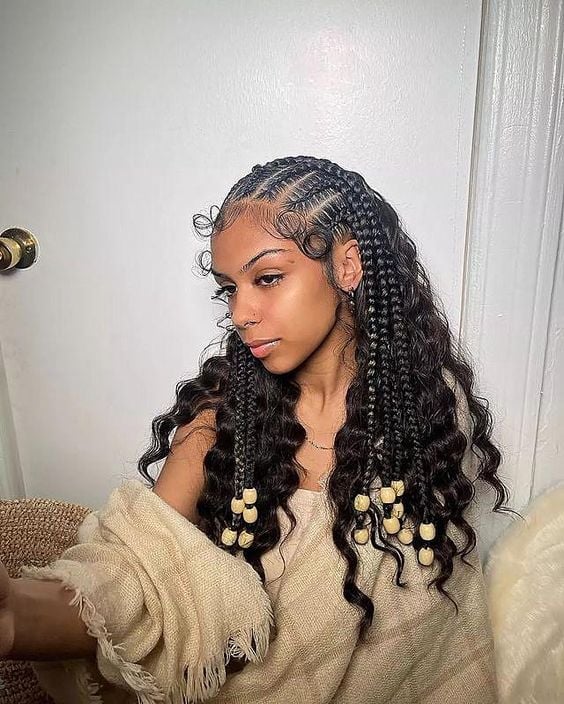
What do you get when the braids end in curls instead of straight lengths? A softer line and a lot more movement. These cornrows run from a middle parting into long wavy braids at the mid-back, with small decorative beads threaded through and the tips left curly. The base is black with lighter blonde tips, so the curl at the end catches the eye. Baby hairs are styled along the hairline to finish the front. Ask your stylist for: cornrows with wavy braids, curly ends, and beads. It suits Black women with mid-back length who want texture and a little embellishment without going full sculptural. Style the baby hairs with a soft brush and gel, and refresh the curly ends with a light curl cream between washes. The beads stay put for weeks, but check them when you wash.
3. Two-Tone Cornrows With Wavy Texture
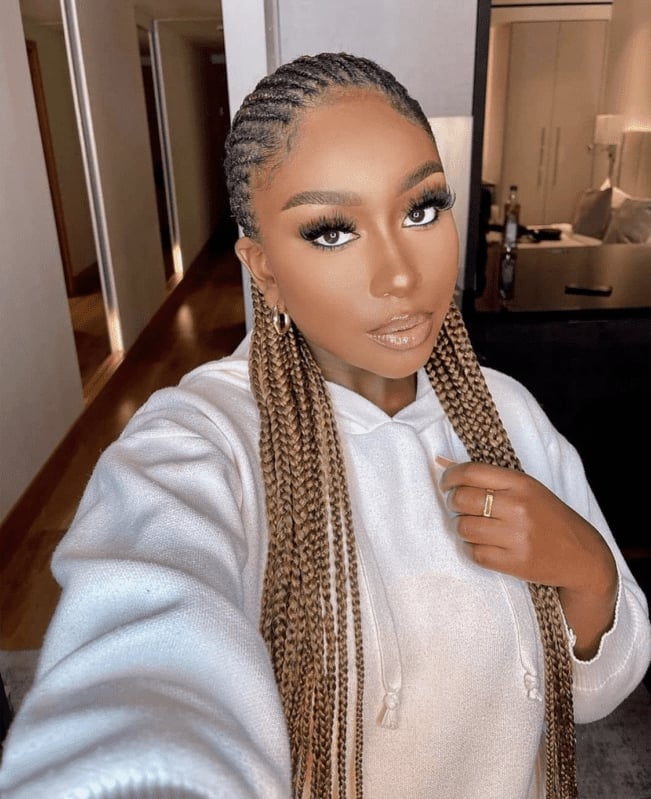
A brown base with blonde highlights gives thick, wavy cornrows a light-and-shadow effect that flat black does not. The rows start at a middle parting and reach the mid-back, and the wave in the braid keeps the two tones from looking striped. Ask your stylist for: thick cornrows, brown and blonde highlights, wavy texture. This look suits Black women with thick hair who want visible color without a solid bleach job, and it needs mid-back length to show the transition. Wash with a color-safe shampoo to keep the blonde from turning brassy, and air dry to hold the wave.
4. Cornrows With Decorative Scalp Pattern And Loose Waves
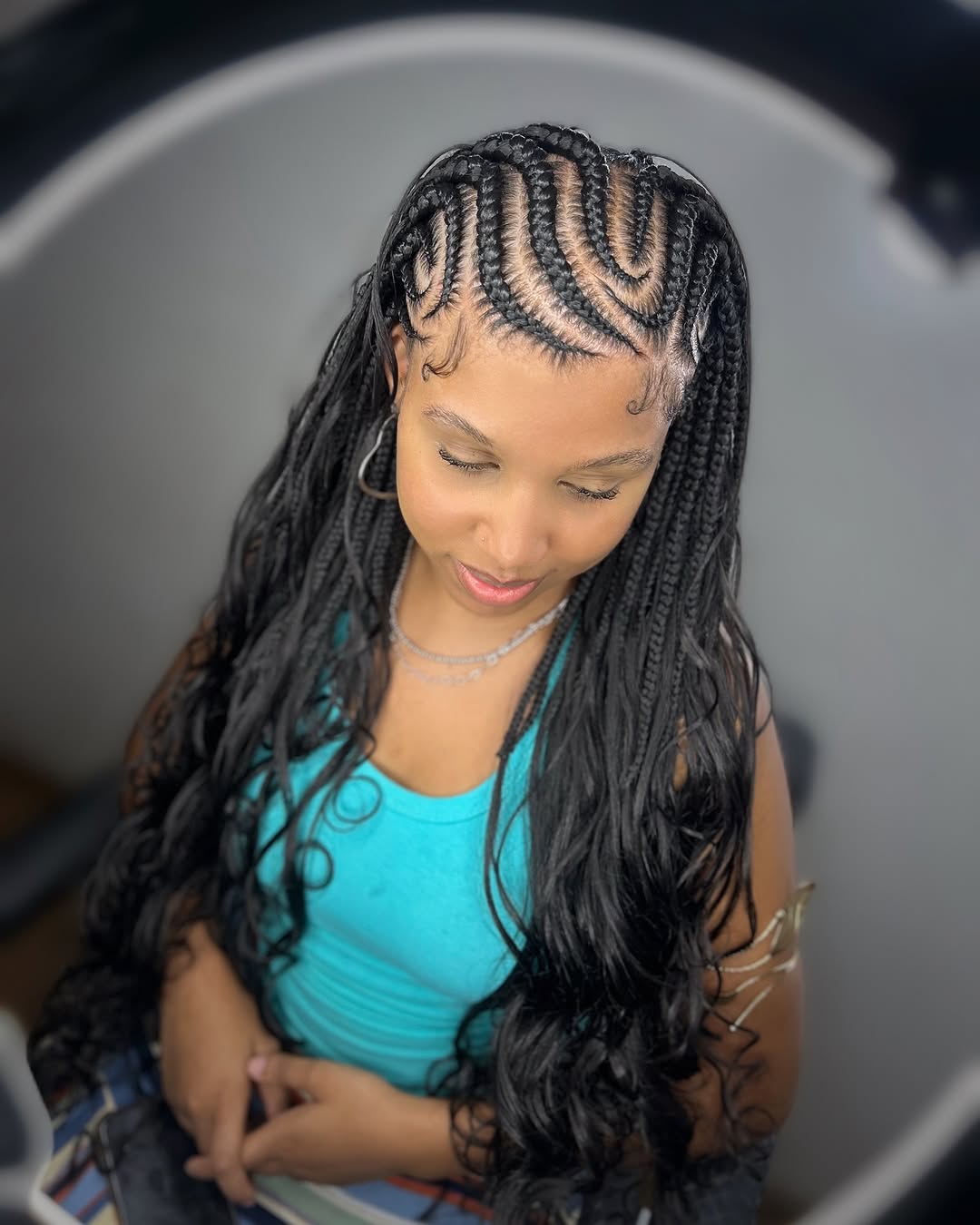
A decorative pattern at the scalp does the work up top, then the braids loosen into long, thick lengths with wavy ends that fall past the shoulders. The black hair keeps the design legible against the skin, and the middle parting splits the pattern evenly so it reads from the front. Ask your stylist for: cornrows with a decorative scalp pattern and long loose wavy braids. It suits Black women with thick hair who want an artistic scalp design and flowing braids rather than a tight, uniform set.
Loose braids with wavy ends hold their shape differently from sleek cornrows: the scalp pattern stays crisp for weeks, while the lengths soften with wear. A texturizing spray brings the waves back between washes, and light handling keeps the definition instead of brushing it flat. Expect a salon appointment of a few hours for the pattern alone. Plan a touch-up on the scalp rows every four to six weeks if you want the design to stay sharp, and keep the loose ends from tangling by separating them with your fingers, not a brush.
5. Cornrows With Ombre Box Braids
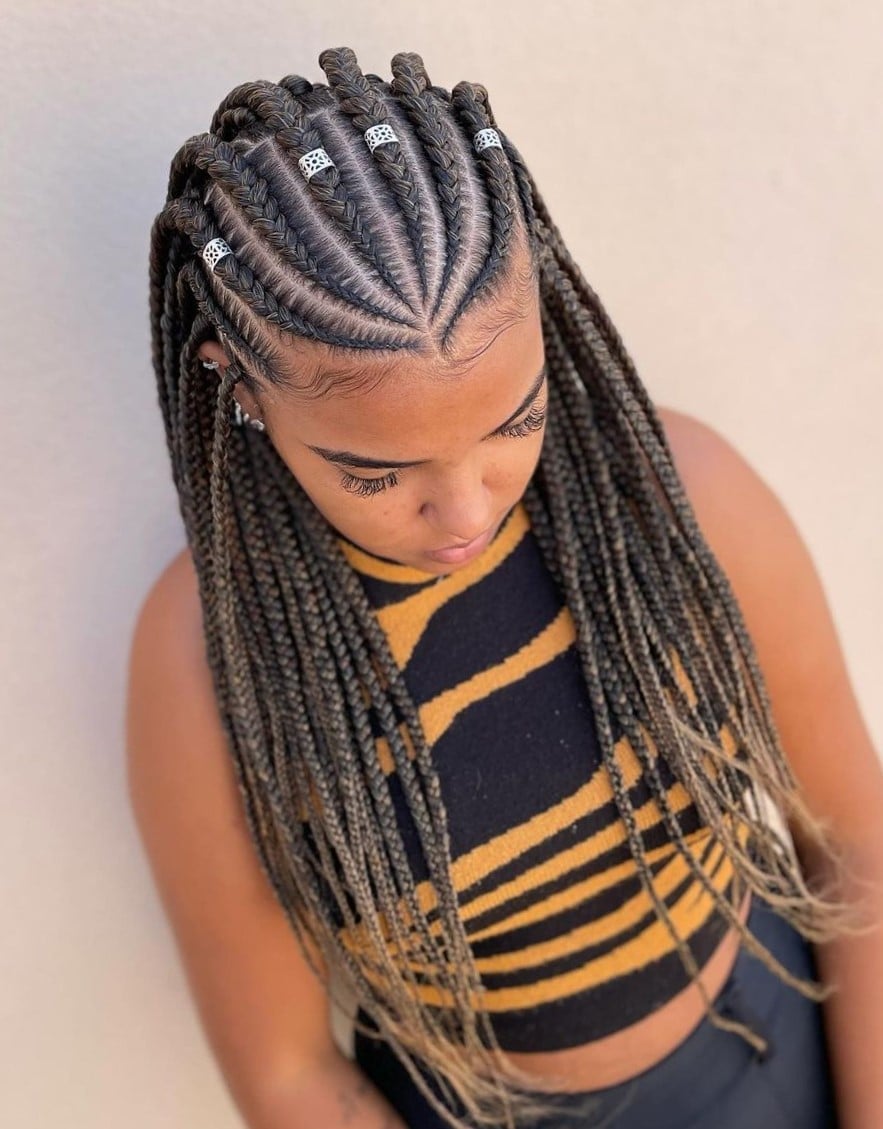
How do you ask for a color transition that looks deliberate instead of grown out? Start with the scalp. These cornrows form a geometric pattern at the parting before feeding into long, straight box braids, dark brown at the base and blonde at the ombre tips, reaching the mid-back. Ask your stylist for: cornrows with long box braids and dark brown to blonde ombre. Be specific about where the blonde should start, since the transition point changes the whole proportion. It suits Black women with thick hair who want a classic box braid with a modern color line. Bring these details to the consultation:
- The geometric scalp pattern, drawn or described
- Dark brown base with blonde ombre ends
- Mid-back length in straight box braids
6. Mid-Back Cornrows With Beaded Ends
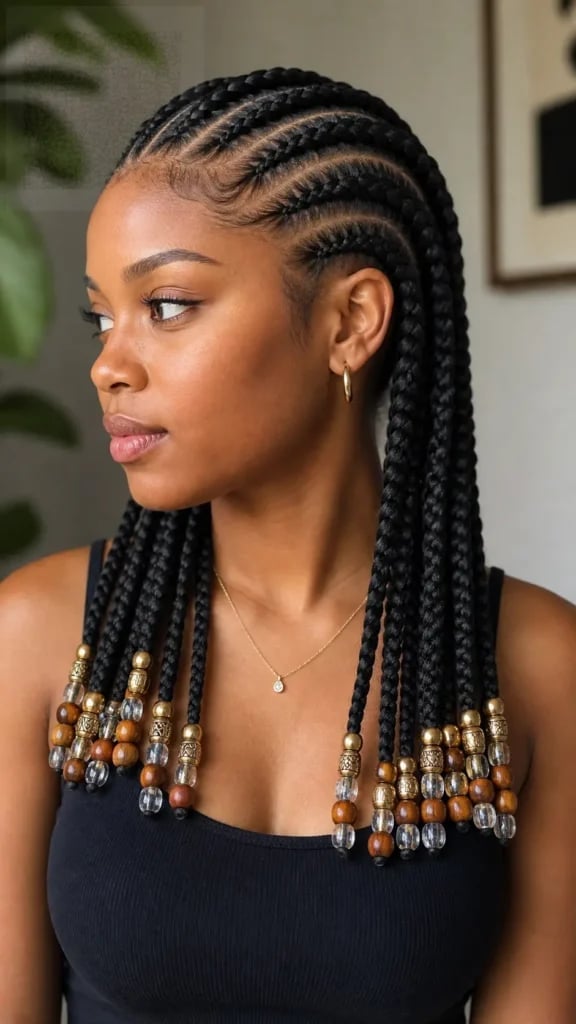
The beads hit the ends of each straight black braid just before the hair tapers, so the weight stays at the tips rather than pulling the whole row. Side-view framing makes the middle parting of these mid-back cornrows unmistakable, and the thick texture holds the beads in place without sagging. Ask your stylist for: mid-back cornrows with beads at the ends. If you are headed to a summer cookout or a daytime party, the beads catch attention without demanding a full restyle. Just give each braid a gentle shake if they tangle overnight.
7. Thick Cornrows With Beaded Mid-Back Length
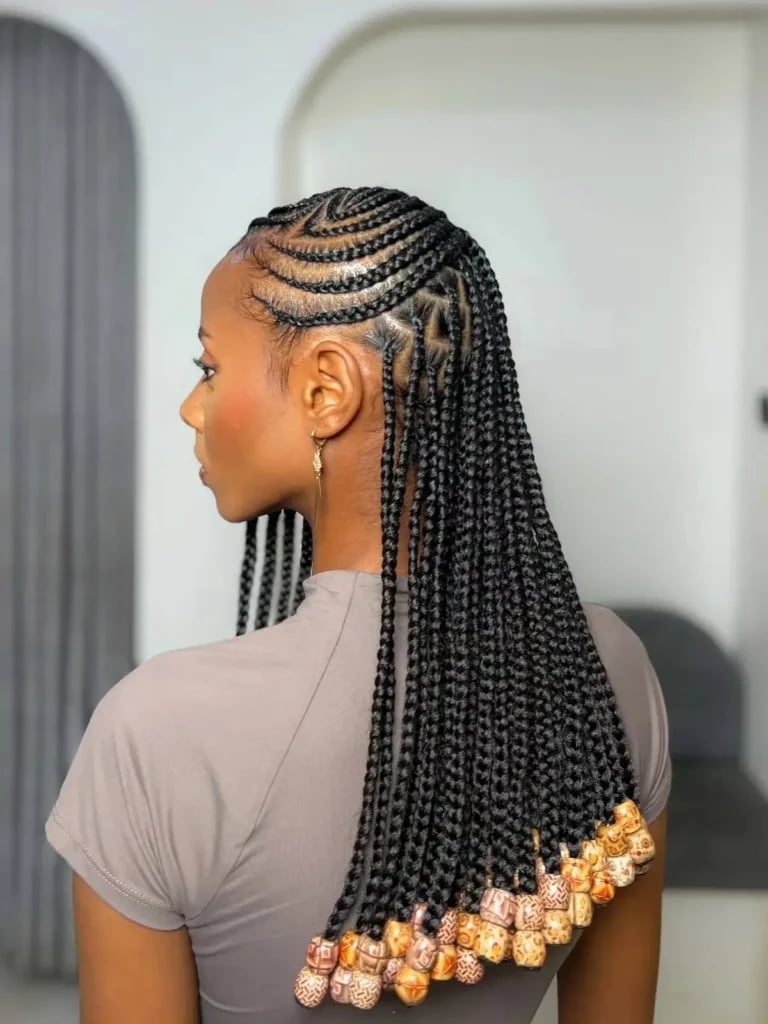
Consistent bead placement on thick cornrows takes a steady hand and a generous block of chair time, so this is strictly a salon-only request. The black braids run to mid-back from a clean middle parting, and every bead sits at the same height on the straight, dense hair. Ask your stylist for: thick cornrows to mid-back with beads. Cutting corners on the feed-in technique means beads slide off within a week, so trust someone who has done it before. The result holds its shape for weeks without a touch-up.
8. Large Thick Cornrows To Mid-Back
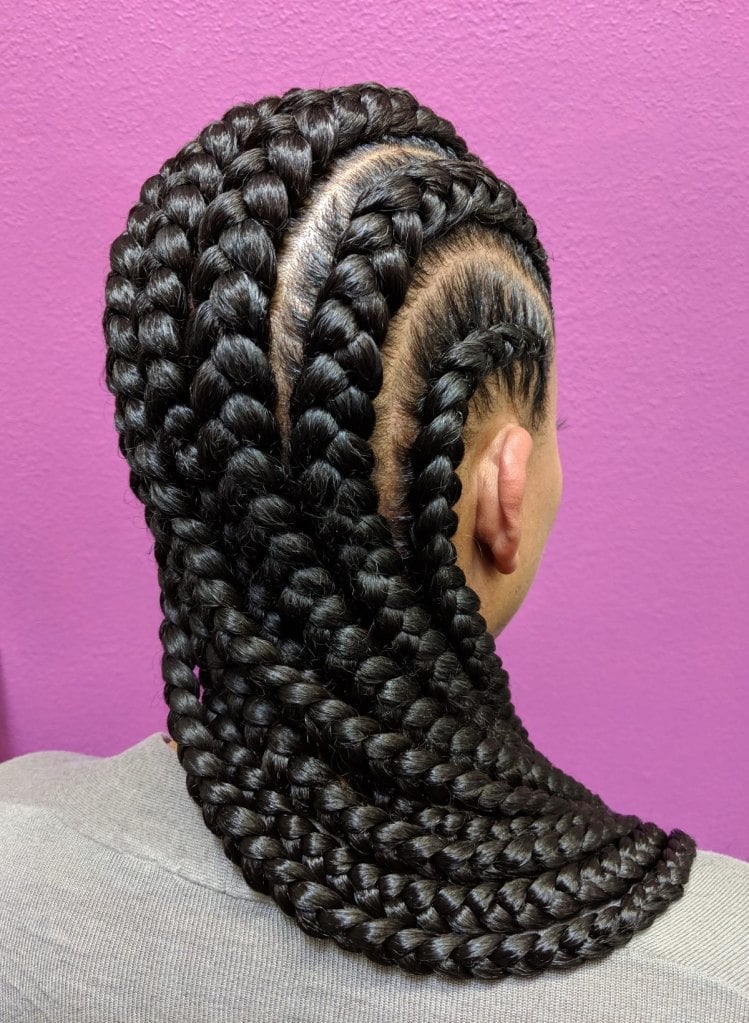
The scalp pattern on these large cornrows reads clearly because the braids are spaced far enough apart to show the middle parting and the root work. Each row is thick and straight, reaching mid-back on dense hair that can carry the weight without strain.
Ask your stylist for: large, thick cornrows to mid-back. The honest trade-off is tension. Fewer braids mean each one bears more of the hair’s weight, so if your edges are fragile or your scalp is sensitive, you will feel it by day three. Stick to a looser braid tension and a moisturizing scalp oil to keep the parts comfortable.
9. Two Large Braids With Geometric Patterns
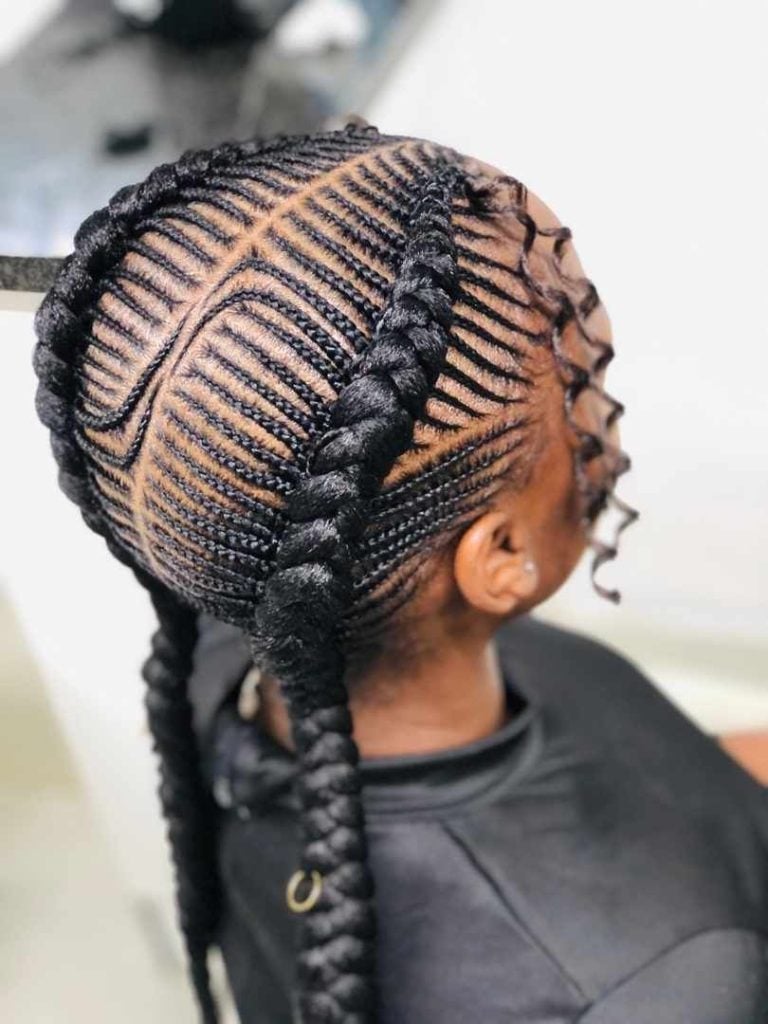
The geometric scalp work here is not a freehand scribble; it is mapped out in straight lines and sharp angles that converge into two large braids at the nape. The black hair is thick and dense, so the pattern holds its shape and does not collapse into the partings. Mid-back length gives the braids enough heft to balance the detailed root work. Ask your stylist for: two large braids with geometric scalp patterns. A light finishing spray keeps the flyaways off the pattern without flattening the raised cornrow lines.
10. Two Large Sleek Cornrows
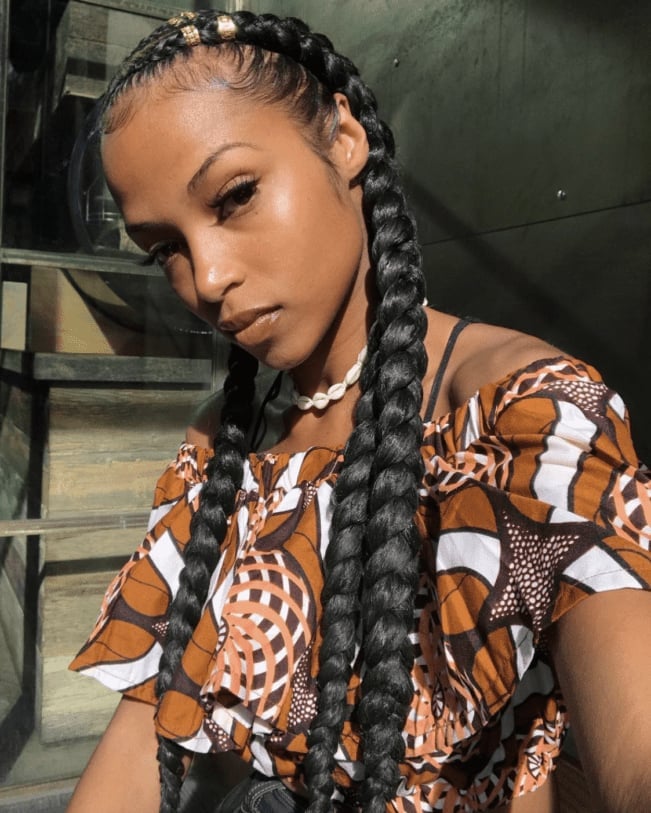
Can two braids really read as a full style? Yes, when they are this thick and this polished. The black hair is straight, dense and pulled back from a razor-clean middle parting, with each braid falling past the shoulders. The lack of extra parts or accessories means the shine and the braid tension do all the work. Ask your stylist for: two large sleek cornrows to mid-back. A smoothing serum along the length keeps the surface reflective, but skip heavy creams that settle into the braid crevices and dull the finish.
11. Braided Pigtails With Metallic Rings
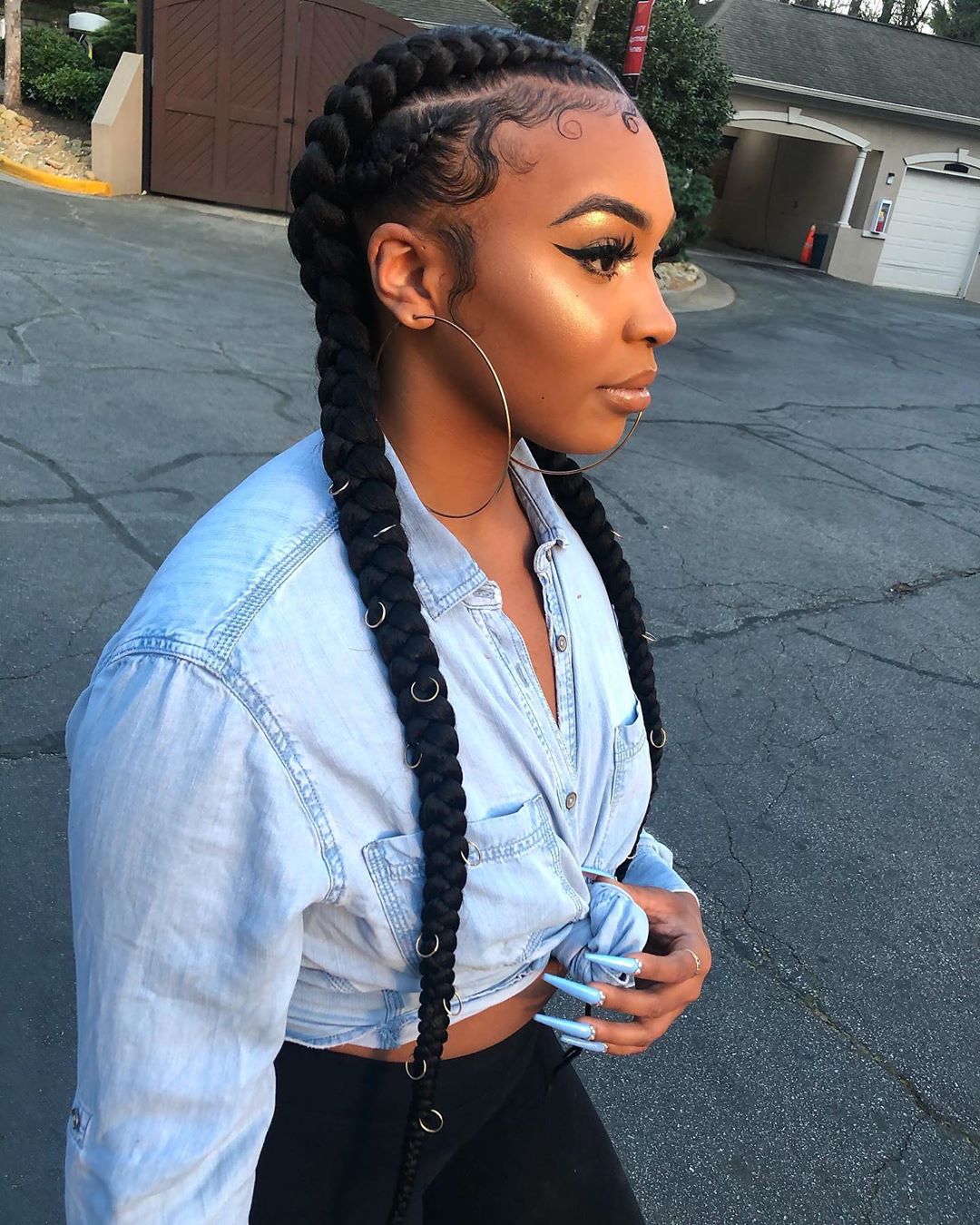
Metallic rings sit at even intervals along two large braids, which fall to mid-back in a straight black finish. The pigtails start from a middle part, and the edges are laid flat, so the rings look like hardware instead of a last-minute addition. Ask your stylist for: two large braided pigtails with metallic rings. This style needs mid-back length and straight texture to keep the braids hanging cleanly, and it suits anyone who wants a playful shape without losing polish.
Rings cause the most trouble in daily wear. They slide, they catch on a coat collar, and they press into the braid where the hair is already tight. Adjust them gently by hand, not by tugging the braid, and check placement after a night’s sleep. A satin scarf at night keeps the braids smooth and stops friction from shifting the rings. Book a salon visit for the braiding itself: the pigtail shape and ring placement are hard to reproduce at home. A refresh every six to eight weeks keeps the parts crisp.
12. Cornrows With Gold Cuffs
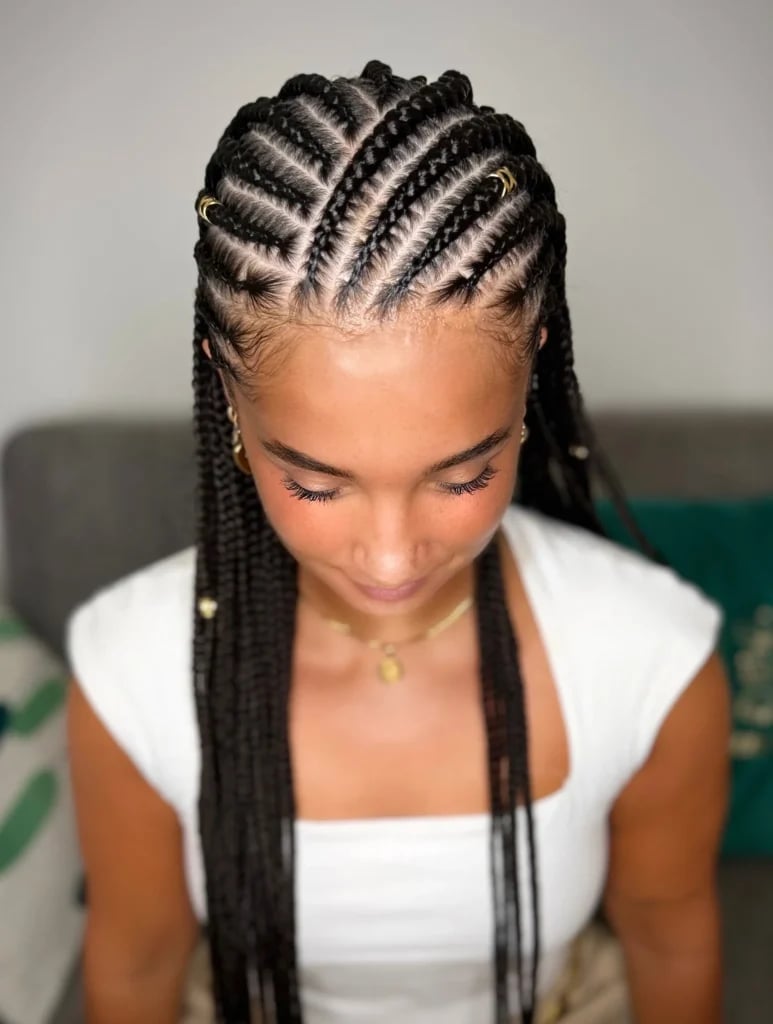
Wondering what to say at the salon so the cuffs land where you want them? Start with the pattern and work outward. Neat cornrows start from a middle part into long, straight black braids at mid-back, with small gold cuffs set along the length. The braids are thick, so the cornrow section needs enough density to hold its lines. Ask your stylist for: cornrows with long braids and small gold cuffs. Bring the details in writing:
- Cornrows that transition into long braids at mid-back
- Small gold cuffs, evenly spaced, not clustered at the ends
- A middle part kept clean through the cornrow section
- Cuff size matched to the braid thickness so nothing slips
13. Neatly Braided Cornrows To Mid-Back
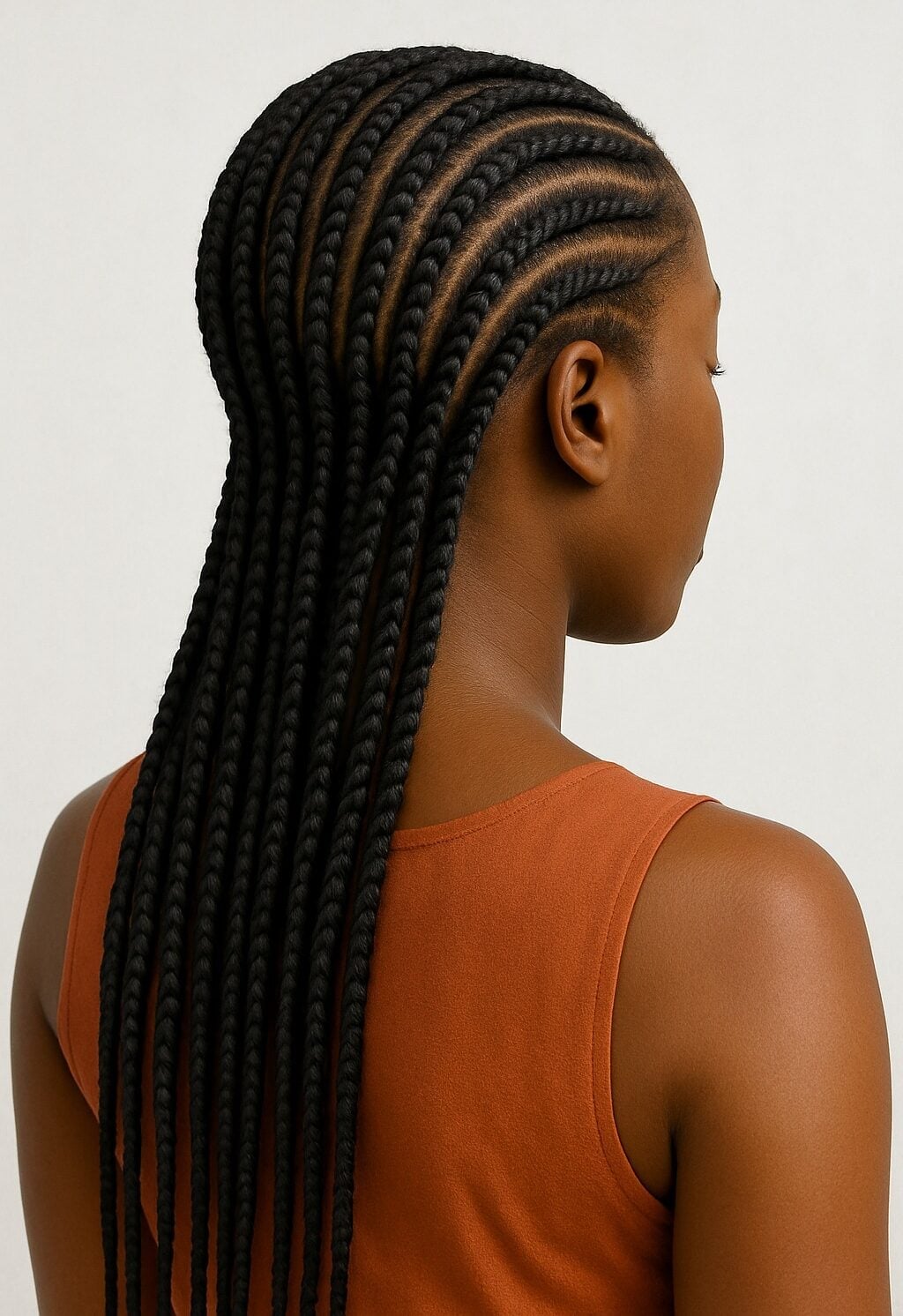
A uniform set of cornrows and a pattern with visible variation pull in different directions. These rows run to mid-back in straight black braids from a clear middle part, and the appeal is the sameness: every row the same width, every line clean. For a braid pattern that puts the design first, go with a geometric scalp pattern. For a finish that looks orderly from the back and stays that way, choose the even rows. Ask your stylist for: neatly done cornrows to mid-back.
Both need mid-back length and straight texture to hang the way they should. The uniform version forgives less: one wobbly row shows against its neighbors, so book a stylist whose cornrows you have seen up close. Keep the hair taut but comfortable, and mist a light finishing spray for shine. A trim and re-braid every six to eight weeks keeps the rows sharp.
14. Cornrows With Coiled Buns
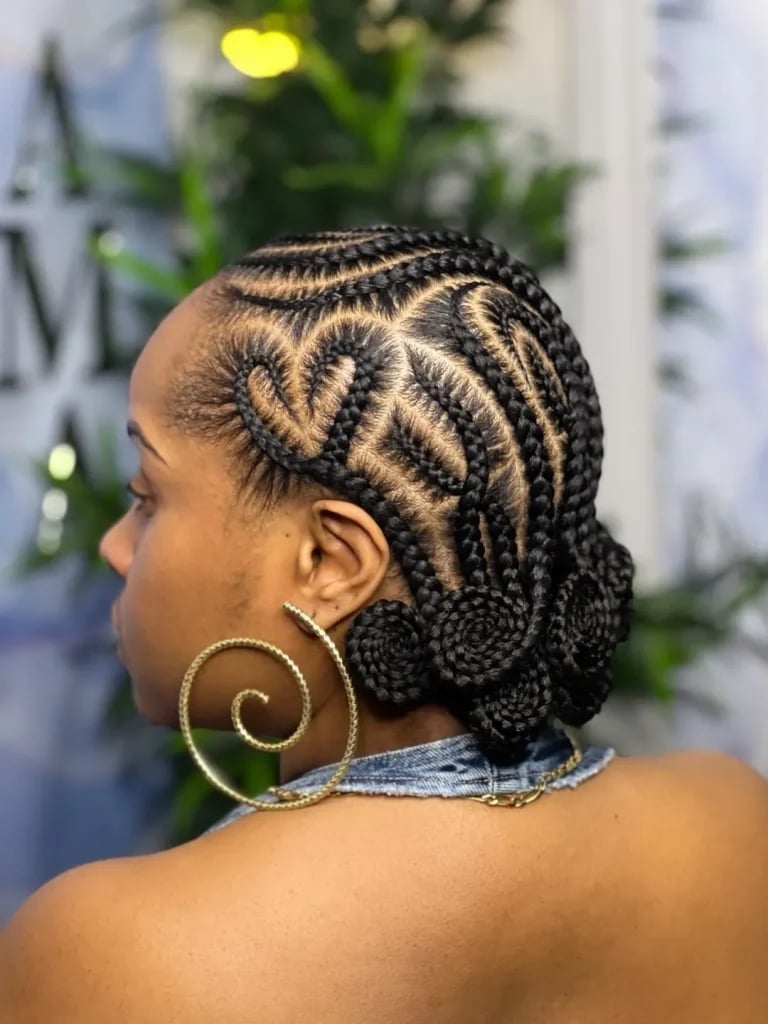
The contained shape makes this one a natural for hot weather and busy schedules: nothing hangs on the neck, and the buns stay put through a workout or a long shift. It works on straight texture and short to medium density. Ask your stylist for: cornrows styled into coiled buns at the nape. For work or a formal event, the pattern does the decorating. Secure the buns with pins and a light mist of hairspray, and plan maintenance every four to six weeks.
15. Short Braided Ponytail With Curly Ends
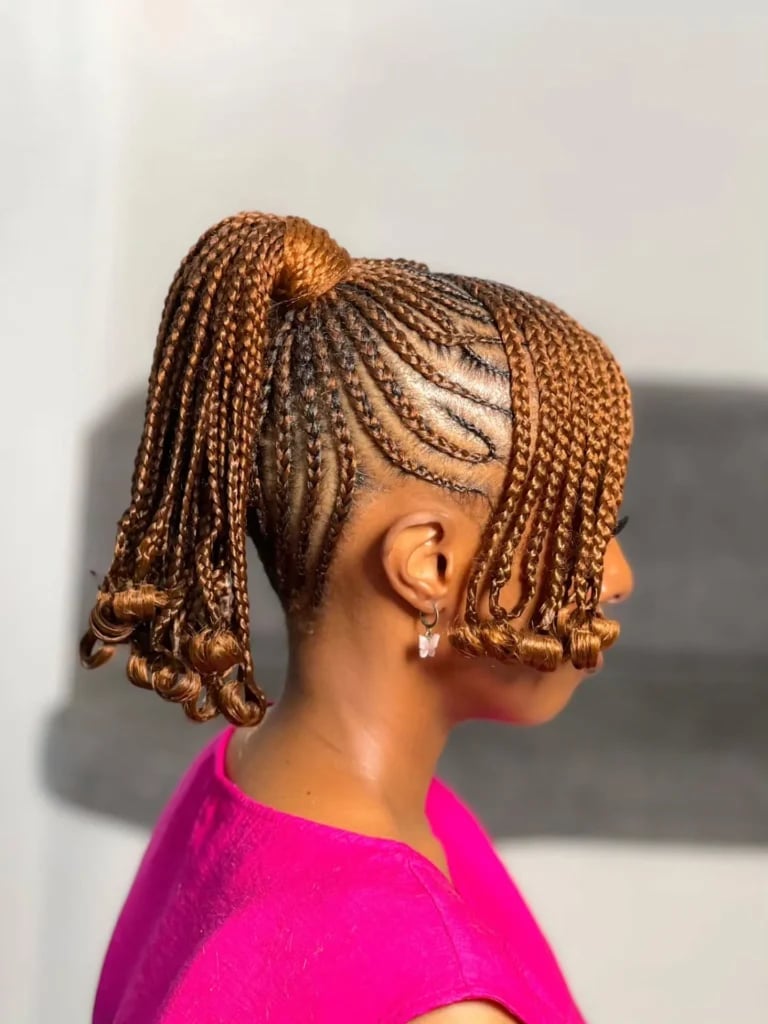
Small light brown braids gather into a ponytail that stops at the chin, with the ends curled into a soft wave. It sits close to a short cornrow set with a straight finish, but the two suit different routines: the ponytail is quicker to pin up on a rushed morning, while flat cornrows hold their shape longer between appointments. Ask your stylist for: chin-length braided ponytail with curly ends. Small braids take hours in the chair, and the curled ends need a flexible hold spray to keep their pattern. Plan on a trim every four to six weeks.
16. Cornrows With Herringbone Pattern And High Ponytail
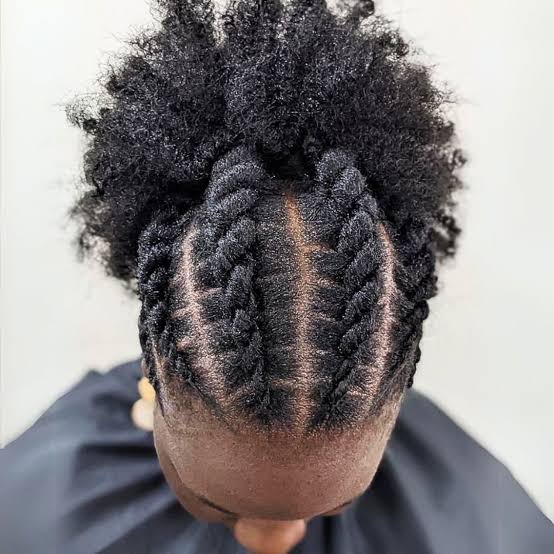
A herringbone pattern is a chessboard for your scalp, every row laid with geometric precision before the whole thing sweeps into a high ponytail. It suits Black women with afro-textured hair who want a style that looks architectural and deliberate. Ask your stylist for: cornrows with a herringbone pattern into a high ponytail. The trade-off: that clean part-work shows every wisp of new growth, so you will need a tight ponytail base and a bit of gel along the edges to keep the crisp lines from blurring after a few days.
17. Cornrows Into A Braided Updo
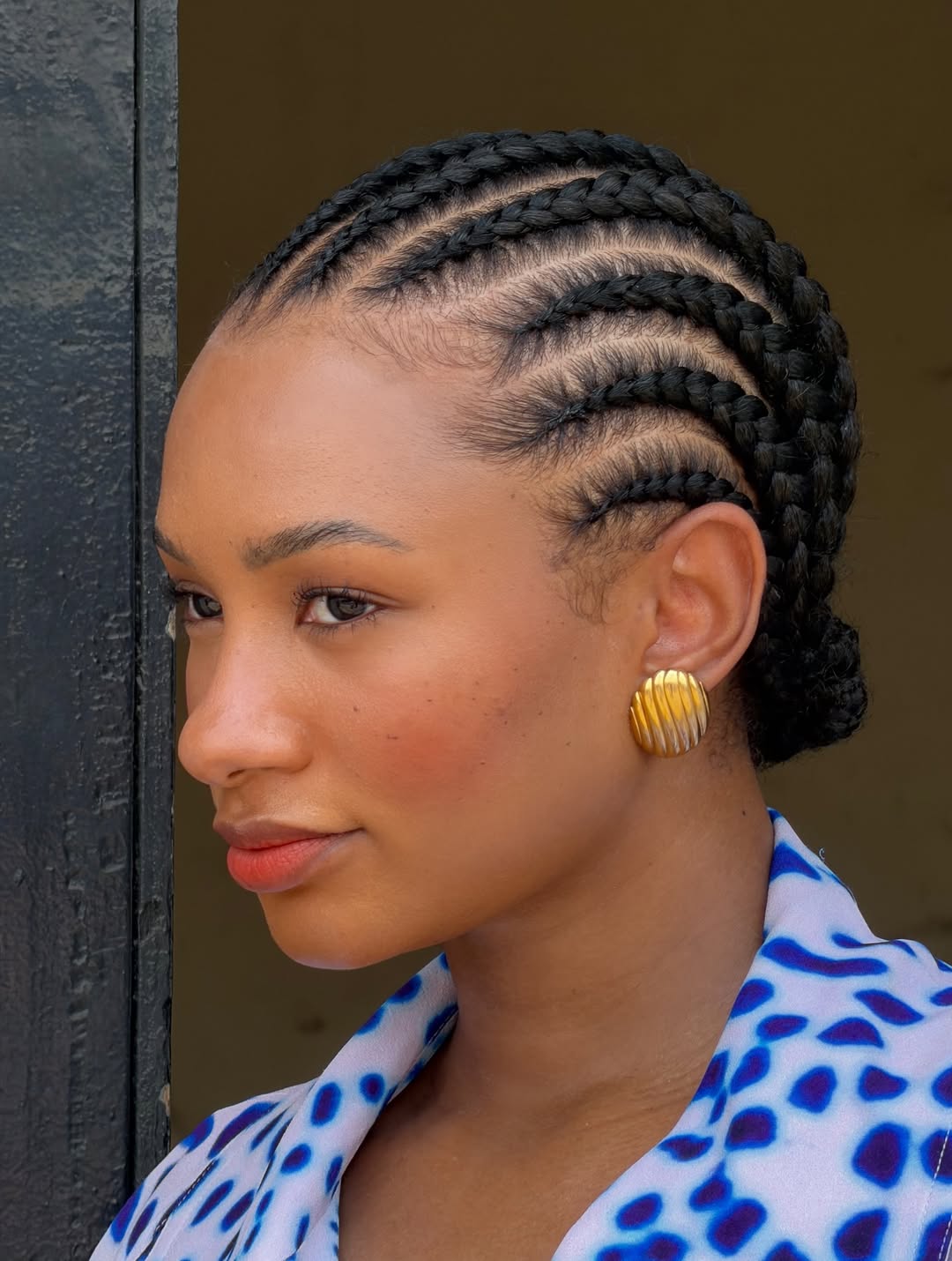
A sharply defined middle parting splits the scalp into two clean halves, each cornrow feeding into a compact braided updo at the crown. It works best on shoulder-length hair with a straight or relaxed texture, since the updo needs enough weight to sit flat without bulk. Ask your stylist for: cornrows leading into a sophisticated braided updo. The skill is in the transition: those front rows must lie flat enough that the updo does not pull or pucker, which takes a steady hand and a clear plan before the first section is started.
18. Final Thoughts
Choose your pattern first. Intricate scalp designs demand a stylist who can work a grid and keep tension even. Simpler rows or styles with beads are more forgiving for DIY or a friend with a steady hand. Either way, keep the braids snug but not tight, and let the ends land where your texture wants them.
- Keep scalp moisturized with a light oil or serum, focusing on the parts.
- Sleep with a silk or satin bonnet or scarf to protect braids from friction.
- Avoid excessive pulling or tension to prevent breakage and scalp strain.
- Cleanse the scalp gently with a diluted shampoo or scalp spray as needed.
- Touch up edges with gel or mousse for a polished look between salon visits.
Cornrows offer a canvas for endless creativity.