
You know the feeling: you set a goal, feel fired up for a day or two, and then… life gets in the way. Discipline isn’t about being perfect or never slipping up. It’s about building a system that keeps you moving forward even when motivation fades. In this article, I’ll walk you through what discipline really is, the simple tools and steps that make it stick, and how to avoid the common traps that derail most people.
Key Takeaways
- Discipline is a learned skill, not an innate trait you either have or don’t.
- Set one SMART goal and break it into small, daily actions to build momentum.
- Use habit stacking and the two-minute rule to make new behaviors automatic.
- Create an environment that removes temptations and supports your desired habits.
- Prioritize sleep and nutrition, willpower runs on physical energy.
1. What is Discipline and Why Does it Matter?
Discipline is the practice of training yourself to act toward a goal even when motivation drops, not a punishment you impose for slipping. It’s a skill, not a personality trait you either have or don’t, and it builds through repetition and a few deliberate strategies. Self-discipline sits inside emotional intelligence: it shapes how you handle impulses and delays, which is why it tends to improve decision-making and the odds of actually reaching your goals. My tip: treat each small kept promise to yourself as practice, not a test you can fail.
2. Essential Tools for Building Discipline
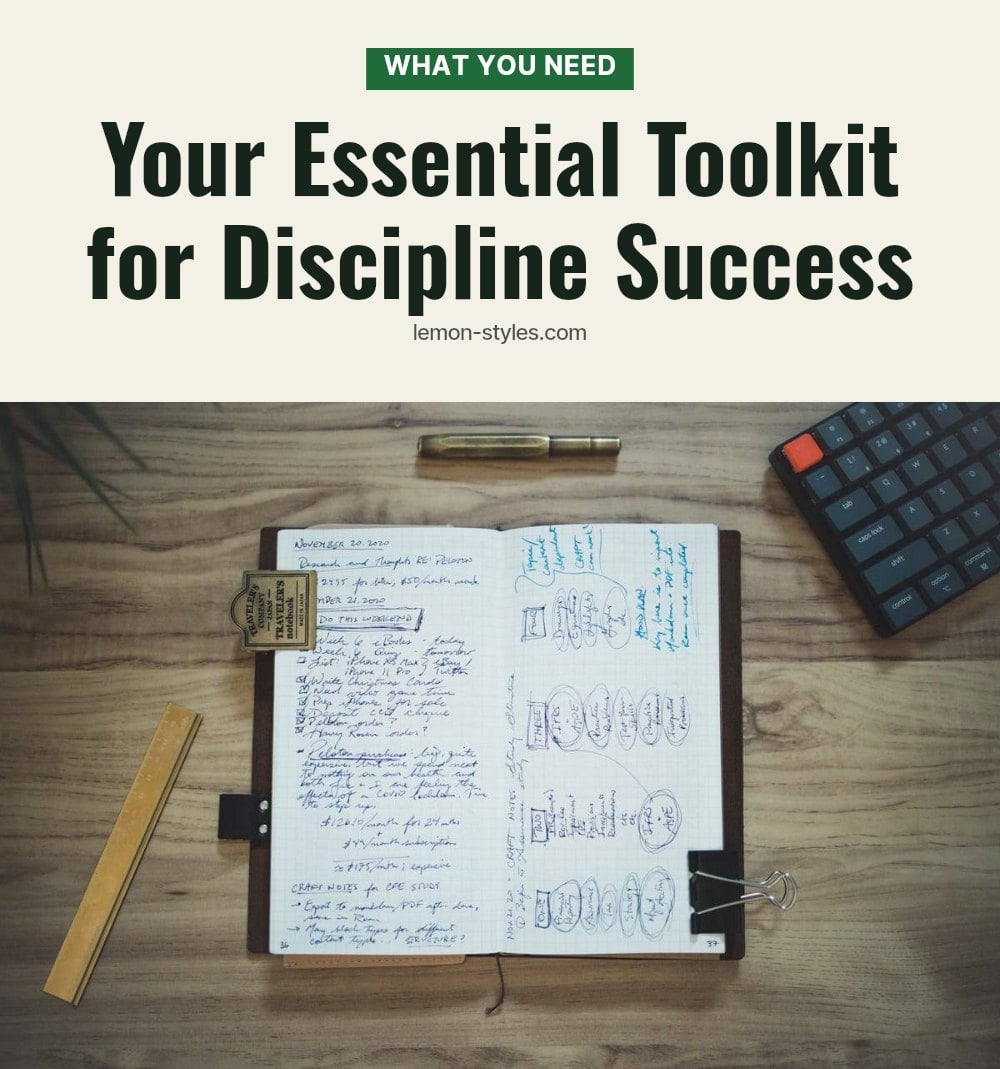
You don’t need much to start, and none of it has to be fancy. What matters is that each tool makes your progress visible or your next action obvious.
- Planner or journal: write down the day’s plan and mark what you finished, so progress doesn’t live only in your head.
- SMART framework: specific, measurable, achievable, relevant, and time-bound goals give every task a clear target and a deadline.
- Timer: set it for a fixed block of focus, which caps the dread of starting and shows you how long tasks really take.
- Habit tracker or calendar: a row of checkmarks turns consistency into something you can see, and gaps are easier to catch early.
3. Step-by-Step: How to Cultivate Stronger Discipline
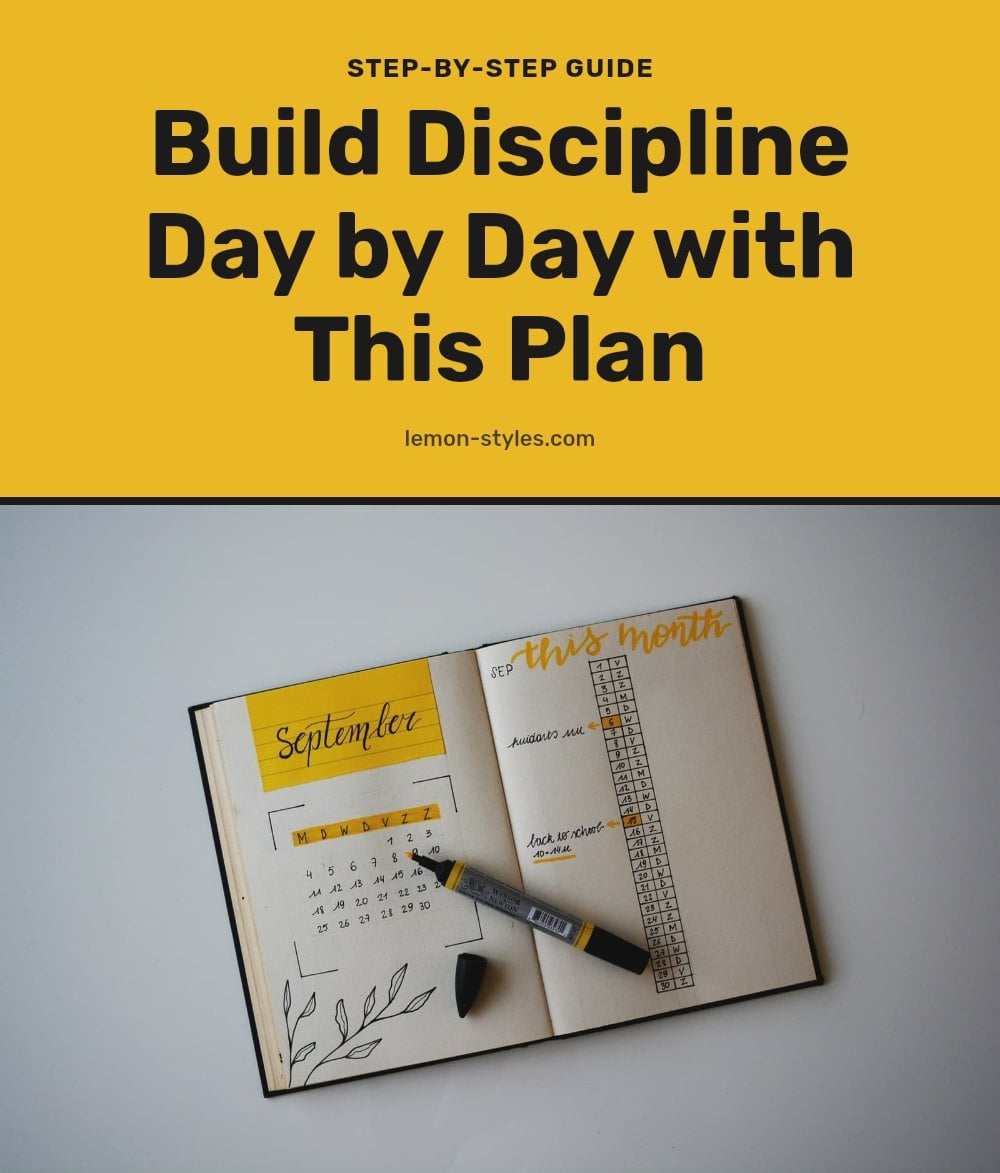
These six moves work best in order, because each one makes the next easier to keep.
- Write a SMART goal: turn “get fitter” into something measurable and dated, like three walks a week for a month. A specific target tells you exactly what counts as done.
- Build a routine around it: anchor the goal to a fixed time and place, such as walking right after breakfast. A steady slot removes the daily decision of when to start.
- Cut tasks into small pieces: split “clean the house” into one room or one drawer. Smaller steps lower the overwhelm that stalls you before you begin.
- Do the hardest task first: tackle the most important item when your energy is highest, since willpower tends to run down as the day goes on.
- Design your environment: put the shoes by the door and the snacks out of sight. Cues around you shape behavior more than resolve does.
- Stack a new habit: attach it to something you already do without thinking, like stretching right after you brush your teeth. The existing habit becomes the reminder.
4. Effective Strategies for Boosting Self

Once the basics are in place, these four strategies fill the gaps that routines alone don’t cover.
Use the two-minute rule
If a task takes less than two minutes, do it right away instead of adding it to a list. Small jobs pile up into a background hum of guilt, and clearing them fast keeps your attention free for the work that matters.
Add a mindfulness practice
A few minutes of noticing your breath or your surroundings can help you catch an impulse before you act on it. Many people find that this pause is where self-control actually begins.
Get an accountability partner
- Pick one person: a friend or colleague you check in with weekly keeps commitments from quietly sliding.
- Make it specific: agree on what you’ll report and when, so the check-in has a real edge.
- Go public if it helps: telling a group about a goal can add gentle pressure to follow through.
Reward small wins
Mark each completed week with something you enjoy, like a movie night or a new book. Rewards reinforce the behavior and give you a reason to repeat it when motivation dips.
5. Common Discipline Mistakes and How to Avoid Them
Mistake: Believing discipline is an innate trait. Discipline is a learned skill, not something you’re born with or without. Treat it like a muscle you can strengthen over time.
Mistake: Setting unrealistic goals. Starting too big leads to burnout. Begin with one small, specific goal and build momentum from there.
Mistake: Focusing on punishment. Beating yourself up after a slip doesn’t help. Use positive reinforcement instead, like rewarding yourself for completing a task.
Mistake: Underestimating environmental cues. Your surroundings shape your behavior more than willpower does. Design your space to make good choices easy and temptations hard to reach.
Mistake: Trying to use willpower for every decision. Willpower runs out. Build habits that automate good behaviors so you don’t have to decide each time.
Mistake: Not having a clear ‘why.’ Without a meaningful purpose behind your effort, motivation fades fast. Connect each goal to a reason that matters to you.
6. Best Tips for Sustaining Discipline Long-Term

Prioritize sleep and nutrition. Willpower draws on physical energy. Without adequate sleep and balanced meals, your self-control reserves run low.
Practice self-compassion after slips. A single setback doesn’t erase your progress. Acknowledge it, learn what triggered it, and move on without guilt.
Reflect regularly. Set aside five minutes each week to ask what worked and what tripped you up. This helps you spot patterns and adjust your approach.
Ignore other people’s timelines. Comparing your progress to someone else’s only drains motivation. Focus on your own journey and what discipline means for your goals.
Tackle important tasks early. Willpower is strongest in the morning and fades as the day goes on. Do your most demanding work first, before decision fatigue sets in.
7. How Long Does It Take to Build Discipline?
Building discipline is an ongoing process, not a one-time fix. Consistent effort over weeks and months can lead to noticeable improvements in self-control and habit formation. You might feel initial changes within a few weeks, like finding it easier to stick to a morning routine. Mastery takes longer, often several months of steady practice. The main cost is your time and consistent effort, not money.
8. When to Seek Professional Help for Discipline Challenges
If your struggles with discipline come with persistent feelings of hopelessness, extreme fatigue, or significant changes in appetite or sleep, consult a healthcare professional. These symptoms may point to an underlying mental health condition that needs professional support. Also watch for signs of extreme self-deprivation or overly rigid routines that lead to burnout or unhealthy obsessions. If you notice these patterns in yourself, reach out for help.
9. Frequently Asked Questions
What is the difference between motivation and discipline?
Motivation is the feeling that pushes you to act, but it comes and goes. Discipline is the habit of acting even when that feeling is absent. Relying solely on motivation is unreliable; discipline builds a consistent routine that doesn’t depend on how you feel in the moment.
Can I be disciplined without being rigid?
Absolutely. Discipline is about consistent action, not strict rules or self-punishment. You can build flexible routines that allow for rest and adjustments. Self-compassion when you slip up actually strengthens long-term discipline, while rigidity often leads to burnout and giving up entirely.
What if I keep failing to be disciplined?
First, check your goals, are they too big or too vague? Start with one small, specific target. Then reflect on what triggers the slip: a certain time of day, a distraction, or low energy. Adjust your environment or routine to reduce that trigger. A single setback doesn’t erase your progress; use it as data to tweak your approach.
How can I build self-discipline?
Start with a clear SMART goal and a consistent routine. Use habit stacking to attach a new behavior to an existing one. Remove temptations from your environment and find an accountability partner. Track your progress in a journal or app, and reward small wins. Build gradually, discipline strengthens with practice over weeks and months.
10. Final Thoughts
My tip: pick just one small goal from the steps above and commit to it for two weeks. Don’t try to overhaul your entire life at once. You’ll likely notice a real shift in how easy it is to follow through, not because you suddenly have more willpower, but because you’ve set up a system that works with your brain, not against it. Discipline grows from repetition, not from a single perfect day.
This article is for general informational purposes only and does not constitute medical or professional advice. If your struggles with discipline are accompanied by persistent hopelessness, extreme fatigue, or significant changes in appetite or sleep, please consult a healthcare professional. Always seek professional guidance for serious or persistent challenges.

