Early winter dressing is a small exercise in balance: the weather asks for warmth, but the season can still feel changeable, social, and visually light. The most useful outfit ideas are the ones that help you handle that in-between mood without making every look feel heavy. They leave room for layers, practical shoes, familiar colors, and personal details that make a transitional wardrobe feel natural.
When you build an outfit for the start of colder weather, begin with comfort and proportion before adding extra styling. Consider how an outer layer sits over knitwear, how a bag or scarf changes the balance, and whether the colors work together in daylight as well as indoors. These references are meant to help you find combinations you can adapt to your own closet, routine, and tolerance for cold.
1. Beige and Burgundy with Shiny Trousers
A cropped beige faux-fur jacket is paired with a burgundy top and shiny dark-brown leather trousers in this early winter outfit. The light, voluminous upper layer contrasts with the deep lower half, while burgundy appears in more than one detail. Against the stone wall, the combination makes the different textures and rich seasonal colors easy to see without adding unnecessary pieces.
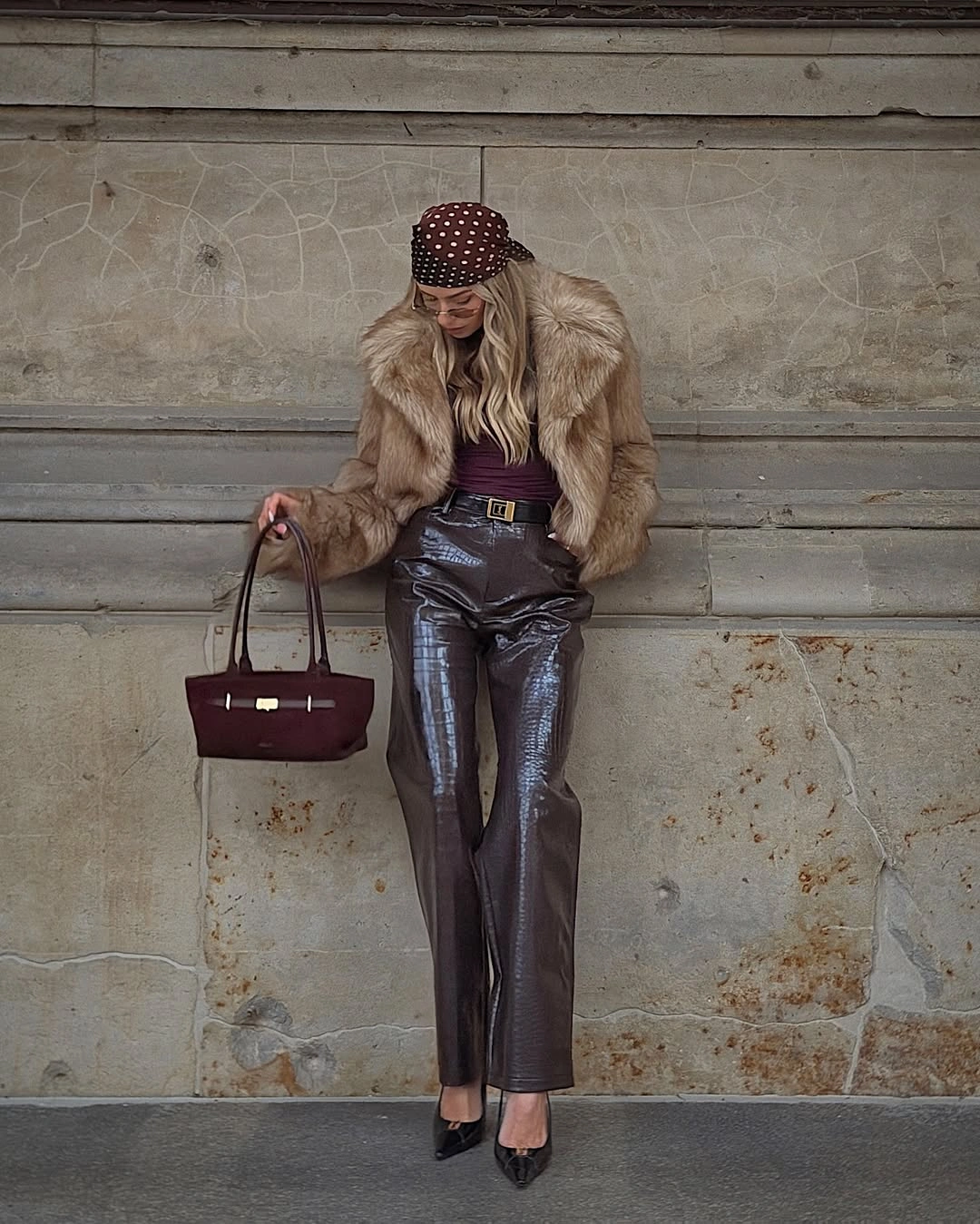
A burgundy hat or bandana with studs repeats the color of the top, and a matching bag creates another clear point of connection. Black pointed shoes complete the dark part of the palette without competing with the shine of the trousers. Among early winter outfits, this look stands out through the contrast between the soft pale jacket and the smooth reflective lower half.
The composition relies on beige, burgundy, dark brown, and black. Repeating burgundy in the upper area and accessories keeps the outfit visually connected.
2. Long Burgundy Coat with Wide White Trousers
A long burgundy coat creates the main vertical line in this outfit and contrasts strongly with the wide white trousers. A dark top or turtleneck is visible underneath, placing a deep neutral between the saturated coat and the clean white lower half. The stairway background emphasizes the extended silhouette, while the clothing remains focused on a simple, high-contrast color relationship.
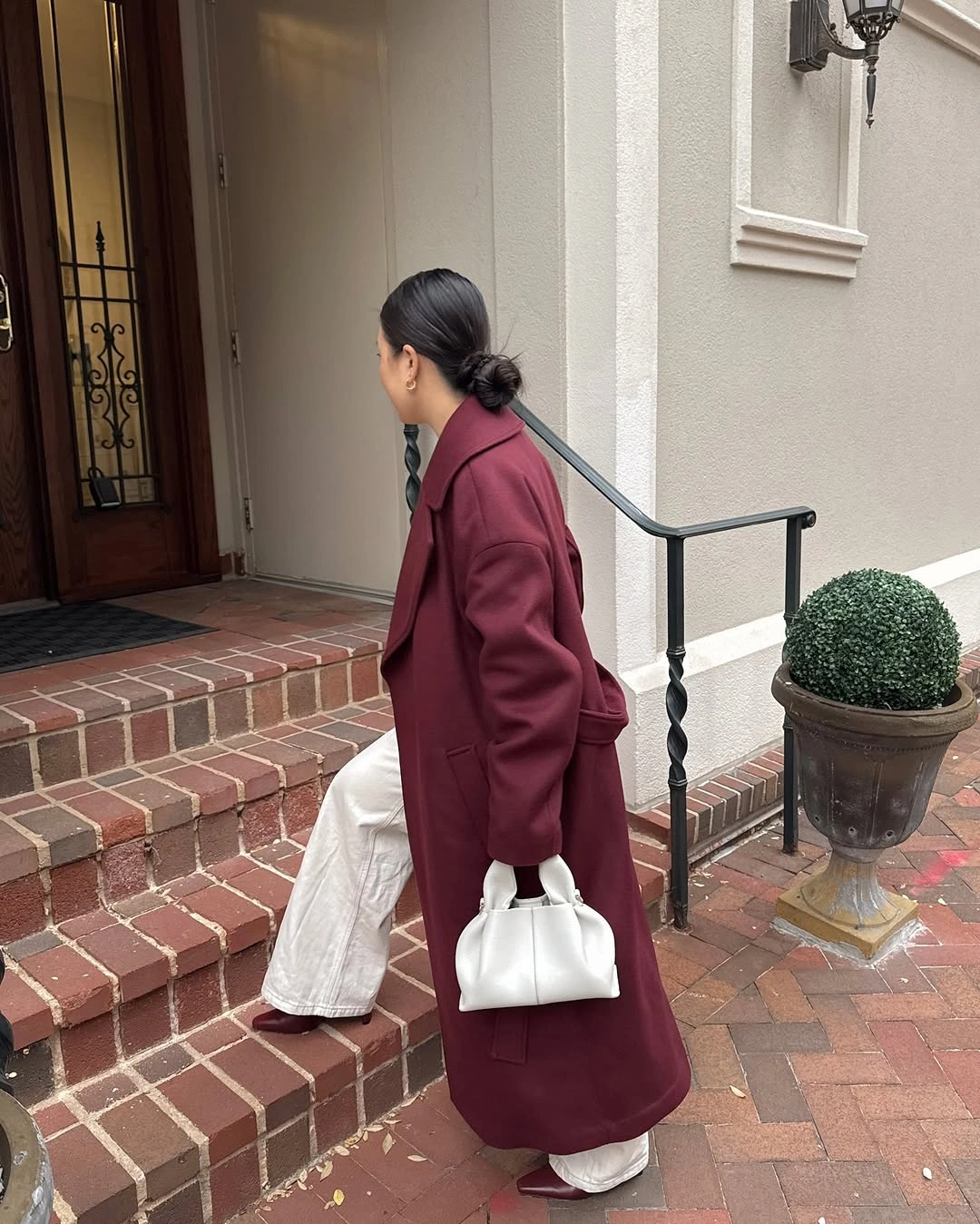
A small white bag repeats the color of the trousers and brings a light accent back into the upper part of the composition. The hair is pulled into a bun, leaving the neckline and top of the coat visible. There are not many competing colors here: burgundy acts as the statement shade, while white and the dark top frame the long outer layer.
This look shows how an early winter outfit can rely on only a few contrasting tones. The repeated white in the trousers and compact bag is especially effective.
3. Belted Plaid Coat with Black Knee-High Boots
A cream-and-gray plaid coat with a belt defines the third look. The belt marks the center of the silhouette, while the check pattern gives the light outer layer a clear graphic structure. A black turtleneck under the coat connects with the black knee-high boots, allowing the pale coat to remain the most noticeable part of the outfit.
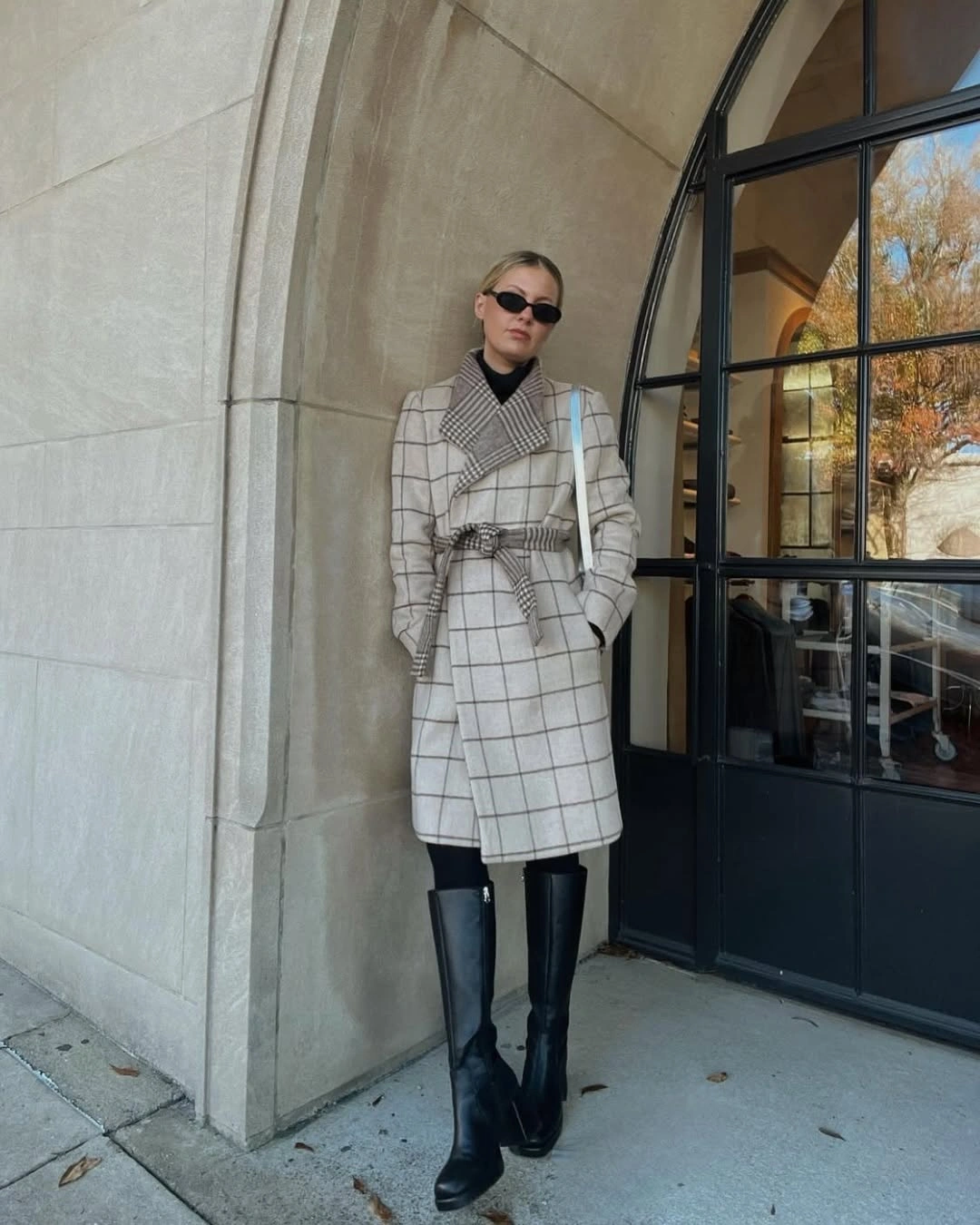
The black knee-high boots create one continuous dark anchor at the bottom, and the black turtleneck repeats that color close to the face. Sunglasses add another small black detail without changing the restrained palette. Against the doorway, the length of the coat, the belt placement, and the contrast between the pale check and dark pieces are all easy to read.
This early winter outfit is built on the coat pattern and repeated black accents rather than bright colors. The belt matters because it changes how the volume of the long coat is perceived.
4. Black Outfit with a Brown Fur Stole
A long black coat and black trousers create an almost continuous dark base, making the brown fur stole or scarf around the shoulders especially visible. The brown layer brings contrast through both color and its fluffy texture. The city street remains secondary in the frame, so the composition is carried by the long dark lines and the warm accent near the upper body.
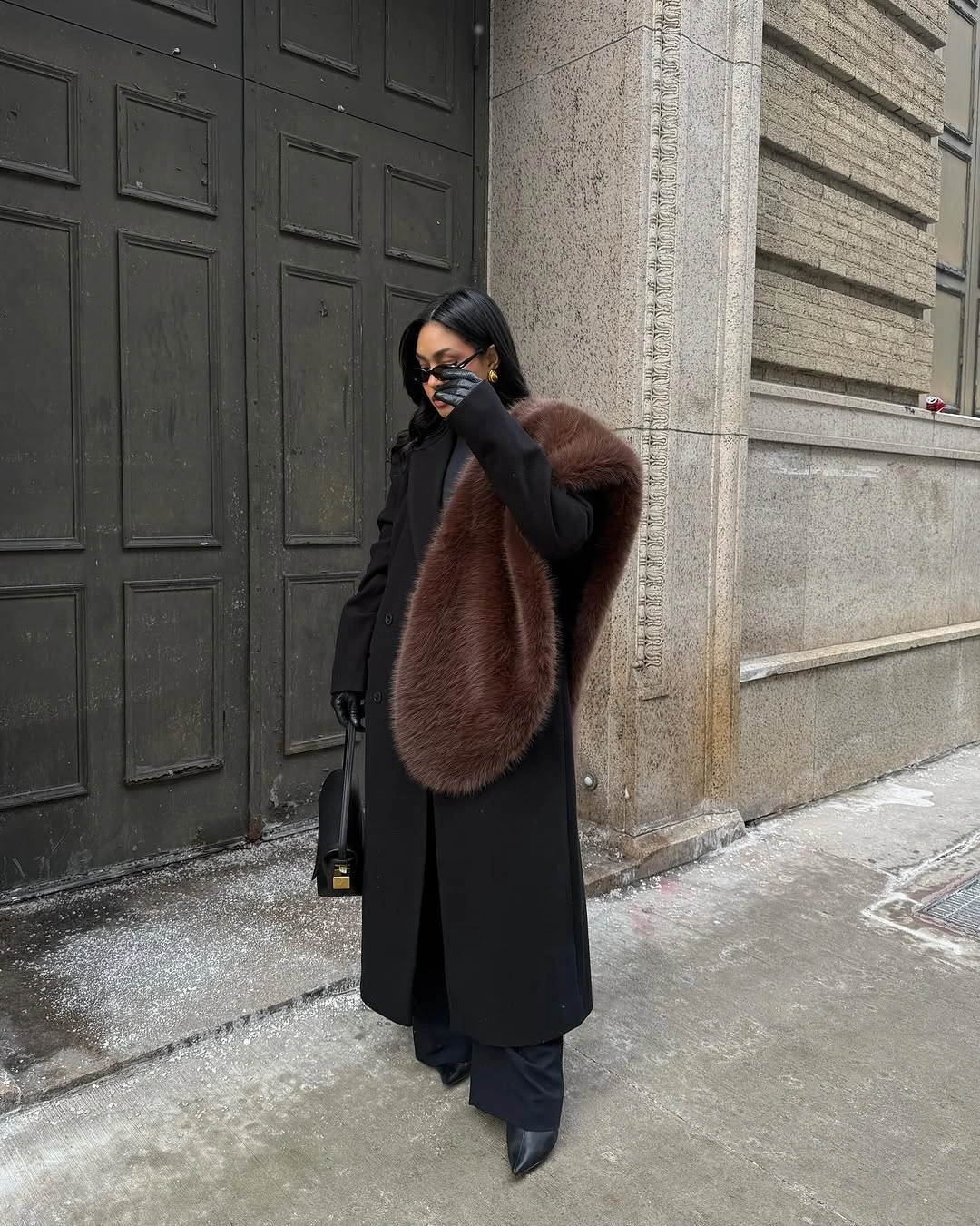
Black sunglasses and a black bag continue the main palette without pulling attention away from the brown detail. Because the surrounding pieces share one color, the fur becomes the clear focal point close to the face. The long coat and straight dark lower half create an elongated composition, while the textured stole concentrates visual interest around the shoulders.
One brown accessory changes an otherwise all-black outfit without adding many shades. The contrast of textures is as noticeable as the color contrast.
5. Black Top with Wide White Trousers
This early winter outfit is built around a direct black-and-white contrast. A black coat or top occupies the upper half, while wide white trousers become the brightest and most visible element below. On the city street, the two-color combination remains easy to read without extra bright accents, and the width of the trousers clearly differs from the dark upper layer.
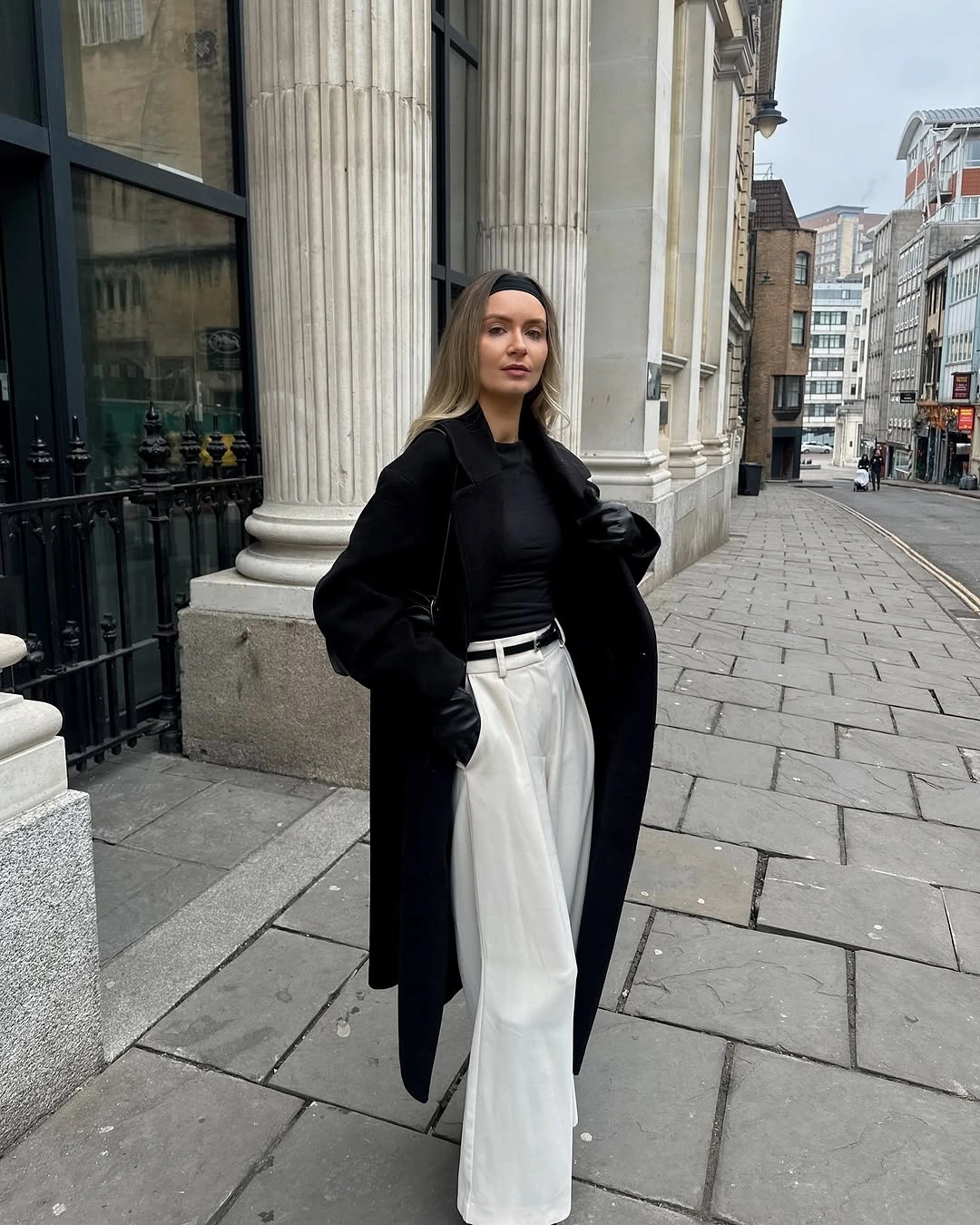
Black sunglasses repeat the color of the upper layer and support the simple two-tone scheme. The wide white trousers remain the main light area, so the strongest effect comes from their contrast with the black top and from the different proportions of the upper and lower halves. It is a useful outfit reference without a complicated palette or decorative overload.
The black-and-white pairing keeps the silhouette clear against the city background. The wide light lower half stops the dark upper layer from filling the entire composition.
6. Double Denim with Black Accents
A denim jacket and jeans create a continuous blue foundation in this outfit, with no sharp break between the upper and lower pieces. A black belt crosses the center and adds a defined dark line, while black sunglasses repeat that accent near the face. On the paved street, the texture of the denim is easy to notice because both main garments belong to the same material family.
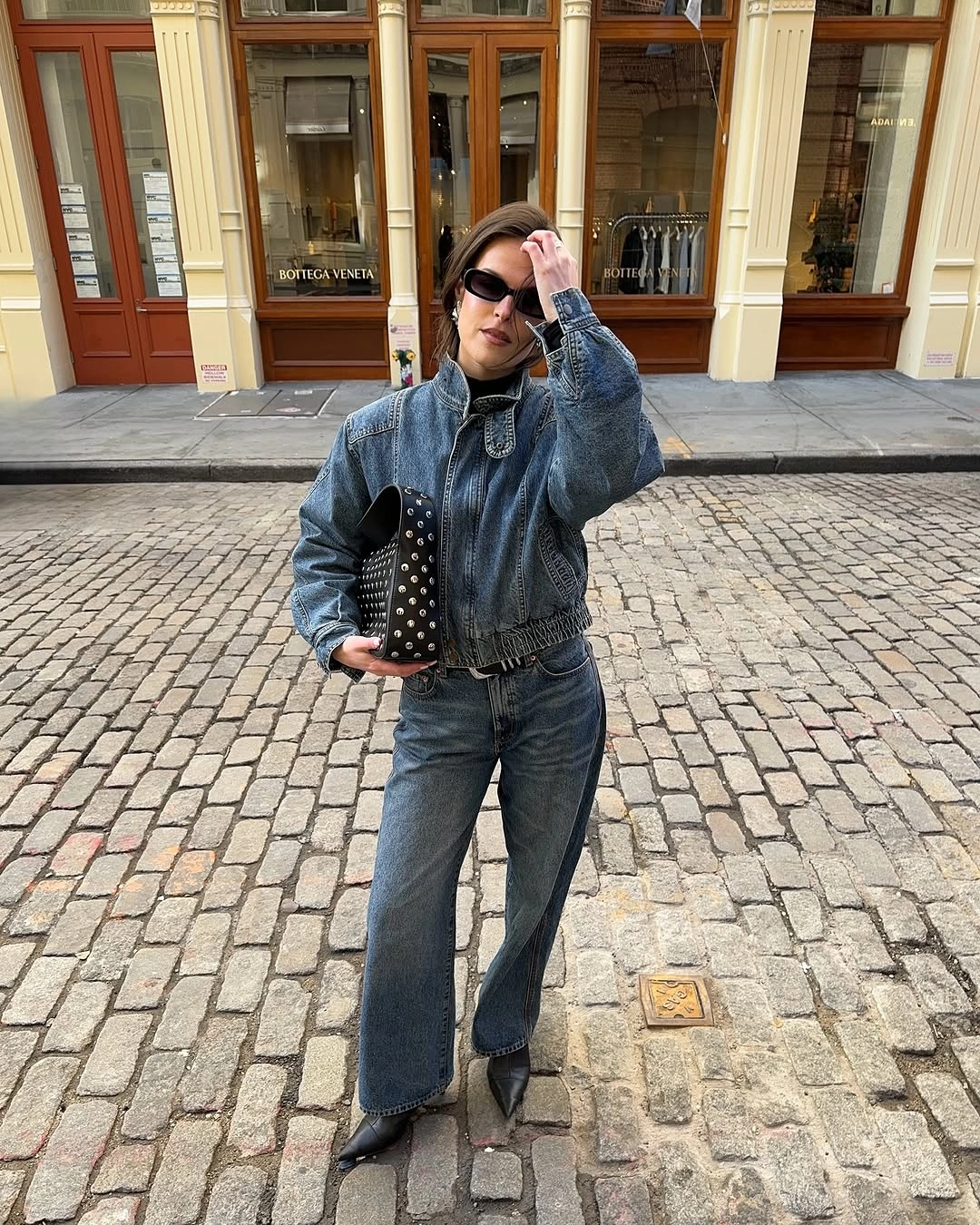
A black studded bag differs from the calm denim base through small metal details, giving the accessory its own visual role. The belt, sunglasses, and bag repeat black in separate parts of the outfit without taking the focus away from the denim. For early winter outfits, this is a reminder that a denim-on-denim base can be structured with a few dark accessories.
The main effect comes from repeating one material in the jacket and trousers rather than from two large color blocks. Black accessories add definition and small points of contrast.
7. Light Neutrals with a Brown Bag
A long beige coat creates a soft light foundation, while a beige-gray turtleneck keeps the upper layers within a close tonal range. Light trousers continue the neutral palette down the body, making the black boots the darkest element. In the mirror setting, the sequence of beige, gray, cream, and black is easy to follow from the coat to the lower part of the outfit.
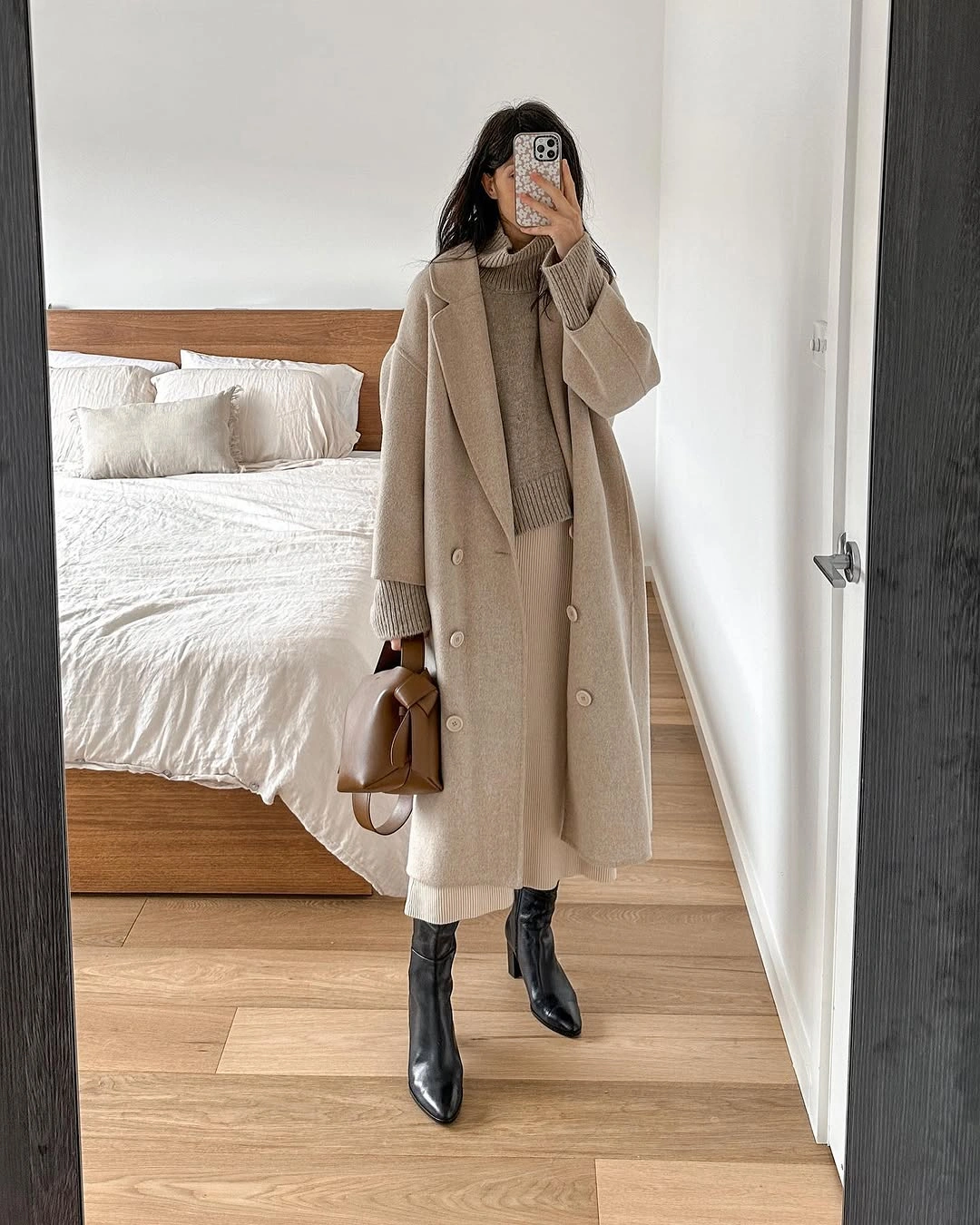
A brown bag introduces a warmer shade between the pale clothing and the black footwear, adding depth without disturbing the restrained palette. There is no single loud color accent, so the eye moves between the coat, light trousers, and boots through subtle changes in tone. This is an early winter outfit built around close neutrals and the way their proportions shape the silhouette.
The look uses gentle color transitions instead of sharp contrast. The brown bag and black boots simply give the neutral base more definition.
8. Gray Sweater with Burgundy Mini Bottom
A roomy gray sweater creates a broad upper silhouette, with a white shirt visible beneath it and a burgundy mini skirt or shorts forming the central color accent. Gray knee-high boots repeat the sweater shade and keep the lower palette connected. Outside, the proportions are easy to see: a generous top contrasts with a shorter burgundy bottom and a long vertical boot line.
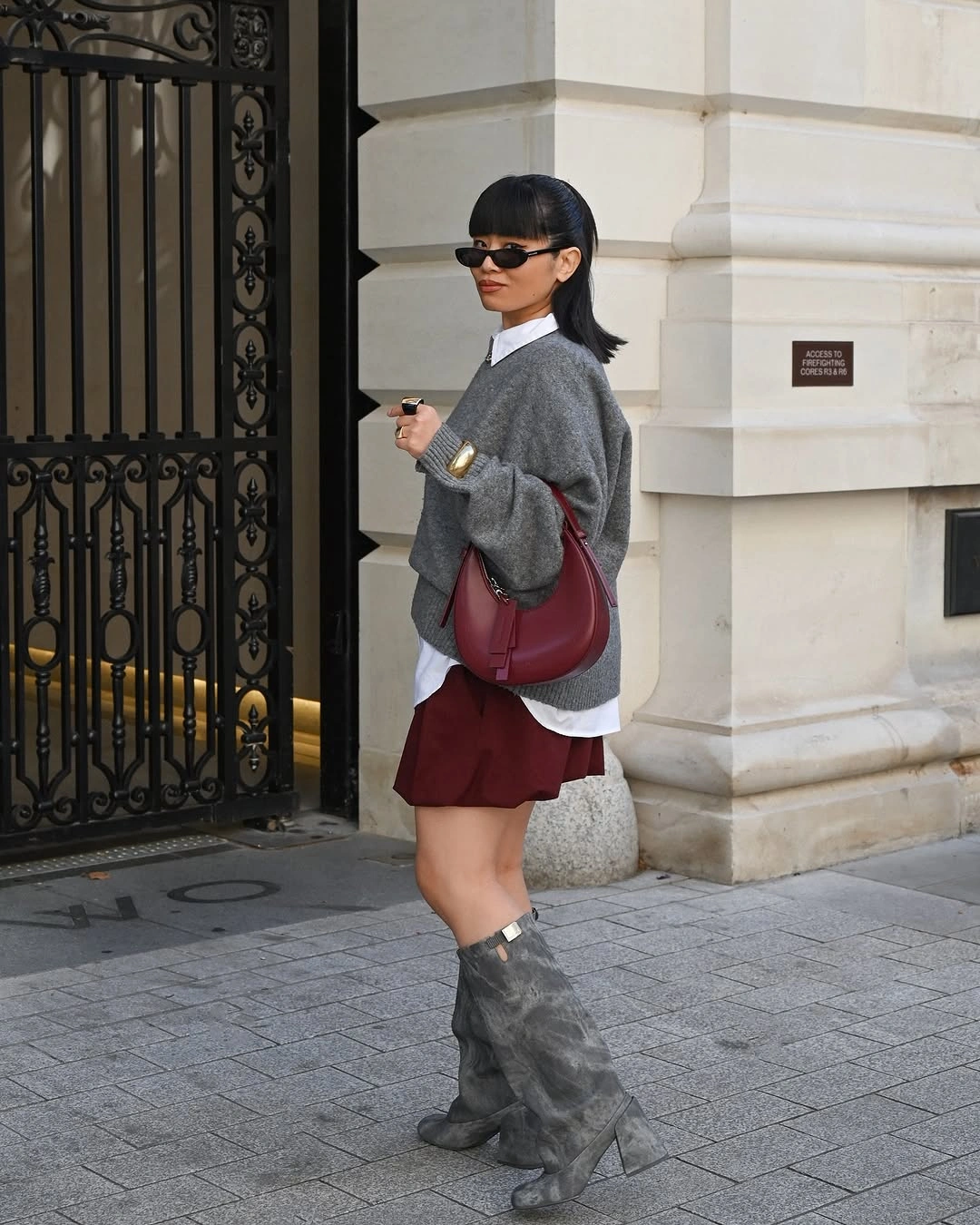
A burgundy bag repeats the color of the mini skirt or shorts, so the saturated shade appears in two separate areas. Sunglasses add a dark graphic detail near the face, while the tall gray boots limit the number of new colors below. For early winter outfits, this look is interesting because it combines proportion with a clear burgundy repeat against a calm gray base.
The white shirt works as a small light layer between the gray sweater and burgundy bottom. Repeating gray in the sweater and boots keeps the outfit within a focused palette.
9. Cream Cardigan under a Beige Outer Layer
A beige coat or jacket forms the light outer layer, while a cream cardigan adds a second nearby shade without a hard color transition. Wide black trousers deepen the lower half and create a strong dark area beneath the pale layers. Indoors, the outfit is read through the relationship between the light layered top and the wide black bottom rather than through bright accessories or prints.
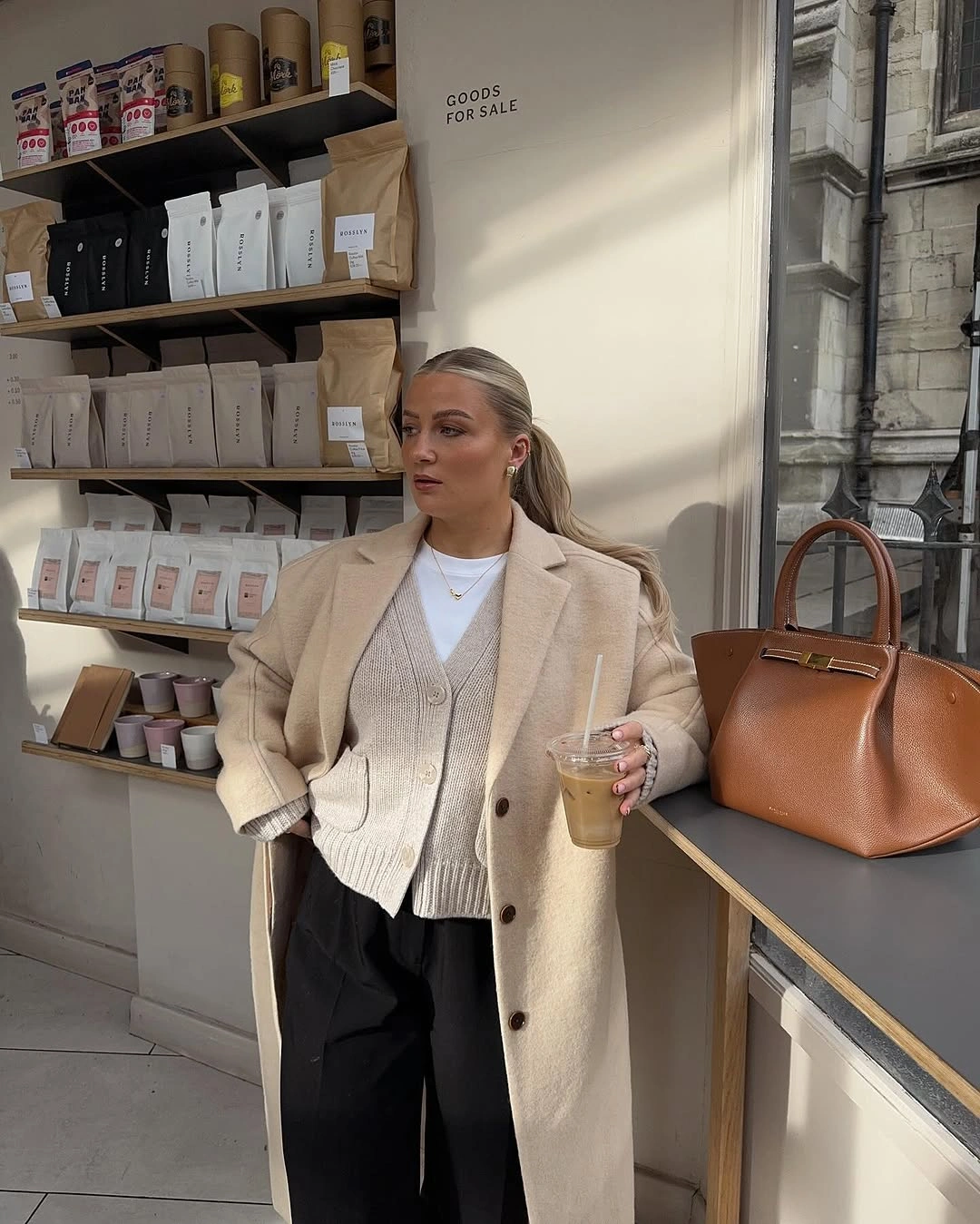
A light-brown bag sits between the cream and black tones, adding warmth to the neutral composition. A coffee cup is visible in the scene, but it remains part of the setting rather than defining the outfit. The most important contrast is proportional: shorter light layers above are paired with wide black trousers that form a clear dark base.
The beige and cream layers create depth even though their colors are close. Wide black trousers give the pale upper half a stable visual anchor.
10. Mustard Sweater with Plaid and Burgundy Details
A mustard sweater is worn over a striped shirt, so the upper body combines a rich solid color with a smaller linear pattern. A checked midi skirt introduces another print below, creating a visible change in texture and rhythm. Dark red tights continue the warm palette and separate the skirt from the burgundy footwear, giving the lower half its own color sequence.
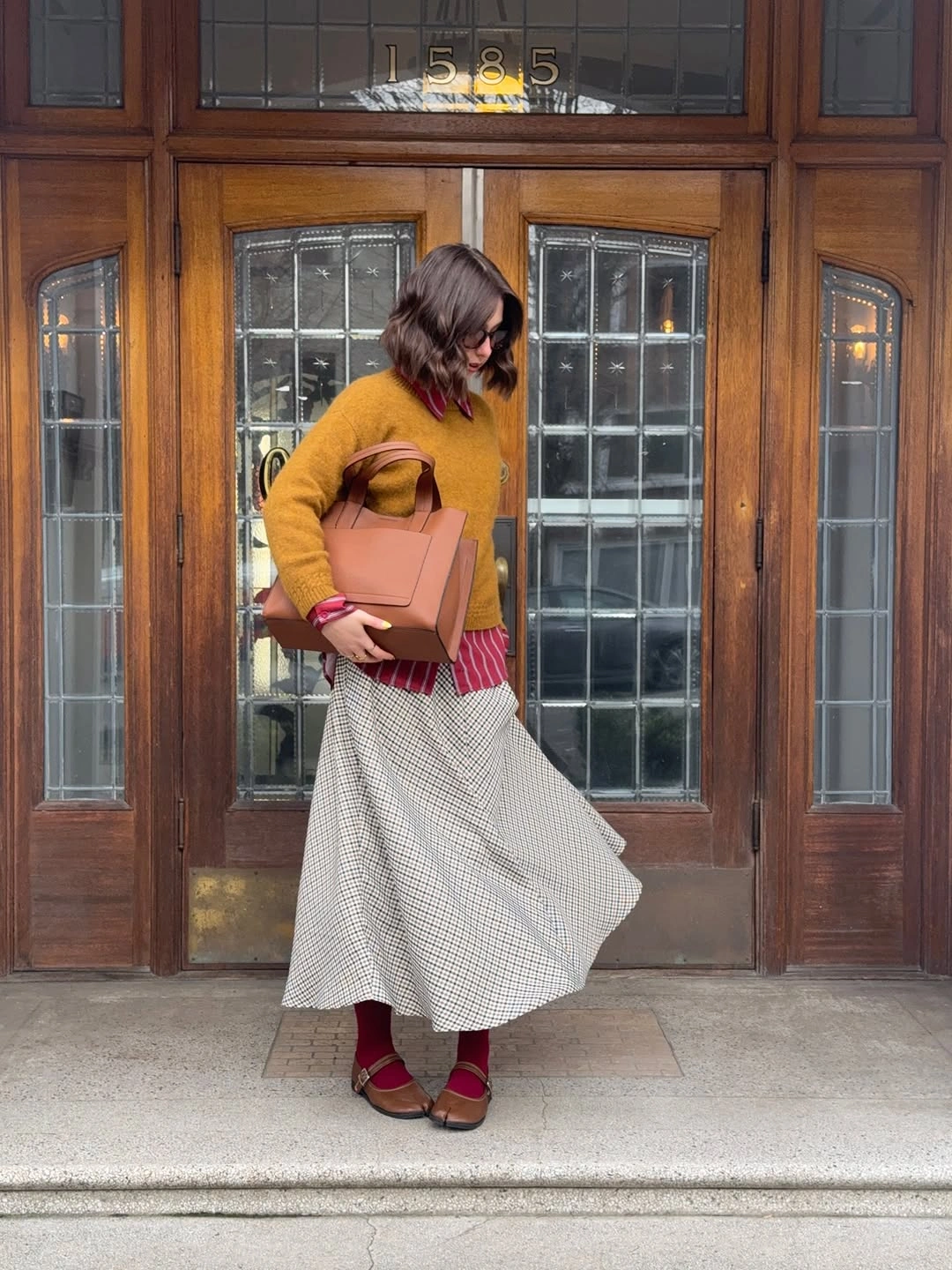
Burgundy shoes repeat the tone of the dark red tights, while a light-brown bag adds a warm neutral note at the side. The outfit does not depend on one texture: knitwear, stripes, checks, and smooth colored areas are all visible at once. This makes the early winter outfit more layered than a simple neutral look while keeping the palette within mustard, burgundy, brown, and cream-adjacent tones.
Mustard, burgundy, and brown create a warm seasonal palette, while the striped shirt and checked skirt add rhythm. The two prints divide attention between the upper and lower halves.
11. Gray Sweater with a Long Black Skirt
A gray sweater creates a softer, lighter upper section, while a long black skirt forms a strong dark vertical line below. The difference in color and length makes the silhouette easy to read without prints or a large number of accessories. Outside, the simple combination shows how a pale gray top can transition into a deep black lower half while keeping the overall mood restrained.
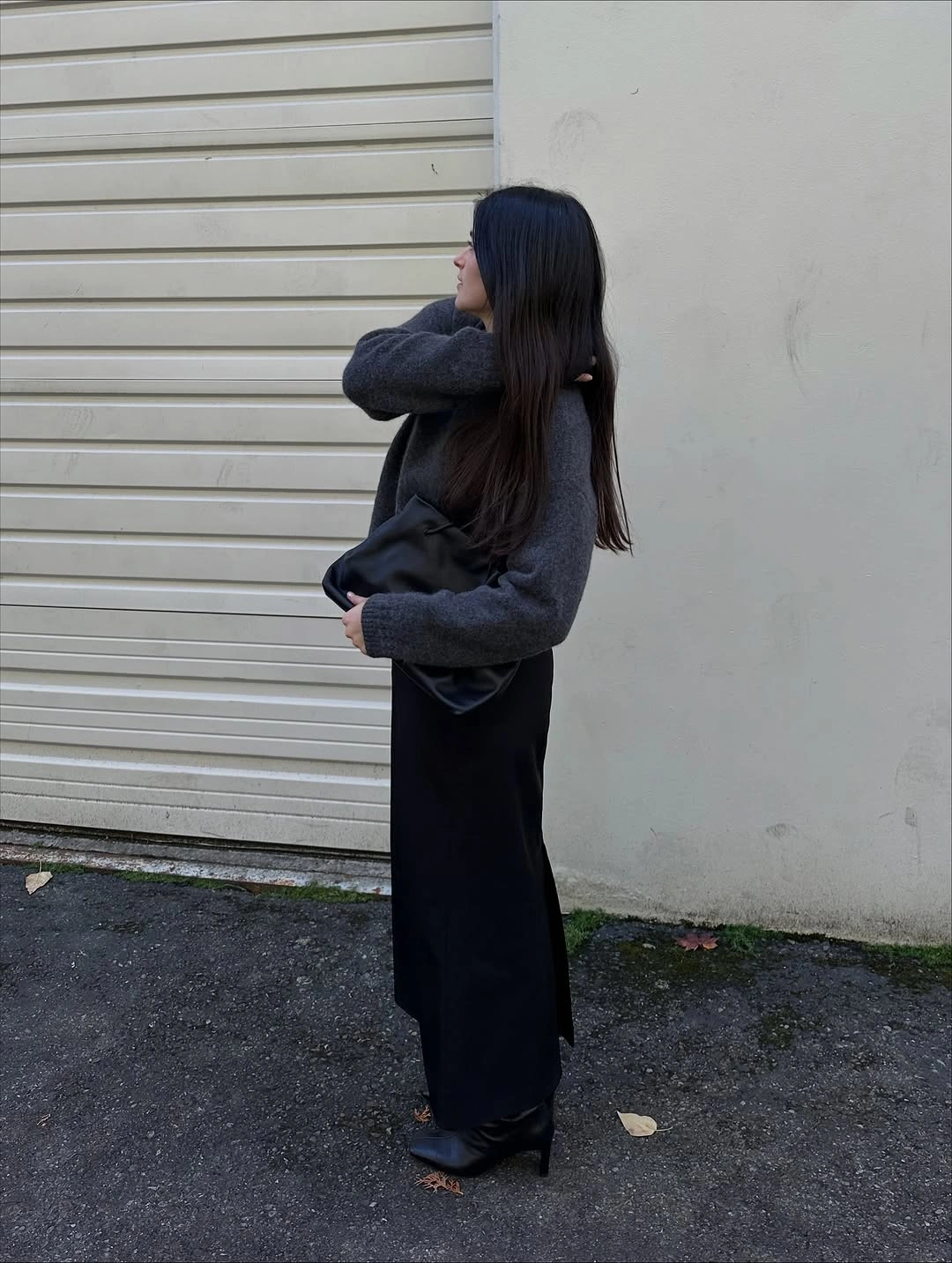
A black bag repeats the color of the skirt and adds another dark detail to the upper area without changing the two-color structure. The focus is not on decorative contrast but on the relationship between the simple gray top, the length of the skirt, and the distribution of light and dark. It is a calm early winter outfit where proportions do most of the styling work.
The long skirt sets an extended lower line, while the sweater keeps the lighter tone closer to the face. The black bag connects the accessory to the skirt.
12. Light Sweater with Black Trousers and a Large Bag
A white or cream sweater occupies the lightest part of this city outfit and is clearly separated from the black trousers. The two basic tones remain especially visible against the urban setting, where the silhouette is simple and easy to follow. A large light-brown or brown bag adds a third, warmer neutral shade and broadens the palette without becoming a bright color accent.
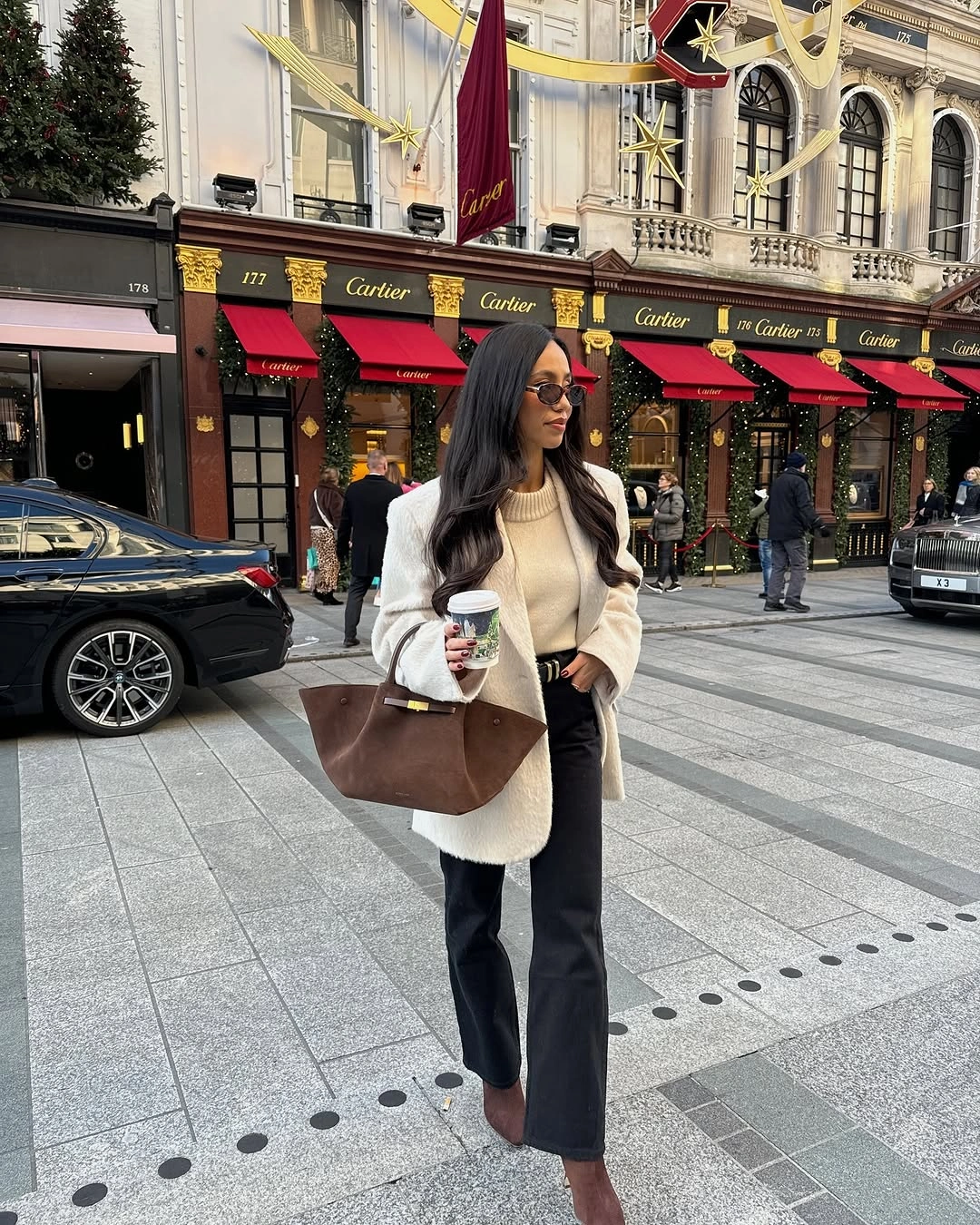
Coffee is visible in the hand, giving the frame a recognizable city feeling, but the main composition is still the sweater, black trousers, and oversized bag. The brown accessory softens the strict black-and-white contrast by adding a middle warm tone. The outfit needs no extra print because the difference between the pale top, dark bottom, and large bag already creates enough structure.
This look is built on a simple three-color relationship, with each shade occupying a clear area. The large bag stands out through its scale and warmth rather than decoration.
13. Brown Plaid with a Beret and Yellow Bag
A cropped brown plaid jacket is paired with brown knee-length shorts, so the upper and lower pieces share a warm palette while differing in pattern and shape. A beret adds another detail near the top, and dark tights create a deeper background beneath the shorts. This combination differs clearly from the long coats and solid bottoms elsewhere in the early winter outfits collection.
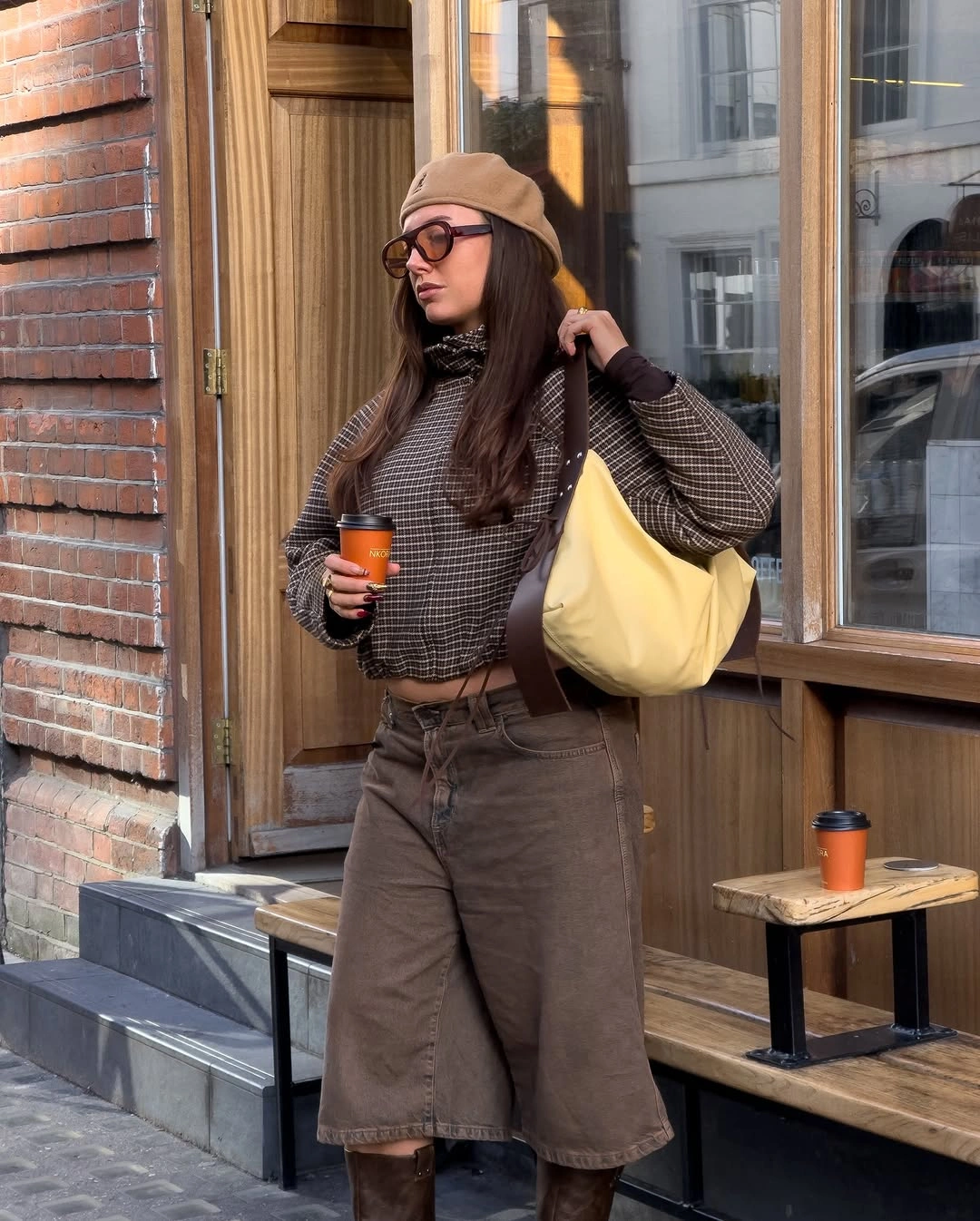
A yellow bag becomes the brightest point because it stands apart from the brown and dark base. Coffee is visible in the hand, but the intentional color accent comes from the bag. Dark tights balance the warm brown pieces and visually separate the shorts from the lower section without introducing another complicated print.
The yellow accent is noticeable precisely because it appears in one accessory. The beret, plaid, and shorts create a distinct silhouette without repeating a long coat composition.
14. Beige Puffer against the Snow
A beige puffer jacket creates a voluminous light outer layer, with a textured cream sweater visible underneath. The two nearby shades sit next to each other, but the difference in surface helps separate the puffer from the knitwear. Narrow black trousers darken the lower half, while the snow in the frame makes the light upper palette even more visible against the winter surroundings.
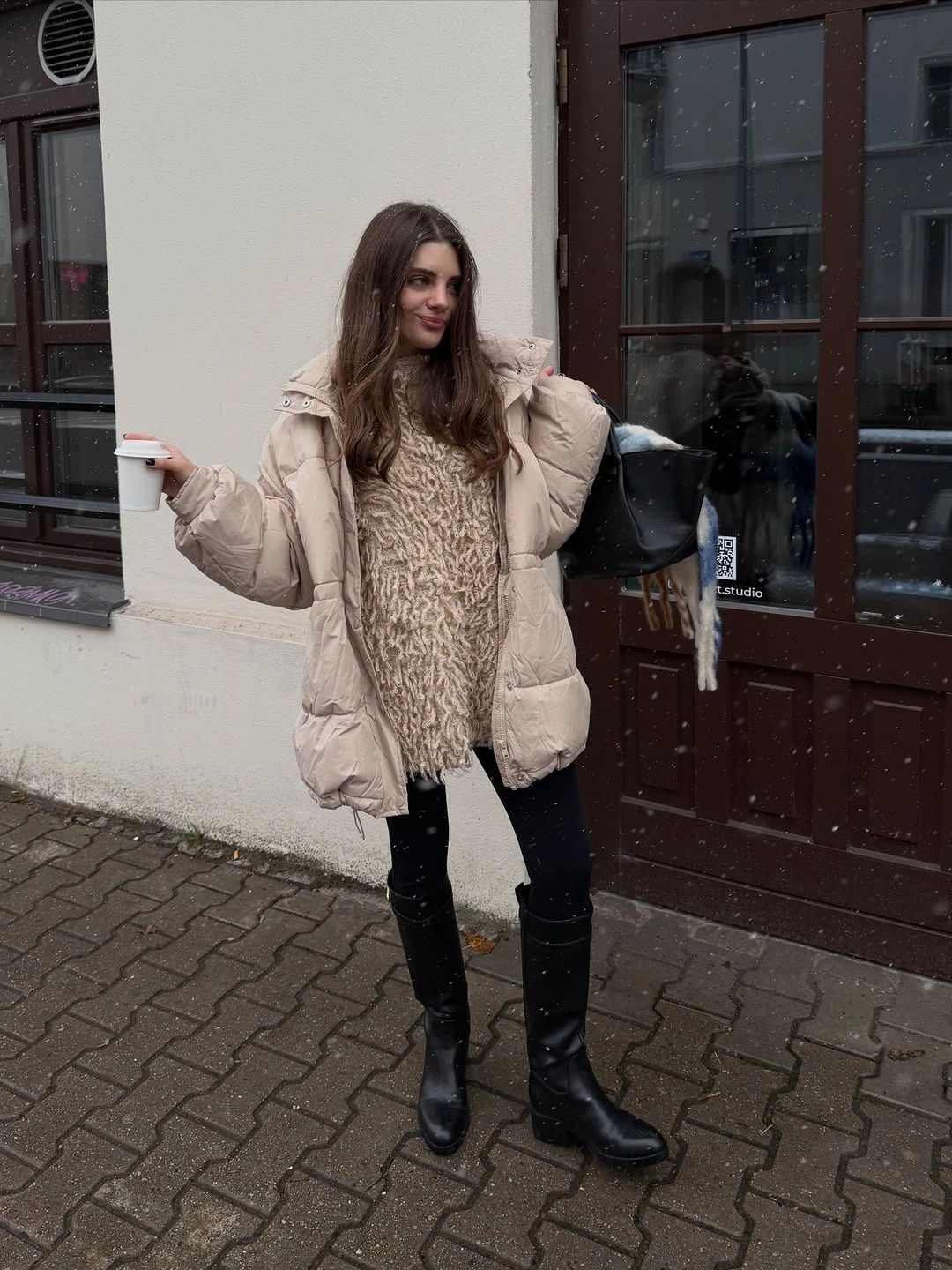
Black knee-high boots continue the dark line of the narrow trousers, keeping the lower half cohesive in color. This early winter outfit is read through the contrast between the voluminous pale upper layer and the narrow dark lower half rather than through decorative accessories. The cream sweater adds a separate textured plane between the puffer and black pieces, so the top does not look like one solid block.
The snowy background reinforces the beige-and-cream impression without changing the outfit’s main contrast. Black trousers and tall boots form one dark vertical line beneath the puffer.
15. Olive Layers with Gray Trousers
An olive jacket forms the base of the upper section, while a layered vest in olive and cream tones sits over it. Several nearby green shades and light inserts create a more complex top than a single coat or sweater. Gray trousers move the palette into a neutral lower half without repeating the olive literally, giving the outfit a clear separation between the layered top and the calm bottom.
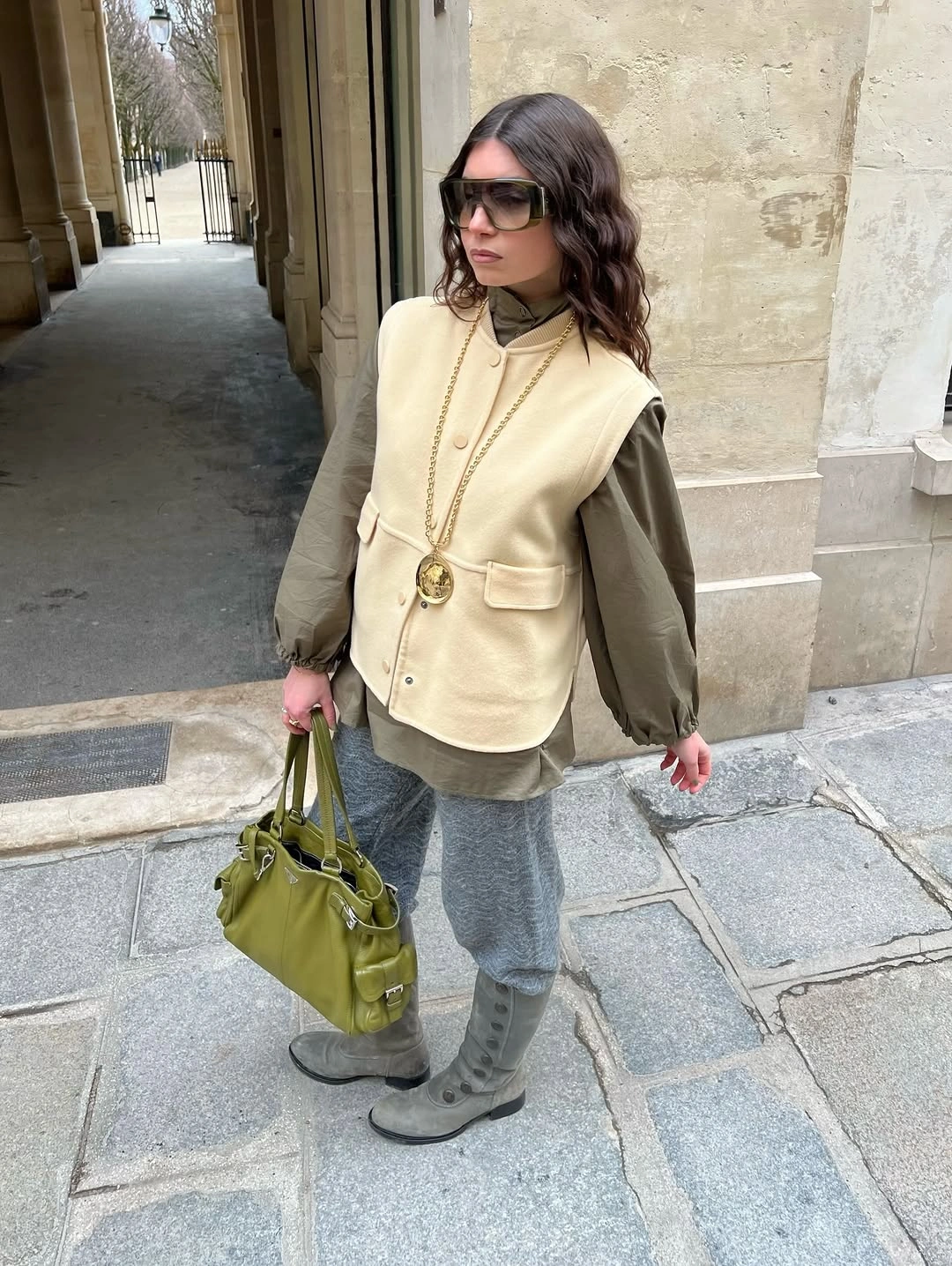
A green bag brings the olive family back into the lower part of the composition and connects the accessory with the layered top. Gray boots repeat the trouser color, so the bottom remains neutral rather than competing with the jacket and vest. Outside, the distribution is clear: more complex green and cream layers are concentrated above, while gray provides a quiet continuation below.
This outfit stands out through several visible upper layers instead of one dominant outer piece. The green bag repeats the main color theme while the gray trousers and boots leave room for it.
16. Beige Fur Coat with an All-Black Base
A beige faux-fur coat becomes the main light area in this outfit, while a black top and black trousers form a continuous dark base beneath it. The distribution of color makes the textured outer layer especially noticeable and emphasizes its volume. On the street, the silhouette is clear because the soft beige surface contrasts strongly with the saturated black outfit underneath.
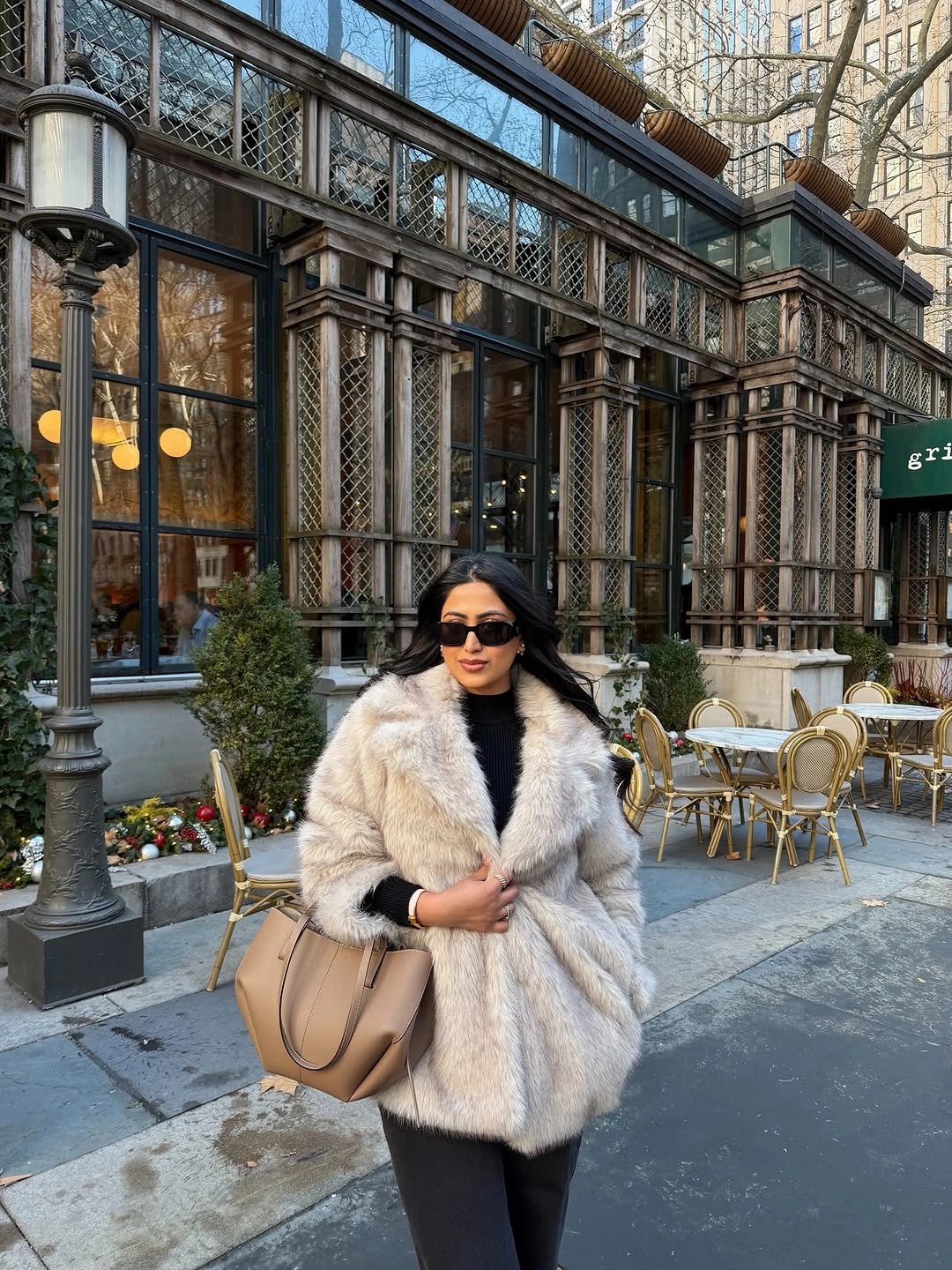
A light-brown bag introduces a warm middle tone between the beige coat and the black base, so the palette is not limited to a sharp light-versus-dark split. Its color is close to the coat but distinct enough to remain visible beside the large textured surface. Among early winter outfits, this look shows how one tactile outer layer can define a simple dark combination completely.
The main accent comes from the fur texture rather than prints or numerous details. The black clothing works as a quiet background and lets the beige coat lead.
17. Red Knitwear with a Long Light Plaid Skirt
A red knitted sweater is the most saturated part of this outfit, while a blue-and-white shirt collar adds a cooler, lighter layer beneath it. A long cream plaid skirt moves the attention downward and introduces a pattern that differs clearly from the solid sweater. The result is a winter-ready palette where red, blue, white, and cream are separated by garment level and texture.
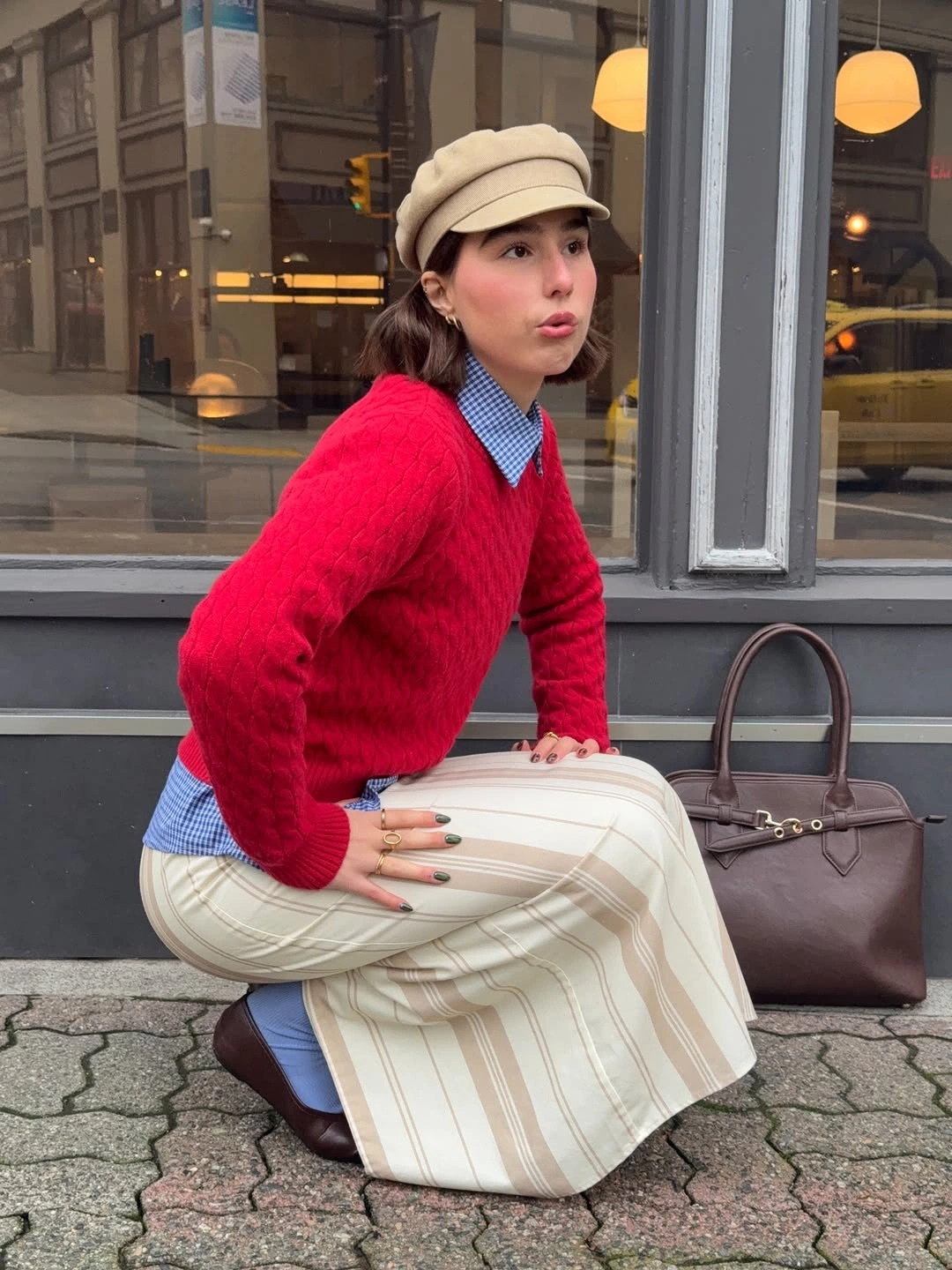
A beige cap places a light neutral accent near the face, while a brown bag supports the warmer tones elsewhere in the frame. The colors are not repeated literally: red, blue-and-white, cream, and brown each occupy different pieces and accessories. This gives the outfit more variety than a neutral set, but the long plaid skirt and quiet accessories keep the red sweater from taking over the entire composition.
The look combines bold knitwear, a collared shirt, and a long patterned skirt. The beige cap and brown bag soften the transition between the stronger color and the light lower half.
18. Cream Fleece Jacket with a Light Patterned Bottom
A cream teddy or fleece jacket creates a soft, voluminous upper layer that stands out against the snow. The lower part also stays within a light palette: a long cream skirt or trouser shape carries a visible pattern, so the outfit does not become one flat block of color. The difference in texture and print separates the nearby shades without needing a dark contrasting layer.
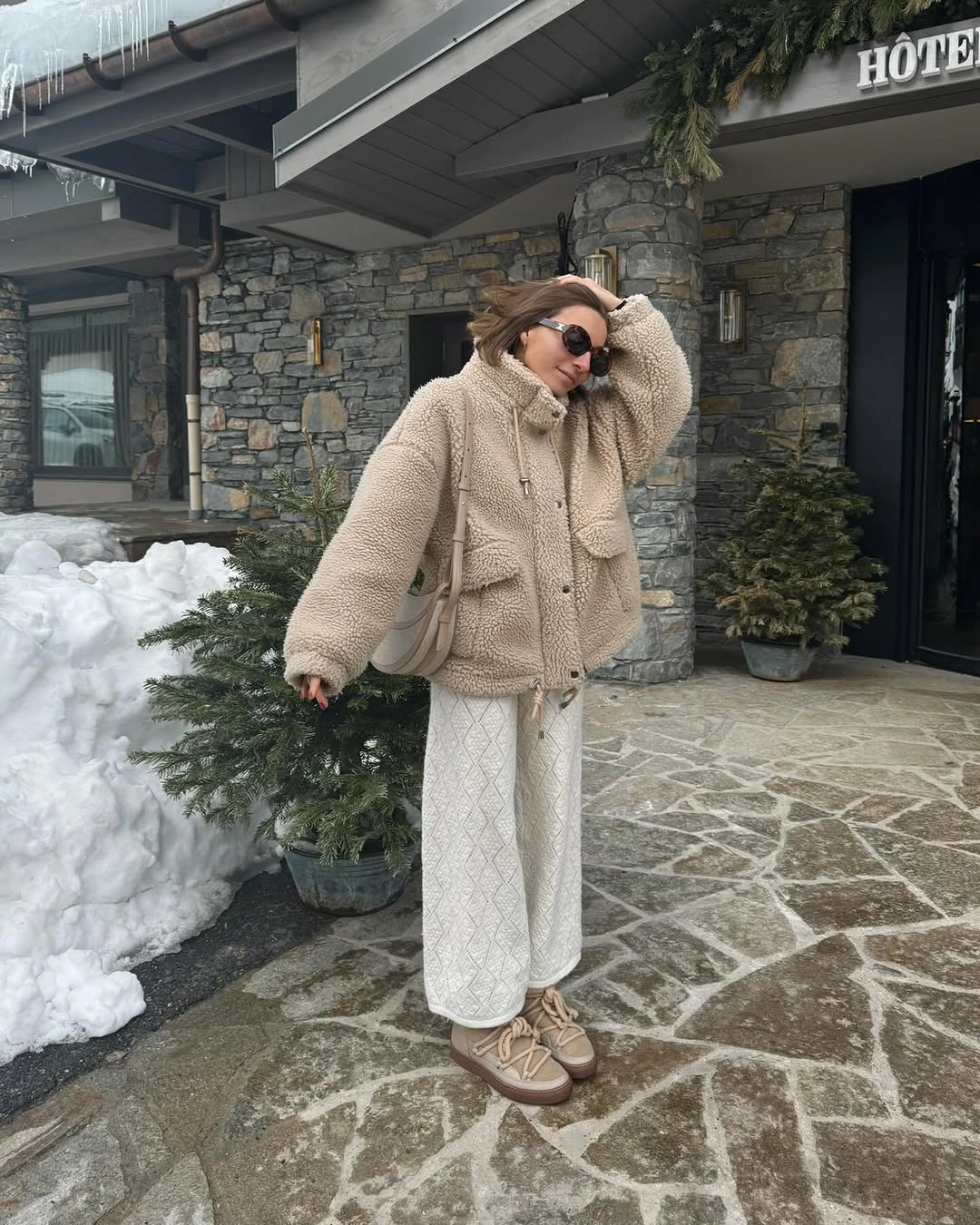
Light-brown footwear adds warmth close to the ground and separates slightly from the cream palette above. The surrounding snow supports the overall light impression, but the pattern on the long lower piece keeps the silhouette structured. For early winter outfits, this is an example where contrast comes from subtle differences in cream tones, surfaces, and a smaller-scale pattern rather than black and white.
The light palette remains consistent from jacket to lower piece, while the footwear changes the color temperature slightly. The pattern is important because it divides items that would otherwise look very similar.
19. White Cardigan with a Dark Collar and Light Jeans
A white cardigan with a dark collar draws attention to the upper part of this outfit through a clear graphic frame around the neck. Light jeans continue the pale palette downward, but their denim texture distinguishes them from the knitwear. In the indoor setting, the relationship between the shorter cardigan, light denim, and dark details in the collar and shoes is easy to see.
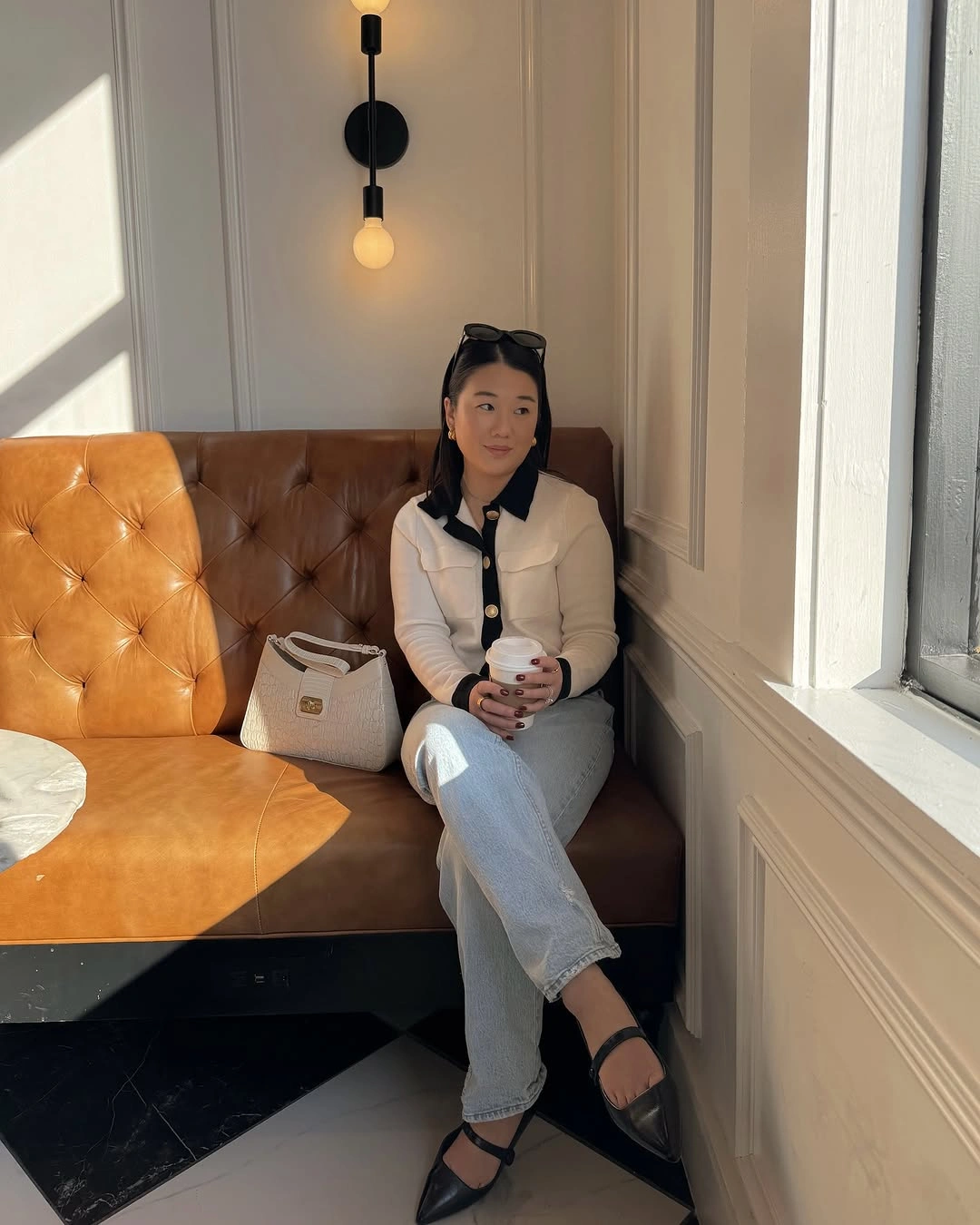
Black Mary Jane shoes add a defined dark accent at the bottom and repeat the collar color, creating two separated points of contrast. A white bag supports the cardigan and remains part of the light base. The accessories work in opposite directions: the bag strengthens the pale palette, while the collar and shoes outline it with small dark details.
The outfit depends on small dark elements rather than one large contrasting outer layer. Light jeans, cardigan, and bag create the foundation, while the collar and shoes provide graphic definition.
20. All-Light Look with a Long Coat
A long white or cream coat creates an almost monochrome composition, with a cream knit layer and white trousers visible beneath it. Light tones run through the full silhouette without a sharp dark break, so the differences between pieces are read mainly through length, texture, and small changes in shade. The snowy setting reinforces the continuous winter palette without changing the outfit’s structure.
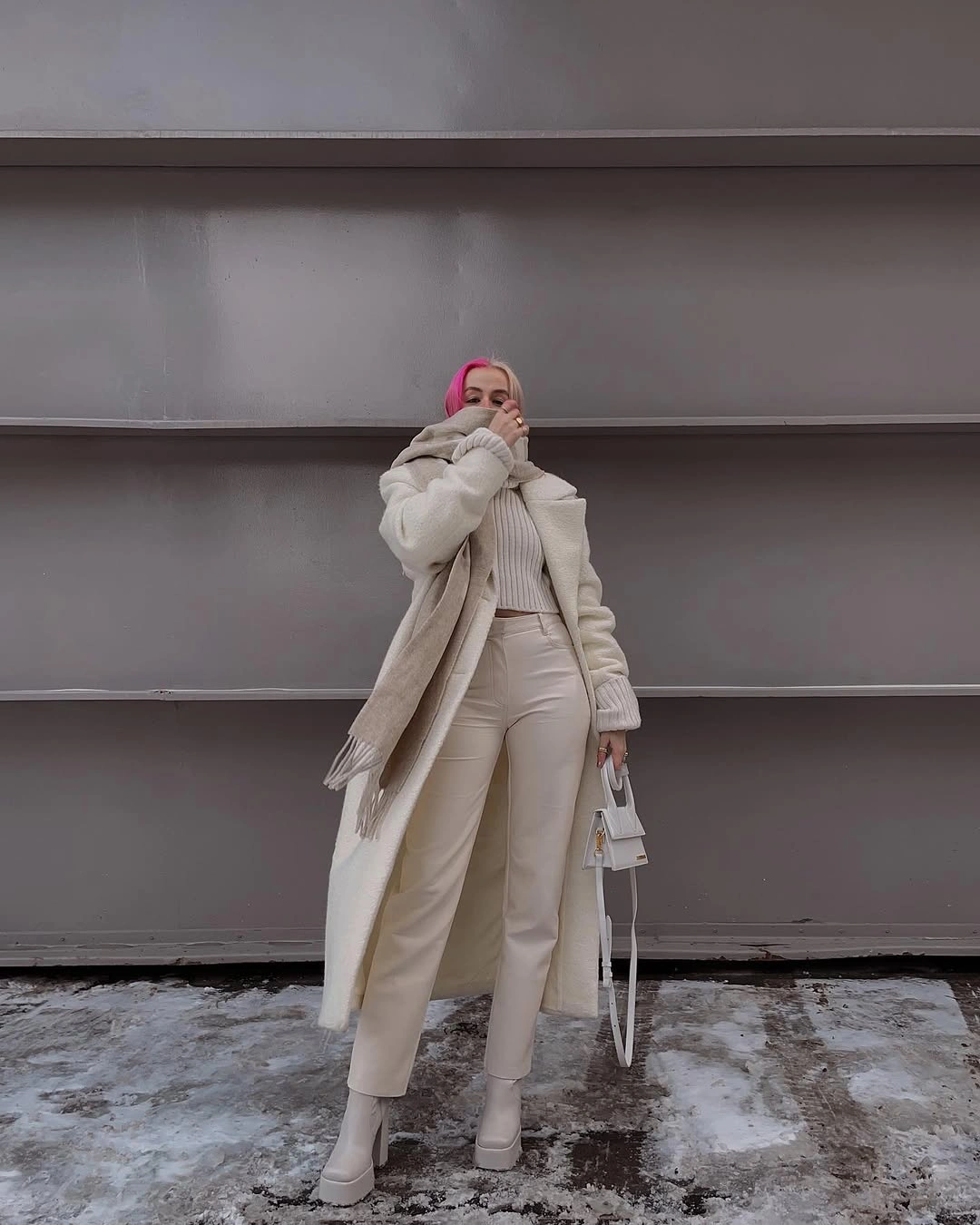
A pale scarf adds another layer near the face, and a small bag continues the white-and-cream palette instead of creating contrast. There is almost no separate color center, so the eye moves between the coat, knitwear, trousers, and accessories through their shapes and surfaces. This early winter outfit demonstrates a monochrome approach in which nearby light tones occupy every major section.
The strength of the look is its consistent white-and-cream range without a strong dark accent. The scarf, bag, and knitwear add levels so the monochrome outfit does not look flat.
21. Light Beige with a Yellow Scarf and Blue Accents
A light beige sweater or coat creates a neutral foundation in the upper part of this outfit, but a long yellow scarf changes the impression through its stronger warm color. Blue trousers or jeans create a clear contrast with the yellow, while the city street keeps this pairing at the center of the frame. The pale upper layer softens the transition between the two noticeable shades.
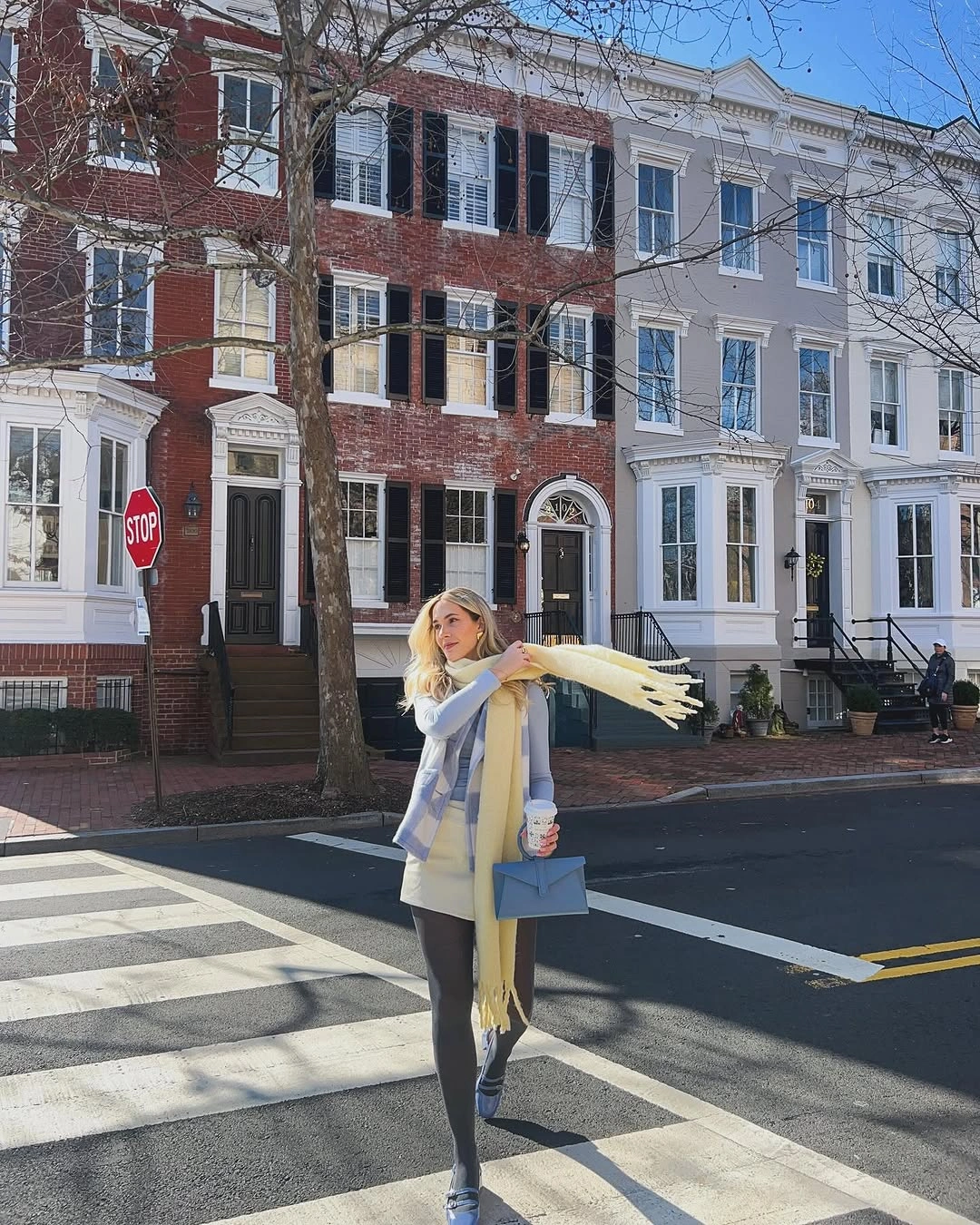
A blue bag repeats the color of the trousers or jeans and carries the cool tone from the lower half back toward the upper part of the composition. The yellow scarf remains a separate vertical detail that stands out against the pale beige background. This early winter outfit shows another way to work with color: warm yellow and cooler blue are supported by a neutral foundation instead of a single isolated accent.
The scarf’s length makes the yellow visible along much of the silhouette rather than only near the face. The blue bag balances that accent and connects the accessories with the lower half.
22. Beige Coat with a White Sweater and Blue Jeans
A long beige coat forms the main outer layer, while a white sweater creates a lighter center in the upper half. Blue jeans add a distinct color below and separate the beige-and-white neutrals from the brown-gray footwear. In the café setting, this outfit reads as a sequence of calm tones, with blue denim acting as the only large saturated color area.
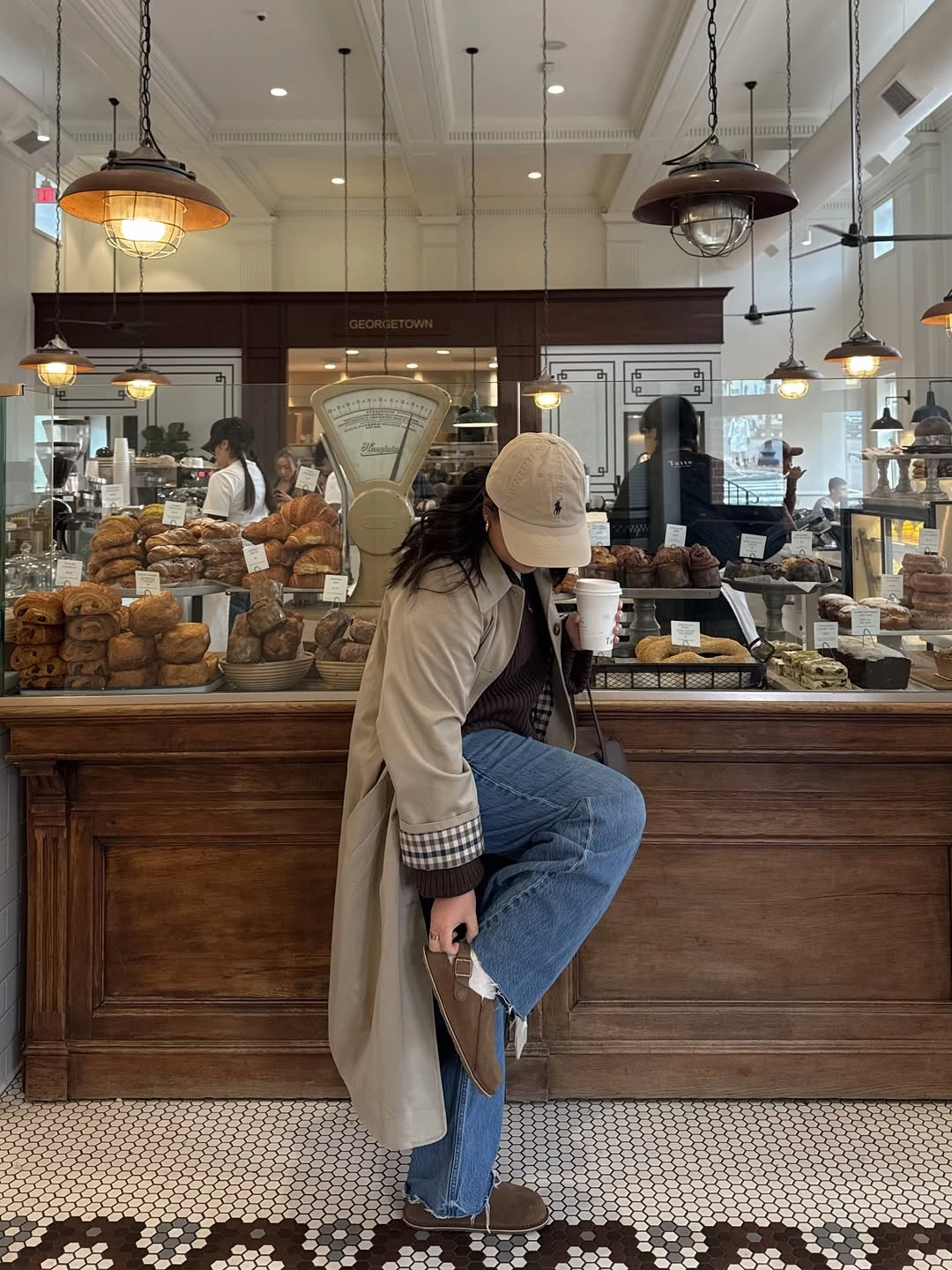
A beige cap repeats the coat color near the top of the silhouette, creating a clear link between the headwear and the longest garment. Brown-gray boots add a muted darker note at the ground without becoming a sharp black accent. The white sweater works as a light transition between coat and jeans, so the blue denim does not meet the beige outer layer directly.
This final look uses a familiar beige, white, and blue combination, but each shade occupies its own level of the silhouette. The cap and boots complete the palette with quiet neutral details.