Soft face-framing layers and curtain bangs are still the go-to for a reason: they work with almost any texture and make a cut look intentional without trying hard. The shift away from poker-straight ends means a little natural movement is the whole point.
This collection of 20 Easy Hairstyles for Teens covers everything from a five-minute twisted ponytail to a salon lob with lived-in color. Whether your hair is fine and falls flat by noon or thick enough to eat a brush, there is a shape or a braid here that solves that specific problem.
1. Mid-Back Layered Cut With Curtain Bangs
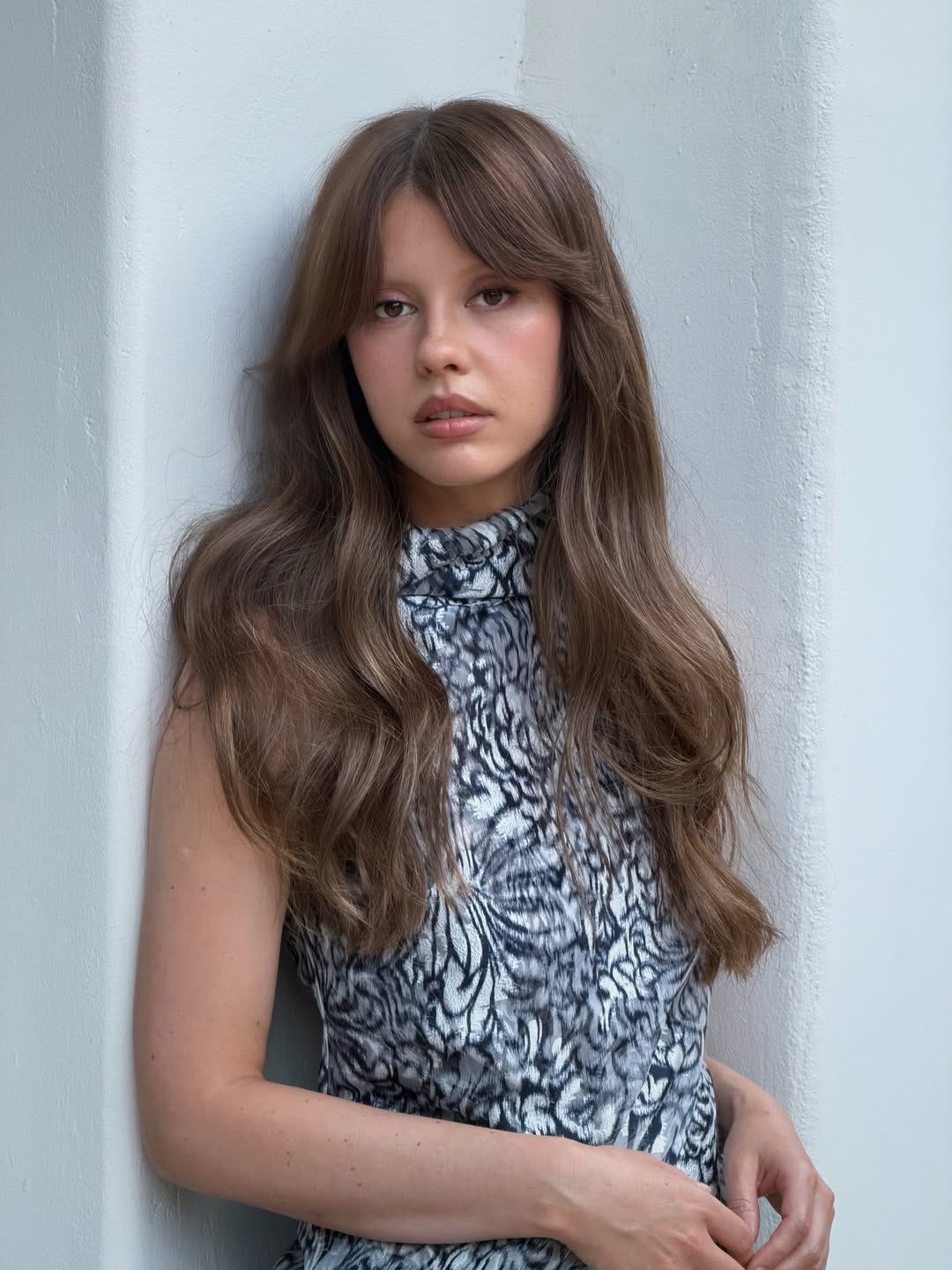
Long layers shape this mid-back cut, keeping thick, wavy hair full through the lengths. The curtain bangs start at the cheekbone and blend into the rest of the cut, which makes them forgiving for round and oval face shapes. A middle part sends the fringe falling evenly to both sides, so the bangs frame the face on their own.
Ask your stylist for: long layers with curtain bangs, soft waves. Use a round brush to blow-dry the fringe forward, then let the rest air dry. The layers stay fresh for about 10 to 12 weeks before the shape starts to blur.
2. Shoulder Length Bob With Curtain Bangs
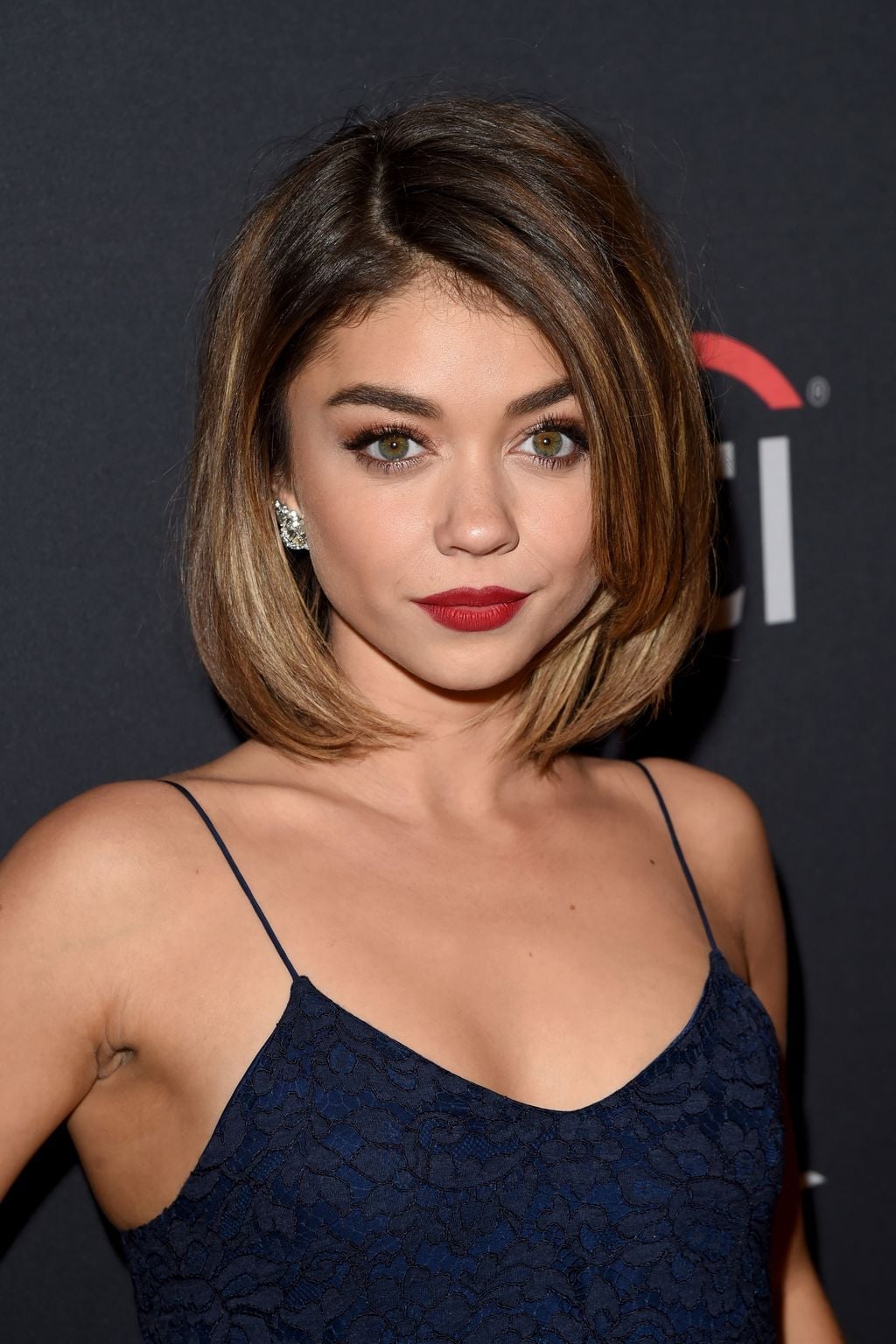
How do you get a bob that actually frames the face instead of just sitting there? The answer is curtain bangs that feather into the body of the cut. This shoulder-length version lands at the collarbone, so it works for medium-density wavy hair without looking too heavy. The middle part keeps the face-framing pieces symmetrical.
Ask your stylist for: shoulder length bob, curtain bangs. The curtain bangs soften the line around the jaw, which suits oval and heart face shapes. A smooth blowout is the standard finish here, and the bob baseline needs a trim every six to eight weeks to keep the ends blunt.
3. Collarbone Braid Crown With Loose Waves
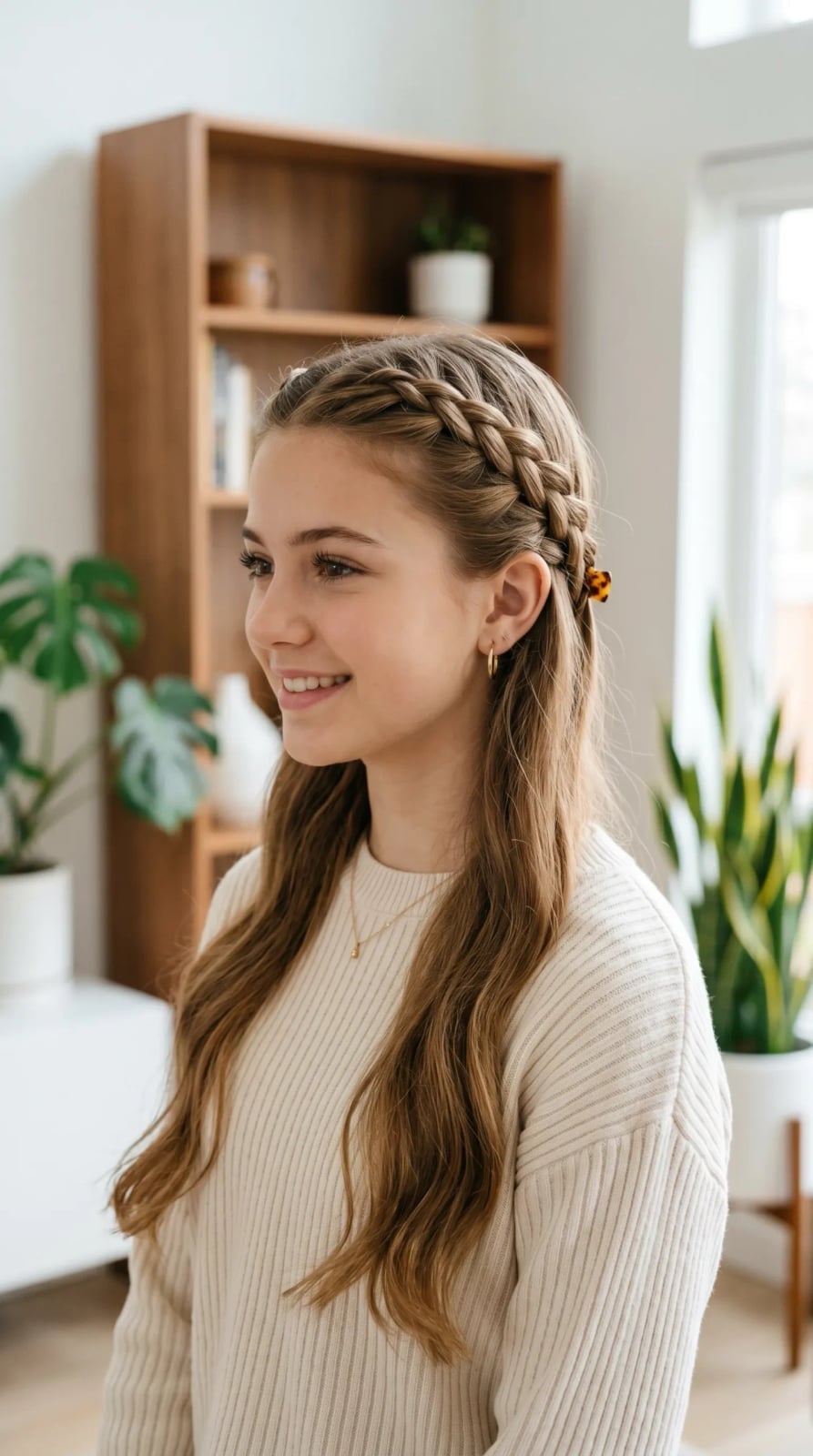
A single braid wraps around the head like a headband, leaving the collarbone length hair loose. The braid starts at one temple and tucks behind the opposite ear, which keeps it secure without pins showing. Curtain bangs soften the front and stop the style from reading as too formal.
This one lands naturally at school dances or graduation dinners. Second day hair grips the braid better than freshly washed strands. A light texturizing spray gives the waves enough hold to last through an evening.
4. Collarbone Lob With Soft Caramel Highlights
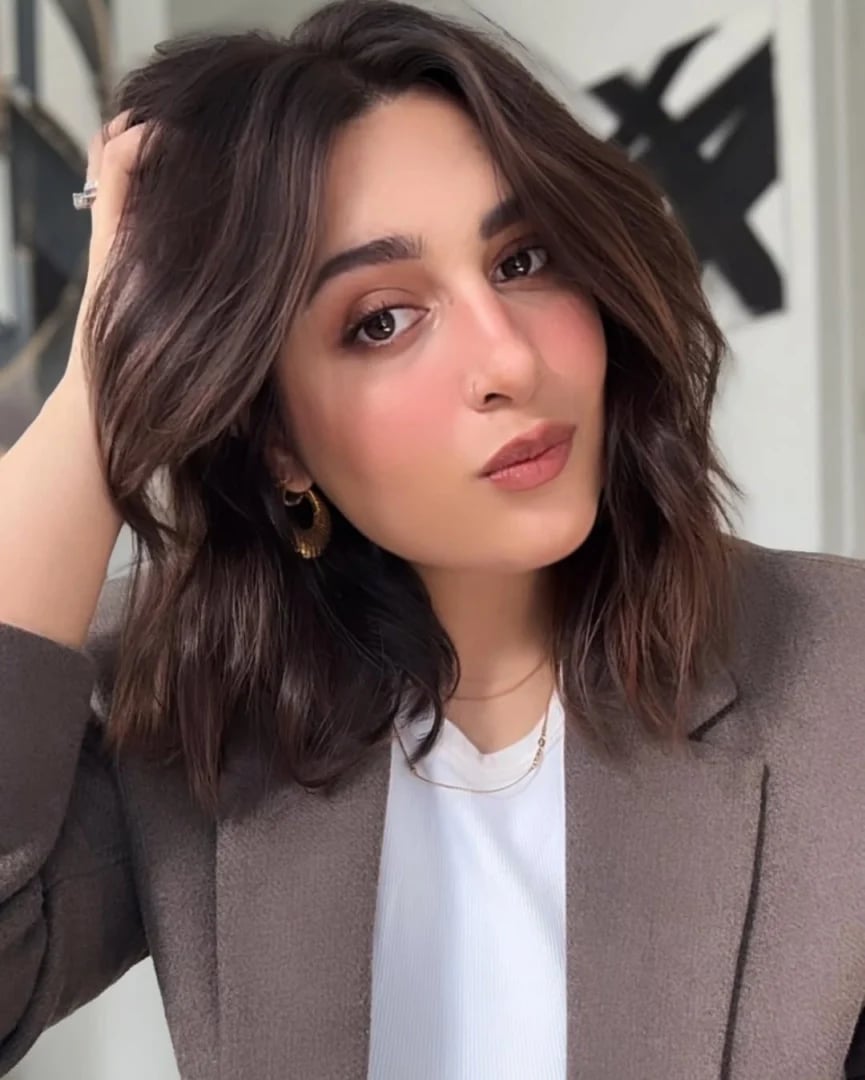
This lob does not need a round brush and twenty minutes of concentration. The subtle layers and air-dried waves mean you can wash, add a curl cream and walk out the door. The dark brown base with soft caramel highlights adds dimension, and the highlights grow out softly enough that a root touch-up every 10 weeks is plenty.
Ask your stylist for: collarbone lob, subtle layers, caramel highlights. The collarbone length falls below the jaw but above the shoulders. Trims every six to eight weeks keep the hemline clean.
5. Collarbone Lob With Blonde Balayage
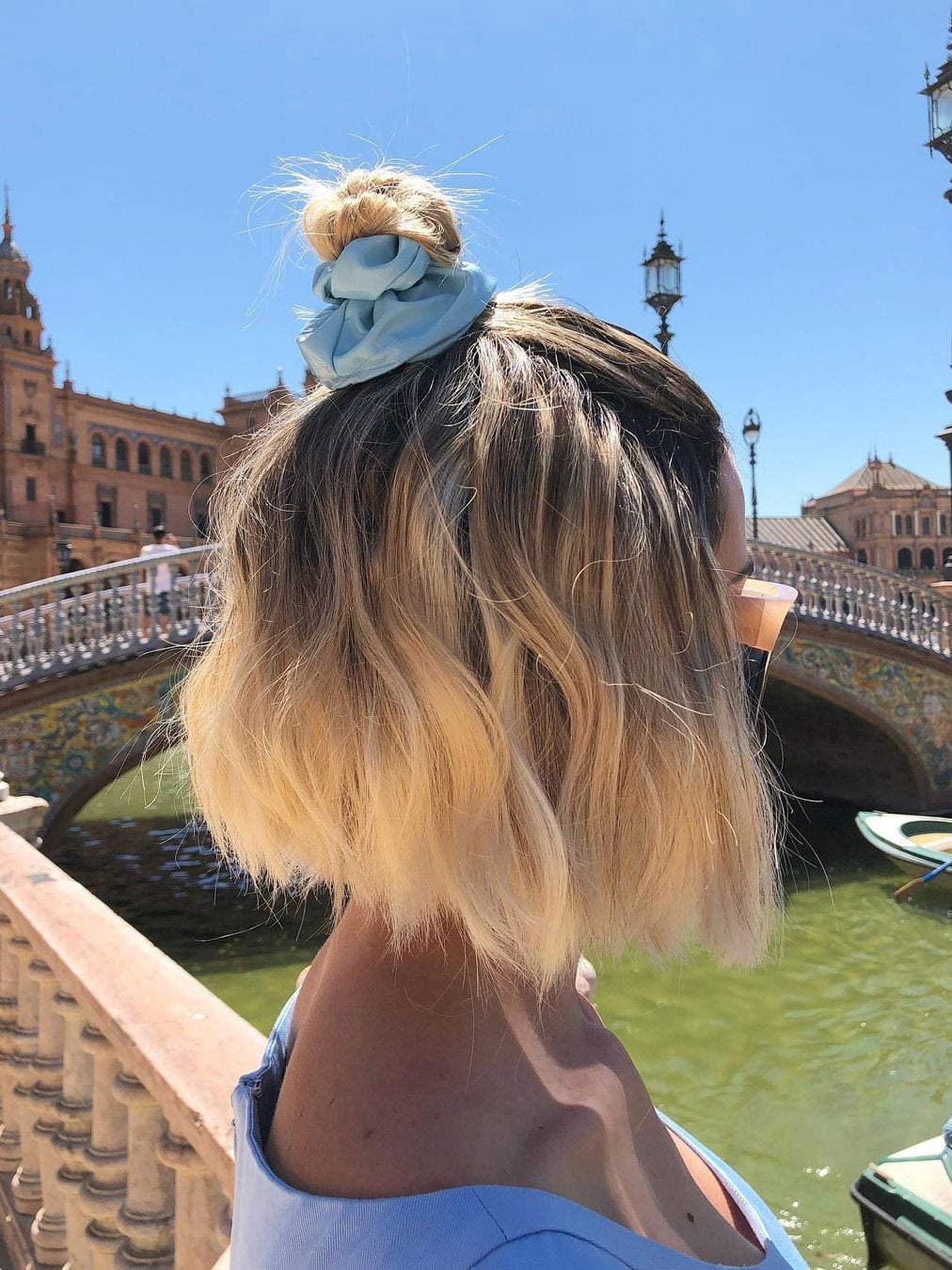
Blonde balayage on a collarbone lob reads as sun-kissed rather than salon-spent. The side part lets the lighter pieces fall forward, which creates the illusion of more movement in the loose waves. Medium-density wavy hair holds the wave pattern well at this length.
Ask your colorist for: collarbone lob, loose waves, blonde balayage. This lands best in late spring through early fall, when a lived-in blonde looks natural against warmer light. A sea salt spray helps the waves hold their shape, and the balayage needs a refresh every 12 to 16 weeks, depending on how much contrast you want.
6. Collarbone Curly Hair With Pearl Clip
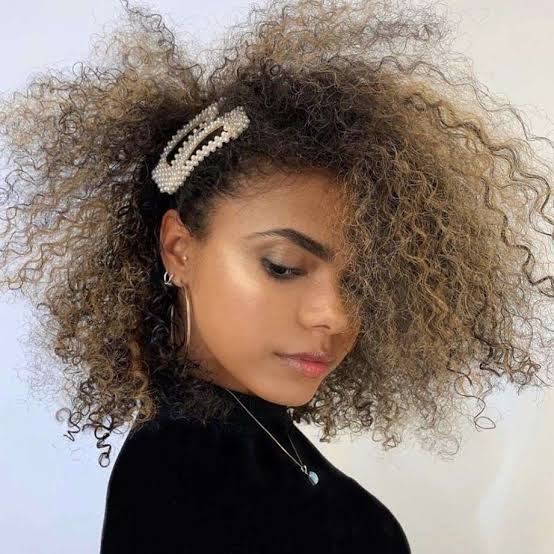
Thick curly hair air-dries faster than you think, and a collarbone length cut keeps the weight manageable. The side part lets the natural volume fall into place, while blonde highlights woven through brown curls add dimension without a full salon commitment. Ask your stylist for: collarbone length curly cut, side pearl clip. Detangle soaking wet hair, let it air-dry, then twist a front section back and secure it with the pearl clip. The clip holds the twist on its own, so no bobby pins are required.
7. Shoulder Length Half Up With Twisted Sections
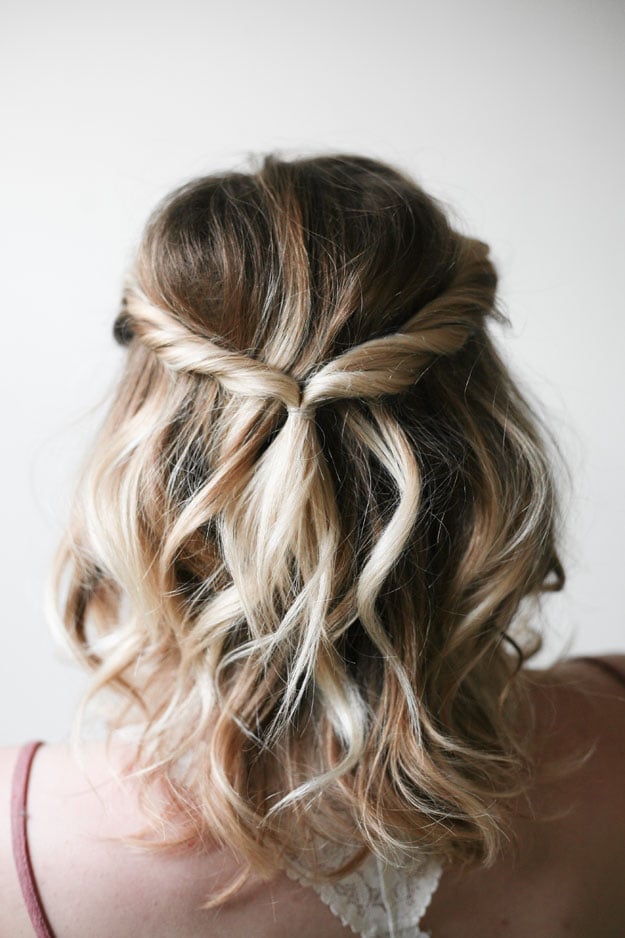
Wondering if a half-up works for shoulder length hair? It does, as long as the sections are twisted, not tied tight. The middle part keeps the look symmetrical, and the loose waves throughout stop it from reading as too tidy. Ask your stylist for: shoulder length half up with twists. Medium density hair holds the twisted sections best, but fine hair can fake it with a spritz of dry shampoo for grip. The style suits round and oval faces equally; the volume stays at the crown rather than the sides.
8. Shoulder Length Double Space Buns
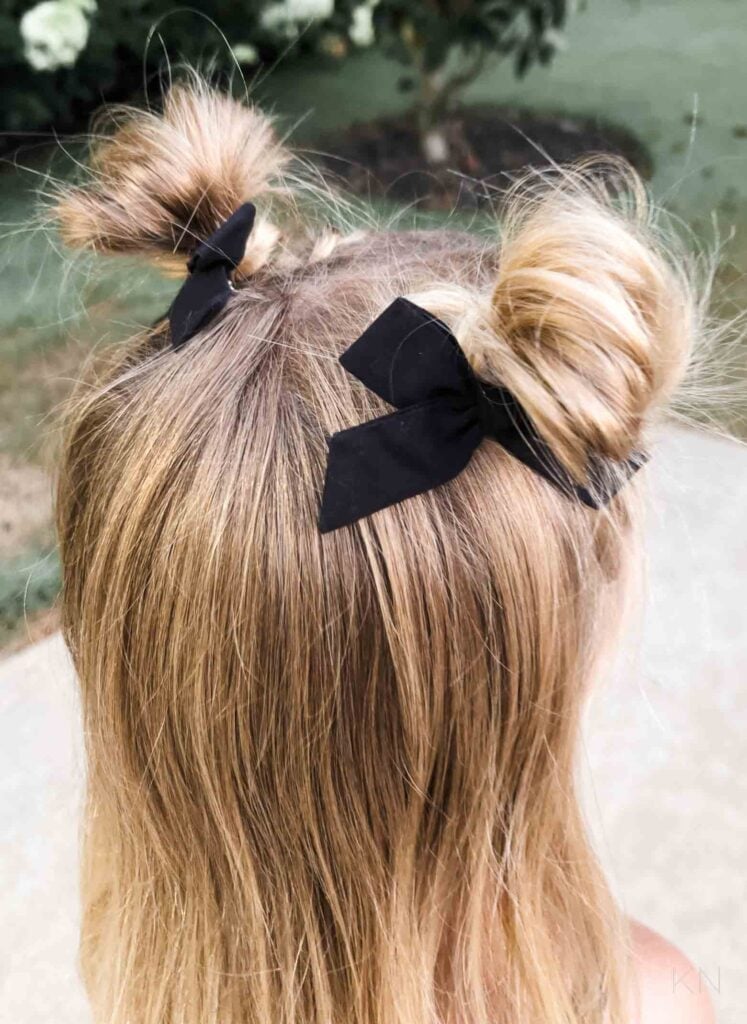
Fine hair usually balks at volume, but two space buns fix that. The trick is the height: place them at the crown, not the nape, and the middle part creates the illusion of density. Ask your stylist for: shoulder length double space buns with bows. Compared to a single topknot, this style distributes the hair across two points, so thin strands don’t pull or show gaps. The black bows are a bonus; they hide the elastic and add contrast against blonde hair. Texturizing spray before twisting gives the buns the grip fine hair needs.
9. Mid-Back With Rope Braid Headband
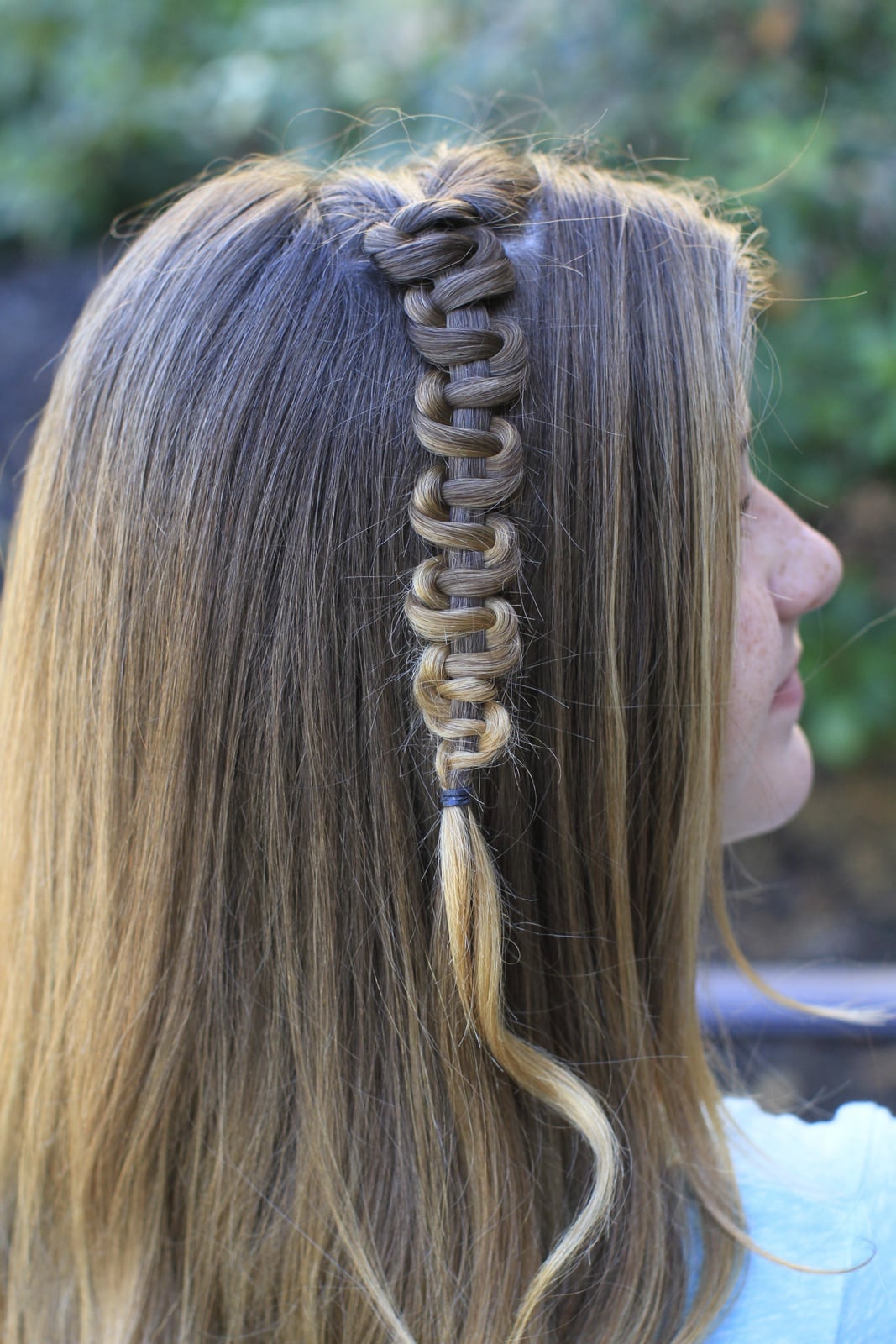
The rope braid headband looks complicated, but it is a single braid doing double duty. Take a section from behind one ear, twist it into a rope, and pull it across the crown to the opposite ear. Pin the ends underneath the hair on both sides. The mid-back length falls in loose waves below. Ask your stylist for: mid-back length with rope braid headband. The middle part is essential here; it centers the braid and keeps the visual weight balanced. Medium density hair works best, thick enough to show the rope twist but light enough to stay pinned. Brown hair with subtle blonde highlights gives the braid depth without the need for a full color service.
10. Mid-Back Straight Hair With Face-Framing Braids
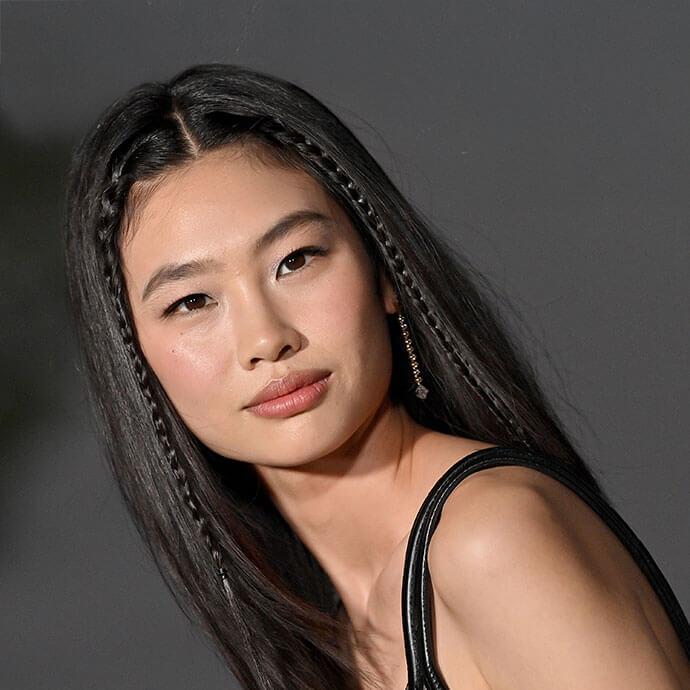
Fine, straight hair tends to slip out of complex braids, and that is the honest trade-off here. Two small face-framing braids are doable, because they are thin enough to stay tight and short enough to hold without tension. Ask your stylist for: mid-back length, two face-framing braids. Braid damp hair for a sleeker finish, and expect the braids to loosen slightly by midday. The subtle face-framing layers underneath give the hair movement, so the style does not look like two braids tacked onto a flat sheet of hair. Skip this if your hair is very fine; the braids may slip within an hour. A trim every eight weeks keeps the layers from growing out unevenly.
11. Mid-Back Chunky Braids
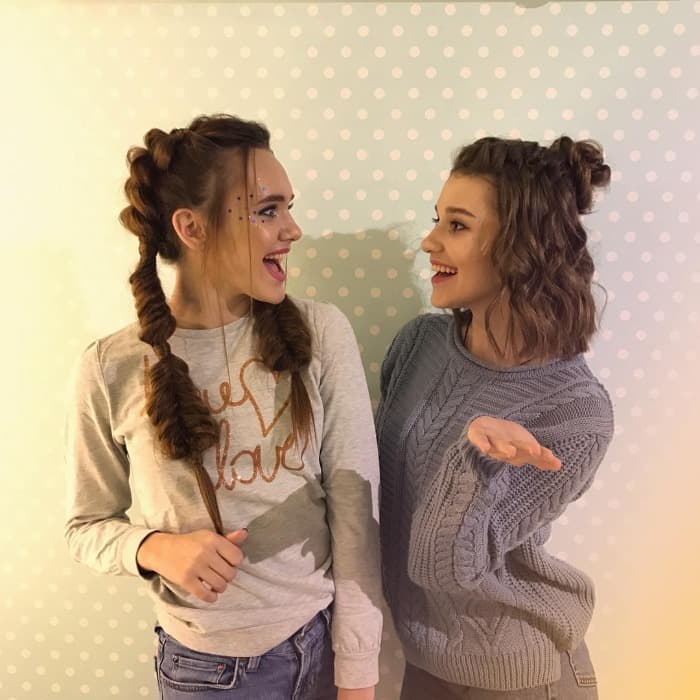
Can you get chunky braids this clean without a salon appointment? Yes, if the hair has the right starting point. Thick, wavy hair at mid-back length holds the sections apart on its own, and a middle part keeps the two braids symmetrical from the start. Fine hair will collapse into skinny ropes, so the braids need to be pulled gently wider as you go to fake the volume.
Ask your stylist for: mid-back length, two chunky braids. Braid damp hair to keep flyaways down, then loosen each section slightly for a softer finish. The chunky braids hairstyle is fully DIY at this length, though a first attempt on thick wavy hair takes a couple of practice runs before the sections sit even. No bangs means nothing to pin back, which is half the reason this works on a school morning. A salon can set the shape once, but the upkeep is just rebraiding.
12. Mid-Back Braid With Velvet Bow
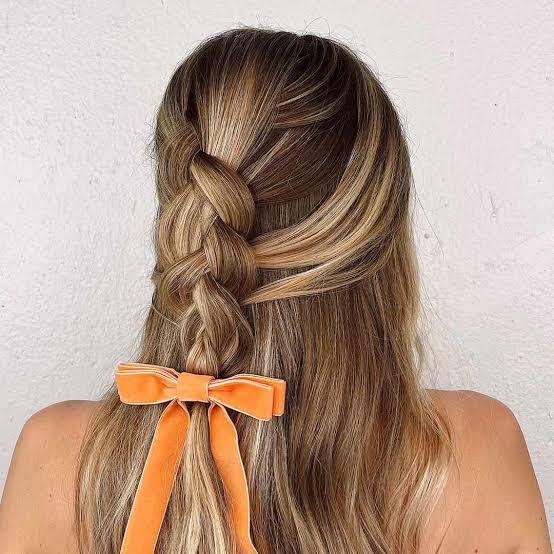
An orange velvet bow at the base of a single braid does more work than most accessories, and it costs you one step. Thick, wavy blonde hair with brown highlights at mid-back length gives the braid enough body to hold its shape, and the loose strands left at the shoulders keep it from looking tight. Ask your stylist for: mid-back length single braid with bow. Add the bow after braiding, and a texturizing spray gives the wavy lengths a lived-in grip. For a party or a school dance, the bow is a deliberate finish; on an ordinary Tuesday, it is a mood.
13. Mid-Back Braids and Waves With Side Sweep
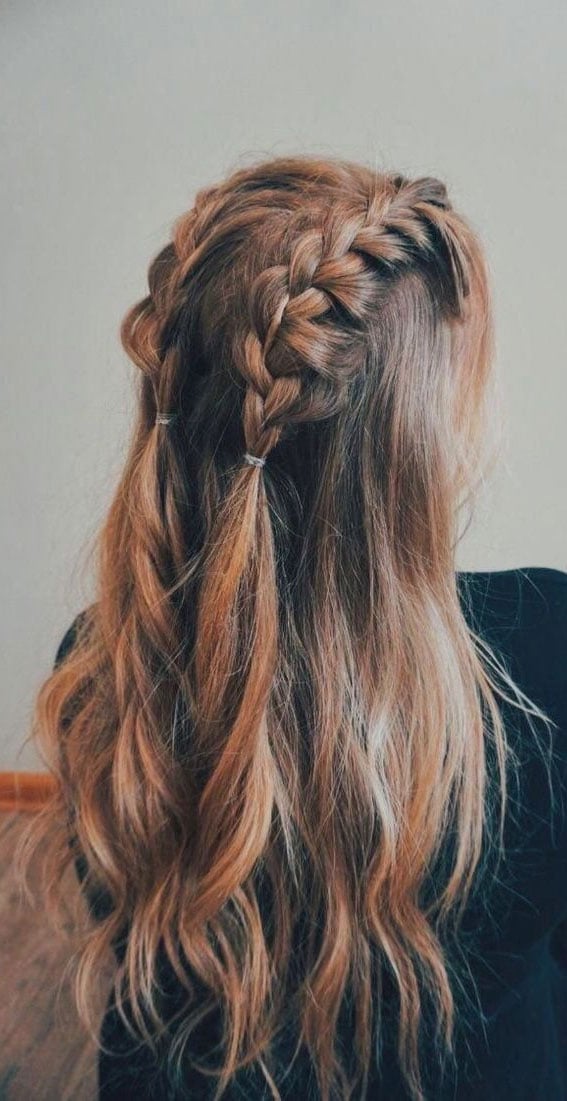
A side part with a side sweep changes where the braids start, and that is the detail to get right before anything else. Medium-density wavy hair at mid-back length holds loose braids without them collapsing, and long layers let the waves move between them instead of sitting flat.
Ask your stylist for: mid-back length with side braids and waves. Bring these specifics to the appointment:
- Long layers through the mid-back length so the waves have room to bend
- A side part with side-swept bangs, not a middle part
- Loose braids that sit on one side, blended into the waves
The braids and waves hairstyle is a DIY build at home: braid damp hair, then use a diffuser to push the waves into shape around them. Auburn with blonde balayage means the braid pattern shows clearly against the lighter pieces.
14. Mid-Back Twisted Ponytail
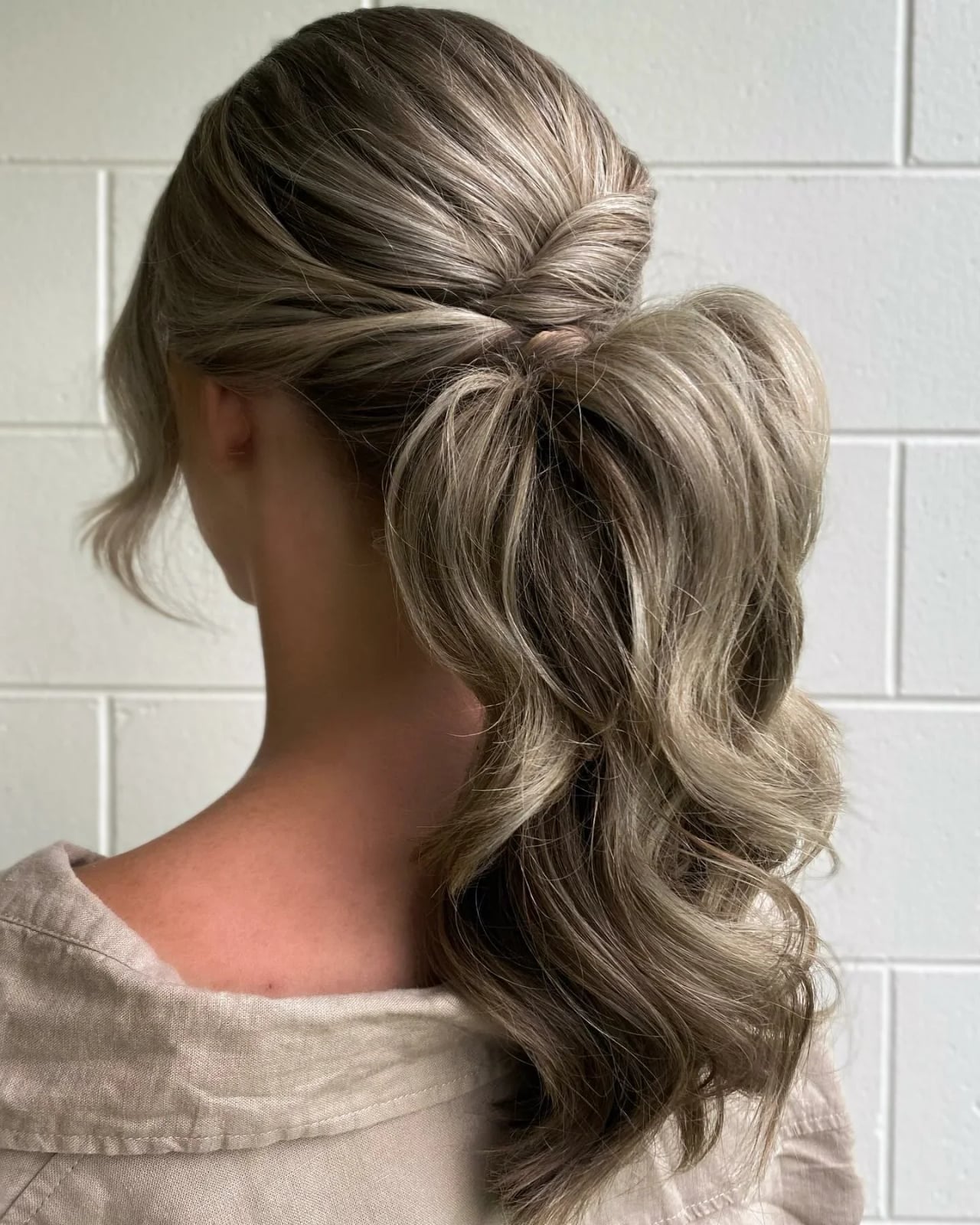
Does a twisted ponytail actually hold, or does it slide out by lunch? With thick, wavy hair, it holds. The twist at the base gives the elastic something to grip, and gathering it to one side keeps the mid-back length from pulling flat against the head. Ash blonde with highlights shows the twist detail clearly, since the lighter pieces catch the turns.
Ask your stylist for: mid-back length twisted ponytail to the side. Long layers keep the tail from looking bulky at the ends. Twist the ponytail tightly for hold and add a texturizing spray for grip, especially on second-day hair. This one leans salon for the initial shape, but the daily version is a two-minute rebuild. Fine hair needs more spray and a tighter twist; low-density hair may find the side gather exposes too much scalp and should pass.
15. Mid-Back Bubble Braid
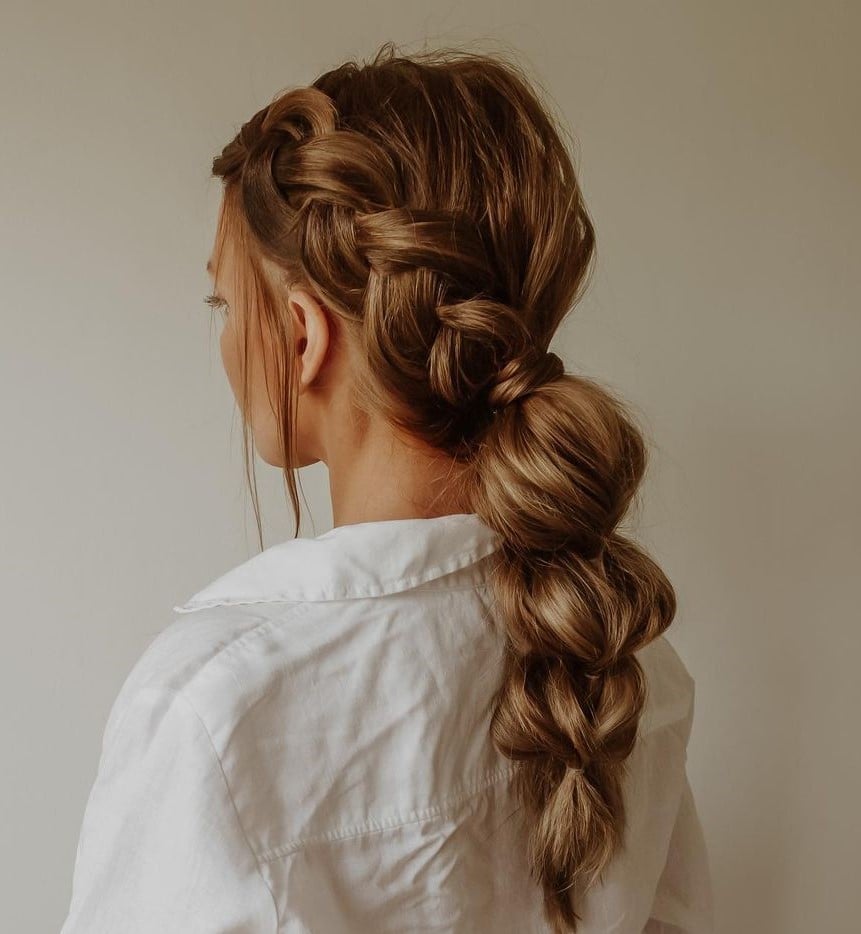
The bubble braid is a ponytail with a stacked silhouette, built by sectioning the tail with elastics and pulling each section outward. Thick, wavy honey blonde hair with subtle highlights at mid-back length gives each bubble enough volume to stay round, and a side part keeps the shape from looking too symmetrical. Ask your stylist for: mid-back length bubble braid. Use clear elastics so nothing breaks the line, and loosen each section for a fuller result. Layers through the lengths keep the tail from bunching inside the elastics, which is the usual reason a bubble braid looks lumpy instead of stacked.
16. Mid-Back Bubble Ponytail, Platinum Blonde
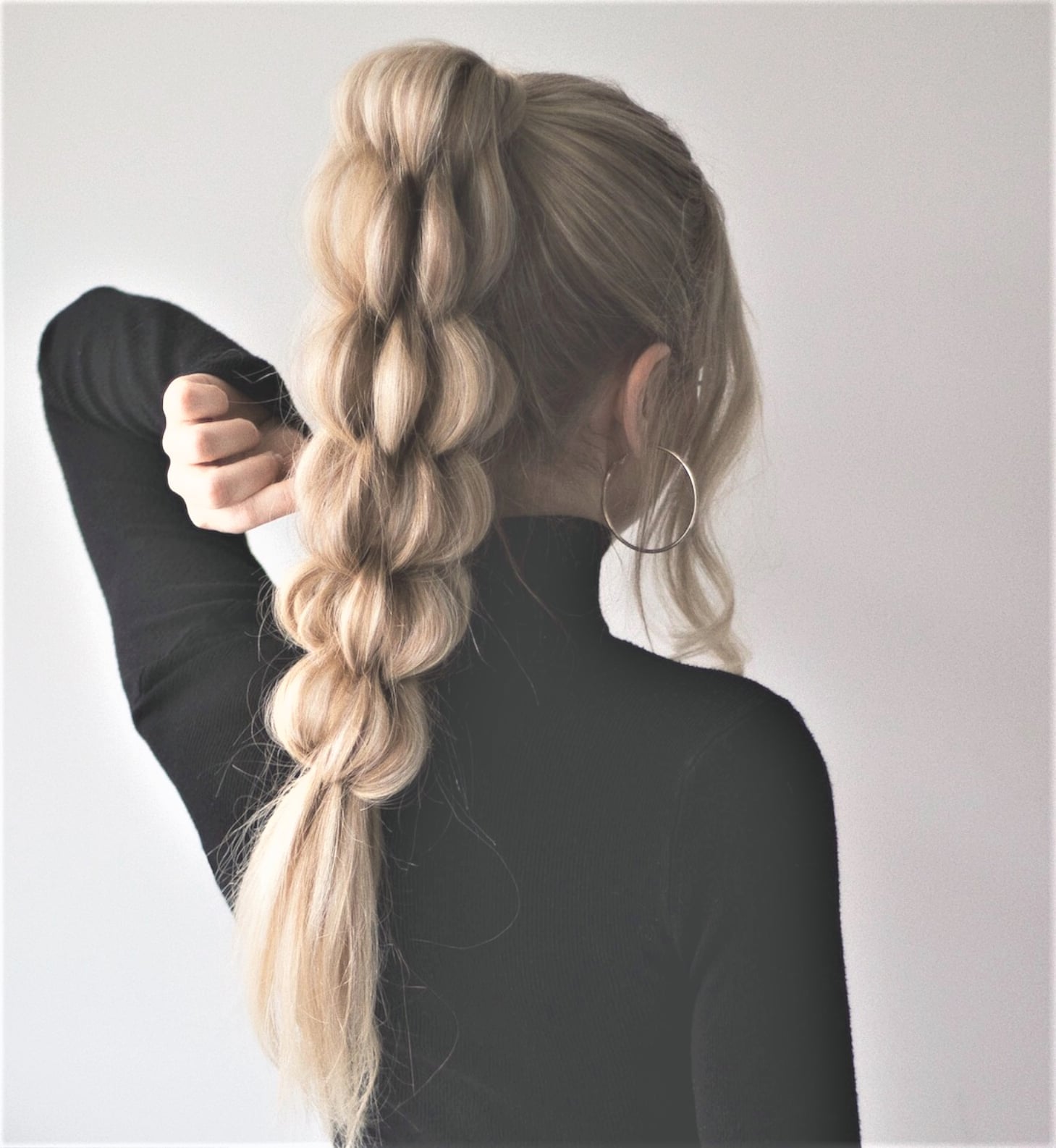
A bubble ponytail is built from stacked sections, each one bound with an elastic and pulled slightly to round it out. On mid-back platinum blonde hair, that structure shows every bit of shine and every hint of yellow. Straight, thick hair holds the shape best because each bubble keeps its outline instead of collapsing. Ask your stylist for: mid-back length bubble ponytail. The catch is the color, not the style. Platinum lifts the cuticle and leaves it porous, so toner fades fast and brass shows up within a few weeks. Most people need toning every four to six weeks to keep it cool, and purple shampoo in between only buys a little time. The cut itself is low maintenance: long layers, no bangs, a trim every eight to ten weeks. The double process and the repeat toning are the real commitment, and anyone who wants to skip the salon chair should pick a different shade.
17. Long Twisted Updo With Claw Clip
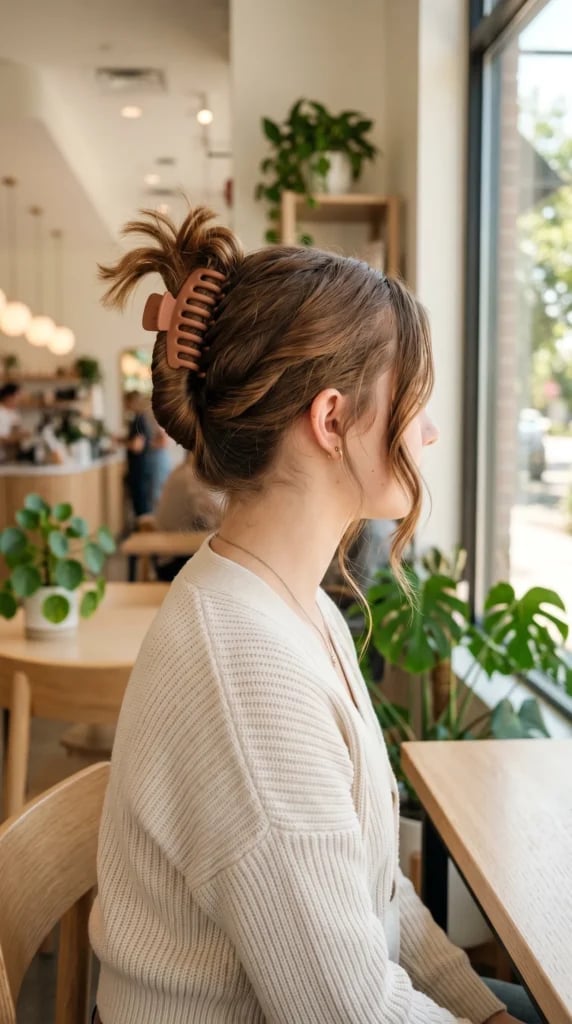
Can you build a twisted updo at home without it sliding loose by lunch? With a claw clip, usually yes. Gather long, fine wavy hair low or mid-height, twist it upward, and clamp the clip over the twist. Fine hair twists tightly and stays put; thick hair may need two clips. Wispy bangs sit best left out and slightly separated. Ask your stylist for: long hair twisted updo with a claw clip. The cut behind it matters less than you think: long layers keep the twist from bulking in one spot, and a side part gives the front some direction. A salon updo costs an appointment and holds for a formal event. The DIY version takes about five minutes and survives a school day. Medium brown with subtle highlights shows the twist detail without needing a mirror check every hour.
18. Long Half Up With Intricate Braided Bun
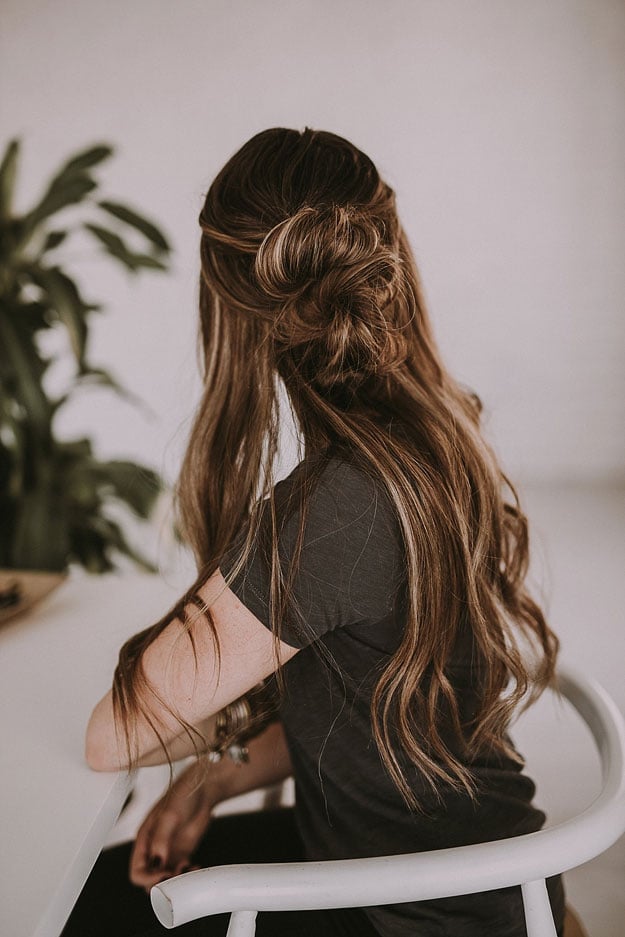
The braided bun sits at the back of a half-up style, plaited tight enough to stand out from across a room. Thick wavy dark brown hair with subtle lighter streaks gives it grip, and the loose waves below stay long. Ask your stylist for: long hair half up with braided bun. It is a party style, not a school-morning one: the braid takes practice and needs bobby pins plus a texturizing spray for hold. Expect frizz at the edges by the end of a long event, so pack pins.
19. Mid-Back Ponytail With Double Braids
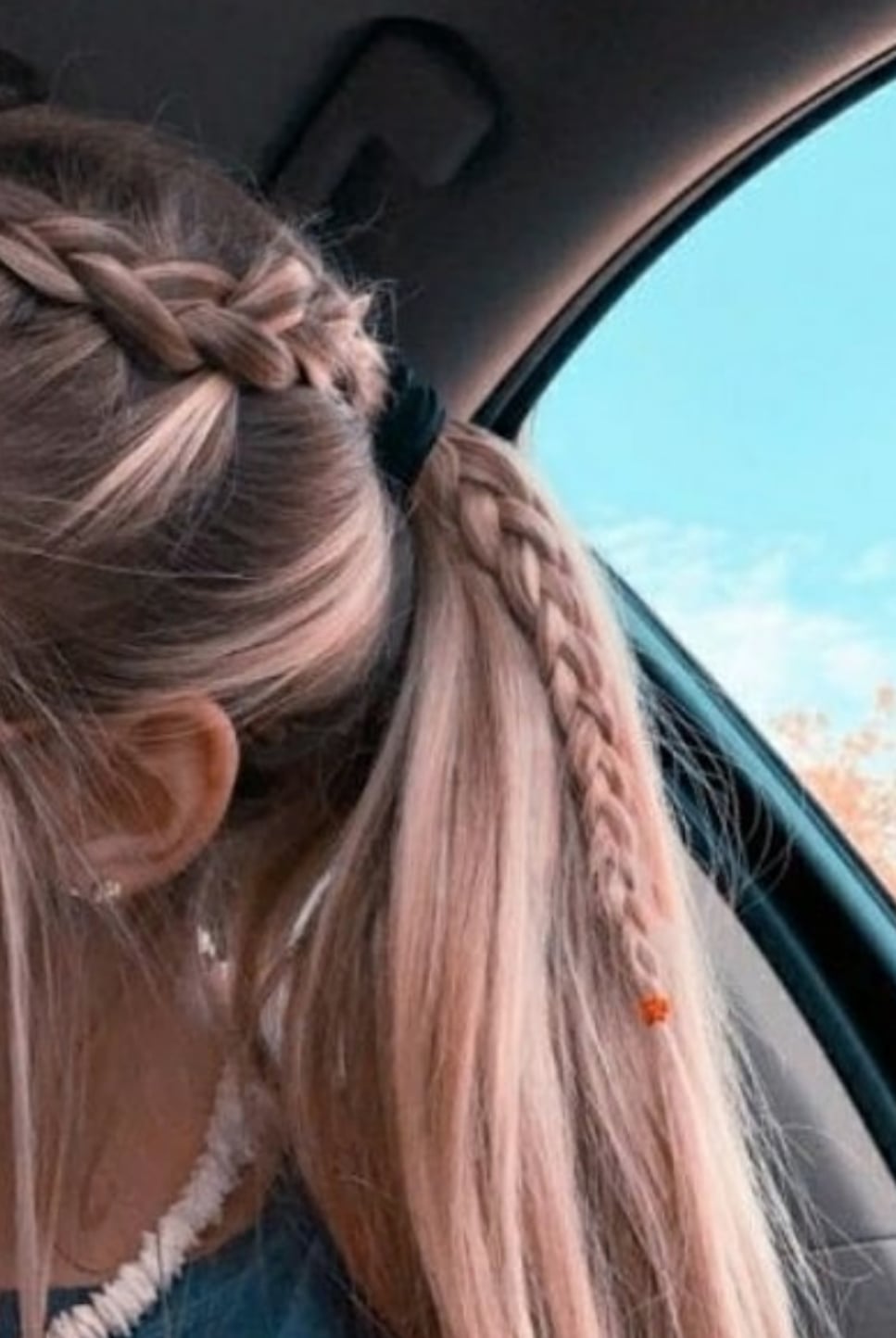
Two braids do the work here: one runs along the top of the head into a high ponytail, and the second is worked into the tail itself. Fine straight blonde hair with subtle highlights takes a clean braid line, and mid-back length gives the ponytail enough to swing. Ask your stylist for: mid-back length ponytail with two braids. The braid along the crown pulls hair off the forehead, which is why this holds up for sport and hot afternoons. Braid damp hair for a smoother surface, then mist a texturizing spray through the tail so the sections stay separate. Fifteen minutes gets it done once the braid pattern is memorized.
20. Mid-Back Half Up With Twisted Sections
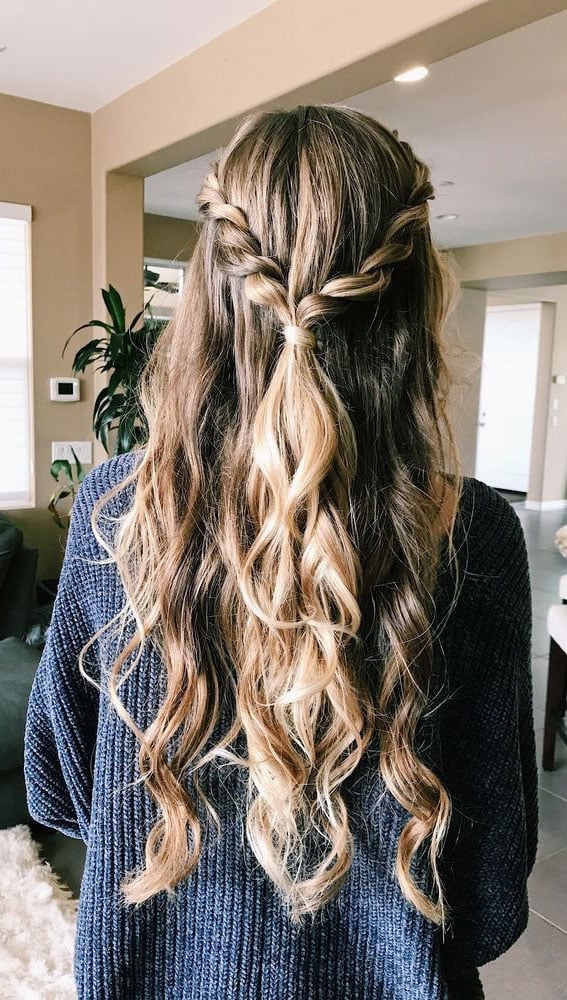
If a style has to survive a full school day, start with a half-up that pins at the back of the head, not at the crown. Twisted sections meet at the back and hold firmer than a simple pull-through, and they show more texture than a smooth barrette finish. Thick wavy ash blonde hair with lighter highlights gives the twists something to grip, and mid-back length leaves the loose waves below intact. Ask your stylist for: mid-back length half up with twisted sections. A claw clip version reads more casual and takes less time; twisted sections read more finished and stay put through gym class. Twist loosely for a softer line, then set with a texturizing spray. Fine hair needs a little backcombing at the twist base first, or the sections slide apart by second period.
21. Final Thoughts
Fine hair keeps its shape better with a blunt baseline and minimal layers. Thick hair works best with braids or updos that control bulk without a struggle. Find the one that makes your morning routine shorter, not longer.
- Trim long layers and bobs every six to eight weeks to maintain shape.
- Refresh highlights or balayage every 8-12 weeks depending on grow-out.
- Use a heat protectant spray before styling with any heat tool.
- Wash hair 2-3 times a week to preserve natural oils and color.
Easy does not mean boring. Find your signature style.