Hair extensions have moved past the one-note job of adding length; the 2025 shift is all about using them to build shape and soft dimension, with lived-in color and face-framing layers leading the way. 20 looks prove that a well-placed set can do more than a haircut ever could.
This collection runs from low-upkeep collarbone cuts to high-drama mid-back waves, covering straight, wavy, curly, and braided textures for fine, medium, and dense hair. Extensions Hair solves the problem of fine strands that refuse to hold a shape and a fringe that never quite sits right, no matter how many times you blow it out.
1. Mid-Back Wavy Dark Brown With Blonde Highlights
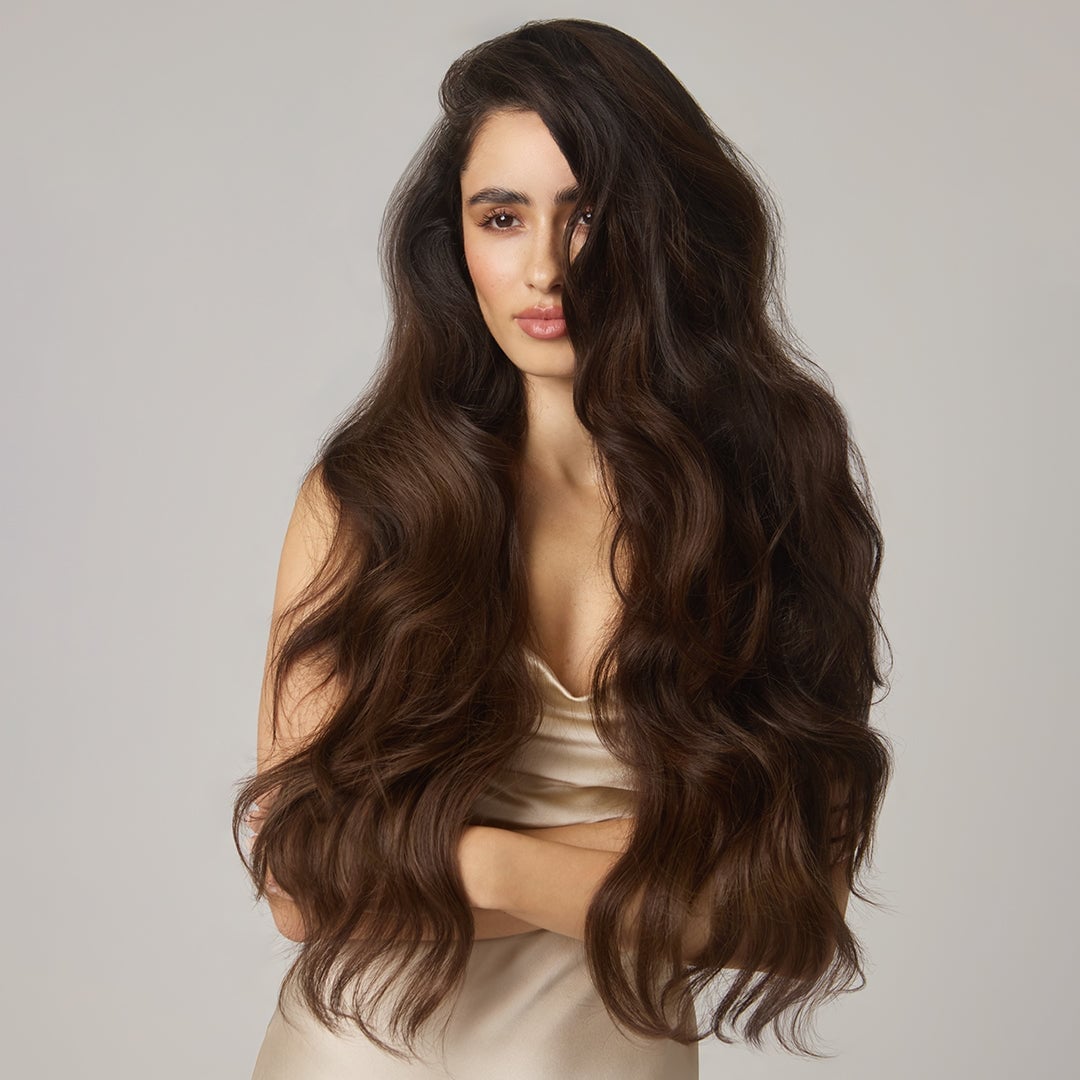
Dark brown with blonde highlights, cut in layers and finished with curtain bangs, gives thick wavy hair dimension that moves. The parting keeps volume even on both sides, and the blowout finish turns mid-back length into a shape instead of a curtain. The blonde pieces are lived-in, not striped.
This is a strong choice for thick, wavy texture that already reaches at least shoulder length, since extensions need a base to blend into. Fine hair can wear it too, though the weight of mid-back length plus highlights asks for a density check first. Round faces get elongation from the parting and the length below the chin. Square faces soften under curtain bangs that break at the cheekbone.
Ask your stylist for: mid-back length, curtain bangs, blonde highlights.
2. Collarbone Platinum Blonde With Balayage
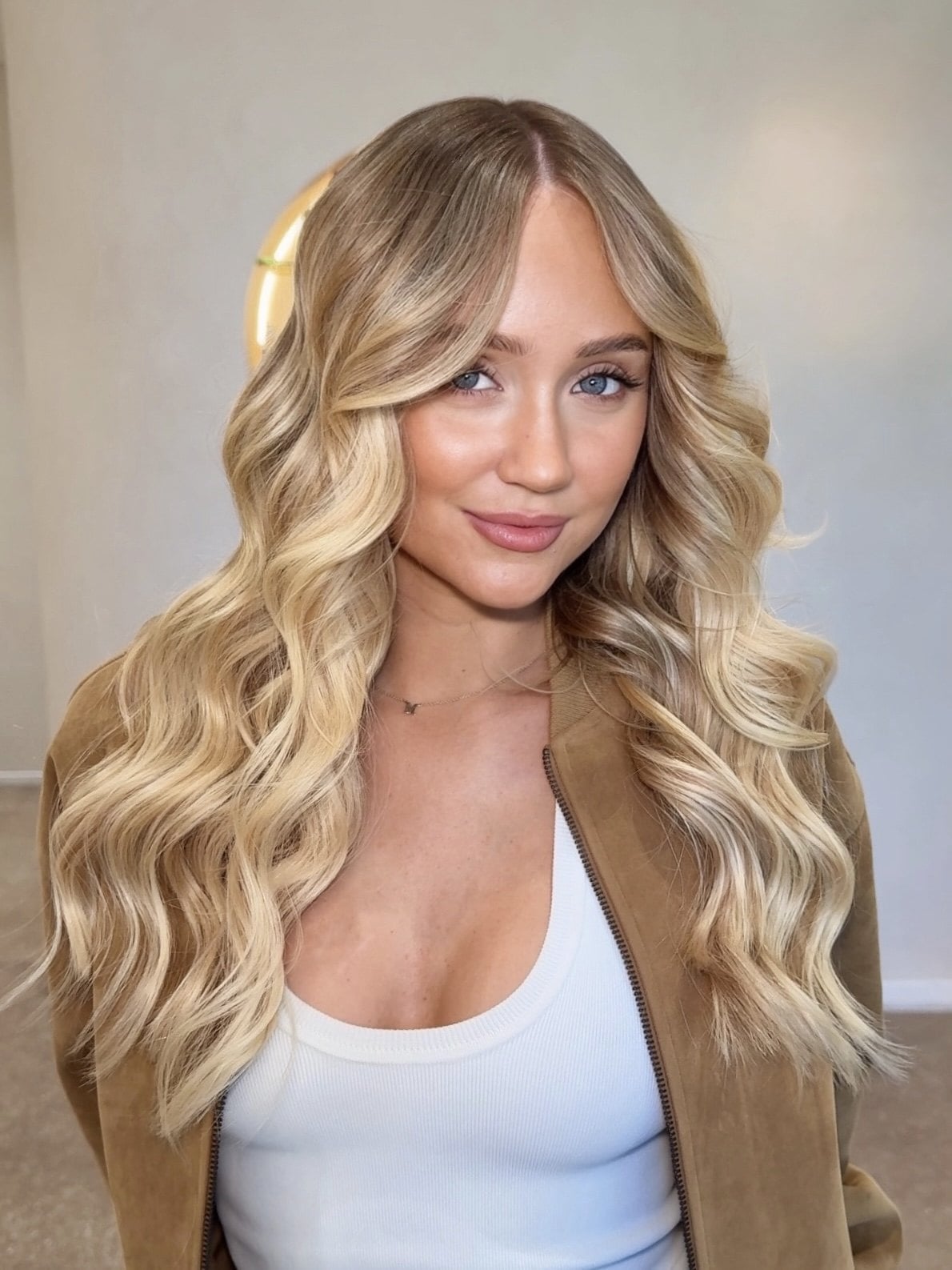
Balayage on platinum blonde is a two-step build: a light base, then hand-painted pieces that sit a shade or two brighter through the mid-lengths. At collarbone length with long layers and face-framing curtain bangs, that gradient shows up in the movement of loose curls rather than in a hard line. The middle parting lets the bangs sweep out on both sides.
Thick, wavy hair carries this amount of lightness best, because the texture keeps platinum from reading flat. Ask for the following:
- Collarbone length with long layers
- Bright platinum blonde base
- Subtle balayage through the mid-lengths
- Face-framing curtain bangs
- A middle parting
Ask your stylist for: collarbone length, platinum balayage, curtain bangs.
3. Mid-Back Wavy Dark Brown With Subtle Layers, Middle
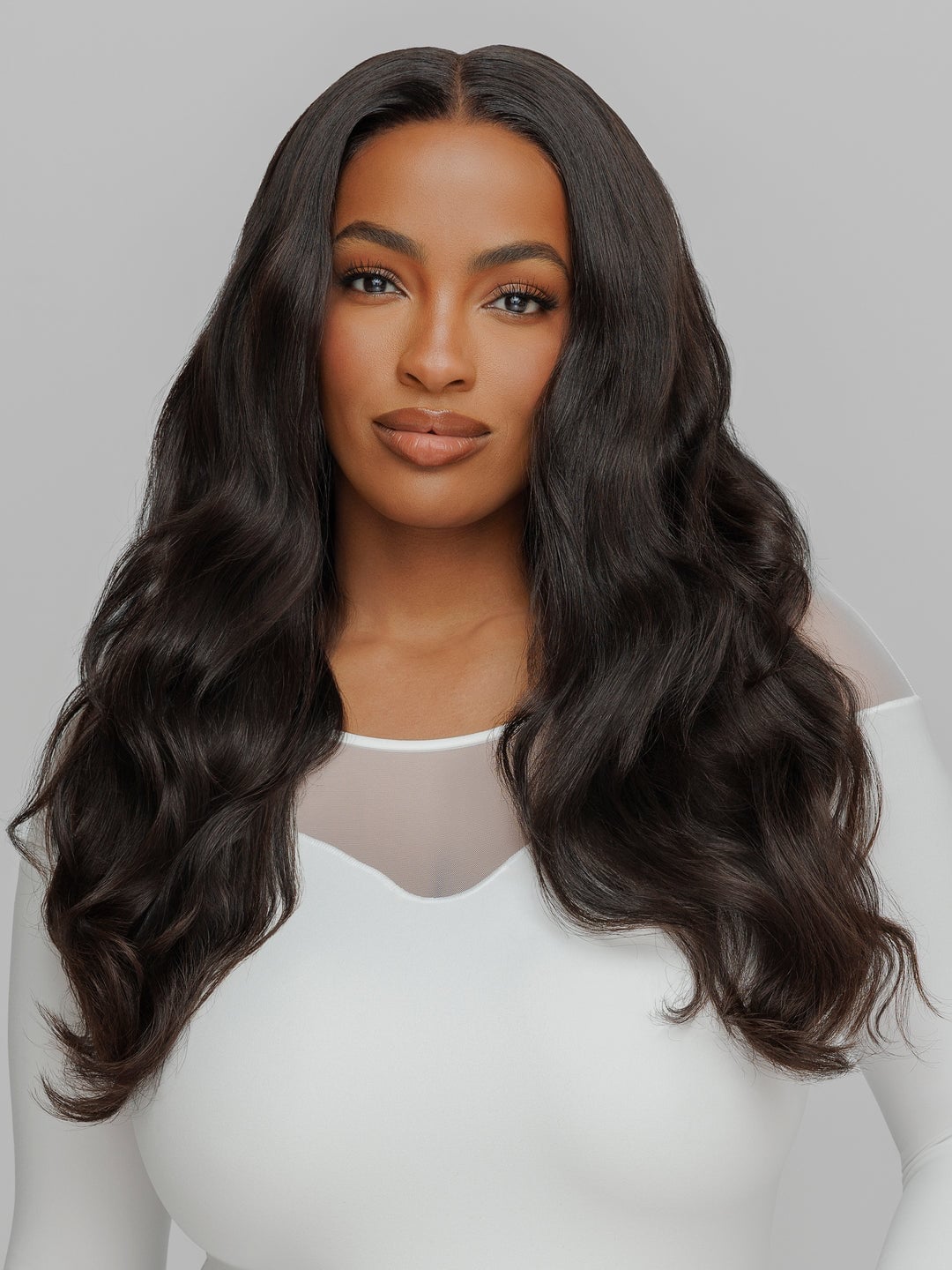
How much styling does mid-back length actually demand? With subtle layers and no bangs, less than you would guess. Loose glossy waves on thick dark brown hair hold their shape through a working day. Plan on a round brush or a large barrel iron for ten minutes, a heat protectant before either, and a smoothing serum through the ends. Trim the extensions with your natural hair every eight to ten weeks. Ask your stylist for: mid-back length, natural dark brown, loose glossy waves.
4. Shoulder Wavy Dark Blonde With Curtain Bangs

Face-framing layers that start at the cheekbone are what make the curtain bangs here sit soft instead of heavy, and a side parting pushes them to one side for a tousled blowout. The dark blonde base with lighter highlights keeps the grow-out gentle. Bring your starting length up in the consultation: collarbone is the target, and medium density wavy hair blends extensions most easily at that point. Ask your stylist for: collarbone length, dark blonde highlights, soft curtain bangs, face-framing layers. Those four phrases do most of the work.
5. Collarbone Blonde With Root Shadow Side Part
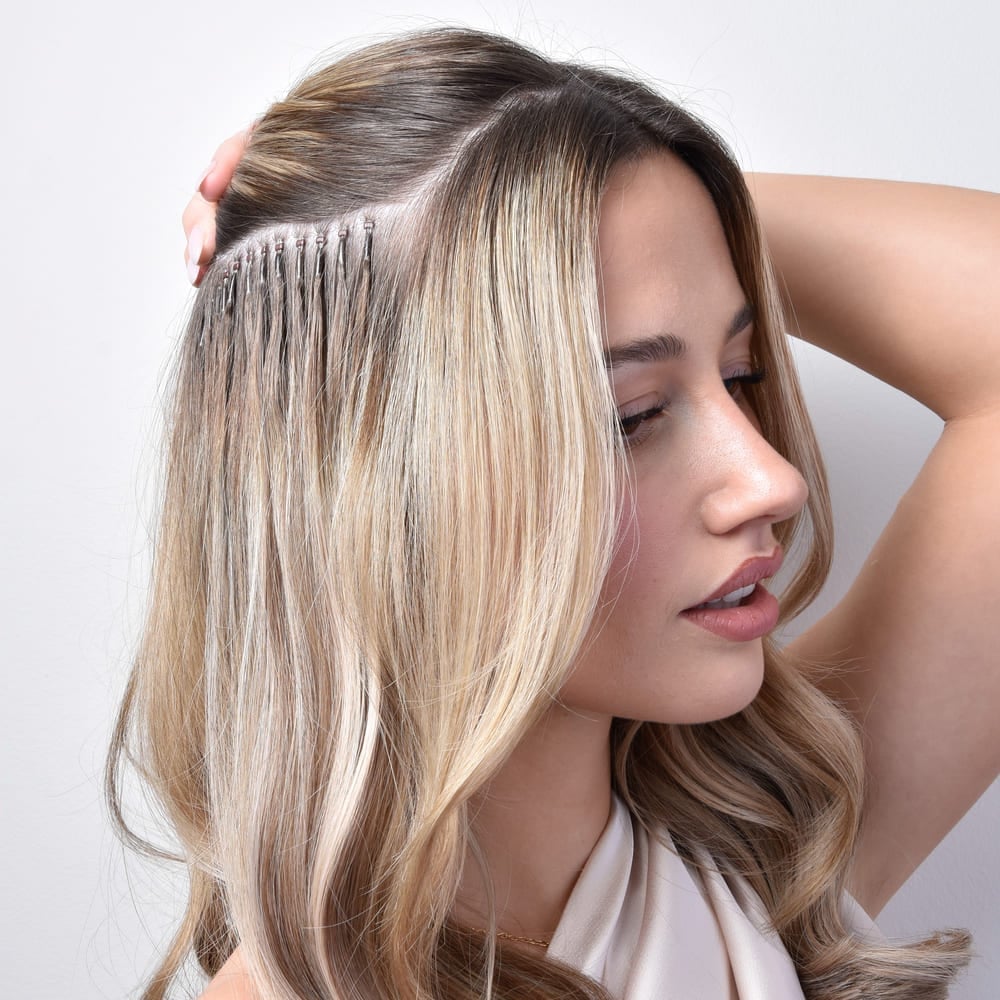
Set this against a fully light blonde and note the maintenance: a root shadow keeps the regrowth line soft for about six weeks instead of showing at three. The nano bead attachment shown at the temple is the trade-off. Each bead is small, but a side part exposes the row, so hair pulled back tight will show them. Refitting runs every six to eight weeks, and the beads need checking in between.
Medium density wavy hair at collarbone length gets the most from it, since the root shadow adds depth the length alone does not. A side part that can be flipped wherever will show a bead line. Ask your stylist for: collarbone length, blonde with root shadow, side part.
6. Mid-Back Ash Blonde With Highlights
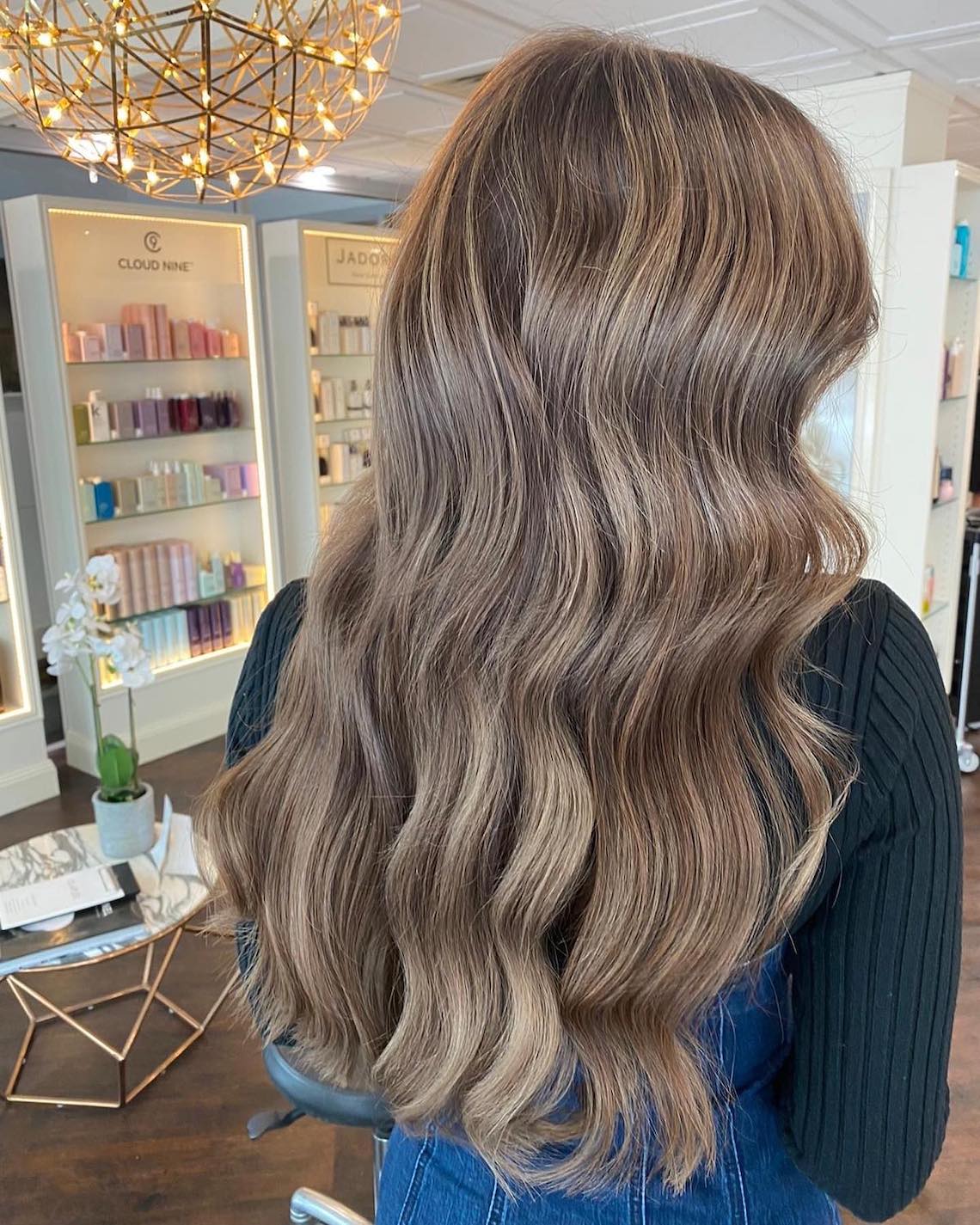
Which blonde is more maintenance: ash or honey? Ash blonde with highlights sits on the cooler side, and cool tones show brass faster than warm ones. Highlights break up the base so roots arrive softer, but the tone itself needs a purple shampoo in the rotation and a salon toning service every six to eight weeks. Honey and gold blondes hide yellowing for longer, which suits anyone who would rather not think about it.
Ask your colorist for: mid-back length, ash blonde with highlights, soft curtain bangs. The cut is long layers with curtain bangs, and the side parting keeps the front from going flat. Thick, wavy hair carries the layers without collapsing, and loose waves show the dimension that highlights create. Fine hair can wear the same color but needs fewer, finer highlights so the mid-back length does not thin out. Trim every six to eight weeks to keep the ends from dragging the whole shape down.
7. Collarbone Dark Brown With Blonde Balayage
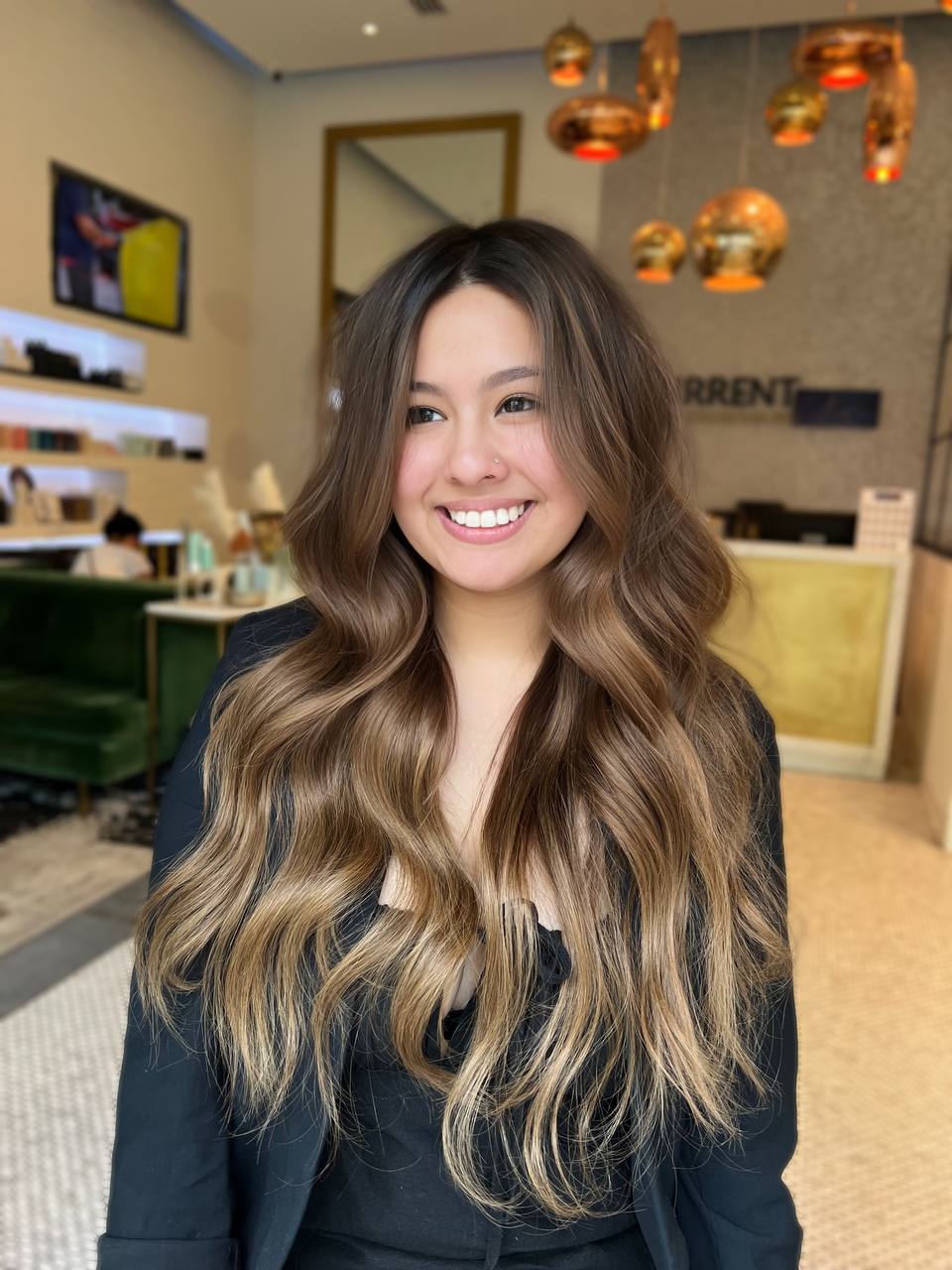
A dark brown base with blonde balayage painted through the ends gives collarbone length a color melt that looks deeper than the cut actually is. Long layers and soft layers through the lengths keep thick, wavy hair from bulking into a triangle, and a side parting adds movement without bangs. Ask your stylist for: collarbone length, dark brown with blonde balayage, soft layers. This suits dense, wavy textures that want the illusion of extra length at a shorter cut. Fine hair can take the same color but needs lighter layering, or the balayage gets lost. Trim every eight to ten weeks.
8. Mid-Back Dark Blonde With Lighter Balayage
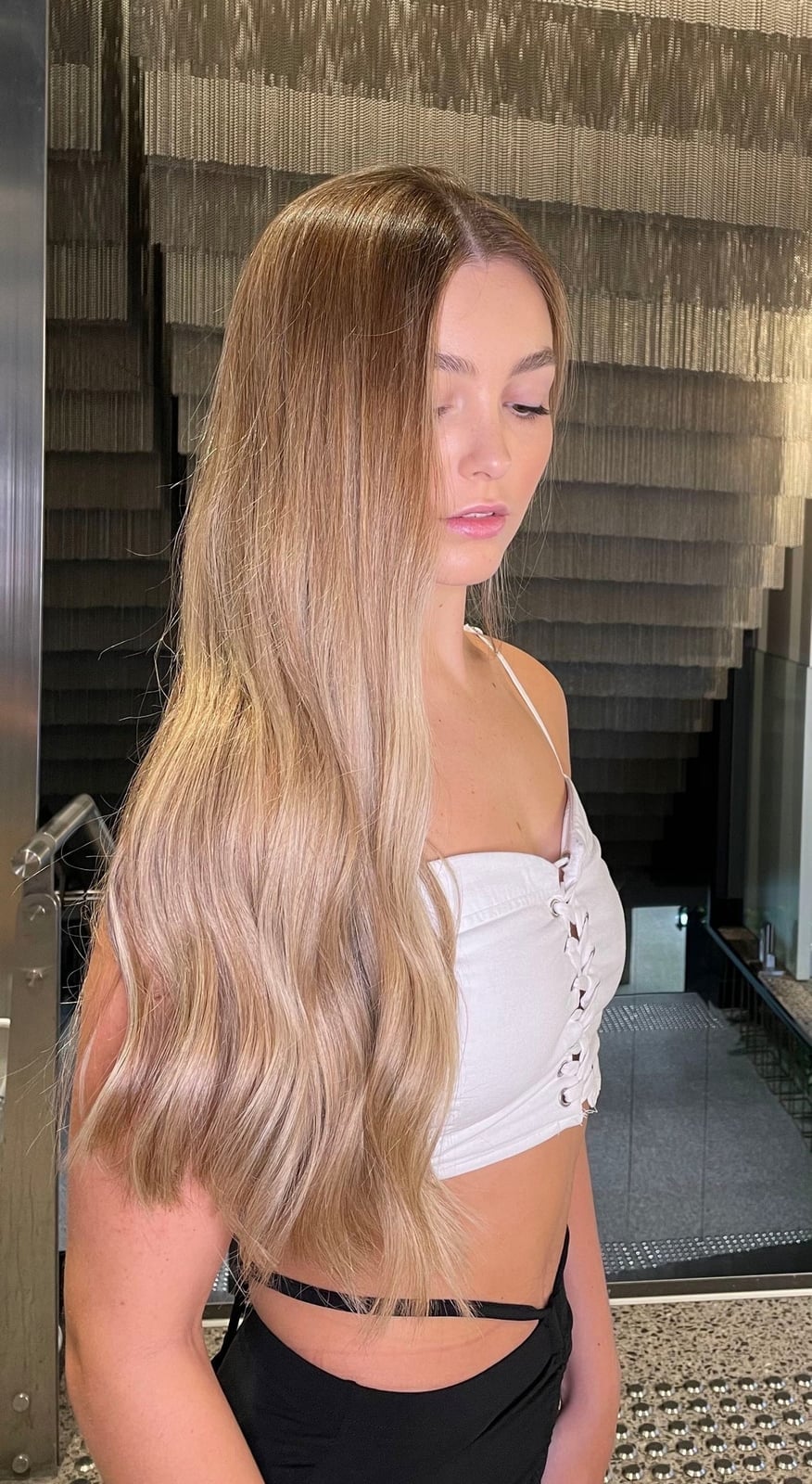
Dark blonde with lighter balayage through mid-back length is one of the easier blondes to live with, because the grow-out line is a gradient instead of a stripe. Long layers cut through thick, wavy hair give the loose waves somewhere to bend, and a side part keeps the front from sitting heavy. Ask your colorist for: mid-back length, dark blonde to lighter blonde balayage, side part. The transition from base to highlight is gradual, so roots can run eight to twelve weeks before a salon visit, and a color-depositing conditioner stretches the tone between appointments.
Ask your stylist for: long layers, no bangs. Without bangs, all the shape work happens in the layers, so the trim rhythm matters: every six to eight weeks keeps the ends from turning stringy and pulling the color blend out of focus. Thick, wavy textures get the most from this length, since the weight of mid-back hair is what makes loose waves hold their shape instead of frizzing at the crown.
9. Mid-Back Ash Blonde With Beige Highlights and Loose Waves
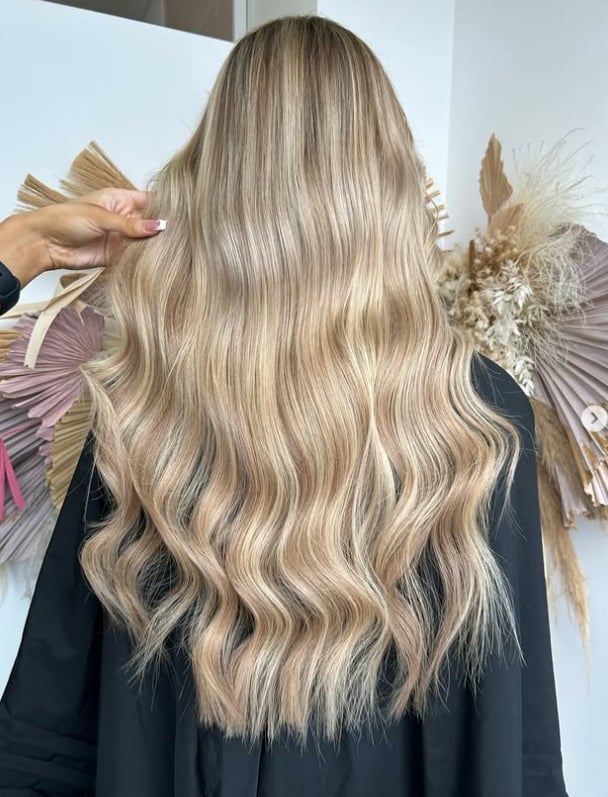
Ash blonde with beige highlights and a root shadow is a three-part color job: a cool base, warmer pieces woven through, and a darker root that anchors both. The root shadow is the practical part. It hides the grow-out line for about six weeks and keeps the blonde from looking solid from the crown down. Beige highlights sit between ash and gold, so the finish has dimension without turning brassy the moment the toner fades.
Ask your colorist for: mid-back length, ash blonde with beige highlights, root shadow. Layers through thick, wavy hair let the loose waves separate, and a middle parting splits the color evenly on both sides. This is a salon-only build: matching a root shadow to a natural base takes a colorist’s eye, and box color cannot layer three tones. Fine hair can carry it if the highlights stay fine and the layers stay long. Trim every six to eight weeks, and keep a toning appointment in the calendar to hold the ash.
10. Collarbone Black With Face-Framing Layers, Close-Up Take
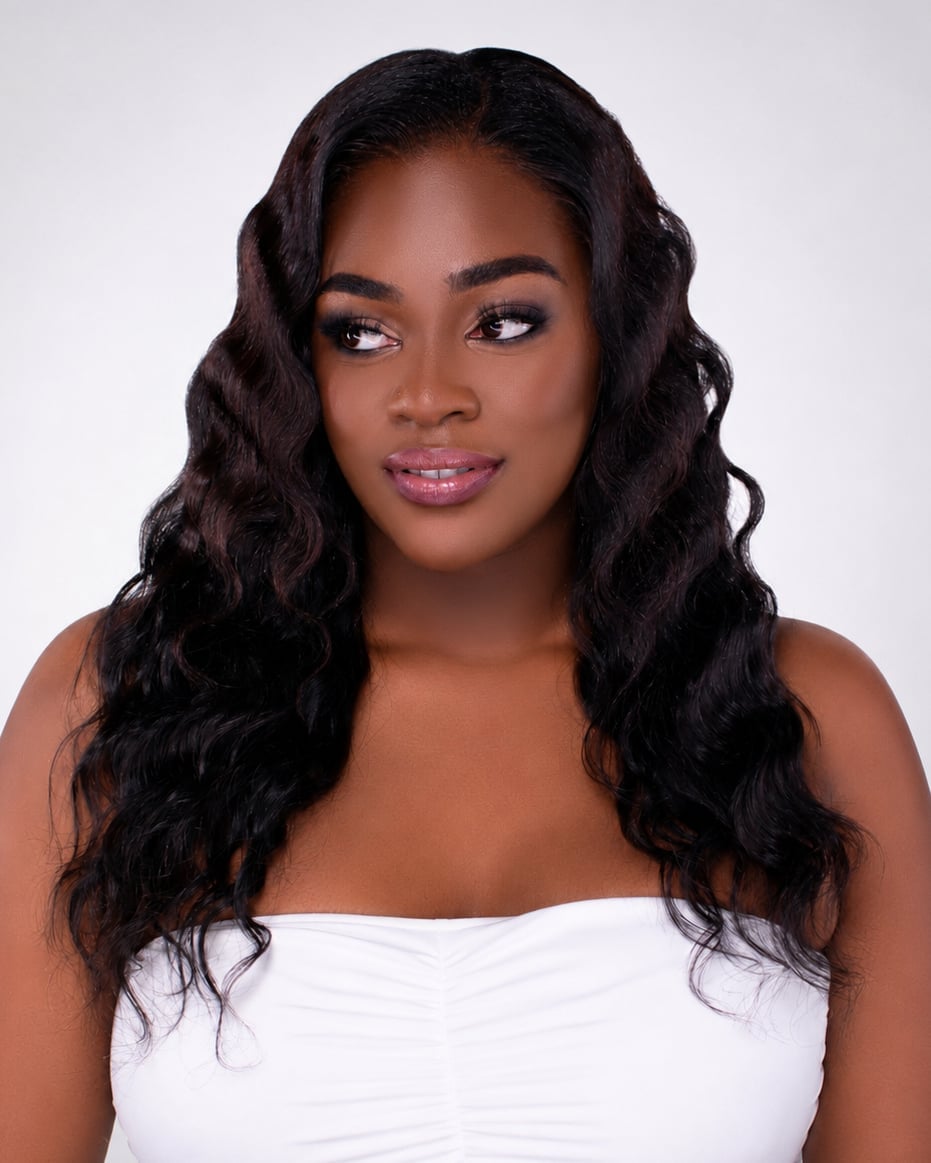
How do you ask for collarbone-length black hair that doesn’t just sit there? Face-framing layers cut through thick wavy texture, finished with glossy loose waves and a middle parting. The layers start around the chin and blend into the length, so the shape has movement at the front without losing density at the back. Thick, wavy hair is the right candidate: the natural body holds the wave pattern without fighting the cut. Ask your stylist for: collarbone length, black, face-framing layers, glossy waves. Straight ends would make this look heavy; the layers keep it airy, and a shine serum on the mid-lengths is all the styling it needs to bring out the gloss.
11. Mid-Back Black Wavy With Added Volume
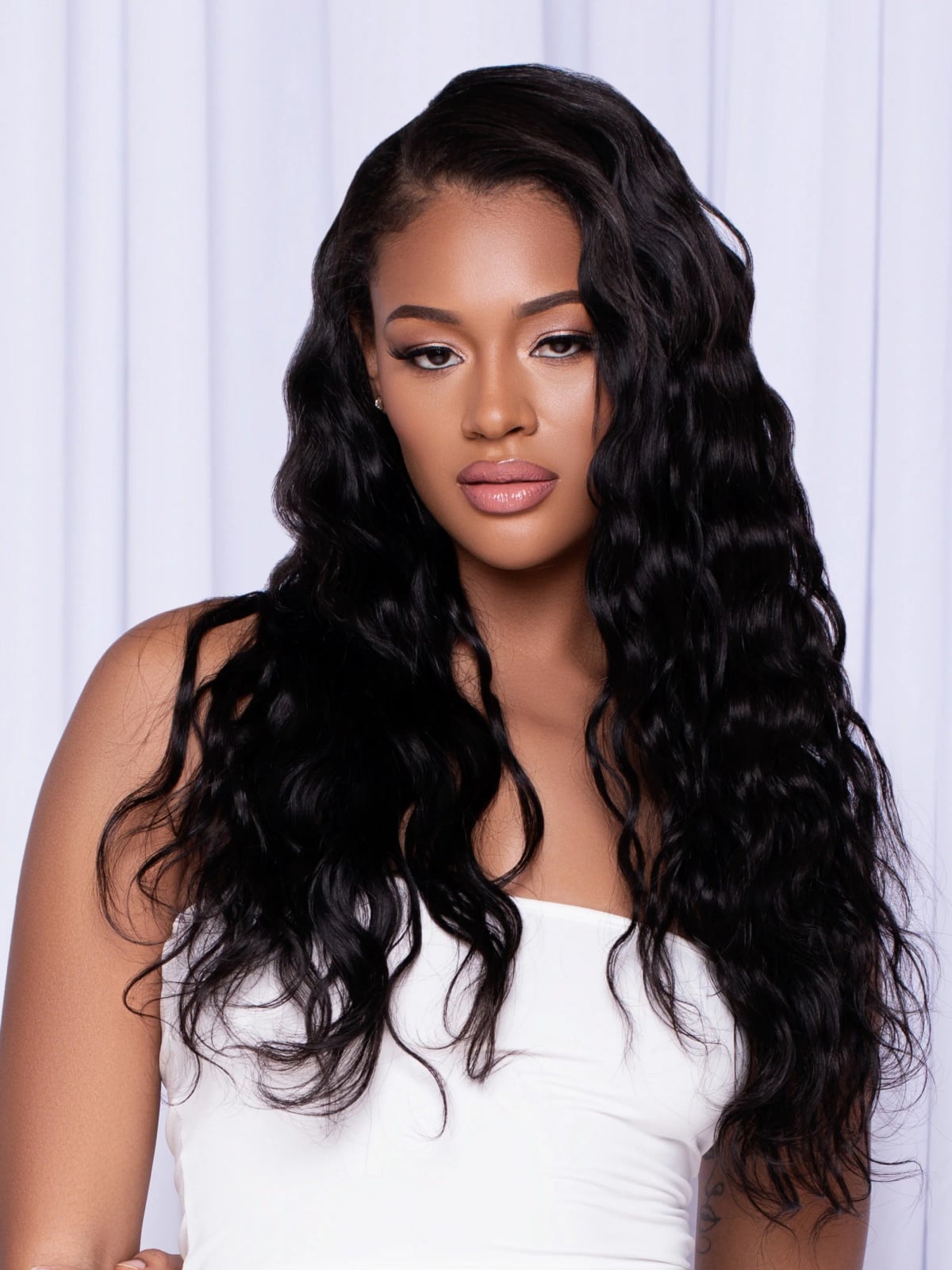
Long, thick, wavy black hair with a side parting and loose waves that reach mid-back is a design that asks for extensions, and it delivers. The volume and length are the point, and they come with a trade-off: maintaining that glossy, bouncy finish requires a salon appointment for the install and a separate one for a trim every six to eight weeks, and detangling with a wide-tooth comb takes longer than you think. This is not a set-it-and-forget-it situation.
It suits thick, wavy hair types that genuinely need the extra length and density at mid-back, not someone hoping extensions will fix a thin texture. Ask your stylist for: mid-back length, black, volume and length, loose waves. The honest drawback is the upkeep time, expect to budget a solid half-hour on wash days to keep the waves defined and the bonds free of tangles. Skip this if you want something you can air-dry and ignore.
12. Mid-Back Black Voluminous Soft Waves
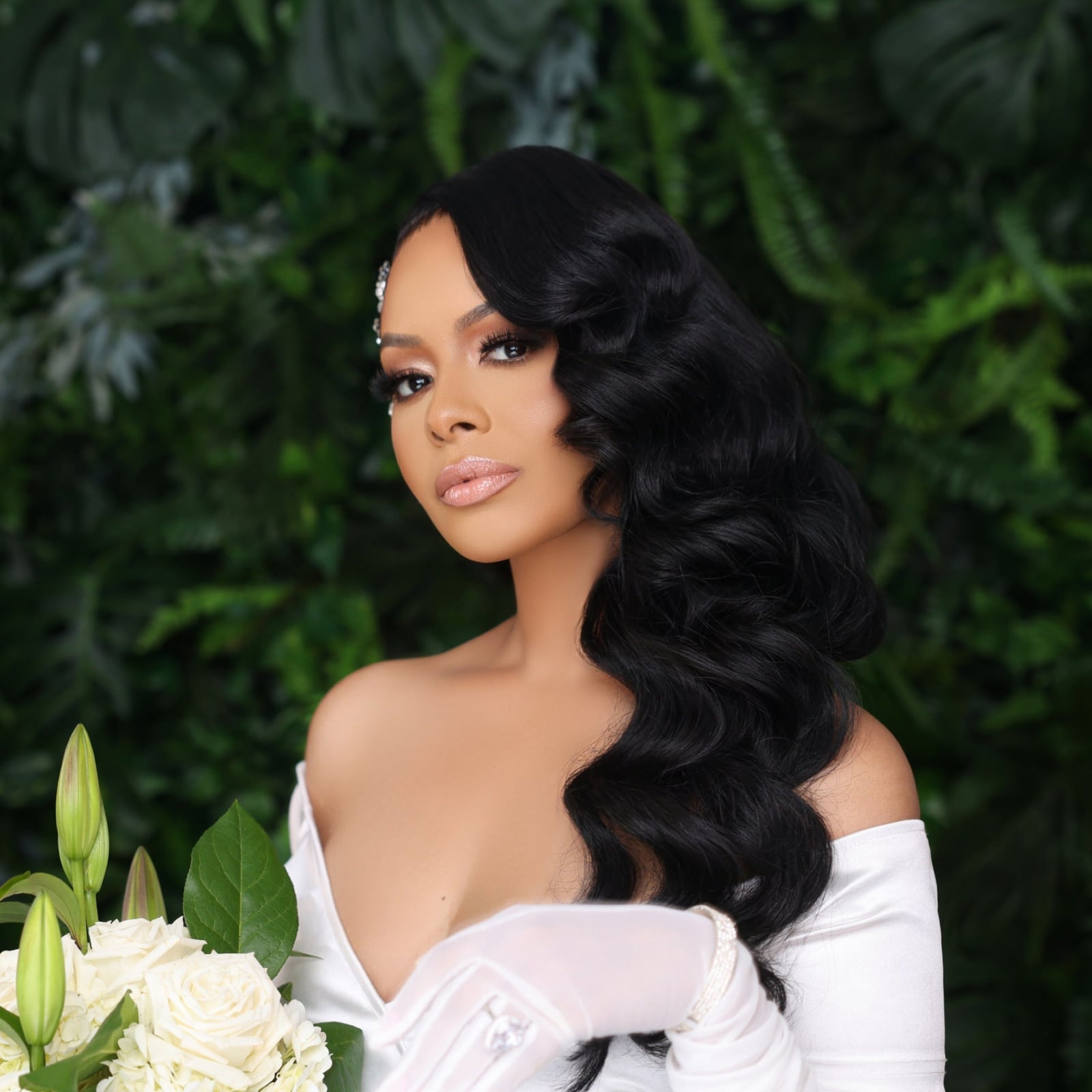
Thick black hair styled in voluminous, soft waves that fall to mid-back from a side part is a polished finish. The gloss is the giveaway that extensions are in the hair, and the soft wave pattern needs a curl-defining cream to stay tidy past the first day.
It suits thick, wavy textures that can handle the weight of added wefts and want dramatic volume at mid-back. Ask your stylist for: mid-back length, black, voluminous soft waves, side part. The daily reality is that you will refresh the waves with a curling iron and a heat protectant every morning, and a trim appointment every six to eight weeks keeps the shape balanced. The payoff is a glamour finish that holds its shape through a full day.
13. Mid-Back Straight Thick Dark Brown
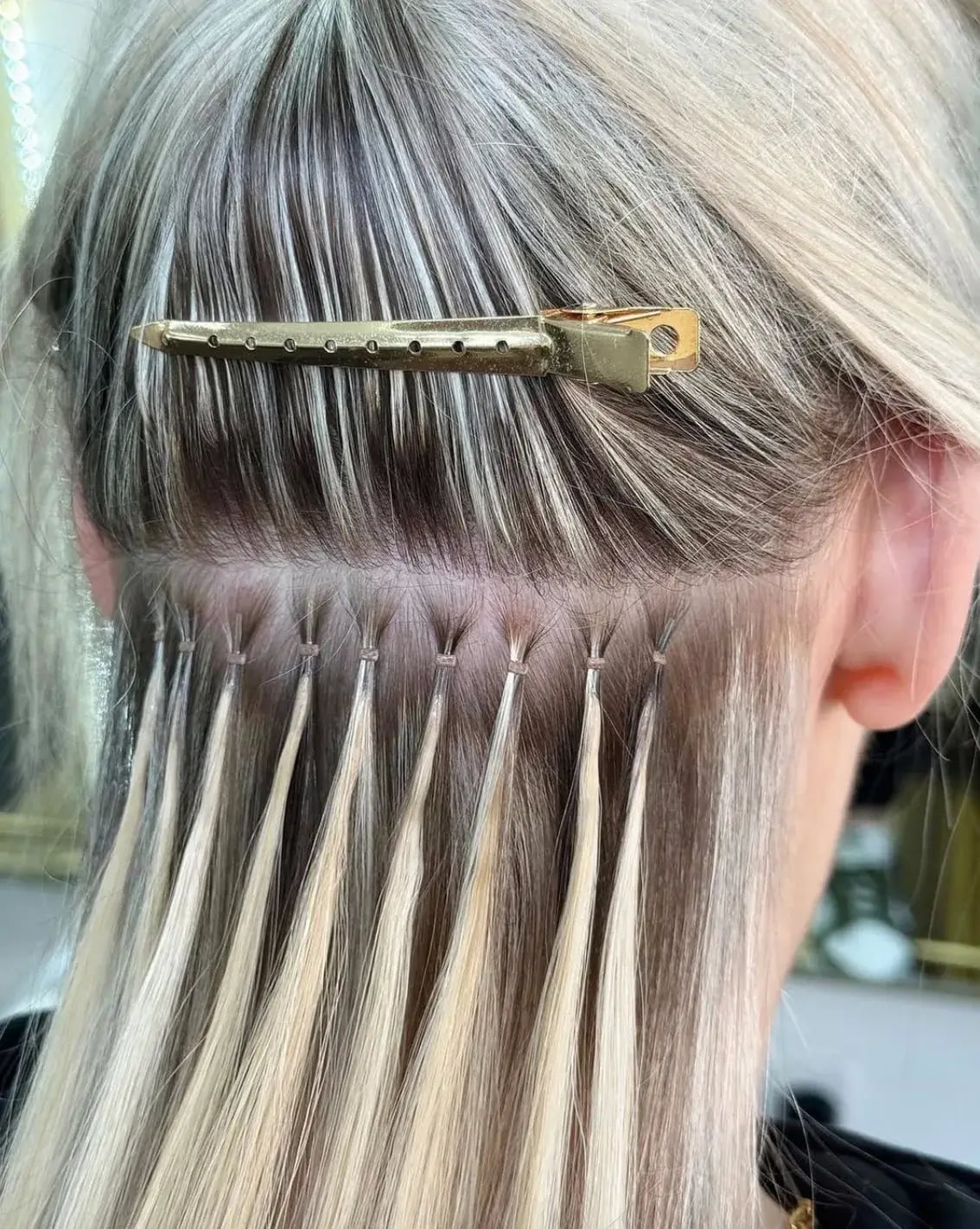
Thick, straight dark brown hair falling to mid-back with visible keratin bonds at the root is a back-view shot that explains the technique without words. The bonds sit flat against the scalp and blend into the natural density, which is the whole point of this method for straight textures.
It suits straight, thick hair types that need added length and volume at mid-back and want a permanent-feeling solution. Ask your stylist for: mid-back length, straight dark brown, keratin bond extensions. The bonds allow for a flat-iron pass for a sleek finish, but they also require careful handling: no oil-based products near the attachment points and no aggressive brushing at the root. A trim every six to eight weeks keeps the ends blunt and the bonds secure.
14. Mid-Back Platinum Blonde With Wefts
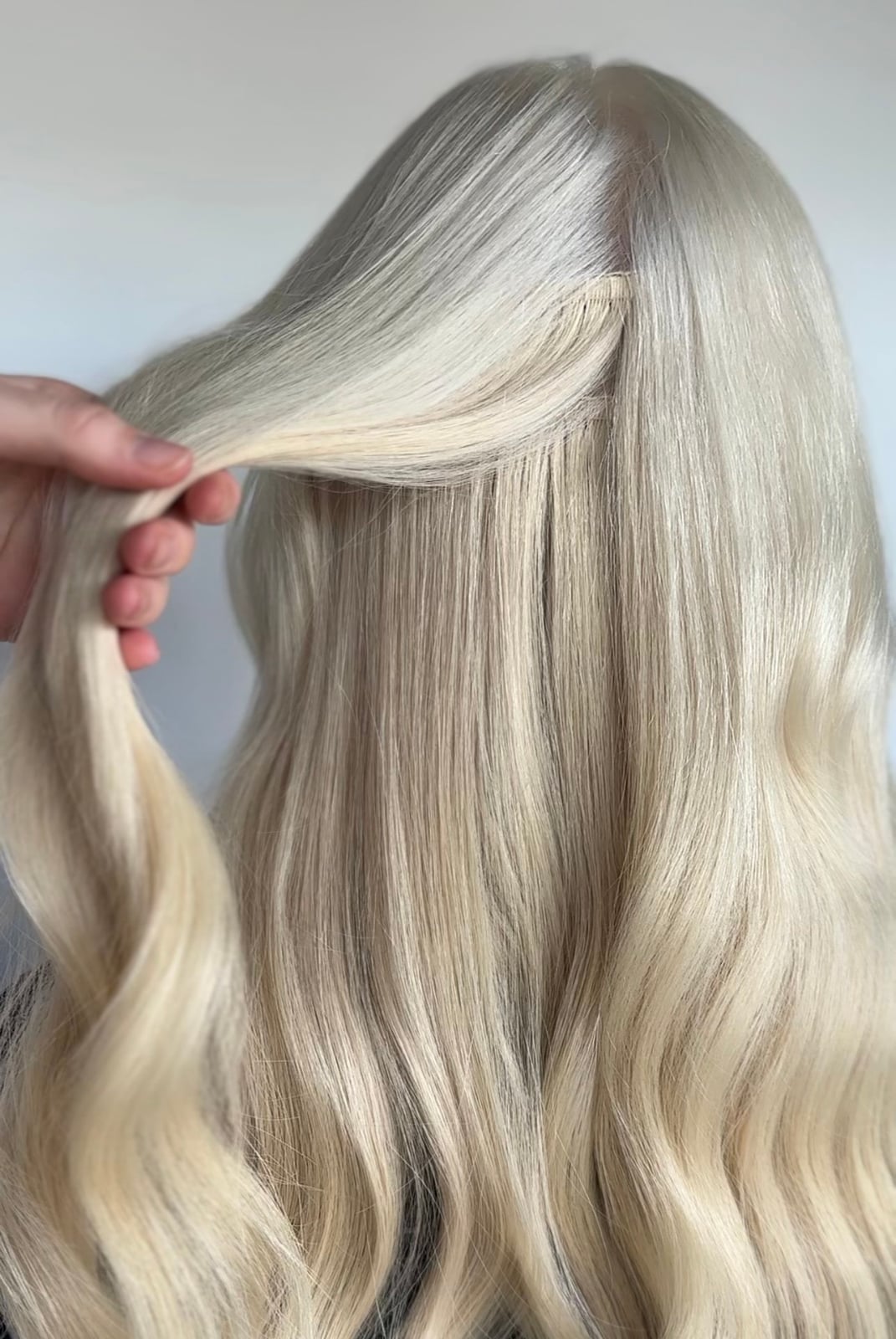
Visible wefts at the root on mid-back platinum blonde hair, styled straight with a slight wave at the ends, raise the question: is this the method for you? Wefts provide the most density per row, making them ideal for thick hair that needs serious volume, but they also limit high ponytails and updos because the weft base is wide.
It suits thick hair types seeking mid-back length in a striking platinum blonde shade where the weft structure is less of a styling limitation. Ask your stylist for: mid-back length, platinum blonde, weft extensions. Compared to keratin bonds, wefts sit in a continuous row and require a different maintenance rhythm: brush gently, avoid wet styling, and stick to a trim every six to eight weeks. If you sleep in a high bun or wear your hair up daily, bonds might suit you better.
15. Mid-Back Ash Blonde With Seamless Blend
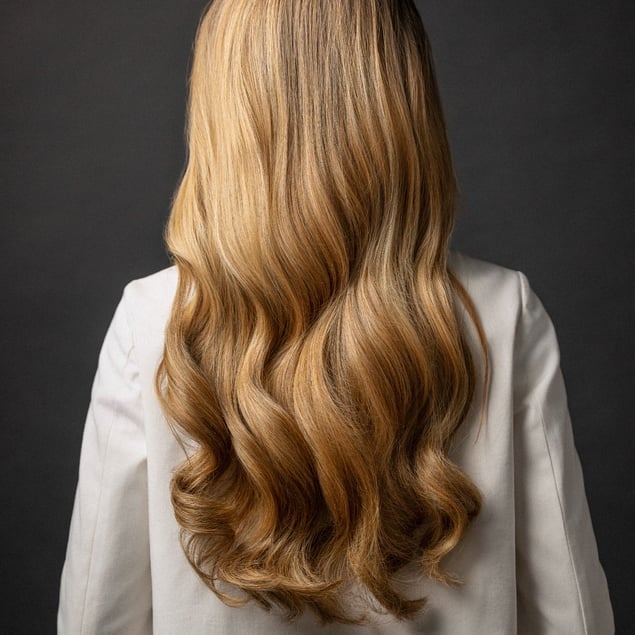
Thick, wavy ash blonde hair with subtle highlights, a middle parting, and loose waves that reach mid-back relies on a seamless blend between the natural hair and the extensions. The long layers do the blending work, and the ash tone with highlights prevents a solid block of color that would give the game away.
It suits thick, wavy hair types that need length and volume at mid-back and want a natural-looking result in an ash blonde shade. Pass if your hair is fine or low density, because the weight of the extensions can pull at the roots. Ask your stylist for: mid-back length, ash blonde with highlights, seamless blend. The long layers mean the ends stay light and the waves fall without a heavy line. A trim every six to eight weeks is standard, and a silk pillowcase reduces the friction that can cause tangles at the bonds.
16. Mid-Back Ash Blonde Balayage Curls
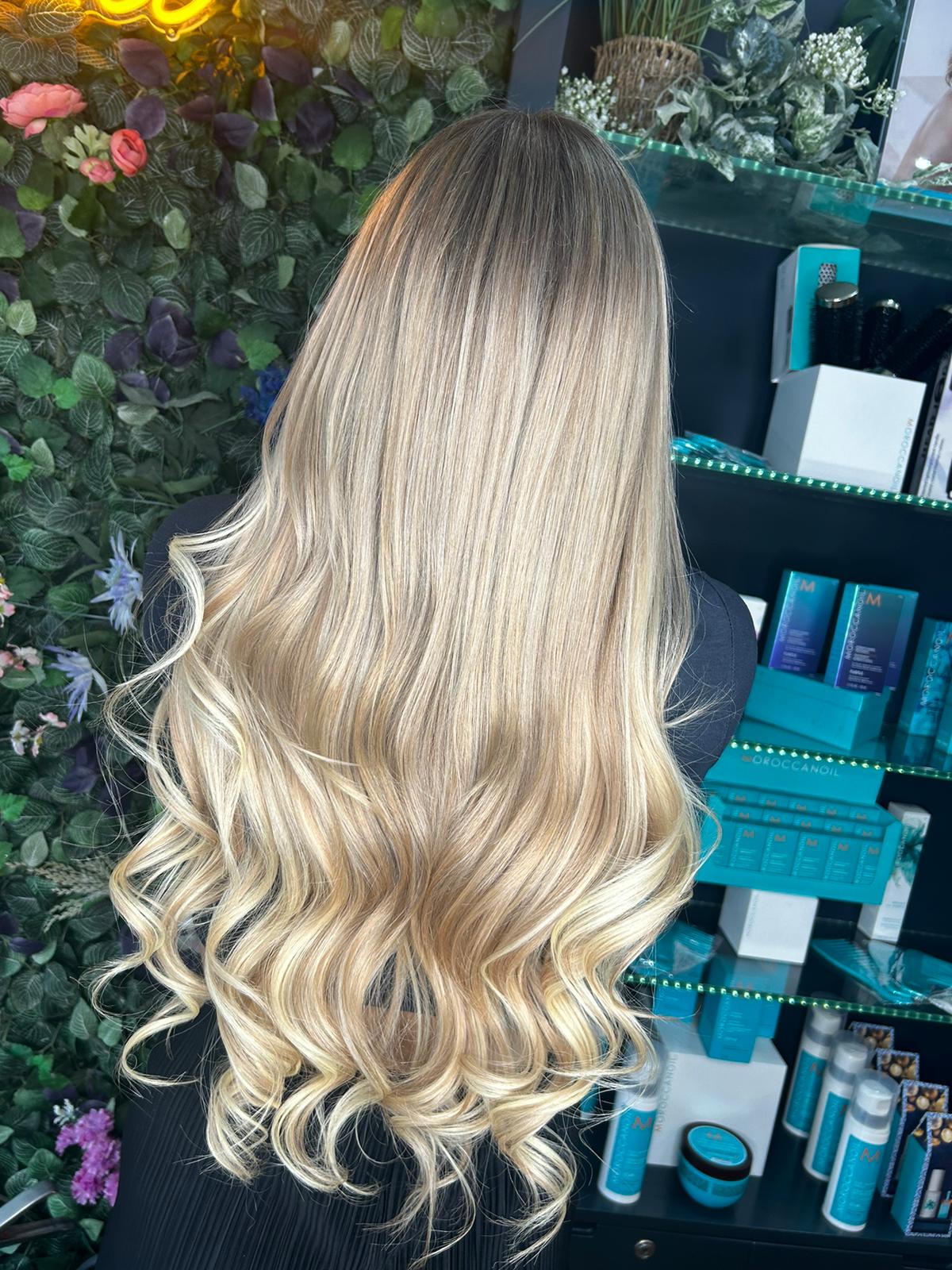
A balayage blend with darker roots and lighter highlights shows less of a grow-out line than a solid blonde, which is why it holds up well past the six-week mark. Loose curls are where the ash blonde balayage extensions earn their keep: the bend breaks up the color so roots and ends read as one continuous shade. Ask your stylist for: mid-back length, ash blonde balayage, loose curls. Thick, wavy hair carries the texture without help. Plan on a curl cream scrunched through damp hair and a diffuser on low, plus a trim for the extensions and your own hair every six to eight weeks to keep the ends from going stringy.
17. Mid-Back Braided Dark Brown With Highlights, Close-Up Take
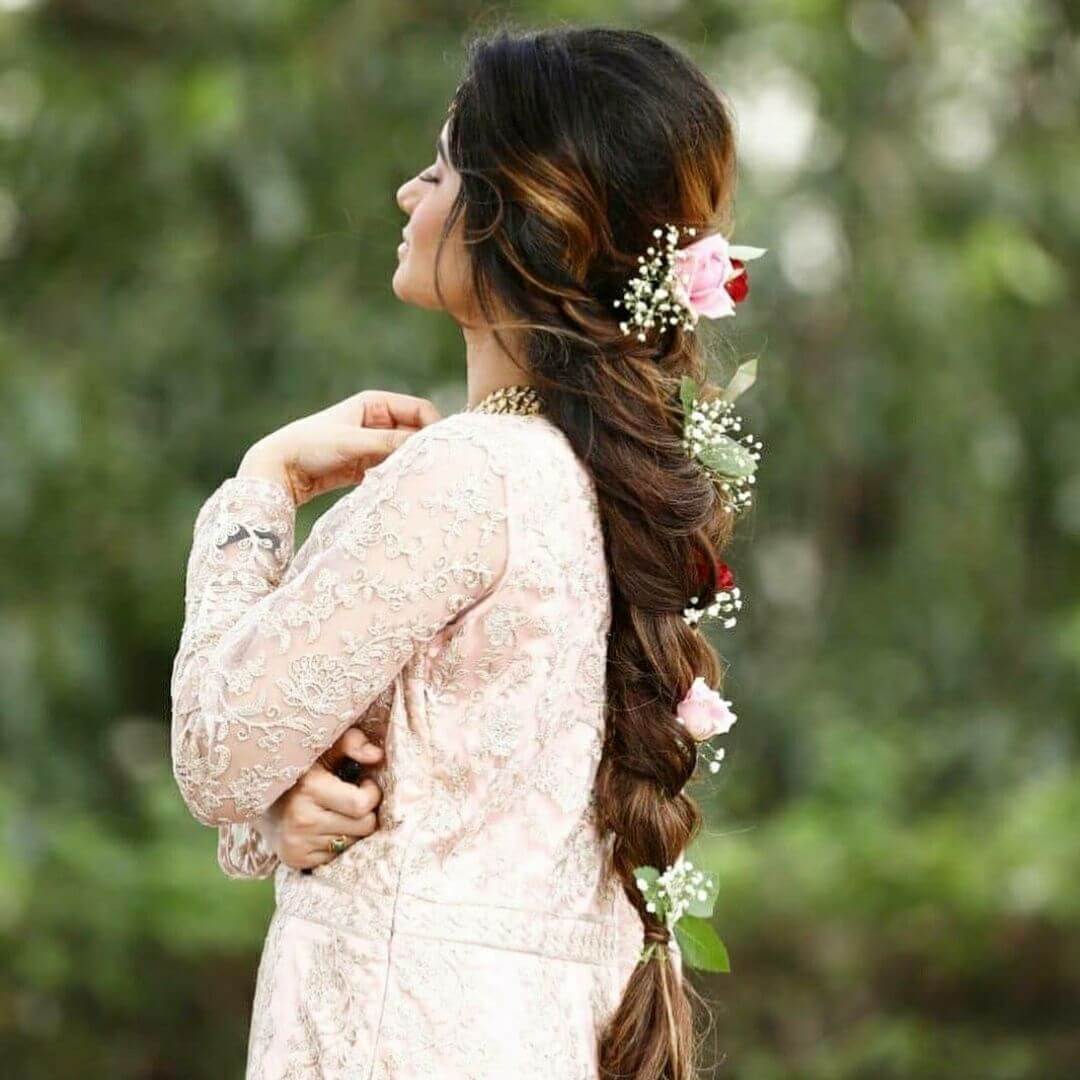
A braid this intricate is built in sections, not woven freehand from a single ponytail: the hair is divided low, crossed in a tight three-strand base, then opened at each pass so the dark brown and the subtle lighter brown highlights separate into visible bands. Small flowers and greenery are tucked into the crossings, which is why the braid needs enough thickness to hold them without slipping. Mid-back length helps here. A shorter braid runs out of slack before the pattern gets going, and fine hair tends to look sparse between the flowers. Ask your stylist for: mid-back length, dark brown with highlights, intricate braid. Layers give the braid something to grip. This is festival and party territory, and the flowers are the part you cannot fake at home.
18. Collarbone Black Blowout With Soft Waves
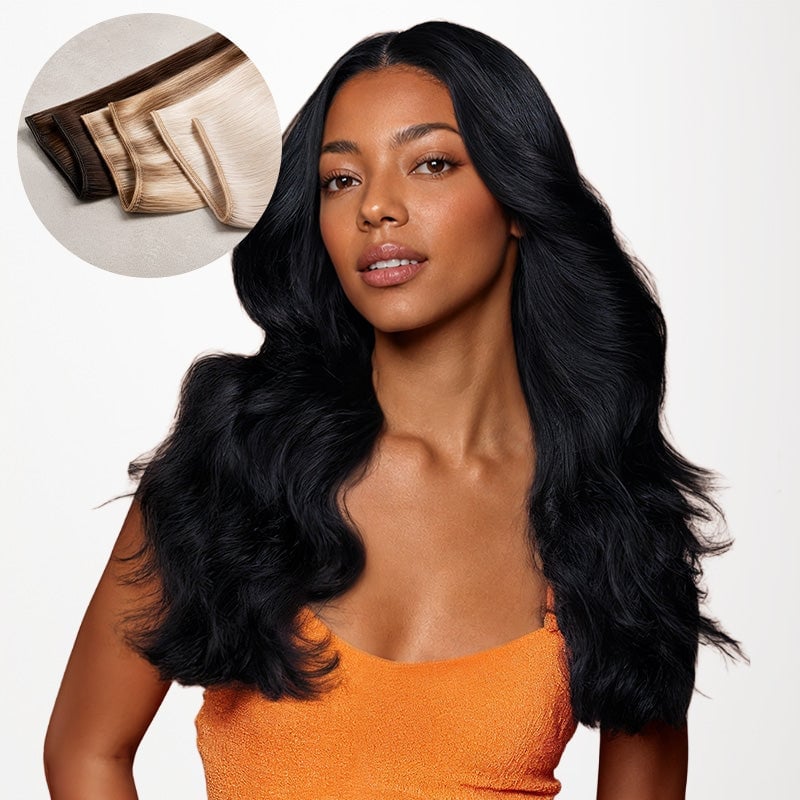
Wondering how to describe a blowout that looks smooth but not flat-ironed? Say collarbone length, black, smooth blowout, soft waves. The round-brush finish is what gives black hair that sheen without any visible product, and a clean middle parting keeps it sharp. Thick, wavy hair holds the bend best, and layers keep the ends from reading as one heavy block. Ask your stylist for: collarbone length, black, smooth blowout, soft waves. Subtle lighter strands through the base stop the black from going inky under indoor light.
19. Shoulder Kinky Curly Black With Voluminous Curls
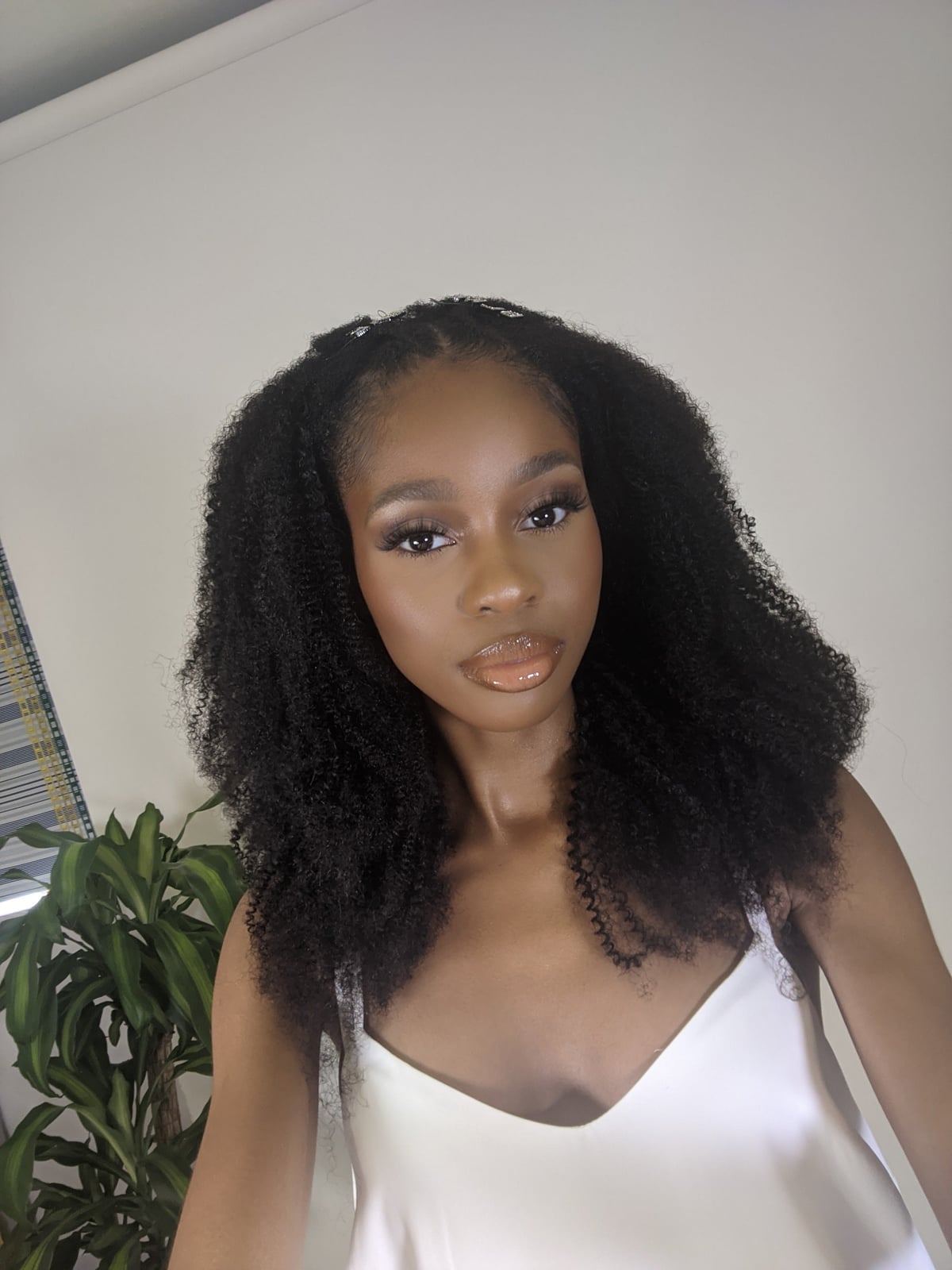
Shoulder length beats mid-back for kinky curls that need to stay springy: less weight pulling the pattern down. Drying is the catch. Voluminous kinky curls this thick take a diffuser on low heat and a moisturizing curl cream worked through daily, and a layered cut keeps the volume from collapsing into a triangle. The side parting helps. Ask your stylist for: shoulder length, kinky curly black, voluminous curls. This style needs daily attention, so plan on a routine you can keep up with.
20. Mid-Back Kinky Straight Black Ponytail
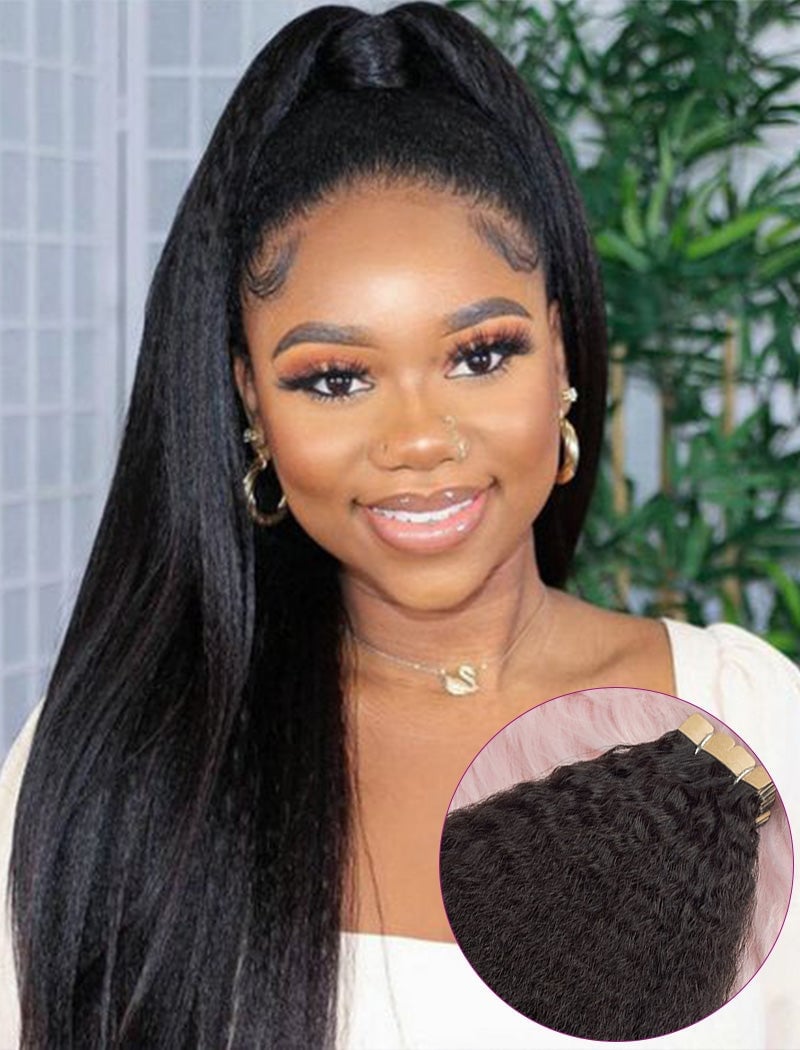
Kinky straight texture is the reason this ponytail reads sleek without looking relaxed: the strands have enough body to sit smooth at the crown but still hold a straight line to mid-back. The middle parting and the styled baby hairs along the hairline do the finishing work. For a salon result, a stylist straightens in small sections with a heat protectant first, sets the ponytail high, then lays the baby hairs with a smoothing balm. At home you can get close with the same sectioning, though the crown takes practice to pull flat without a bump. Ask your stylist for: mid-back length, kinky straight black, high ponytail, baby hairs. Straight cut ends keep the tail blunt. Book the salon version for a big night, and save the DIY attempt for a Saturday with time to spare.
21. Final Thoughts
Fine hair needs a solid base: keep one blunt length and skip heavy layers so the extensions have something to grip. Round faces benefit from a middle part and length that falls below the chin, while long faces want volume at the sides. Tape-ins and wefts build density; keratin bonds and micro-beads are better for pure length. Always book a professional for the initial application.
- Schedule a trim every six to eight weeks to blend extensions with your natural hair.
- Use sulfate-free shampoo and conditioner to protect the bonds or wefts.
- Brush gently from ends to roots to prevent tangles and matting.
- Let extensions air dry halfway before blow-drying to reduce stress on the attachment points.
Choose the method that suits your hair type and your schedule, then let the extensions do the work.