Fall nails with accent nail have one job that is easy to miss: create a pause for the eye instead of adding another demand. When the focal detail is clear, the rest of the hand can stay quiet and the manicure feels intentional; when every finger competes, even a clever idea loses its point. The best accent is not always the loudest one, but the one with room around it.
Before choosing the detail, decide whether the base or the accent should lead when the hand is moving normally. Then use length and spacing to protect that priority, because a small shape can make a bright mark feel precise while extra surface can invite too much decoration. If you compare the decision with broader fall manicure ideas, keep the question focused on balance, not novelty.
1. Red Gold Stiletto Nails With Pale Cuticle Panels
Long pointed nails combine red-orange surfaces, gold flecks, and pale almond-shaped sections near the base. The light panels interrupt the dense warm color, giving the eye a place to pause before it reaches the glitter-like detail and sharp tip. This is a highly ornamental composition, so the pale accent is important because it prevents the red and gold from becoming one continuous block.
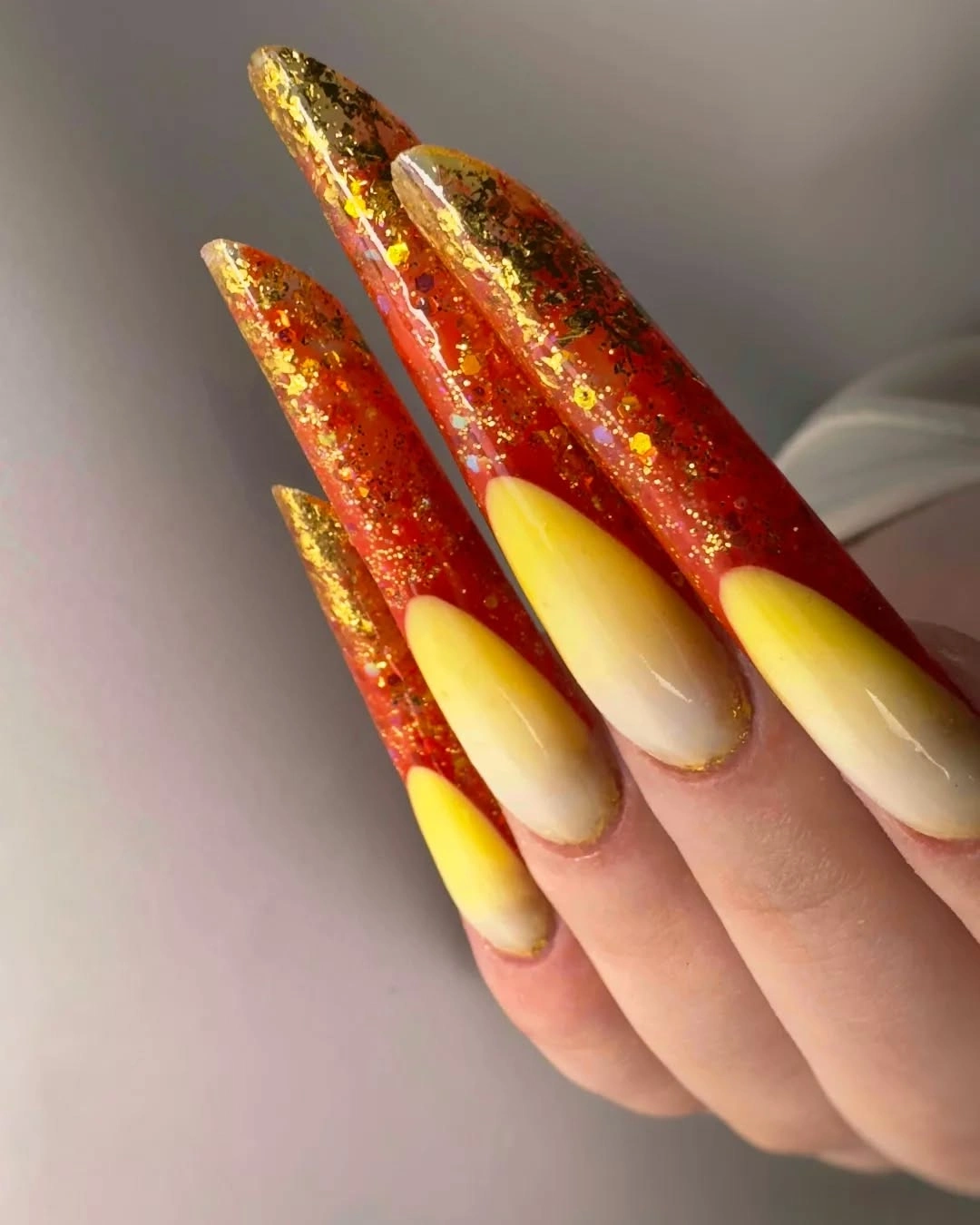
For a more wearable interpretation, keep the pale panel on one or two nails and use a simpler red on the rest. The contrast will remain visible because the light area changes the value, not just the hue. A medium almond can also preserve the elegant direction while removing some of the length that makes the original set feel reserved for a statement occasion.
The main limitation is density: gold flecks and intense red need room to remain separate, and the very long pointed shape asks for careful daily handling. Warm clothing will echo the palette, but cream or black will give the nails more space to lead. Use the idea when ornament is intentional, then borrow only the pale cuticle break if the full set feels too elaborate.
2. Glossy Black With One Orange Floral Accent
Short square nails are glossy black on most fingers, while one nail carries a small orange-and-dark flower-like motif. The base is strong enough to create immediate contrast, but the accent remains warm and compact rather than spreading across the hand. Because every supporting nail is quiet, the focal finger reads clearly even at a short length.
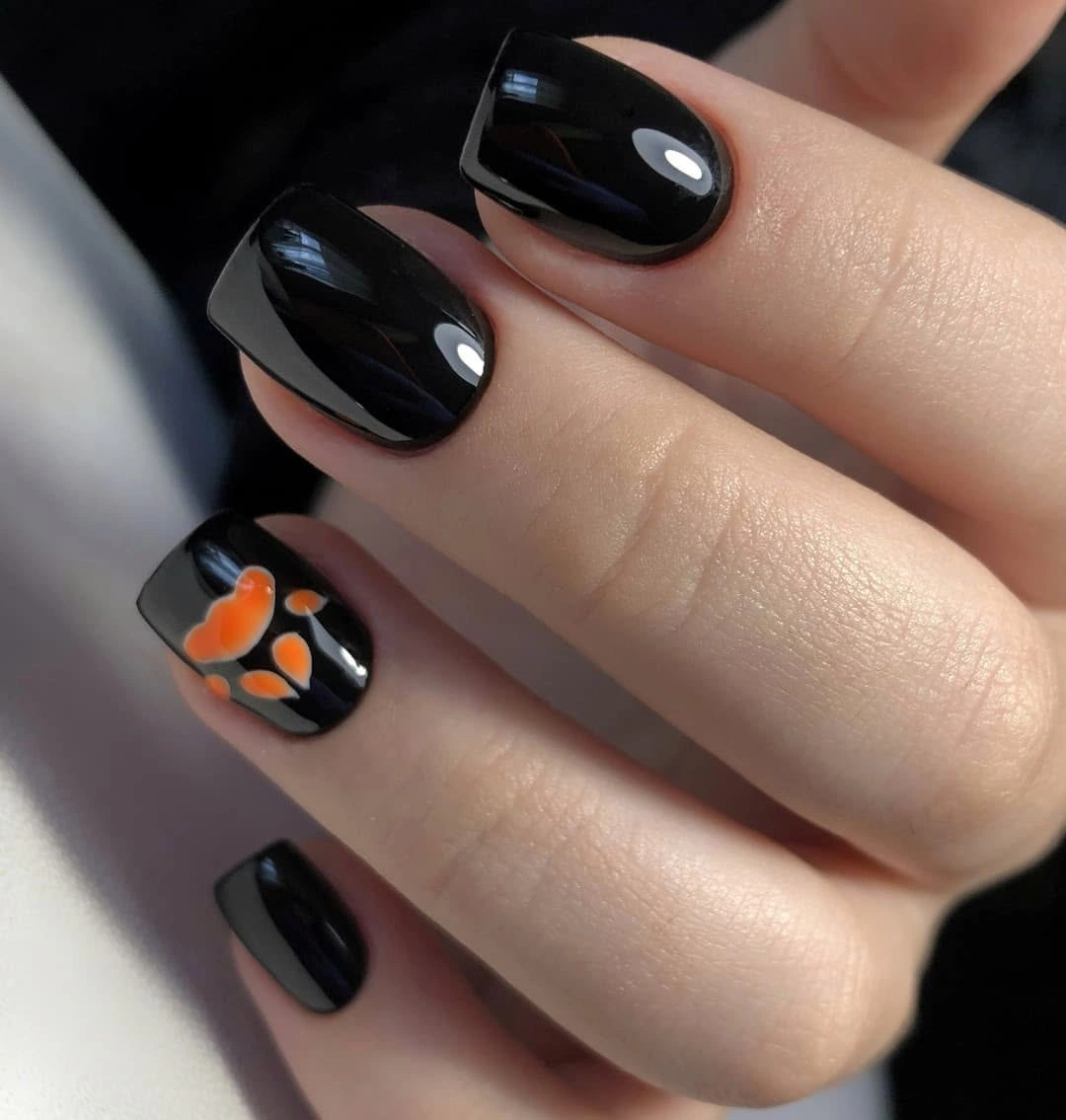
This is the most direct version of an accent manicure: one color establishes the mood and one small detail changes the rhythm. A reader can keep the black glossy-looking finish or soften it with a matte-looking surface, but the single orange focal point should stay limited if the goal is clarity. A shorter nail does not need a large illustration to feel considered.
Dark solid nails can show chips, especially at the corners of a square shape, yet the lack of repeated art makes repair visually simple. The orange accent will pair with rust, tan, cream, or denim, while bright jewelry may distract from its small scale. If you want a seasonal reference beyond this focused set, compare it with these early fall nail ideas and keep the base-to-accent ratio intact.
3. Mint Green Nails With Ornamental Gold Details
Long tapered nails use pale mint and green sections with darker green and gold decorative lines. The base is lighter than the accents, which gives the ornamental details a clear surface instead of making them blend into a dark field. The long shape supports the layered bands, but the design still depends on the mint color to keep the hand from feeling visually heavy.
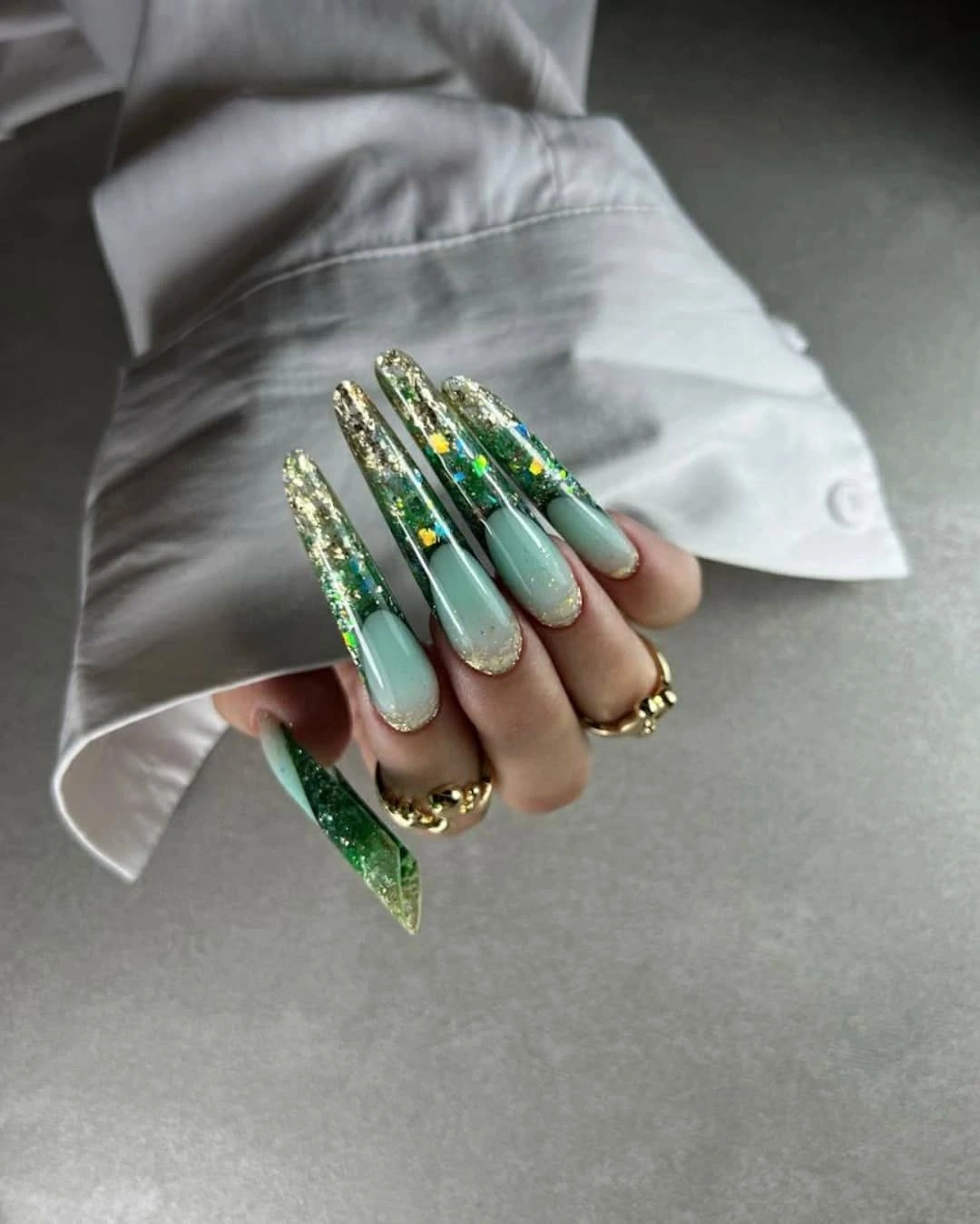
Mint is a useful partner for warm gold because it provides a cool pause between the richer green elements and the skin. To reduce the density, keep the dark green and gold on one accent nail, then repeat pale mint on the others. That change preserves the contrast relationship while making the manicure more realistic for a medium or short shape.
The decorative bands may be harder to keep crisp as the nails grow, and the long tapered silhouette asks for more maintenance than a simple solid set. White, cream, and soft gray clothing will support the mint, while brown accessories can echo the warmer details. The design is best treated as a color-and-placement study rather than a requirement to reproduce every line.
4. Hot Pink Almond Nails With Two Pale Accents
Most of the long almond nails are vivid hot pink, while two lighter nails carry small pink floral or dotted patterns. The pale fingers break up the saturated color and create a pair of visual pauses without changing the strong overall mood. Because the accents repeat the main pink, the hand feels connected even though the supporting nails are much lighter.
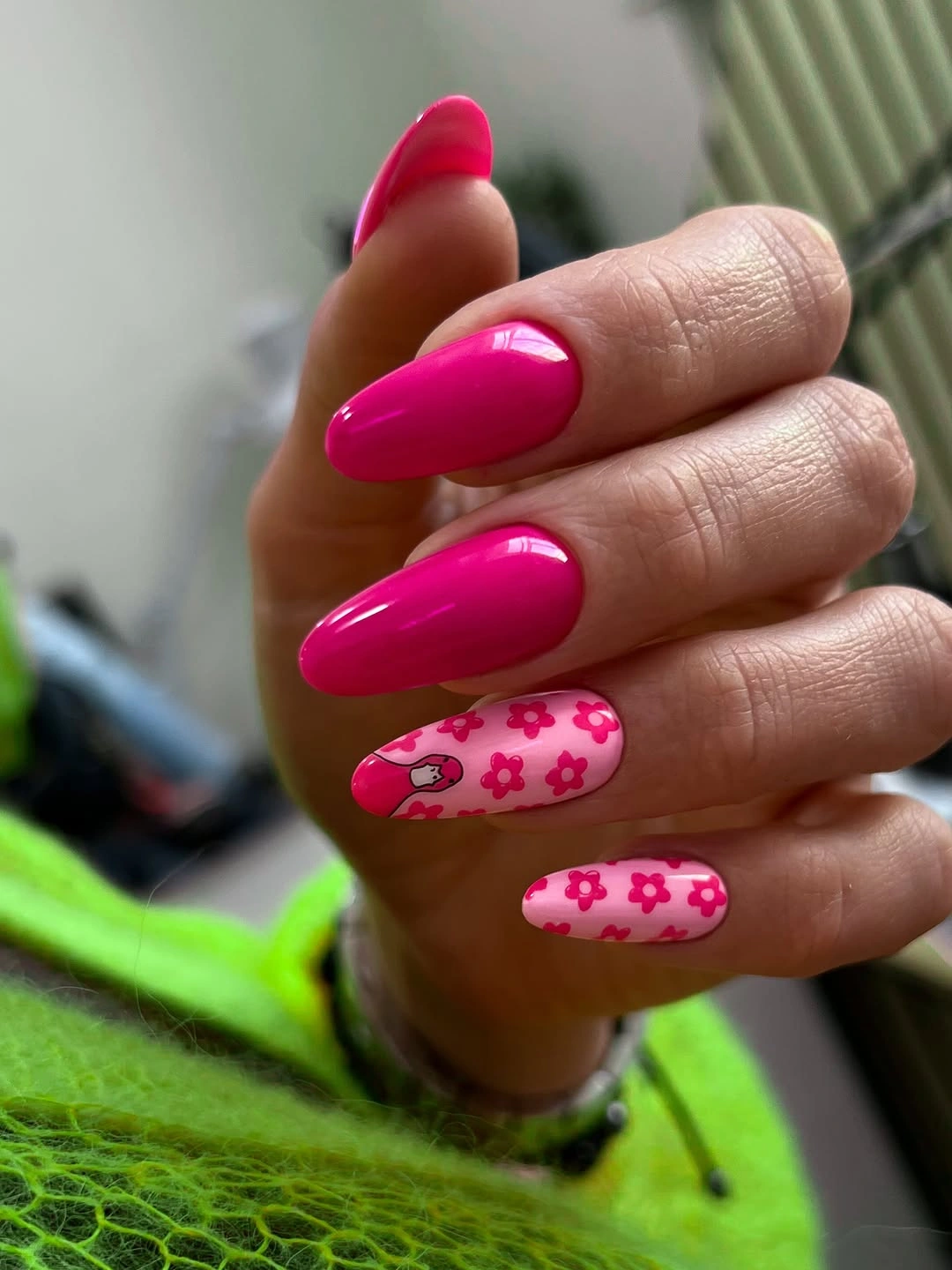
Two accent nails can work when they have a shared job and do not introduce unrelated colors. Here the pale bases reduce the intensity of the hot pink, while the small patterns return the eye to the dominant shade. A reader who wants a quieter version can keep only one pale accent or replace the second with a plain pink nail.
Long almond length lets the bright color feel elongated, but it also amplifies the upkeep required by the saturated surface. The pale patterned nails may show wear differently from the pink solids, so the whole set benefits from a consistent shape and finish. Keep clothing simple if the pink is meant to be the statement, or use one pale accessory to echo the two lighter nails.
5. Burgundy Squares With One Warm Floral Detail
Short rounded-square nails are a deep burgundy, with one pale nail carrying a warm yellow-orange flower-like detail. The dark base creates the mood, while the light accent changes the value enough to pull attention toward one finger. Keeping the shape short prevents the strong red from becoming too formal and lets the small accent feel approachable.
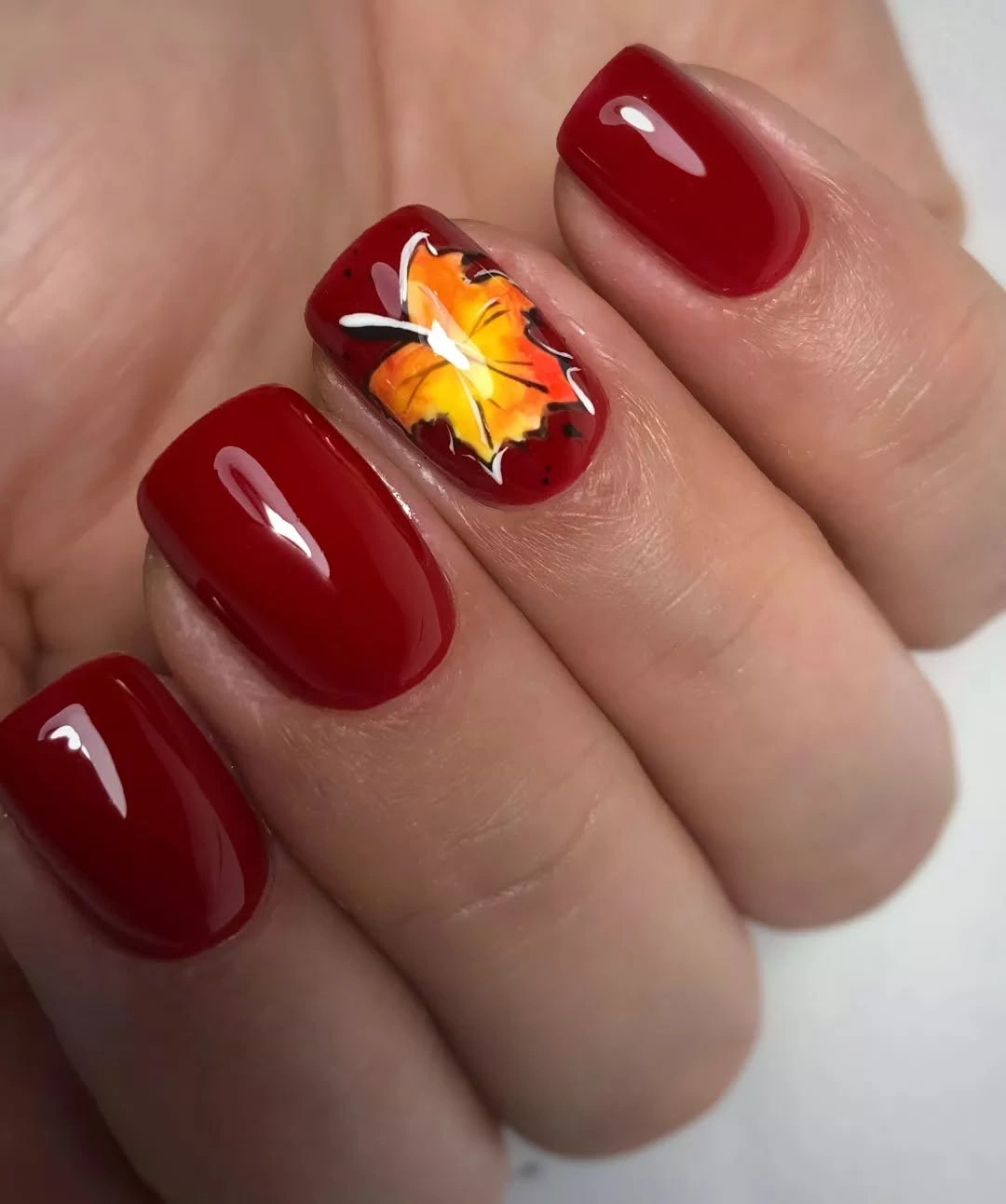
A pale accent is especially effective when the supporting shade is dark and unbroken. The reader can move the same relationship to a brown or plum base, but the focal nail should remain light enough to create a clear interruption. If the motif feels too delicate for a short canvas, use one larger warm shape instead of adding several tiny marks.
The design offers a good balance between seasonal depth and a small amount of art. Dark burgundy will show chips at the edge, but the accent makes the manicure less dependent on a completely perfect solid surface. Cream knitwear, tan accessories, or muted denim will support the warm contrast without introducing another competing pattern.
6. Navy Shimmer With One Silver Crescent Accent
Short square nails use a deep navy base with fine sparkle, while one pale accent carries a silver-white crescent or abstract light shape. The navy remains the largest color field, and the accent stands out through both lightness and reflection. A narrow palette keeps the design restrained even though the single focal nail is more reflective.
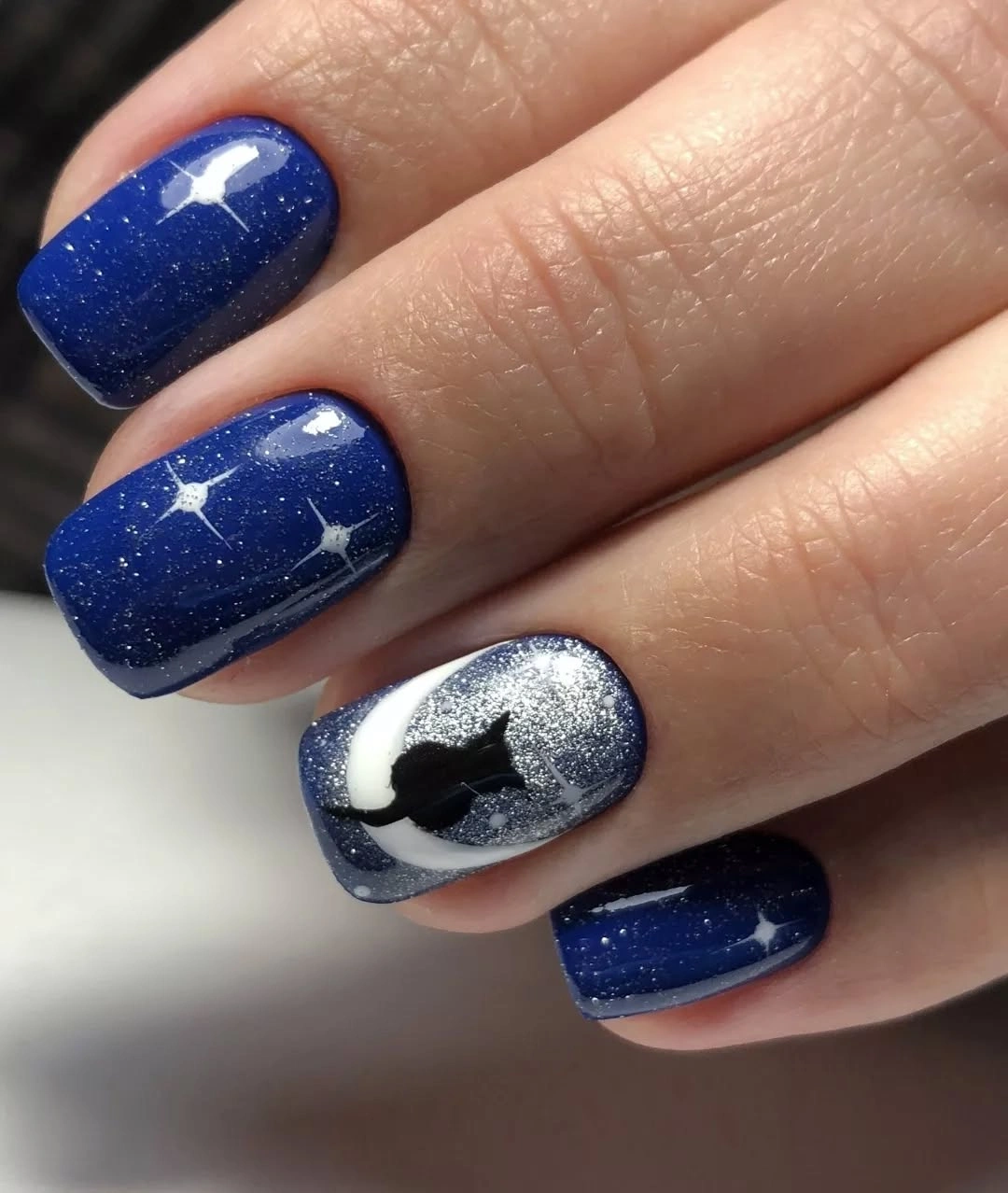
The value difference does most of the accent work here, so another bright color would be unnecessary. A reader can keep the navy and use a plain silver accent for an even simpler version, or soften the contrast by choosing a pale blue instead of white. Short square nails provide enough room for the focal detail without turning the hand into a long statement.
Fine shimmer may look quiet in soft light and more dramatic under direct light, which gives the manicure some range through the day. The silver detail will pair naturally with cool gray, white, and denim, while warm brown will make the navy feel sharper. Keep the accent shape clear and leave the surrounding nails free of extra marks so the focal point stays intentional.
7. Bright Red With One Cream Botanical Nail
Short square nails are a glossy-looking bright red, and one cream nail carries green and red leaf-like details. The accent repeats the dominant red while introducing green as a small supporting color, so the palette feels connected rather than split into two unrelated ideas. The light base gives the decorative nail enough contrast to be noticed immediately.
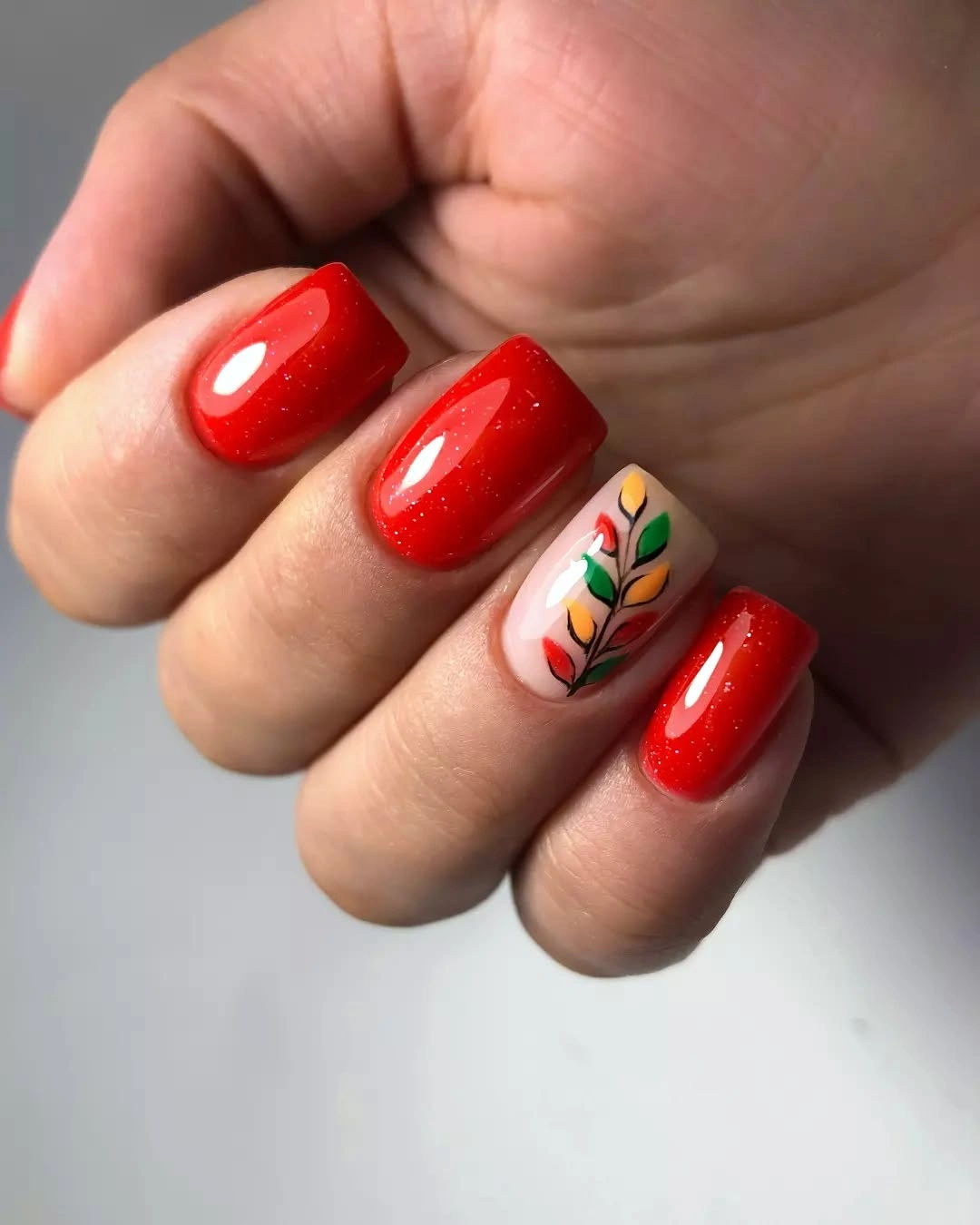
This is a useful formula when the reader wants a red manicure with personality but does not want every nail decorated. The supporting fingers stay simple, so the cream nail can carry the fine detail without making the hand feel crowded. A shorter version can reduce the motif to two leaves or a single curved mark and keep the same red-to-light balance.
The warm colors make the accent easy to style with cream, tan, denim, or dark green clothing. Because the red surface is uninterrupted, edge wear will still be visible, although the decorated nail can draw attention away from a small imperfection elsewhere. Choose a simple accessory plan so the botanical detail remains a focal point rather than one more pattern in the outfit.
8. Smoky Gray Nails With Repeated Dark Grids
Medium almond nails use a pale smoky gray base with dense black grid or letter-like marks repeated across several fingers. Although the theme is an accent nail, the pattern appears on more than one surface, so the manicure reads as a graphic statement instead of a single isolated detail. The gray base keeps the black marks from feeling as heavy as they would on a dark color.
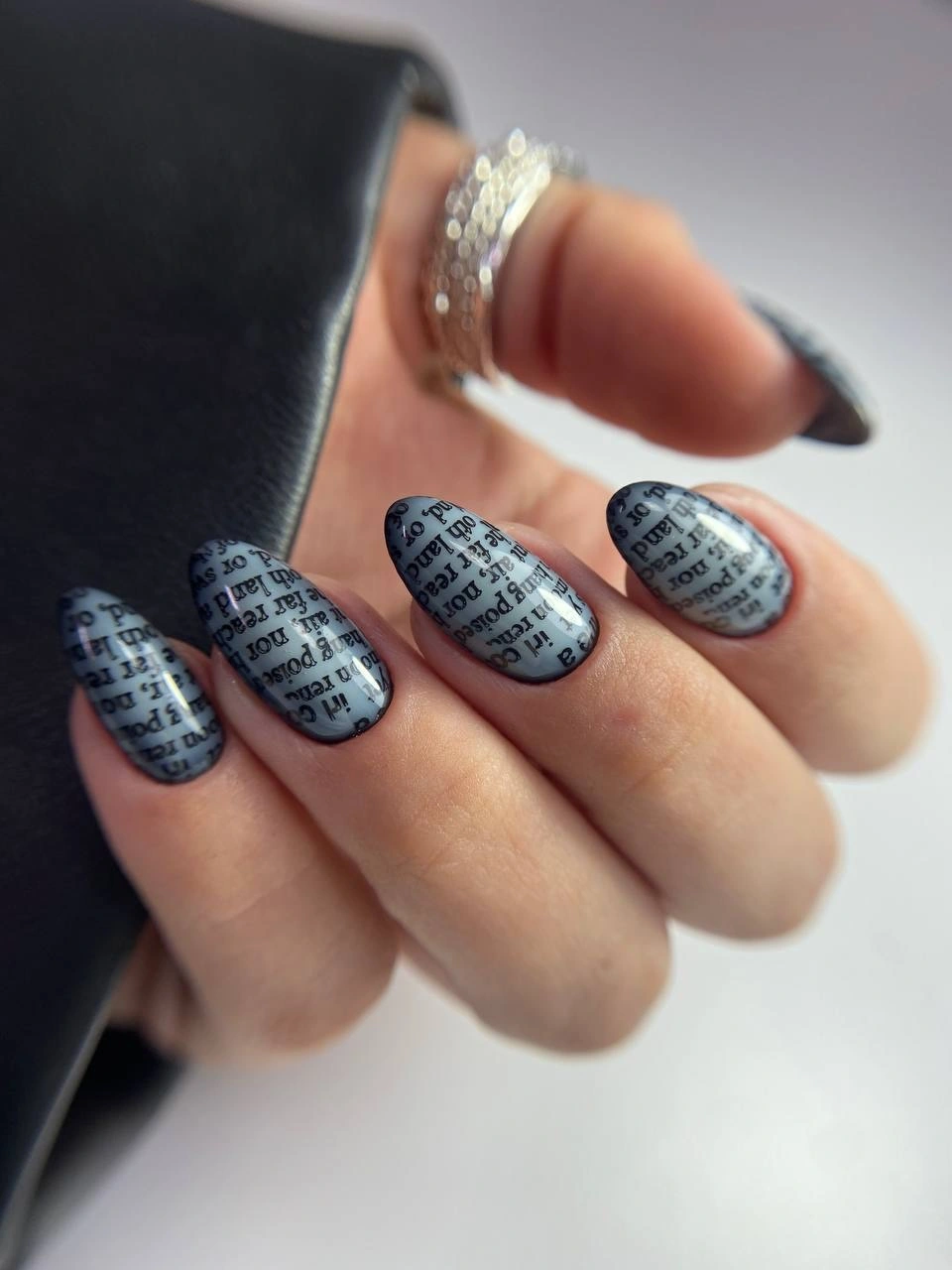
The most useful adaptation is to move the pattern to one accent nail and leave the rest gray. That change gives the design a clearer focal point and allows the almond silhouette to remain visible on the supporting fingers. A reader can also keep one small grid panel on a second nail if a completely plain base feels too empty.
Dense repeated marks may need more attention during grow-out because the pattern changes position relative to the cuticle. The medium almond length supports the graphic idea, but the design can become visually busy beside a printed outfit. Use neutral clothing if keeping the full pattern, or simplify it before changing the base color; reduction will do more for wearability than a new accent shade.
9. Pastel Illustrated Nails With Small Playful Motifs
Short-to-medium square nails use pastel lilac, pale blue, and pink bases with small colorful cartoon-like figures and heart details. The light colors keep the illustrations cheerful, while the compact shape prevents the theme from becoming too costume-like. Several nails carry decoration, so the supporting role is played by the gentle base palette rather than by plain solids alone.
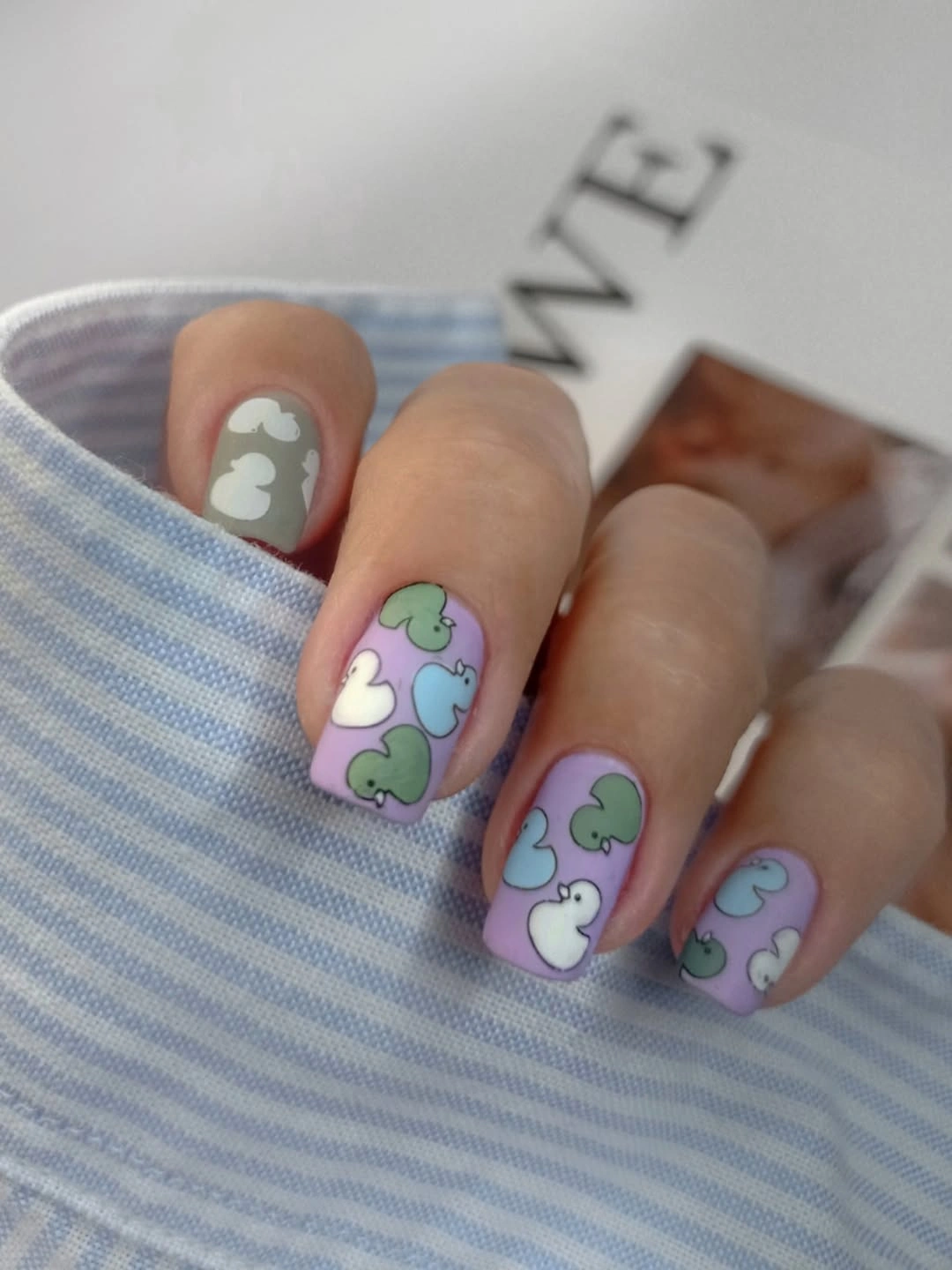
The easiest way to translate this into a clearer accent manicure is to choose one illustration and let the other fingers stay lilac or pale blue. That preserves the playful mood while giving the eye one place to land. A reader can also repeat one color from the illustration on a solid nail, which makes the focal detail feel connected without copying every small mark.
Small illustrated details can lose clarity as the nail grows or when the hand is viewed from a distance, especially on a shorter canvas. Pastel bases are forgiving with clothing, but another playful print may make the whole look feel crowded. Keep the motif simple and let the light colors carry the rest of the mood if everyday wear matters more than maximum detail.
10. Blue Grid Accents On Short Square Nails
Short square nails carry a medium blue base with dark grid-like panels repeated across each nail. The orderly marks make the set look tiled and graphic, while the blue keeps the pattern lighter than a black-on-white composition. Since the detail repeats rather than appearing on one finger, this is an accent-inspired pattern that needs simplification to become a true focal-nail design.
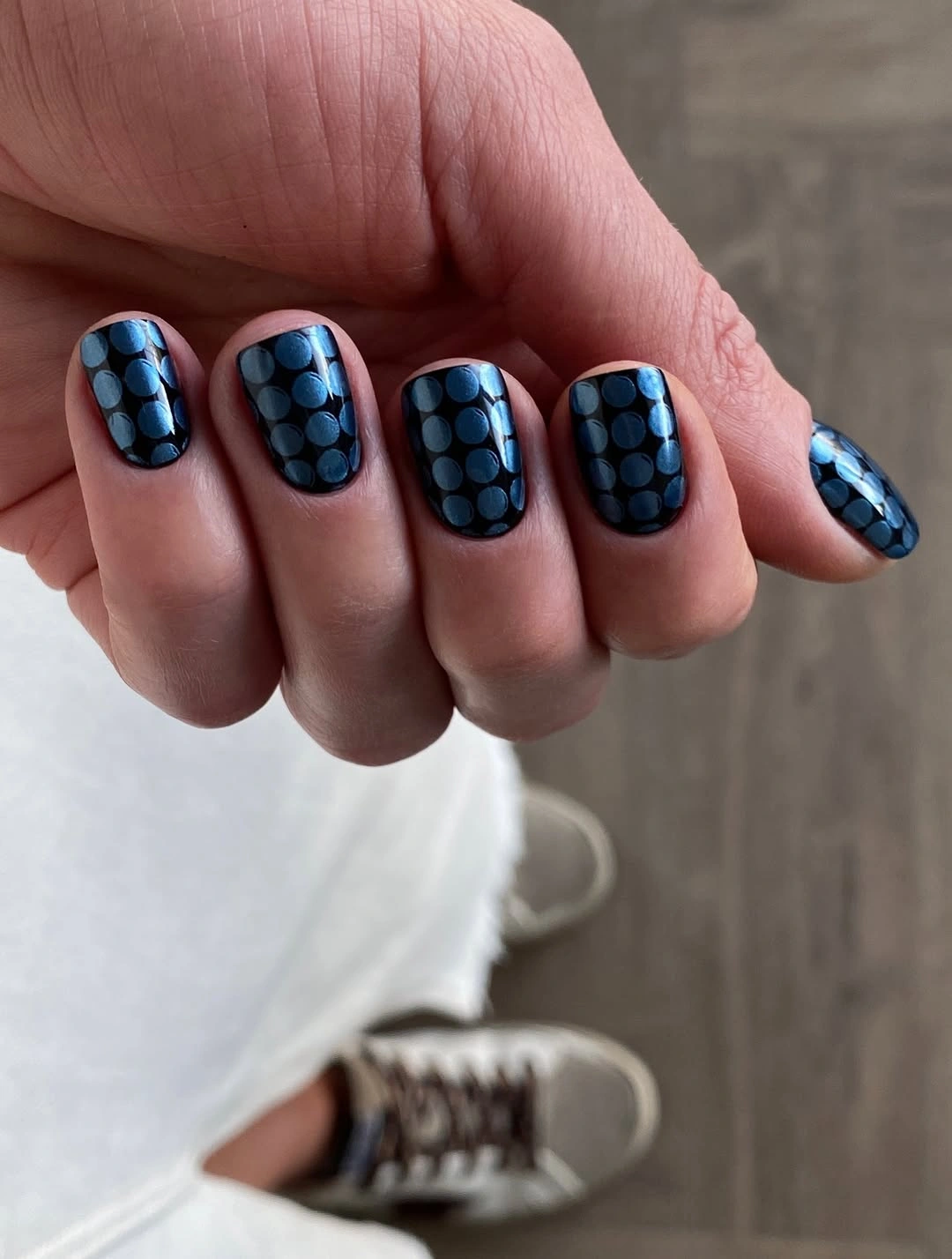
Move the darkest grid to one nail and use plain blue on the others if the goal is a more classic accent structure. The pattern will remain visible because the base and lines already have enough value contrast, and the supporting fingers will give the eye a break. Wider panels are usually better on a short shape than many tiny lines pressed together.
Orderly geometry can make uneven edges more obvious, so the surface benefits from a clean outline and consistent spacing. The blue-and-black palette works with denim, gray, and white, but a busy plaid may compete with the grid. Readers who enjoy more seasonal color can replace blue with a muted green or burgundy while keeping the same dark-panel logic.
11. Forest Green Matte With One Silver Sparkle
Short square nails use a deep forest green with a soft matte-looking finish, while one nail carries bright silver reflective sparkle. The silver surface is the only high-reflection element, so it becomes the focal point immediately even though the green covers most of the hand. This contrast is simple, strong, and easy to understand at a compact length.
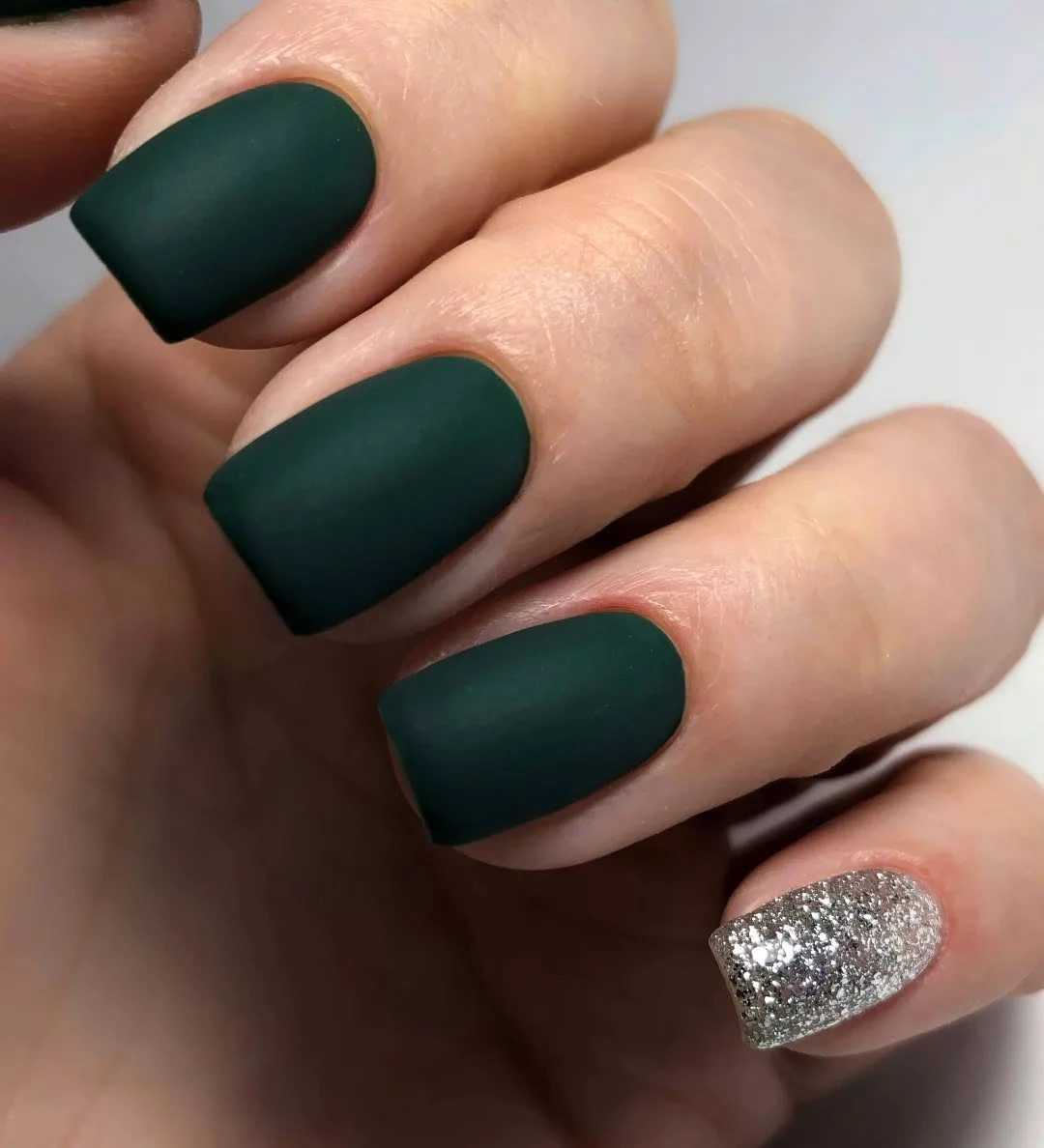
The design works because the accent changes finish as well as value. A reader can keep the forest green matte and replace the silver with a pale cream for a quieter edit, or use a silver-looking line on one nail if full sparkle feels too strong. The supporting fingers should remain clear so the reflective accent does not lose its role.
Dark green is a useful fall base beside cream, camel, gray, or denim, while silver keeps the result cooler and more graphic. The matte-looking surface may disguise small reflections, but the solid color still shows edge wear, and the silver accent may need a slightly different upkeep rhythm. This is one of the most practical ways to add a statement nail without increasing length.
12. Blue Tips With One Colorful Illustrated Nail
Short-to-medium nails use bright blue tips or curved blue sections, while one pale nail carries a small multicolor illustrated motif with pink and yellow details. The blue appears across the hand and establishes the main rhythm, but the illustrated finger supplies the only concentrated burst of several colors. A rounded-square shape keeps the relationship playful and manageable.
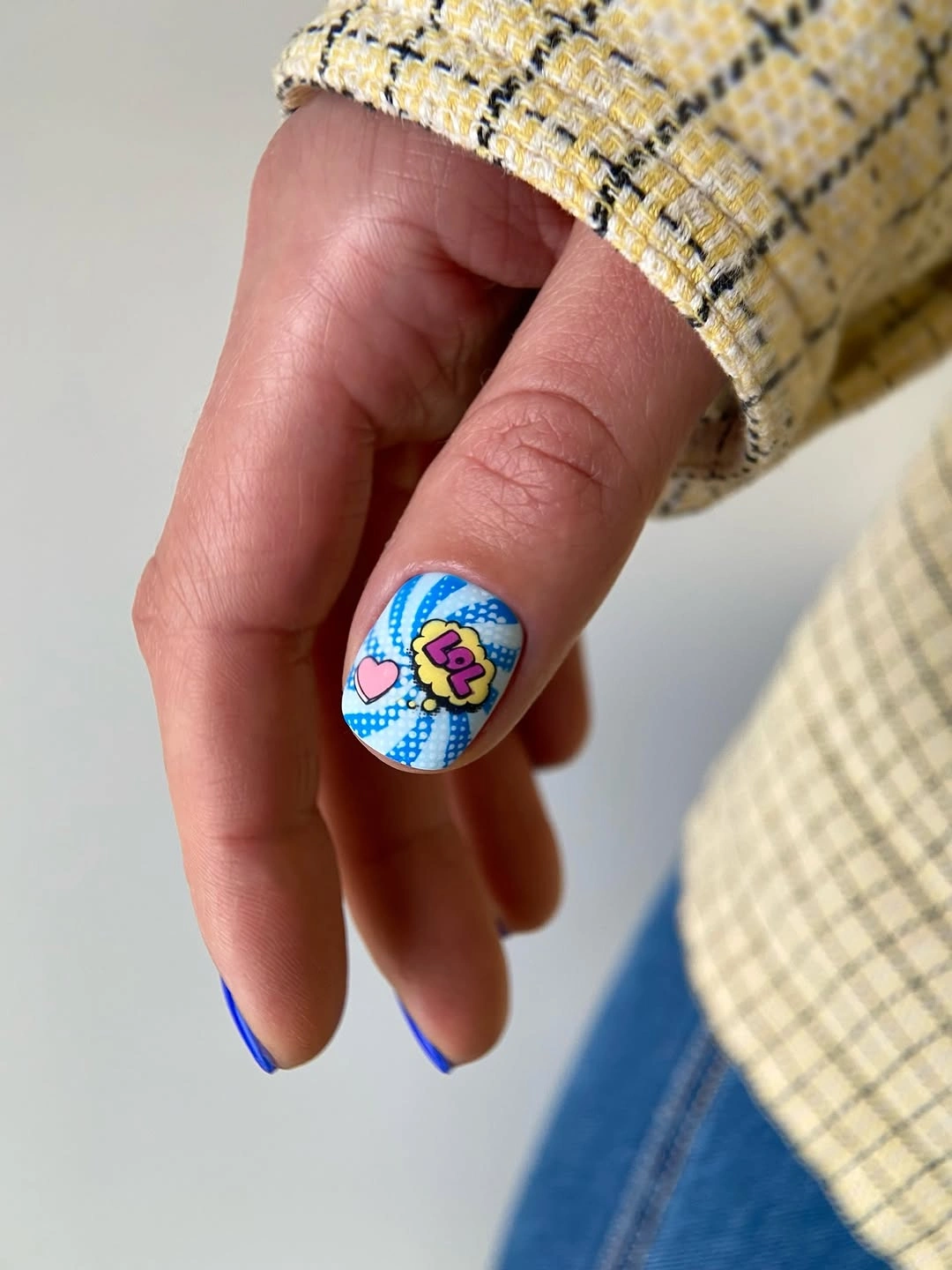
The base color should stay simple when the accent contains several small hues. A reader can keep blue on the other nails and reduce the illustration to one clear shape, allowing the focal finger to read from a distance. If the blue is too bright for daily styling, use a muted navy or slate version while preserving the light accent base.
Illustrated detail needs enough surface to remain recognizable, but a short nail is useful because it stops the color story from spreading too far. The small motif may require more attention than a solid accent, so the supporting blue nails should not carry additional lines or dots. Pair the design with denim or a plain top if the goal is to make the single colorful nail feel deliberate.
13. Glossy Red With A Yellow Floral Accent
Short square nails are saturated glossy-looking red, with one pale nail carrying a yellow-orange flower-like detail and red touches. The accent stays in a warm color family close to the base, so the contrast comes mainly from the light background rather than a sudden cool hue. That makes the set feel cohesive and softer than red paired with black or navy.
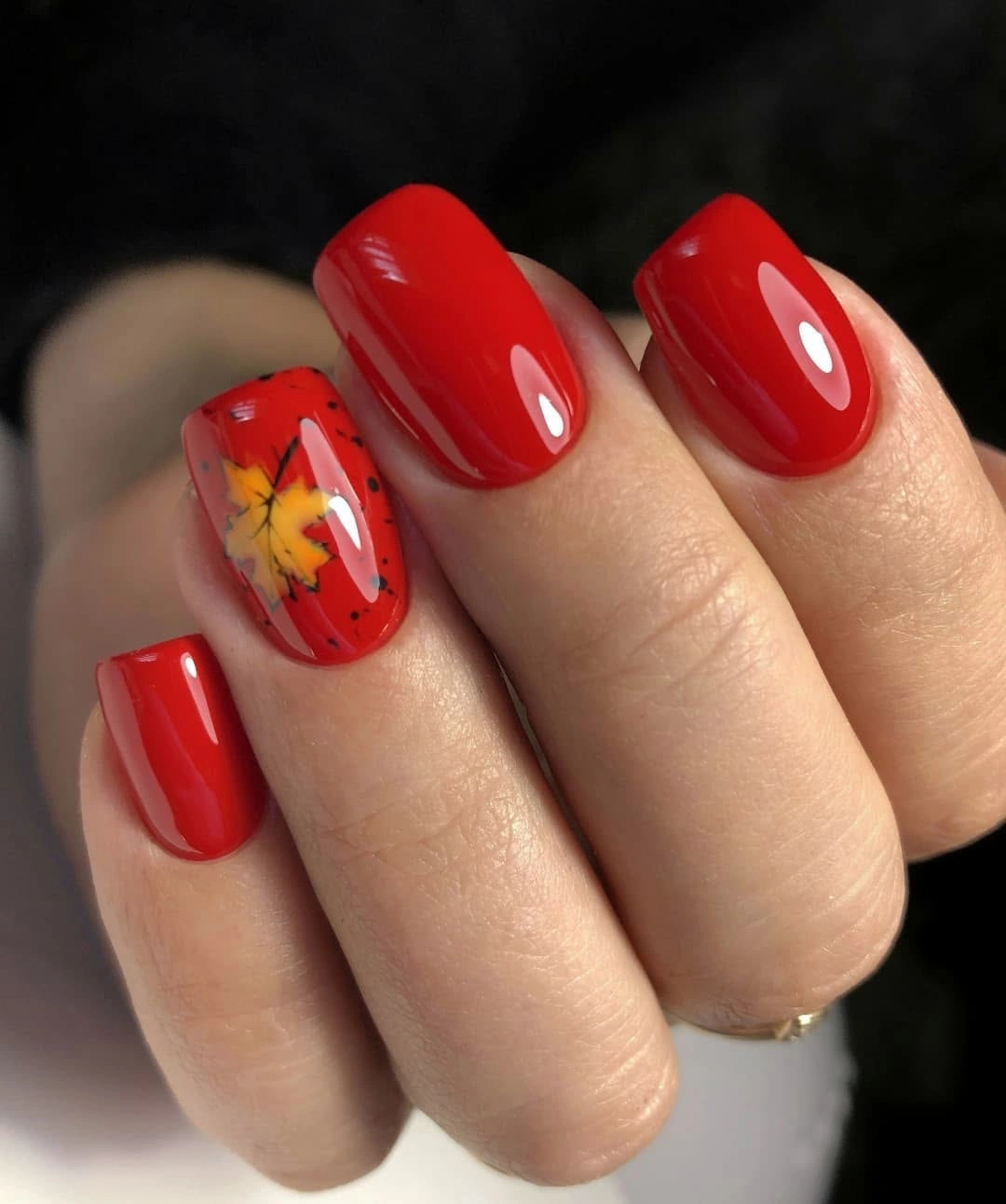
A tonal accent is useful when you want the focal nail to stand out without making the manicure look split into separate themes. Keep the red on the supporting nails and let the light base hold the warm detail, or move the design to a single shorter finger for an even quieter version. The main relationship is light base against saturated red, not the exact motif.
Bright red and yellow-orange naturally attract attention, so calm clothing will usually give the nails enough room. The short square silhouette keeps the set practical, while the glossy surface may show edge wear sooner than a soft finish. If the reader wants more fall depth, a deeper wine red can replace the bright base while keeping the same warm accent logic.
14. Nude Almonds With Crisp Black Tips And Red Accent
Long almond nails use a pale nude base with thin black edge details, while one red nail carries a small black heart-like mark. The red finger is vivid, but the black line returns on the accent and connects it to the dark tips. Most of the hand remains light, so the design feels more graphic and airy than a full dark manicure.
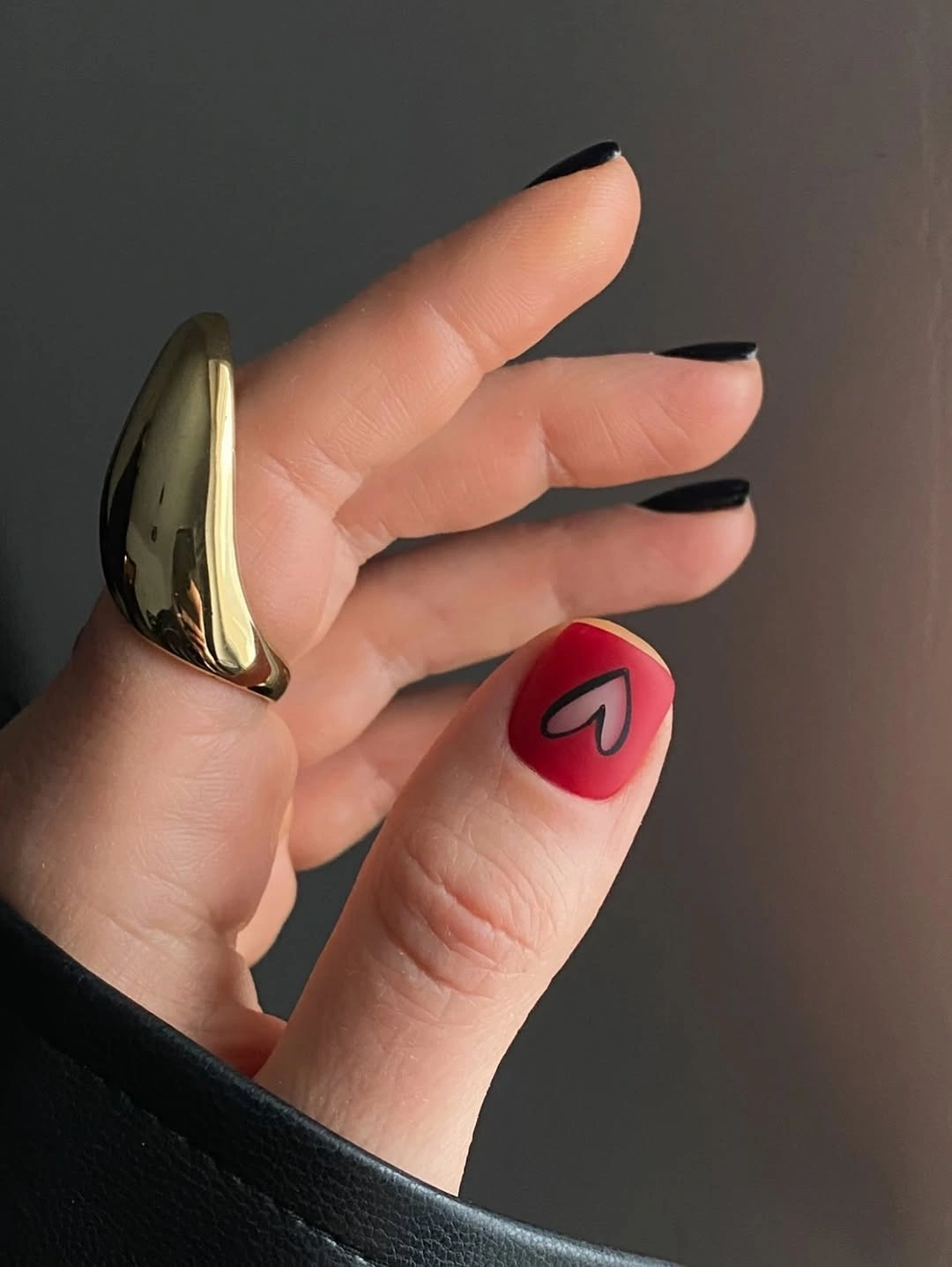
The best part to borrow is the repeated dark element. A reader can keep one thin black edge on a nude nail, place the red accent beside it, and leave the rest almost plain. That gives the color focal point a frame without adding several new motifs. On shorter nails, use one dark corner or line rather than trying to preserve a long edge across every finger.
The long almond shape makes the nude field look elegant, but it also gives the red accent more visual drama than it would have on a short square. The black lines will show grow-out and smudging more clearly against the pale base, so spacing and edge control matter. This direction fits readers who want a classic outline with one playful interruption rather than a fully themed hand.
15. Black Matte Nails With Repeated Pink Hearts
Medium-to-long square nails use a flat black base with vivid hot-pink heart shapes repeated across several fingers. The pink is a high-value accent, but it is not isolated to one nail, so the manicure reads as a bold graphic pattern rather than a quiet focal detail. The matte-looking black gives the pink enough contrast to remain the first color noticed.
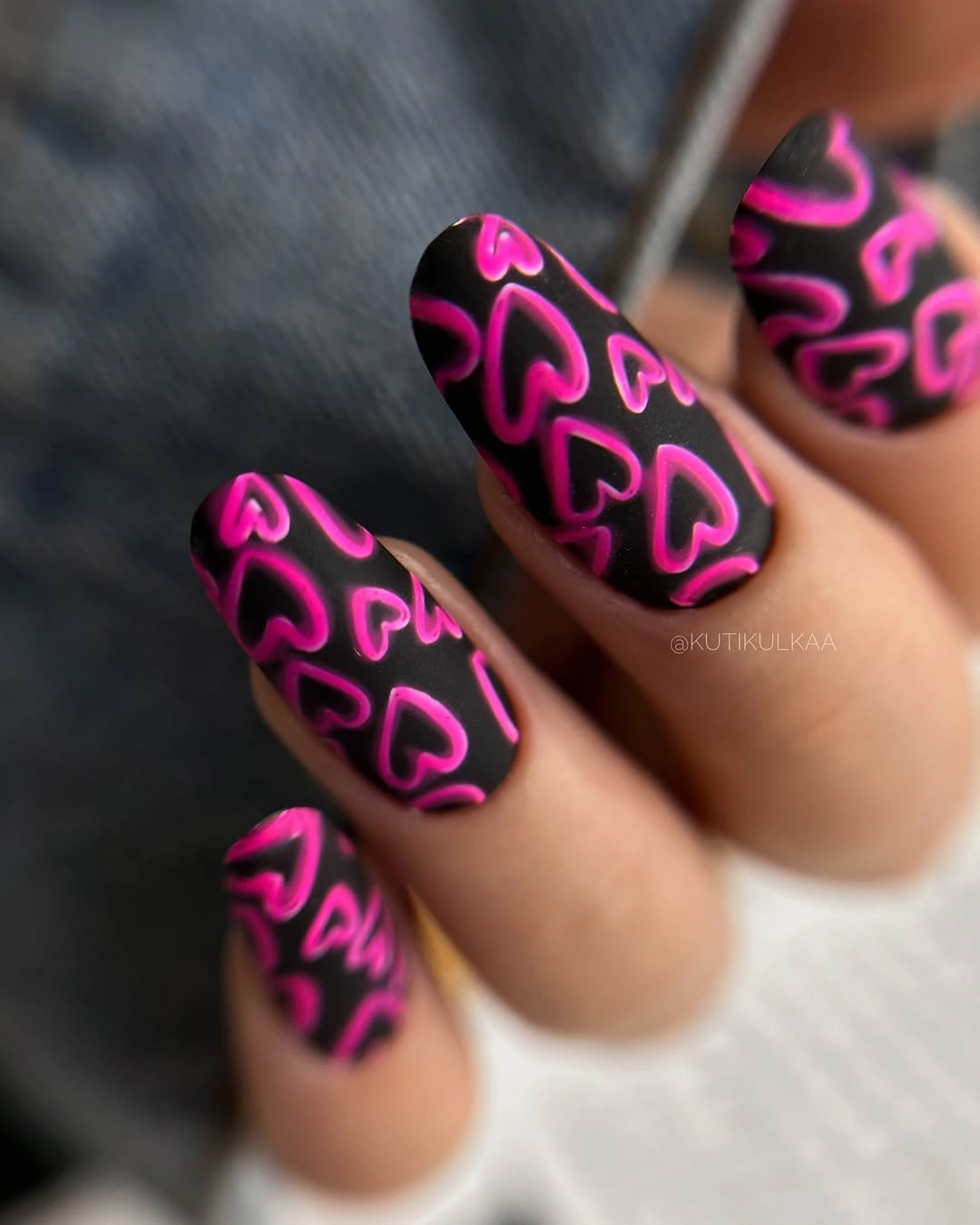
To make the idea more wearable, keep the heart pattern on one accent nail and use plain black on the others. The contrast will remain strong because the base is dark and the pink is bright, while the supporting fingers will restore the definition of an accent manicure. A shorter square will also contain the intensity without changing the central black-and-pink relationship.
Repeated bright motifs ask for more upkeep than a single symbol because every nail has a separate edge to maintain. The black base can feel graphic beside gray, white, or denim, but another neon accessory may make the look louder than intended. Choose this direction for a playful statement, or reduce the number of hearts before reducing the color contrast.
16. Black White Squares With Illustrated Details
Medium square nails combine black, white, pale blue, red, and small illustrated faces or figures across several fingers. White nails act as a canvas, while dark outlines help the mixed colors remain readable. The design is highly decorative and extends beyond one accent nail, but the contrast between white and black gives the busy set an internal structure.
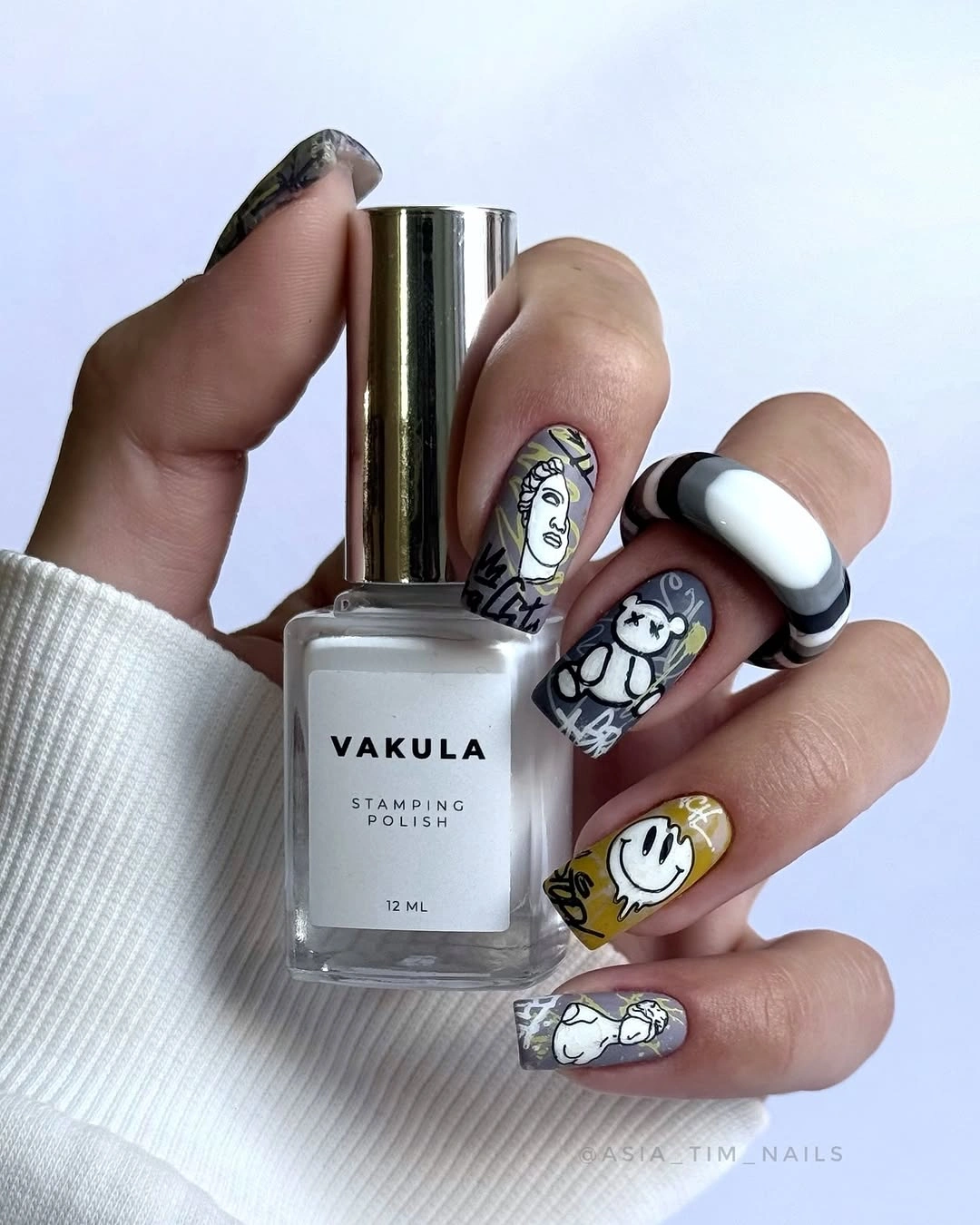
A reader can simplify the composition by keeping one white nail with the most recognizable detail and turning the other fingers black or plain white. That preserves the illustrative direction while removing the need to balance many small panels at once. Repeating one outline color is more useful than adding another bright shade because it keeps the focal nail visually connected.
The full set is likely to compete with patterned clothing, jewelry, or other novelty details, and the medium square length gives enough room for art but not infinite room for clarity. Choose the motif for the accent first, then let the surrounding nails become quiet support. For more seasonal nail-color comparison, see these fall nail color ideas and keep the artwork to one finger.
17. Leopard-Like Stiletto Nails With A Solid Yellow Pause
Long pointed nails use yellow, ochre, brown, and black leopard-like spots, with one more solid yellow nail interrupting the repeated pattern. The plain finger is important because it gives the eye a resting place inside a very loud print. The stiletto length makes the pattern dramatic, while the solid accent creates the clearest base-to-detail relationship.
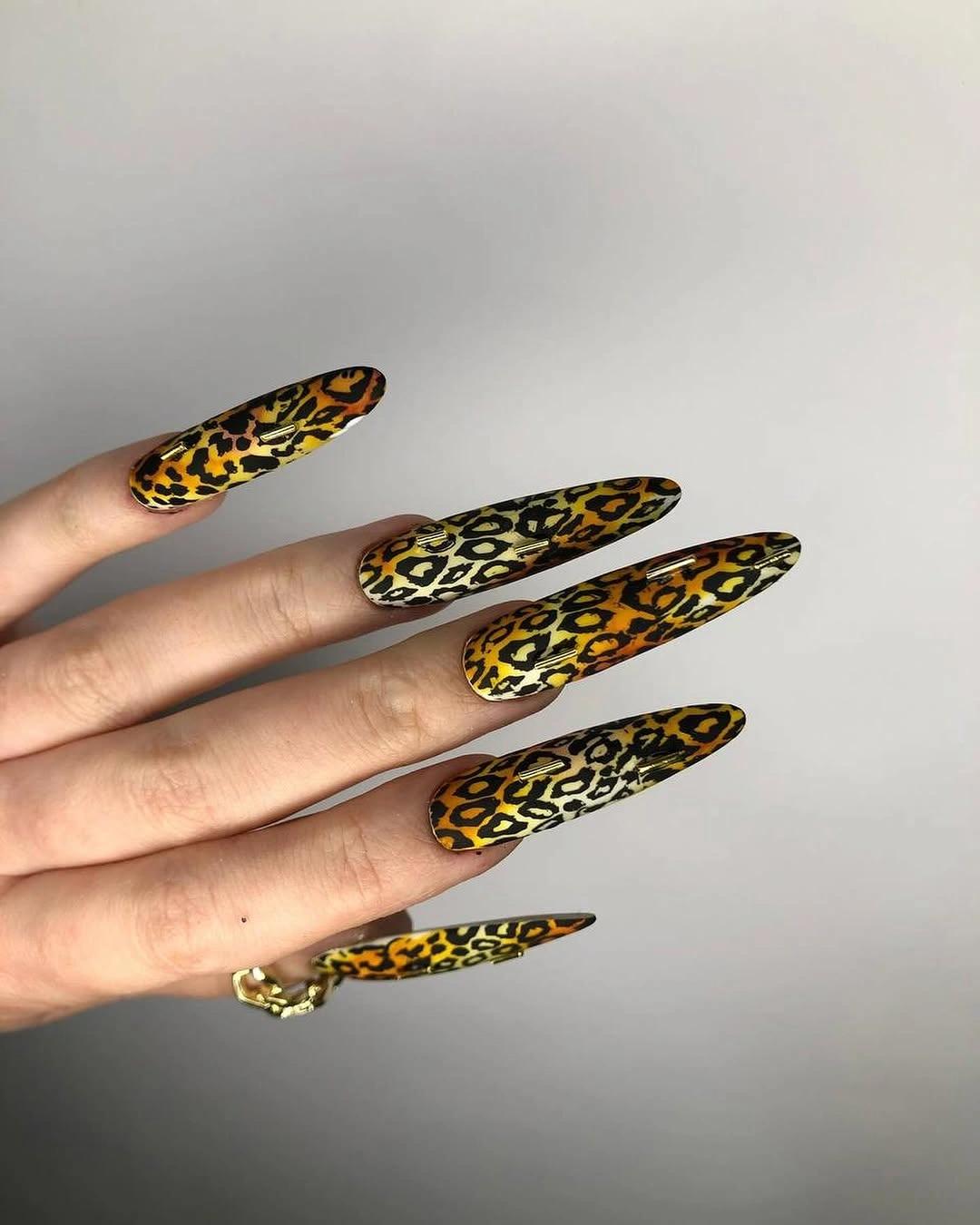
A solid accent is one of the easiest ways to calm an all-over print without changing the print itself. Keep the yellow finger plain, then move the spots to one or two supporting nails if a shorter version is needed. The reader can also use brown or nude as the solid pause, but a color already present in the pattern will keep the hand cohesive.
Long pointed nails and dense spots create a high-maintenance statement, particularly if the design is paired with other animal prints or strong accessories. Plain clothing will let the visual rhythm stay clear, while black or cream can echo the pattern without adding a second motif. Choose this idea when the print is meant to lead, and use the solid accent as the first simplification.
18. Magenta Nails With Pale Botanical Accents
Long tapered nails carry a saturated magenta base with pale pink or cream botanical lines across several fingers. The light motif contrasts through brightness, allowing it to remain visible even though the hue stays close to the main color. Darker tips or borders add a small amount of structure, but the magenta field still dominates the composition.
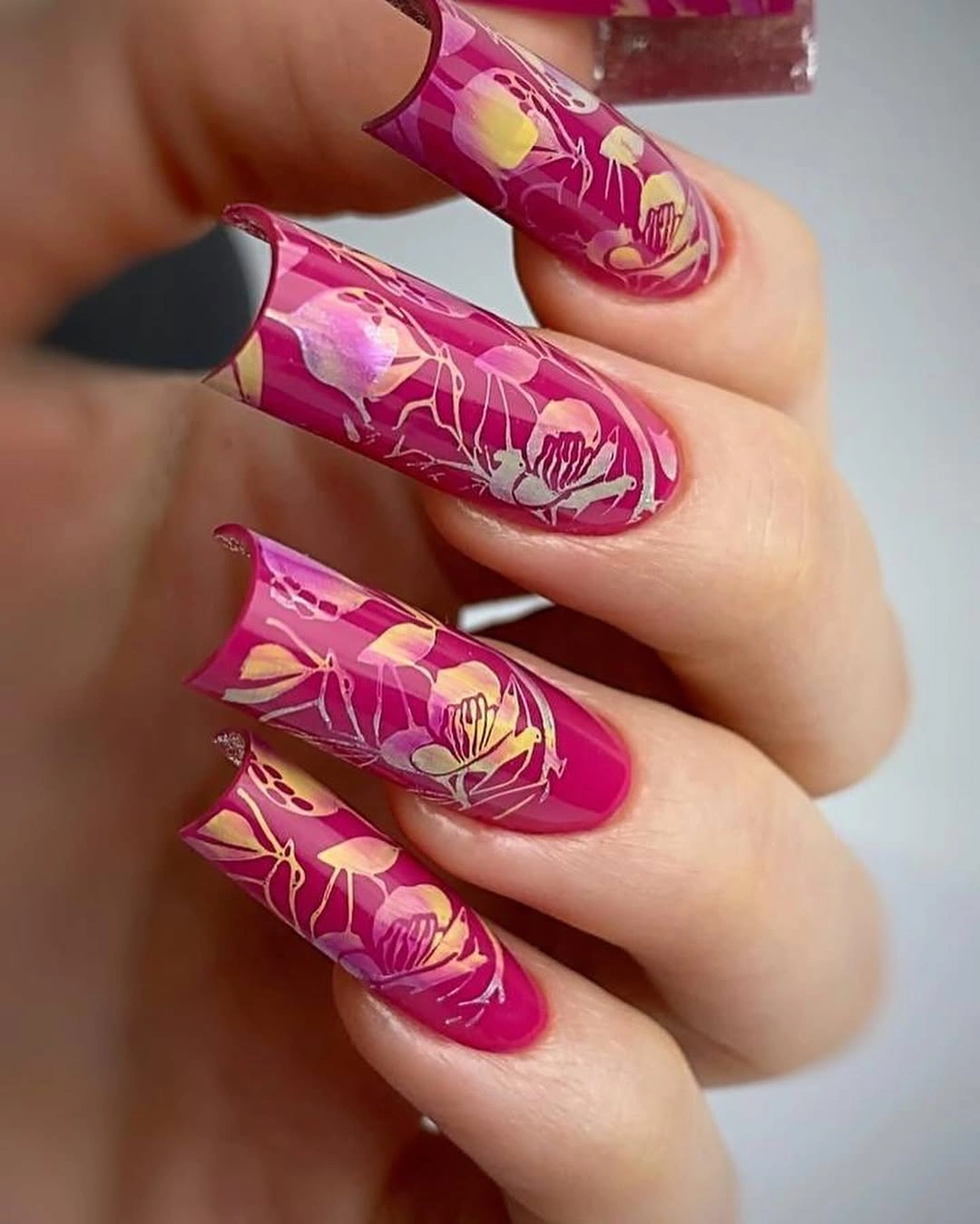
The color relationship is stronger than the exact plant-like drawing. A reader can keep magenta on most nails, place one pale botanical panel on the accent finger, and use a plain pale nail beside it if more breathing room is needed. Shorter nails will usually benefit from one larger sweep instead of several fine branches that could become crowded.
Saturated magenta naturally leads the outfit, so cream, gray, black, and denim will usually support it better than another bright print. The long shape offers enough room for the linework, but it also raises the upkeep cost of a vivid base and a detailed accent. For a less intense fall direction, deepen the magenta toward berry while leaving the light motif unchanged.
19. Short Nude Nails With One Tiny Botanical Mark
Short rounded-square nails use a pale nude or cream base, with one finger carrying a small black botanical or floral line drawing. The motif is deliberately tiny, leaving the light base as the largest visual field. Because the accent is isolated and the shape is compact, the manicure feels understated even though one nail contains visible art.
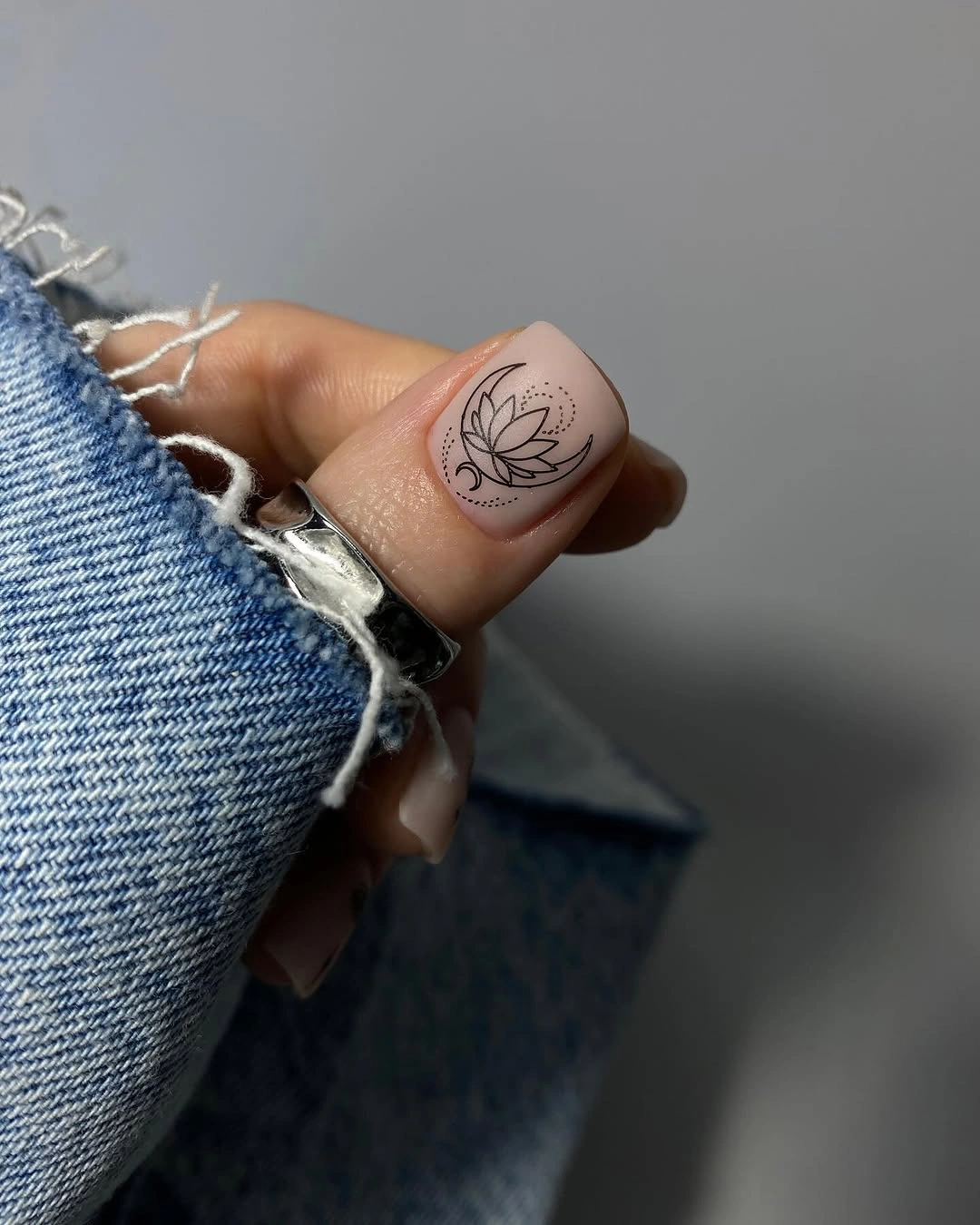
Scale matters more than color here. A small dark mark can change a neutral set without taking over, while a larger drawing would turn the manicure into a statement. Readers can keep the same idea with a warm taupe base or a single dark red line, but the accent should stay surrounded by enough open space to retain its quiet character.
The short length makes the design practical, and the simple base means grow-out will not disrupt a large pattern. Fine linework may still blur or wear sooner than a solid color, so keeping the motif uncomplicated is a realistic advantage. This is a good choice when the reader wants a detail that is noticeable up close but does not dictate the whole outfit.
20. Cream Short Squares With One Pink Bow Accent
Short rounded-square nails finish the collection with a pale cream base and one small pink bow-like drawing outlined in a dark color. The motif sits alone on one finger, surrounded by a large quiet field of cream. That proportion gives the symbol a gentle focal role rather than making the hand feel like a full themed set.
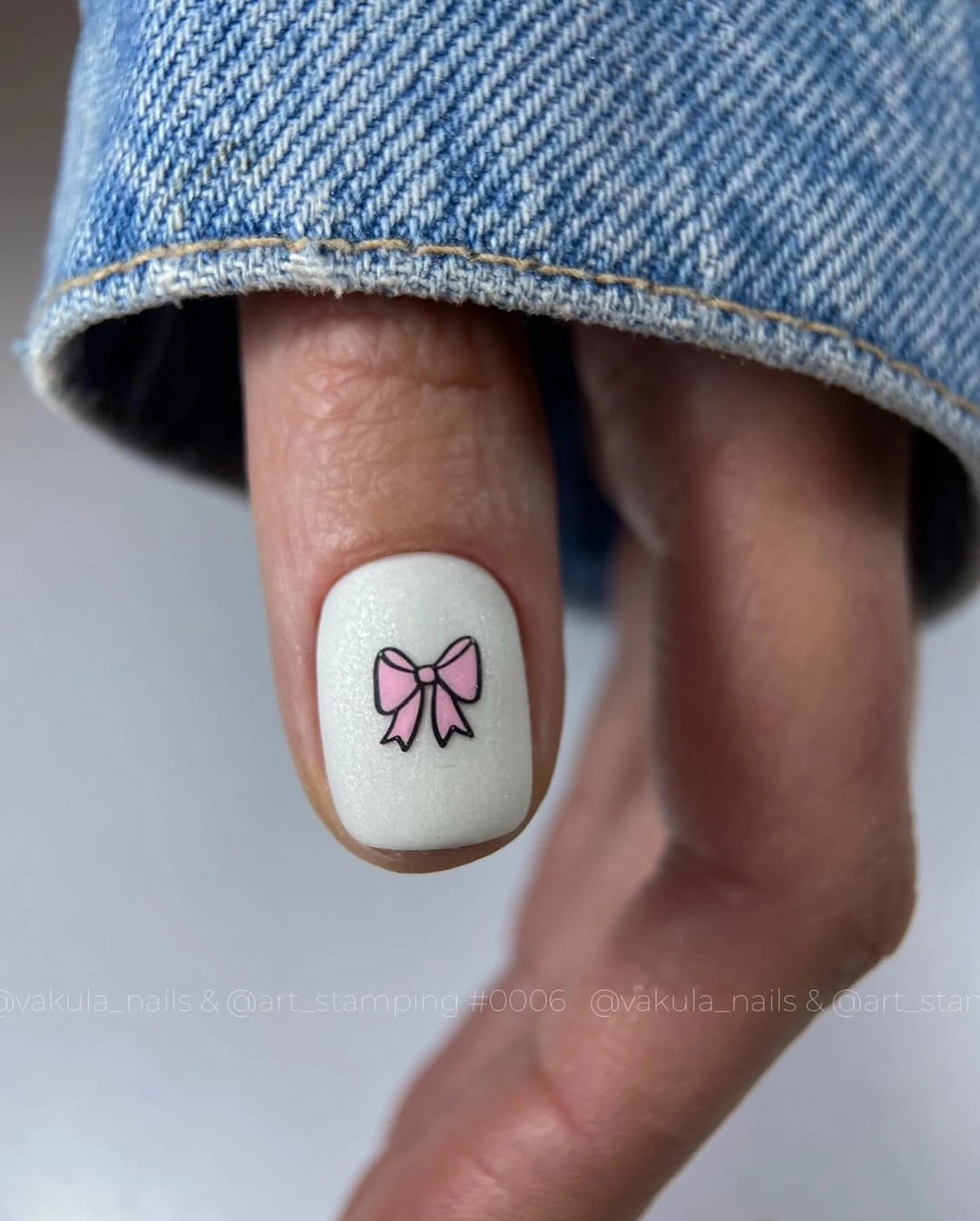
A single small symbol can be enough when the base is calm and the accent has a clear color relationship. The reader can replace the bow-like mark with another tiny shape while keeping the same cream-and-pink balance, or use a darker base if a stronger contrast is wanted. What matters is the isolation: the supporting nails must remain simple.
Cream is easy to pair with soft pink, denim, brown, or gray, and the short shape keeps the design comfortable for ordinary movement. The pale surface may show marks sooner than a dark color, but it also makes small grow-out less disruptive than a dense graphic pattern. This is the quietest accent direction here, useful when one personal detail is enough, and it sits neatly beside these November almond nail ideas.