A pedicure can feel warmer without becoming darker. A small change in the way light sits on the big toe can soften the whole foot, especially when the sandal leaves the skin and polish visible together. That relationship is easy to miss in a color chart, but it is often what makes a seasonal choice feel natural rather than merely themed.
Choose a finish that remains readable at the distance people actually see your feet, then check the close view for balance. Let the big toe hold attention only when the smaller toes can echo it quietly and keep the foot from feeling crowded. The best adjustment is usually the one that improves the connection between polish, skin, and footwear without demanding another decoration.
1. Glossy Black Squares for a Crisp Dark Start
These short square toenails use glossy black as a complete visual decision. The coverage is even, the edges are compact, and bright reflections keep the dark surface from looking dull against the pale geometric background. With no art or accent color, the pedicure feels direct and graphic, letting the toe shape and the clean contrast establish the mood.
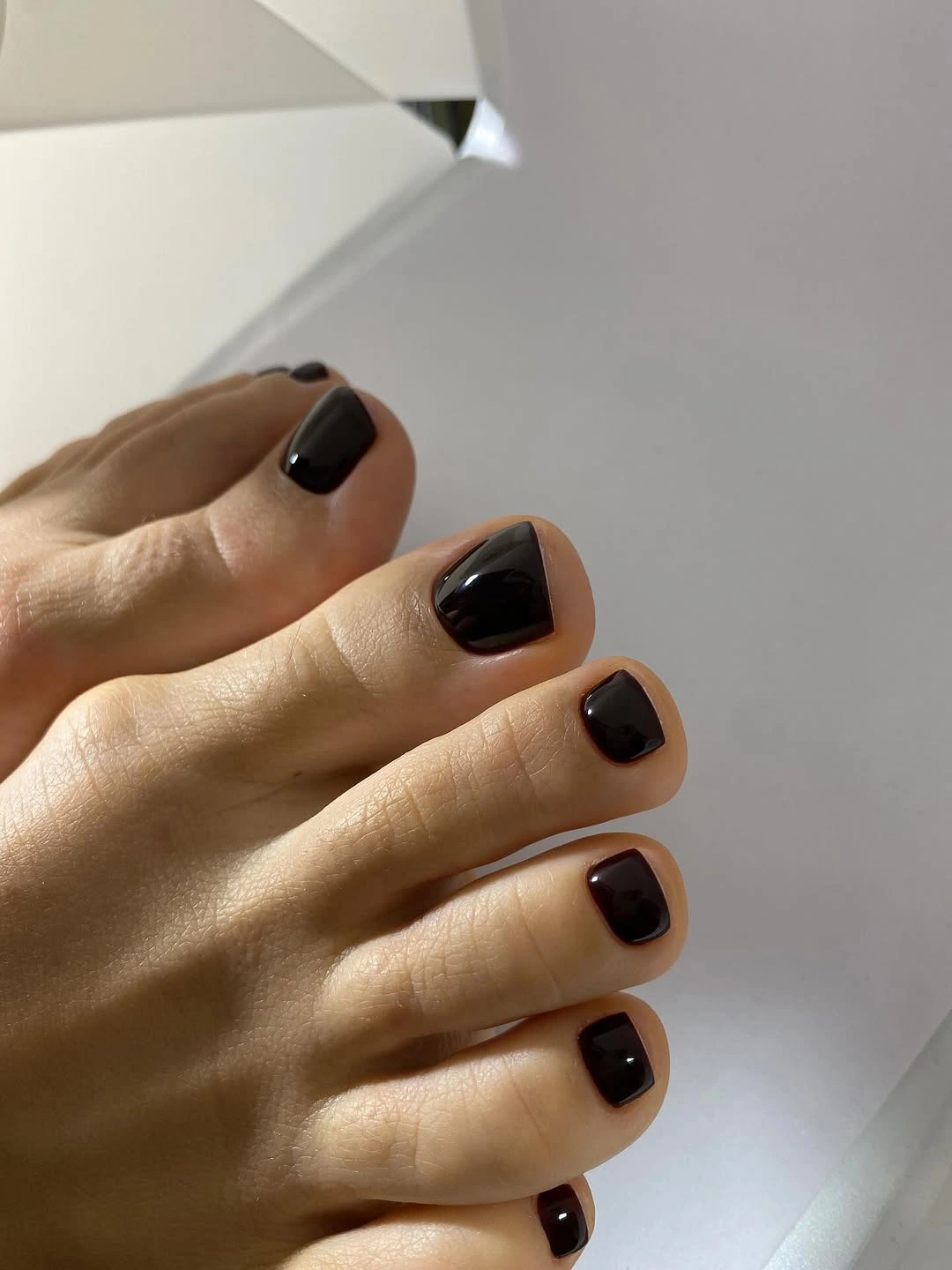
Black works here because the short square frame keeps it neat rather than heavy. The pale setting gives the polish an immediate outline, while the repeated color across the toes creates a calm rhythm that is easy to understand. A dark solid also has a useful seasonal depth without relying on brown, red, or metallic details to explain why it belongs in a fall edit.
If full black feels too severe, use charcoal, espresso, or one dark big toe with a softer neutral on the rest. The glossy surface will show chips and uneven edges clearly, so simple does not mean maintenance-free. Keep sandals and clothing light or textured if you want the contrast to remain visible rather than disappear into a dark outfit.
2. Hot Pink Toes Echoed by Matching Sandals
The vivid hot pink polish is repeated in the sandals, turning a simple short-square pedicure into a coordinated color story. The big toe and smaller toes share the same glossy finish, and the footwear carries the hue outward so the feet feel styled as one unit. The manicure itself stays uncomplicated, which lets the matching accessory provide the extra visual energy.
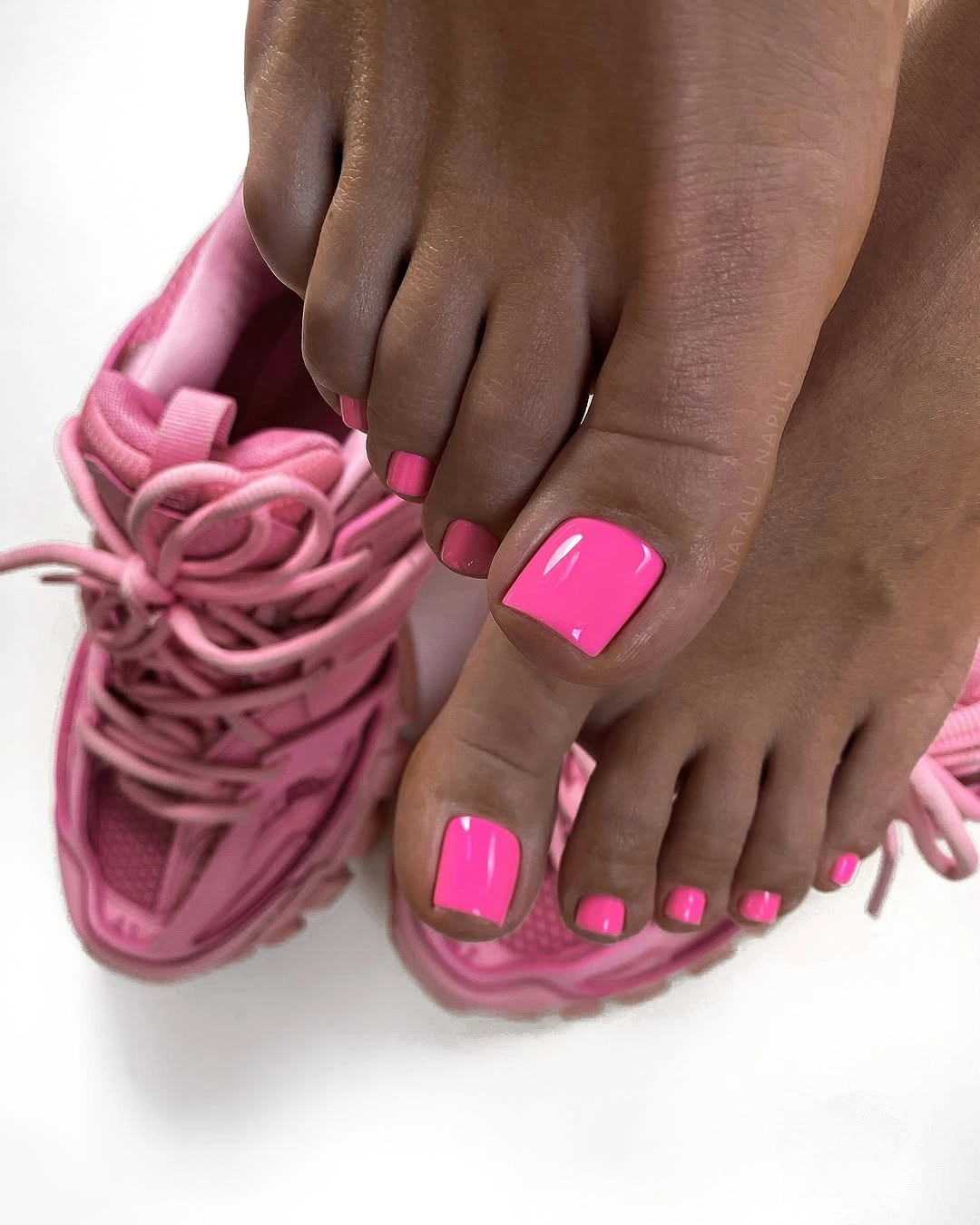
This pairing works because the accessory repeats rather than competes with the polish. The bright color remains easy to identify, while the compact shape keeps the toes looking tidy inside the open footwear. It is a useful reminder that a pedicure does not need nail art to feel intentional; a nearby color echo can supply the connection and make one saturated shade look considered.
The same idea can move toward berry, red, rust, or even cobalt, depending on the footwear already in your wardrobe. If matching sandals feel too literal, repeat the color in a bag or small accessory instead. The tradeoff is flexibility: a strong color story is memorable, but it can limit what the shoes pair with later. For more seasonal combinations, compare these choices with fall pedicure ideas.
3. Chocolate Brown Gloss with Warm Depth
The deep chocolate-brown polish gives these short square toes the warmth of a seasonal neutral without the hard contrast of black. Broad glossy reflections open across the big toe and smaller nails, showing that the surface is smooth and richly saturated. The shape remains compact, so the brown reads as polished and grounded rather than dramatic.
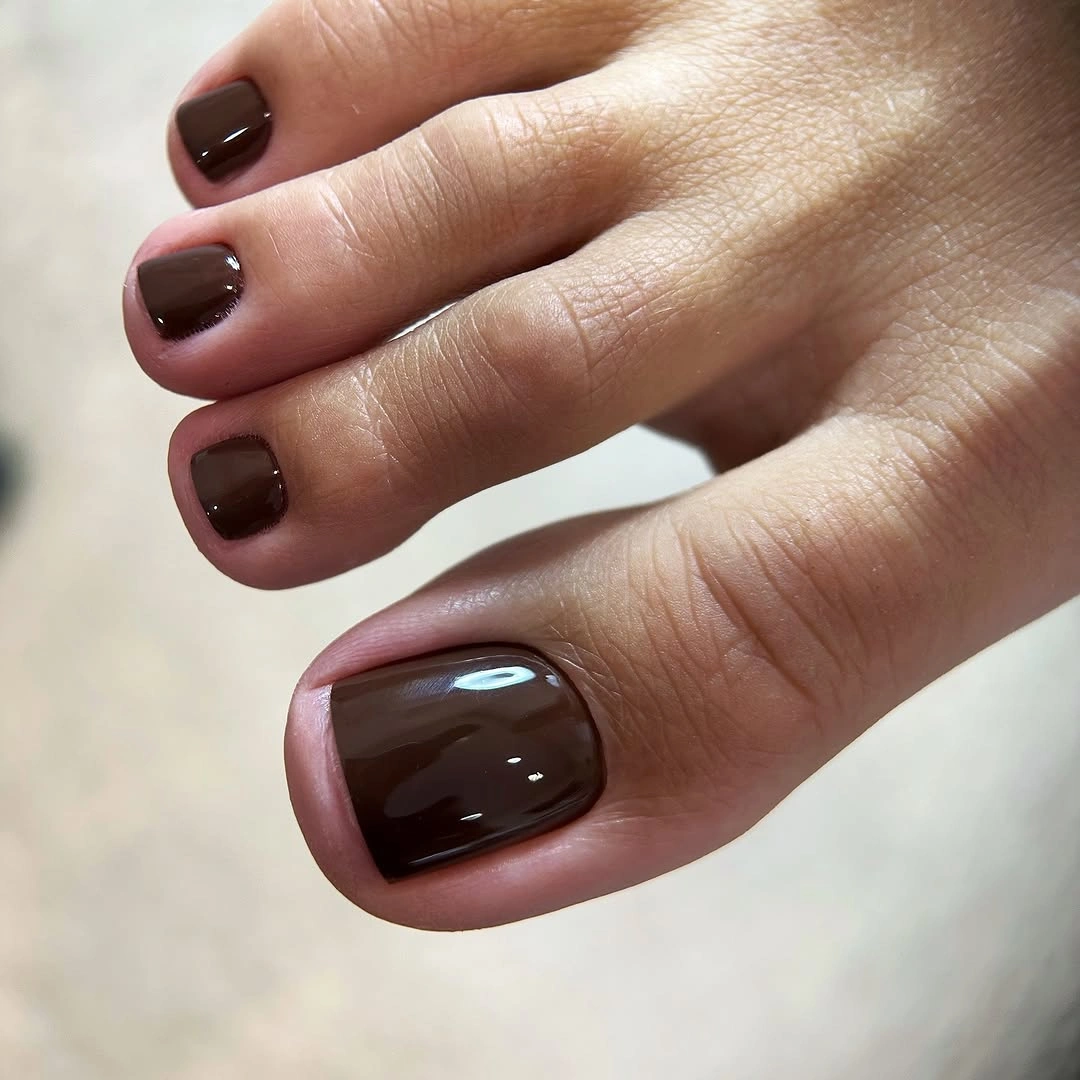
Warm brown is useful when you want fall depth that can sit beside many accessories. It echoes leather, coffee, camel, cream, and denim without needing to match them exactly, and the simple finish leaves enough room for the surrounding styling to change. The big toe carries the strongest visual area, while the smaller toes repeat the shade and keep the composition settled.
An espresso tone would make the pedicure darker, while cinnamon or muted chestnut would lighten it for pale sandals. Keep the square edges short if you want the color to behave like a neutral. Because the surface is plain, tidy coverage matters more than decoration; small chips or uneven corners will be easy to see against the dense brown field.
4. Burgundy Glitter Concentrated on the Big Toe
The deep burgundy surface is packed with fine multicolor sparkle, but the dark wine base remains the first impression. The big toe shows the strongest reflective area, while the smaller visible toes carry the same rich direction. Compact square edges keep the glitter controlled, so the pedicure feels festive without becoming a full pattern or an oversized decoration.
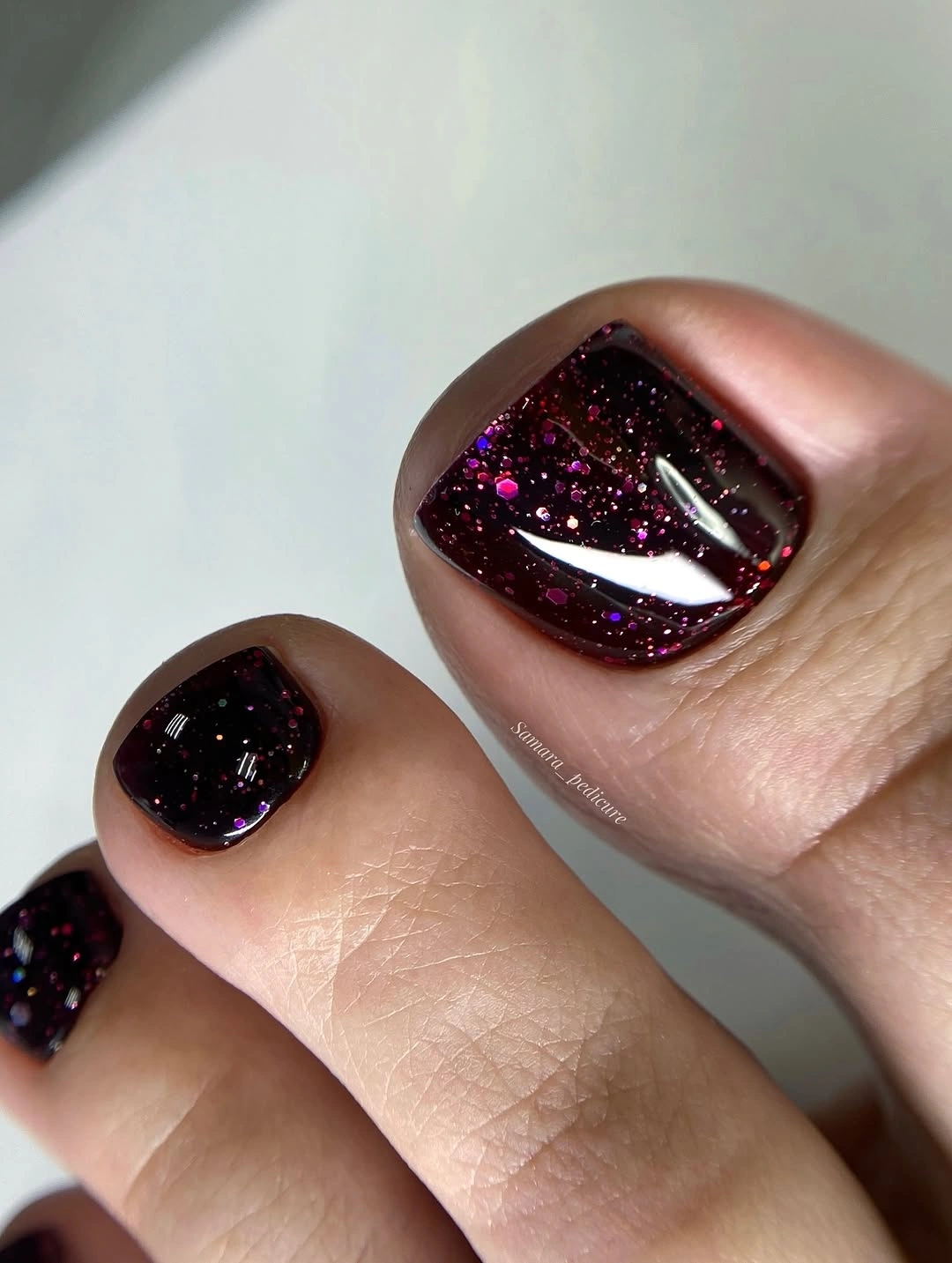
Fine sparkle changes the way a dark color handles light. A flat burgundy would look denser and quieter, but the tiny points open the surface whenever the foot moves, adding texture without changing the palette. That makes the pedicure easy to style with simple sandals or evening details, especially when you want the color to feel richer than a standard gloss.
For a lower-key version, keep the glitter on the big toes and use plain burgundy on the smaller ones. A shorter square will preserve the clean frame, and a deeper red can warm the look further. The tradeoff is upkeep at the surface: sparkle can emphasize uneven texture and may look much quieter in shadow, so choose it for changing light rather than a fixed single effect.
5. Multicolor Geometric Blocks on Short Toes
The big toes carry bold geometric blocks in green, blue, orange, and purple, separated by dark lines that make the composition easy to read. Smaller toes repeat parts of the palette, while irregular gold accents appear around the styling and add another warm note nearby. The nail art is the center of attention, so the compact square shape works as a clean boundary for all those angular sections.
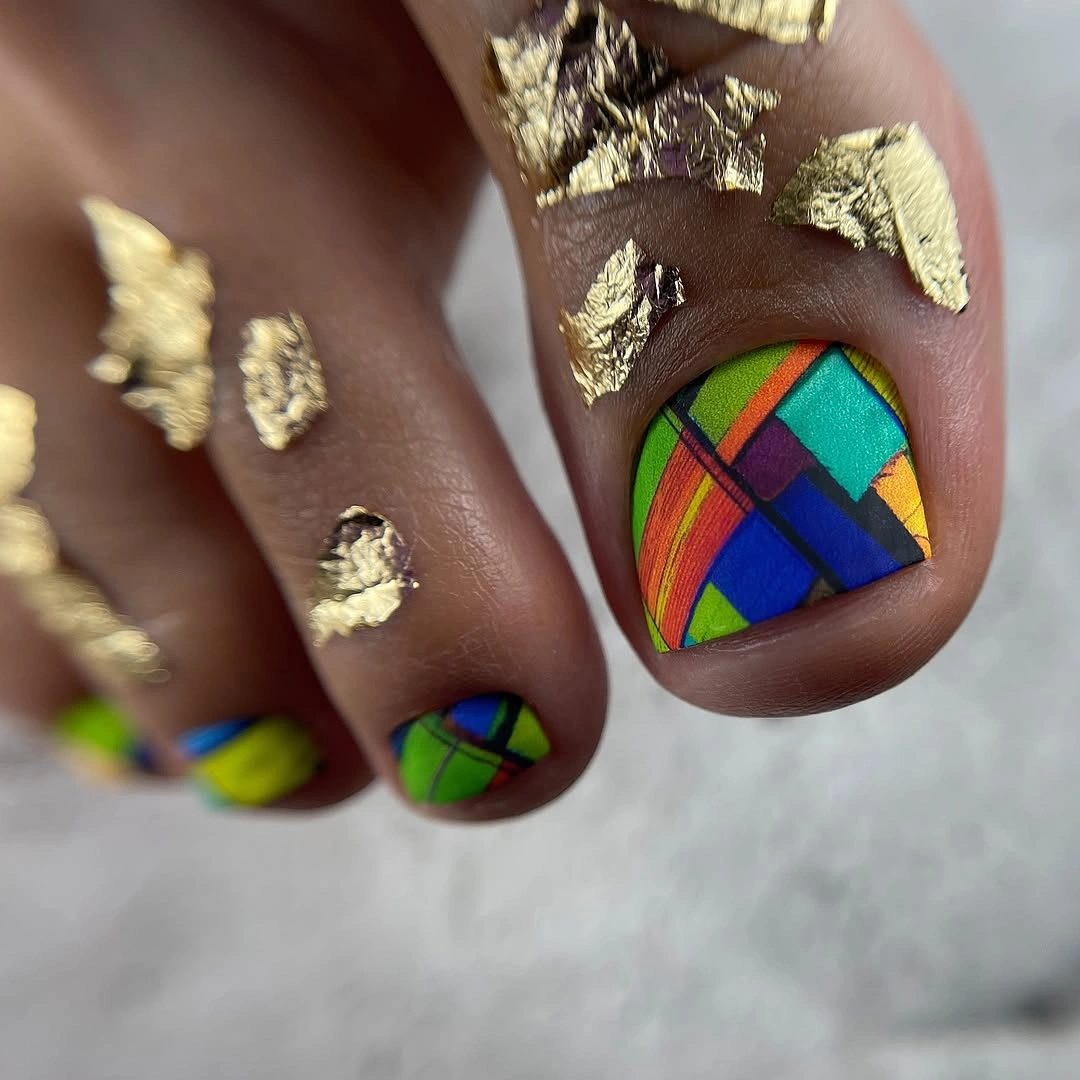
The design feels coherent because the colors are organized into distinct shapes instead of blended randomly. Dark dividing lines give the bright palette a visual grid, and repeating only parts of the palette on the smaller toes prevents every nail from demanding equal attention. This is an art-led pedicure where the big toe carries the story and the rest of the foot supports it.
A practical adaptation would keep the geometric pattern on the big toes and choose one matching solid shade for the smaller nails. Neutral sandals would give the colors room, while patterned footwear could compete with the blocks. The realistic limitation is styling flexibility: several bright hues are memorable and playful, but they need calmer clothing and accessories to stay legible. A wider toe-focused edit is available in toe nail color ideas.
6. Bright Pink Gloss against Soft Feather Texture
The bright pink polish is simple, glossy, and compact, but the pale feather texture around the feet changes how the color feels. Against that soft neutral background, the toes become a clear point of energy without needing a print or metallic accent. The big toe carries the strongest reflection, while the smaller toes repeat the same vivid color in a tidy short-square rhythm.
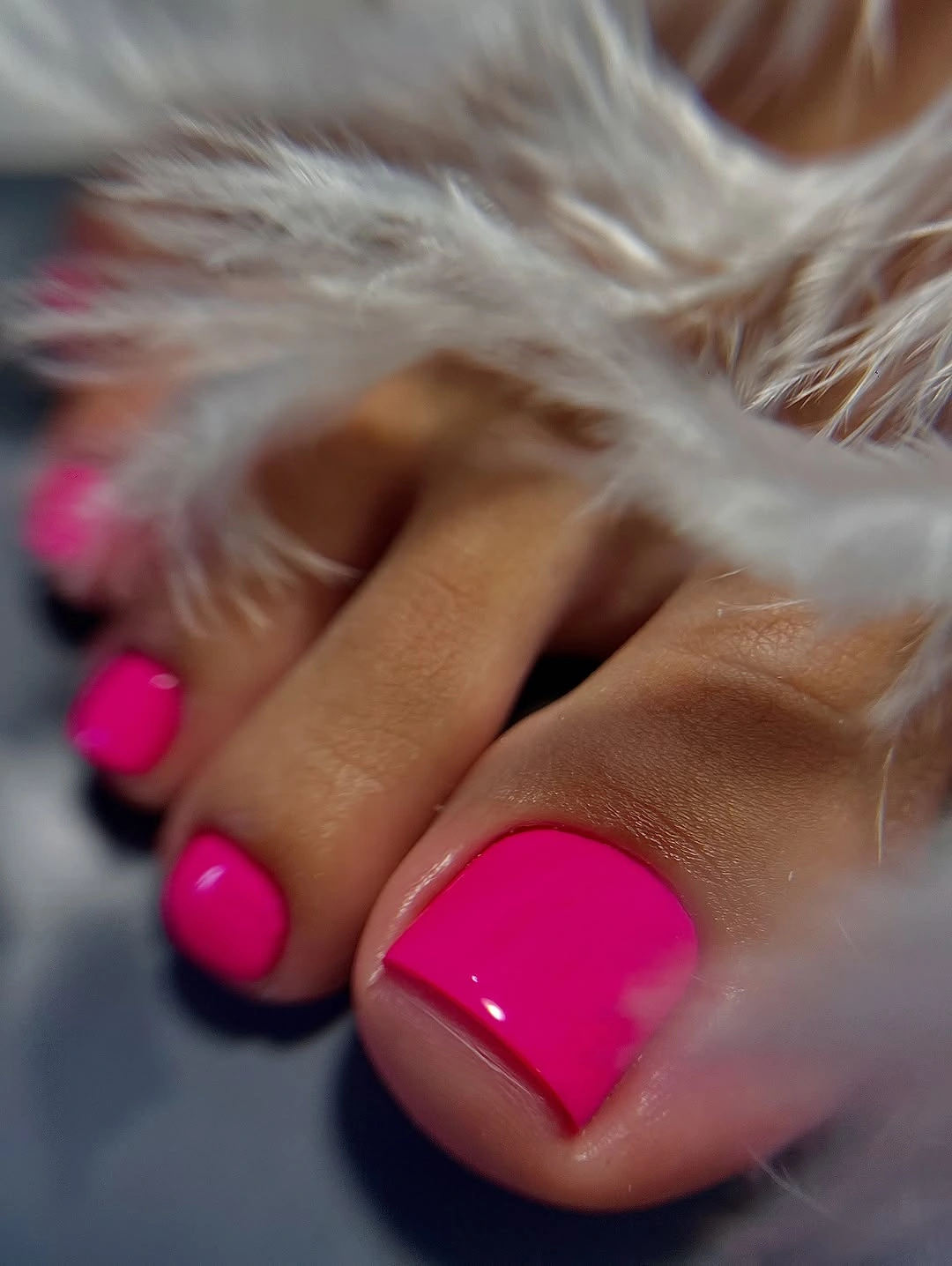
Contrast is coming from texture rather than from another nail shade. The feathers make the pink look even brighter and more playful, while the short shape keeps the saturated color from becoming visually heavy. This is an easy way to make a solid pedicure feel styled: let the surrounding material supply softness, then allow the polish to remain clean and direct.
A berry, coral, or warm red could create the same relationship with pale knitwear or cream sandals. If the rest of the outfit is already colorful, use the pink only on the big toe and soften the smaller nails. The tradeoff is intensity: bright pink is flexible with neutrals but less forgiving when paired with several other strong colors, so fall nail inspiration is most useful when the rest of the styling stays restrained.
7. Opaque White Toes beside Silver Details
Opaque white creates a bright, compact pedicure that sits clearly beside the silver detail near the foot. The big toe is evenly covered and strongly reflective, while the smaller toes repeat the pale color without adding art. The short square shape keeps the white looking neat, giving the metallic accessory a clean background rather than competing with it.
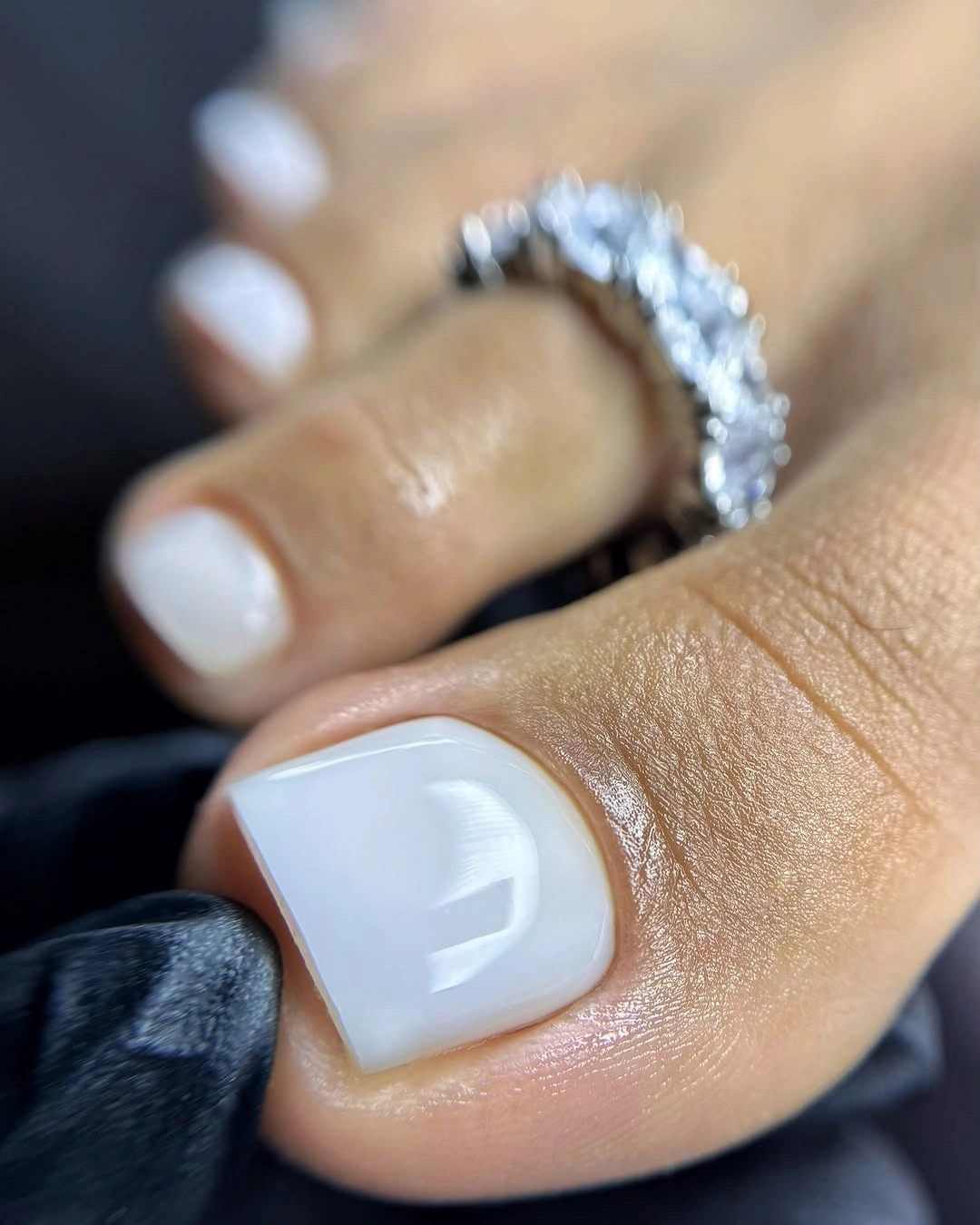
The pairing works because both choices reflect light in different ways. White supplies a broad, quiet field, and silver contributes small points of shine nearby, so the look feels coordinated without needing the nail color to match the accessory exactly. This is a useful route when you want the feet to look crisp while the jewelry or sandal hardware carries the more decorative note.
Cream would warm the result, while a sheer white would make the contrast softer and more forgiving. Keep the edges tidy because a plain pale surface shows uneven coverage, staining, and wear more quickly than a dark or patterned one. White is the visual reset here, so let the surrounding footwear stay simple enough for that brightness to remain intentional.
8. Pink and White Animal-Like Print on the Big Toes
Bright pink supplies the base for an irregular white and darker pink pattern that covers the big toe and smaller visible nails. The compact square shape keeps the print contained, while the white sandal straps give the busy surfaces a clean frame. The design is playful because the marks vary, but the shared pink family keeps the feet from looking disconnected.
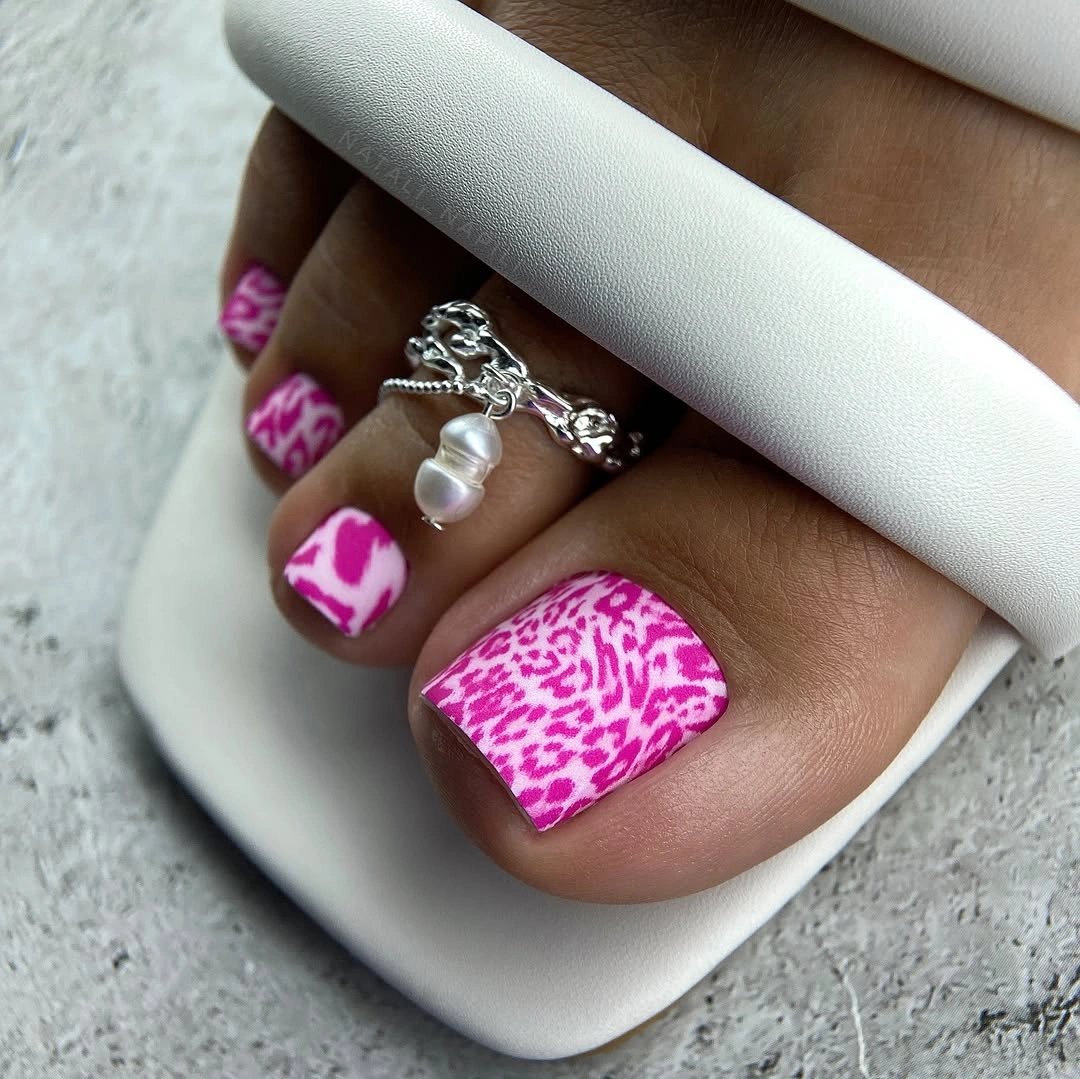
The print works best when the accessory stays quiet. The white sandals do not introduce another strong color, so the patterned toes remain the focal point and the eye can compare the irregular marks from one nail to the next. The big toe carries the clearest pattern, while the smaller toes support it with repetition rather than adding a second design language.
For a more autumnal version, change the pink to burgundy, rust, or chocolate and keep the light pattern lighter than the base. Another easy edit is to put the print only on the big toes and use one solid color below. Full-coverage pattern is less subtle than a solid polish, so it will compete with patterned clothing or busy footwear unless the rest of the look stays calm.
9. Blush Pink with Pearl-Like Styling Details
The soft blush-pink polish is glossy but quiet, giving these short rounded-square toes a near-neutral finish. A lighter curved area on the big toe catches the light, while pearl-like details near the sandal add a delicate point of interest beside the pedicure. The nails remain simple, allowing the accessories to create the gentler seasonal mood.
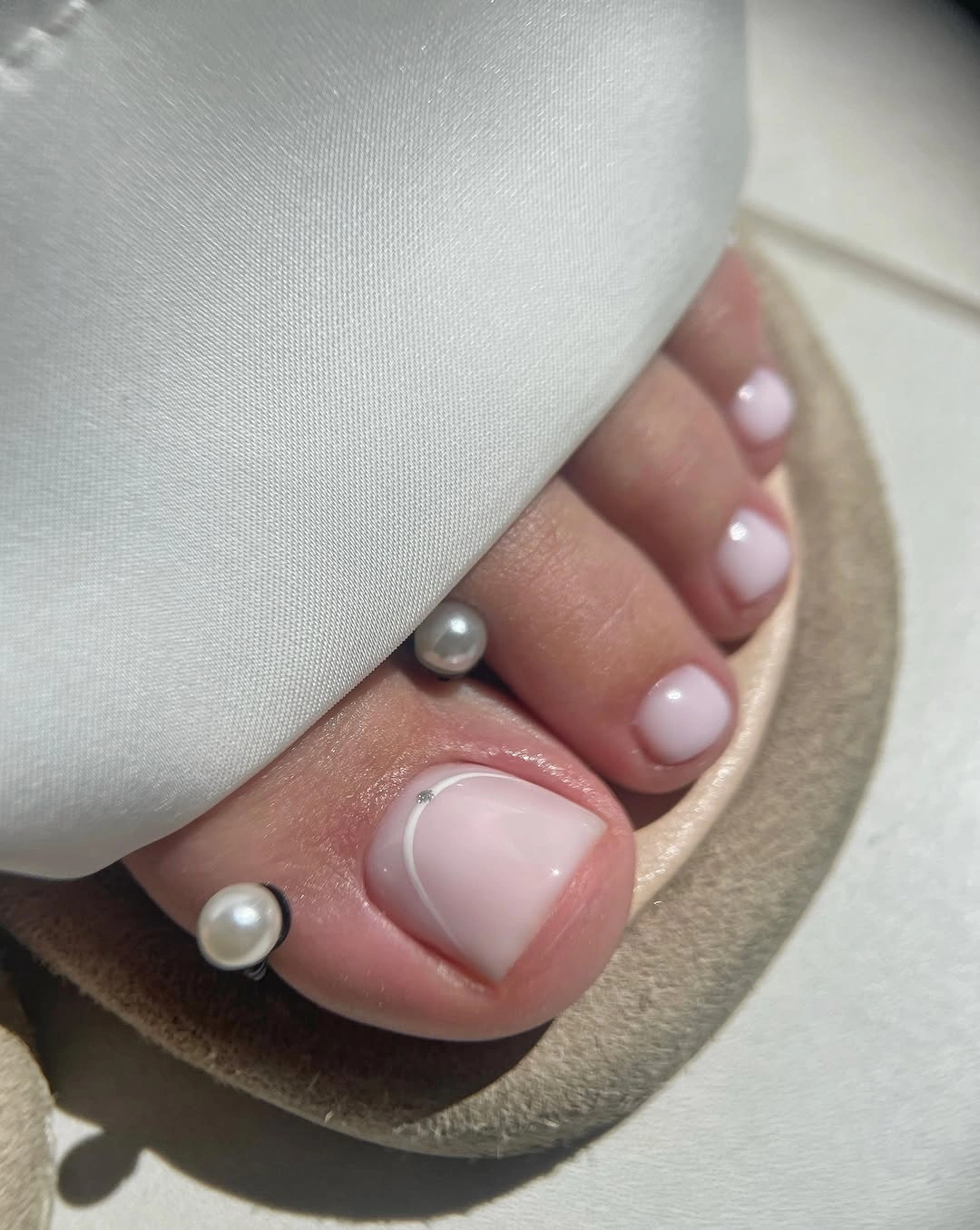
This color works because it does not force the styling into one temperature. Blush pink can sit beside cream, silver, soft gold, or pale neutral sandals, and the short shape keeps the effect tidy even when the surrounding details are delicate. The visual balance comes from scale: the toe color is broad and quiet, while the nearby accents are small and precise.
A sheer pink or muted mauve would keep the same softness, while a slightly warmer rose would bring more fall depth. If the accessories are already ornate, leave the nails plain and let the finish stay glossy. The limitation is contrast: pale blush will look understated rather than dramatic, so it suits a calm, accessory-led edit better than a bold color statement.
10. Rosy Pink Gloss with Light Metallic Footwear
Rosy pink gives this short square pedicure a soft center while white straps and metallic hardware add structure around the feet. The big toe and smaller toes carry the same even glossy surface, so the nails do not compete with the layered sandal details. The overall effect is polished but still light, with the accessories providing the sharper visual edges.
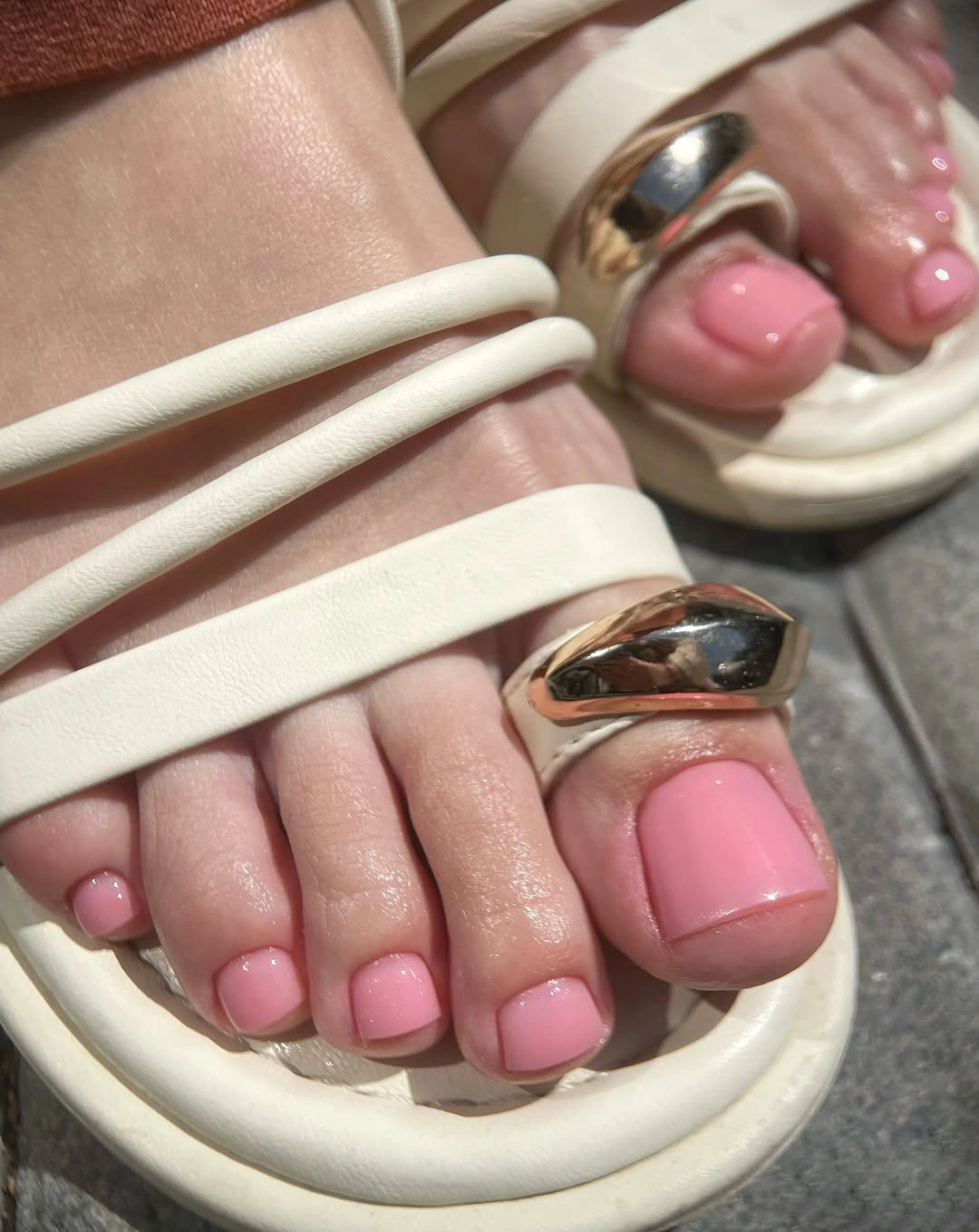
The shade is useful because it bridges warm and cool styling. It can sit beside white, silver, or pale gold without looking out of place, and it keeps the toes from becoming visually heavy when the sandals already include several shapes. The consistent short-square outline also makes the color look intentional across both feet instead of like a background neutral chosen without thought.
Dusty rose would make the palette deeper, while nude-pink would recede further if the footwear is the main feature. Keep the color glossy and the edges neat, since there is no pattern to disguise uneven coverage. This is a good example of using a soft shade as a connector between accessories rather than asking the pedicure to become the entire statement.
11. Deep Cherry Red in a Clean Two-Foot Rhythm
Both feet carry the same deep cherry-red polish, creating a strong rhythm through repetition rather than detail. The color is saturated and glossy, the big toes are clearly squared, and the smaller toes support the same dense red field. With no pattern or accent, the pedicure feels classic and seasonal because the shade itself supplies the warmth and depth.
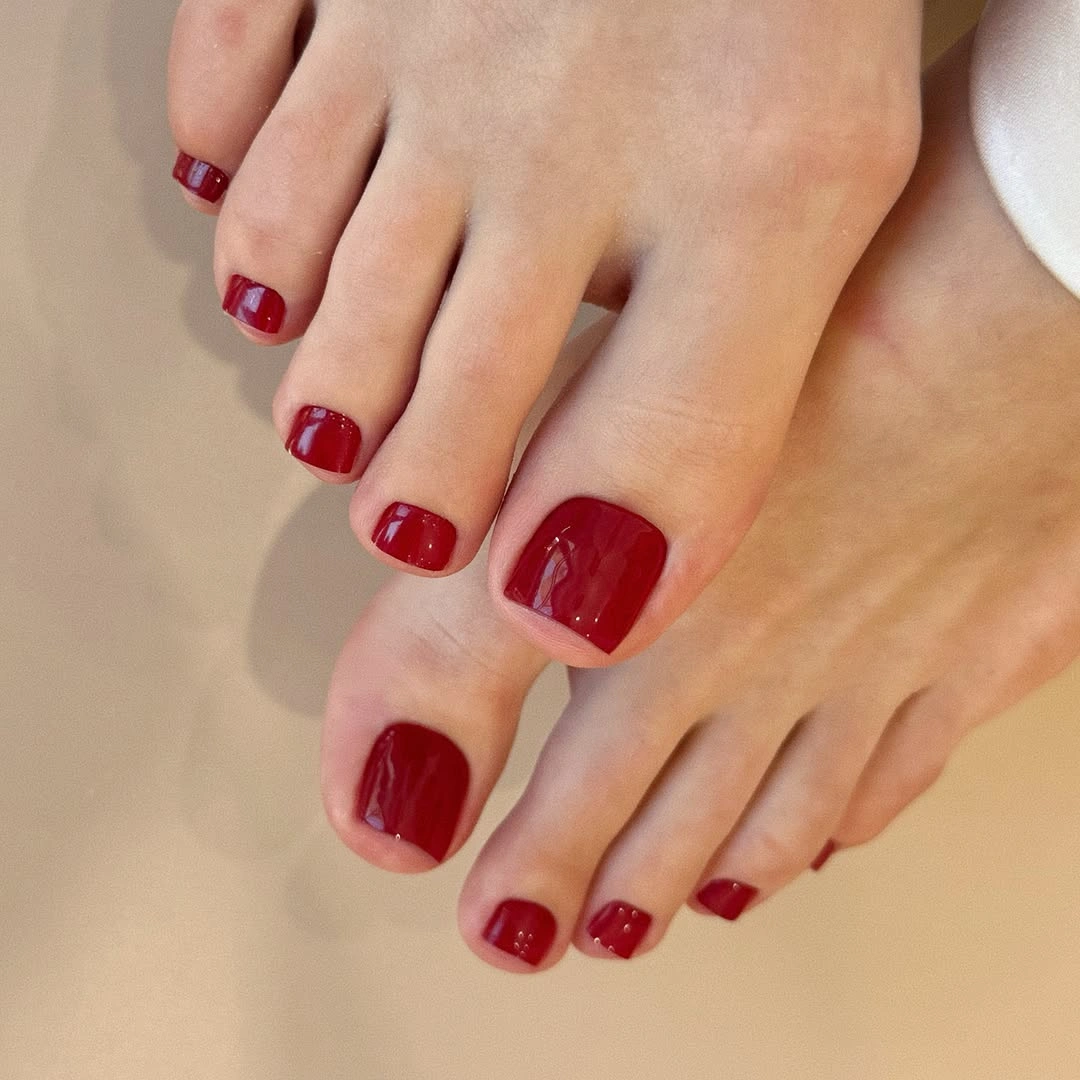
The simplicity is valuable in a two-foot view. The eye can move across the feet without stopping at unrelated details, and the consistent red makes the shape look deliberate even when the toes sit at slightly different angles. Cherry red also works with neutral sandals, dark footwear, and warm accessories, so the color can carry a look without requiring an exact match.
A brighter red would feel more energetic, while burgundy would make the result moodier. Keep the square length compact and let the red remain solid if you want the same direct effect. The tradeoff is visible wear: a chip interrupts the uninterrupted color field, so a plain shade still benefits from even edges and regular attention.
12. Glossy Black Repeated with Black Sandal Straps
The glossy black pedicure repeats the color of the sandal straps and buckle, creating a tonal line from the toes into the footwear. The short square nails are compact and even, while the shine on the big toe catches the daylight more strongly than the surrounding black material. Because the palette stays monochrome, the look feels deliberate without requiring a pattern.
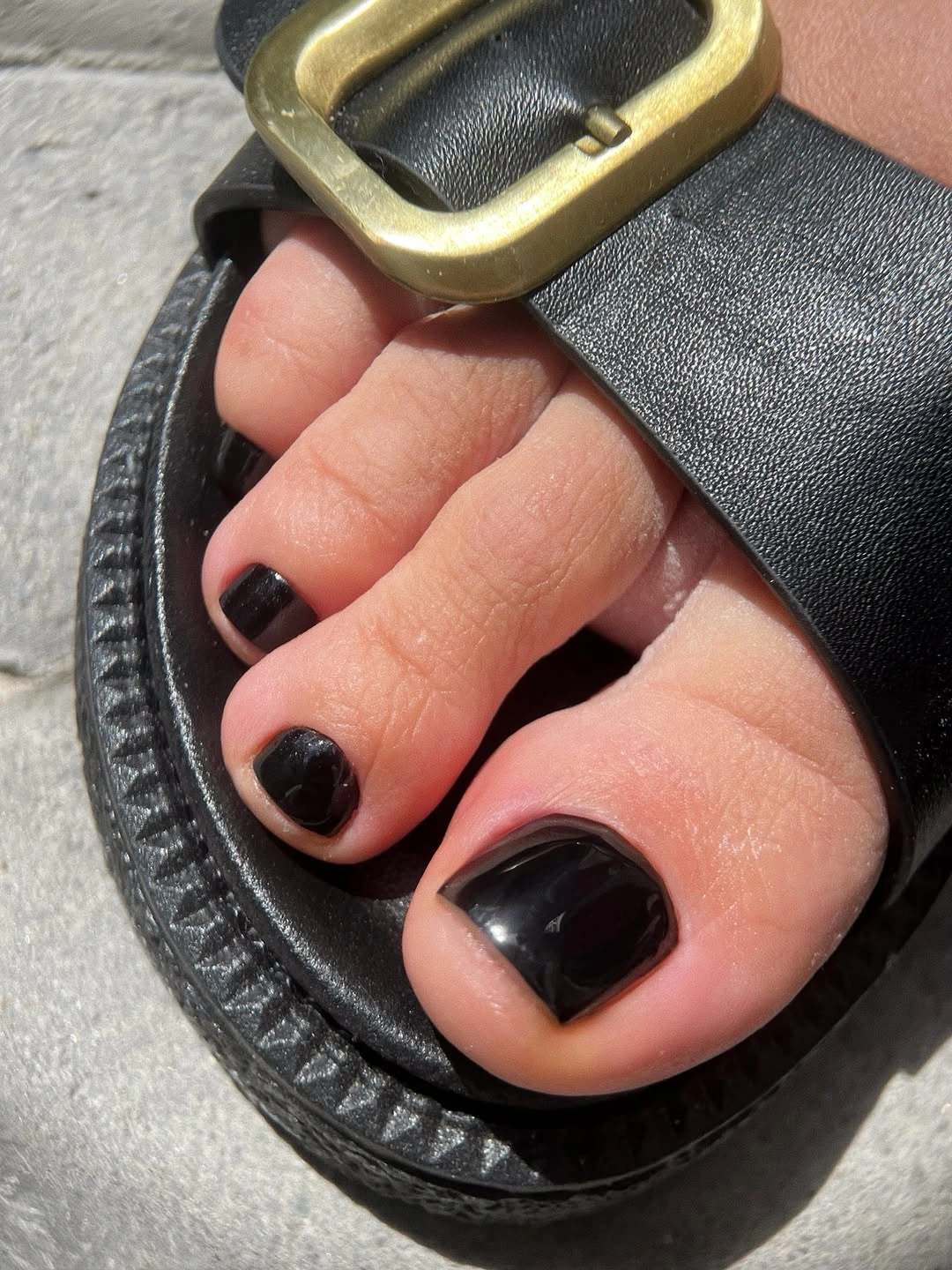
Matching the polish to the sandals changes black from a simple shade into a styling decision. The dark tones connect the separate surfaces, while the short shape keeps the feet looking tidy and the metallic buckle supplies a small break in the monochrome field. The result is graphic but not crowded, with the accessory doing just enough to keep the black from feeling flat.
Deep brown, navy, or burgundy can create a softer tonal effect if full black feels too sharp. Keep the polish glossy so it separates from matte or textured footwear, and let the straps remain the repeated visual anchor. The limitation is visibility in shadow: dark-on-dark styling can lose detail, while any chip will stand out against the surrounding black.
13. Black Gloss beside Soft Ribbed Texture
This glossy black pedicure uses the simplest dark palette, but the soft ribbed texture beside the foot changes its mood. Compact square toes carry smooth highlights, while the fabric adds a warm tactile contrast without becoming part of the nail design. The black surface remains the focal point because it is the most defined shape in the close view.
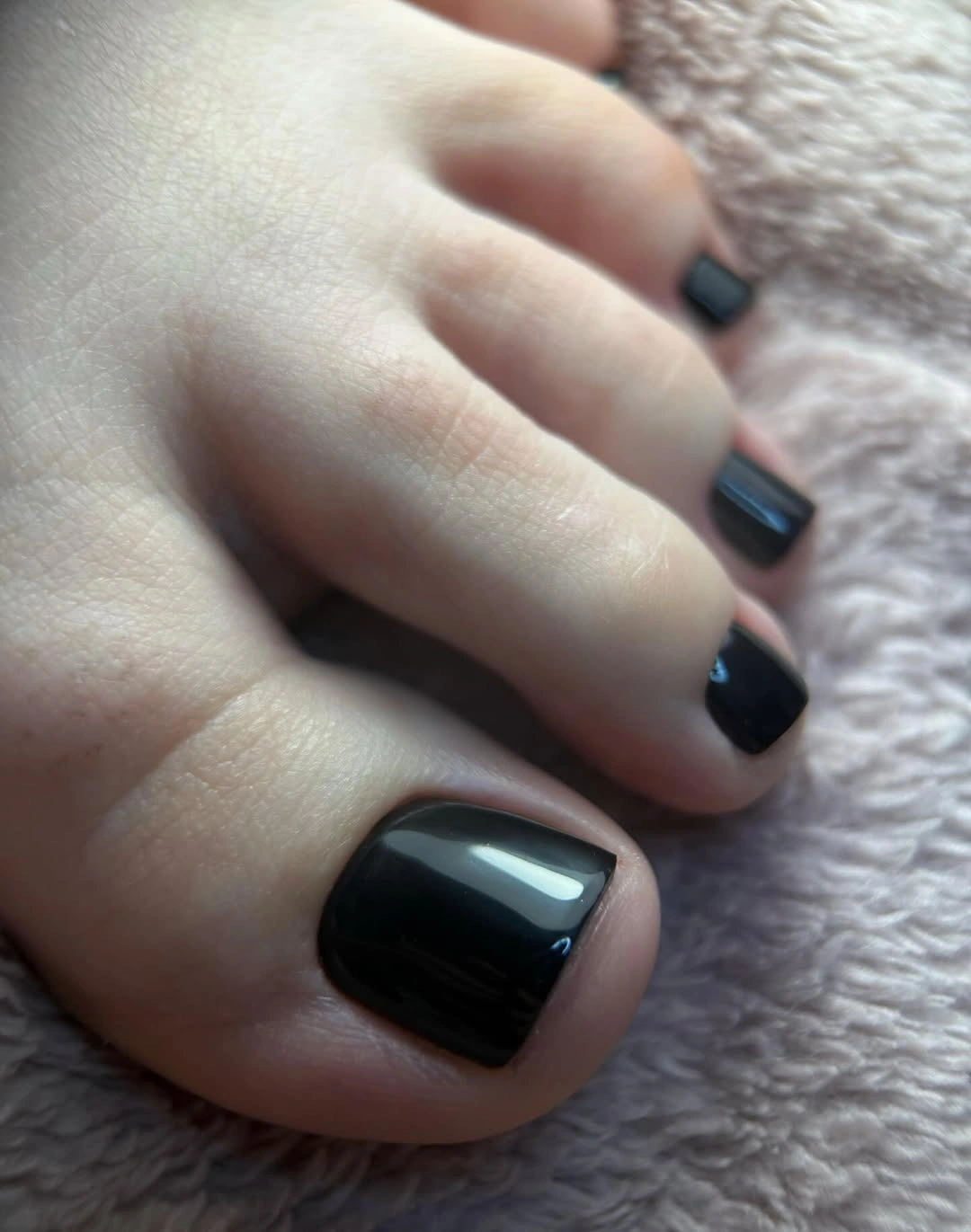
Texture makes the solid color feel richer. The ribbed material absorbs light in small bands, and the polish reflects it in clean white marks, so the two surfaces support each other through opposition. A pattern on the nails would compete with that relationship; the plain black finish leaves the contrast easy to read and keeps the pedicure visually grounded.
Charcoal or espresso would soften the look, while black glitter could add surface movement if you want more than a gloss. Keep the square edges short and tidy, because the dark uninterrupted field shows wear quickly. This option suits a quieter fall outfit where the material around the feet supplies warmth and the pedicure supplies definition.
14. Pastel Yellow for a Brighter Seasonal Turn
Pastel yellow brings a warm, bright pause to a group of deeper fall shades. Both feet carry the same glossy color and compact square shape, so the pedicure feels coordinated even though the palette is lighter. The yellow is soft rather than neon, which keeps the look cheerful without making the toes appear overly loud beside the skin and neutral background.
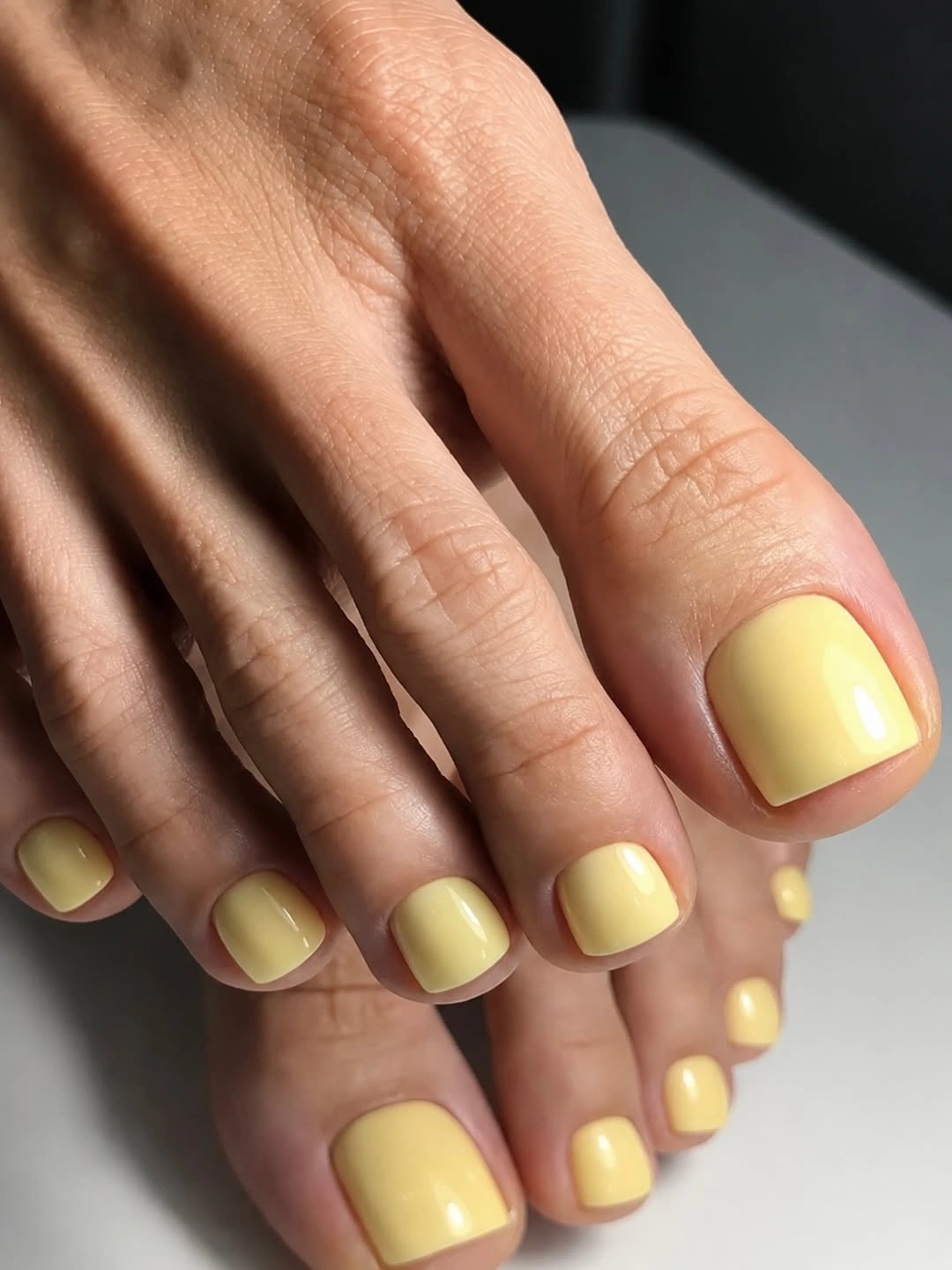
The shade works as a seasonal turn because it does not rely on brown, red, or black to feel intentional. Its warmth can echo cream, gold, denim, or muted olive accessories, while the short shape keeps the color practical. Broad highlights show that the surface is smooth, and the repeated color across both feet gives the bright choice enough structure to feel edited.
Butter yellow would make the idea softer, while mustard would give it more autumn depth. Choose calmer footwear if the yellow is full coverage, because several warm brights together could compete. The limitation is light: pale yellow may look quieter in cool shadow, so it is best when you enjoy a gentle glow rather than a high-contrast statement.
15. Soft Blush Gloss with a Quiet Spa Mood
Soft blush pink keeps this short square pedicure close to a neutral, and the clean glossy surface gives the toes a freshly finished appearance without adding decoration. The big toe is pale and even, while the smaller nails repeat the same rosy tint. The towel and light suds create a gentle background, but the manicure remains central because its simple outline is the clearest structure in the scene.
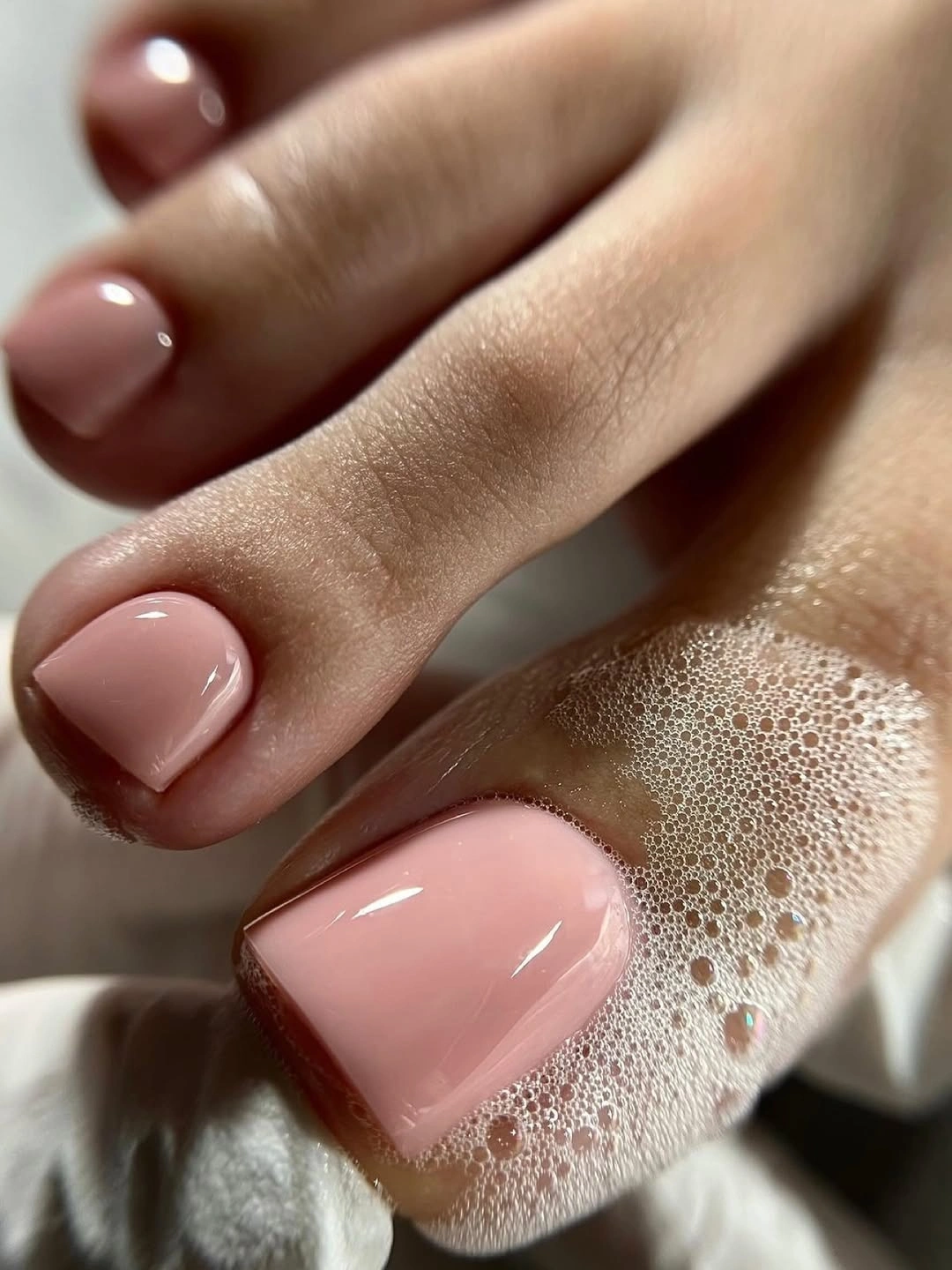
The muted color is useful when the pedicure should support rather than lead an outfit. It works with white, cream, gray, brown, and metallic accessories, and the compact square shape keeps the feet looking cared for without asking for a strong seasonal statement. The result feels calm because the palette and the finish agree instead of competing for attention.
A sheer beige or dusty rose would preserve the same quiet mood, while one glittered big toe could add a small evening shift. Keep the color light and the edges clean if you want the low-contrast effect to remain polished. Pale gloss can show uneven coverage, so the restraint is most convincing when the surface is smooth and the shape is consistent.
16. Pink Shimmer with a Crisp White Curved Tip
The pale pink base carries fine shimmer, while a crisp white curved tip creates a clear edge across the big toe and neighboring nail. The compact square shape gives the curve a firm frame, and the soft sparkle keeps the pink from looking flat. The design is light and graphic at once, with the white edge supplying contrast and the shimmer supplying surface movement.
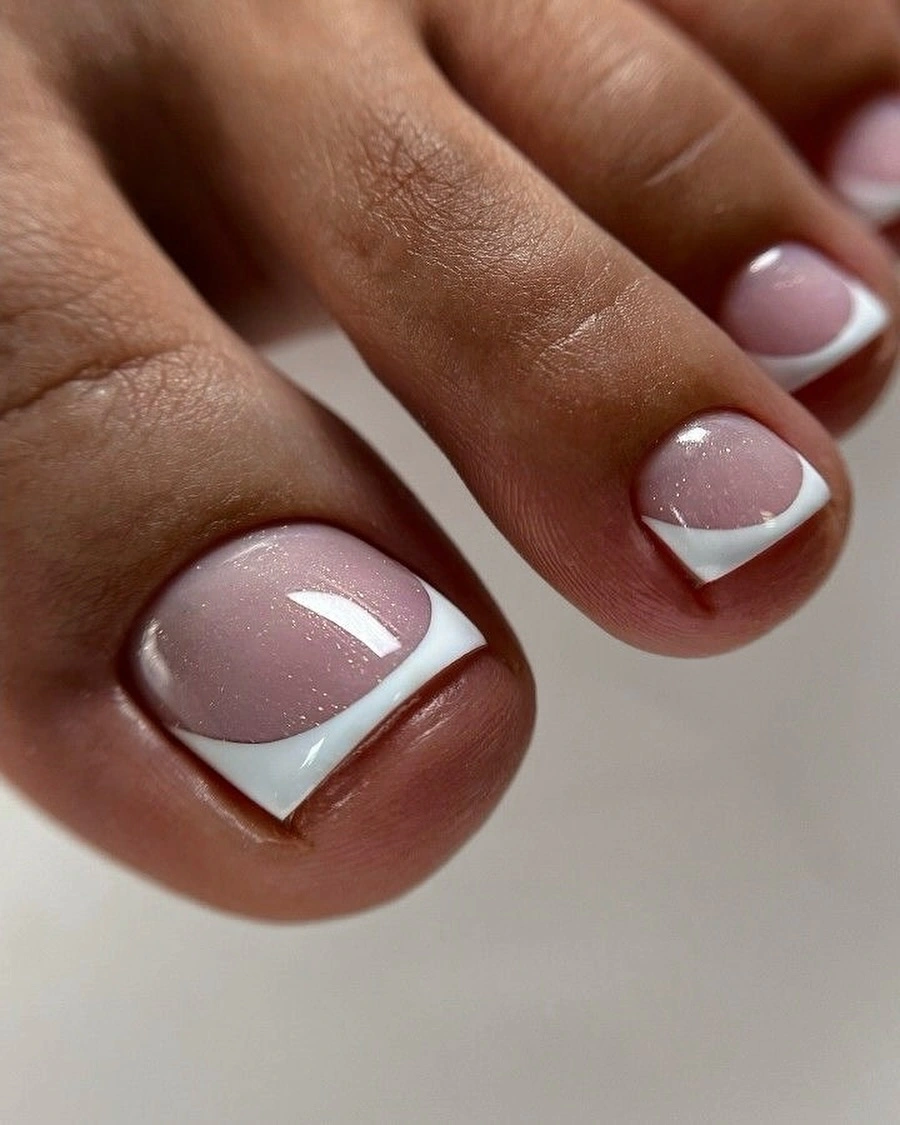
This structure feels fresh because the two finishes have different jobs. The pink shimmer adds a close-up glow, while the white tip remains readable from farther away and gives the small nail a deliberate boundary. The curved edge also softens the square shape, creating a balanced transition between a precise line and a rounded sweep.
A thinner white edge would make the result more understated, while limiting the design to the big toes would simplify the pedicure. Keep the sparkle fine so it supports the base instead of turning the tip into a busy focal point. The tradeoff is placement accuracy: a curved edge needs a similar arc on each nail, and the reflective effect can fade in low light.
17. Barely Pink on Very Short Natural-Looking Toes
The very short toes carry a soft pale pink gloss that barely separates from the surrounding skin, making this the quietest pedicure in the group. There is no art, strong contrast, or extended square edge to draw attention, so the finish reads as a clean tint that supports the wide composition. The dark fabric behind the foot gives the pale color just enough definition.
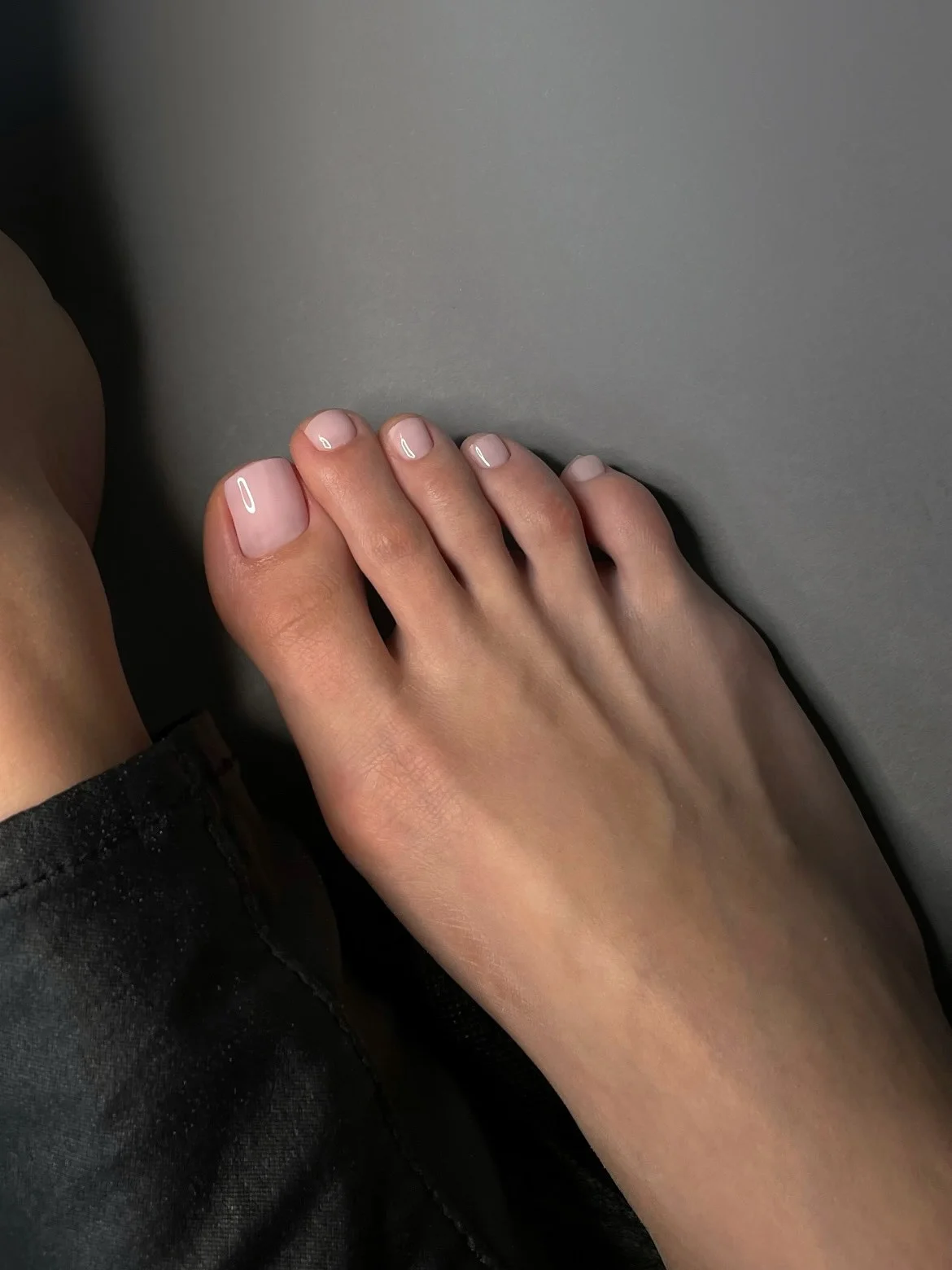
A barely-there shade can be useful when the pedicure should work with every sandal or remain understated under darker clothing. The short length keeps the result natural-looking, while the soft pink adds a small amount of polish without changing the proportions of the toes. The mood comes from restraint, not from trying to make the color appear more dramatic than it is.
Sheer beige, cream, or barely mauve would create the same low-contrast effect, while a glossy finish keeps the simple surface from looking unfinished. The tradeoff is visibility: the result offers less visual impact than red, black, or glitter, and it depends on even coverage and tidy grooming. This is a useful choice when the whole outfit already carries enough character.
18. Burgundy Solids with Black and White Wave Accents
Deep burgundy big toes anchor this mixed pedicure, while smaller visible nails introduce black-and-white wavy accents over pale and dark bases. The repeated burgundy keeps the feet connected, and the narrow wave marks add movement without covering every nail in the same pattern. Short square edges give the alternation a crisp frame and keep the composition graphic.
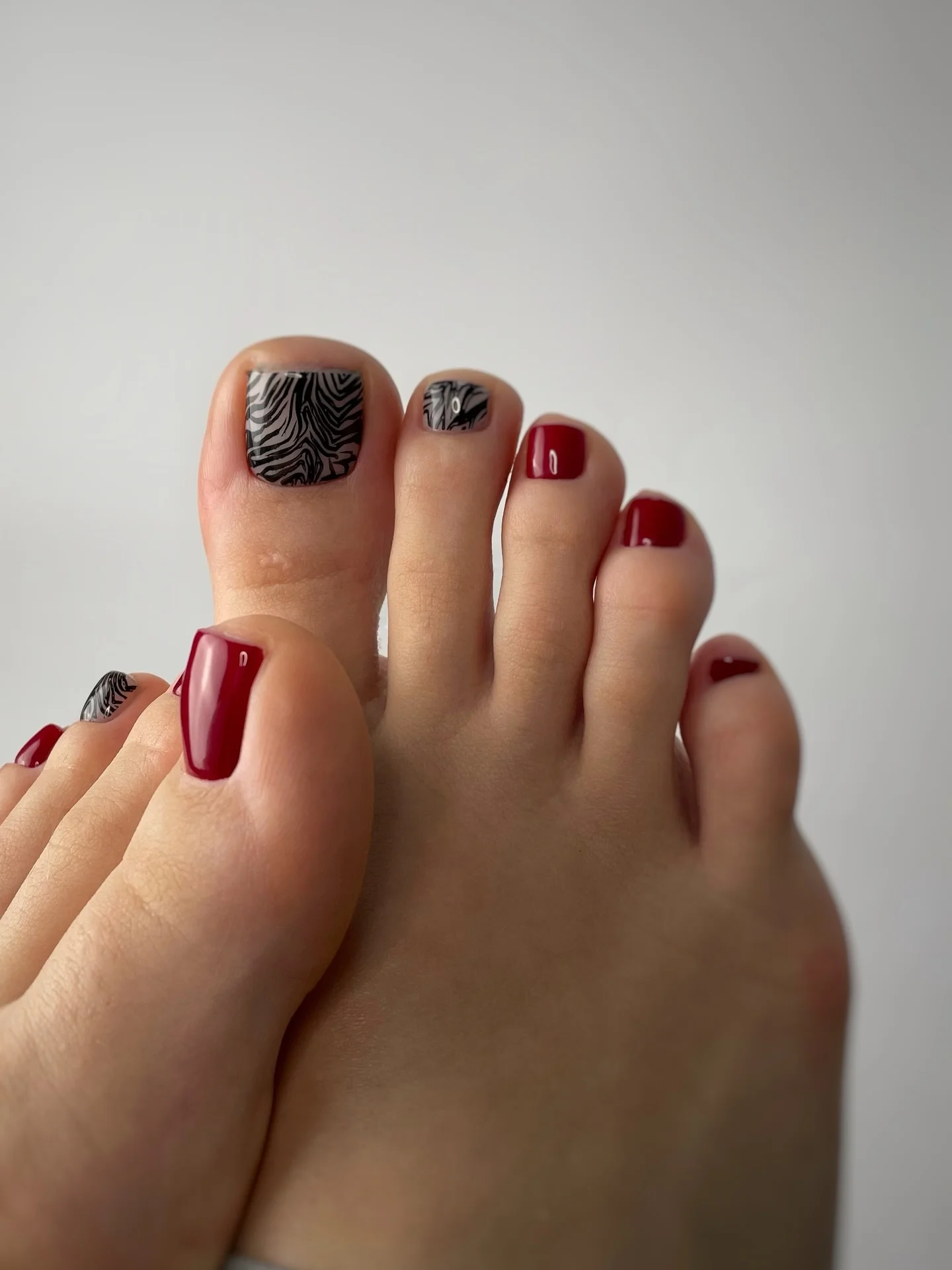
The balance comes from using one solid color as the anchor. Without the burgundy, the black-and-white waves could feel detached; with it, the eye returns to a familiar dark red after noticing the pattern. This is a useful scale decision for toes: the big toe carries the strongest block, while the smaller nails provide a lighter visual echo rather than competing focal points.
For a simpler version, keep the wave accent on one big toe and use burgundy on the rest, or reverse the ratio if the pattern is your favorite part. Neutral sandals will let the contrast read clearly. The realistic limitation is placement: mixed pattern and solid color need a deliberate rhythm, because adding several unrelated accents would make the small surfaces feel fragmented.
19. Black Glitter on Short Square Toes
Fine sparkle changes this short black pedicure from a flat dark block into a surface with small points of light. The nails remain compact and square, while the glitter appears across the black field rather than as a separate tip or pattern. Against the ribbed garment, the polish has a subtle evening quality that still feels grounded and easy to understand.
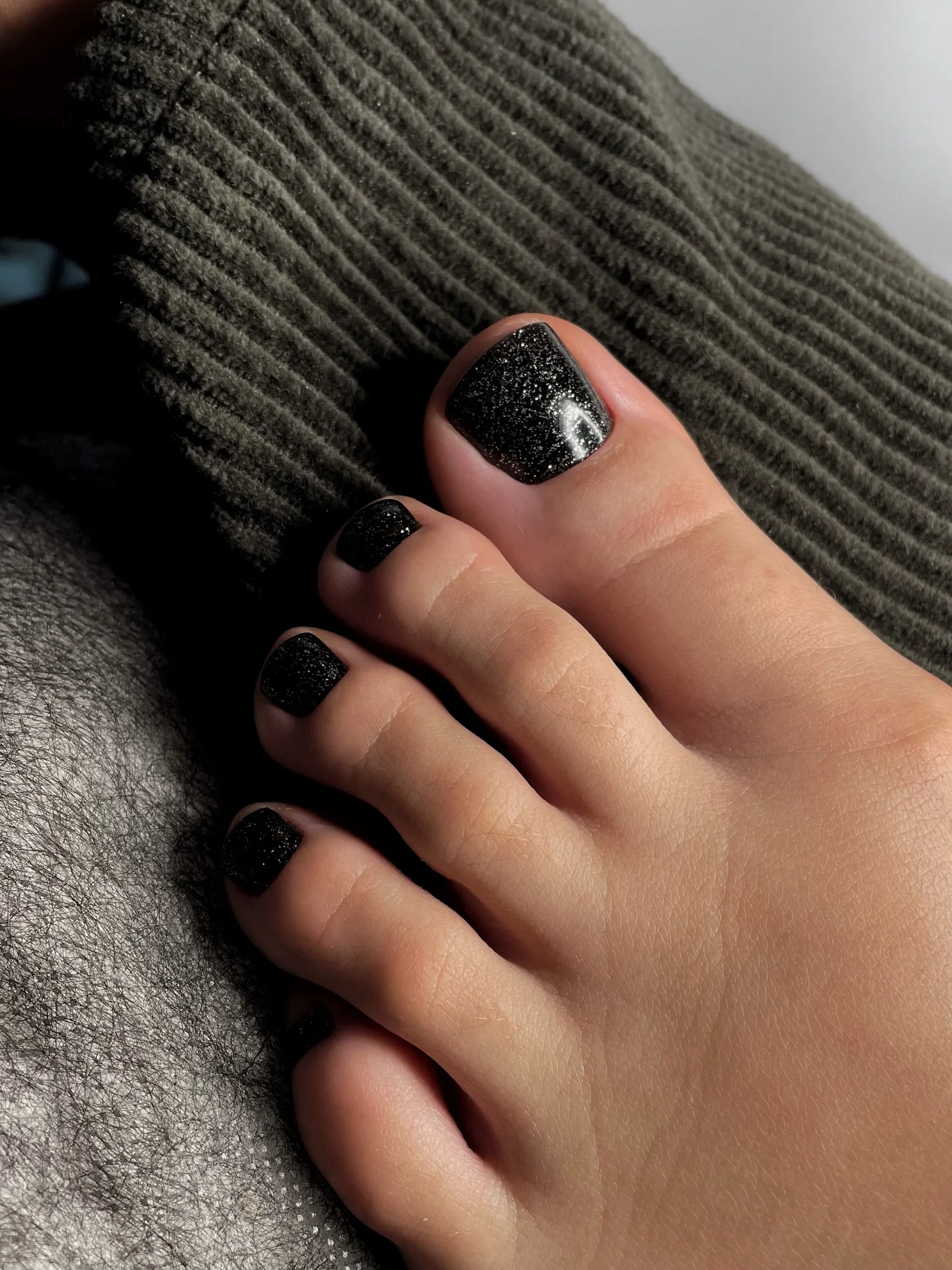
The texture works because it stays inside one color family. Black remains the dominant read, but the sparkle catches movement and gives the toes more depth whenever the light reaches them. The surrounding ribbed fabric echoes that tactile quality without matching it exactly, creating a quiet relationship between the two surfaces instead of adding another competing accent.
Keep glitter only on the big toes if you want the finish to be more discreet, or choose charcoal sparkle for a softer contrast. A glossy black would be simpler and more graphic, while the glitter is better when you want texture to do the seasonal work. The tradeoff is visibility: fine sparkle can disappear in shadow and may make surface unevenness easier to notice.
20. Cobalt Blue Gloss across Both Feet
Vivid cobalt blue gives both feet a strong block of color, and the wide view shows how consistently the short square nails carry it. The glossy surface reflects cleanly, while the pale wall leaves enough contrast for the blue to remain the obvious focal point. There is no art or mixed shade, so the pedicure feels energetic through repetition and saturation alone.
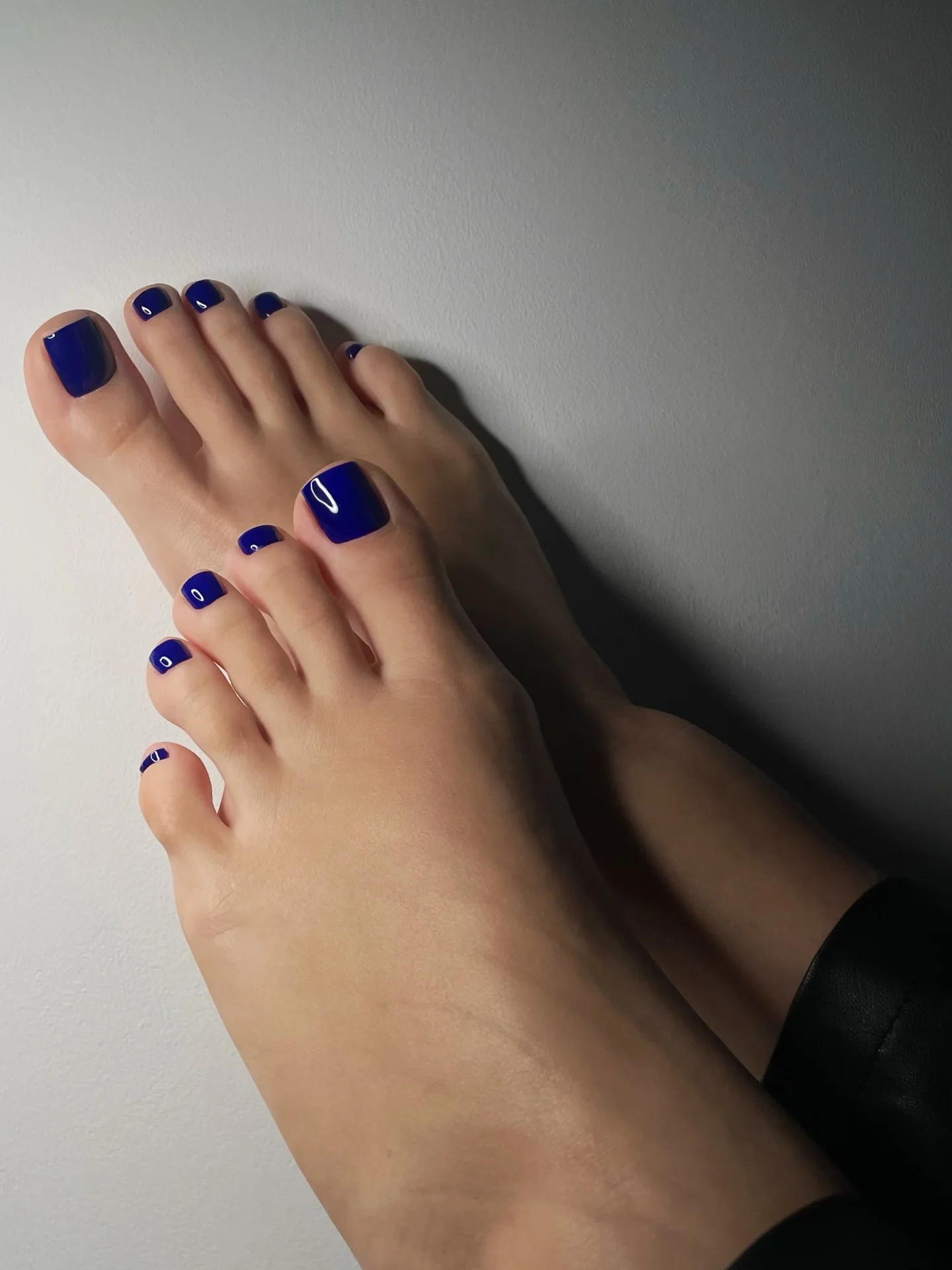
The color is bright but controlled by the compact silhouette. Short square edges prevent the blue from becoming overly dramatic, and using the same shade across both feet creates a clear visual rhythm even when the toes overlap. Cobalt can also sit beside black, white, denim, gray, or neutral sandals without needing a matching accessory to make sense.
Move toward navy for a quieter result, or keep cobalt on the big toes and use a pale blue or sheer neutral below. Strong blue is attention-grabbing, so patterned footwear and equally vivid clothing may compete with it. The simple surface rewards clean edges, but it also shows chips quickly; the color is the statement, and the shape is what keeps it tidy.