Your haircut should meet you where you are, not ask you to prove that one length, part, or edge is the only correct choice. When you want change, the useful question is not whether a cut belongs to a category, but whether its shape gives you the kind of ease, definition, movement, or clarity you actually recognize as yours.
When a haircut choice feels unclear, start with what you want the shape to solve: more visible movement, a cleaner edge, a softer front, or a length that finally feels like it belongs to you. This collection treats haircuts for plus-size women in 2027 as choices built from structure and preference, so the answer comes from what the cut does, not from rules about who should wear it.
1. Long Layers With Lifted Front Movement
The length stays generous, but the cut does not rely on length alone. Shorter pieces begin high around the front, opening the face area with a softer line before the hair drops into longer sections past the shoulders. That front-to-back shift gives the haircut structure without taking away the feeling of long hair.
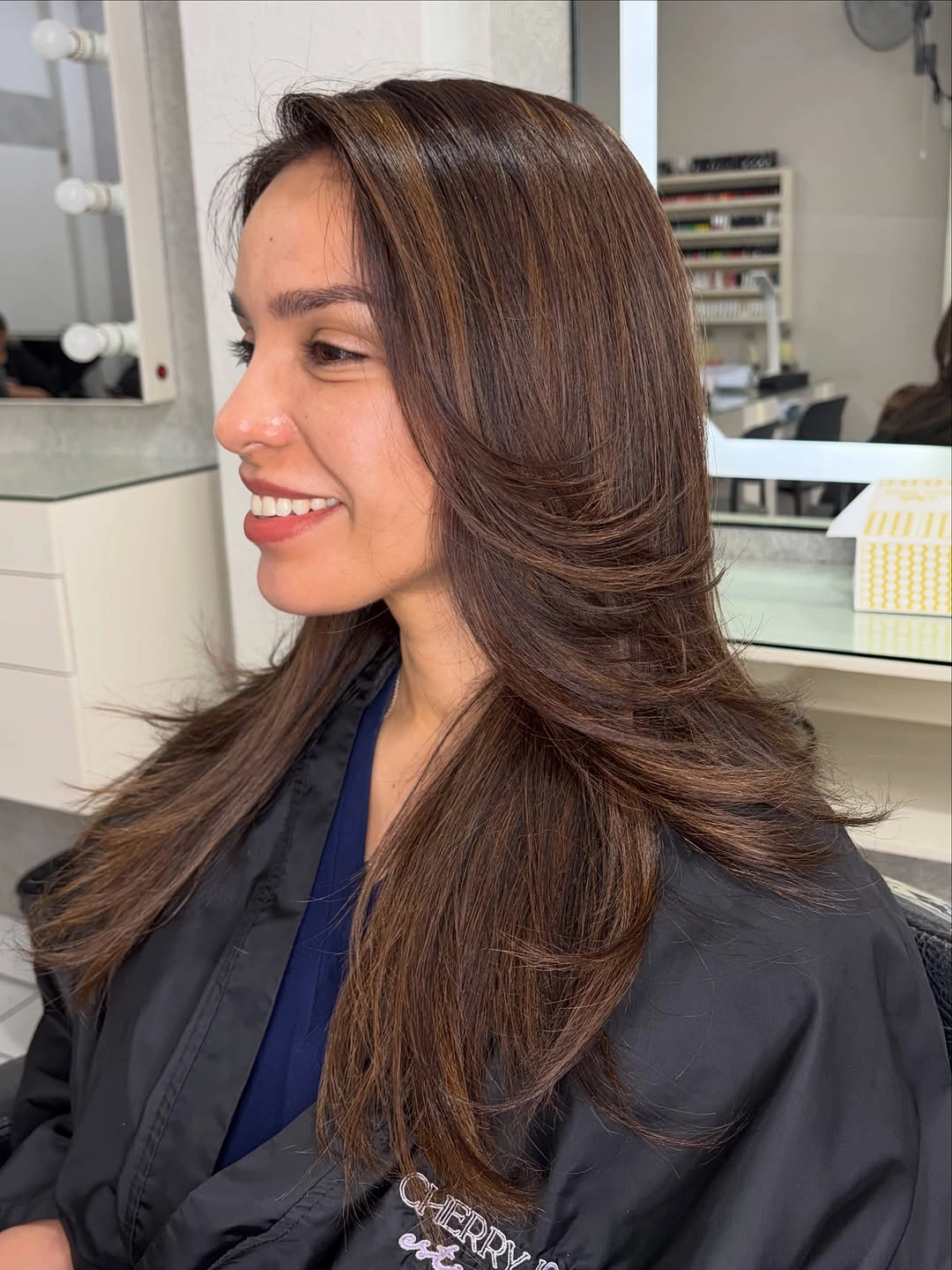
Photo via Instagram
The curled ends are useful because they show where the layers separate. Instead of one heavy bottom edge, the lower half breaks into curved pieces that overlap, lift, and fall back into a soft perimeter. It keeps the finish full while still letting the modern long layers read as individual sections with purpose.
This is a long-hair option for someone who wants movement near the front without giving up fullness through the lower half. The cut feels active because the shaping starts before the ends, not only at the last inch.
2. Center Part Bob With a Clean Edge
A center part gives this bob a clear starting line, and the straight side panels make the shape feel calm rather than busy. The lower edge sits in the jaw-to-neck area, so the haircut is read through its compact outline first. Nothing has to be exaggerated for the cut to feel deliberate; the restraint is the point.
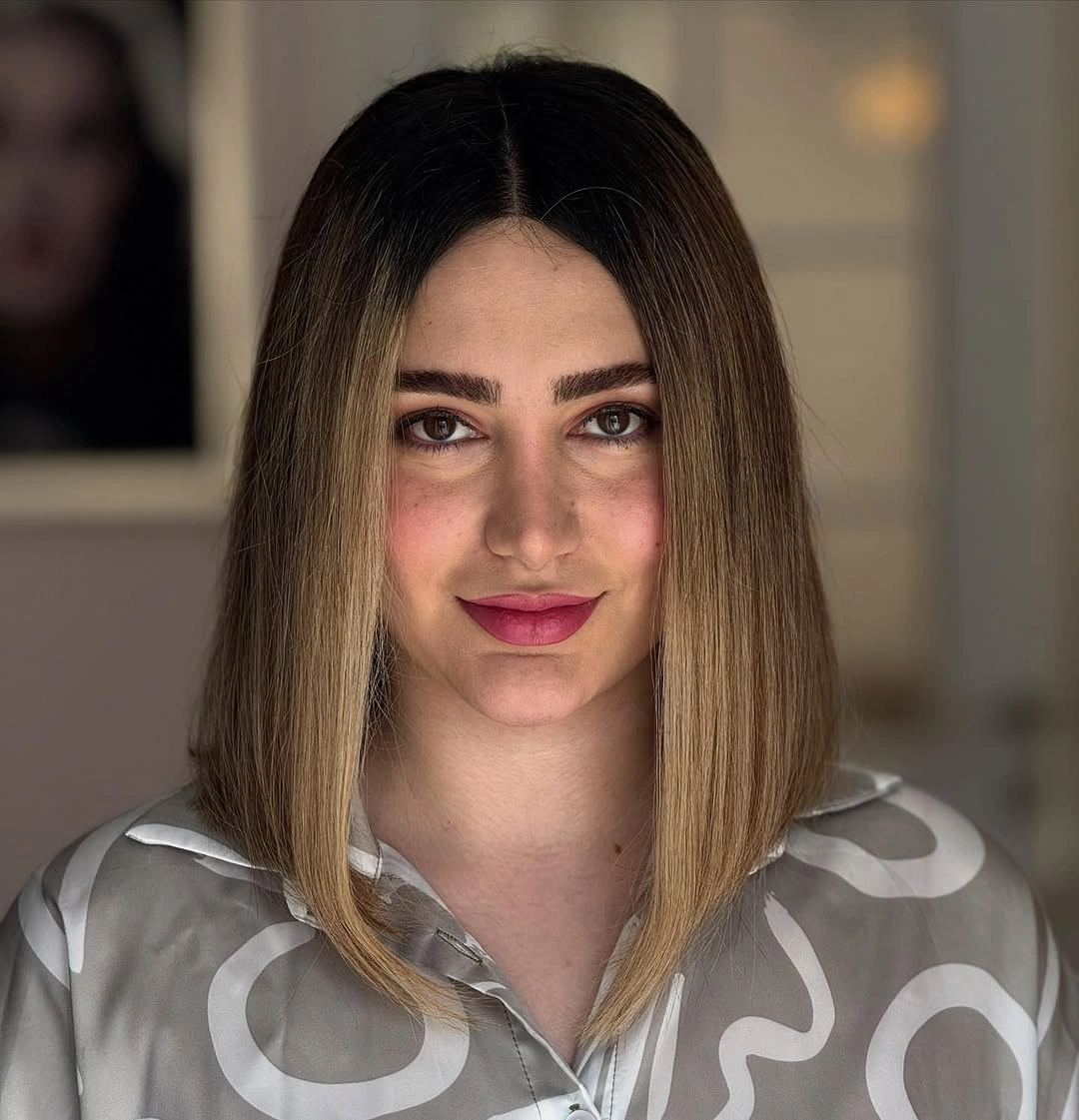
Photo via Instagram
The dark upper color and lighter blonde lower panels make the bob’s edge easier to follow from top to bottom. Because the lighter sections sit along the lower length, they draw attention toward the clean vertical fall and the neat finish at the ends. The color contrast supports the cut’s geometry without becoming the whole subject.
Compared with softer layered cuts, this bob asks you to notice precision first. Its strength is the way the part, panels, and lower line all point toward the same simple shape.
3. Short Wavy Bob With Rounded Softness
Short length can feel direct without becoming hard, and this cut shows that balance through its side volume. The hair rounds outward from the part, curves around the cheek and jaw, then tucks in near the neck instead of falling into a blunt square. That tucked lower edge makes the shorter length feel shaped from several directions.
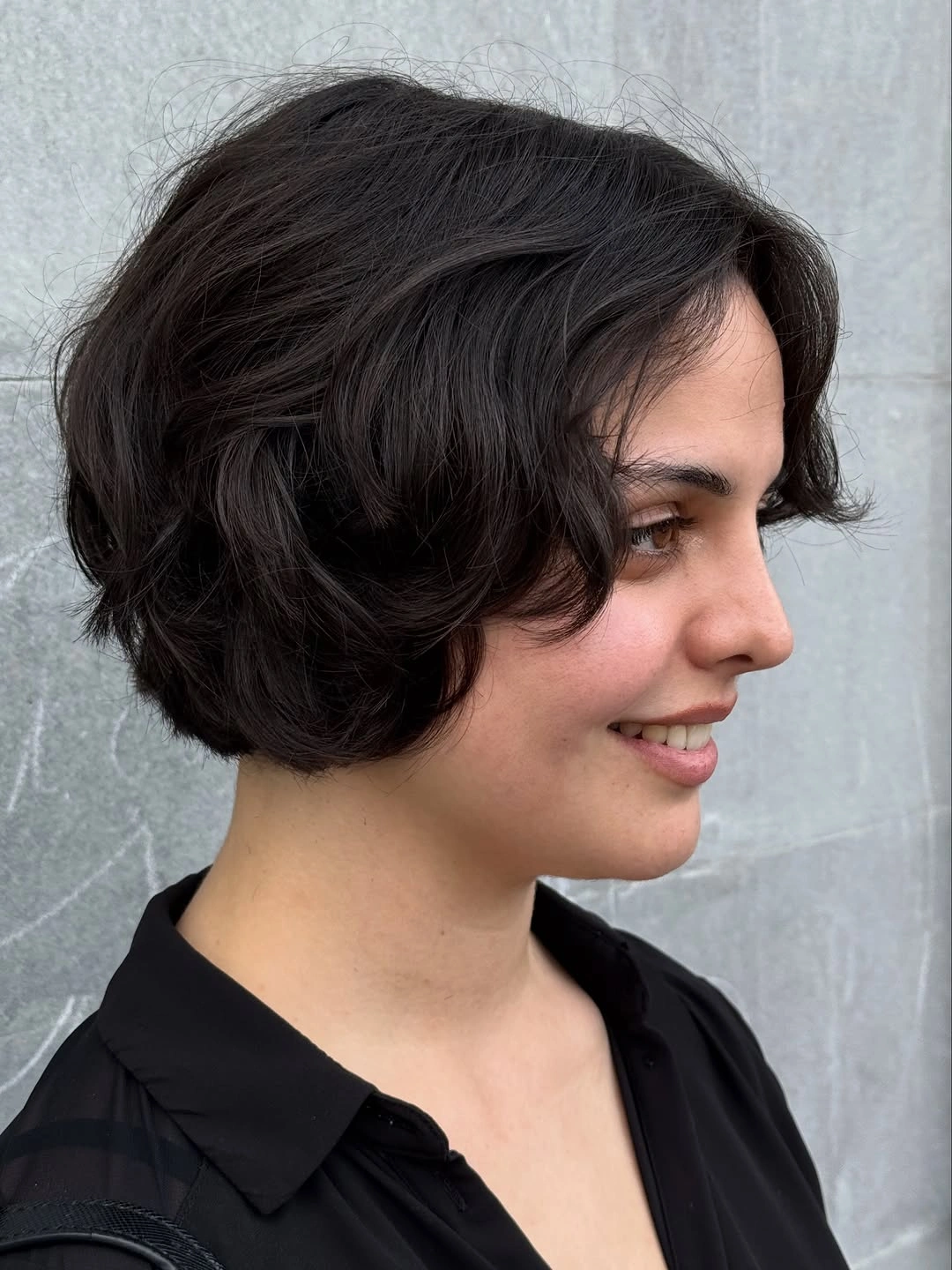
Photo via Instagram
The visible waves matter because they break the perimeter into bends, dips, and lifted ends. You still see the outline of a short bob, but the edge is textured by movement rather than drawn as one severe line. That makes the haircut useful for a reader who wants short hair with softness she can see immediately.
The appeal here is not only that the cut is short, but that the shortness has motion. The side part and rounded wave keep the silhouette expressive while the exposed neck keeps it crisp.
4. Rounded Bob Shape Seen From the Back
The back view tells a different story from a front-facing short bob because the nape, crown, and side curve become the main evidence. Here, the crown has rounded volume and the lower pieces curl under and outward just enough to show shape. The compact nape keeps the whole cut contained instead of letting the back spread wide.
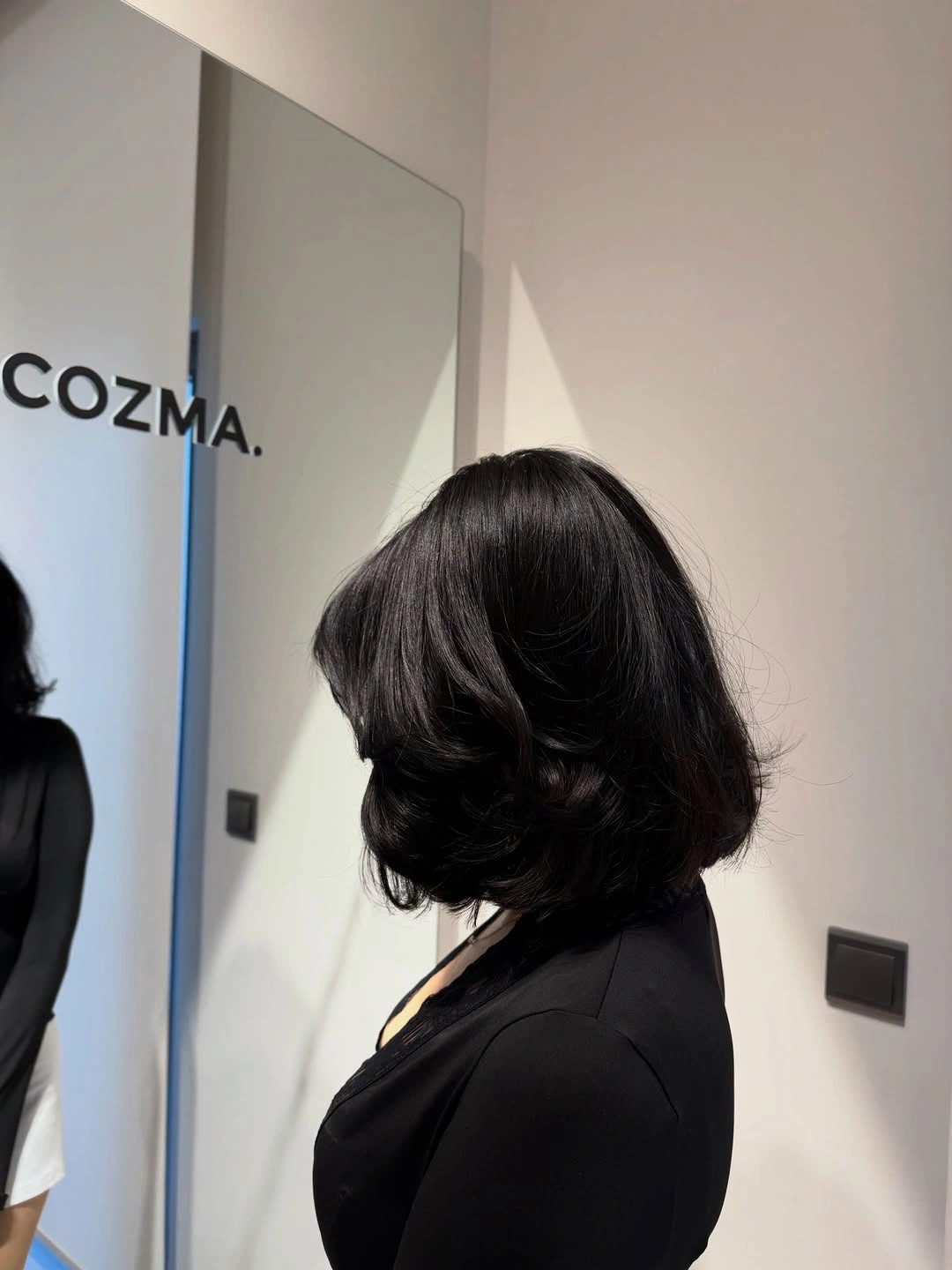
Photo via Instagram
From the side, the stacked-looking roundness changes how the haircut occupies space. The silhouette lifts through the back, then narrows near the neck, so the cut has volume without looking shapeless. That contrast between the fuller crown and the neat lower edge gives the short bob a designed profile.
This is the kind of short bob where the back is not an afterthought. The nape and crown do the work, giving the haircut its own architecture even before the front is considered.
5. Burgundy Pixie Crop With Tiny Fringe
A pixie crop reads first through outline, and this one has a strong, close silhouette. The sides sit tight enough to expose the ears, while the top remains short but not completely flat, giving the cut a small amount of texture. Because the proportion is so cropped, every edge feels intentional rather than incidental.
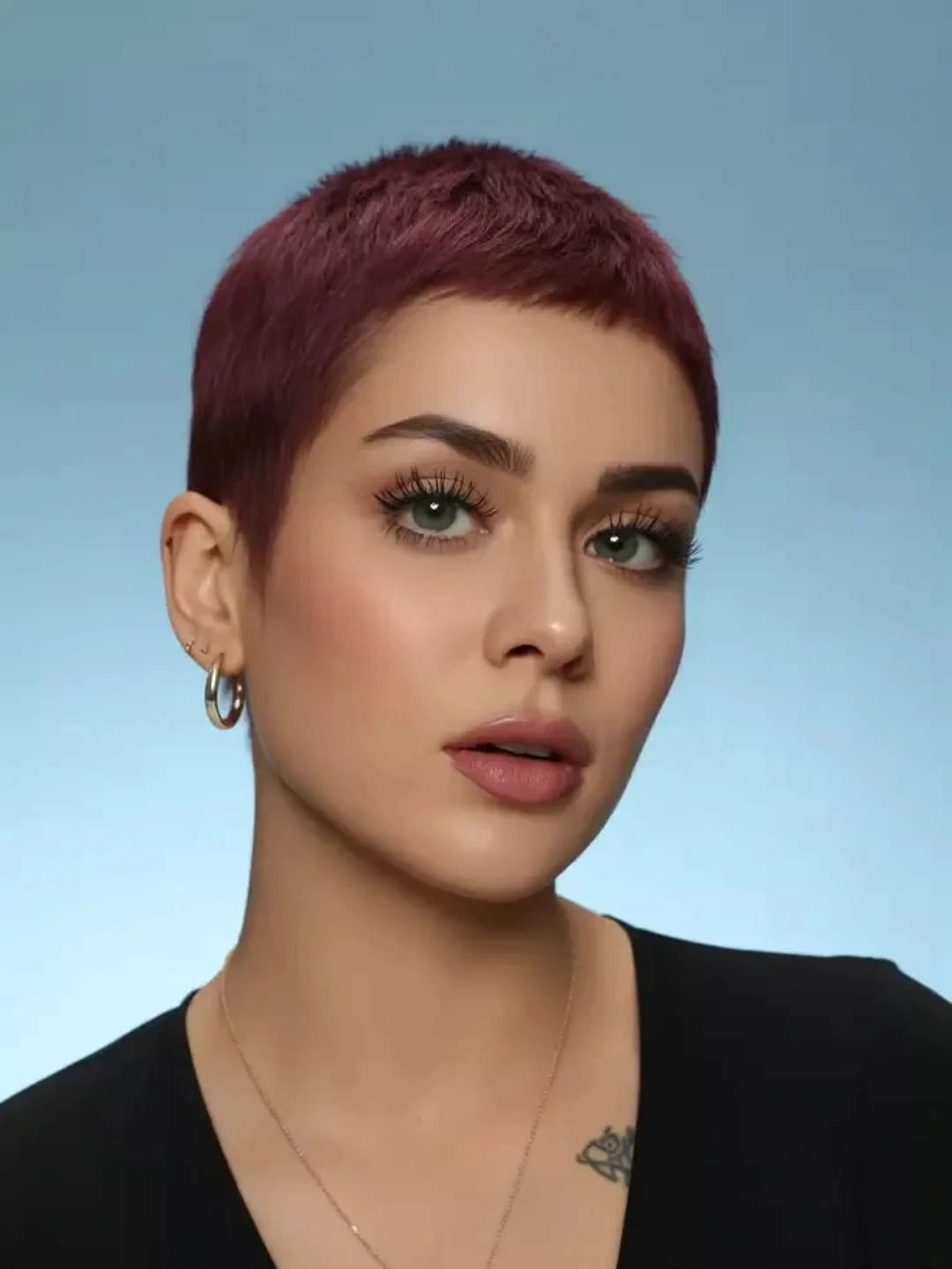
Photo via Instagram
The tiny fringe line and tapered sides are the details that keep the haircut from feeling like a simple buzzed shape. The short top creates a little direction at the crown, while the close perimeter makes the neck and ears part of the outline. The result is crisp, compact, and easy to read even before the color registers.
The deep burgundy shade is visible and memorable, but the haircut would still read as a pixie because of its close sides and cropped top. Color adds impact here; the structure carries the cut.
6. Long Layers With Movement at the Ends
The smooth crown gives this long hair a calm top surface, so the movement begins lower down rather than taking over the whole shape. From the back, the cut reads through the meeting point between sleek length and curled ends. That relationship matters because the upper section keeps the silhouette controlled while the lower half shows where the long layers start to work.
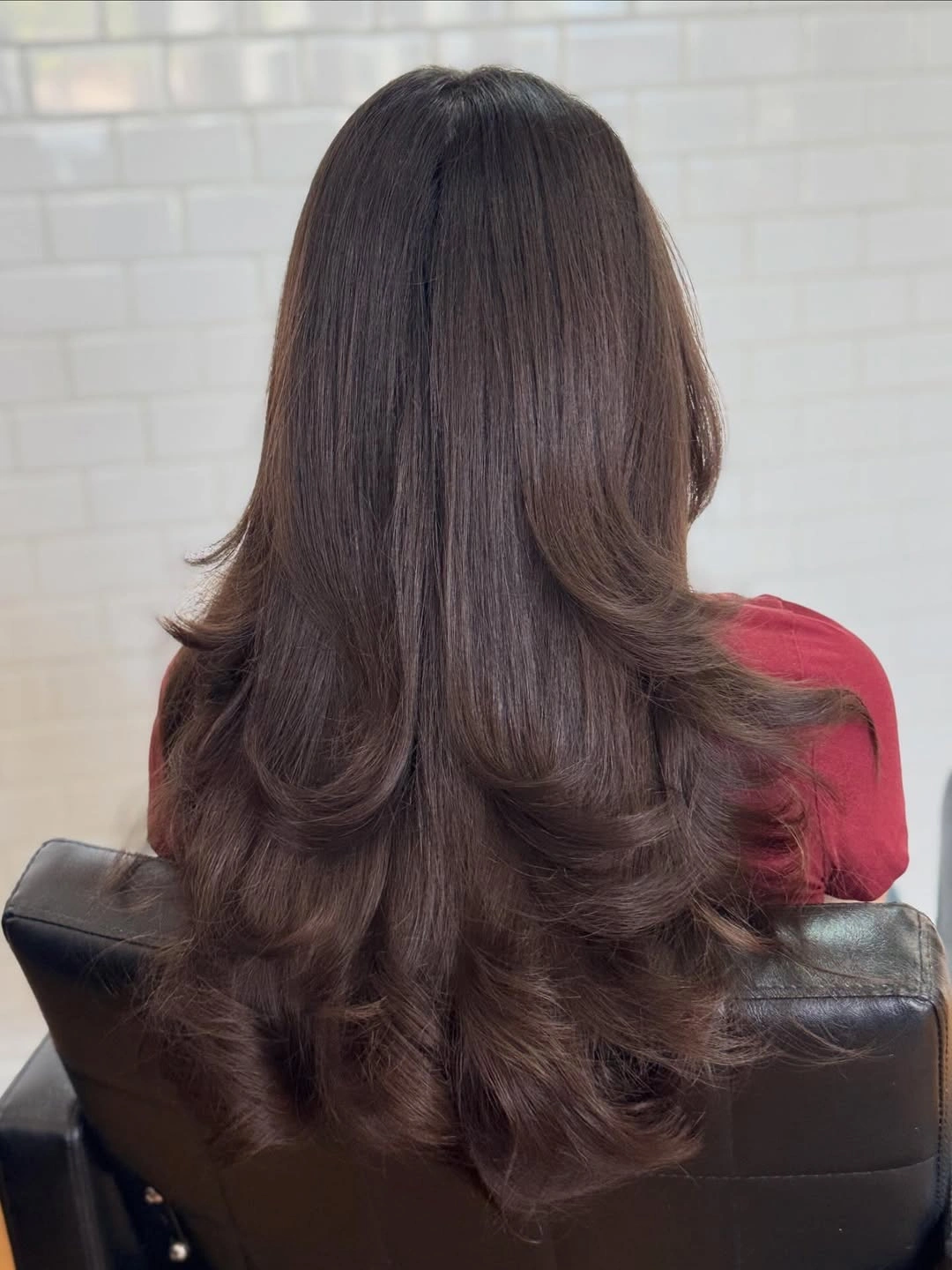
Photo via Instagram
The ends make the layer spacing visible in a way a straight finish would hide. Some pieces turn out near the shoulders, others fall longer through the center, and the rounded lower perimeter keeps those differences from looking disconnected. The result is not a sharp step pattern, but a gradual release of weight through the bottom of the haircut.
This is a useful long-layer reference for someone who wants visible movement without making the front the main event. The back view carries enough shape to show that the haircut has design beyond simple length.
7. Feathered Long Layers With a Narrower Fall
This layered haircut has a narrower lower fall than the fuller curled shapes around it, and that difference changes the mood of the length. The center drops a little longer while the side pieces taper into softer movement near the ends. Instead of building a wide rounded outline, the cut keeps the long hair sleeker through the middle and lighter at the perimeter.
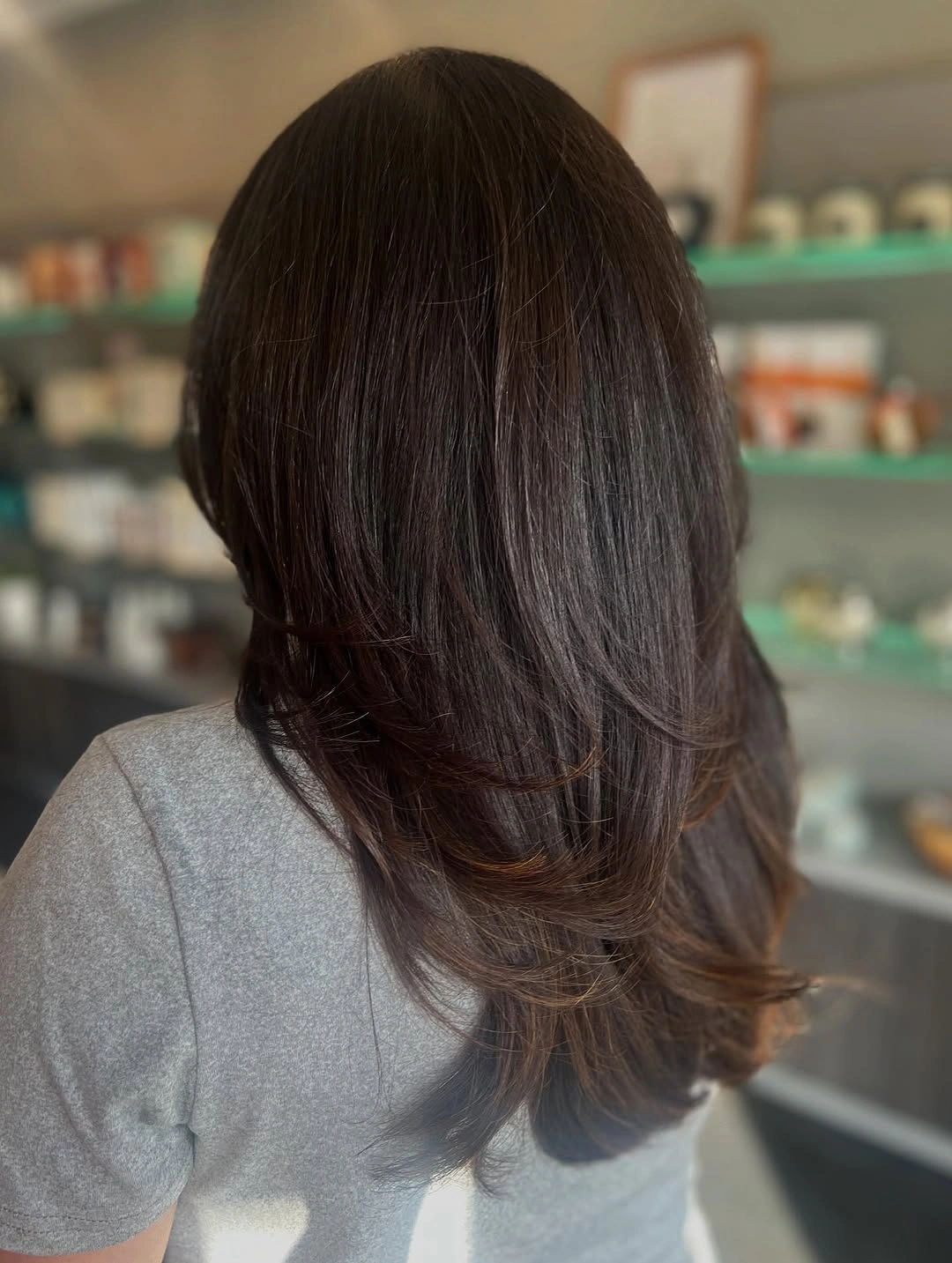
Photo via Instagram
The feathered ends create a finish that feels airy because the lower pieces do not gather into one thick line. Their small flips and separated tips show how weight has been taken from the edges while the overall length stays intact. That makes the haircut feel layered without making every section look heavily sculpted or equally curled.
This is the quieter side of long layers. It suits a reader who wants the cut to show shape gradually, through taper and lightness, rather than through a dramatic front frame or a bold curled edge.
8. Rounded Blonde Bob With Piecey Ends
The rounded back shape gives this short bob its first impression, but the lower edge keeps it from becoming too solid. The length sits around the neck, with the back curving softly instead of dropping into a strict blunt line. That proportion makes the bob feel compact while still leaving room for light movement at the bottom.
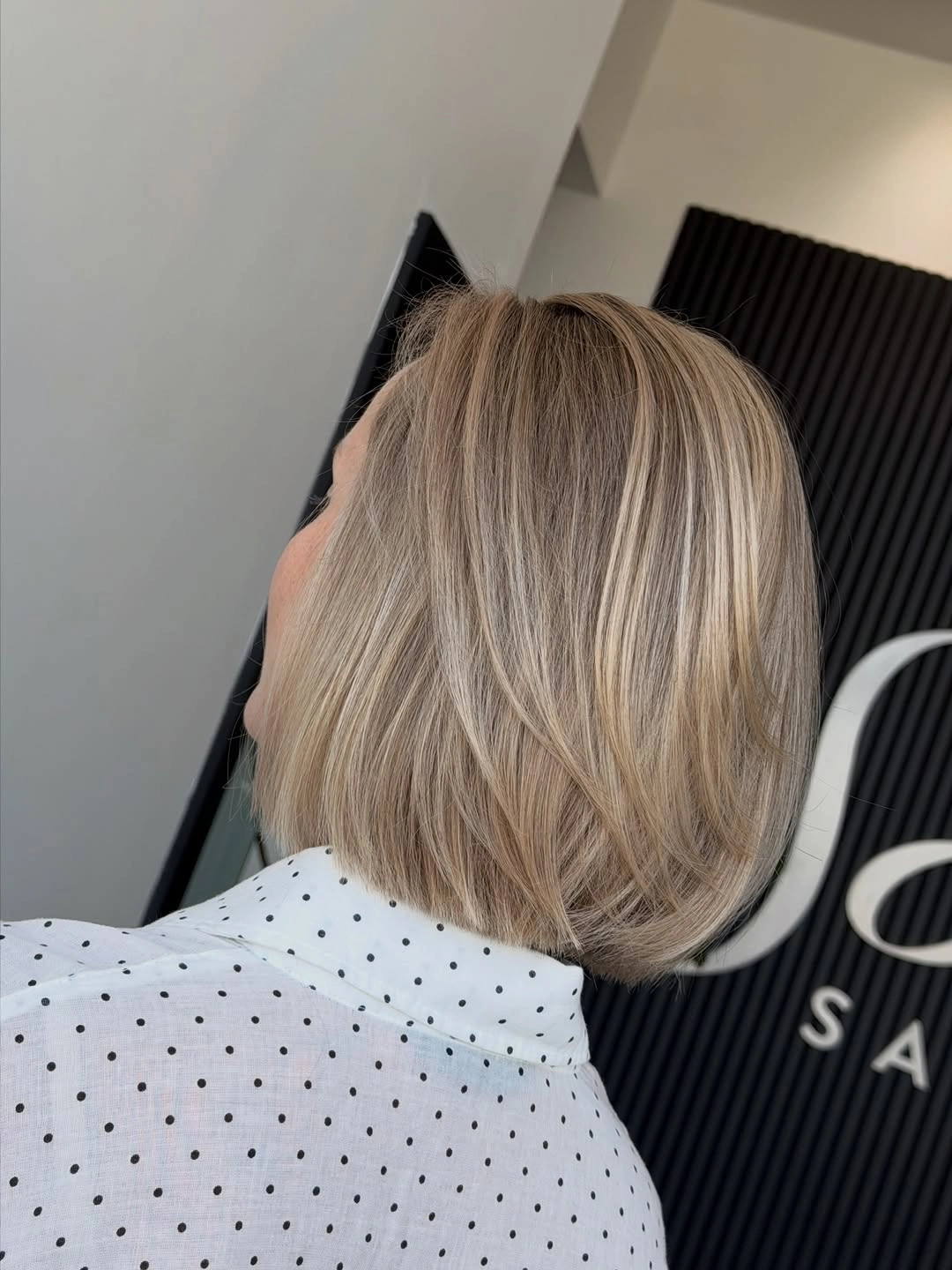
Photo via Instagram
The piecey edge is important because it breaks the blonde bob into smaller visible sections. Rather than reading as one smooth block of hair, the perimeter has slight separation, uneven bends, and enough texture to show the layering near the ends. The effect sits between a classic short bob and a short layered haircut with more looseness.
This cut has structure, but it does not depend on severity. Its shape comes from the rounded back first, then from the lighter edge that softens the outline.
9. Butterfly Layers With Curtain Front Pieces
The large curtain-like front pieces give this long haircut its main architecture. They fall away from the center part and create a shorter, shaped frame before the rest of the length continues downward. That front placement is what makes the butterfly-style idea visible here: the cut has lift and separation near the face while still keeping long hair through the sides and back.
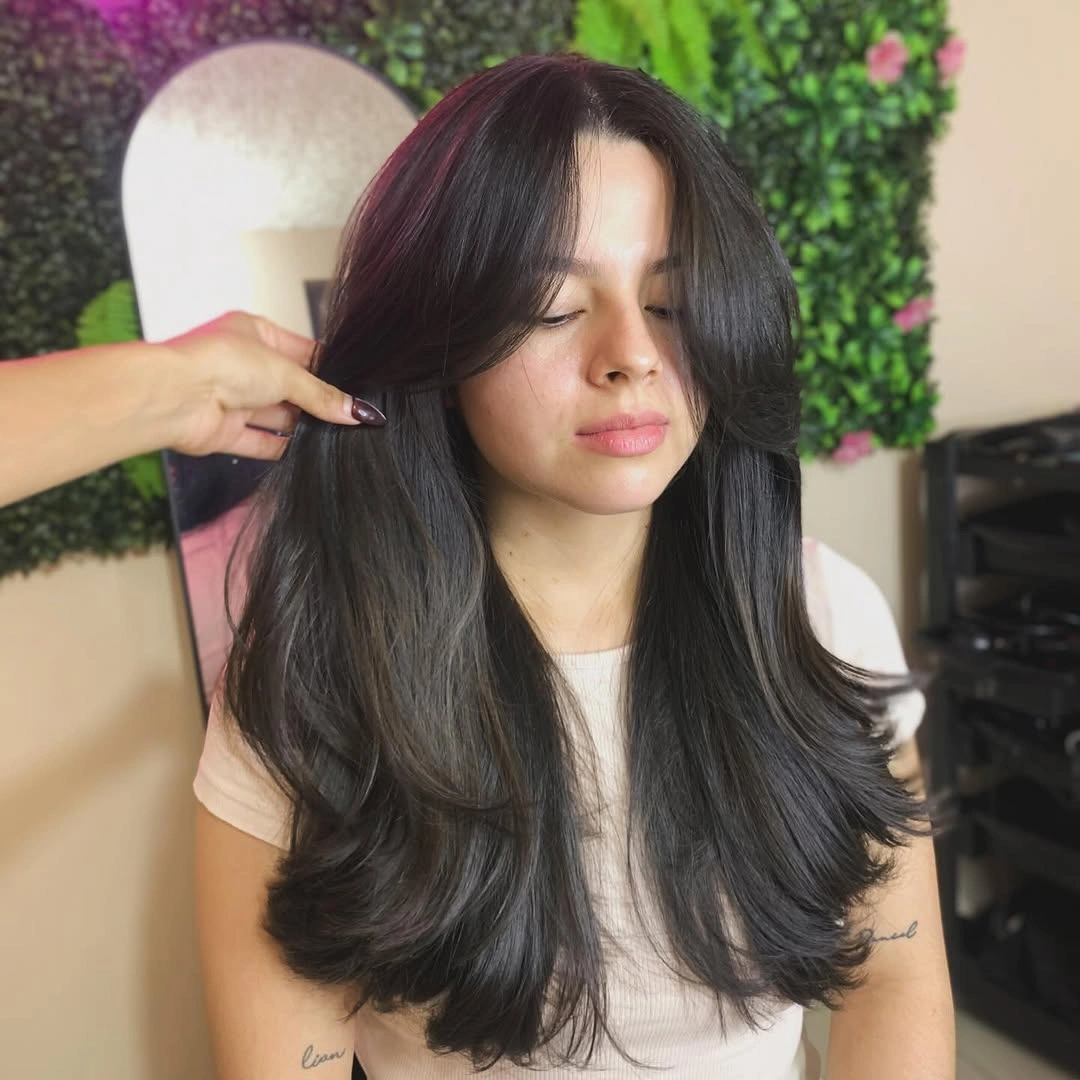
Photo via Instagram
The lifted ends show the layered cascade more clearly than a flat finish would. Shorter front pieces curve outward, longer side sections drop beneath them, and the ends turn up enough to reveal several levels of length at once. A wine-toned streak near the front adds contrast to that movement, but the haircut’s shape still comes from the layering.
This is one of the clearest homes for long layers and haircuts with bangs in a soft, curtain-led form. The fringe area feels connected to the rest of the cut instead of sitting as a separate detail.
10. Short Straight Bob With Bright Face Panels
The even center part and smooth vertical sides make this short bob feel especially symmetrical from the front. The blonde face panels sit on either side of the part, while the darker root area and underside add depth behind them. Because the sides fall so straight, the eye goes quickly from the top division to the clean lower line.
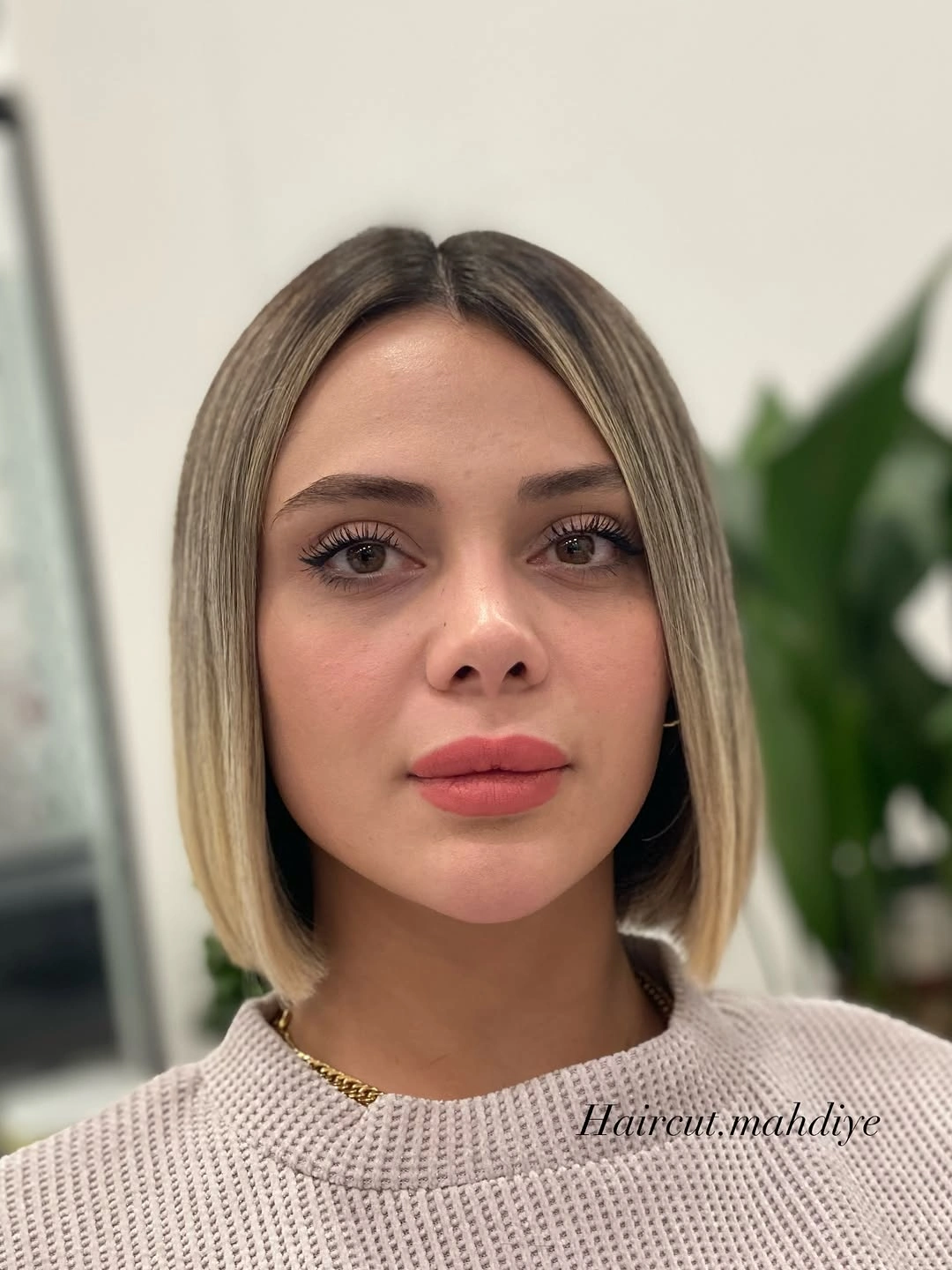
Photo via Instagram
The compact length makes the bottom edge feel decisive. It lands high enough to keep the bob crisp around the jaw and neck area, and the straight sides do not blur into extra layering or curled movement. Compared with a softer rounded blonde bob, this version is more front-facing, more graphic, and more dependent on precision.
This is a short haircut where restraint does the visual work. The bob does not need extra texture to feel finished because the part, panels, and edge are already clearly organized.
11. Full Long Layers With a Rounded Finish
The lower half carries most of the drama here, and I like that the weight is not hidden. The long hair falls with a full, rounded presence before the curled ends start separating into visible layers. Instead of aiming for a narrow taper, the cut keeps body through the bottom, so the movement feels generous rather than wispy.
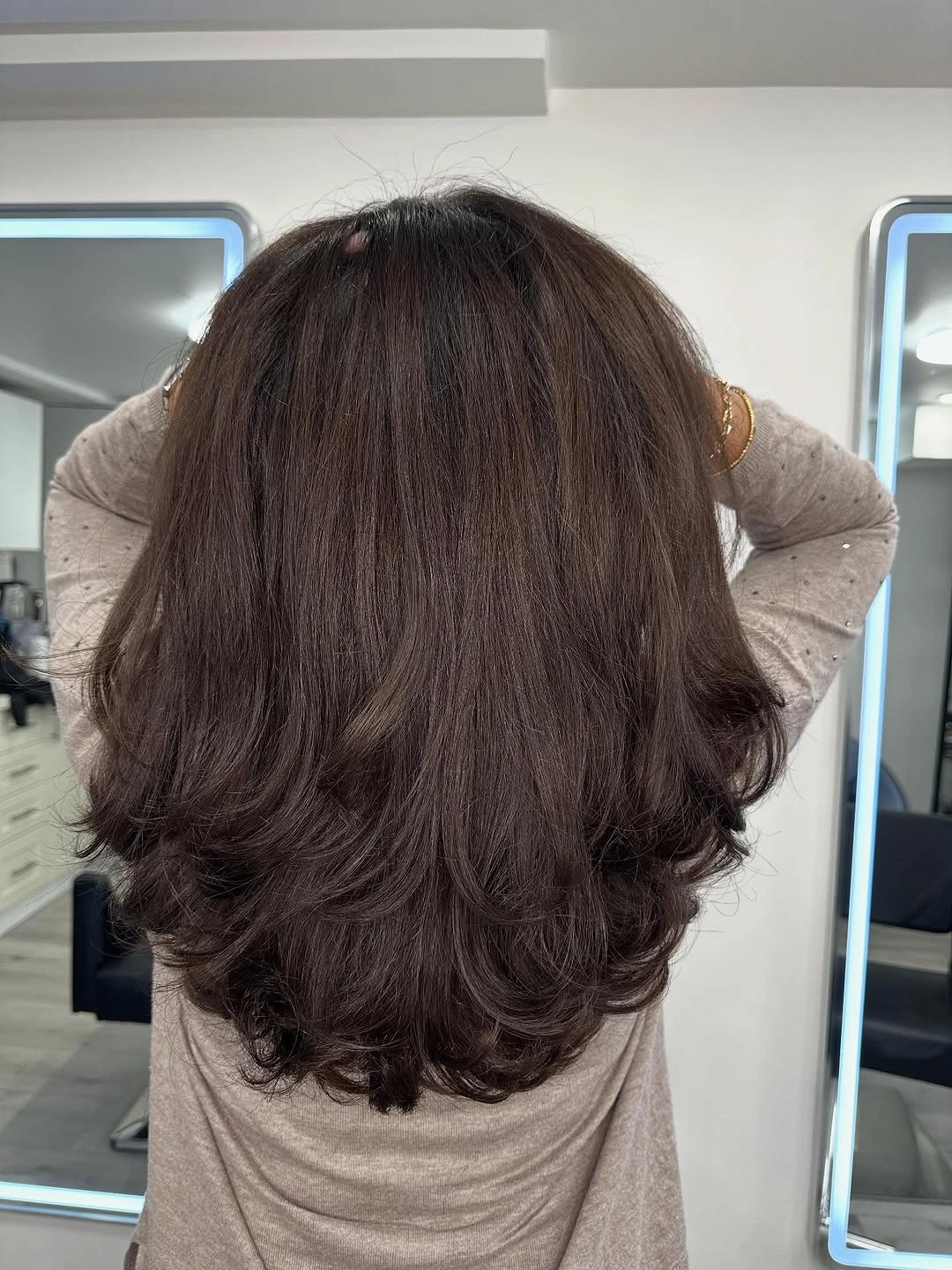
Photo via Instagram
The curls make the soft U-shaped perimeter easier to see because the ends turn at different points along the lower edge. Shorter layered pieces sit slightly higher at the sides, while the center drops longer and fuller through the back. That curve gives the haircut a clear outline, but the curled finish keeps the line from becoming stiff.
This version of long layers feels fuller than the sleeker back-view cuts nearby. Its best detail is the tension between weight and motion: the hair looks substantial, but the ends still move.
12. Copper Angled Bob With a Forward Point
The profile view makes the architecture of this bob impossible to miss. The back sits shorter, the surface curves smoothly, and the front point extends forward with a deliberate slope. That forward movement gives the bob a sharper direction than a straight-across cut, even though the finish itself remains polished and controlled.
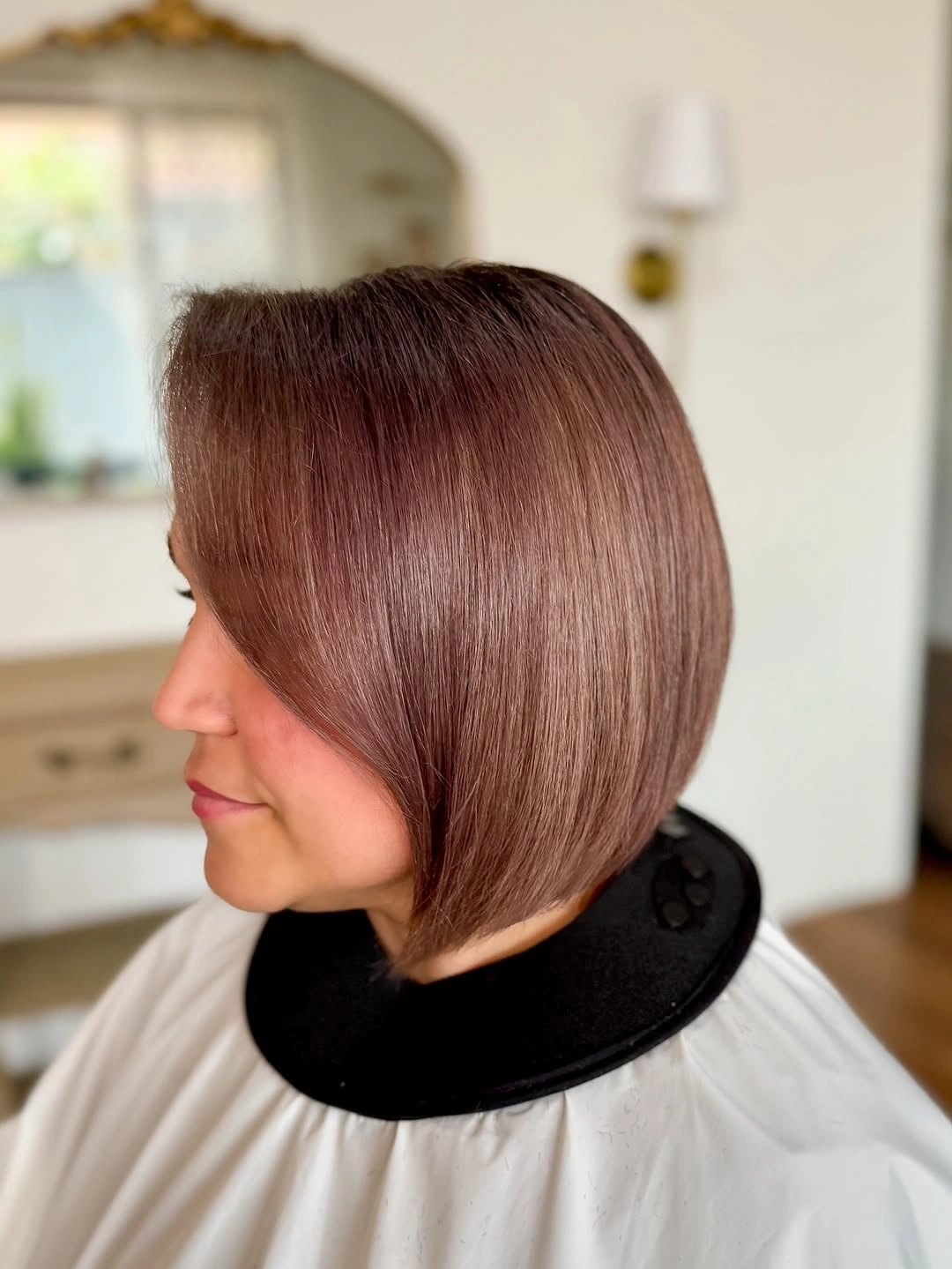
Photo via Instagram
A blunt bob usually asks the lower edge to hold one even line, but this angled bob uses the visible front point as its main decision. The length change from back to front creates motion without needing waves, fringe, or heavy layering. It is a clean example of straight hair becoming expressive through cut line rather than surface texture.
The coppery color adds warmth and makes the polished curve easier to notice. Still, the haircut’s real interest is the angle: the front carries the drama while the back keeps the shape compact.
13. Curtain Bangs Through Medium Length Layers
The curtain pieces are the first feature to read, but they do not sit apart from the rest of the haircut. They open from the center part, then blend into longer face-framing layers that continue down toward the shoulders and chest. That connection gives the cut a softer entry point than a blunt fringe would, while still making the front feel designed.
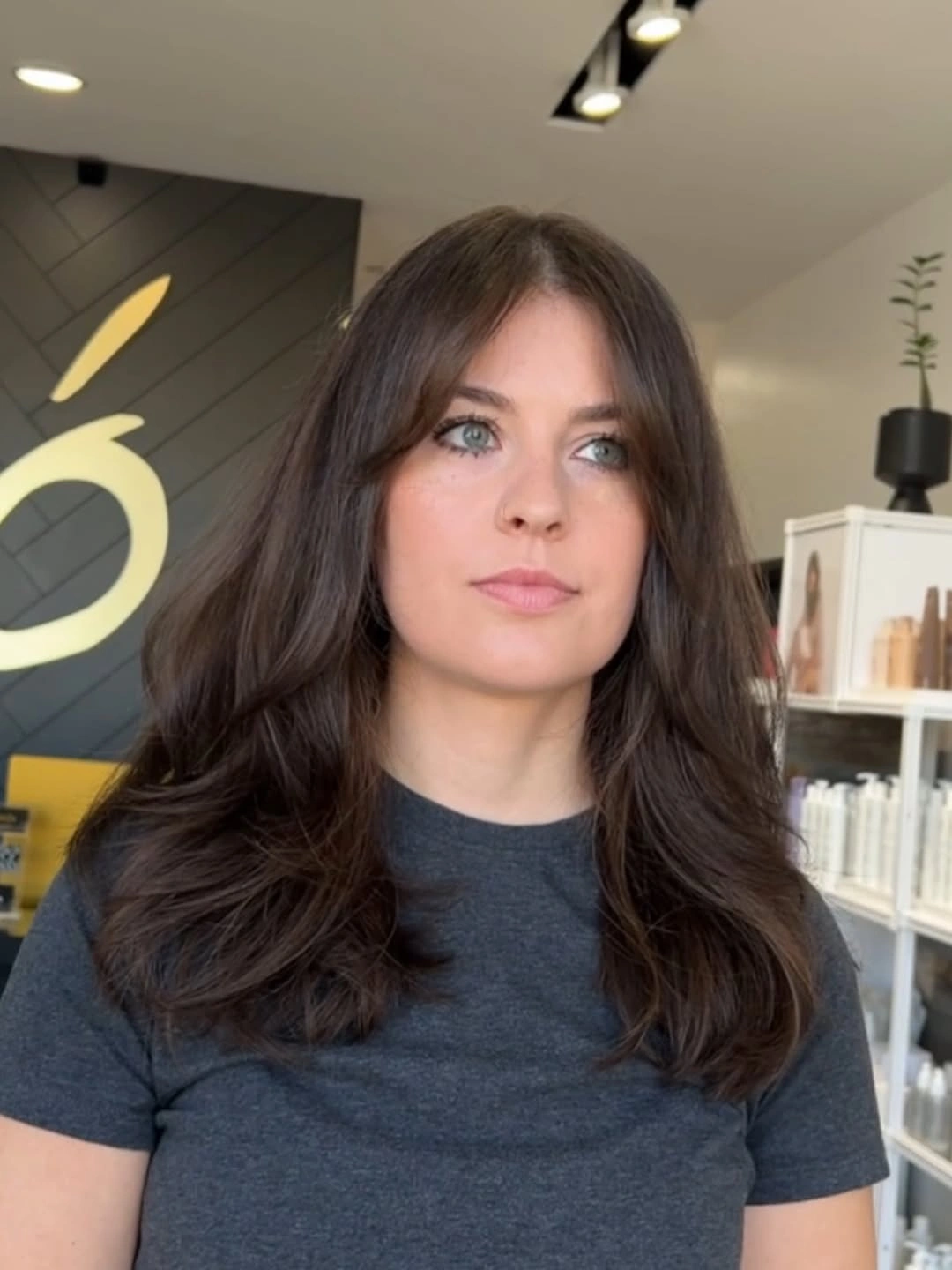
Photo via Instagram
The length is especially useful because it sits between a long layered haircut and a true medium cut. There is enough drop to keep the hair feeling loose, but the flipped ends and front layers keep the shape from becoming a single curtain of length. That midpoint gives the haircut flexibility in appearance without depending on a dramatic change in outline.
This is a gentler reading of the butterfly idea. The front still opens and moves, but the overall shape stays relaxed rather than highly sculpted.
14. Medium Waves With Layered Uneven Ends
The visible loose waves give this medium length haircut a more irregular outline, and that is the detail worth staying with. Pieces bend in different directions through the sides, while the ends fall with uneven layered points rather than a smooth lower shelf. The cut feels lively because the surface keeps interrupting the line.
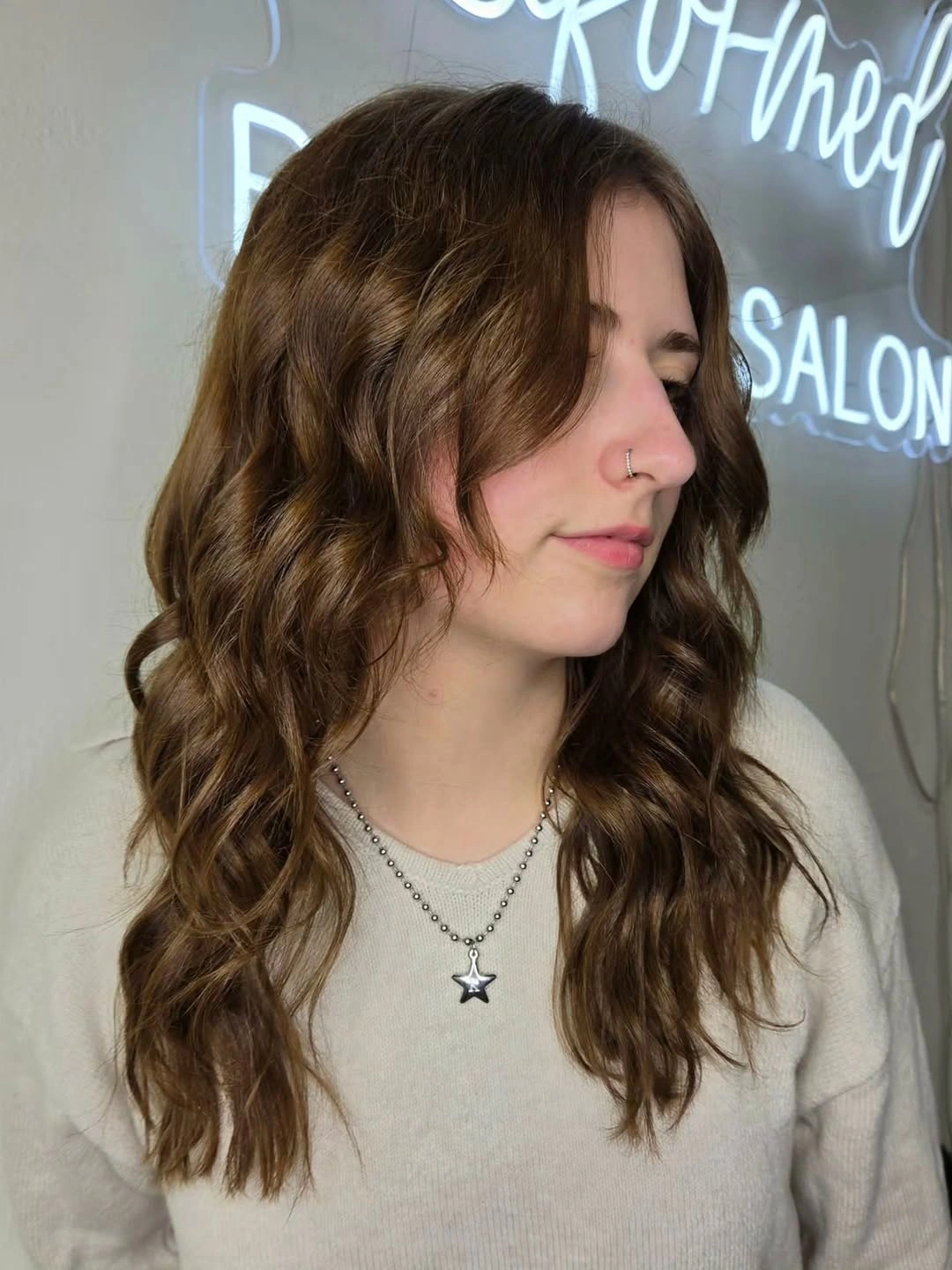
Photo via Instagram
Those bends break up the silhouette without erasing the medium length. Around the front, shorter pieces curve near the cheek and blend into longer sections, while the lower ends separate into soft strands. If you are drawn to curly hair or a wavy haircut, the useful idea is how layered length gains definition when each bend changes the edge.
The visible loose waves give the medium length a relaxed, uneven rhythm, especially where the ends separate instead of forming a solid line. That movement lets the layers feel dimensional without making the cut look overly carved or heavy.
15. Dark Long Layers With Flipped Ends
The top of this cut is very clean, and that smoothness makes the shaped lower edge feel more intentional. The long dark hair falls evenly through the upper and middle sections before the ends begin to turn outward. Because the surface stays controlled above, the flipped perimeter becomes the feature that gives the haircut its personality.
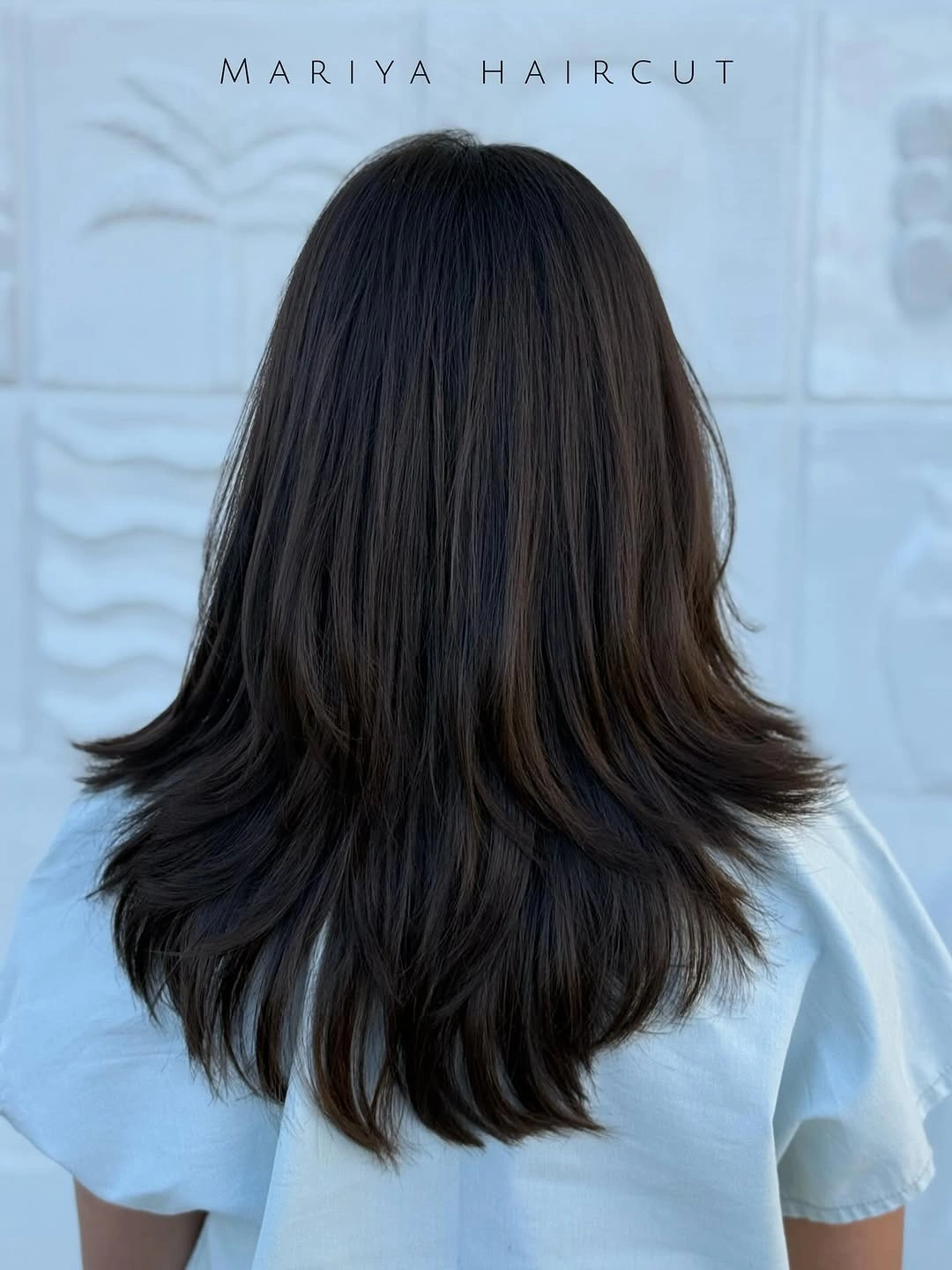
Photo via Instagram
From behind, the flipped ends make the long layers readable without needing a highly curled finish. The side pieces lift away from the main length, the center falls a little longer, and the U-shaped lower edge stays polished instead of fluffy. It is a modern long layers option where the movement is concentrated at the perimeter, not spread through the whole cut.
Compared with a fuller curled long-layer shape, this one feels more precise. The appeal is in the restraint: smooth length first, then a clear flick of movement at the bottom.
16. Shoulder Curls With Rounded Layered Shape
This shoulder-length cut is shown with springy curls, and the shape reads as a rounded silhouette rather than a flat curtain of length. The curls gather outward through the sides, then settle around the shoulders with enough width to make the outline feel full. What makes it especially useful is the way the front pieces fall softly into the same curved shape instead of looking detached from it.
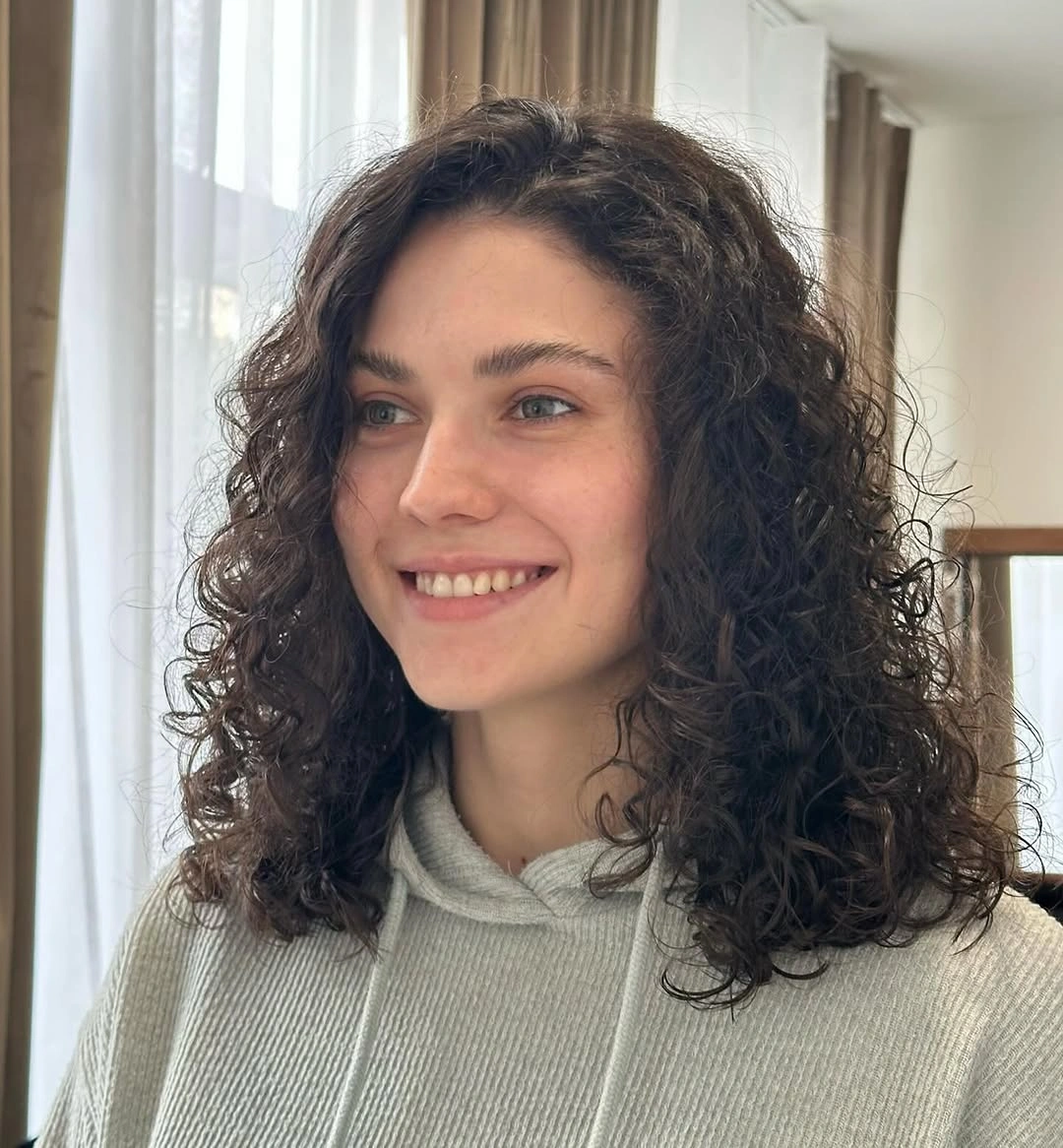
Photo via Instagram
The layer behavior shows through curl grouping. Some curls sit higher around the sides, others fall lower toward the shoulders, and the ends do not form one blunt shelf. For curly hair or a medium curly haircut reference, the visible point is that the layers let the curls stack, separate, and round out while the length still stays close to the shoulders.
With the curls sitting around the shoulders, the haircut has a compact fullness that feels shaped rather than accidental. The rounded volume and layered ends let the curls gather, separate, and fall into a clear silhouette.
17. Blue-Black Waves With Layered Depth
The layered wave pattern begins through the mid-lengths, where the long hair stops reading as one flat sheet and starts breaking into soft diagonal movement. From the back, the waves travel across the surface in loose sections, and the textured ends keep the lower edge from closing into a heavy line. That gives the long layers visible direction while still keeping the overall shape controlled.
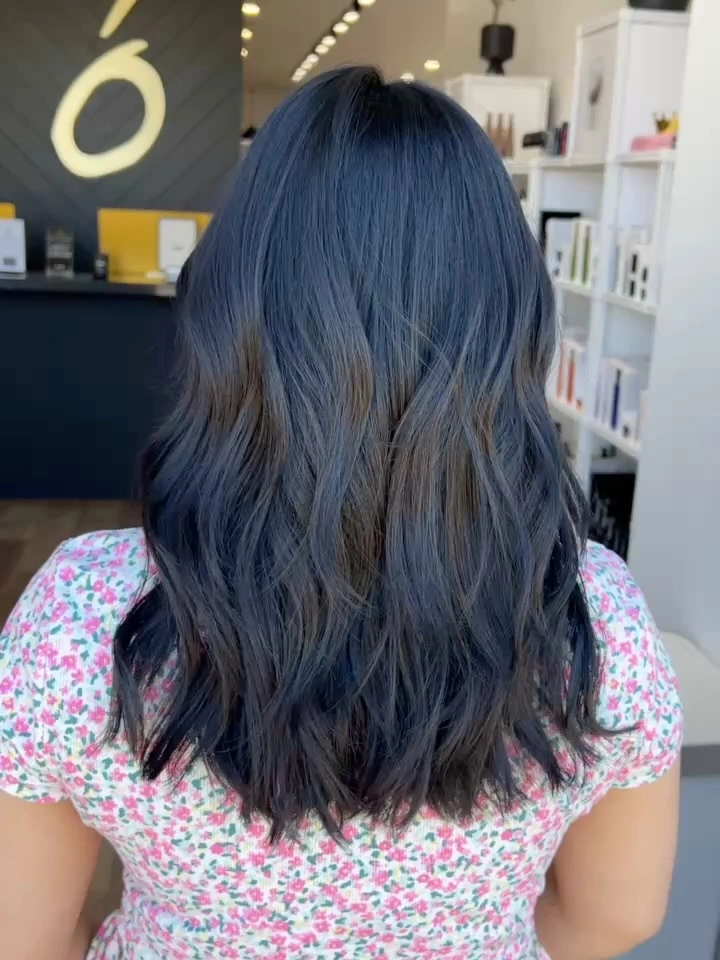
Photo via Instagram
The cool blue-black color adds visible depth because the darker surface catches light differently across each bend. It is not necessary to name a technical color process; the important part is how the tone makes the wave pattern look shadowed and dimensional. The color placement and layered lengths meet in the middle, where the movement is easiest to see.
This is a moodier long-layer option than the warmer brunette cuts in the collection. Its interest comes from the combination of dark depth, loose waves, and textured ends rather than from a dramatic front detail.
18. Side-Swept Bangs on a Medium Cut
The bangs create the first visual line here, sweeping across the forehead before the rest of the medium length opens outward. Because the fringe is full and side-swept, it gives the front of the haircut an immediate direction. The cut does not begin at the shoulders; it begins higher, where the bangs set the angle for everything below.
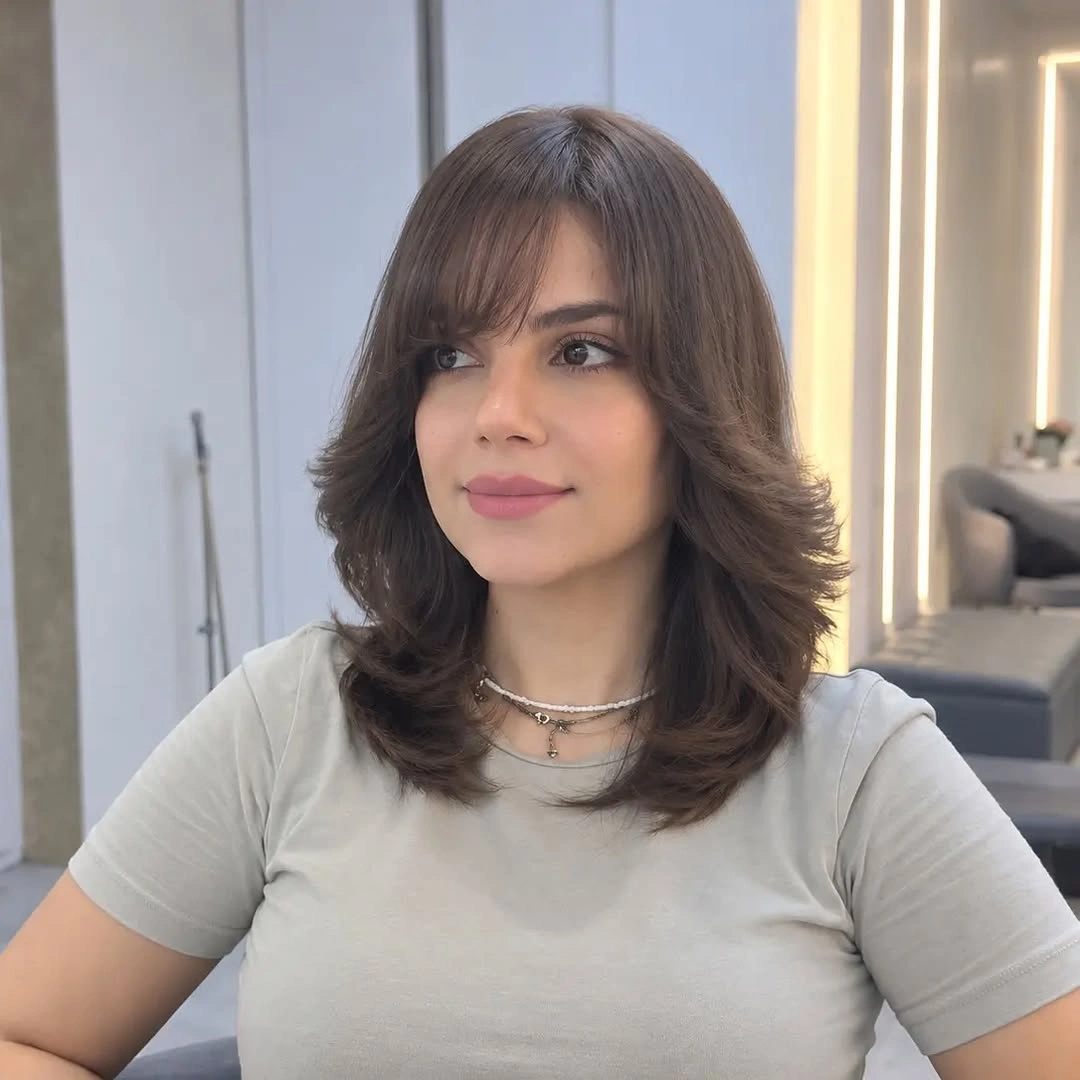
Photo via Instagram
The side pieces and flipped ends are what connect the fringe to the rest of the haircut. Shorter layers near the front bend away from the face, then the shoulder-skimming ends echo that outward movement at a lower level. This connection keeps the bangs from feeling like a separate add-on and makes the layered medium length feel complete.
For a reader drawn to haircuts with bangs, this is the clearest medium-length example in the set. The front has enough shape to lead the haircut, while the lower layers keep the look from stopping at the fringe.
19. Long Layers With a Side-Swept Front
The sunglasses cover part of the upper front, so the visible detail is a side-swept front section rather than a defined bang line. That partial cover gives the haircut an understated feeling: the side part shifts the weight, while the long brown lengths fall into curled ends below. The shape is softer and less sculpted than the more dramatic side-parted cuts, but it still has visible direction.
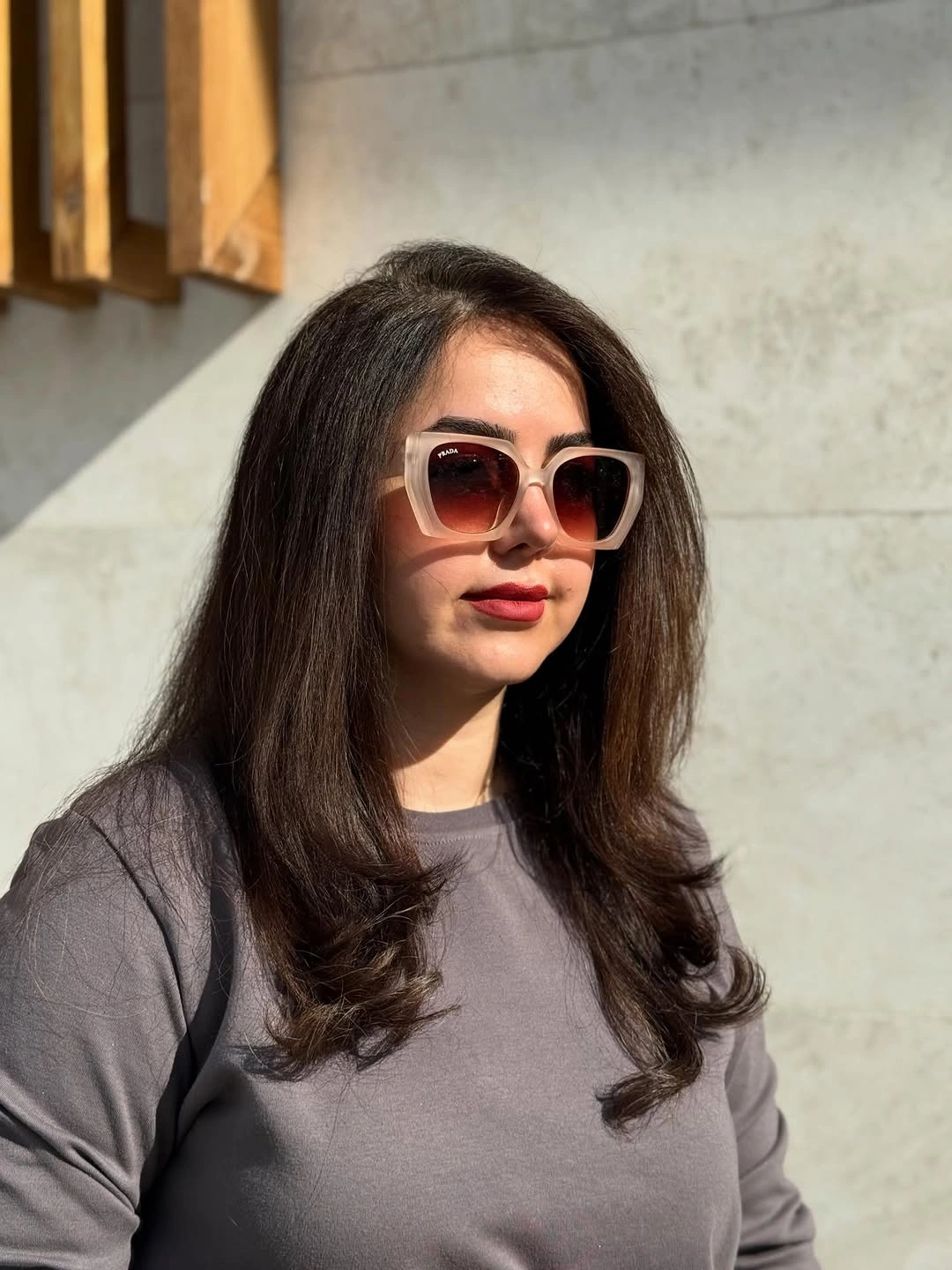
Photo via Instagram
The layers show along the front and lower edge, especially where the side pieces curve inward and the ends curl away from the body of the hair. The outdoor light catches the brown surface enough to reveal separation through the lower lengths. Instead of a sharp perimeter, the cut relies on gradual layering that becomes most visible near the last third of the hair.
This is a long hair option with movement that feels measured rather than showy. The side-parted shape gives the front a gentle shift, while the curled ends carry the motion through the lower length.
20. Dramatic Black Layers With Side-Swept Length
The deep side part gives this long black haircut its strongest opening move. A large side-swept front piece crosses forward and creates a bold first curve before the rest of the length drops into heavier layers. That front section changes the balance of the cut, making the top feel directional instead of evenly divided.
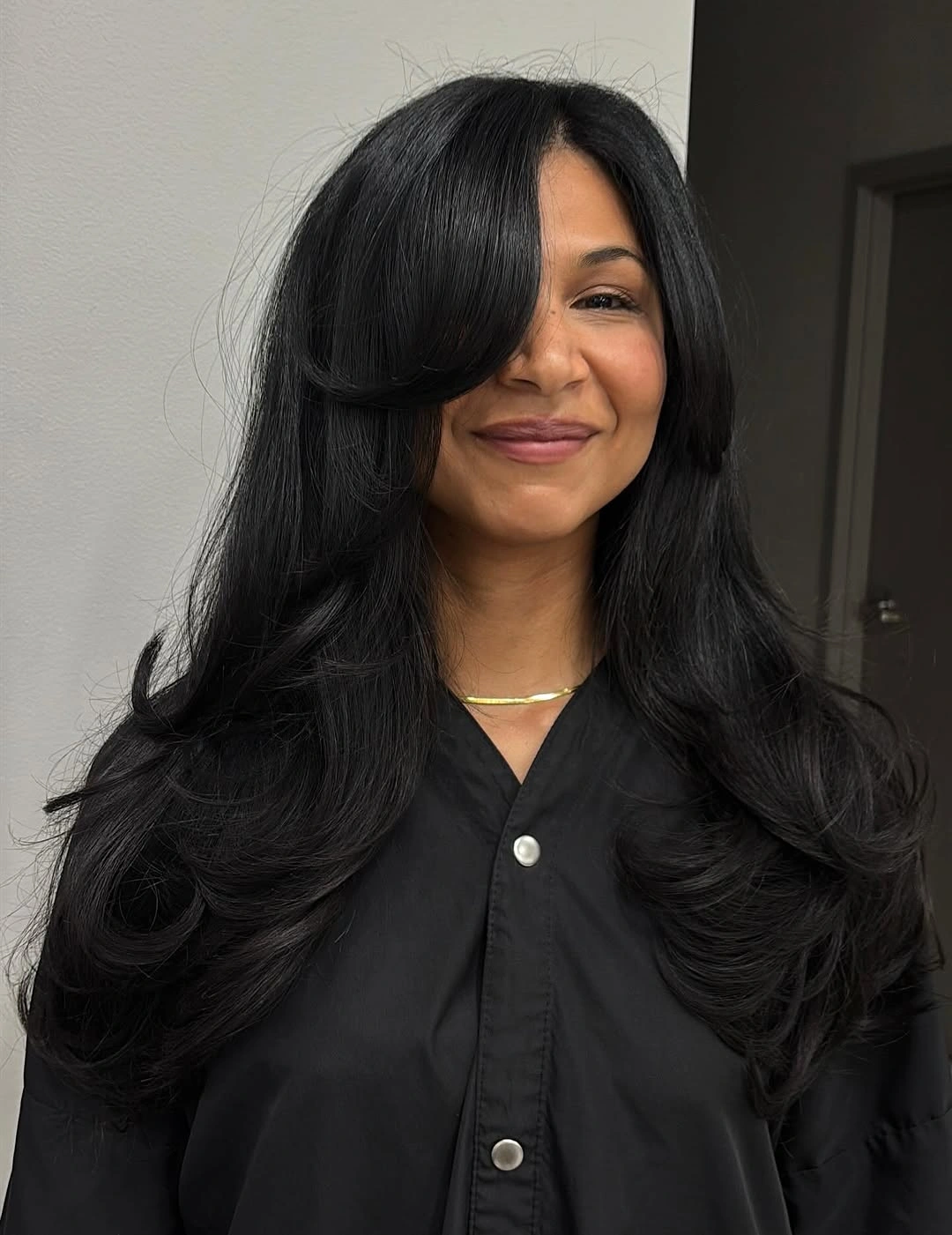
Photo via Instagram
The lower curled layers help balance the density of the dark length. Without that movement, the glossy surface could read as one heavy mass, but the curls open the bottom into large rounded sections. The result is a dramatic long-layer shape where the front sweep and lower volume answer each other rather than competing for attention.
This is the boldest dark long-layer option in the collection, but the drama still comes from haircut structure. The black color adds impact, while the side part, sweeping front, and curled lower layers define the shape.