Check where your layers end before deciding the outfit needs another piece. A shorter top leaves more of the jean shape visible, while a longer layer changes the balance between the upper body and the leg. Try both with your intended footwear, paying attention to how the hem meets the shoe rather than judging each item separately. Intentional jeans outfits come from those relationships: denim provides the base, but the lengths and shapes around it determine how the silhouette comes together.
Wash deserves as much consideration as cut. Compare its warmth or coolness with the surrounding colors, then decide which tones should feel connected and where a contrast would be useful. There is no need to make every piece equally relaxed simply because the denim is casual; one more deliberately shaped layer can give that ease some definition. The aim is to choose where the outfit holds its shape and where it loosens up, with color reinforcing that decision rather than competing for attention.
1. Muted Sage With Relaxed Gray-Blue Jeans
A soft sage cardigan sits close to the body while the faded gray-blue jeans fall in a looser, longer line, so the first thing you notice is proportion rather than contrast. The muted green and cool denim stay near each other in value, while the gray cap, small shoulder bag, and casual sneakers keep the outfit visually restrained instead of breaking it into several competing color zones.
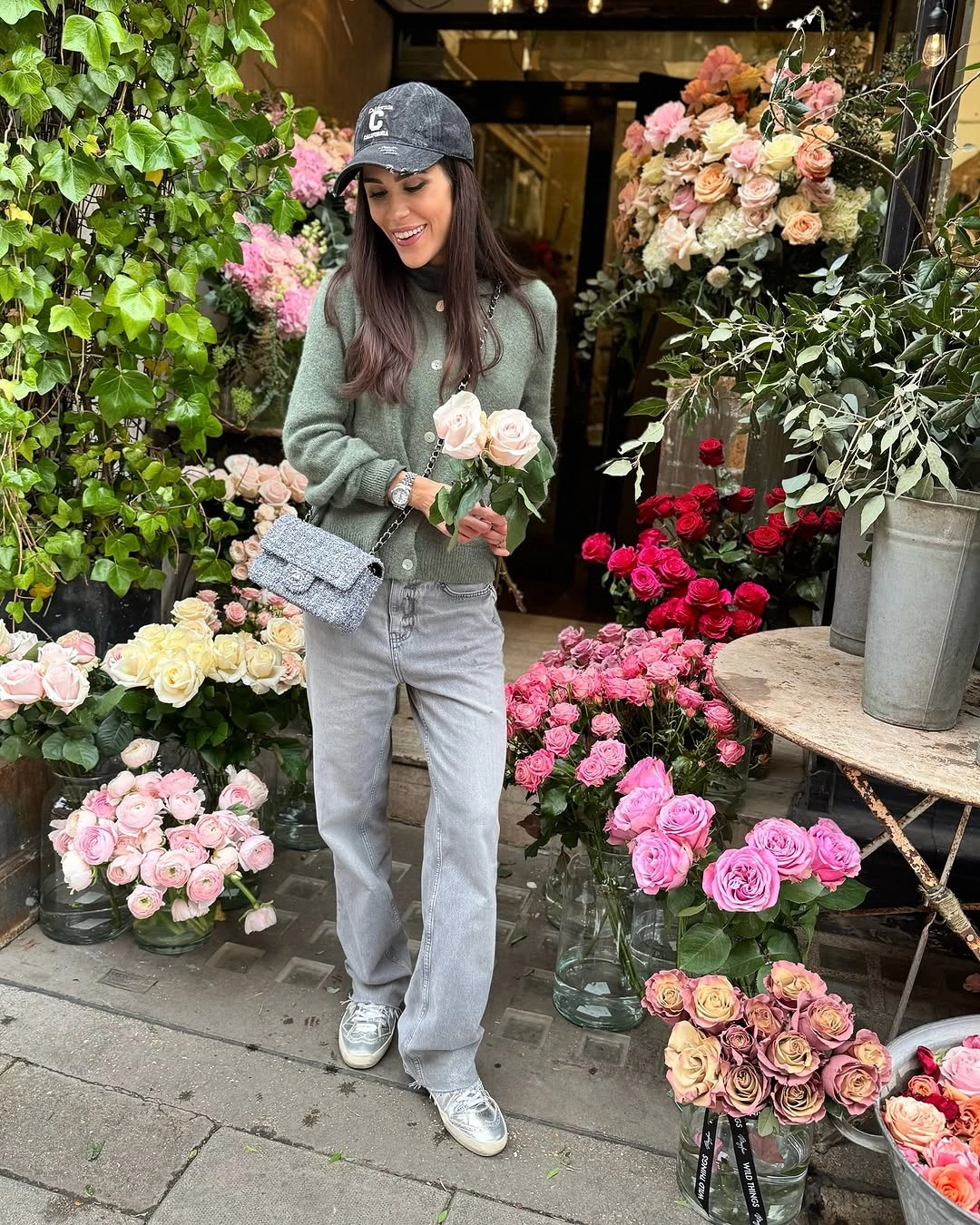
Photo via Instagram
That compact-over-relaxed relationship gives this casual jeans outfit its shape without asking the denim to do anything dramatic. Because the cardigan finishes near the waistband, the jeans keep a clear vertical run through the leg, and the low-contrast palette makes that change in scale easier to notice. The result feels considered through fit and placement rather than through a loud wash or oversized accessory.
The cap, bag, and sneakers support the same low-key register, so none of them has to become a separate focal point. What carries the look is the quiet contrast between a neat upper half and a more relaxed denim line.
2. A Belted Blazer Reshapes Pale Jeans
The oversized gray-green blazer brings broad shoulders and a long hem into the outfit, but the self-belt pulls that volume inward at the waist. Pale jeans and a simple white top keep the lower and central areas visually light, while the small cream bag repeats that brightness on a smaller scale. The silhouette feels structured because width and waist definition are working against each other at the same time.
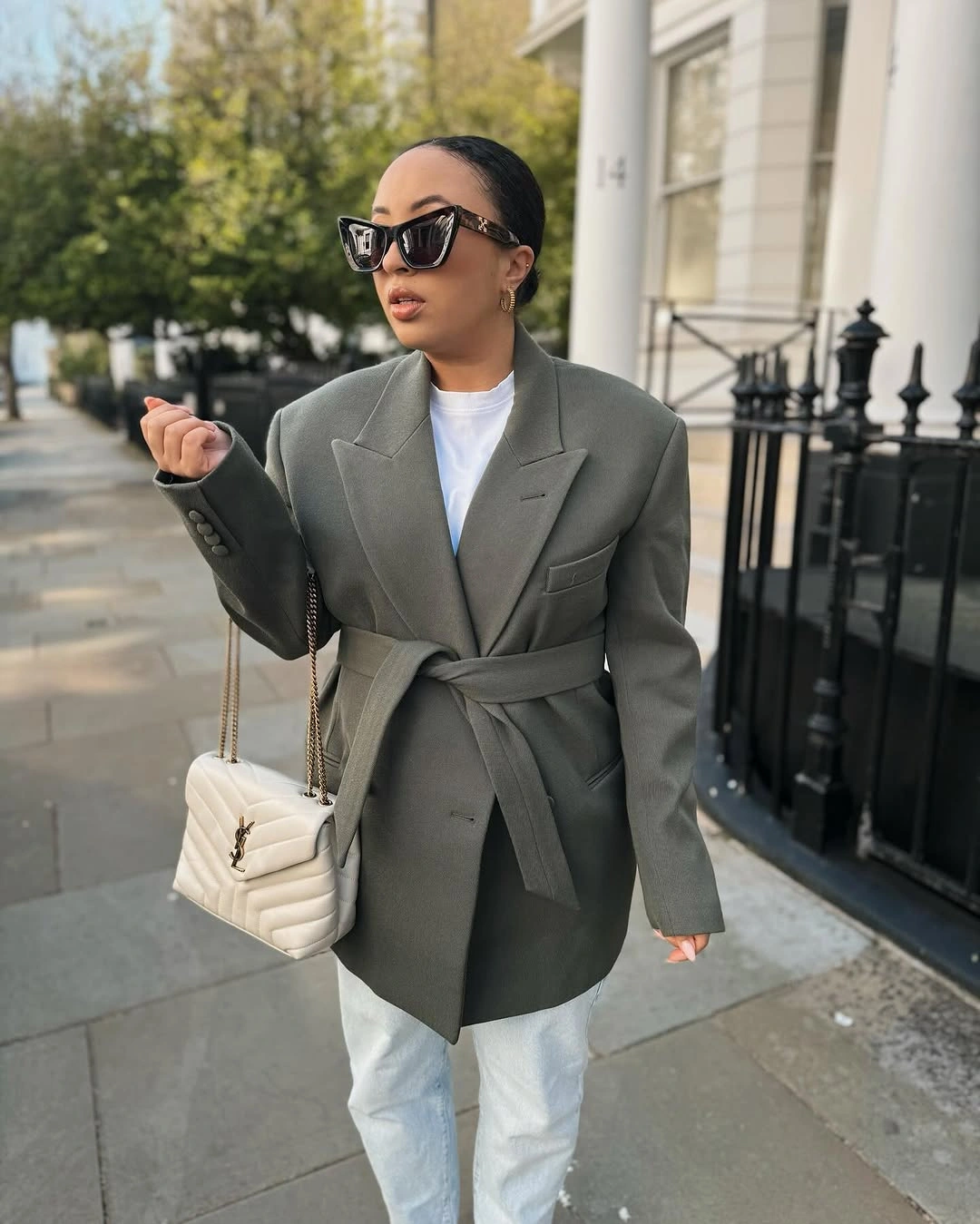
Photo via Instagram
What makes this different from simply wearing a roomy blazer over jeans is the controlled center created by the belt. The jacket still reads as oversized through the shoulders and sleeves, yet the cinched waist prevents the whole upper half from becoming one uninterrupted block. Against that shaped tailoring, the pale denim acts as a clean extension below rather than another source of volume.
The white top and cream bag create small light repetitions that connect naturally with the pale jeans. That keeps the focus on the blazer's changing geometry instead of turning the accessories into the main styling idea.
3. Long Dark Layers Meet Light Straight Jeans
A long dark outer layer frames light blue jeans from the shoulders almost to the ankles, creating a strong vertical contrast before the smaller details come into play. The dark cap reinforces the upper frame, while white socks interrupt the denim just above brown loafers. That light break at the ankle keeps the lower half from becoming visually heavy despite the length of the outer layer.
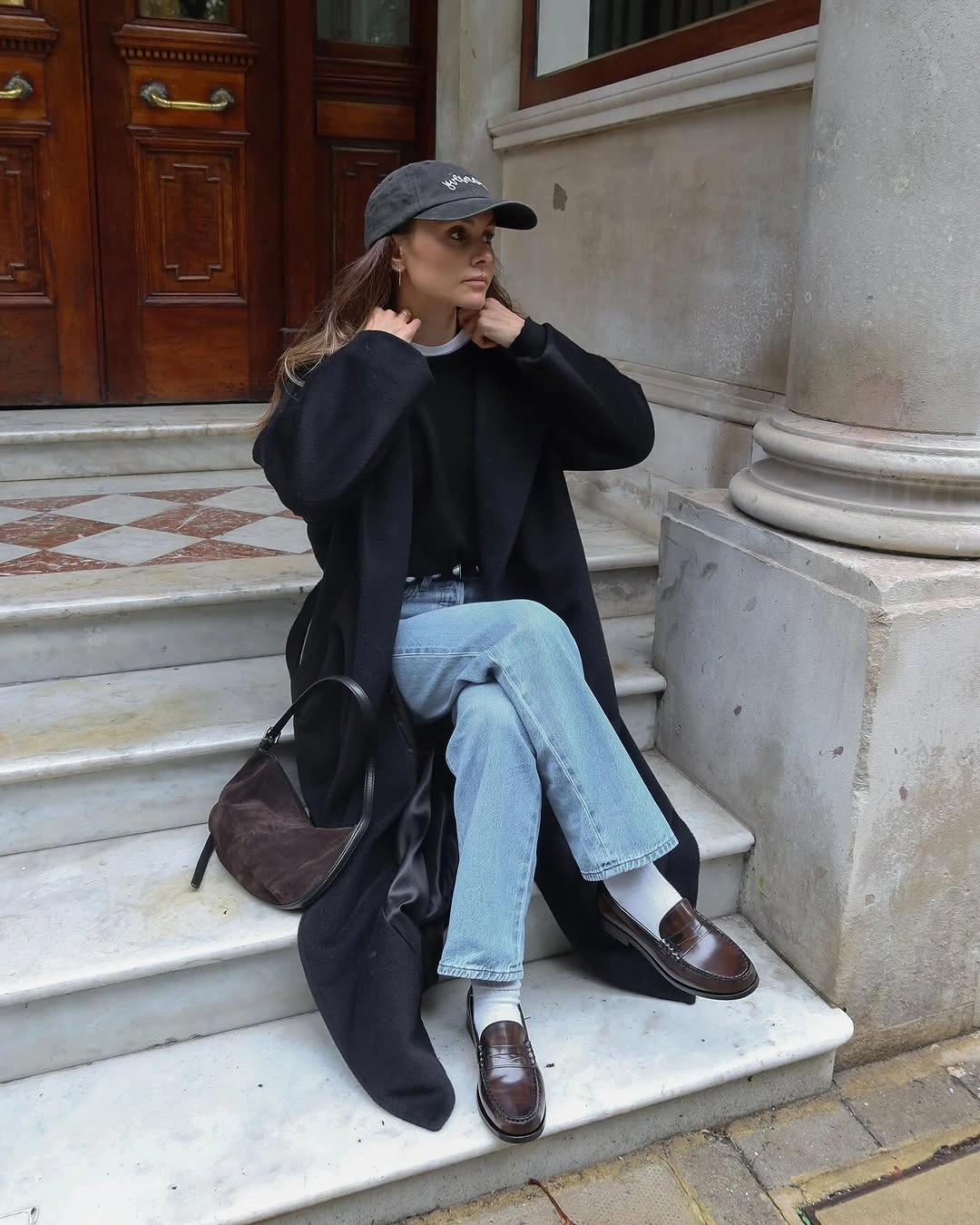
Photo via Instagram
The most interesting relationship here is between the long dark line above and the precise finish at the feet. Light jeans provide a broad middle band, but the visible white socks and brown loafers give the hem area enough definition to balance the extra length around the torso. Instead of relying on a cropped jacket or fitted top, the outfit uses the ankle as the point where proportion becomes crisp again.
Brown footwear and a dark brown bag soften the transition between the pale denim and the deep outer layer without matching either one exactly. The look feels deliberate because length, sock exposure, and shoe shape all contribute to the same vertical rhythm.
4. Oversized Black Blazer With Straight Gray-Blue Jeans
A long black blazer creates most of the upper-body scale here, while the gray-blue jeans stay comparatively straight and uncomplicated through the leg. Chunky gray sneakers add visible weight at the floor, giving the outfit a three-part proportion: elongated jacket, narrower denim, substantial shoe. The gray footwear also relates more closely to the jeans than to the blazer, which keeps the lower half visually connected.
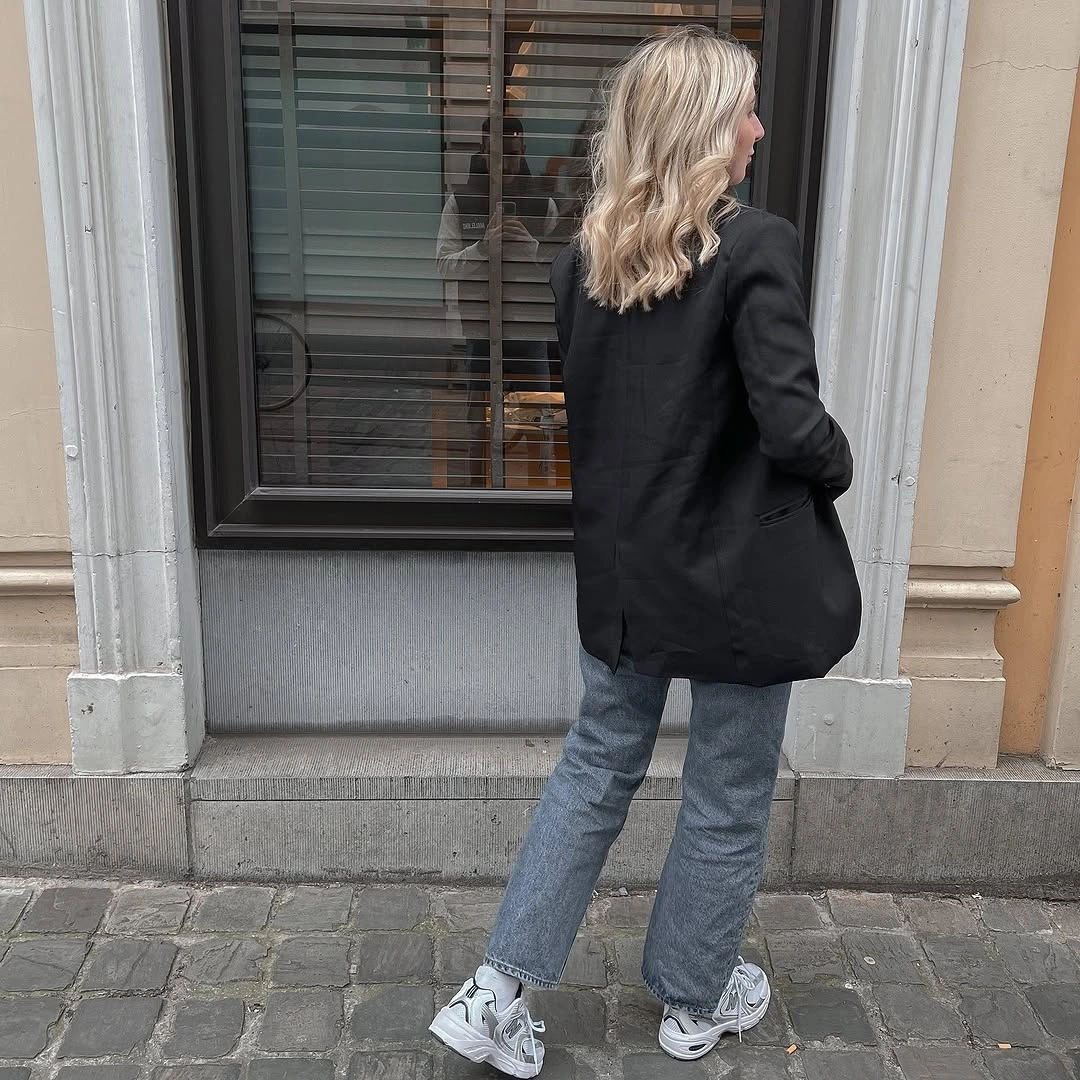
Photo via Instagram
This casual jeans outfit works through scale rather than waist definition, making it a useful contrast to more shaped tailoring. The blazer hangs loose and extends well below the hips, so the straighter jeans provide a calmer line underneath instead of competing with the jacket's length. The larger sneaker then restores some volume at the bottom, making the silhouette feel intentionally anchored rather than top-heavy.
The interest comes from how three different sizes of shape meet, not from the familiar idea of pairing a blazer with denim. Keeping the jacket loose preserves the long upper block that the straighter jeans and substantial sneakers balance from below.
5. A Denim Skirt Changes the Black-and-Blue Formula
Here the denim category changes: the bright blue lower piece is a denim skirt rather than jeans, paired with a fitted black quilted jacket. The shift still raises the same styling question, because the dark textured upper half meets a straighter, brighter denim panel below. A small metallic shoulder bag adds a concentrated reflective detail without changing the clean black-and-blue structure.
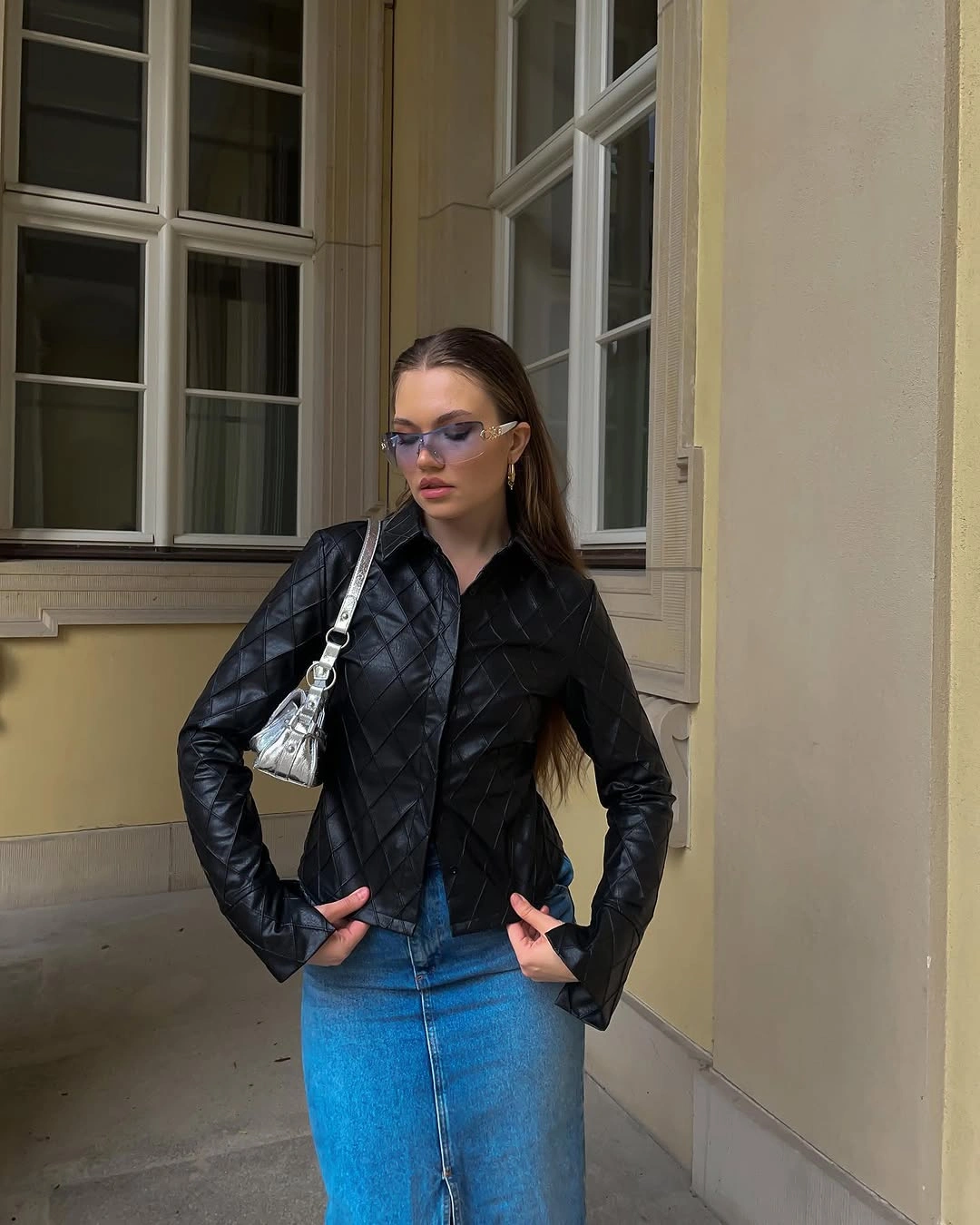
Photo via Instagram
The strongest contrast is not simply black against blue, but a compact quilted surface against a smoother vertical denim shape. Because the jacket stays fitted and the skirt drops in a relatively clean line, the outfit reads as graphic and controlled even with the brighter wash. The reflective bag and narrow tinted glasses sharpen that effect through small, precise accents rather than through additional color.
Because the lower piece is a skirt, the silhouette becomes a useful comparison rather than another jean-cut example. The same ideas about denim color, upper-body scale, and accessory surface still hold when the denim shape itself changes.
6. Soft Neutrals Around Relaxed Light Jeans
The light jeans have an easy, roomy cut, and the taupe jacket stops high enough to leave that shape fully visible. A large pale scarf adds volume around the shoulders, while the beige shoes and tan bag keep the surrounding colors close together. Instead of relying on sharp contrast, the outfit lets changes in scale do most of the work.
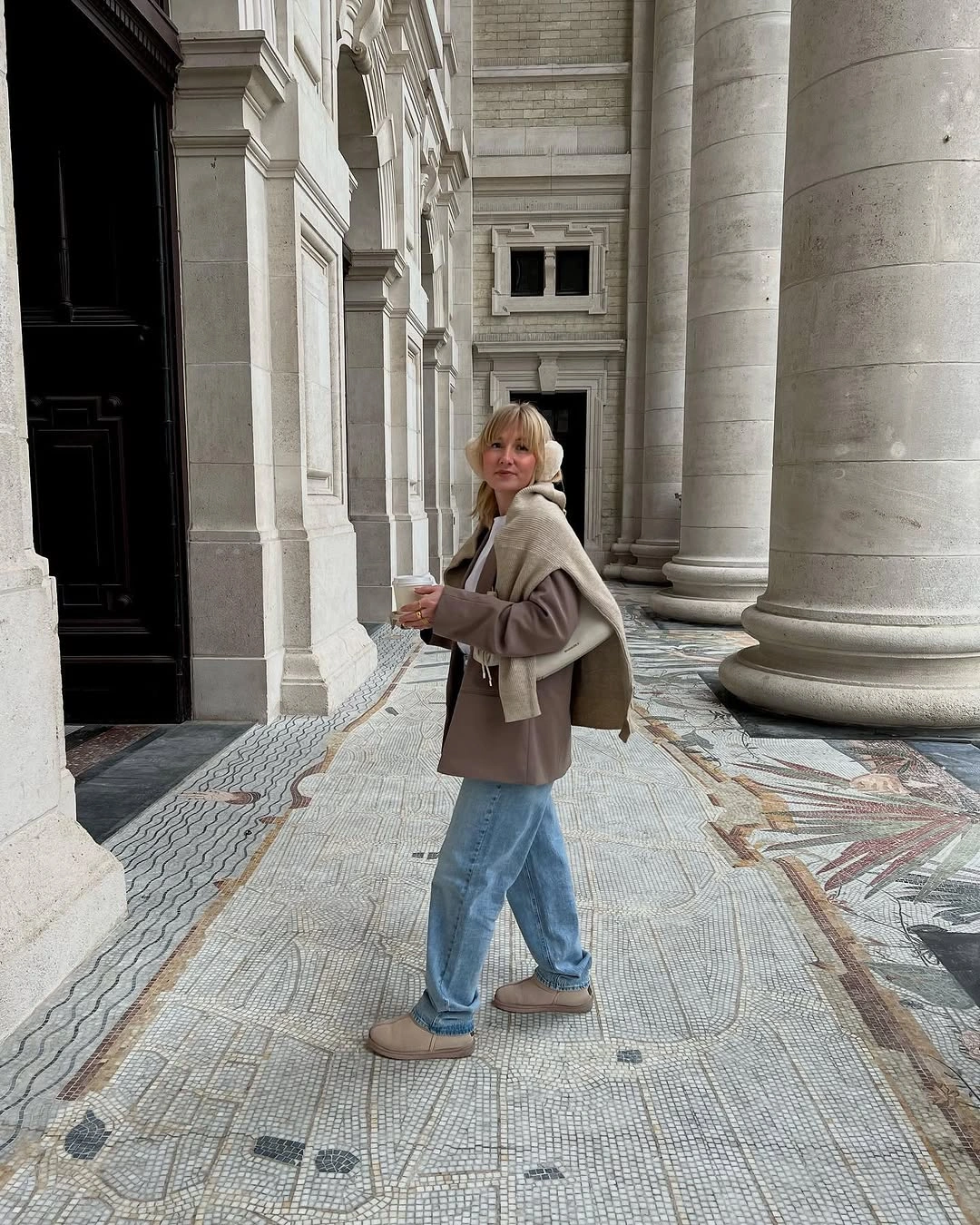
Photo via Instagram
This is a strong example of how baggy jeans outfits can stay visually organized even when the upper half is not especially fitted. The scarf, jacket, and jeans all have noticeable presence, but the narrow range of taupe, beige, and light blue prevents those volumes from feeling disconnected. The blue denim becomes the coolest, clearest color field in the composition.
The shoes matter because they continue the soft neutral range all the way to the ground instead of introducing another dark block. That makes the roomy jeans feel integrated with the rest of the look rather than isolated as the only relaxed element.
7. Beige Trench Frames a Dark Denim Base
A long beige trench forms the outer frame, but the center of the outfit is built from a muted olive button-front shirt, black jeans, and a black belt. The large black bag repeats the dark base at the side, so the eye moves between beige, olive, and black in clear layers. That stepped color structure gives the outfit more depth than a simple light-coat-over-dark-jeans contrast.
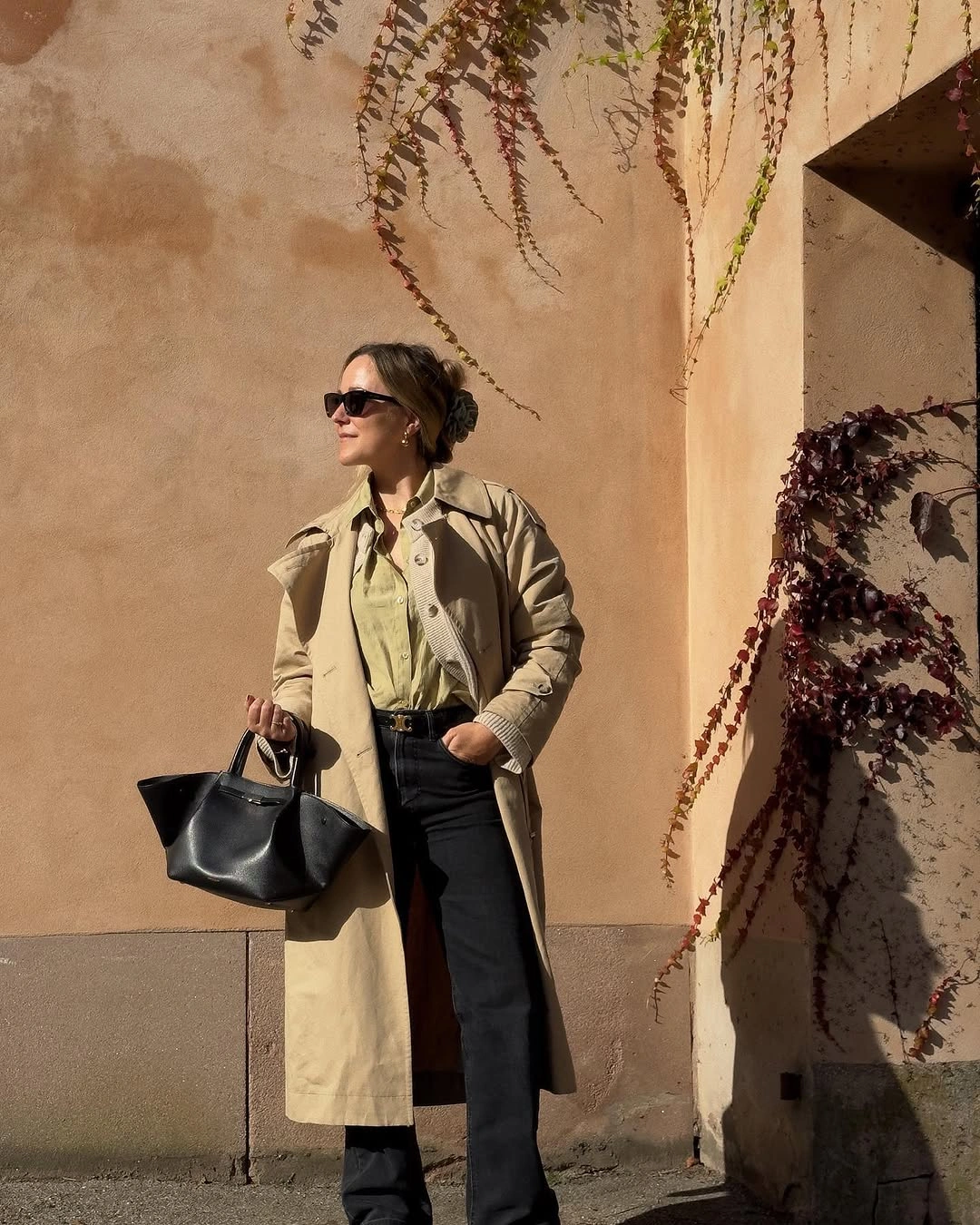
Photo via Instagram
The black jeans are especially effective because they connect directly with the belt and bag, creating continuity through the lower half and accessories. Above them, the olive shirt works as a middle value between the dark denim and the pale trench, so no single transition feels abrupt. The long coat then adds length without erasing the more compact layers underneath.
This is one of the classier jeans outfits in the collection because the polish comes from color sequencing and coat length rather than from embellishment. The combination stays controlled by repeating black in several places while leaving the trench as the broadest light area.
8. Pale Jeans Between Olive and Black
Very pale jeans create the largest light area in this outfit, set between a dark olive jacket above and chunky black shoes below. A tan top softens the change from the deeper jacket color to the nearly white denim, so the center does not feel stark. The result is a dark-light-dark arrangement in which placement matters more than exact color matching.
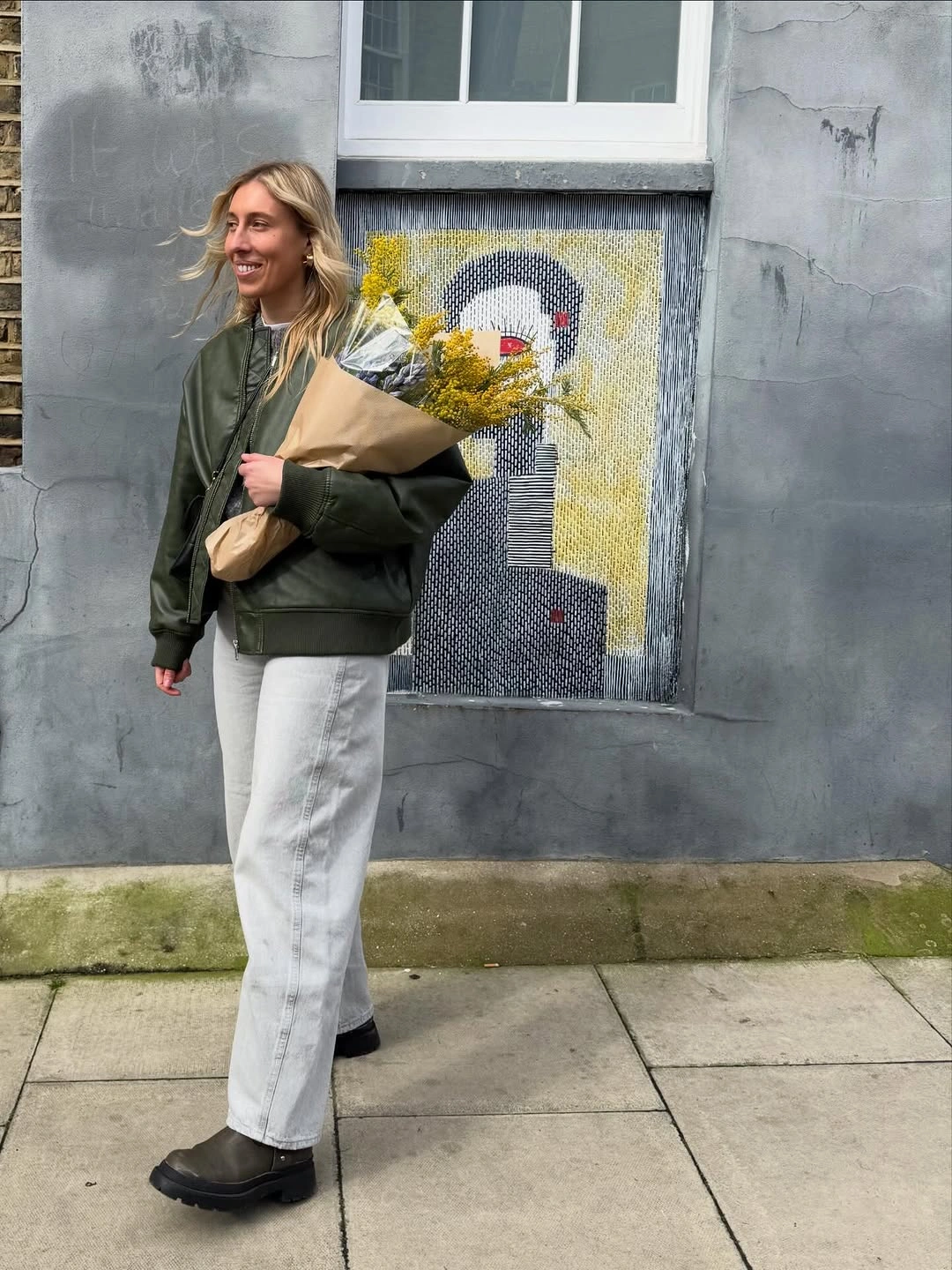
Photo via Instagram
The pale denim works almost like a visual pause between two heavier zones, which is why the jeans remain prominent even without a dramatic cut or wash detail. Black footwear brings weight back at the bottom, while the olive jacket keeps the upper half grounded. The tan layer in between makes the shifts in value feel gradual rather than sharply divided.
That balance gives this jeans outfit idea a clear structure without depending on a single statement accessory. The most useful detail is where the darker pieces sit around the pale denim, not whether every color appears twice.
9. Wide Pale Jeans Carry the Silhouette
The extremely wide pale jeans dominate the silhouette from the hips down, while the white top stays comparatively compact and clean above them. Because both pieces are light, the shape of the denim becomes more noticeable than its color. A medium brown shoulder bag introduces the strongest warm contrast, but it does not interrupt the long vertical sweep of the jeans.
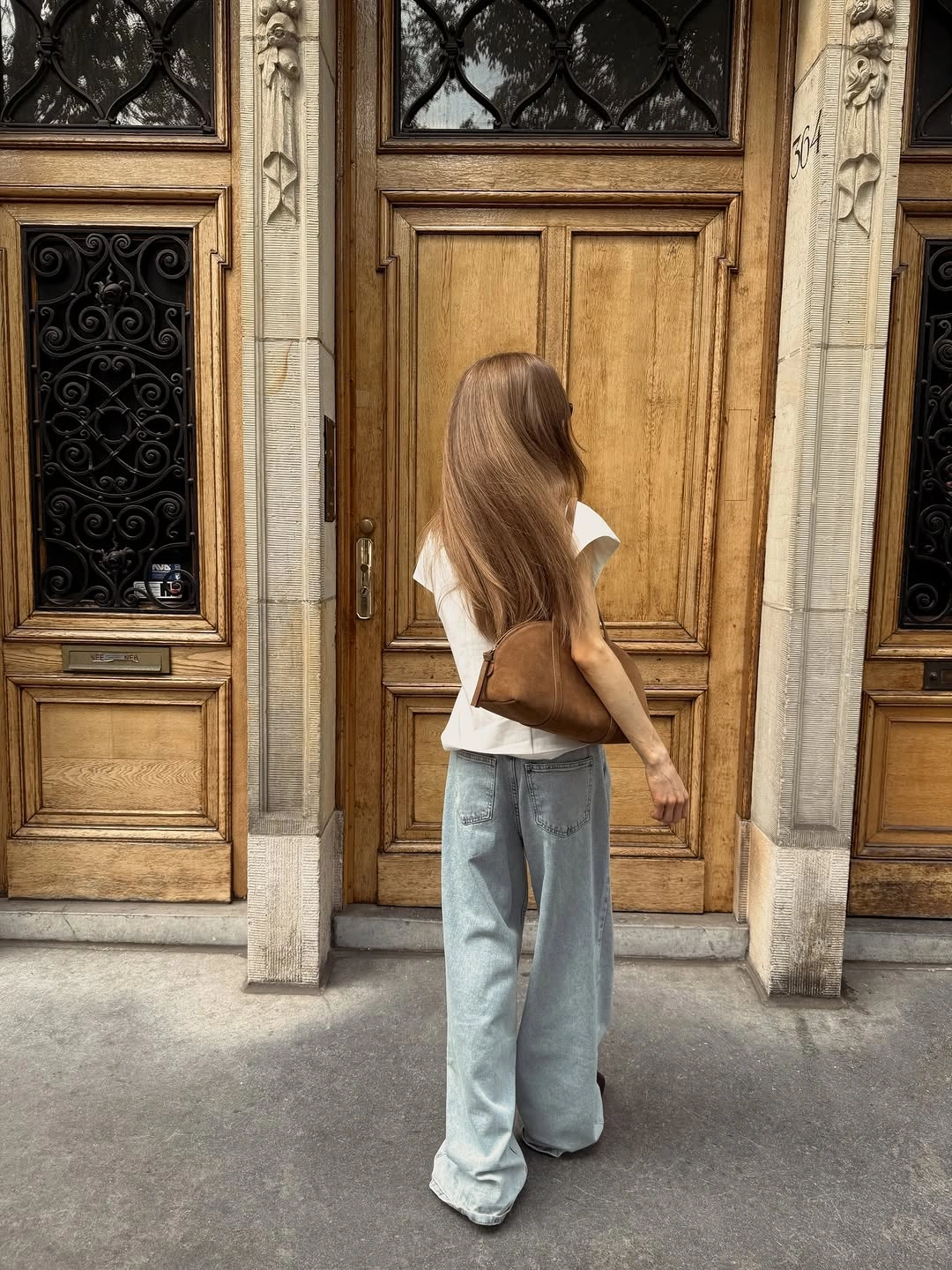
Photo via Instagram
This is the clearest wide-leg jeans outfit in the group because almost all of the volume is concentrated below the waist. The top does not compete with that width, so the denim can read as the defining proportion rather than just another oversized piece. The extra length at the hem extends the leg line further and makes the broad cut unmistakable.
The brown bag adds enough tonal separation to keep the pale combination from looking flat, yet the silhouette still belongs to the jeans. What stands out is the decision to keep the upper half visually concise while allowing the lower half to expand.
10. Camel Layers Meet Distressed Light-Wash Jeans
A wide-brim tan hat, textured tan top, and long tan coat create a polished run of related color across the upper half, while the light jeans break that refinement with large ripped knees. The vivid green bag adds a separate saturated note, and the pale pointed shoes return to a cleaner finish below. Several styling languages meet here without collapsing into one dominant detail.
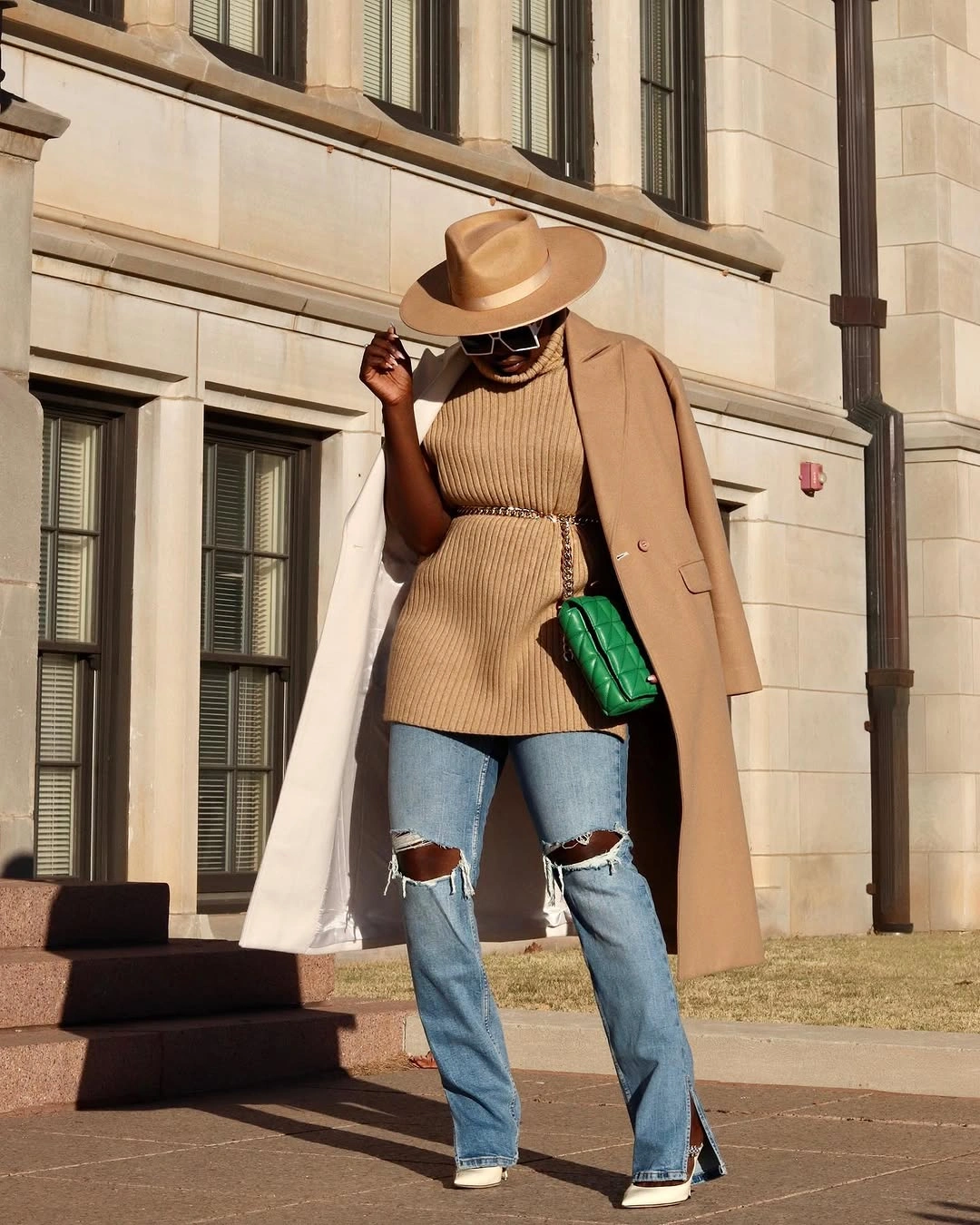
Photo via Instagram
The tension between the coordinated tan pieces and the distressed denim is what gives this look its character. The hat, top, and coat feel deliberate because their colors stay closely related, while the torn knees interrupt that smooth continuity in a very visible way. Pale pointed footwear then adds a crisp lower edge, so the distressing never becomes the only thing the eye notices.
Among the classier jeans outfit ideas here, this one works because polish and wear are allowed to remain visibly different rather than being blended together. The green bag adds another point of contrast, but the stronger argument is still the meeting of coordinated tan layers, ripped denim, and precise footwear.
11. Camel Tailoring Meets Dark Wide-Leg Jeans
A camel blazer sits over a bright white high-neck top, while the dark indigo jeans widen substantially from the hips toward the floor. The jacket keeps the upper half comparatively compact, so the broader denim line becomes the defining proportion below. White at the center also separates the warm camel from the deep blue instead of letting those two stronger colors meet directly.
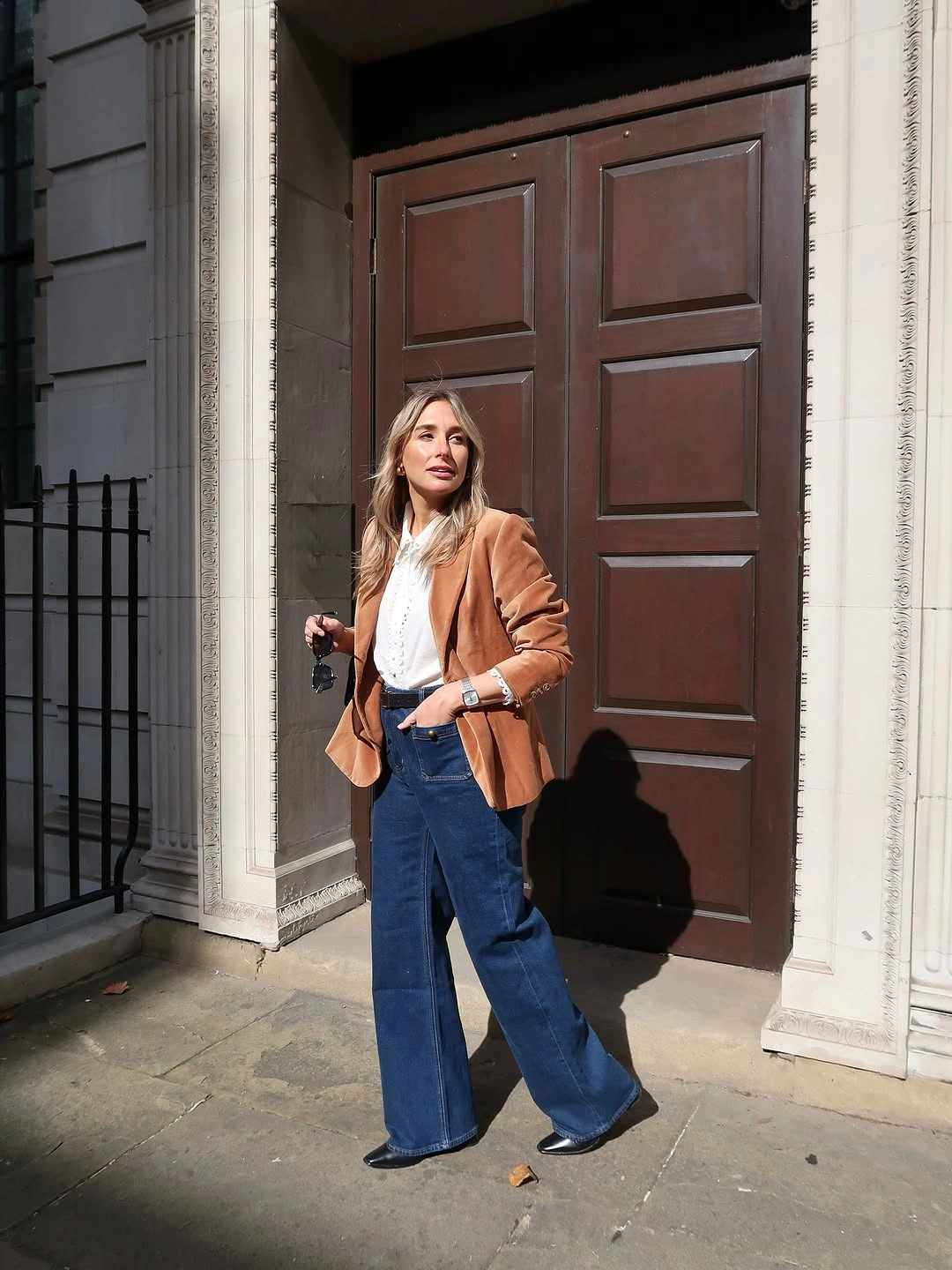
Photo via Instagram
The darker wash changes how the wide-leg jeans read compared with the pale, expansive pair earlier in the collection. Here the broad cut feels more visually grounded because the denim carries greater depth, while the blazer adds structure without extending too far down the body. That shorter-over-wider relationship gives the outfit a polished shape without disguising the scale of the jeans.
This is one of the clearest classy wide-leg jeans outfits because width and tailoring are doing different jobs rather than competing. The white top acts as a clean vertical break, helping the camel jacket and dark denim remain distinct parts of the same composition.
12. Red Accents Echo Above and Below Denim
The bright red beret immediately establishes a color point at the top, and matching red socks repeat it near the ankles beneath cropped blue jeans. A dark jacket and dark top occupy most of the space between those two accents, while black loafers continue the darker base at the feet. The jeans interrupt that dark center with a medium blue band without weakening the red connection.
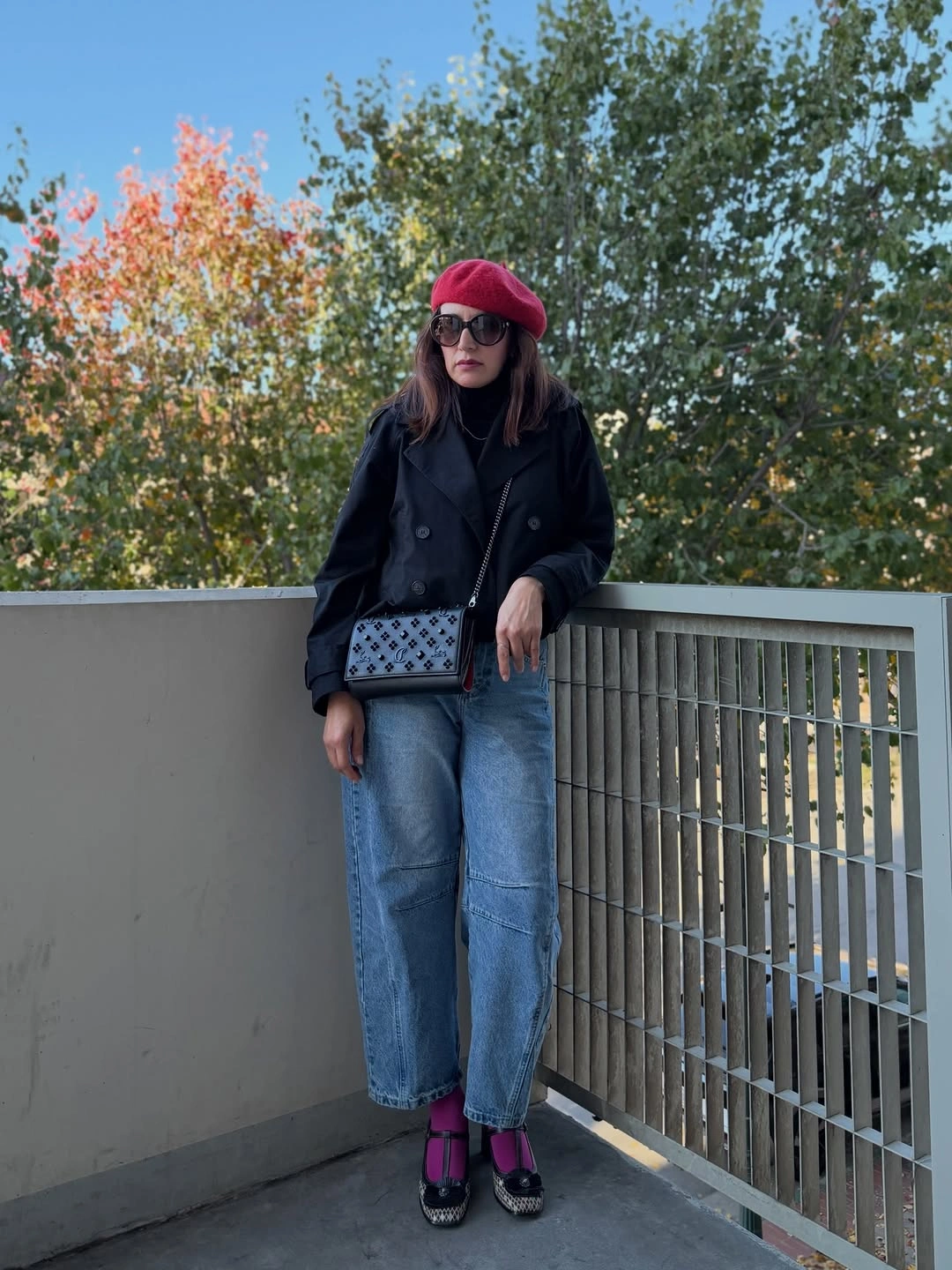
Photo via Instagram
What gives this casual jeans outfit its personality is the distance between the matching color accents. Because the red appears at opposite ends rather than in one cluster, the eye moves from the beret down through the dark layers and denim before finding the same color again at the socks. The cropped hem is essential to that relationship because it leaves enough sock visible for the repetition to register clearly.
The small patterned bag adds detail without becoming another major color block. The strongest idea remains the deliberate echo between head and ankle, with the jeans serving as the visual bridge between them.
13. A Narrow White Center Above a Wide Base
A long brown coat creates a vertical outer frame around a bright white fitted top and very wide dark washed bottoms. The white center is comparatively narrow and sharply defined at the waist, which makes the broad lower shape appear even more expansive. White sneakers repeat that light tone at the floor, creating a second bright point beneath the dark lower half.
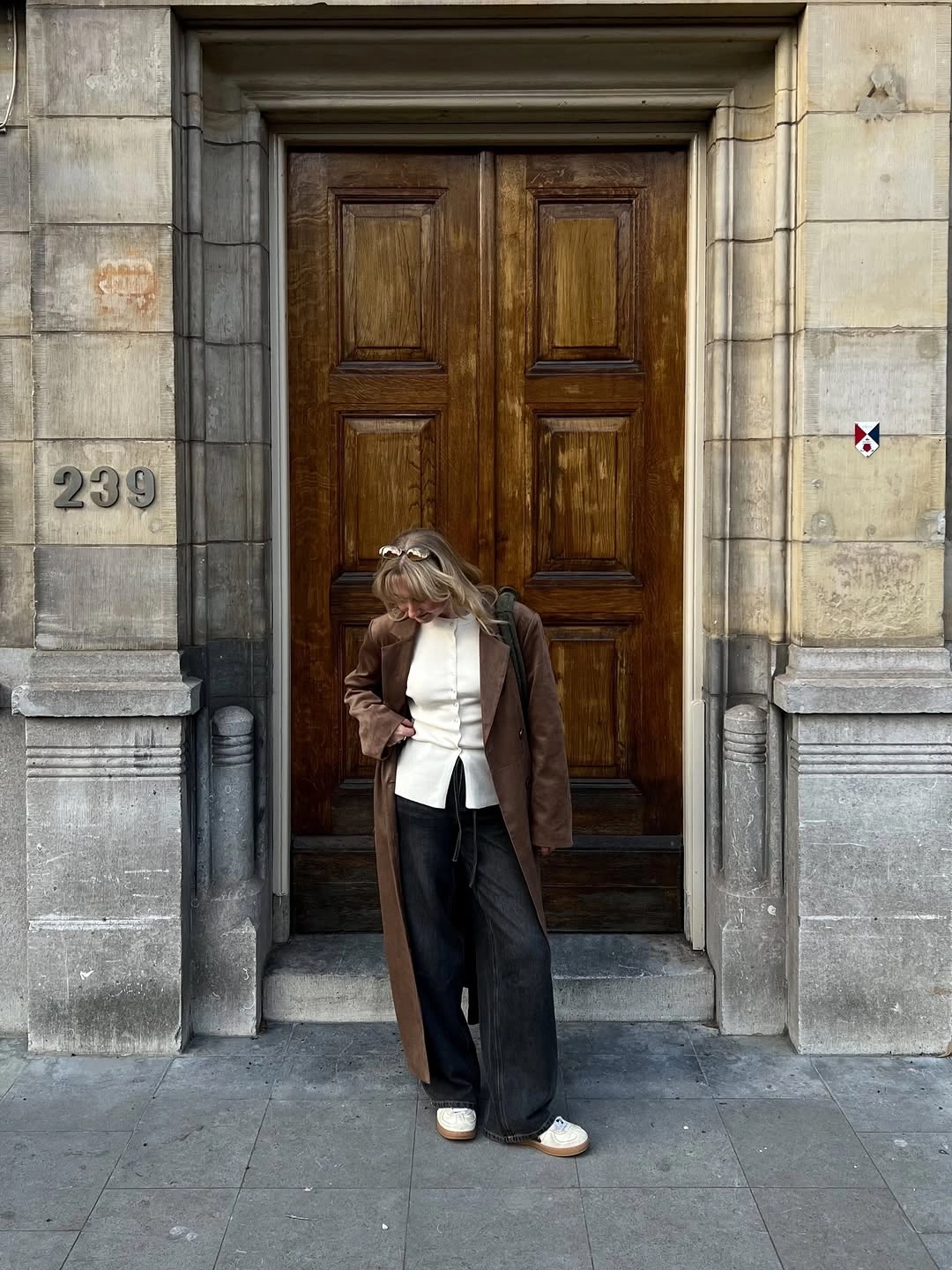
Photo via Instagram
The most useful relationship here is the contrast between the compact center and the wide base rather than any assumption about the exact material of the bottoms. Their dark washed appearance gives them visual depth, but the panel does not make the category clear enough to treat them confidently as jeans. What is fully visible is how the fitted white top establishes a precise starting point for the much broader silhouette below.
The brown coat adds length around both shapes without hiding the difference between them. Repeating white at the torso and shoes also keeps the dark base from becoming one uninterrupted block from waist to floor.
14. Roomy Taupe Sweater Over Straight Blue Jeans
A roomy taupe sweater creates most of the volume above the waist, while the medium blue jeans fall in a much cleaner, straighter line underneath. The contrast is subtle because neither piece has an extreme shape, yet the difference between a broad upper silhouette and a narrow vertical lower one is easy to read. A small white handbag adds a compact light element beside the larger sweater.
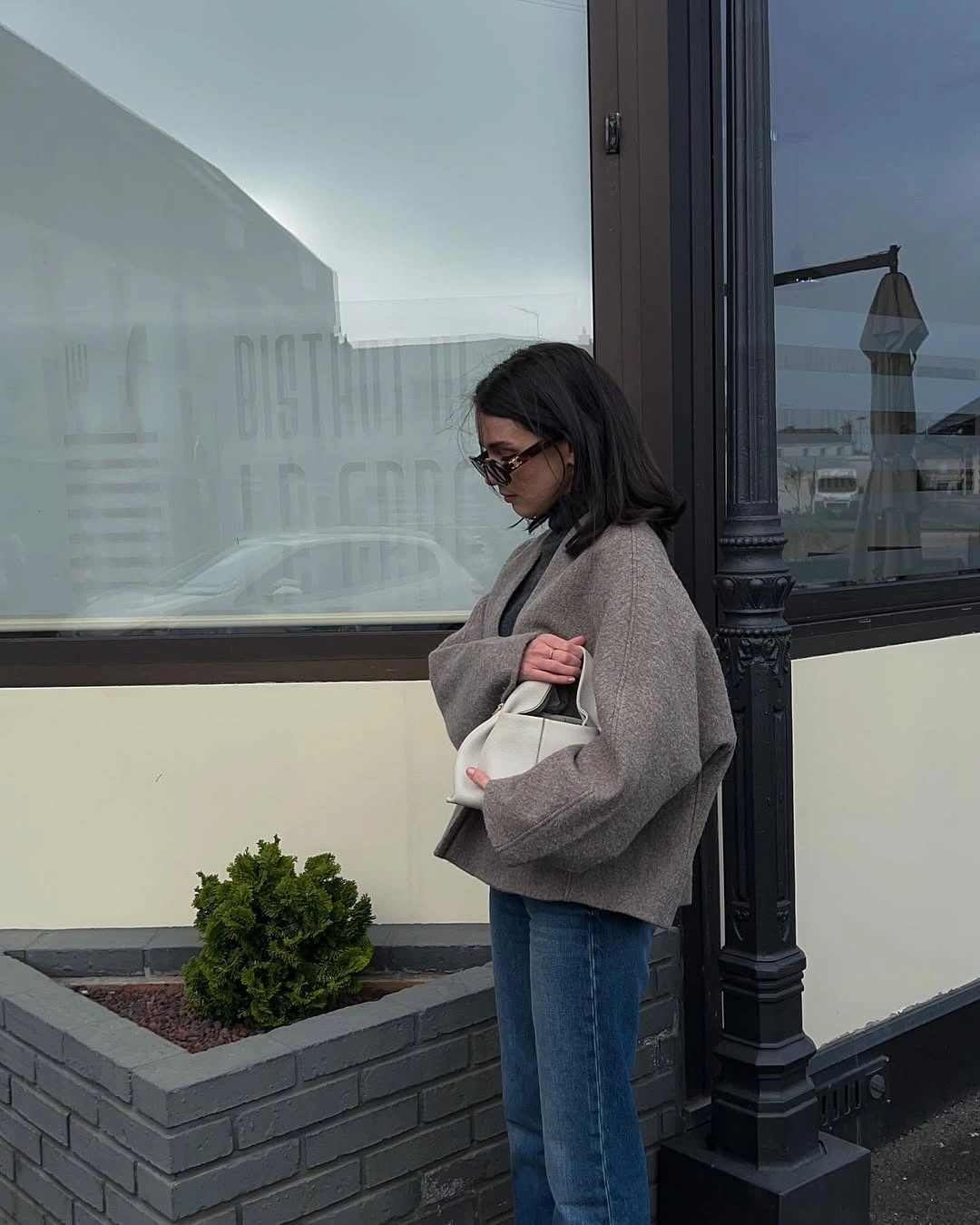
Photo via Instagram
This straight-leg jeans outfit works through restraint rather than dramatic layering or sharp color contrast. The sweater has enough width to establish a relaxed upper shape, but the jeans do not repeat that same volume through the legs, so the silhouette stays clearly divided. Taupe and blue also remain visually distinct without creating the hard light-dark pattern seen in some of the earlier looks.
The white bag matters because its small scale emphasizes how much of the upper-body presence comes from the sweater itself. The section is less about accessories than about what happens when a generous top shape meets a straighter denim line.
15. Cropped Jeans Put Pointed Shoes in Focus
The medium blue jeans finish above the ankle, leaving the black pointed shoes fully visible beneath a short dark jacket. That exposed space changes the balance of the lower half because the footwear becomes part of the silhouette instead of disappearing under the denim. A warm brown bag adds a separate color note at the side without interrupting the direct black-and-blue relationship.
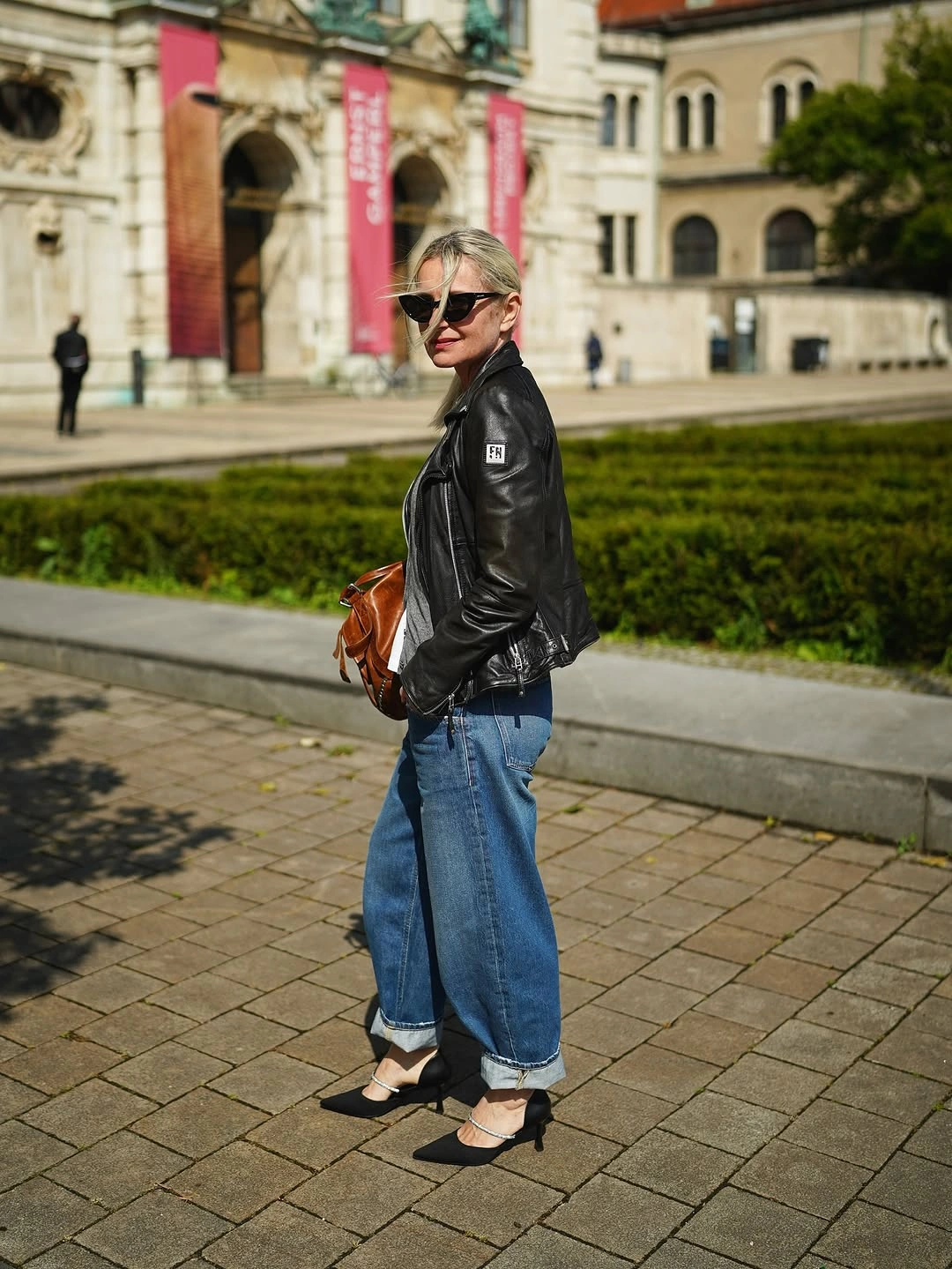
Photo via Instagram
The hem-to-shoe connection is what makes this jeans outfit feel more polished than a basic jacket-and-denim pairing. Cropping the jeans gives the pointed footwear room to register clearly, while the dark jacket repeats the black near the feet and creates visual continuity across the body. The brown bag softens that repetition just enough to keep the outfit from becoming a strict two-color arrangement.
The interesting contrast comes from the substantial dark jacket above and the more precise, exposed shoe shape below. Because the ankle remains visible, the footwear has enough presence to influence the entire look rather than functioning as a minor finishing detail.
16. Fitted Brown Top Shapes Flared Blue Jeans
A fitted brown long-sleeve top keeps the upper half close to the body, while the medium-blue jeans begin narrow through the hips and open gradually toward the hem. The brown belt marks the waistband clearly and extends the top color into the center of the outfit. Black ankle boots create a darker endpoint beneath the widening denim without distracting from the flare itself.
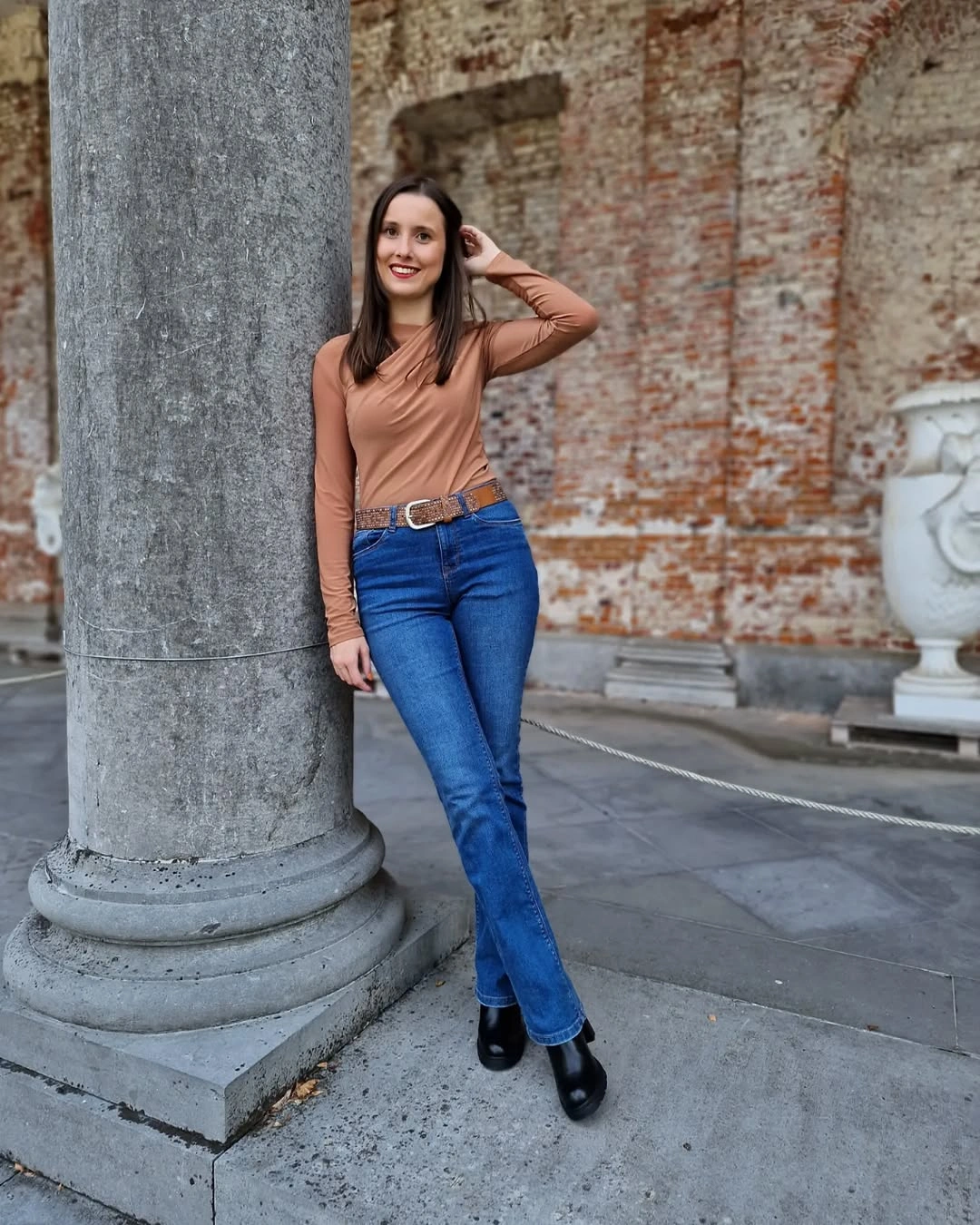
Photo via Instagram
The silhouette depends on a clean change from fitted to expanding rather than on extra layers. With the torso kept visually compact, the widening jean line becomes easier to notice as it moves toward the shoes, while the belt gives that transition a precise starting point. The repeated brown around the waist also connects the upper pieces without requiring the denim to match them.
This jeans outfit idea is useful because the proportion remains readable from shoulder to hem. The visual interest comes from the contrast between a close upper line and a gradually broader lower one, with the boots finishing the shape in a darker tone.
17. Layered Neutrals Above Dark Flared Jeans
Dark blue flared jeans create a long lower line beneath a short brown jacket and an oversized pale scarf that fills much of the upper silhouette. A cap adds another compact element near the face, while gray shoes and a tan bag introduce lighter neutral notes around the darker denim. The outfit carries several visible layers without losing the distinction between torso and leg shape.
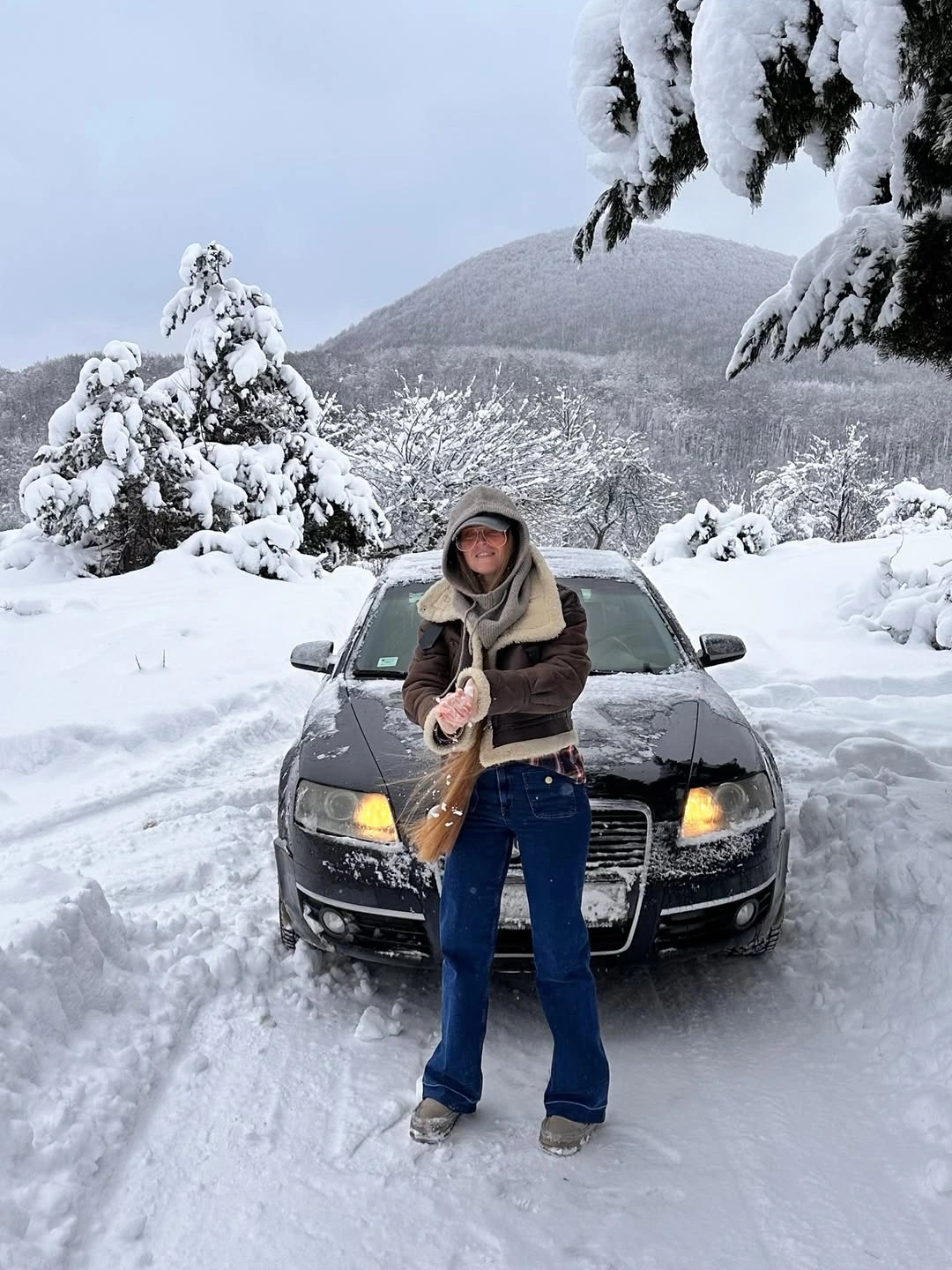
Photo via Instagram
The shorter jacket matters because it prevents the large scarf from extending visually too far down the body, leaving the flared jeans enough uninterrupted space to establish their own line. The jeans stay relatively narrow higher up before widening toward the hem, so their shape remains clear even beside the substantial scarf. Gray footwear also connects more closely with the pale upper layer than with the brown jacket.
The main idea is not simply adding more pieces, but controlling where each volume begins and ends. The compact jacket, larger scarf, and elongated denim each occupy a different zone, giving the layered outfit a recognizable structure.
18. Cropped Jeans Keep the Lower Line Light
A white long-sleeve top creates a bright, uncomplicated upper half above light blue jeans that finish well above the shoes. The cropped hem leaves the ankle visible and gives the pale open-toe heels enough space to become part of the overall silhouette. Because the colors stay light across the top, denim, and footwear, the outfit reads through spacing more than through strong contrast.
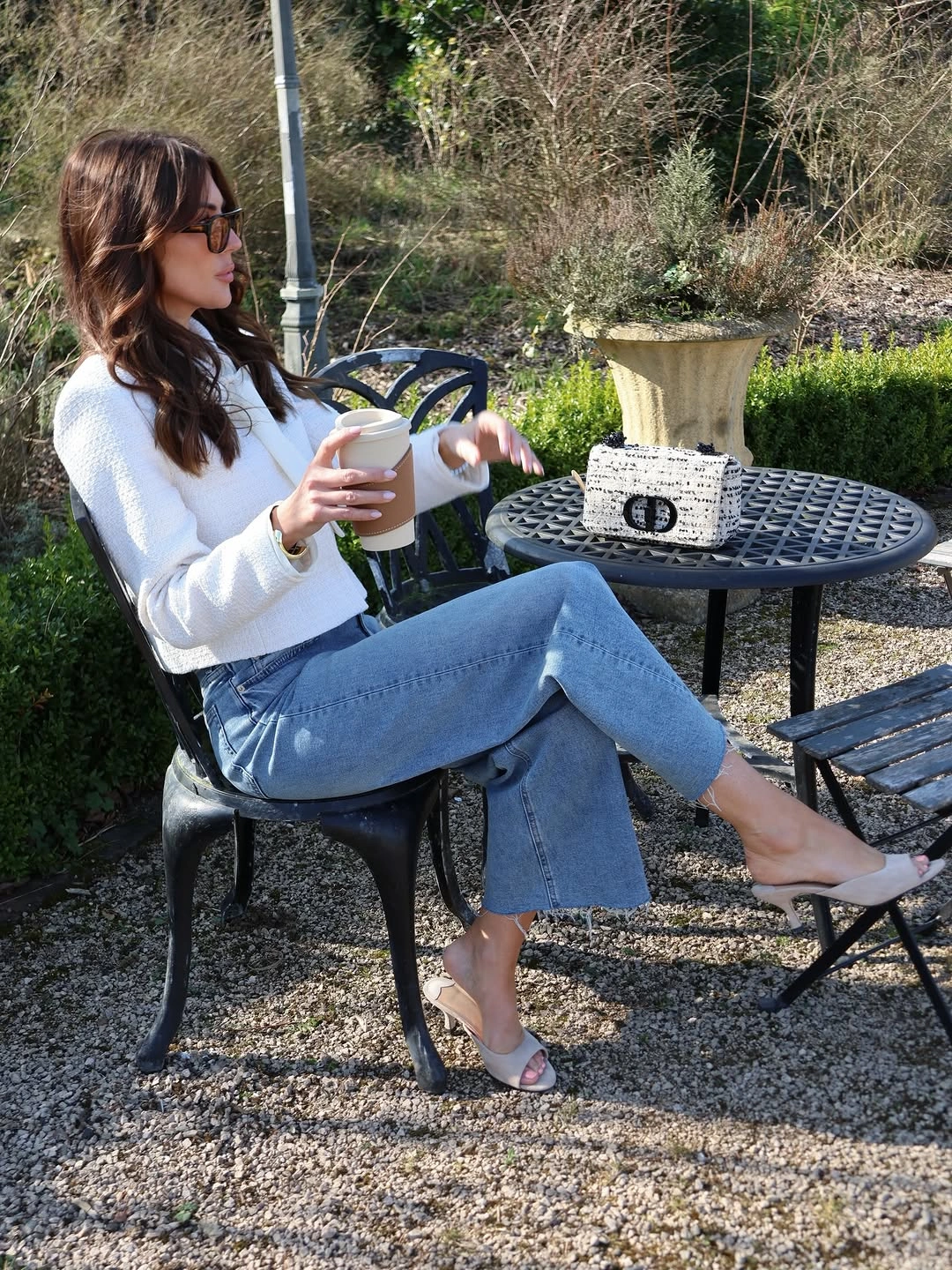
Photo via Instagram
The most distinctive feature is the amount of visual room between the jean hem and the shoe. That open area shortens the denim line deliberately, while the heels extend the leg visually in a different way and keep the lower edge precise. The white top supports that lighter effect without adding another strong color or oversized layer to compete with the cropped proportion.
This combination shows how ankle exposure and footwear can change the character of otherwise straightforward blue jeans. The jeans remain the central color field, but their shorter length gives the shoes and the space around them an unusually important role.
19. Warm Color Repeats Around Straight Blue Jeans
A pale yellow top introduces the lightest warm color in the outfit, while straight blue jeans create a familiar medium-toned base below. A brown belt and large brown handbag repeat a deeper warm shade at the waist and side, and the shoes bring in burgundy with a small yellow detail. Those separate warm notes surround the denim instead of sitting in one concentrated area.
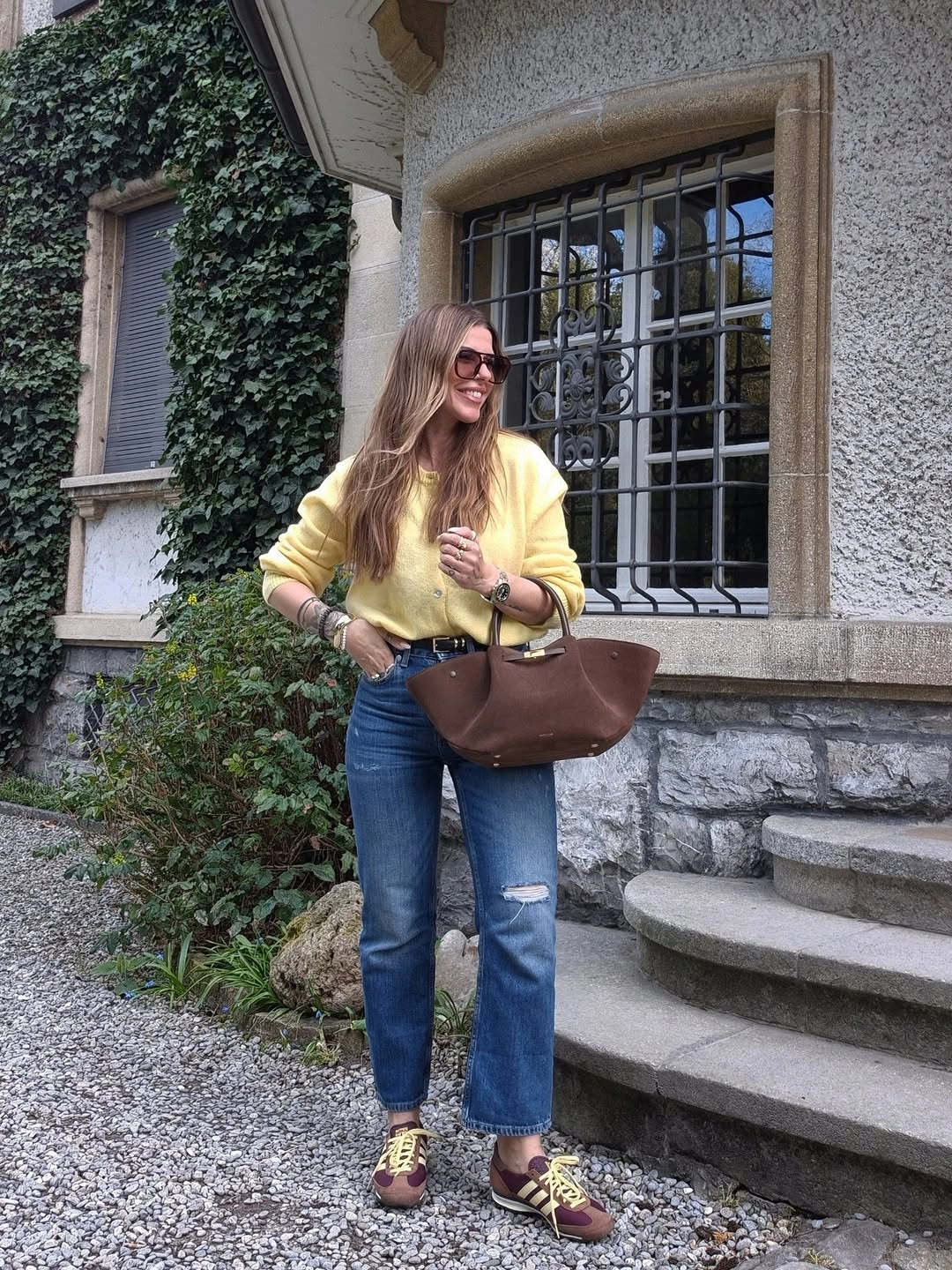
Photo via Instagram
The color structure is what makes this casual jeans outfit feel specific. Yellow appears above the waist and returns in a smaller form near the feet, while brown connects the belt and bag through the middle of the look. Because the jeans stay relatively simple and straight, they provide enough visual space for those repeated colors to register without making the outfit feel overloaded.
The shoes matter more than their size might suggest because they complete the warm-color relationship started by the top. Rather than relying on one isolated accent, the outfit spreads related tones across several points around the denim.
20. Cuffed Jeans Balance Crisp Layered Shirting
A white collared blouse with full sleeves creates noticeable volume around a shorter beige sleeveless layer, while the medium-blue jeans are rolled into broad cuffs above the ankles. That combination puts structured layering on the upper half and a more relaxed finish below. A bright yellow bag supplies the strongest color block, while patterned flat sandals add smaller-scale detail near the feet.
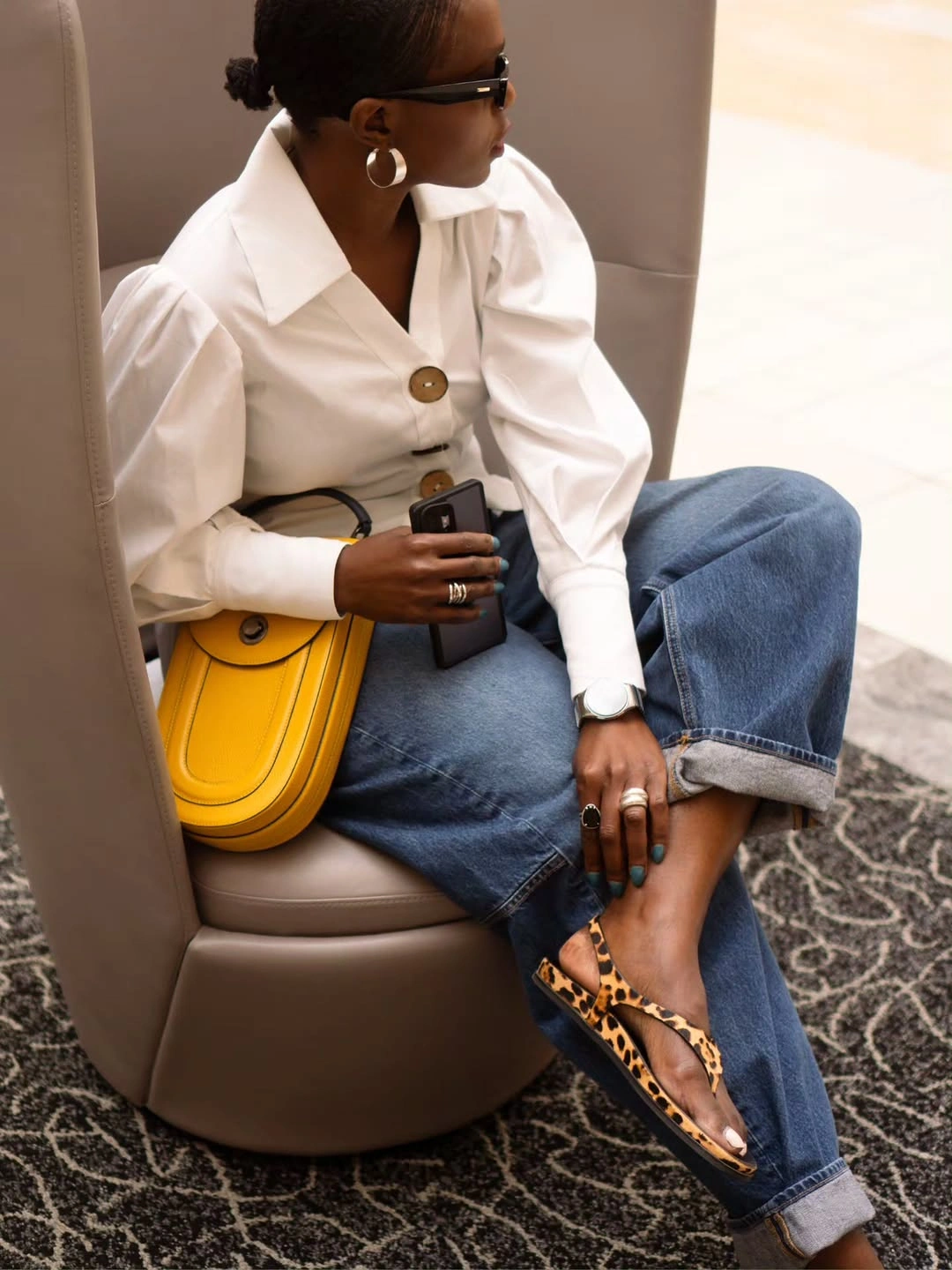
Photo via Instagram
The rolled hems are important because they shorten the denim line and expose the footwear instead of allowing the jeans to run uninterrupted to the floor. Above them, the white sleeves extend beyond the compact beige layer, creating another visible edge where one garment projects past another. Those repeated changes in length give the outfit more structure than the color palette alone would provide.
The yellow bag and patterned sandals create two separate points of emphasis at different heights, so neither detail has to carry the full look. What holds the outfit together is the contrast between crisp upper layering and deliberately cuffed denim rather than a single standout accessory.
21. Pinstripes and Rolled Jeans Share the Spotlight
A dark pinstripe blazer and gray vest bring several tailored lines into the upper half, while the medium-blue jeans are relaxed through the leg and finished with broad cuffs. A white crew-neck layer brightens the center and returns again at the socks, creating two separated light areas. Black loafers give the rolled hems a defined endpoint, and the brown bag introduces a warmer tone beside the darker tailoring.
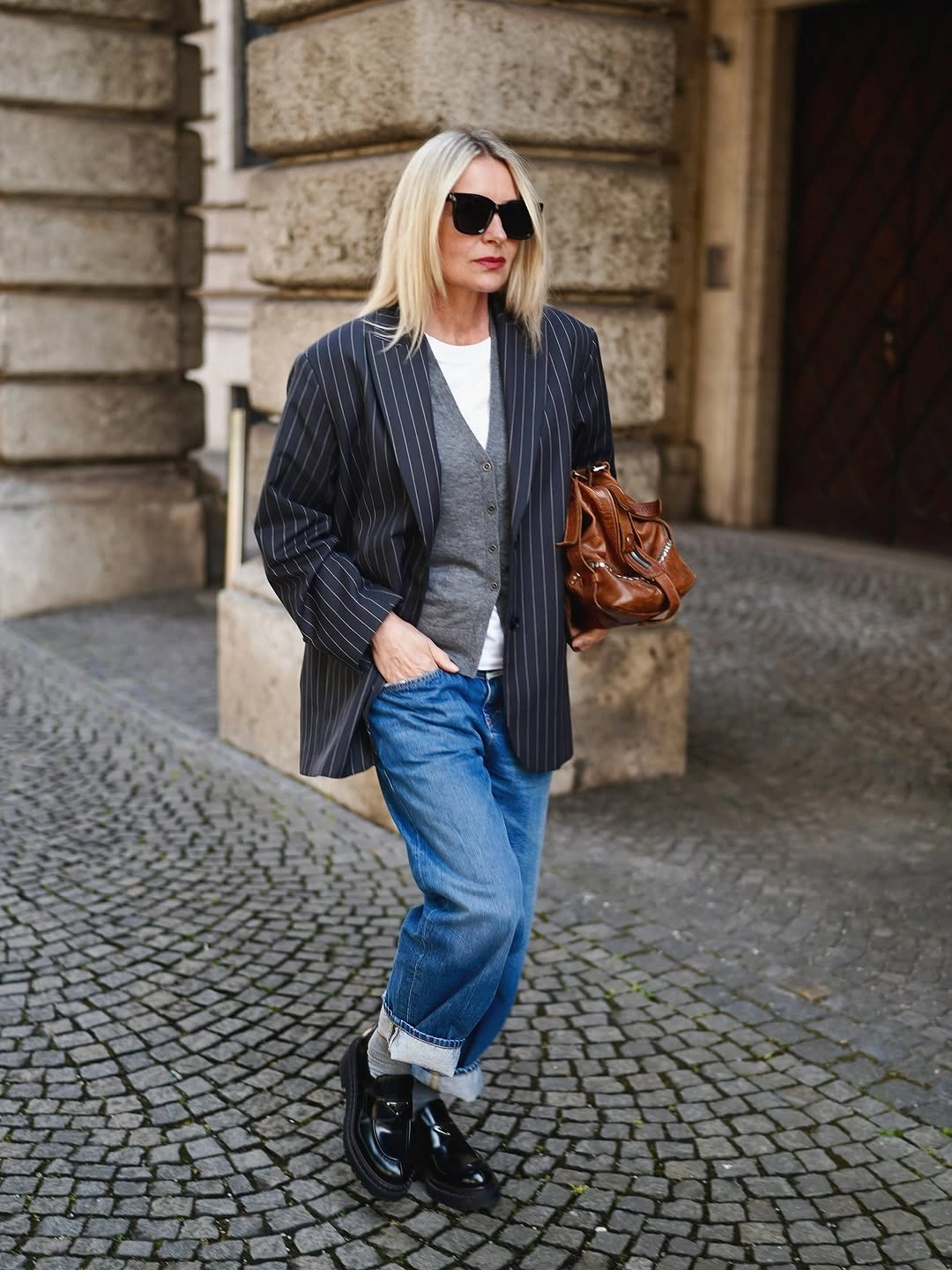
Photo via Instagram
The appeal comes from allowing the formal and relaxed parts to remain visibly different instead of smoothing them into one register. Pinstripes, layered gray, and a dark jacket establish a precise upper structure, while the turned-up denim and exposed socks make the lower half noticeably more casual. That contrast gives this classy jeans outfit its character without requiring the jeans themselves to look formal.
The white socks are especially useful because they make the transition from cuffed denim to black loafers easy to read. The brown bag adds another tonal layer, but the central idea remains the exchange between stacked tailoring above and intentionally relaxed denim below.
22. Burgundy Volume Meets Loose Blue Jeans
A roomy burgundy blazer creates substantial width around the shoulders and torso, and the medium-blue jeans continue that generous scale through the legs. The dark top keeps the upper palette concentrated rather than introducing a contrasting center, while pointed black shoes create a much narrower, sharper line at the floor. A large fringed bag adds another visible texture and extends the darker, warmer side of the palette.
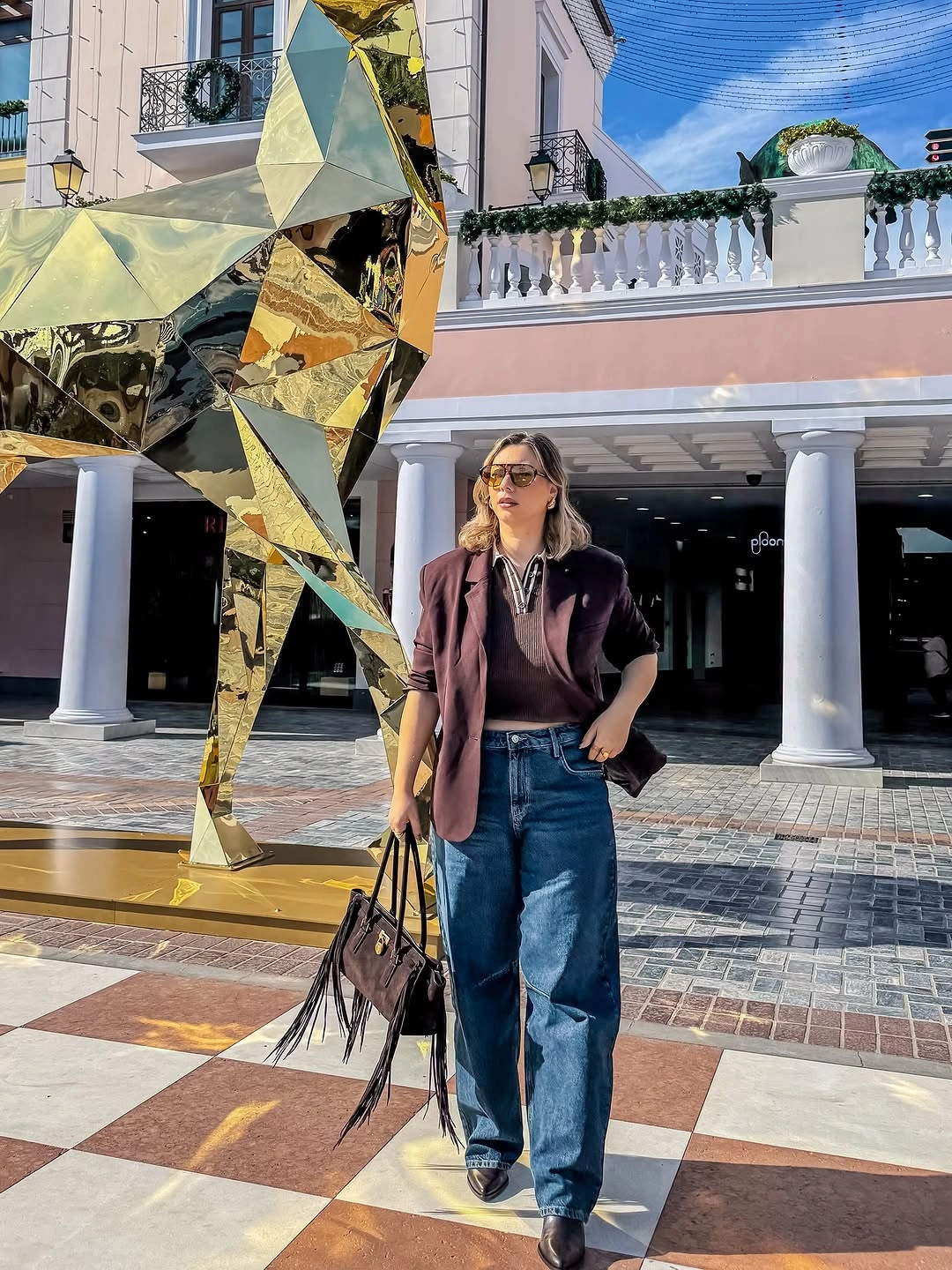
Photo via Instagram
This baggy jeans outfit is distinctive because neither half depends on a fitted piece to counter all that volume. Instead, the silhouette stays loose from jacket to denim, then changes direction abruptly at the pointed footwear, where the shape becomes precise and tapered. Burgundy and blue also remain clearly separate color blocks, allowing the outline of each oversized piece to stay easy to recognize.
The fringed bag contributes movement and detail without becoming the reason the proportions work. What gives the look its tension is the contrast between broad shapes through the body and the much more exact point created by the shoes.
23. Ruffled White Shirting Softens Classic Blue Denim
A white blouse with pronounced ruffles and a tied neckline brings decorative shape to the upper half, while the medium-blue jeans remain comparatively straightforward below. A blue-and-white textured jacket rests over one shoulder, repeating the denim color in a lighter, more patterned form. The compact black bag creates a dark focal point at the waist without competing with the blouse details.
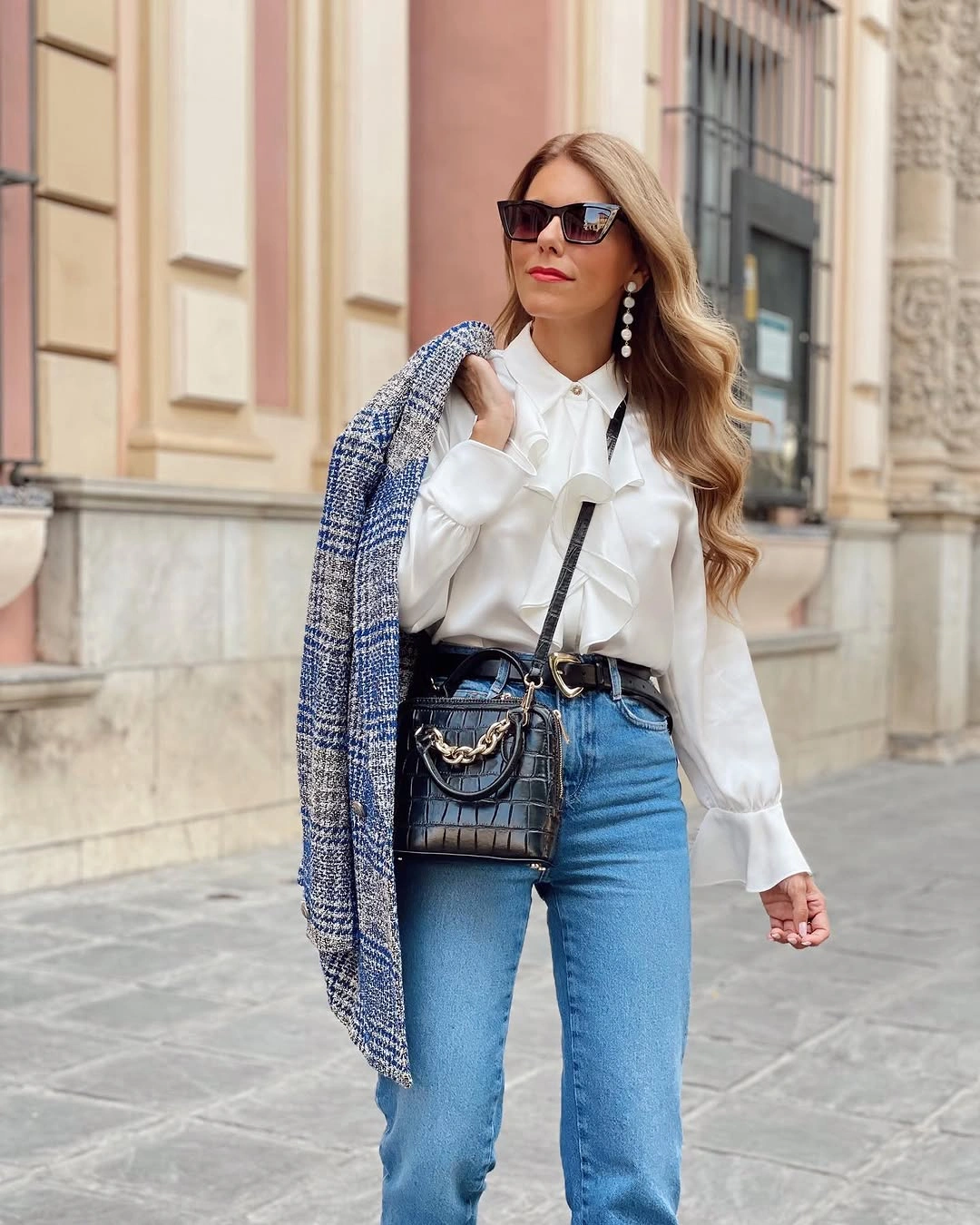
Photo via Instagram
The relationship works because the ornament is concentrated above the waistband rather than repeated across every piece. The blouse supplies folds, ties, and visible volume around the chest and sleeves, while the jeans provide a simpler blue field underneath. Repeating blue in the draped jacket connects those two areas, so the outfit feels coordinated without relying on exact color matching.
This classy jeans outfit closes the collection with texture and decorative detail rather than with another dramatic change in denim shape. The jeans give the more elaborate blouse room to register, while the jacket and black bag add supporting layers without replacing that central contrast.