Latina hairstyles run the full range, from collarbone curls to braided crowns, and the through-line this year is lived-in color with a soft face-framing fringe instead of a heavy side sweep. Glossy natural texture leads, with waves and curls shaped rather than flattened.
These 20 Latina Hairstyles cover short bobs to mid-back waves, salon braids to ten-minute ponytails, and low upkeep to high. Fine hair that falls flat, a fringe that will not sit, a grow-out line that shows too soon: each one gets a fix here. Pick a length, match your texture, and let the cut do the daily work.
1. Long Layers With Soft Waves and Highlights

Long layers cut through mid-back hair give a blowout somewhere to go. The shape here is dark brown with subtle blonde highlights, with a middle part and soft waves, and the layers start low enough that thick, straight hair keeps its weight while the ends get movement. Ask your stylist for: long layers with soft waves, subtle blonde highlights.
This is a generous cut for thick hair that runs straight to wavy and already sits at shoulder length or below. A middle part with length past the chin also elongates a round face, and the soft waves add width at the sides, which suits a long face. Styling runs on a large barrel curling iron for the waves and a volumizing mousse through damp roots before a blowout; the gloss comes from keeping the iron moving. Book a trim every eight to ten weeks, and a color refresh every six to eight to keep the blonde pieces from drifting warm.
2. Mid-Back Defined Curls With Caramel Highlights
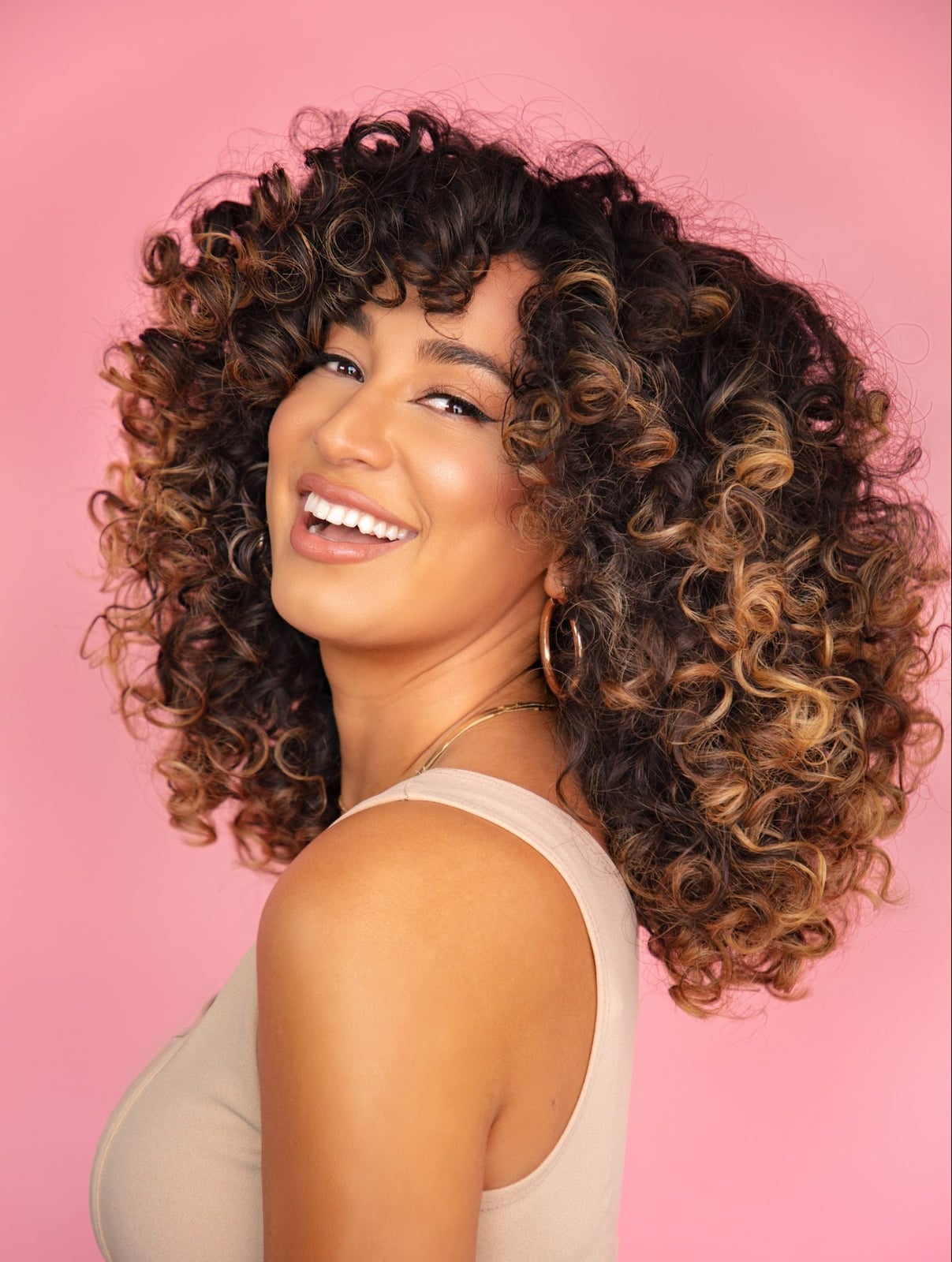
Defined curls on dense hair are mostly a drying decision, not a styling one. This mid-back length carries long layers and a dark brown base lifted with caramel highlights, and the curl pattern is set while the hair is still wet, then left alone. Ask your colorist for: caramel highlights on a dark brown base.
The build, step by step:
- Start on soaking damp hair and rake a curl cream through from mid-length to ends.
- Section into small bundles and twist each one around a finger to set the pattern.
- Air dry without touching, or diffuse on low heat if time is short.
- Refresh on day two with water and a light refresher spray, not a full re-wash.
It is a DIY routine, though the cut and the highlights belong in a salon. A middle part with length below the chin elongates a round face. Expect a trim every ten to twelve weeks to keep the layers from dragging the curl down.
3. Collarbone Curly Hair With Wavy Blowout
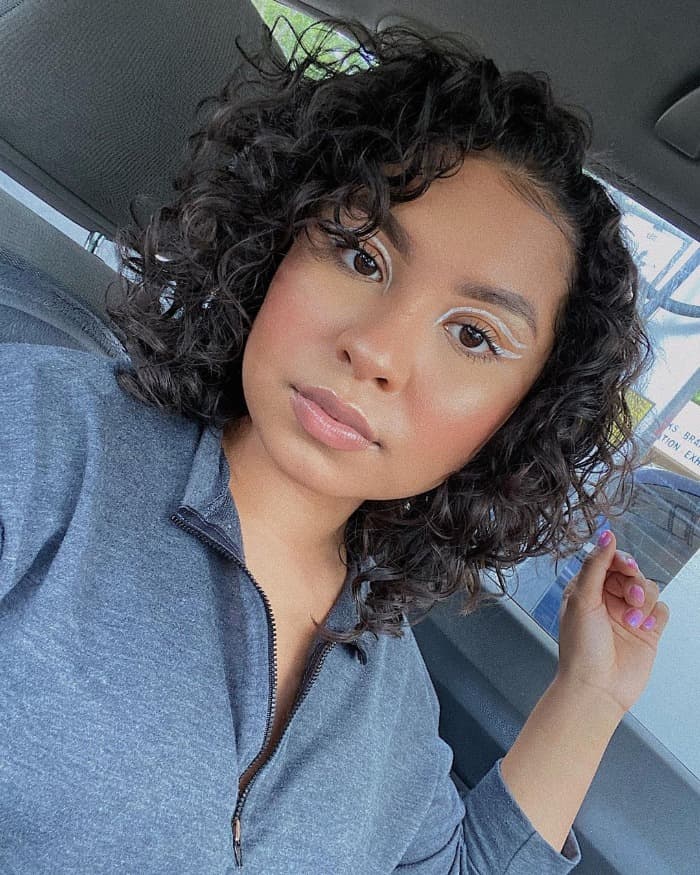
Ask your stylist for: collarbone length curly hair, wavy blowout, blonde highlights. The layers should be cut to release the curl rather than thin it, with the shortest pieces starting around the jaw so thick, curly hair keeps its weight while the front gets shape. A middle part lets the blowout fall evenly on both sides. A medium round brush does the rest at home, and blonde highlights typically need toning every six to eight weeks to stay cool.
4. Collarbone Bob With Defined Curls and Side Part
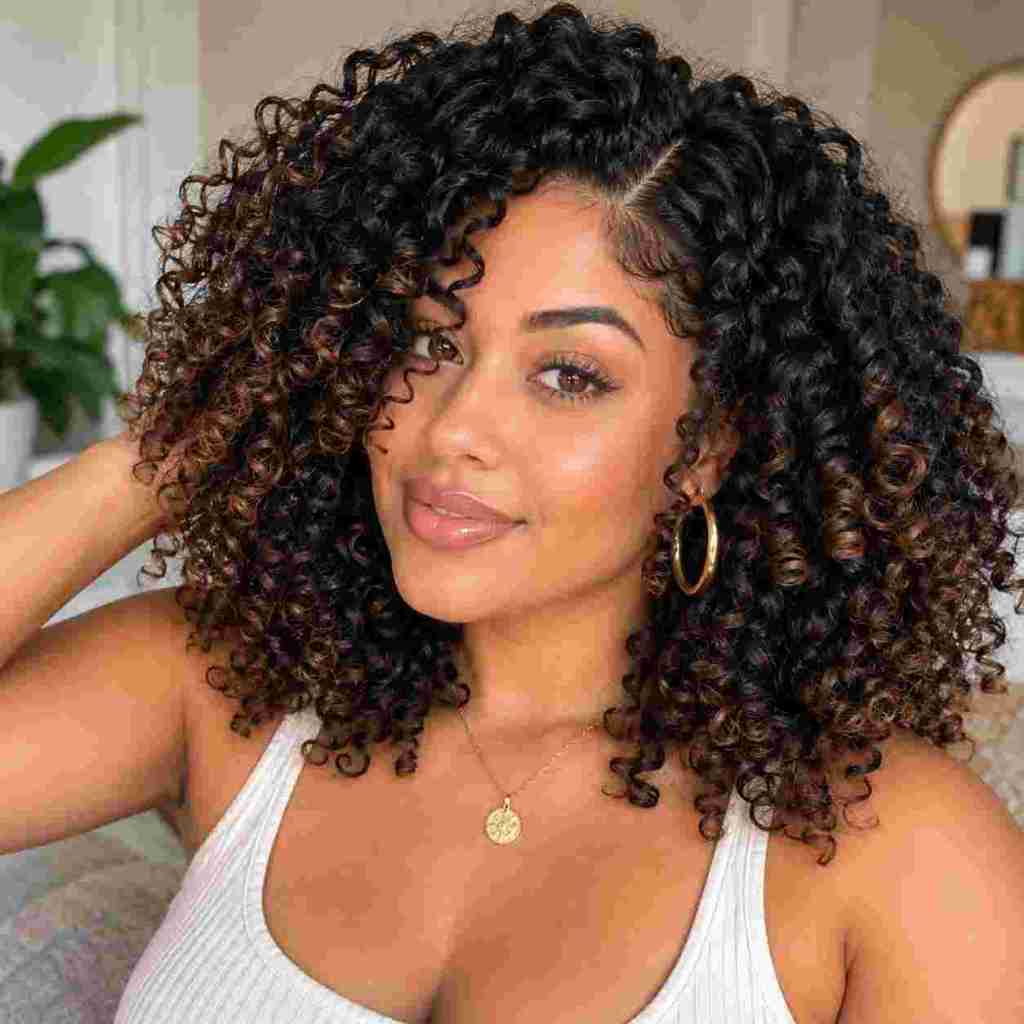
A middle part is the default, and a side part is the argument against it. On a collarbone bob with defined curls, moving the part off center stacks the volume on one side and lets the other side sit closer to the head, which reads sharper than a symmetrical split. Ask your stylist for: collarbone length bob, defined curls, side part. The cut carries caramel highlights through a dark brown base, and the curls are twisted section by section with a curl-defining cream before drying.
The catch: a side part needs more morning attention, because the heavy side collapses first and the shape goes lopsided. Fine hair gains volume from the switch; dense, curly hair gains weight on one side and can pull flat at the root within a day. Book a trim every eight to ten weeks to keep the collarbone line clean.
5. Mid-Back Soft Waves in Rich Auburn
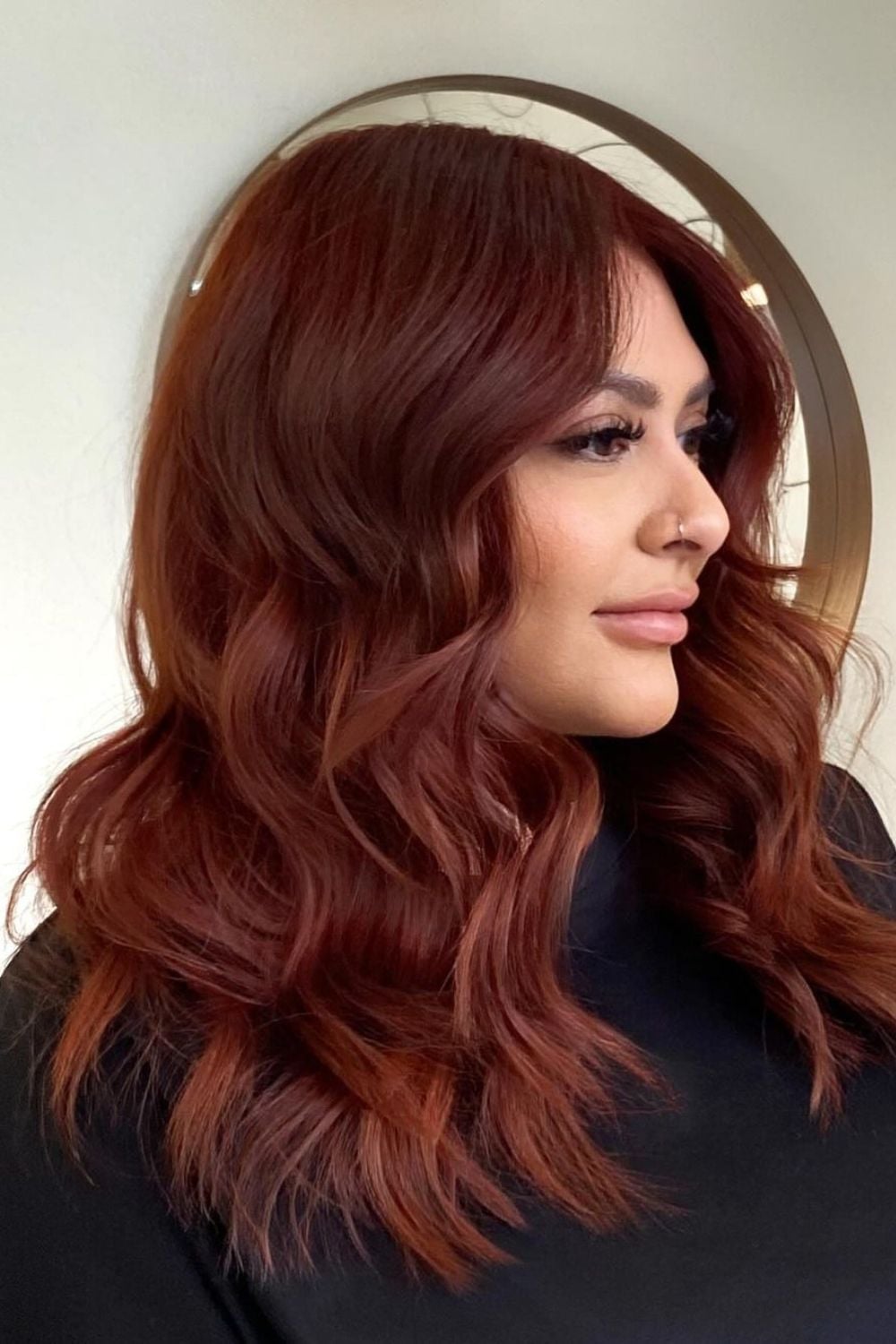
Autumn is when this shade earns its keep: the red reads warmer against the season’s lower light, and the waves give it texture to sit in. Medium density, wavy hair from the shoulders down holds the shape without much coaxing. Rough dry with a sea salt spray for a lived-in finish, or work a round brush through for a smoother blowout. The upkeep is the real story with red: a gloss or toner every six to eight weeks keeps the auburn from slipping toward brown, and a trim every eight to ten weeks keeps the layers sharp.
6. Chin-Length Bob With Defined Curls

A chin-length bob cut into thick natural curls lives or dies by the middle part, which splits that dark brown volume evenly instead of letting one side win. Ask your stylist for: chin-length bob with defined curls. The cut is a salon job, but the finish is daily: scrunch a curl-enhancing mousse through damp hair and let it air dry, because a diffuser speeds things up at the cost of some definition. A middle part with length below the chin elongates a round face. Expect a trim every six to eight weeks to keep the shape from collapsing into a pyramid.
7. Angled Chin-Length Bob With Side Part
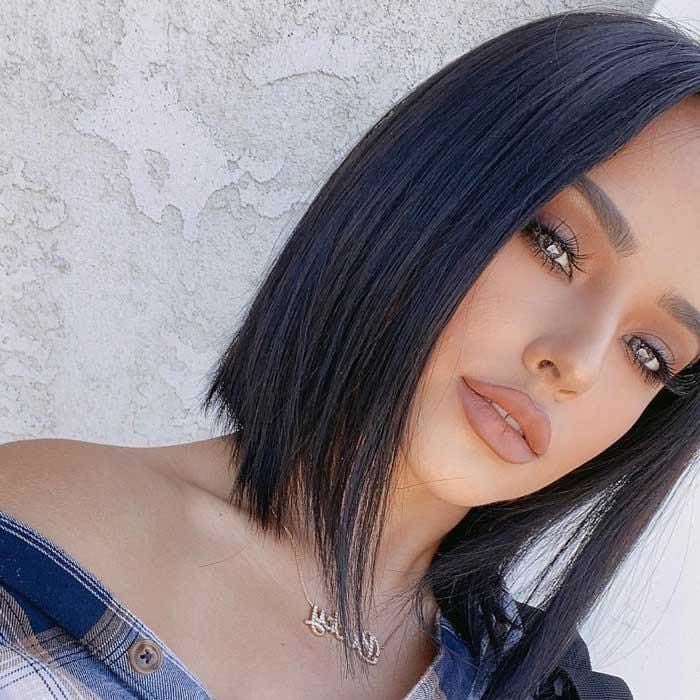
The angle is the whole trick here: the cut runs shorter toward the back and longer at the front, and a side part pushes the dark brown waves into a glossy sweep across the forehead. Ask your stylist for: chin-length angled bob with a side part. This one belongs in salon hands, since a DIY trim flattens the diagonal and leaves you with a plain bob. Thick wavy hair holds the shape well; finer hair gets lift from the side part. Plan on a trim every six to eight weeks to keep the angle sharp.
8. Collarbone Curly Hair With Curtain Bangs
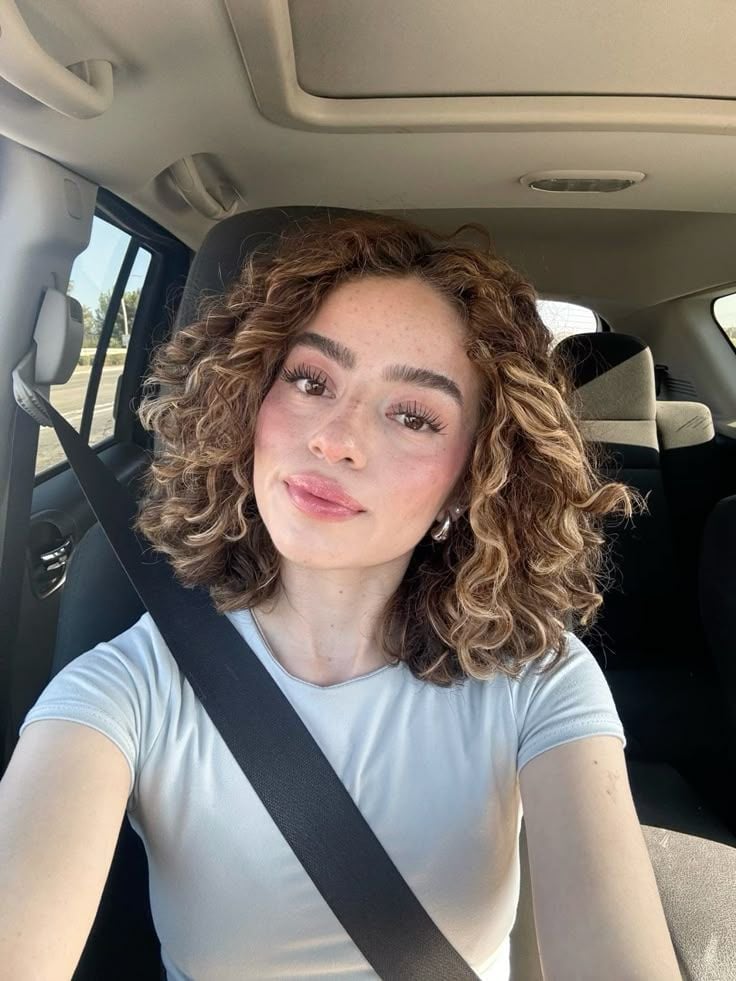
Curtain bangs on collarbone-length curls are a commitment dressed as a haircut. The face-framing layers and the dark brown base with blonde highlights look easy enough, but those bangs need styling every single wash: blow-dry them first, with a round brush, sweeping each side out and away. Skip that step and thick curls pull the fringe into the rest of the hair by mid-morning. Ask your stylist for: collarbone length curly hair, curtain bangs, face-framing layers. Curtain bangs soften square and oval faces, so the shape is forgiving. The upkeep is not. If you air dry and go, or you cannot face a round brush three mornings a week, pass on the fringe and keep the layers.
9. Mid-Back Loose Waves With Curtain Bangs
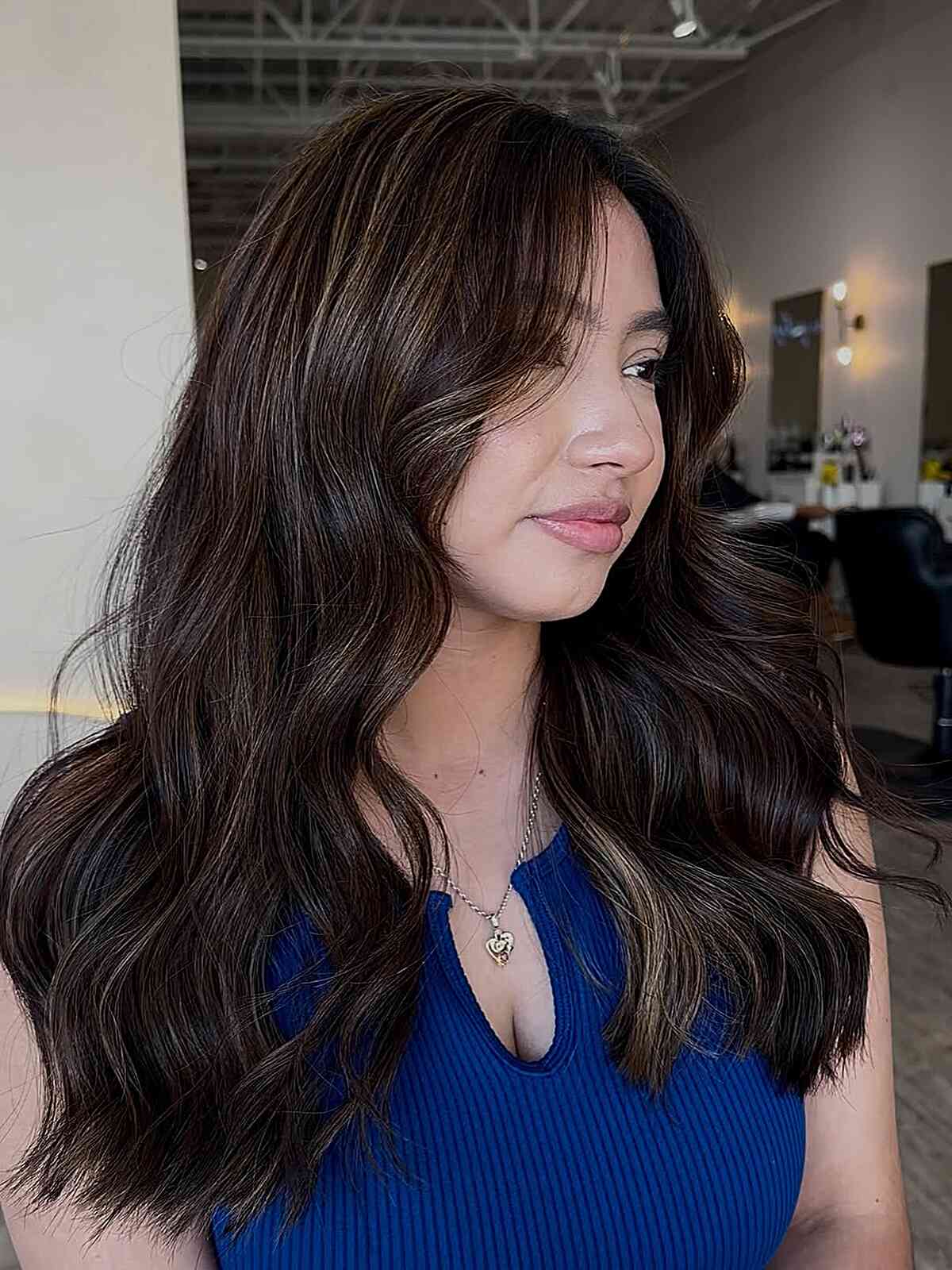
Will curtain bangs work if your hair is thick and wavy and already past your shoulders? Usually yes, provided the layers are cut long enough to sit inside the wave instead of fighting it. The dark brown base with subtle blonde highlights gives the mid-back length some dimension without a stripe in sight, and the fringe blends into the face-framing layers rather than hanging apart from them. Ask your stylist for: mid-back length loose waves, curtain bangs. Curtain bangs soften round and heart faces. For hold, twist sections of hair before drying, or run a large barrel iron through them and let the waves drop. A trim every eight to ten weeks keeps the ends from dragging the wave flat.
Fine hair is the one to think twice about. Long layers plus a fringe can leave the lengths looking thin, and the curtain bangs need a round brush to hold their curve. Thick, wavy hair carries the weight without complaint. On the styling front, rough-dry to about eighty percent, then split the bangs off and blow-dry them around a round brush, alternating direction so they fall open. Cool shot, then a light texture spray through the lengths. The whole thing runs about fifteen minutes once you know the order.
10. Mid-Back Waves With Face-Framing Curtain Bangs, Wavy
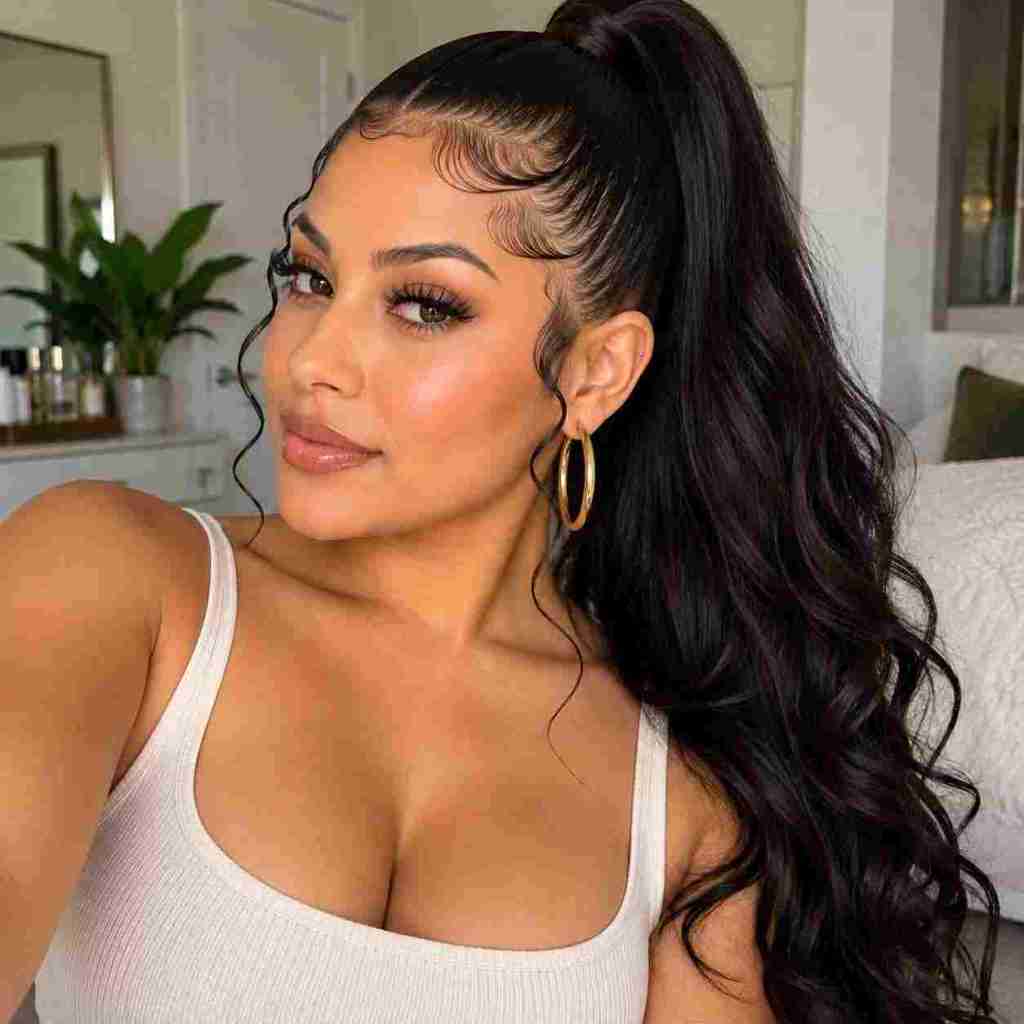
- Mist the roots with water or a light styling mist and rough-dry until almost dry.
- Split the curtain bangs off and blow-dry each side around a round brush, sweeping outward.
- Wrap two-inch sections of the lengths around the brush, rolling down and pulling gently for a loose bend.
- Finish with a cool shot, then finger-comb the waves so they relax into soft curves.
Thick wavy hair typically holds this shape for two days, with a light texture spray at the roots on day two. Face-framing curtain bangs frame the cheekbones. Book a trim every eight to ten weeks.
11. Mid-Back Ponytail With Wispy Bangs
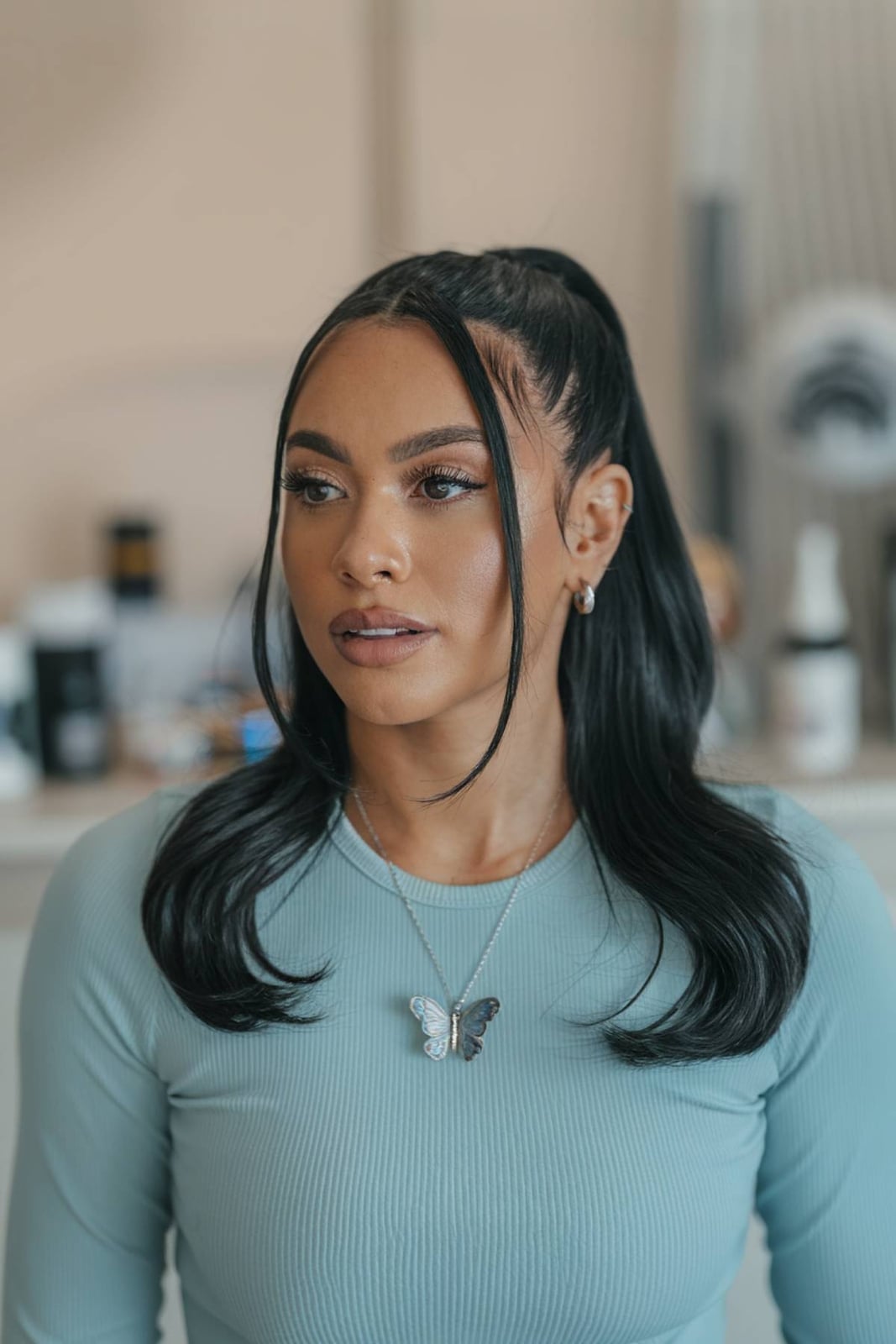
Wispy bangs and two long tendrils left out at the sides turn a simple pull-back into a deliberate design. The middle part keeps the face-framing pieces balanced, and the straight, thick texture holds the sleek finish well into the afternoon. Ask your stylist for: mid-back high ponytail, wispy bangs, face-framing tendrils.
Thick, straight hair of mid-back length is the ideal starting point; the wispy bangs can soften a strong jawline without overwhelming finer textures. Use a smoothing serum before securing with a strong elastic to keep flyaways controlled. The bangs will need a trim every four weeks to stay at that precise, feathery length, but the ponytail itself can go six to eight between cuts.
12. Mid-Back Wavy Ponytail With Wispy Bangs, A Woman With Long
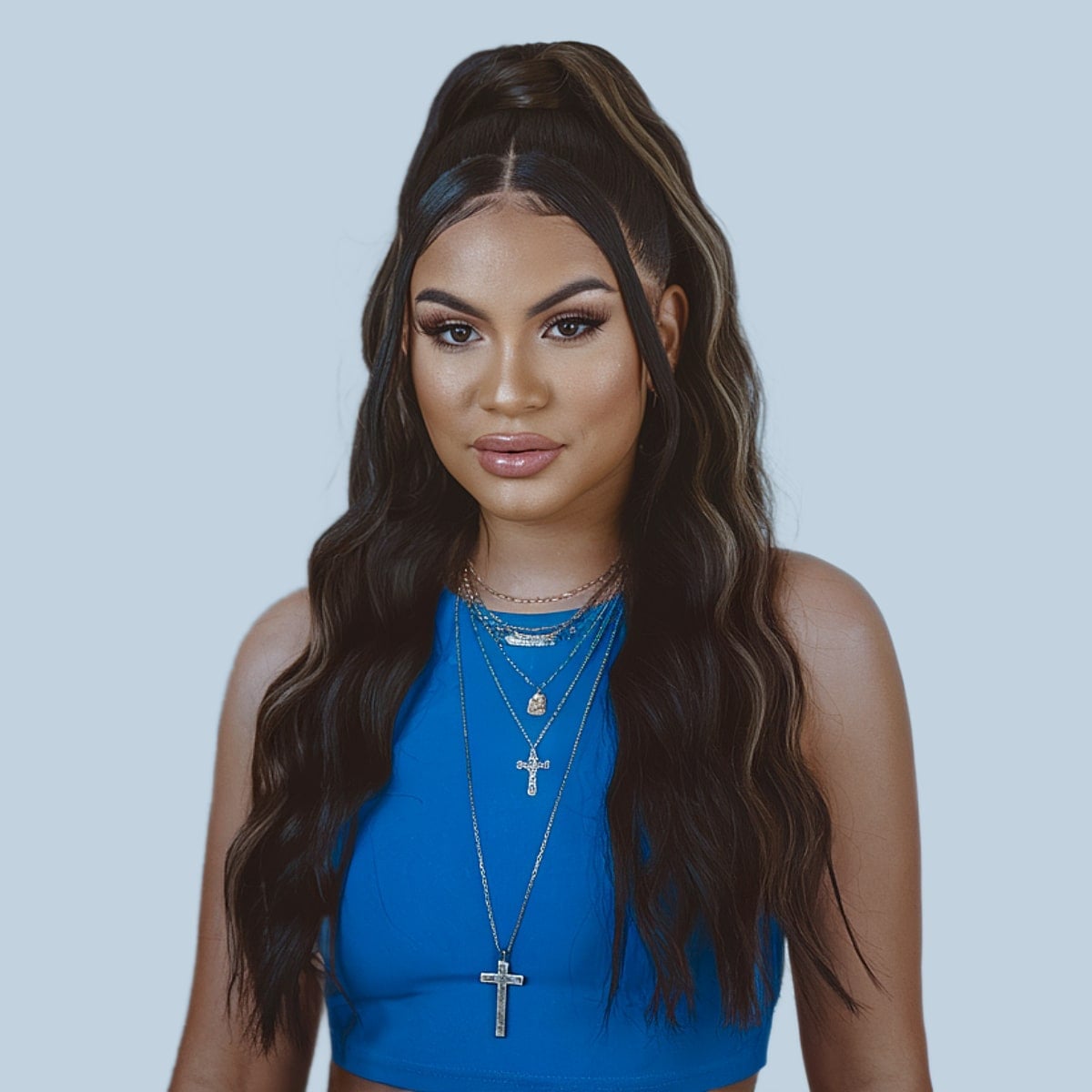
The trade is that the blonde highlights and dark brown base blend more visibly when the hair is gathered, so the color decision matters more here than in a smoothed-back version. Ask your stylist for: mid-back high ponytail, wavy texture, wispy bangs. A middle part and wispy bangs soften the strong jawline effect of a high pull-back, but the wavy finish means you cannot just brush and go, each section benefits from a quick curl before gathering.
13. High Sleek Ponytail With Wispy Bangs
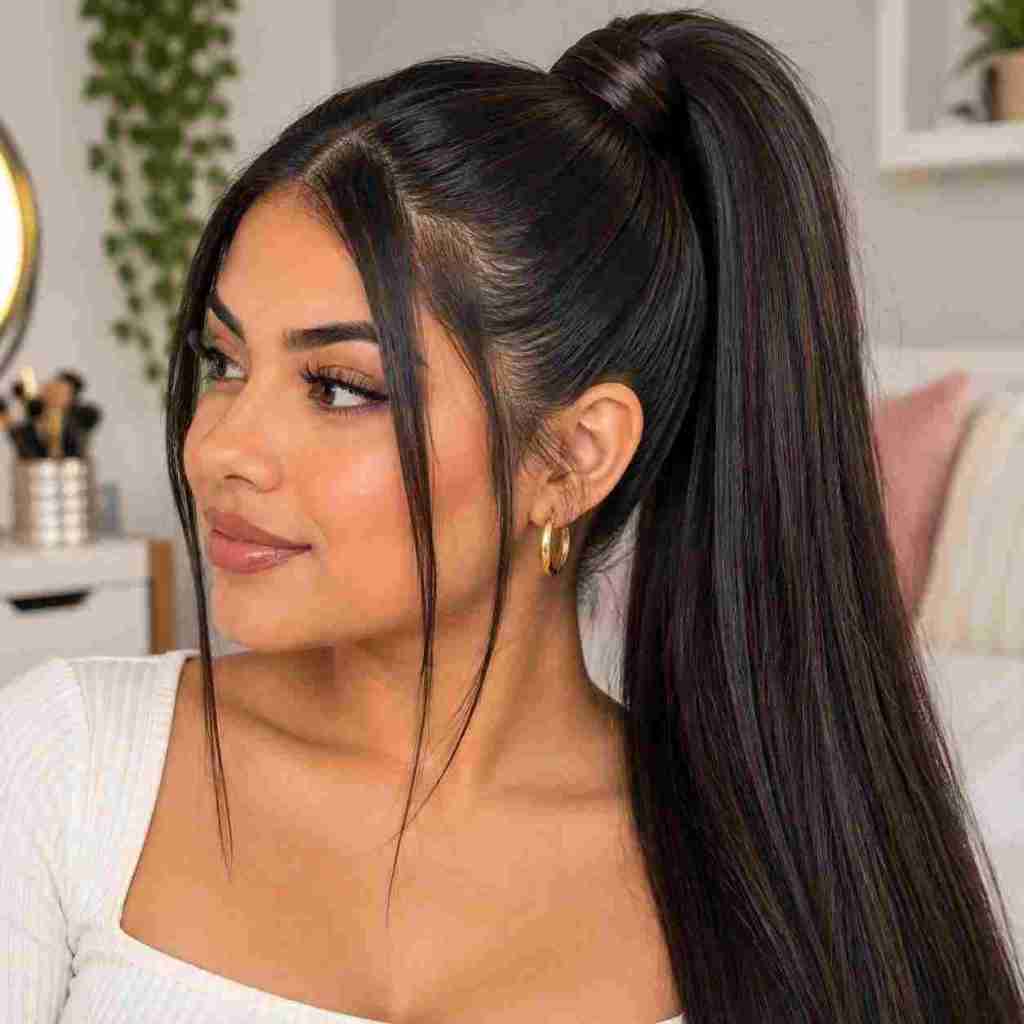
Daily maintenance is minimal but specific. Apply a smoothing balm before pulling the hair back to prevent bumps at the crown, and use a fine-tooth comb to flatten the surface. The bangs will need a quick blow-dry each morning with a round brush to keep them from separating into awkward strands. A trim every four weeks keeps the bangs wispy and soft at the ends, and the ponytail length holds well between cuts every eight weeks.
14. Mid-Back Natural Curls With Honey Highlights
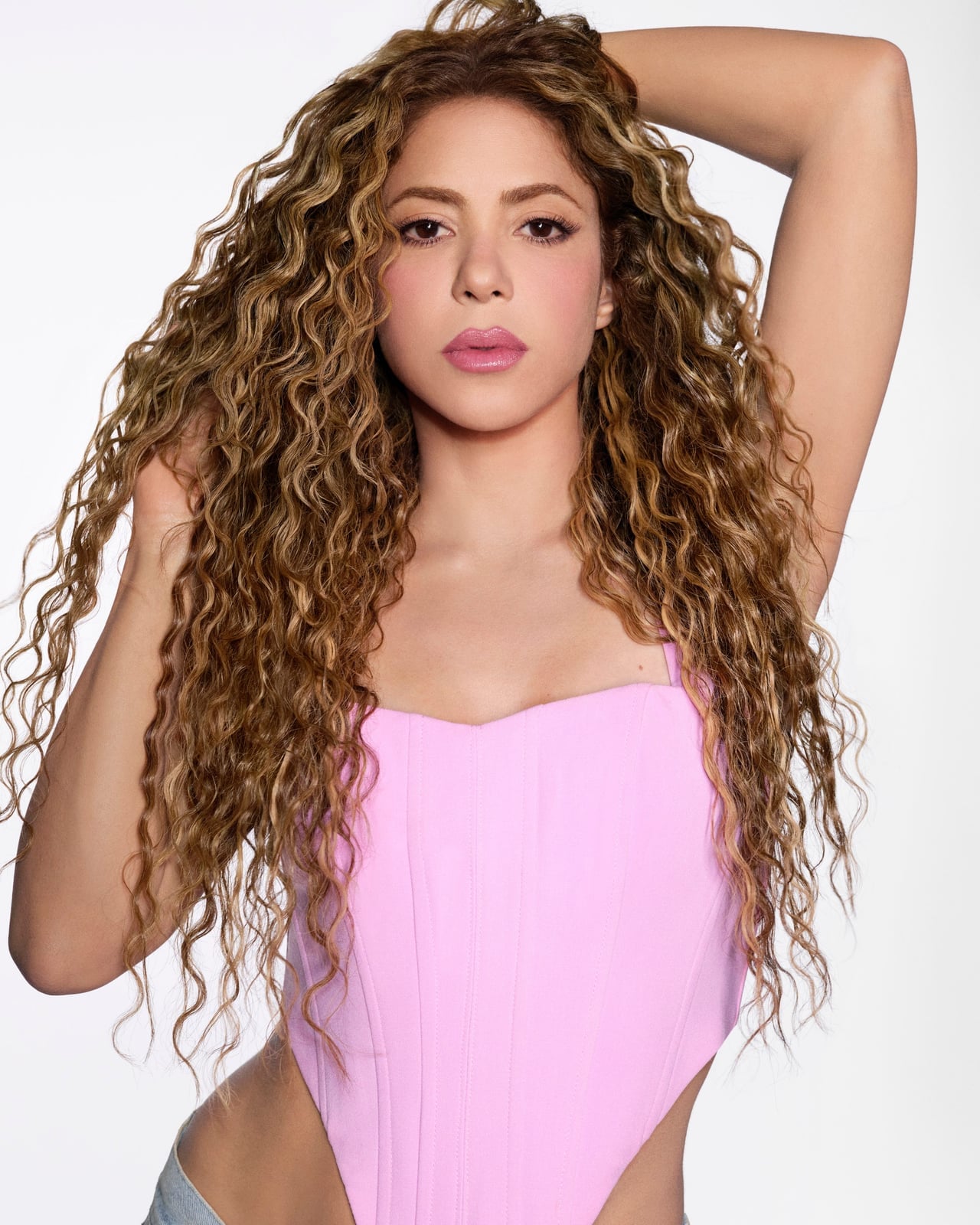
Voluminous natural curls at mid-back length create a dense shape, and the honey blonde highlights add dimension without obscuring the dark base. The visible dark roots serve a purpose: they keep the blonde from washing out the curl pattern and extend the time between color appointments. Ask your colorist for: natural curls with honey blonde highlights, mid-back length.
This texture and density work well for thick, curly hair that can carry the weight. The middle part and length below the chin elongate a round face, while the volume at the sides balances a longer face shape. Curly hair this thick takes longer to dry, so a diffuser on low heat helps unless you have a few hours to air-dry. The highlights need a toning appointment every eight to ten weeks to keep the honey shade from shifting brassy.
15. Long Twisted Braids With Gold Beads
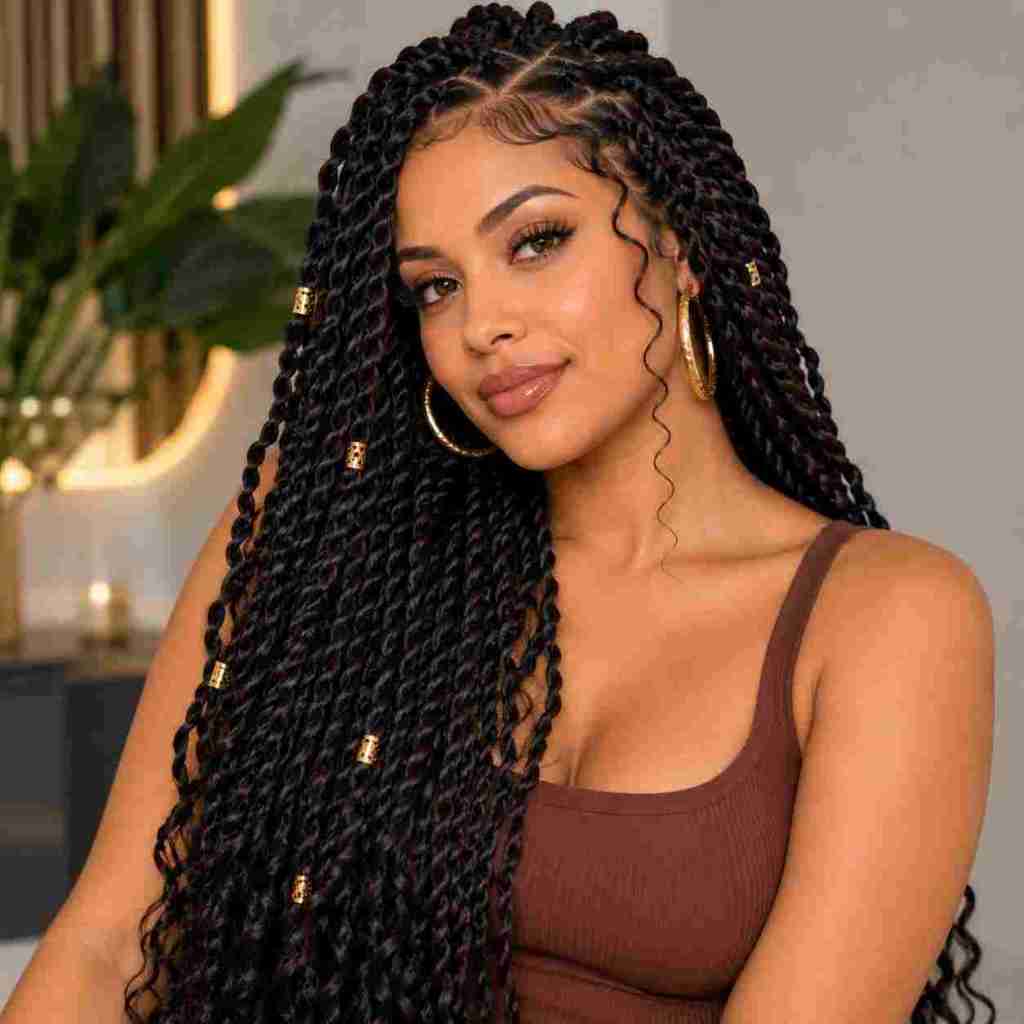
Numerous long twisted braids on thick, coily black hair, with small gold beads threaded onto some of them: the technique is repetitive but the result is anything but. The middle part divides the sections evenly, and the loose strands at the front keep the style from looking too rigid. Ask your stylist for: long intricate twisted braids with gold beads.
The braids are built by twisting two sections of hair around each other instead of the three-strand method, which gives a rope-like texture that holds beads securely. This is a salon project: expect several hours in the chair for the full set. The beads can be added during the braiding process by sliding them onto the twisted sections before finishing the ends. DIY is possible for experienced braiders on a single braid, but a full head of these at long length is best left to a professional who can keep the tension even.
16. Long Braided Crown With Face-Framing Tendrils
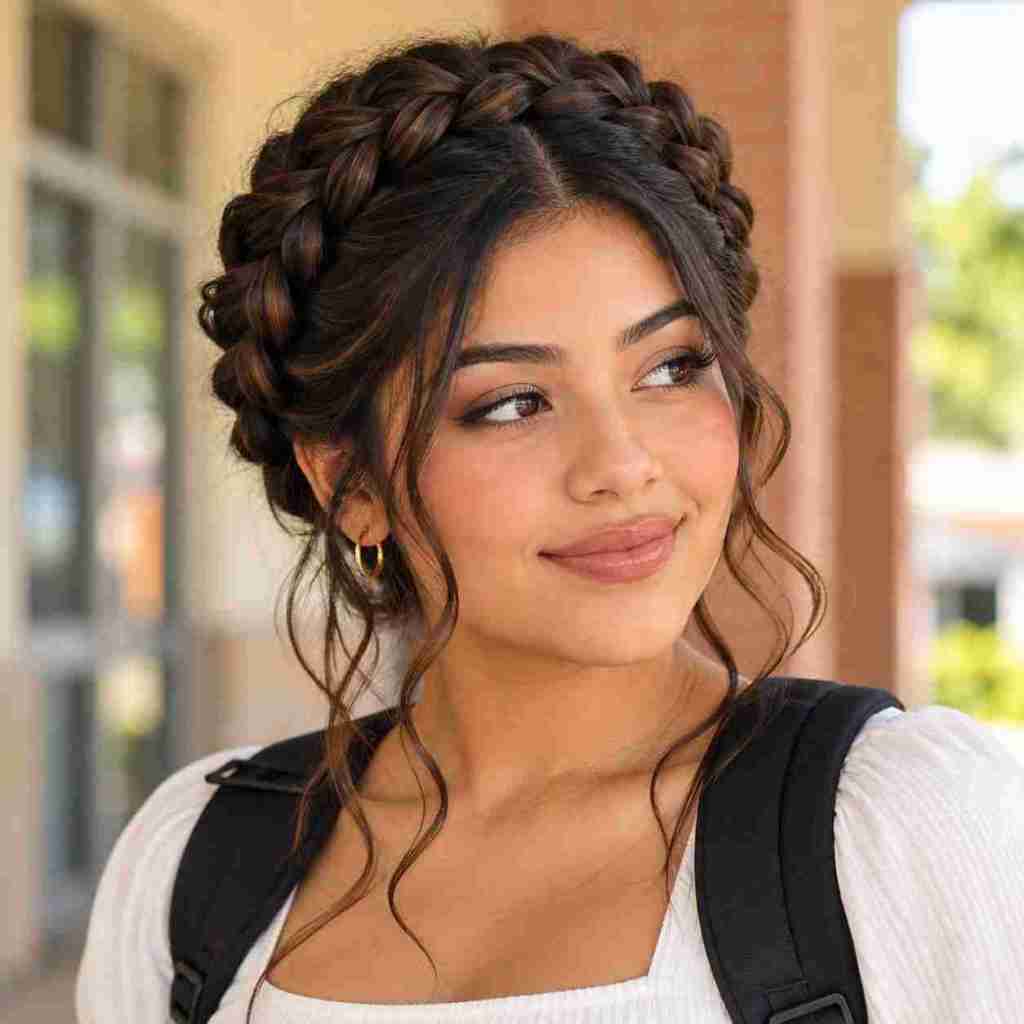
When does a braided crown work harder than a plain updo? At any wedding where the photographer wants a halo in the frame. Long, dark brown wavy hair gets swept into an intricate braid that circles the head from a middle part, with loose tendrils left out at the front. Medium density is the sweet spot: enough grip for the braid to sit flat, enough slip for the tendrils to fall softly. Ask your stylist for: long braided crown with face-framing tendrils.
On a beach in June it reads breezy; in December it reads formal, which is the point. The long layers give the braid something to fold into, so the crown stays full instead of collapsing by the second dance. Wavy texture holds the shape with a few pins tucked underneath and a mist of hairspray over the top. Book it for a wedding or any event with a receiving line. Then plan on a trim every eight to ten weeks to keep the ends clean.
17. Elaborate Braid and Updo With Floral Accessory
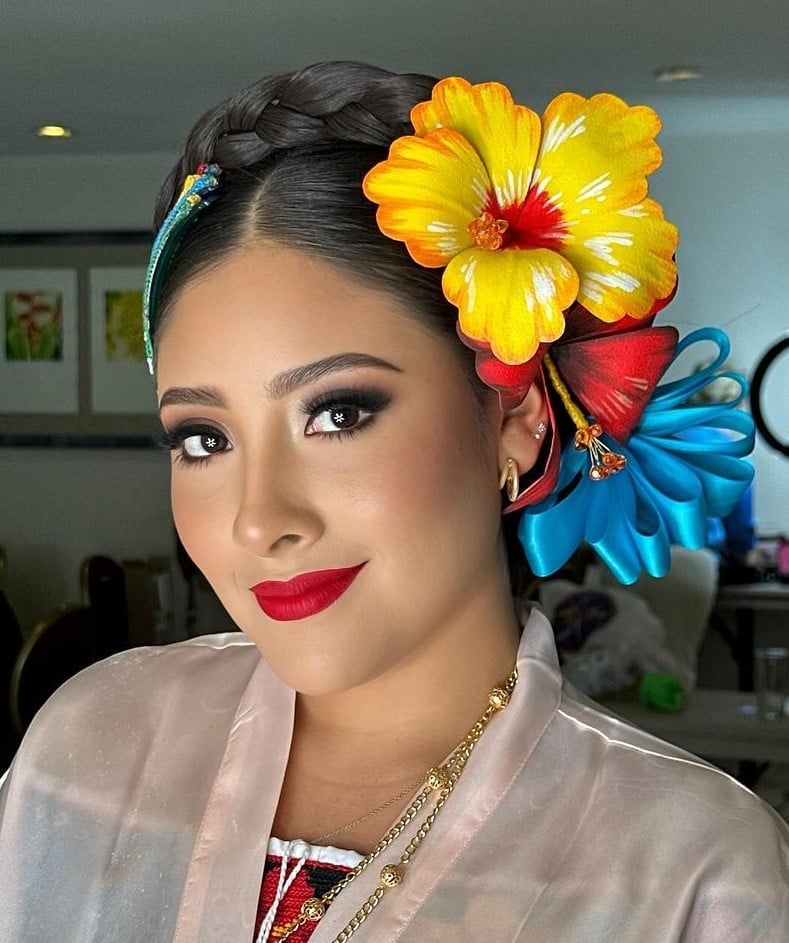
The large floral accessory is doing half the work here, so ask for it by name and bring a reference. Mid-back dark brown hair, thick and straight, gets worked into an intricate braid and updo from a middle part, with the flower pinned in as the finish. Straight texture takes the braid pattern sharply, which is why the detail stays visible. Ask your stylist for: intricate braid updo with floral accessory.
Thick hair gives an updo the volume to hold its shape through a long event, and mid-back length leaves enough to braid without the tail looking stubby. No bangs means the middle part stays clean and the accessory gets the attention. Mention the flower’s size and where you want it sitting, since placement changes the whole silhouette. A texturizing spray before styling gives the braid grip; the accessory needs its own pins so it does not slide. Budget about two hours in the chair.
18. Wavy Updo With Rose Accessory
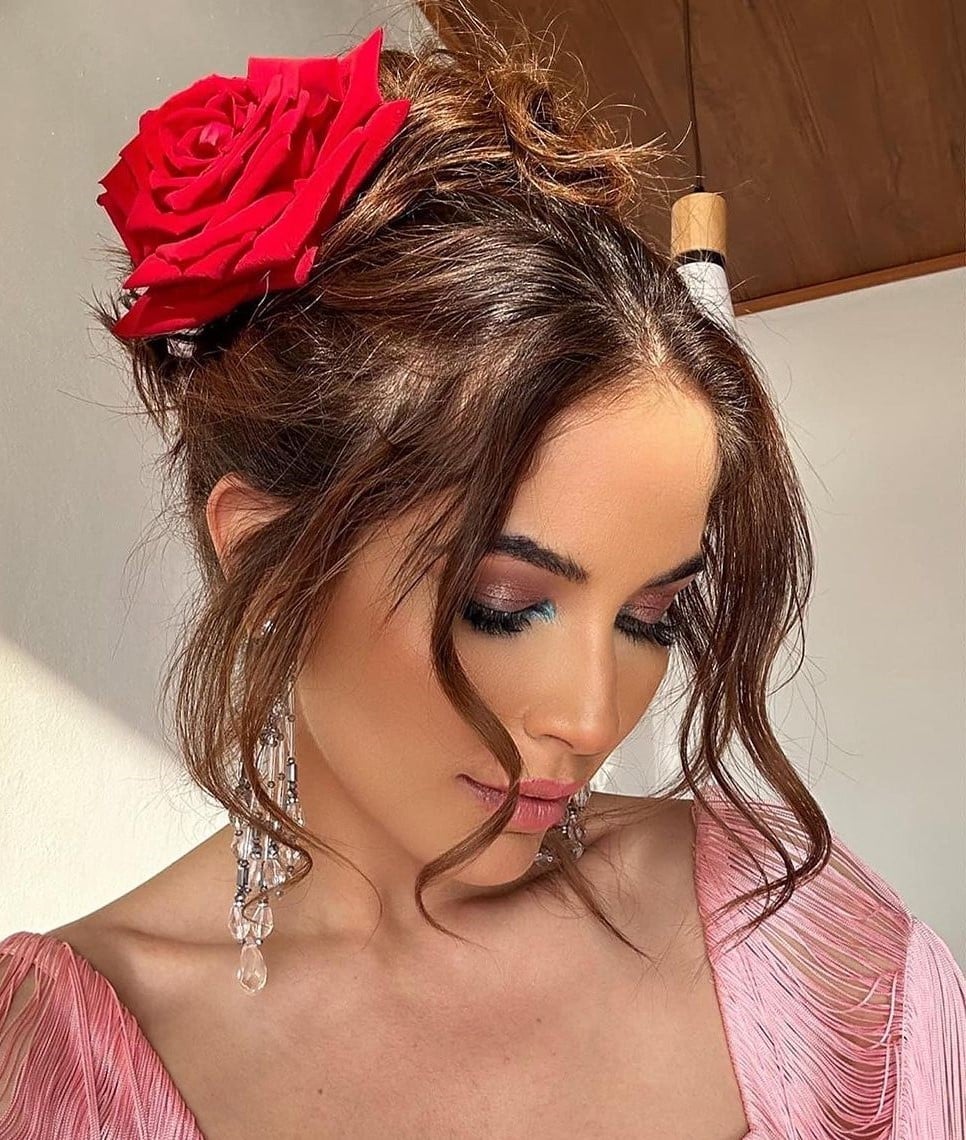
A loose wavy updo with curtain bangs needs more styling time than a slicked bun, and the trade is texture you can see from across the room. Thick, mid-back hair in dark brown with blonde highlights gets a wavy blowout first, then the updo, then the large red rose tucked in. Face-framing tendrils soften round and heart faces. Ask your stylist for: loose wavy updo with face-framing tendrils and a rose. The catch: thick wavy hair resists every pin, so expect a strong-hold hairspray and a bobby pin count you will not want to hear.
19. Dutch Braids With Multi-Colored Extensions
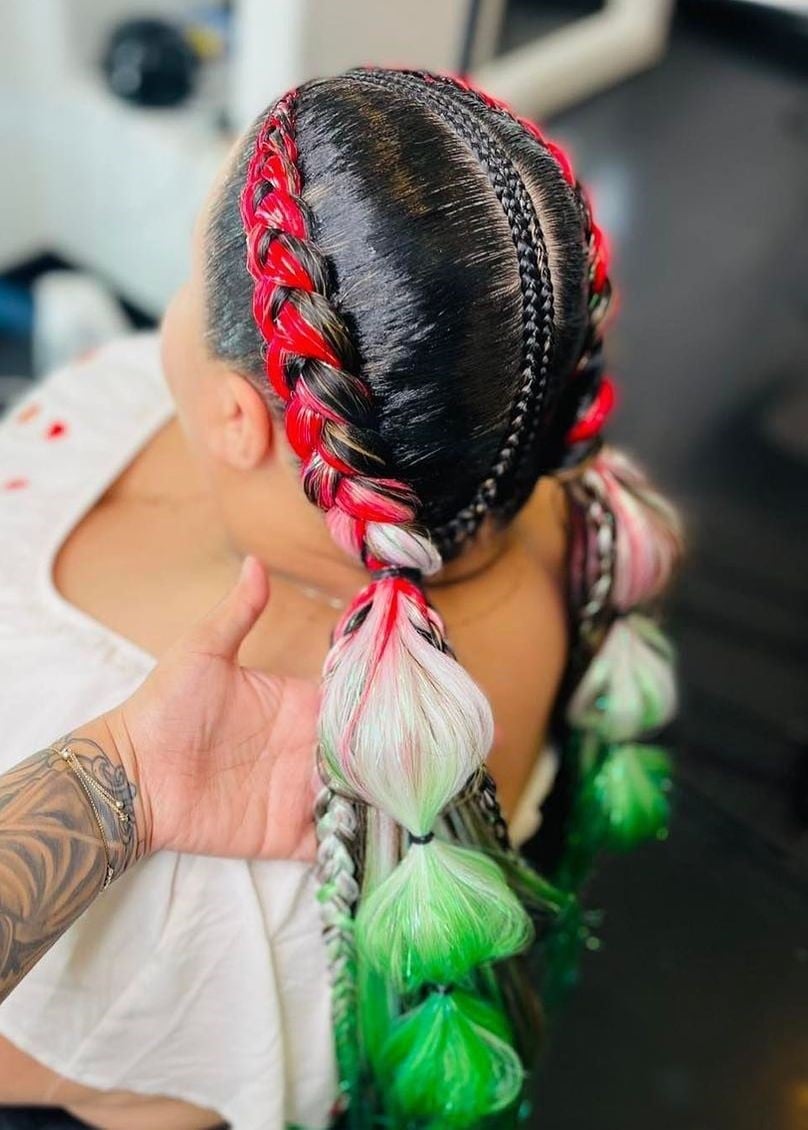
Two large Dutch braids run down the back from a middle part, black at the root and then red, pink, white, and green extensions taking over the tails. Thick, straight, mid-back hair feeds into the braid cleanly, and the color does the talking from the first crossover. Ask your stylist for: two large Dutch braids with vibrant multi-colored extensions.
Wear is where this style asks for patience. Braids this size hold their shape for days, but the extensions need a braid balm worked in so the synthetic strands do not frizz against the black. Skip tight re-braiding at the root, since tugging there irritates the scalp and loosens the pattern. A silk scarf at night keeps the color from dulling. Plan a takedown and deep condition after about a week, and a root touch-up every six to eight weeks if you keep the black base.
20. Ear-Length Curly Hair With Fiery Red Fringe
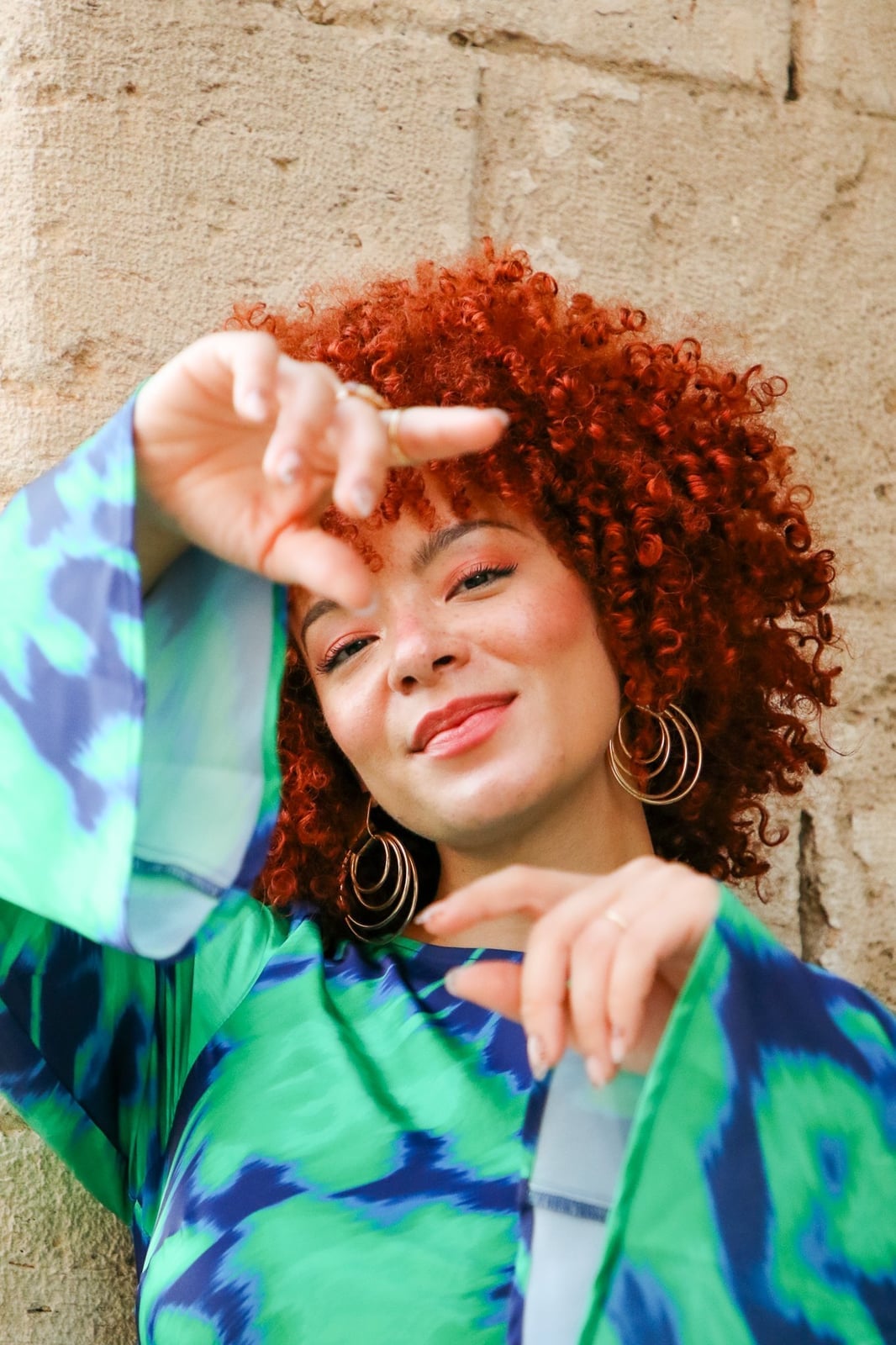
An ear-length curly cut with a short curly fringe in vibrant red, air-dried with defined curls, is one of the few bold looks you can finish at home. Dense, curly hair holds the shape without heat, so a diffuser on low heat does the building and the layers do the rest. Ask your stylist for: ear-length curly cut with a short curly fringe, vibrant red color. The cut and color are salon work; the daily styling is yours, plus a fringe trim every four to six weeks.
21. Final Thoughts
Fine hair: keep one blunt baseline and skip heavy layers. Round face: let the length fall below the chin. Coily texture: a defined cut beats a sleek one you fight every morning. For color, stay within a shade or two of your base and the root line stays quiet for six weeks.
- Trim the baseline every six to eight weeks.
- Deep condition curls weekly for definition.
- Tone color at week six, not week ten.
- Heat protectant before any hot tool.
- Let braids breathe for six to eight weeks.
Embrace your unique texture and color with confidence.