Sensitive skin can make even a simple routine feel like a gamble, but the fix is usually less about finding a miracle product and more about calming things down. The core idea is to protect your skin barrier, skip the harsh stuff, and keep your routine short and steady. This article walks through what sensitive skin actually is, which products earn a spot on your shelf, the do’s and don’ts of a gentle routine, and when it’s time to see a dermatologist.
Key Takeaways
- Patch test new products behind the ear or on the inner forearm for 24-48 hours before full application.
- Cleanse with lukewarm water and a pH-balanced, fragrance-free cleanser, then moisturize right away.
- Skip physical scrubs, strong chemical peels, alcohol, essential oils, and very hot showers.
- Apply a mineral sunscreen with zinc oxide or titanium dioxide every day, even indoors.
- Introduce one new product at a time and see a dermatologist if irritation persists or worsens.
1. What Exactly is Sensitive Skin?
Sensitive skin is a common condition, not a disease, and it shows up as unpleasant sensations that a normal reaction would not explain: stinging, burning, itching, tingling, or pain after you apply a product or step into the cold. The usual culprit is a compromised skin barrier, the outer layer that should hold moisture in and keep irritants out. When it thins or gets damaged, irritants pass through more easily and water escapes, so skin feels tight, reactive, and easily provoked. Managing it comes down to three things: figuring out which triggers set your skin off, keeping your routine gentle, and choosing soothing products that support the barrier instead of stripping it.
2. Why Your Skin Might Be Feeling Sensitive
Think of your skin barrier as a brick wall: skin cells are the bricks, and lipids like ceramides act as the mortar. When the mortar cracks, irritants slip in and moisture leaks out, which is exactly why sensitive skin often feels tight and reacts to products that never used to bother you.
What tends to set it off
- Harsh chemicals and preservatives: strong surfactants, alcohol, and certain preservatives can strip or sting.
- Fragrances and dyes: among the most frequent irritants in skincare and laundry products.
- Extreme temperatures: hot showers strip natural oils, and cold wind can leave skin raw.
- UV radiation and pollution: both add oxidative stress that a weak barrier handles poorly.
Sensitivity can be genetic, and some people simply have reactive skin from the start. It can also develop later because of environmental exposure, lifestyle habits, or an underlying condition such as rosacea or eczema. That last possibility is worth a professional opinion, since the care plan differs once a condition is involved.
3. Essential Products for Your Sensitive Skin Arsenal
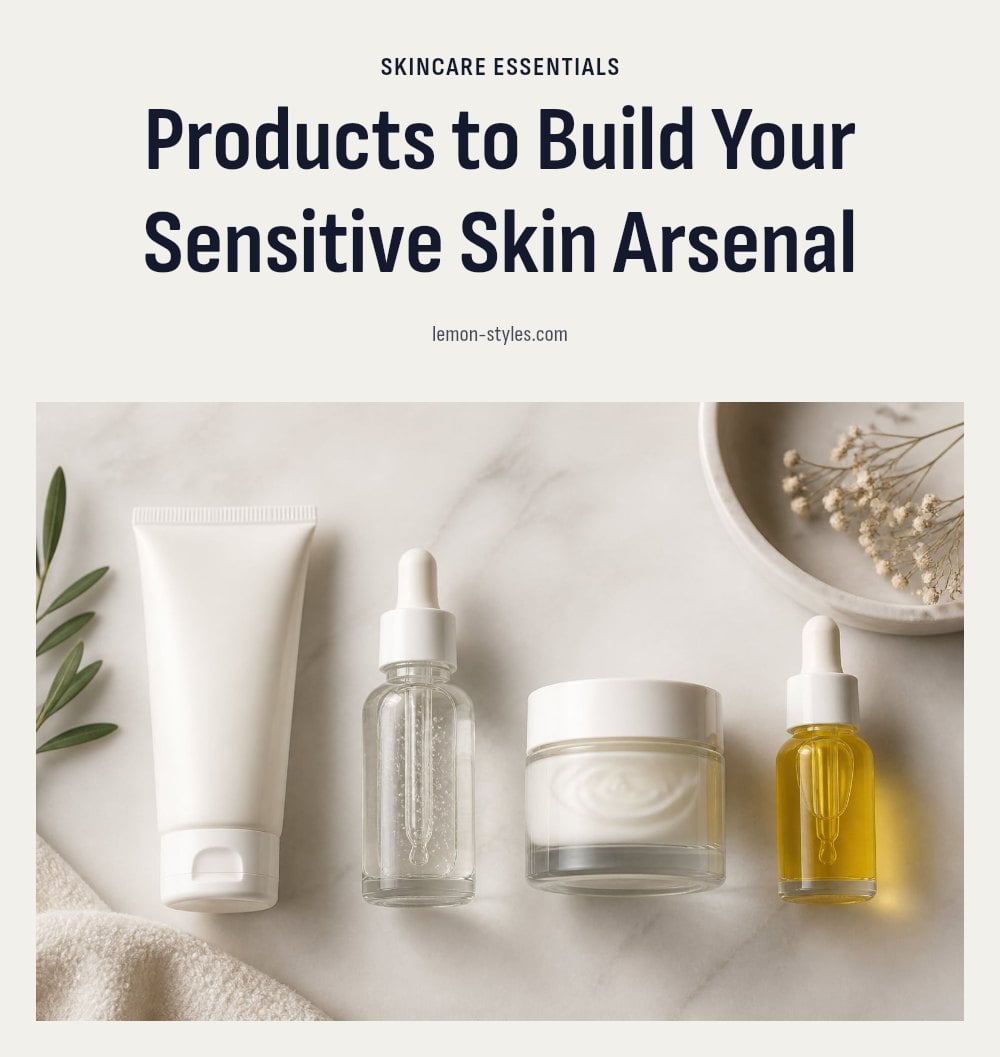
You do not need a shelf full of products. A short list of well-chosen formulas covers cleansing, hydration, barrier support, and sun protection, which is most of what reactive skin needs.
- Gentle, pH-balanced cleanser: lifts dirt and oil without stripping the barrier.
- Fragrance-free moisturizer: locks in hydration right after cleansing.
- Mineral sunscreen with zinc oxide or titanium dioxide: daily UV protection that tends to sit better on reactive skin.
- Ceramide-rich cream: supports barrier function by replenishing the lipids your skin is missing.
- Hyaluronic acid serum: draws in water for hydration without irritation.
- Niacinamide serum: helps soothe skin and strengthen the barrier over time.
- Colloidal oatmeal products: calms irritation and itching during a flare.
Good to know: labels like fragrance-free, dye-free, and hypoallergenic are useful starting points, but they are not always regulated, so read the ingredient list too. A soft cotton towel for patting dry belongs on the list as well.
4. Your Gentle Skincare Routine: The Do’s

A routine for reactive skin is less about doing more and more about doing the same gentle things consistently. These steps are the ones worth building around.
- Cleanse with lukewarm water and a pH-balanced cleanser: hot water strips natural oils and leaves skin drier and more reactive.
- Moisturize immediately after cleansing: applying while skin is still slightly damp helps lock hydration in.
- Choose minimal-ingredient products: fewer ingredients means fewer chances for one of them to irritate you.
- Patch test anything new for 24-48 hours: apply a small amount behind the ear or on the inner forearm and watch for a reaction.
- Apply mineral sunscreen daily, even indoors: UV exposure is a major irritant, and window light adds up.
- Go fragrance-free and dye-free: these are among the most common triggers in everyday products.
- Keep the routine simple and consistent: frequent product swaps restart the guessing game.
- Drink enough water: hydration supports skin from the inside, though it will not fix a damaged barrier on its own.
My tip: when you patch test, leave the product on the test spot without washing it off, and check the area morning and night for the full 24-48 hours before you commit.
Pat your skin dry with a soft cotton towel instead of rubbing, and give a new routine a few weeks of steady use before you judge it.
5. Common Skincare Mistakes to Avoid with Sensitive Skin
Using too many active ingredients: Overwhelming your skin can trigger reactions. My tip: Introduce one new product at a time.
Assuming ‘natural’ equals safe: Natural ingredients can still be irritants. Always check ingredient lists.
Not patch testing new products: This is crucial to avoid widespread reactions. My tip: Test behind the ear or on the inner forearm first.
Over-cleansing or using harsh cleansers: Strips natural oils, worsening sensitivity. My tip: Stick to gentle, pH-balanced formulas.
Ignoring daily sunscreen: UV exposure is a significant irritant for sensitive skin. My tip: Make mineral sunscreen a non-negotiable step.
Using harsh exfoliants: Both physical and chemical exfoliants can severely irritate a compromised barrier. My tip: Avoid scrubs and strong peels entirely.
6. Long-Term Strategies for Keeping Sensitive Skin Calm

Identify and avoid triggers: Keep a skin diary to pinpoint what causes reactions. Note products, weather, and stress levels to spot patterns.
Strengthen your skin barrier: Consistently use products with ceramides and hyaluronic acid. These ingredients help repair the mortar between your skin cells.
Manage stress: Stress can exacerbate symptoms. Consider relaxation techniques like deep breathing or gentle yoga to calm your skin from the inside.
Protect from environmental factors: Use antioxidants and wear sunscreen to guard against pollution and UV. Daily mineral SPF is non-negotiable.
Maintain a consistent, gentle routine: Avoid frequent product changes or harsh treatments. Stick to your core products for at least a few weeks to see results.
7. When to Consult a Dermatologist for Sensitive Skin
If skin irritation, redness, or swelling persists or worsens despite gentle care, consult a dermatologist. If you suspect an allergic reaction with hives, severe itching, or difficulty breathing, seek immediate medical attention. If you experience persistent burning, stinging, or pain that interferes with daily life, professional guidance is warranted. If you suspect an underlying skin condition like rosacea or eczema is contributing to your sensitivity, a dermatologist can help with diagnosis and a tailored plan.
8. Frequently Asked Questions
Can sensitive skin be cured?
No, sensitive skin is generally managed rather than cured, since it reflects how reactive your skin is and often a compromised barrier. Many people find that a gentle, consistent routine keeps symptoms calm most of the time. If reactions are frequent or severe, a dermatologist can check whether an underlying condition like rosacea or eczema is involved.
How long does it take to see results from a sensitive skin routine?
You can often notice calmer skin within a few days to a few weeks of consistent use and trigger avoidance. Barrier support takes time, so give a simple routine a few weeks before deciding it is not working. If things get worse instead of better, that is your signal to stop new products and consult a dermatologist.
Is natural skincare always better for sensitive skin?
No. Natural and organic products can still contain fragrances, essential oils, and plant extracts that irritate reactive skin. Read the full ingredient list rather than trusting the front label, and patch test anything new. Labels like fragrance-free and hypoallergenic are a useful starting point, though they are not always strictly regulated.
What is the best type of sunscreen for sensitive skin?
Mineral formulas with zinc oxide or titanium dioxide are often the gentlest choice for reactive skin. Look for fragrance-free options and patch test a new sunscreen before using it on your whole face. Daily use matters, even indoors, since UV exposure is a common trigger for sensitivity.
9. Final Thoughts
My tip: treat your routine as a short, boring list you repeat rather than a rotation you keep adding to. Cleanse gently, moisturize while skin is still damp, wear sunscreen daily, and give a new product a few days before you judge it. With consistent use and avoidance of triggers, many people notice calmer skin within a few days to a few weeks. If redness, stinging, or swelling keeps up or gets worse, stop the new products and check in with a dermatologist.
This article is general information and not medical advice. It cannot diagnose a skin condition or replace an exam by a professional. If irritation, redness, or swelling persists or worsens, or you suspect an allergic reaction, see a dermatologist or doctor.