If you’ve ever stood in the grocery store aisle wondering what to cook this week, meal planning is your answer. It’s simply deciding what you’ll eat for the next 3 to 7 days and building a shopping list around those choices. This simple habit can help you save money, cut down on food waste, and make weeknight dinners feel less stressful. In this article, I’ll walk you through the essential steps, tools, and tips to get started, plus common mistakes to avoid.
Key Takeaways
- Start with planning just 2 to 3 days of meals to avoid overwhelm.
- Check your pantry, fridge, and freezer before making a shopping list.
- Choose recipes that share ingredients to minimize waste and cost.
- Set aside 1 to 3 hours weekly for planning and prep sessions.
- Involve your household to ensure meals match everyone’s preferences.
1. What Exactly Is Meal Planning?
Meal planning means deciding what you will eat for the next 3 to 7 days and building a shopping list around those choices. Instead of standing in the aisle guessing, you buy only what your plan calls for. The payoff is threefold: you spend less on impulse purchases, you throw away less food, and you stop asking “what’s for dinner?” every night. For most people, it takes about an hour a week to set up and saves far more time than it costs.
2. Essential Tools for Successful Meal Planning
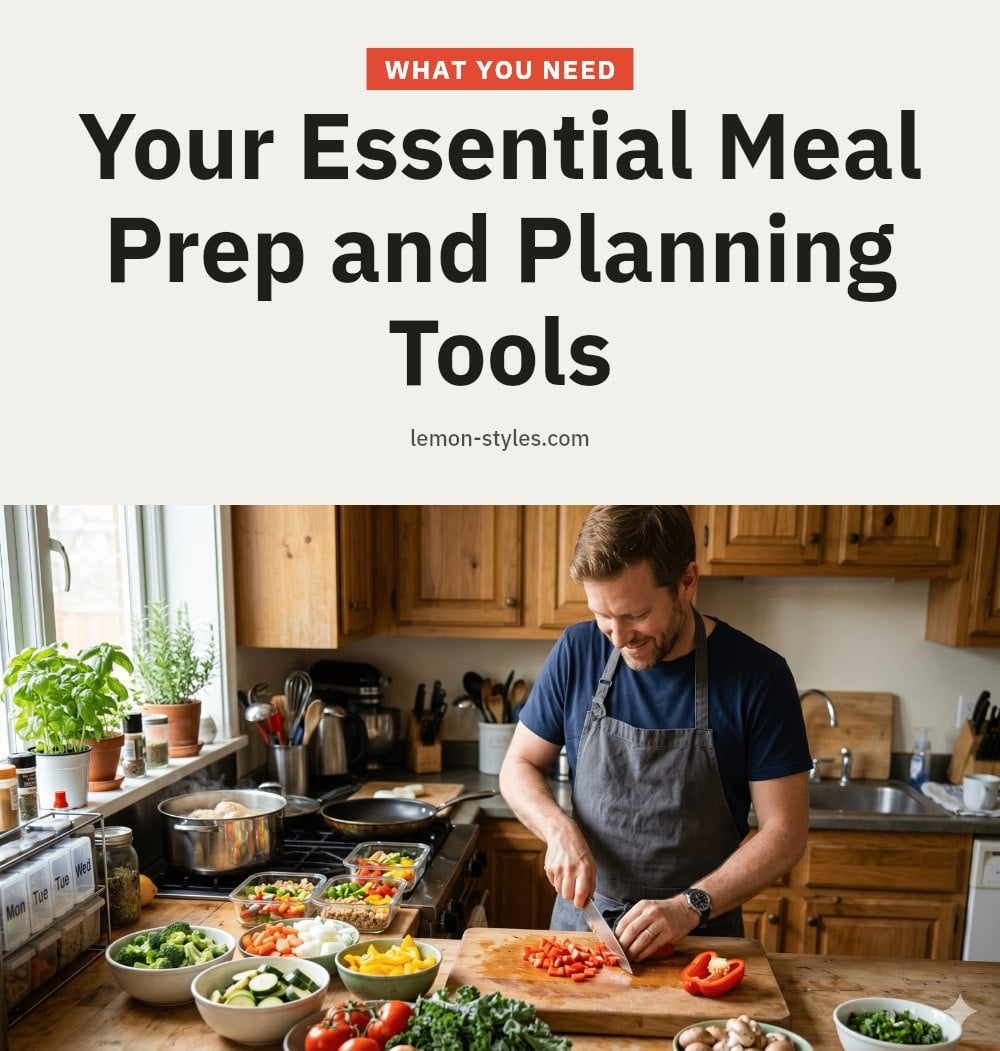
You do not need fancy gear, but a few basics make the process smoother. A planning template, a printed sheet, a whiteboard, or an app, keeps your week visible. Airtight containers (glass or BPA-free plastic) keep prepped ingredients and leftovers fresh for days. Freezer-safe bags extend that to months. For prep itself, a sharp chef’s knife, a large cutting board, measuring cups, and a set of pots or baking sheets cover almost everything.
- Planning system: template, app, or notebook to map meals and build the grocery list.
- Storage containers: airtight for fridge, freezer-safe for long-term storage.
- Prep tools: knife, cutting board, measuring cups, and basic cookware.
3. Your Step-by-Step Guide to Meal Planning

The process works best when you follow the same five steps each week.
- Take inventory: Check your pantry, fridge, and freezer first. Note what you already have, grains, canned goods, frozen vegetables, so you do not buy duplicates. This step alone cuts waste and saves money.
- Pick recipes that match your week: Look at your schedule. Busy nights call for 20-minute meals or slow-cooker dishes. Choose recipes that share ingredients, like roasted chicken that can become sandwiches or salads later. Consider dietary needs and preferences of everyone eating.
- Write your grocery list: Go recipe by recipe and write down only what you do not already own. Stick to the list at the store. This prevents impulse buys and keeps your budget on track.
- Dedicate a prep session: Set aside 1 to 3 hours after shopping. Chop vegetables, cook grains, marinate proteins, or batch-cook entire meals. Portion them into containers so you can grab and reheat all week.
- Store and reheat safely: Cool cooked food within two hours, then refrigerate or freeze. Use separate cutting boards for raw meat and produce. Reheat leftovers to 165°F. Discard anything left at room temperature for more than two hours.
4. Smart Tips for Efficient Meal Planning

These small habits make meal planning stick without feeling like a second job.
- Start with 2-3 days: Planning a full week can overwhelm beginners. Try two or three days first, then add more as you get comfortable.
- Involve your household: Ask everyone for a few meal ideas or let them pick a theme night. People eat what they choose.
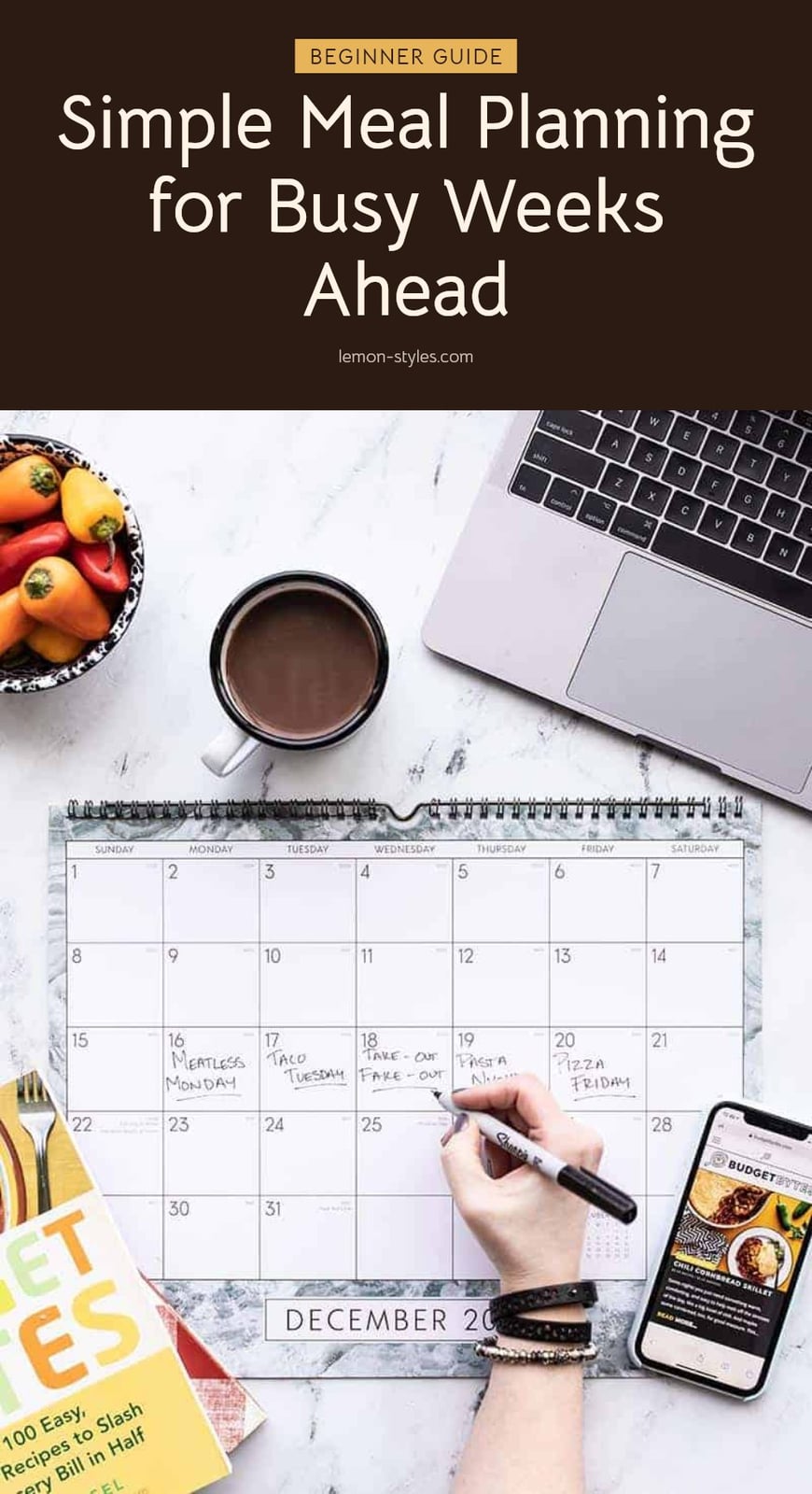
- Use theme nights: Taco Tuesday, Meatless Monday, or Stir-Fry Friday. Themes cut decision time and add variety without extra effort.
- Plan leftovers on purpose: Cook extra on Sunday and label it for Tuesday’s lunch or Wednesday’s dinner. One batch of chili can cover two meals.
- Keep a favorites list: Write down the five to ten recipes your family loves. When you are short on time, pull from that list instead of hunting for new ideas.
5. Common Meal Planning Mistakes and How to Avoid Them
Over-planning complex meals for a busy week is the fastest way to burn out. If Tuesday has back-to-back meetings, do not schedule a from-scratch lasagna. Swap in a 20-minute stir-fry or a slow-cooker meal instead.
Mistake: Skipping the pantry check before shopping. You end up with three jars of cumin and no room for fresh produce. Scan your shelves and fridge first, then write your list.
Mistake: Forgetting snacks and breakfast. If those are part of your goals, add them to the plan. Otherwise you grab whatever is at the gas station.
Stay flexible. If the planned grilled chicken sounds unappealing on Thursday, swap it with Friday’s pasta. And never ignore dietary needs or allergies in your household. A plan that doesn’t work for one person will leave uneaten food and frustration.
6. Preventing Food Waste Through Smart Planning

Use ingredients across multiple meals so nothing sits unused. Roast a whole chicken on Sunday, then use the leftovers in tacos and a lunch salad on Tuesday.
Pro move: Freeze prepared meals or components. Soups, chili, and cooked grains keep for weeks in freezer-safe containers. Label each container with the date and contents.
Check your pantry and refrigerator inventory every week before you shop. You will spot the half-used bag of lentils and build a meal around it instead of buying another bag.
Plan for leftovers intentionally. Cook double on Monday and schedule the extras as Tuesday’s lunch or a quick dinner later in the week. Buy only what your plan actually calls for. That one extra bunch of cilantro often ends up in the trash.
7. How Much Time and Money Can You Save?
Meal planning takes about 1 to 3 hours per week, including the planning session and a prep block. That upfront time pays back all week.
You buy only what is on your list, so impulse purchases drop sharply. No more grabbing a jar of sauce you never use or snack bars that sit in the pantry for months.
Less food waste means more money in your pocket. The average household throws away a significant portion of its groceries. A consistent weekly plan cuts that loss. Over several months, the savings add up noticeably without any extra effort at the register.
8. When to Consult a Professional for Dietary Needs
If you or a family member receives a new dietary restriction or allergy diagnosis, consult a doctor or registered dietitian before changing your meal plan. Guessing can lead to nutritional gaps or unsafe substitutions.
For managing chronic health conditions through diet, such as diabetes or high blood pressure, professional guidance is essential. A dietitian can build a plan that fits your medical needs and your kitchen routine.
If you suspect a food sensitivity, a professional can help identify the trigger and design a safe elimination plan. Do not self-diagnose or cut out major food groups without expert input.
9. Frequently Asked Questions
How long does meal planning take each week?
Most people spend about 1 to 3 hours per week on meal planning, including choosing recipes, making a grocery list, and doing a prep session. If you’re just starting, you might take a bit longer, but it gets faster as you build a routine. You can also split the time, like 30 minutes for planning and an hour for prep.
Can I meal plan if I have dietary restrictions?
Yes, meal planning can work well with dietary restrictions. Just make sure to consider allergies, intolerances, and preferences of everyone in your household when choosing recipes. If you have a new diagnosis or a chronic condition, it’s wise to consult a doctor or registered dietitian before changing your diet to avoid nutritional gaps.
What if I don’t like a meal I planned?
It happens to everyone. The key is to stay flexible. You can swap that meal for another easy option, like a 20-minute stir-fry or a slow-cooker meal, or simply move it to another night. Don’t force yourself to eat something you dislike; the plan is meant to serve you, not the other way around.
How can I make meal planning fun?
Try adding theme nights like Meatless Monday or Taco Tuesday to bring variety and make decisions easier. Involve your family by letting each person pick a meal for the week. You can also experiment with one new recipe each week to keep things interesting. The more you enjoy the process, the more likely you’ll stick with it.
Is meal planning only for dinner?
No, meal planning can cover any meal you want to prepare ahead. Many people plan lunches for work or school, and some include breakfasts and snacks. If you want to keep it simple, start with dinner only, then expand to other meals as you get comfortable. The goal is to reduce daily decision-making, so plan whatever meals cause you the most stress.
10. Final Thoughts
My tip: begin with a simple two-day plan and a single prep session. You’ll quickly see how much smoother your week flows when you know what’s for dinner. Expect to spend about 1 to 3 hours upfront each week, but that time pays off in fewer impulse buys and less last-minute stress. Start small, stay flexible, and adjust as you learn what works for your household. The goal isn’t perfection, it’s making cooking easier and more enjoyable.
This article is for general informational purposes only and is not a substitute for professional medical or dietary advice. If you have a medical condition, food allergy, or are managing a chronic health issue, consult a qualified healthcare provider or registered dietitian before making significant changes to your meal plan.