The line down the center of a hairstyle is easy to treat as background, yet a few millimeters of placement can change how the rest of the shape reads. It can sharpen a crown, split a wave pattern, expose the ends, or make a gathered finish feel calmer. Starting there gives a more useful way to judge a reference than asking whether the part suits a trend.
Before saving a style, pause at the point where the hair leaves the part. Is the surface smooth or broken, does the first bend begin near the face or farther down, and do the two sides actually carry equal visual weight? Those questions turn an attractive reference into a decision about proportion, upkeep, and the amount of movement you want to live with.
1. Broad Blonde Waves with a Balanced Back Silhouette
The centered division is almost secondary here because the rear silhouette carries the strongest detail. Pale blonde lengths fall below the shoulders in broad, repeated S-waves, and the smooth upper section gives those bends a calm starting point. The ends curl into a rounded finish, creating a full lower outline that feels shaped rather than simply left long.
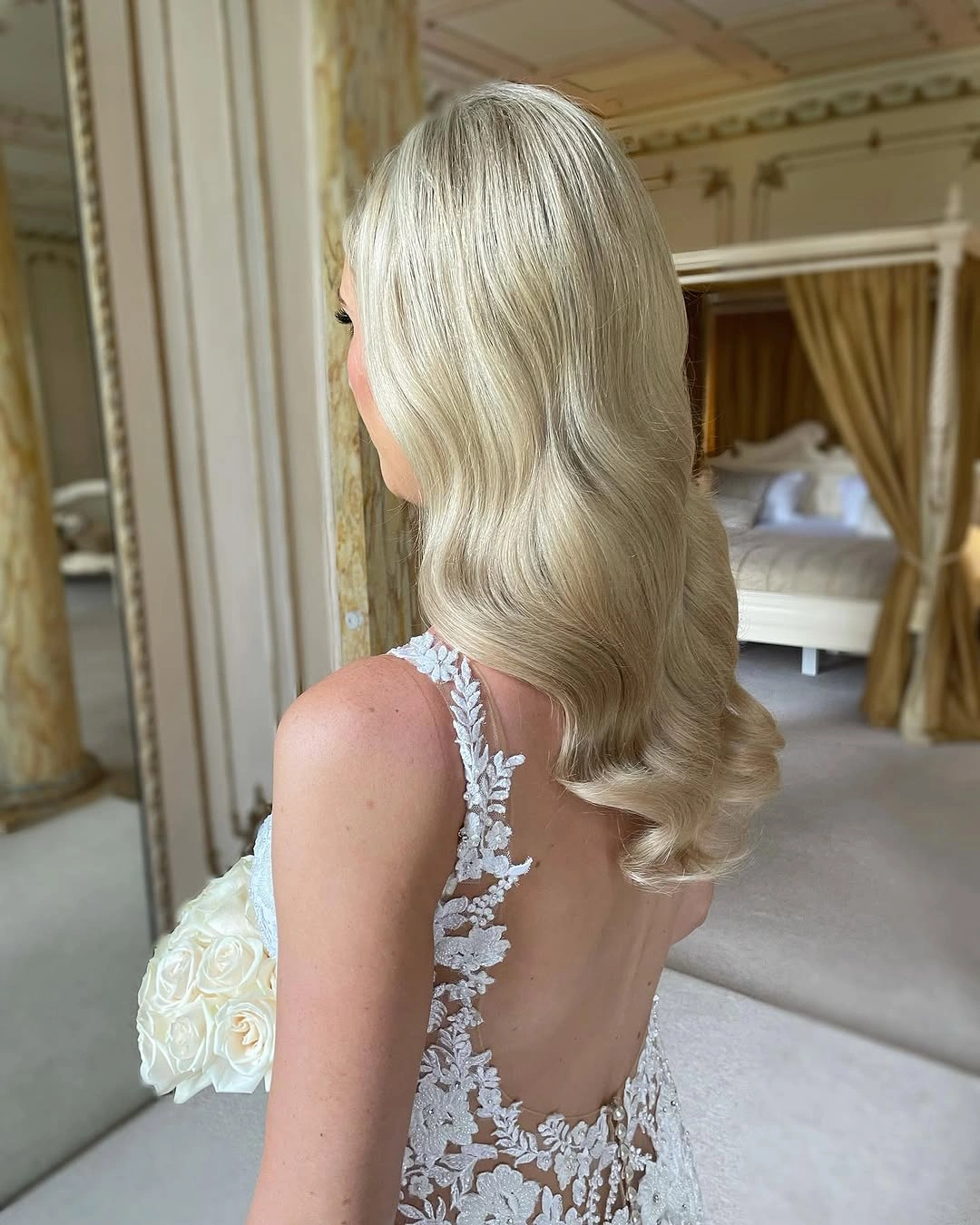
That repeated wave spacing is what keeps the length from reading as one heavy sheet. Each bend catches a little light and leads the eye downward, while the close-fitting crown prevents the upper half from competing with the lower movement. A center part supports this balance because it gives the waves two equal directions, even when the view is mostly from behind.
If you want the same idea with less visual weight, keep the wave width broad but stop the movement around the shoulder blades instead of carrying it so far down. The shape will still feel polished, although shorter ends can lose the soft cascade more quickly. Even brushing matters here, because uneven separation can make one side look fuller than the other.
2. Soft Face-Framing Waves from a Clean Center Line
A precise center part gives these medium-long ash blonde lengths a clear frame, while loose bends keep the result relaxed. The roots stay smooth, the front pieces curve beside the cheeks, and the waves gather more visibly toward the ends. That root-to-length contrast makes the style look organized without asking the entire head to stay perfectly flat.
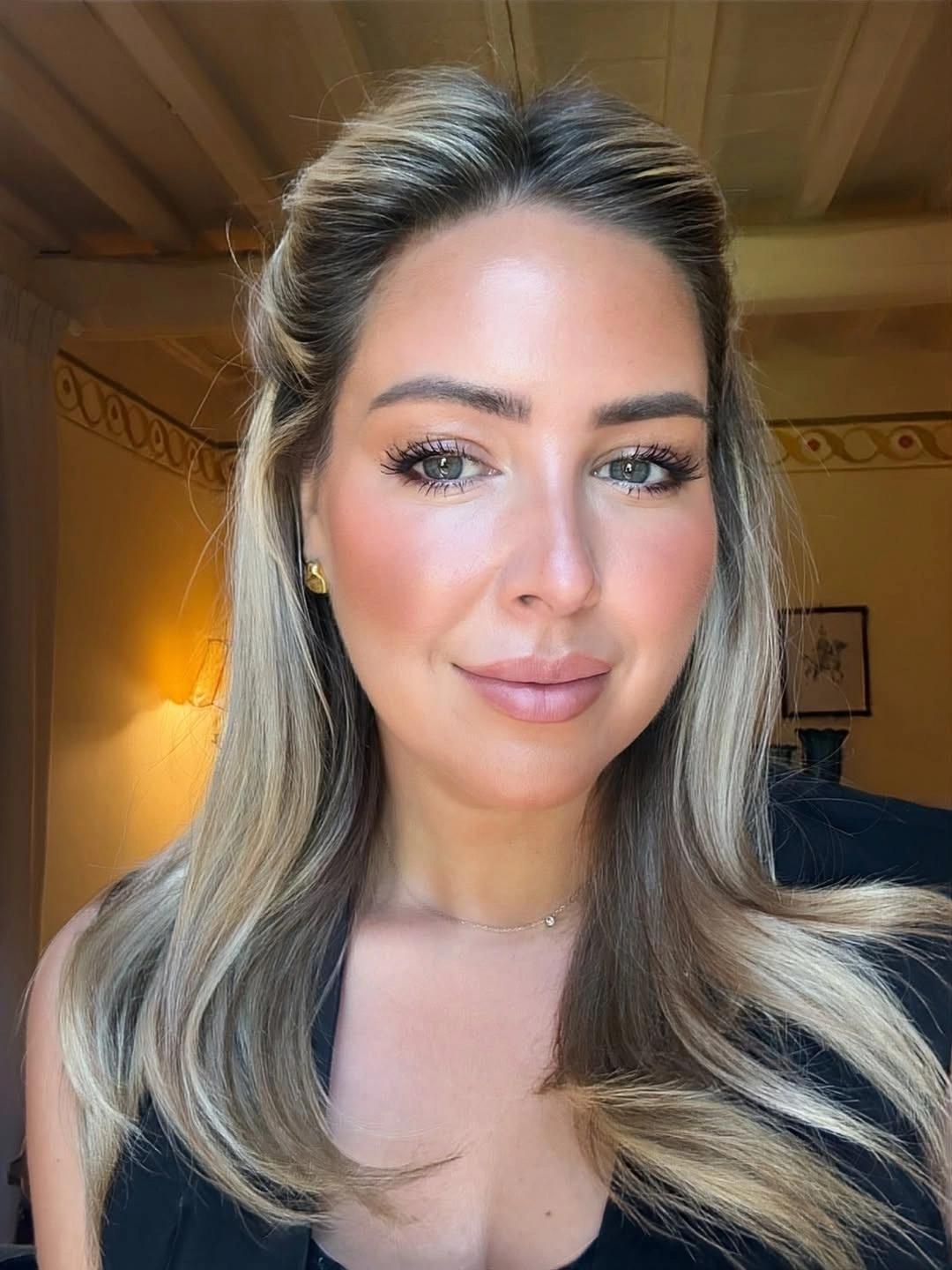
The open front sections are doing practical visual work. They leave the center line visible, then soften the transition into the wave pattern so the hair does not form a hard vertical split down the face. Because the bends are loose rather than tightly sculpted, the style can move toward a simpler everyday finish without losing its defining part.
For a slightly lighter adaptation, keep the crown smooth and add the most visible bend only from the cheek level downward. That preserves the face frame while reducing the amount of styling through the upper lengths. The tradeoff is that the ends become more important, so they need enough shape to stop the style from looking straight at the top and unfinished at the bottom.
3. Shoulder-Length Brunette Waves with a Neat Frame
At shoulder length, the center part becomes a compact design line rather than an entry point to a long cascade. Dark brunette hair falls close to the face, then bends softly at the ends, creating a neat outline that stops around the shoulders. The shorter scale keeps the hairstyle composed, while the small movement prevents the straight center from feeling severe.
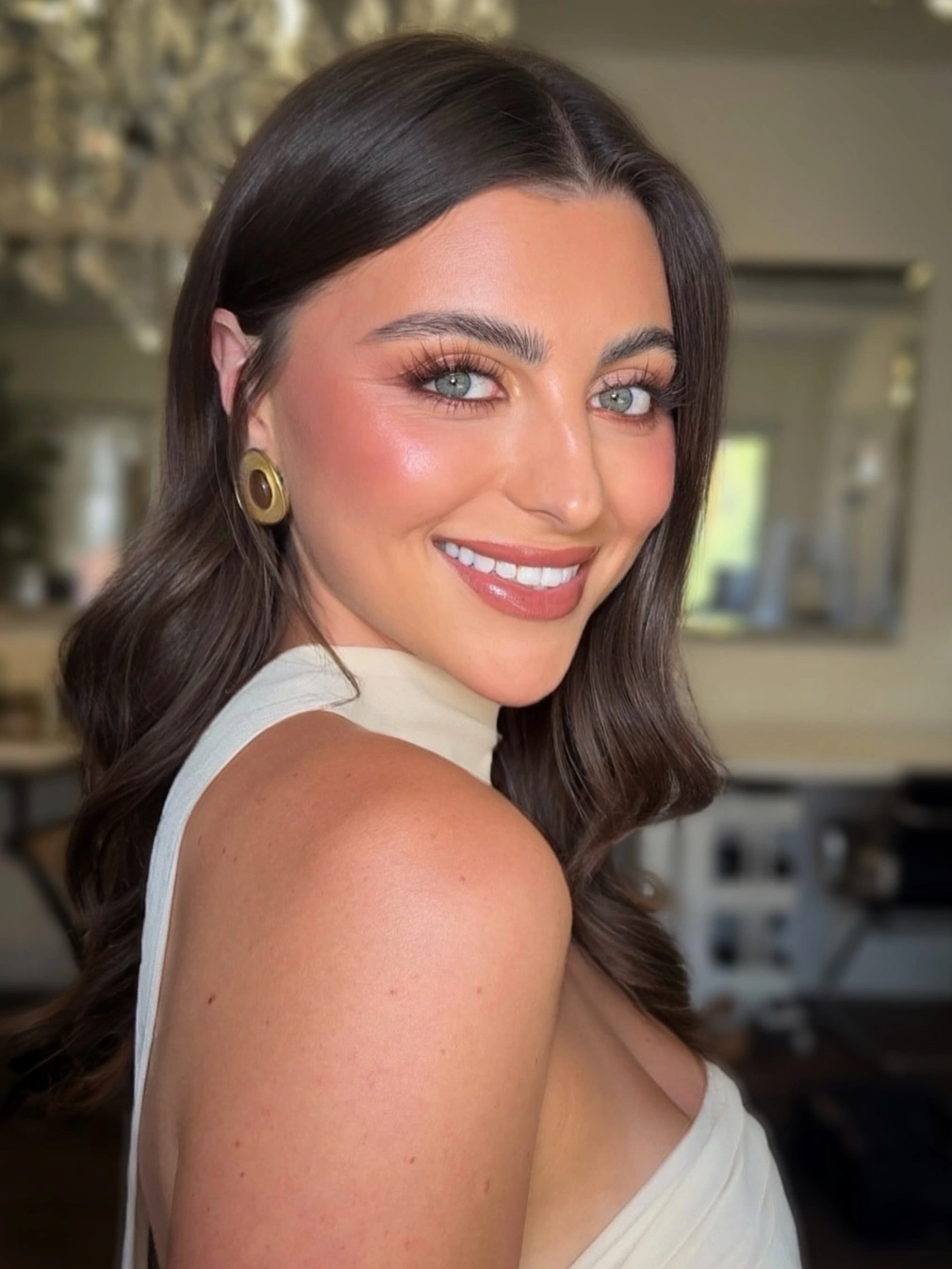
The front pieces curve back from the cheeks, which leaves the face open and gives the dark color a little air around it. That matters more at this length because the ends sit close to the neckline and can quickly look dense if every strand falls in the same direction. Small, even bends create enough rhythm without turning the style into a full wave pattern.
This is a useful choice when you want the structure of middle-part hair but do not want very long maintenance. A shorter version can keep the same center line and soften only the final inch or two, although matching both sides becomes more noticeable as the ends move closer to the jaw. The shape works best when the front separation stays deliberate.
4. A Sleek Pulled-Back Shape Built around the Part
Here the center line is the visible feature that changes the whole mood. The hair is smoothed close to the head and directed away from the face, leaving an uninterrupted forehead and cheek outline instead of loose waves around the shoulders. With most of the length gathered out of view, the hairstyle feels controlled because the part and clean surface carry nearly all of the emphasis.
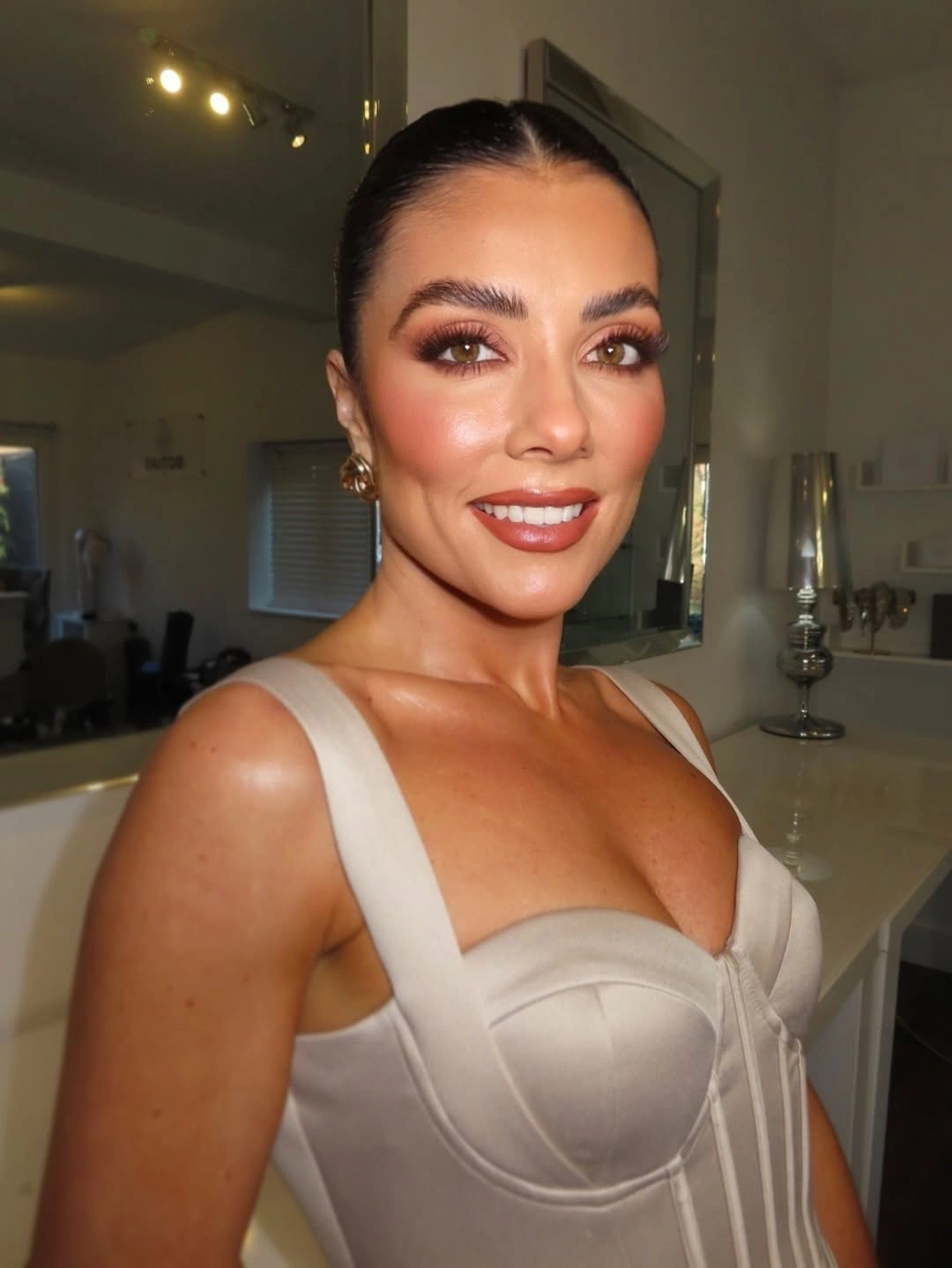
The restraint works through contrast: a narrow central break sits against a broad, uncluttered face frame. There is no visible curl pattern to soften the edges, so the eye notices placement, symmetry, and small surface changes first. That makes this interpretation sharper than an open middle part, even though the basic dividing line remains the same.
To make the effect gentler, leave two narrow front sections loose and allow a slight bend beside the cheeks. The part will stay clear, but the outline will gain movement and require less exact smoothness. The honest limitation is that a sleek top exposes flyaways and uneven placement more readily, while the hidden gathered length cannot be judged from the visible front.
5. Short Black Bob with Airy Center-Parted Pieces
Short hair gives the middle part a very direct role in this look. Black lengths stop around the jaw and neck, with separated front pieces opening over the forehead and falling lightly toward the eyes. The ends are piecey instead of rounded into one solid curve, so the compact outline feels mobile and slightly undone rather than formal.
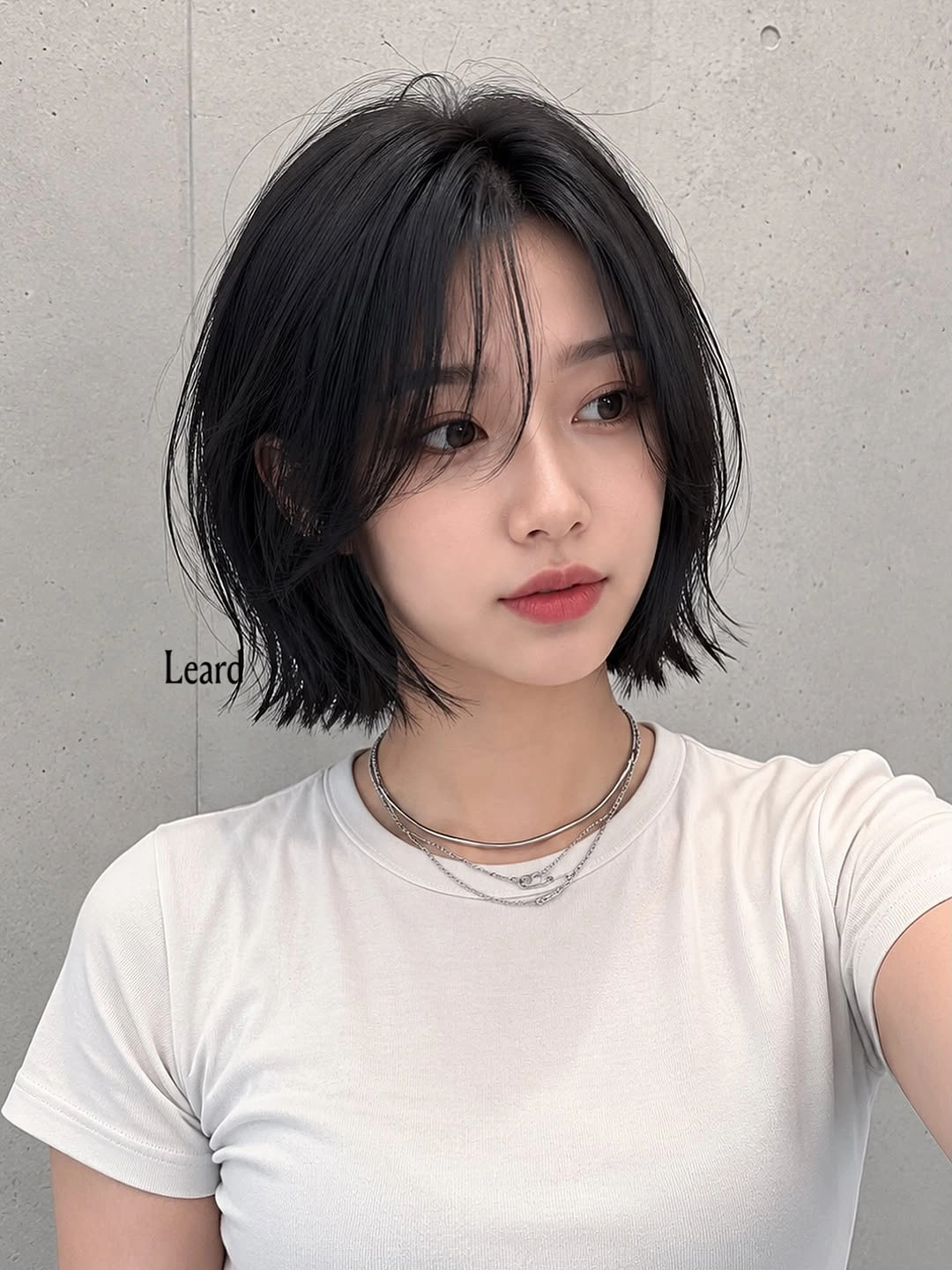
The airy pieces keep the short silhouette from becoming a single dark block beside the face. They create small gaps and directional changes that make the center break easier to read, while the pale top provides a simple contrast that reveals the uneven texture at the ends. The result relies on separation more than volume, which keeps it visually light despite the dark color.
If the front pieces start falling forward, a small amount of shaping near the ends can keep the eyes and cheeks open without turning the cut rigid. A shorter outline is convenient, but it also makes every change in the ends more visible than it would be in long waves. This is a good reminder that compact hair can be low in length and high in detail.
6. Long Layers that Build a Rounded Center-Parted Frame
The defining detail is not simply the center part, but the way long face-framing layers branch away from it. Dark hair falls well below the shoulders, then widens through rounded lower sections that curve in different directions. The crown stays relatively calm, so the silhouette gains movement around the face and shoulders instead of becoming equally full everywhere.
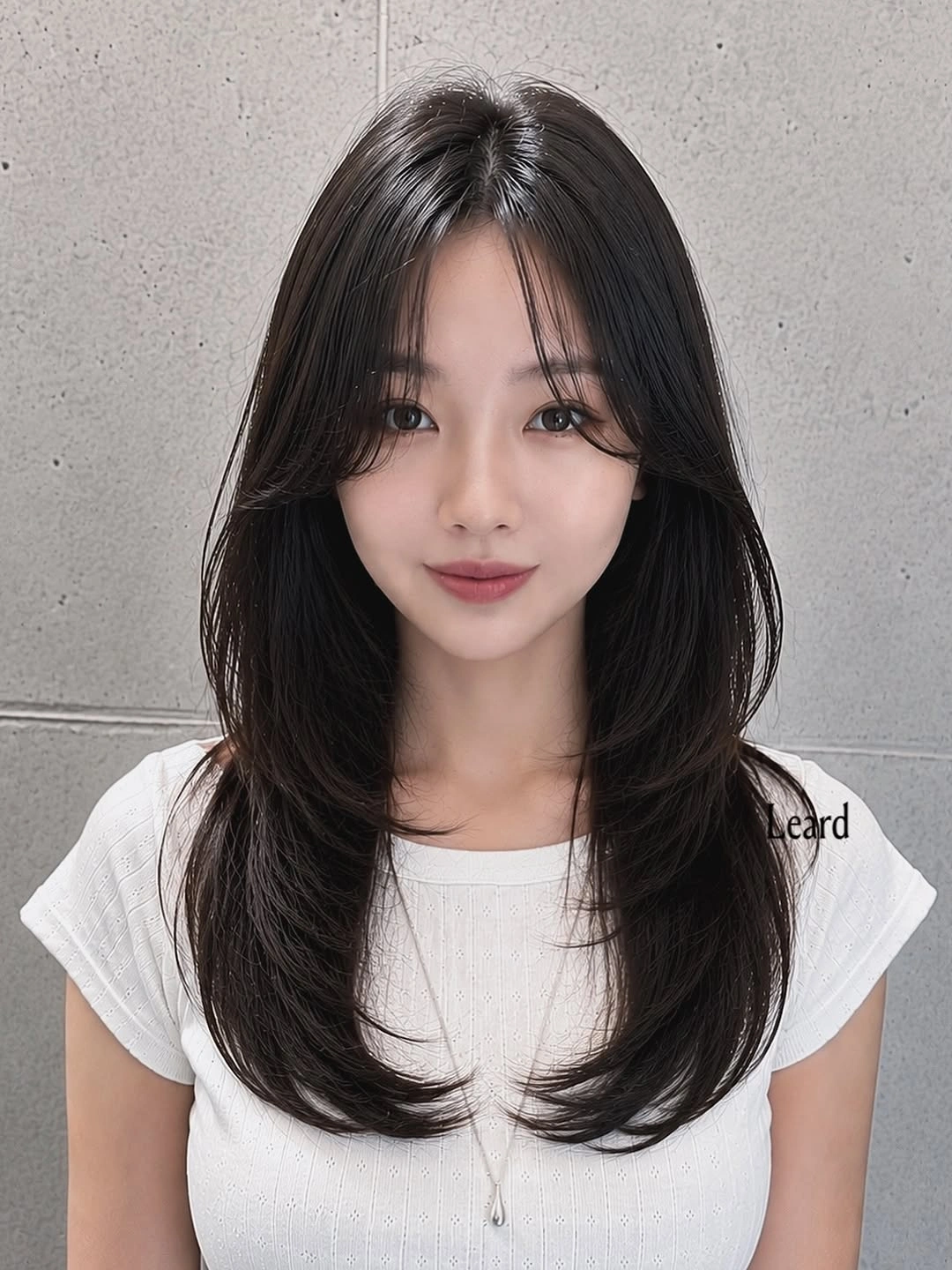
Those layers create a gradual change in proportion. The front pieces guide the eye from the center line toward the cheeks, while the lower ends supply enough width to keep the long length from looking narrow and flat. Because the bends are soft rather than tightly curled, the look remains flexible, but the shape still depends on both sides keeping similar separation.
For a simpler adaptation, preserve the long front frame and let the lower lengths fall in a straighter finish. That will reduce the rounded volume while keeping the center line visible. The tradeoff is that straight ends expose imbalance more quickly, so the layered shape is forgiving in movement but less forgiving when the two sides are brushed in different directions.
7. Very Long Brown Length with Only a Gentle Bend
Extra length becomes the main visual decision in this center-parted style. Brown hair continues far below the chest, staying mostly smooth through the upper half before relaxing into a subtle bend near the ends. The front remains close to the face, so the hairstyle feels quiet and elongated rather than built around a large wave or a lifted crown.
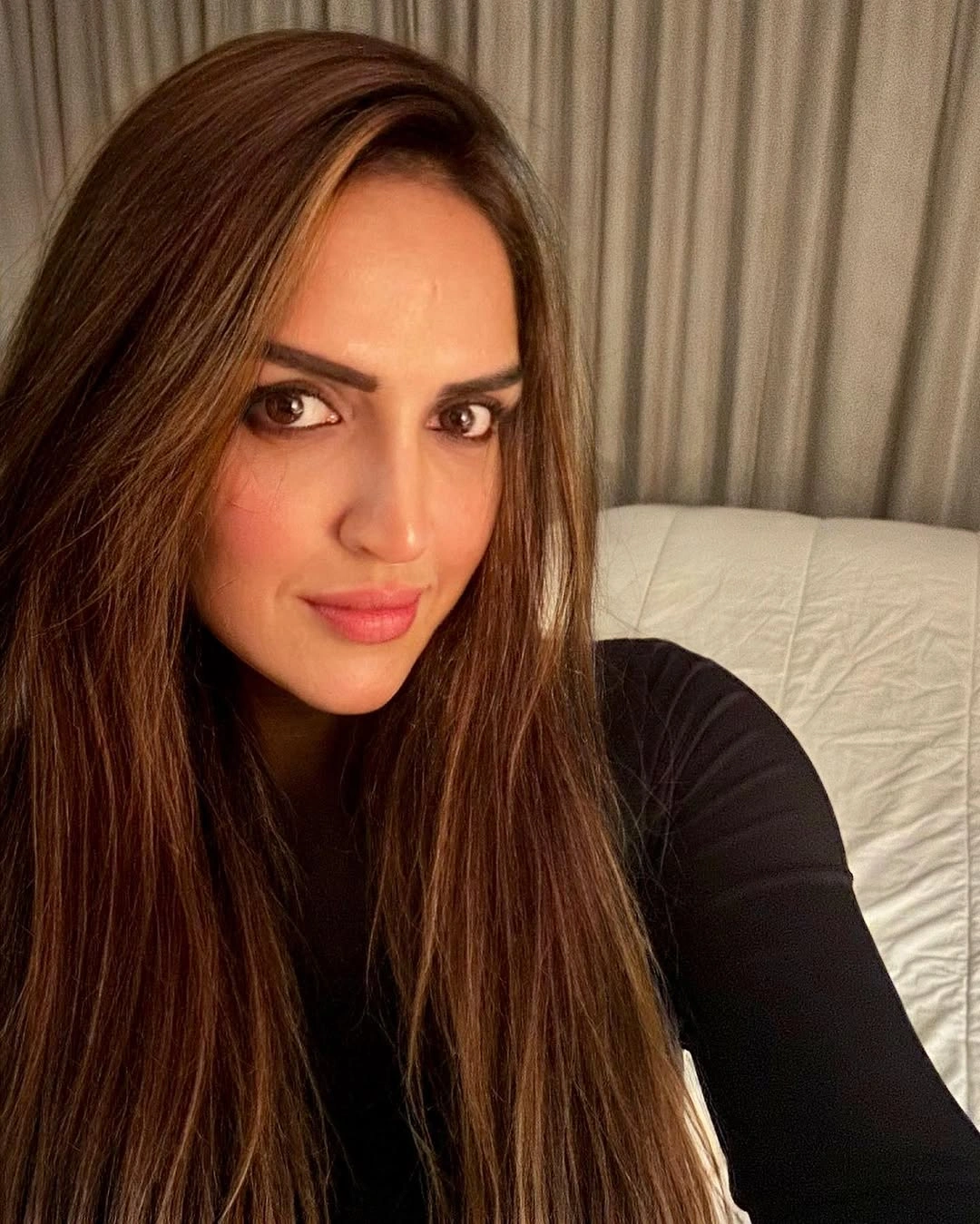
The restrained texture keeps the central line legible and gives the length a clean vertical direction. Instead of competing with the part through curls or layers, the lower sections provide just enough change to stop the silhouette from looking completely flat. That makes the style feel polished, although the weight of very long hair can naturally pull volume away from the crown.
If you want more movement without changing the overall length, concentrate a wider bend below the shoulders and leave the top nearly straight. That creates a visible transition while avoiding a full head of waves. The limitation is that a quiet texture can disappear in dim light or after brushing, so the ends have to carry the finish consistently for the center-part idea to remain apparent.
8. Large Brushed Waves Framed by a Dark Center Part
Large, repeated bends give this long black style its strongest identity. A central break opens through smooth roots, then the hair expands into broad waves that sweep away from the face and continue through the lower lengths. The wave scale is generous, so the silhouette feels full without relying on small curls or a visibly layered edge.
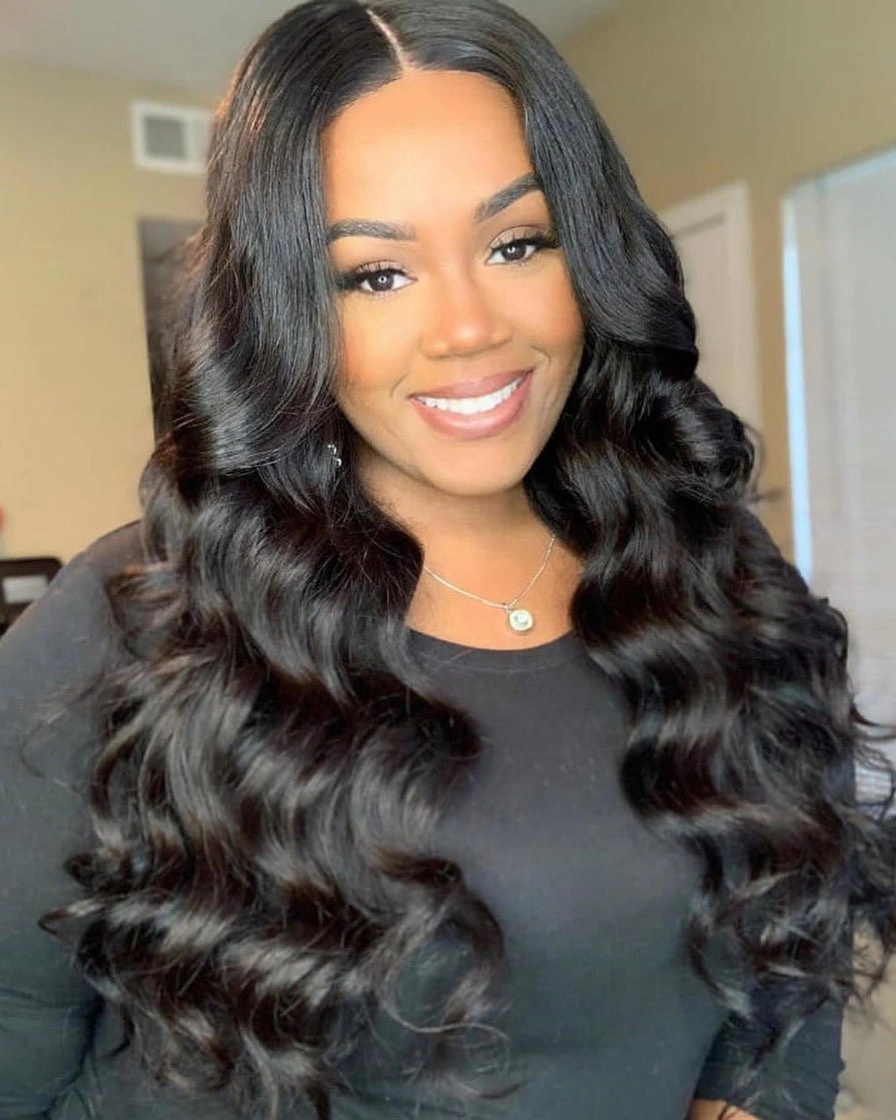
The center line keeps that volume organized. It gives the two sides a clear starting direction, while the broad curves create a steady rhythm that is easy to follow from the cheeks down. A darker base makes the highlights inside each wave especially important, because small changes in separation are what reveal the movement rather than a bright color contrast.
To soften the overall effect, brush the lower lengths only enough to connect the bends and leave the first curves near the face more defined. That keeps the hairstyle from becoming a single wide mass. The practical tradeoff is that broad waves need space between them; too much brushing can erase the pattern, while too little can make the finish feel more deliberate and heavy.
9. Face-Framing Contrast in Relaxed Brunette Waves
A centered part leads into long brown waves here, but the lighter pieces near the front change where the eye lands first. The lengths remain relaxed and open, with a soft bend instead of a tight curl, while the brighter strands trace the route from the part toward the cheeks. The overall base stays brunette, so the contrast is supportive rather than dominant.
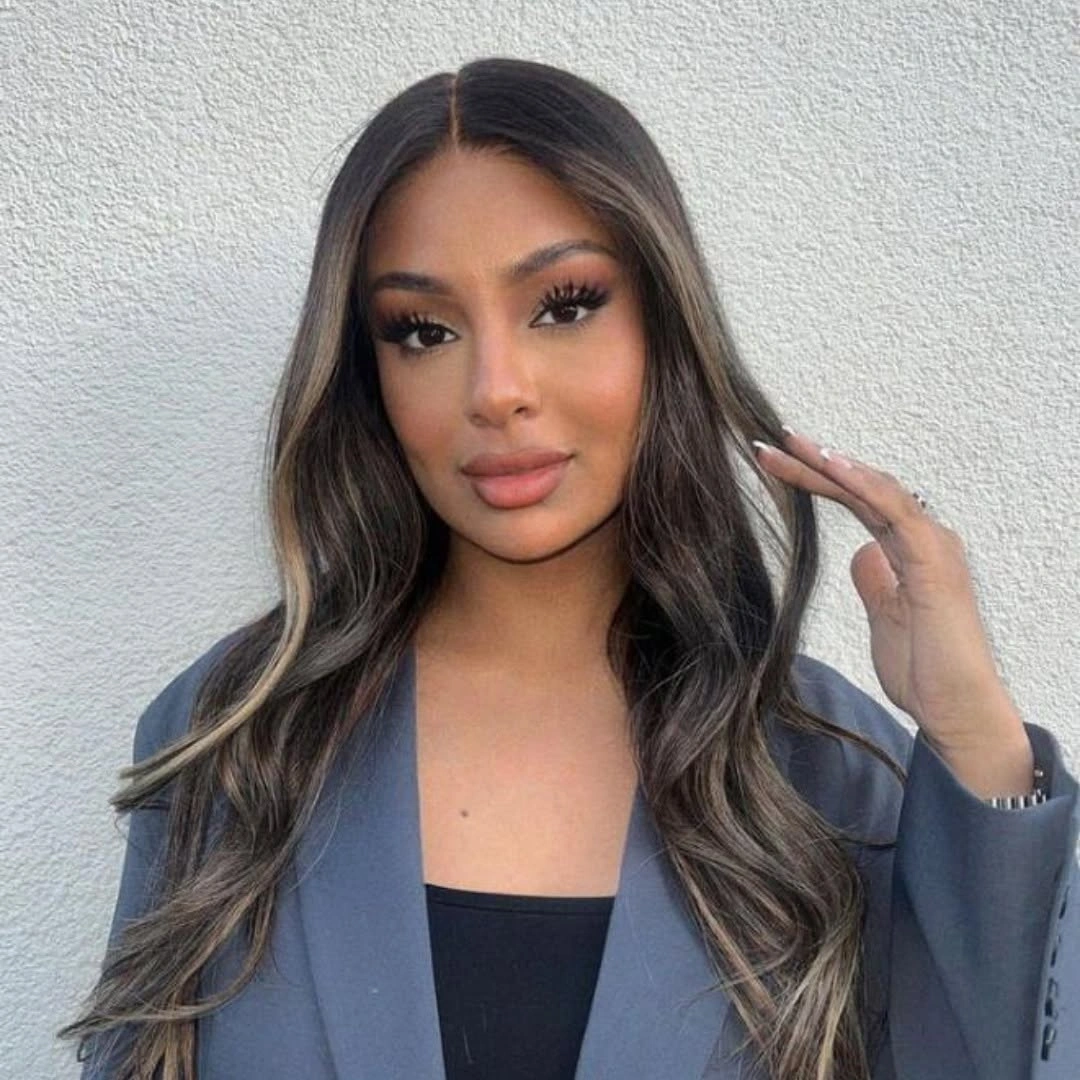
That placement keeps the face area from reading as one uninterrupted dark surface. The lighter strands act like a narrow visual path, and the loose wave pattern carries that path into the lower lengths without making the style look sharply highlighted. Because the contrast is concentrated at the front, it can add definition even when the rest of the hair is allowed to stay softly brushed.
For a quieter version, keep the lighter detail close to the front and reduce the bend through the ends rather than adding more contrast. The balance depends on the pieces staying visible, so a very soft texture or low light can make the effect less obvious. This is a good option when you want one concentrated decision instead of a fully patterned color change.
10. A Narrow Front Accent inside Long Blonde Waves
The small braid-like detail near the front is what changes this otherwise open middle-part style. Very long pale blonde hair falls in loose waves from a visible central break, while one narrow linear accent tracks along the hairline before disappearing into the lengths. Its scale is intentionally modest, so the waves still provide most of the silhouette and movement.
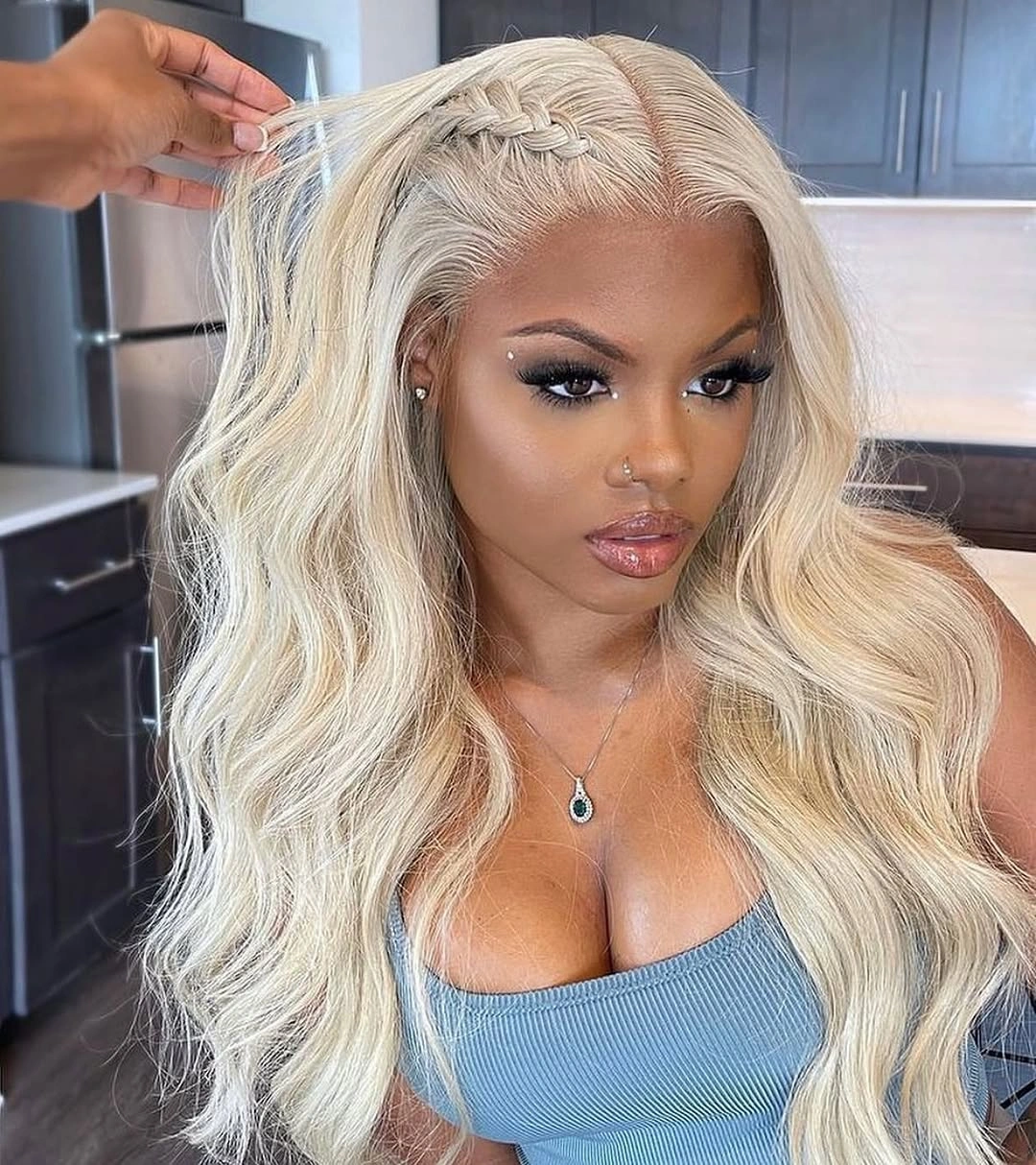
A small detail can carry more weight than its size suggests when it sits beside the part. Here it gives the front a point of definition, then contrasts with the broad, soft waves that continue below. The pale color also makes the narrow line easy to notice against the skin and blue clothing, although the detail depends on clean placement to stay separate from nearby strands.
If you want the same idea with less precision, use a slim twist-like front accent and keep it close to the center line before letting the rest of the hair fall open. The honest limitation is that a small feature can lose clarity as the waves loosen or the hair moves. It is most useful when you want a single recognizable detail rather than several competing accents.
11. Repeated Brown Waves with a Strong Rear Rhythm
From behind, the center-parting idea becomes a continuous pattern of brown waves running through nearly the full visible length. The bends are closer together than the broad curves in earlier styles, and the lower edge stays softly irregular instead of ending in one straight line. There is no face frame to distract from the repeated rhythm or the long fall.
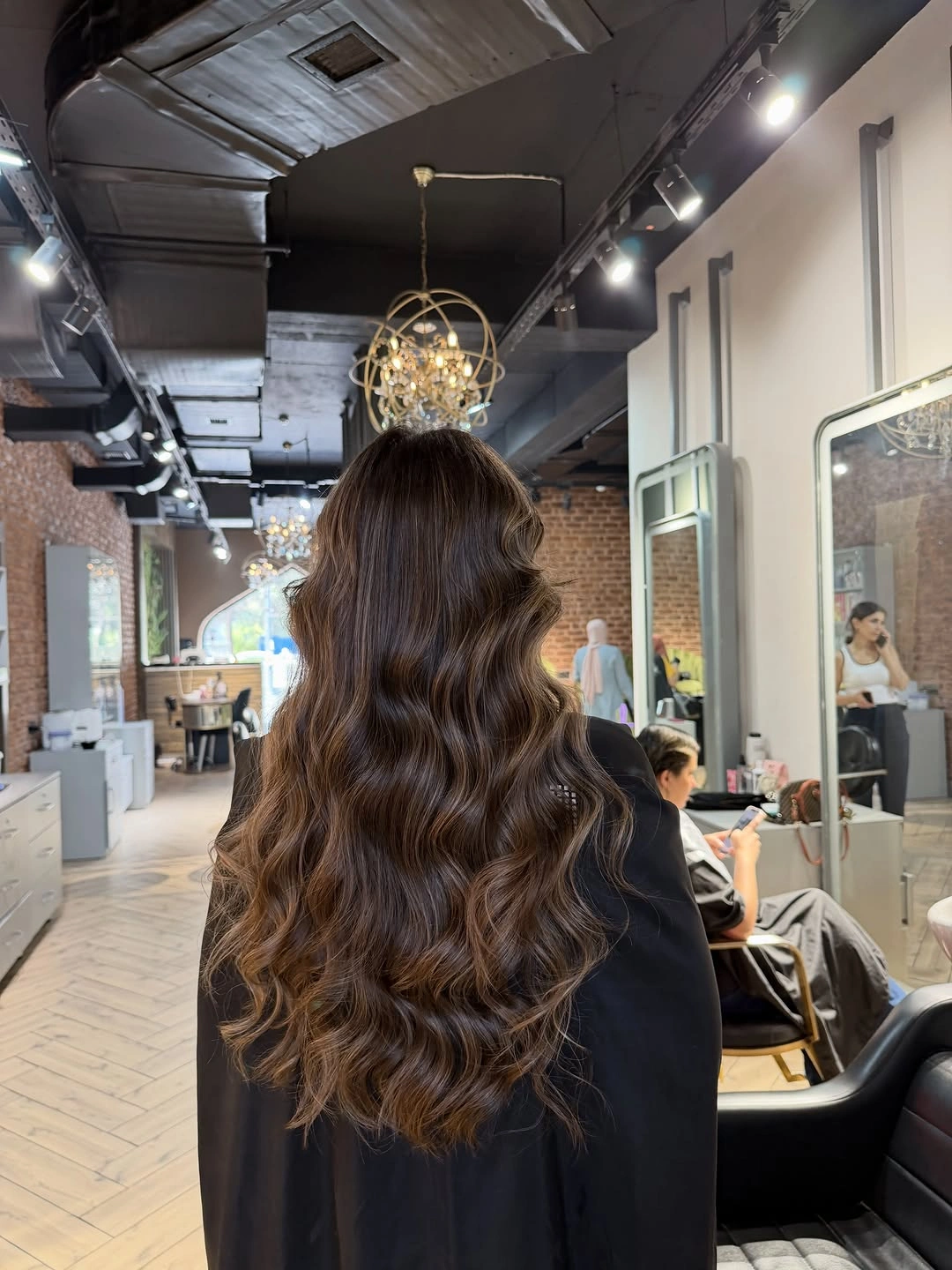
The consistency of the bends makes the hairstyle feel deliberate even without a visible accessory. Each wave repeats the same general direction, building a vertical texture that keeps the long shape from looking empty. A calm crown gives the pattern a place to begin, while the darker brown tone lets the change between raised and recessed sections show through subtle highlights.
To make the finish easier to handle, keep the wave pattern larger and allow only a few clear bends through the lower half. That will reduce the amount of separation needed while preserving the rear silhouette. The tradeoff is that closer waves create more visual impact but can merge into a dense mass if they are brushed without enough care or left to collapse together.
12. One-Shoulder Waves after a Controlled Center Crown
A visible center part starts this long brown style, but the lower lengths settle toward one shoulder instead of falling in equal directions. The crown remains smooth and the front pieces curve back, while the broad waves create a polished sweep through the side. That combination keeps the part central while allowing the final silhouette to feel intentionally asymmetrical.
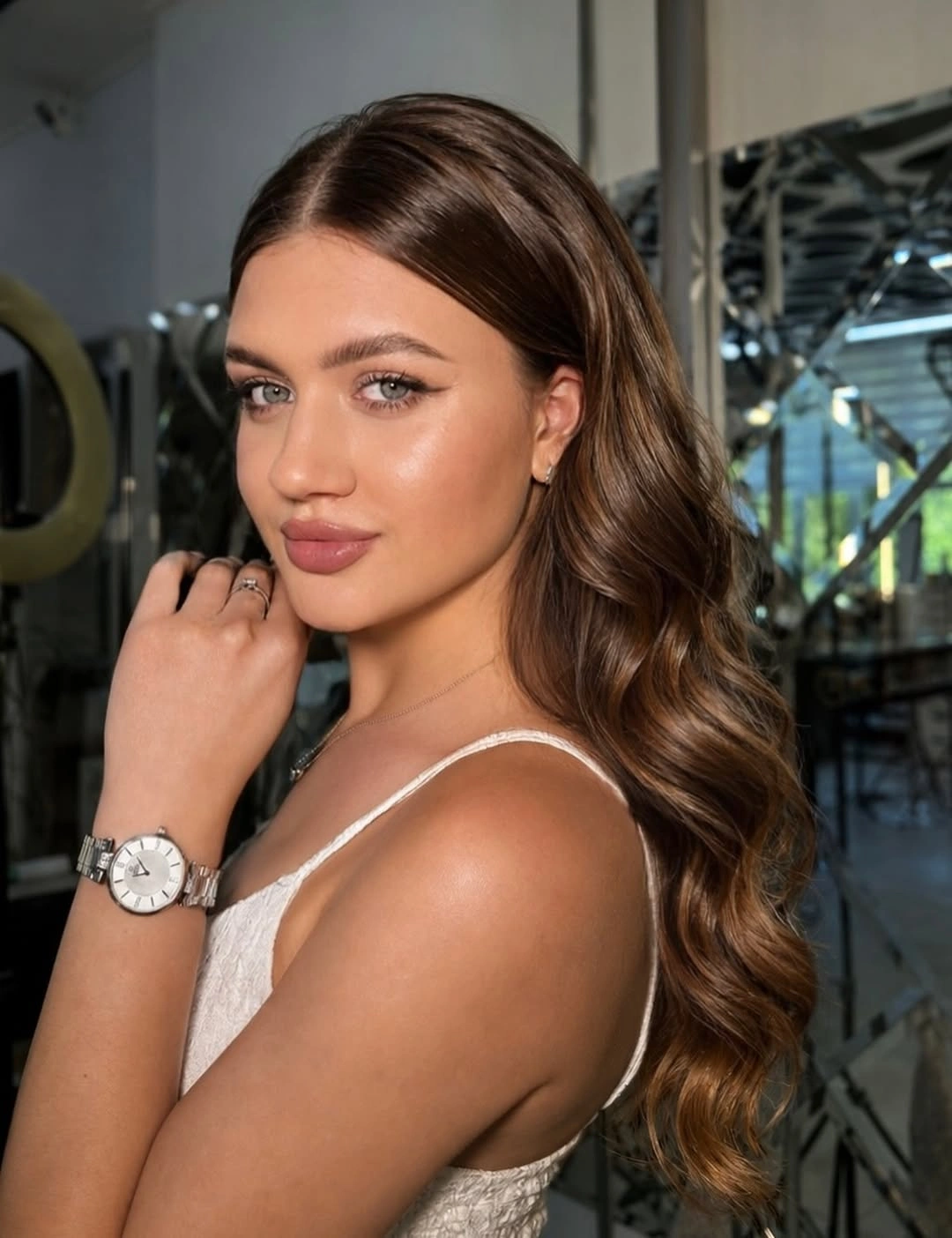
The balance works because the controlled top prevents the one-sided drape from looking accidental. The center line establishes order, and the waves then break that symmetry lower down, giving the style movement near the shoulder without making the face frame disappear. A pale strap and reflective setting add a dressed-up impression, but the hair itself supplies the proportion.
For an easier everyday version, let the waves settle naturally on one side and keep only the crown smooth enough to show the part. This reduces the need to match both lower sections perfectly. The limitation is that the side with more hair can feel visually heavier, so the front curve and shoulder placement matter if you want the asymmetry to look chosen rather than uneven.
13. Straight Blonde Length that Lets the Part Stay Precise
Straight texture changes the role of the middle part completely. Light blonde hair falls past the chest in a smooth, nearly uninterrupted sheet, with the front sections staying close to the face and the ends forming a long tapered line. Without waves to interrupt the surface, the central break becomes the clearest point of structure in the hairstyle.
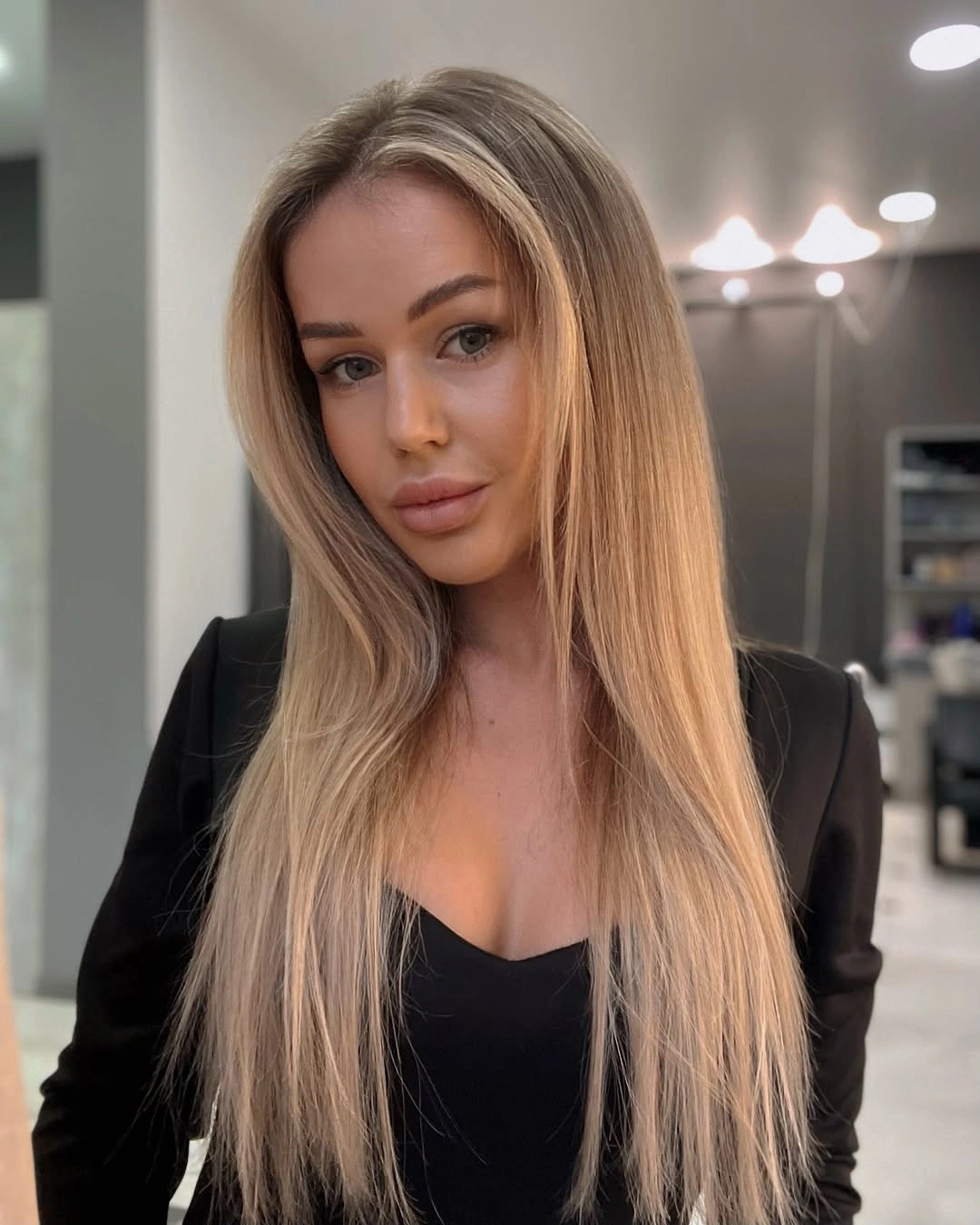
The clean vertical fall creates a crisp frame around the face and shoulders. That simplicity works because the hair color and dark jacket provide enough contrast to reveal the outline, while the absence of extra texture keeps the look visually direct. It is a useful comparison point for anyone deciding whether a center part should organize movement or simply divide a smooth length.
If you want a softer finish, add a small bend only at the ends and keep the upper sections straight. That preserves the precise part while reducing the severity of the vertical line. Straight lengths are visually clear, however, so flyaways, uneven ends, and small changes in surface direction will show more readily than they would inside a broad wave pattern.
14. Lifted Crown and Blonde Waves in One Silhouette
A visible center break leads into long blonde waves, but the top section is lifted or gathered enough to change the crown’s height. The lower lengths remain full and curved around the shoulders, while loose front pieces keep the face from being enclosed by the raised shape. The result adds vertical interest before the wave pattern widens below.
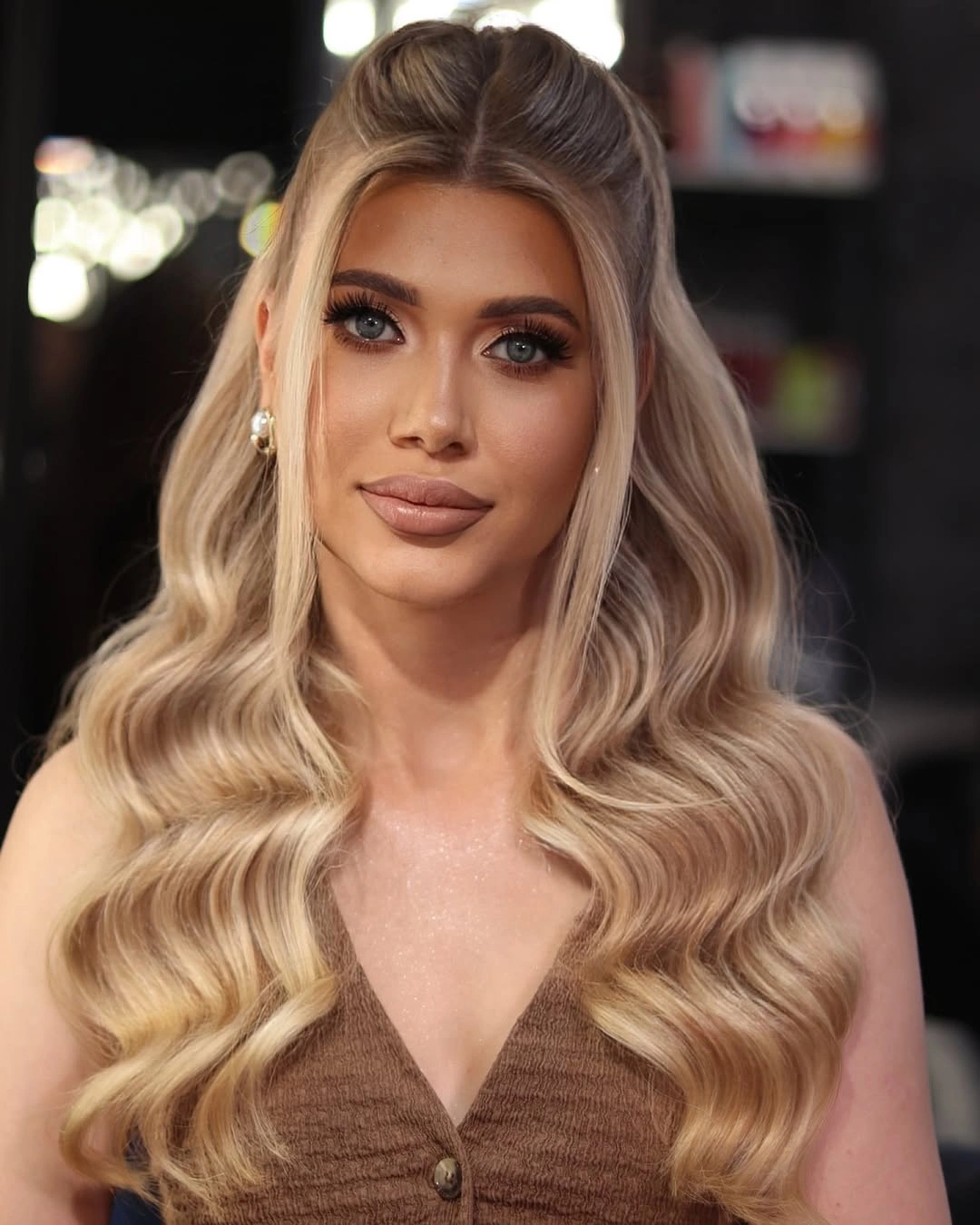
Crown height matters because very long waves can otherwise feel weighted toward the bottom. Here the upper lift gives the center line more presence and creates a transition between the controlled part and the open lengths. The broad waves then carry the volume outward, so the silhouette has both upward movement and lower width rather than one continuous heavy curve.
For a calmer interpretation, keep the center part smooth and raise only a small section near the crown before releasing the lengths into softer bends. That makes the height less formal while keeping the same proportion idea. The tradeoff is that the transition becomes a focal point, so uneven gathering or a sudden change in texture can be more visible than in an entirely open wave style.
15. Loose Tendrils Soften a Gathered Center-Parted Shape
This gathered dark style uses the center part as an axis for the face rather than as a path into open lengths. Most of the hair is held high or away from the head, while two loose pieces curve beside the cheeks and keep the outline from becoming severe. The contrast between a controlled crown and soft tendrils is the defining visible decision.
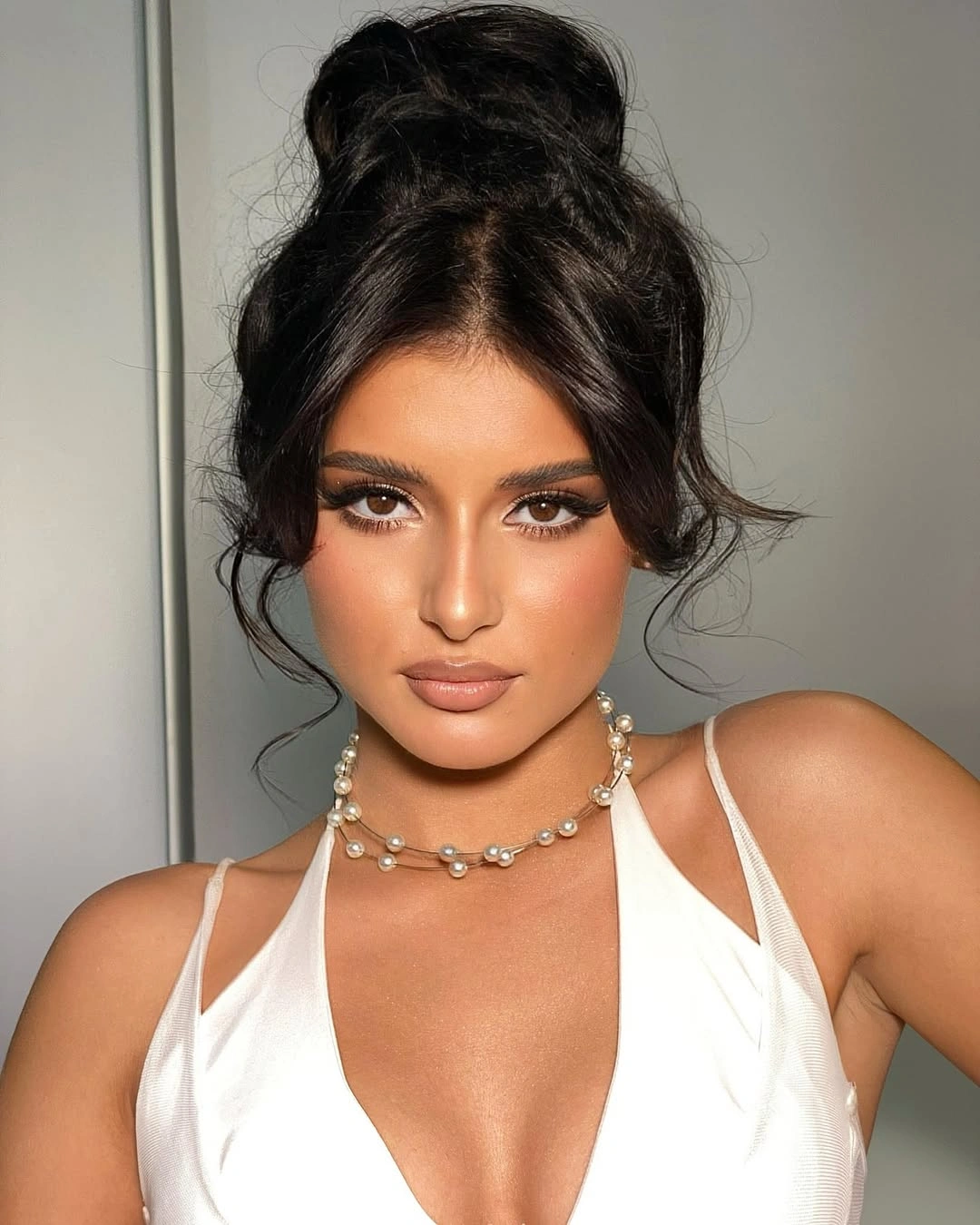
The tendrils add movement exactly where a gathered shape can look most rigid. They echo the center line but break the clean edge near the cheeks, creating a little width and softness without releasing the entire hairstyle. A pale strappy neckline and necklace make that open face frame easy to see, although the hidden way the length is held cannot be determined from the front.
If you prefer a less formal result, leave the tendrils slightly longer and allow a gentle bend instead of a tight curl. The main shape will remain controlled while the front feels more relaxed. Because the gathered length is mostly out of view, the practical focus is placement: the center line and the two front pieces need to stay balanced for the softness to look intentional.
16. Shoulder-Length Waves with Rounded Ends and Lift
Medium brunette hair makes this center-parted style feel compact but not flat. The part opens into soft waves that lift around the cheeks, then turn outward at the ends around shoulder level. Because the lower outline is rounded and the length stops before the chest, the hairstyle has a lively shape without the long vertical weight seen in the next few references.
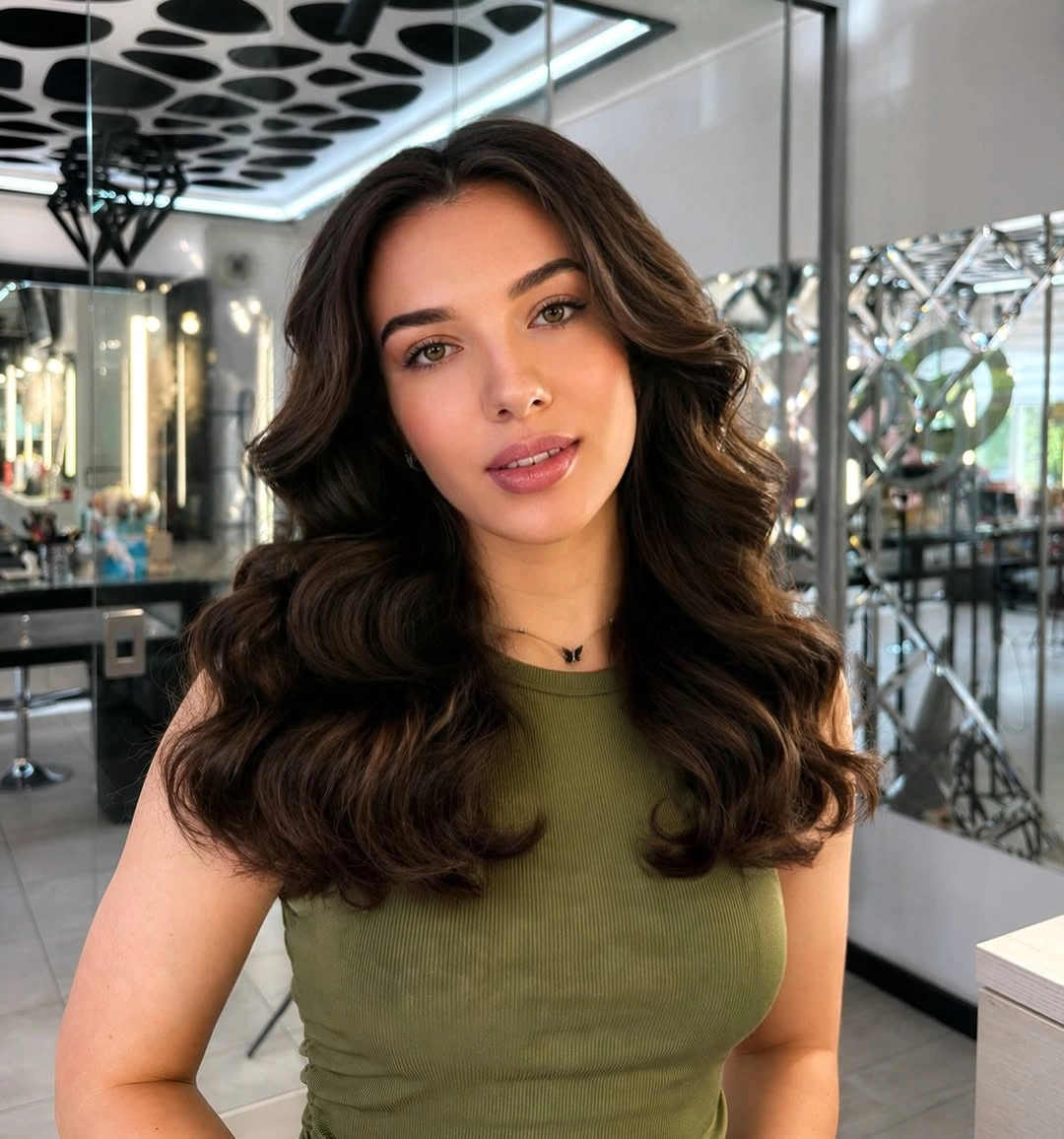
The rounded ends create width exactly where a straight medium cut could look narrow. The front layers guide the eye from the center line toward the shoulders, while the bends keep the dark brunette color from reading as one solid edge. An olive top and bright interior do not define the style, but they make the placement of the movement easy to read.
To reduce the width, keep the center part and let the final sections turn inward rather than outward. That creates a slimmer outline while retaining the same medium length. The tradeoff is that a rounded finish is forgiving when the waves separate, but it can look broader if the front pieces lose their direction and begin opening at different heights.
17. Very Long Waves Grounded by a Smooth Crown
Deep brunette hair extends far below the shoulders here, and the center part gives that extreme length a calm beginning. The crown stays smooth while the lower sections form large, relaxed waves that open around the face and continue down. The style gains its character from the contrast between an orderly top and an expansive lower silhouette.
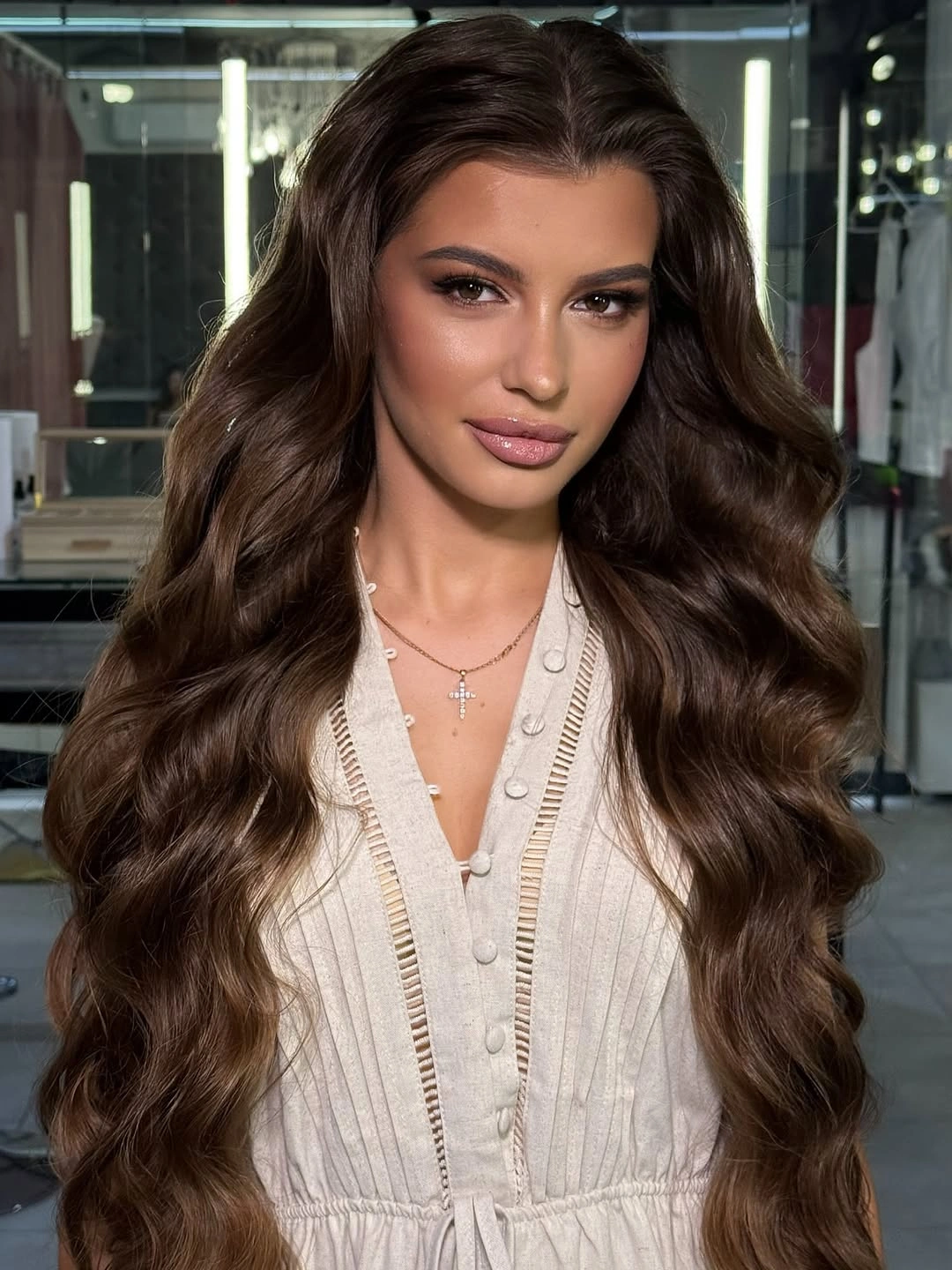
Keeping the crown close helps the length feel grounded instead of crowded. The wave spacing is open, so each bend has room to show and the hair does not become a dense wall of curls. That balance also leaves the center line readable, even though the total length carries considerable visual weight and the lower movement becomes the main area of attention.
If you want less intensity, stop the strongest wave pattern around the mid-back and let the final section fall more softly. The silhouette will still feel long, but the lower edge will have more restraint. Very long hair asks for an honest tradeoff: it creates a dramatic fall, yet the weight can pull down volume and make the style harder to keep evenly shaped.
18. A Controlled Front that Releases into Brown Waves
The side view makes the transition especially clear: the front appears smoothed back from a central break, while the lower brown lengths remain open in soft waves over the shoulder. It is neither a fully loose style nor a completely gathered shape. The important detail is the change from a controlled face area to relaxed movement below.
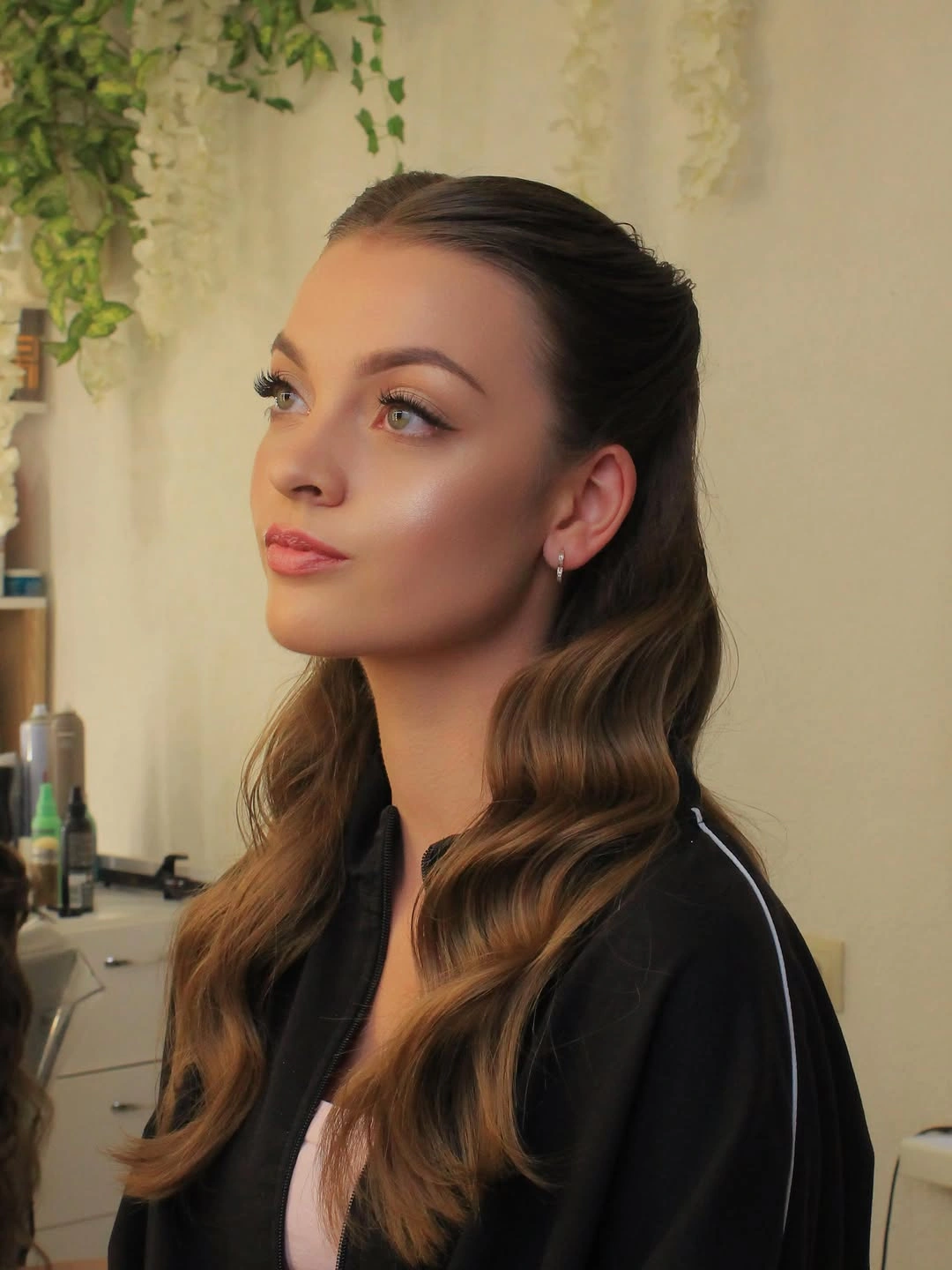
That two-level silhouette creates face clearance without removing the texture that gives the length its shape. The smooth front keeps the center part easy to follow, and the lower waves add enough width to stop the profile from looking tight. Because the fastening or holding method is not visible, the useful observation is the visible transition rather than a label for the construction.
For a softer version, allow a little more hair to remain loose beside the cheek and keep the lower bends broad. This reduces the contrast between the two zones while preserving the same idea. The limitation is that the transition must look clean: if the held-back area and loose waves meet without a clear boundary, the style can lose its intentional profile balance.
19. Short Blonde Waves with a Rounded Retro Lean
A short blonde silhouette brings the center-part discussion back to the jaw and neck. The hair forms a soft rounded bob with waves that turn around the cheeks and ends, while the top breaks near the center-to-side area. There is no long cascade here; the defining feature is how the compact curved edge frames the face.
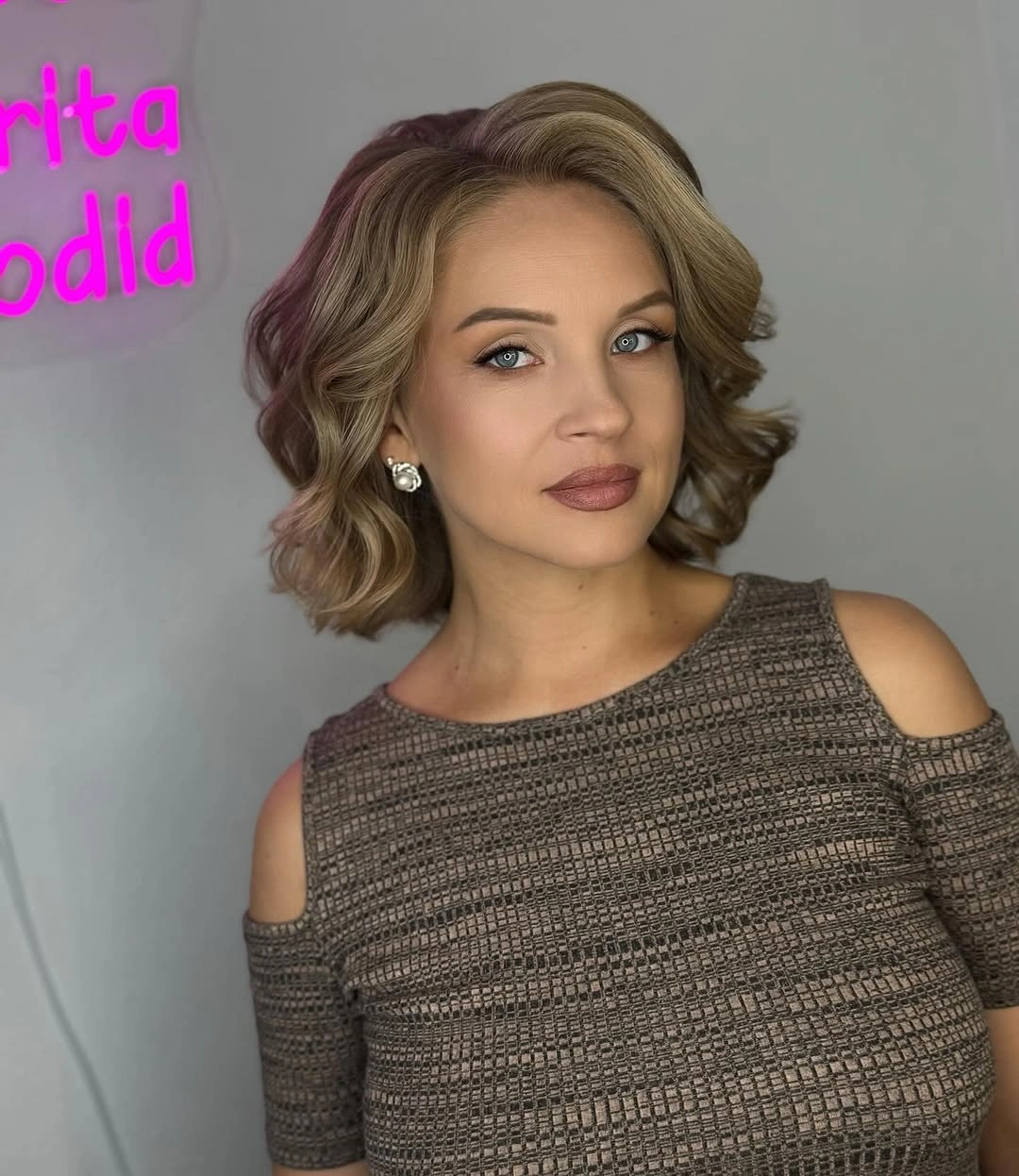
The rounded ends supply most of the movement, so the style feels softer than a straight short bob even though the total length is compact. The light color and gray knit top make the outline easy to see, while the close placement of the ends gives the hairstyle a gently retro impression without requiring a formal label or hidden technique.
To make this shape easier to live with, keep the bends loose and refresh only the front curve when it falls flat. Short waves show their direction quickly, which is useful for a defined frame but means the ends may need more frequent reshaping than long, forgiving movement. The main decision is whether you prefer that visible rounded edge or a straighter short line.
20. Sculpted Brunette Waves with a Clear Center Axis
Medium brown hair is divided near the center and shaped into pronounced waves that curve away from the face before returning through the ends. The shoulder-length outline is controlled and repeated, with a smoother surface than the relaxed bends in the previous references. The center part acts as a stable axis for a more sculpted wave pattern.
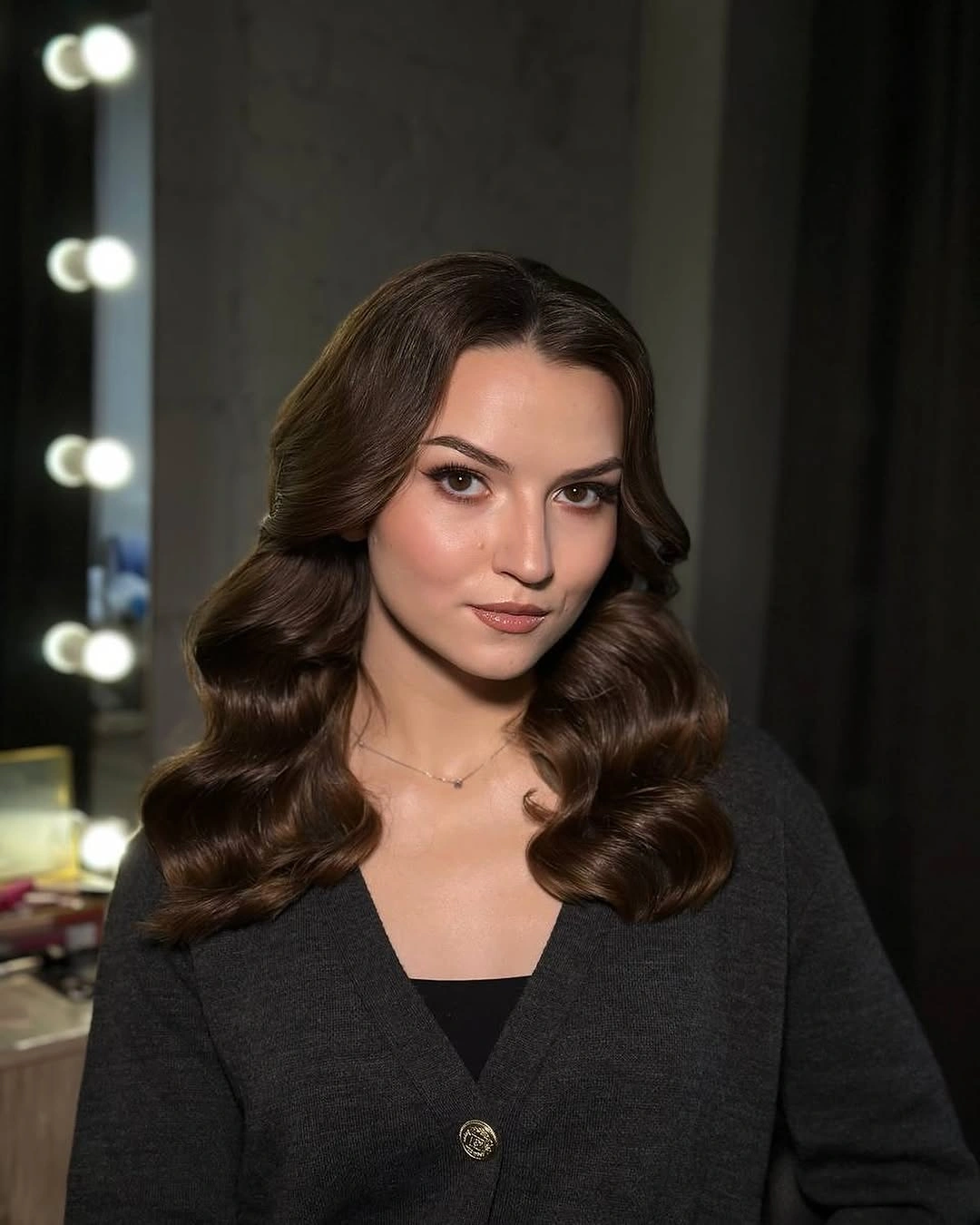
Defined curves make the hairstyle look deliberate because each section follows a visible rhythm. The waves create width around the cheeks and shoulders, but the moderate length keeps that width contained instead of letting it spread through a very long fall. Dark clothing and small vanity lights are only contrast; the important evidence is the repeated shape and clean front direction.
If you want the same silhouette with less formality, allow the curves to open slightly and brush the ends just enough to connect them. That will soften the edges without removing the center line. The tradeoff is that sculpted waves lose their graphic character when over-brushed, while under-separated sections can merge and make the carefully balanced pattern look heavier than intended.
21. Moderate Brunette Waves for an Open Wearable Frame
This final open style uses a visible center part, medium-long brunette length, and loose rounded waves that fall below the shoulders without reaching an extreme. The front pieces frame the cheeks, while the ends keep an open outline instead of forming tight curls. Its strongest detail is the moderate scale: enough movement to show shape, but not so much that the hair dominates the face.
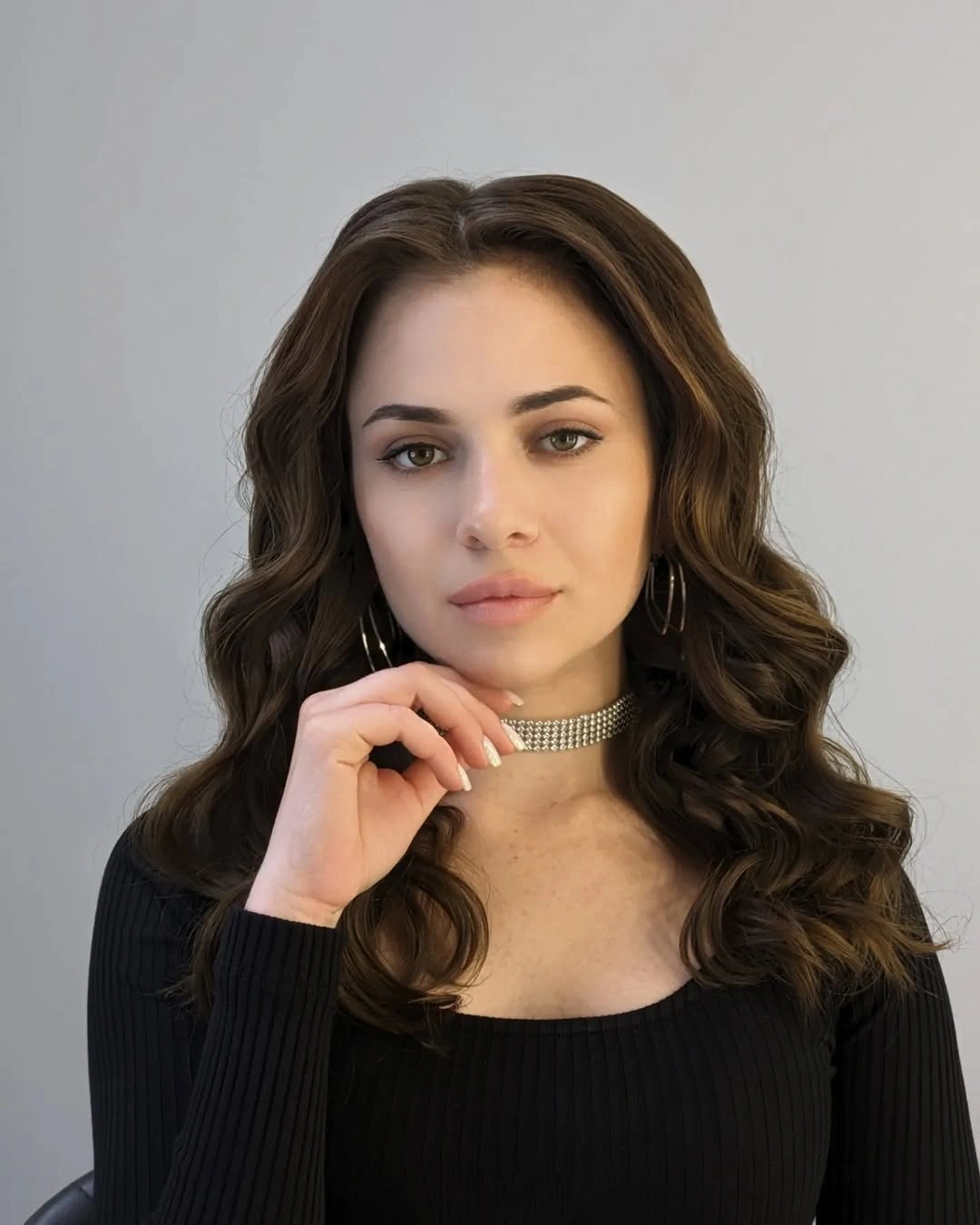
The balance comes from restraint in two places. The crown is not dramatically lifted, and the waves are broad enough to leave spaces between them, so the center line remains readable while the lengths move naturally around the shoulders. That gives the style a useful middle position between the straight blonde reference and the highly sculpted brunette waves earlier in the collection.
For everyday styling, keep the part clean and direct the front pieces away from the cheeks before letting the lower lengths bend as they will. This avoids forcing every wave into the same pattern. The limitation is that a moderate texture can look different from one day to the next, but that variation is also what keeps the center-parted frame from feeling overworked.
22. Straight Brown Length with a Quiet Rounded Finish
The rear view reduces the middle-part idea to its most minimal form: very long brown hair falls in a smooth, uninterrupted surface and ends in a softly rounded, gently tapered line. No wave or front frame is visible from this angle, so the strongest evidence is continuity from the upper length to the lower edge and the subtle warmth in the brown tone.
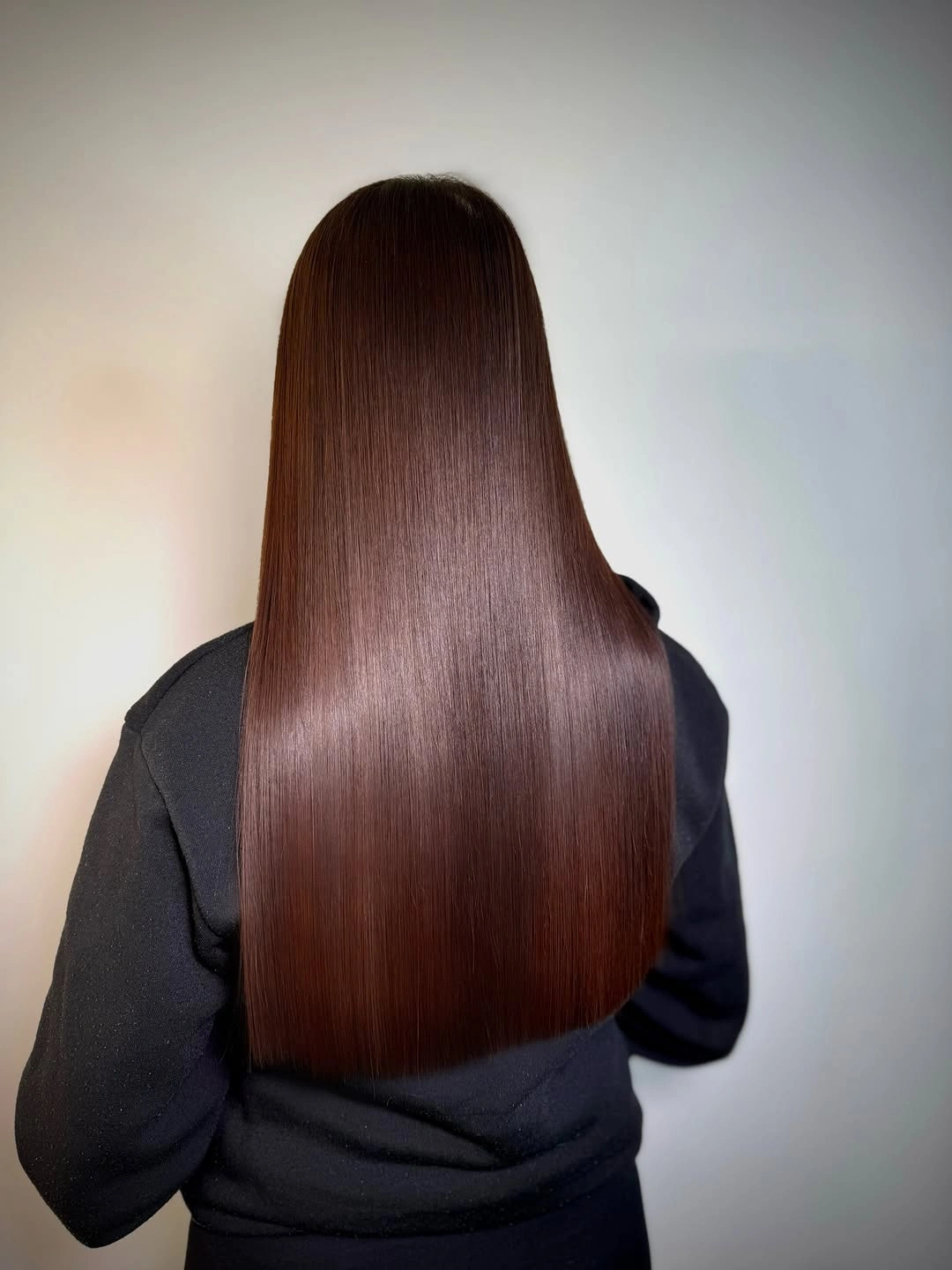
That quiet surface makes finish and proportion more important than decoration. A smooth back line keeps the hair looking intentional, while the rounded edge prevents the length from ending like a blunt rectangle. The center part cannot be judged directly from behind, but the overall fall still works as a useful contrast to the many textured styles in the collection.
If you want to add movement, a slight bend through the ends is enough to change the silhouette without losing its clean continuity. Straight lengths offer clarity, though they also reveal uneven edges, static, and flyaways more readily than waves do. This is the simplest choice in the set for anyone who wants the line and the length to remain the entire visual argument.