Can an outfit feel truly pared back when its pieces occupy so much space? Minimalist Outfits 2027 isn’t about making every silhouette narrow or every color disappear, but about understanding how a generous shape can still look sharply edited. A clear break between lengths, one purposeful area of volume, or a contrast that stops at exactly the right place can give simplicity all the character it needs.
Restraint starts with the relationships between pieces rather than a rigid rule about what belongs in your closet. The eye notices where a layer ends, where a darker shape begins, and whether a shoe repeats the structure above it or gently contradicts it. Once you pay attention to those decisions, you can make room for softness, texture, and even a strong accent without surrendering the overall sense of clarity.
1. A Burgundy Shirt Changes the Weight of Black
Burgundy brings a surprising amount of presence to an outfit built almost entirely around black, but its richness never overwhelms the composition. The oversized button-up shirt has enough depth of color to stand independently, while the broad black trousers create a continuous, understated foundation beneath it. Rather than scattering smaller accents across the outfit, this pairing lets one saturated shade establish the mood and leaves the remaining pieces to support it.
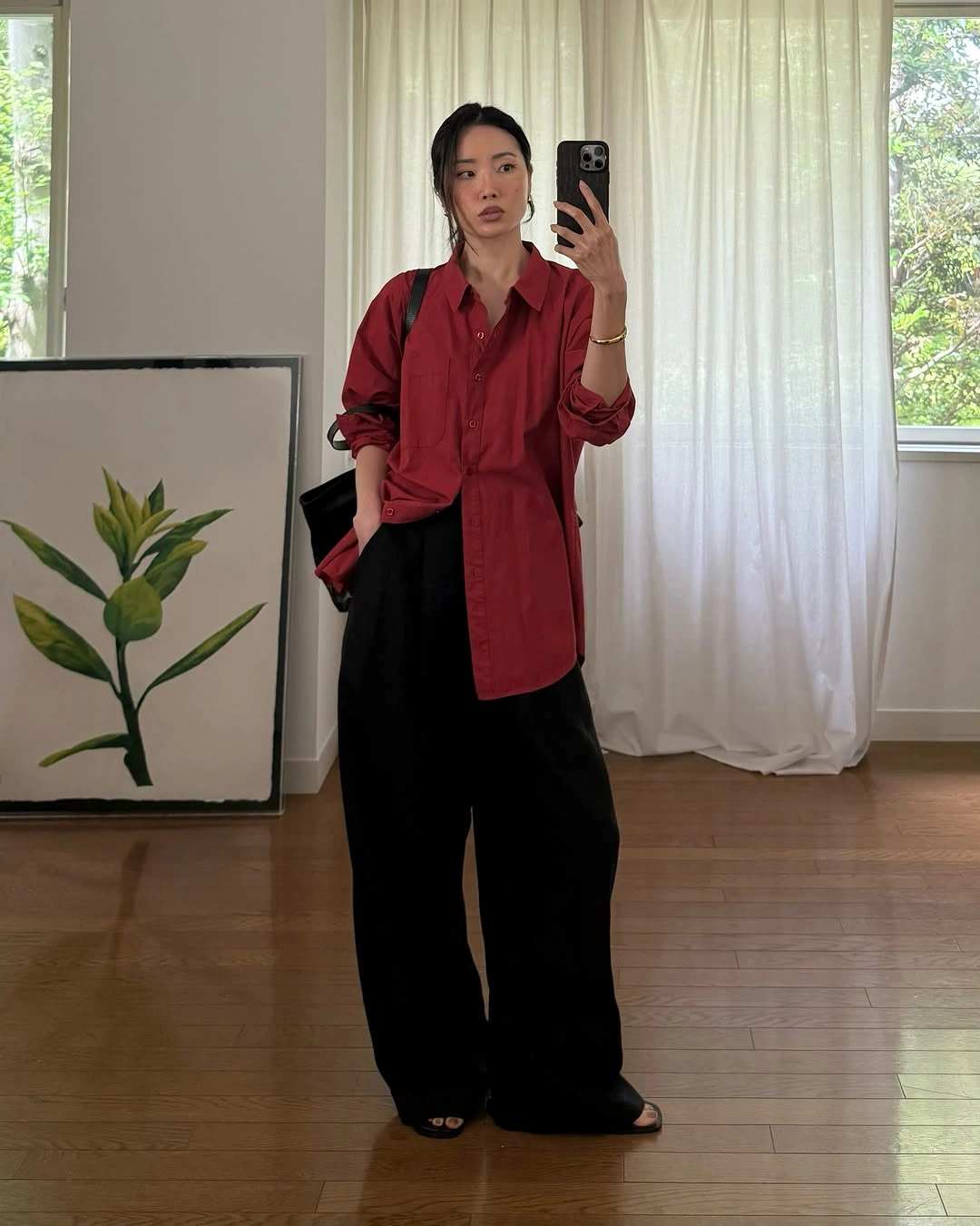
Photo via Instagram
What makes the proportions interesting is the refusal to keep everything neatly aligned at the waist. The shirt sits higher on one side while a longer section hangs down over the trousers, and the loosely gathered sleeves add another layer of irregularity to the upper silhouette. Those details could look untidy against closely fitted pants, but the unusually wide trouser legs have enough visual presence to meet the shirt on equal terms, creating a relaxed shape with its own internal balance.
The dark open-toe footwear barely interrupts the black lower half, allowing the width of the trousers to remain the strongest feature below the waist. A narrow shoulder strap adds a quiet detail near the burgundy shirt, without introducing another competing color or a substantial new shape.
2. White on White With Shape Built Into Every Layer
An all-white combination can easily become visually flat, which makes the construction of this sleeveless top especially important. Fine vertical pleats draw the eye down the front, creating subtle variations in light and shadow across an otherwise uninterrupted pale surface. The detail is restrained enough to preserve the simplicity of the outfit, yet distinctive enough that the upper half feels designed rather than merely plain.
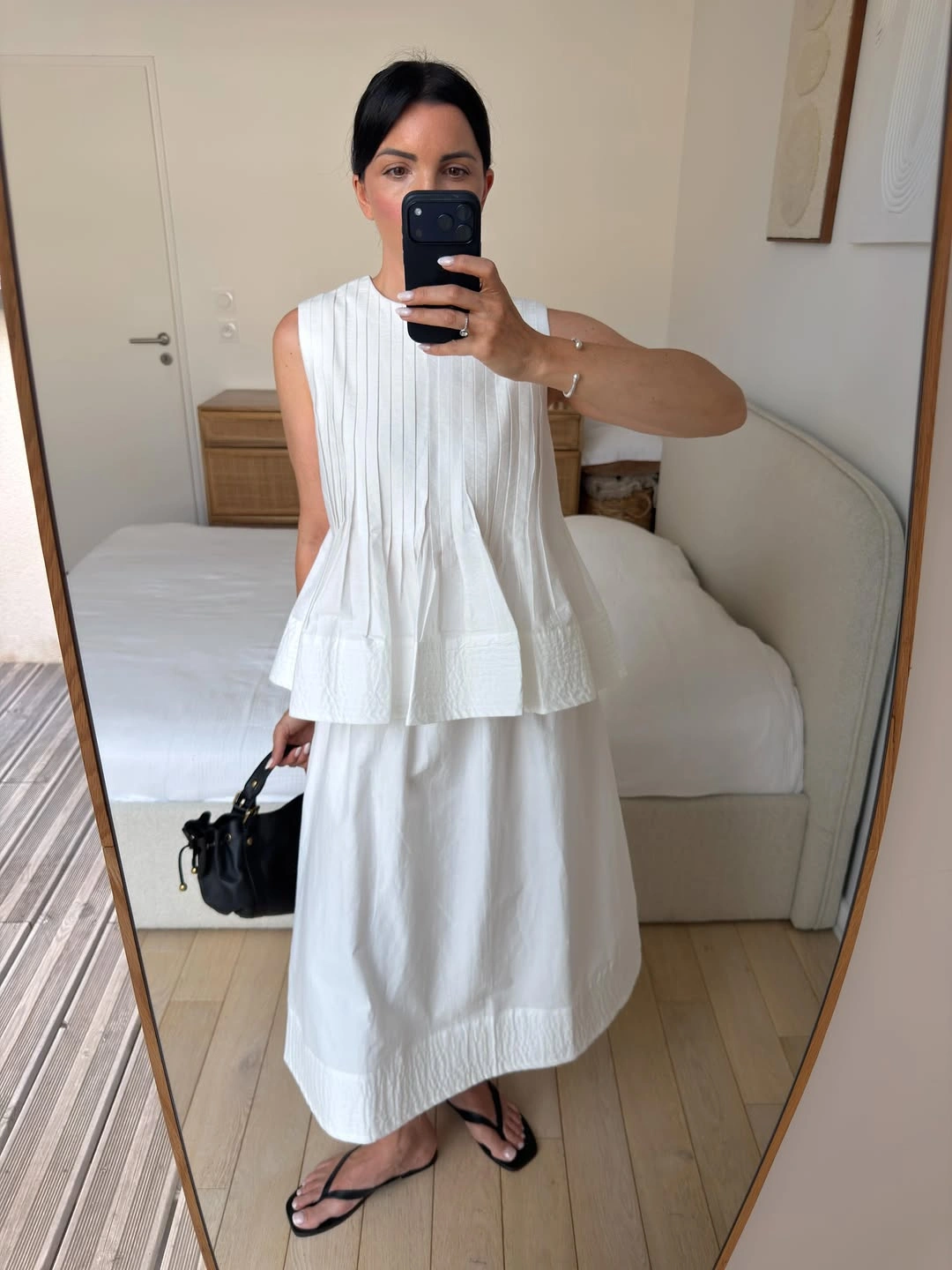
The real change happens where the top begins to flare away from the body and finishes above the longer skirt. Instead of forming one continuous column, the two white pieces establish separate levels, with a fuller upper hem floating over the relatively uninterrupted length beneath it. That separation gives the outfit a gentle architectural quality, making volume visible through overlapping edges rather than through contrasting colors or decorative additions.
The small black handbag and slim black thong sandals punctuate the pale silhouette at two widely separated points. Their compact shapes matter just as much as their color, since larger or heavier accessories would change the delicate relationship between the pleated top and the expansive skirt.
3. A Belted Olive Jacket Creates a Sharper Silhouette
The olive-gray jacket gives this outfit its structure through several details working together rather than through a rigid overall fit. Broad lapels and the double-breasted front establish a substantial upper shape, while the tied belt gathers that volume toward a clearly defined center. The result is a more sculpted interpretation of oversized tailoring, where the fabric can remain generous around the shoulders without losing the distinction of the waist.
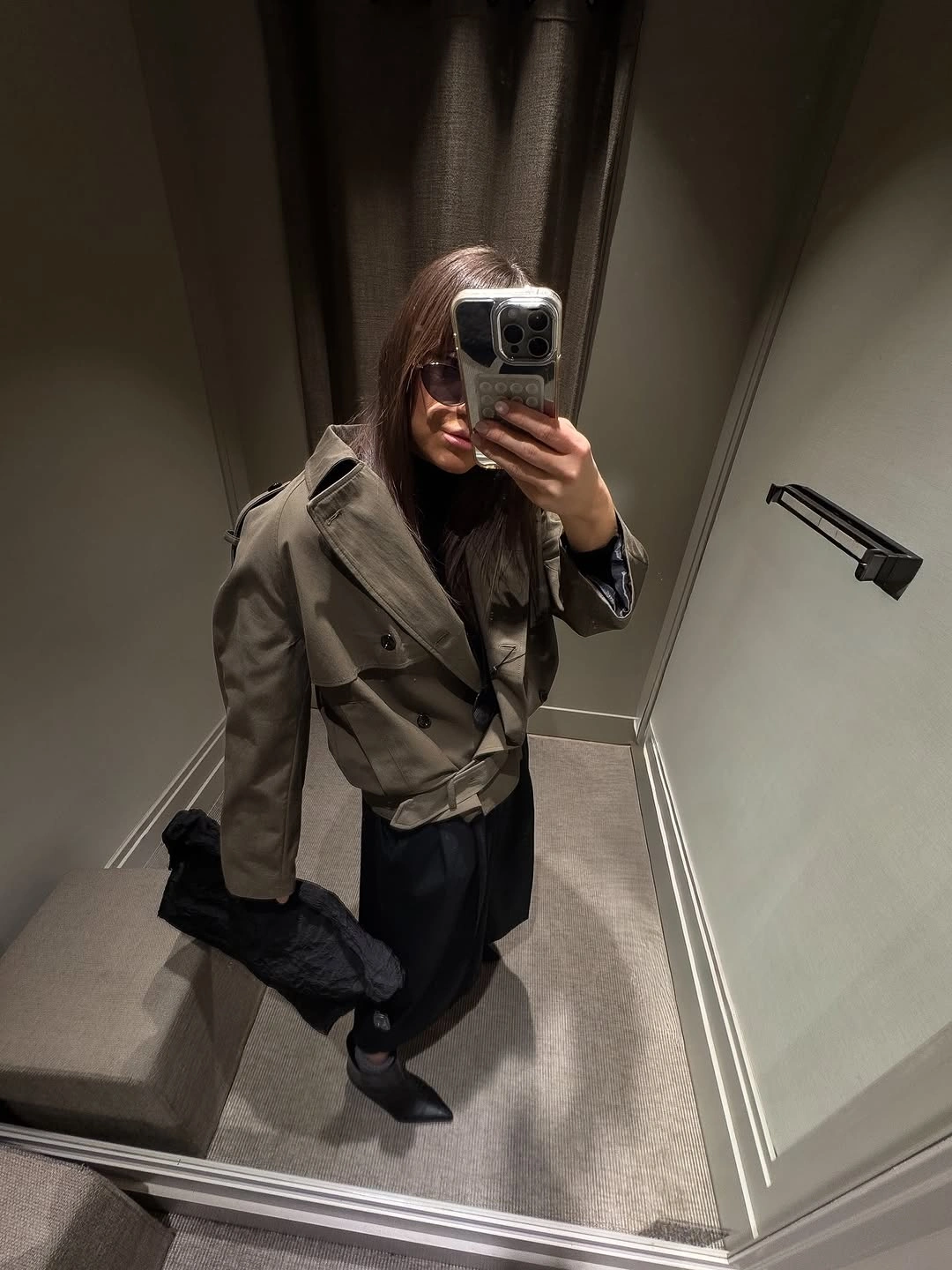
Beneath the jacket, the short black lower layer changes the proportions dramatically by establishing an abbreviated dark shape instead of continuing into full-length trousers. The contrast is not simply between olive-gray and black, but between a jacket with multiple structural details and a much cleaner, shorter form underneath. This creates a concentrated silhouette in which the belt, overlapping front panels, and lower hem each establish a different boundary.
Dark pointed footwear extends the outfit’s angular character, giving the lower portion a precise finish rather than introducing additional bulk. The carried black textured piece adds a different surface within the same dark palette, making the combination feel detailed without depending on another garment color.
4. An Oversized Black Blazer Gives Denim Its Structure
The blazer carries most of the visual authority here, not because it is particularly elaborate, but because its length and relaxed shoulders establish such a clear outline. It falls generously around the white crew-neck top, creating a dark frame that extends well beyond the upper body’s natural proportions. Against otherwise familiar clothing, that extra length feels like a deliberate styling decision rather than simply choosing a larger jacket.
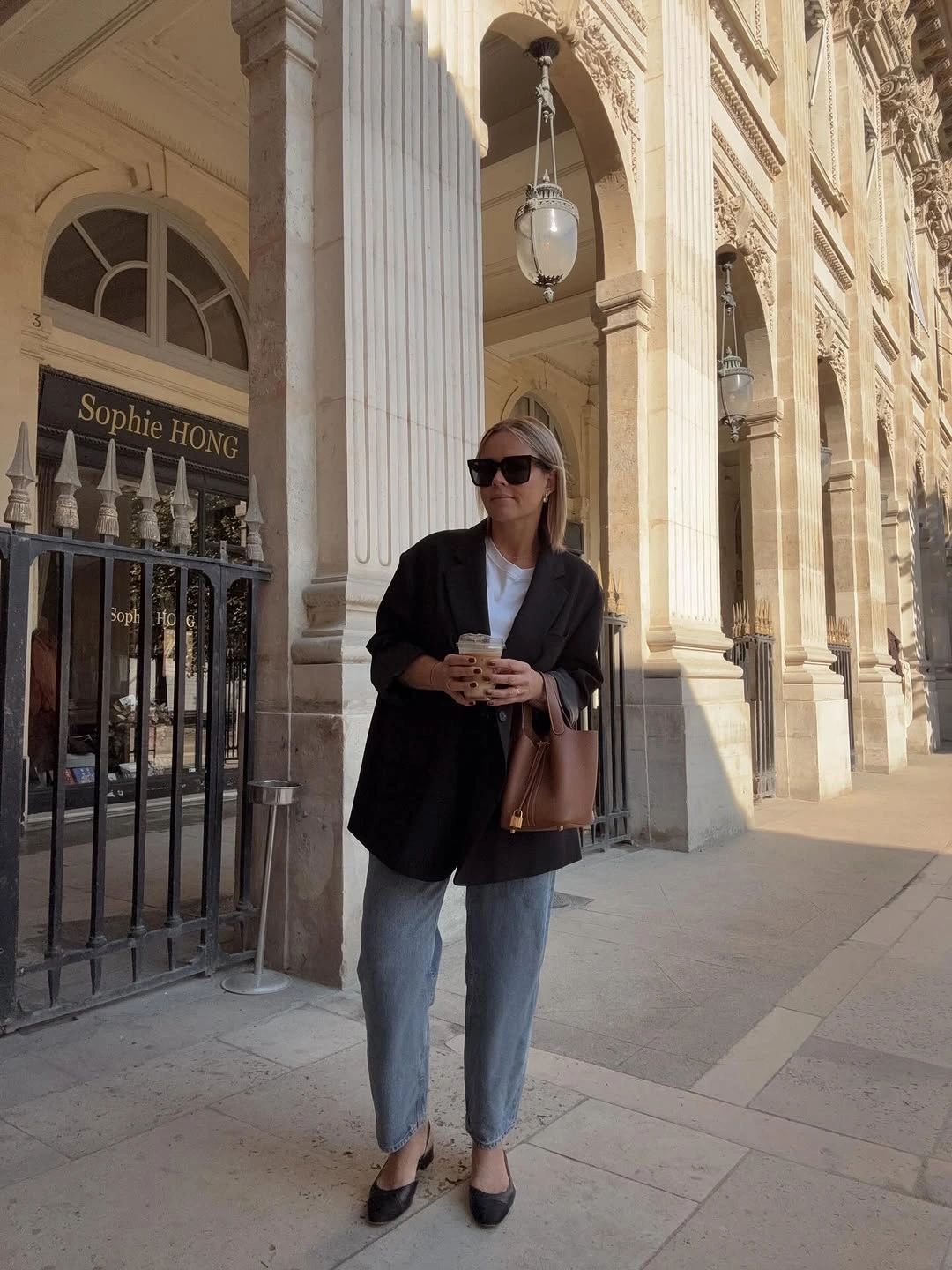
Faded blue jeans are important to the balance because their softer color and straightforward cut prevent the black blazer from making the entire outfit feel formal. The white top creates a clean visual opening between the dark jacket panels, while the denim introduces a more relaxed transition toward the shoes. Nothing beneath the blazer tries to compete with its scale, allowing the contrast between tailored structure and everyday separates to remain clear without making either side feel out of place.
Pointed black flats bring a little of the blazer’s sharper character down to the feet, connecting the beginning and end of the silhouette. The brown shoulder bag adds a warmer, less predictable accent than another black accessory would, showing how a third neutral can make a simple combination feel less rigidly coordinated.
5. Chocolate Tailoring Meets Long Shorts and Flip-Flops
The chocolate-brown blazer has the visual presence of a more formal garment, yet its roomy shoulders and extended length give it an appealing looseness. Underneath, a plain white T-shirt keeps the center of the outfit uncomplicated, allowing the warm brown to stand out against both the pale neckline and the darker lower half. This is a strong example of how an ordinary basic can support tailoring without needing additional layers or decorative details.
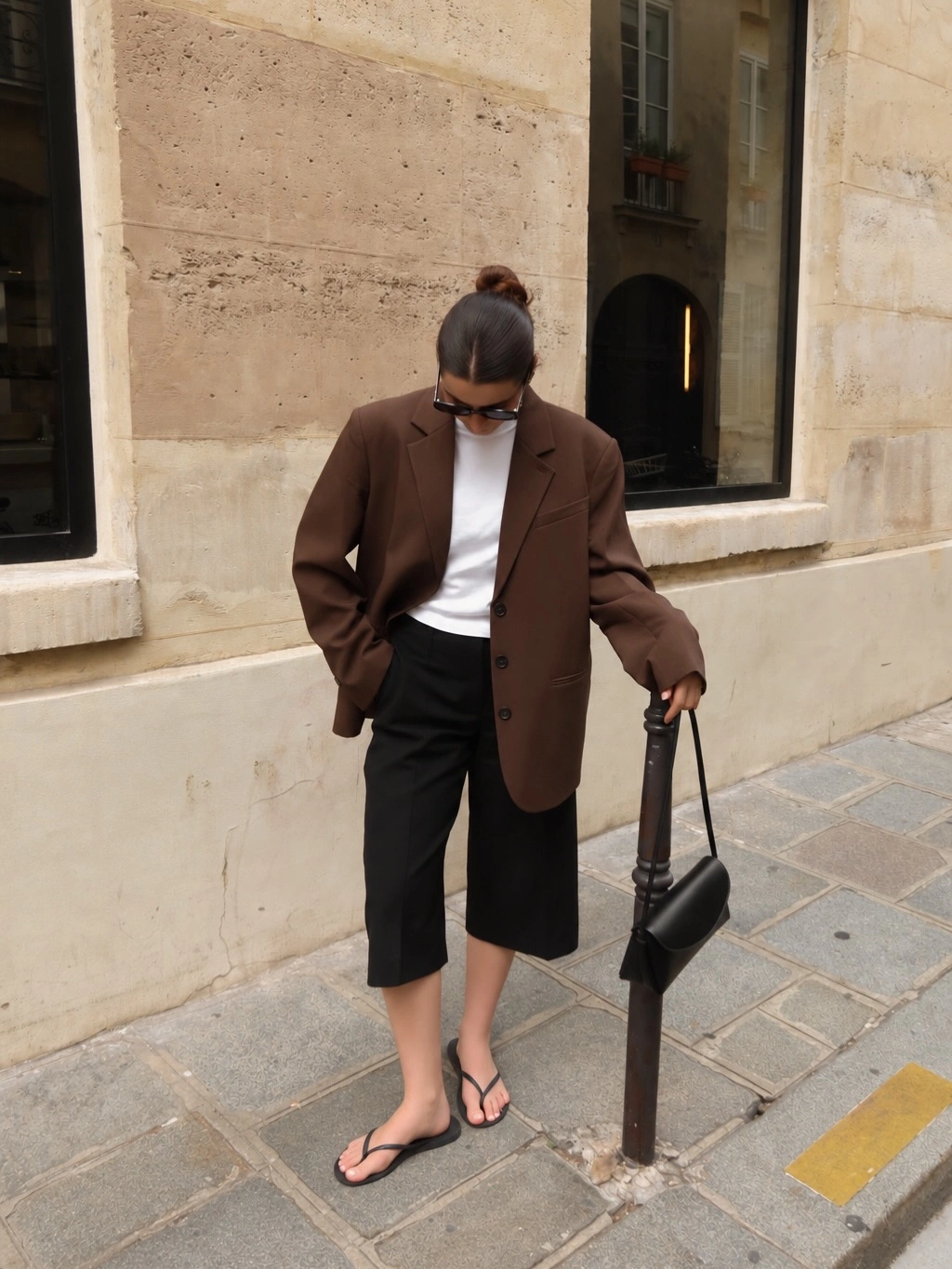
The black tailored shorts are what distinguish the proportions from a conventional blazer-and-trousers combination. Their below-knee length creates a substantial dark block, but the visible lower legs interrupt the silhouette before it reaches the footwear. That pause gives the oversized blazer more room to register as the dominant shape, while the relatively straight shorts retain enough definition to prevent the two loose pieces from merging into one continuous volume.
Black flip-flops introduce a deliberately casual finish that contrasts with the blazer’s lapels and the shorts’ tailored appearance. The small black handbag maintains a more compact, polished detail near the hip, allowing the footwear to relax the outfit without making the entire composition feel careless.
6. A White Dress Gains Shape Through Woven Accessories
The beauty of this white maxi dress lies in how little it needs to interrupt its own silhouette. Wide short sleeves fall away from the shoulders, while the generous skirt extends downward in an easy, uninterrupted shape that feels substantial without looking complicated. Even the side pockets become part of the design, giving the hands a natural place to rest while emphasizing the dress’s relaxed volume rather than introducing another fitted or structured element.
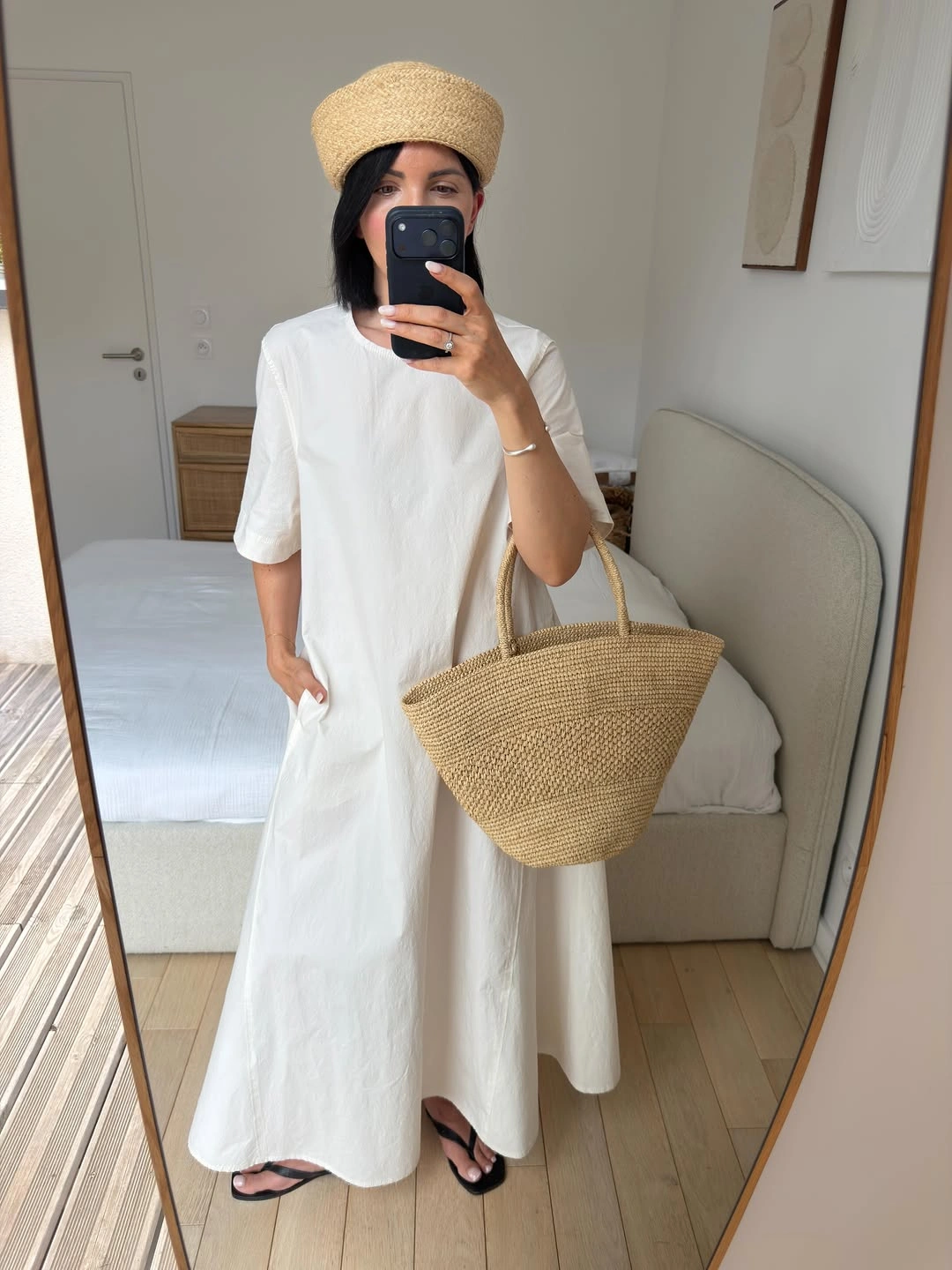
The rounded woven hat and oversized basket tote turn a simple white foundation into something more visually layered through texture alone. Both accessories share a similar tan coloring and woven appearance, but their different sizes create a relationship that feels intentional rather than excessively matched. The smaller rounded shape sits close to the head, while the broad, open basket occupies considerable space beside the dress, adding an entirely different outline without competing with the garment’s pale surface.
Black flip-flops create a narrow, understated finish beneath the expansive white skirt and substantial tan accessories. Their slim shape matters because another oversized element at the feet would alter the delicate balance between the dress’s volume and the basket’s generous proportions.
7. Shaggy Texture Gives Relaxed Denim More Visual Presence
Texture becomes the defining feature of this outfit through a short gray-brown jacket with a pronounced shaggy surface. Its irregular finish catches attention in a way that smooth tailoring or a plain sweater would not, yet the subdued coloring prevents that detail from becoming visually overwhelming. Relaxed blue jeans provide a familiar, comparatively flat surface underneath, making the contrast between the jacket’s dense appearance and the denim’s simplicity much more noticeable.
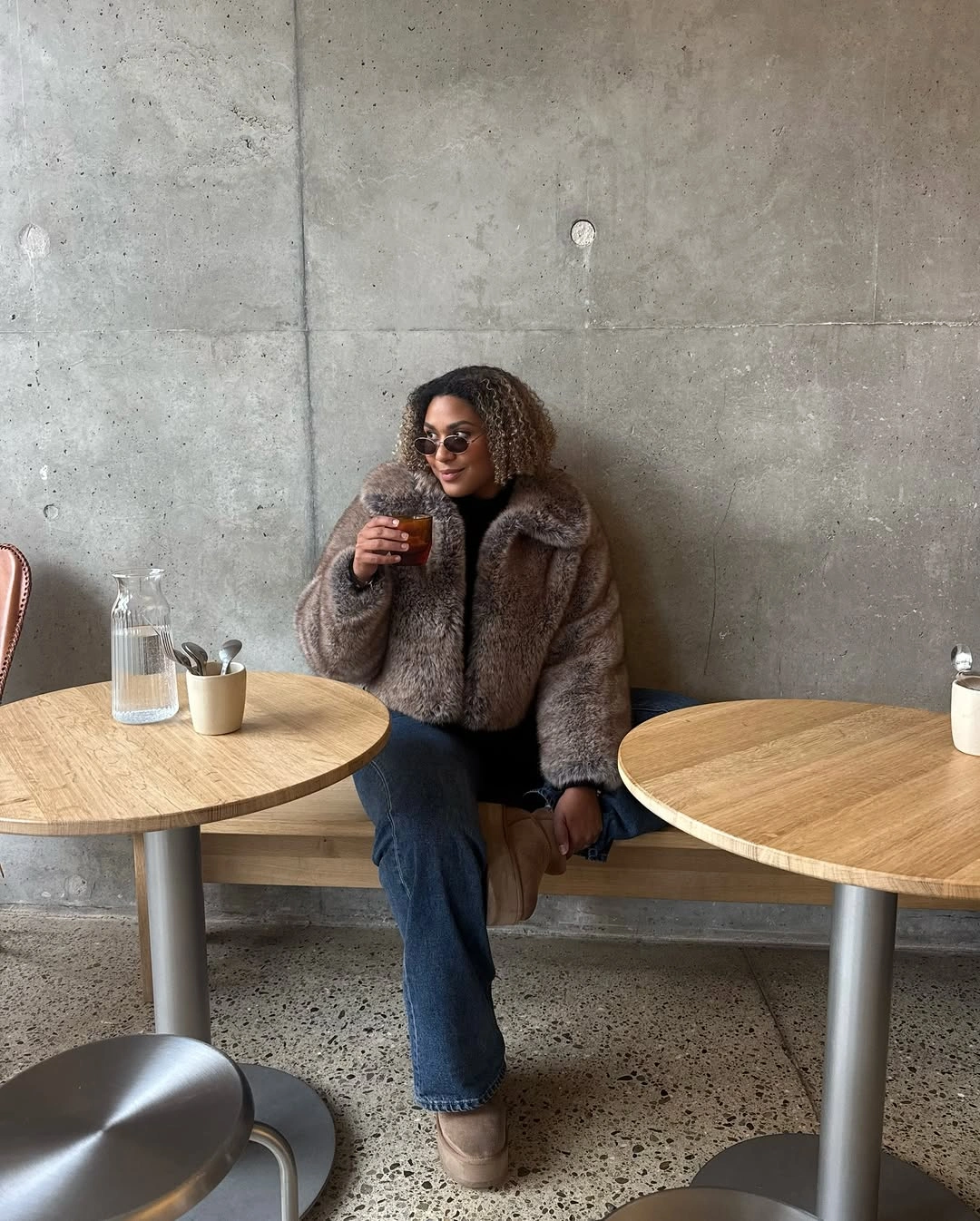
The jacket’s abbreviated length plays an equally important role because it leaves the generous jean silhouette visible rather than hiding it beneath another long layer. Both pieces contribute volume, but they express it differently: the upper half gains fullness through texture, while the lower half relies on the width and fall of the denim. That distinction keeps the outfit from reading as one oversized mass and demonstrates why combining two roomy pieces does not necessarily require either one to be tightly fitted.
Light taupe chunky footwear adds another substantial shape beneath the relaxed jeans, giving the lower half a grounded finish. The brown bag beside the wearer introduces a nearby neutral shade without matching the jacket exactly, allowing the colors to feel related rather than mechanically coordinated.
8. A Long Black Coat Frames Softer Everyday Layers
A long black coat changes the proportions of an ordinary jeans combination by establishing two uninterrupted vertical lines on either side of the body. Its generous length reaches well below the hips, creating a dark exterior that makes the lighter pieces underneath appear more contained and deliberately arranged. Rather than relying on a sharply defined waist, the outfit uses the coat’s open front and extended silhouette to introduce structure while leaving the interior relatively relaxed.
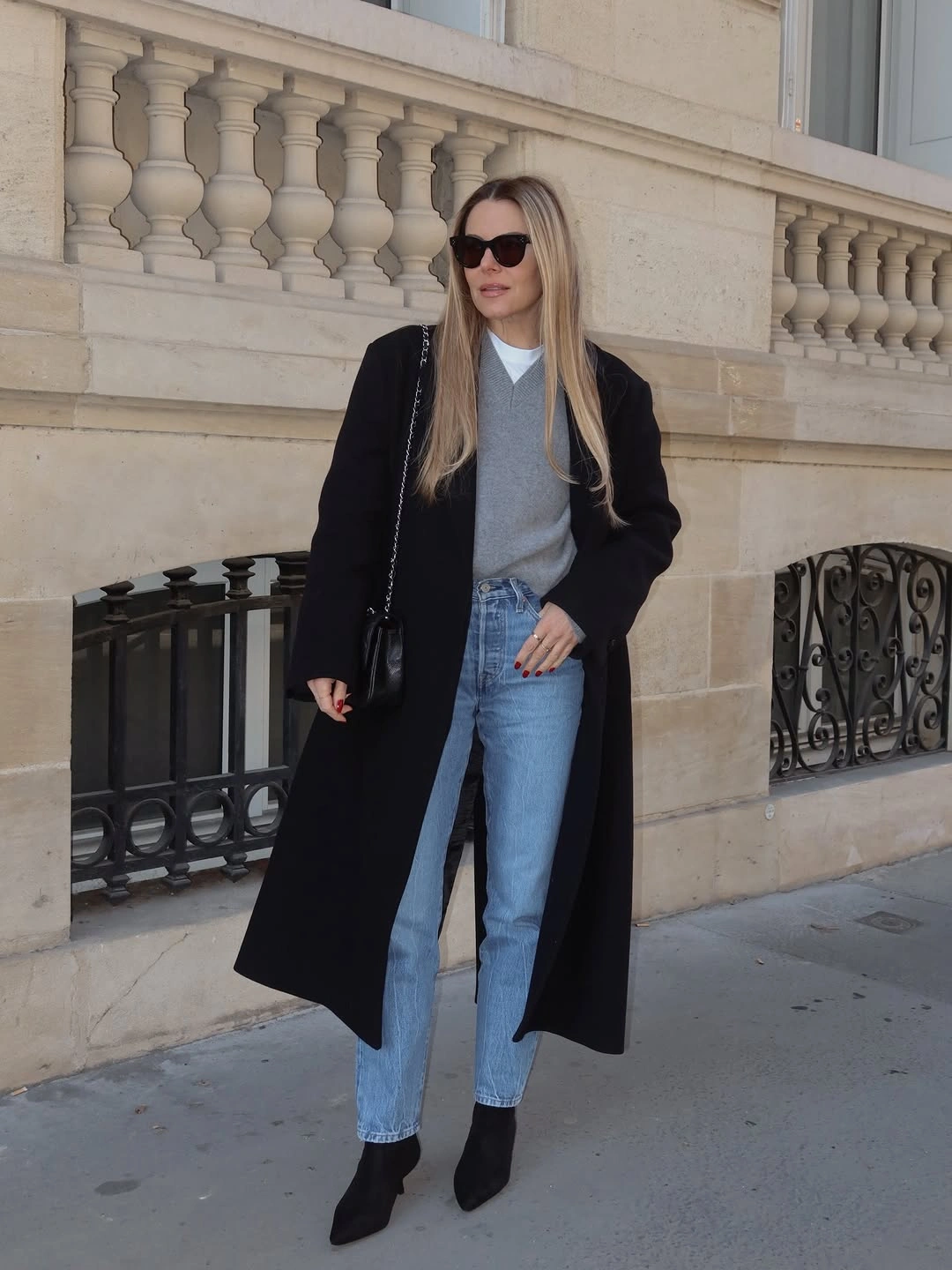
The combination beneath the coat is more nuanced than a simple black-and-blue pairing, thanks to the gray V-neck layer and the small amount of white visible at the neckline. Those overlapping shades create a gentle progression from white to gray to faded denim, with none of them competing strongly against the others. The black coat provides a decisive boundary around those softer colors, allowing the individual layers to remain recognizable without requiring dramatically different textures or complicated styling.
Pointed black ankle boots continue the coat’s darker framing at the bottom, adding a sharper finish beneath the straight jeans. A small black chain-strap bag and dark sunglasses repeat that controlled emphasis, keeping the accessories compact enough that the coat remains the dominant architectural element.
9. Cream Tailoring Finds Balance in Repeated Brown Accents
The cream blazer gives this tonal combination its most defined shape, particularly through its visible buttons, broad pockets, and relaxed rectangular outline. These details introduce enough structure to distinguish the upper layer from the similarly colored garment beneath it, even though the palette offers very little contrast. The result feels carefully composed without depending on a dark jacket or a strongly contrasting shirt to establish where one piece ends and another begins.
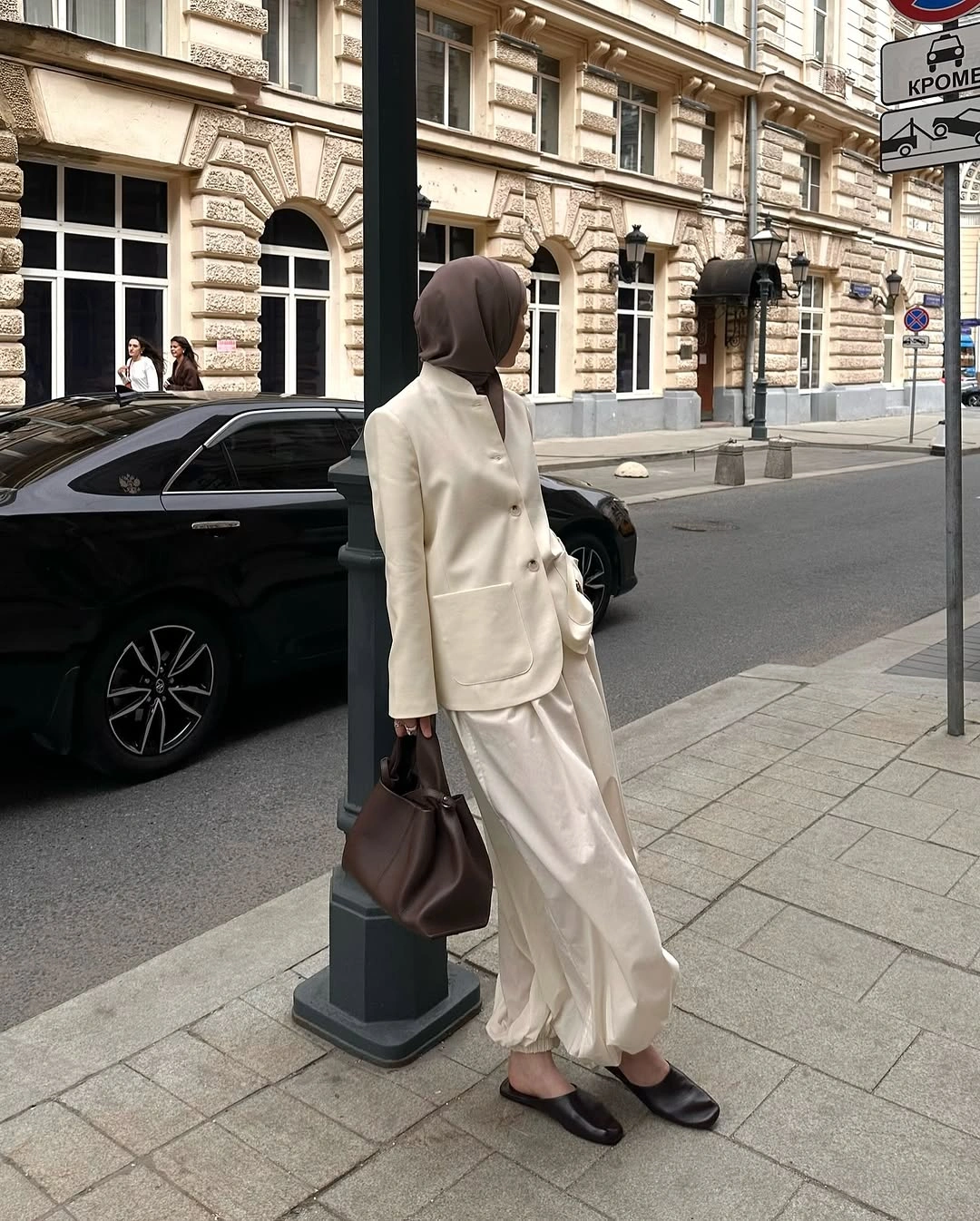
Beneath that structured upper half, the long cream lower garment introduces a noticeably different kind of movement. Its loose shape falls toward the ankles in soft folds, creating a fluid extension that contrasts with the blazer’s straighter edges and more controlled front. The two pieces work together because they share a close color relationship while performing different visual roles, with the jacket establishing definition above and the longer garment providing an expansive, flowing continuation below.
Dark brown appears at the headscarf, the large handbag, and the slip-on shoes, distributing deeper color across the entire silhouette rather than concentrating it in one area. Because the accents occupy different positions and have different shapes, they give the light outfit visual grounding without breaking its overall sense of tonal continuity.
10. An Asymmetrical Camel Layer Reshapes a Neutral Outfit
The pale cream upper garment provides a gentle starting point for this combination, allowing the very wide charcoal-gray trousers to establish much of the outfit’s visual weight. Their long, relaxed shape falls almost uninterrupted toward the shoes, making the darker lower half feel substantial without relying on a sharply tailored outline. The contrast between the cream and charcoal is clear but softened by the muted tones, creating a foundation that feels considered rather than starkly divided into opposing color blocks.
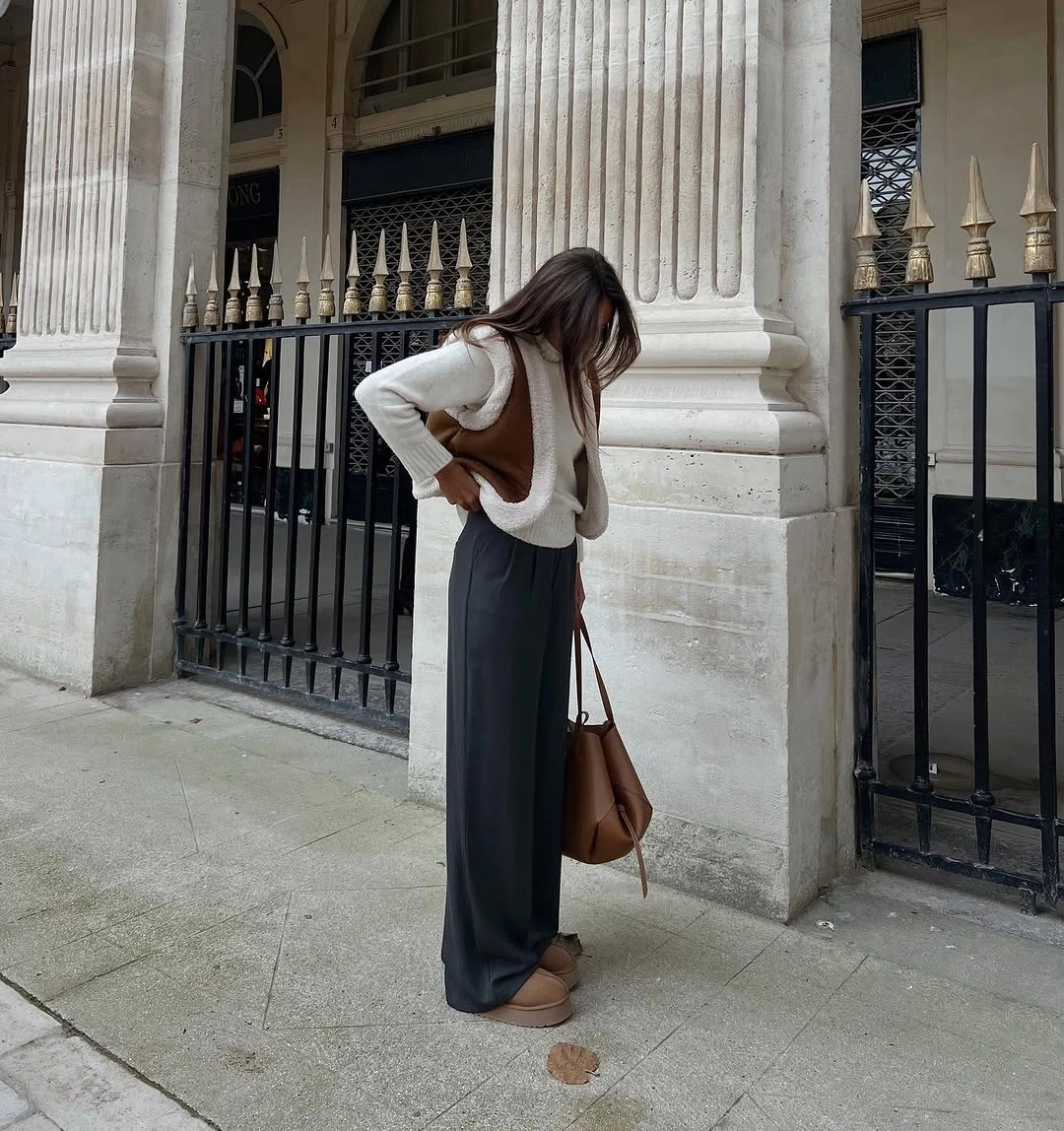
What distinguishes the upper half is the camel-toned draped layer around the shoulders and neckline, which introduces an unexpected diagonal element into an otherwise straightforward composition. Its placement draws attention across the chest rather than simply downward, creating a change in direction above the long trouser lines. That asymmetry gives the outfit a stronger sense of movement, showing how an additional layer can contribute through its position and shape rather than through elaborate ornamentation.
The brown shoulder bag and tan rounded footwear carry some of the warmth of the camel-colored upper detail into the rest of the outfit, though their shades are not identical. Those subtle differences are useful here because they connect the separate elements while allowing the charcoal trousers to remain the clearest and most substantial shape.
11. An Ivory Jacket Sets the Length of Everything Else
The short ivory jacket gives this black-and-white outfit a distinctive sense of proportion by ending well above the full length of the trousers. Its relaxed shape and simple button-front construction provide enough definition to stand apart from the black top underneath, without introducing decorative detail. What makes the pairing particularly effective is that the lighter piece occupies a relatively compact area, concentrating attention around the shoulders and waist before the silhouette shifts into something much broader below.
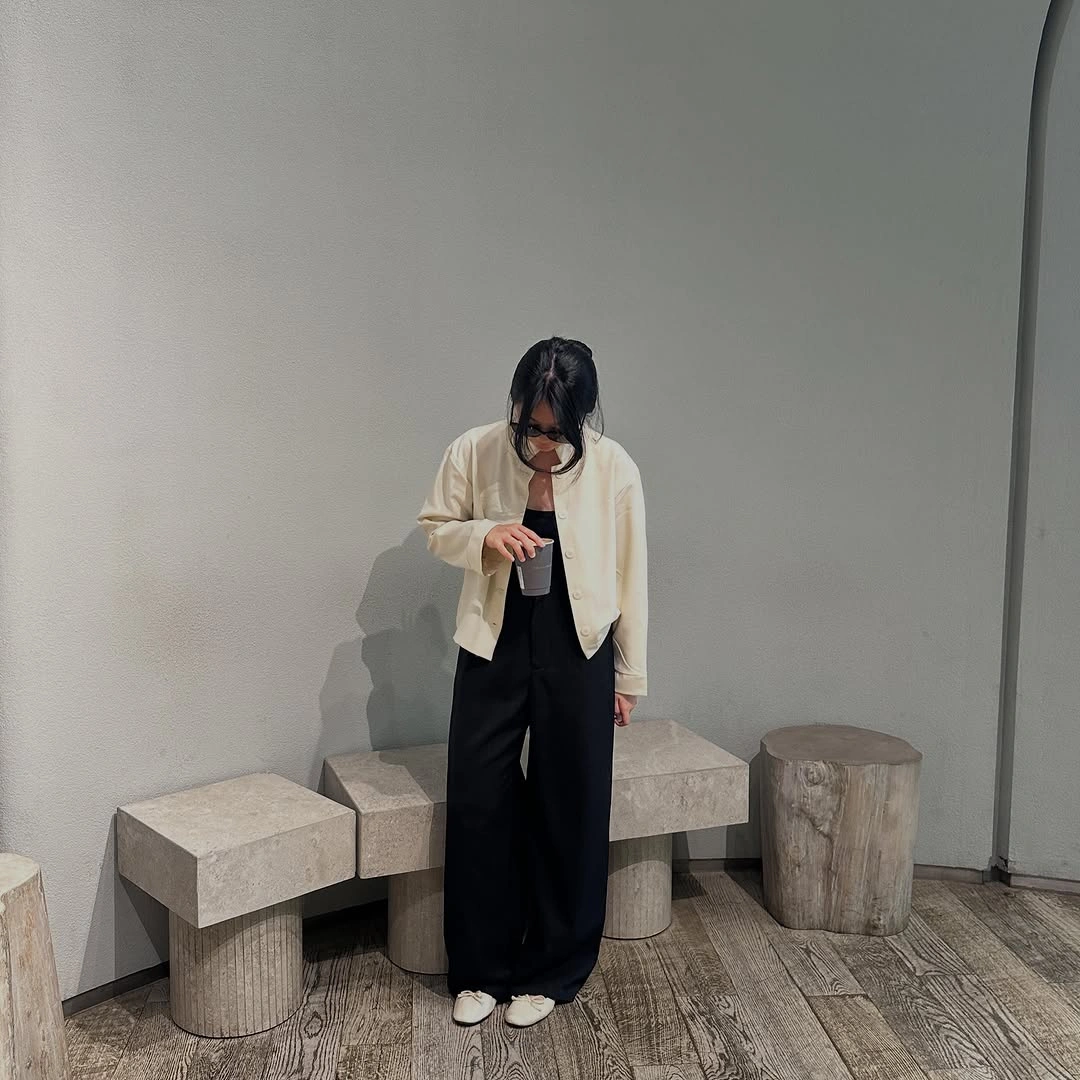
The black trousers extend almost uninterrupted toward the floor, with exceptionally wide legs that create a generous lower silhouette. Against that volume, the shorter jacket establishes a clear upper boundary, making the contrast between the two lengths more noticeable than it would be with a conventional hip-length layer. The black top also matters because it maintains a dark space beneath the ivory jacket, allowing the pale outer layer to register as a separate shape rather than the beginning of one continuous light-colored section.
Rounded white shoes repeat the jacket’s pale coloring at the bottom of the outfit, creating a connection between two otherwise separated areas. Dark sunglasses keep the finishing details restrained, while the softer shoe shape introduces a less formal note beneath the expansive trousers.
12. A Narrow White Hem Defines Dark Separates
At first glance, the black sweater appears almost entirely uncomplicated, with its relaxed fit and smooth-looking surface providing a compact upper silhouette. Its sleeves sit close enough to the arms to avoid competing with the generous width of the trousers, while the dark color gives the torso a relatively continuous appearance. The restraint is useful because the outfit depends less on individual statement pieces than on how its dark upper and lower sections are divided.
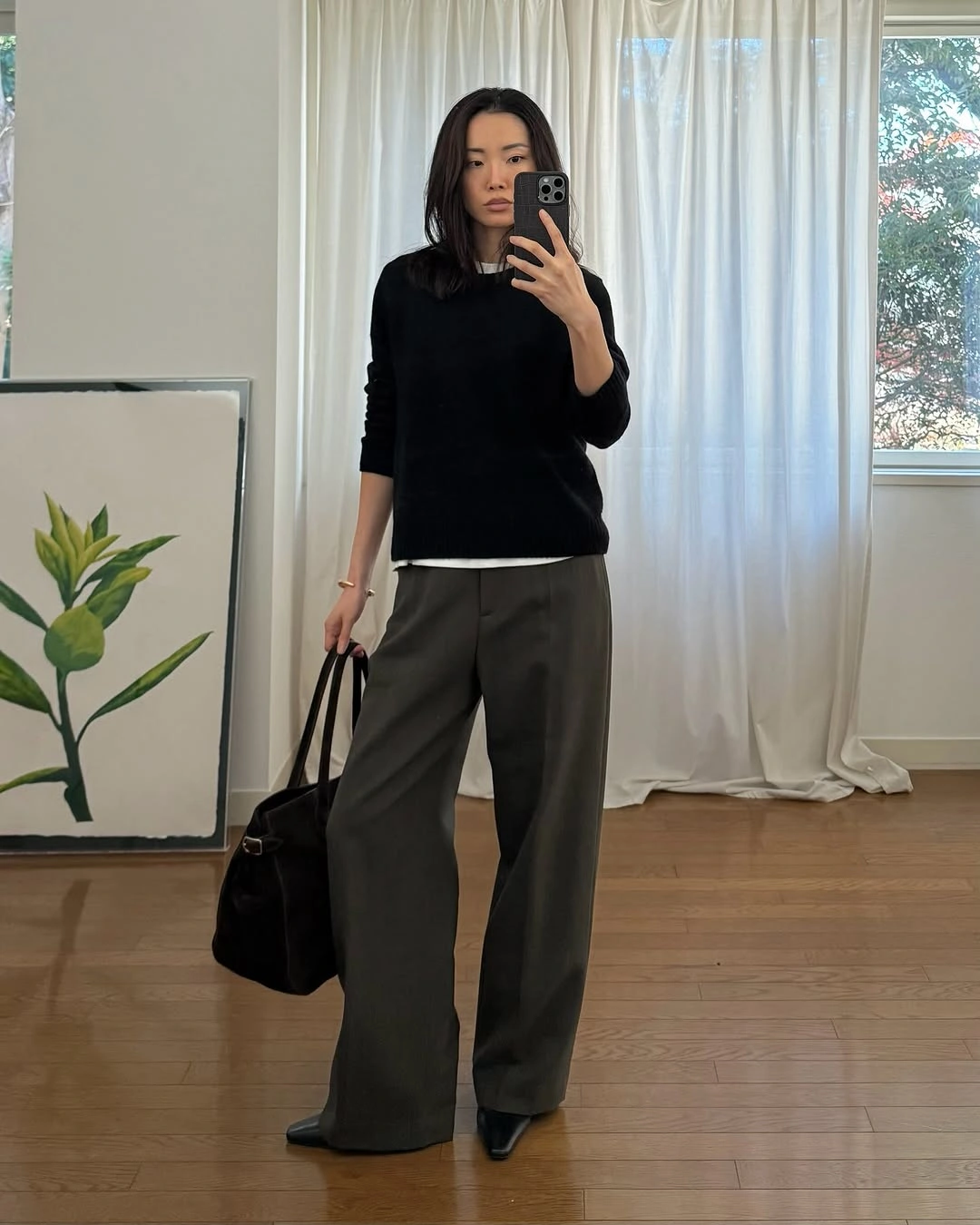
A narrow strip of white showing beneath the sweater makes that division immediately clearer, establishing a crisp horizontal line just above the dark olive trousers. Without it, the black and muted green could merge into one low-contrast shape, particularly where the garments meet at the waist. The small exposed hem gives the eye a precise stopping point, distinguishing the relaxed sweater from the broad trouser silhouette without introducing the stronger interruption of a visible belt or dramatically contrasting layer.
Pointed black footwear emerges beneath the wide trouser hems, replacing the loose geometry of the pants with a much narrower shape at the floor. The large black handbag adds visual weight beside the body, but its simple dark appearance allows the thin white boundary to remain the most distinctive detail.
13. Fine Blue Stripes Make Room for Gathered Volume
A blue blouse with narrow vertical stripes brings a different kind of detail to minimalist styling, relying on repeated fine lines rather than large graphic contrast. The stripes follow the garment’s loose shape and remain visible across its gathered sections, creating a quiet sense of movement as the fabric changes direction. Because the pattern is relatively delicate, it can accompany an unusually expressive blouse silhouette without making the upper half feel crowded or excessively ornamented.
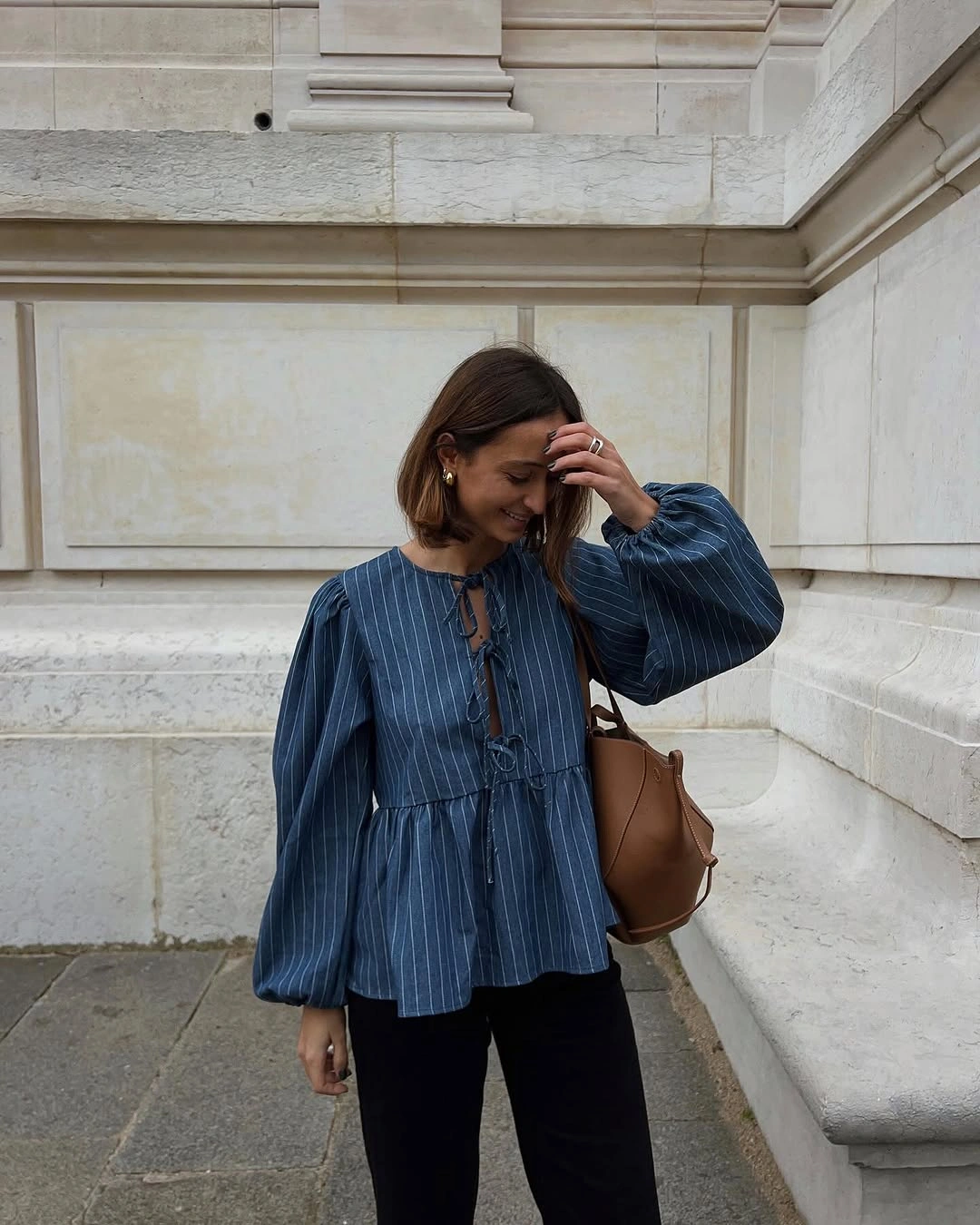
The blouse’s construction deserves attention beyond its stripes, especially where the front ties, gathered waist, and fuller sleeves establish several distinct areas of volume. The sleeves expand noticeably before narrowing toward their ends, while the lower portion flares outward beneath the gathered section, giving the garment a softly defined shape. These details prevent the blouse from reading as a simple oversized shirt, yet the coordinated blue coloring keeps its different structural elements connected rather than making each one feel like a separate embellishment.
Plain black trousers provide a straightforward lower outline beneath the detailed upper garment, allowing the blouse’s gathered construction to remain clearly visible. The brown shoulder bag introduces a warmer color at the side, offering a small departure from the blue-and-black pairing without competing with the fine stripes.
14. Oversized White Layers Take on a Stronger Silhouette
There is nothing particularly delicate about the proportions of this white-on-white combination, despite its pale coloring. The oversized button-front shirt falls well below the hips, creating a long rectangular upper outline with generous sleeves and a noticeably loose fit through the body. Instead of relying on a defined waist or a tailored shoulder line, the shirt uses its substantial length to establish presence, making the simplest familiar garment feel more architectural when its usual proportions are expanded.
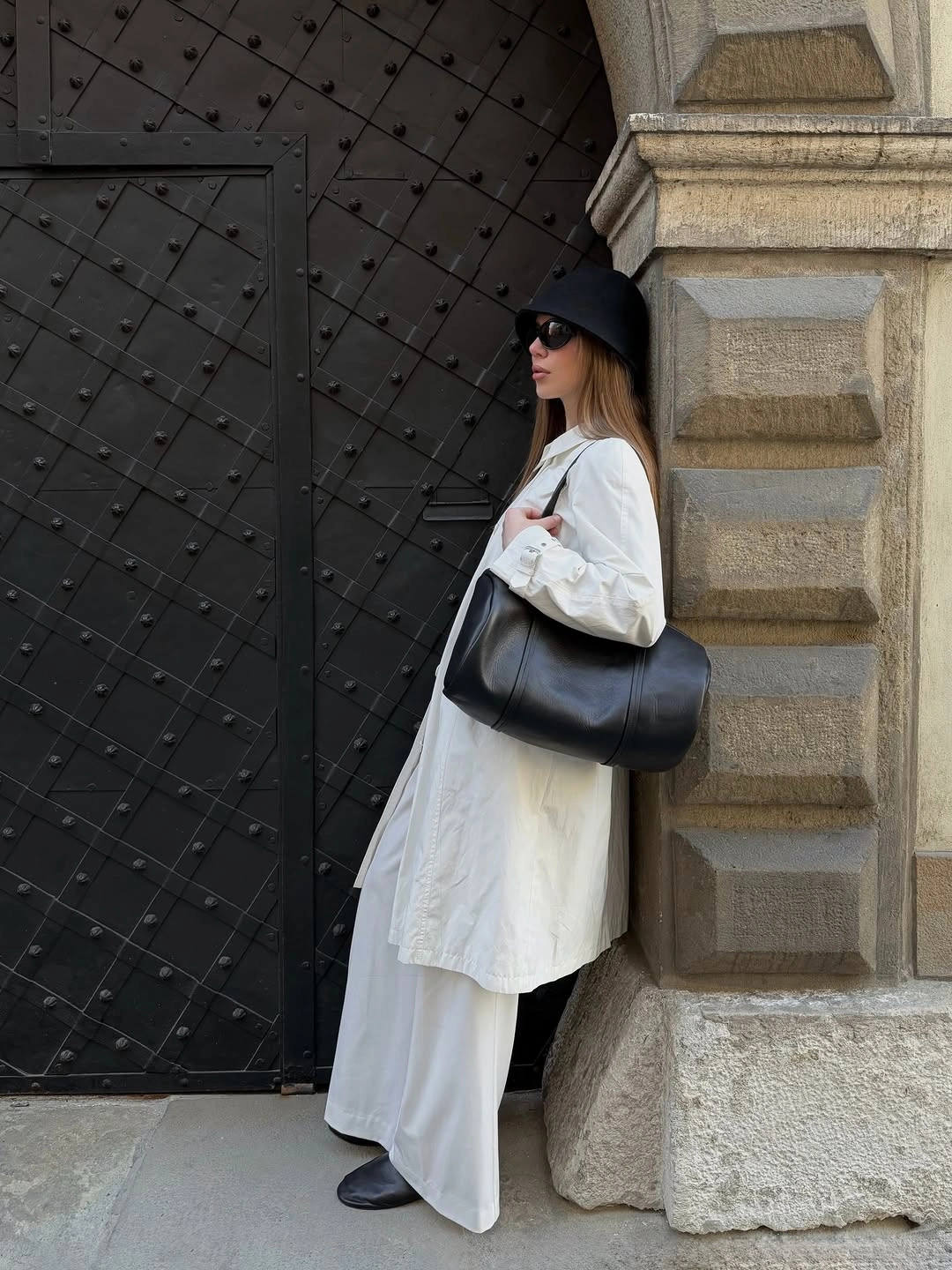
The floor-length white lower layer extends the pale silhouette almost to the ground, creating a continuous impression of length while remaining distinguishable beneath the shirt’s hem. The upper and lower pieces share a close color relationship, but the visible overlap keeps them from appearing like one uninterrupted garment. This distinction is especially important because the outfit has little internal color contrast, making the different garment lengths and the placement of their edges responsible for much of its visual structure.
A black bucket hat and oversized black shoulder bag establish substantial dark shapes near the top and side of the outfit, giving the expansive white clothing a more graphic appearance. Dark pointed shoes complete the contrast below, while their relatively narrow profile keeps the large bag and long shirt from losing their visual prominence.
15. A Diagonal Waist Detail Redirects the Denim Silhouette
The white button-down shirt provides a relatively crisp foundation for this combination, with its collar, front opening, and long sleeves establishing familiar lines across the upper body. Paired with loose cropped blue denim trousers, it creates a clear contrast between a more structured-looking top and a wider, relaxed lower silhouette. The simplicity of those two pieces is important because it leaves the waist area visually open to a more unexpected styling decision without requiring the entire outfit to become elaborate.
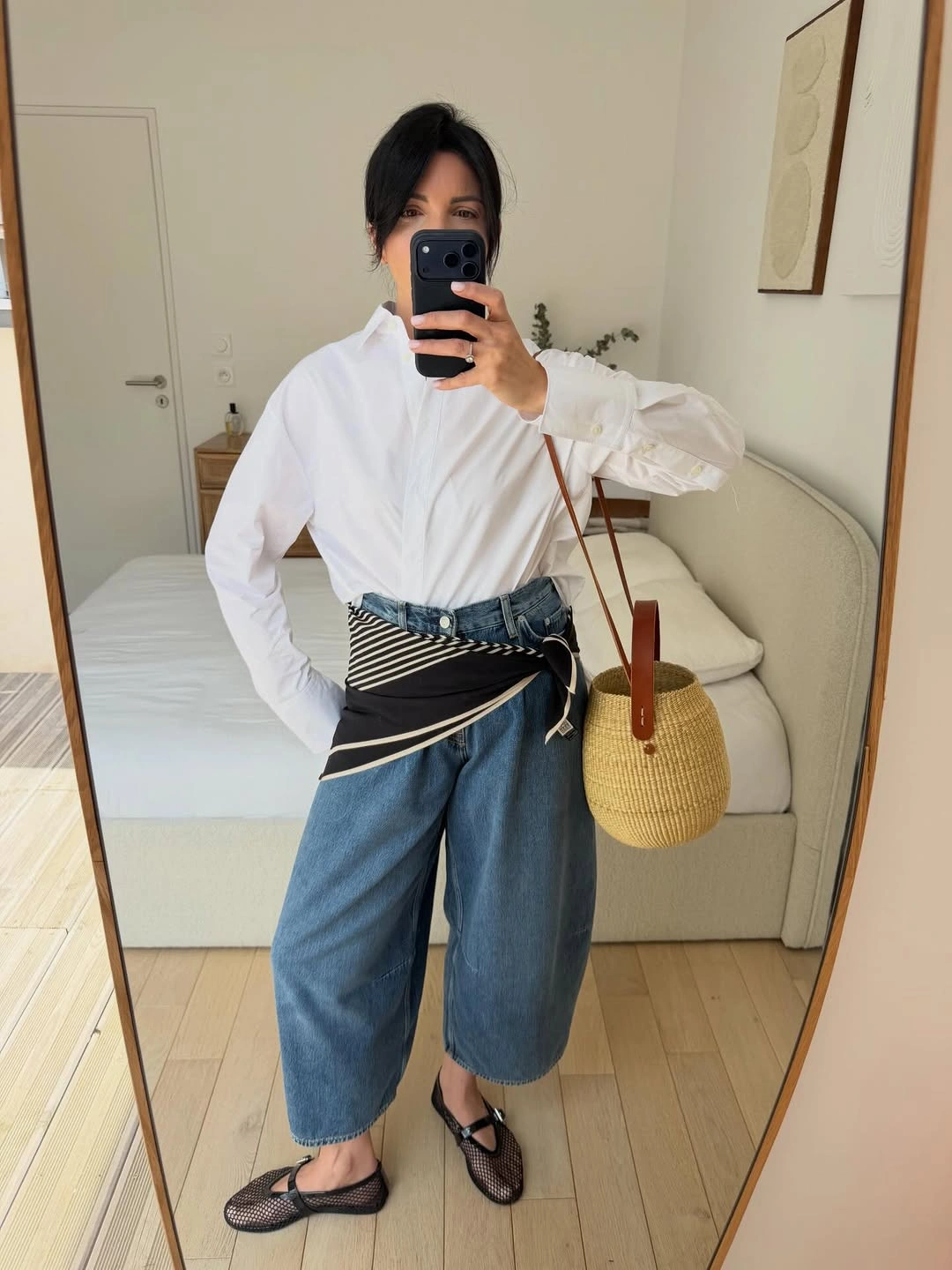
A black-and-white striped detail wrapped diagonally around the waist changes how the denim proportions are perceived, introducing an angled line across an otherwise straightforward arrangement. Its stripes add graphic contrast, while the diagonal placement interrupts the horizontal boundary that a conventional waistband would create. This shift draws attention toward the meeting point between shirt and trousers, making the broad denim shape feel more deliberately composed rather than simply loose beneath a tucked-in top.
Dark mesh flats introduce a fine, open-looking texture at the feet, contrasting with the substantial shapes of the denim and shirt. The small tan woven shoulder bag provides another textured accent on a different scale, giving the outfit additional detail without distracting from the distinctive diagonal treatment at the waist.
16. Black Layers Find Definition Through Overlapping Volume
The substantial black wrap around the neckline immediately changes the proportions of this otherwise dark outfit, creating a dense upper silhouette that feels almost sculptural. Rather than leaving the neck and shoulders clearly separated, the overlapping folds bring them together into one generous shape. That concentration of volume gives the outfit a distinctive character before the longer outer layer even becomes apparent, demonstrating how black clothing can remain visually expressive without relying on a contrasting color.
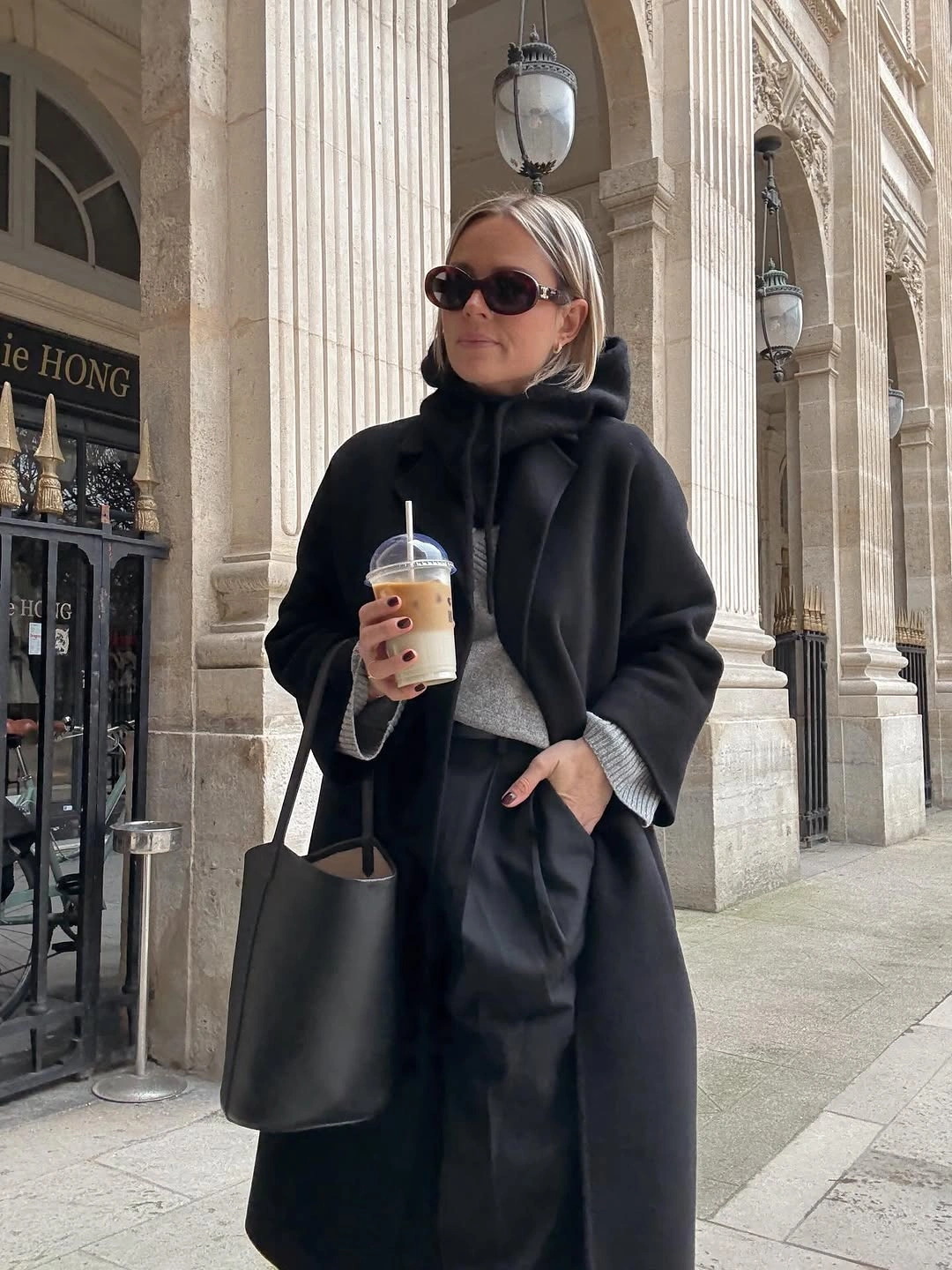
Beneath the pronounced neckline, the oversized black outer layer falls in broad vertical sections that reveal glimpses of the darker clothing underneath. Those overlapping edges are essential because they introduce differences in depth, allowing separate garments to remain recognizable even when their colors are nearly identical. The generous fit also changes the relationship between the upper and lower body, with the substantial coat creating a continuous exterior outline while the inner layers provide smaller, less immediately noticeable variations in shape.
Narrow gray cuffs offer a subtle interruption near the wrists, where their lighter color becomes noticeable against the surrounding black. Oversized sunglasses and a large black tote contribute distinct shapes and surfaces, adding detail without breaking the outfit’s predominantly dark composition.
17. A Shaggy Coat Changes the Scale of Denim
This long gray-green coat makes texture the dominant feature of the outfit, with its pronounced shaggy surface creating an irregular outline from the shoulders toward the lower body. The generous shape already occupies considerable visual space, but the projecting texture gives that volume an additional sense of depth and movement. Its muted coloring is particularly effective because it allows the surface itself to command attention, rather than asking a dramatic print or strongly contrasting shade to do the same work.
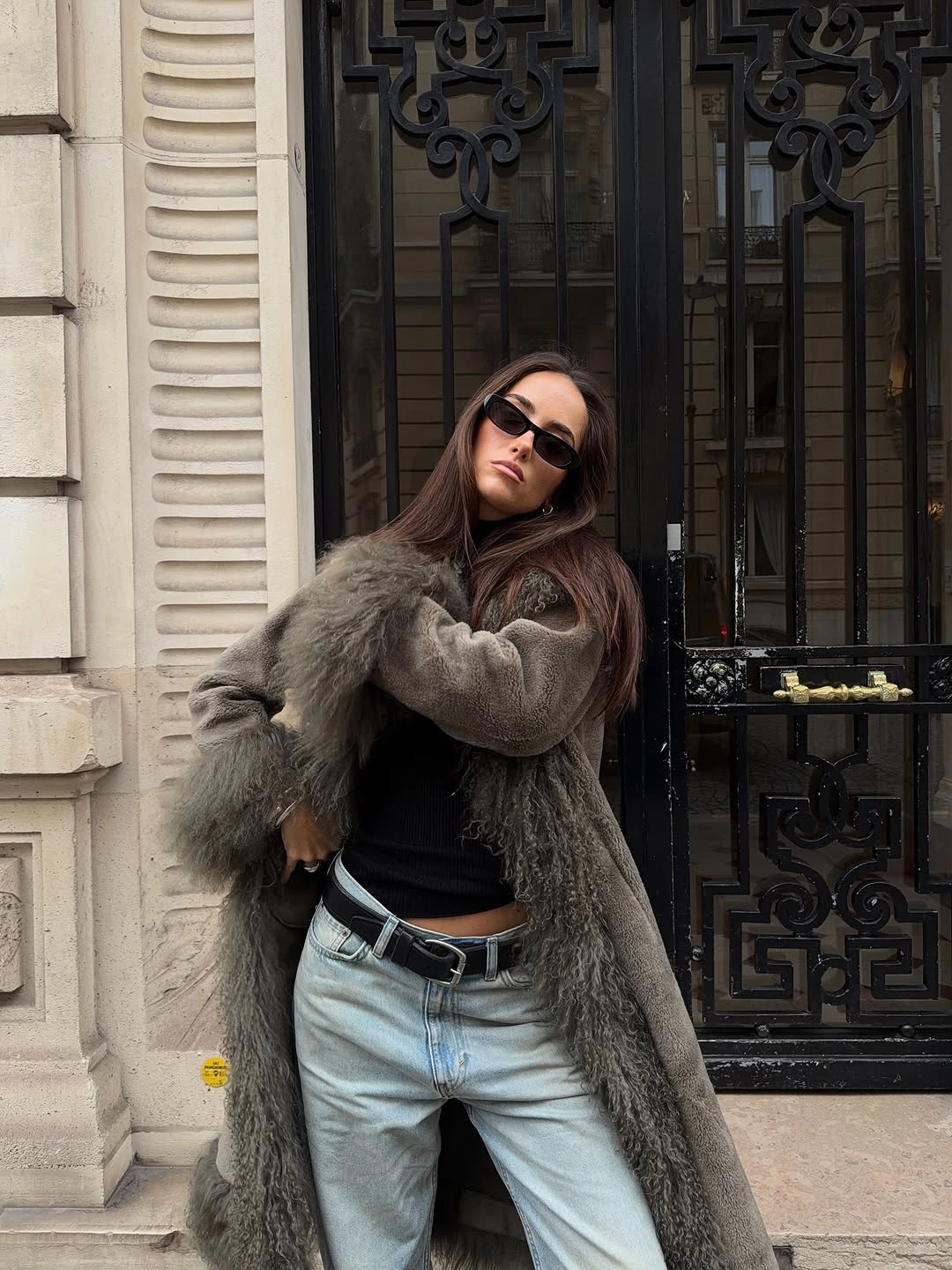
Underneath that expansive outer layer, the cropped black top establishes a much shorter and more compact shape, leaving a visible break before the pale blue jeans begin. The denim introduces a comparatively straightforward surface, making the difference between the coat’s irregular texture and the familiar trouser construction especially clear. This arrangement works because the coat, top, and jeans occupy distinctly different proportions, so even the most exaggerated piece has enough contrast around it to remain visually understandable.
A black belt introduces a clean horizontal line across the faded denim, providing definition beneath the coat’s less predictable edges. Narrow dark sunglasses repeat that sharper geometry near the face, adding a precise finishing detail that contrasts with the outer layer’s extensive shaggy texture.
18. Dark Denim and a Tee Leave Room for White
There is a particular clarity to this combination because the loose black T-shirt makes no attempt to compete with the rest of the outfit through elaborate construction. Its short sleeves, relaxed body, and uncomplicated neckline establish a straightforward upper shape that feels intentional precisely because nothing interrupts it. The dark color continues naturally into the jeans, creating a simple foundation where the overall proportions matter more than individual garment details or decorative accents.
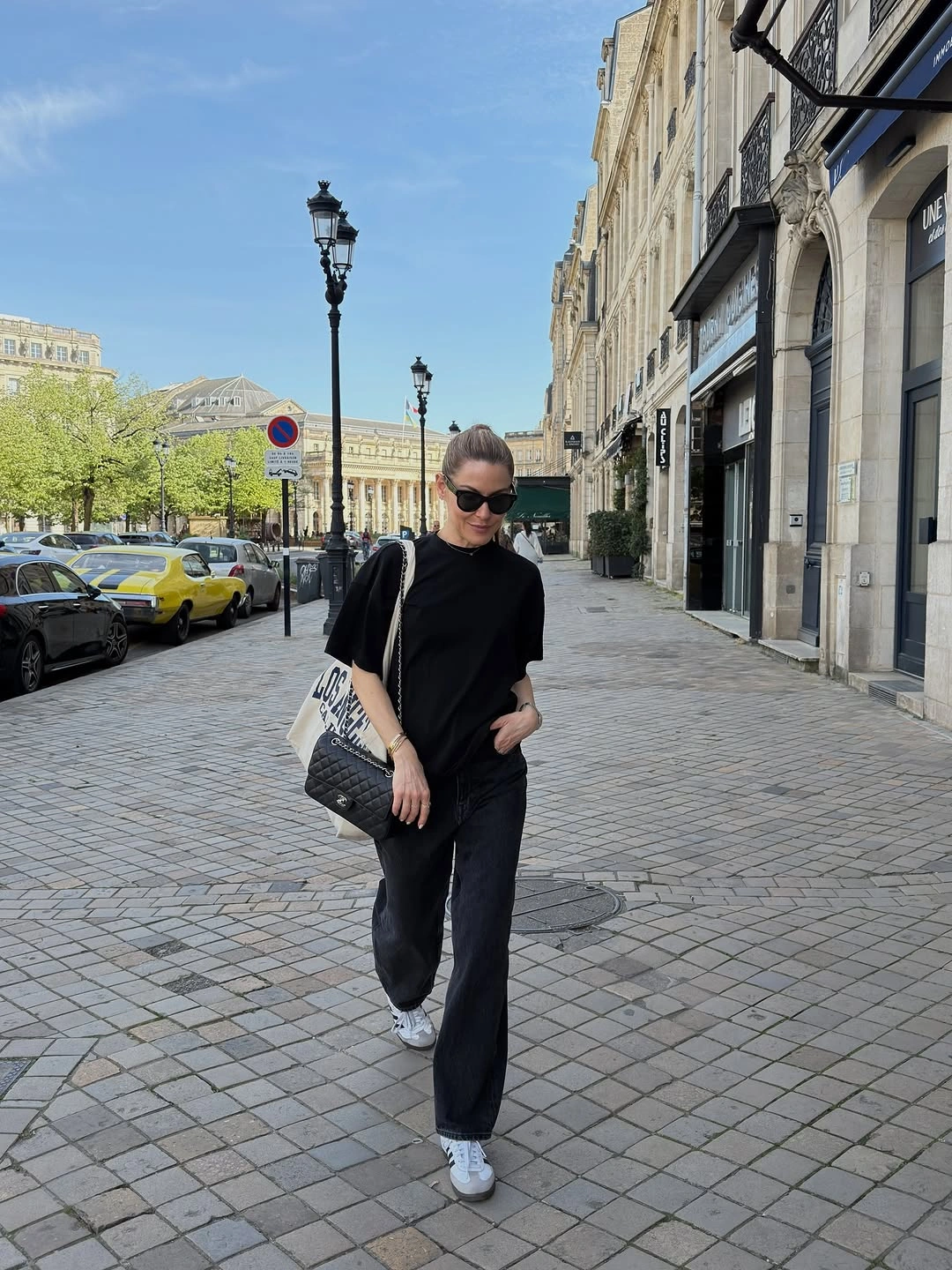
The dark straight-leg jeans introduce a slightly different tone and surface beneath the black T-shirt, preventing the outfit from becoming one entirely uniform block of color. Their relaxed shape follows the casual character of the top without expanding into exaggerated volume, giving the silhouette a relatively consistent width from the shoulders toward the ankles. This subtle distinction between black and dark denim is enough to separate the pieces while preserving the understated quality that makes the combination feel coherent.
White sneakers introduce a clear light accent at the feet, while the pale canvas tote with black lettering provides another brighter area beside the body. Their different placements distribute contrast across the outfit without requiring a colorful jacket or additional layers to make the dark separates feel complete.
19. An Open-Weave Tote Breaks Up Loose Separates
The oversized dark navy shirt and loose khaki trousers create a silhouette that embraces volume from top to bottom rather than concentrating it in only one garment. Rolled sleeves slightly interrupt the shirt’s generous shape, exposing the wrists and preventing the upper half from appearing completely enclosed. Beneath it, the wide trousers continue the relaxed proportions in a noticeably lighter neutral shade, establishing enough color separation to distinguish the pieces without depending on a fitted waist or sharply defined tailoring.
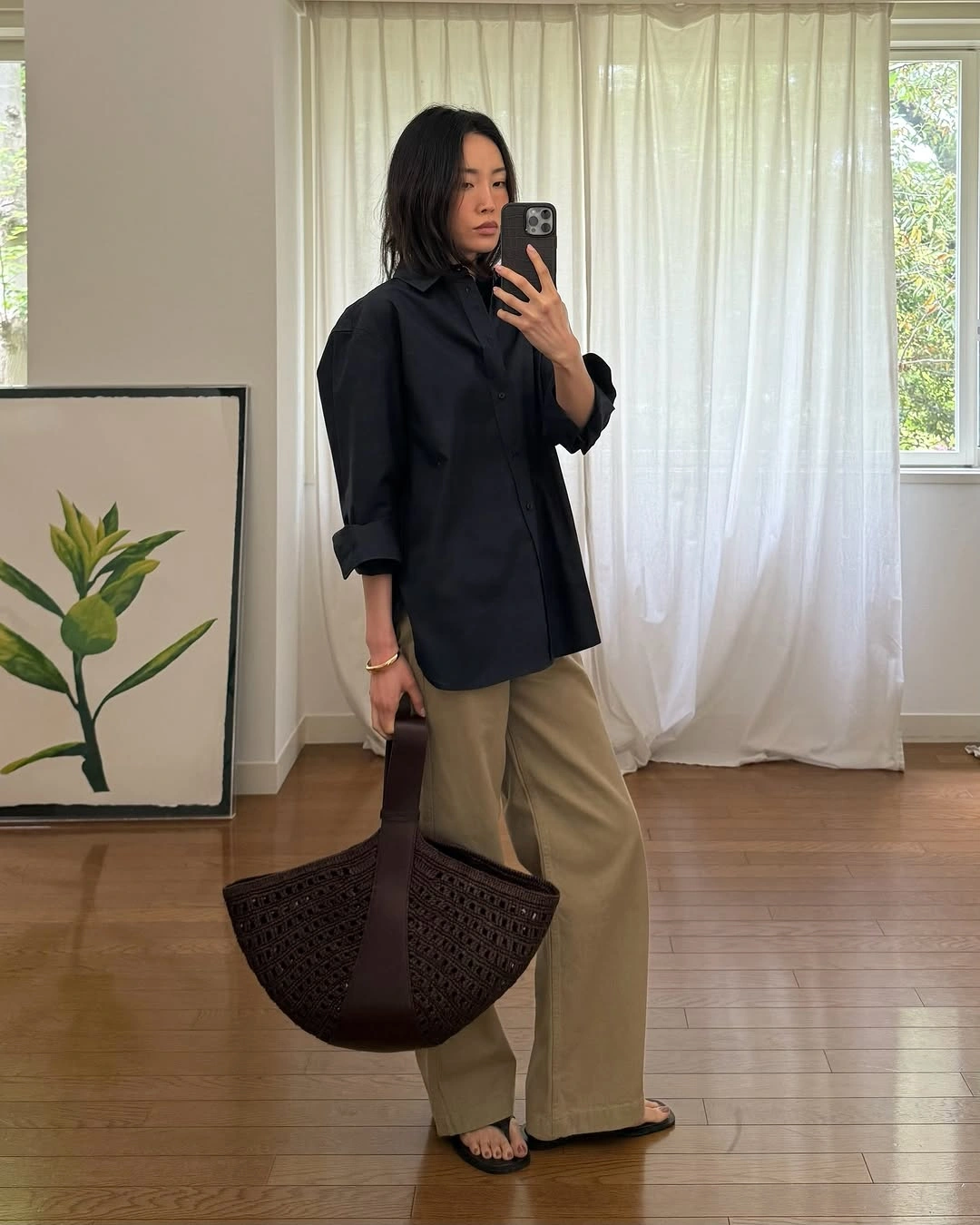
What gives this otherwise straightforward pairing its strongest visual departure is the oversized dark brown tote, whose open-weave construction introduces visible spaces and a rounded outline beside the body. Unlike the comparatively continuous surfaces of the shirt and trousers, the bag’s patterned openings allow the background to remain visible through parts of its shape. That difference makes the accessory feel substantial without becoming visually solid, creating an interesting relationship between the generous fabric volume and the more open structure carried alongside it.
Flat black sandals provide a narrow finish beneath the broad khaki trouser hems, keeping the attention on the relationship between the clothing and the large woven bag. Their dark coloring also connects quietly with the navy shirt and brown accessory, allowing the neutral palette to remain varied without requiring exact shade matching.
20. White Shorts Give a Black Shirt Sharper Boundaries
The black button-front shirt gives this outfit a stronger upper silhouette than its simple color combination might initially suggest. Its generously cut sleeves extend into wide cuffs, creating noticeable volume around the arms while the body of the shirt remains neatly arranged above the shorts. That contrast between the loose sleeve construction and the more contained waist makes the upper half visually interesting without relying on print, texture, or additional layers to distinguish the garment.
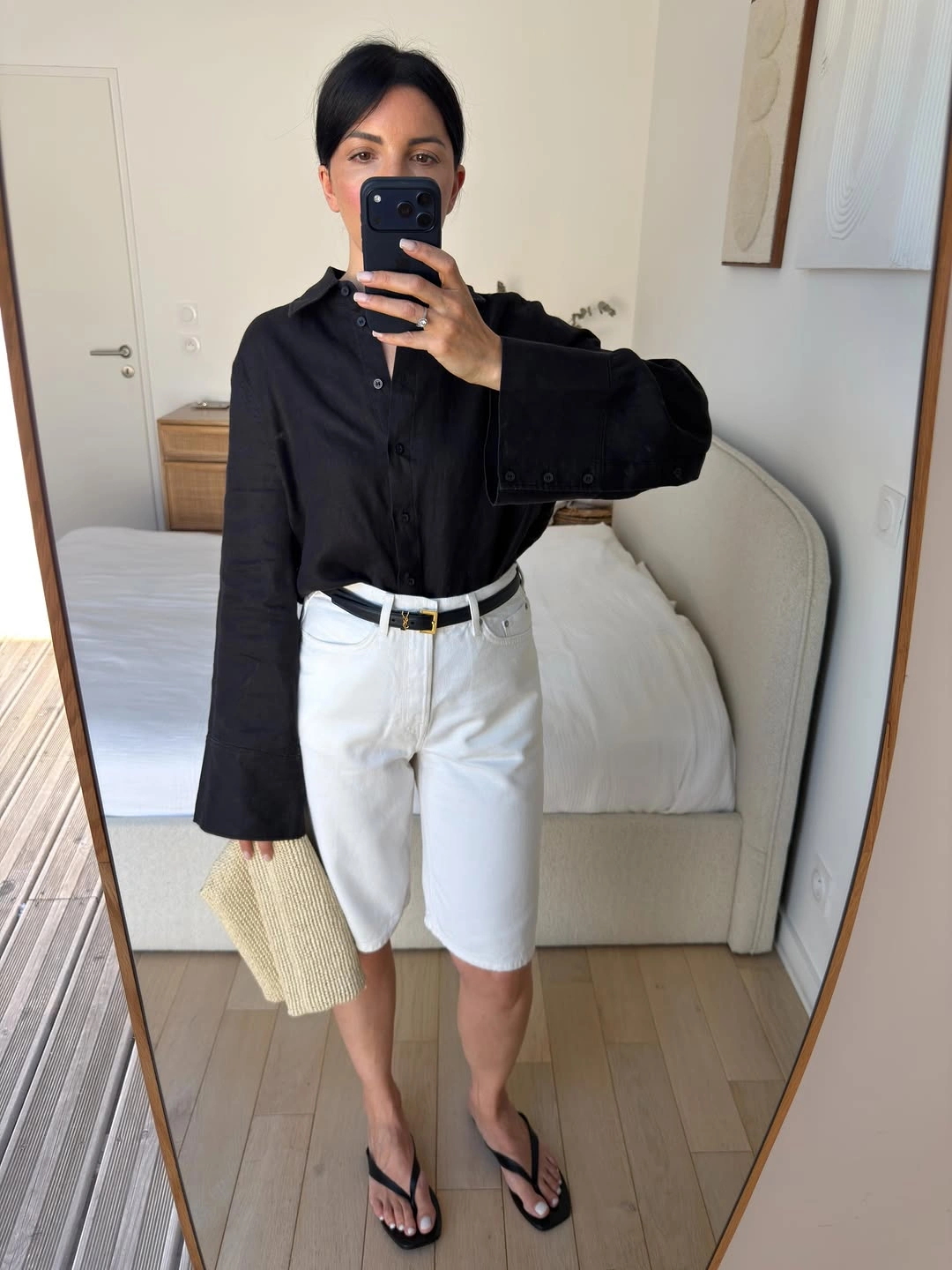
White knee-length shorts bring a substantial block of brightness beneath the black shirt, establishing a clear division that becomes even more pronounced through the slim black belt. The belt provides a narrow horizontal boundary at the waist, while the shorts maintain a relatively defined shape before ending above the lower legs. This placement prevents the strong black-and-white contrast from feeling overly rigid, since the exposed legs introduce a natural interruption between the structured-looking shorts and the relaxed footwear below.
A pale woven clutch adds a compact area of visible texture beside the clean clothing surfaces, softening the otherwise graphic combination. Black flip-flops introduce an equally informal detail at the feet, allowing the precise waistline and high-contrast palette to coexist with a noticeably more casual finish.
21. A Short Taupe Jacket Balances Wide Black Trousers
The short taupe-gray jacket gives this outfit a distinct upper shape without relying on dramatic shoulders or a sharply fitted waist. Its slightly textured surface and simple button-front construction provide quiet definition, while the boxy cut allows the garment to sit loosely above the trousers. What makes the proportion particularly appealing is the jacket’s compact length, which creates a noticeable contrast against the much longer lower silhouette without requiring a dramatic difference in color.
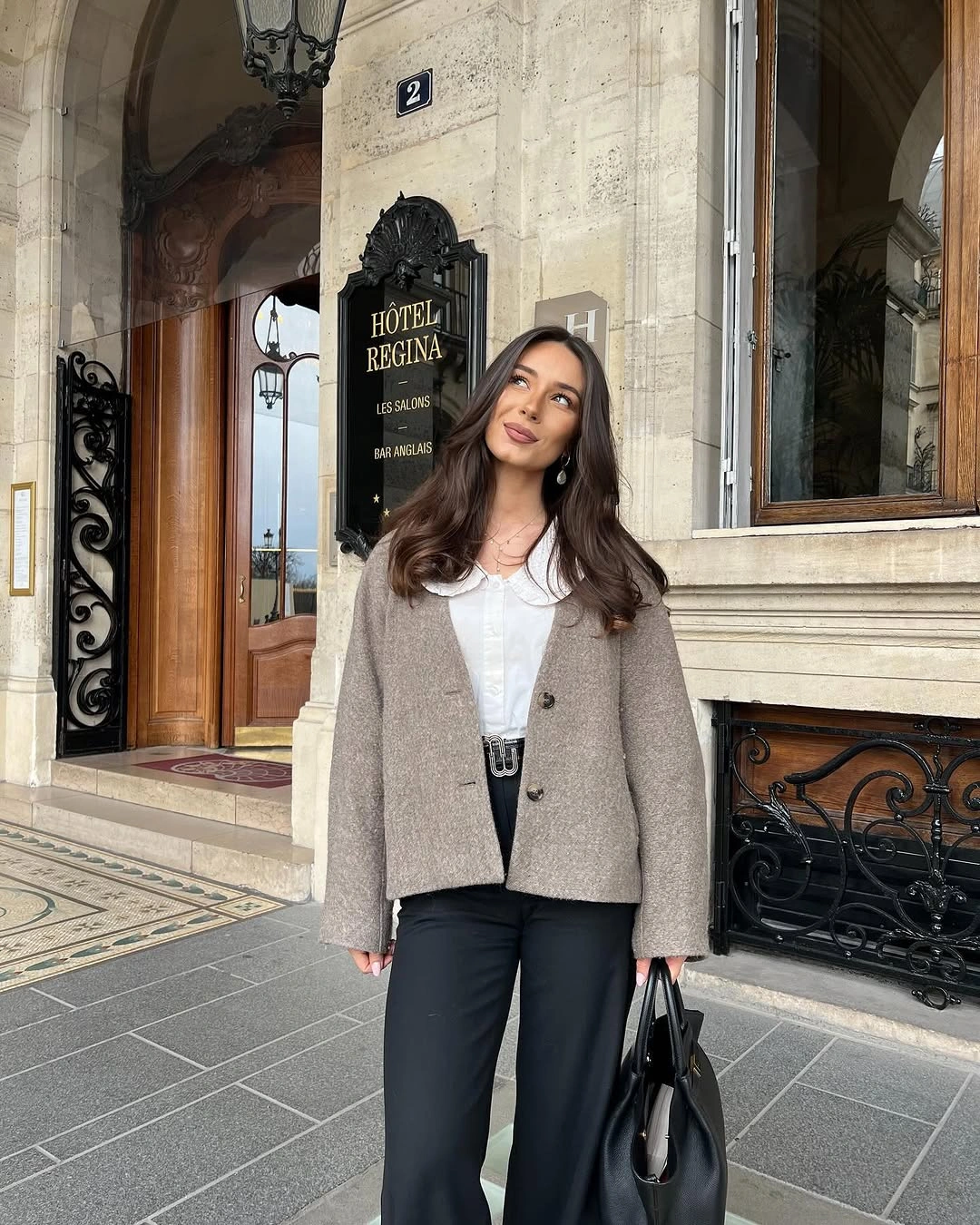
A white inner layer introduces brightness beneath the muted jacket, creating a clean separation between the upper garment and the black trousers. The dark waistband and visible belt establish another boundary below, giving the outfit a series of distinct transitions rather than allowing the neutral pieces to merge together. Because the trousers fall in broad, relatively uninterrupted lines, those smaller changes around the center of the body become especially important, defining the proportions without adding unnecessary complexity.
The structured black handbag carries some of the trousers’ darker visual weight upward, creating a connection between the lower silhouette and the accessory held beside it. Against those stronger black shapes, the taupe jacket remains the softer central feature, with its restrained texture providing interest that a completely smooth surface would not.
22. A Cropped Red Jacket Meets a Frayed Edge
The red jacket has an unmistakable presence, but its impact depends as much on its compact proportions as on the saturated color. A rounded upper outline, generous sleeves, and a relatively short body concentrate the brightness into one clearly defined area, while the dark buttons introduce a measured vertical detail across the front. Rather than extending the red into additional accessories or lower layers, the outfit lets that single garment occupy the strongest visual position against an otherwise dark foundation.
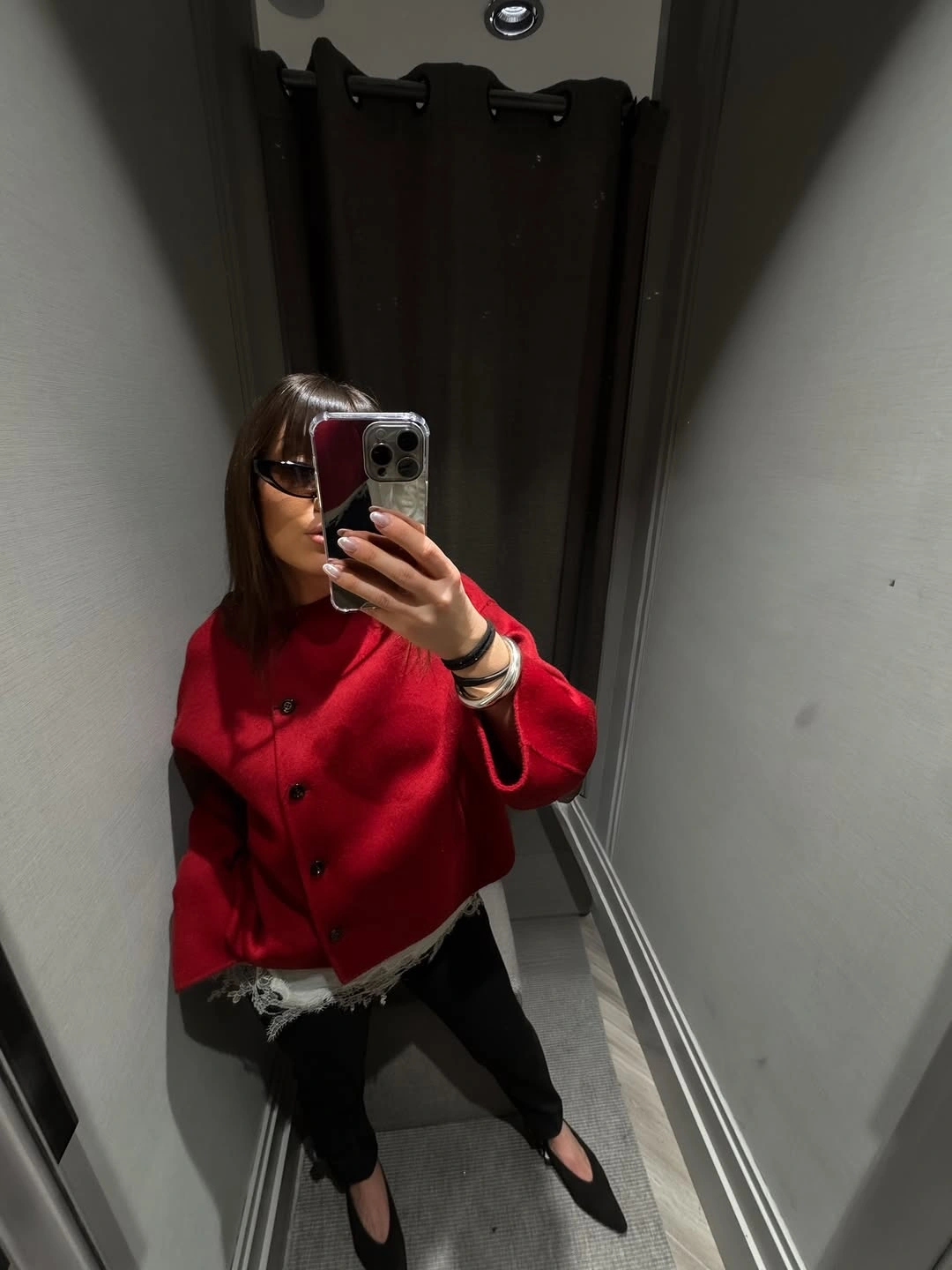
Just below the jacket, a frayed light-colored edge appears between the red upper layer and the black clothing beneath it, creating an unexpected interruption in an otherwise direct color relationship. Its irregular finish changes the character of the combination, introducing a rougher surface where a clean, uninterrupted transition might have appeared more severe. The pale detail occupies relatively little space, yet its placement at the meeting point between the upper and lower sections makes it particularly noticeable against both surrounding colors.
Narrow black legwear and pointed dark shoes create a sharper lower silhouette beneath the jacket’s rounded proportions, keeping the strong upper volume from continuing all the way to the feet. Oversized dark sunglasses reinforce the graphic quality of the combination, while the frayed edge remains its most unexpected detail, introducing a little disorder into the otherwise decisive arrangement.
23. Cream and White Details Emerge From a Black Coat
The long black coat establishes a broad exterior shape that gives this layered outfit its strongest sense of structure. Its dark panels fall around the lighter clothing beneath, creating a substantial frame without relying on a closely fitted waist or elaborate decorative details. The contrast is concentrated toward the center, where the cream button-front layer becomes visible between the coat’s edges, allowing the outer garment to remain visually dominant while still revealing the more intricate arrangement underneath.
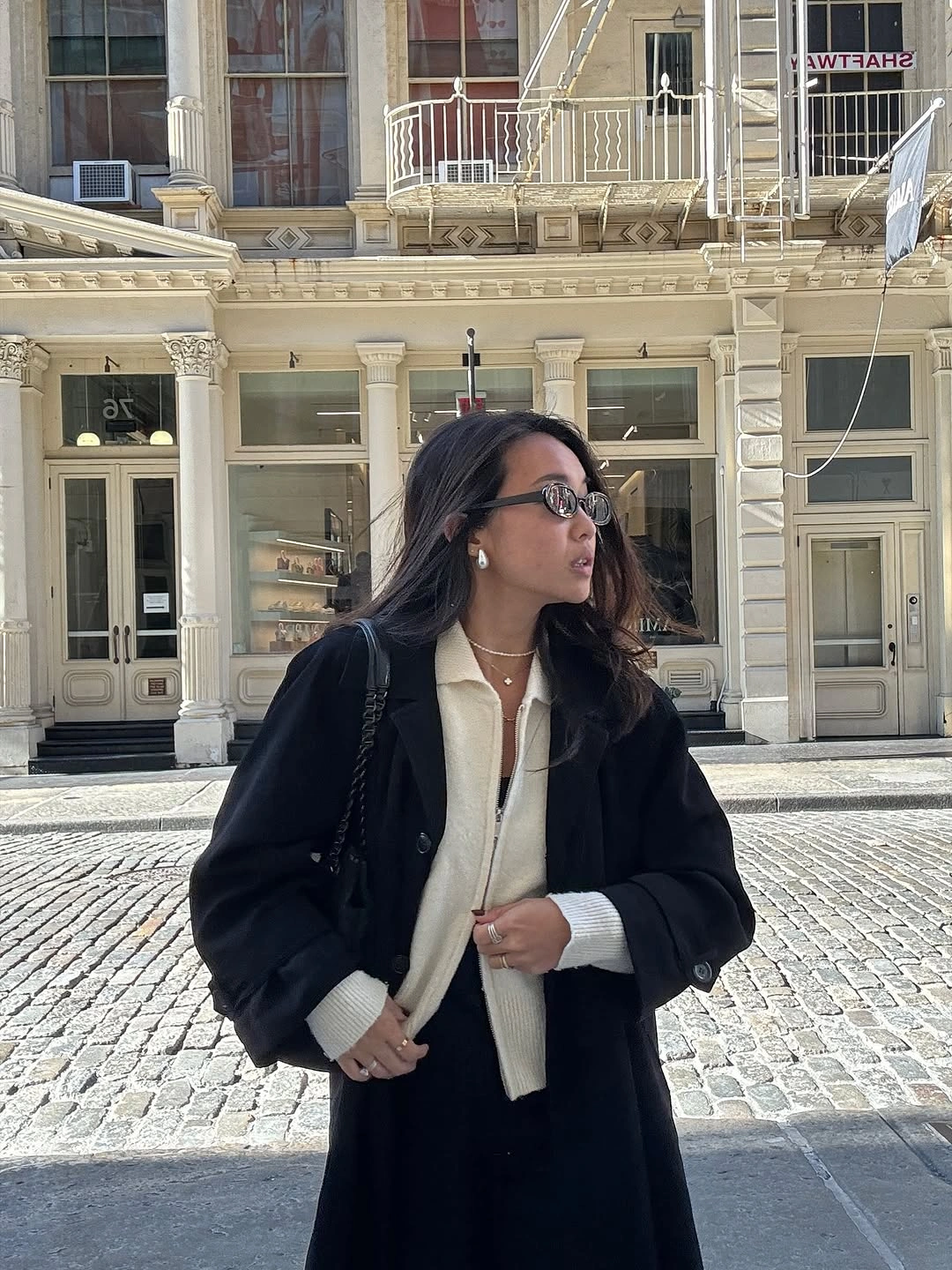
Within that dark outline, the cream layer introduces a softer neutral before the brighter white collar and cuffs become noticeable at the neckline and wrists. Those small shifts in color are important because they distinguish the individual pieces without requiring a dramatic contrast between every garment. The exposed white details also occupy different positions, drawing attention toward the face and hands while the cream center provides a broader area of lightness against the coat’s generous black silhouette.
Delicate layered necklaces add fine lines near the open neckline, creating a smaller point of interest within the cream and white arrangement. Compact sunglasses provide a similarly restrained detail near the face, allowing the narrow accessories and carefully exposed pale edges to remain distinct inside the coat’s substantial dark frame.