Braiding is an ancient art form that continues to evolve, and in 2027, expect a blend of traditional techniques with modern flair. The trend is moving toward softer, more lived-in looks: think glossy natural texture, face-framing pieces, and color that grows out gracefully rather than a stark root line.
This collection of 20 Natural Hair Braiding ideas spans the range from intricate cornrow patterns to classic box braids, from low-maintenance shoulder-length styles to sculptural updos. Whether your hair is fine or thick, short or long, there’s a braid here that works for your texture and your schedule. If fine hair that falls flat or a visible grow-out line has held you back, these styles solve both without a daily fight.
1. Heart-Shaped Braids With Afro Ponytail
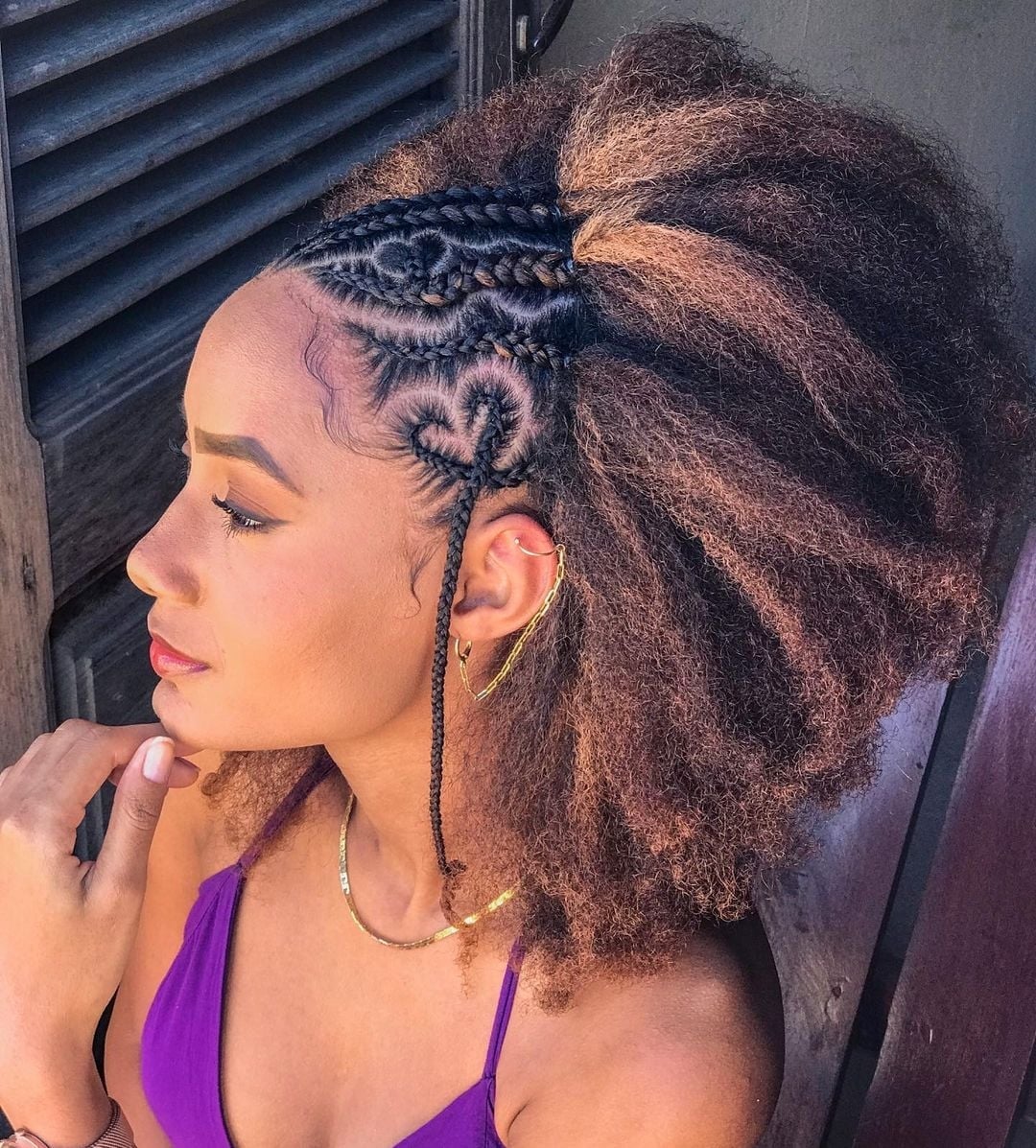
A heart shape built from braids on the side of the head is a playful way to dress up an afro ponytail without losing the natural volume. The design draws the eye upward, which works well for round and oval face shapes, but the side placement also balances a longer face by adding width at the temples. Ask your stylist for: heart-shaped side braids into an afro ponytail. Thick, curly hair of mid-back length holds the shape best, and the contrast between the defined braids and the loose ponytail gives the style its texture. A light-hold gel keeps the heart crisp without weighing down the rest.
2. Intricate Cornrows Floral Pattern
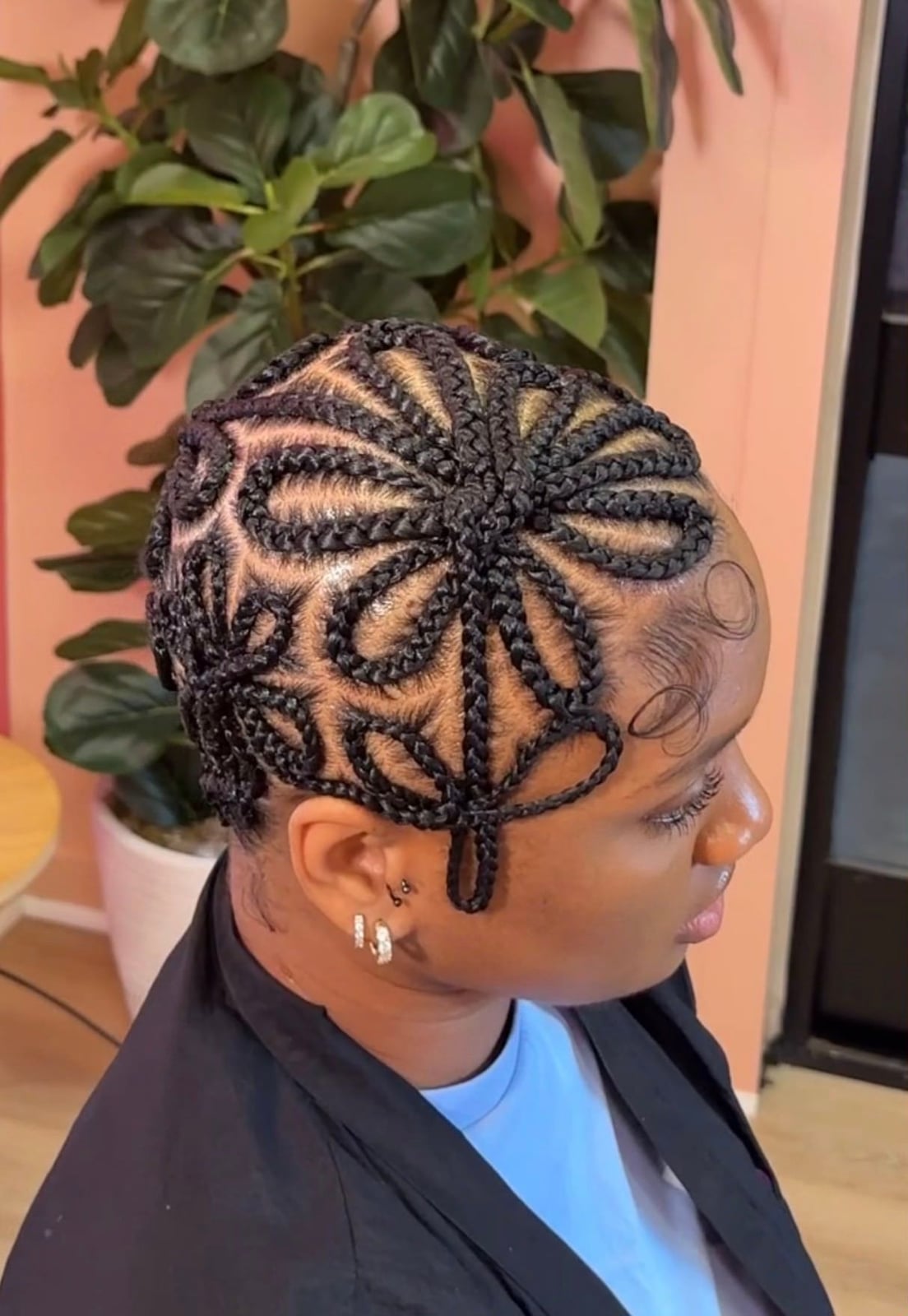
Getting a floral pattern into cornrows means sitting for a session measured in hours, not minutes, because each curve and petal is mapped and braided directly into the scalp. The precision needed is extreme: the braids must stay the same tension and width to keep the flower shape readable from the side. Ask your stylist for: cornrows styled in a floral pattern. This works on coily natural hair of any length, but shorter hair shows off the scalp work more clearly. The black color lets the pattern read as texture rather than contrast, which is the point.
3. Braids With Loose Voluminous Curls
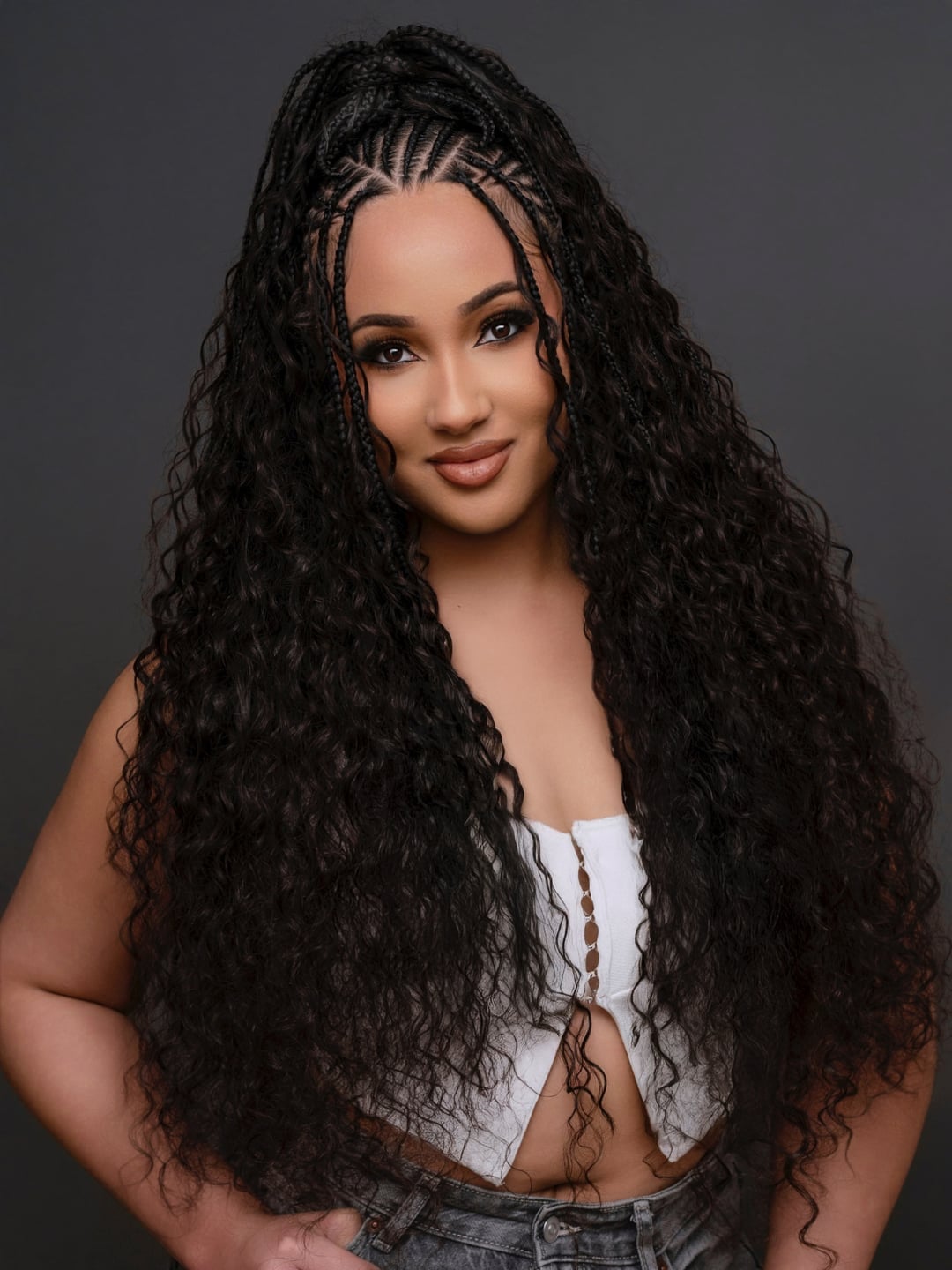
A full head of braids is one look. Braids that melt into loose curls is another, and the difference is in the transition. Here, the front sections are braided close to the scalp while the rest drops into waist-length, voluminous curls. It is sleeker than wearing all curls and softer than wearing all braids. Ask your stylist for: braids framing the face into loose, voluminous curls. The styling steps are: part the hair down the middle, braid the front sections back, then define the remaining curls with a cream and a diffuser. Thick, curly natural hair of long length gives this its drama.
4. Double Braided Buns
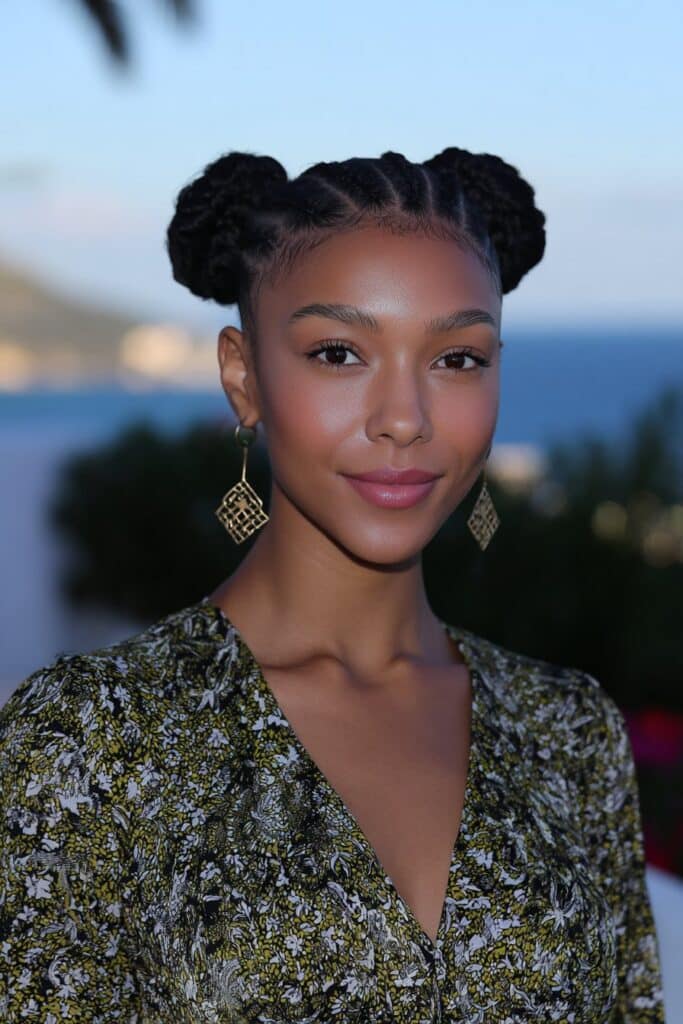
How do you ask for two braided buns without getting space buns that are too small or too loose? Be specific about placement and size. Ask your stylist for: two large braided buns on each side. The buns sit at ear height, not crown height, and the middle part keeps them symmetrical. Thick, coily hair of mid-back length can support the weight of buns this size without pulling at the edges. The smaller braids leading into each bun add a finished edge, so there is no awkward gap between the scalp and the bun. Secure them tightly with bobby pins and a strong-hold spray.
5. Box Braids High Ponytail Honey Blonde
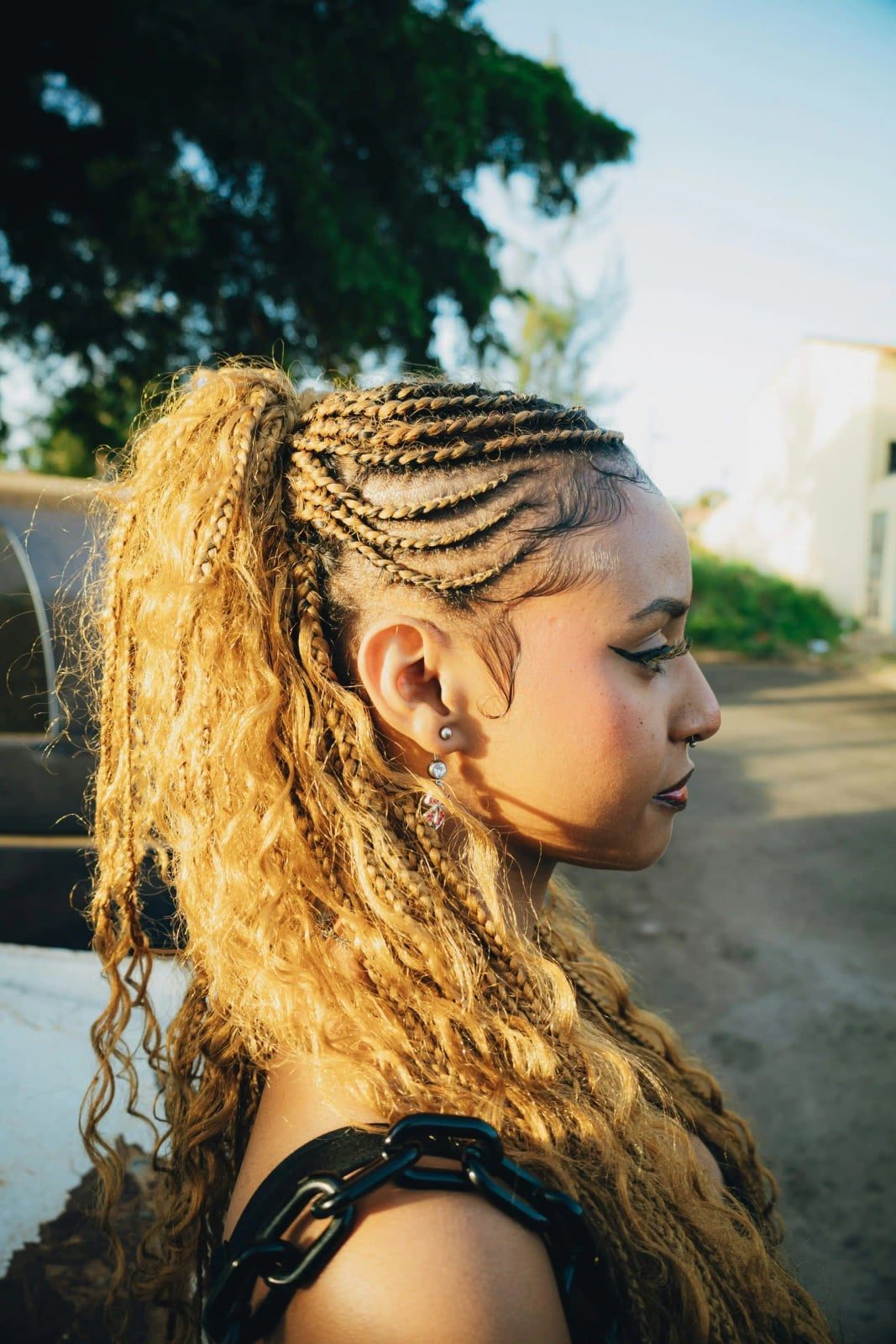
Honey blonde with lighter highlights adds dimension to box braids, but the color also makes the upkeep visible. Ask your colorist for: box braids into a high ponytail with loose curly ends, honey blonde highlights. The base is a warm honey tone with a few lighter pieces woven through, which reads as sun-lightened rather than solid. The high ponytail keeps the braids off the neck, and the curly ends stop the style from looking too uniform. To keep the curls from frizzing, wrap the ponytail in a silk scarf overnight. A toning shampoo every two weeks prevents brassiness.
6. Neat Knotless Braids With Face-Framing Tendrils
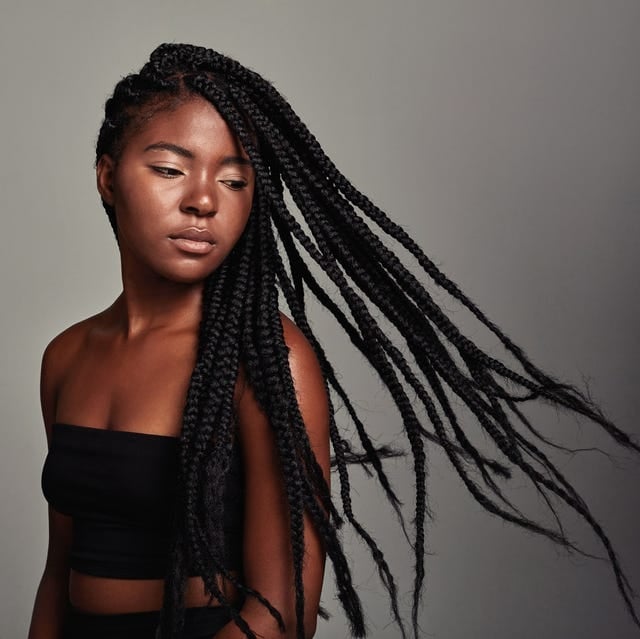
Neat knotless braids are the rare protective style that looks as polished on day one as it does six weeks later, which is exactly why the salon chair is worth it. They suit thick natural hair at mid-back length, and the loose tendrils around the face soften a middle part that can otherwise look severe. Ask your stylist for: neat knotless braids with loose face-framing tendrils. This is a salon-only project, because the flat base and even tension are what keep the braids from looking bulky at the root. A tiny bit of edge control along the hairline keeps those tendrils where you put them, and the smooth texture stays intact for weeks.
7. Classic Mid-Back Box Braids
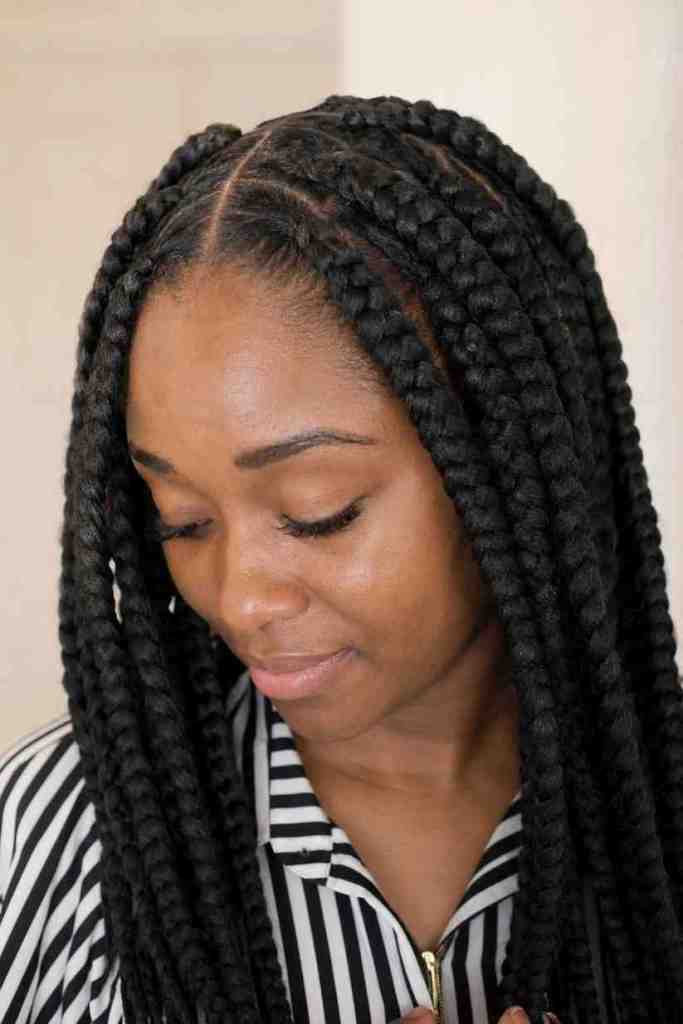
The classic mid-back box braid is a staple for a reason, but the mistake most people make is letting the size of the braid outpace the thickness of their natural hair. On straight, thick hair, large braids have a tendency to slip or look uneven at the root within the first few weeks. Ask your stylist for: classic mid-back box braids. The middle part and solid black color keep this style neat for the office and beyond, and the uniform size is what gives it that well-maintained finish. The drawback is that the smaller the braid, the longer the install, so be honest about how many hours you can sit still before choosing your size.
8. Shoulder-Length Box Braids With Blonde Highlights
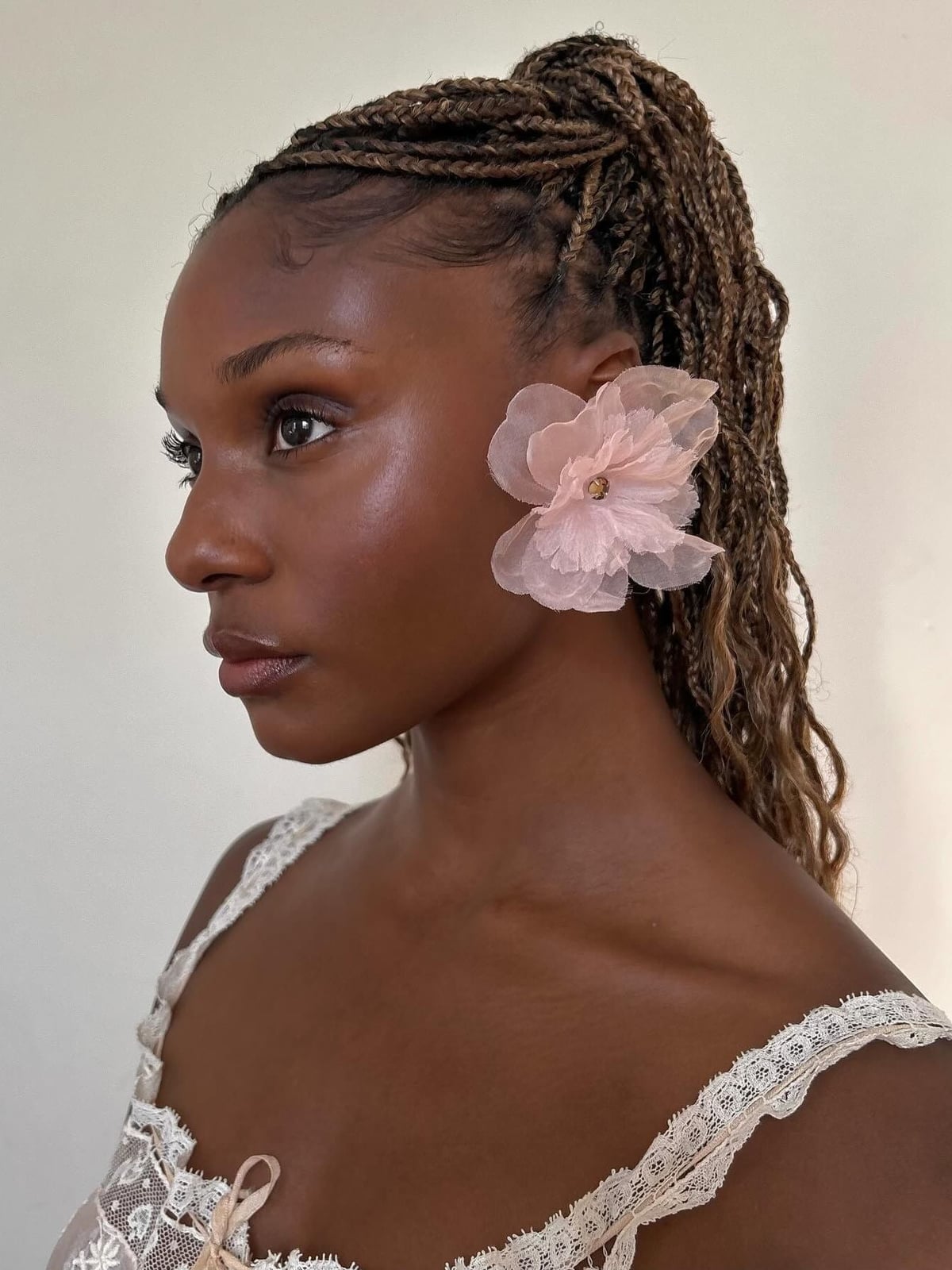
The shoulder-length box braid with a brown base and subtle blonde highlights is the summer answer to braids that look heavy in the heat. The wavy texture keeps it from swinging like a curtain, and the face-framing braids break up the line of the high ponytail. Ask your colorist for: shoulder-length box braids with subtle blonde highlights. The shorter length means less weight on your edges, which makes it a practical pick for casual outings and long days outdoors. A color-safe shampoo helps prevent brassiness, though the brown base means regrowth is never a panic situation.
9. Thick Wavy Box Braids Dark Brown
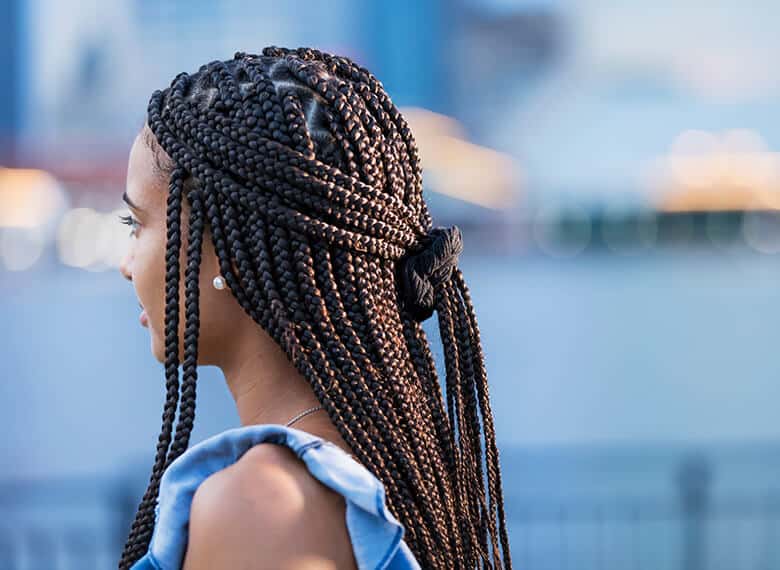
Are thick, wavy box braids in dark brown worth the install time if your natural texture is on the finer side? Not really. They genuinely flatter those with thick, mid-back length hair, where the weight of the braid matches the density of the root. Ask your stylist for: thick wavy box braids, dark brown. The wavy texture gives the style movement without frizz, and the middle part suits oval and round face shapes by adding length. A black scrunchie gathers them into a ponytail or bun without slipping, so you get a second style out of the same install. If your hair is thin, the heft of these braids will pull at the roots.
10. Box Braids With Blonde Tips
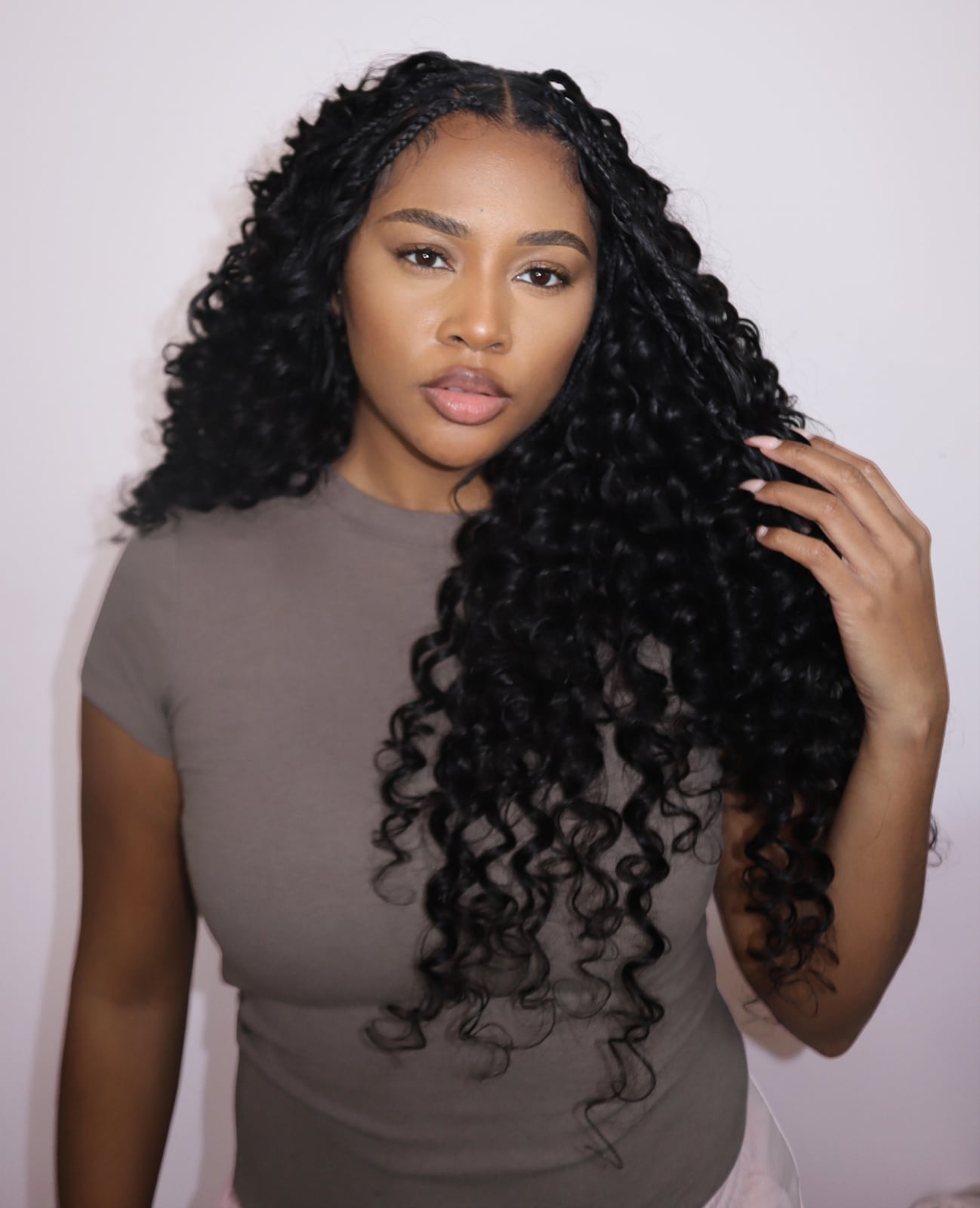
The two-tone effect of black box braids with blonde tips is built in the braiding, not after, so the color sits on the ends and leaves the root untouched. This technique works on mid-back length hair with a wavy, thick texture, where the loose curls at the ends show off the contrast. Ask your colorist for: box braids with contrasting blonde tips and loose curls. The blonde is applied to the extension hair before it is braided in, which means the color stays vibrant without bleach touching your scalp. The lighter sections are more porous and prone to tangling, so use a moisturizing product on the tips.
11. Collarbone Box Braids With Curly Ends
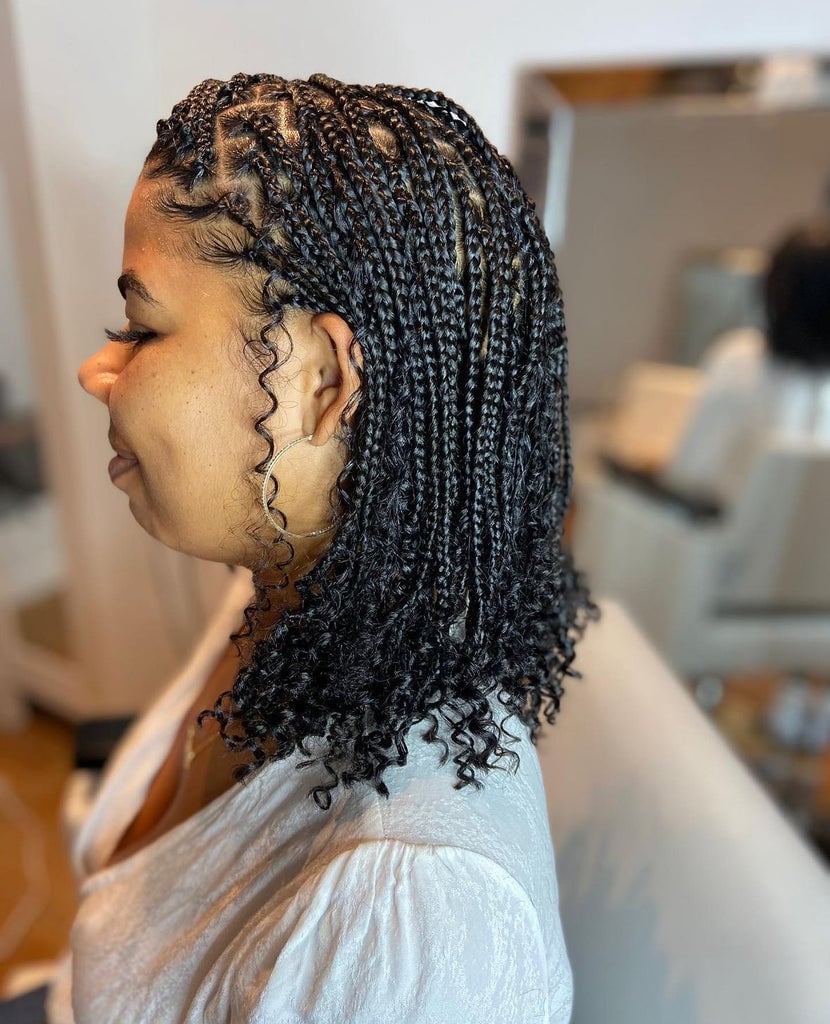
Small box braids stop at the collarbone, then let loose into wavy, curly ends that read more playful than polished. Thick hair handles the transition best, since the braids need density to hold their shape while the ends have enough weight to curl without going limp. Ask your stylist for: small box braids to collarbone with loose curly ends. Gently scrunch the curly ends with a curl-enhancing mousse for definition, and expect to refresh the style every six to eight weeks as new growth appears at the root.
12. Neat Cornrows To Single Braid
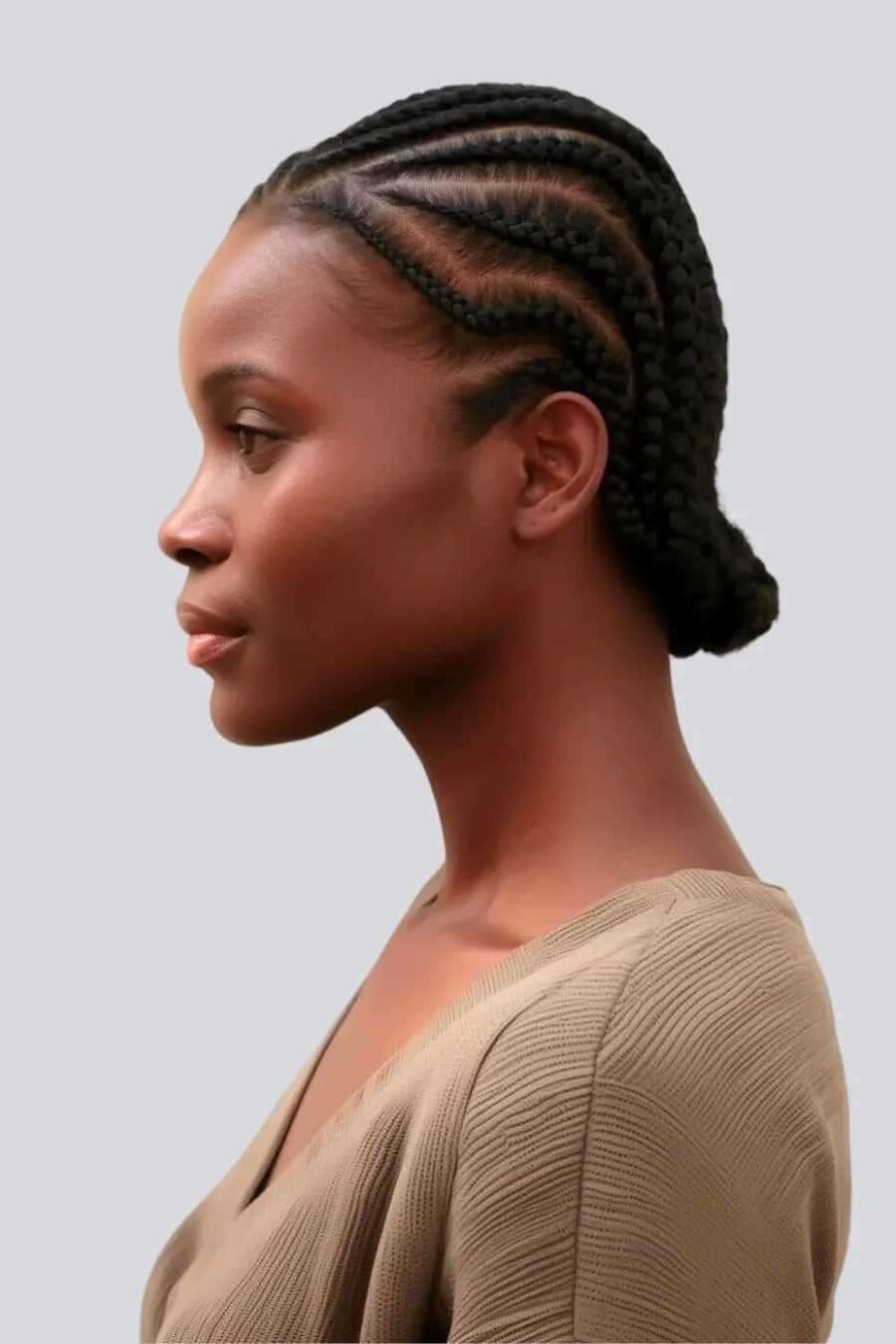
The answer is in the parting work: neat, uniform rows that feed into one thick braid at the nape, then fall to mid-back. Thick, coily hair of mid-back length helps the rows stay defined without slipping. Ask your stylist for: neat cornrows transitioning into a single braid. Apply a finishing spray to keep the single braid smooth and prevent flyaways.
13. Shoulder-Length Cornrows
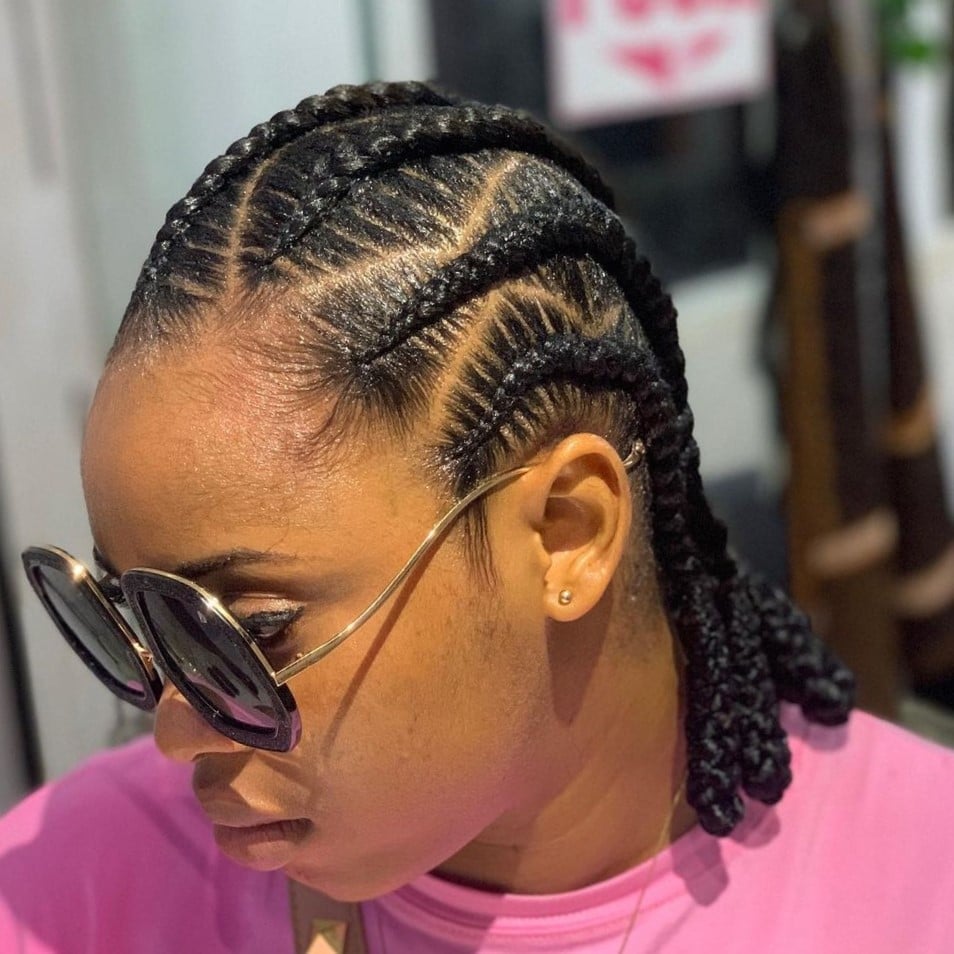
Shoulder-length cornrows sit somewhere between the time commitment of a full-length install and the boldness of a short crop. Unlike longer braids that can feel heavy, this length lets the cornrow pattern read clearly without extra weight pulling at the roots. It suits thick, coily natural hair that can hold the structure without frizz creeping in by day three. Ask your stylist for: shoulder-length cornrows. Use a scalp serum along the parting to keep it clean and moisturized.
14. Cornrows With Grey Streaks
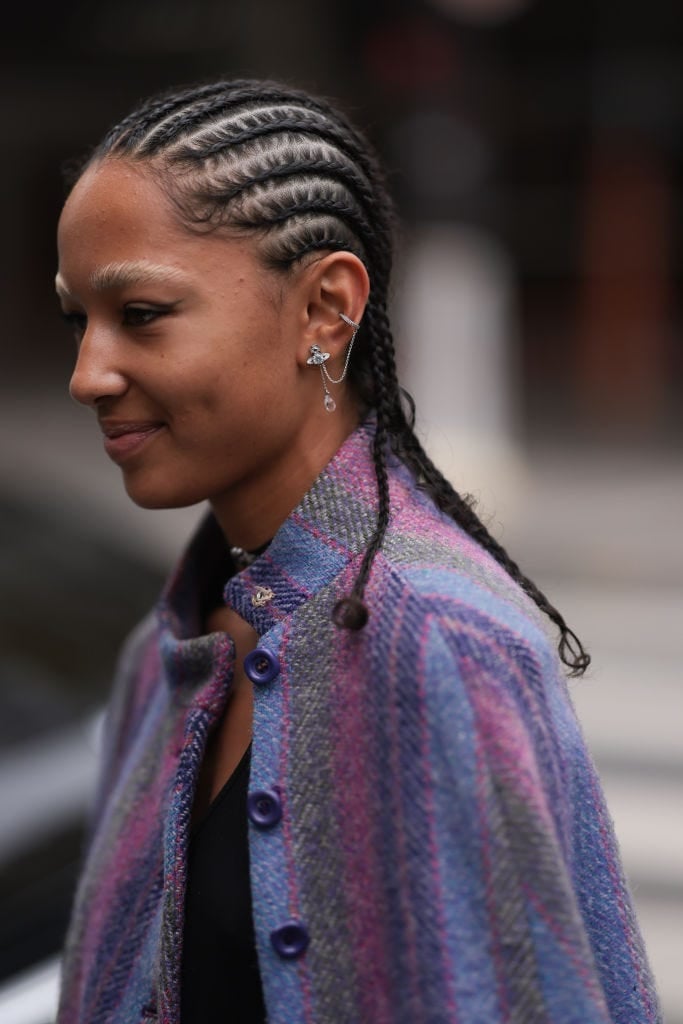
Grey streaks in cornrows create a silver contrast against black hair. This is a salon-only color job. The stylist adds the grey strands during the braiding process. A touch-up visit every four to six weeks is required to keep the silver from fading into dull brassiness. It works on thick natural hair of shoulder length. Ask your colorist for: shoulder-length cornrows with grey streaks. A silk scarf will help preserve the style and prevent friction.
15. Large Braids With Sleek Edges
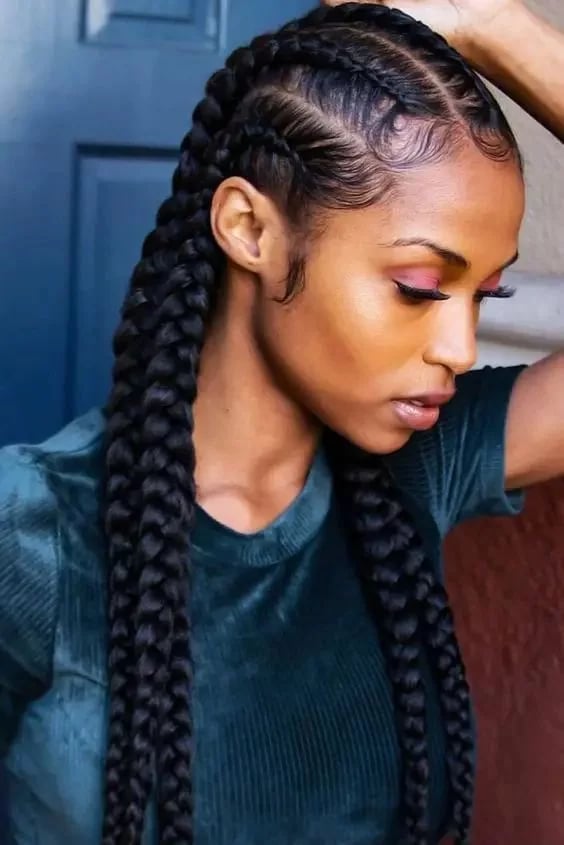
Large braids make a case for going bold: fewer sections mean faster install time and braids that form one solid unit instead of a tangle of fine rows. The sleek edges and straight, thick texture keep the look polished, while the mid-back length adds drama without overwhelming a longer face shape. Ask your stylist for: large neat braids with sleek edges. Use a soft brush and edge control product to maintain the sleekness of the hairline.
16. Natural Hair With Braided Accents
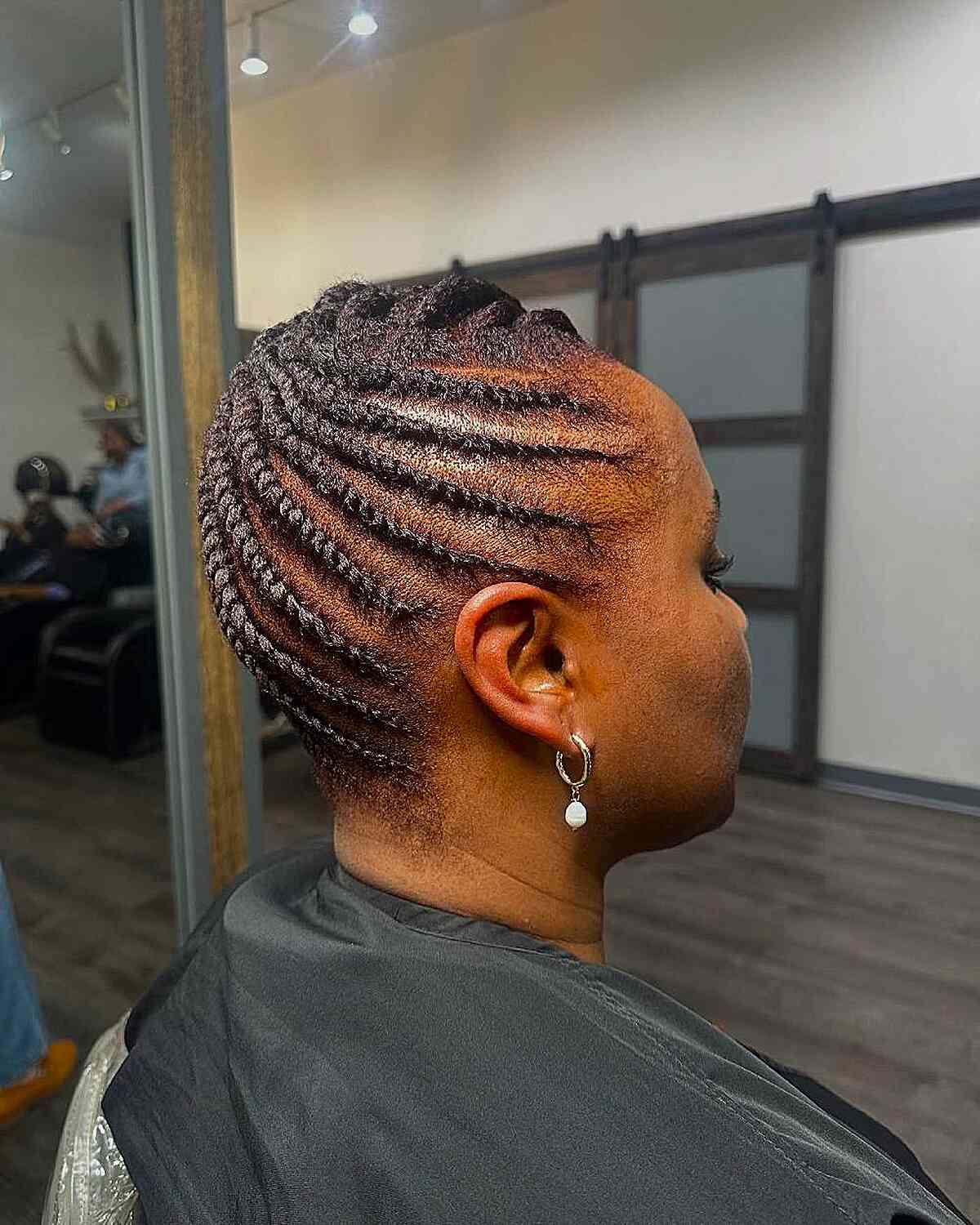
Braided accents woven through thick, coily black hair create a texture contrast that looks planned, not random. The middle parting keeps the natural sections symmetrical while the braids break up the volume at mid-back length. This style suits those with dense, coily hair who want movement without losing the integrity of their natural pattern. Ask your stylist for: natural hair with braided accents. The braids hold their shape for weeks, but the natural sections need a moisturizing oil every few days to stay soft and defined.
17. Sophisticated Braided Updo
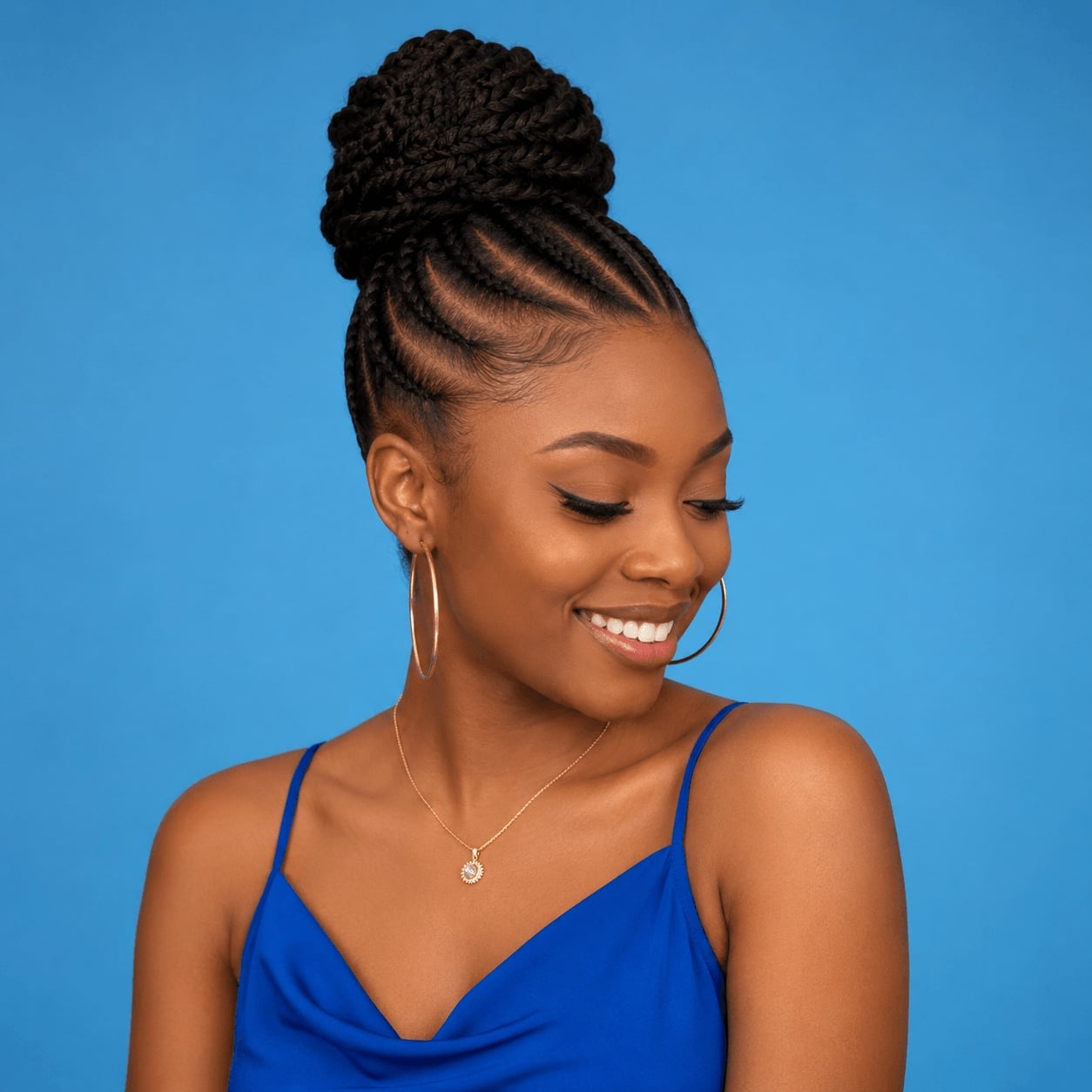
Neat cornrows sweep back from a middle parting and gather into a high braided bun, a style that holds its polish from morning meetings to evening receptions. The black, shoulder-length hair is thick enough to support the weight of the updo without slipping. Ask your stylist for: sophisticated braided updo with cornrows. A strong-hold hairspray keeps every strand in place, and the style survives a full day of activity, making it a reliable choice for weddings or formal gatherings where you want a low-maintenance look.
18. Braided Updo With Nape Bun
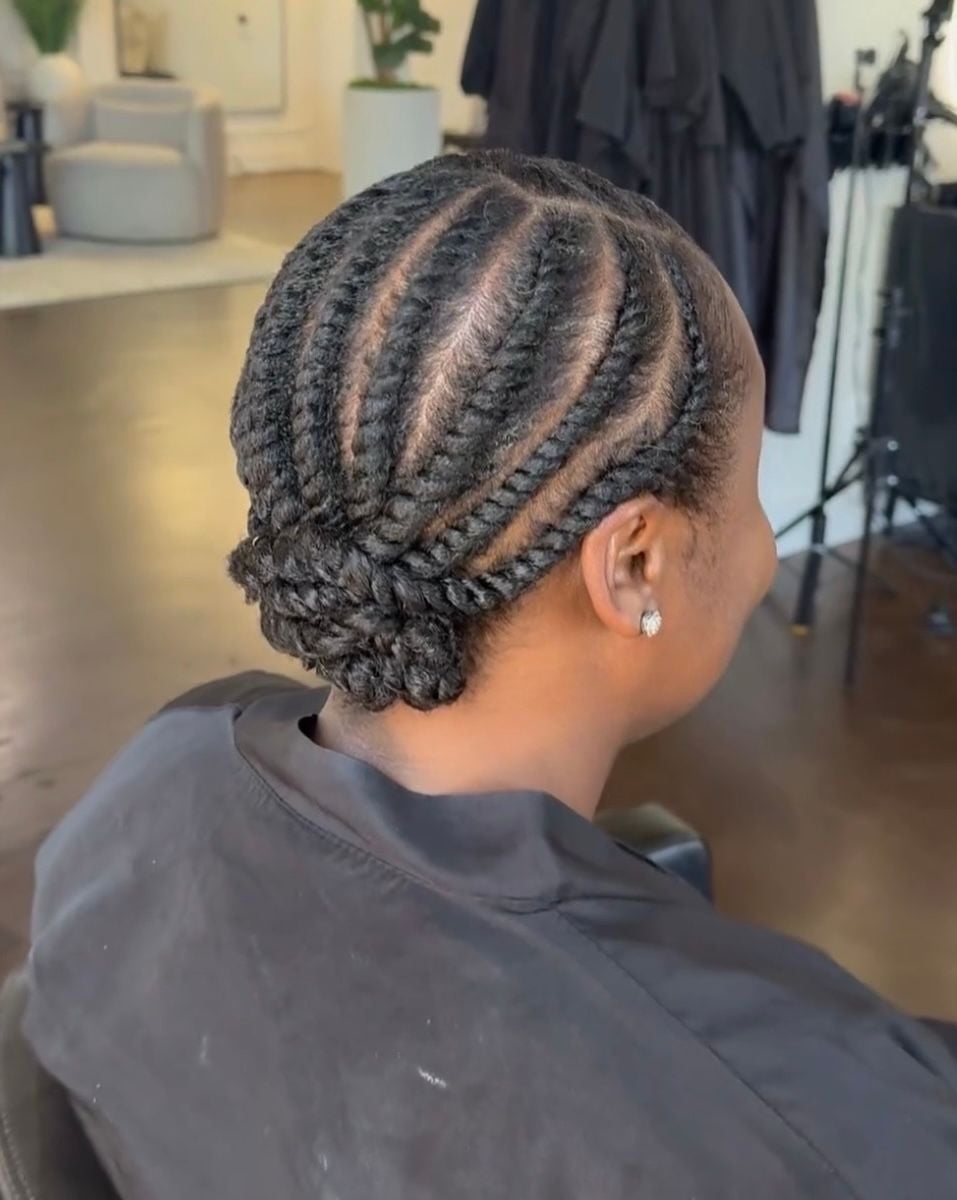
How do you keep a braided updo from looking messy by lunch? The answer is in the nape bun. This style takes thick, coily black hair and tucks every braid into a neat bun at the nape, with a middle parting that frames the face. It works best on shorter hair that might otherwise be too heavy for a high bun. Ask your stylist for: neat braided updo with a bun at the nape. The key is tight pinning and a strong-hold gel to keep the bun secure from morning to evening.
19. Fine Micro Braids Updo
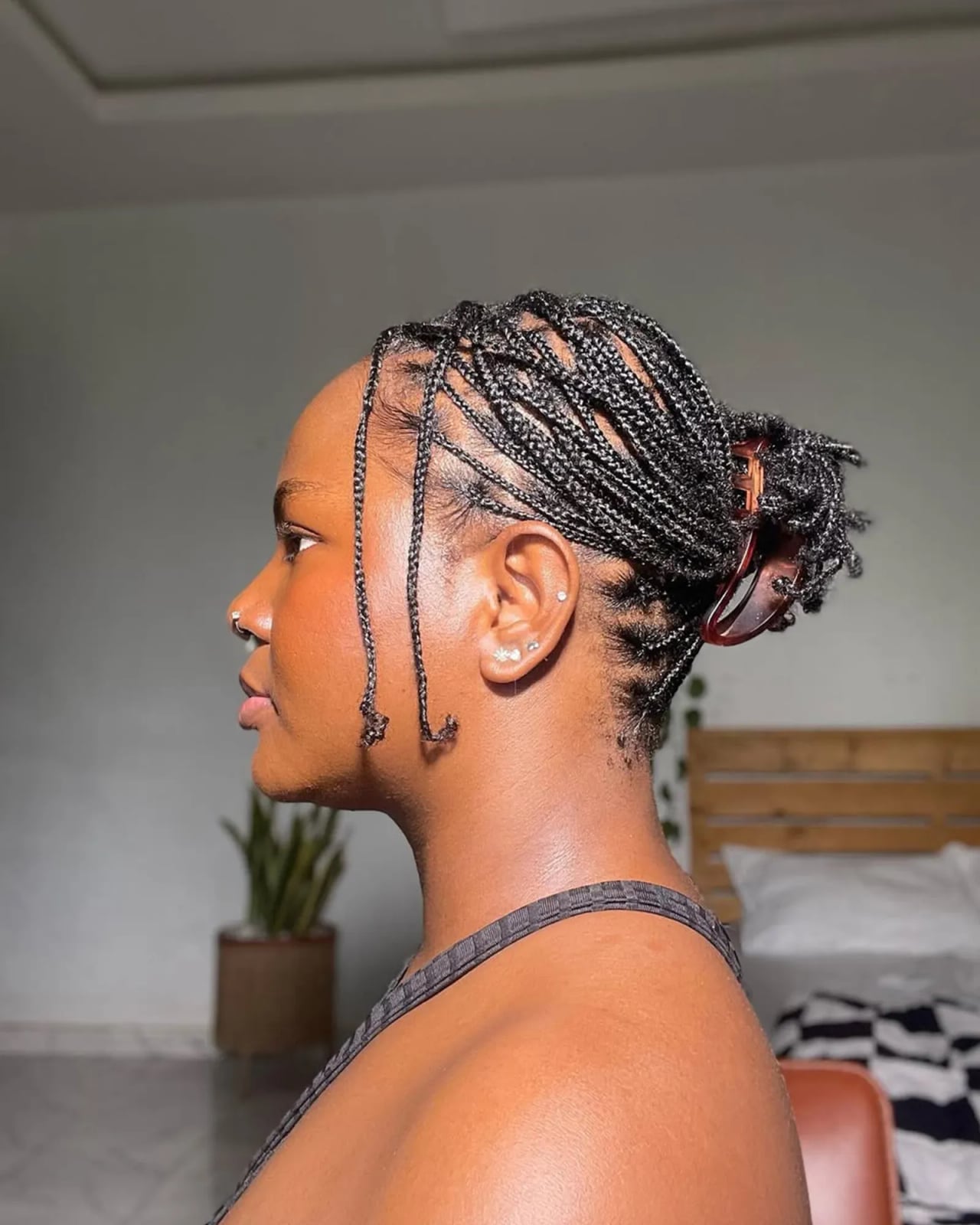
The main mistake with fine micro braids is letting them get too long and heavy, which causes the updo to sag. Here, the braids are short enough to gather into a bun on top of the head, with a few loose strands left to soften the face. This is a salon-leaning style; the braiding alone takes hours, and fine hair can be prone to unraveling at the ends. Ask your stylist for: fine micro braids into a bun with face-framing strands. A light-hold hairspray keeps the loose pieces in place without weighing them down, but fine braids require more frequent maintenance than thicker ones.
20. Short Twists With Side Braids
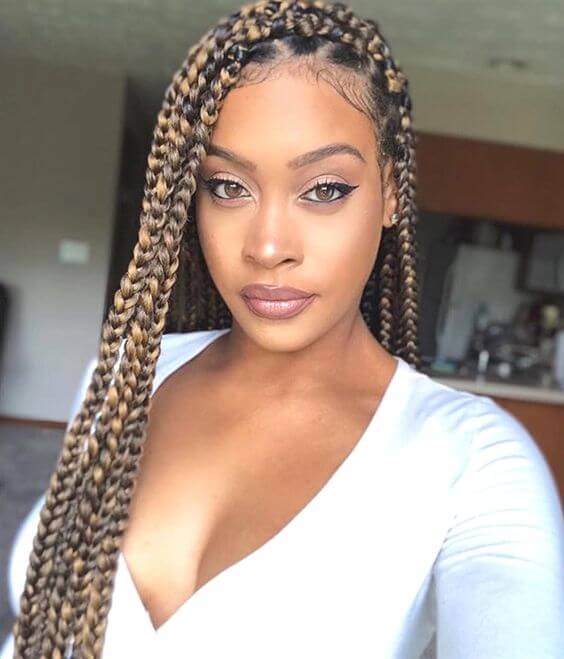
Short twists that frame the face get a modern edge when a few twists along the side are braided instead. The chin-length, coily black hair has enough thickness to hold the twist pattern, and the middle parting keeps the look neat. This is a practical choice for warmer weather when longer hair feels heavy, and it suits an active lifestyle because the braided sections stay put. Ask your stylist for: short twists with side braids. A moisturizing balm keeps the twists soft and defined, and the style holds its shape for several weeks with minimal fuss.
21. Final Thoughts
For intricate cornrows or detailed braided patterns, consult a professional braider. For simpler styles like box braids or braided updos, consider your dexterity and available time for maintenance. Fine hair: keep braids snug but not tight. Thick hair: let the weight of the braids do the work.
- Maintain braids with regular moisturizing sprays to keep the scalp and hair hydrated.
- Protect braids at night with a silk or satin bonnet or scarf to prevent frizz.
- Avoid excessive tension on the hairline to prevent breakage and traction alopecia.
- Refresh styles by re-braiding edges or securing loose strands as needed.
- Schedule touch-ups or re-braiding every 4-8 weeks, depending on braid type and growth.
Embrace the artistry of braids for a style that’s both beautiful and functional.