There is a point when adding one more trend makes an outfit less useful rather than more current. A look begins to feel clear once the jacket, trouser, or shoe that matters most has enough open space around it; the rest can relax into supporting roles. That quieter hierarchy gives men’s outfits a fresh modern reset instead of a feeling that every piece is asking for equal attention.
Before getting dressed, pick the proportion you want to protect – a compact upper layer, a long trouser line, or a bright center – and remove anything that interrupts it. Then test the outfit from a few steps away: if your eye cannot tell what the main decision is, simplify a texture, color, or accessory. The result is usually more comfortable too, because it relies on a strong shape instead of constant adjustment.
1. Black Bomber Softened With Faded Denim
The black bomber is the anchor here, but the pale hooded layer peeking from its collar prevents the jacket from reading overly severe. Faded straight jeans widen the visual field beneath the short, dark top half, so the outfit has a casual horizontal balance rather than a tight column. Dark shoes repeat the jacket’s weight at ground level and make the washed denim feel intentional instead of merely worn in.
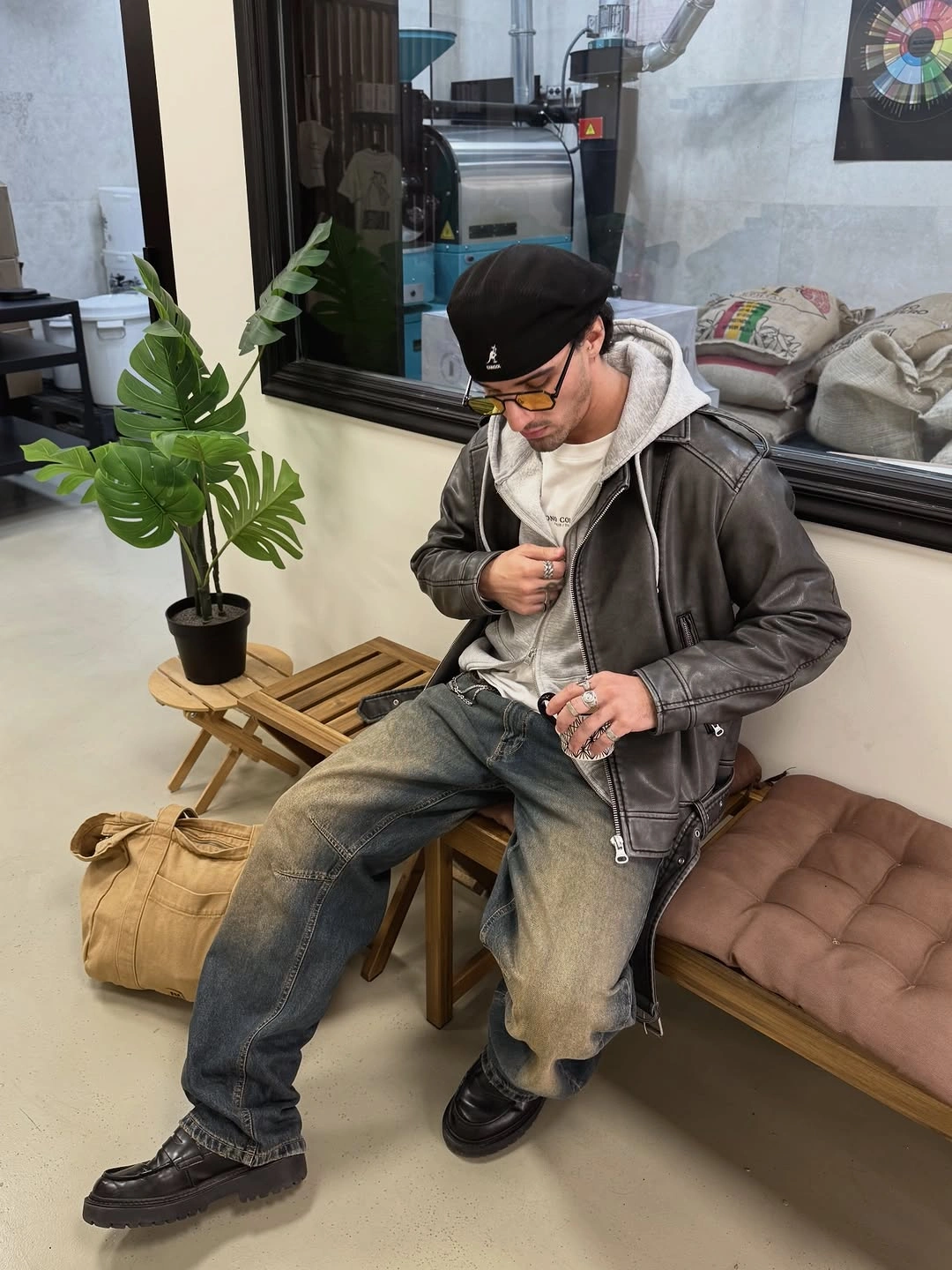
A similar pairing works best when the jean has enough room through the leg to contrast with the compact outer layer. If the bomber is very cropped, choose a hoodie that lies flat at the hem; a bulky pouch pocket can interrupt the clean line between jacket and denim. The restrained palette also leaves space for small details such as a cap or watch without turning the look into an accessory exercise.
What keeps this combination practical is its clear split between structured outerwear and familiar denim. Swap the faded jeans for a darker straight pair when you want a quieter result, or keep the lighter wash and reduce contrast with charcoal footwear. The outfit relies on that easy difference in texture and proportion, not on a particular label or finish.
2. Brown Zip Jacket With Quiet Cream Trousers
This dark brown zip jacket gives the outfit a soft, rounded surface, while the white crewneck and off-white trousers create a light vertical base beneath it. The jacket sits higher and broader than the trousers, which makes the pale lower half look deliberate instead of delicate. That warm-to-light transition is especially useful when an all-black outfit would feel too closed in.
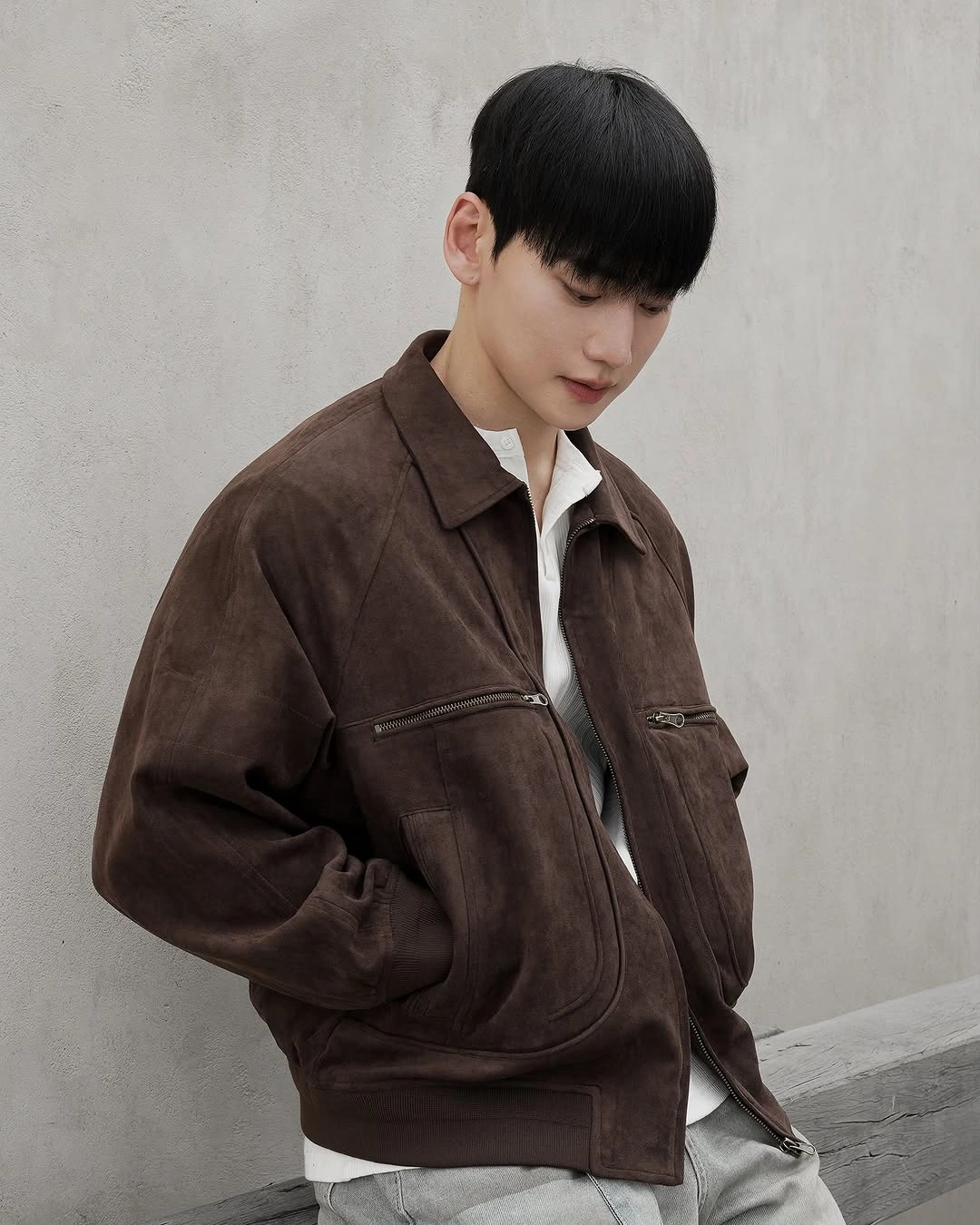
To borrow the idea, let the trousers stay wide and unbroken through the front rather than adding a busy belt or strong contrast shoe. A plain white T-shirt can replace the crewneck, but keep the neckline simple so the zip jacket remains the visible focal point. The main tradeoff is maintenance: pale trousers show street dust quickly, so this balance asks for a little more care than darker denim.
The appeal comes from restraint rather than a formal dress code. Brown outerwear supplies warmth without demanding a full matching set, and cream below it keeps the silhouette open. If the jacket looks more matte than yours, use cotton twill or brushed-looking fabric as a visual substitute, but avoid forcing a polished shoe into a look that works because it stays relaxed.
3. All-Black Shirt With A Tailored Line
A black button shirt tucked into matching trousers turns a simple dark palette into a long, uninterrupted line. The collar and front placket add enough structure to distinguish the upper half from a basic knit, while the neat trousers keep the shape close without looking squeezed. Even with no visible color contrast, the difference between the shirt’s soft drape and the cleaner pant leg gives the outfit definition.
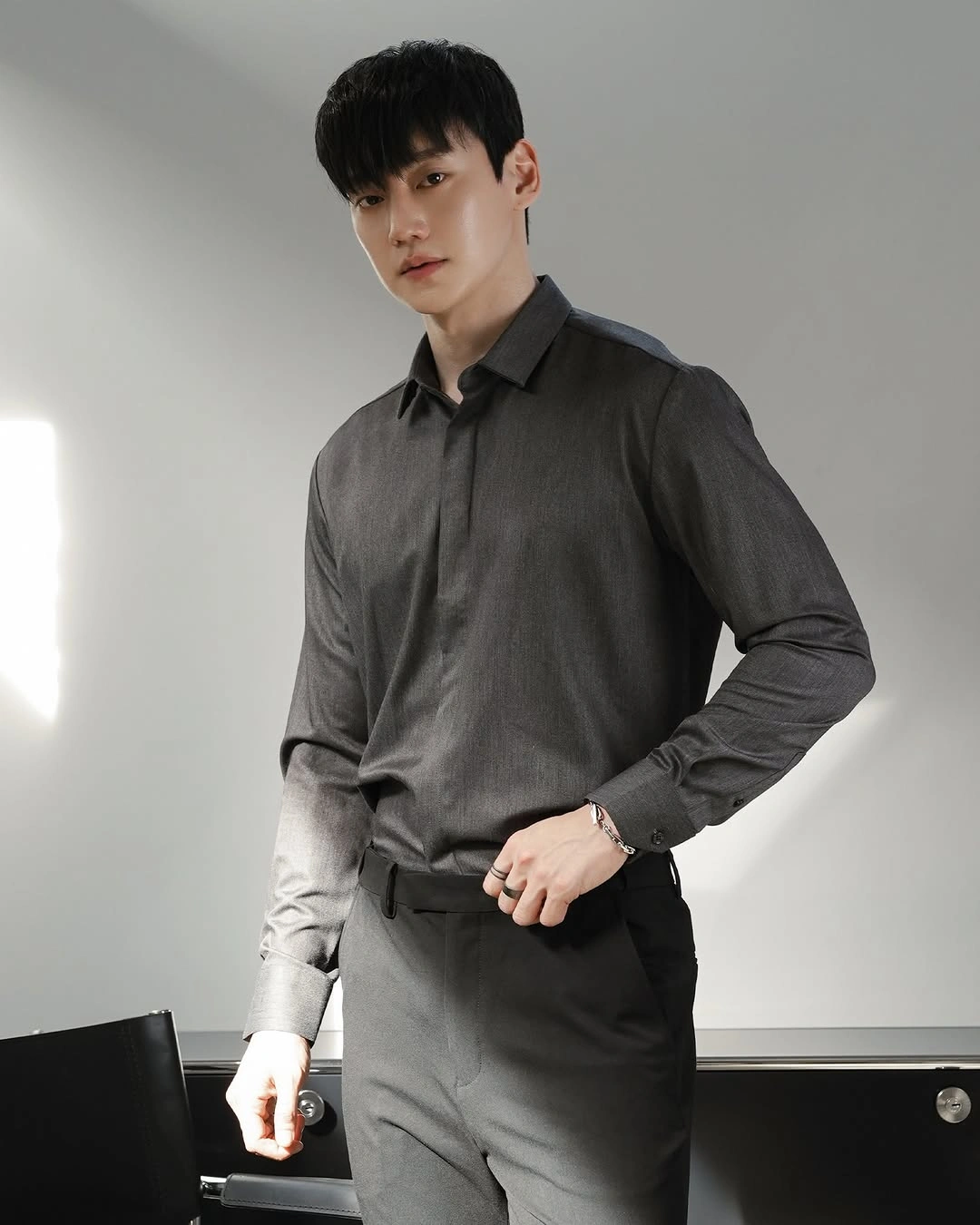
Men’s business casual often benefits from this kind of tonal clarity when the pieces are allowed to fit with a little ease. Keep the shirt sleeves long and the hem tucked cleanly, then choose a shoe with a low profile so attention does not stop at the ankle. A very glossy belt or oversized watch would compete with the quiet precision that makes the outfit work.
The limitation is that dark-on-dark exposes fit more than it hides it. A shirt that pulls across the chest or trousers that break heavily over the shoe will make the column feel unsettled. Try a slightly roomier trouser before adding extra layers; the line can stay formal enough for a smart setting without becoming rigid.
4. Graphic Tee With Loose Dark Denim
The graphic T-shirt is small in scale, so the loose dark jeans become the bigger statement through their volume and texture. Sunglasses sharpen the upper half, but the relaxed leg keeps the outfit from feeling like a fully styled performance. There is a useful tension between a fitted dark top and denim that sits wide and casual through the knee.
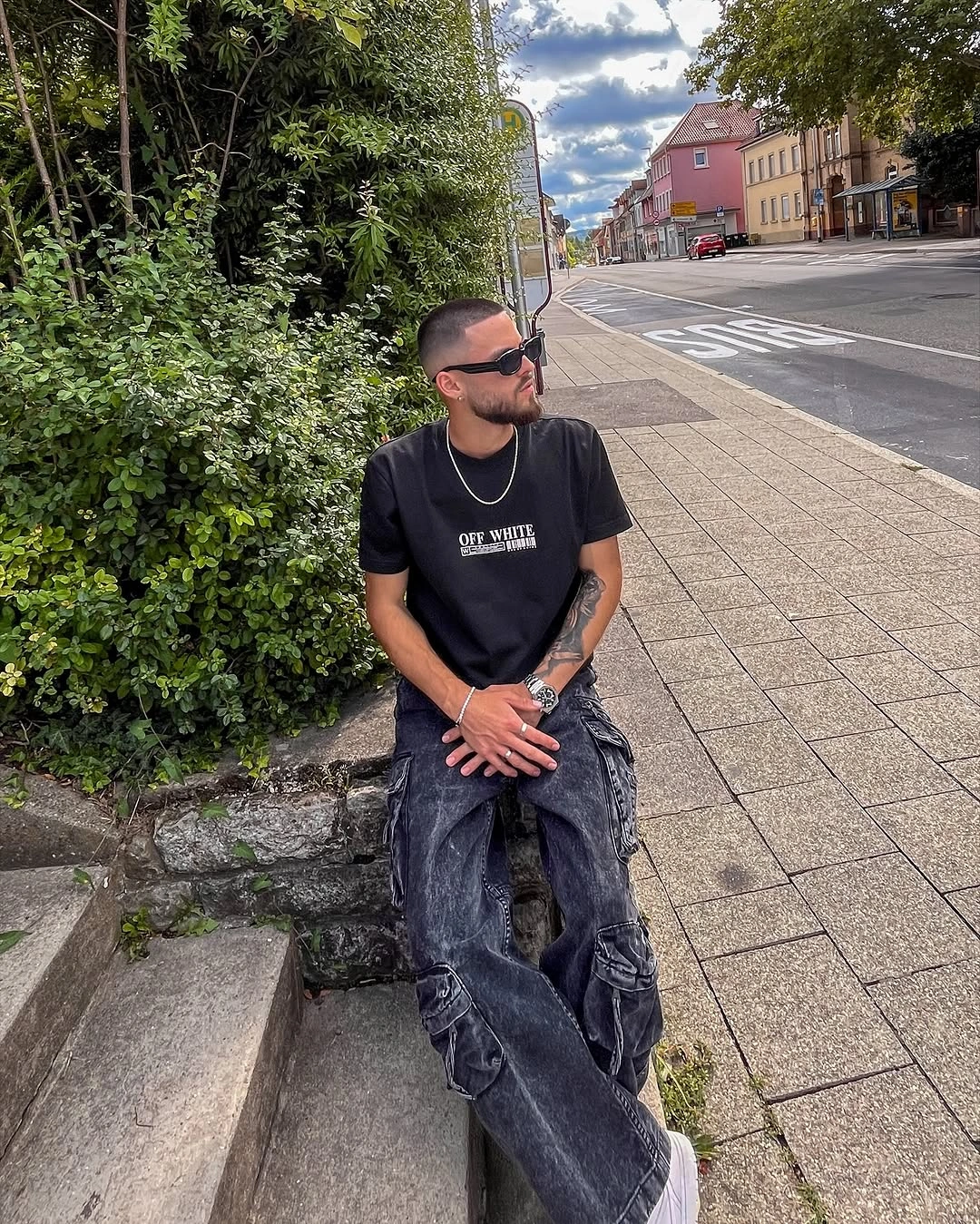
For a casual version, choose one graphic with open space around it rather than a shirt packed with text from collar to hem. The jeans can be straight or fuller, yet they should fall cleanly enough that the silhouette reads as intentional when standing still. A simple low sneaker or dark boot will keep the base quiet; a bright shoe may make the graphic and denim compete for the same attention.
Loose jeans also change how the outfit moves, which is part of their appeal and their tradeoff. They look best with a top that stays close enough to reveal the waist area, otherwise the whole shape can become too broad. Rolling the hem is optional, but avoid a heavy stack at the ankle if you want the relaxed volume to feel contemporary rather than careless.
5. Varsity Layers Over A Dark Base
The brown and cream varsity-style jacket creates the clearest contrast in this look, particularly against the black trousers below it. Its lighter sleeves pull attention outward across the shoulders, while the darker center panel keeps the jacket connected to the pants. That arrangement gives a familiar athletic shape more definition than a single-color outer layer would have.
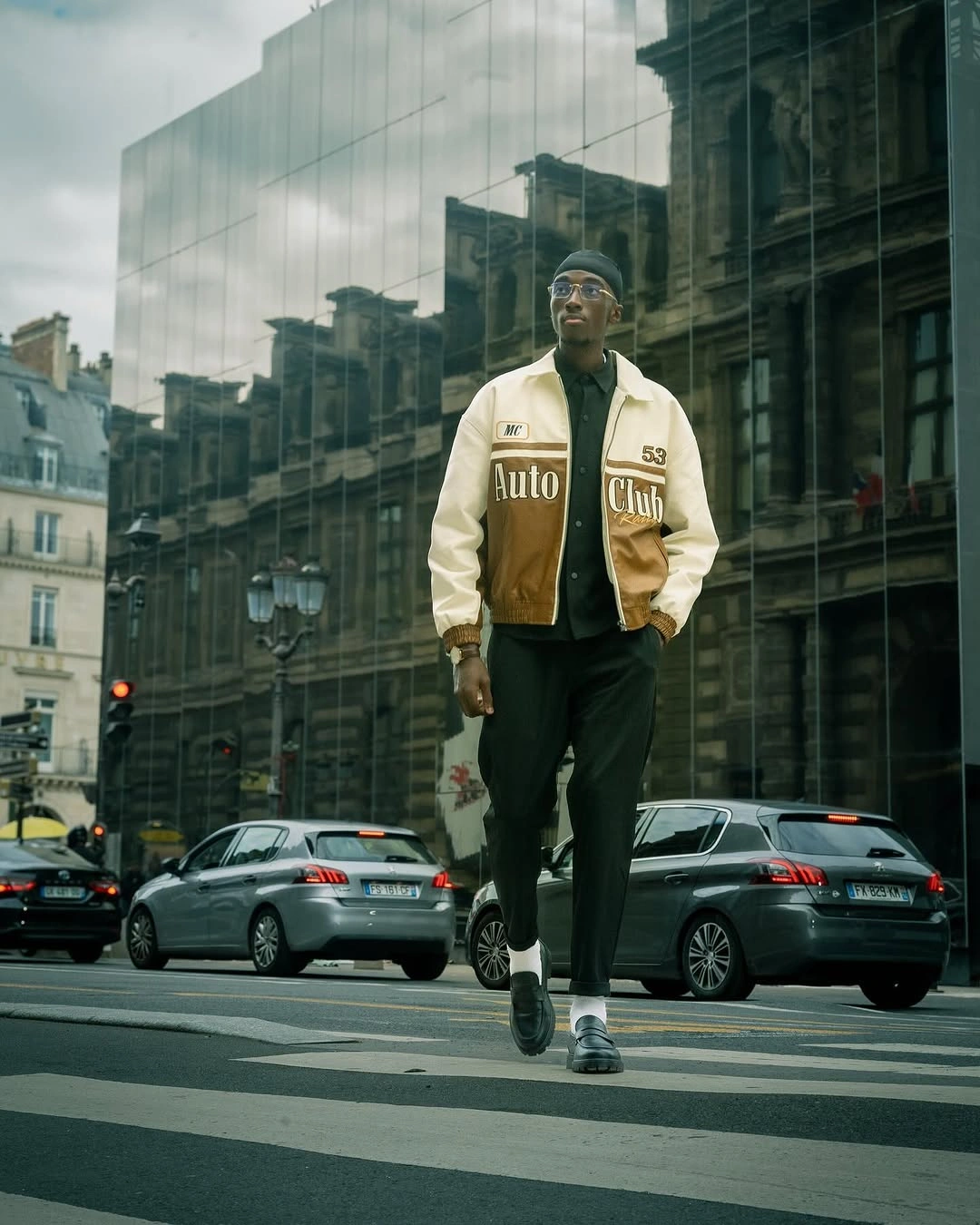
If you want to adapt the idea, let the trouser remain dark and straight so the jacket’s two-tone construction can do the visual work. A black tee underneath is enough; adding another logo, cap, and bold sneaker at once would dilute the jacket’s crisp blocks of color. The sunglasses fit because they echo the dark base, not because they introduce a new style story.
This is one of those men’s outfit ideas where proportion matters more than nostalgia. A jacket that ends near the hip keeps the contrast contained, but a much longer version can make the lower body appear shorter. When the sleeves are pale or bright, keep footwear simple and consider a cleaner denim alternative if black trousers feel too stark for your routine.
6. Gray Cardigan And Pleated Dark Trousers
A gray cardigan makes the white tee feel more considered without hiding its clean neckline, while dark pleated trousers add shape below. The cardigan is relaxed through the body, yet the trouser pleats create a vertical direction that stops the outfit from becoming overly soft. That mix is useful for anyone who likes knitwear but still wants the lower half to look composed.
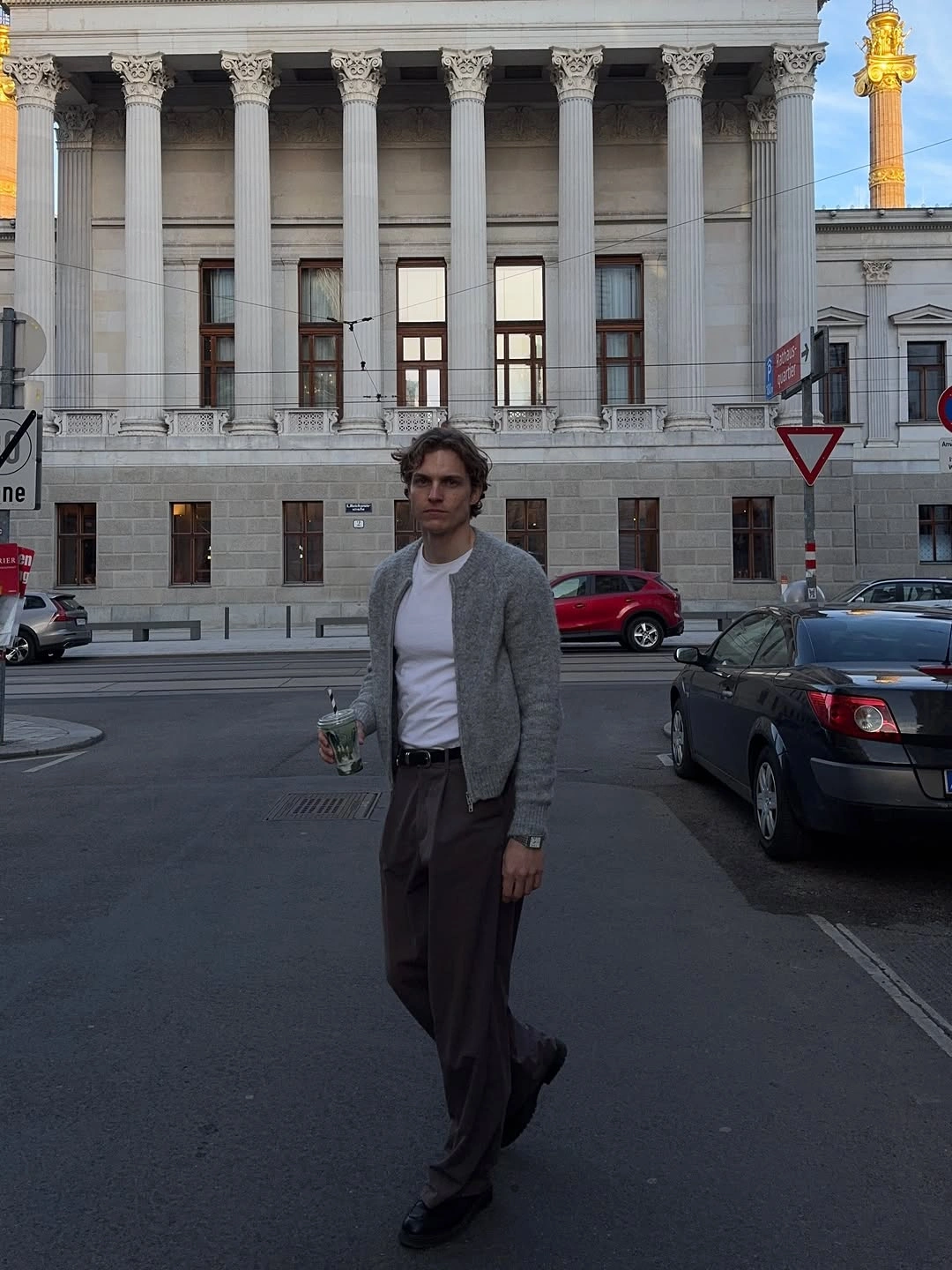
Try leaving the cardigan open so the white center line can brighten the outfit and make the layers easier to read. The trousers do not need a sharp crease, but they should hold their own shape rather than collapsing around the shoe. A thin leather belt or understated loafer can work here, though neither is necessary when the gray, white, and dark palette already has enough separation.
The practical advantage is flexibility across different levels of dress. Button the cardigan for a quieter appearance, or replace it with a similarly soft zip layer if you prefer a less classic shape. Just keep the T-shirt plain and the pants relatively fluid; too many fitted pieces would erase the relaxed balance that makes the look feel current.
7. Warm Overshirt Against A Black Foundation
The warm brown overshirt sits over a black T-shirt and black trousers, so it functions almost like a frame around a single dark interior. Its visible buttons and chest pockets give the upper half a workwear-like structure without requiring extra accessories. Because the black base is continuous, the brown layer reads as a purposeful outer shape instead of just another shirt.
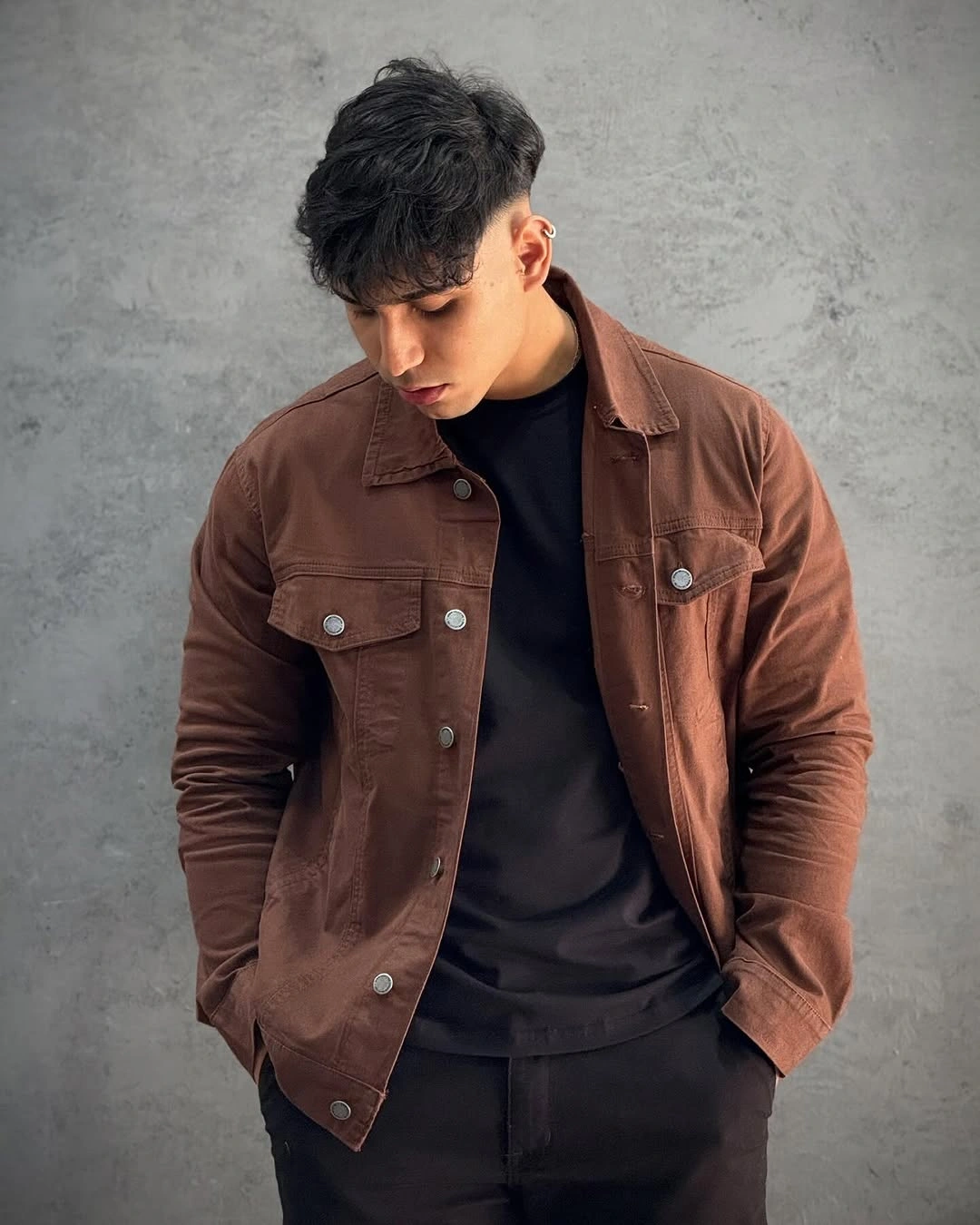
Use an overshirt with a little room in the shoulders and leave it open when you want that framed effect. The pants can be tailored or straight, but a very skinny leg would make the heavier upper layer look top-heavy. Keeping the shoe dark helps the eye travel from the brown collar down through the black base in one calm movement.
There is also an easy editing lesson here: one warm layer is enough to change a dark outfit. Add a second tan accessory only if it is very small, since matching every brown note can make the styling feel arranged. On a warmer day, exchange the overshirt for a lighter cotton version and keep the same black base for a simpler transition.
8. Textured Dark Layers With A Flat Cap
This outfit gets its character from surface variation rather than color: a ribbed zip layer, a checked shirt, black utility trousers, and a muted flat cap all stay within a dark family. The checked panel breaks up the front of the jacket, while the cap adds a low, rounded counterpoint to the stronger vertical lines. It is detailed, but the restricted palette keeps the pieces from looking disconnected.
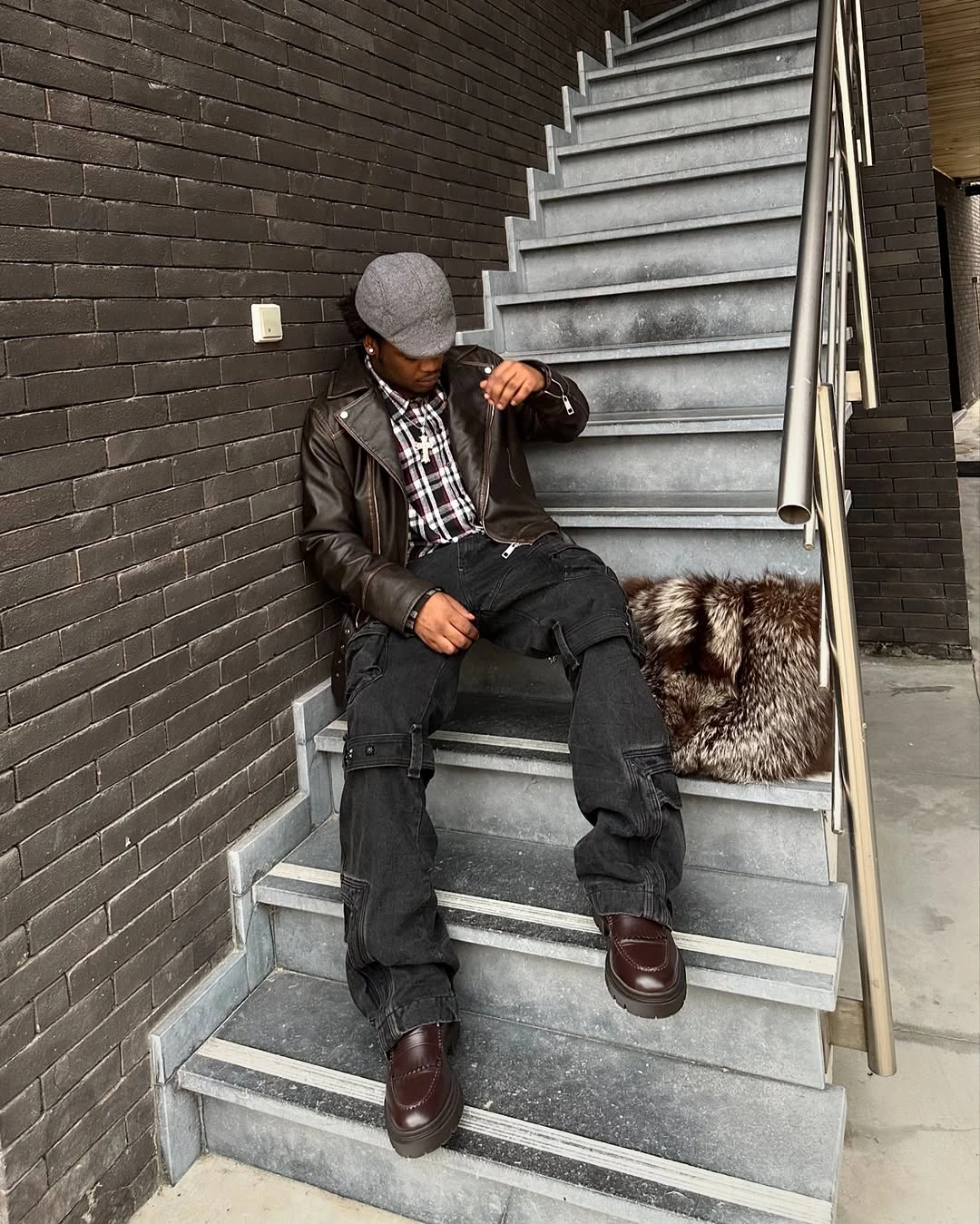
When working with several dark textures, decide which one is allowed to be most noticeable. Here, a small amount of check is enough, so a larger plaid trouser or patterned sneaker would be unnecessary. The utility pants can be swapped for straight black denim if you prefer less pocket detail, but preserve some contrast between the top layer and the base shirt.
The flat cap is optional rather than essential, which makes this a helpful formula for cooler casual outfits. Without it, the jacket and shirt still provide enough interest through their different surfaces. If you do add headwear, keep it matte and subdued; a bright cap would pull focus upward and undo the steady, grounded quality of the outfit.
9. Black Bomber With Khaki Straight Trousers
The black bomber gives this look a compact upper boundary, while khaki trousers introduce a softer neutral through the leg. That change in value makes the pants visible without turning them into a loud color statement. The result is a clean everyday contrast: dark and close near the shoulders, lighter and more open from the waist down.
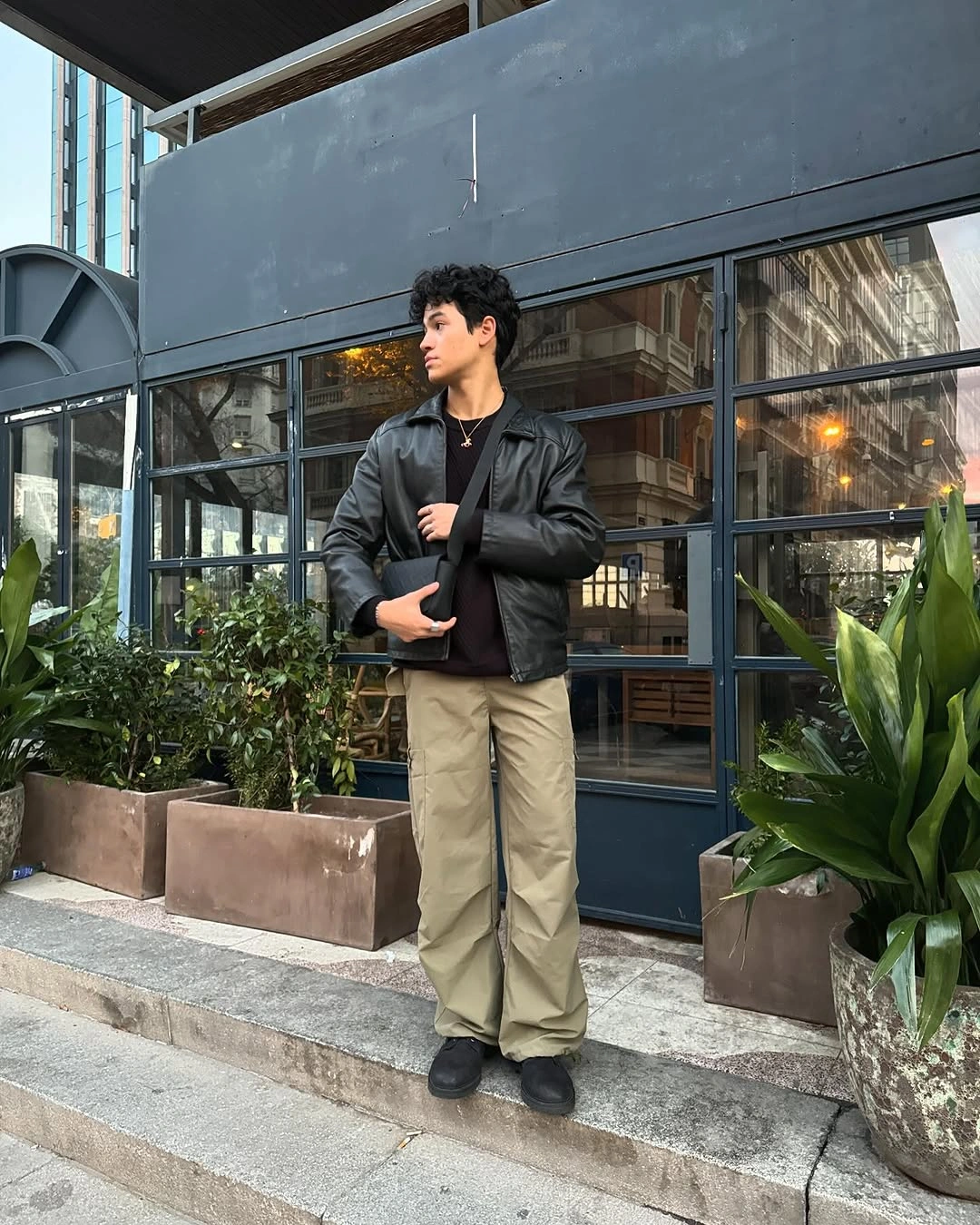
Khaki works particularly well here because it has enough depth to stand beside black without looking like a summer-only choice. Choose a straight trouser that reaches the shoe with a controlled break, then keep the inner layer dark to preserve the strong jacket-to-pant transition. White trainers could work, but darker footwear will make the proportions feel calmer and less segmented.
For men who reach for black outerwear often, this is a useful way to avoid repeating the same jeans. The risk is choosing trousers that are too slim, which can make a short bomber look oversized by comparison. Give the leg a little room and let the neutral color do its quiet work rather than adding a statement belt or bright socks.
10. Mustard Shorts With Black Polo Contrast
Mustard shorts make the lower half the focal point, while the black polo keeps the top concise and slightly structured. The short sleeves and collar provide a cleaner edge than a graphic tee would, which helps the saturated shorts feel balanced rather than costume-like. Black boots add weight at the ankle and repeat the shirt’s dark tone in a decisive way.
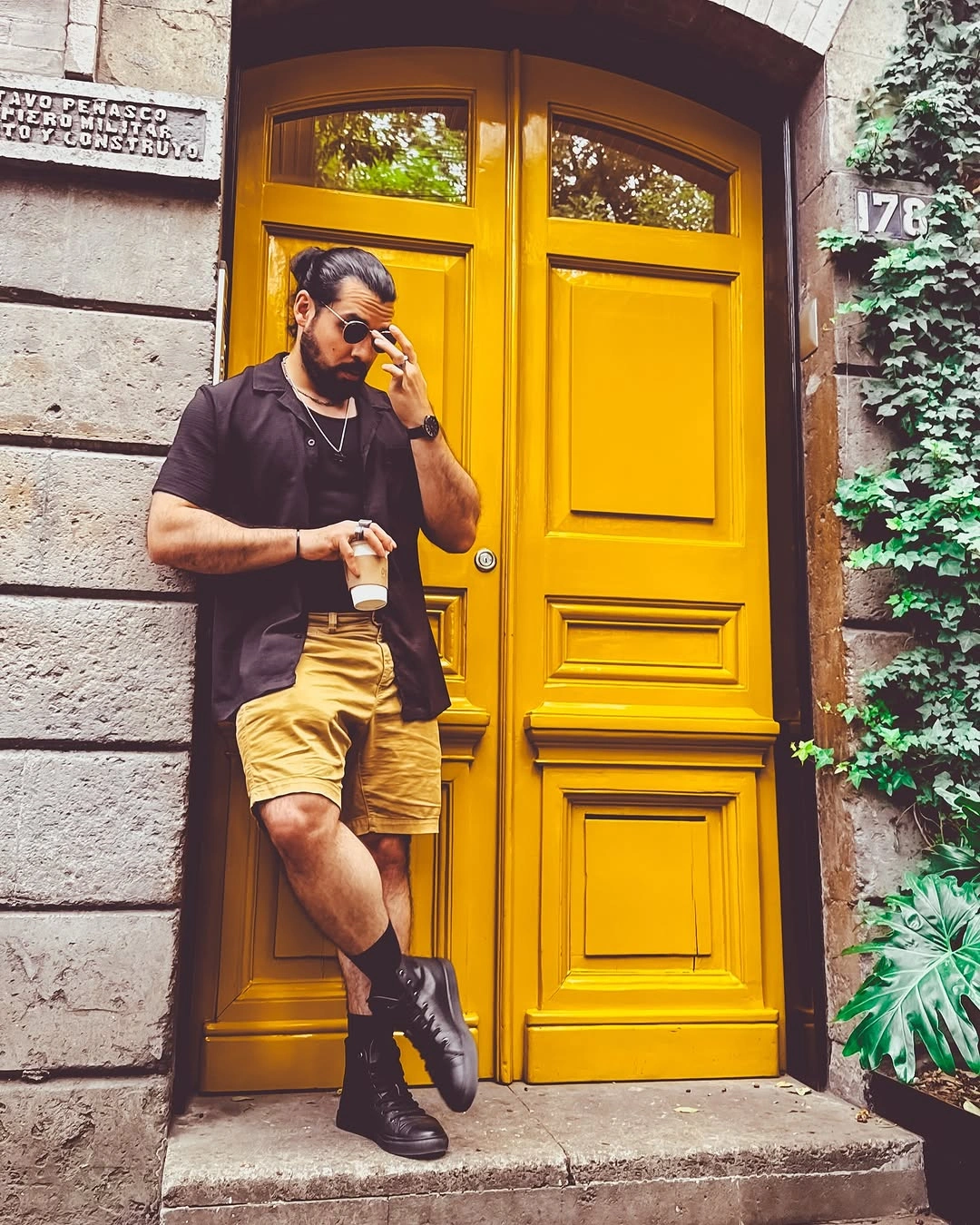
For men’s summer outfits, the key is limiting the color story to one strong lower-half shade and a neutral top. A lighter shoe would make the leg line feel more casual, but the dark boot shown here gives the outfit a sharper, more graphic finish. If boots feel heavy for your day, use black low-profile sneakers and keep the socks visually quiet.
Shorts demand attention because they expose more of the leg and shorten the overall silhouette, so fit matters. Aim for a length that does not crowd the knee and a polo that is neither too long nor too tight across the chest. The mustard color carries enough personality on its own; extra print or a contrasting jacket would weaken the clean two-part composition.
11. Light Knit And Straight Denim Outdoors
A light long-sleeve knit makes the dark jeans feel softer, especially because the top is left simple and unlayered. The straight leg creates a measured line from the waist to the shoe, while the cap adds a small dark accent without disrupting the pale upper half. There is no hard tailoring here, yet the contrast between the knit and denim still gives the outfit a clear outline.
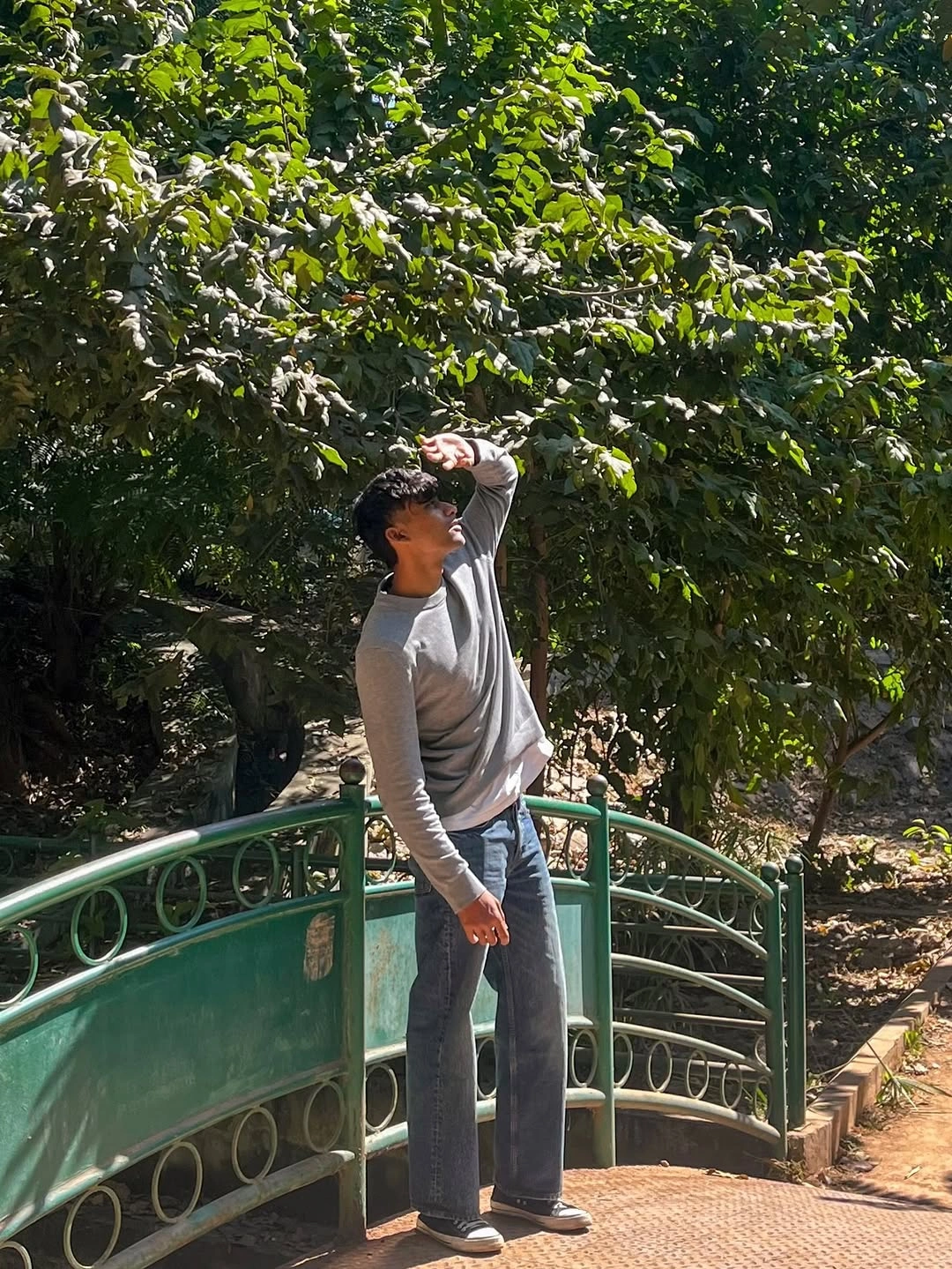
This is a useful answer for days when a jacket would feel like too much but a T-shirt alone would seem unfinished. Choose a knit with a fine or medium surface so it does not balloon over the jeans, and let the hem sit near the top of the pockets. A dark belt can quietly link the cap and jeans, though a visible logo buckle would introduce an unnecessary focal point.
The simplicity leaves room to adjust one variable at a time. Lighter denim would make the look more relaxed, while a darker navy jean would make the pale top appear crisper and more deliberate. Keep the footwear low and uncomplicated; the success of this outfit comes from the gentle tonal contrast, not from a dramatic final detail.
12. Beanie And Open Black Layering
The gray beanie and white crewneck bring lightness to an otherwise black open layer, creating a compact trio of neutral tones. The jacket or cardigan falls loosely around the pale center, so the face and neckline remain visible rather than buried under dark fabric. That little column of white is what prevents the outfit from feeling visually closed.
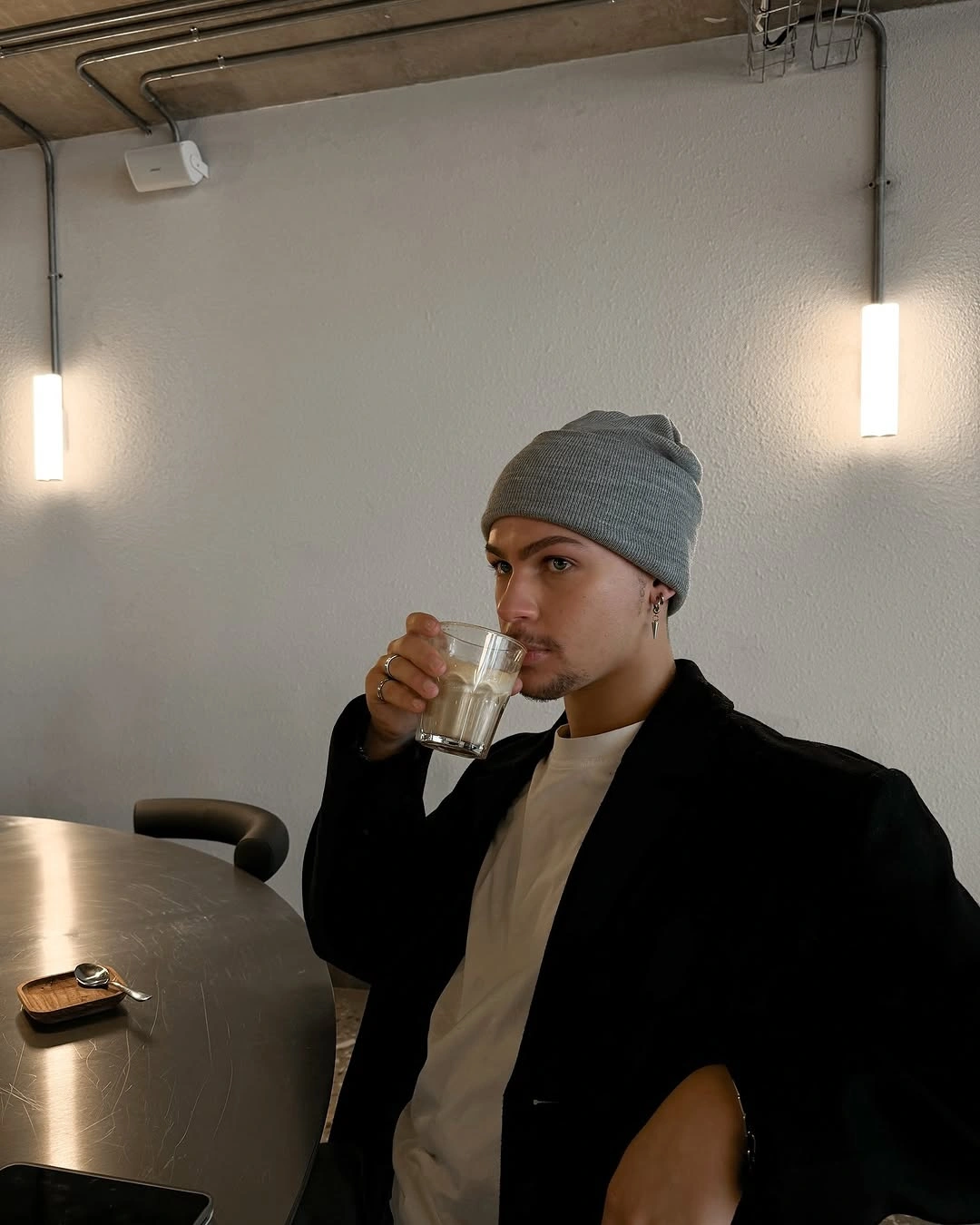
To recreate the balance, keep the base top smooth and relatively bright, then choose an outer layer that hangs rather than cinches. A gray beanie works because it mediates between the black layer and white shirt; a vivid hat would shift the outfit toward a more playful direction. Consider a slightly straighter trouser if you want the relaxed top to feel less oversized overall.
Layering like this is forgiving, but too much bulk at the collar can make the pieces look accidental. Avoid stacking a thick scarf over a high crewneck and large hood unless the rest of the outfit is very streamlined. The best detail is the quiet rhythm of gray, black, and white, which gives a basic formula more visual thoughtfulness.
13. Motorcycle Jacket Over Loose Black Trousers
The motorcycle-style jacket brings a defined shoulder and strong front closure, while the loose black trousers keep the lower half fluid. Because both pieces are dark, the outfit relies on changes in shape rather than color: compact and structured above, long and relaxed below. That contrast makes the leather-look layer feel less aggressive and more like a precise accent.
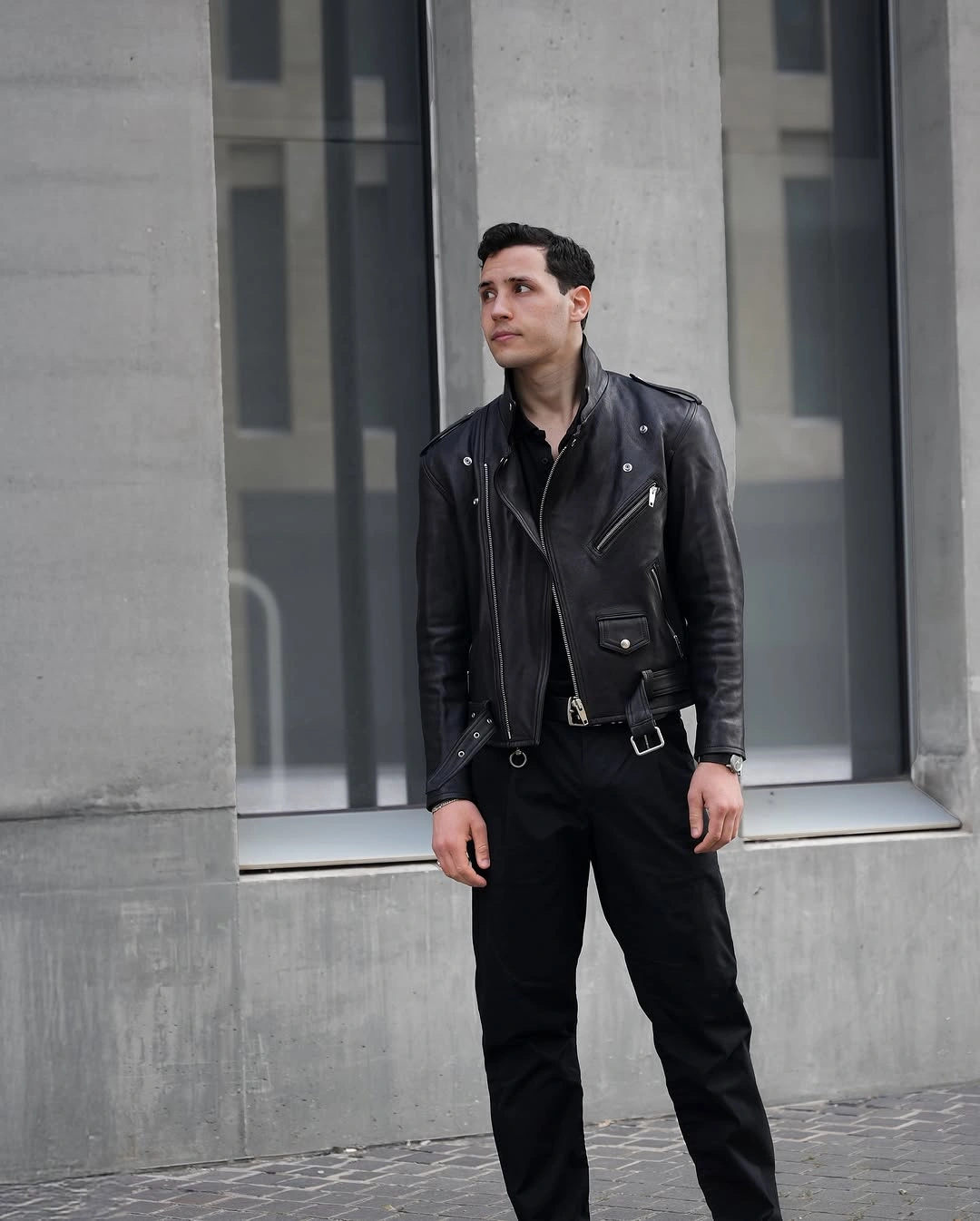
Start with trousers that have a straight or gently wide leg, then add a jacket that ends before the hip is fully covered. The space between those proportions is what lets the outfit breathe. A plain black or charcoal T-shirt underneath is sufficient; graphic layers, chain-heavy accessories, or ornate shoes would crowd an idea that already has a clear visual language.
All-black outfits can feel severe if every surface is smooth and fitted, so the looser pant is doing important work here. If your jacket has more hardware than the one shown, simplify the rest even further and skip a prominent belt. A matte boot or streamlined sneaker will preserve the dark column without introducing a competing shine at the bottom.
14. Checked Blazer With Relaxed Brown Trousers
A tan checked blazer gives this outfit texture at the shoulder, while the brown trousers continue the warmth in a quieter, more solid field. The knit beanie and duffel bag make the tailoring feel less formal, so the blazer reads as a flexible layer rather than a strict suit jacket. The palette stays close enough that the check can remain the most active visual detail.
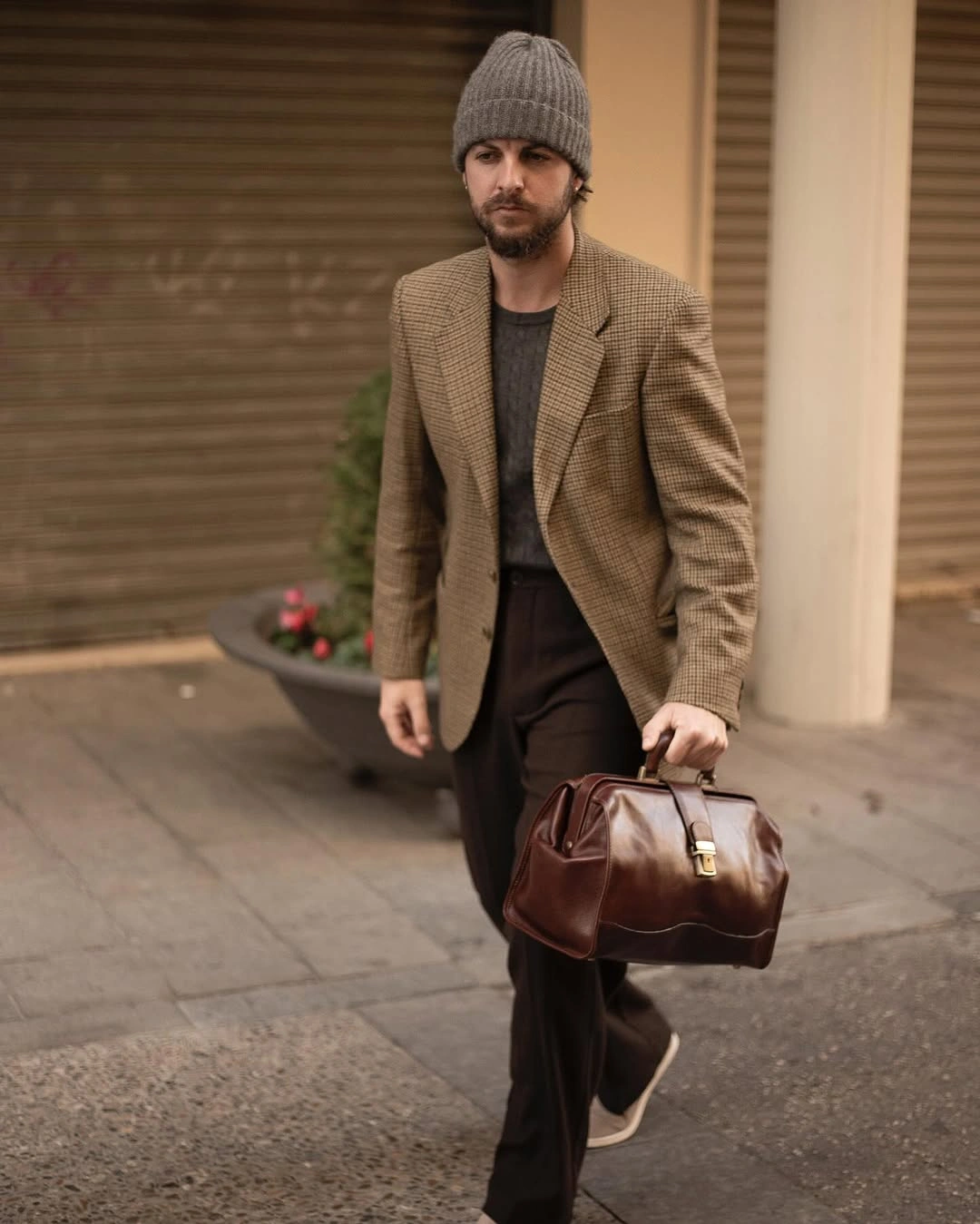
Men’s outfit ideas like this work when the trouser is relaxed enough to offset the blazer’s familiar structure. Pair it with a dark knit or tee and keep the shirt front simple, especially if the jacket already has a visible pattern. A bag with a rounded, unbranded shape can support the travel-ready feeling; a sharply polished briefcase would push the styling toward a different level of formality.
The main caution is color matching. Brown pieces do not need to be identical, and slight variation between the blazer and trousers is what gives the outfit depth. If you prefer less pattern, replace the checked blazer with a plain tan layer but keep the beanie or another muted accessory so the upper half does not become too empty.
15. Long Black Coat Over Pale Shirt
The long black coat is left open over a white shirt and gray pleated trousers, which creates a strong dark frame around a lighter center. The gray pants soften the jump from white to black and keep the lower half from looking like a uniform. It is a useful example of how length can add presence without requiring a complicated stack of layers.
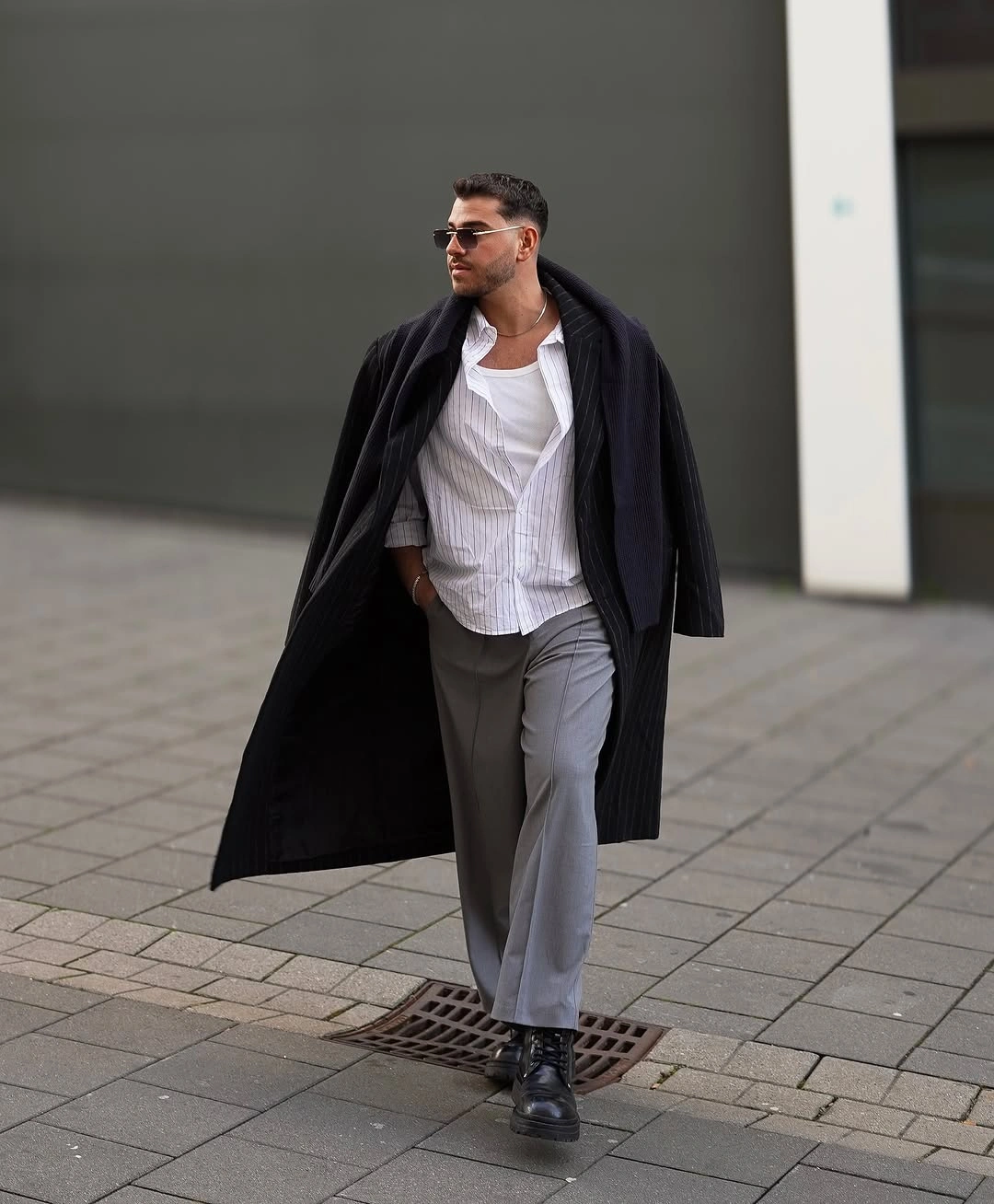
Let the coat stay open if you want its vertical lines to be visible, and choose trousers with enough movement to avoid a narrow, tube-like silhouette. The white shirt does not need a loud collar or pattern because its job is to provide contrast at the chest. A dark shoe with a simple toe shape will continue the coat’s line without making the feet the main point.
This combination can look sharp, but it is not automatically formal. Switching from a pressed shirt to a clean white knit makes it more relaxed, while keeping the gray trouser preserves the soft transition. The tradeoff is volume: a very heavy coat over very wide pants may overwhelm a smaller frame, so edit the width before adding more layers.
16. Tan Overshirt With Dark Denim Structure
The tan overshirt brings a softer outer edge to the dark inner layer and jeans, creating a clear light-to-dark arrangement from top to bottom. Its collar and front buttons give the upper half shape, while black sneakers keep the outfit grounded without pulling attention away from the jacket. The result feels approachable because the colors are familiar, but the proportions are still deliberate.
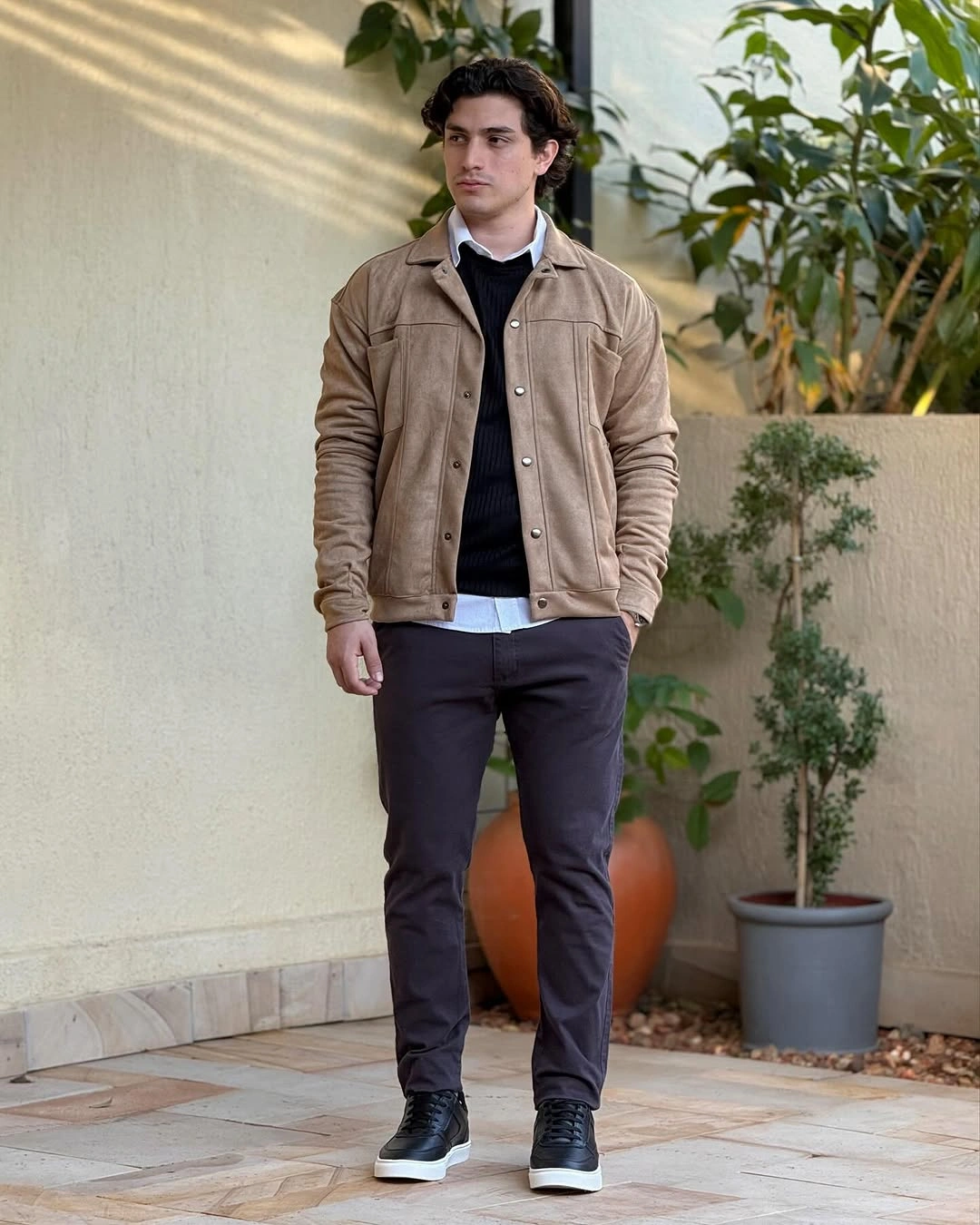
Use an overshirt that is sturdy enough to hold a clean shoulder line, then keep the shirt underneath close to the body so it does not bunch at the waist. Dark jeans are a good choice when you want the tan layer to be the main visible change. A white shoe would create more contrast, but the black sneaker shown here gives the outfit a steadier, more compact base.
The useful variation is to swap the jeans for charcoal trousers when you need a slightly neater finish without changing the relaxed mood. Avoid adding another warm-toned jacket or bag, because the tan overshirt already establishes the color direction. This look succeeds through a single clear outer layer and a disciplined dark foundation.
17. Olive Bomber Over A White Hoodie
The white hood stands out against the olive bomber, making the top half read in two distinct layers rather than one heavy jacket. Pale blue relaxed jeans continue the lightness below, while the darker shoes stop the outfit from floating away visually. The contrast is simple but effective: muted green provides the frame, white supplies brightness, and denim keeps the whole look casual.
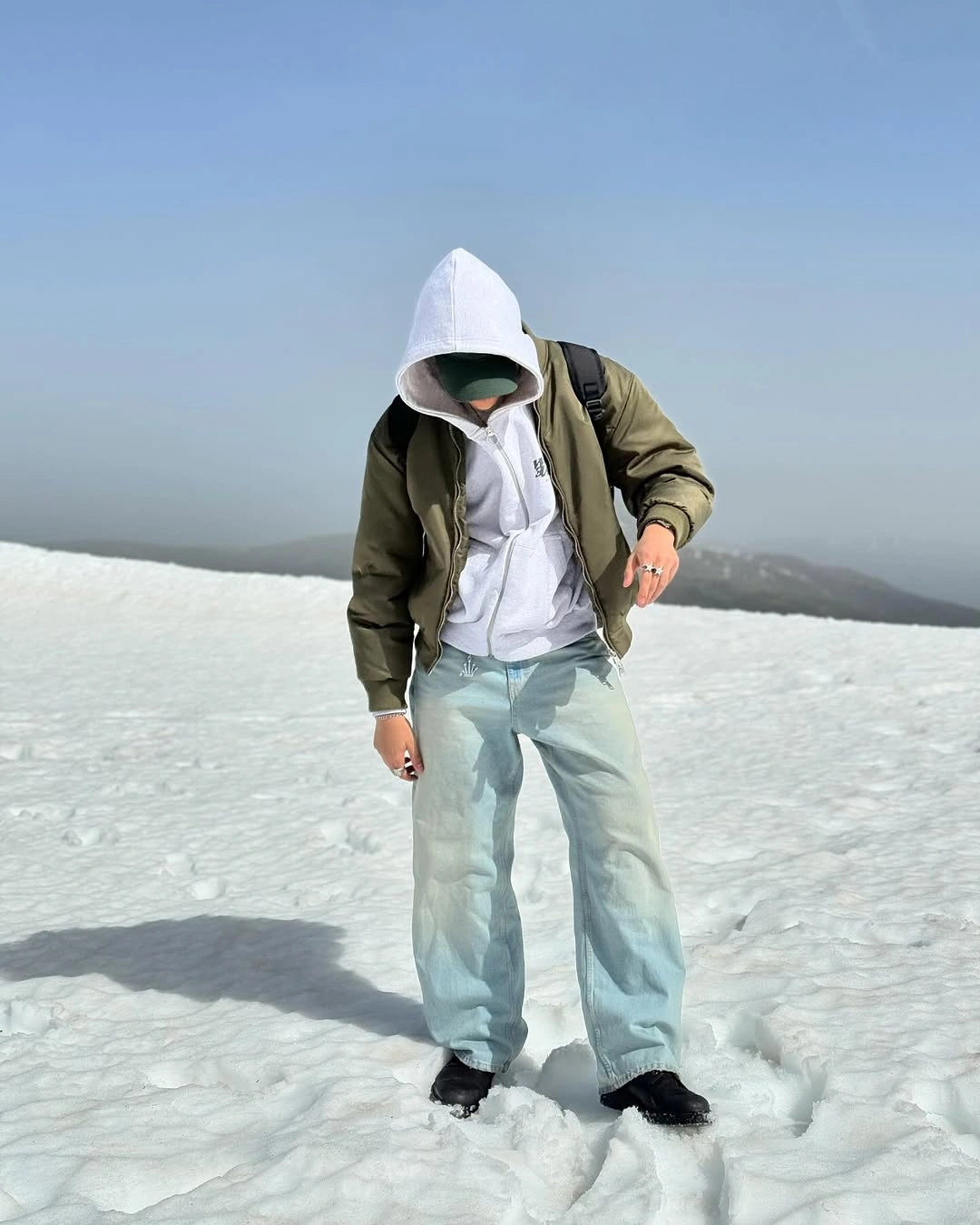
For a white shirt outfit with more depth, make the outer layer darker than the base and leave the hood or collar visible. The jean should be roomy enough to echo the hoodie’s casual volume, yet not so wide that it hides the shoe completely. If the olive shade feels unfamiliar, charcoal or deep navy outerwear can create the same bright-center effect with less color.
There is a practical limit to this layering idea: thick hoodies under tight bombers can make the shoulders bunch and restrict movement. Choose a lighter sweatshirt or a bomber with a little ease through the arm if comfort matters. The outfit does not need extra graphics or color pops, because the white hood already gives the eye a natural place to pause.
18. Black Shirt With Relaxed Blue Jeans
A black button shirt and relaxed blue jeans create an appealing contrast between a neat upper line and a looser lower half. The shirt is dark enough to feel intentional, but its soft drape keeps it from becoming too formal against the denim. White striped sneakers introduce a small light note at the bottom, which helps the jeans look casual without making the silhouette feel chopped up.
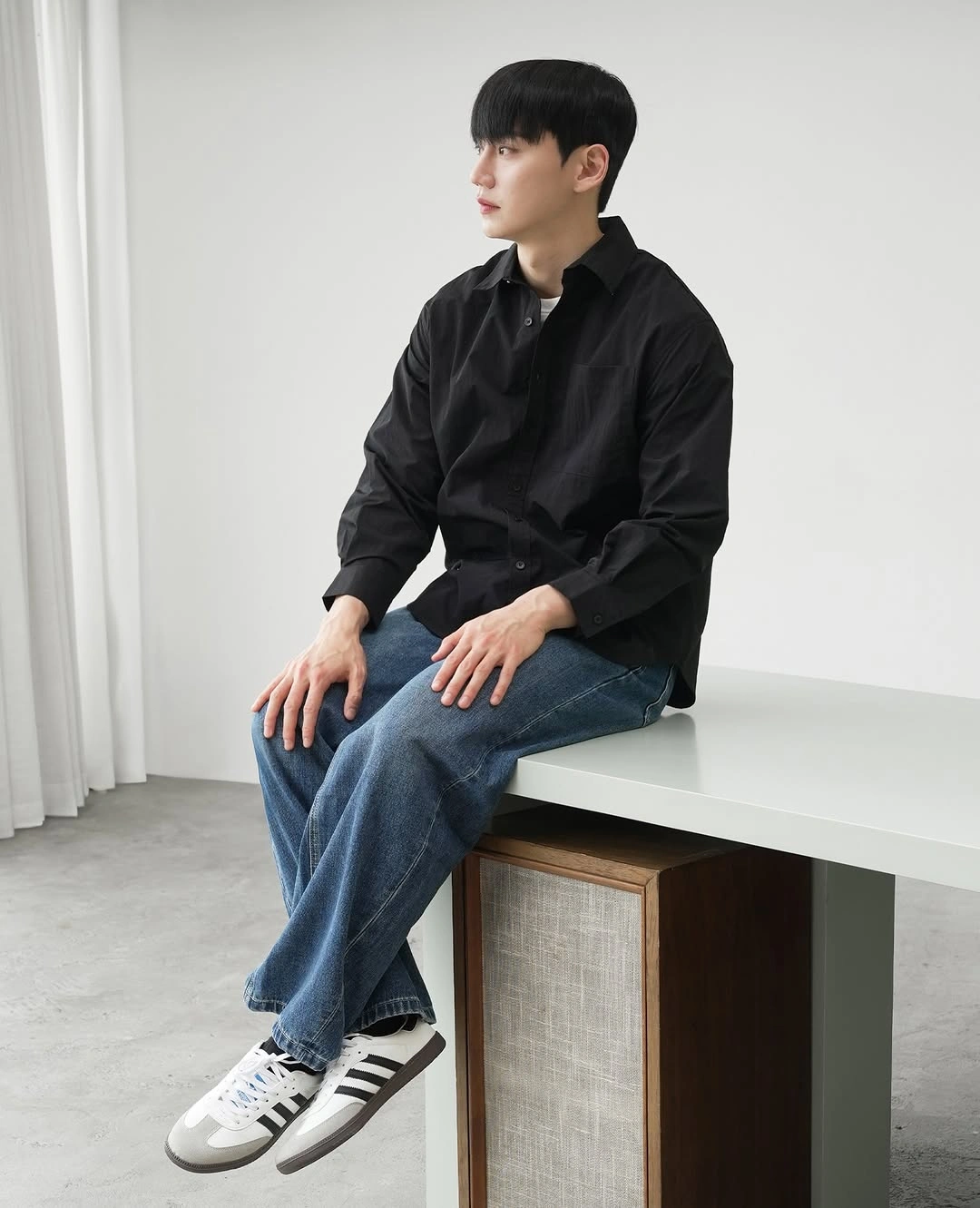
Button shirts are especially useful when you want casual outfits for men to look finished with minimal effort. Leave the shirt untucked only if the hem sits cleanly; an overly long length will erase the waist and make the relaxed jeans look heavier. A partial sleeve roll can add ease, but keep the trouser simple so the outfit retains its strong two-piece contrast.
The sneakers offer a practical styling cue here: light footwear can work with dark denim when the top also has enough visual weight. If you replace them with black shoes, the look will become more compact and serious. Either direction is valid, but do not introduce several bright accessories at once, because the black shirt and blue denim already make a complete statement.
19. Olive Trench With A Dark Column
The olive trench-style layer falls in a long line over a black knit and black trousers, bringing movement to an otherwise compact dark base. A ribbed beanie and glasses add small, practical points near the face without changing the tonal mood. The coat’s softer color is enough to separate the outfit from pure black while keeping the silhouette cohesive.
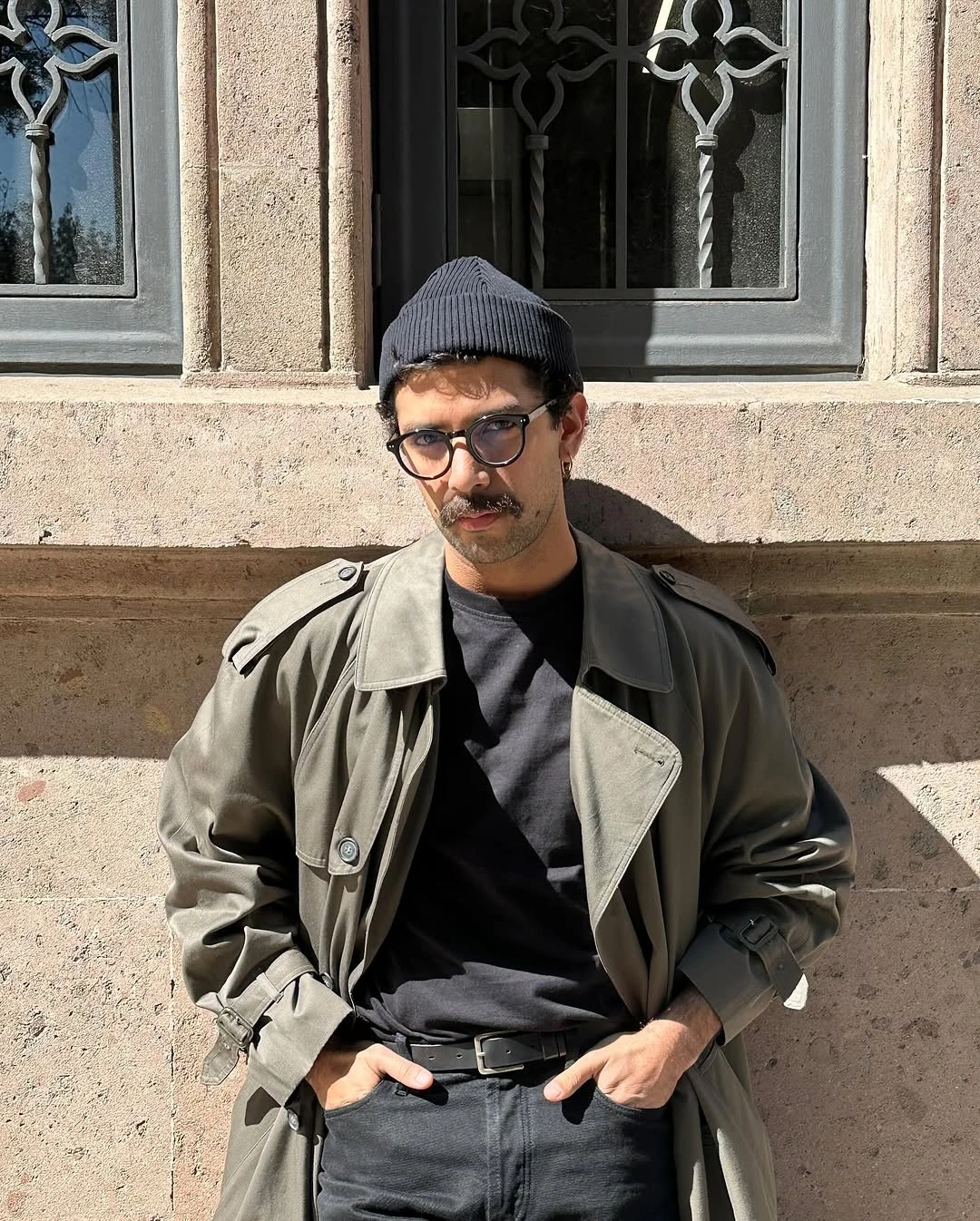
Long outerwear works best here when the inner layers stay quiet and close in color, allowing the coat to act as the main outline. Keep the trouser fairly straight so it can support the coat’s length without adding competing width. If olive is not for you, a muted gray-green or deep brown layer can offer a similar grounded alternative while preserving the same dark interior.
Think about movement before choosing the length. A coat that catches at the knee or is too stiff may look dramatic in a still pose but feel inconvenient through a crowded day. The beanie can be removed without hurting the styling, yet its subtle texture helps make the black knit and outer layer feel less flat when the rest of the palette stays restrained.
20. Gray Hoodie Framed By Black Outerwear
The light gray hoodie creates a soft center beneath the black outer layer, while black trousers extend the darker frame down to the shoe. A canvas tote adds a casual, useful shape at the side without breaking the neutral palette. The combination feels current because the hoodie is not treated as an afterthought; it is the visible middle layer that organizes the contrast.
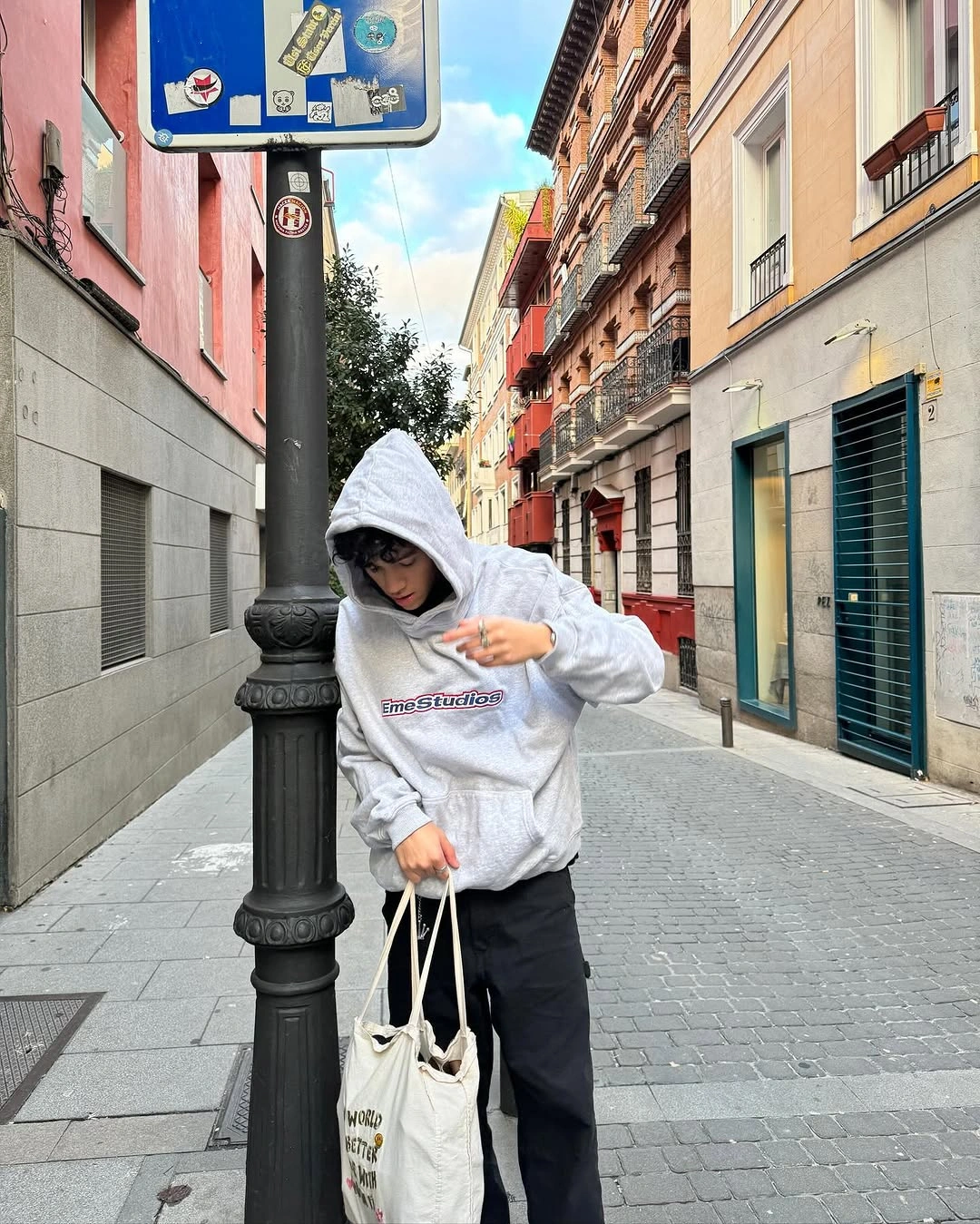
For an easy men’s outfit, keep the hoodie clean and avoid oversized graphics so the black layer can define the shoulders and hem. Straight black pants give the look a more balanced finish than very skinny denim would, especially when the outer layer has some volume. The tote works because it repeats the dark base; a bright bag would pull focus away from the calm gray-and-black relationship.
This formula is adaptable, but it can become too heavy if every item is thick. On milder days, choose a lightweight overshirt or unlined jacket over the hoodie, then preserve the same neutral contrast. What makes the look feel finished is not the number of pieces, but the clear framing of gray inside black and the relaxed, useful proportions.