Padel is quick enough to expose an outfit that only works while standing still. You need to raise a racket arm, turn through the torso, reach for a low ball, and reset your feet without being distracted by a slipping hem or a layer that traps at the shoulders. The best padel outfits for women start with that reality: one clear shape, a secure feel in motion, and color placed where it will not compete with the game.
Choose the movement question before the color question. The same movement-first approach helps with tennis-inspired court wear, where a stable top and lower layer must work through repeated reaches. Then ask whether the lower half lets you take a wide side step and whether a warm layer can come off cleanly once play begins. After that, use color to clarify the silhouette rather than decorate every piece.
1. Tonal Skort For Quick Side Steps
The taupe sleeveless top and matching flared skort form a compact, low-contrast base, while white socks and trainers keep the lower line light. For padel, that paired top-and-skort shape makes sense because it leaves the legs visually and physically open for split steps and lateral recovery. The skirt’s flare gives the outfit a small amount of movement, yet the matching top prevents that movement from looking loose or uncontained.
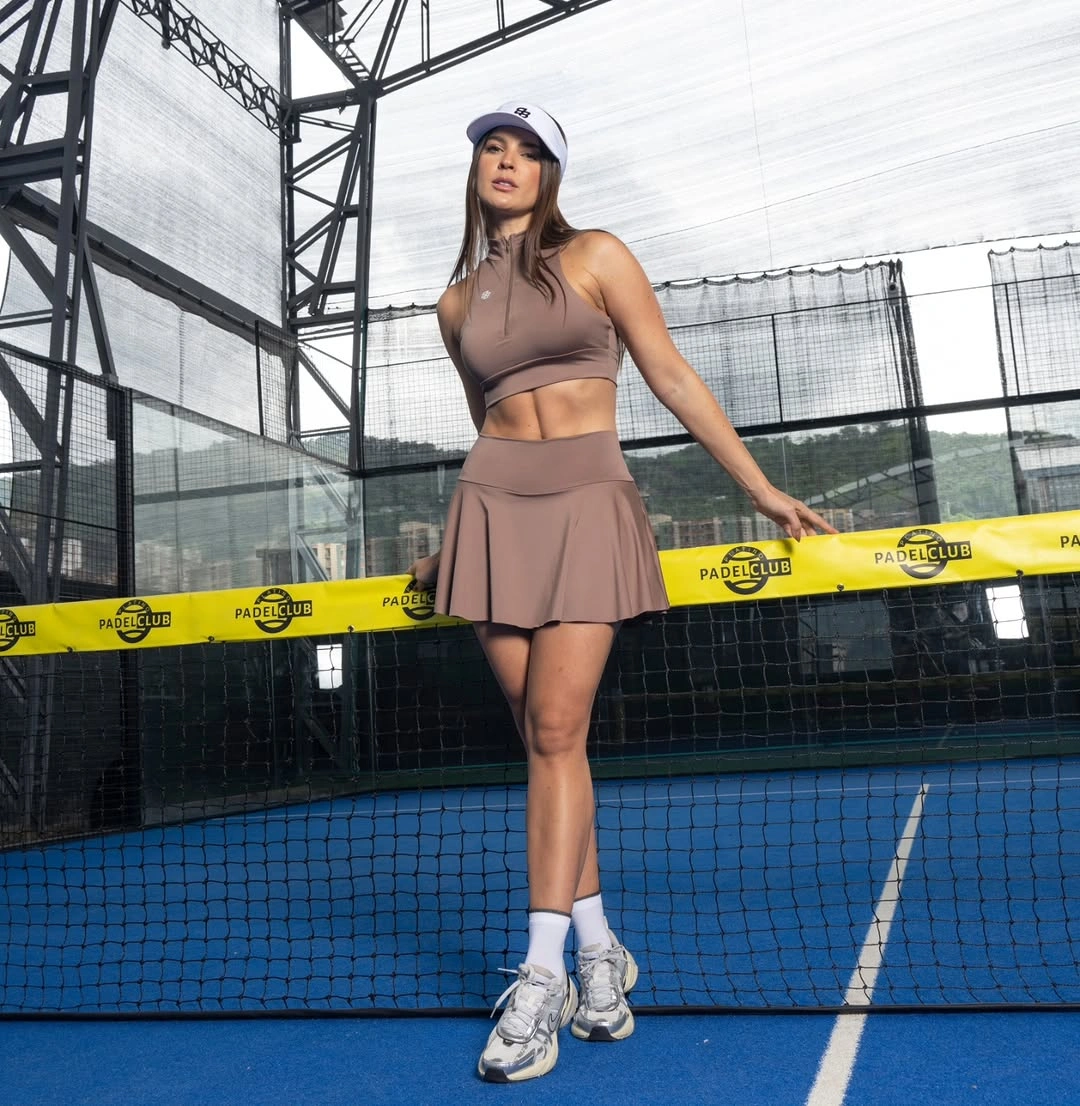
Before using a skort for a full session, test its waistband with a deep squat, a wide lunge, and a quick turn toward the back glass. The visible skirt can look great, but the practical question is whether the underlayer, if present, stays in place without needing constant adjustment. A close-fitting short-sleeve top in the same tone is an easy alternative when a cropped cut is less comfortable for your own range of motion.
The tonal color is not just decorative here. It keeps the eye on the body line, which is useful when you want to assess your stance and movement without a busy print pulling focus. White footwear gives a clean finish, but make sure the shoe is appropriate for the court surface you use; the outfit cannot tell you anything about traction or support on its own.
2. Navy Polo For A Clear Padel Base
A navy polo over a white pleated skirt creates an easy top-to-bottom contrast, and the collar gives the upper half a more defined sporting line than a loose tee. The skirt has visible movement without a large volume of fabric, so the outfit reads clearly when the player is ready at the net or stepping toward a ball. White trainers repeat the skirt’s brightness and keep the base visually simple.
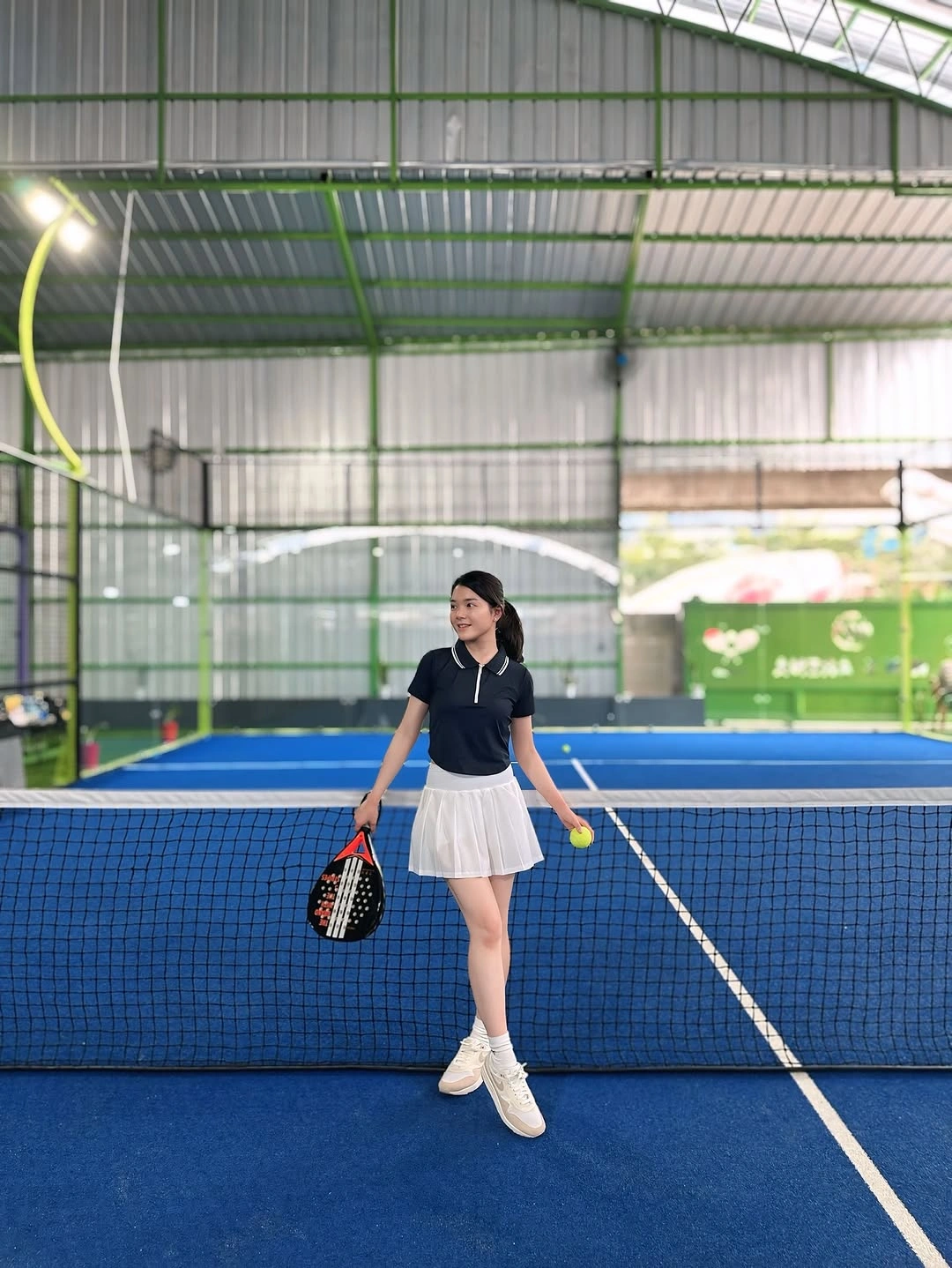
A polo can be a strong padel choice if the shoulder seam lets you reach up without the body pulling across the chest. Try a few mock overheads and forehand swings before deciding that a collar and short sleeve are comfortable enough for your game. If you prefer a more open neckline, a fitted navy tee offers the same dark anchor, while the white skort still gives the silhouette a clean, court-focused lower half.
Keep the contrast disciplined when you build around this formula. A bright visor, patterned socks, and colored bag would all compete with the navy-and-white split, while one small accent can be enough between points or on the walk to court. The white skirt will show marks sooner than navy, so it is worth choosing it when you are happy to wash it promptly after a session.
3. Light Layer For Early Court Practice
The white sweatshirt and pale lilac pleated skirt create a light, calm combination that looks suited to warming up before more active play. The sweatshirt gives the upper body extra coverage, while the skirt and white trainers maintain a clear athletic outline below it. Lilac works as a gentle color note rather than a performance distraction, because the rest of the outfit stays almost entirely white.
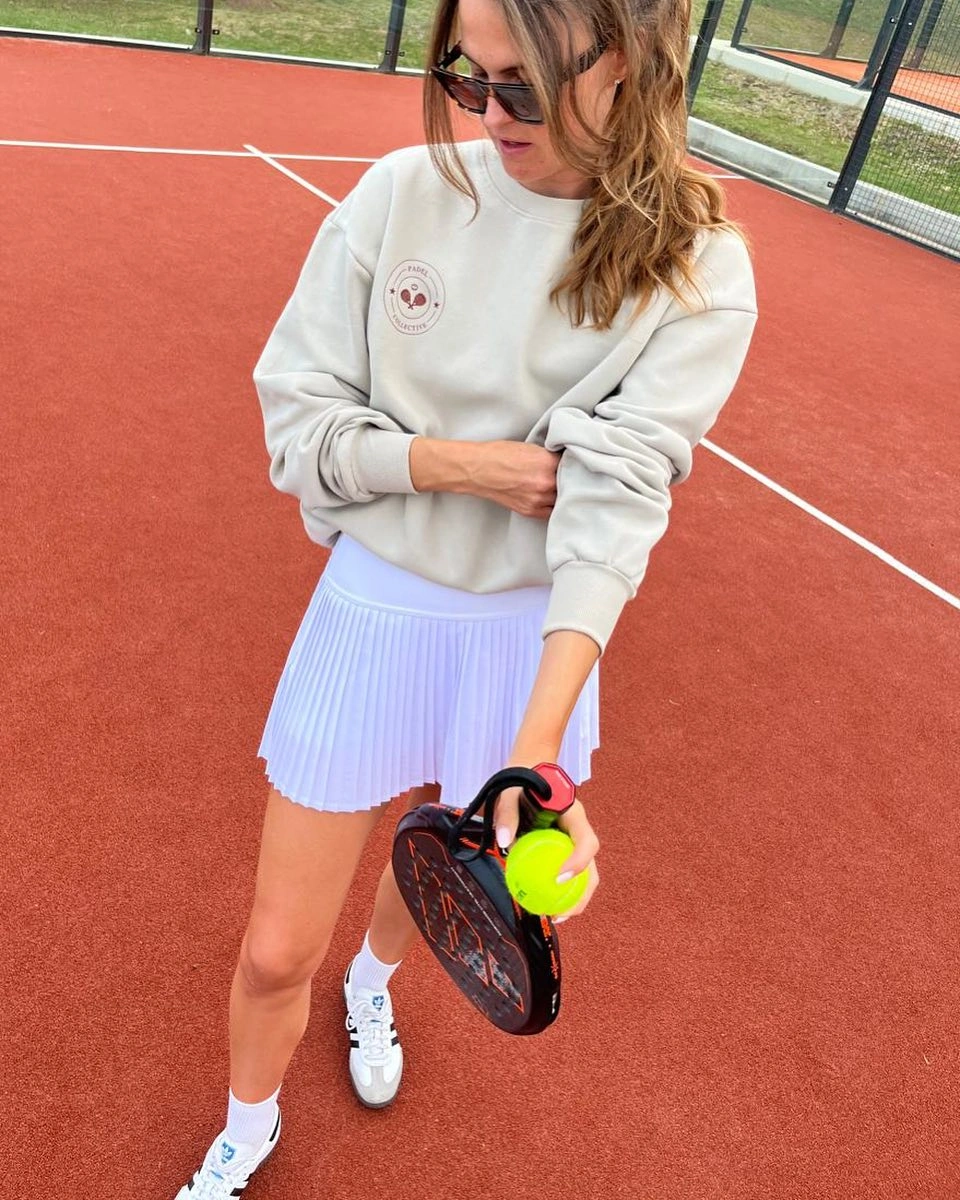
For padel, use a sweatshirt as a pre-play or between-match layer only if it comes off easily once your shoulders need full freedom. A sleeve that catches when you rotate can become irritating long before the set is over. You can keep the same white-and-lilac idea with a short-sleeve top underneath, then remove the sweatshirt instead of trying to play through a layer that changes your swing comfort.
The practical strength of this outfit is its visual simplicity: there is no large print, contrasting jacket, or complicated accessory to manage. If pale colors feel too delicate for frequent ball pickup or outdoor courts, shift the skirt to soft gray or navy and keep the white top. The shape remains sporty, while the darker lower half may be easier to live with after repeat sessions.
4. Blue Dress With A Swing Check
The bright blue sleeveless dress creates one streamlined color field, with vivid trainers adding an energetic finish at the ground. For padel, a dress can be wonderfully straightforward because there is no top hem to retuck after a quick reach or crouch. Its real test is not the color but the upper-body cut: the shoulder straps and armholes need to feel easy when the racket travels overhead.
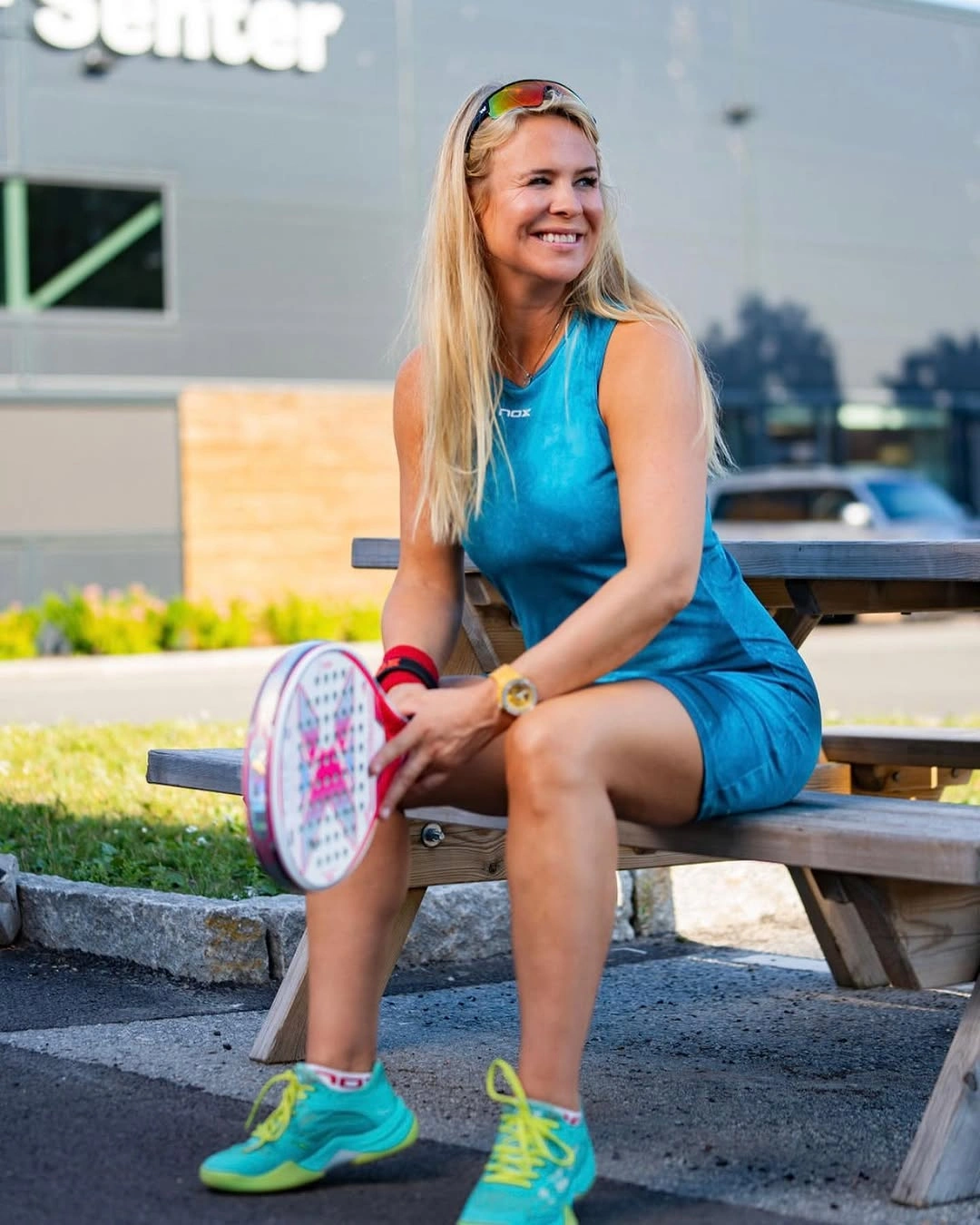
Put the dress through a short movement check before match day. Raise both arms, rotate your torso, take several lateral steps, and see whether the neckline and hem stay where you expect them to. If the fit feels secure, the single-piece shape reduces decisions and keeps your outfit visually clean. If not, a blue tank and skort can give you the same color presence with more control over each part.
The vivid trainers work because the dress is otherwise uninterrupted, but court needs should guide the shoe choice more than color coordination. Choose footwear for the surface and your own comfort first, then decide whether the bright accent fits the rest of the outfit. A white trainer would make the blue feel cleaner, while a dark shoe would create a heavier visual stop at the ankle.
5. Bright Ruffles For Controlled Court Movement
Pink and neon green create a lively, high-contrast sporting look, while the ruffled lower edge adds visible motion as the player moves. That energy can work for padel because the color is organized into larger areas rather than scattered across every detail. The darker middle section helps separate the bright tones, giving the eye a clear center even when the skirt edge is active.
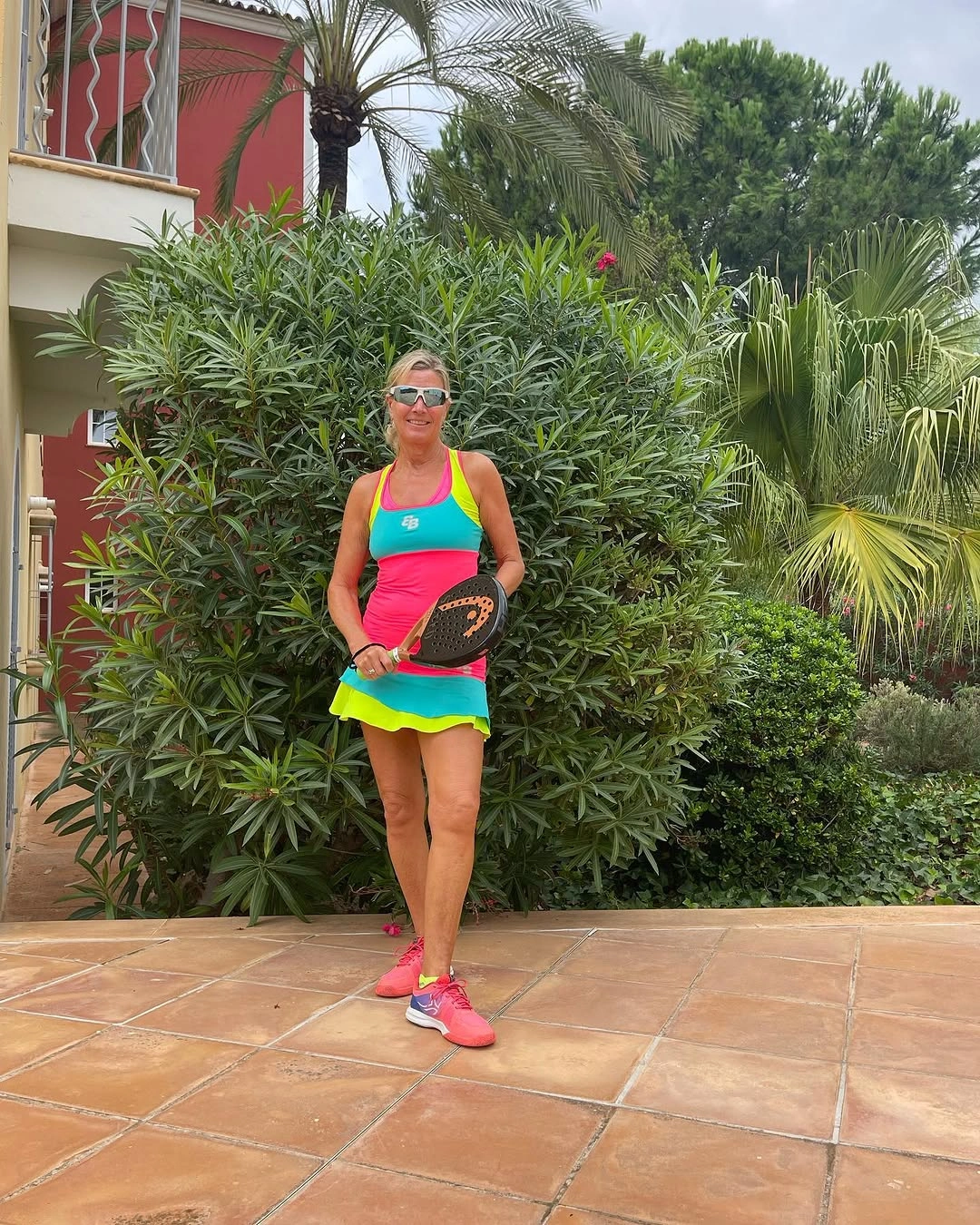
A ruffled hem deserves a practical check before you rely on it for fast side-to-side play. Walk through a lunge, a low ball pickup, and a quick pivot to confirm that the layers do not catch or make you think about your clothing during a point. If you like the color contrast but want a quieter lower half, use a pink fitted top with a plain green or white skort instead.
Keep the rest of the gear restrained with a look this bright. A neutral racket bag and uncomplicated warmup layer will let the pink-and-green relationship stay intentional rather than turning into a rainbow of unrelated accents. The strongest part is not simply the neon shade; it is the way one vivid area is supported by a darker boundary and a matching shoe note.
6. Zip Jacket For Padel Warmup Transitions
The blue zip-front jacket and cap create a practical warmup silhouette, with the visible center zipper making the layer easy to read and potentially easy to remove. A fitted jacket can feel useful before a session or during a break, especially when you want coverage without the bulk of a heavy outer piece. The darker lower half keeps the blue jacket as the single color anchor.
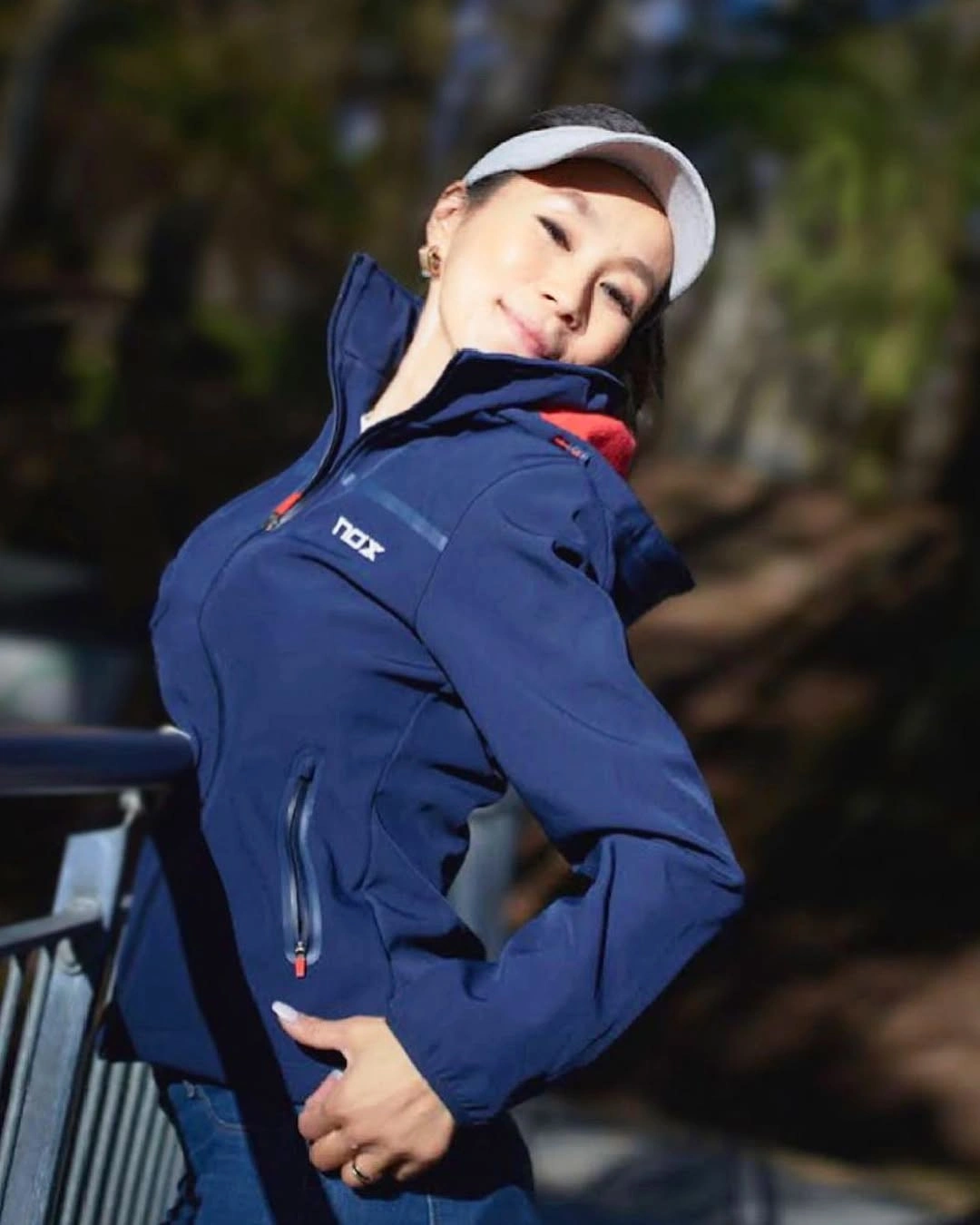
Do not assume a jacket is comfortable for active play just because it looks streamlined. Test the upper back and sleeve length with a forehand and a serve-like reach; if the fabric pulls at the shoulder, save it for arrival and recovery instead. A plain tee underneath gives you an immediate alternative once you want less coverage, and it keeps the outfit functional without changing the whole color story.
For more sports-focused layering ideas, a matching activewear set can help you think in removable pieces rather than a single all-day outfit. The cap is another optional element: it can be useful for comfort in bright conditions, but only if it stays secure and does not distract you during overhead shots. Fit and visibility matter more than the color match.
7. Brown Top With A Mobile Skirt
The loose brown long-sleeve top sits above a white pleated skirt, producing a warm-and-light contrast that still reads like court clothing because the lower half stays clean and short. The outfit gives a useful example of how a relaxed top can work when the waist and skirt line remain visible. For padel, the extra sleeve coverage is less important than whether the top lets the shoulders rotate naturally through repeated racket swings.
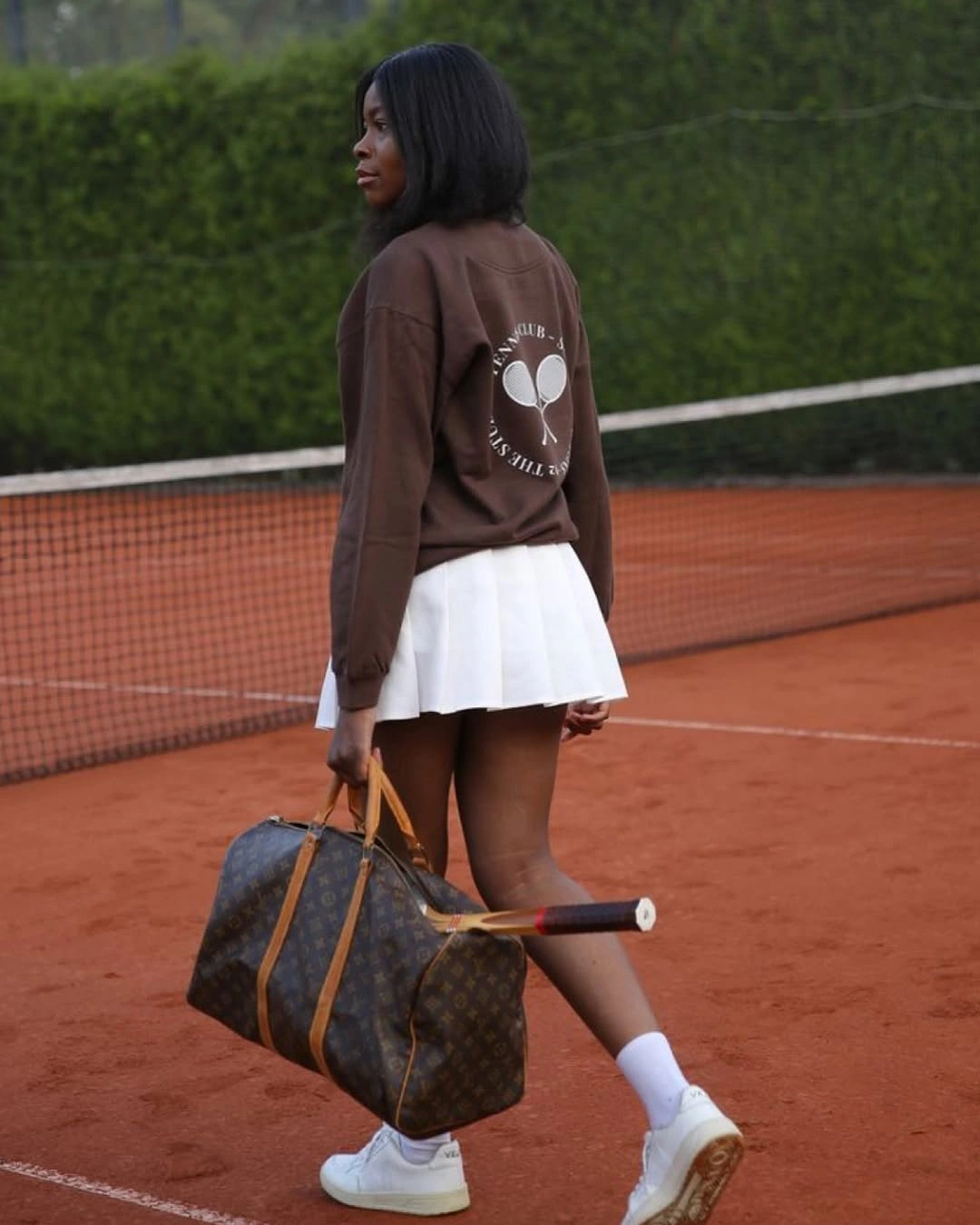
Try this proportion with a lightweight long sleeve, then make a few practice swings before treating it as a match option. If the hem shifts over the waistband or the sleeve binds near the elbow, a fitted short sleeve will be a more reliable base. The pleated skirt adds movement, but it should never be the part you notice while you are trying to react quickly at the net or recover toward the back of court.
Brown is a useful alternative to the usual navy and black because it looks grounded beside white without becoming a large performance claim. The downside is maintenance: white pleats and a lighter shoe can show court marks, particularly after lots of ball retrieval. Choose a darker skort when convenience matters more, or keep the warm brown top and switch only the lower piece for an equally sporty result.
8. Oversized Tee For Relaxed Practice Sessions
The oversized white T-shirt and olive shorts create a loose practice look, with the muted short giving the bright top a calm base. This is visibly more relaxed than a fitted dress or polo, which can be comfortable for informal hitting or a slower warmup. For serious padel movement, however, the extra fabric deserves attention because a shifting hem or wide sleeve can become distracting when you reach high or move quickly laterally.
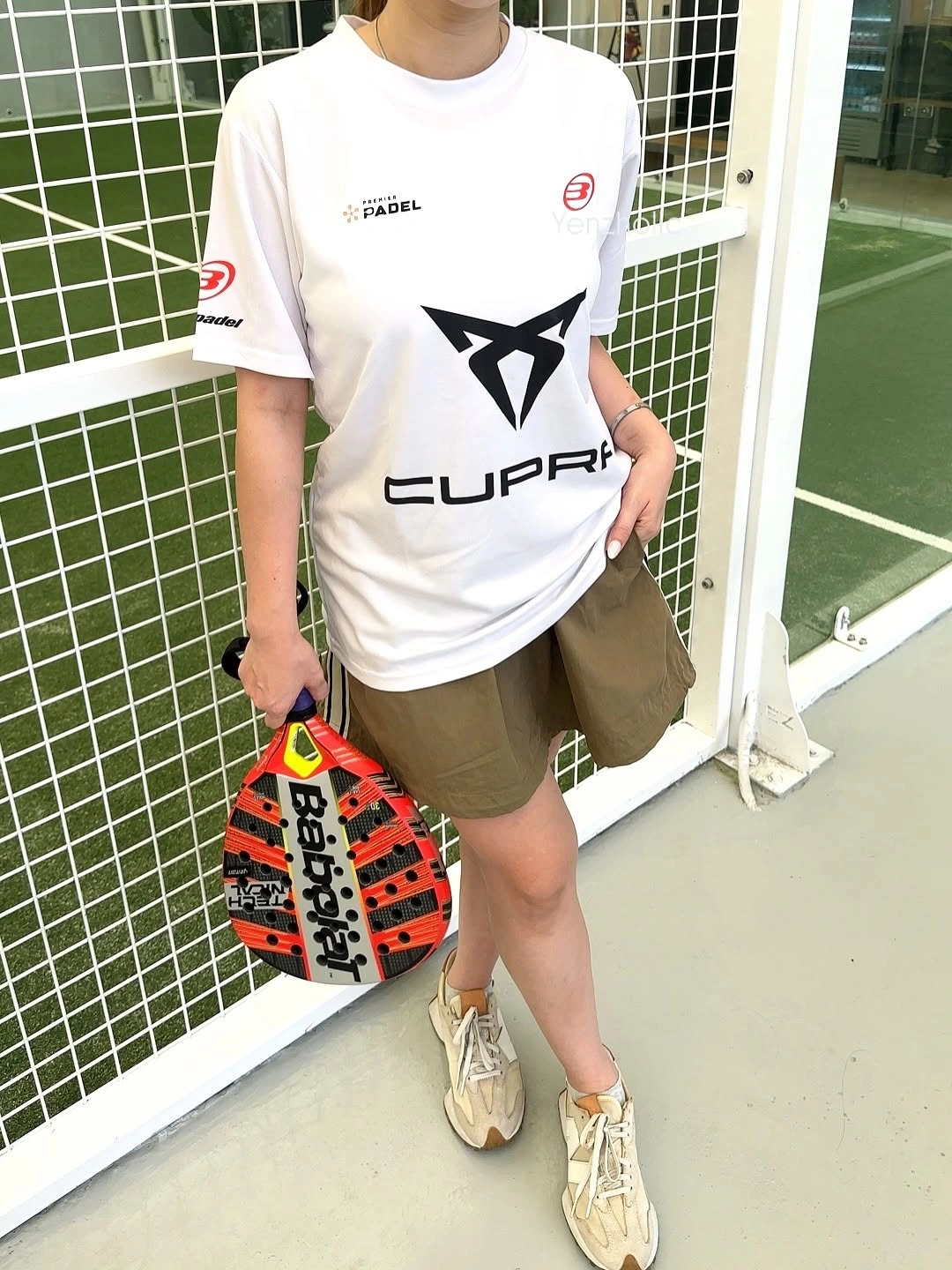
Check the tee with the same movements you expect to make on court: split step, forehand rotation, backhand reach, and a low bend for a ball. If it stays out of your way, the loose cut can give a breathable, unfussy feeling. If it swings across your racket arm, size down slightly or use a more fitted active top; the olive shorts can remain as the quiet, flexible lower half.
For an adjacent sporting reference, women’s workout outfits offer useful ideas for separating easy warmup layers from pieces that must stay stable in repeated movement. Keep the accessories minimal here, because the tee already has the biggest visual volume. A simple court-ready shoe and a compact bag will make the outfit feel intentional without pretending that loose fabric suits every point.
9. Neon Base With A Removable Overshirt
A white open shirt frames the neon green sports set, making the bright color feel concentrated at the center rather than spread across the entire outfit. That layering can be useful before or after padel, when a player may want a little coverage without losing the identity of the active base underneath. Once play becomes fast, the fitted green set is likely to be the more practical layer to assess on its own.
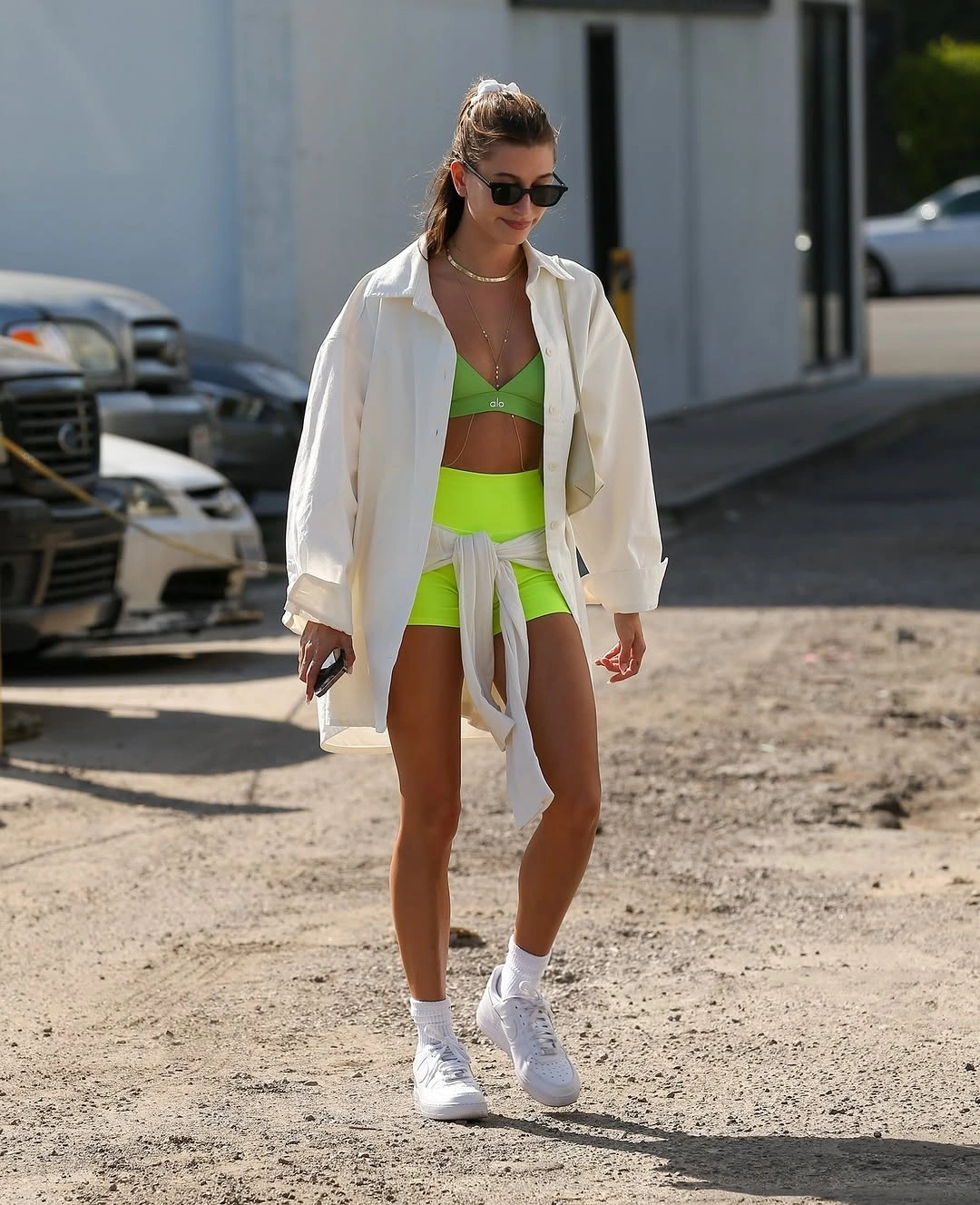
Use the overshirt as an arrival layer only if it comes off quickly and does not interfere with your grip, elbow bend, or racket path. The white layer is visually effective because it gives neon green room to stand out, but it is not necessary for court performance. A zip jacket, short-sleeve tee, or simple warmup top may be easier to manage if you move between practice and a competitive set.
The vivid green creates a clear focal point, so avoid adding a second bright accessory unless you are deliberately building a bolder training look. White trainers preserve the open frame, while black footwear would make the neon read more sharply. Whatever the color choice, the best test is whether the fitted base stays comfortable during a deep reach and a sequence of quick recovery steps.
10. Black Tee And White Skort For Play
The black athletic T-shirt and white skort create a direct, high-contrast padel outfit that is easy to read in motion. A close dark top makes the upper body look contained, while the lighter skort keeps the lower half visually open for steps toward the ball. There is nothing ornamental about the combination, which is part of why it works as a dependable starting point for an actual session.
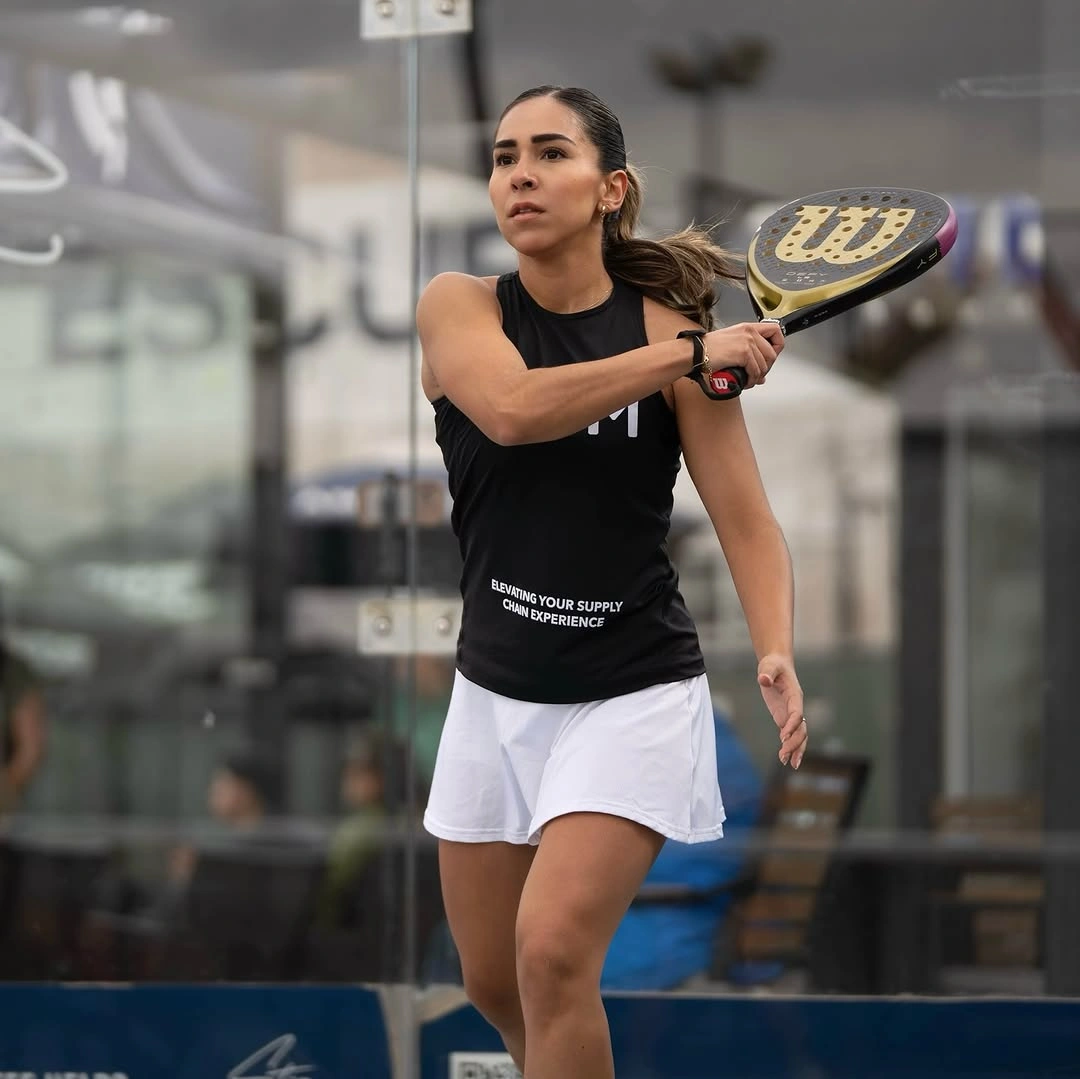
Focus on fit at the shoulders and waistband before you worry about accessories. A tee that stays flat through a forehand and a skort that lets you squat comfortably will serve you better than a more complicated set with an uncertain fit. If you prefer more coverage, a black short-sleeve top with a slightly longer hem can keep the same contrast, provided it does not ride up when you lift the racket.
White will show court dust more quickly, but it also makes it easy to keep the outfit’s visual structure simple. Switch to a light gray skort if you want less maintenance while preserving the dark-top, light-bottom balance. A plain black or white visor can fit the palette, but leave out extra graphics and bright bag straps so you can keep your attention on the ball instead of the outfit.
11. All-White Set For Clean Court Focus
The white sleeveless top, white skirt, and white trainers form one continuous athletic line, with the racket and court providing the only stronger contrast. That simplicity can be useful in padel because it removes visual clutter and keeps attention on your stance and movement. The separate top and skirt also give you more flexibility than a dress, as long as the waistband remains stable when you rotate and reach.
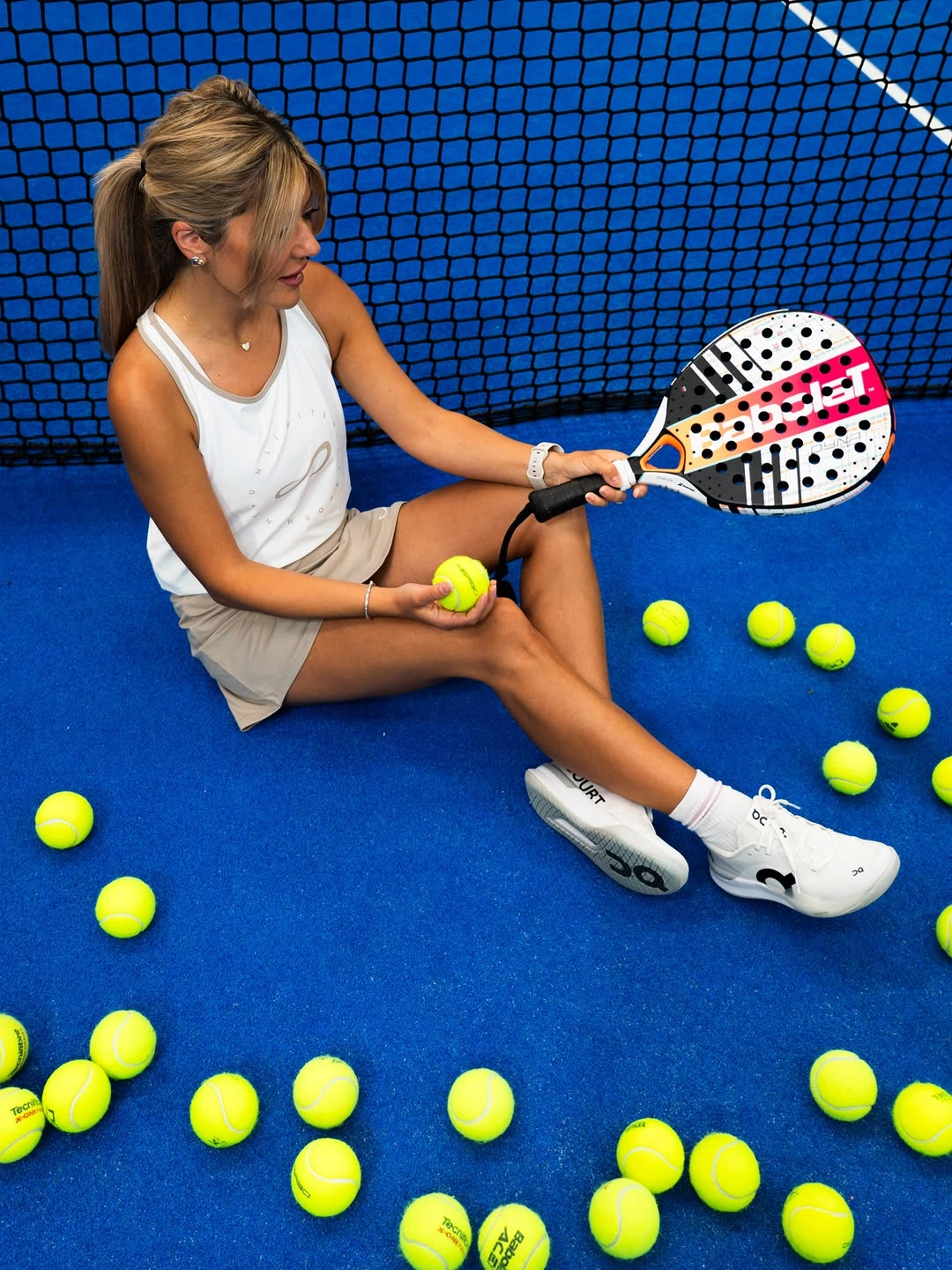
All-white clothing is not automatically better for play, but it can make a court outfit feel orderly when the cuts are doing distinct jobs. Check that the armholes allow an overhead motion and that the skirt does not shift during a wide lateral step. A small dark accent, such as a simple grip, cap, or hair tie, is enough to add definition without breaking the quiet line from shoulder to shoe.
The main tradeoff is upkeep. White pieces may show ball marks, dust, and contact with court surfaces, so keep a darker backup set if you play frequently. If you want the same clean result with fewer laundry concerns, use soft gray or pale blue for one piece and leave the shoe white. The sport-focused principle remains the same: fewer visual interruptions, more confidence in the fit.
12. Printed Tee With A Stable Skirt Line
The white T-shirt has a circular back print, while the white pleated skirt stays plain and structured below it. That balance is helpful for padel because the print is confined to one area and does not compete with the lower half’s movement. The shirt is relaxed enough to feel casual, but its length still allows the skirt line to remain visible rather than disappearing under excess fabric.
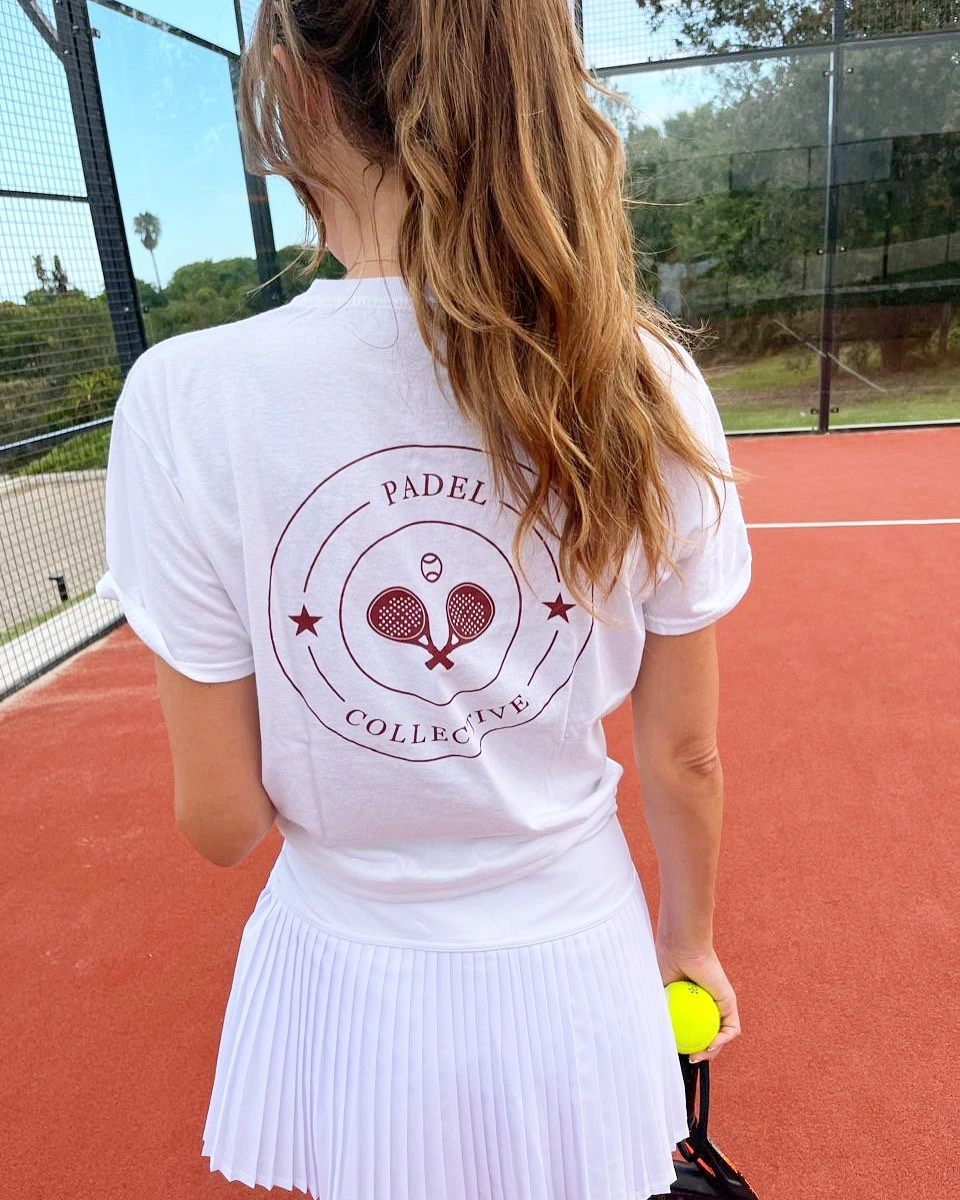
For a match, test whether the tee’s back and hem stay comfortable when you rotate through a backhand or reach behind for a ball. A graphic is fine when it does not change the fit, but avoid adding a patterned skirt, loud socks, and a bright jacket on top of it. The simpler the surrounding pieces are, the easier it is to judge whether the shirt actually works for your movement.
If you want a more secure upper layer, replace the relaxed tee with a fitted white tank and keep a small print on a warmup jacket instead. That keeps the same light court palette while reducing fabric movement during play. The pleated skirt can still be the athletic visual anchor, provided you are comfortable with its coverage and can move through a full lunge without hesitation.
13. Red Skirt For Fast Footwork Focus
The bright red skirt supplies a strong lower-body color cue, while the dark patterned tank keeps the upper half compact and steady. This distribution can work for padel because the torso remains visually quiet while the skirt adds energy to side steps and quick changes of direction. The outfit is still simple enough to read as a sports set, even with the more saturated lower color.
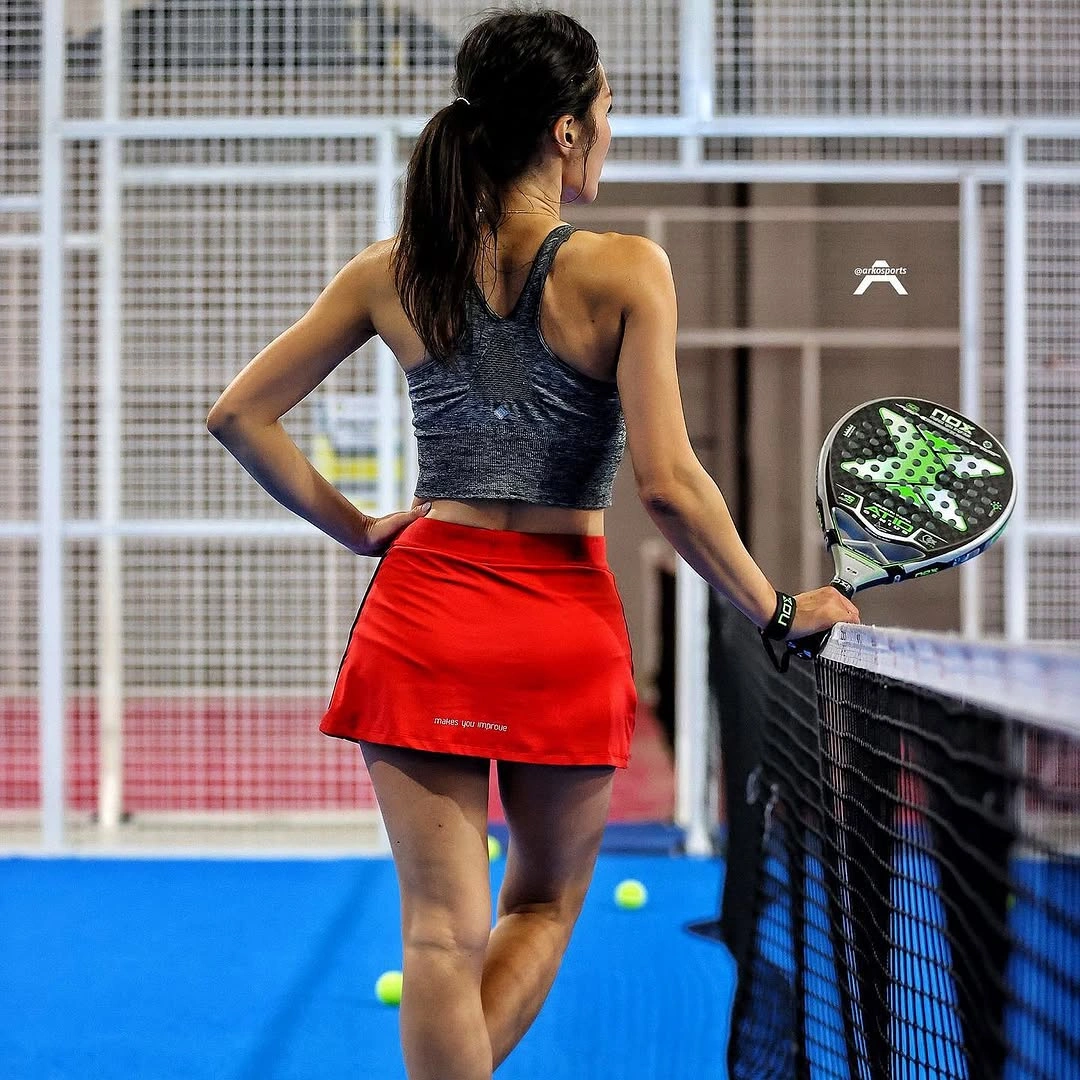
Use a red skort only after checking how the waistband and underlayer behave during repeated lunges, low pickups, and turns. The tank should let the shoulders move freely, especially if the straps sit close to the armhole. If you like the color but want a less obvious focal point at the legs, move red to the top and use a dark skirt; the athletic structure remains while the emphasis changes.
Keep footwear neutral or dark so the red skirt remains the one bright decision. A second saturated shoe or bag can make it harder to read the overall line, particularly during a fast game where you want your kit to feel settled. The visible pattern in the tank is already enough surface interest, so the rest of the gear can stay plain and practical.
14. Patterned Dress With An Overhead Test
The orange-red printed dress brings all of its color and pattern into one fitted shape, with darker trim giving the neckline and edges a little structure. A one-piece outfit can reduce the need to adjust a top against a waistband, which is attractive for padel. The more important question is whether the dress gives enough freedom through the shoulders, upper back, and stride for the way you actually swing and recover.
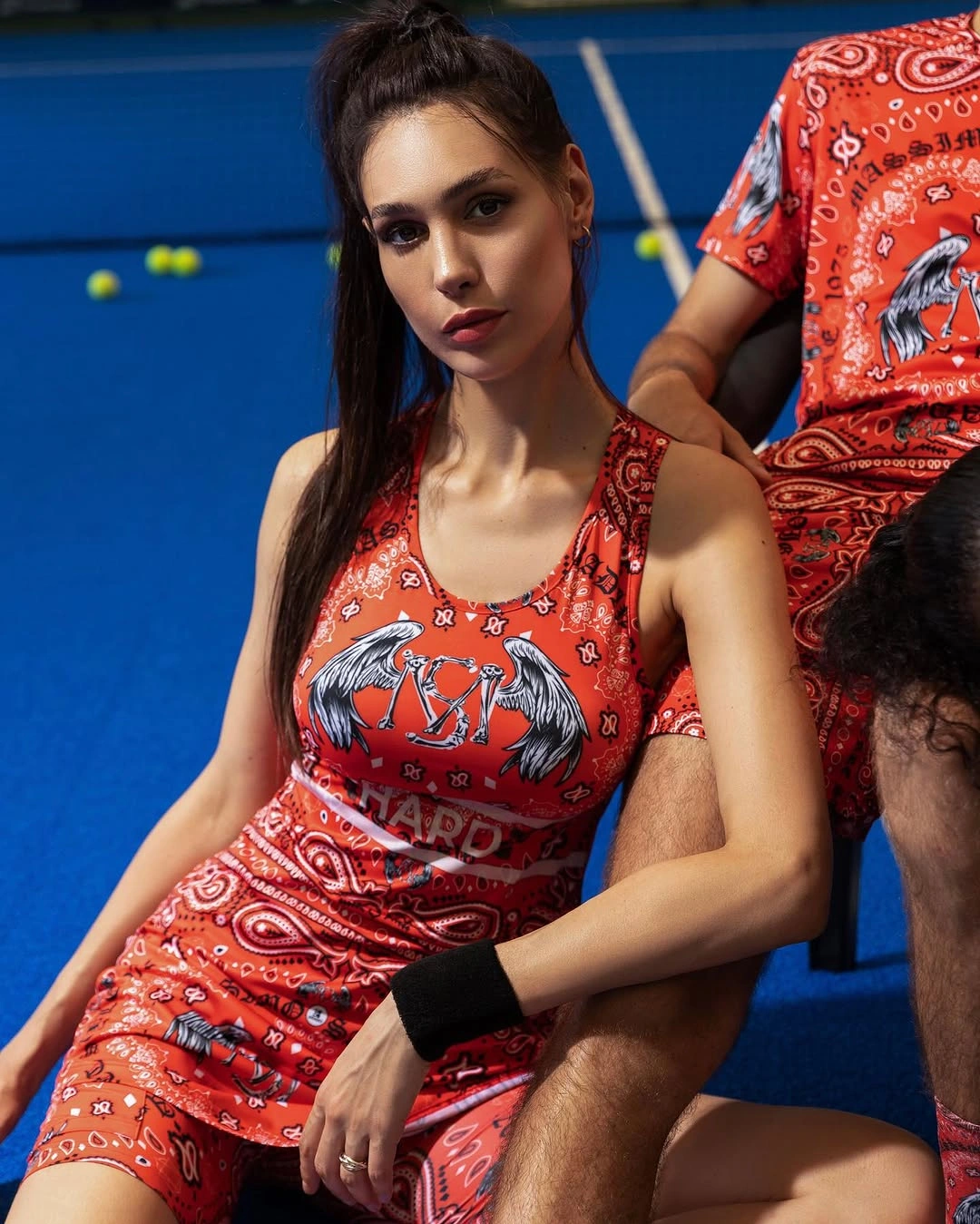
Do a full overhead reach, a controlled squat, and a few quick side steps before relying on a printed dress for a competitive session. If the straps, neckline, or skirt move in a way that makes you self-conscious, save it for lighter practice or choose a two-piece version in a similar warm color. Comfort in a long rally matters more than the convenience of having one coordinated item.
Because the print is already active, the rest of the sporting gear should be quiet. A simple racket bag, neutral shoe, and plain removable layer will keep the dress from becoming visually distracting. If you want to reduce the intensity, choose the same silhouette in a solid red or coral shade; you retain the one-piece ease while letting your movement, not the surface pattern, take center stage.
15. Tiered White Dress For Lighter Sessions
The white dress has a tiered skirt and dark edging, which makes its movement visible without adding a separate top and bottom. For padel, that can feel light and unfussy when the fit is secure, especially for a casual hit where you want to arrive ready without layering decisions. The dark trim helps define the body line so the pale dress does not look featureless against a bright court.
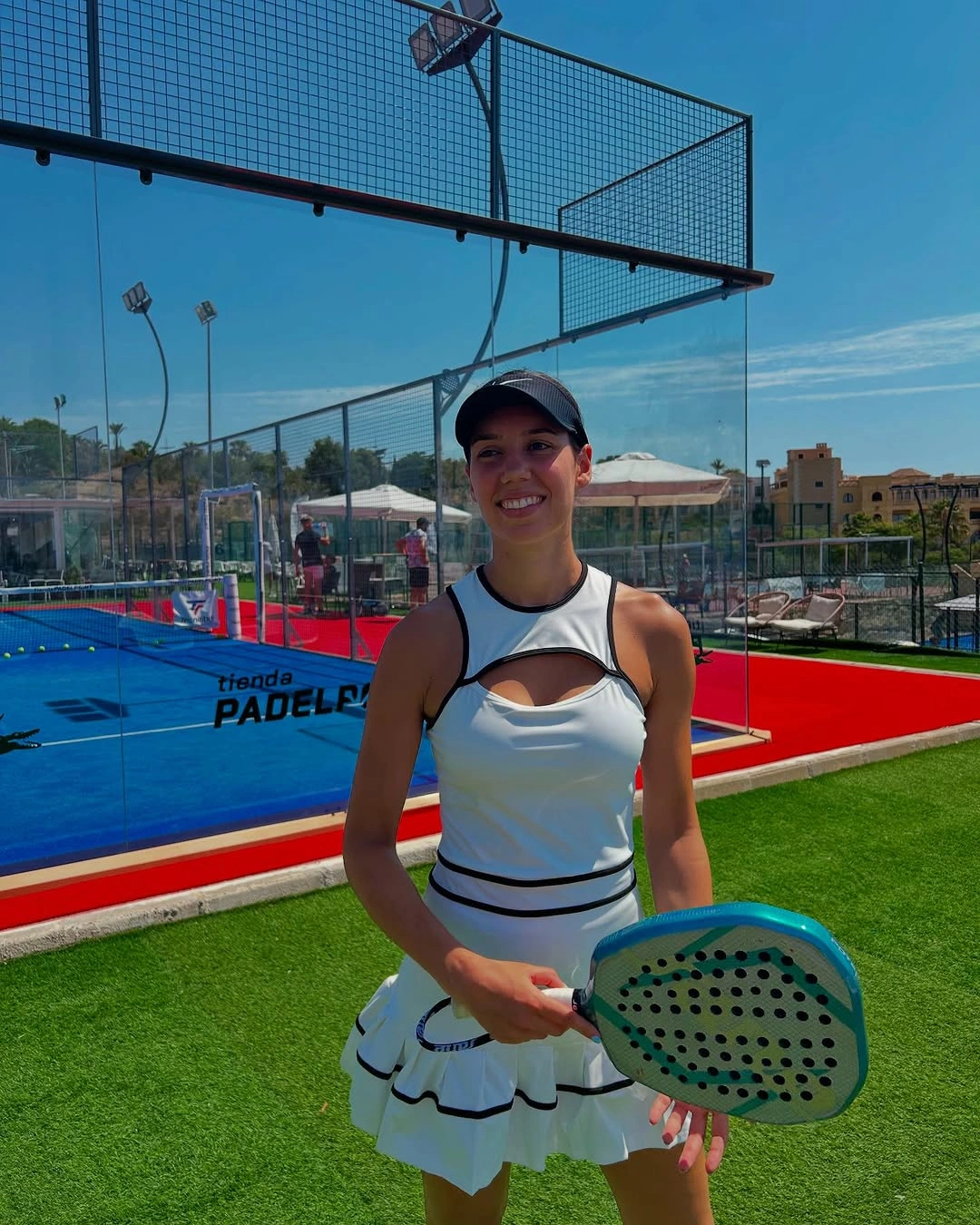
Test the tiered hem during a lunge and a quick turn before treating it as a serious match piece. Layers that look airy at rest can move differently once you are covering short balls or shifting back from the net. If you prefer a more controlled lower half, use a white skort and dark-trim tank; the contrast principle remains, but each piece is easier to fine-tune for your movement.
The light color is a maintenance choice as much as a style choice. White can show contact with the court, so a darker backup is sensible when you are playing several times a week. Keep accessories in black or white and use the trim as the only contrast, because a bright bag or patterned jacket would distract from the dress’s clean sport-specific line.
16. V-Neck Set With Precise Dark Piping
The white V-neck top and white pleated skirt are connected by narrow dark piping, which gives the outfit clear boundaries without weighing it down. That kind of trim is useful in padel clothing because it makes the neckline and waist easier to read while the body moves. The skirt remains light and active, but the small dark edges prevent the whole set from looking like one undefined block.
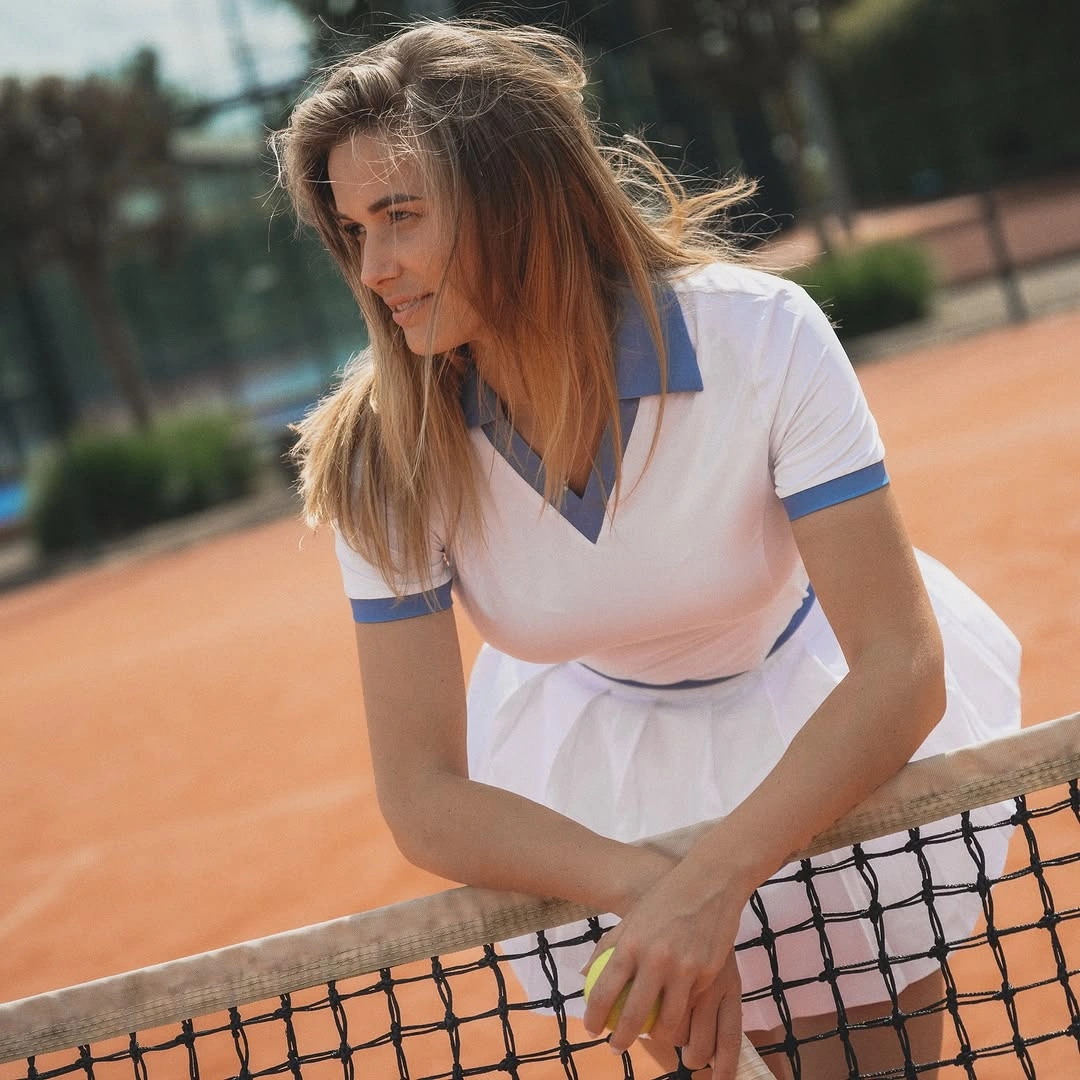
A V-neck can feel open and comfortable, but check that it stays secure through a low reach and an overhead motion. The top should let you focus on racket work, not on pulling fabric into place after every point. If you prefer more coverage, use a higher neckline with the same narrow piping and keep the skirt’s clean movement; the padel function is in the stable fit, not the exact collar shape.
The dark trim means you do not need extra color to make the outfit feel complete. White socks and a court-appropriate shoe keep the lower line coherent, while a black visor or racket grip can echo the piping in a small, useful way. Avoid a third bright accent, because the crisp white-and-dark structure already does enough to support a focused sporting look.
17. Color-Block Top For Active Court Sessions
The red and navy color-block top gives the upper body a clear athletic focal point, while cream shorts lighten the lower half and leave room for quick leg movement. This is a strong padel setup when the top stays close enough not to twist during a swing and the shorts feel secure in a wide stance. The colors are bold, but the neutral short stops the outfit from looking like several separate ideas.
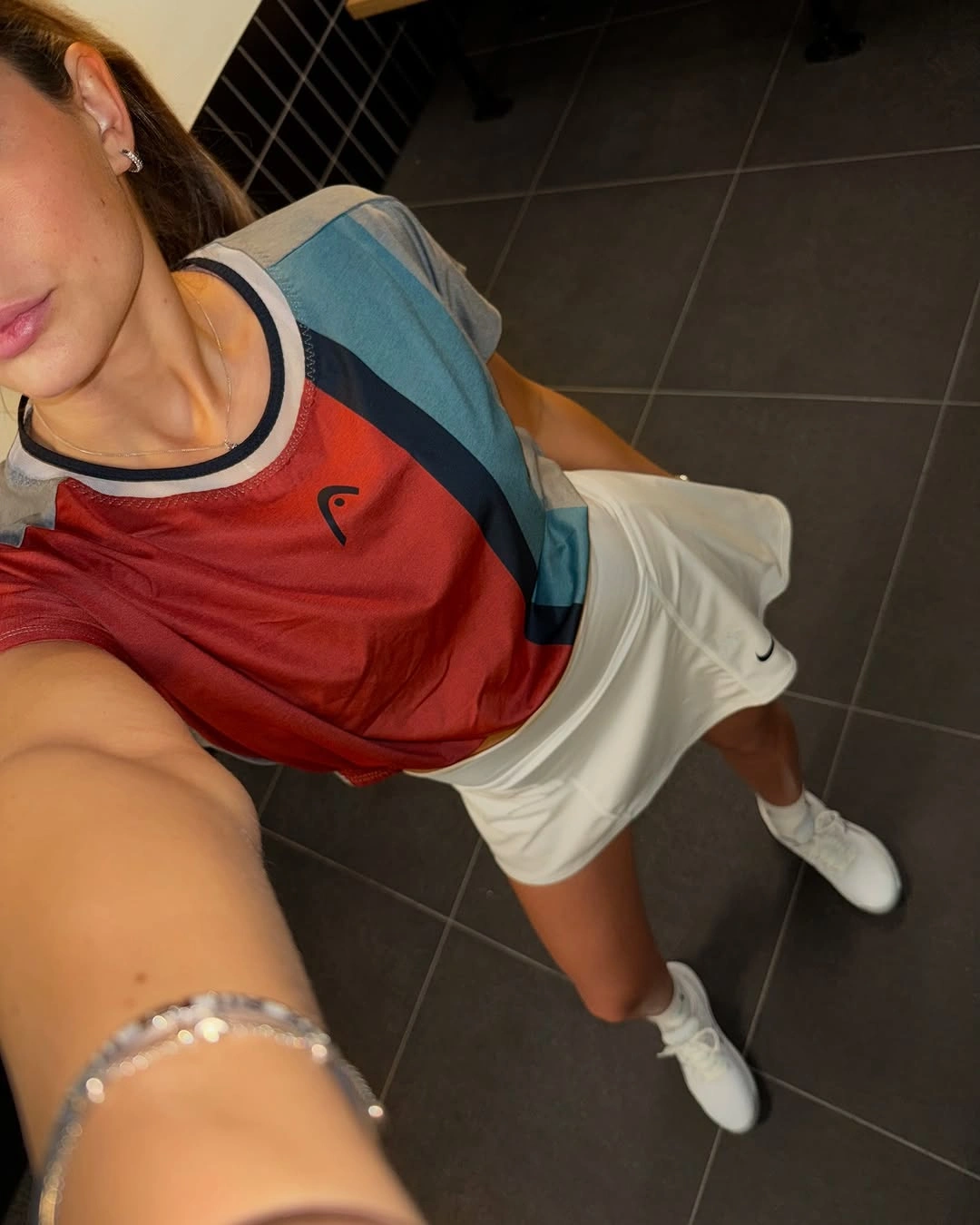
Shorts can be a practical choice for fast practice if the rise and leg opening let you bend, sprint a few steps, and pick up balls without tugging at the fabric. Check pockets or ball storage only if your specific shorts include them; the visible outfit does not prove that feature. If you prefer more coverage, change only the cream shorts to a matching skort and keep the color-block top as the main sporting accent.
The red-and-navy contrast benefits from a neutral shoe, especially when you are carrying a racket and water rather than styling a street outfit. A plain white trainer keeps the base open, while a dark shoe makes the whole look more compact. Either can work if it suits the court, but avoid adding a red jacket and navy bag together – the top already gives you all the color structure needed.
18. Rose Dress With A Secure Back
The rose dress is fitted through the body and has an open back detail, giving it a clear one-piece sporting silhouette without a loud pattern. For padel, an open-back design can feel light, but it also makes strap placement and coverage more important when you serve, reach, or bend for a low ball. The neutral tote and footwear keep the attention on whether that dress shape genuinely works in motion.
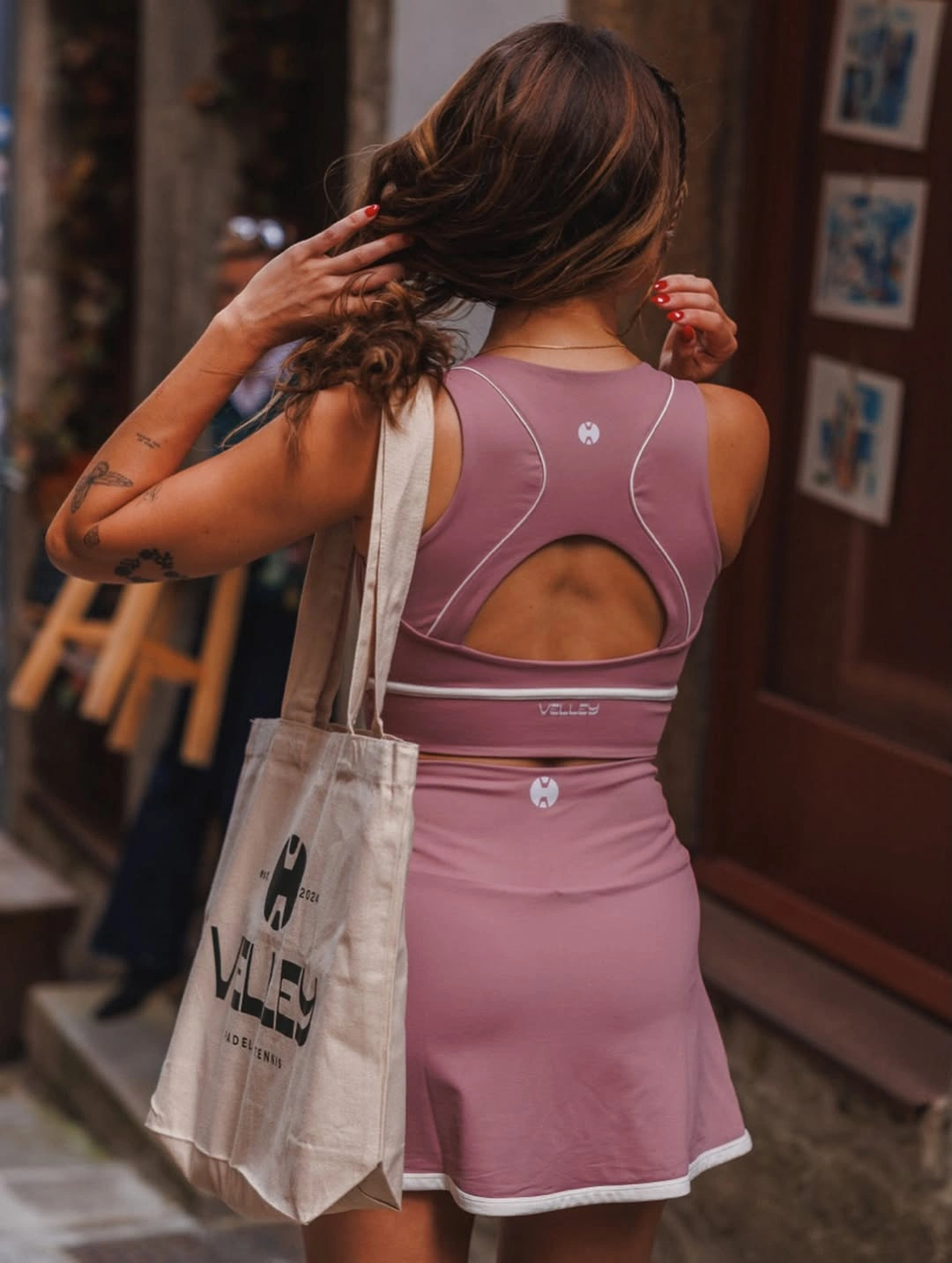
Check the back construction through several full arm circles and a mock overhead before using this style for a long session. If the straps stay settled and the dress does not pull at the torso, the streamlined cut can reduce fiddling at the waist. If you are uncertain, a rose tank with a matching skort offers the same color mood while making it easier to adjust the support and coverage of each piece.
The tote belongs before and after play, not in the movement equation itself, so keep what you carry compact enough to avoid unnecessary clutter around the court. A light warmup layer in white or gray would work with the rose tone and can come off quickly. The best sporting version of this look is the one that lets the back detail remain a design choice rather than a distraction.
19. White Dress With Court-Ready Contrast
The fitted white dress uses narrow black trim to map its neckline and seams, making the athletic shape easy to see without adding multiple layers. That contrast is useful for padel because it keeps the outfit visually organized while the player moves through quick starts and stops. The dress remains a single clean unit, so the main question is fit security rather than how a top and bottom will work together.
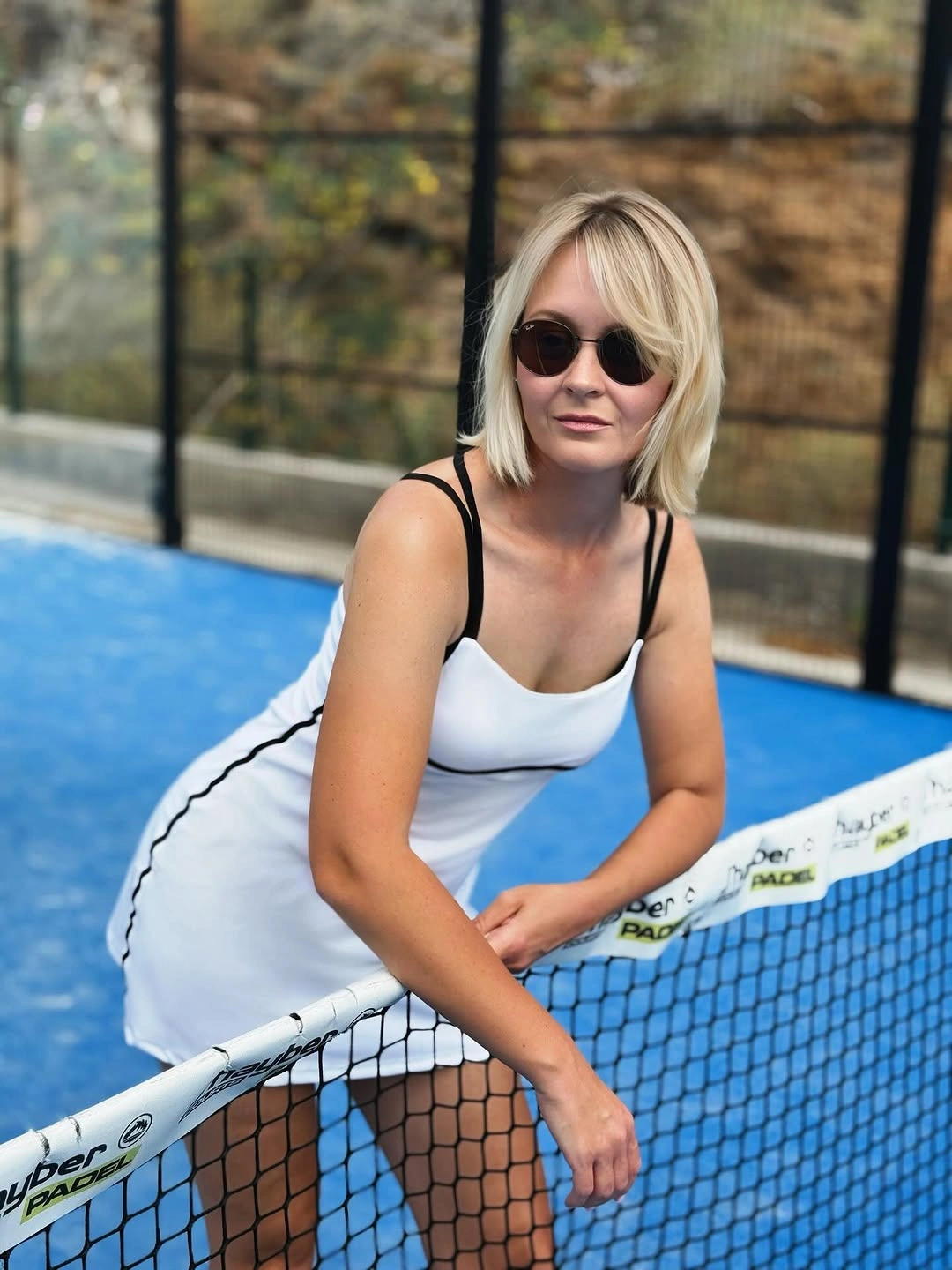
Give this kind of dress a practical movement test rather than assuming a close fit is automatically functional. Raise the racket arm, rotate into a backhand, and take a wide step to see whether the trim and straps remain comfortable. If any part shifts, a white tank and black-trim skort can recreate the same graphic effect with more control over the waistband and upper-body fit.
Black-and-white is a sensible court palette because it does not demand extra coordination after you add a cap, bag, or jacket. Keep those pieces within the same two colors, then choose your shoe based on actual comfort and surface needs. The trim is already doing the visual work, so there is no reason to layer on bold logos or a competing color story just to make the outfit feel sporty.
20. Blue Dress With A Stable Base
The blue fitted dress has black trim and white trainers, producing a clear three-part court palette: bright body color, dark outline, and light base. For padel, a dress like this can be a clean choice when it stays put through overheads and directional changes. The trim gives the blue shape definition, while the white shoe keeps the legs visually open and the overall outfit easy to read.
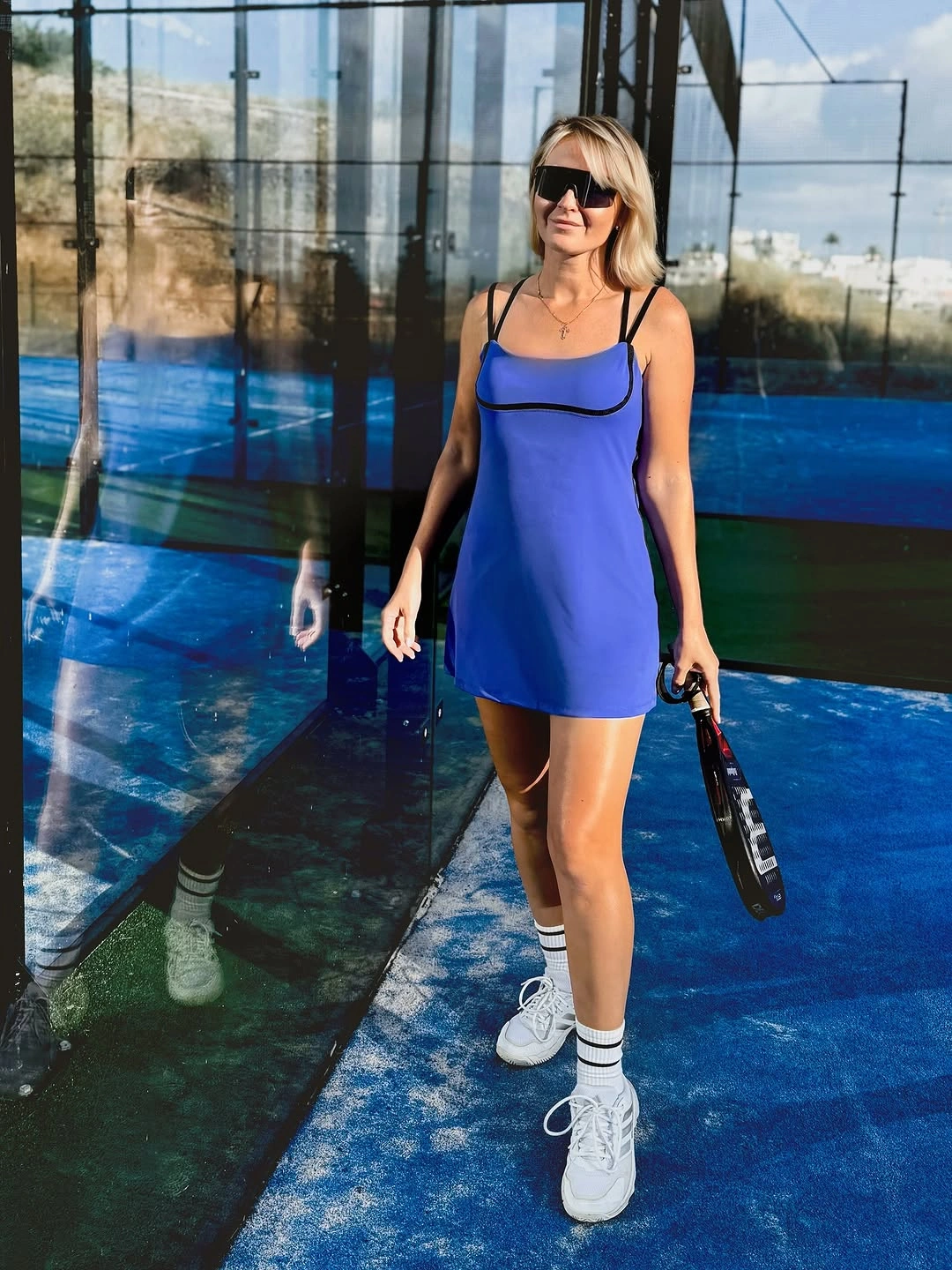
Make the final decision with movement, not the mirror. A stable dress should let you reach high, rotate, take a low ball, and recover without the hem, neckline, or straps becoming the focus of your attention. If it passes that check, the one-piece construction can feel especially convenient for a training session. If it does not, keep the blue-and-black color idea but separate it into a tank and skort.
White trainers give this look a clean finish, but their court suitability comes before their color match. Choose the shoe that feels dependable for your playing surface, then use its tone as the final styling detail rather than the primary reason to buy it. The blue dress already supplies the energy; the black trim and light base simply keep that energy organized around real padel movement.