If your hair feels dry, brittle, or frizzy no matter what you do, you’re dealing with damage to the outer cuticle layer. The good news is that with the right routine, you can visibly improve its strength and shine. This article walks you through a step-by-step repair plan, from gentle cleansing to smart prevention, so you can bring your hair back to life.

Key Takeaways
- Use a sulfate-free shampoo and focus cleansing on your scalp.
- Apply a deep conditioning mask once or twice a week.
- Always use a heat protectant before any heat styling.
- Air-dry hair whenever possible to minimize heat exposure.
- Trim split ends regularly; they cannot be repaired by products.
1. You Can Revive Damaged Hair
Yes, you can bring damaged hair back to life. I’ve seen it happen with consistent, gentle care. The key is a three-part approach: deep conditioning to restore moisture, protection from heat and the environment, and regular trims to remove split ends before they travel up the shaft. While some damage requires cutting, a solid routine strengthens and smooths the rest. Your hair can look and feel healthier within weeks.
2. Why Your Hair Gets Damaged
Why Your Hair Gets Damaged
Hair damage starts when the outer cuticle layer lifts or breaks, exposing the inner cortex. Once that protective shield is compromised, your hair loses moisture and becomes weak.
Common causes include:
- Excessive heat styling (flat irons, curling wands, blow dryers)
- Chemical treatments (coloring, perms, relaxers)
- Mechanical stress (vigorous brushing, tight ponytails or buns)
- Environmental factors (UV rays, chlorine, saltwater)
You’ll notice the signs: dryness, brittleness, split ends, frizz, dullness, tangling, and a lack of elasticity. If your hair stretches then snaps, the cuticle is likely damaged.
3. Your Essential Hair Repair Toolkit
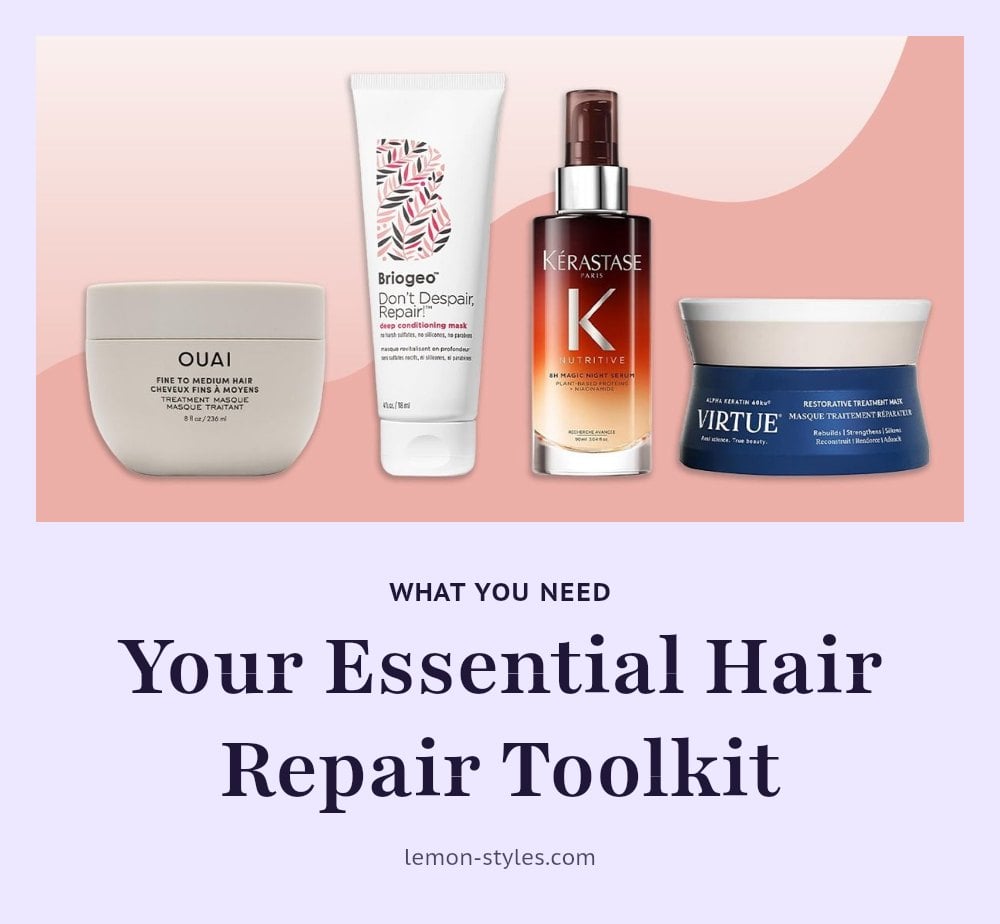
Here’s what you need in your kit. Each item serves a specific purpose.
- Sulfate-free shampoo and hydrating conditioner: Cleanse gently without stripping natural oils.
- Deep conditioning hair mask: Delivers intense moisture and nutrients to smooth the cuticle.
- Leave-in conditioner or hair oil: Provides ongoing moisture and a protective layer.
- Heat protectant spray: Creates a barrier between your hair and styling tools.
- Wide-tooth comb: Prevents breakage when detangling wet hair.
- Microfiber towel: Reduces friction and drying time compared to cotton.
- Silk or satin pillowcase: Minimizes friction and tangles while you sleep.
4. Your Step-by-Step Hair Repair Routine

Follow this routine consistently. I do it myself, and it works.
- Cleanse gently: Use a sulfate-free shampoo. Focus on your scalp, not the lengths. Rinse thoroughly.
- Condition generously: Apply conditioner from mid-lengths to ends. Leave it on for 2-3 minutes before rinsing.
- Apply a deep conditioning mask: Once or twice a week, work a mask through damp hair. Leave it on for 5-20 minutes (check the label), then rinse with cool water to seal the cuticle.
- Detangle with care: While hair is still wet and conditioned, use a wide-tooth comb. Start at the ends and work upward to avoid snapping strands.
- Seal in moisture: Apply a leave-in conditioner or a few drops of hair oil to damp hair. Focus on the ends.
- Protect before heat: Spray a heat protectant evenly over your hair before any blow-drying, flat ironing, or curling. This barrier is non-negotiable.
5. Preventing Future Hair Damage

Stopping damage before it starts costs less effort than repairing it later. These habits make the biggest difference.
- Lower the heat: Use the lowest temperature that actually styles your hair, and keep hot tools moving instead of resting them on one section.
- Air-dry when you can: Skip the blow dryer on days you are not going anywhere. Every skipped blow-dry is one less round of heat stress.
- Space out chemical treatments: Frequent coloring, perms, and relaxers compound cuticle damage. Stretch the time between appointments.
- Loosen your styles: Tight ponytails and buns pull on the roots. A loose braid or clip holds hair without tension.
- Trim every 6-8 weeks: Regular trims remove split ends before they travel up the shaft.
- Switch your pillowcase: Silk or satin reduces friction and breakage overnight compared with cotton.
6. Common Hair Repair Mistakes to Avoid
These are the habits that quietly undo weeks of good care.
- Believing split ends can be repaired: Once the cuticle splits, no product fuses it back together. Only trimming removes it, and leaving it lets the split climb higher.
- Over-using protein treatments: Protein fills gaps in the cuticle, but too much makes hair stiff and prone to snapping. Alternate protein masks with moisture masks instead of stacking them.
- Applying conditioner to the scalp: Conditioner belongs on the mid-lengths and ends. On the scalp it weighs hair down and turns greasy fast.
- Brushing from the roots down: Start at the ends and work upward in small sections. Brushing top-down drags knots into tighter tangles and breaks strands.
- Using heat without protection: One high-heat pass on unprotected hair undoes the conditioning you did all week. Heat protectant is not optional.
7. Top Tips for Healthier, Stronger Hair

Small habits add up. These are the ones I keep coming back to.
- My tip: Press a microfiber towel against wet hair to blot, never rub. Rubbing roughs up the cuticle, and that is where post-wash frizz starts.
- My tip: Do a scalp massage with your fingertips for a few minutes once a week. It boosts blood flow to the follicles and loosens buildup at the roots.
- Tip: Wear a hat or work a UV-protecting leave-in through the lengths before long sun exposure, and rinse with fresh water right after a chlorine swim.
- Good to know: For severely damaged hair, add a bond-repairing treatment as a short intensive course. Space it out so it does not stack with protein masks.
8. What to Expect: Timeline and Maintenance
Give the routine 4-8 weeks of consistency before you judge results. Texture and shine improve gradually, not overnight.
- Immediate: A trim visibly cleans up split ends the same day.
- Weeks 4-8: Softer, less brittle hair with better elasticity.
- Ongoing: Maintenance keeps results; repair is not a one-time fix.
- Budget: Ranges from drugstore basics to salon treatments.
9. When to Consult a Professional
At-home care has limits. Know when to hand it over.
- See a dermatologist or trichologist: If damage is severe and persistent, or comes with scalp issues like excessive shedding or irritation.
- Book a trusted hairstylist: For complex chemical damage, or if you’re unsure which professional treatments suit your hair.
- Patch test first: Always test new products, especially dyes or chemical treatments, on a small area to check for allergic reactions.
10. Frequently Asked Questions
How long does it take to see results from repairing damaged hair?
You can expect noticeable improvement within 4 to 8 weeks of consistent care. A trim gives immediate visual cleanup of split ends, while texture and shine improve gradually as your hair regains moisture and strength. Keep up the routine for lasting results.
Can split ends truly be repaired without a trim?
No. Once the cuticle splits, no product can fuse it back together. Trimming is the only way to remove split ends, and leaving them lets the split travel further up the hair shaft, causing more breakage. Regular trims are essential.
Is it possible to over-proteinize hair?
Yes, overusing protein treatments can make hair stiff and brittle, leading to breakage. Protein fills gaps in the cuticle temporarily, but too much can have the opposite effect. Balance protein with deep moisture treatments and follow product instructions.
What’s the best way to detangle wet, damaged hair?
Use a wide-tooth comb on wet hair, starting from the ends and working your way up. Wet hair is more fragile and prone to breakage, so gentle, patient detangling prevents unnecessary damage. Avoid brushing wet hair vigorously.
How often should I use a deep conditioning mask on damaged hair?
Apply a deep conditioning mask once or twice a week for best results. Leave it on for 5 to 20 minutes depending on the product to allow optimal penetration. Adjust frequency based on your hair’s dryness level.
11. Final Thoughts
Stick with a gentle routine and give it four to eight weeks before judging results. You’ll see softer, less brittle hair with better elasticity, but maintenance is key to keeping it that way. Make a habit of using a heat protectant and air-drying when you can, and your hair will thank you.
This article is for general information only and is not a substitute for professional medical or hair care advice. If your hair damage is severe, persistent, or accompanied by scalp issues, consult a dermatologist or trichologist for personalized guidance.