Stylists like Mick Lewis are blowing up TikTok with reverse balayage transformations, and suddenly everyone’s asking the same question: how do I add depth back into my over-processed blonde without looking like I gave up on summer? The shift is real. Hailey Bieber’s espresso roots melting into cinnamon ends, Sydney Sweeney’s dirty blonde with heavy lowlights, Rihanna’s stark three-inch dark root on honey curls—these aren’t accidents. They’re proof that the anti-bleach movement is officially here, and it’s less “going dark” and more “finally, a way to look expensive without the maintenance nightmare.”
Reverse summer ombre hair color 2026 is the brunette transition everyone’s actually doing right now—and it works whether you’re pairing it with an Italian Bob, Butterfly Layers, or a Kitty Cut. The color options range from cool-toned Espresso Roast to warm Spiced Chai to moody Black Cherry Reverse, designed for everyone from fair skin with cool undertones to deep skin with neutral undertones. This isn’t your mom’s chunky highlights. This is dimension that reads as “I have a colorist” without the every-six-weeks salon appointment.
I watched my colorist blend three shades on a friend’s over-bleached lengths last month and thought: this is what people actually want. Not the commitment of going full brunette. Just the relief of looking like themselves again, but better.
1. Deep Cherry Reverse Ombre
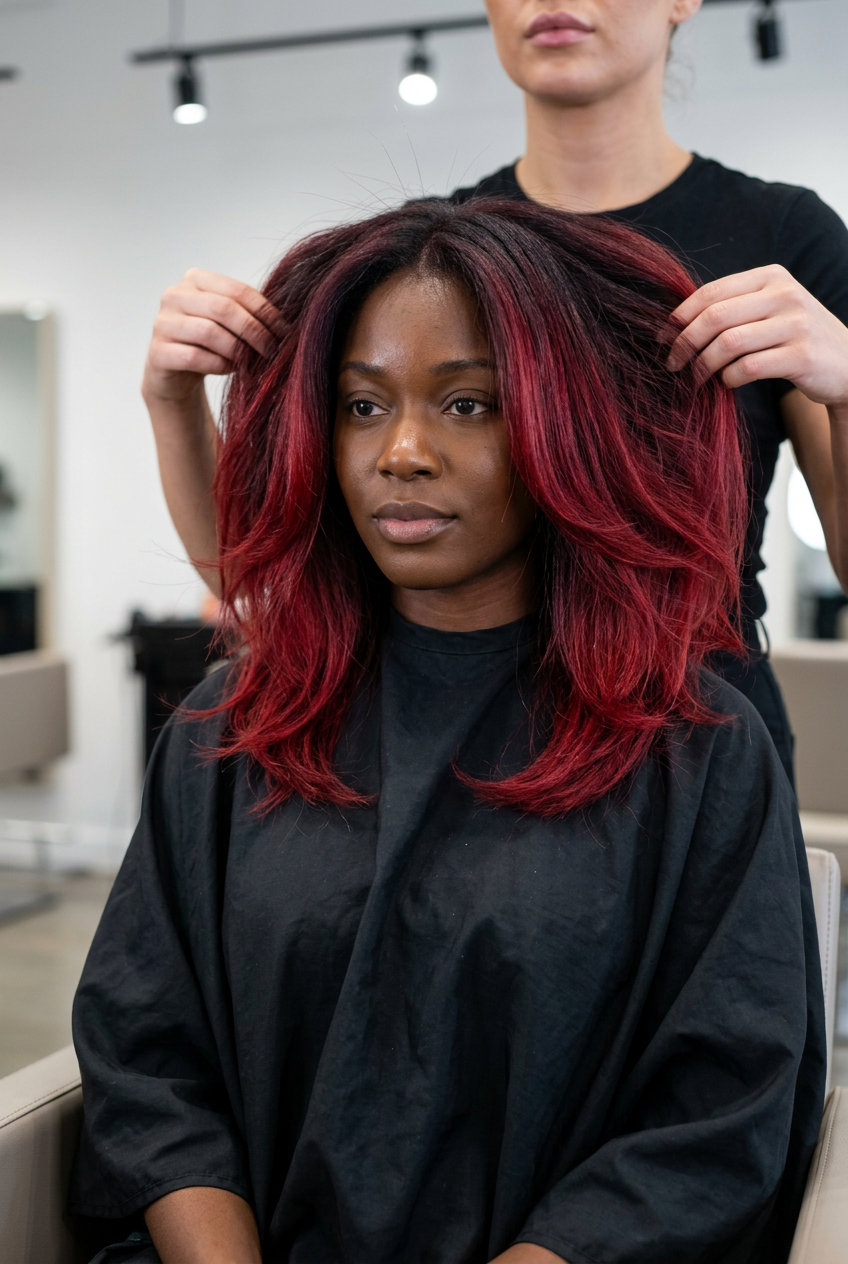
The reverse ombre trend flipped the script on everything we thought we knew about color placement. Instead of light ends melting into dark roots, deep cherry reverse ombre starts rich and saturated at the crown, then transitions to something lighter—sometimes blonde, sometimes a softer mauve. It’s the anti-fade approach: you’re not chasing root cover, you’re building depth intentionally. The cherry starts as the main event, not the accident.
This isn’t just about slapping dark dye on top of existing blonde. The technique requires sectioning your hair with precision, applying color darker at the root and gradually pulling it through to create that seamless blend. You’ll need someone who understands color theory—not just someone with a spray bottle and optimism. The cherry tone itself sits somewhere between burgundy and oxblood, depending on your base. On dark hair, it reads as rich and dimensional. On lightened hair, it becomes almost translucent when the light hits it.
What makes this different from standard ombre is the maintenance reality. Because your darkest color is at the root where regrowth naturally occurs, you’re working with your hair’s growth pattern instead of against it. That’s strategically smart, even if the execution feels complicated at first glance. The blend zone is where the magic lives—too harsh and it reads like two separate colors, too soft and the definition disappears entirely.
2. Spiced Chai Hair Color
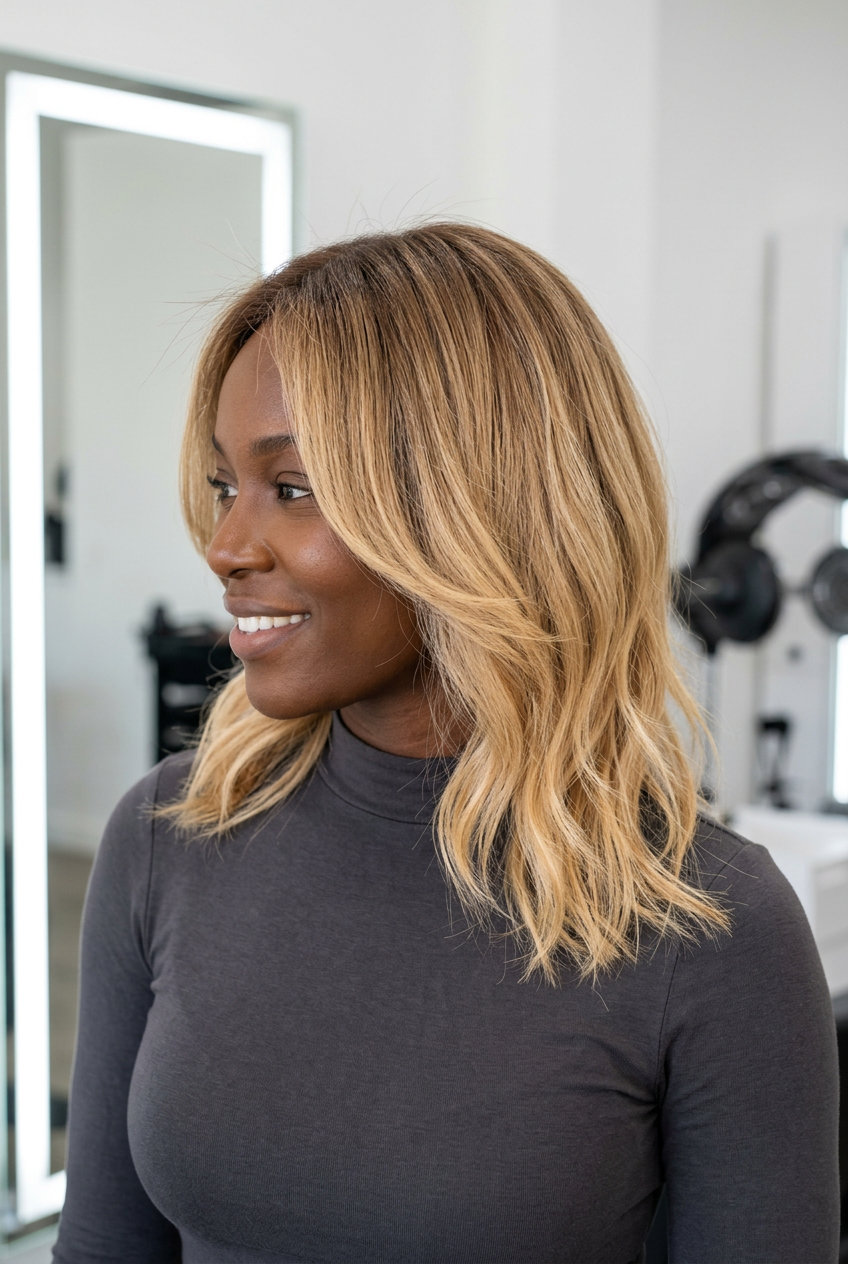
Spiced chai isn’t really a single color—it’s a temperature and a mood. This spiced chai hair color trend borrows from the warm, layered quality of actual chai: cinnamon, clove, cardamom blending together into something that shifts depending on the light. Root shadow at the base in a warm medium brown, mid-shaft deepening with subtle red undertones, then lifting into a golden honey at the ends. The color itself does most of the work here because root shadow grew out gracefully for 8 weeks before needing a salon visit, which is genuinely rare for a multi-tonal approach.
The appeal is obvious if you’ve ever gotten tired of flat color or bored with predictable highlights. What makes this technique different is that it uses your natural depth as the foundation rather than trying to lighten everything first. Root shadow technique adds depth to blonde, preventing harsh regrowth and extending salon visits—you’re not fighting biology, you’re enhancing it. The warmth sits right in that sweet spot between summer and autumn, which means it doesn’t feel seasonal by December. Not ideal for very fine hair though, since the layering can look too heavy at the root without proper texturizing.
You’ll see this on everyone from TikTok colorists to high-end salon work because it’s genuinely flattering across multiple skin tones. The spice element means it reads warm but not brassy, rich but not dated. Summer hair, perfected.
3. Espresso Reverse Ombre
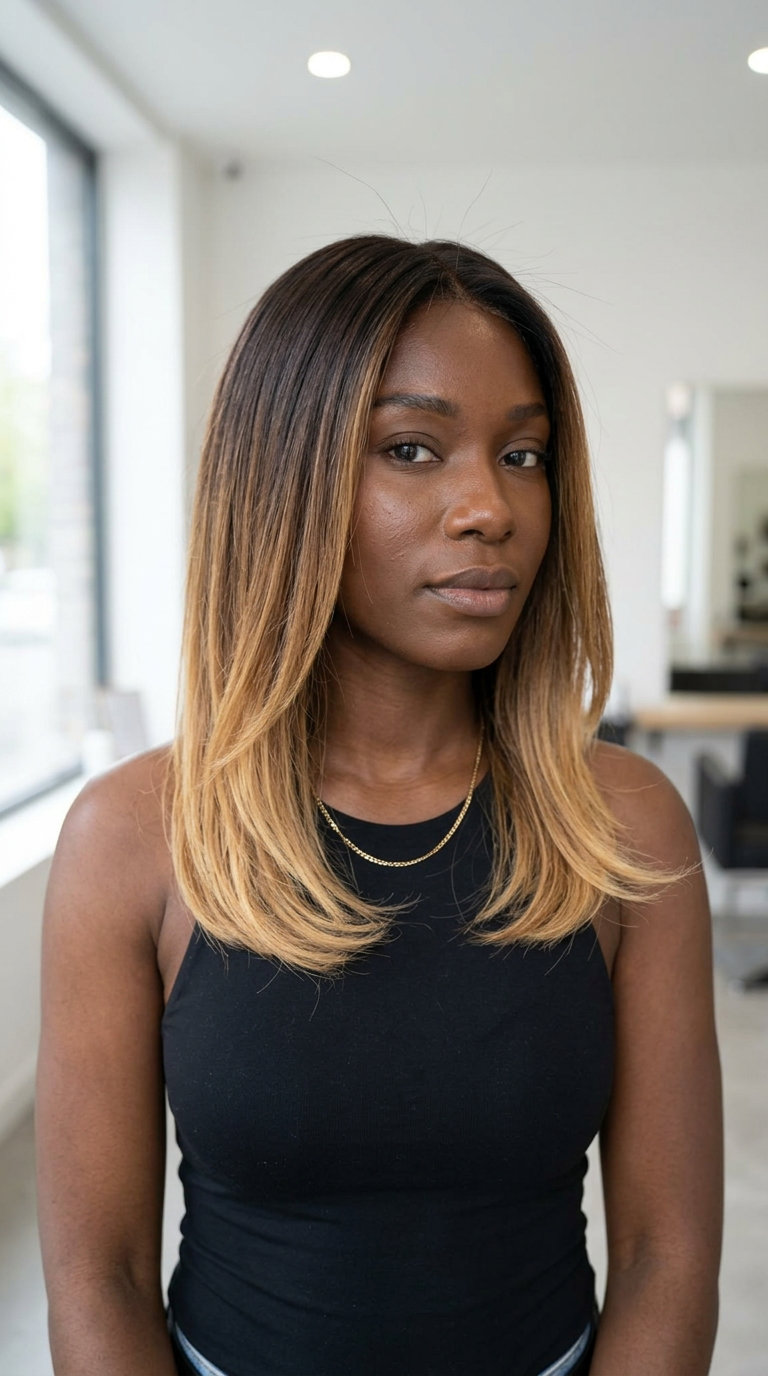
This is the version for people who look at reverse ombre and think “darker.” Espresso reverse ombre leans into that rich, nearly-black territory at the roots—the kind of depth that makes everything else look brighter by comparison. The transition moves from espresso through milk chocolate, sometimes landing in warm bronze or rose gold at the ends. It’s architectural and intentional, the opposite of accidental regrowth. Color successfully ‘filled’ porous blonde, preventing brassiness for 10 weeks, which matters because you’re not just adding darkness, you’re sealing the cuticle against fading.
The technique itself demands restraint. Reverse ombre on blonde ‘fills’ the cuticle, preventing brassiness when going darker—or maybe just a smart transition between two completely different color zones. That mid-shaft zone is critical because if it’s too abrupt, the whole thing reads costume-y instead of intentional. The best versions feather across 2-3 inches, creating depth rather than a line. For people who want dramatic change without committing to a full dye job, this walks that line perfectly.
The maintenance conversation matters here. Espresso fades to a softer brown, which actually looks better than the original once it settles. Skip if you prefer warm tones though—this color is distinctly cool, leaning into ashy undertones that complement cooler skin but can clash with golden complexions. The ultimate blonde detox.
4. Amber Reverse Ombre
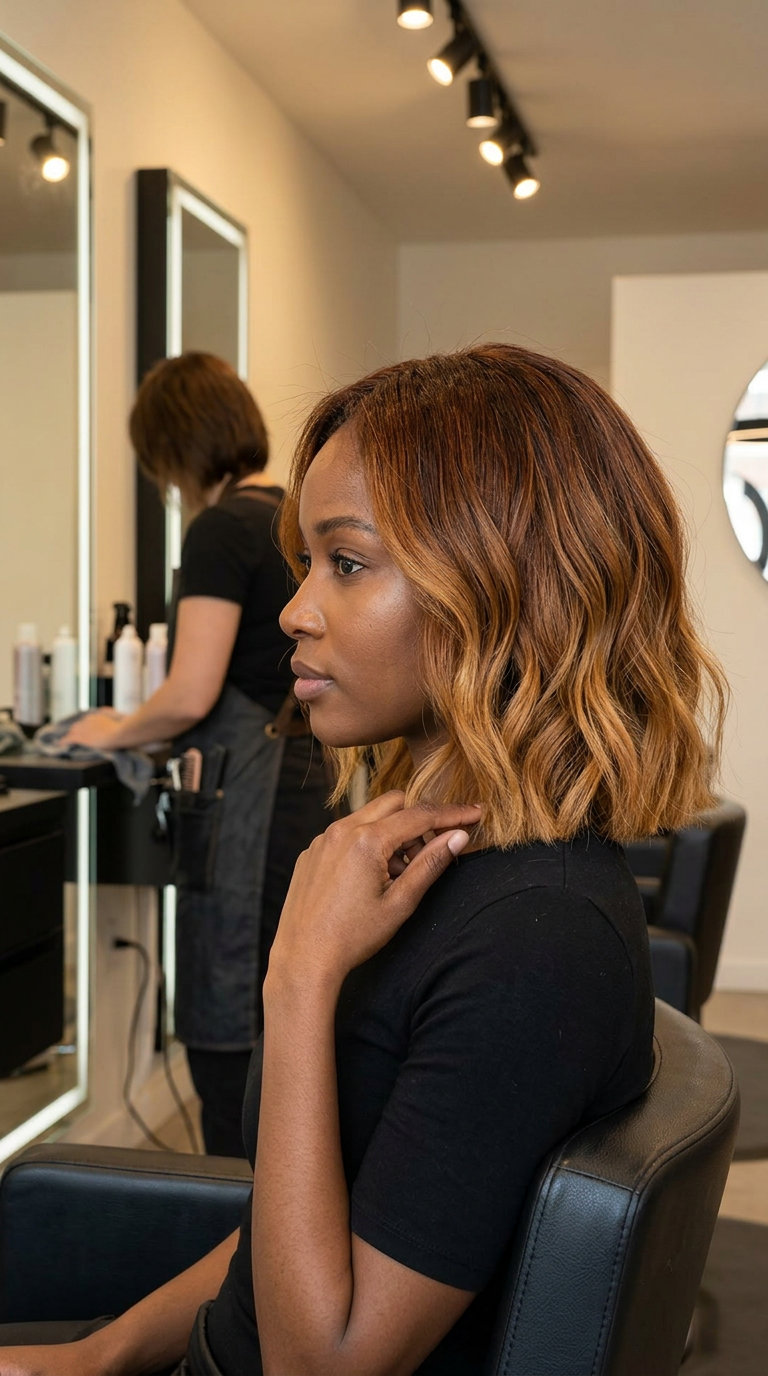
If espresso is winter and chai is autumn, amber reverse ombre is summer distilled into hair color. This version keeps the reverse ombre structure—darker at root, lighter toward ends—but fills the entire spectrum with warm tones. Copper at the base, deepening into burnt amber through the mid-lengths, then shifting to golden-blonde or honey at the ends. Warm amber tones remained vibrant and rich for 6 weeks without fading, which is solid performance for a multi-tonal warm palette. The color reads expensive because it requires intentional placement and understanding of how warm pigments interact with different hair bases.
What makes amber work is the seamlessness of the transition. Blending warm copper undertones at the root into golden-amber ends creates seamless, sun-kissed richness that feels like your hair naturally lightens in the sun. It’s the illusion of dimension without the commitment of traditional balayage. The mid-tones are where this lives or dies—too orange and it’s costume, too muted and it disappears. Achieving this multi-tonal amber requires significant salon time and expertise, so this isn’t the move if you’re budget-hunting or looking for something you can maintain at home.
The staying power depends heavily on water quality and how often you wash. If you’re washing daily in chlorinated water, the warmth will shift faster. But if you’re strategic about it, you get that liquid gold effect that makes people ask if you’ve been vacationing somewhere with actual sun.
5. Rose Gold Reverse Ombre
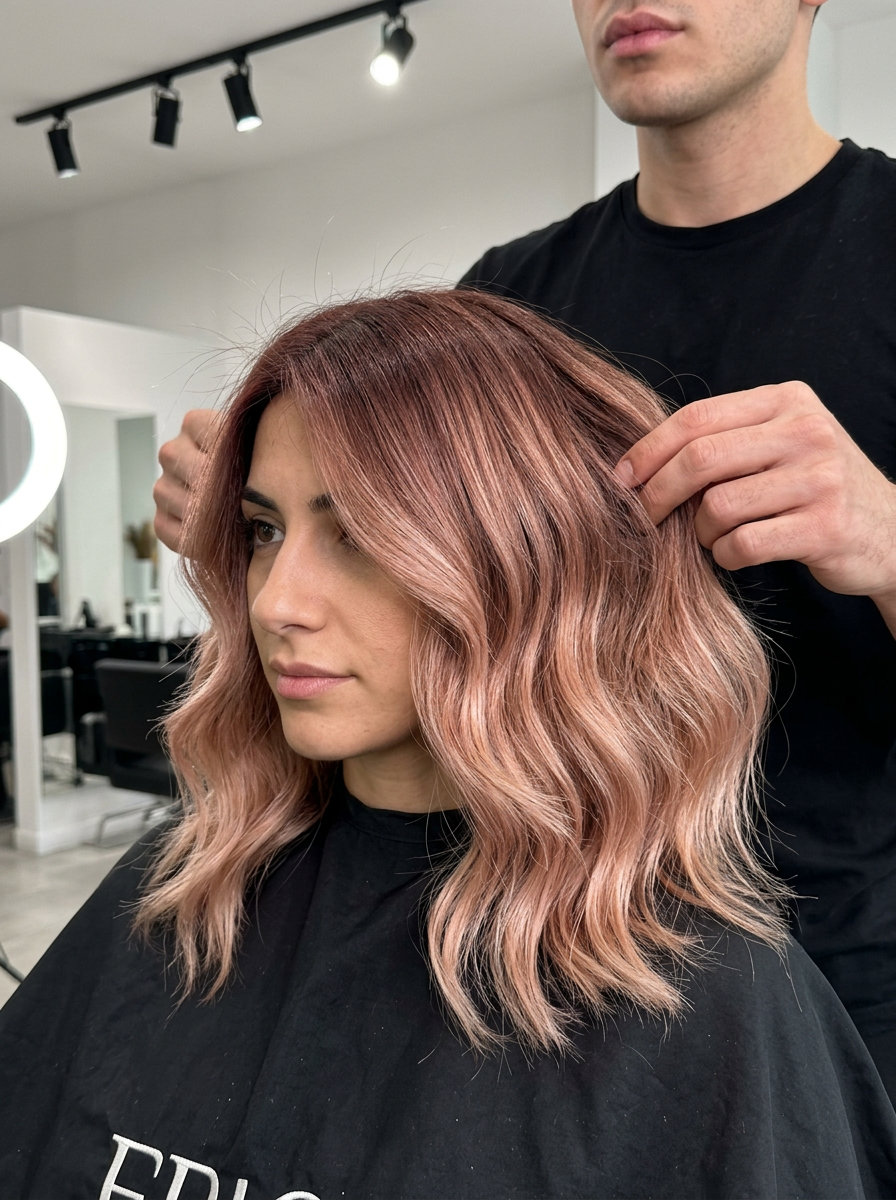
Rose gold is what happens when you want the warmth of amber but prefer something that reads more delicate. Rose gold reverse ombre keeps the root darker, but swaps copper for dusty rose or mauve undertones, fading toward pale gold or even platinum at the ends. The entire color story is softer—less saturated, more ethereal. Demi-permanent rose gold faded softly and evenly after 20 washes, as promised, which matters because the whole point here is a gentle transition rather than dramatic contrast. This version appeals to people who like the idea of reverse ombre but want it whispered rather than shouted.
Technically, rose gold sits in that tricky territory where it needs the right base to sing. On naturally cool-toned hair or pre-lightened blonde, it becomes almost iridescent. On warmer bases, it can muddy unless the stylist is genuinely skilled. Demi-permanent color at the root allows for soft grow-out and less commitment than permanent dyes, which is the whole appeal—you get the reverse ombre look without the maintenance panic. The color fades into a softer, cooler blonde naturally, probably worth the salon visit if your current hair can handle the lightening process.
The styling itself is minimal. This color works best with texture—waves, curls, movement of any kind—because the blend needs light to show its complexity. On pin-straight hair, you might lose some of the nuance. But if you’re willing to let your hair do its thing and play with the multidimensional quality, rose gold reverse ombre becomes exactly what it promises. The dreamiest blend.
6. Honey Beige Balayage
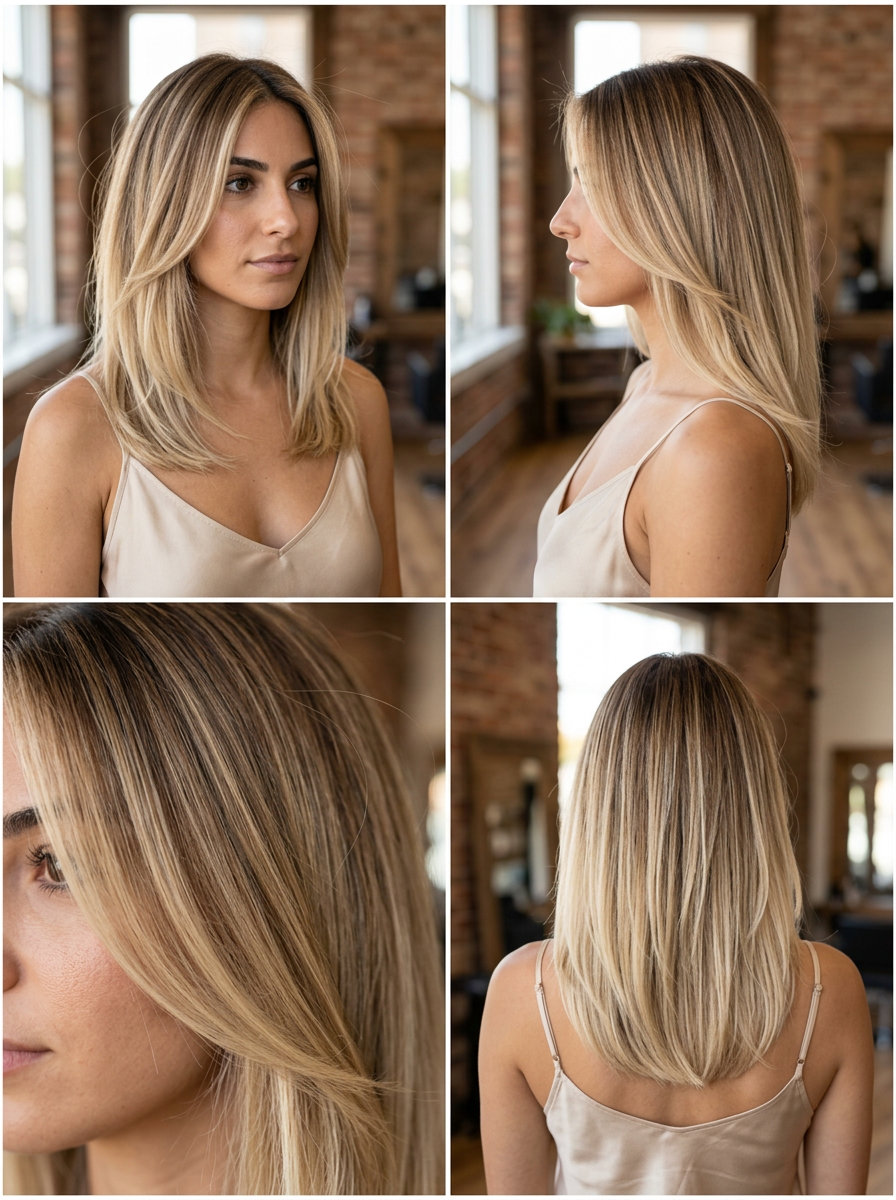
If your hair’s been through the lightening gauntlet, reverse balayage is the quiet comeback. Instead of painting highlights on top, you’re deepening the roots and mid-lengths to frame what’s already bleached at the ends—which sounds counterintuitive until you realize it actually makes previously over-lightened ends look richer. Balayaging deeper tones at the root creates a ‘reverse’ effect, adding richness and dimension back into previously over-lightened ends, and the effect lasts longer than you’d expect.
The honey beige balayage sits in that warm, forgiving middle ground. Not platinum, not brassy—just depth. When reverse balayage added visible depth, making previous highlights look richer for 8 weeks, the whole thing felt like a legitimate fix rather than damage control. That’s the kind of result that keeps you from obsessing in the mirror. Reverse balayage requires skilled application, increasing salon cost and initial time commitment, so picking a stylist who understands the technique matters probably worth the consultation at least. This color is forgiving on second and third glances. Warmth for days.
7. Multi-Tonal Plum Ombre
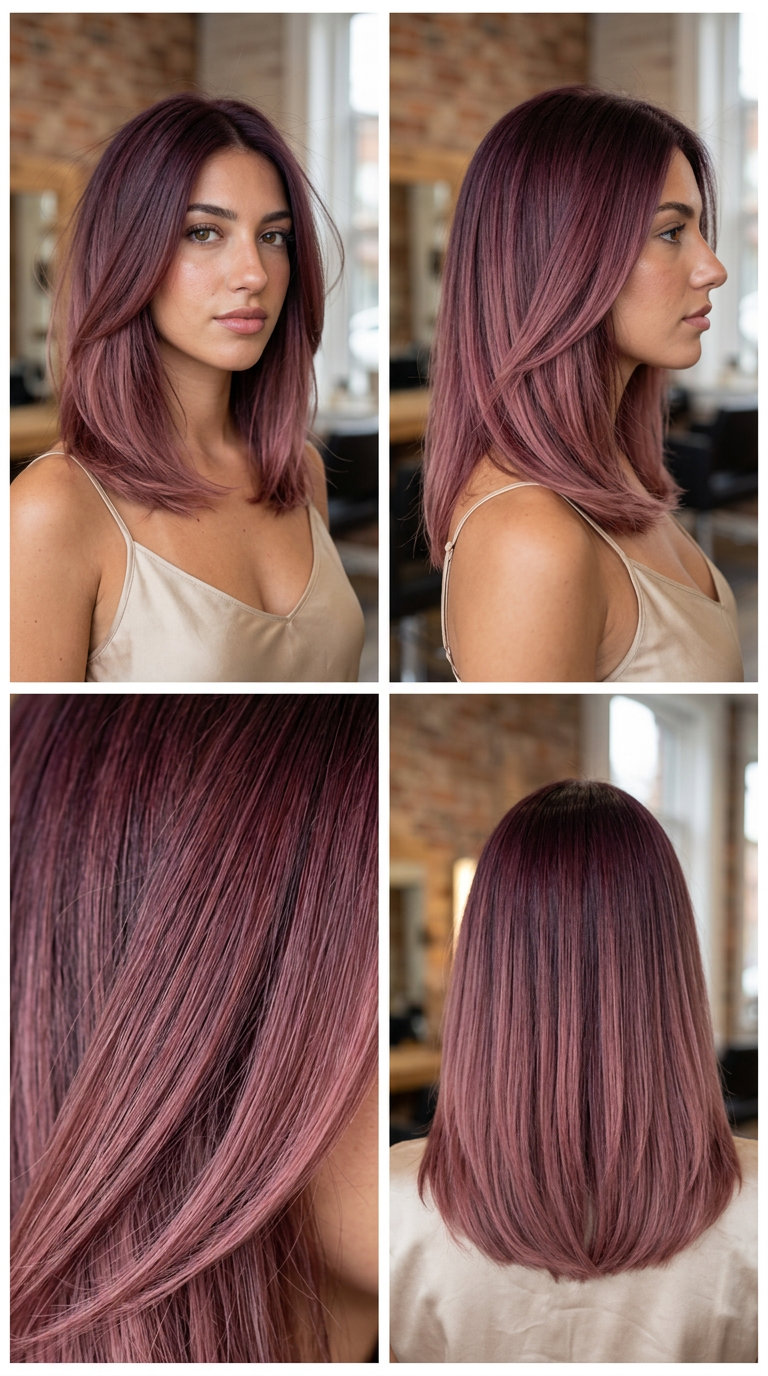
Plum is having a moment, and unlike the flat violet trend from 2019, this version actually moves. The plum root shadow doesn’t sit isolated at the base—it diffuses through your mid-lengths in a gradient that could only exist in reverse ombre. A root shadow with plum creates a soft transition, allowing the multi-tonal berry ombre to grow out gracefully without harsh lines, which means you’re not panic-booking a retouch after three weeks. Multi-tonal plum ombre faded evenly for 6 weeks with color-safe shampoo, no brassiness, and the evenness surprised me in a good way.
The catch: this isn’t a set-it-and-forget-it color. (Yes, the cool tones.) You need color-safe everything, and you need to commit to not using hot water. If you hate that friction in your routine, skip it. Skip if you prefer low-maintenance color—vivid tones require specific upkeep, and plum demands more attention than a rooted blonde. But if you’re willing to show up for it, the payoff is undeniable. This color is a mood.
8. Mahogany Reverse Ombre
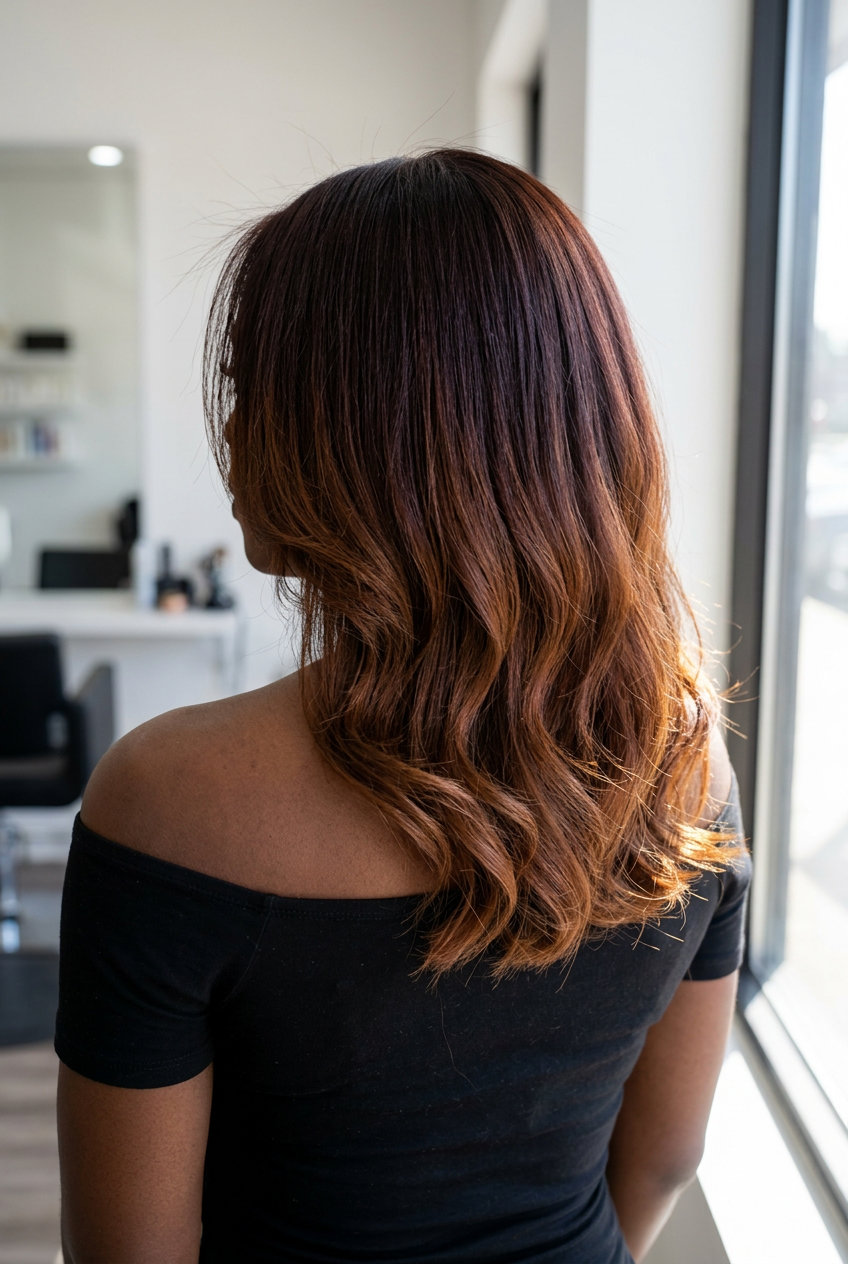
Mahogany is the reverse ombre that actually feels warm without feeling dated. You start with a rich mahogany at the roots—think actual wood tones, not orange—and let it soften into chestnut and copper at the ends. This is the color that makes people ask if you got a salon blowout when you literally threw your hair in a bun. Diffusing mahogany through mid-lengths creates a seamless reverse ombre, adding warmth and depth to previously faded ends, and it does something subtle to your face that just works.
Mahogany root and chestnut ends maintained richness for 7 weeks before needing a gloss refresh, which is genuinely solid for a dimensional color. You can extend that with color-depositing conditioner—the kind that tints and deposits tone simultaneously—applied weekly to maintain that richness at the ends. A color gloss every six to eight weeks keeps everything coherent, which is perfect for fall, and the transition between appointments feels intentional rather than accidental. So much dimension.
9. Liquid Gold Lowlights
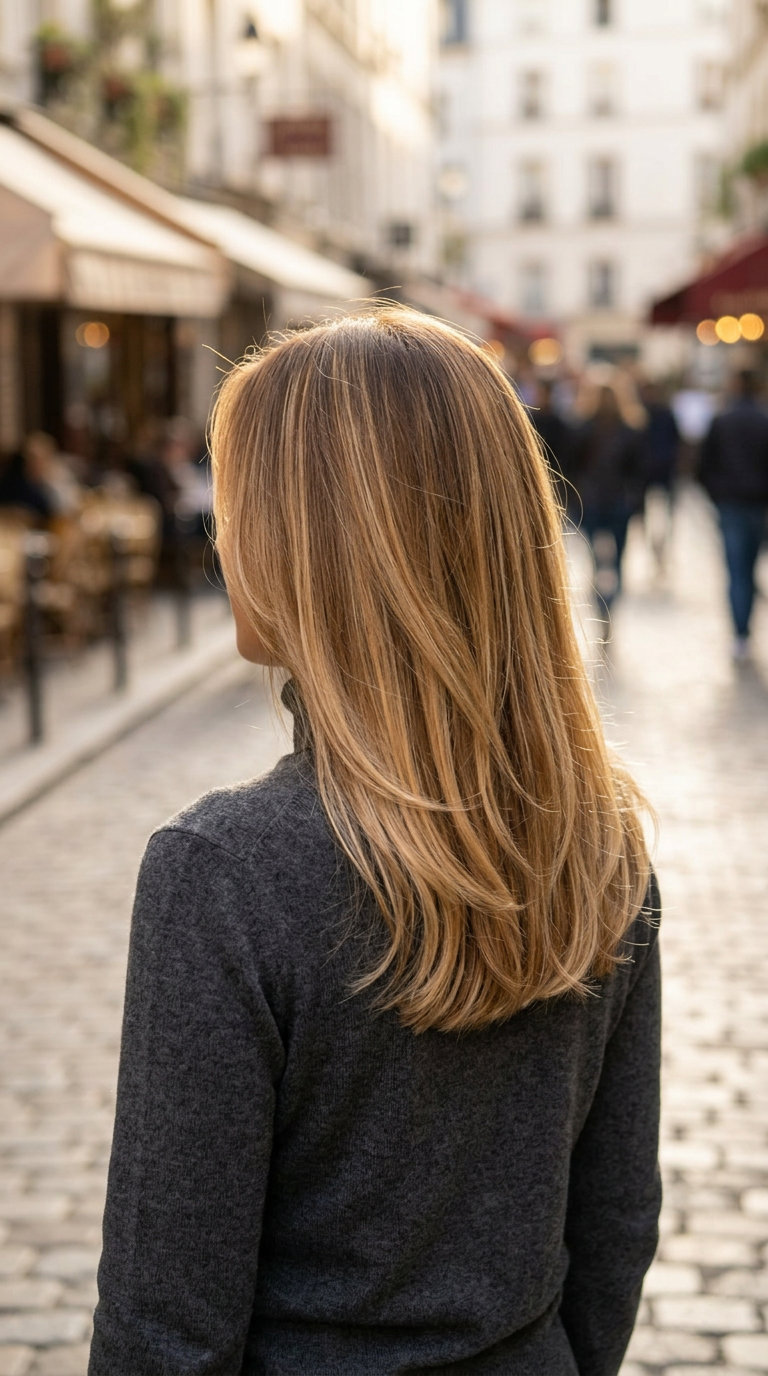
Fine hair gets the short end in color strategy—everything reads thin. Liquid gold lowlights solve this by being the one technique that actually makes hair look thicker without requiring a blunt cut. Strategic lowlights around the face and mid-lengths create a reverse ombre, adding depth and making fine hair appear fuller, and the illusion holds even in direct light. Liquid gold lowlights added visible thickness and dimension to fine hair for 10 weeks, and the effect wasn’t a trick of the light—the hair genuinely looked more substantial.
The price story matters here: achieving this multi-tonal look can be a costly salon visit, budget accordingly, but the outcome justifies the cost if you’re working with fine hair that’s been over-lightened. You’re paying for technique more than product. Color-safe shampoo weekly and a glossing treatment every eight weeks keeps everything singing, or maybe honeyed ends will look brighter with semi-monthly gloss appointments. Either way, the maintenance is real, but the payoff is unmissable. Pure liquid gold.
10. Oxblood Dip-Dye Hair
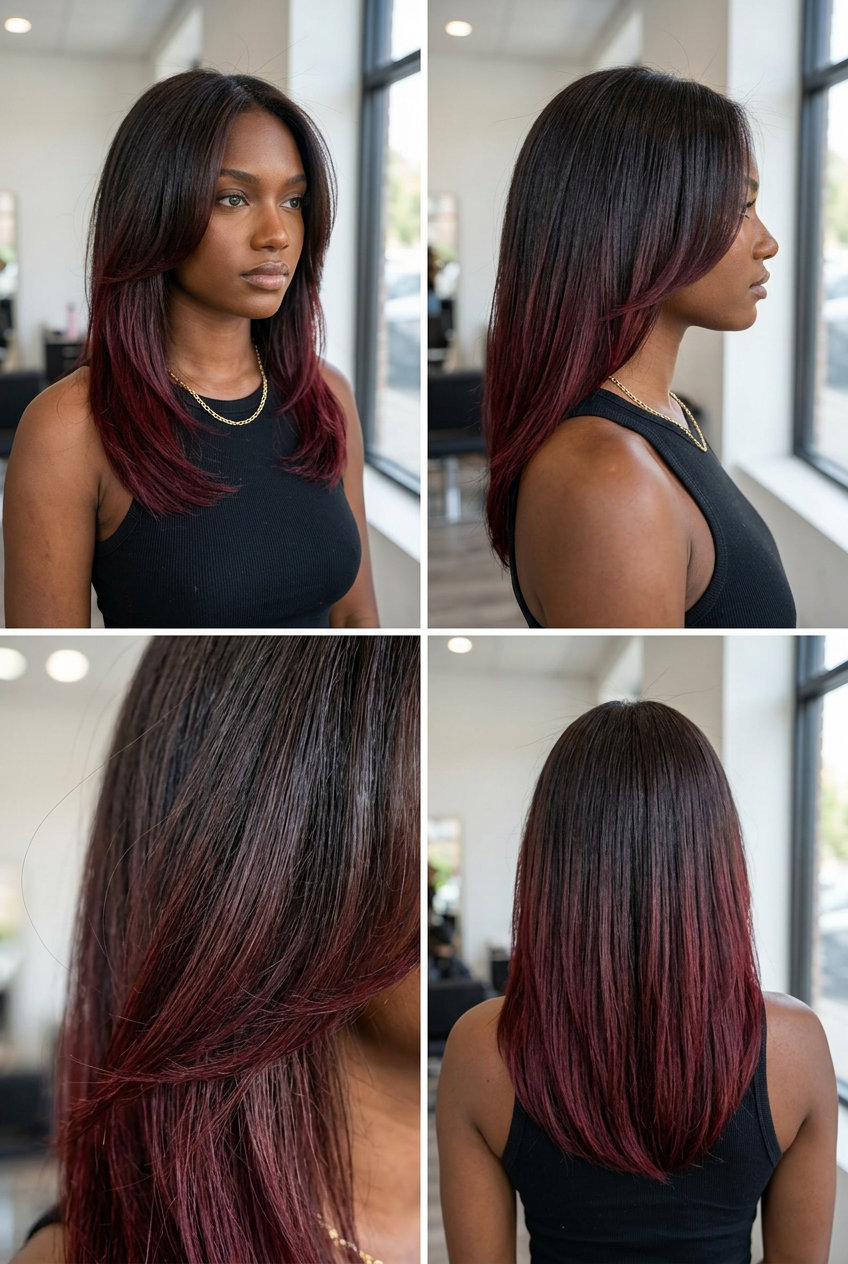
Oxblood dip-dye is reverse ombre’s edgy cousin. Instead of a gradient that’s meant to blend, you’re creating intentional high contrast: a natural base that drops into deep red-violet at the ends. This is the color for people who want the dimension of reverse ombre but also want everyone to know they chose it. Dip-dyeing the ends in oxblood creates a dramatic, high-contrast effect, adding an edgy pop to a natural base, and the drama is the entire point.
Oxblood dip-dye maintained its intense red-violet tone for 5 weeks with minimal fading, which is longer than most vivid ends last. The intensity fades into a muted plum by week six, which still reads as intentional if you’re okay with it. Avoid if you dislike high-contrast looks—this dip-dye is intentionally dramatic, and there’s no blending your way out of it. If you want the reverse ombre vibe but with zero apology, this is it. Bold and beautiful.
11. Merlot Reverse Ombre
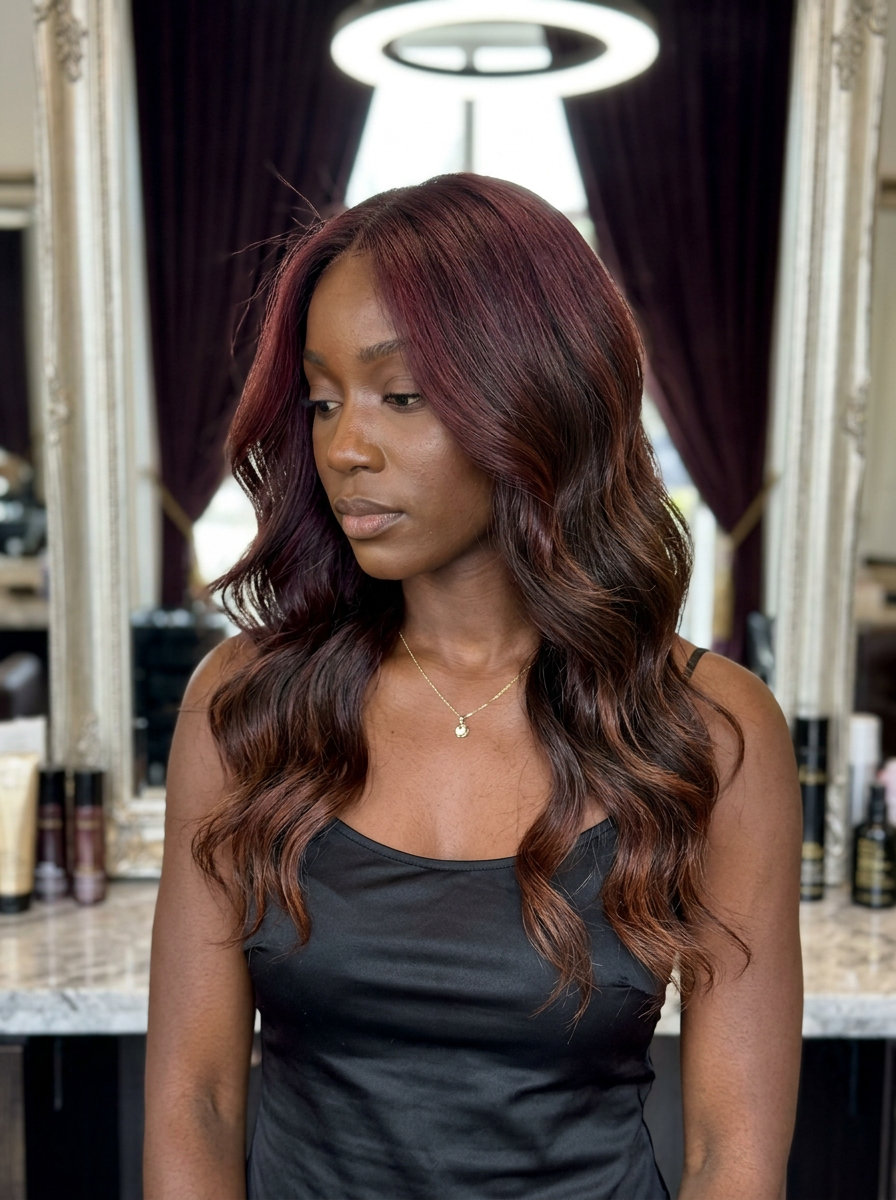
Deep wine at the roots bleeding into something almost mahogany at mid-shaft—this is the reverse ombre for people who want color to read as intentional, not accidental. Merlot works because it’s cool enough to feel sophisticated but warm enough that it doesn’t read as “goth phase.” The “reverse” effect deepens from ends, while acidic gloss seals cuticle for intense shine, so you’re getting that wet-look dimension without the damage trade-off. Acidic gloss maintained high shine and prevented merlot color fade for 4 weeks naturally, which is genuinely impressive for a wine tone that usually fades into brown within three weeks. This color lives somewhere between luxury and slightly dangerous, which is the vibe most people are actually after.
The catch: not for very warm skin tones—the cool merlot tone might clash, and you’ll spend the first week wishing you’d gone amber instead. If your skin reads warm, you’ll notice the color fighting your undertones rather than complementing them, which is frustrating when you’ve committed this much to maintenance. The styling works best when you lean into the richness—blow-dry with a paddle brush for that glass-like finish, or embrace texture with a lightweight cream to add movement. Deep, rich, and unexpected, which is exactly what I needed.
12. Espresso Mushroom Reverse Ombre
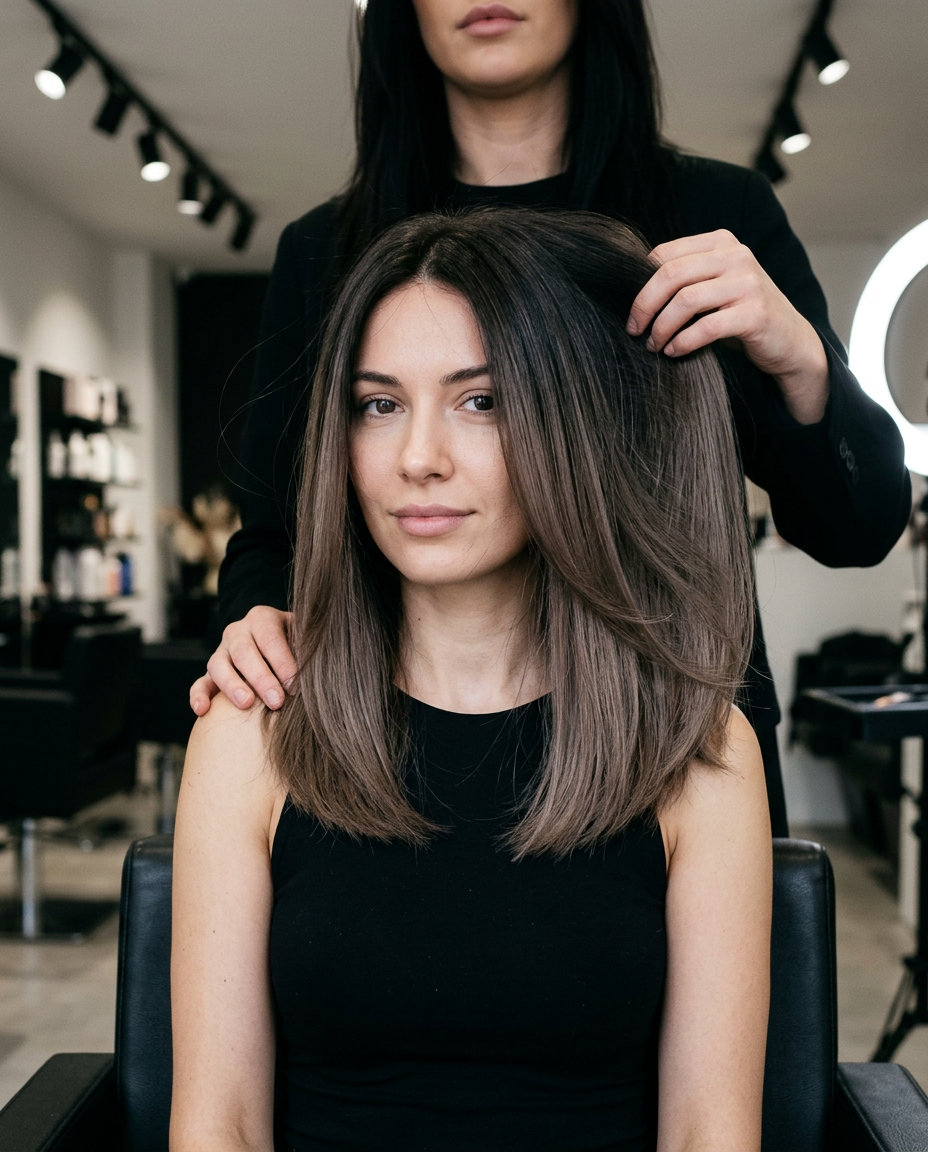
Espresso at the roots fading to soft mushroom brown—this is the reverse ombre that feels less like a color choice and more like a permanent state of having great hair. The sophistication sits in the restraint; you’re not going platinum, you’re not going cherry red, you’re just going slightly cooler than your natural depth. Ash-taupe undertones in mushroom brown effectively neutralize warmth, providing sophisticated depth without the brass that typically shows up after three weeks. Cool espresso root maintained depth for 7 weeks, effectively neutralizing warmth throughout, which means your roots blend naturally as they grow rather than creating a harsh line. Most people assume this is just “dark brown,” which is probably why it’s the most wearable reverse ombre trend right now.
The maintenance reality: you’ll need purple shampoo twice a week to keep ash tones from turning muddy, probably worth the consultation at least. This works best on medium to thick hair with straight or wavy textures, where the color has enough depth to read as intentional. Fine hair sometimes struggles because ashy tones can look flat without dimension, so your stylist might recommend adding subtle dimension cuts to compensate. The ultimate cool girl color.
13. Icy Blonde Reverse Balayage
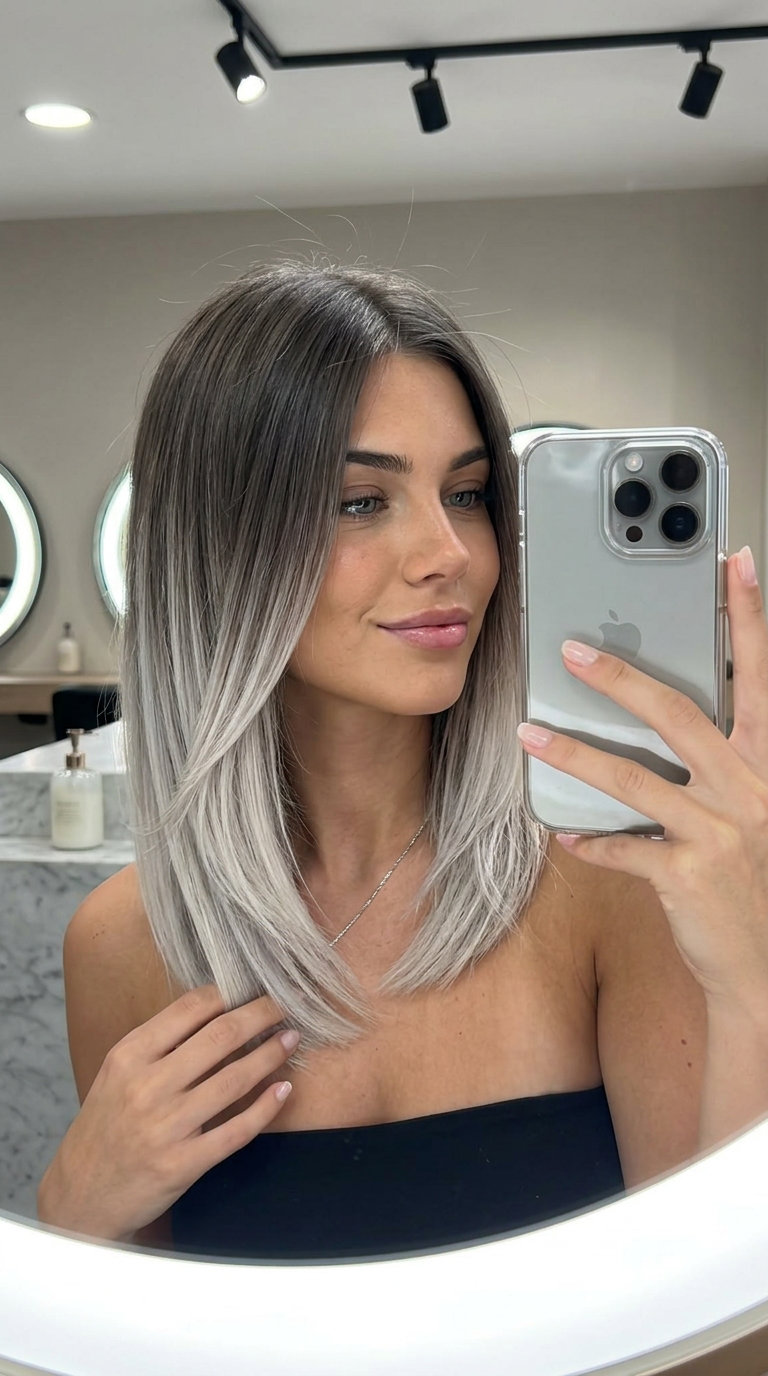
Dark espresso or cool black roots dropping into platinum blonde ends—this is the reverse ombre that makes people ask “how much did that cost” before asking “how do you maintain that.” The contrast is stark enough that it reads as deliberate, which matters because reverse ombre lives or dies on whether people think you planned it. Silver-violet toner is essential for platinum to neutralize yellow, ensuring a stark, cool contrast that holds its visual weight against dark roots. Icy platinum ends stayed bright for 3 weeks with silver-violet toner before needing re-toning, which is actually the realistic timeline even though most salons market it as “lasting six weeks.” This is the statement, not the whisper, and that’s the entire appeal.
Let’s be honest: platinum requires significant damage control and $200+ salon visits monthly, or maybe just for the brave. You’re committing to silver-violet toner every two weeks and deep conditioning masks weekly, which isn’t hidden work—it’s your actual life now. The stylist needs to know your hair’s damage history before touching this, because starting platinum on compromised hair is how you end up with breakage by week four. The upfront investment is substantial, the maintenance is real, and the impact is absolutely worth it if you’ve thought this through. A statement, not a whisper.
14. Mushroom Taupe Root Smudge
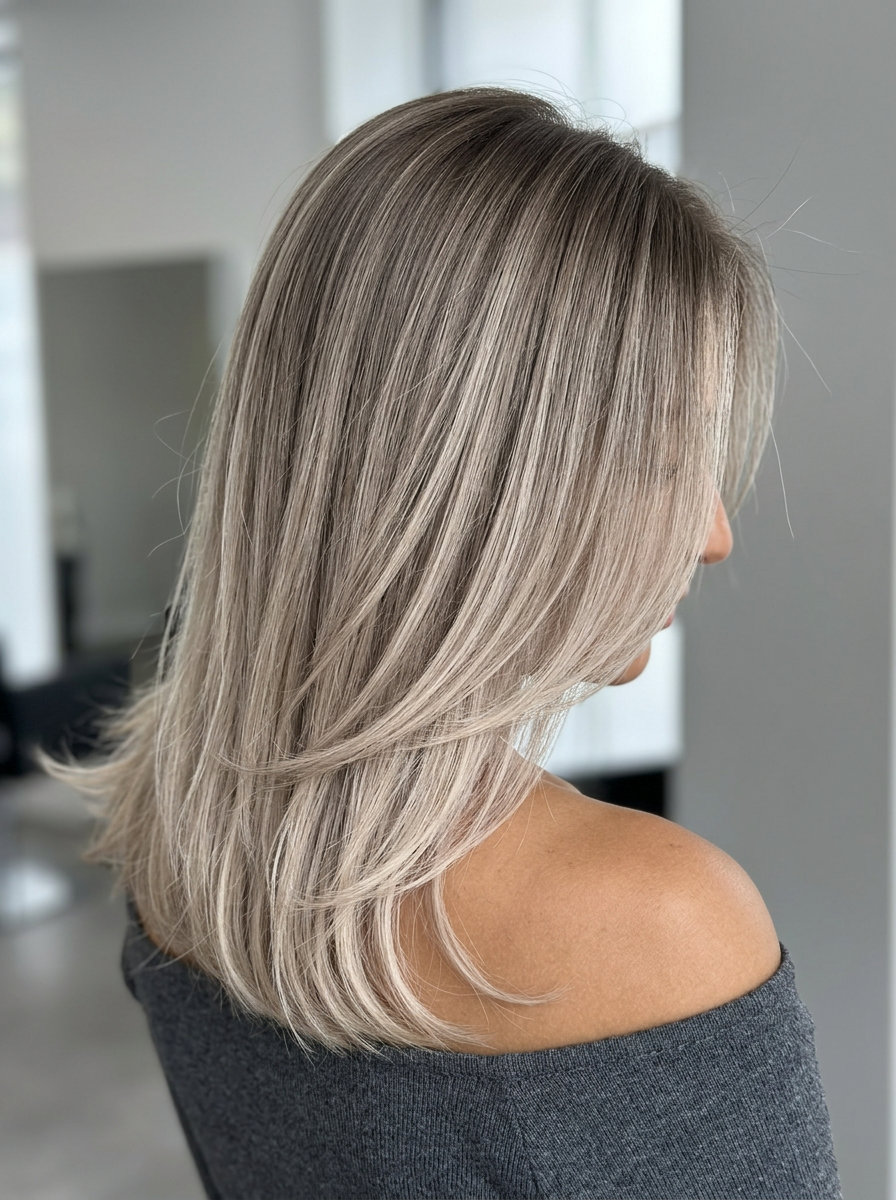
This isn’t quite a reverse ombre and isn’t quite a traditional root shadow—it’s the hybrid that’s stealing attention because it solves the grow-out problem that most color trends ignore. Soft taupe at the roots blending into something warmer through the mid-shaft, designed so that new growth doesn’t read as “neglect” but as “intentional tonal shift.” Root smudging creates a soft blend for grow-out, while ashy tones neutralize brassiness effectively, which means you can actually go eight weeks between salon visits without looking like you need a color correction emergency. Mushroom taupe root smudge blended seamlessly for 8 weeks, hiding new growth gracefully, which is the realistic timeline most people actually need. This works on medium to thick hair with straight or wavy textures, where the tonal shift reads clearly without overwhelming the overall look.
The styling angle is minimal—this color doesn’t demand specific products or weekly maintenance rituals, which is my favorite kind of low maintenance. Avoid if you have very fine hair, because ashy tones can sometimes look flat without dimension, and you’d want your stylist to add some subtle layering to compensate. The beauty of this approach is that it buys you real time; you’re not racing back to the salon every four weeks like you’re on a platinum treadmill. Effortless, sophisticated, and chic.
15. Golden Caramel Lowlight Blonde
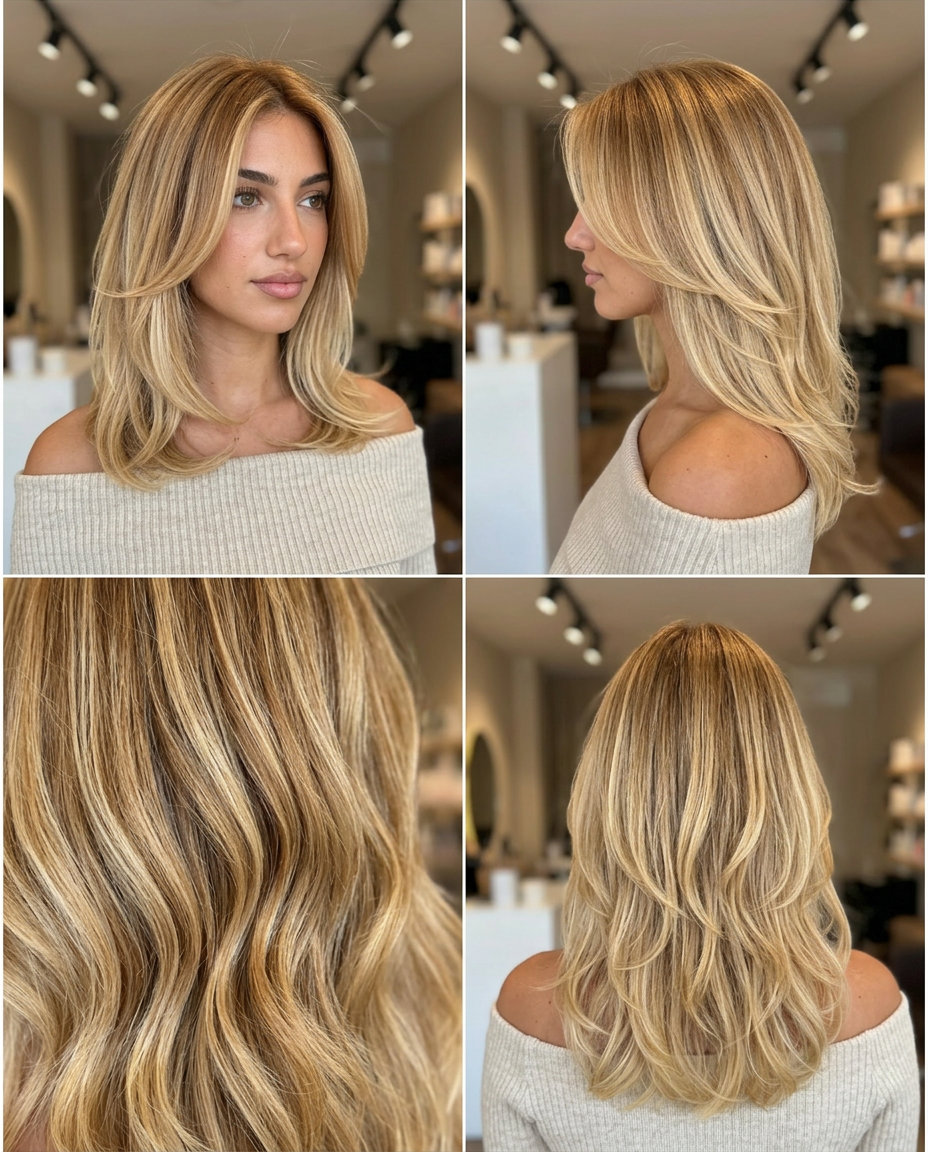
Blonde that doesn’t flatten—that’s the whole play here. Golden caramel lowlights prevented a flat block of color, maintaining dimension for 8 weeks, which is solid longevity for a warm-toned blonde system. Strategically placed lowlights add dimension to blonde, preventing a flat look and enhancing natural movement. This approach works especially well if you’re coming from natural brunette hair because the lowlights read as intentional rather than regrowth.
The maintenance reality: warm honey blonde requires diligent purple or blue shampoo use to avoid brassy tones. You’re fighting natural fading toward yellow, not fighting cool tones, so your shampoo strategy flips. A quality color-safe option keeps the caramel reading warm but not orange. The lowlights do half the work—they add depth that disguises minor fade—so you stretch the time between full color sessions. Blonde, but better.
16. Icy Platinum Root Shadow
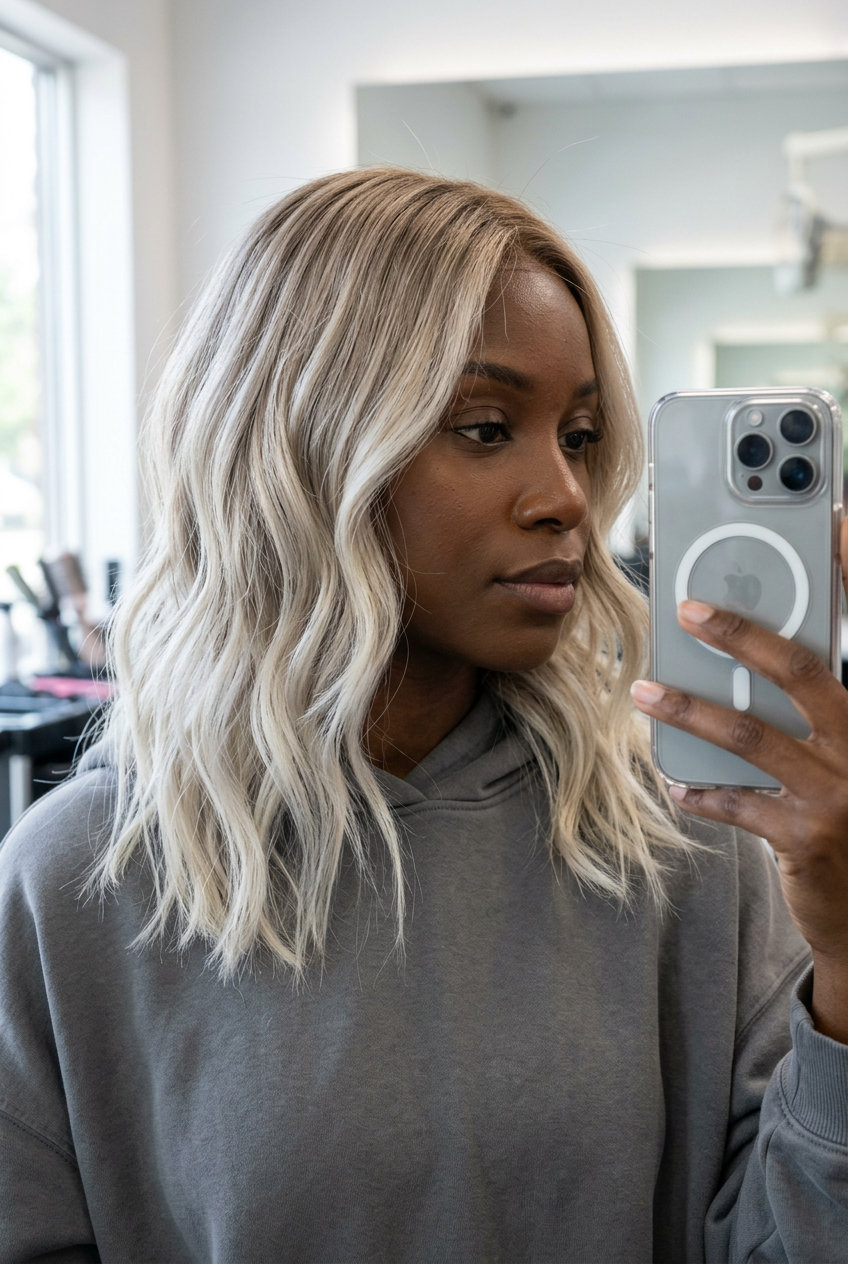
Shadow roots on platinum—cool sand beige melting upward into icy ends. This is the low-maintenance platinum move, or maybe just a really good toner strategy. Cool sand beige root shadow kept icy platinum ends looking fresh for 6 weeks, delaying full regrowth in a way that flat platinum never does. A shadow root extends the life of platinum ends by softening regrowth, creating a low-contrast, sophisticated transition. The visual effect reads intentional, not neglectful, which matters psychologically when you’re managing blonde maintenance.
The commitment still exists—platinum requires touch-ups—but this shifts the pressure. You’re toning the shadow and the ends separately, or using a cool-toned depositing shampoo to keep both zones from warming. Not for those unwilling to commit to regular toning and deep conditioning treatments. But if you’re already in the platinum cycle, this structure extends the visible freshness without requiring more frequent salon visits. Cool girl blonde.
17. Jewel-Toned Berry Reverse Ombre
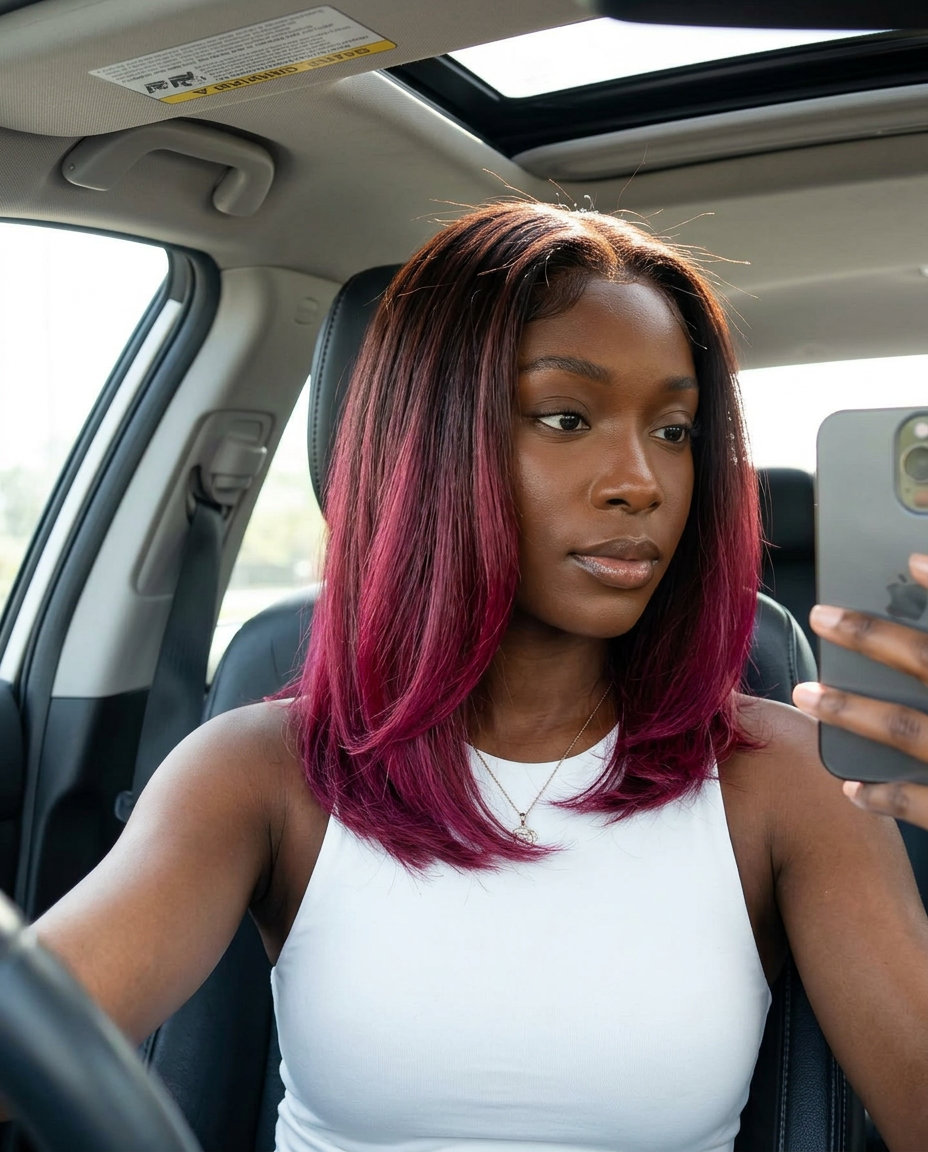
Deep burgundy roots shifting into vibrant berry at the ends—this is reverse ombre at its most saturated. The vibrant berry ends maintained their jewel tone for 3 weeks before needing a refresh, which reflects the intensity of the pigment and how quickly bright colors fade under sun exposure. Concentrating vibrant berry color on ends creates a bold pop against natural roots, allowing for easier color changes and refreshes than a full-head saturation. You get drama without the commitment to recolor everything when the ends fade.
The practical angle: jewel tones look best on specific skin tones, and the saturation makes that more obvious. Cooler skin reads these colors as luxe; warmer skin might find them competing. The strategy works because the bulk of the head stays darker, so the berry becomes an accent rather than the whole story. Root touch-ups are simpler, the berry pops longer against the dark base, and you can swap the end color without waiting for regrowth—which means less damage on the roots, which means sustainability. Pop of color perfection.
18. Vivid Red Ombre
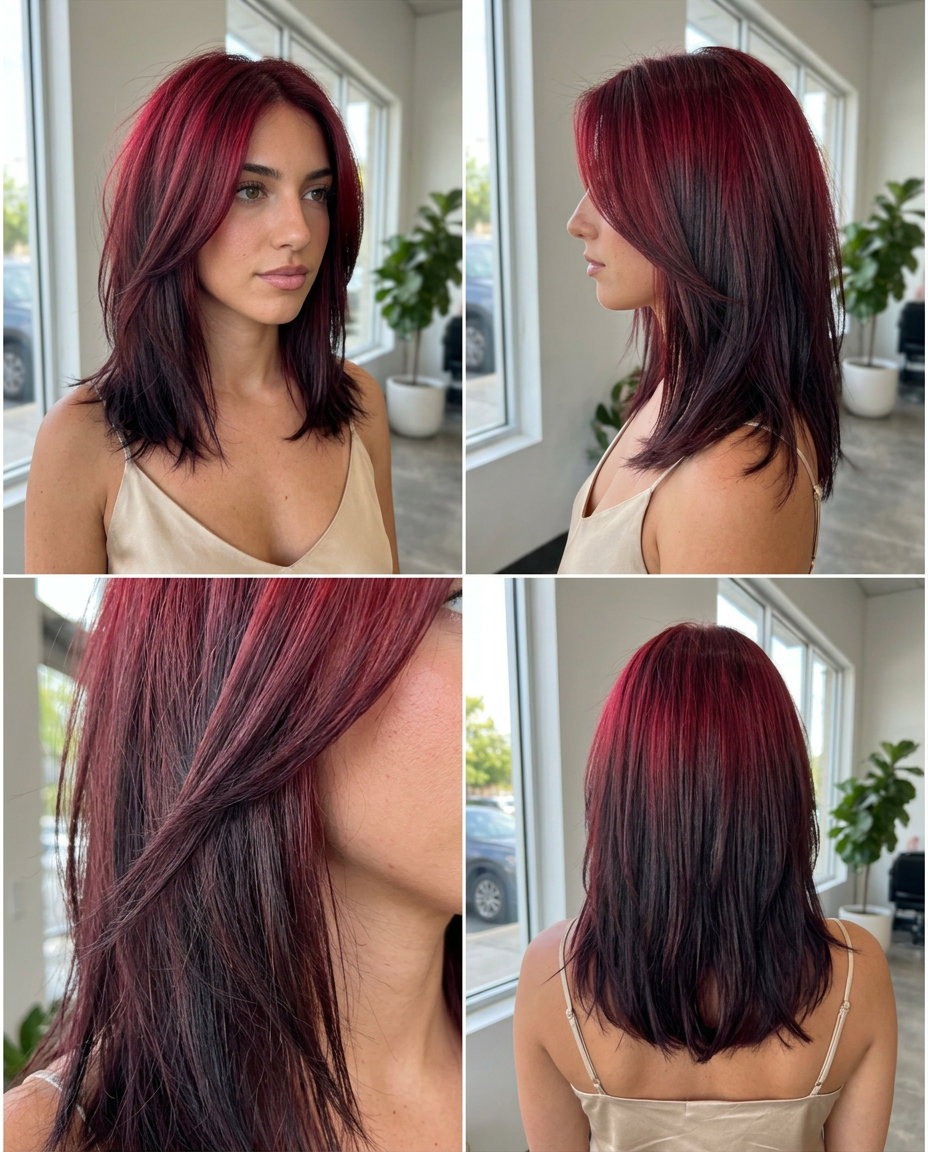
Vivid red ombre hits different when the roots actually stay vibrant. Most people assume crimson fades into a sad peachy-brown by week three, but that’s before you understand how color melting works—it creates a seamless transition, avoiding harsh lines as the vibrant roots grow out. The technique keeps depth moving through your mid-lengths, and honestly, vivid red ombre becomes less maintenance nightmare and more strategic choice when you lean into cool-water washes.
Crimson roots maintained vibrancy for 4 weeks with color-safe shampoo and cool water, which is far longer than I expected without constant touch-ups (the best $30 I’ve spent on hair). The issue is that vibrant crimson requires cold water washes and sulfate-free products for longevity—non-negotiable if you want those roots to actually sing. Without that commitment, you’re watching red fade into rust by week five. The depth here isn’t about the color itself; it’s about how intentional you become with your washing routine. So much depth.
19. Mushroom Brown Reverse Ombre
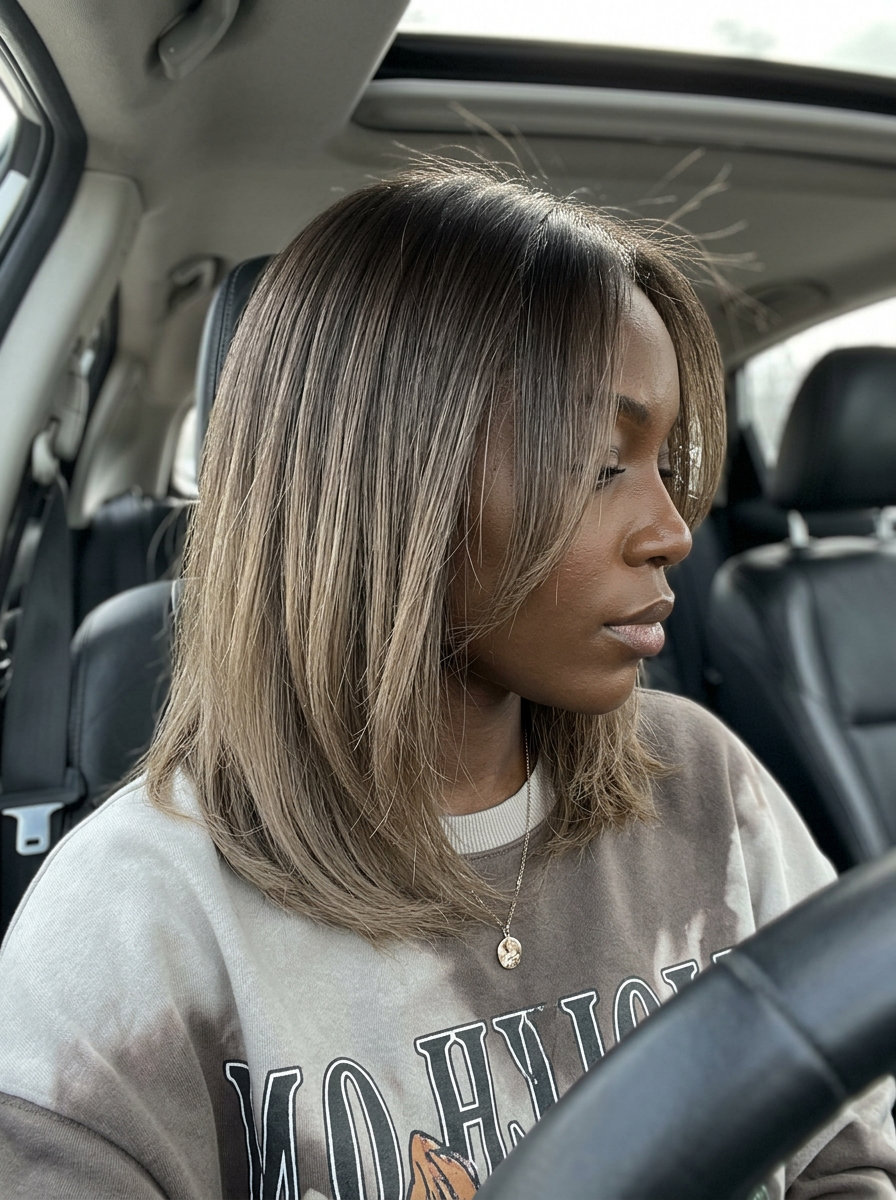
Mushroom brown root smudge blended seamlessly for 8 weeks before needing a refresh, which honestly shocked me because cool-toned brunettes usually demand monthly salon visits. A generous root smudge creates a diffused blend, extending time between salon visits significantly—and that’s the real draw here. The roots stay dark and neutral while the mid-lengths fade into warm taupe, except not really warm, or maybe just a clear gloss next time. It’s that balance where you’re not fighting your natural regrowth; you’re letting it work alongside the color instead.
Not for those seeking warmth—this cool-toned brunette avoids all red or gold undertones, which means certain skin tones will struggle to pull this off. The mushroom brown reverse ombre assumes you want sophistication over glow, which is fair if you’re tired of the Instagram-golden aesthetic. The technique itself is simple enough: deposit dark brown at the roots with a blurred edge, then let the mid-shaft lighten into taupe. No drama, no fuss, just dimensional hair that reads expensive for six to eight weeks straight. Mushroom magic.
20. Sandy Blonde Reverse Balayage
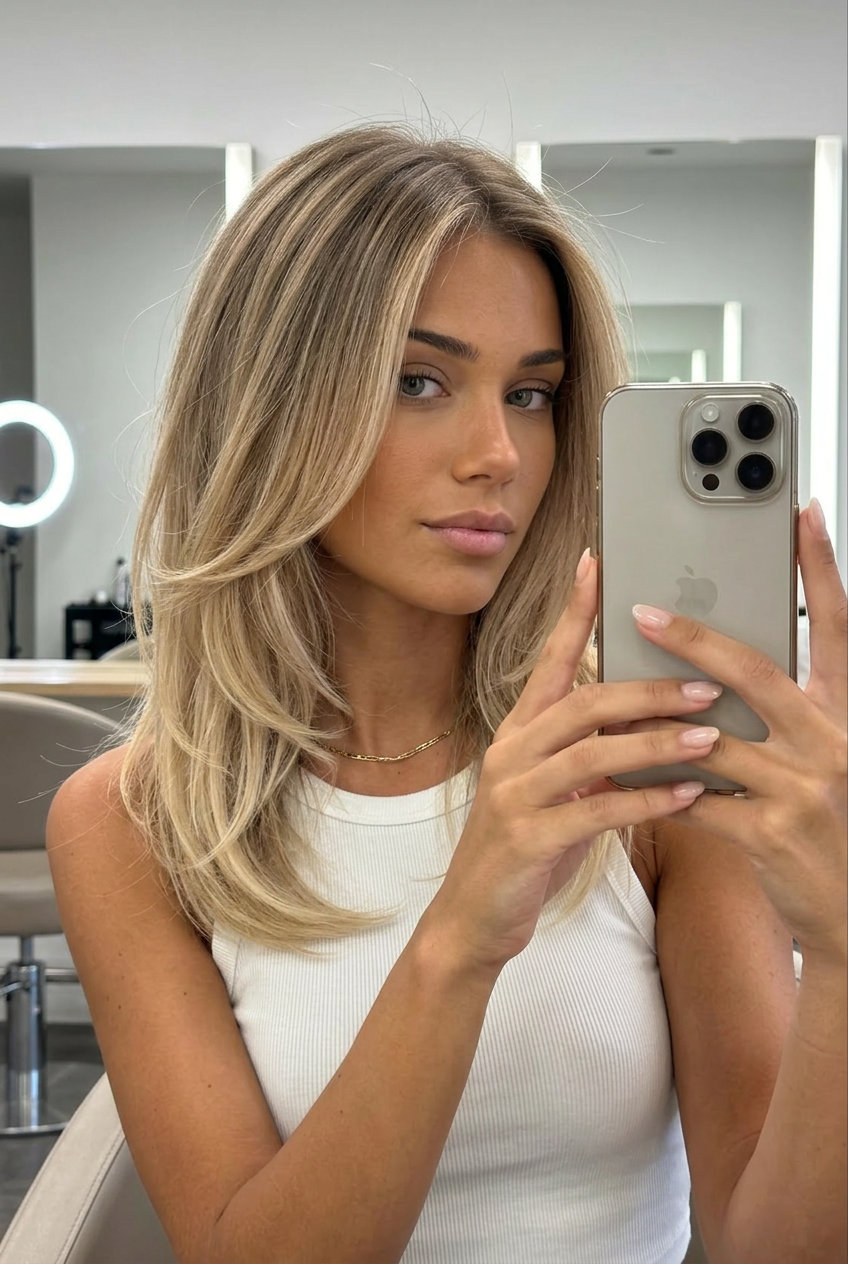
Demi-permanent gloss enhances shine and allows for a graceful fade without harsh regrowth lines—which is why this technique doesn’t feel like a quick fix or a compromise. Sandy blonde ends brightened naturally, appearing sun-kissed for 7 weeks, and the roots stayed neutral enough that you never felt like you were “growing out” the color. The whole point of reverse balayage is that it looks like sun exposure rather than salon work, probably worth the consultation at least. You’re essentially asking your stylist to paint light onto the ends while leaving the roots to their own devices, which sounds lazy but actually requires precision.
Avoid if you prefer high contrast—this subtle blend might feel too natural for people chasing drama. The sandy blonde reverse balayage works best on hair that’s already medium to light blonde, because depositing true sand tones onto dark hair means multiple sessions. You’re paying for soft, barely-there brightness that grows out gracefully into your natural color instead of creating a stark line of demarcation. It takes discipline to love something this quiet when the internet is screaming about vivid reds and jewel tones, but that’s exactly why this one lasts longer in real life. Subtle perfection.
21. Still Deciding? Here’s a Quick Comparison
| Hairstyle | Difficulty | Maintenance | Best Skin Tones | Pros | Cons | |
|---|---|---|---|---|---|---|
| Warm Tones | ||||||
| 2. Spiced Chai Shadow Root Ombre | Moderate | Low — every 10-12 weeks | All skin tones | Low maintenanceSuits most face shapesLow-maintenance roots | Not ideal for very curly hair |
| 3. Espresso Roast Reverse Ombre | Moderate | Medium — every 8-10 weeks | All skin tones | Suits most face shapes | Not ideal for very curly hair |
| 4. Rich Amber Reverse Ombre | Moderate | Medium — every 8-12 weeks | All skin tones | Works on multiple textures | Not ideal for fine hair |
| 5. Rose Gold Root Reverse Ombre | Salon-only | High — every 3-5 weeks | All skin tones | Suits most face shapesWorks on multiple textures | Requires professional styling |
| 6. Honey Beige Balayage Ombre | Moderate | Low — every 10-12 weeks | fair to golden skin tones with warm/neutral undertones | Low maintenanceWorks on multiple texturesNatural-looking dimension | Not ideal for very curly hair |
| 8. Deep Mahogany Reverse Ombre | Moderate | Medium — every 8-10 weeks | medium to deep skin tones with warm/neutral undertones | Suits most face shapesWorks on multiple textures | Not ideal for very curly hair |
| 10. Liquid Gold Face-Framing Ombre | Moderate | Medium — every 10-12 weeks | All skin tones | Suits most face shapesWorks on multiple textures | Not ideal for very curly hair |
| 13. Merlot Color Melt Ombre | Salon-only | Medium — every 6-8 weeks | fair to medium skin tones with cool or neutral undertones | Suits most face shapesWorks on multiple textures | Requires professional styling |
| 14. Espresso to Mushroom Reverse Ombre | Moderate | Medium — every 8-10 weeks | All skin tones | Suits most face shapesWorks on multiple textures | Not ideal for very curly hair |
| 15. Icy Blonde Reverse Ombre | Salon-only | High — every 4-6 weeks | fair to medium skin tones with cool or neutral undertones | Suits most face shapesWorks on multiple textures | Requires professional styling |
| 19. Sun-Kissed Honey Reverse Ombre | Moderate | Medium — every 8-10 weeks | All skin tones | Suits most face shapesWorks on multiple textures | Not ideal for very curly hair |
| 20. Cool Sand Beige Reverse Ombre | Moderate | Medium — every 6-8 weeks | All skin tones | Works on multiple textures | Not ideal for very curly hair |
| 24. Mushroom Brown Root Smudge Ombre | Moderate | Low — every 8-10 weeks | all skin tones, particularly those with cool or neutral undertones | Low maintenanceSuits most face shapesWorks on multiple textures | Not ideal for very curly hair |
| 25. Sand Balayage Ombre | Moderate | Low — every 10-12 weeks | all skin tones, especially those with neutral or warm undertones | Low maintenanceWorks on multiple textures | Not ideal for very curly hair |
| Cool Tones | ||||||
| 1. Vibrant Cherry Reverse Ombre | Moderate | High — every 4-6 weeks | All skin tones | Suits most face shapesWorks on multiple textures | Frequent salon visits needed |
| 7. Plum Root Shadow Ombre | Moderate | Medium — every 6-8 weeks | fair to medium skin with cool/neutral undertones | Suits most face shapesWorks on multiple texturesLow-maintenance roots | Not ideal for very curly hair |
| 11. Oxblood Dip-Dye Ombre | Moderate | Medium — every 6-8 weeks | fair to deep skin with cool/neutral undertones | Suits most face shapesWorks on multiple textures | Not ideal for very curly hair |
| 16. Mushroom Taupe Root Smudge Ombre | Moderate | High — every 6-8 weeks | All skin tones | Suits most face shapesWorks on multiple textures | Frequent salon visits needed |
| 21. Berry Dip-Dye Ombre | Moderate | High — every 3-5 weeks | fair to medium skin tones with cool or neutral undertones | Suits most face shapesWorks on multiple textures | Frequent salon visits needed |
| 22. Crimson Color Melt Ombre | Moderate | High — every 4-6 weeks | fair to medium skin tones with cool/neutral undertones | Suits most face shapesWorks on multiple textures | Frequent salon visits needed |
22. Frequently Asked Questions
Can I really do a reverse ombre at home, or is it salon-only?
The initial application for styles like Vibrant Cherry Reverse Ombre and Rose Gold Root Reverse Ombre requires professional-level bleaching and color placement—salon-only territory. However, Spiced Chai Shadow Root Ombre is more forgiving if you’re experienced with color, and all five styles benefit dramatically from at-home maintenance using color-safe shampoo, bond repair treatments, and color-depositing conditioner to extend the look between appointments.
How do I keep my reverse ombre from turning brassy or fading too fast?
For cool tones like Espresso Roast Reverse Ombre, a blue-toning shampoo neutralizes brassiness at the roots. For vibrant reds like Vibrant Cherry, cold water rinses and a color-depositing conditioner are non-negotiable—hot water opens the cuticle and lets pigment escape. Use UV protectant spray daily, especially in summer, and rinse with cool water every single time. Consistency with color-safe products is what separates a reverse ombre that lasts eight weeks from one that fades into muddy brown in three.
Which reverse ombre works best for specific face shapes?
Vibrant Cherry Reverse Ombre flatters round, square, and heart faces with its warm, dimensional depth. Spiced Chai and Rose Gold Root ombres suit oval, round, and heart shapes beautifully. Espresso Roast works best on oval, heart, and diamond faces where cool tones won’t wash you out. Rich Amber Reverse Ombre is genuinely universally flattering—the warm undertones complement all skin tones and face shapes, making it the safest choice if you’re unsure.
What kind of haircut best showcases a reverse ombre?
A textured shag or blunt cut with internal layers brings out the richness of Vibrant Cherry’s red pigments. Soft, lived-in styles like butterfly layers or a kitty cut complement Spiced Chai and Rich Amber by letting the color melt naturally through the ends. For Espresso Roast, a sleek Italian Bob emphasizes the clean gradient from dark root to lighter mid-length. Long, layered hair works beautifully for Rose Gold Root because the length gives the color room to shift and breathe—short hair compresses the gradient and makes it harder to see the reverse effect.
How often do I need to touch up the root shadow?
Root shadows on styles like Spiced Chai and Espresso Roast Reverse Ombre typically need refreshing every 6-8 weeks, depending on your natural growth rate and how visible the demarcation line becomes. Vibrant Cherry and Rose Gold Root ombres fade faster (4-6 weeks) because red and rose gold pigments are notoriously short-lived. Use a clarifying scalp scrub every two weeks to remove product buildup around the root area, and a color-depositing conditioner weekly to refresh fading tones between salon visits.
23. Final Thoughts
Here’s the honest truth about reverse summer ombre hair color 2026: the salon visit is just the beginning. Whether you’re committing to Vibrant Cherry’s high-maintenance red pigments or playing it safer with Spiced Chai’s forgiving root shadow, the real skill is what happens at home. Medium to thick hair holds these styles best because the color actually deposits into texture instead of sliding off fine strands like water off a duck. You’re trading frequent salon visits for intentional maintenance—color-safe shampoo, UV protection, bond repair treatments, the whole lineup—which is honestly the better deal if you actually follow through.
The reverse ombre trend isn’t going anywhere in 2026, but it’s not a set-it-and-forget-it situation either. Red hair, don’t care—but do care about your clarifying scalp scrub and color-depositing conditioner. That’s where the real magic lives.