You don’t need bleach to keep your home truly clean and safe. Many effective bleach-free options, like vinegar, hydrogen peroxide, and rubbing alcohol, can handle germs on high-touch surfaces when used correctly. The key is knowing which product suits which job and giving it the right contact time. Here’s how to sanitize your home without harsh chemicals.
Key Takeaways
- Clean surfaces with soap and water before sanitizing or disinfecting.
- Use 3% hydrogen peroxide, letting it sit 5-10 minutes on non-porous surfaces.
- Apply 70% rubbing alcohol, keeping it wet for 30 seconds to 1 minute.
- Sanitize high-touch spots daily or several times a week.
- Avoid mixing cleaning products, especially bleach with vinegar or ammonia.
1. Sanitizing vs. Disinfecting: What’s the Difference?
Two words get used interchangeably, but they do different jobs. Sanitizing reduces bacteria on a surface to a safe level by public health standards. Disinfecting kills nearly all germs, including viruses and fungi. High-touch spots like doorknobs, light switches, and countertops need one or the other on a regular schedule. Bleach works hard, but you don’t need it: white vinegar, 3% hydrogen peroxide, and 70% isopropyl alcohol cover most household needs.
2. Your Bleach-Free Sanitizing Toolkit
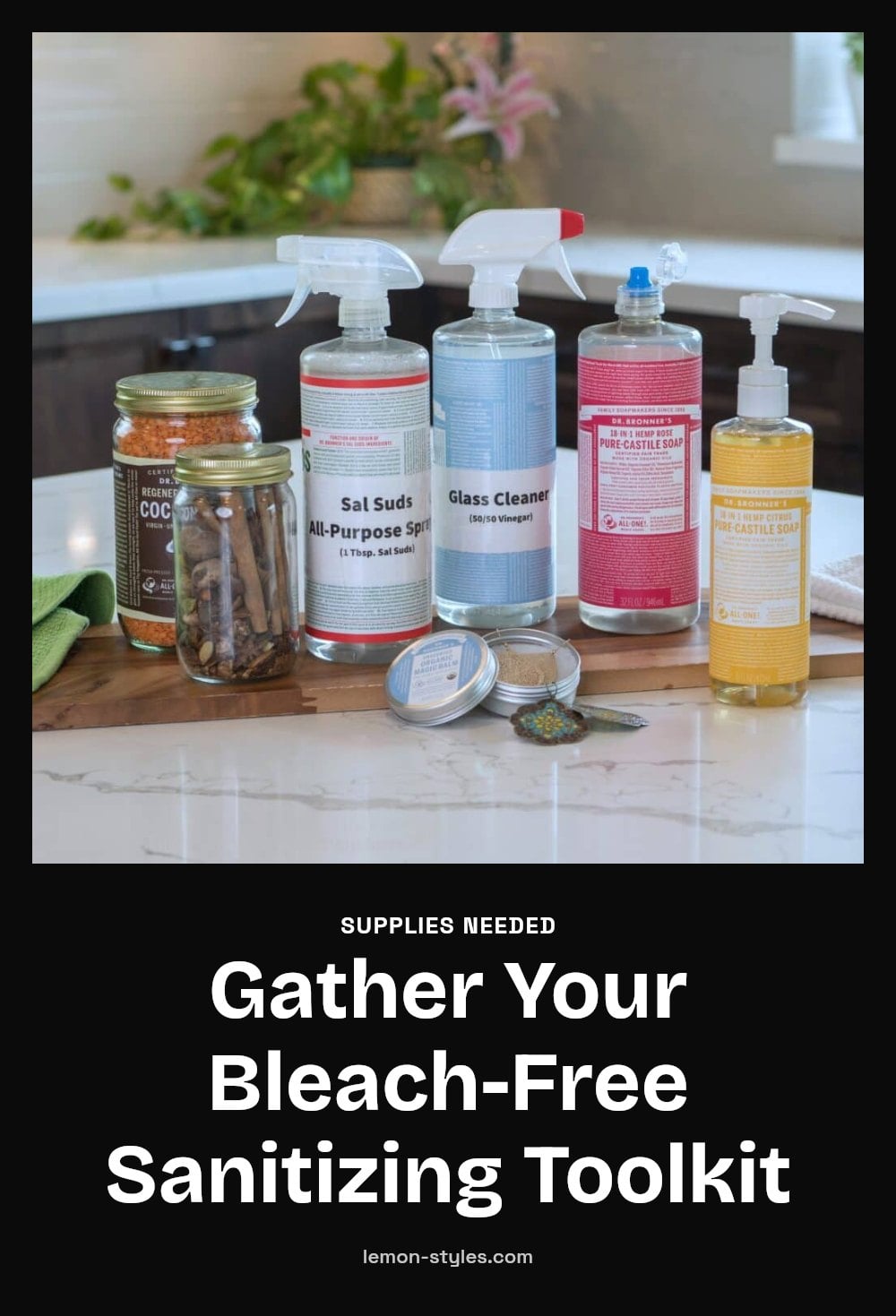
You probably own half of this already. The rest costs little and lasts a long time.
- White vinegar: for general sanitizing on non-porous surfaces.
- 3% hydrogen peroxide: for disinfecting counters, sinks, and other hard surfaces.
- 70% isopropyl alcohol: for disinfecting handles, switches, and electronics-safe spots.
- Microfiber cloths: they pick up more germs than regular rags when used with a cleaning solution.
- Spray bottles: for even, quick application.
- Rubber gloves: to keep cleaning agents off your skin.
3. Effective Bleach-Free Sanitizing Methods
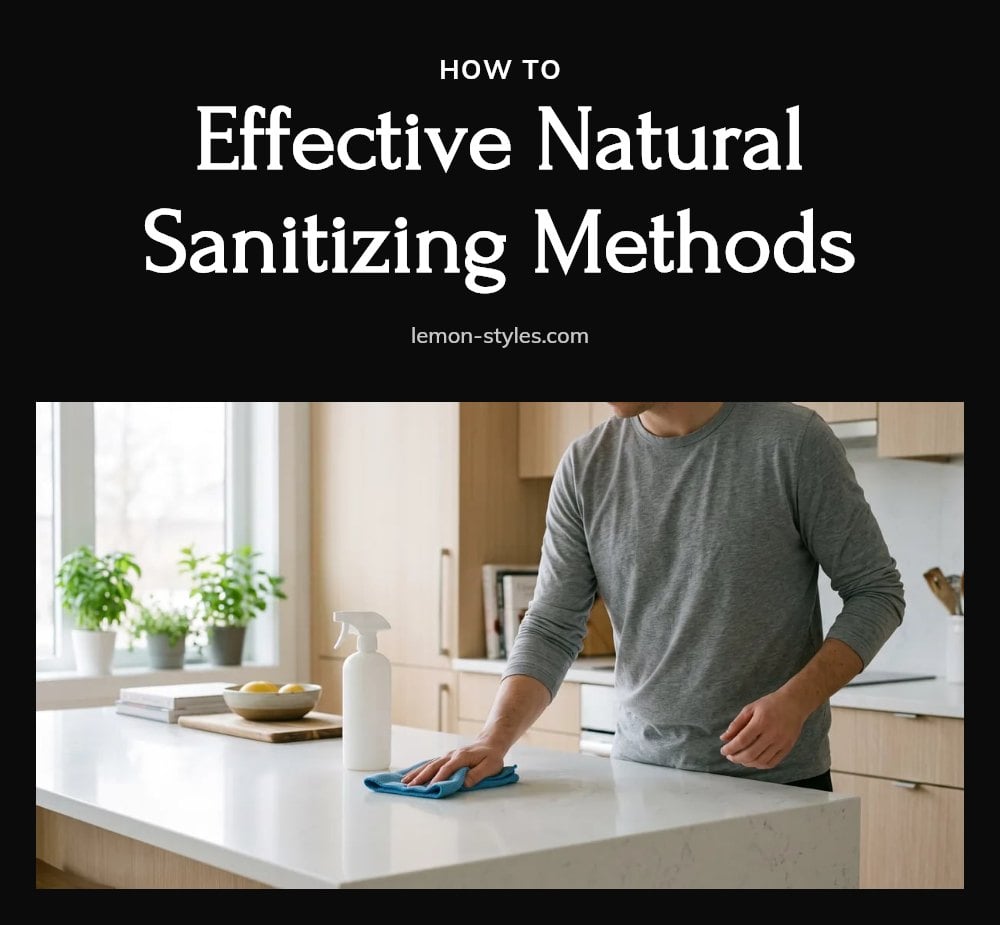
Each option has a job it does well and a limit worth knowing before you spray.
White vinegar
Use it for general sanitizing on non-porous surfaces like glass, sealed tile, and stainless steel. It can kill some bacteria and viruses, but it is not a broad-spectrum disinfectant, so don’t count on it during flu season or after raw meat handling. Skip it on granite, marble, and other natural stone, because the acidity can etch the surface.
3% hydrogen peroxide
This is a real disinfectant and can kill bacteria, viruses, and mold. Spray it on non-porous surfaces and leave it wet for 5 to 10 minutes before wiping. Don’t use it on delicate fabrics or surfaces that might discolor. Pour a fresh amount into a spray bottle rather than dipping a used cloth back into the original container.
70% isopropyl alcohol
Effective for disinfecting many hard surfaces, and it evaporates fast, which makes it handy for light switches and remote controls. Keep the surface wet for at least 30 seconds to 1 minute. Higher concentrations are not better: 70% works because the water content helps it penetrate germ cells.
Steam cleaners
Steam sanitizes with high temperature, no chemical residue left behind. Contact time varies by machine, so follow the manufacturer’s instructions for how long to hold the nozzle on one spot. It’s a good fit for tile grout, sealed floors, and mattress surfaces.
4. Step-by-Step: Sanitizing High-Touch Surfaces
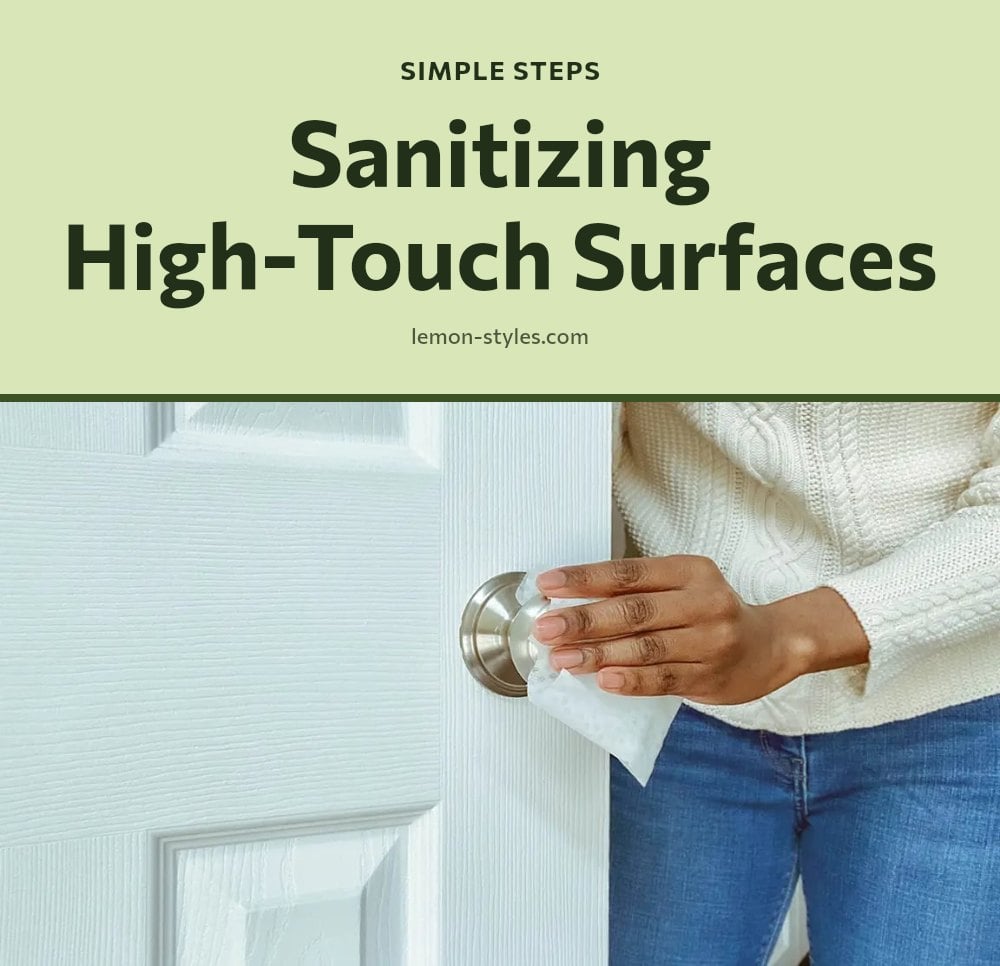
The order matters as much as the product. Germ-killing agents work poorly on top of dirt and grease.
- Clean first: wipe the surface with warm water and dish soap, then dry it. Cleaning removes the visible grime that shields germs.
- Apply your sanitizer: spray or wipe on your chosen bleach-free product, covering the whole surface evenly. Don’t oversoak electronics; spray the cloth instead.
- Let it stay wet: check the label or the times above, from 30 seconds for alcohol to 10 minutes for hydrogen peroxide. If it dries too fast, reapply.
- Wipe or air dry: some products, like alcohol, can air dry on their own. Others, like vinegar, leave a residue and an odor, so wipe them off with a clean damp cloth.
My tip: work one room at a time and start with the dirtiest spots, like the kitchen sink and bathroom handles, so the contact time runs while you move on to the next surface.
5. Common Sanitizing Mistakes to Avoid
Skipping the pre-clean is the biggest mistake you can make. Dirt and grease form a barrier that keeps sanitizers from reaching the surface, so the product can’t do its job. Always wipe with soap and water first, then apply your sanitizer.
Contact time is another common miss. If you wipe a disinfectant off right after spraying, you’ve removed it before it could kill germs. Hydrogen peroxide needs 5 to 10 minutes, while 70% rubbing alcohol needs at least 30 seconds to 1 minute. Let the surface stay wet for the full time.
Homemade solutions fail when you dilute them too much. Vinegar and alcohol lose effectiveness quickly once watered down, so use them at full strength or follow a tested recipe. And don’t assume every natural cleaner is a disinfectant. Many essential oil sprays freshen the air but won’t kill bacteria.
Using one cloth for the whole house spreads germs from room to room. Switch to a fresh microfiber cloth for each area, or wash the cloth between uses.
Caution: Never mix cleaning chemicals. Bleach with vinegar or ammonia creates toxic fumes. Stick to one product at a time.
6. Smart Tips for a Germ-Free Home
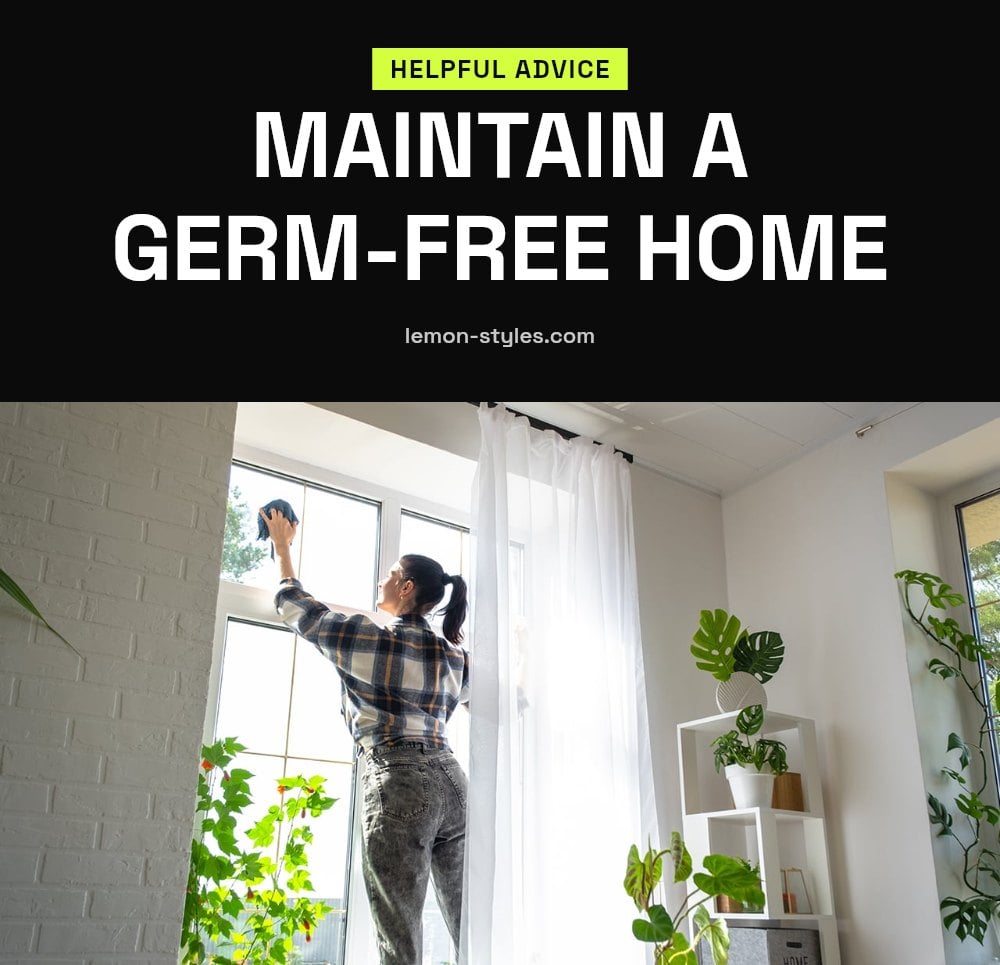
Open a window or turn on a fan before you start spraying. Good airflow clears fumes and helps surfaces dry faster, which matters because some disinfectants need to stay wet to work.
Rubber gloves are non-negotiable when you handle hydrogen peroxide or rubbing alcohol. They protect your hands from irritation, and they keep you from spreading germs from one surface to another between wipes.
Test first: before you commit to a new solution on a visible spot, spray a small, hidden area and wait a few minutes. This catches discoloration or damage before it becomes a permanent problem.
Store every bottle where children and pets can’t reach them, ideally in a locked cabinet above the sink. Even vinegar can cause stomach upset if swallowed.
My tip: keep a stack of microfiber cloths in the cleaning caddy and swap them out per room. They trap more germs than cotton rags, and using a fresh one prevents you from carrying bacteria from the bathroom to the kitchen.
7. When and How Often to Sanitize
High-touch surfaces like doorknobs, light switches, countertops, and remote controls deserve attention daily or several times a week. That frequency keeps germ levels low between deeper cleanings. For the product to work, respect its contact time: rubbing alcohol needs 30 seconds to 1 minute wet, while hydrogen peroxide needs 5-10 minutes. Bleach-free options cost little since vinegar, hydrogen peroxide, and rubbing alcohol are common household staples. Stock them in spray bottles so you can grab and go.
8. When to Call a Professional Cleaner
Some jobs are bigger than a spray bottle. If you spot mold or mildew covering a large area, especially on drywall or wood, DIY methods usually won’t reach the root of it. A professional can identify the source and treat it properly.
After a household illness like the flu or norovirus, a deep disinfection may be worth hiring out, especially if multiple people were sick. Professionals use commercial-grade products and equipment that go beyond what most homes have.
Persistent respiratory issues or allergies that seem tied to your indoor air may point to hidden problems like mold in vents or ducts. A professional assessment can identify what you can’t see.
Tip: For delicate surfaces like antique wood, silk upholstery, or stone that needs special care, expert knowledge prevents costly damage.
9. Frequently Asked Questions
Can I use essential oils to sanitize my home?
Essential oils like tea tree or lavender have some antimicrobial properties, but they are not reliable sanitizers or disinfectants on their own. They may add a pleasant scent, but for germ reduction, stick with proven options like hydrogen peroxide, rubbing alcohol, or an EPA-approved bleach-free disinfectant.
Are there any surfaces I shouldn’t use hydrogen peroxide on?
Yes, avoid hydrogen peroxide on delicate fabrics and surfaces that may discolor, such as some metals or finished woods. It can cause bleaching or damage. Always test a small, hidden area first and use it only on non-porous surfaces like counters and sinks.
Is it safe to make my own sanitizing wipes?
You can make your own wipes using a solution like 70% rubbing alcohol or diluted hydrogen peroxide, but you must ensure the cloth stays wet for the full contact time. Store them in an airtight container and label them clearly. For critical areas, commercial wipes may be more reliable.
Can I sanitize my home without using bleach?
Absolutely. You can use 3% hydrogen peroxide, 70% rubbing alcohol, white vinegar for general sanitizing, or EPA-approved bleach-free disinfectants. Each has its own contact time and surface suitability, so read labels and follow instructions for best results.
What is the difference between sanitizing and disinfecting?
Sanitizing reduces bacteria to a safe level according to public health standards, while disinfecting kills nearly all germs, including viruses and fungi. For high-touch surfaces, either can be effective, but disinfecting offers a higher level of germ reduction.
10. Final Thoughts
For everyday peace of mind, pick one bleach-free method that fits your routine, like 70% rubbing alcohol for quick wipes on handles and switches, and stick with it. Remember, no sanitizer works instantly, so respect the contact time and always pre-clean. With regular attention, your home can stay germ-free without the harsh stuff.
This article is for general information only and is not medical or professional advice. Always follow product labels and safety instructions. If you have a serious cleaning issue, such as large mold growth, or health concerns from chemical exposure, consult a professional or healthcare provider.