Sister locs are small, tightly coiled locs installed with a tool, worn from chin length to mid-back and styled with everything from a blunt bob to a double bun. The 2027 shift is toward lived-in color and soft face-framing layers, so the look reads glossy and natural instead of set.
Here are 20 ways to wear them, from a low-upkeep collarbone cut to a salon-finished red, sized for fine through thick density and for anyone tired of a fringe that will not sit or locs that flatten by noon. Sister Locs reward a little planning: pick a length you can retighten on schedule and a color line you can live with between appointments.
1. Chin Length Bob With Subtle Layers
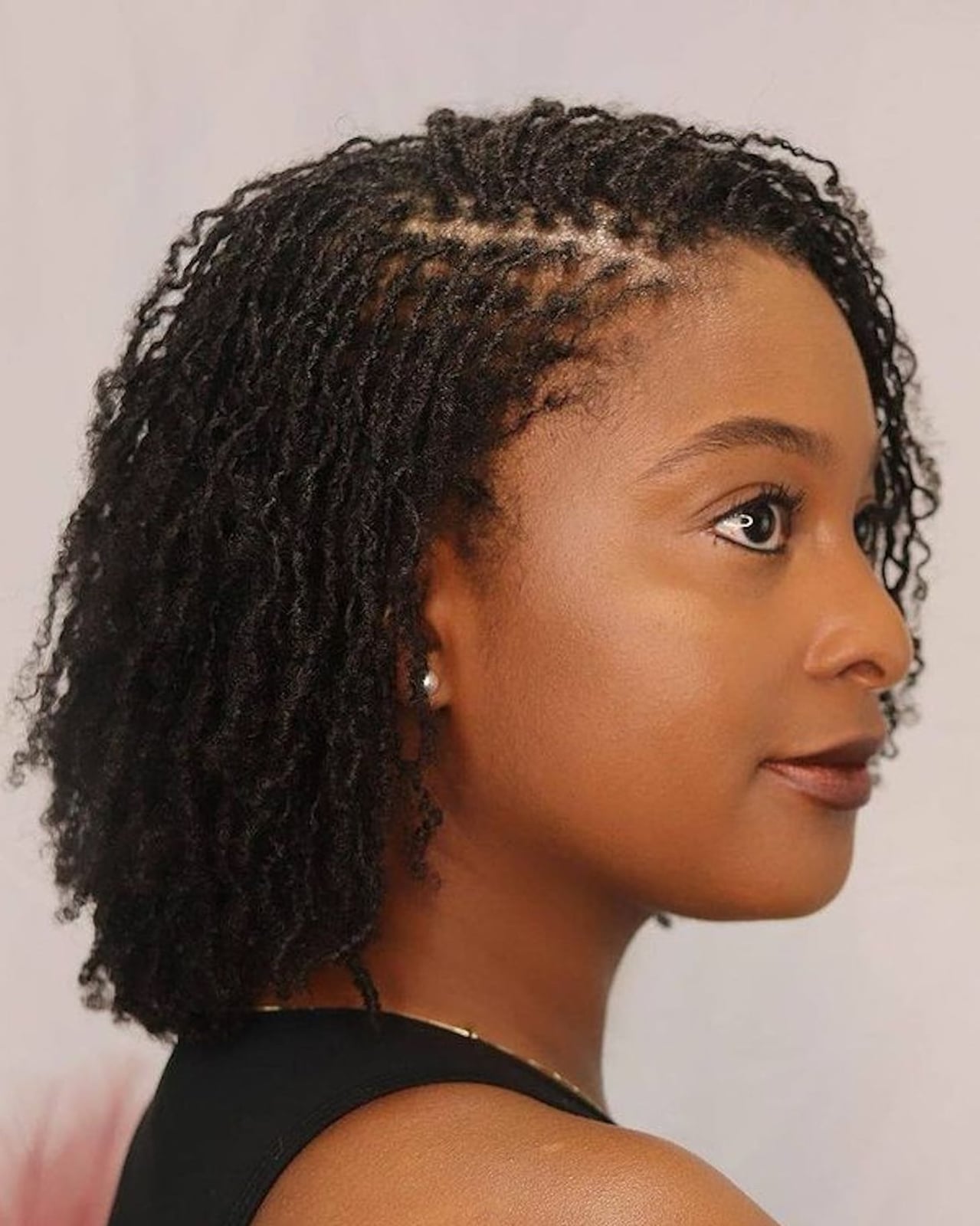
A blunt baseline at the chin turns fine locs into a shape with actual edges, and the subtle layers keep that line from reading as a helmet. This chin length sister locs bob is built for fine density: less weight hanging off the ends means more swing at the jaw. It suits oval and long faces best, since the middle parting and chin line add width where a longer face wants it; a round face gets more from length that skims below the chin. Starting length matters more than texture here, and the locs need to reach the chin before anyone picks up shears. Ask your stylist for: chin-length bob cut with subtle layers. Air dry it for the same natural finish, and book a baseline trim every six to eight weeks to keep the line honest.
2. Collarbone Sister Locs With Curtain Bangs
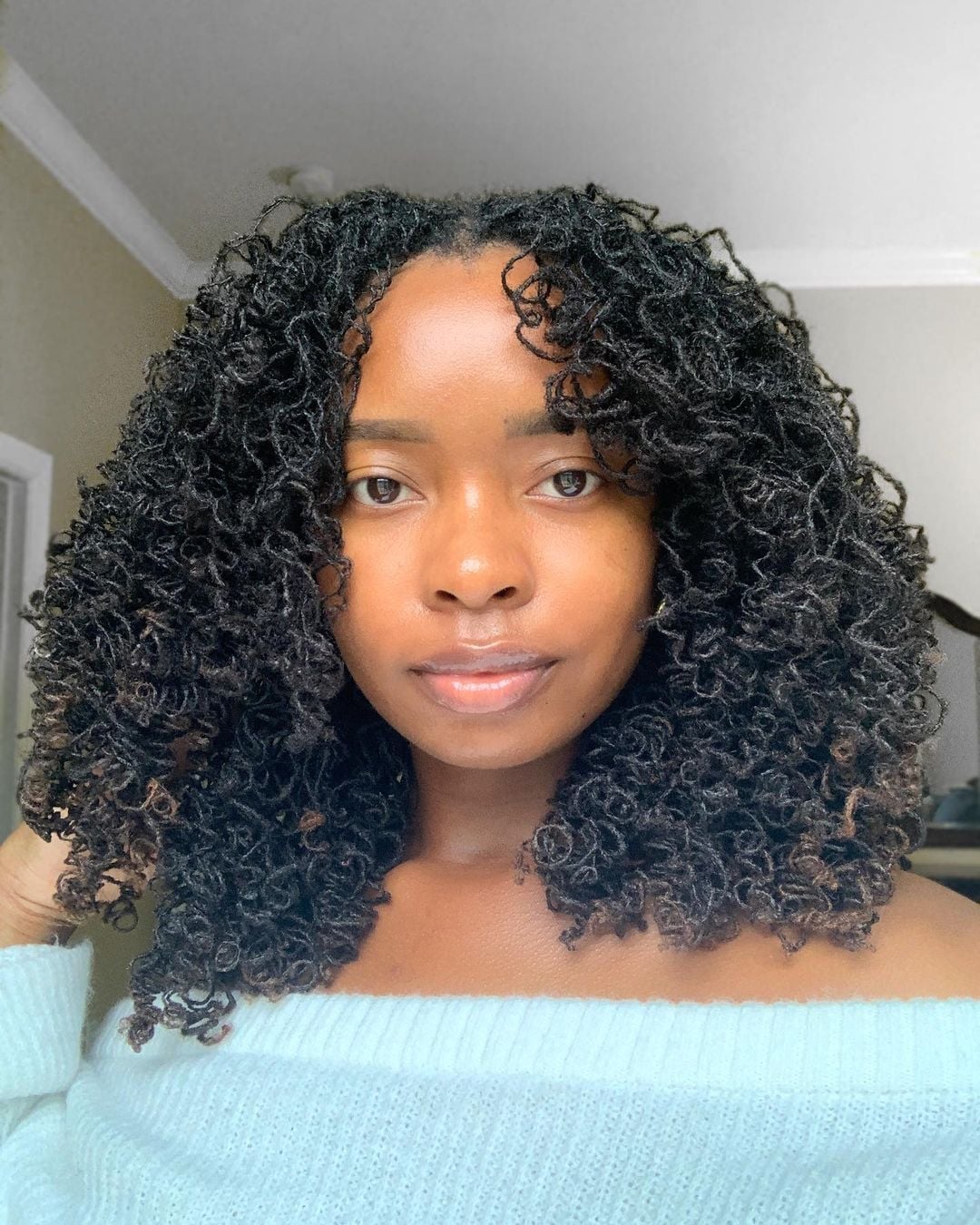
In the salon, the bangs are cut at collarbone level with the middle parting marked first, then blown out section by section with a round brush so the locs curve instead of dropping flat. Subtle brown highlights go in before the blowout, because color applied to finished, styled locs shifts the tone unevenly. Fine density is what makes this work: the curtain bangs read as soft, and the collarbone length keeps the whole shape from turning heavy. Ask your stylist for: collarbone length locs with soft curtain bangs and subtle highlights. At home, blow-dry the bangs forward with a round brush, and plan a highlight refresh every eight to ten weeks.
3. Collarbone Wavy Sister Locs
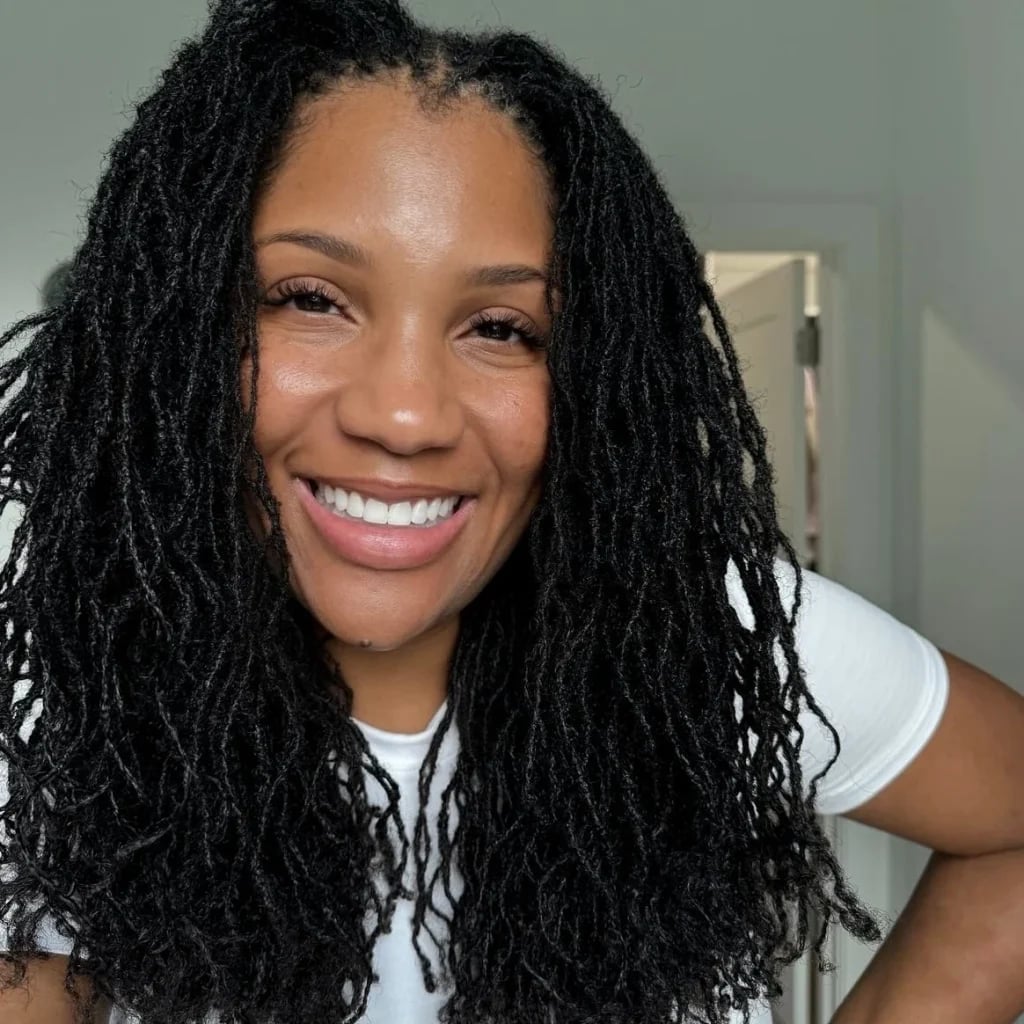
Loose waves at collarbone length give fine locs the volume they usually lack. The wave pattern is the point: defined bends catch light along each loc, so the black reads deeper at the roots and softer through the lengths. Worn loose, this is a low fuss finish that still looks assembled. Day to day, a curl defining cream worked through damp locs and left to dry holds the wave without crunch, and a light mist on day two revives the bend. Expect to trim every eight to ten weeks, since loose ends frizz first at this length. Ask your stylist for: loose collarbone length wavy locs.
4. Shoulder Length Wavy Locs With Shine

Shine is the detail that separates a good set of locs from a flat one, and it comes from the finishing steps as much as the color. The dark brown base here carries subtle lighter strands, enough to catch light when the locs move but not enough to read as a streak. Fine, wavy locs at shoulder length need that movement: a side view shows the swing, and the lighter strands trace it. Ask your stylist for: shoulder length wavy locs with subtle dimension, and be specific about the word subtle, since dimension is the easiest request to overshoot. A shine serum through the mid-lengths and ends brings up the luster without weight. Trims land every eight to ten weeks.
5. Shoulder Length Half Updo
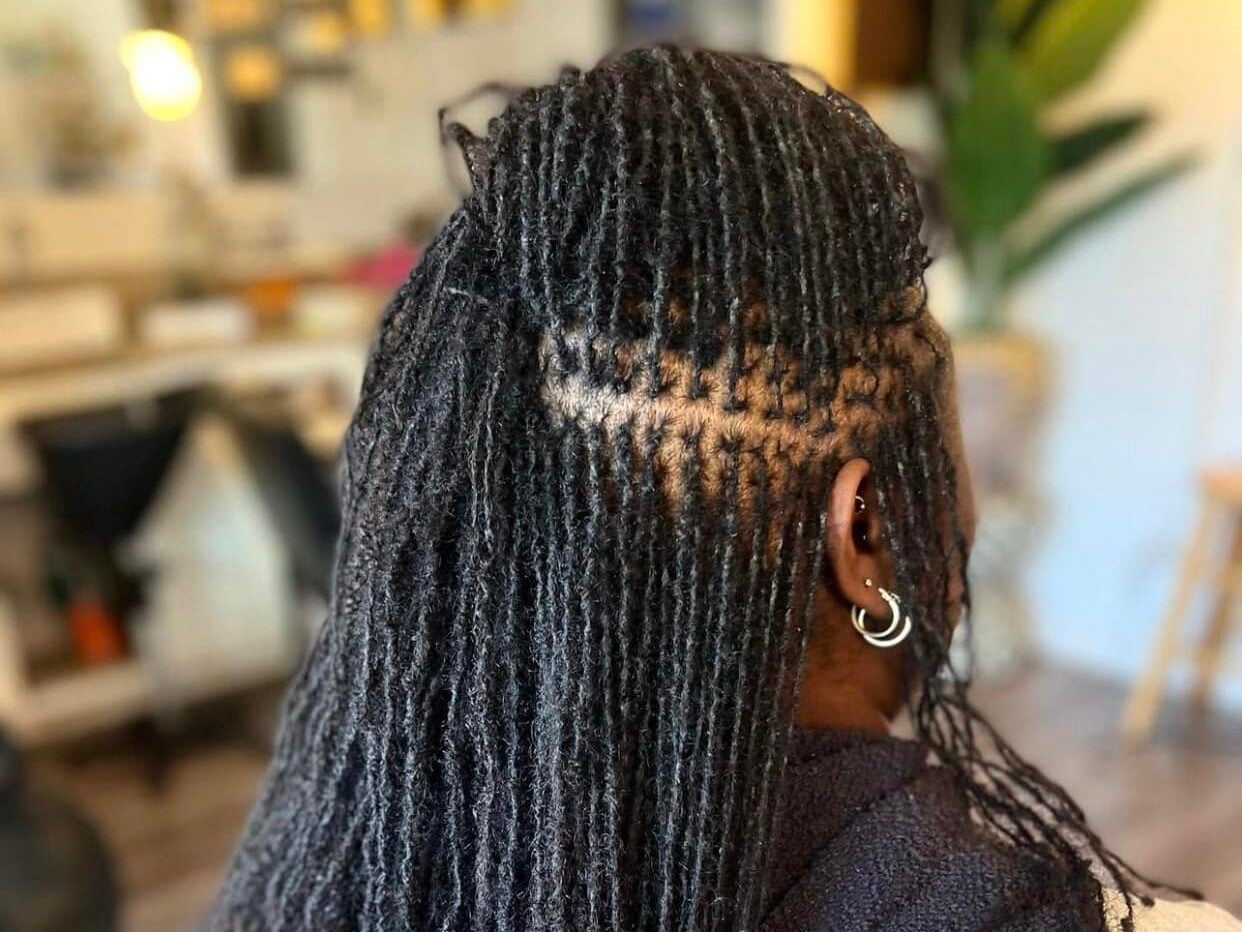
A slicked-back bun is the obvious choice for a formal setting, but it asks a lot of fine locs and leaves nothing to move. A half updo splits the difference: the front is pulled back clean, the rest stays down at shoulder length, and the whole thing reads polished without pinning every loc flat. Tightly formed locs hold the shape best, since the sections stay where they are placed, and fine density keeps the pulled-back portion from looking bulky at the crown. Ask your stylist for: shoulder length locs half updo, with the sections kept neat and the parting clean.
Why it works across seasons comes down to temperature and occasion. In summer the pulled-back front keeps hair off the neck while the loose back still shows length. For a fall or winter event, the same shape sits under a wrap without collapsing, and the neat sections read formal enough for a dinner. Secure the updo with bobby pins for extra hold, especially if the locs are fine enough to slip. Trim every eight to ten weeks to keep the baseline even.
6. Shoulder Length Vibrant Red Locs
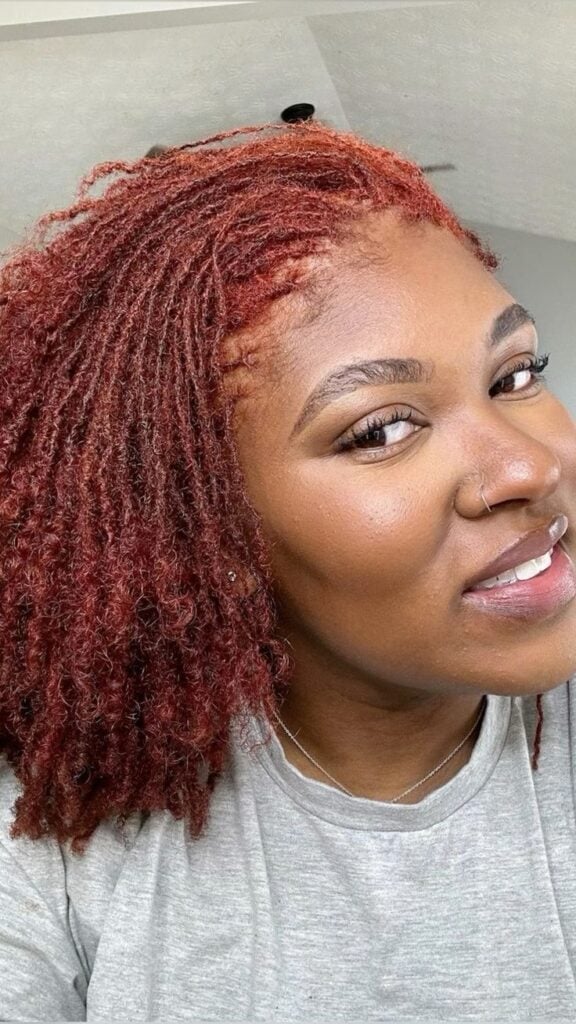
Red at this saturation is a commitment, and the locs themselves are the easy part. Fine, coily sister locs falling loose to the shoulder in a middle parting carry the shade well because the texture gives it somewhere to sit. Ask your stylist for: shoulder length vibrant red coily locs. Fine hair takes vivid red fast, which cuts both ways, since a red this bright starts shifting within a few weeks of the first wash. Color-safe shampoo slows the fade but will not stop it, and roots show against the scalp line sooner than with a darker base. Budget for a salon refresh every four to six weeks, plus a trim every eight to ten. This shade needs salon upkeep to stay bright.
7. Shoulder Length Double Buns
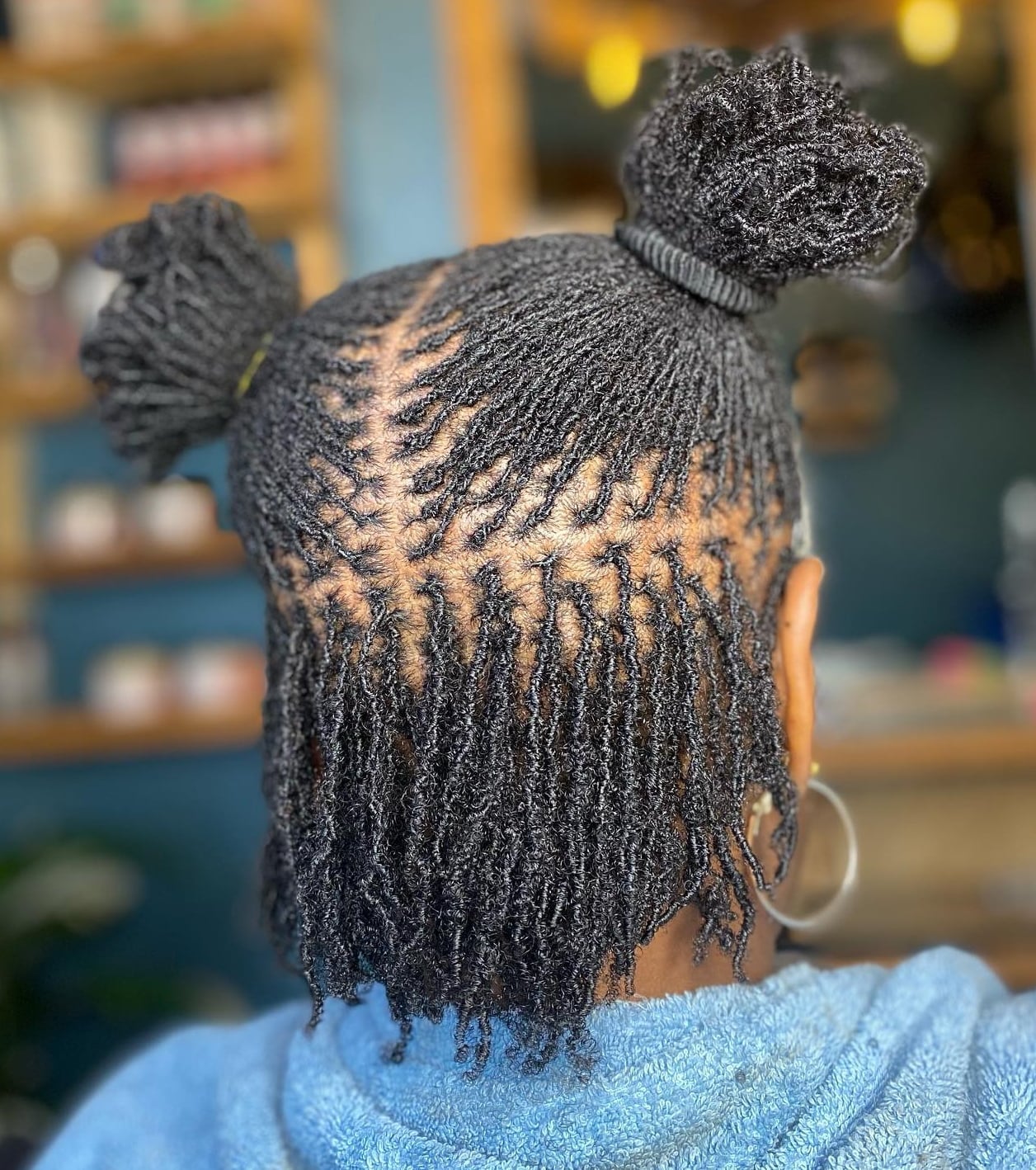
Two buns set high with a clean middle parting turn shoulder length locs into a geometric shape at the crown, and fine coily texture holds the pattern without bulk. Ask your stylist for: shoulder length locs in double buns. The split is worth knowing before you commit: a simple two-bun set is a fifteen-minute home job with pins or elastics, while the sharp parting and balanced placement here take a salon hand. If your fine locs slip out of elastics by mid-afternoon, the salon version buys you a cleaner line. If you restyle weekly anyway, learn the home version and save the appointment. Either way, a trim every eight to ten weeks keeps the loose ends at the back from thinning out.
8. Collarbone Curly Locs With Honey Highlights
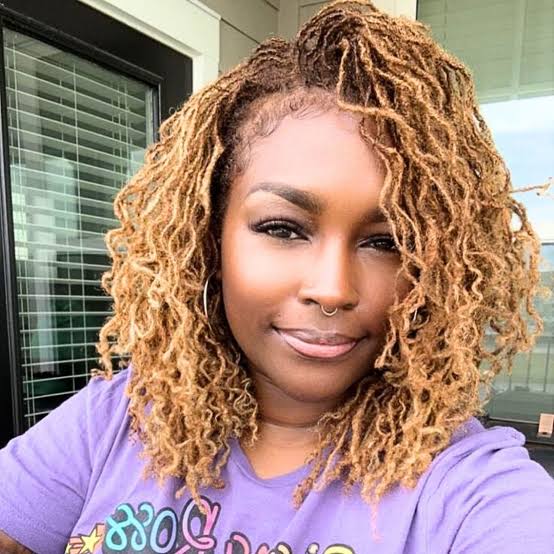
Can you get honey blonde highlights on micro locs without three hours in a chair? Partly. The highlights here sit throughout a dark base on collarbone length curly micro locs, and the effect depends on placement more than on the shade itself. A home lightening kit tends to hit the surface of the locs and leave the interior dark, which reads patchy once the curl pattern moves. Ask your colorist for: collarbone length curly locs with honey highlights. If you are doing it yourself, start with a small section at the back and a low-volume lightener, and keep the product off the scalp. Expect two sessions to reach this density, spaced six to eight weeks apart.
Styling matters as much as the color. Loose locs at this length curl best when they dry with a diffuser on low heat, and a light hold product keeps the pattern from collapsing by evening. Honey tones fade toward brass faster than you would like, so a toning wash every six to eight weeks holds the warmth in check. Dark roots are part of the design here, not a failure, which buys you time between appointments.
9. Collarbone Wavy Locs With Honey Tones
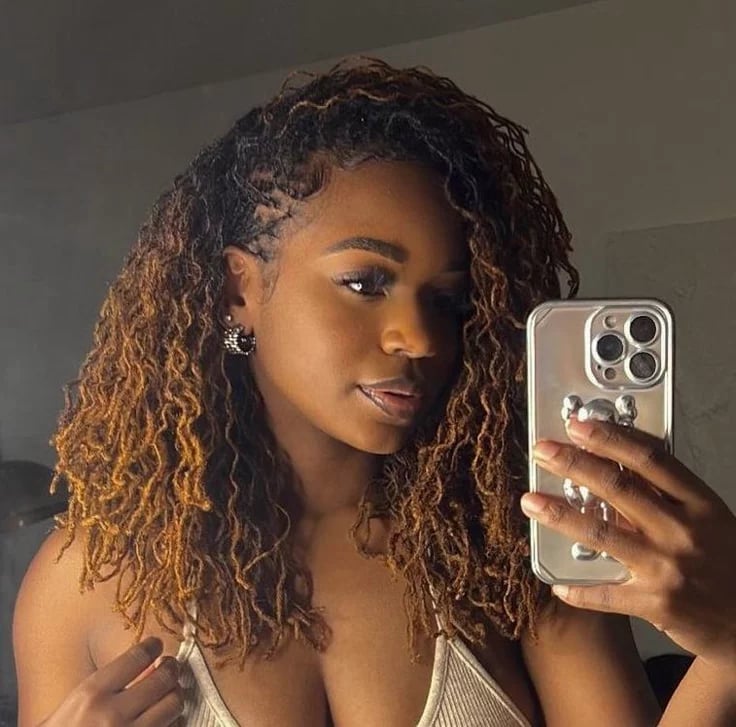
Wavy locs at the collarbone sit between a style that needs daily work and one that holds its shape through the week. A dark brown base with honey highlights adds dimension without a high-contrast grow-out line, and the length falls forward on both sides. Ask your stylist for: collarbone length wavy locs with honey highlights. This suits fine to medium density hair that already has some bend; pin-straight locs will need a set to hold the wave. It is a harder sell on very coily texture, where the wave fights the natural pattern. Apply a heat protectant before any hot tool, and plan a highlight refresh every six to eight weeks to keep the honey from going flat.
10. Collarbone Copper And Blonde Blowout
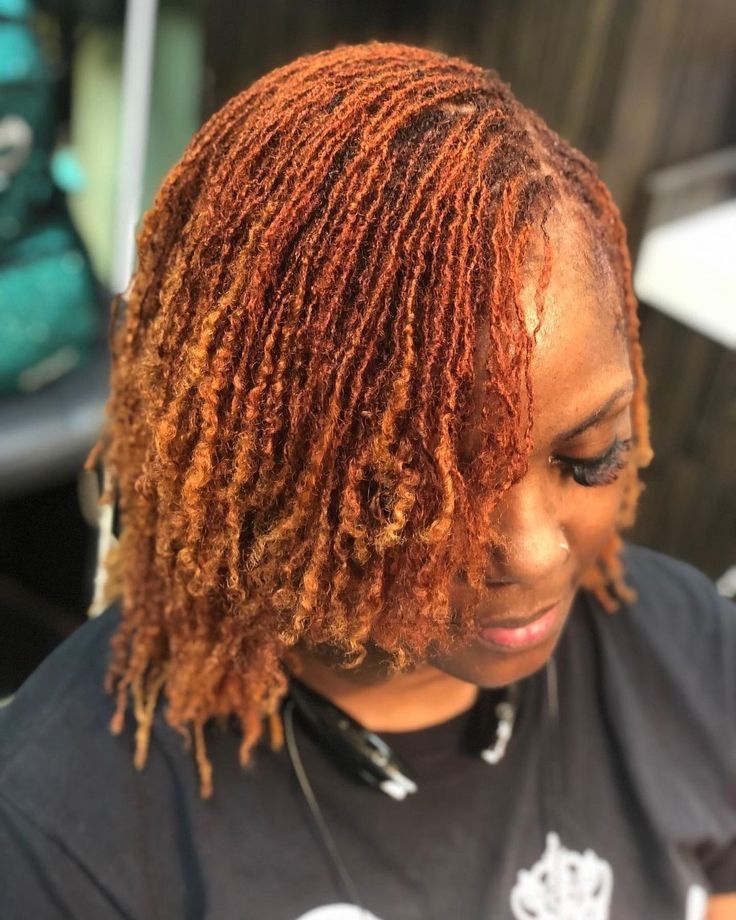
The blowout is doing the structural work here: it lifts fine wavy locs off the scalp and gives the copper base room to show the blonde highlights woven through it. Ask your colorist for: collarbone length copper locs with blonde highlights. The technique is a two-step lift, with the copper laid first and the blonde painted in fine sections so the two tones sit side by side instead of muddying into one. Fine density takes this much color without going heavy, though the blowout itself needs a round brush and steady tension to hold the volume past the first day. Roots move fast against copper, so a color refresh every six to eight weeks keeps the line sharp.
11. Collarbone Ombre Sister Locs
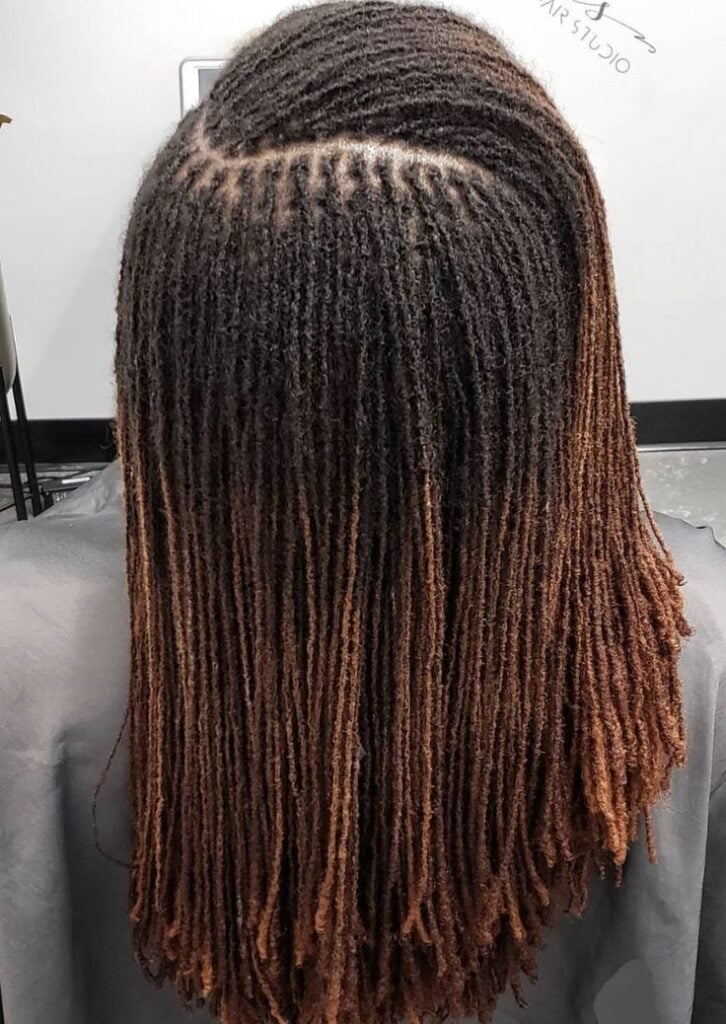
Ombre on locs is deceptively simple: a dark base that lightens toward the ends, no harsh line in sight. The straight, fine strands here hit collarbone length with a clean middle parting, so the color gradient looks deliberate rather than grown out.
Ask your stylist for: collarbone length straight locs with ombre highlights. The straight style holds the color well because there is no curl pattern to distort the transition. Plan a toning appointment every eight to ten weeks to keep the lighter ends from warming up, and use a heat protectant before any flat iron passes.
12. Collarbone Curly Locs With Blonde Tips
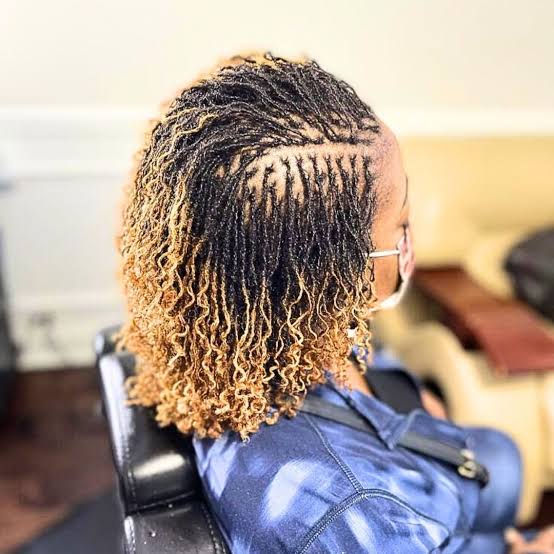
Blonde tips on dark curly micro locs create a contrast that works without full commitment. The loose style and side parting let the color breathe, so the shift from dark base to blonde ends looks like a deliberate fade. Ask your stylist for: collarbone length curly locs with blonde tips. Specify a soft transition rather than a hard line, and keep the blonde concentrated on the last two inches. A purple toning shampoo used once a week stops the tips from turning brassy between appointments.
13. Collarbone Micro Locs Top Knot
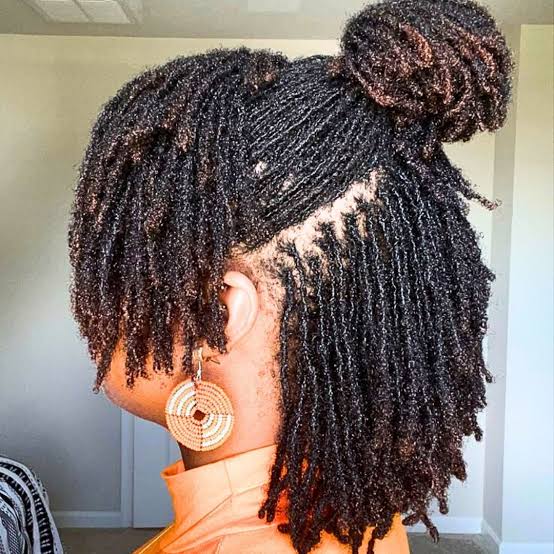
When is a top knot more than a ponytail? When the micro locs are curly and the ends show subtle auburn warmth against a dark brown base. The high bun sits cleanly, while the loose strands at collarbone length keep the look from feeling severe. Ask your stylist for: collarbone length micro locs in a top knot bun. This style lands well for outdoor events where humidity would undo a looser updo. The bun holds its shape through a full day without constant pinning.
14. Half Updo With Loose Curls
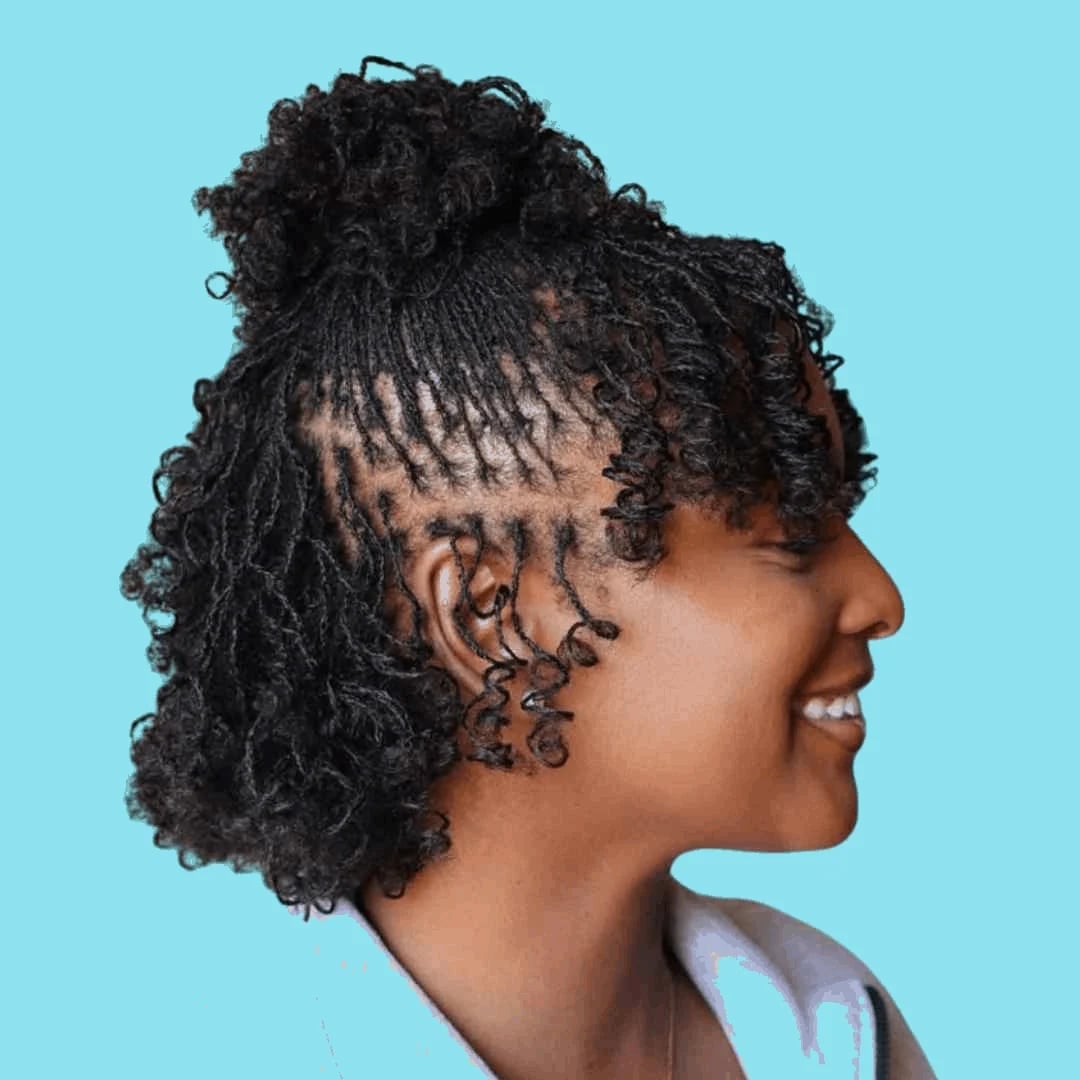
Fine sister locs at ear length can pull off a half updo, but the precision required is real. The top section gathers into a small bun while coily curls frame the face, and the middle parting keeps everything balanced. Ask your stylist for: half updo with loose coily curls. The honest trade-off: this look needs a steady hand and good sectioning, so it leans toward salon execution. Do it yourself only if you have practice working with small locs.
15. Mid-Back Air Dried Locs With Auburn Tones
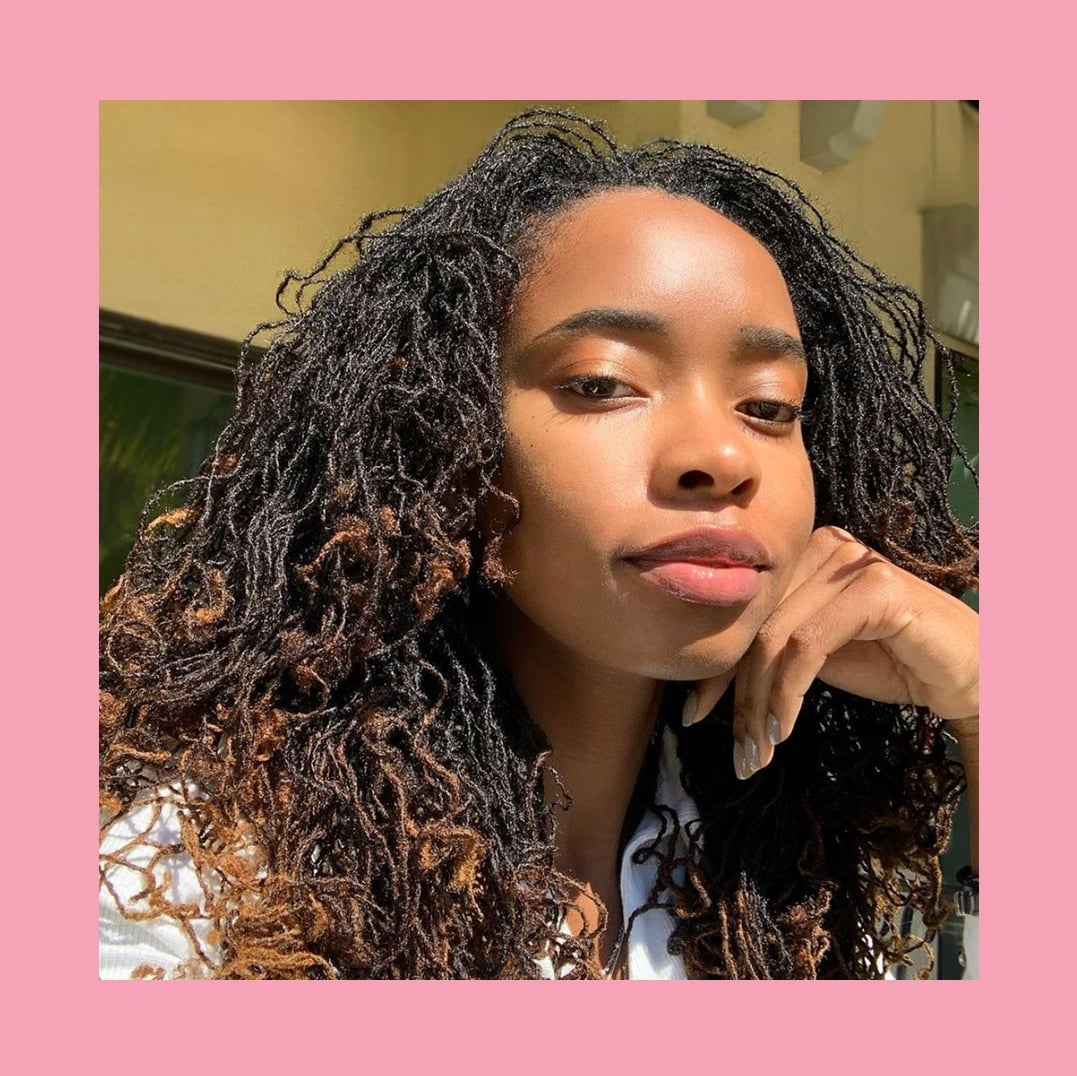
Air drying mid-back locs versus heat styling them comes down to time and texture. The fine, dense locs here have a natural coily finish and a dark brown base with subtle auburn highlights that catch the light without heat. Ask your stylist for: mid-back length air-dried locs with auburn tones. Air drying saves about forty minutes of diffusing, but the locs need a leave-in moisturizer to keep the coil defined. Trims land every ten to twelve weeks. The salon visit is for the color application; the drying part you can handle at home.
16. Mid-Back Wavy Air Dried Locs
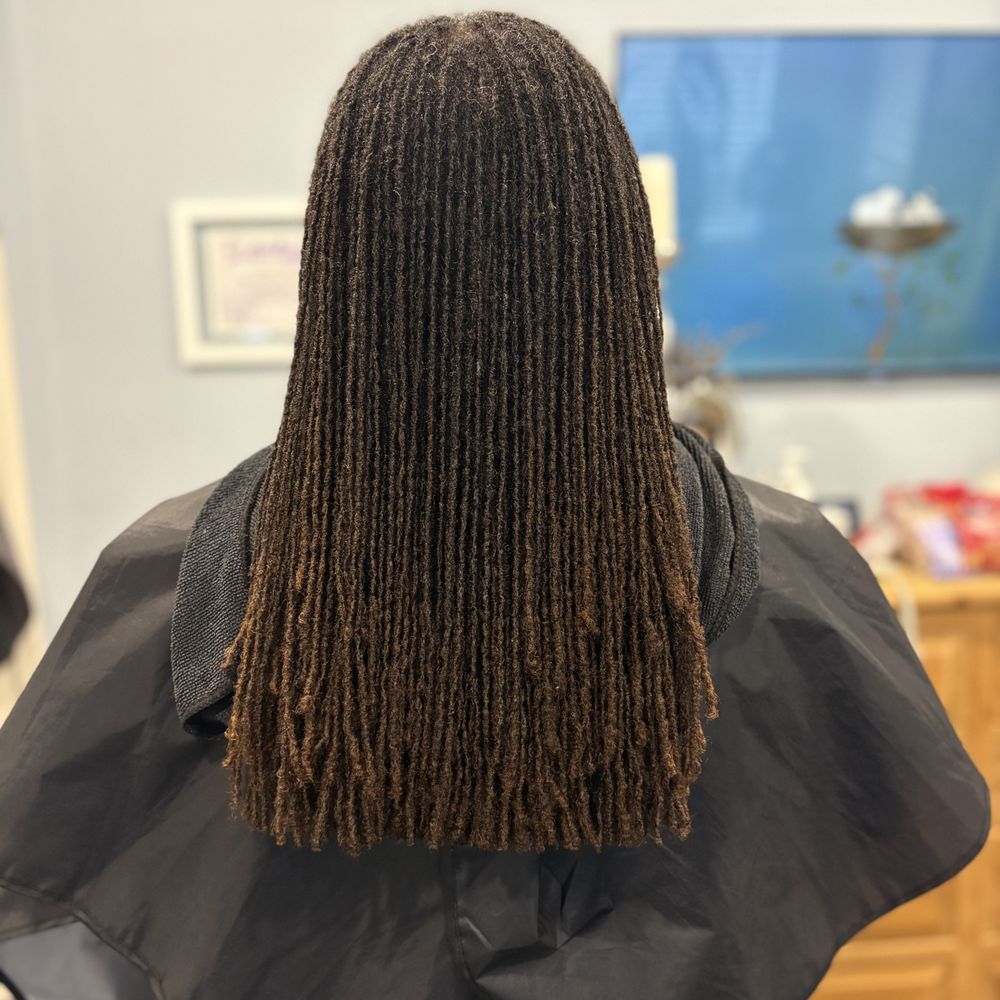
How do you get the wavy texture to hold without heat? The trick lives in the drying method, not the tools. Sister locs at mid-back length with a fine, wavy texture and a dark brown base with subtle lighter undertones respond well to air drying if you set them right. A middle parting keeps the density even, and the natural wave pattern does the work.
Ask your stylist for: mid-back length wavy air-dried locs. This look suits fine hair that wants visible length without added product weight. Use a diffuser on low heat to encourage curl memory, then let the locs finish drying loose. A trim every 10 to 12 weeks keeps the ends even and prevents fraying along the wave pattern.
17. Mid-Back Two-Toned Coily Locs
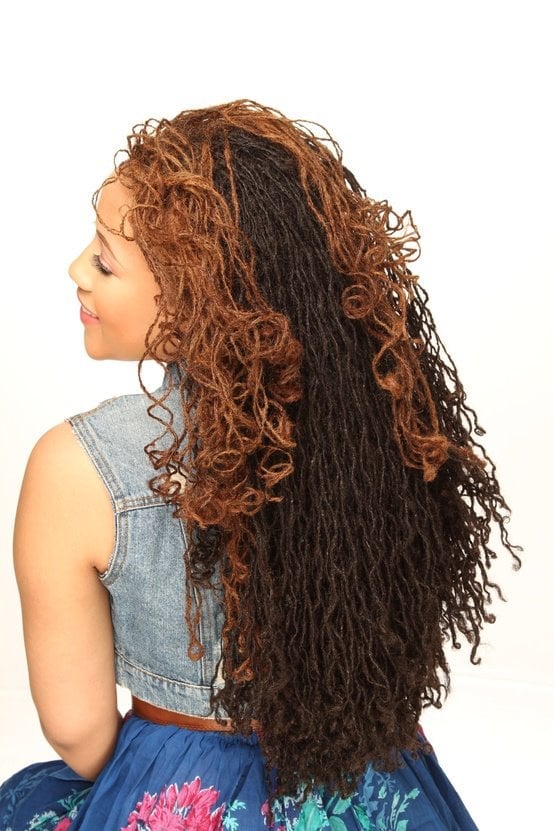
Two-toned color on coily locs works best when the lighter shade lands on the ends. Here, dark brown fades into copper highlights at the mid-back length, and the curly ends catch that brightness. The coily texture holds the color in a way that feels built-in rather than painted on.
Ask your stylist for: mid-back length two-toned coily locs with curly ends. This design genuinely flatters coily hair that can handle a bold contrast without looking busy. If your locs are very fine, keep the copper sections thin to avoid overwhelming the base. A curl cream on the ends defines the shape, and a refresh appointment every 8 to 10 weeks keeps the copper from turning brassy.
18. Mid-Back Wavy Locs With Subtle Dimension
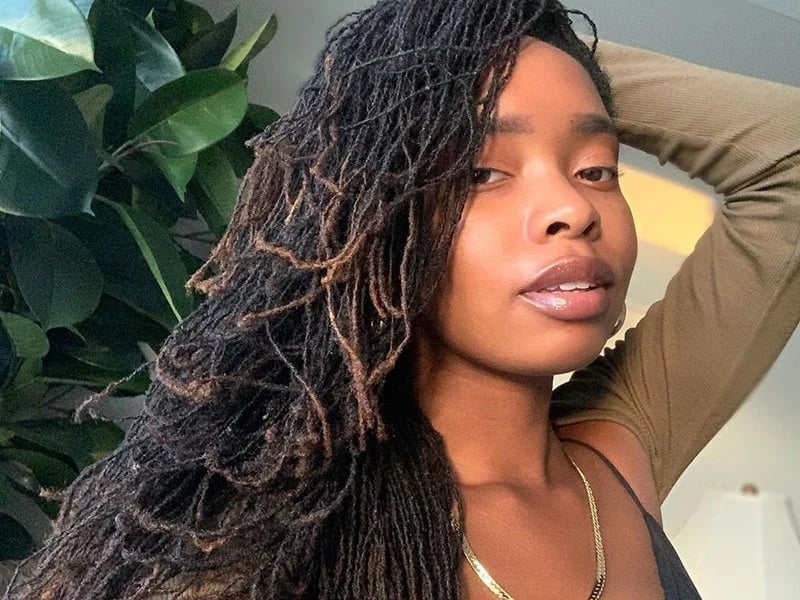
The dimension here comes from a few lighter strands woven into the dark brown base, not from a full highlight section. On wavy, thick locs at mid-back length, those subtle lighter pieces sit at the surface and reflect light in small, quiet glints. A side parting adds asymmetry to the density.
Ask your stylist for: mid-back length wavy locs with subtle dimension. This technique works on thick hair that can hide a few lighter strands without looking patchy. A light mist of water mixed with a wave-enhancing product on damp locs helps define the wave pattern. Trim every 10 to 12 weeks to maintain the even fall of the waves.
19. Mid-Back Black Locs With Neat Roots
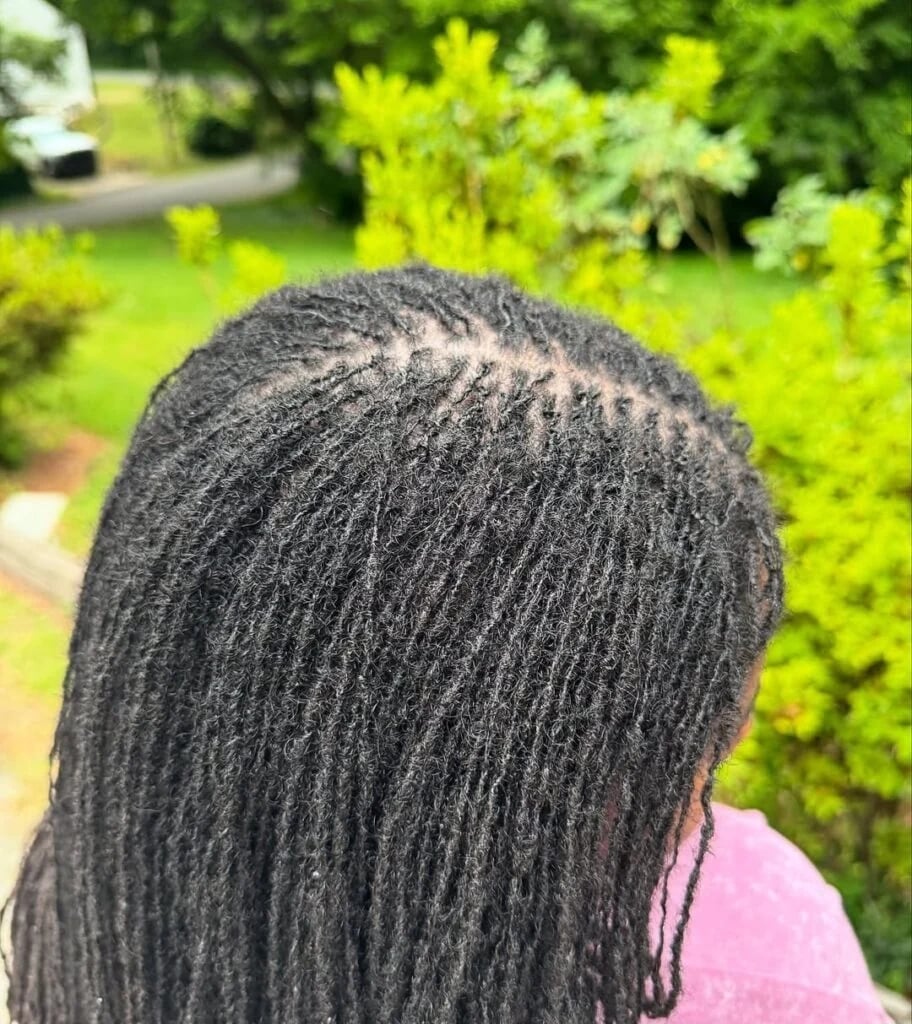
Neat roots on black locs require a consistent sectioning pattern from the first installation. These mid-back length sister locs are thin, coily, and thick in density, with a middle part that shows every root line clearly. The precision is the point: clean parts keep the style looking finished, not undone.
Ask your stylist for: mid-back length black locs with neat roots. This look suits thick, coily hair that can hold a tight part without frizzing at the base within a week. The daily reality is that scalp care matters more here than with looser styles. Regular cleansing prevents buildup that blurs the root lines, and a trim every 10 to 12 weeks keeps the length manageable. The side view puts the neat sectioning front and center.
20. Mid-Back Coily Locs With Volume
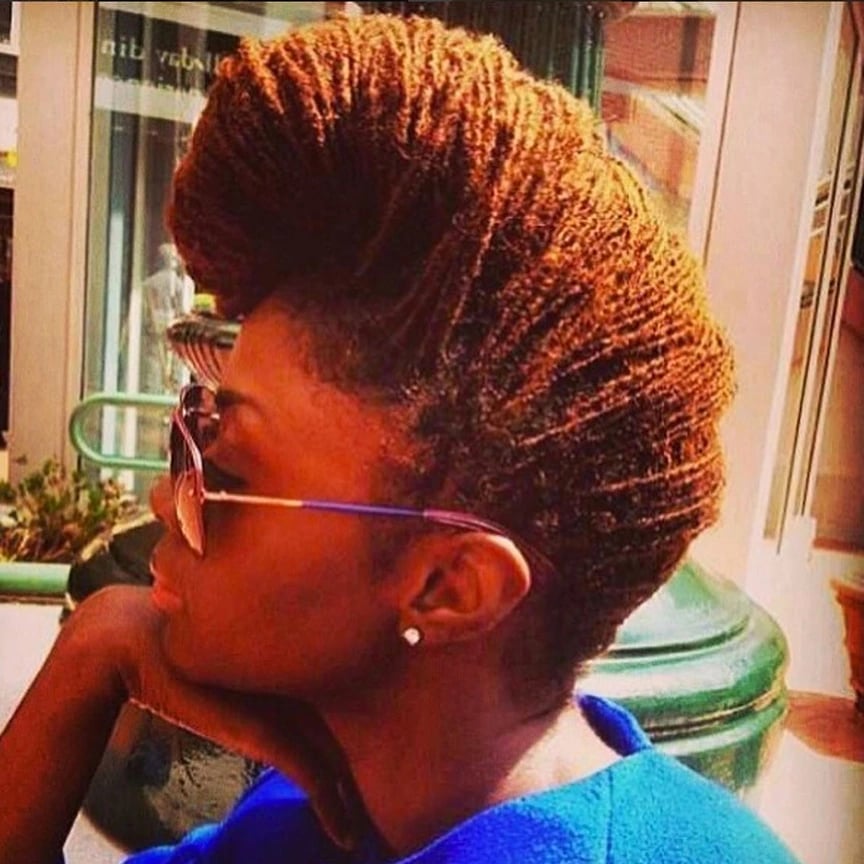
Volume on coily locs is about density per loc, not just number of locs. These sister locs reach mid-back length with a thick, coily texture and a black base, styled loose with a center part. The back view shows the key detail: each loc has enough body to hold its shape without collapsing.
Ask your stylist for: mid-back length voluminous coily locs. To get this, you need a stylist who builds each loc at the right size for your hair density. Too thin, and the volume looks stringy. Too thick, and the length shortens. A wide-tooth comb for gentle detangling and a trim every 10 to 12 weeks keep the volume proportional from root to tip. The result is natural, full, and low-maintenance.
21. Final Thoughts
Match the style to your density: fine hair does better with a half updo or a blowout that builds volume, while thick hair can carry loose waves or a sleek bun without help. Round faces get more from length below the chin; square faces soften with layers around the jaw.
- Retighten every four to six weeks to prevent slippage.
- Wash gently with diluted shampoo, focusing on the scalp.
- Deep condition scalp and locs monthly with a lightweight formula.
- Limit heat and friction when styling.
- Trim stray hairs every eight to twelve weeks.
Sister locs are a journey, so let your style evolve with your length.