The skunk stripe has shed its punk-era shock value for a more deliberate kind of contrast. What used to be a single aggressive streak is now a considered design element, often placed to highlight a cut’s layers or a fringe’s movement.
19 ideas run the gamut from barely-there face-framing streaks to full-on platinum panels, with something for fine hair that needs visual density and thick hair that can carry a wider stripe. Every version of Skunk Stripe Hair here pairs a specific cut (blunt bob, long layers, curtain bangs) with a placement strategy so the grow-out stays intentional, not accidental.
1. Mid-Back Length Waves With Silver-White Stripe
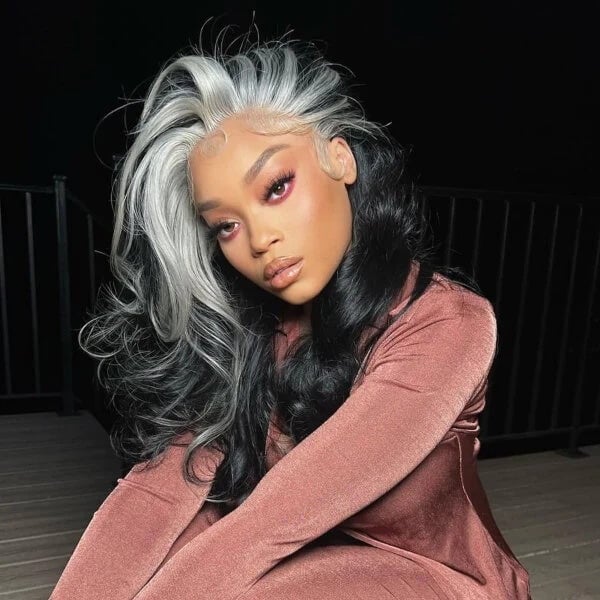
A thick silver-white stripe that starts at the hairline and runs through mid-back waves is a lot of look, and the layers are what keep it from reading as a paint swatch. Curtain bangs split to either side of a side parting, so the stripe lands where you want it: at the front, not fighting the whole head. Thick, wavy hair needs at least mid-back length to carry a stripe this wide, since short hair turns it into a full block of color. Oval and square faces get the most from curtain bangs, which soften a strong jawline without covering it.
Ask your stylist for: mid-back length with loose waves, thick silver-white front stripe, curtain bangs. A large barrel curling iron builds the waves in sections, and the silver-white needs toning every four to six weeks to keep it from going brassy. That is the real rhythm of this cut: a trim every eight to ten weeks, a toning appointment in between, and a heat protectant every time the iron comes out.
2. Mid-Back Curly Dark Brown With Blonde Highlights
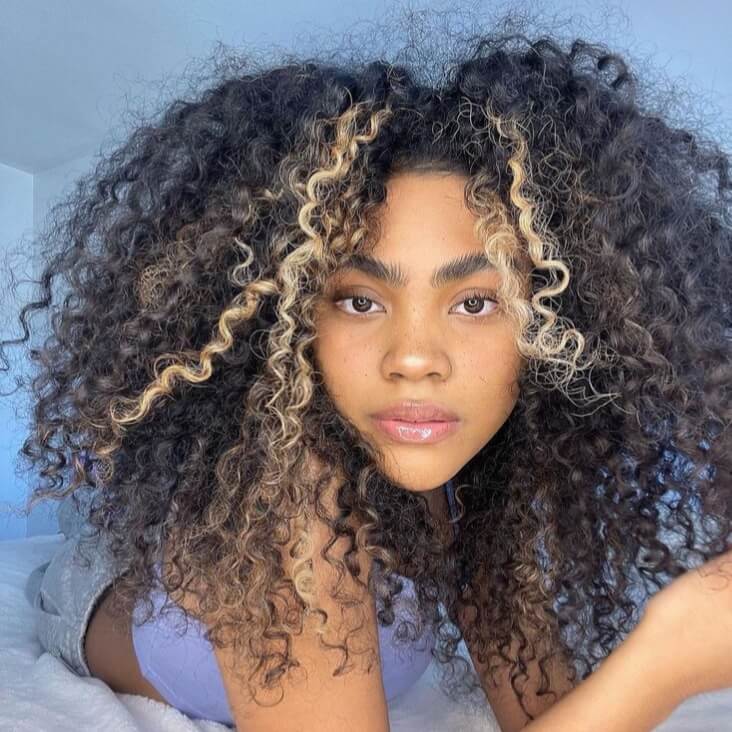
How does a skunk stripe survive a head of thick curls? By going scattered instead of solid. Blonde highlights woven through a dark brown base catch on individual curls, so the contrast reads as a curly skunk stripe rather than a painted panel, and the middle parting keeps the volume balanced on both sides. Thick, naturally curly hair at mid-back length carries this best, and a middle part suits long faces by splitting the width. Fine curls would lose the highlights in the density.
Ask your colorist for: scattered blonde highlights on dark brown, mid-back length. Air drying with a curl-defining cream is the low-fuss route, and it takes far less time than diffusing every section. Highlights on curls need a gloss every eight to ten weeks to stay bright, and a trim every ten to twelve weeks keeps the layers from collapsing into a triangle. Curly hair shrinks, so plan the length wet and let the curl do the rest.
3. Shoulder Length Straight With Black and White Stripes
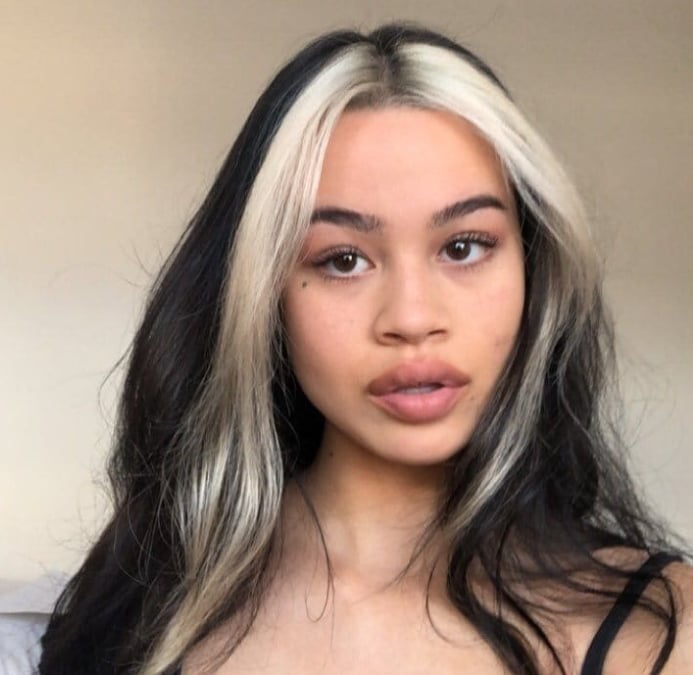
Two wide white blonde stripes at the front of a black base are a louder move than a single subtle streak, and blunt bangs sharpen the effect. Straight, fine hair at shoulder length keeps the stripes crisp where wavy hair would blur them, and the blunt fringe suits oval faces while giving fine hair a solid edge. This is a salon job: the bleach line has to stay clean, and matching two stripes by hand at home rarely ends well. Ask your stylist for: shoulder length straight hair, two bold white blonde front stripes, blunt bangs.
4. Mid-Back Straight Thick Hair With Blonde Stripe
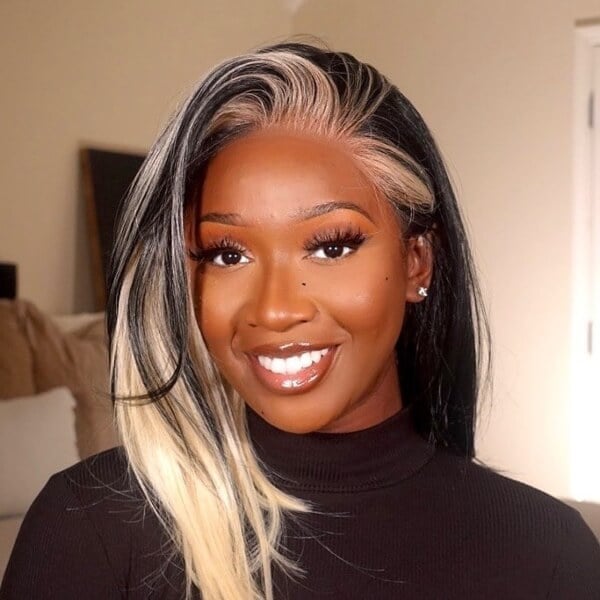
A stripe this thick only works when there is enough hair behind it, and mid-back straight hair has the mass to hold a bold blonde section without the color swallowing the cut. The technique matters as much as the shade: the blonde is placed as a wide, deliberate panel against the black base, then long layers cut through it so the stripe moves with the hair instead of sitting on top like a headband. Curtain bangs and a side part break up the front, which keeps the whole thing from looking like two separate haircuts stacked together.
Ask your colorist for: mid-back length straight hair, thick blonde skunk stripe, curtain bangs. Straight, thick hair takes a round brush blowout well, and that is what gives the stripe its swing. The blonde needs a touch-up every six to eight weeks, since regrowth on a panel this wide shows fast. Long layers grow out gracefully, so a trim every eight to ten weeks is enough to keep the shape.
5. Collarbone Wavy Hair With Soft Pink Stripe
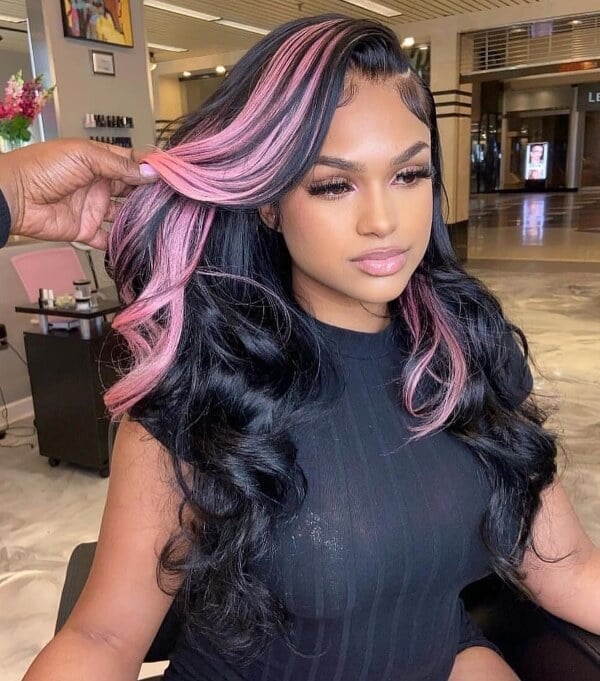
Soft pink streaks against black, cut into long layers at collarbone length, read as a warm-weather version of the stripe: playful without going full candy. Thick waves and side-swept bangs carry the pink through loose curls rather than a flat panel, and the side parting keeps it casual. Spring and summer are when this lands, at festivals and on vacation. Ask your stylist for: collarbone length wavy hair, soft pink skunk stripe, side-swept bangs.
6. Mid-Back Wavy Hair With White and Gray Stripes
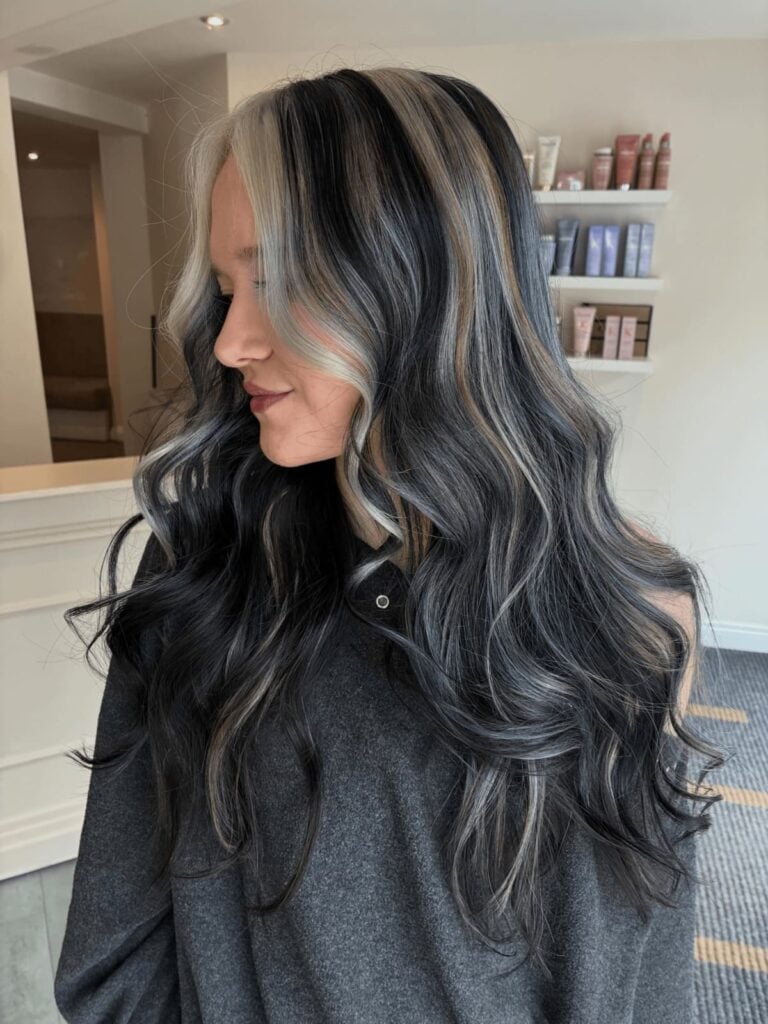
What do you actually say at the salon to get white and gray stripes instead of a vague wash of highlights? Be literal. The design here is a black base with a bold white face-framing stripe plus softer gray pieces through thick wavy hair, cut in long layers that fall to mid-back. Curtain bangs and a side part keep the front from turning into a wall of silver.
Ask your stylist for: mid-back length wavy hair, bold white and gray face-framing stripes, curtain bangs. Then point to the exact spot for the white: one clean band at the front, not scattered pieces. Gray goes behind it for depth. Thick wavy texture carries this contrast well. Curtain bangs soften round and heart faces.
- Name the placement: face-framing stripe first, gray through the layers second.
- Bring a photo of the stripe width you want, since white reads much wider than gray.
- Confirm the base stays black, so the contrast holds.
7. Mid-Back Wavy Dark Brown With Face-Framing Blonde
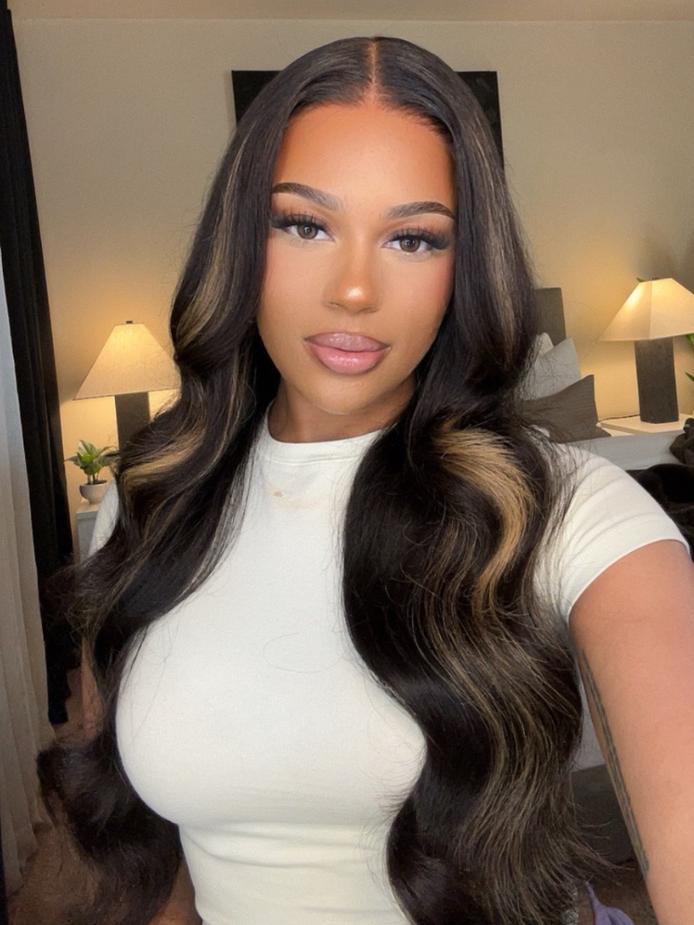
Compared with a full head of highlights, this version puts all the brightness where it counts: a blonde face-framing stripe against dark brown and no bangs. Thick wavy hair at mid-back carries the contrast through loose waves, and layers keep the length from hanging flat.
It is the lower-commitment route to a skunk stripe, though not a free one. Ask your colorist for: mid-back length wavy hair, blonde face-framing highlights. On dark brown, blonde pieces lift through several levels, so expect a long first appointment and a toner to keep the gold out. Toning every six to eight weeks is the rhythm; skip it and the stripe drifts brassy against the brown. A middle parting elongates round faces. For everyday wear, a texturizing spray gives the waves grip and definition.
8. Mid-Back Orange With Blonde Skunk Stripes
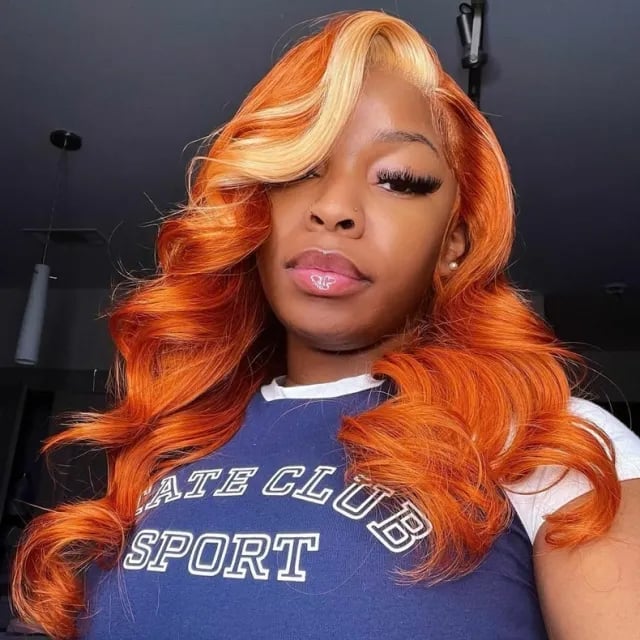
A bright orange base with blonde stripes is a two-tone commitment, and the placement is what makes it work: the blonde sits at the face and runs through mid-back length in a voluminous wavy blowout. Layers give the thick texture room to move, and side-swept bangs sweep the front into the shape.
This one suits anyone who wants the color to lead and is ready for the maintenance that comes with a vivid base. Ask your colorist for: mid-back length wavy hair, vibrant orange base, blonde skunk stripes, side-swept bangs. Thick wavy hair holds the volume a blowout needs, and the side-swept fringe works across face shapes. If your texture is fine, the stripe can read thinner than you expect, so ask for extra width at the consultation. Medium to thick density gets the most from the contrast.
9. Collarbone Wavy Hair With Blonde Skunk Stripe
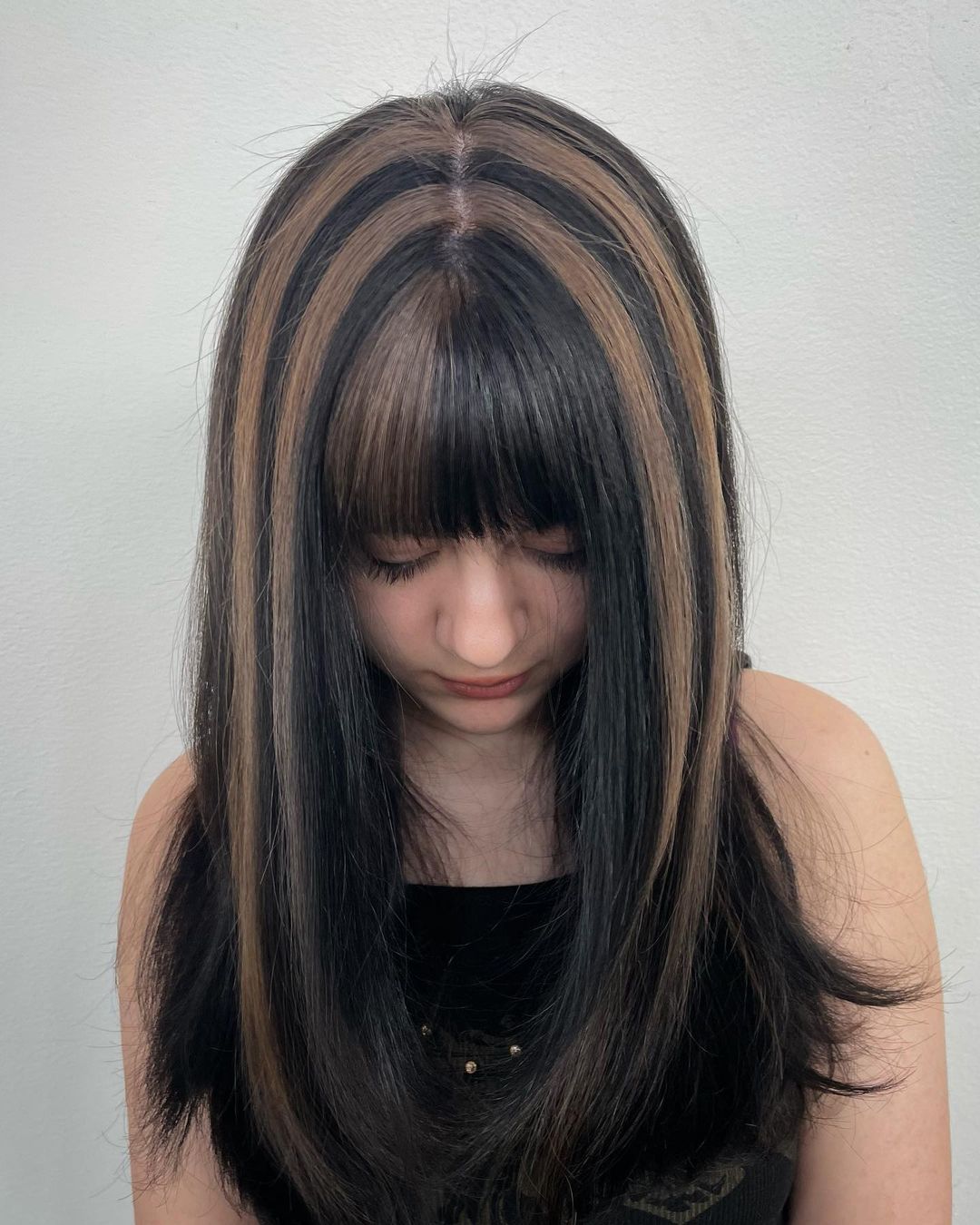
Can you pull off a blonde skunk stripe at home? Not the one shown here: a blonde face-framing stripe against a black base at collarbone length, with curtain bangs and a middle parting. Lightening a black base to blonde takes a controlled lift, and the stripe’s edge has to stay clean through the layers, which is why this lands in salon territory. Medium wavy texture carries the blowout, and the collarbone length keeps the stripe visible without running the whole length of the hair.
10. Mid-Back Wavy Hair With Bold Blonde Stripe
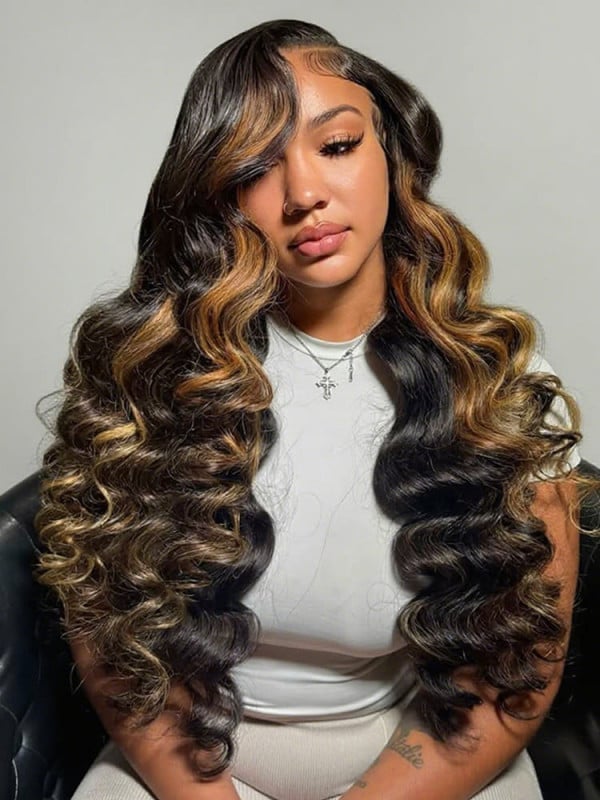
Ask your stylist for: mid-back length wavy hair, dramatic thick blonde skunk stripe. Thick wavy texture keeps a stripe this bold as a natural part of the style. A middle parting suits long faces, and the layers give the waves somewhere to bend.
Loose waves need a round brush or a wand and a heat protectant most mornings, and a texturizing spray holds the volume between washes. The blonde needs toning every six to eight weeks to stay bright against the black; leave it longer and the stripe turns yellow at the ends. A trim every eight to ten weeks keeps the layers sharp.
11. Mid-Back Straight Hair With Full Bangs
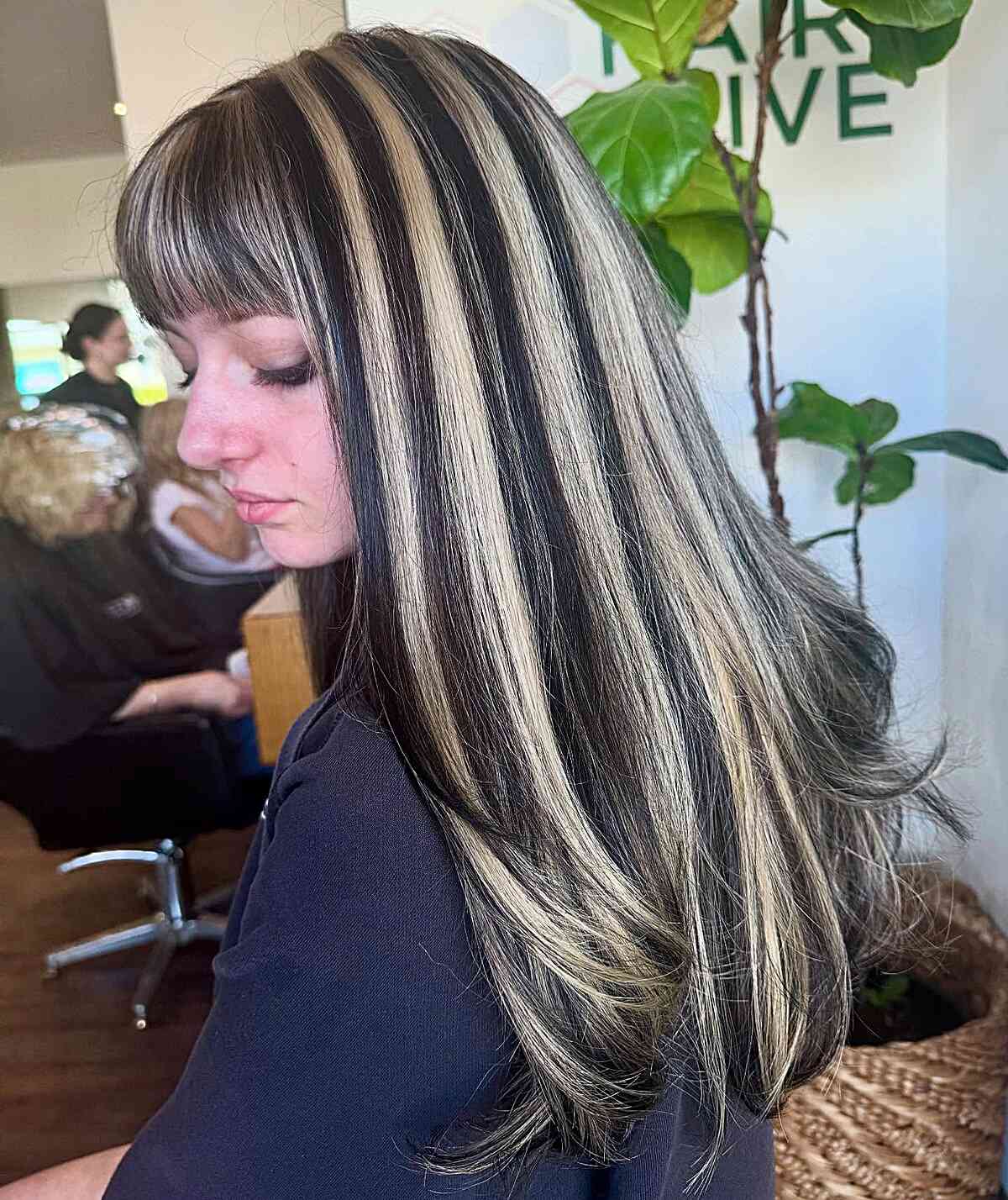
The full bang is the structural anchor here. This mid-back length cut uses long layers to keep the weight off the ends, so the thick blonde face-framing stripes stand out clearly and keep their shape. Medium density straight hair holds the contrast best, fine hair can let the stripe get lost, and very thick hair might push the bangs apart. Ask your stylist for: mid-back length straight hair, full bangs, bold blonde face-framing stripes. The middle part keeps the stripe placement symmetrical.
The bangs need a trim every three weeks to sit exactly at brow level. A flat iron on low heat smooths the body while keeping the stripe crisp. The length below the bangs can go a full eight weeks between trims without losing shape.
12. Collarbone Dark Brown With Blonde Stripe
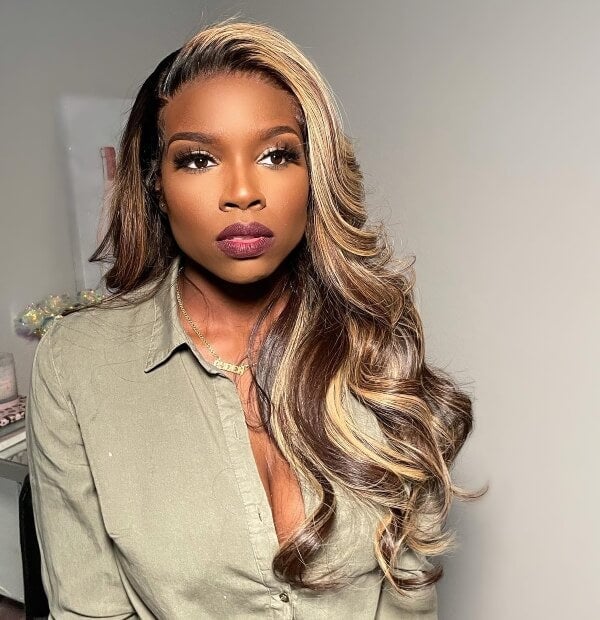
A single blonde stripe at the front section does the work here. No need for a full head of highlights. The collarbone length hits right at the collarbone, which keeps the stripe visible whether the hair is tucked behind an ear or falling forward. Thick wavy texture gives the blowout enough grip to hold volume at the roots. Ask your colorist for: collarbone length wavy hair, distinct blonde front stripe. This is a solid choice for a work week where you want color without the maintenance of all-over blonde.
13. Collarbone Straight Fine Hair With Graphic Stripes
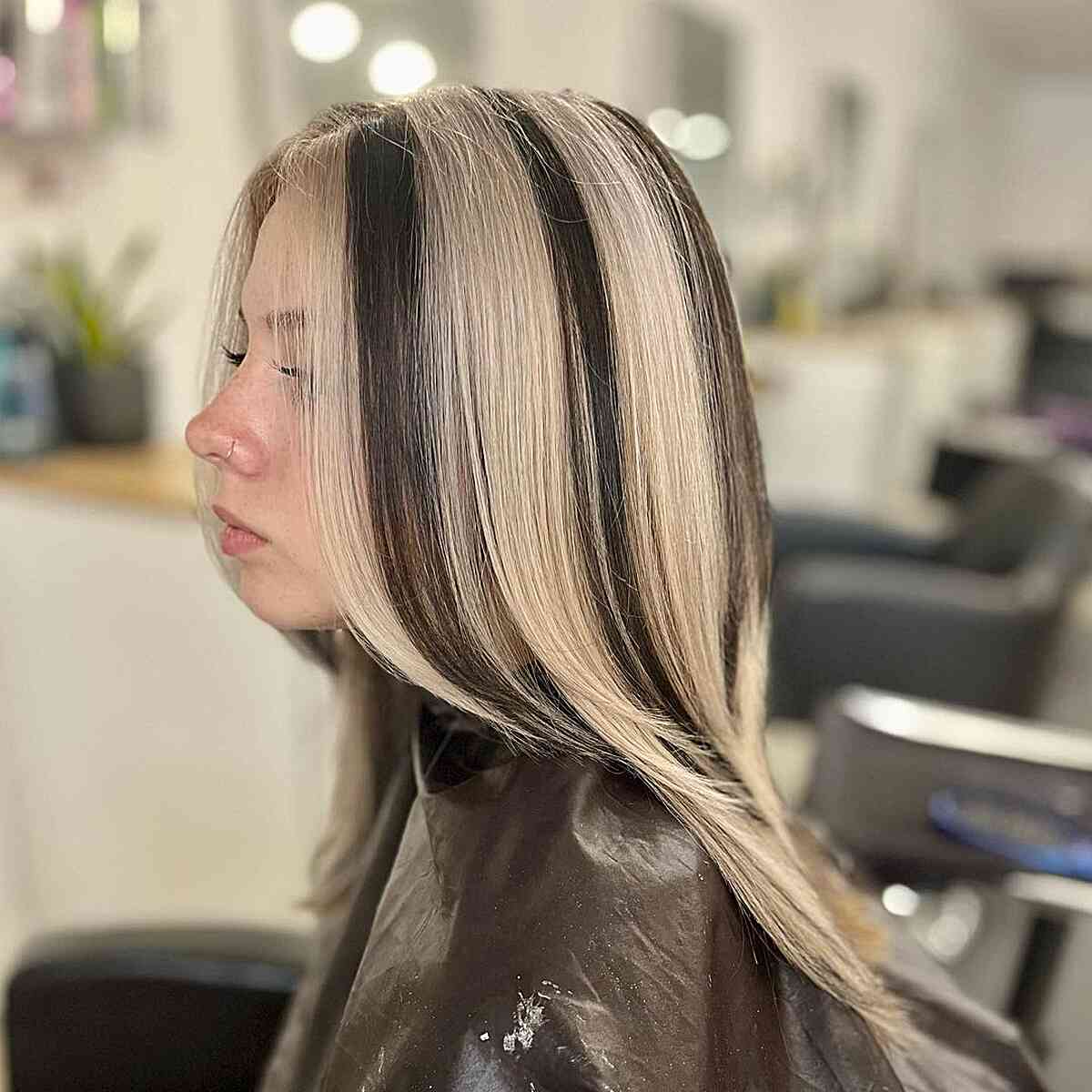
Can fine hair handle graphic stripes that wide? Yes, if the cut is sharp and the placement is exact. The collarbone-length straight cut keeps the ends dense, so the black and blonde bands form clear geometry instead of sparse strands. Curtain bangs soften the middle part and add movement at the face. Ask your colorist for: collarbone length straight hair, graphic black and blonde stripes, curtain bangs. Fine hair shows every grow-out line faster than thick hair, so that stripe needs a root touch-up closer to every five weeks.
14. Mid-Back Wavy Thick Hair With Blonde Face-Framing and Curtain Bangs
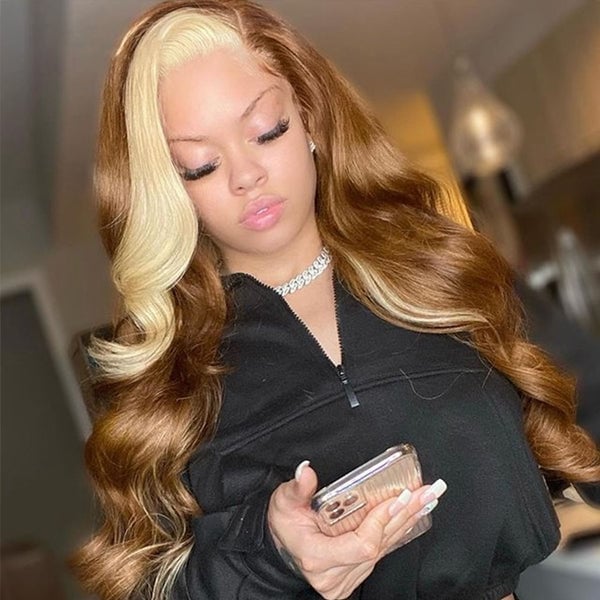
Thick wavy hair is the ideal canvas for wide face-framing blonde highlights. The body wave catches the lighter sections and bounces light around, so the stripe appears dimensional. Mid-back length gives the layers room to stack without losing shape at the ends. Curtain bangs graduate from shorter at the center to longer at the cheeks, which keeps the face-framing stripe connected to the color. Ask your colorist for: mid-back length wavy hair, wide blonde face-framing highlights, curtain bangs.
A texturizing spray at the mid-lengths enhances the wave pattern and keeps the stripe visible. The blonde pieces need a toning appointment every six to eight weeks to stay cool. The middle part keeps the face-framing balanced on both sides.
15. Mid-Back Layers With Platinum and Dark Brown

This one is closer to an art piece than a grow-out friendly color. The wide graphic sections of platinum and dark brown alternate like piano keys, which works best on medium density wavy hair that can show both tones without one swallowing the other. Long layers keep the mid-back length from feeling heavy, and the curtain bangs pull the platinum forward at the face. Ask your colorist for: mid-back length layered hair, graphic platinum blonde and dark brown stripes, curtain bangs.
This is not a DIY project. Lifting dark brown to platinum in wide sections requires a two-step process, bleach and tone, and the precision of the stripe placement demands a colorist who sections by eye. The payoff is a side view that shifts between silver and brunette with every head turn.
16. Mid-Back Wavy With Blonde and Dark Brown Stripes and Long Layers
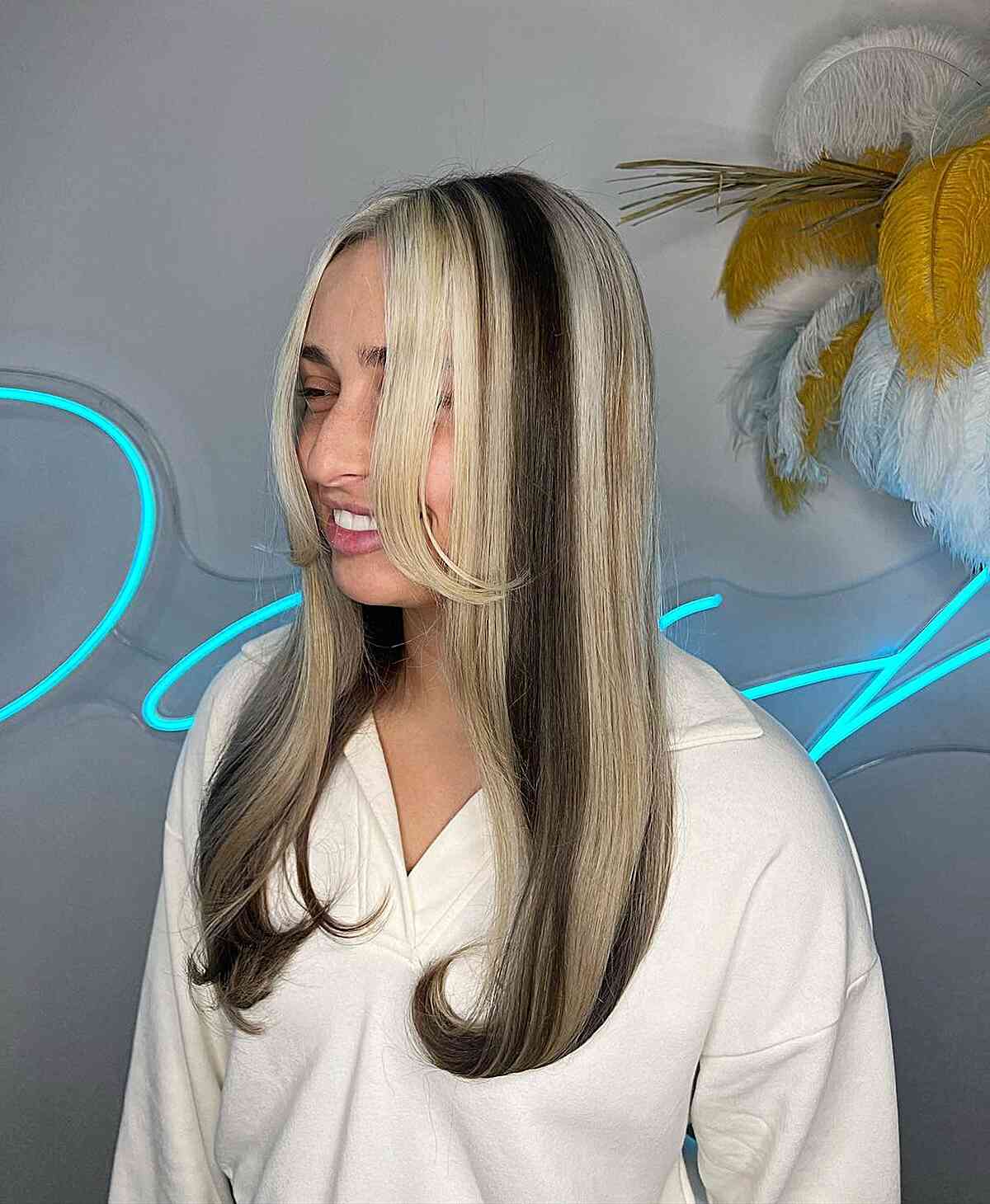
The stripes sit where the long layers separate, so the blonde shows up in slices instead of a single block. Mid-back length gives the dark brown base room to breathe, and the face-framing pieces catch light every time you move. A side parting keeps the wavy, medium-density texture from stacking on one side.
Ask your stylist for: mid-back length wavy hair, blonde and dark brown skunk stripes, face-framing layers. A texturizing spray adds definition to the loose waves without weighing them down. Blonde against dark brown shows regrowth fast, so plan on toning every six to eight weeks, and a trim every ten to twelve weeks keeps the layers from collapsing into one length.
17. Collarbone Blunt Lob With Platinum and Black
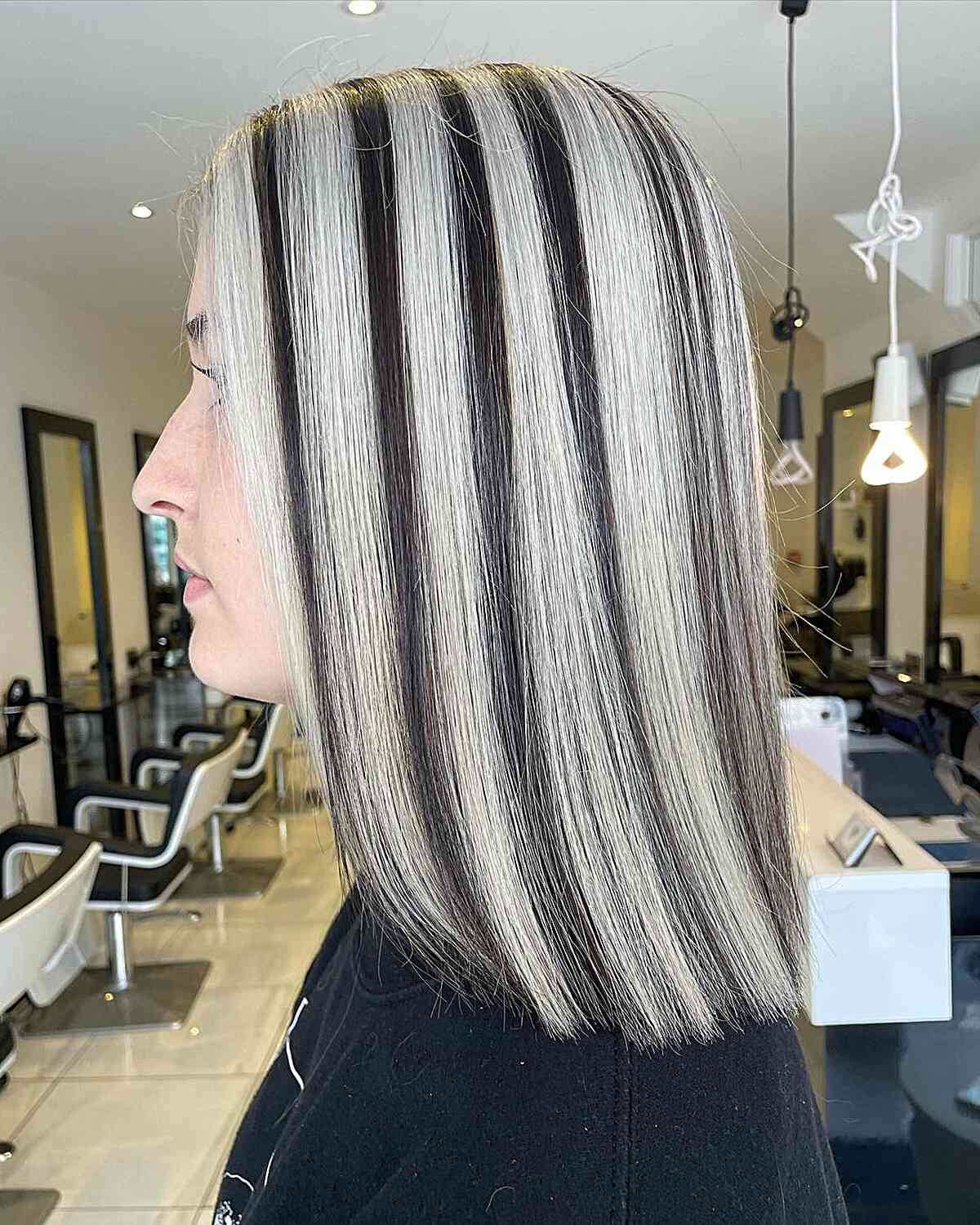
A blunt lob is cut straight across with no texturizing, which is exactly why the platinum and black stripes read as clean vertical bands instead of a blur. The middle part splits the graphic stripes symmetrically, and collarbone length gives the straight, medium-density hair enough weight to sit flat. Ask your stylist for: collarbone length blunt lob, platinum blonde and black graphic stripes. Blunt lines show every uneven grow-out, so book a trim every six to eight weeks. Lift the roots with a round brush and keep the ends flat with a flat iron.
18. Shoulder Length Wavy Black With Blonde Stripe
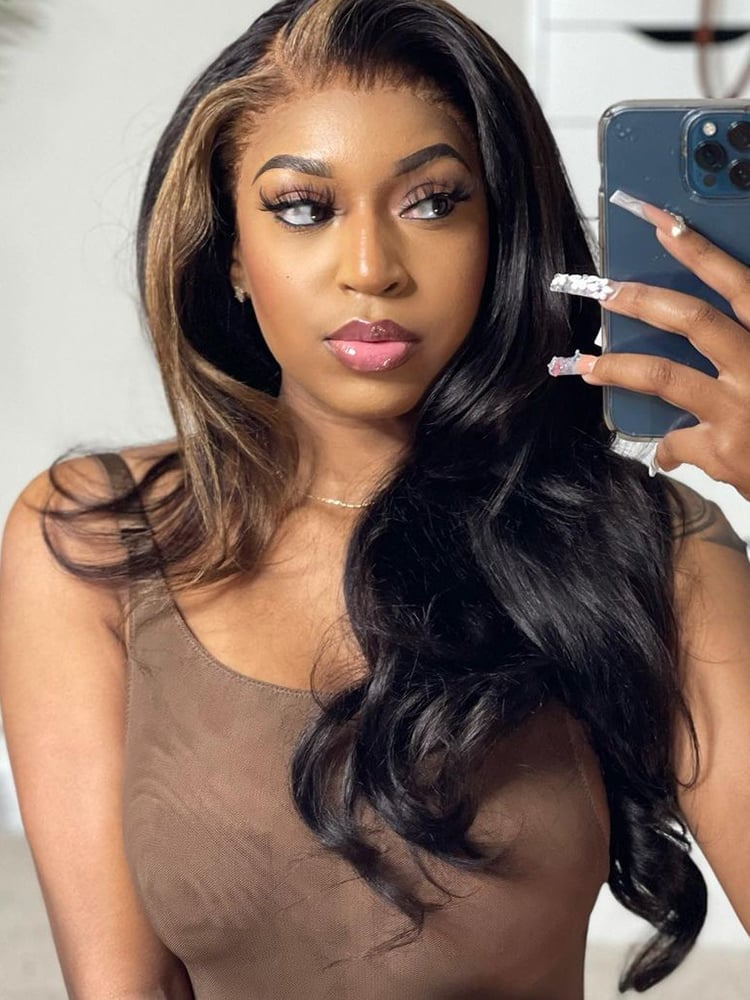
How do you ask for one bold stripe instead of a head of highlights? Be specific about placement and width. Point to where the blonde should start at the front hairline and how far back it should run, since a thick wavy texture swallows a thin stripe.
- Ask your stylist for: shoulder length wavy hair, bold blonde front stripe.
- Request a stripe two to three inches wide at the root.
- Say you want layers cut to support the waves, no bangs.
19. Chin Length Blunt Bob With Ash Blonde Stripes
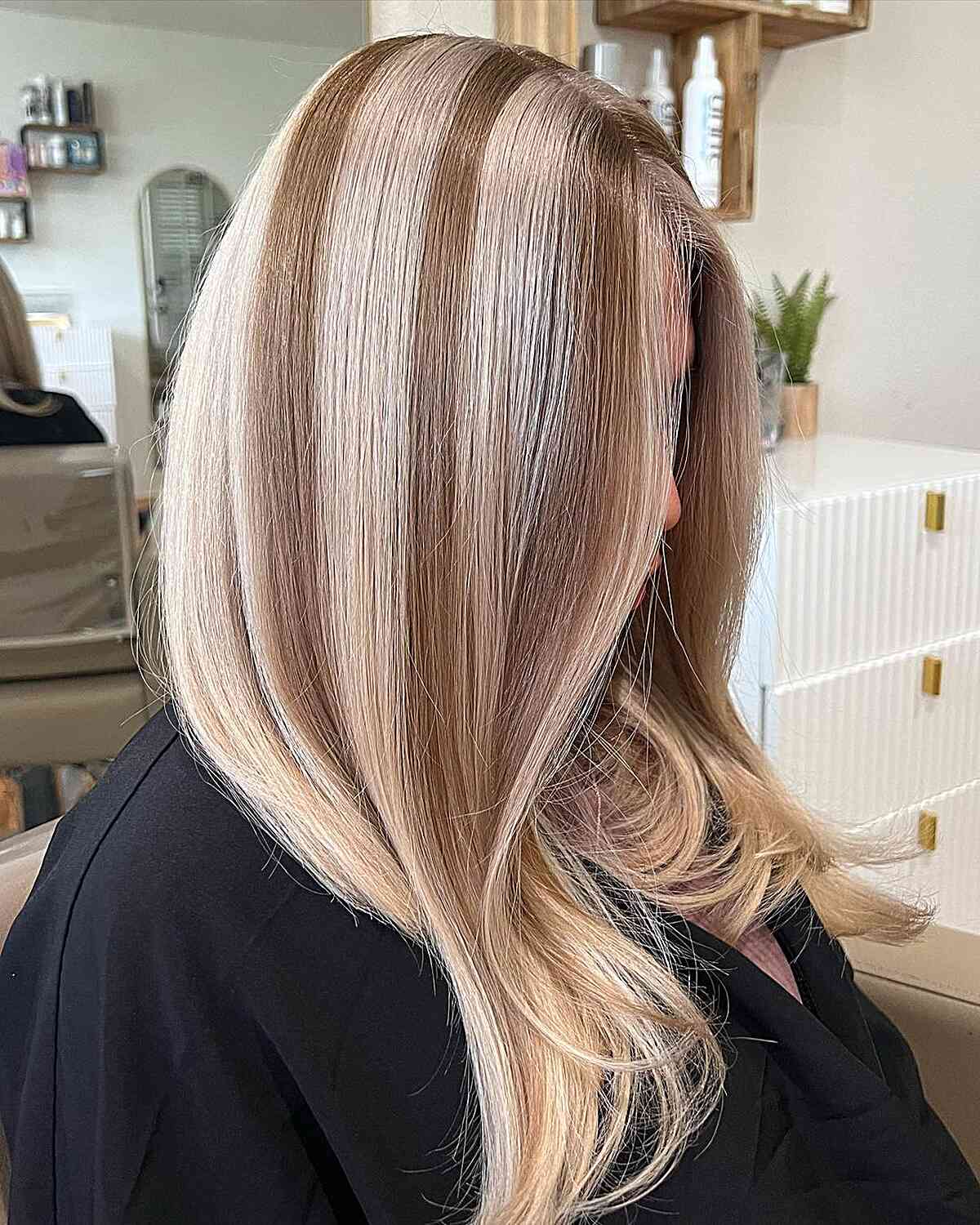
A blunt bob at chin length is a geometry problem, and the ash blonde stripes against dark brown are the solution. The straight, fine texture lets each stripe land as a clean band, and the side parting gives the contrast a natural starting point. Fine hair can look thinner when the stripe contrast is this sharp, so ask your stylist for: chin length blunt bob, ash blonde and dark brown stripes. A flat iron keeps the edge crisp, and ash tones need a purple shampoo every two to three washes to hold their cool shade.
20. Final Thoughts
For fine hair, opt for wider, more graphic stripes to create the illusion of thickness. For thick hair, a more scattered or subtle placement prevents overwhelming volume and keeps the contrast from reading as heavy.
- Retouch the stripe color every 4-6 weeks to maintain sharp contrast.
- Use color-safe shampoos and conditioners to preserve vibrancy.
- Deep condition weekly to combat potential dryness from lightening.
- Trim the baseline every 6-10 weeks, depending on the cut.
Embrace the contrast and make the skunk stripe your own.