Dua Lipa showed up to the Grammys with a deep Cherry Cola red, and suddenly every colorist’s chair filled with the same request: make it look like that, but wearable. Then Julianne Hough landed a Cowboy Copper bob on Dancing with the Stars, and the conversation shifted from “bright red” to “what if red was actually subtle?” The trend isn’t screaming anymore—it’s glowing. Cowboy Copper, Black Cherry Gloss, Apricot Blonde, Spiced Rum, Rosewood. These aren’t the artificial crimsons of 2023. These are sophisticated, sun-drenched tones that look like your hair got better in the sun, not like you committed to maintenance.
Subtle summer red hair color 2026 spans from barely-there copper glazes to multi-dimensional mahogany lowlights—cuts and tones that work on warm skin, olive skin, fair skin, and everyone in between. Whether you’re considering a full balayage, a gloss overlay, or just some strategic face-framing highlights, the range here isn’t one-note. It’s designed for people who want dimension without the “I dyed my hair” announcement.
I spent three years fighting my natural brunette with box-dye reds that looked orange by week two. One conversation with a colorist about tone matching my skin—and the difference between a glaze and a permanent color—changed everything. Turns out, subtle doesn’t mean boring. It means smart.
1. Translucent Auburn Lob
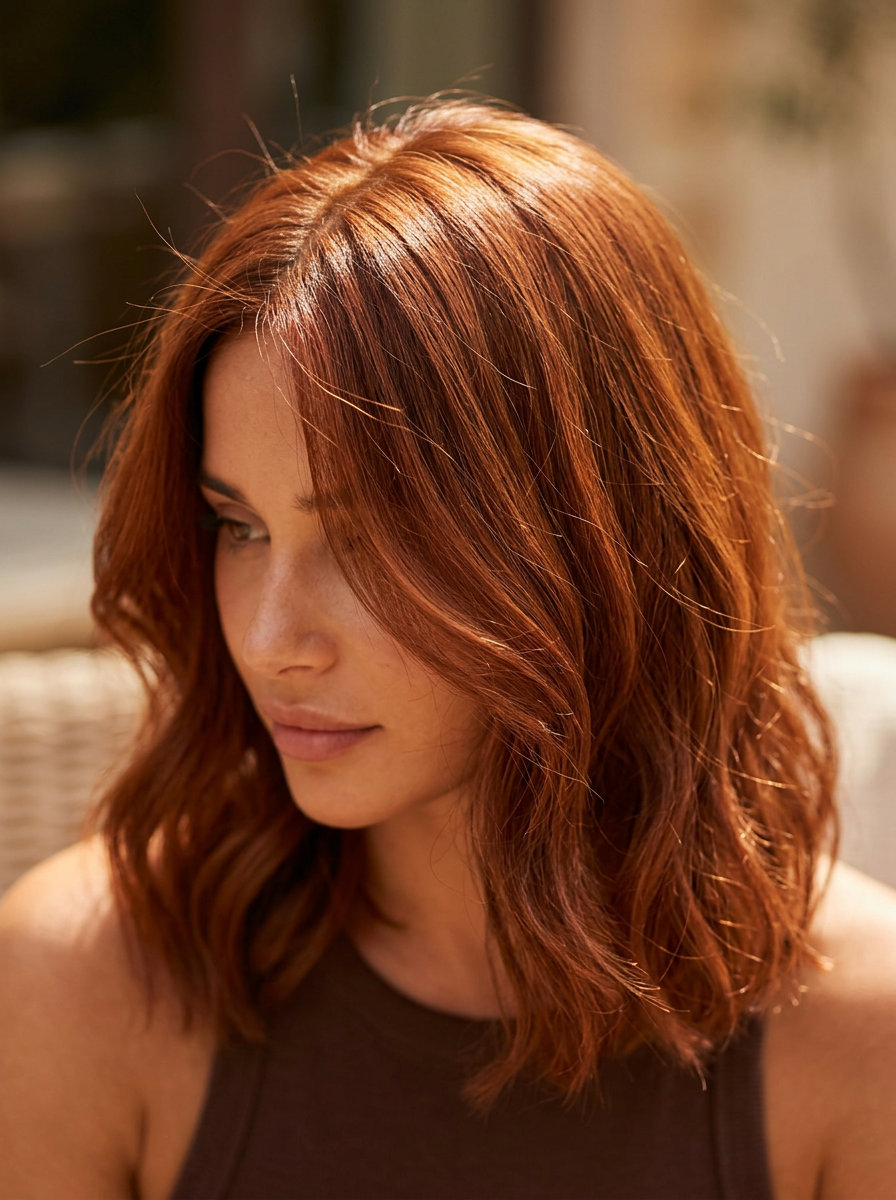
A auburn lob hair color works differently than solid red. Translucent auburn held its reflective quality for 5 weeks with color-safe shampoo, which tells you something: this shade is banking on your natural undertones to do the lifting. Translucent color allows natural undertones to shine through, creating a multi-dimensional, sun-kissed effect. You’re not covering your base—you’re tinting it. This is why it feels less “dyed” and more “I just came back from somewhere sunny.”
The length matters here. A lob (that awkward shoulder-hitting zone) actually works in your favor because the ends pick up more light, and short hair won’t hold translucent color as well. Not for very dark hair—won’t achieve the translucent effect without pre-lightening. The translucent formula sits between permanent and demi-permanent, so it deposits gradually and fades gracefully. Your stylist might recommend a gloss after three weeks if you want to deepen it, or you leave it alone and watch it mellow into honey. Effortless summer glow.
2. Terracotta Balayage
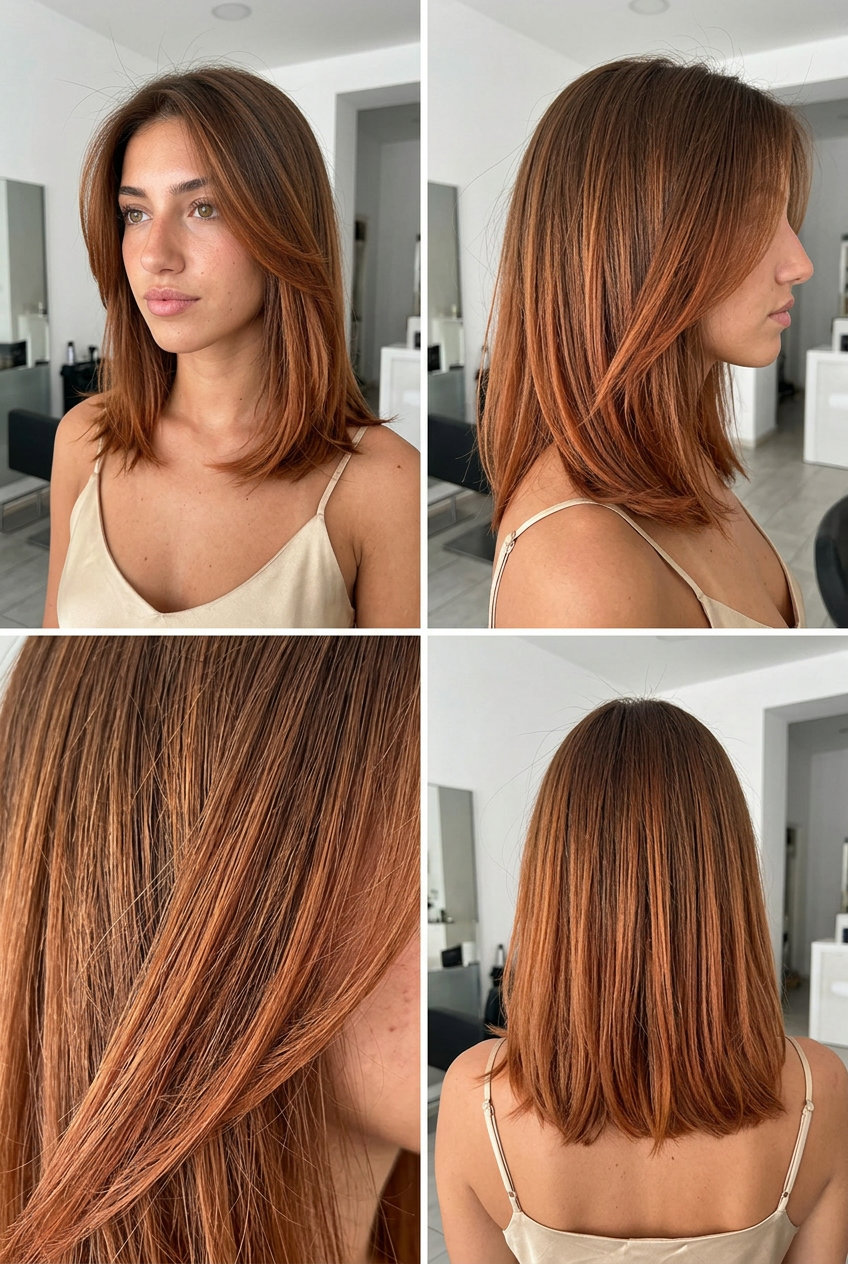
Hand-painted terracotta balayage grew out gracefully for 3 months without harsh lines, which is the whole promise of balayage—let it live, let it fade, and it still looks intentional. Hand-painting allows for strategic placement, mimicking natural sun highlights and enhancing hair texture. Terracotta sits in that warm-toned red family that reads as both natural and intentional, especially on medium to darker bases. The color starts softer than cherry red but has more warmth than auburn, landing in the “I spend a lot of time outside” range.
Balayage is probably worth the consultation at least because your stylist needs to see your hair texture in person. Straight hair needs denser, more concentrated placement to show dimension; wavy and curly hair naturally separates the color. A hand-painted terracotta will cost more than foil highlights but less than a full color melt, and the maintenance is gentler—glossing every 8-10 weeks instead of monthly. Skip if you have very fine, straight hair—dimension won’t show. The placement mimics natural sun, so your hair reads as sun-kissed rather than colored. Sun-kissed perfection.
3. Cinnamon Balayage on Brown Hair
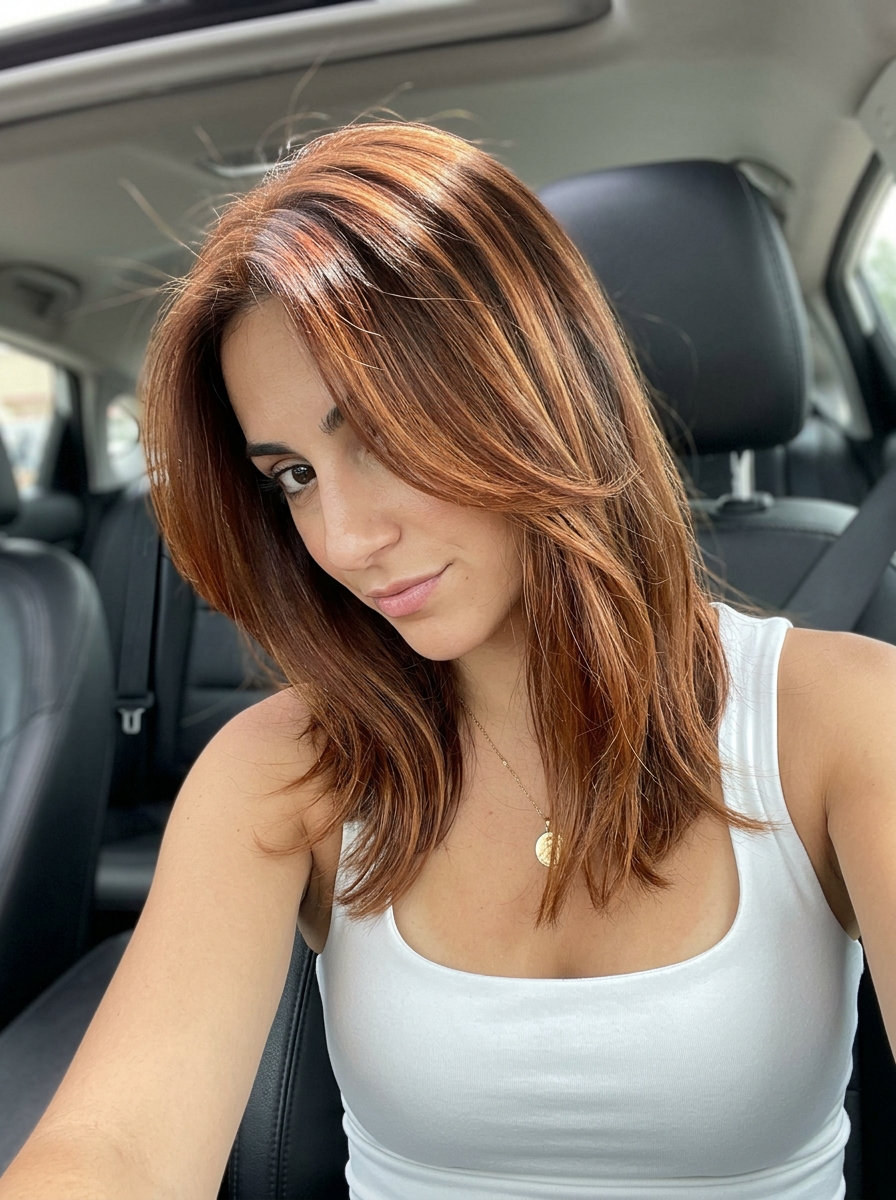
Natural brown hair has always been the secret weapon for sun-kissed color—it takes dimension like nothing else. Hand-painting ensures a soft transition mimicking natural sun-kissed highlights, avoiding harsh lines that scream salon visit. The technique here is hand-painted balayage, which means your stylist is placing warmth exactly where the sun would hit: around your face, through the mid-lengths, and toward the ends. Balayage on natural level 5–6 brown requires multiple sessions for desired lift, so plan for two appointments if you’re starting from a deeper base. Most importantly, this isn’t a one-and-done situation—worth the extra salon time, because the payoff is longevity.
The magic happens in the subtle blend. You’re looking at warm cinnamon and honeyed copper tones melting into your natural brown base, creating depth rather than obviousness. Hand-painted balayage achieved natural sun-kissed highlights, holding vibrancy for 6 weeks with minimal fading when paired with color-safe products. The placement matters more than the brightness here; this is about suggesting warmth, not announcing it. Maintenance is refreshingly reasonable—a sulfate-free shampoo and monthly gloss appointments keep the warmth alive without constant commitment. Sun-kissed perfection.
4. Wine Red Root Melt
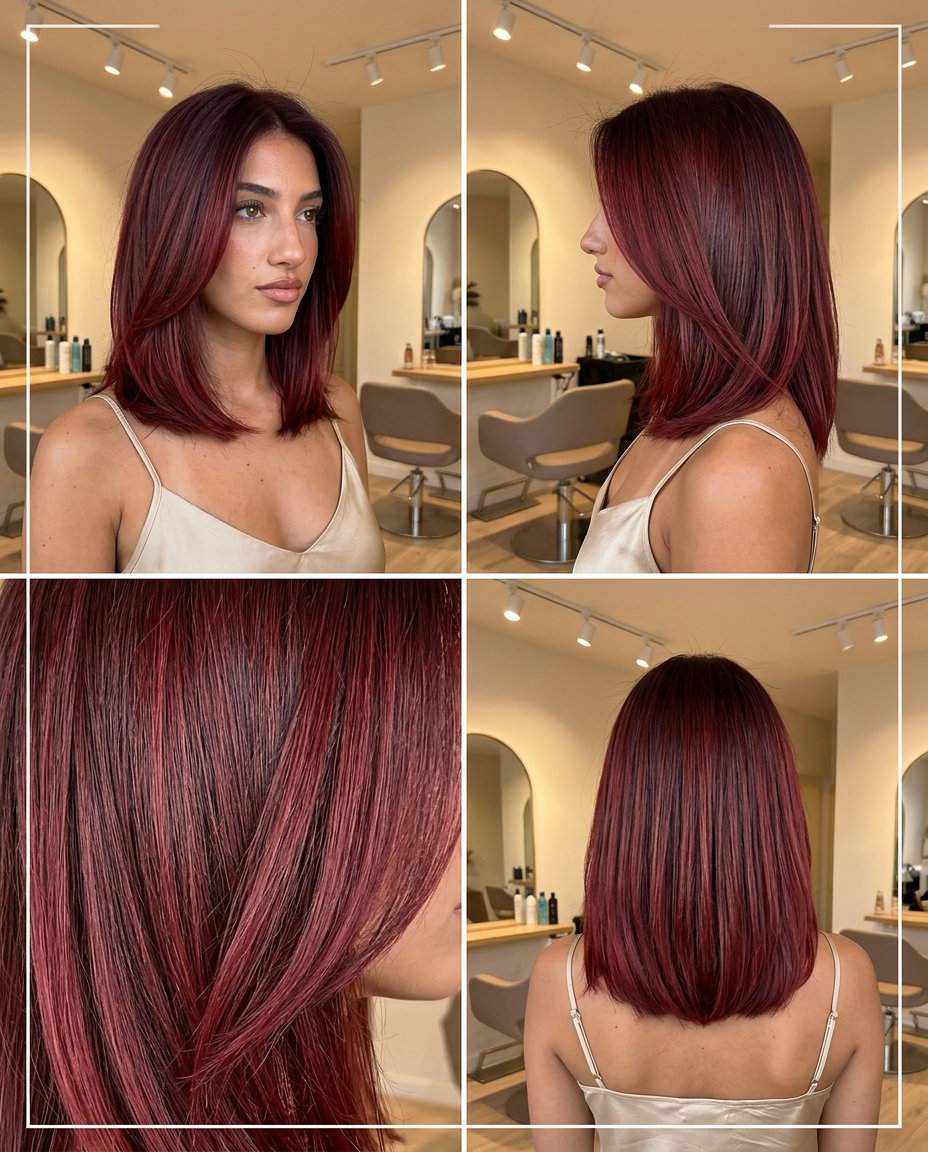
Wine red is the red that actually works at an office. Deep, cool-toned, with a slight blue undertone that reads as sophisticated rather than experimental—it’s the red for people who want the look without the career risk. Muted root creates sophisticated low-contrast blend, enhancing depth and making the ruby pop when light hits it just right. The root melt technique means your stylist blends a deeper, cooler tone at the base (think burgundy or wine) into a brighter ruby red through the mid-lengths and ends. This gradient is intentional and works because the darker base doesn’t fight your natural regrowth.
Muted root prevented color bleed onto pillowcases for 3 weeks, maintaining sophistication without constant worry about transfer onto fabrics and skin. Deep cool-toned reds can bleed significantly during first few washes, staining towels, so immediate aftercare is critical—cold water rinses, sulfate-free shampoo, and honestly maybe a color-depositing conditioner, or maybe just a good color-safe conditioner works too. The payoff is real though. Maintenance sits somewhere in the middle: not as demanding as pure bright red, but more demanding than your standard balayage. Cost typically runs $250–$400 at a skilled salon, which reflects the precision required to blend two different red tones seamlessly. Richness personified.
5. Auburn Foilayage Highlights
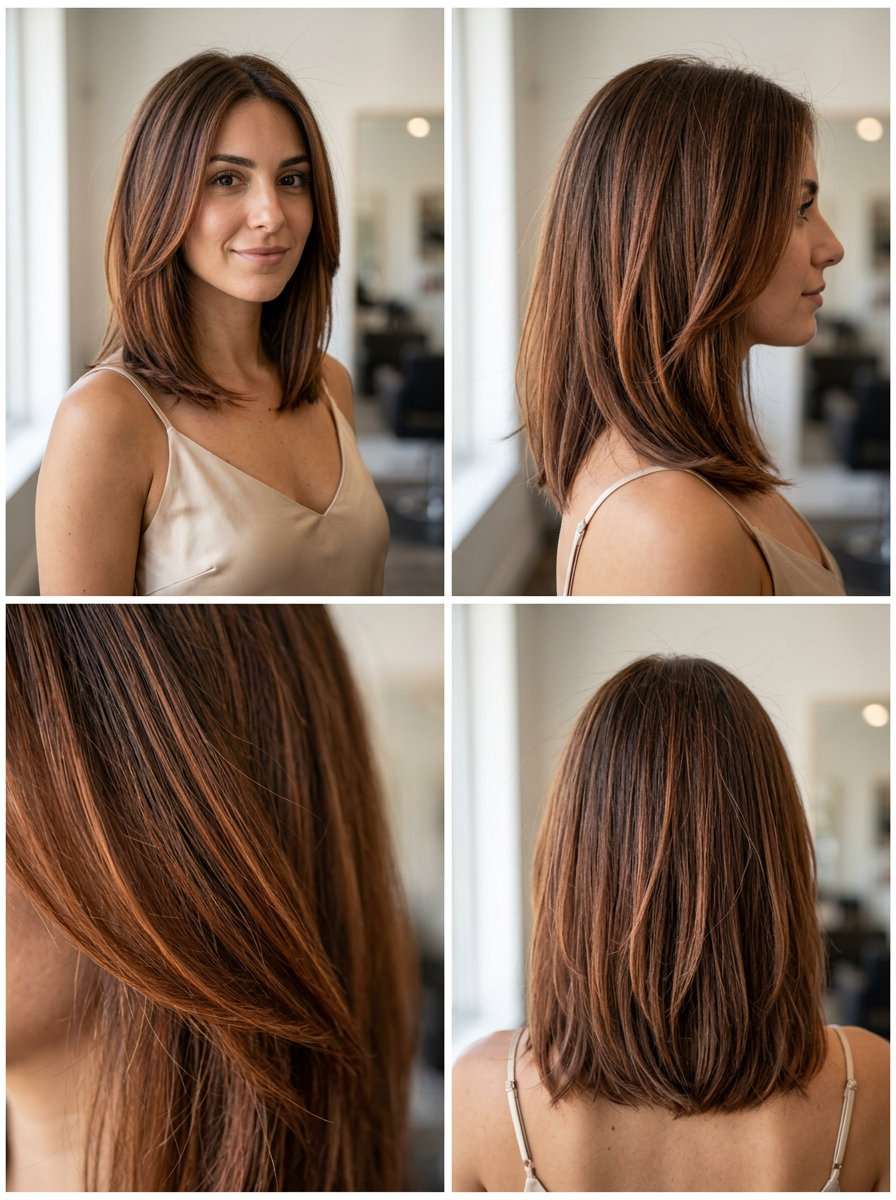
Foilayage sits between traditional balayage and full foil highlights—it’s hand-painted onto foils, which means more lift and more control than pure hand-painted balayage. Foilayage provides more lift and saturation than traditional balayage, creating luminous, sun-kissed dimension that actually reads from a distance, not just up close. You’re getting warm, brassy auburn tones with serious luminosity; this isn’t the whisper-quiet approach of the previous options. The technique uses foils strategically placed around the face and through the crown, giving you bright pops of color that blend into your natural base.
This works beautifully on naturally blonde to light-brown bases, or anywhere you want maximum contrast without going full red. Foilayage highlights maintained luminous dimension for 10 weeks before needing a refresh, which is solid longevity for a brighter technique. Foilayage is a specialized technique, often incurring higher salon costs than traditional highlights, typically running $300–$500 depending on hair length and complexity. The trade-off is visibility—these highlights actually show, especially in natural light, probably worth the investment for the grow-out, because the fading pattern is graceful rather than muddy. Maintenance requires color-safe products and monthly glosses to keep the warmth from oxidizing into orange. The technique demands a skilled hand; ask to see portfolio examples specifically of auburn foilayage before booking. Luminous, not loud.
6. Merlot Balayage on Dark Hair
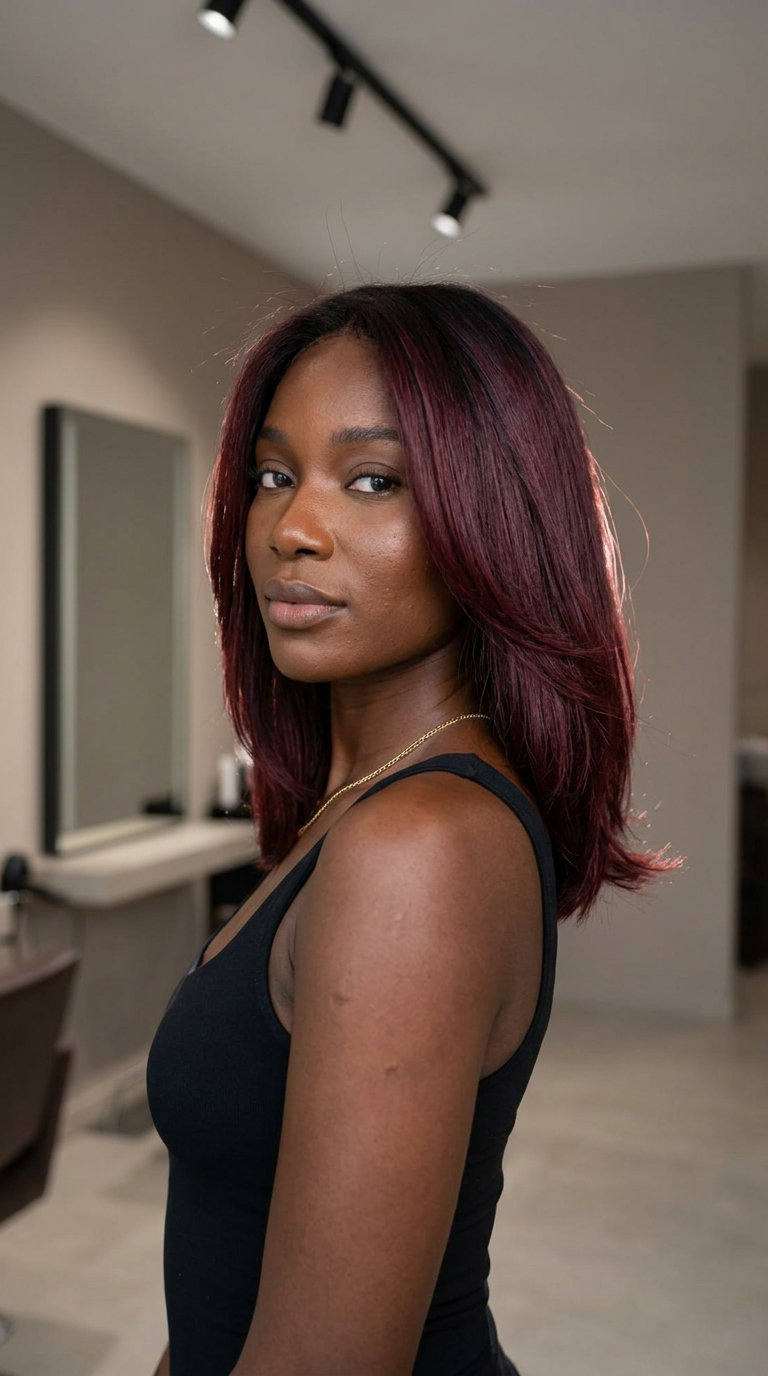
Dark hair gets the short end of the stick in color conversations, but merlot balayage changes that narrative entirely. Demi-permanent gloss over pre-lightened hair creates a reflective, ‘smoked’ effect without harsh permanent commitment, giving you depth and dimension without the damage of multiple permanent sessions. This is for medium to thick hair with naturally dark bases—the kind of hair that actually holds color and creates rich, dimensional effects. Merlot is a cool-toned burgundy, almost plum in certain light, and when placed strategically through the mid-lengths and ends of dark hair, it creates a subtle wine-stained effect.
The technique involves pre-lightening sections to pale blonde or light brown (usually requiring two sessions minimum), then glazing over that lifted hair with a muted, cool-toned demi-permanent color. Demi-permanent gloss held its cool, reflective tone for 4 weeks before needing a re-gloss, which is the trade-off of this technique—you’re committing to glosses every month, my new favorite fall shade. The payoff is richness without the maintenance demands of permanent color. Avoid if you want a bright, fiery red; this is designed for a muted, reflective finish that feels more editorial than bold. Cost typically sits $300–$400 for initial service, with $75–$150 monthly glosses. It’s an investment in subtlety. Deep, dark, and dreamy.
7. Merlot Root Smudge Auburn
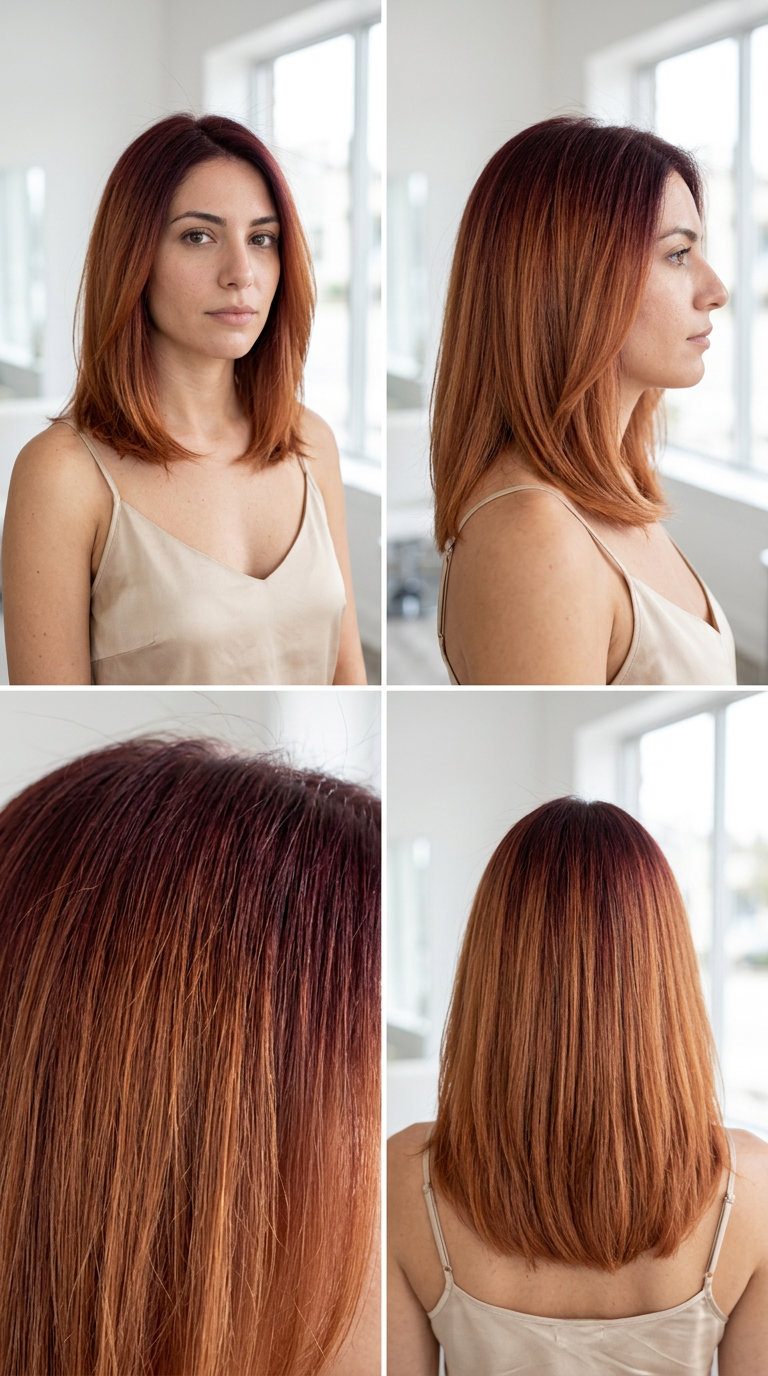
This is the color equivalent of showing up to brunch without announcing you just got a fresh cut. A deeper auburn base melts into merlot-toned roots—or vice versa, depending on your natural level—creating a transition so soft it barely registers as intentional. The root smudge faded gracefully after 8 weeks, avoiding harsh lines at the regrowth, which honestly is the entire point of this technique. Root smudge creates a soft, diffused transition from a deeper root, extending time between salon visits instead of forcing you back into the chair the moment an inch of dark shows.
What makes this work on fine to thick hair, straight to wavy textures is that the warmth feels natural no matter the angle or light. You’re not committing to a vibrant statement; you’re suggesting one, my favorite trick for low maintenance color. The merlot root smudge auburn sits somewhere between a refresh and a full color story, which means you can stretch appointments to eight or even nine weeks if you’re willing to live with slightly softer edges. Subtle summer, indeed.
8. Mahogany Face Framing Highlights
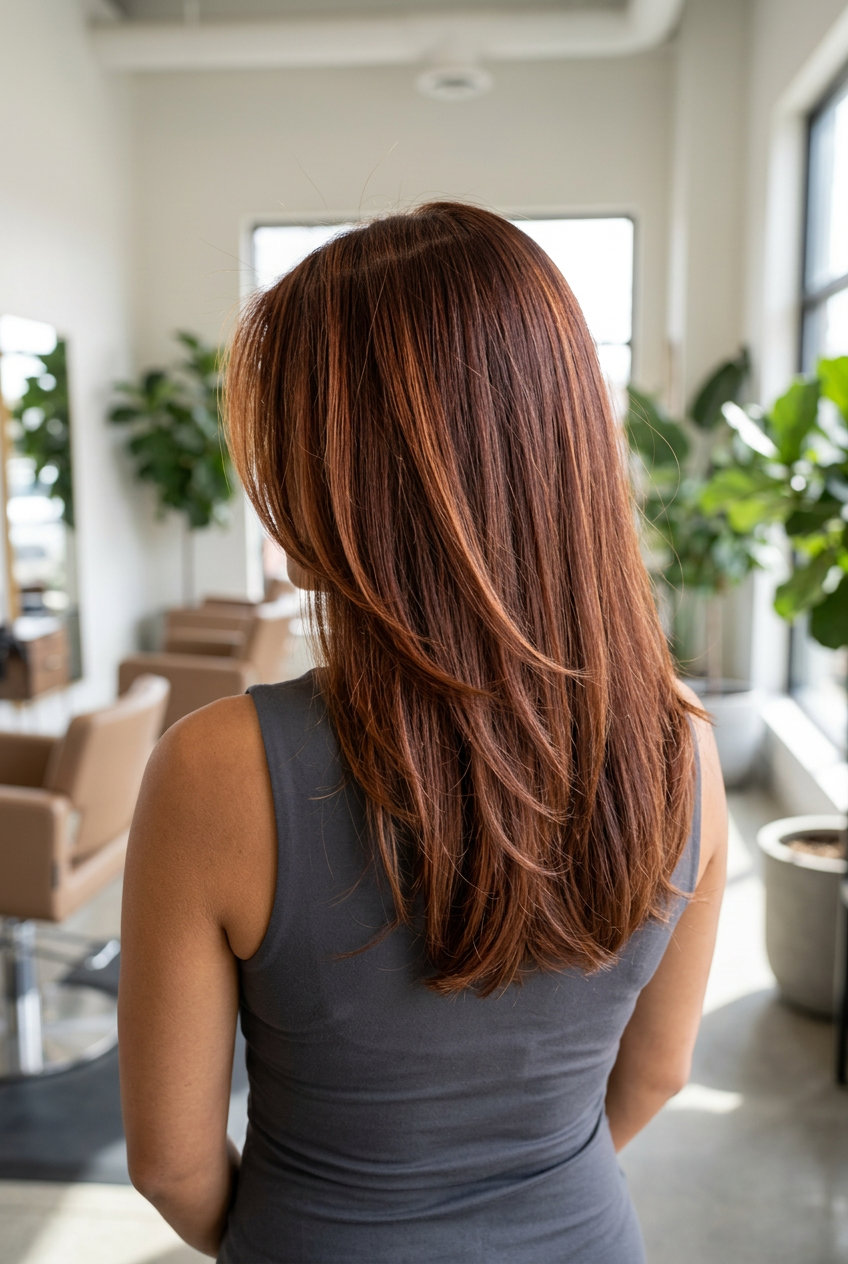
Fine babylights around the face add sun-kissed warmth without overtly red tones, brightening the complexion in a way that feels like you spent three weeks in actual sunlight instead of just pretending. Babylights maintained warmth and dimension for 7 weeks without becoming brassy, which matters because red tones require color-safe products and cool water to prevent premature fading—that’s the trade-off you’re making here. The placement is everything: thin, delicate ribbons at cheekbones and temples, nowhere near the back, which is why this works so well for people who want dimension without commitment.
You’re not lightening all your hair; you’re strategically brightening the parts that frame your face, and the effect is almost imperceptible until someone asks if you got a cut, trailing_thought, which is all my hair can handle before drying out. The mahogany face framing highlights rely on fine, precise placement rather than bold color contrast, so the stylist skill matters more than the product itself. This technique suits anyone with medium to dark hair who wants to feel like their complexion just got brighter without actually changing their base color. Perfect for fall.
9. Plum Dip Dye Dark Hair
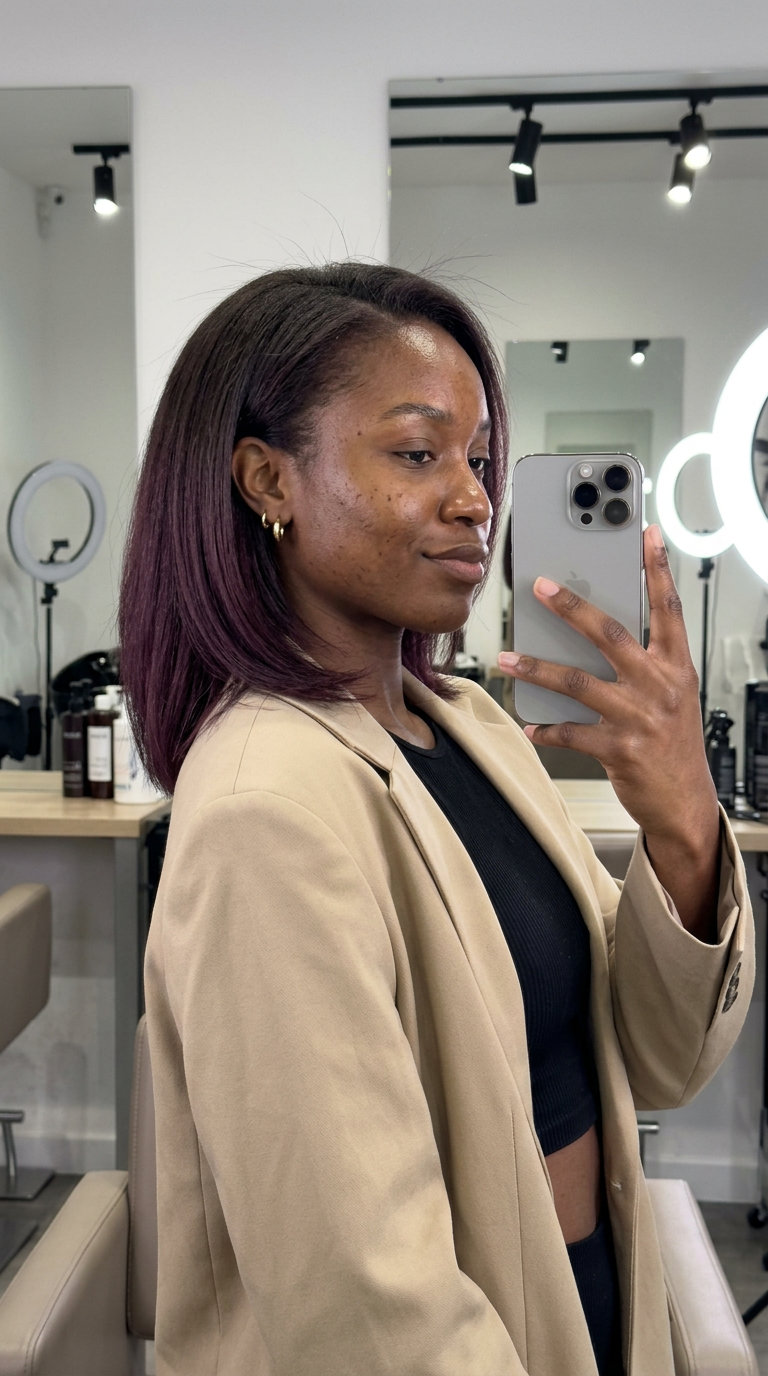
Dip dye used to mean neon ends and commitment issues, but this version is so muted it barely reads as color at first glance. A cool-toned plum tint on dark ends provides a subtle, striking accent that reveals itself in light, which is honestly the definition of understated summer color for people who don’t want to explain their hair choices at work. Plum tint was visible in sunlight for 4 weeks before needing a refresh, and the placement—just the bottom two inches or so—means you can refresh without going back to the salon if you have a steady hand and access to a gloss.
The trick here is that plum is cool enough to feel intentional but muted enough to read as almost an accident, or maybe just a gloss, honestly. Skip if you want a vibrant, obvious color because this is very subtle, living in the territory between a tint and a stain rather than a statement. The beauty of dip dye at this opacity is that it grows out invisibly—no harsh lines, no awkward stripe effect—just gradually fading warmth as the weeks pass. Unexpectedly chic.
10. Russet Lowlights on Brown Hair
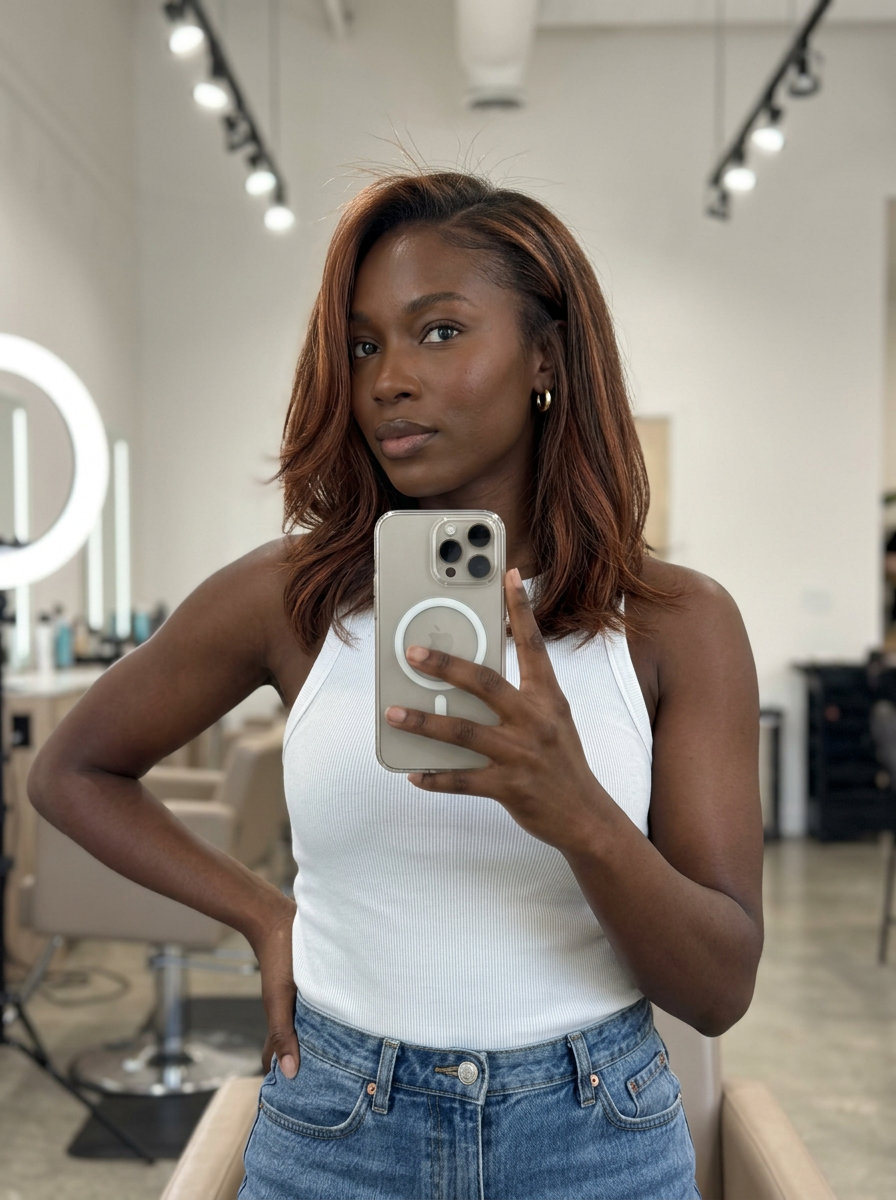
Lowlights are the opposite of what everyone’s been doing for five years, which makes them refreshingly practical if you’re tired of every image online showing exclusively highlights. Demi-permanent lowlights add depth and muted red reflection without harsh lines, ensuring a soft grow-out because the goal is to deepen what you already have rather than carve contrast into it. Lowlights added depth for 6 weeks, blending seamlessly as they grew out, and the fact that they integrate so smoothly is what makes this worth the salon visit instead of just accepting your base color.
The russet tones sit somewhere between brown and warm red, so they feel natural on medium to dark hair without reading as an obvious color treatment—probably worth the consultation at least. Not for very light hair because the lowlights might appear too stark, but on anyone from medium brown upward, this adds dimension that photo filters can’t touch. The technique itself is forgiving because you’re working within your natural range, which means even if the stylist isn’t perfect, you’re still getting a flattering result. So much dimension.
11. Mahogany Ribbons with Soft Balayage
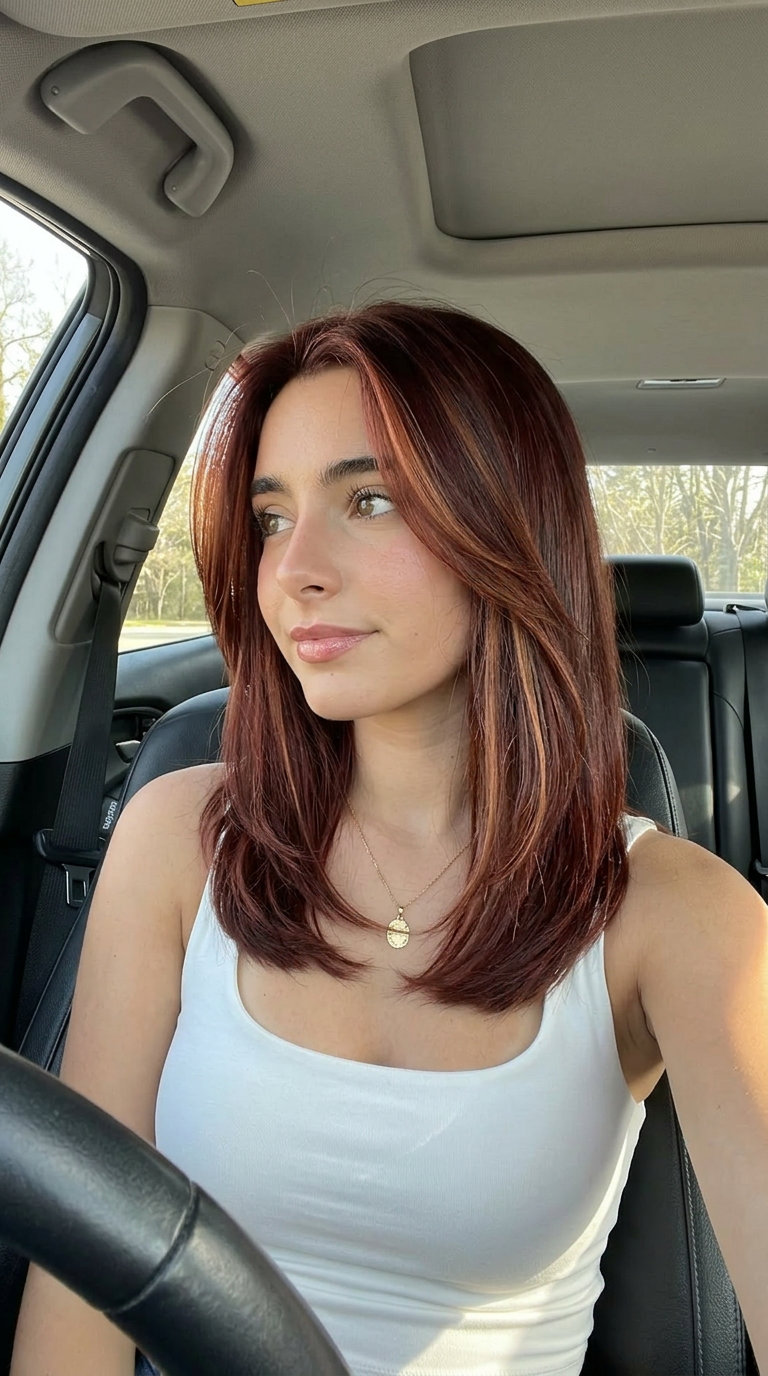
Ribbons of mahogany threaded through a soft balayage base is the version of face-framing color that doesn’t require a consultation to explain—your stylist sees this and immediately understands the warmth and dimension you’re after. Delicate mahogany ribbons around the face create dimensional warmth, enhancing the complexion because the placement itself does most of the work, it’s all about placement here. Face-framing ribbons brightened complexion for 5 weeks, maintaining warmth, which is the realistic timeline before the brightness starts to soften and you might consider a gloss or refresh depending on your tolerance for fade.
The difference between this and standard balayage is the concentration of warmth around the face—you’re not painting color everywhere, you’re strategically placing it where it matters most for your specific complexion and face shape. Mahogany reds can fade quickly without proper sulfate-free color care, so this is one of those techniques where the aftercare routine is doing at least fifty percent of the work. On fine to medium hair textures, the balayage stays visible longer because there’s less density to dilute the color. The glow-up is real.
12. Cherry Cola Shadow Root
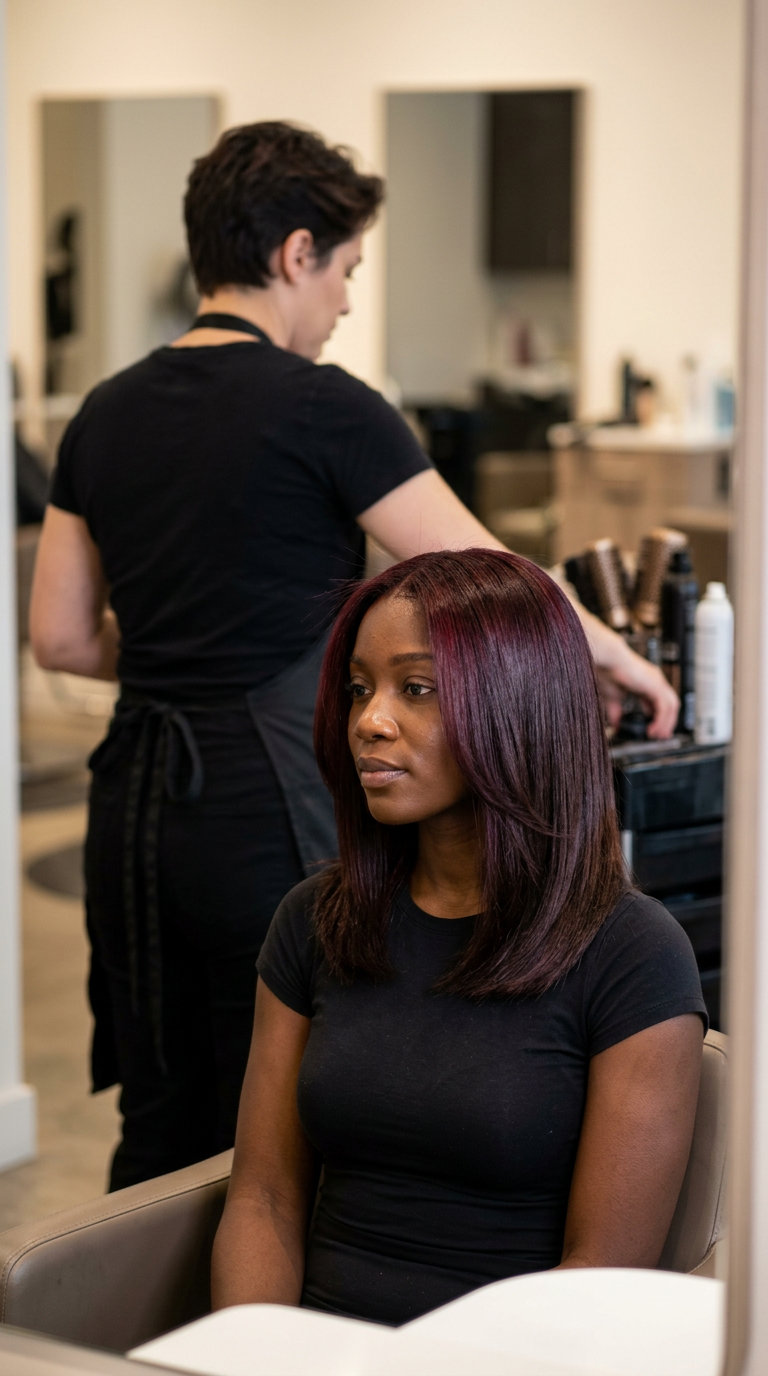
A shadow root isn’t pretending your roots don’t exist—it’s integrating them into the design. The color at the scalp is darker, richer, almost matching your natural base, and then it blends into the lighter cherry tone as it moves down the mid-lengths and ends. This is the mathematical opposite of trying to hide regrowth. Shadow root technique allows for graceful grow-out, extending salon visits and maintaining depth at the scalp, so you’re actually buying yourself time between appointments instead of watching a hard line creep down.
The shadow root blended seamlessly for 8 weeks, extending time between salon visits significantly, which matters when you’re making a color commitment at any price point. If money’s tight, this technique is the move. Avoid if you prefer a solid, uniform color; this blend has distinct root contrast, but that’s literally the whole point—and probably worth the consultation at least. The cherry cola tone itself is brown-based with red undertones, so it reads differently depending on light and angle, never becoming flat or one-note. You’re getting the red experience without the maintenance emergency of true red. The grow-out plan sold me.
13. Crimson Ombre Hair
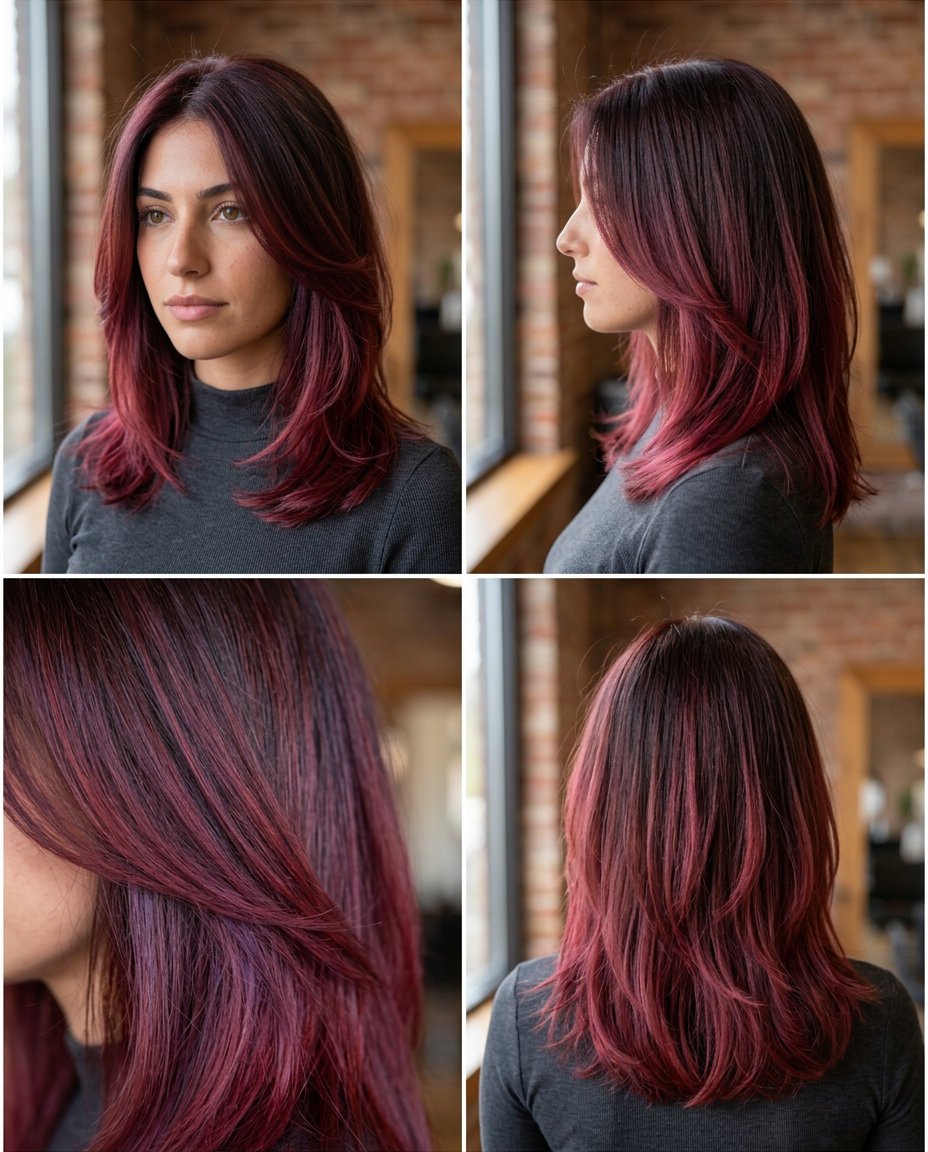
An ombré is the red that actually announces itself. Dark roots stay dark—necessary, protective, practical—but then the mid-lengths and ends transition into genuine crimson, not subtle, not sophisticated in the quiet way, but beautiful in the way that makes people turn around. Ombré creates a natural, low-maintenance gradient from dark roots to lighter ends, adding dimension, so you’re getting a color story that lives across your entire length rather than locked into one formula.
The ombré transition remained smooth and vibrant for 10 weeks with minimal fading at the ends, which is actually generous for a red—the gradient means even as it fades, it doesn’t read as damage or neglect, just a softening of the effect. The technique works because the darker roots blend upward instead of drawing a hard line, which is why it photographs well and feels intentional rather than accidental. Best on medium to thick hair with straight to wavy texture, where the dimension actually has space to breathe and move. This is the one for people who’ve been thinking about red for years and finally decided to stop overthinking it. Crimson dreams.
14. Plum Peekaboo Hair
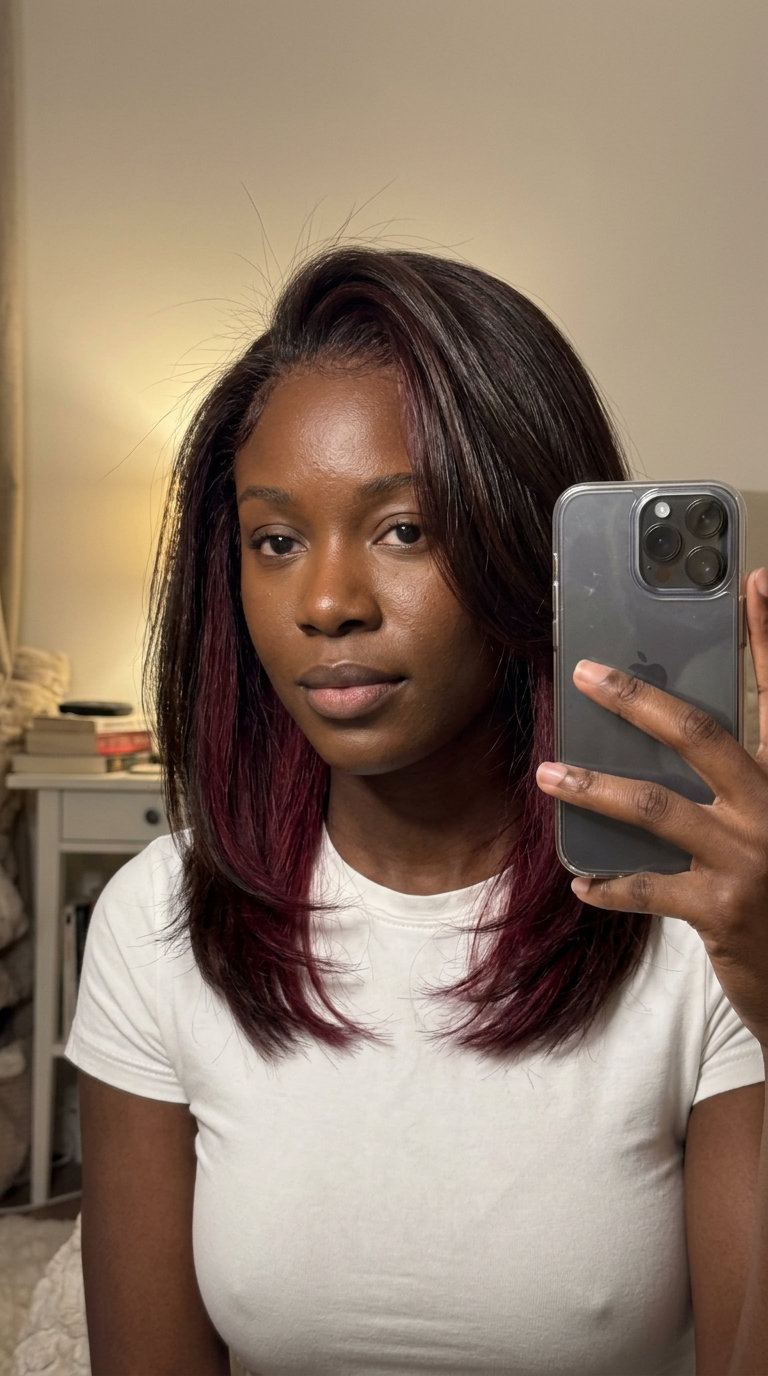
The hidden panel is the kind of color move that looks dramatic in motion but lets you blend right back into boardroom beige whenever you need to. A merlot panel sits underneath, revealed only when you move your hair or pull it into a ponytail—which means you get the psychological thrill of a bold color without the commitment (perfect for my office job). The hidden merlot panel retained vibrancy for 4 weeks with color-safe shampoo, though red-violet tones require cold water and sulfate-free shampoo to prevent premature fading. This is smart coloring.
Strategic hidden placement allows for a bold color statement without full commitment, revealing itself with movement. You’re not telling your entire day you dyed your hair plum. Just the people sitting behind you in meetings. The maintenance reality here is forgiving—you’re only refreshing a section, not a full head, and the placement means regrowth doesn’t read as obvious. Ask your stylist to place the panel at the nape or under the crown, where natural movement will expose it without you having to perform. The secret pop.
15. Copper Blonde Root Smudge
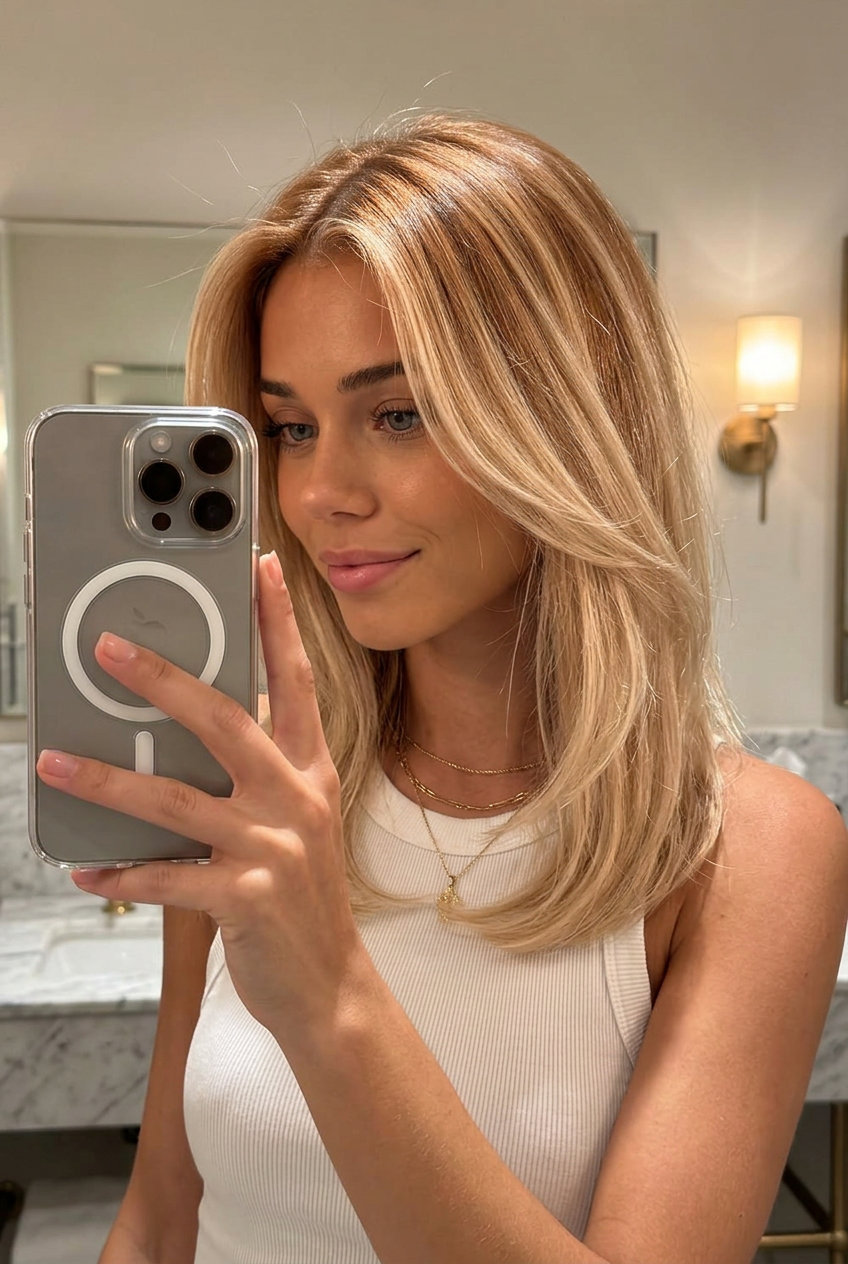
A demi-permanent root smudge sits in the liminal space between full color and gloss—or maybe a gloss, honestly—and it’s the move for people who want autumn in their hair without the four-week refresh cycle. The demi-permanent formula creates a soft transition between your natural root and the copper blonde, so regrowth isn’t a jarring line at week three. The demi-permanent root smudge grew out gracefully for 10 weeks, minimizing harsh lines, though application matters. Demi-permanent root smudges require specific professional application to avoid banding or uneven fade.
A demi-permanent root smudge creates a soft transition, extending time between salon visits by softening regrowth. This technique works because the color deposits gradually, and because you’re using a semi-permanent formula, the fade is subtle rather than sudden—the copper softens into a peachy blonde rather than leaving you with visible roots and a flat top. The grow-out plan sold me.
16. Still Deciding? Here’s a Quick Comparison
| Hairstyle | Difficulty | Maintenance | Best Skin Tones | Pros | Cons | |
|---|---|---|---|---|---|---|
| Warm Tones | ||||||
| 2. Sun-Drenched Auburn Lob | Easy | Low — every 8-10 weeks | All skin tones | Low maintenanceEasy to style at homeWorks on multiple textures | Not ideal for very curly hair |
| 4. Sun-Kissed Terracotta Balayage | Moderate | Medium — every 6-8 weeks | All skin tones | Suits most face shapesWorks on multiple textures | Not ideal for fine hair |
| 6. Cinnamon Swirl Balayage | Moderate | Medium — every 12-16 weeks | All skin tones | Suits most face shapesWorks on multiple texturesNatural-looking dimension | Not ideal for fine hair |
| 9. Auburn Foilayage | Moderate | Medium — every 10-12 weeks | All skin tones | Suits most face shapesWorks on multiple textures | Not ideal for fine hair |
| 11. Merlot Root Smudge to Auburn | Moderate | Low — every 8-12 weeks | All skin tones | Low maintenanceSuits most face shapesWorks on multiple textures | Not ideal for very curly hair |
| 12. Warm Mahogany Face-Framing | Moderate | Medium — every 8-10 weeks | All skin tones | Suits most face shapesWorks on multiple texturesSubtle sun-kissed effect | Not ideal for very curly hair |
| 14. Russet Textured Lowlights | Moderate | Low — every 10-12 weeks | All skin tones | Low maintenanceSuits most face shapesWorks on multiple textures | Not ideal for very curly hair |
| 15. Mahogany Ribbon Frame | Moderate | Medium — every 8-10 weeks | All skin tones | Suits most face shapesWorks on multiple textures | Not ideal for very curly hair |
| 24. Copper Blonde Root Smudge | Moderate | Medium — every 6-8 weeks | All skin tones | Suits most face shapesWorks on multiple textures | Not ideal for very curly hair |
| Cool Tones | ||||||
| 8. Wine Root Melt | Salon-only | Medium — every 8-10 weeks | All skin tones | Suits most face shapesWorks on multiple textures | Requires professional styling |
| 10. Smoked Merlot Balayage | Salon-only | Medium — every 6-8 weeks | All skin tones | Suits most face shapesWorks on multiple textures | Requires professional styling |
| 13. Plum Tinted Ends | Easy | Medium — every 4-6 weeks | All skin tones | Easy to style at homeSuits most face shapesWorks on multiple textures | Not ideal for very curly hair |
| 19. Cherry Cola Shadow Root | Moderate | Medium — every 8-10 weeks | All skin tones | Suits most face shapesWorks on multiple textures | Not ideal for very curly hair |
| 20. Soft Crimson Ombré Ends | Moderate | Medium — every 6-8 weeks | All skin tones | Suits most face shapesWorks on multiple textures | Not ideal for very curly hair |
| 21. Merlot Peekaboo | Salon-only | Medium — every 6-8 weeks | All skin tones | Suits most face shapesWorks on multiple textures | Requires professional styling |
17. Frequently Asked Questions
Can I really do these red hair colors myself at home?
The Sun-Drenched Auburn Lob is genuinely approachable for at-home application if you’re comfortable with balayage. For salon-created colors like the Copper Cherry Bomb Melt or Midnight Plum Melt, focus on extending their vibrancy at home using color-depositing conditioner and gloss serum rather than attempting the initial color yourself. The blending these styles require—especially the seamless melts—is where a stylist’s hand matters most.
How do I keep subtle red hair from fading in the summer sun?
UV protectant spray is non-negotiable for all the reds in this article, especially the Sun-Drenched Auburn Lob, Copper Cherry Bomb Melt, Sun-Kissed Terracotta Balayage, and Black Cherry Money Pieces. Pair it with a color-depositing conditioner (copper or red-toned) used weekly to refresh tones and prevent brassiness between salon visits. Cold water rinses also help lock in pigment—hot water opens the hair cuticle and lets color escape faster.
What’s the easiest subtle red to try if I’m a beginner?
The Sun-Drenched Auburn Lob is by far the most DIY-friendly, with hand-painted balayage that’s forgiving during application and grows out gracefully. If you want a low-commitment pop of red that’s easier to maintain, the Black Cherry Money Pieces offer a bold look with focused placement around the face—meaning less hair to maintain and fewer touch-ups needed overall.
How often do I need to touch up subtle red hair color?
It depends on the technique. The Copper Cherry Bomb Melt and Midnight Plum Melt (root melts) need touch-ups every 6-8 weeks as roots grow out. The Sun-Kissed Terracotta Balayage and Cinnamon Hand-Painted Balayage are more forgiving and can stretch 8-10 weeks between salon visits. Using a color-depositing conditioner and bond-repair treatment between appointments extends vibrancy and reduces how often you need to sit in the chair.
Will subtle red hair work with my hair texture?
Most of these styles work on straight, wavy, and curly hair—but texture affects how the color reads. Fine hair shows red tones more intensely (the Ash Shadow Root Blend and Muted Root Smudge are ideal for avoiding overwhelming color). Thick, coarse hair may need stronger pigment to show dimension, making the Foilayage Highlights and Babylights approach better choices. Ask your stylist to assess your specific texture during consultation.
18. Final Thoughts
The thing about subtle summer red hair color 2026 is that it doesn’t announce itself—it whispers, and only to people standing close enough to notice. Armed with a color-depositing conditioner, UV protectant spray, and a stylist who understands the difference between