The shag is everywhere again—and I mean *everywhere*. Three salons this month alone have had waiting lists for the Hush Cut and Birkin Shag. TikTok stylists won’t stop posting the Jellyfish Cut. Dakota Johnson showed up with thick, eyelash-grazing blunt bangs and suddenly everyone wanted that exact texture. The 70s rock-and-roll thing isn’t a whisper anymore; it’s the thing.
The summer shag haircut 2026 comes in a bunch of flavors—from the Korean-inspired softness of the Hush Cut to the top-heavy volume of the Octopus Cut to the long, effortless layers of the Birkin Shag. These aren’t your mom’s feathered disasters. They work on oval faces, round faces, long faces. Fine hair, thick hair, wavy hair. The person who air-dries everything and the person who actually owns a flat iron.
I cut mine off in March and spent two weeks in full panic mode. By week four, I stopped reaching for my phone to schedule a grow-out plan. The texture, the movement, the fact that I could actually style it in five minutes—it changed the entire equation for me.
1. Wavy Copper Shag Haircut
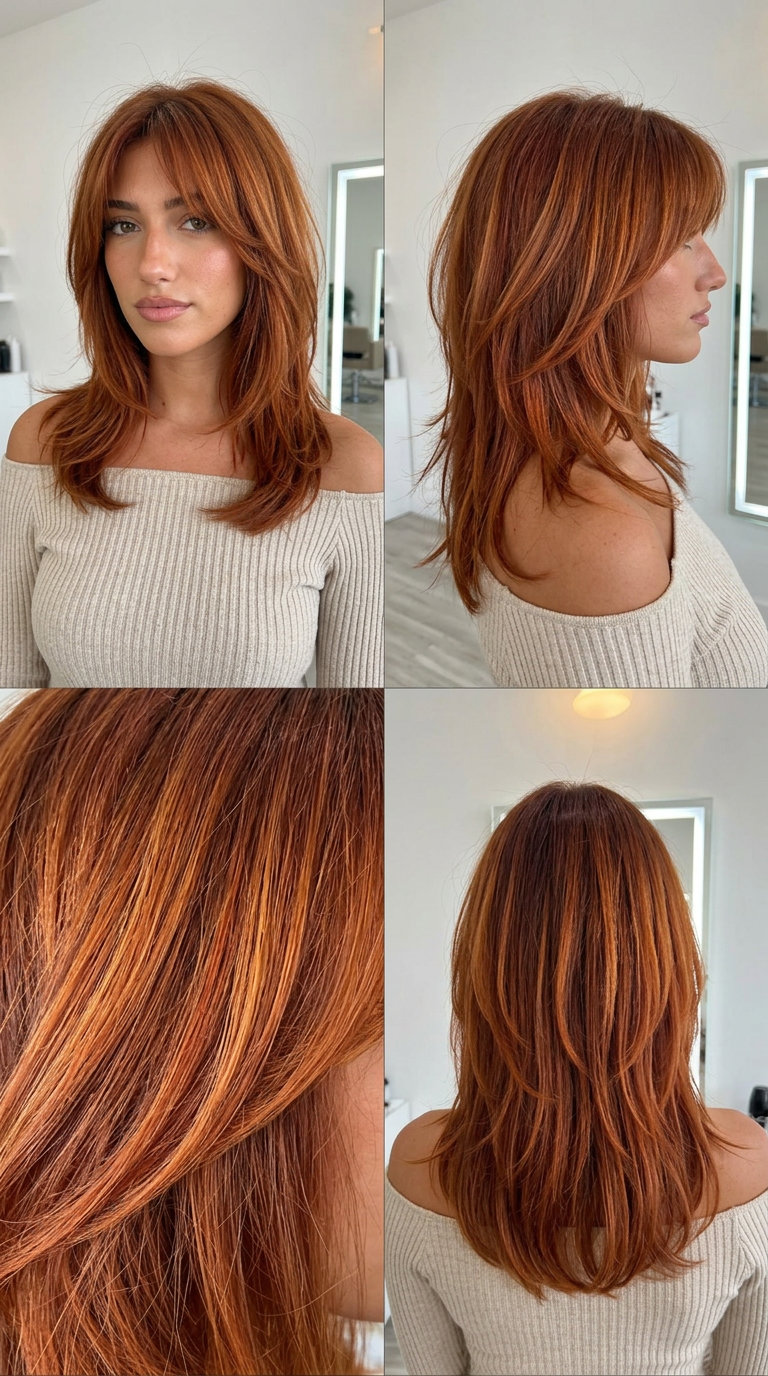
Curly hair has spent decades fighting against every cut designed for straight strands. Layers that don’t work. Bangs that frizz. That perpetual triangle shape that makes you wonder if your stylist actually understands texture. A carved shag, though—the best definition I’ve seen—changes the entire equation. Instead of fighting your curl pattern, carved layers work with it, removing bulk from the inside while keeping length at the perimeter. The result is a shag that doesn’t look sparse or choppy, but instead creates definition and bounce.
Here’s what makes this specific cut sing on naturally wavy to curly, medium to thick hair: carved layers enhanced natural curls, giving defined bounce for 3 days without re-styling. The layers are cut through the hair while it’s textured, not blunt-cut to then be texturized later. This removes weight exactly where your curls need it—usually at the crown and upper mid-length—while keeping the natural curl pattern intact. You’re not fighting frizz or dealing with that awful stringy undercut look that thin-haired people get; instead, you’re enhancing what’s already there. The copper tone deepens the texture, making every carved section pop against the base color. This cut needs regular trims every 6–8 weeks to maintain bang shape and layer definition, but the payoff is a shag that actually looks intentional. Finally—a shag for curls.
2. Razor Cut Shag for Wavy Hair

Heavy razoring creates a completely different energy than carved layers. Where carved cutting enhances curl structure, razoring shatters the ends into movement. This approach works best on naturally wavy hair that already has some texture but needs encouragement to actually move. The stylist uses a razor instead of scissors to cut through each section, creating soft, feathered ends that catch light and air. The result is shattered texture and movement—the kind of shag that looks like it happened by accident, but was actually precisely planned.
Heavy razoring created shattered texture and movement for 4 weeks before needing a refresh, which honestly tracks for how much surface area you’re creating with each cut end. The bangs are razored too, but watch for split ends, because that technique does expose more of the cuticle. If you’re washing your hair every 2–3 days or living in a humid climate, razored ends show damage faster than blunt cuts. That said, this is the look if you want maximum lived-in movement without looking ragged. The point is movement—each layer catches differently, and the razoring ensures you get that shattered, textured silhouette that looks effortless at first glance but is actually technical hairwork. Effortless cool, truly.
3. Espresso Brunette Shag Bob
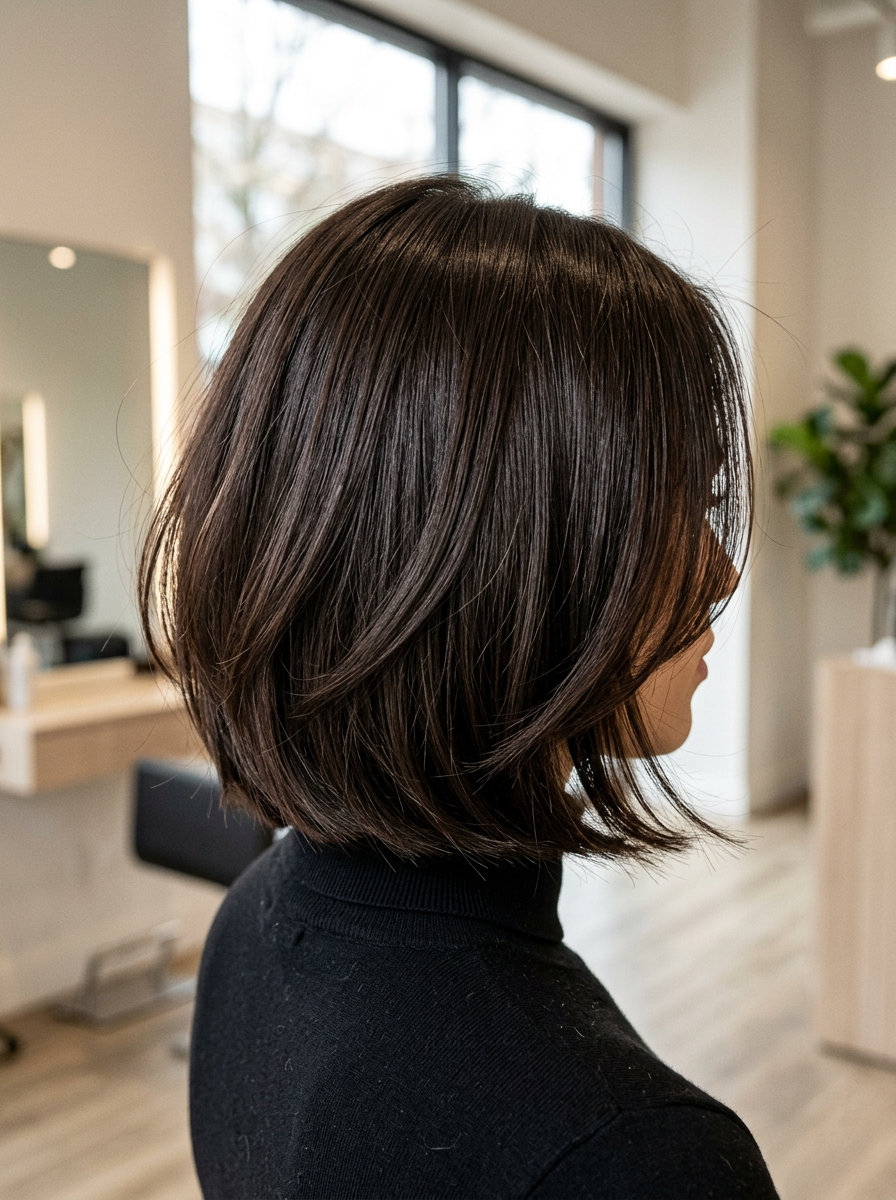
Internal layers are the secret weapon for volume that doesn’t scream “I just got layers.” Instead of cutting through the perimeter, the stylist carves weight out from the inside—underneath sections of hair that stay intact on the outside. This technique is what separates a shag that looks like a mistake from one that looks intentional. The espresso brunette adds gravity and depth; it makes those internal layers read as dimension rather than chaos. A precise bob length—usually chin-length or slightly shorter—keeps the shape clean even as the internal movement catches light.
Internal layers maintained subtle volume at the crown for 6 weeks without feeling overly choppy, and that’s the real test of technique here. A mediocre internal layer job leaves you with a fluffy top and a flat bottom; a good one creates movement that flows from crown to ends without obvious weight distribution. Seamless internal layers create subtle crown volume and movement without sacrificing a clean, classic perimeter. This precise bob needs trims every 6–8 weeks to keep its chin-length shape, so it’s a commitment if you want it to look intentional rather than grown-out. But if you’re tired of shags that read as “messy” and want something that reads as “structured,” the internal-layer approach is probably worth the consultation at least. Chic, understated volume.
4. Cool Brown Shag Haircut
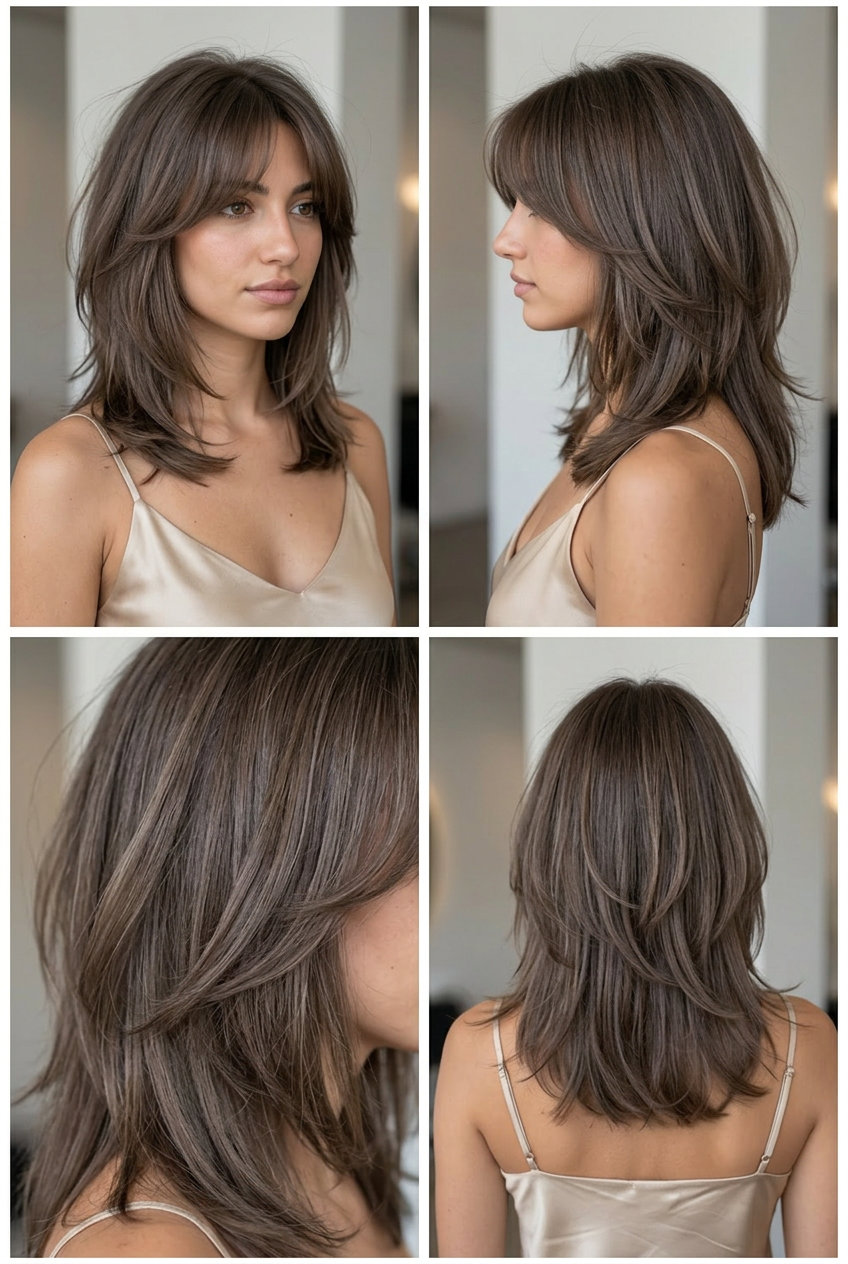
The longest version of the shag—usually shoulder-length or beyond—leans into movement without requiring the precision of a shorter cut. Long curtain bangs blended seamlessly, growing out gracefully for 8 weeks before needing a reshape, which is the real luxury of length. You’re getting the textured, layered silhouette that reads as intentional, but you have weeks longer before needing a refresh. The cool brown tone (somewhere between ash and espresso) keeps the whole thing from reading as “70s throwback” and instead anchors it in 2026. Soft internal layers with point-cut mid-lengths create gentle volume and movement without harsh lines.
This version of the shag works on straight to wavy, fine to medium density hair—basically, if your hair isn’t thick and densely textured, length actually helps you because weight keeps the layers from separating too much. You’re not fighting triangle shapes or overly choppy texture. Instead, you get movement that reads as intentional without demanding daily styling. The longer length means you can wear it several ways: tucked behind one ear for polish, fully down for softness, half-up when you want it out of your face. So versatile, truly, and that’s why this version has become the gateway shag for people who are nervous about committing to the cut. Elegant, effortless flow.
5. Short Shag Haircut for Fine Hair
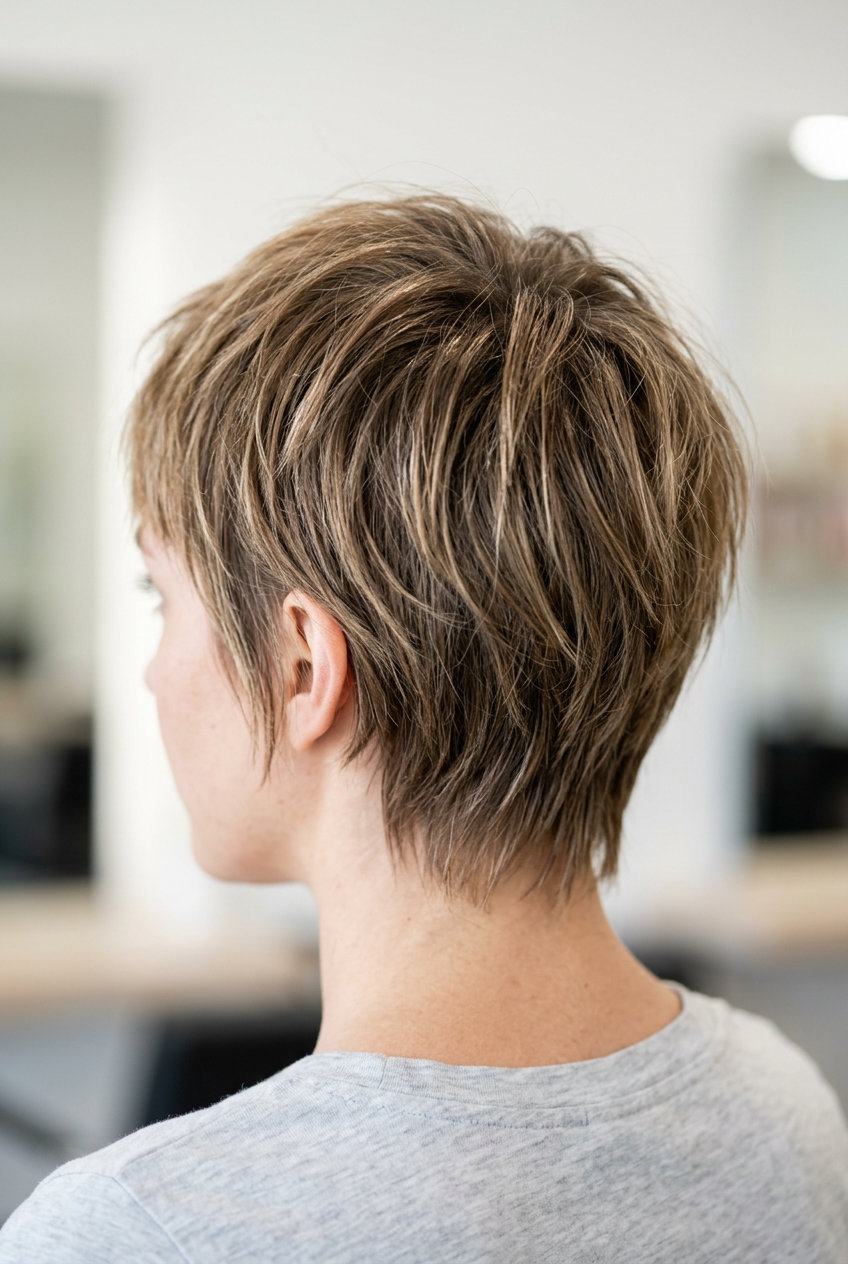
If you’ve spent the last decade convincing yourself that fine hair and texture don’t mix, this cut exists to prove you wrong. Point-cutting on the crown creates layers that actually stand up instead of collapsing by noon, and aggressive point-cutting maintained spiky texture for 4 weeks with daily styling—which frankly beats most of the bobs I’ve tried. The technique works because aggressive point-cutting on crown layers creates spiky, piecey texture, giving this pixie its signature undone volume (the best short cut ever).
This is a short shag haircut for fine hair designed to work WITH your texture, not against it. You’re looking at maybe 45 minutes in the chair, and yes, your stylist needs to understand the difference between choppy (bad) and piecey (good). The undercut at the nape keeps everything from looking wispy, and the shorter sides mean you can actually style this without looking like you’ve been electrocuted. Finally, a pixie that moves.
6. Long Layered Shag Haircut
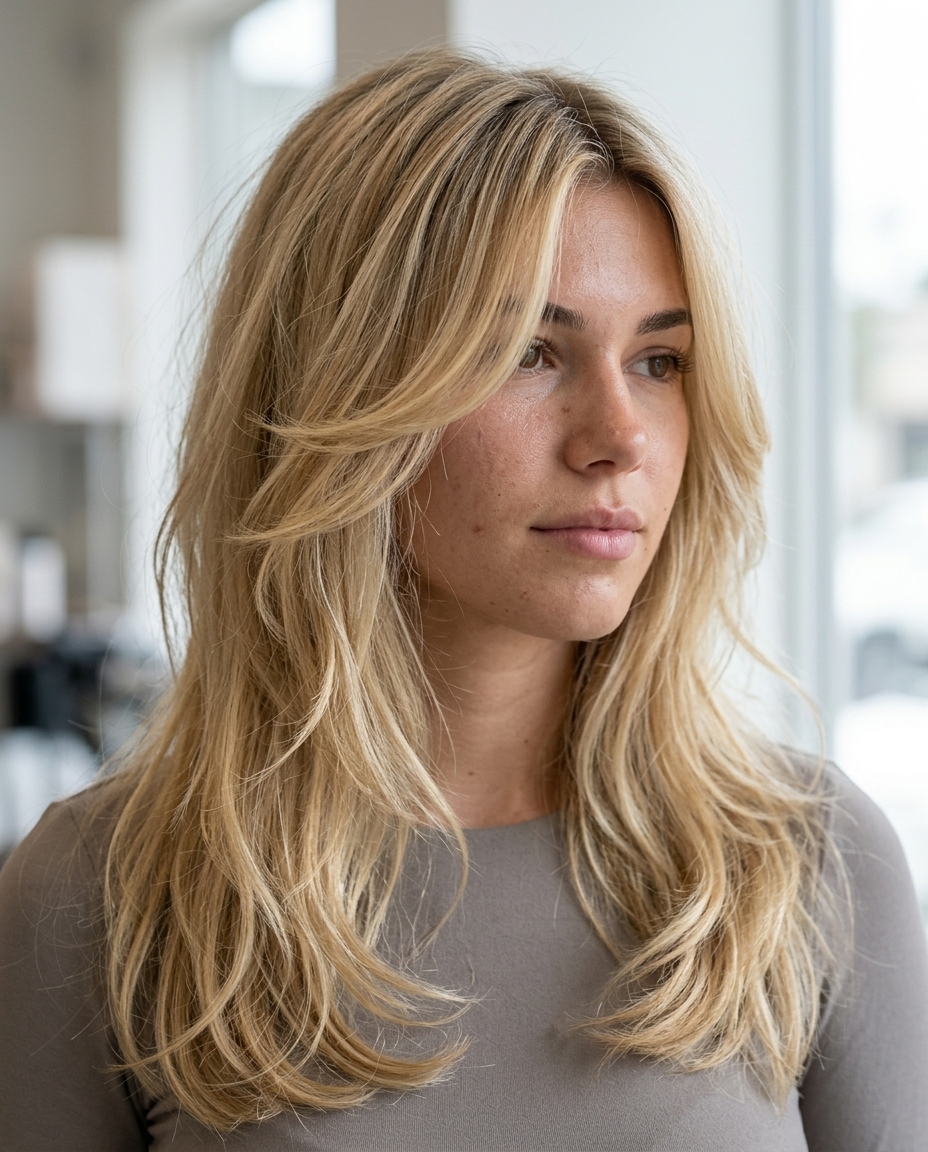
Internal layers maintained volume and movement for 8 weeks before needing a trim—which is honestly the sweet spot for commitment-phobic people like me. Soft internal layers starting high create significant volume and movement, preventing the long shag from falling flat, and you get that lived-in texture without the “I haven’t washed my hair in weeks” vibe. The layers start around the cheekbones and work down, creating a flow that actually photographs well (or maybe just for the pros).
This long layered shag haircut walks the line between low-maintenance and high-payoff. Sweeping curtain bangs require daily blow-drying to maintain their shape and flow, so factor that into your reality check before booking. The midlengths are where the magic happens—they’re choppy enough to move but structured enough that you’re not constantly tucking hair behind your ears. Effortless, but not really.
7. Long Shag Haircut with Curtain Bangs
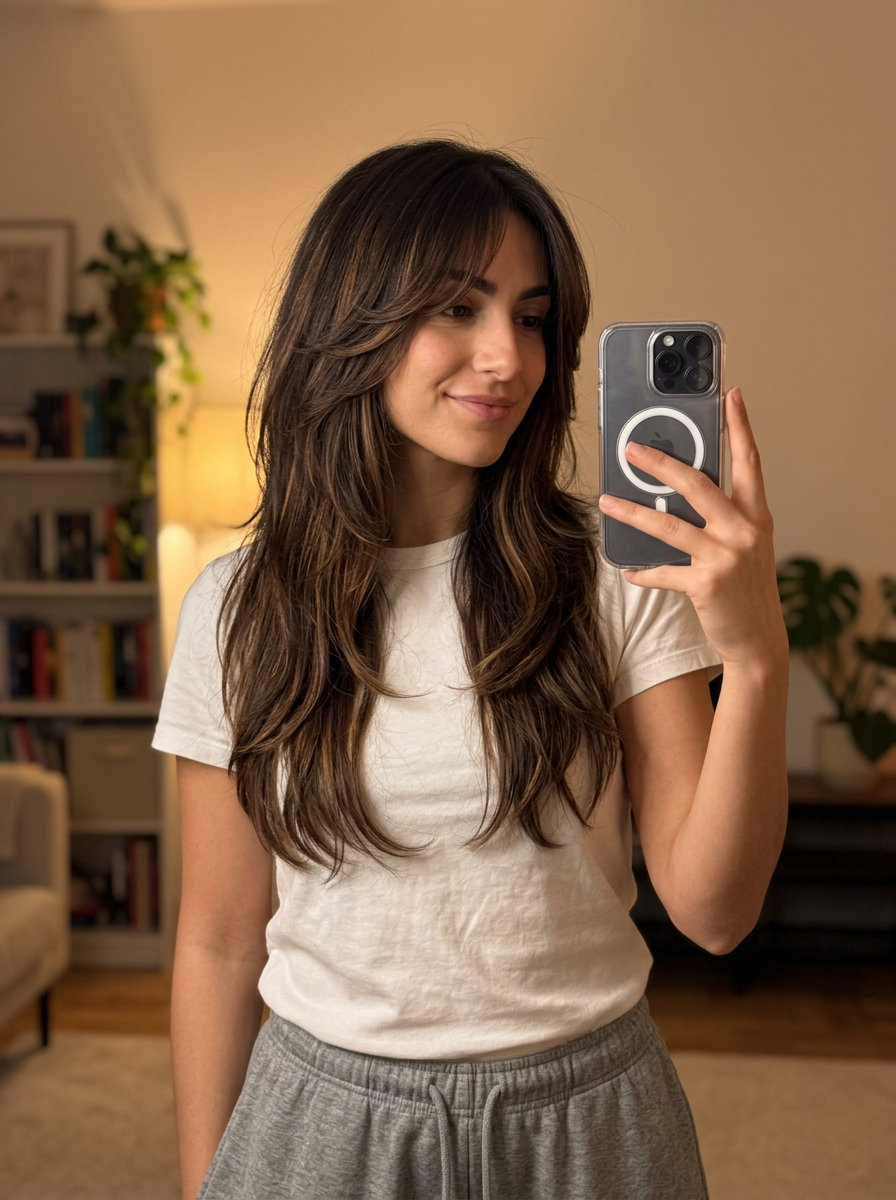
Heavily layered crown created noticeable volume that lasted 7 weeks between trims—which is the kind of durability you actually need if you’re paying real money for this. Shortest layers starting at the cheekbones create substantial crown volume, enhancing the long shag’s flow without that “I got layered to death” flatness. The bangs frame your face instead of competing with it, and the density of the midlengths keeps everything from looking thin. Skip if you have thin hair though—heavy layering removes too much density, leaving you with stringy texture and regret.
The long shag haircut with curtain bangs is probably worth the extra styling time if your face shape can actually carry bangs (and I mean ACTUALLY—not just “I think they’re cute”). The longer pieces drop past your shoulders, which means six weeks of growth looks intentional instead of lazy. You’re getting movement, volume, and that swept romantic vibe without looking like you’re stuck in 2003. Volume for days.
8. Honey Blonde Shag Haircut
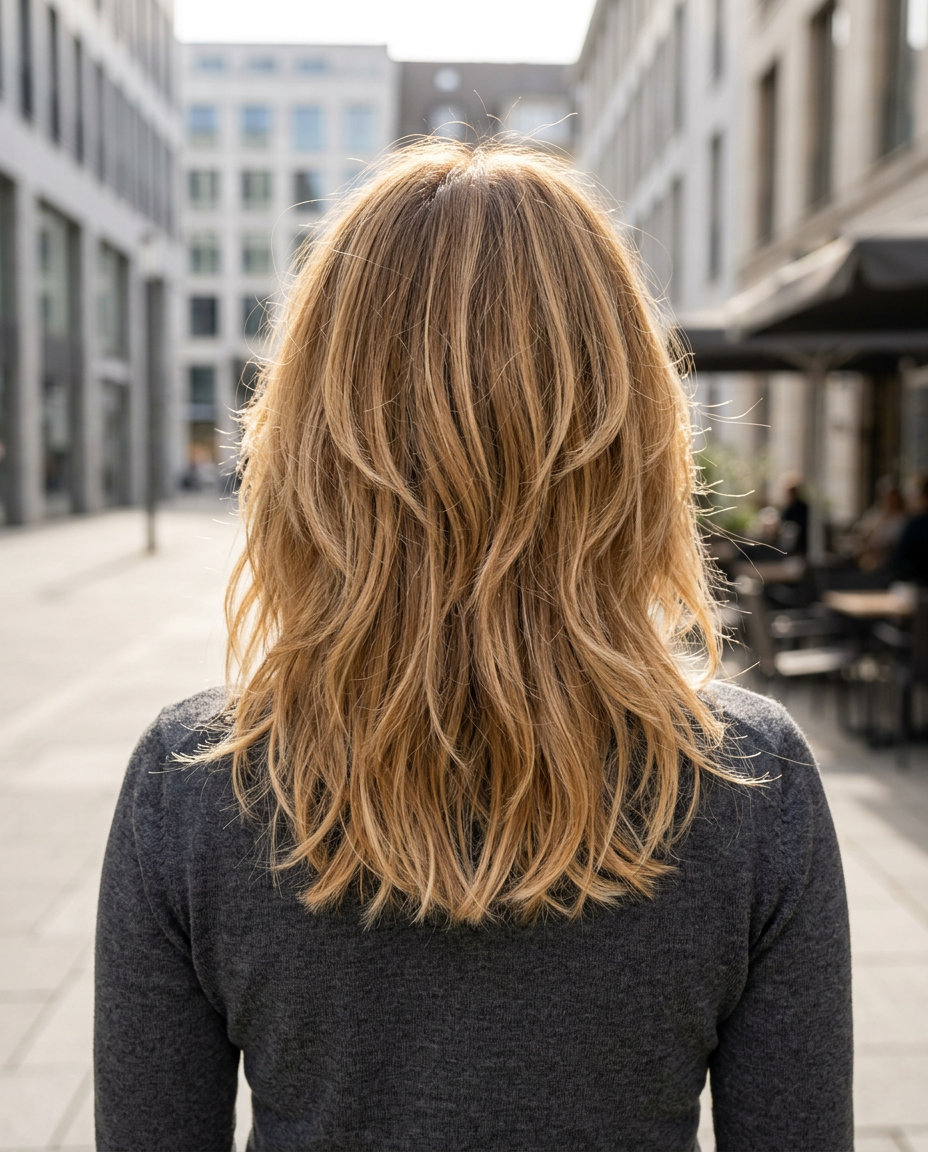
Razored ends provided a piecey, lived-in texture that required minimal styling for 6 weeks—which is basically the holy grail for anyone with a real life outside the salon chair. Abundant, heavily textured internal layers starting from the crown maximize volume and dynamic movement, and the honey blonde brings warmth without the commitment of full platinum maintenance. The color hits right around caramel and honeycomb tones, which means your roots growing out actually look intentional instead of neglected. Heavily textured layers require regular trims every 6-8 weeks to maintain shape, so you’re signing up for that before you book.
This honey blonde shag haircut works on wavy to straight, medium to thick density hair—basically anyone who doesn’t have fine strands. The layers are stacked enough to create movement but not so disconnected that you look like you survived a windstorm. The color and cut combination is doing heavy lifting here; neither one is boring on its own, but together they create the texture-forward softness that actually photographs well (yes, the one I’ve been eyeing). The perfect shoulder-skimmer.
9. Wavy Shag with Bangs
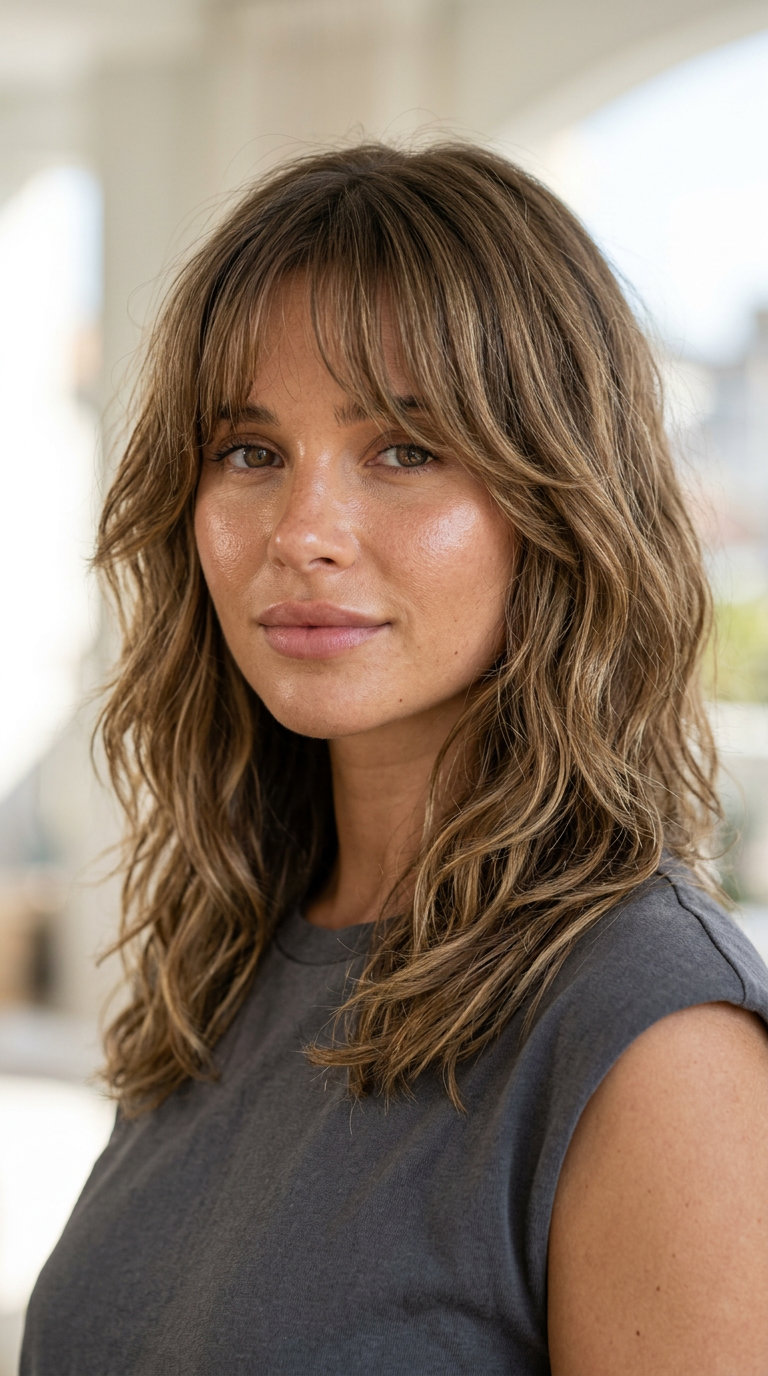
Soft, diffused layers enhance natural wave and create crown volume without harsh lines, perfect for movement. This cut works because wispy bangs blended seamlessly for 4 weeks before needing a trim to maintain shape—proof that the technique matters more than the length. You’re not fighting your texture here; you’re letting it do the work, which is all my wavy hair needs. The perimeter stays lived-in rather than blunt, so regrowth phases feel intentional instead of neglected.
What makes this version different: internal layers stay hidden while the face-framing pieces remain visible and soft. Most stylists will ask you to blow-dry for the polished version, but the real magic happens when you air-dry and let the waves fall where they want. Diffused layers enhance natural wave and create crown volume without harsh lines, perfect for movement. Effortless texture, perfected.
10. Platinum Pixie Shag
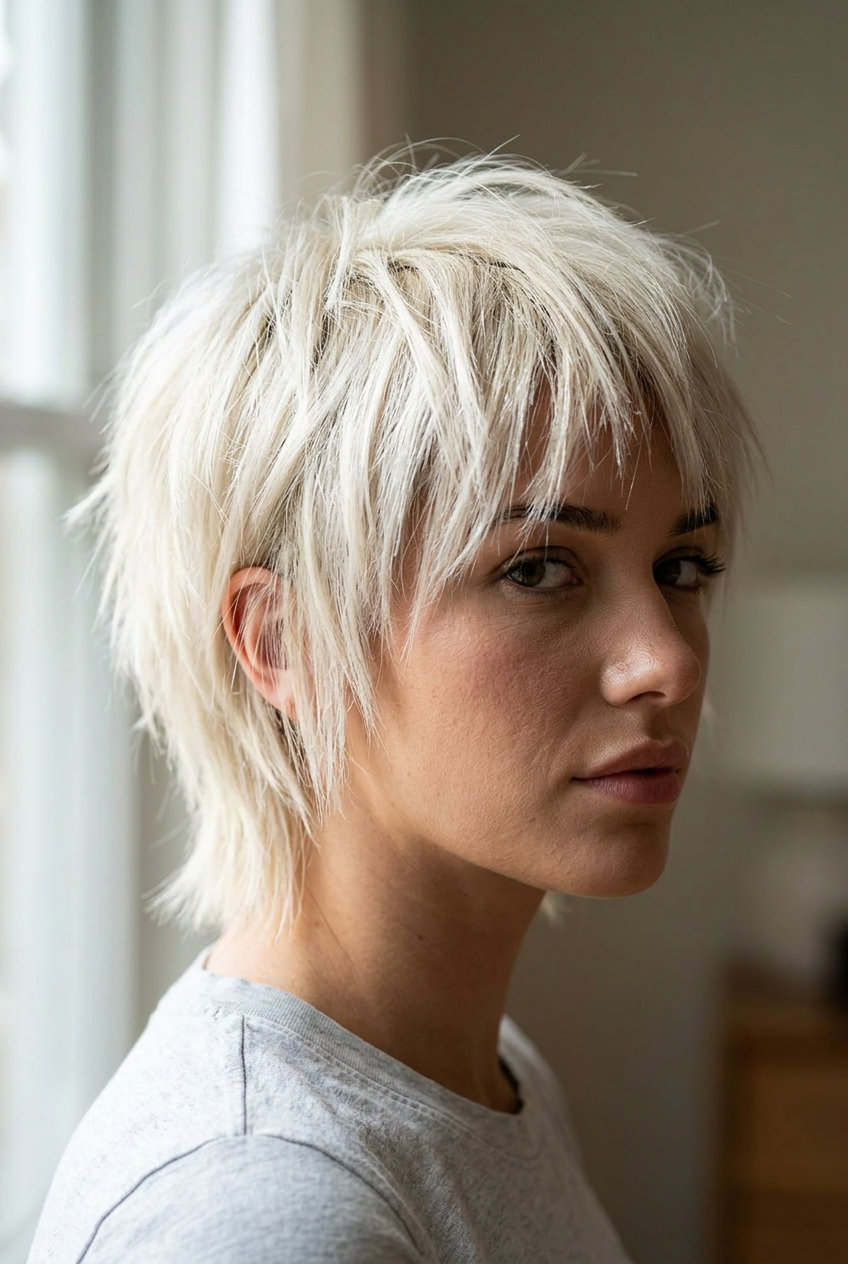
Point-cutting creates a spiky, shattered texture, allowing maximum lift and movement at the crown. Clipper-faded nape grew out cleanly for 3 weeks before needing a touch-up, which honestly feels generous for a cut this short. The platinum bleach is the real time sink—not the cut itself, (yes, the short one). Ultra-short cuts like this require monthly trims to maintain sharp lines and texture. What most people don’t realize is that the nape fade is what keeps this from looking grown-out at week two.
This is the cut you get when you want zero styling friction. Texture spray helps sell the intentional mess, but the cut does 80% of the heavy lifting on its own. You’re not blending anything here—you’re celebrating the chop. Bold. Confident. Unforgettable.
11. Mushroom Brown Bob Haircut
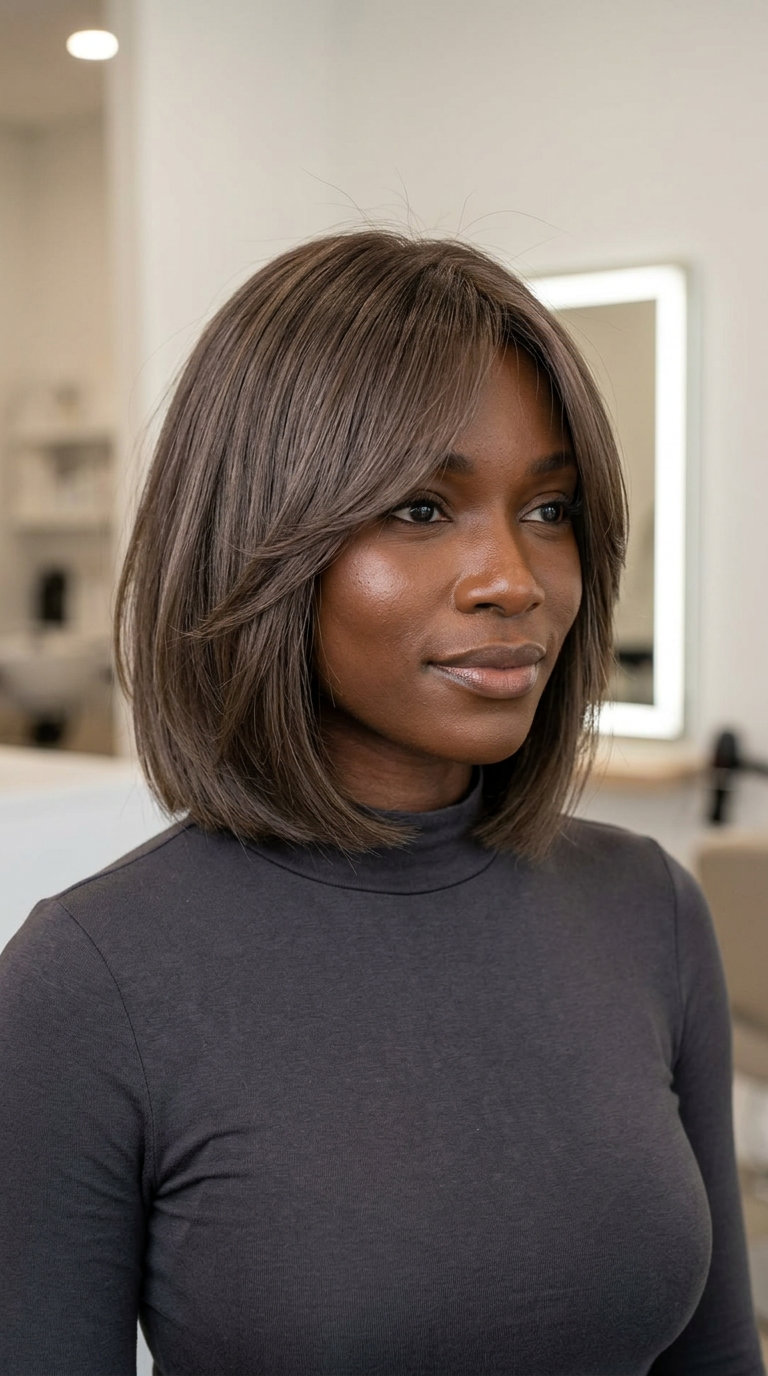
Internal ghost layers create volume and movement without visible lines, maintaining a strong perimeter shape. Ghost layers provided crown volume for 6 weeks without visible lines or frizz, which is exactly what you want from a cut that costs this much to maintain. The “mushroom” refers to the rounded, slightly bulbous crown—it’s a bit of a meme in salon culture, but it actually flatters most face shapes. Not for very thick hair—internal channeling might not remove enough bulk. The blunt perimeter is what sells the shape, so you’ll need touch-ups every 6-8 weeks to keep it from softening.
Why this feels different than a standard bob: the crown has genuine dimension, not just height. Most bobs sit flat at the crown and feather out; this one builds texture where it matters. The warmth of mushroom brown hides root grow-out beautifully, which stretches your time between salon visits by at least two weeks. The bob, reinvented.
12. Silver Balayage Shag
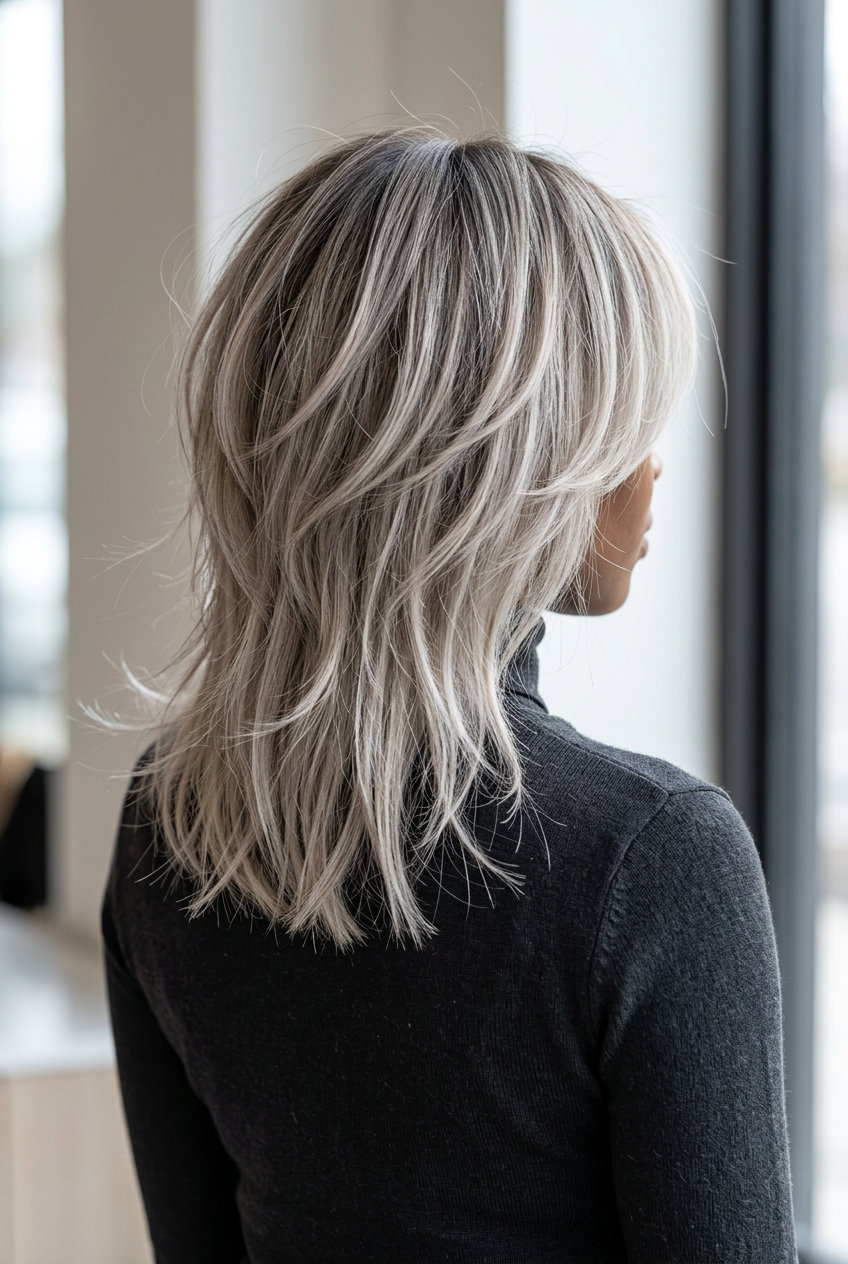
Seamlessly blended point-cut layers create natural volume and a wispy, ethereal texture without heavy lines. Point-cut layers created wispy texture that held for 7 weeks without becoming blunt or heavy, which tells you the technique is sharp and precise. The lived-in, slightly uneven perimeter requires a stylist skilled in precision dry-cutting. This isn’t a cut you can take to just anyone—the perimeter shape relies on expert placement, and the layers need to flow instead of chunk. Silver tones work best on cool undertones, but the balayage technique (painting highlights directly onto the hair rather than using foils) means you’re not locked into a single shade.
What makes the color work: balayage mimics the way sun naturally lightens hair, so as it fades, it doesn’t look sad or brassy. Most people refresh this every 12-16 weeks instead of every 4, which saves money over a full foil. The cut’s wispy texture plays with the highlights perfectly—light catches on the layers and the color pops without needing a harsh line. The grow-out plan sold me, which is perfect for my low-maintenance life.
13. Apricot Crush Hair Color Lob
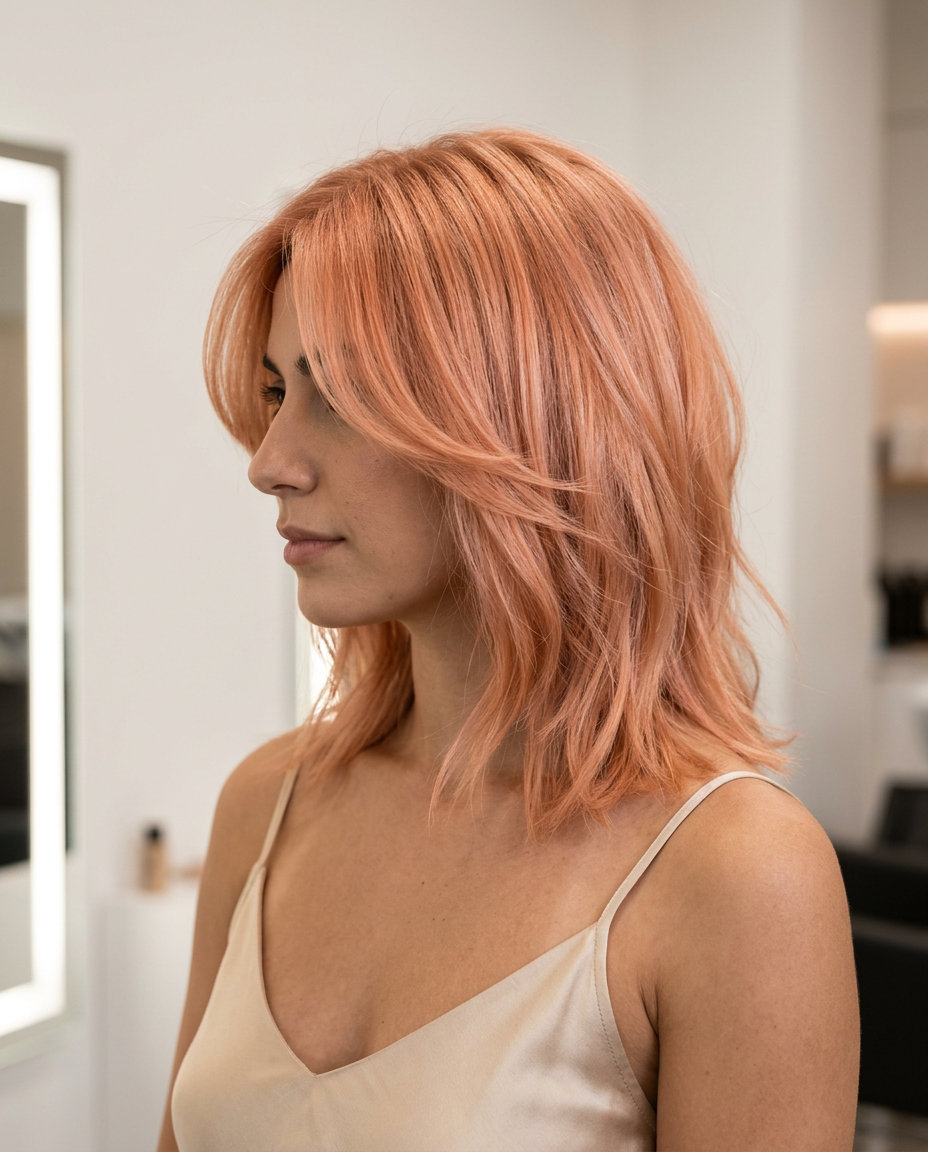
The lob—that confusing middle ground between bob and long hair—finally stops being a compromise and becomes the whole point. Soft blended layers maintained movement and volume for 7 weeks without feeling heavy, which is exactly what happens when you commit to point-cutting the perimeter instead of leaving blunt ends that scream ‘I’m growing out my mistake.’ The apricot crush hair color lob works because the warm tone absorbs light differently through layered ends; it doesn’t flatten against your head the way a solid color might.
This cut isn’t revolutionary—it’s something stylists have been refining for years—but the warmth changes everything. Apricot sits between copper and blonde, which means it photographs well in natural light and doesn’t require the commitment of full balayage maintenance (my go-to for low-key vibes). The color formula typically starts at Level 8-9 base with warm tones deposited at the mid-lengths and ends, skip if your hair is very thick—it might lack the desired lightness. Point-cutting the perimeter creates a gentle, textured edge, allowing the lob to move naturally instead of sitting blunt. The result: a lob that actually moves, doesn’t demand styling every morning, and somehow looks intentional even when you’ve just air-dried it. Effortless, everyday cool.
14. Platinum Shag Lob
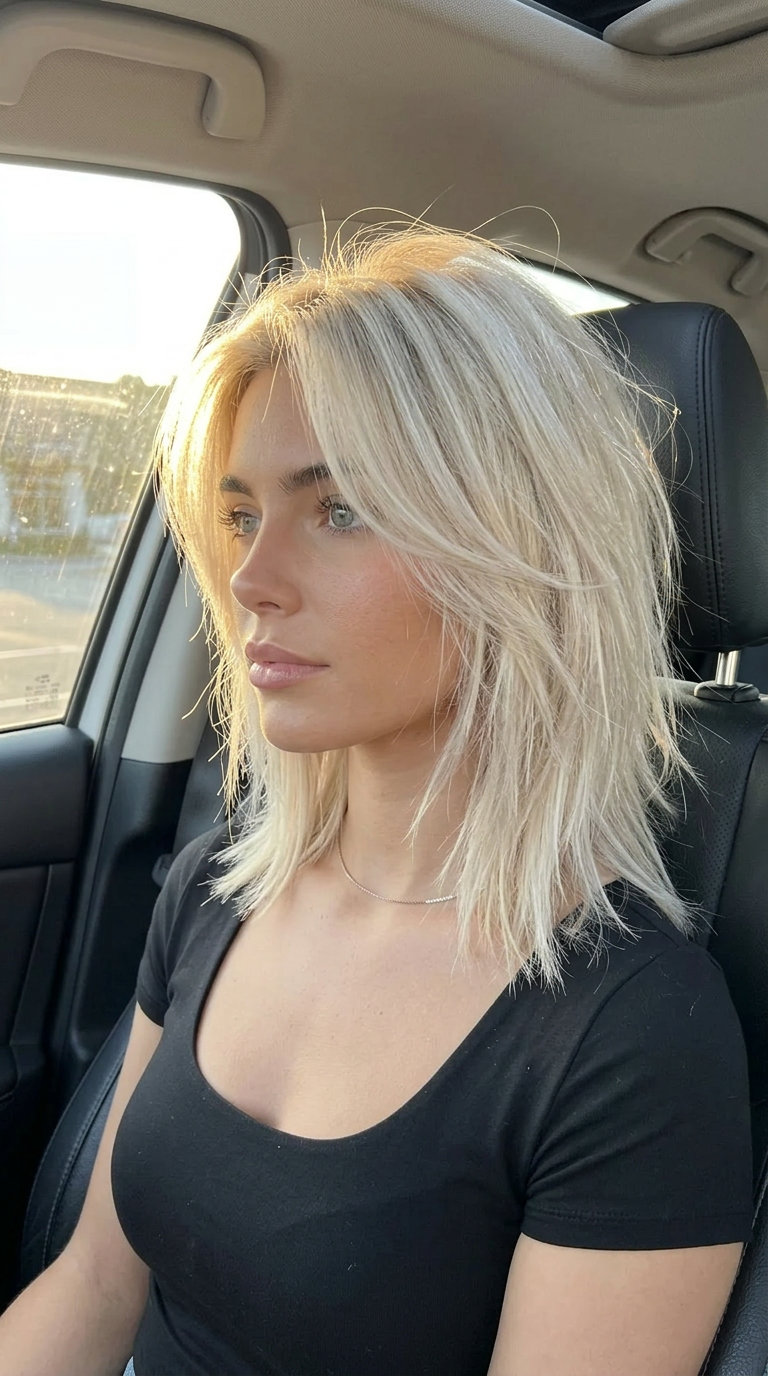
Platinum demands personality, and this shag lob delivers it with actual attitude baked into the cut itself. Aggressive layers held their spiky, lived-in texture for 4 weeks with minimal styling product, which means the architecture of the cut is doing the work, not product fumes and prayers. The platinum shag lob uses aggressive point-cutting and razored ends to create maximum texture and volume, giving a bold, spiky feel that reads confident without trying. This isn’t a cut that whispers; it announces.
The platinum tone amplifies the texture—shorter pieces catch light, longer pieces add movement, and the whole thing vibrates. You’re looking at salon-only commitment here because the regrowth on platinum is visible immediately (or maybe just a lot of dry texture spray to fake the lived-in effect for another week). But here’s the trade: you get a cut that works with the color, not against it. Aggressive point-cutting and razored ends create disconnected, shattered ends for an edgy texture and significant height. The layers aren’t stacked randomly—they’re carved to sit at specific angles so they move independently, creating that textured, spiky shape even when wet. This cut screams attitude.
15. Platinum Blonde Shag
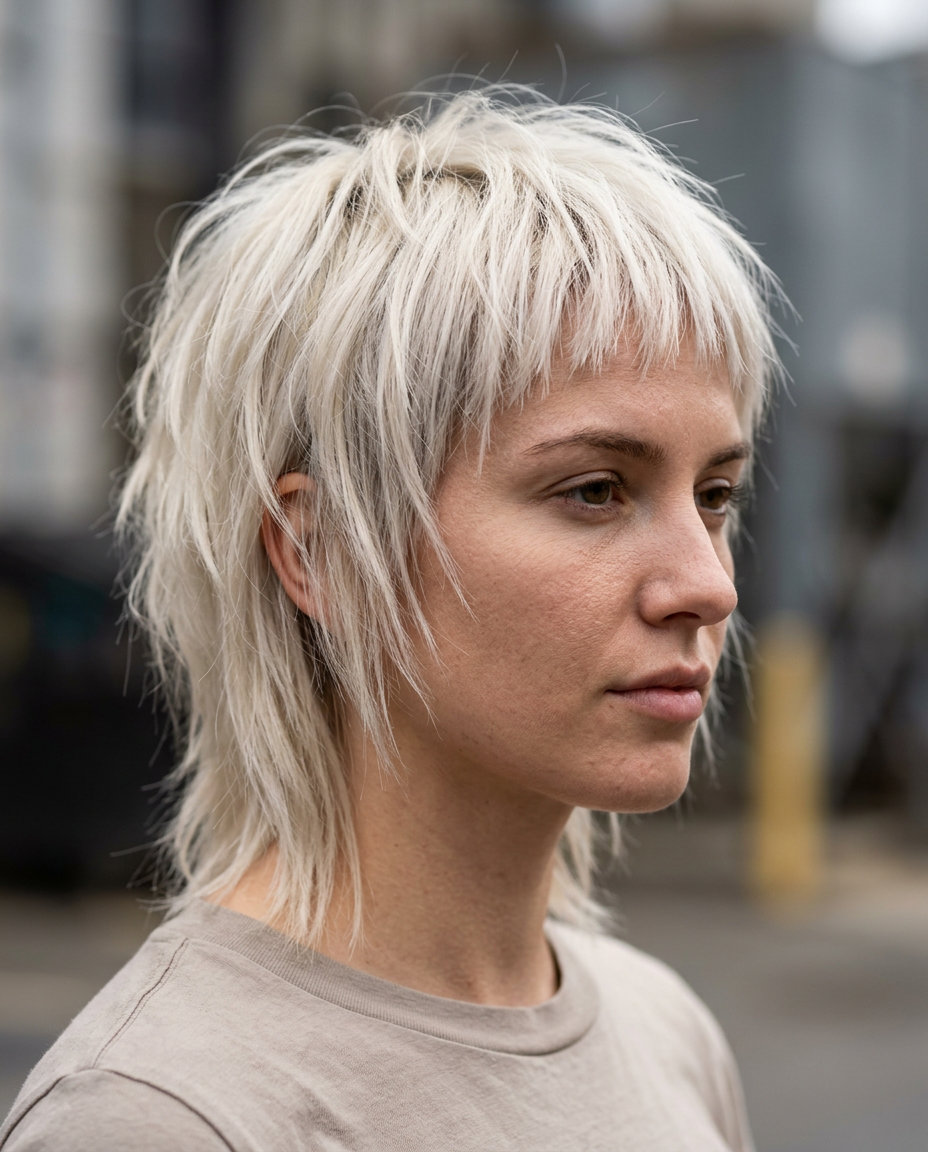
Platinum blonde shag with micro-bangs stops being a haircut and becomes a declaration. Spiky micro-bangs stayed defined for 2 days with light wax, not drooping into eyes, because the angle of the cut keeps them where they need to be without requiring daily blow-drying or styling ritual. The platinum blonde shag is the version that says you’re not here to blend in, and the micro-bangs prove it by sitting at your brow line with actual spice.
This is aggressive thinning on thick hair requires precise maintenance to avoid awkward regrowth, which is why this cut demands a skilled hand—specifically one trained in disconnected layering and point-cutting work. Deep point-cutting and razor work create disconnected, shattered ends for an edgy texture and significant height. The micro-bangs aren’t styled across your forehead like a curtain; they’re cut to create individual spiky pieces that catch light separately, so they look textured even at day two. The rest of the shag uses the same aggressive point-cutting but at longer lengths, so you get volume at the crown and texture all the way through. This is a cut that requires touch-ups every 4-6 weeks just to keep the shape, and the platinum will need root maintenance every 3-4 weeks if you’re keeping it bright. Bold, daring, unforgettable.
16. Cherry Cola Red Curly Shag
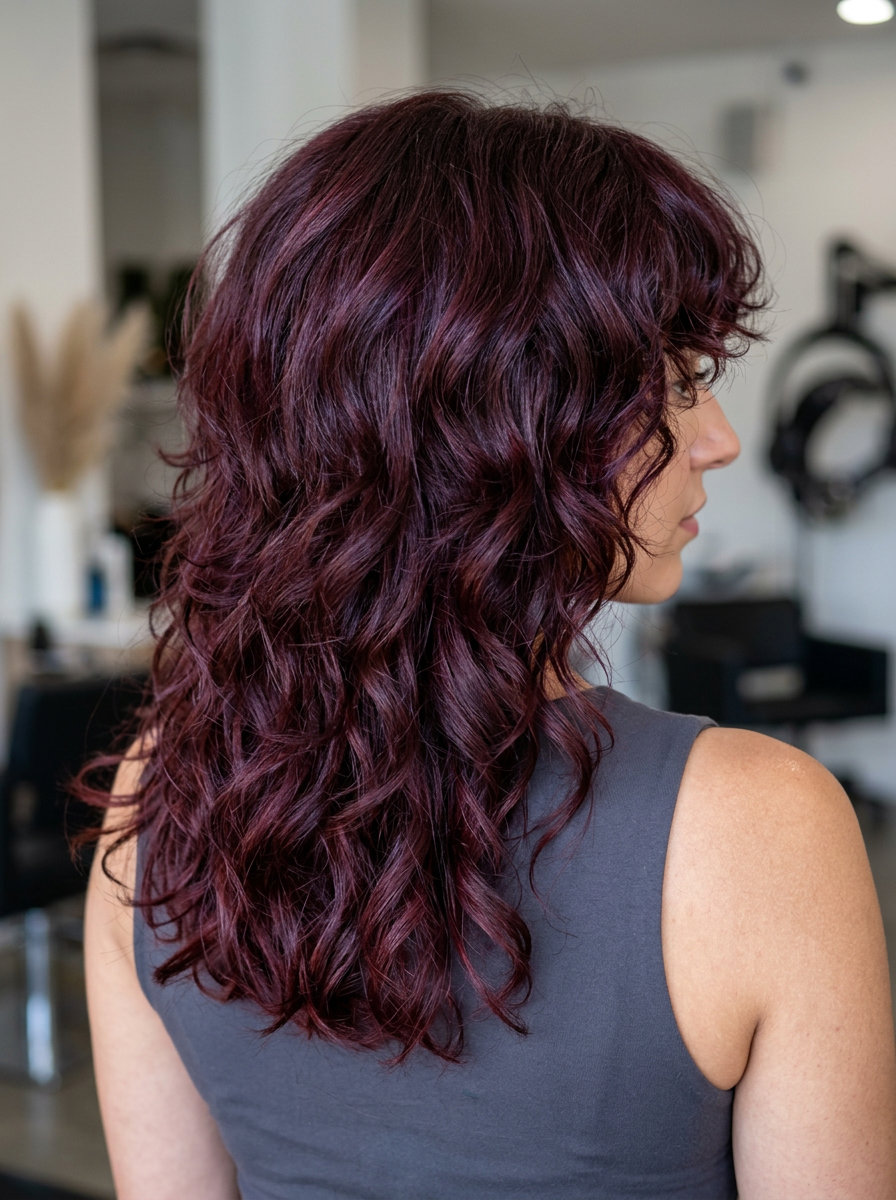
Curly shags get better with color—especially warm, saturated tones that don’t disappear into texture. Strategically placed layers eliminated the ‘triangle’ effect, providing consistent crown volume for a full week, because the cut was designed for coily hair first, color second, which is the opposite of how most shags are built. The cherry cola red curly shag pairs a warm, deep red tone with a cut that creates a round, voluminous crown instead of the flat-top-with-sides pyramid that most textured shags accidentally become.
Cherry cola red is a demi-permanent color, which means it fades gracefully on curly hair instead of leaving harsh regrowth lines. You’re looking at 8-10 weeks before the tone noticeably fades, but the red shifts to a softer burgundy around week 6, which some people plan for on purpose. Layers are carved to enhance natural curl patterns and create a round, voluminous crown, avoiding a flat top. The cut removes weight from the crown strategically—not slashing it shorter everywhere, but creating shorter, denser pieces at the very top that sit above your natural curls, not ideal for very fine curls—layers might remove too much volume. The mid-lengths stay longer to maintain the shag silhouette, and the ends get point-cut to prevent blunt edges from looking harsh against texture. The color work matters here: cherry cola on dark skin tones reads warm and dimensional, on lighter skin tones reads deeper and more burgundy-leaning. Volume for days.
17. Copper Red Shag Haircut
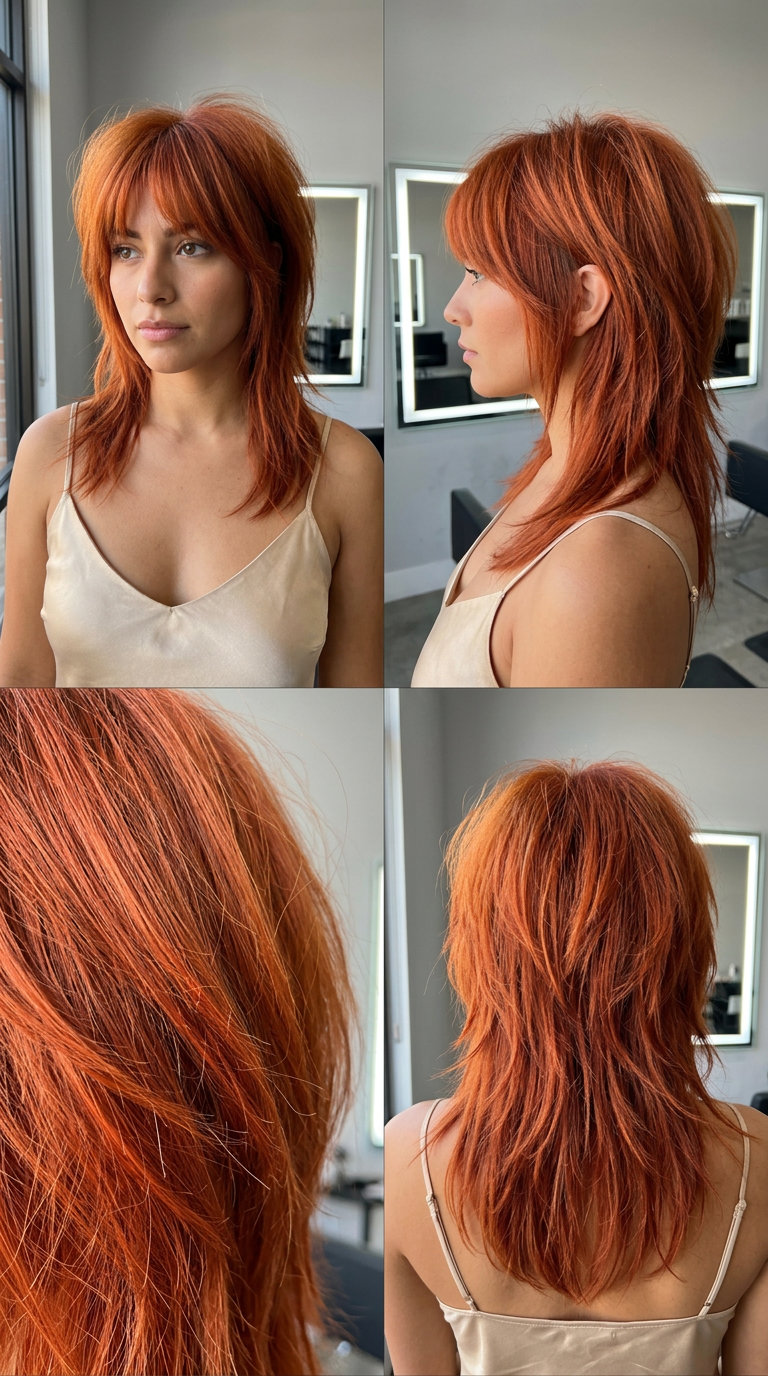
Copper red is the shag that leans into chaos—not in a bad way, but in the way that says you’re comfortable with texture doing the talking. This color lives on the warmer side of the spectrum, which means it photographs like fire in golden hour but doesn’t demand the same level of upkeep as true platinum. The copper red shag haircut works best when the cut is heavily razored, creating that disconnected, choppy vibe that feels intentionally undone. Heavy razoring throughout the crown creates maximum volume and disconnected, textured movement, so you’re working with a cut that’s already built for movement rather than trying to add it in with products.
Heavily razored layers maintained choppy volume for 6 weeks before needing a trim, which is solid for this style. The trade-off is that heavy razoring on fine or damaged hair can cause frizz and breakage over time, so be honest about your hair’s current condition before committing to this one. If your hair is thick or naturally wavy, this cut is your answer—it eats up density without looking thin. You’ll need a texturizing paste and maybe 10 minutes with your hands to get that piece-y, separated look, but it’s the kind of texture that looks better slightly messy. Pure rockstar vibes.
18. Deep Red Shag Haircut
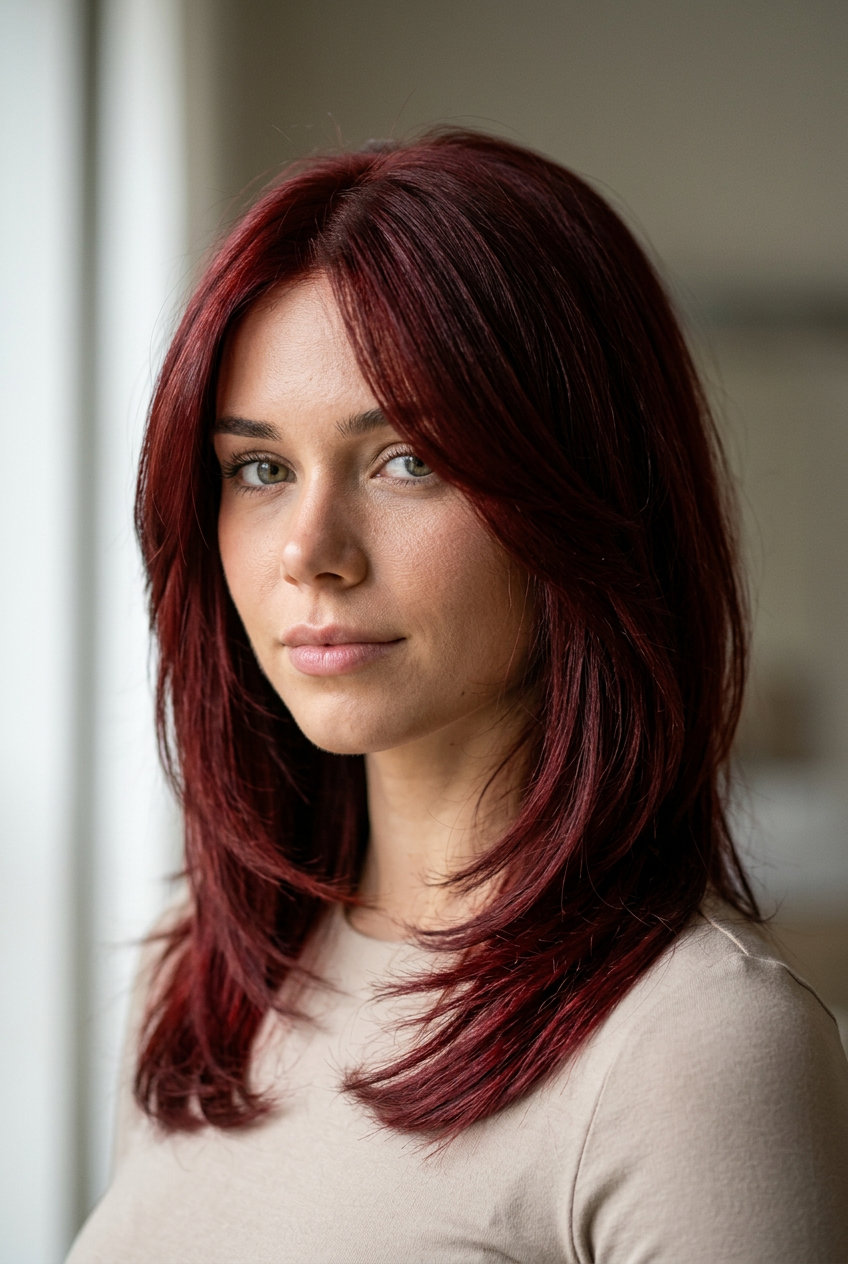
Deep red reads differently than copper—it’s richer, more wine-toned, and feels intentional in a way that warm golds sometimes don’t. This shade needs a cut that can handle complexity, which is why the best versions pair deep red with point-cut layers rather than razor lines. Point-cut ends and seamlessly blended layers create soft movement and a polished, non-choppy perimeter, so you’re getting texture that looks refined instead of shredded. The blending is the key detail here—each layer flows into the next rather than sitting as separate chunks, which means the cut works whether you’re styling it smooth or letting it dry naturally wavy.
Seamlessly blended layers provided movement and shape for 8 weeks without choppiness, which is the sweet spot for a cut that doesn’t need constant maintenance (which is all my fine hair can handle). You’re looking at maybe two styling products in rotation: a lightweight mousse for root volume and a serum to smooth the perimeter. Not for very thick hair—blending might not reduce enough bulk, so if you’re dealing with density that a regular stylist finds challenging, ask about texturizing techniques before you book. The color itself needs a root touch-up every 5 to 6 weeks, but deep tones hide regrowth better than anything else. Soft, sophisticated shag.
19. Pastel Pink Shag Pixie
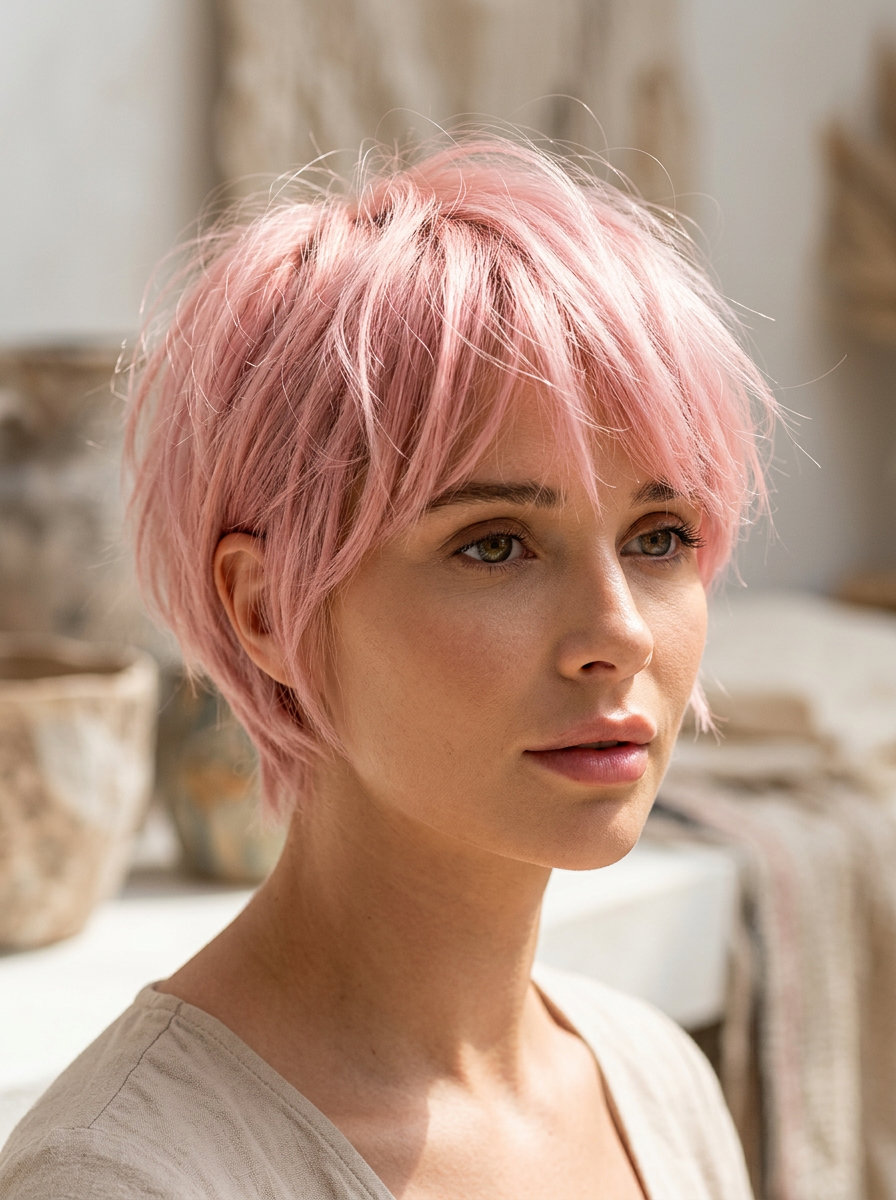
Pastel pink is the shag cut for people who want to make a statement without actually trying that hard. This color reads soft but still stops traffic, which is the whole point—you’re going for noticed, not shocking. The cut itself is where the real work lives: short, heavily layered, and textured to the point where it almost doesn’t need styling. Heavily layered and point-cut sections create maximum texture and movement, enhancing volume on fine hair, so even if your hair has zero natural texture, the cut does the work for you. Most stylists will tell you this is impossible to maintain, but honestly, short pixies require monthly trims to keep the nape and sides looking sharp, and that’s it—that’s the whole ask.
This pixie shag maintained its playful, undone texture for 4 weeks with minimal styling, which means you’re spending maybe five minutes in the morning touching it up. The color is the bigger commitment: pastel pink needs either a toner refresh every two weeks or you’re accepting a gradual fade to cotton-candy pale (probably worth the consultation at least). You’ll pair this with either a light styling cream or just air-dry and fingers-comb it into place. The magic is that short haircuts on fine or thin hair read fuller because there’s less weight dragging down the ends, so you’re actually gaining volume by going shorter. Finally, a pixie that moves.
20. Wavy Shag Lob
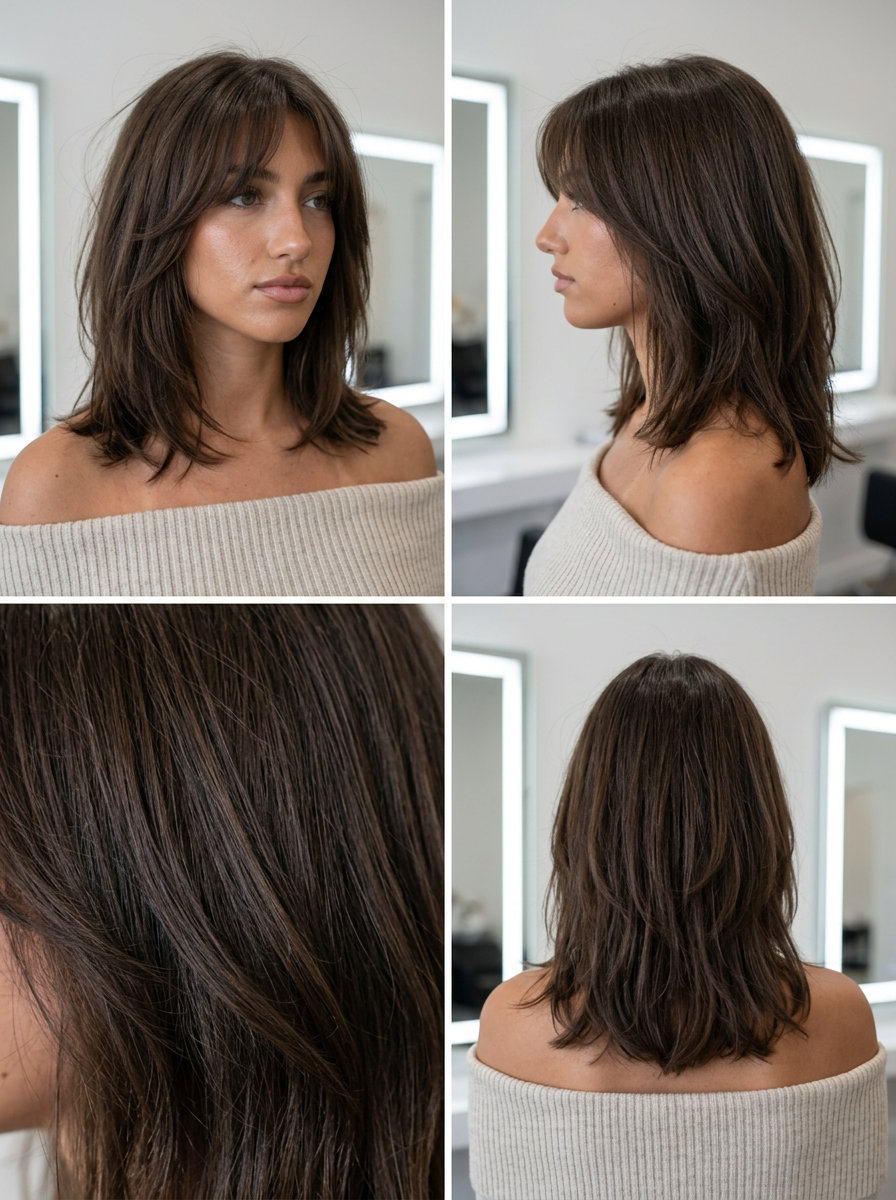
The wavy shag lob is the cut that asks almost nothing of you except that you have at least a hint of natural wave to work with. This is shoulder-length, layered through the mid-sections, and deliberately textured to enhance whatever your hair already wants to do. Soft internal layers enhance natural wave patterns and reduce bulk, creating subtle crown volume, which means the cut is designed around your hair’s actual behavior rather than fighting against it. You’re not blow-drying this into submission; you’re working with what shows up when you air-dry, maybe with a salt spray in there. Best on: naturally wavy, fine to medium density hair, which covers most people who’ve been eyeing lobs but worried they’d go flat.
Internal layers enhanced natural waves for 10 weeks, reducing bulk without losing length, which is the timeline you’re working with before the shape starts to feel blunt again. The styling is genuinely minimal: apply a wave cream or salt spray to damp hair, let it dry, and either scrunch it or leave it alone (or maybe just a really good air-dry routine). Root touch-ups on natural hair are optional here—you’re keeping your natural base and using tone to shift the vibe, which cuts your color maintenance down to maybe 8 weeks. Avoid if you have very straight hair—this cut relies on natural wave, and fighting that is a losing battle. The beauty of this cut is that it looks intentional whether you’ve spent 20 minutes or 0 minutes styling it. Effortless, everyday waves.
21. Still Deciding? Here’s a Quick Comparison
| Hairstyle | Difficulty | Maintenance | Best Face Shapes | Pros | Cons | |
|---|---|---|---|---|---|---|
| Edgy & Textured | ||||||
| 2. The Summer Salt-Air Shag | Moderate | Medium — every 8-10 weeks | oval, heart, square | Suits most face shapesWorks on multiple texturesLayers add movement | Not ideal for very curly hair |
| 6. The Kitten Shag Crop | Easy | Low — every 6-8 weeks | oval, heart, diamond | Low maintenanceEasy to style at homeSuits most face shapes | Not ideal for very curly hair |
| 10. The Honey Blonde Textured Shag | Moderate | Medium — every 8-10 weeks | oval, heart, diamond | Suits most face shapesWorks on multiple texturesLayers add movement | Not ideal for very curly hair |
| 12. The Platinum Pixie Shag | Salon-only | High — every 4-6 weeks | oval, diamond, heart | Suits most face shapesWorks on multiple texturesLayers add movement | Requires professional styling |
| 16. The Apricot Crush Lob Shag | Moderate | High — every 3-4 weeks | oval, heart, round | Suits most face shapesWorks on multiple texturesLayers add movement | Frequent salon visits needed |
| 17. Platinum Punk Shag Lob | Moderate | High — every 4-6 weeks | oval, square, heart | Suits most face shapesWorks on multiple texturesLayers add movement | Frequent salon visits needed |
| 18. The Platinum Punk Shag | Moderate | High — every 4-6 weeks | diamond, oval, square | Suits most face shapesWorks on multiple texturesLayers add movement | Frequent salon visits needed |
| 22. The Copper Red Shag | Salon-only | High — every 3-4 weeks | oval, square, heart | Suits most face shapesWorks on multiple texturesLayers add movement | Requires professional styling |
| 23. The Crimson Siren Shag | Moderate | High — every 4-5 weeks | oval, square, long | Suits most face shapesWorks on multiple texturesLayers add movement | Frequent salon visits needed |
| 24. Pastel Pixie Pop Shag | Salon-only | High — every 2-3 weeks | oval, heart, diamond | Suits most face shapesWorks on multiple texturesLayers add movement | Requires professional styling |
| Classic & Clean | ||||||
| 3. The Espresso Roast Bob Shag | Easy | Low — every 8-10 weeks | oval, long, square | Low maintenanceEasy to style at homeSuits most face shapes | Not ideal for very curly hair |
| 5. The Cool Brown Shaggy Cut | Moderate | Medium — every 8-10 weeks | oval, long, square | Suits most face shapesWorks on multiple texturesLayers add movement | Not ideal for very curly hair |
| 7. The Buttercream Blonde Long Shag | Moderate | Medium — every 8-10 weeks | round, oval, heart | Suits most face shapesWorks on multiple texturesLayers add movement | Not ideal for very curly hair |
| 13. The Mushroom Brown Bob Shag | Moderate | Medium — every 8 weeks | oval, square, heart | Suits most face shapesWorks on multiple texturesLayers add movement | Not ideal for very curly hair |
| 15. The Silver Balayage Shag | Salon-only | High — every 12-16 weeks | oval, diamond | Works on multiple texturesLayers add movementFlattering face-framing | Requires professional styling |
| Soft & Romantic | ||||||
| 1. The Wavy Copper Mid-Length Shag | Moderate | High — every 4-6 weeks | square, round, oval | Suits most face shapesWorks on multiple texturesLayers add movement | Frequent salon visits needed |
| 9. The Summer Breeze Shag | Easy | Low — every 10-12 weeks | oval, long, heart | Low maintenanceEasy to style at homeSuits most face shapes | Not ideal for very curly hair |
| 11. Effortless Wavy Shag with Wispy Bangs | Easy | Low — every 8-10 weeks | All face shapes | Low maintenanceEasy to style at homeSuits most face shapes | Not ideal for fine hair |
| 20. The Cherry Cola Mid-Length Shag | Moderate | High — every 4-5 weeks | square, round, long | Suits most face shapesWorks on multiple texturesLayers add movement | Frequent salon visits needed |
| 25. The Natural Wavy Shag Lob | Easy | Low — every 10-12 weeks | round, square, oval | Low maintenanceEasy to style at homeSuits most face shapes | Not ideal for very curly hair |
22. Frequently Asked Questions
How long does a DIY shag style actually last in summer humidity?
The Wavy Copper Mid-Length Shag and The Summer Salt-Air Shag thrive on natural texture and hold up beautifully in humidity when air-dried with a texturizing spray. The Espresso Roast Bob Shag maintains its sleek finish for a full day thanks to internal layering that prevents frizz. The Cool Brown Shaggy Cut stays polished for 6–8 hours with minimal touch-ups. For best results, apply the Kérastase Discipline Fluidissime Anti-Frizz Spray before air-drying.
Can I do a shag bob if my hair is straight and fine?
Absolutely. The Espresso Roast Bob Shag is specifically designed for straight, fine-to-medium hair—internal layers create subtle volume without bulk. The Sun-Kissed Bob Shag also works well on fine, straight hair; natural waves will enhance its beachy texture, but the cut doesn’t require them. Ask your stylist for soft, seamlessly blended internal layers rather than aggressive razoring, which can make fine hair look wispy.
What’s the easiest summer shag to try for beginners at home?
The Espresso Roast Bob Shag is marked as easy and styles in 10–15 minutes with a paddle brush and light blow-dry. The Sun-Kissed Bob Shag is equally beginner-friendly for fine, wavy hair—simply air-dry with the Oribe Dry Texturizing Spray and go. Both avoid heavy point-cutting or aggressive razoring, so they’re forgiving as they grow out.
How often should I trim a summer shag to keep it looking intentional?
Shags with heavy internal layering (like those with aggressive point-cutting or razored ends) need trims every 4–5 weeks to maintain their texture and shape. Softer, seamlessly blended shags can stretch to 6–8 weeks. Ask your stylist to show you what the cut looks like at 4 weeks and 8 weeks grown out—some shags age gracefully, others lose their definition quickly.
What products do I actually need to maintain a summer shag?
A lightweight volumizing mousse (like L’Oréal Paris Elvive Dream Lengths XXL Volume Mousse) lifts layers without crunch, while a texturizing spray (Oribe Dry Texturizing Spray) adds instant texture and hold. For color-treated shags, use a sulfate-free shampoo like Rahua Color Full Shampoo to preserve vibrancy. If you blow-dry, the Redken Acidic Bonding Concentrate Leave-In Treatment protects up to 450°F and strengthens fragile layered ends.
23. Final Thoughts
The beauty of the summer shag haircut 2026 is that it doesn’t demand perfection—it demands intention. Whether you’re working with natural waves or coaxing texture into straighter strands, this cut thrives on movement, not polish. A little summer frizz isn’t a styling failure; it’s your shag living its most authentic, wind-swept life.
The real trick? Stop fighting your hair’s natural state. Embrace the glorious chaos, invest in a texturizing spray (the Oribe Dry Texturizing Spray is non-negotiable), and let your stylist know upfront whether you’re a 20-minute-styling person or a zero-minute person. Either way, the cut should work for you—not the other way around.