Looking for a haircut after 50 often means balancing several visual questions at once: how much of the neck should remain open, whether the crown should read smooth or textured, and whether the outline should stay compact or extend into a longer line. Trend language can blur those differences, so a useful 2027 reference begins with shape and proportion rather than with the promise that one named cut will suit everyone.
The most practical way to compare options is to describe the visible construction in plain terms. Notice where the perimeter lands, how the top connects to the sides, whether the front creates a diagonal or balanced frame, and how the ends move or hold their line. This gives you better direction for a salon conversation and keeps the choice personal, instead of turning age into a fixed formula for length, texture, or styling.
1. Feathered Pixie With Rounded Crown
This short pixie is built around a rounded crown that gradually narrows toward the nape. The upper surface looks feathered rather than flat, with short pieces changing direction and creating a lightly broken texture across the back and sides. Ash-blonde and brown tones sit close together, so the color contrast follows the haircut instead of overpowering its compact outline.
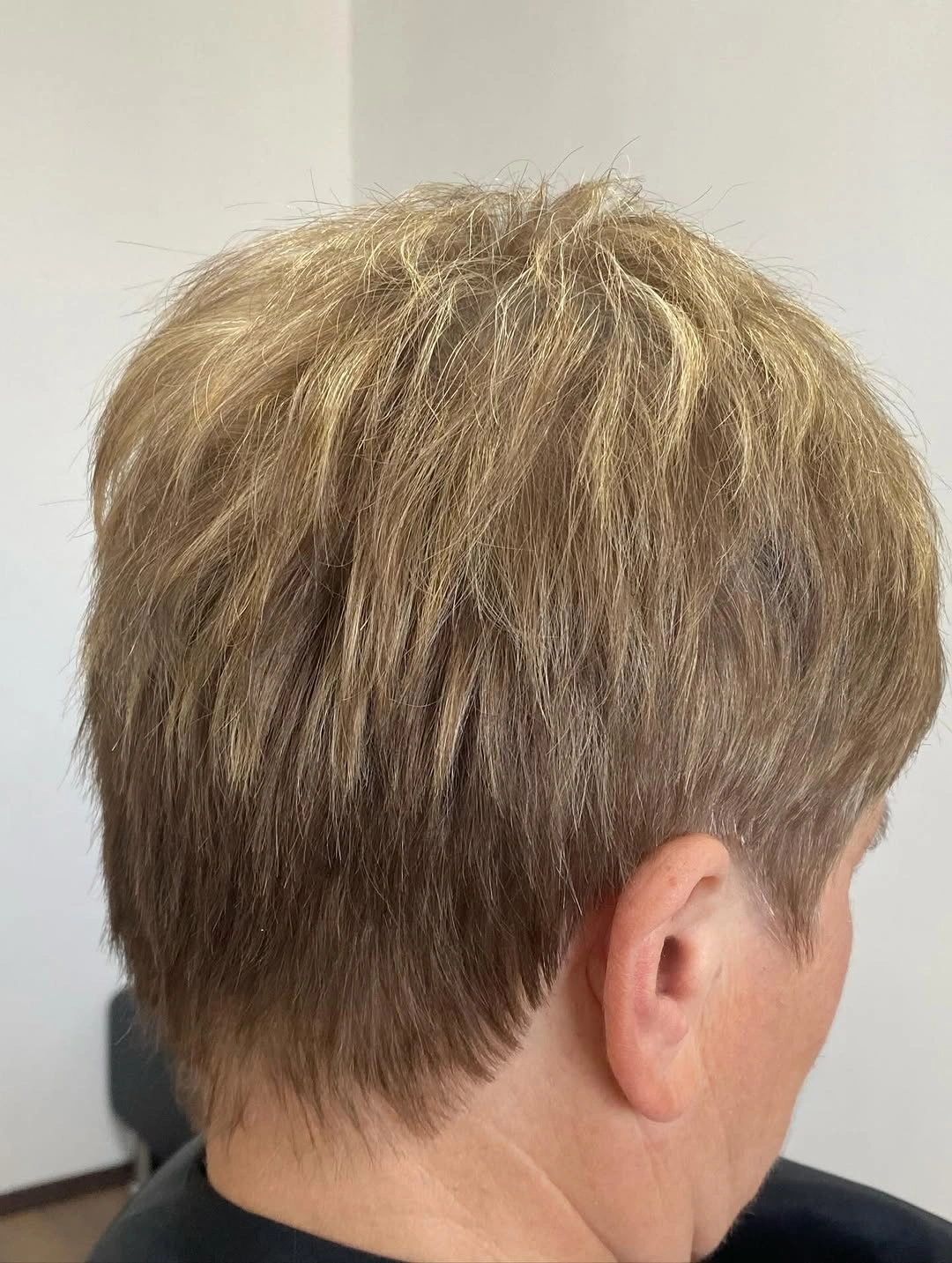
Photo via Instagram
The nape is visibly tapered, which keeps the lower edge close and gives the fuller crown a clear place to transition downward. Around the side, the silhouette stays short while the longer upper pieces overlap the tighter base, producing a layered effect without a hard step. That contrast between rounded volume above and a narrower finish below is the strongest structural feature of this pixie.
The cut reads as soft rather than severe because the surface is made of many small directional pieces. Its rounded crown and tapered nape create a compact profile with visible movement.
2. Smooth Mauve Bob With Curved Perimeter
This mauve-rose bob uses a smooth, rounded silhouette instead of visible feathering or choppy separation. The hair curves inward near the lower edge, and the perimeter sits around shoulder level with a compact, polished outline. Because the surface remains sleek from crown to ends, the shape is defined mainly by its continuous curve and even weight line.
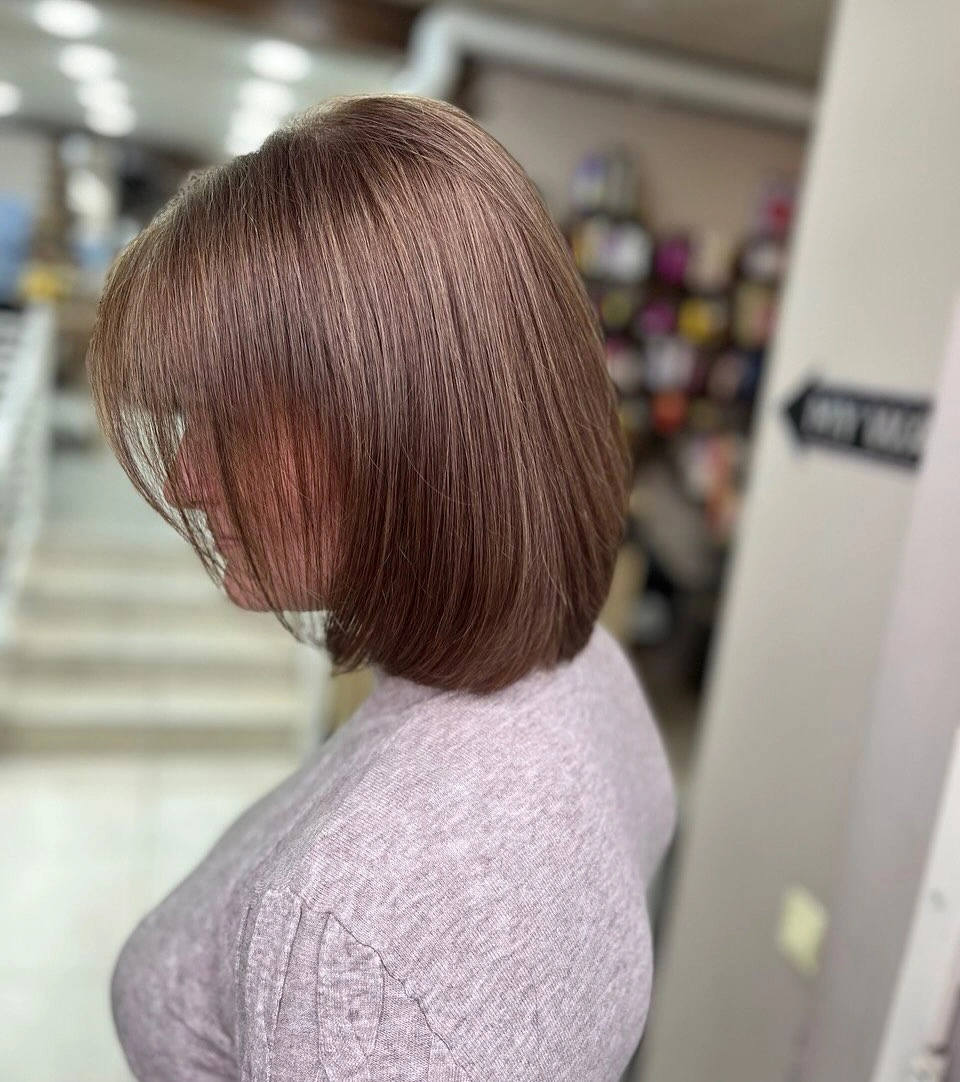
Photo via Instagram
The side view makes the rounded construction especially clear: the crown stays controlled, the mid-lengths fall close to the head, and the ends bend gently inward. There is no strong visual break between upper and lower sections, so the bob reads as one connected shape rather than a stack of separate layers. The muted rose-mauve color adds contrast while leaving the curved perimeter easy to see.
The key idea here is continuity. A smooth surface and softly tucked lower edge make the bob feel compact and deliberately rounded.
3. Sleek Blunt Lob With Straight Edge
This dark-brown lob is defined by a straight, weighty perimeter that lands near the shoulders. The surface is sleek from the top through the lengths, with very little visible disruption to the vertical fall. That clean line gives the haircut a graphic quality, especially where the blunt ends create a strong horizontal finish against the otherwise straight shape.
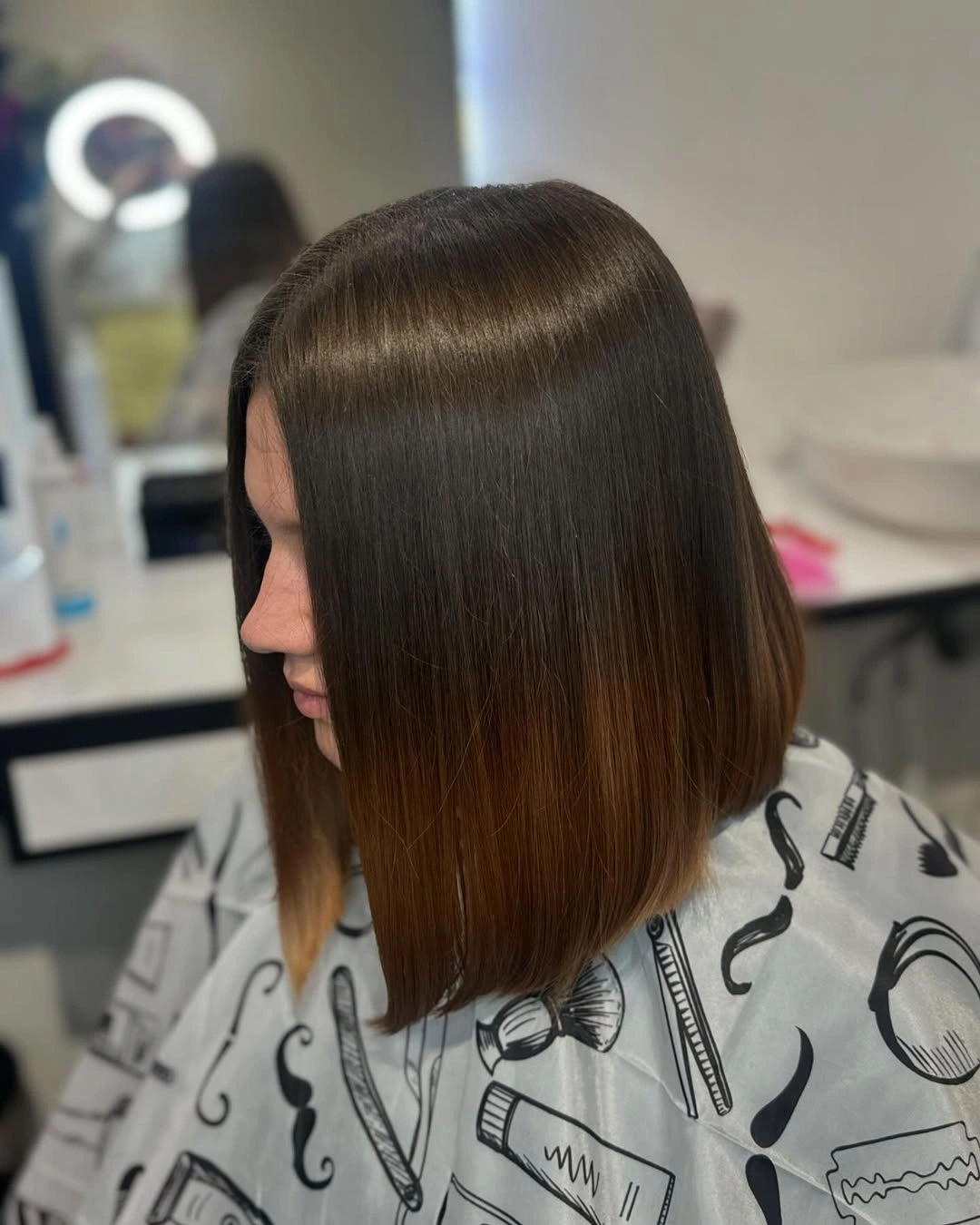
Photo via Instagram
The front and side lengths appear closely matched, so the silhouette avoids a sharply angled drop toward the face. Instead, the cut keeps its emphasis on even length and a smooth curtain-like surface, with the lower edge doing most of the visual work. The dark brown color makes the perimeter easy to read because shine and shadow trace the straight ends without introducing much competing texture.
This is a useful contrast to softer, feathered shapes because the outline stays firm and uninterrupted. The result is a shoulder-near lob where the perimeter carries more visual weight than surface movement.
4. Textured Pixie With Broken Crown Layers
This short dark-brown pixie has a visibly broken surface through the crown, where longer pieces sweep in slightly different directions instead of forming one smooth cap. The back remains compact, but the ends around the nape are irregular and pointed rather than uniformly rounded. That combination creates a more textured outline than the softer, fuller pixie in the first section.
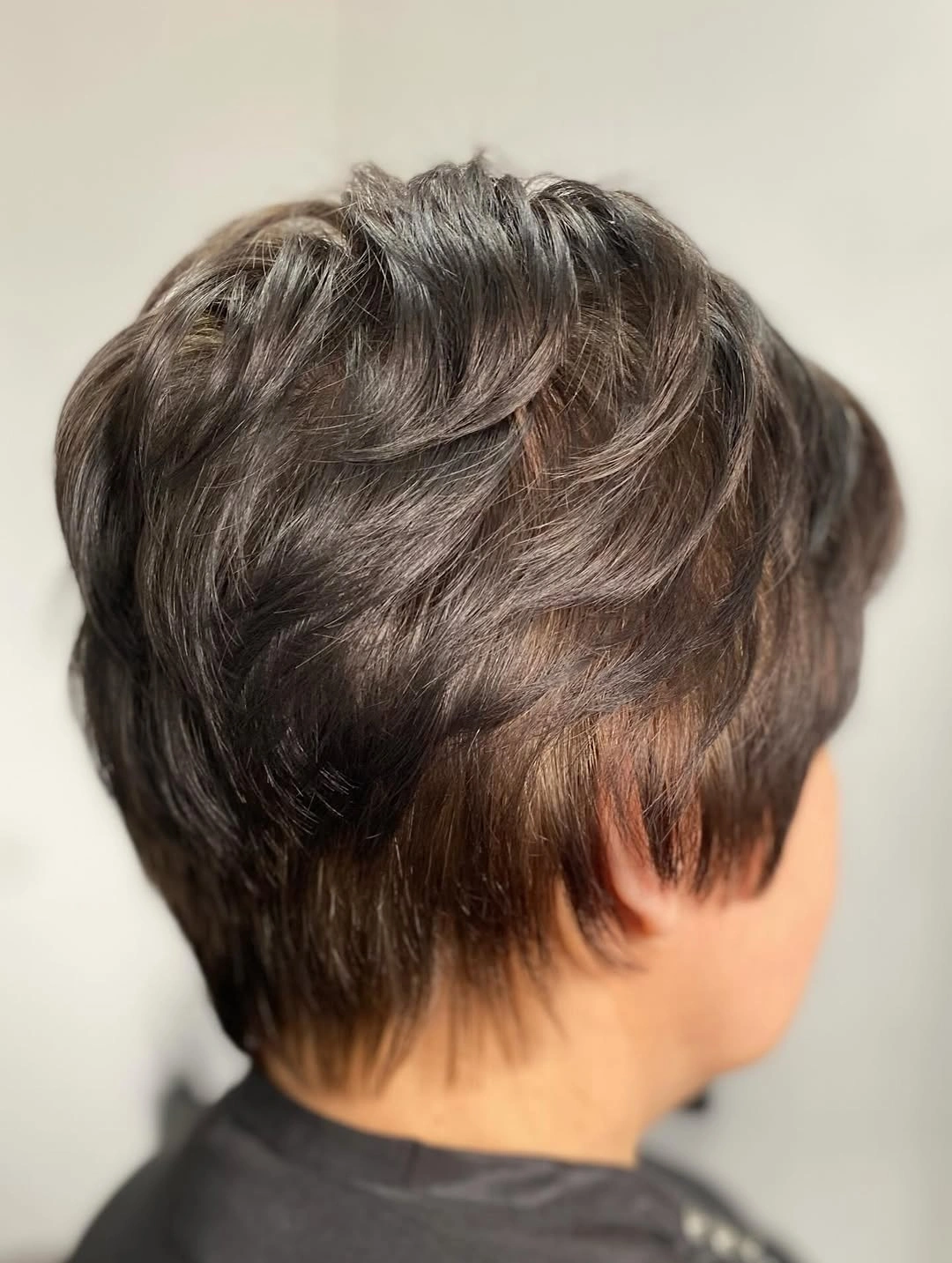
Photo via Instagram
The crown is the main point of interest because several overlapping pieces create separation and directional movement across the top and back. Below that, the silhouette tightens toward the nape, where shorter ends keep the shape close without producing a perfectly even edge. The contrast between the active crown and the uneven lower finish gives this pixie its distinctive structure.
The haircut reads through separation rather than smoothness. Broken crown pieces and an irregular nape keep the short silhouette visually active from top to bottom.
5. Silver Bob With Soft Curved Hem
This silver-gray bob has a smooth rounded outline with a softly curved hem that sits near shoulder level. The surface remains controlled from the crown through the mid-lengths, so the perimeter becomes the clearest visual feature. Instead of ending in a hard blunt line, the lower edge bends inward slightly, giving the silhouette a gentle, continuous finish.
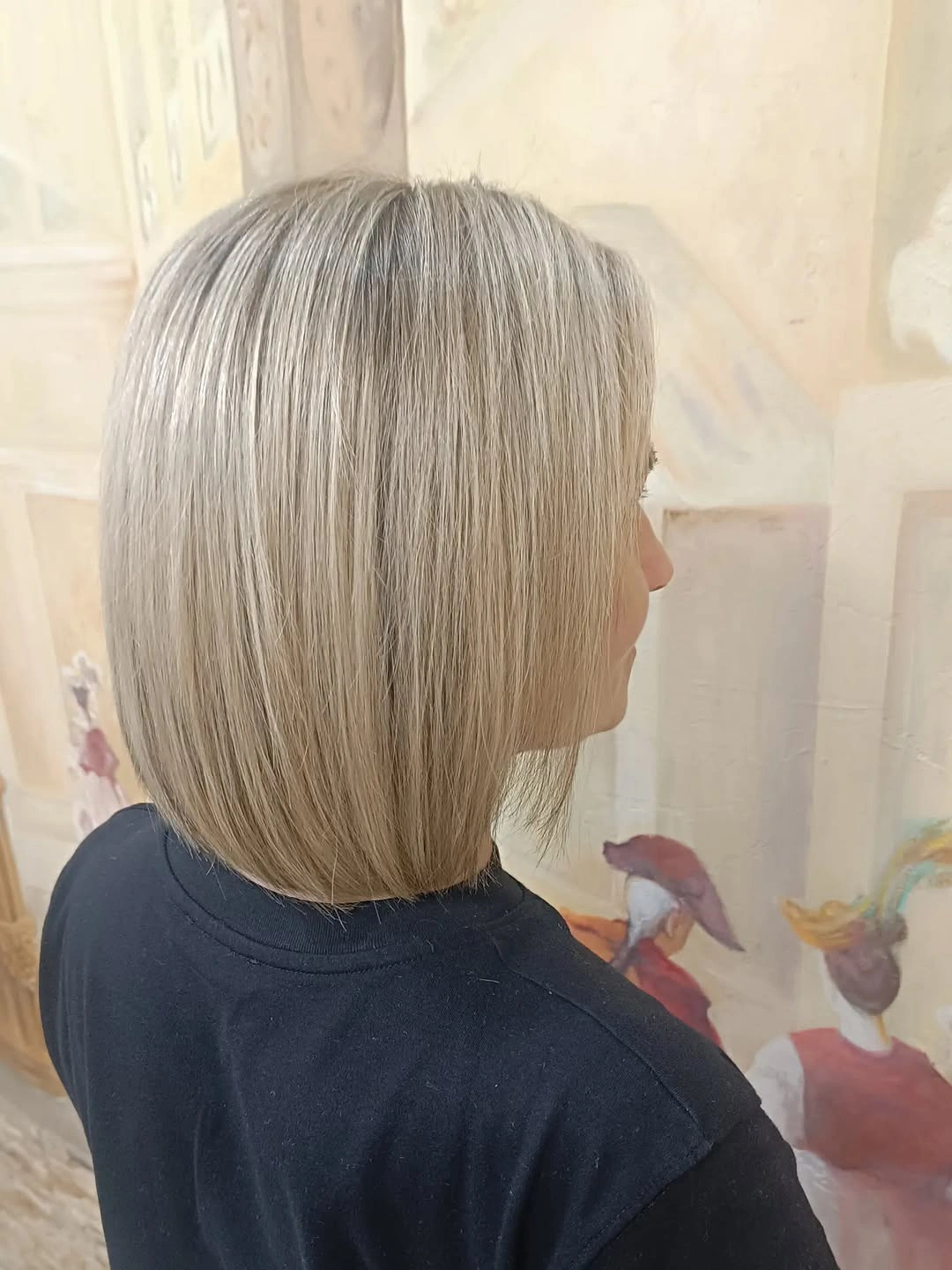
Photo via Instagram
The side profile shows how the bob keeps its fullness distributed through the lower half rather than concentrating it at the crown. The front section falls straight and clean, while the back curves into a rounded hem with only subtle visible variation in length. Silver and gray tones create soft contrast across the surface, but the cut still reads first through its curved edge and balanced shape.
The strongest distinction here is the hemline. Its smooth inward curve gives the bob a softer finish than a sharply blunt shoulder-length cut.
6. Short Blonde Pixie With Swept Top
This very short blonde pixie keeps the sides and nape close while leaving noticeably more length across the top. The upper section sweeps forward and to the side in broad, soft pieces, creating a fuller shape above the compact base. That visible difference in length gives the cut a clear two-part structure without making the outline feel disconnected.
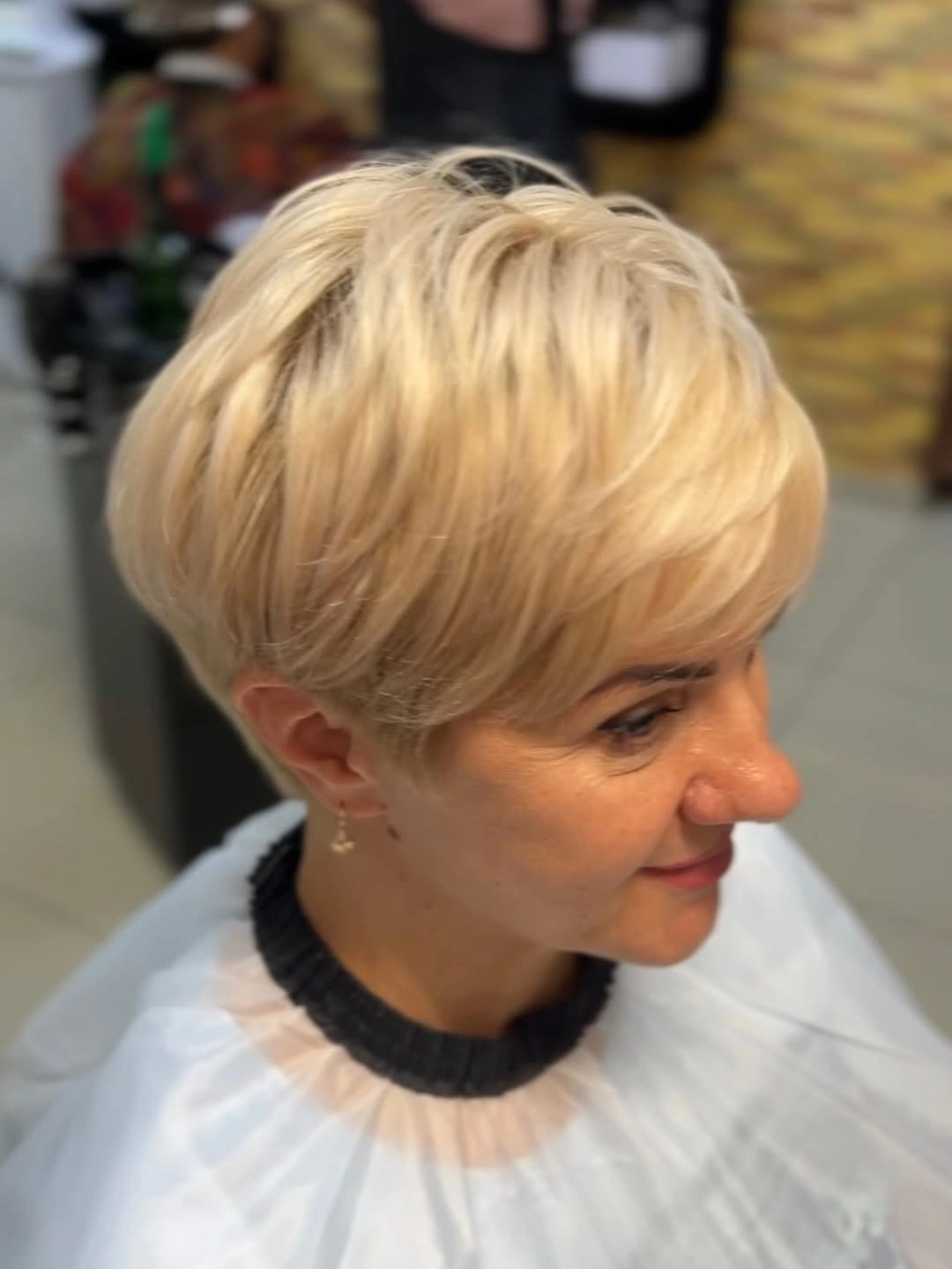
Photo via Instagram
From the angled view, the top layers curve across the head and gather toward the front, while the side near the ear stays much shorter and cleaner. The nape also appears closely cut, which lets the longer top create the strongest directional line. Among short haircuts for women over 50 as an editorial category, this example is defined visually by contrast between a tight perimeter and a sweeping crown.
The cut gets its character from that contrast in scale. A close lower outline keeps the silhouette compact, while the longer top introduces movement and a clear forward sweep.
7. Dark Pixie With Feathered Back Texture
Viewed from the back, this dark gray pixie shows a compact outline with a distinctly feathered surface through the crown and upper nape. Short pieces overlap in slightly different directions, so the shape does not read as a smooth rounded cap. The lower edge narrows toward the neck, giving the textured upper area a clear tapered finish.
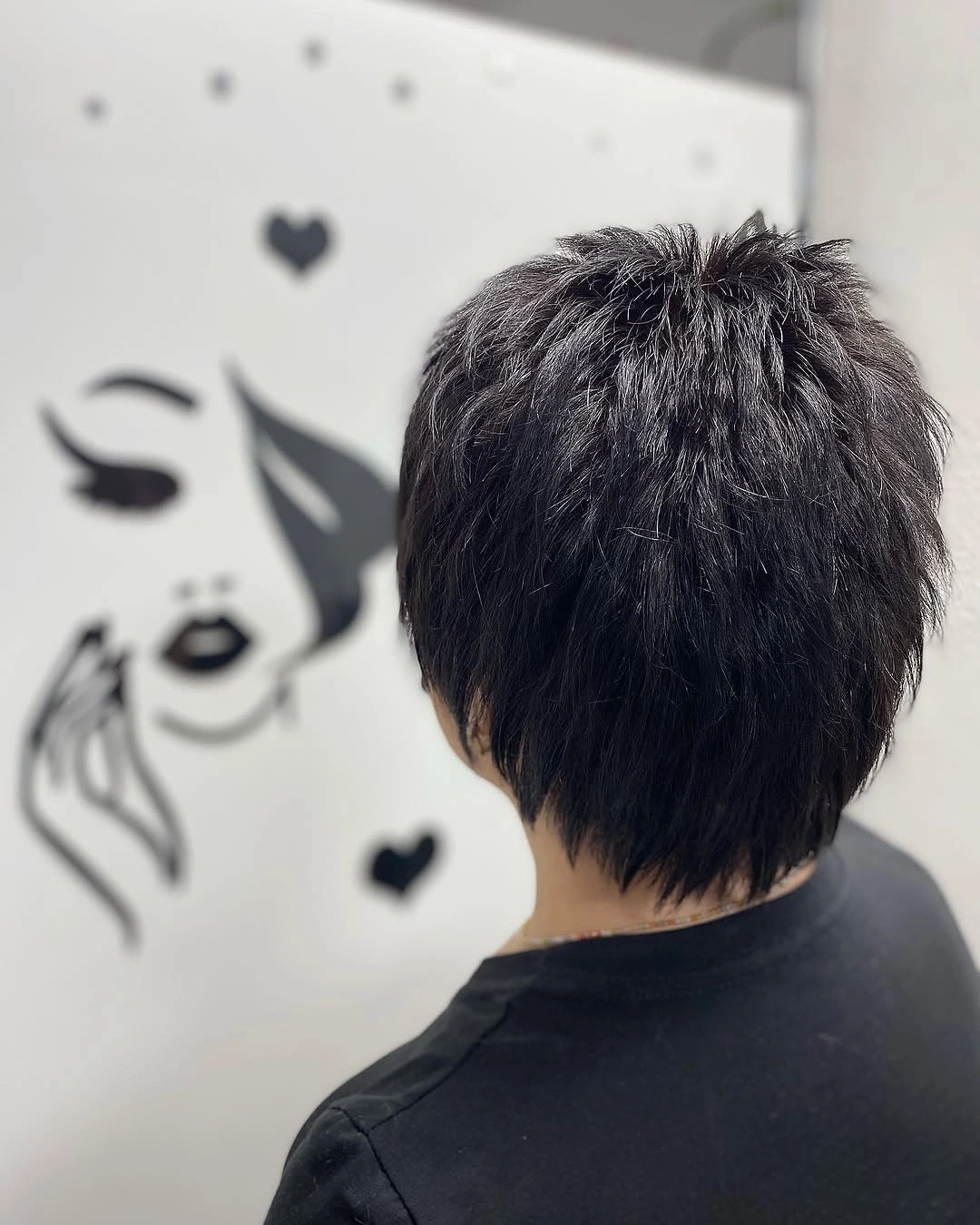
Photo via Instagram
The back view makes the change in length especially easy to see: the crown carries more visible piece separation, while the hair becomes shorter and closer toward the nape. Several ends at the lower edge look lightly pointed rather than blunt, reinforcing the broken texture. The result is a short pixie shape where the back structure matters as much as the top.
This example is less about fringe and more about rear silhouette. Feathered ends, a compact crown, and a tapered nape create a textured finish from every visible level.
8. Silver Gray Length With Side Sweep
This silver-gray style is defined first by its long, straight fall and the uninterrupted line running from crown to lower edge. The visible length reaches below the shoulders, while the front section sweeps diagonally across one side instead of opening into a centered frame. Because the surface stays sleek, the eye follows the clean vertical shape rather than pronounced layering.
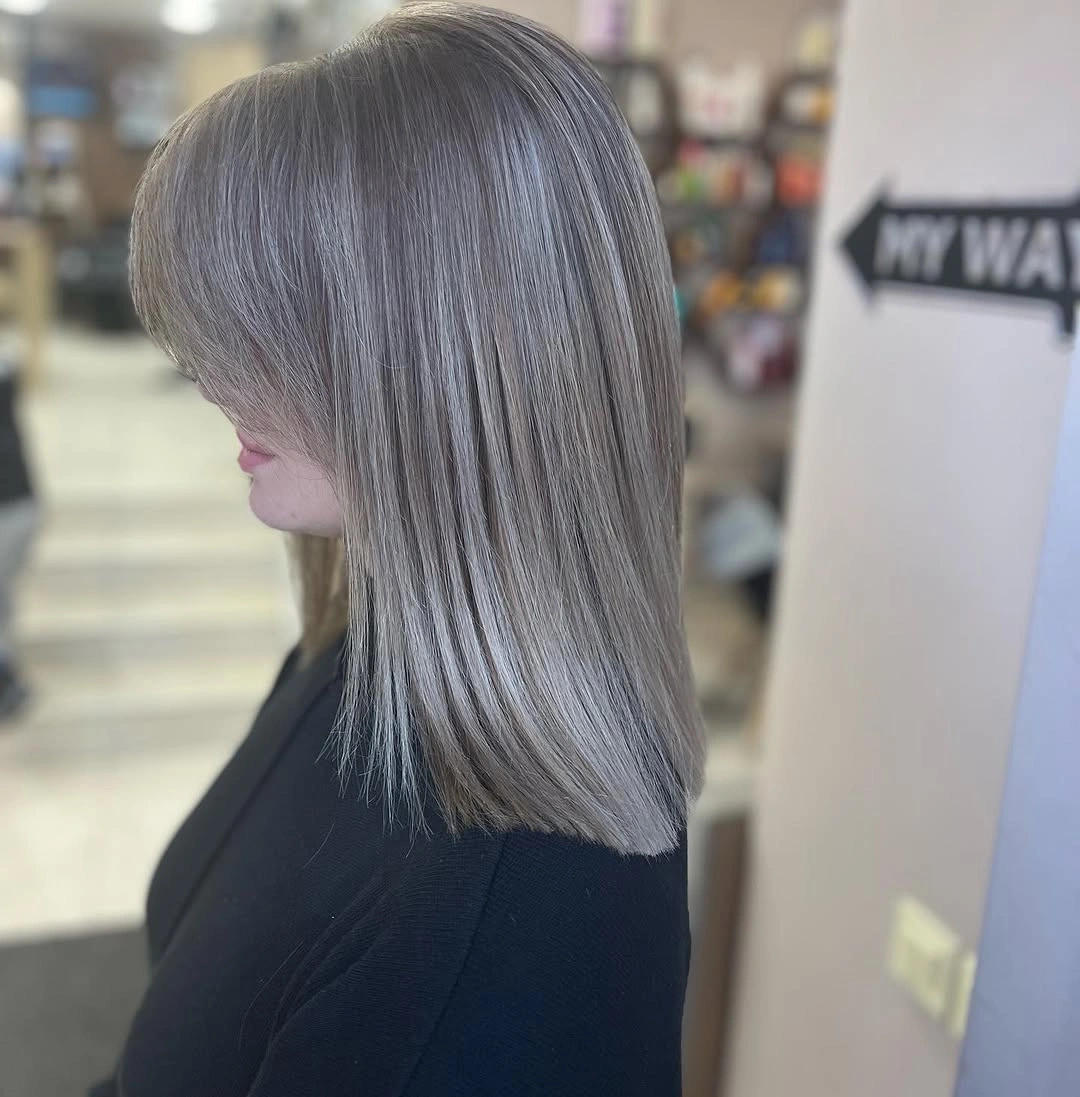
Photo via Instagram
The lower edge looks relatively even and controlled, with only slight visible variation where individual ends separate. A darker root area transitions into cooler silver-gray lengths, adding tonal contrast without changing the smooth outline. It is safer to read this example through visible length, side direction, and straight perimeter rather than assign an exact haircut construction that the angle does not prove.
The strongest visual contrast is between the diagonal front sweep and the long vertical fall behind it. That combination gives the style direction without relying on waves or a heavily broken perimeter.
9. Copper Lob With Broad Soft Waves
This copper-red lob sits around shoulder level and uses broad, softly wavy bends to interrupt what would otherwise be a simple medium-length outline. The front has noticeable lift and side direction, while the lower sections curve outward and inward in larger motions rather than tight curls. Warm color variation makes those bends easier to read across the surface.
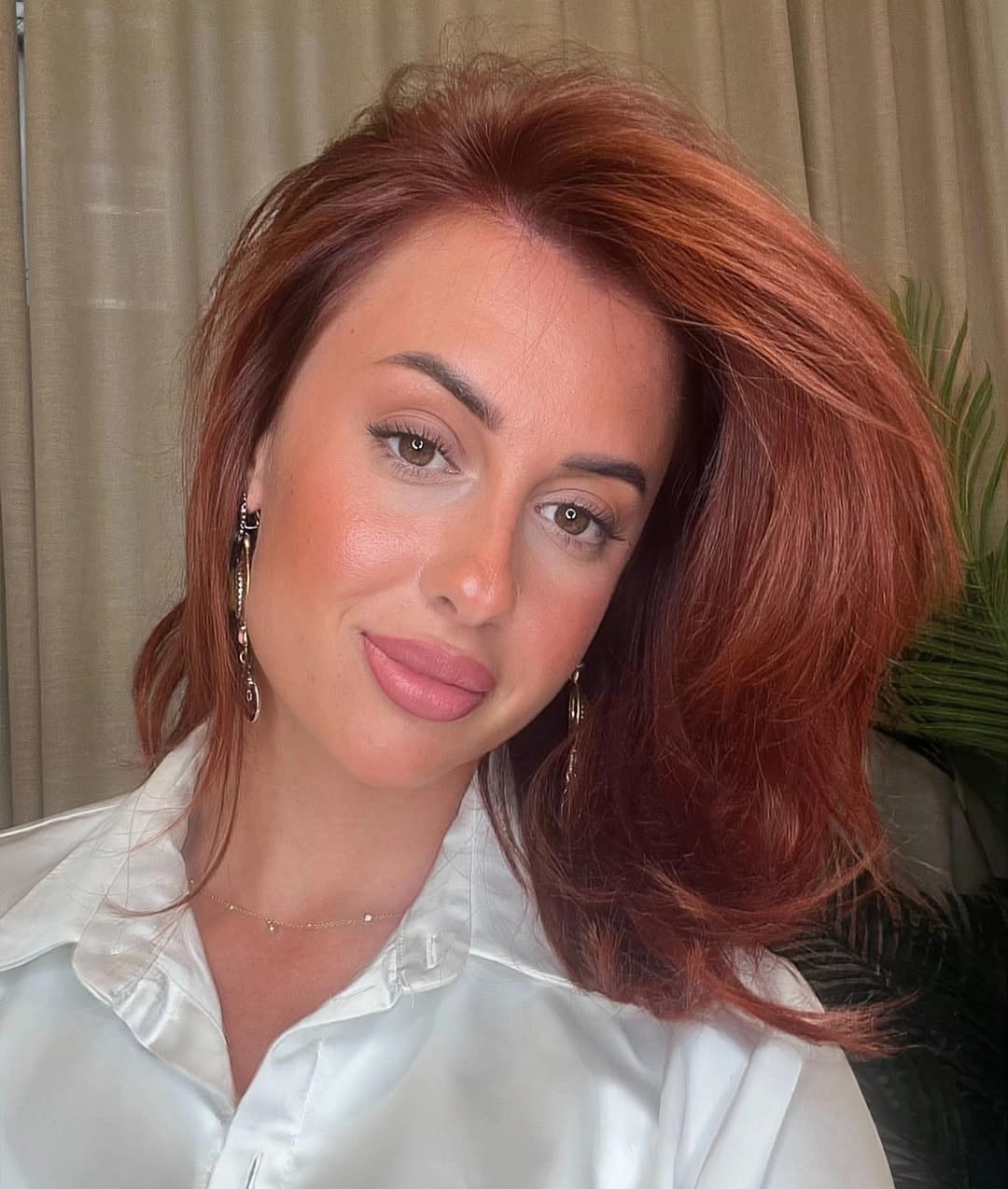
Photo via Instagram
The perimeter is softened by movement, so the ends do not form the same strict horizontal line seen in a sleek blunt lob. Instead, the visible shape expands slightly through the sides before narrowing again near the lower edge. As a medium length haircut, its defining feature is not exact layering but the way broad waves reshape the shoulder-level silhouette.
The wave pattern gives this lob a looser visual rhythm than the straighter cuts around it. Large bends and side-directed volume keep the perimeter soft without obscuring the overall length.
10. Long Blonde Layers With Flowing Waves
This long blonde style falls well below the shoulders, with large flowing waves creating repeated bends through the mid-lengths and ends. The front sections open away from the center, while the lower lengths show more visible movement than the area near the roots. Lighter blonde pieces against deeper tones make the wave pattern stand out across the long silhouette.
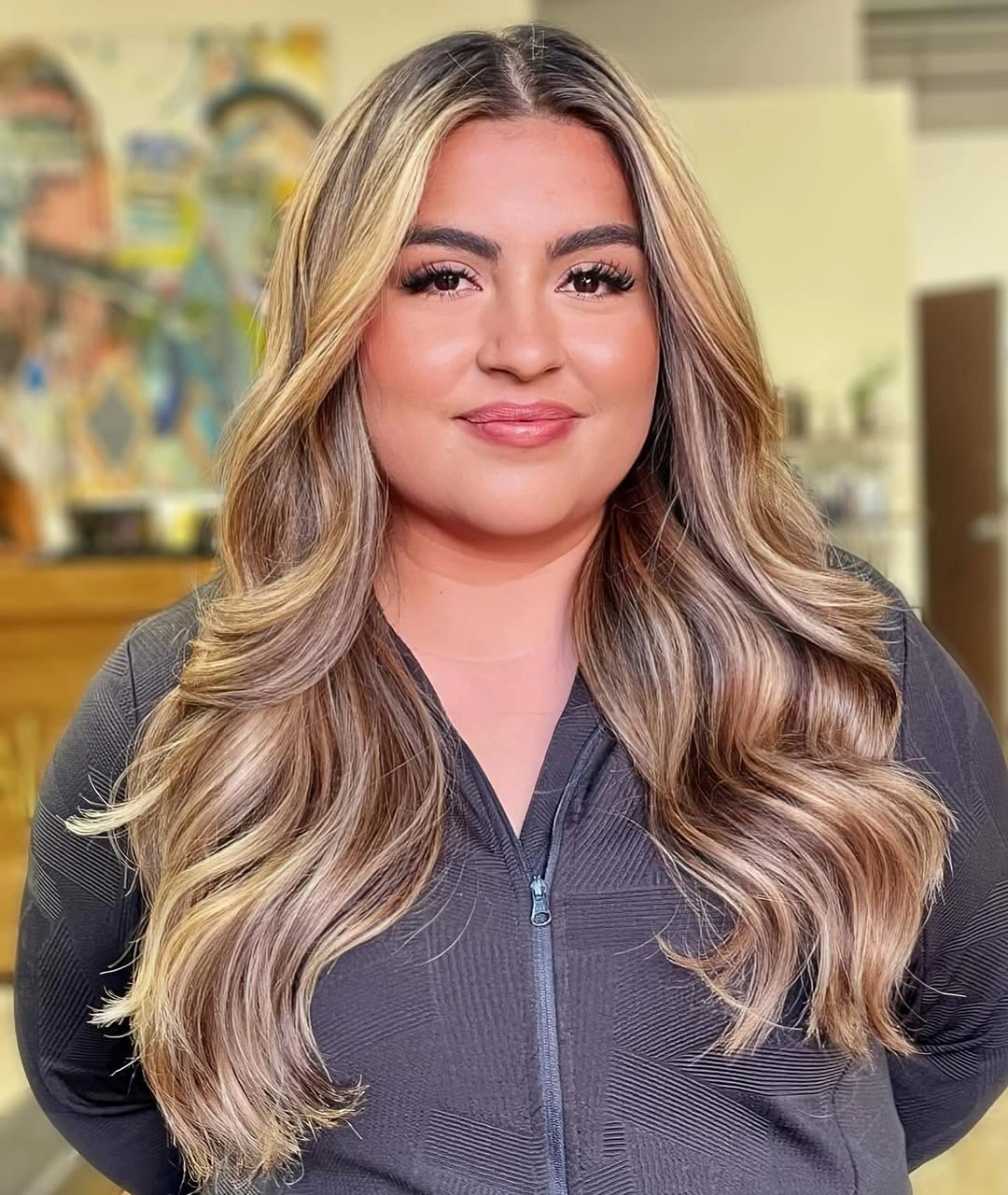
Photo via Instagram
The overall perimeter remains long and continuous, but the lower half does not read as a single heavy block because the ends separate into curved sections. Several front and side pieces appear to finish at different points, suggesting visible layering through the lower lengths without requiring a precise technical label. The result is a long haircut shape where movement is concentrated below rather than at the crown.
Large bends keep the length visually active from the shoulders downward. The contrast between smoother upper sections and more mobile lower lengths gives the silhouette a gradual transition instead of an abrupt change.
11. Feathered Brunette Cut With Curved Ends
This dark brunette shoulder-length cut is shaped by sweeping tiers that become especially visible through the sides and lower half. Rather than falling in one straight sheet, the lengths separate into broad curved sections, with several ends turning outward and away from the neck. The result is a feathered outline where movement comes from overlapping levels instead of a blunt perimeter.
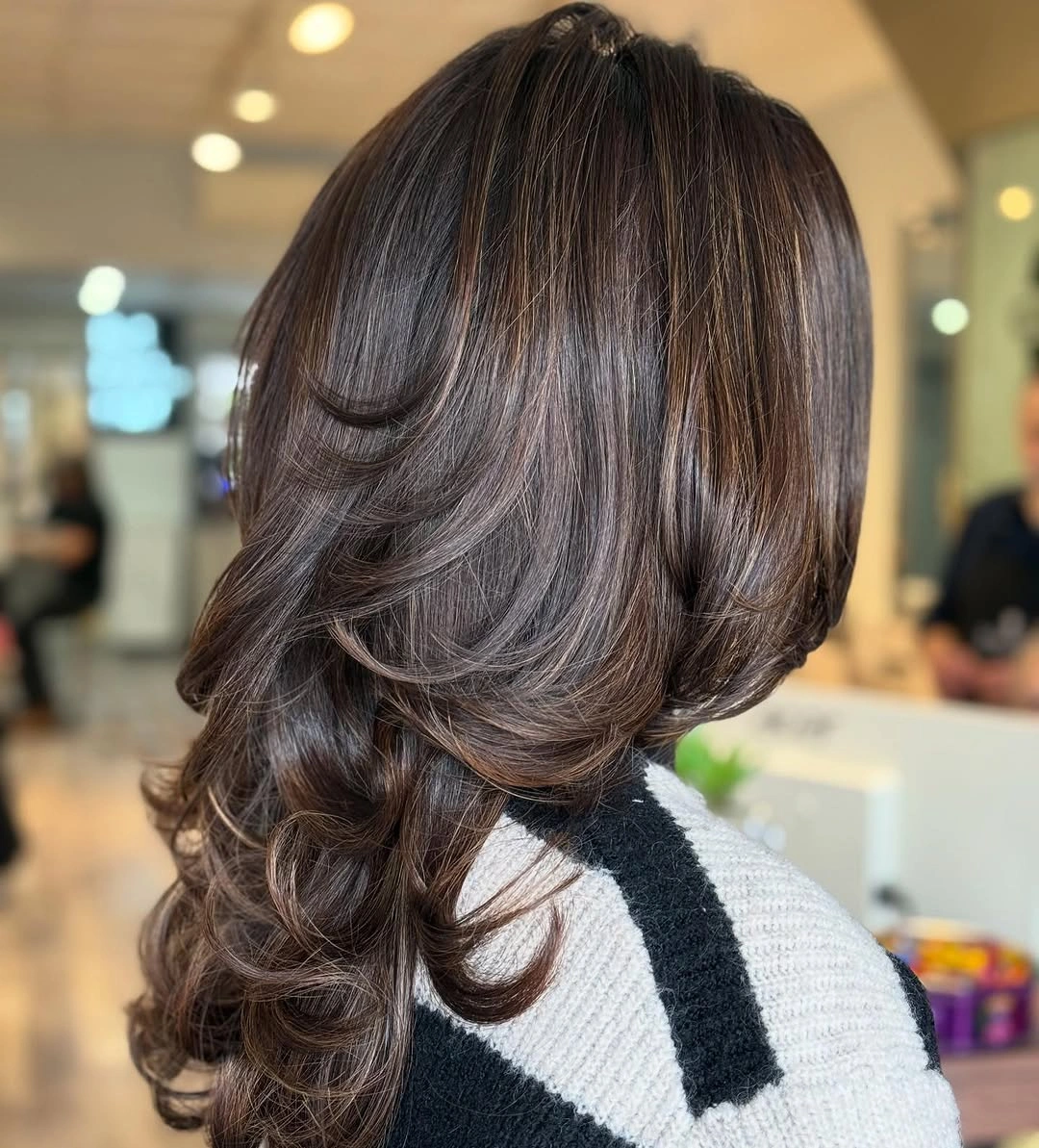
Photo via Instagram
The upper portion stays comparatively smooth before the layering becomes more pronounced closer to the shoulders. Individual sections curve in alternating directions, so the lower edge looks open and mobile rather than compact or uniformly rounded. Among medium length haircuts, this example stands out for the way its visible tiers create depth while preserving a clearly readable shoulder-level shape.
The strongest feature is the transition from smoother upper lengths to increasingly curved lower tiers. That gradual change gives the haircut a layered rhythm without breaking the silhouette into disconnected pieces.
12. Copper Bob With Curtain-Like Front Layers
This copper medium bob combines broad, softly wavy movement with front pieces that part and curve away in a curtain-like shape. The framing sections sweep across the forehead and sides before joining shorter layered lengths around the lower face and neck. Warm copper variation follows those curves, making the direction of each visible section especially easy to distinguish.
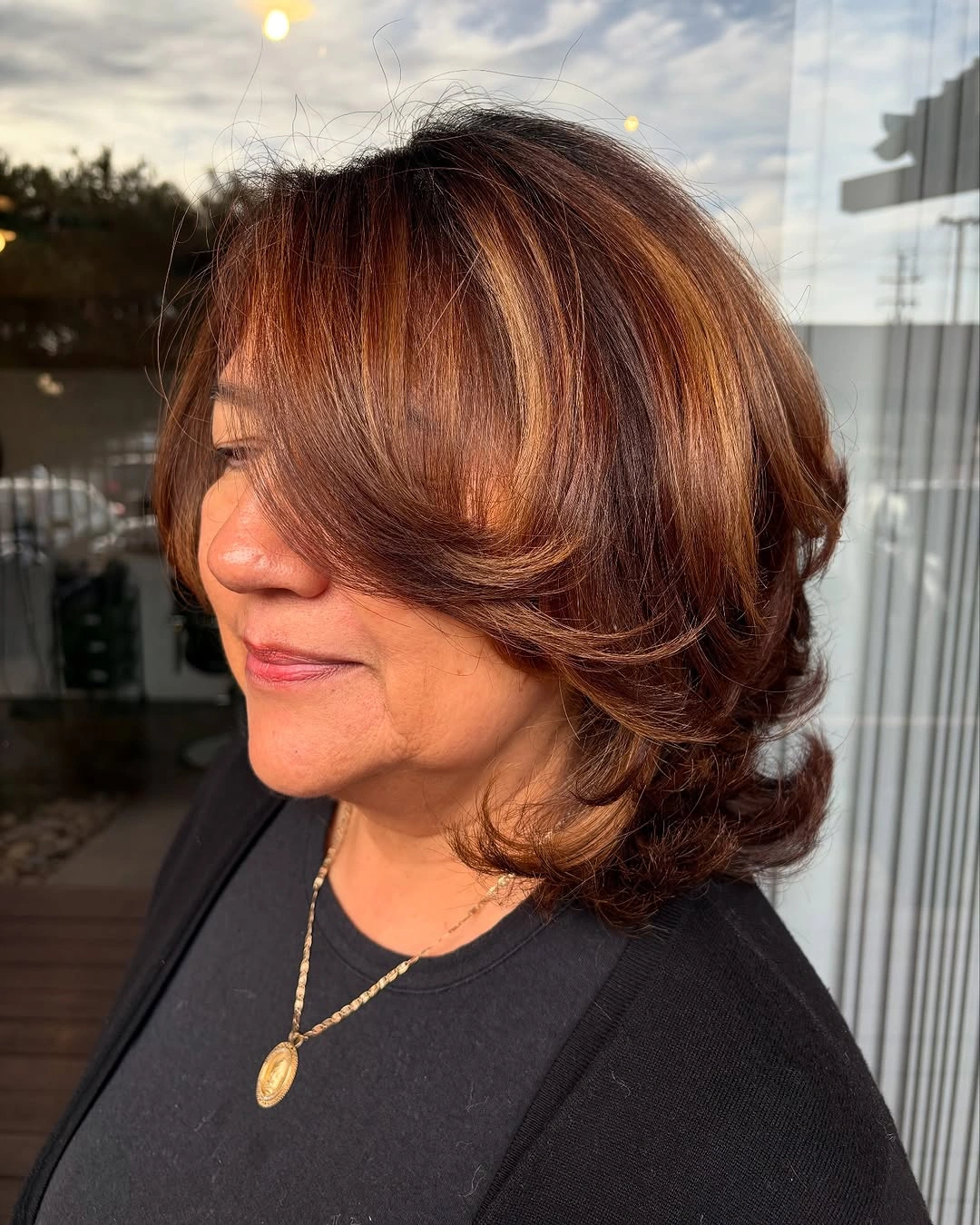
Photo via Instagram
The lower half is more layered and mobile than a smooth rounded bob, with several sections turning outward while others curl gently inward. That alternating direction prevents the perimeter from reading as one continuous blunt line. The visible front framing also gives the haircut a clear center-to-side flow, so the overall shape is defined by both the curtain-like front pieces and the curved lower layers.
This bob relies on directional layering rather than a strict geometric edge. Its broad bends and divided front framing create a softer, more open outline around the medium length.
13. Rounded Copper Bob With Side Sweep
This short copper-red bob has a rounded base shape, but the deep side sweep keeps the front from looking symmetrical or static. A longer front section travels diagonally across the forehead before blending into the side, while the lower ends curve outward in several visible places. That combination gives the compact haircut both a strong direction and a lightly feathered finish.
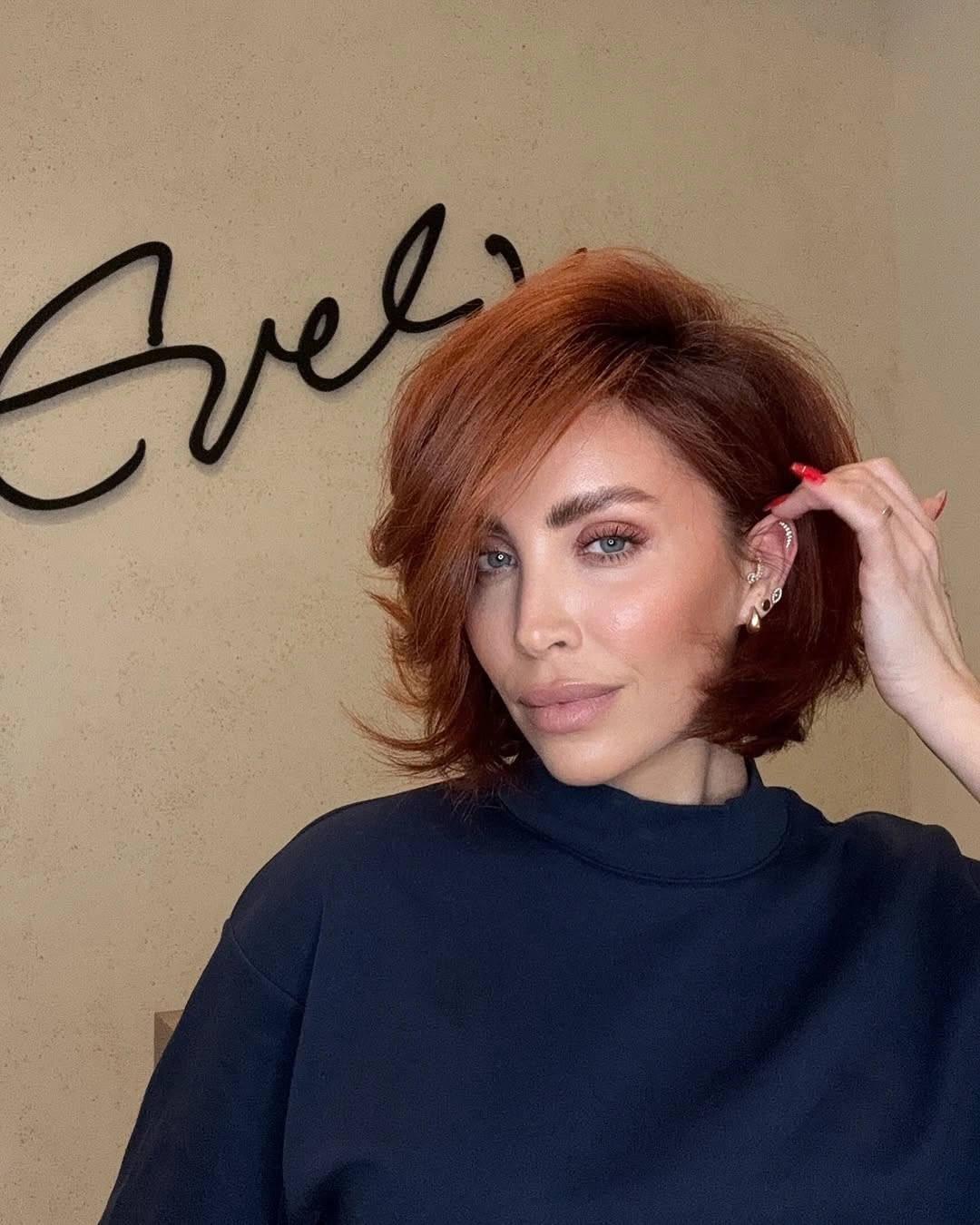
Photo via Instagram
The back and side remain close enough to preserve the bob outline, yet the perimeter is softened by layered-looking ends instead of a single blunt hem. Near the front, the side-swept fringe creates a broad arc that carries visual weight across one side of the head. The outward-curving ends then continue that movement lower down, linking the front sweep to the rounded body of the cut.
The diagonal front is what separates this bob from smoother, center-balanced shapes. Its side sweep and outward-turning ends create a compact silhouette with visible motion at both the top and perimeter.
14. Long Brown Layers With Feathered Tiers
This long brown haircut is built around prominent front layers that begin well above the lowest perimeter and continue downward in broad, curved tiers. The shorter front sections bend away from the face, while longer pieces underneath extend toward the chest. That visible progression keeps the front from reading as one uninterrupted curtain of length.
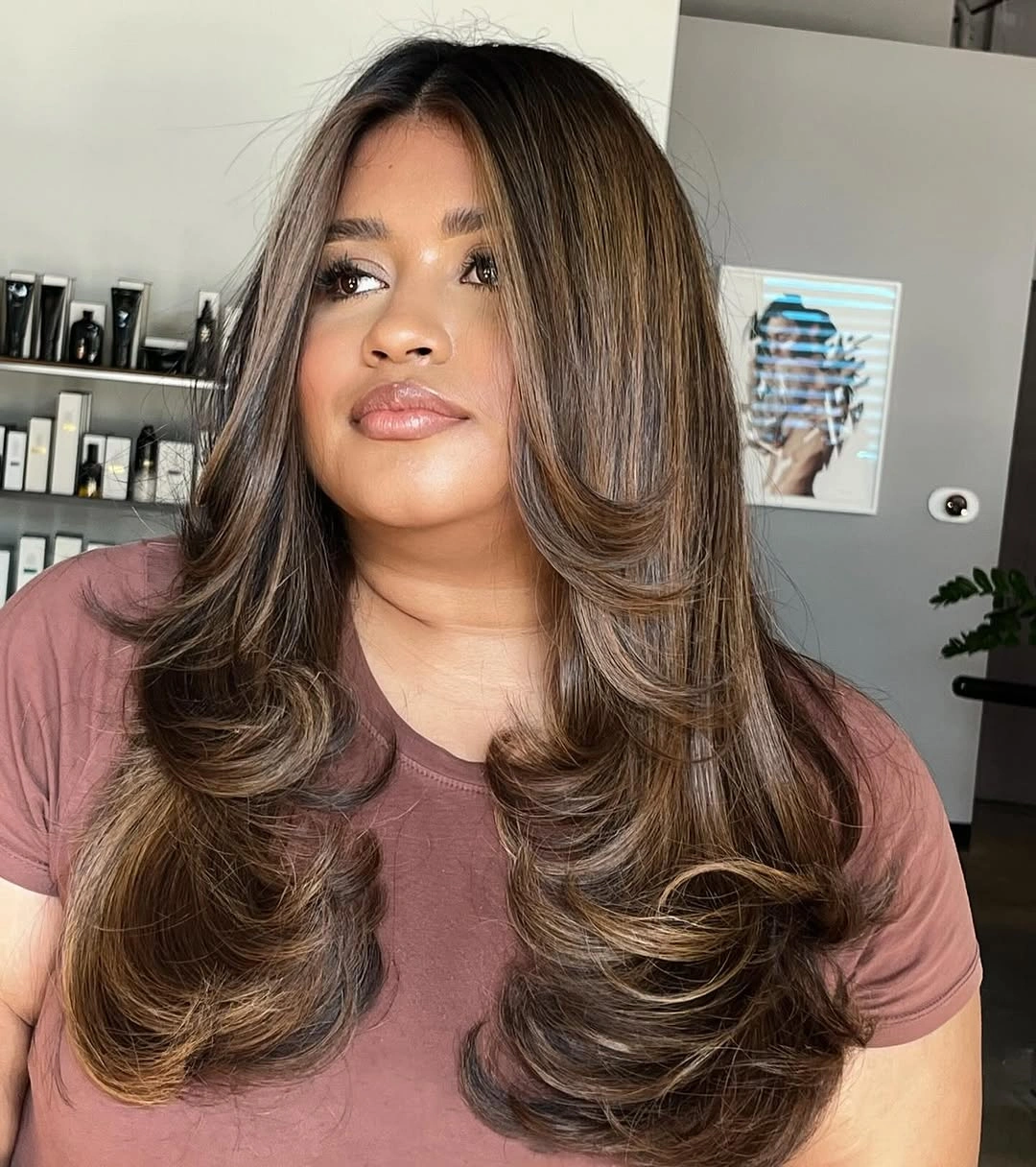
Photo via Instagram
Through the lower half, the hair separates into several feathered levels, each ending at a slightly different point and curving outward before settling back into the longer silhouette. The center part keeps the front balanced, but the repeated layered arcs add movement on both sides. The long overall length remains clear even as the tiered ends break up what could otherwise appear heavy or uniformly straight.
The haircut’s visual strength comes from the repeated step-down effect of its front and lower layers. Each tier introduces another curved edge while leaving the longest perimeter intact.
15. Warm Waves With Lifted Side Part
This medium-long style uses large open waves rather than tight bends, creating a broad flowing pattern from the upper lengths through the ends. The side part is visibly lifted at the front, which gives the top a stronger directional sweep before the hair falls into wider curves around the shoulders. Warm copper and blonde tones emphasize the transitions between each bend.
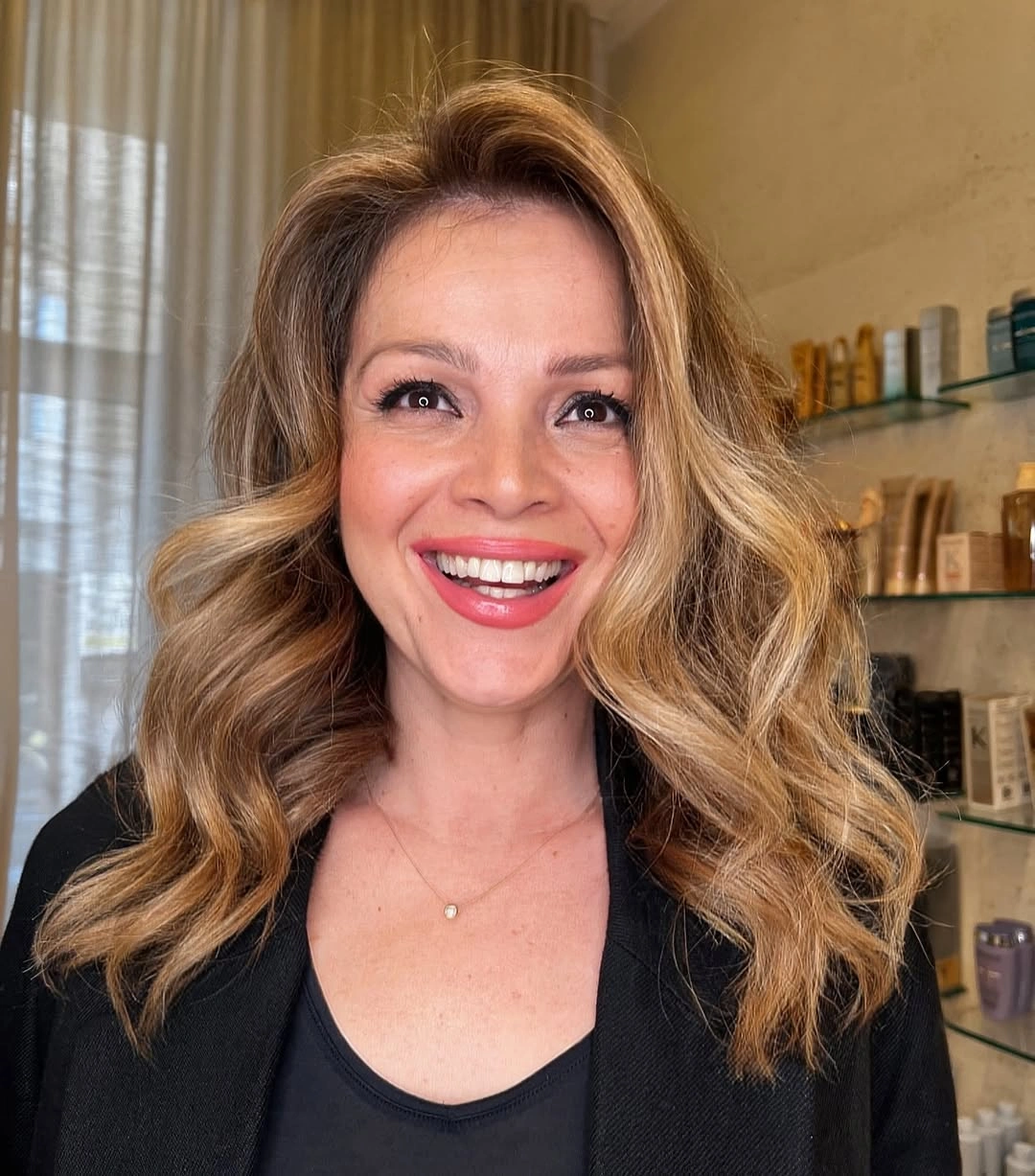
Photo via Instagram
The lower perimeter is softened by the wave pattern instead of ending in a sharply straight or blunt line. Several sections curve outward and then return inward, producing an open S-shaped rhythm through the sides while the crown remains comparatively smooth. The visible length extends below the shoulders, so the movement reads as elongated and flowing rather than compact like a shorter wavy bob.
The lifted side part gives the style its strongest directional feature near the top. Below it, large open waves carry that movement through the medium-long lengths without creating a tightly curled outline.
16. Center-Parted Waves With Repeated Bends
This long light brown and blonde style is organized around a center part and repeated large bends that begin near the front and continue through the lower lengths. The face-framing sections sweep outward on both sides before folding back into broader waves, creating a balanced shape that stays open around the center rather than collapsing into one heavy curtain.
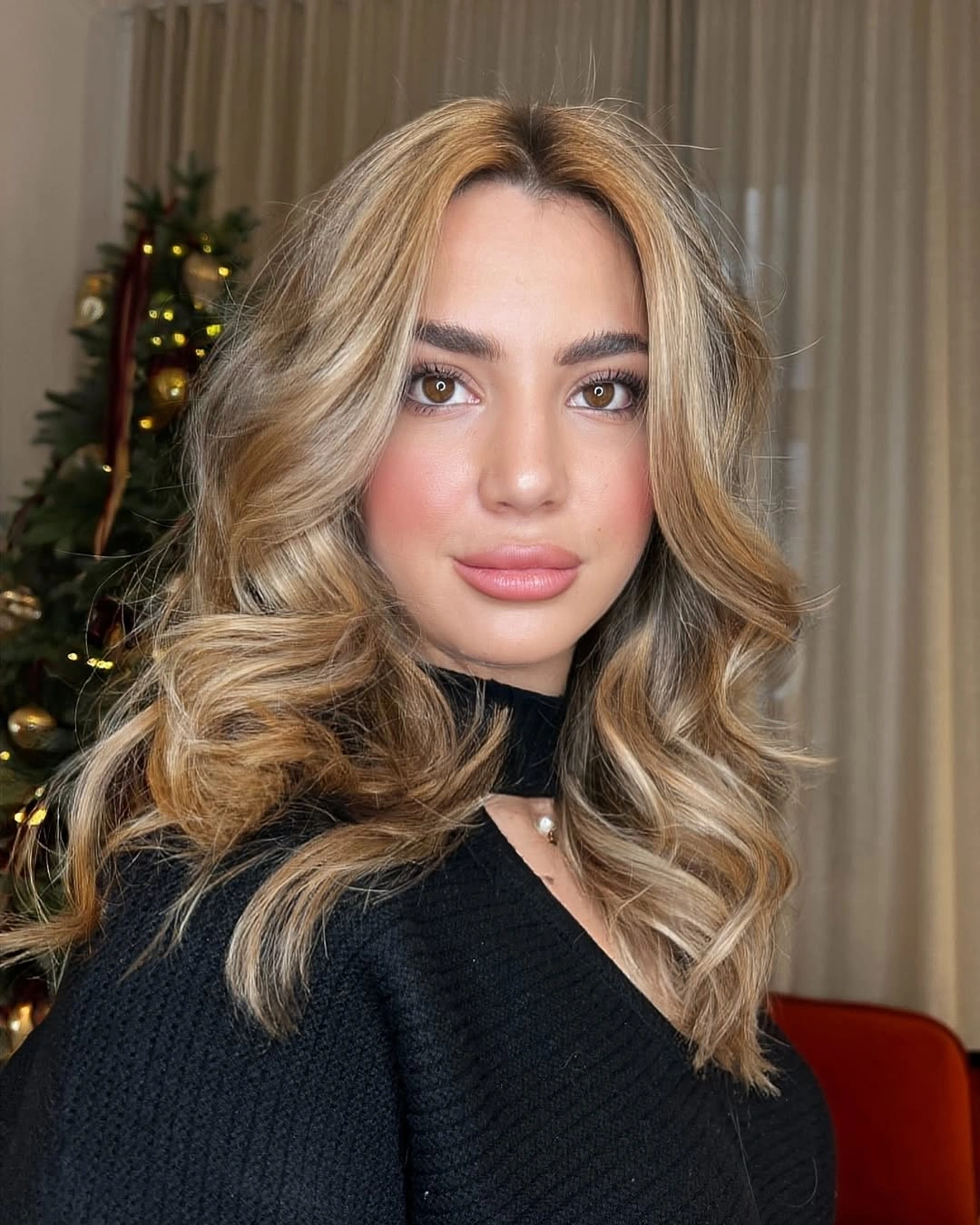
Photo via Instagram
The overall length extends well below the shoulders, while the wave pattern becomes more pronounced through the middle and lower sections. Several lighter pieces trace the curves and make the direction changes easy to follow without turning the color into the main story. The visible structure is long, symmetrical, and defined by wide movement rather than a blunt or compact perimeter.
The center part gives the front a clear point of balance. Repeated bends then carry that symmetry downward while keeping the long outline visually active.
17. Back-View Bob With Alternating Waves
Seen from the back, this dark bob has a compact perimeter that sits above the shoulders and is softened by alternating waves across the lower half. Some sections bend inward while neighboring pieces turn outward, so the edge avoids looking rigid or uniformly rounded. The back view makes the changing wave direction more noticeable than any front framing would.
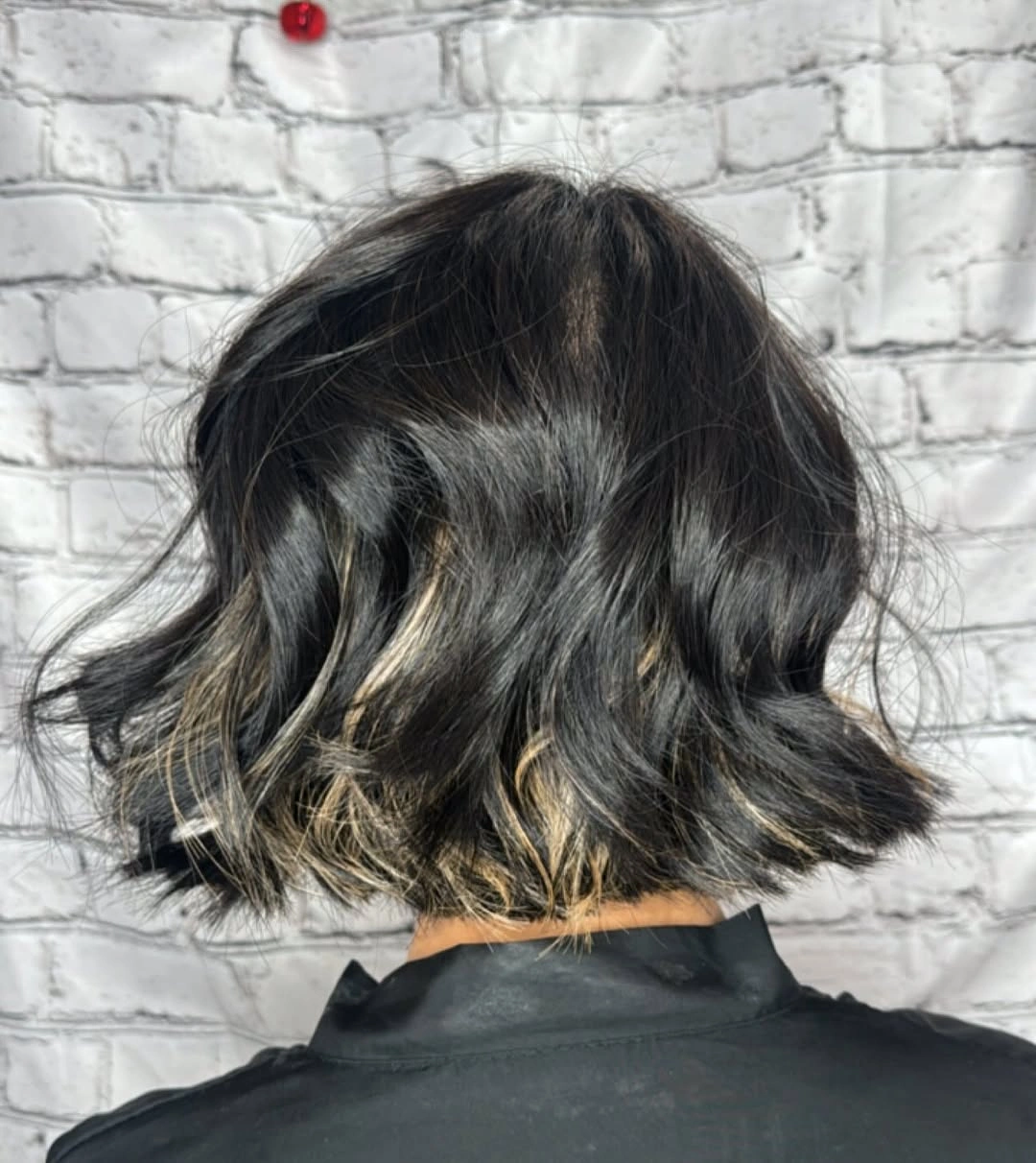
Photo via Instagram
The crown appears smoother than the lower lengths, allowing the wave pattern to build gradually as it approaches the perimeter. Lighter accents near some ends add small flashes of contrast, but the silhouette still reads first as a short wavy bob with a contained back shape. The combination of compact length and varied bends gives the lower edge a deliberately broken visual rhythm.
This angle emphasizes perimeter and movement rather than fringe. The alternating bends keep the bob lively while preserving a clearly defined short outline.
18. Rounded Short Cut With Soft Waves
This dark short cut forms a rounded silhouette through the crown and back, with softly wavy sections creating visible lift and separation above a much shorter nape. The lower edge stays close to the neck, while the upper layers curve over one another in broader pieces. That contrast gives the haircut a compact base with a fuller, more sculpted shape above it.
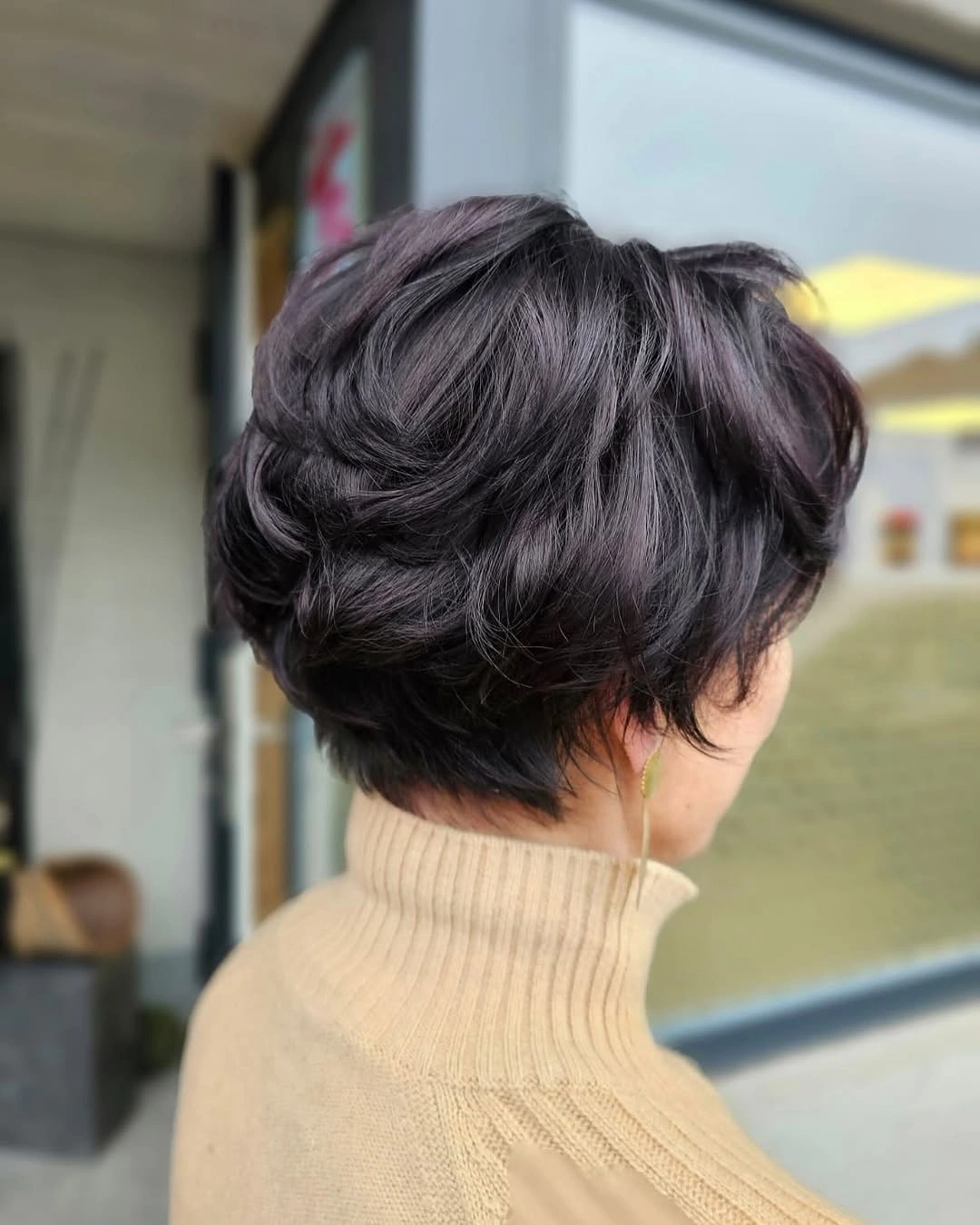
Photo via Instagram
From the rear-side angle, the nape is clearly shorter than the crown, and the visible waves create an irregular surface rather than a smooth cap. The front is only partly visible, so the safest reading comes from the rounded back structure, short lower edge, and directional bends through the upper section. The result sits between pixie and very short bob proportions without requiring an exact technical label.
The short nape keeps the lower silhouette neat and contained. Soft wave direction through the crown adds enough variation to prevent the rounded shape from reading as flat.
19. Long Auburn Waves With Side Lift
This long auburn style combines a deep side-directed front with broad cascading waves that continue through the full length. The front section rises away from the part before sweeping back into the side, while the lower lengths repeat larger curves toward the ends. Rich auburn color follows those bends and makes each change in direction especially visible.
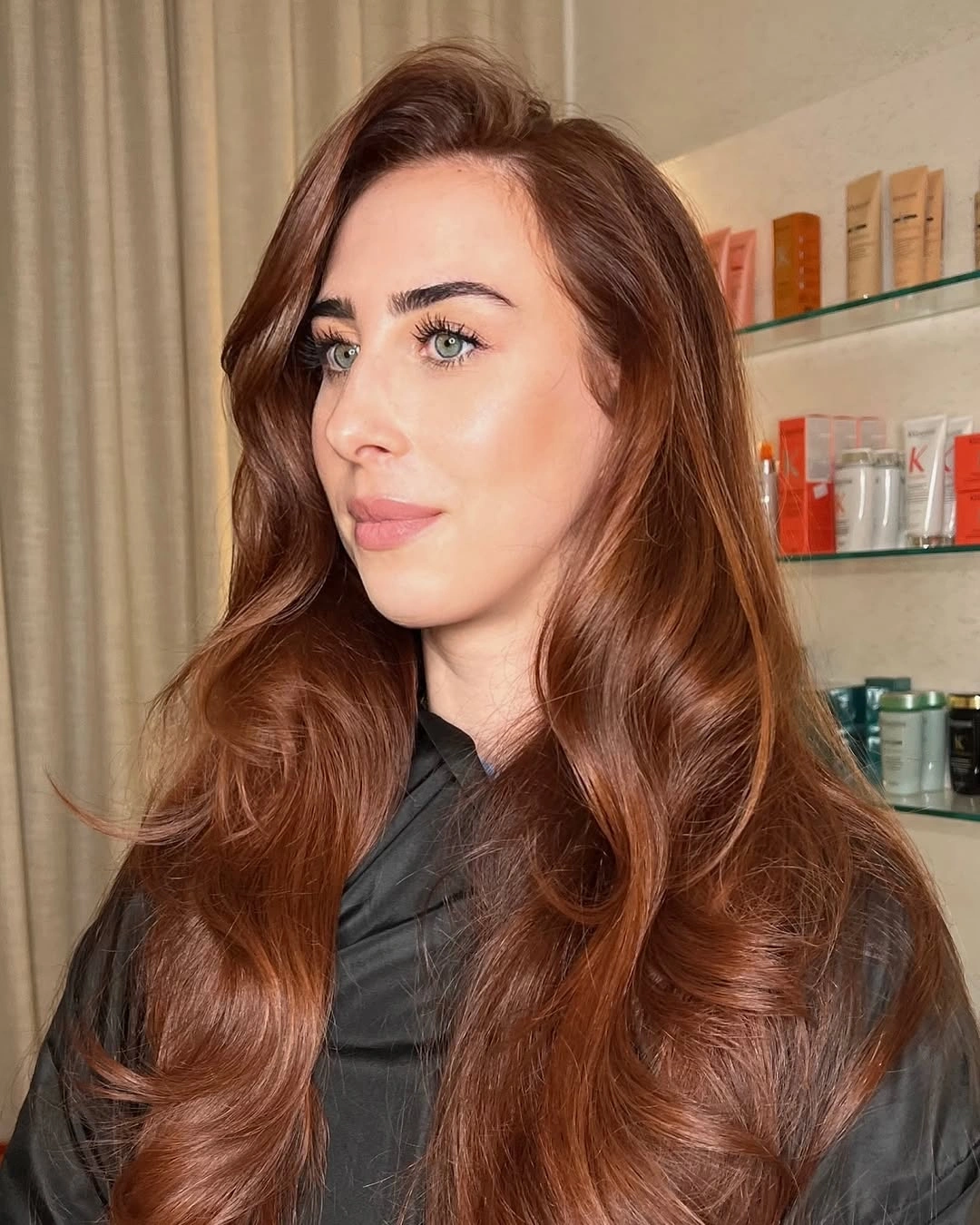
Photo via Instagram
The silhouette remains long and continuous, but the wave pattern prevents the lower half from reading as one solid mass. Several sections widen and then narrow as they move downward, creating a layered-looking cascade without requiring a precise construction claim. The side lift at the front gives the top a stronger directional emphasis than the more centered long-wave examples.
The strongest contrast here is between lifted front volume and flowing lower length. Broad waves carry that movement downward while keeping the long perimeter soft rather than sharply defined.
20. Gray Pixie With Swept-Back Top
This short gray pixie keeps the sides and nape closely tapered while leaving noticeably more length across the top. The upper section is swept upward and back, creating a clear directional ridge from the forehead toward the crown. Because the lower perimeter stays tight, the longer top becomes the dominant structural feature rather than blending into the sides.
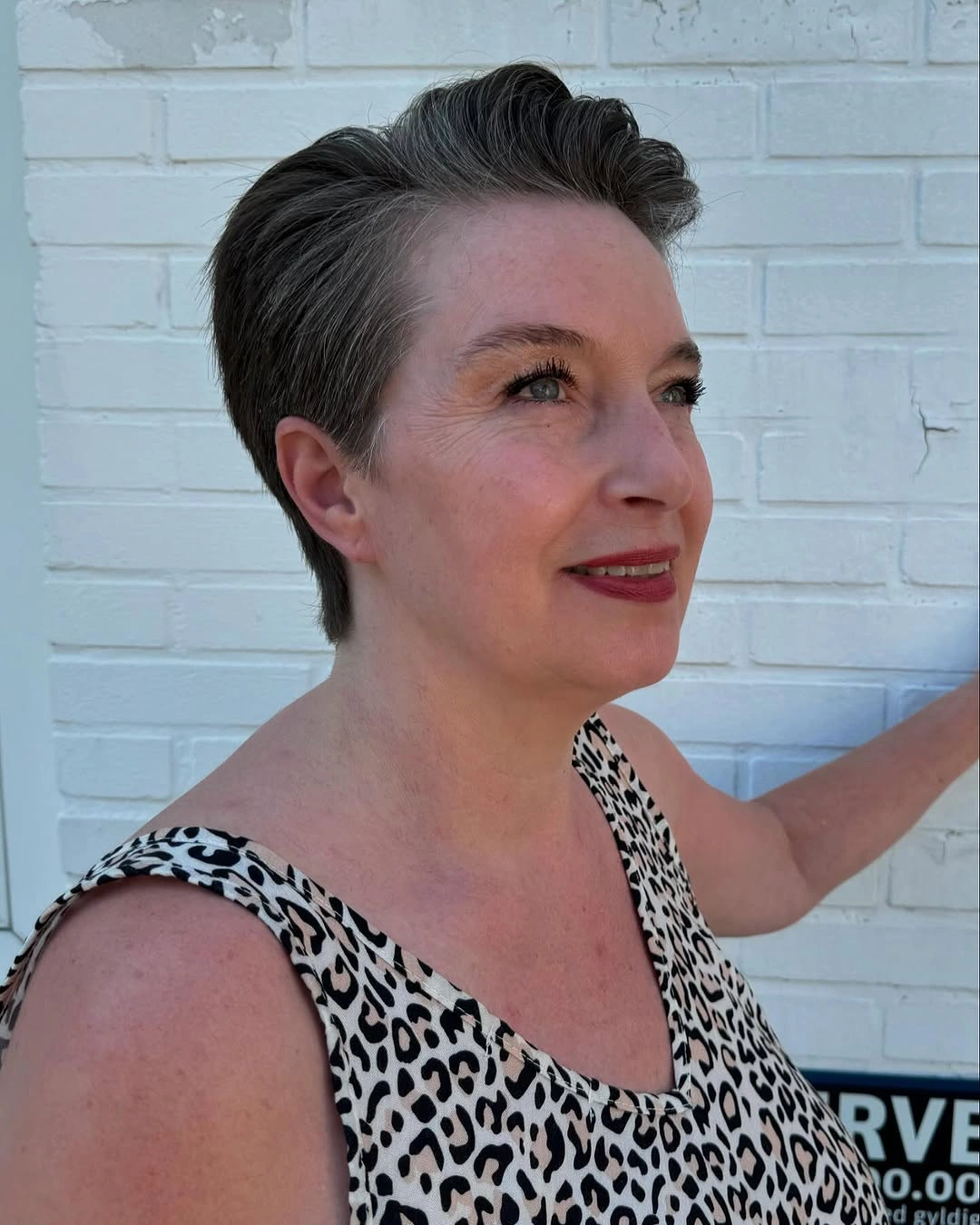
Photo via Instagram
The side profile makes the contrast especially clear: hair around the ear and nape sits close, while the top rises away from the head before flowing backward. Gray tonal variation adds definition to the swept shape, but the haircut is read most clearly through length placement and direction. Among short cuts, this one depends on upward movement rather than feathered nape texture or a rounded crown.
The tapered base keeps the silhouette narrow along the sides and back. The longer swept-back top adds height and direction, giving the compact pixie a strong upward finish.