Finding a hairstyle that feels current after 30 is rarely about chasing the newest label. The harder part is deciding which kind of visual movement you want: a clean line, a lifted crown, a loose wave, a gathered point, or a small detail that changes the direction of otherwise long lengths. A useful 2027 reference starts by naming that desired structure before narrowing the search by length or trend wording.
To compare hairstyles more clearly, separate the choices that shape the outline from the details that simply decorate it. Look at where the hair begins to widen, how the front relates to the crown, whether the lower lengths stay straight or develop repeated bends, and how much of the original length remains visible. These criteria make a broad search for hairstyles for women over 30 more specific without imposing rules about age, face shape, hair type, or upkeep.
1. A Smooth Bob With Strong Perimeter Lines
This medium-brown bob is defined less by surface texture than by its strong lower boundary. The hair falls in a smooth, almost uninterrupted vertical sheet from a centered part, while the front appears slightly longer than the back edge, giving the silhouette a subtle forward pull without adding visible layers or extra volume.
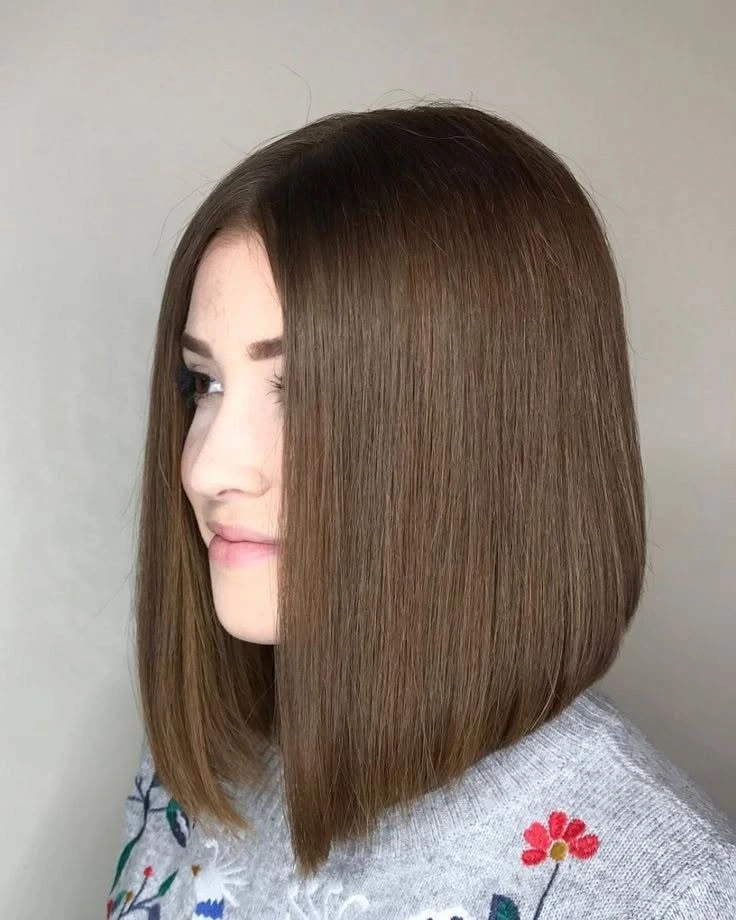
Photo via Instagram
The most useful comparison point here is the relationship between symmetry and perimeter. Because both sides descend cleanly from the center and the lower edge reads as blunt-looking, the shape feels controlled and graphic, yet the slight extension toward the front keeps it from looking completely boxy or static.
If you want to discuss a similar bob, focus on perimeter strength, the amount of forward length at the front, and how compact you want the overall outline to remain. Those visible choices are more specific than simply asking for a short or medium bob.
2. High Gathered Curls Shift the Silhouette Upward
The defining feature here is the high gathering point at the crown, which lifts the upper silhouette before the hair drops into broad curls around the shoulders. That vertical change matters because the hairstyle keeps plenty of visible length while redirecting attention upward first, creating a very different balance from long hair that simply falls loose from the roots.
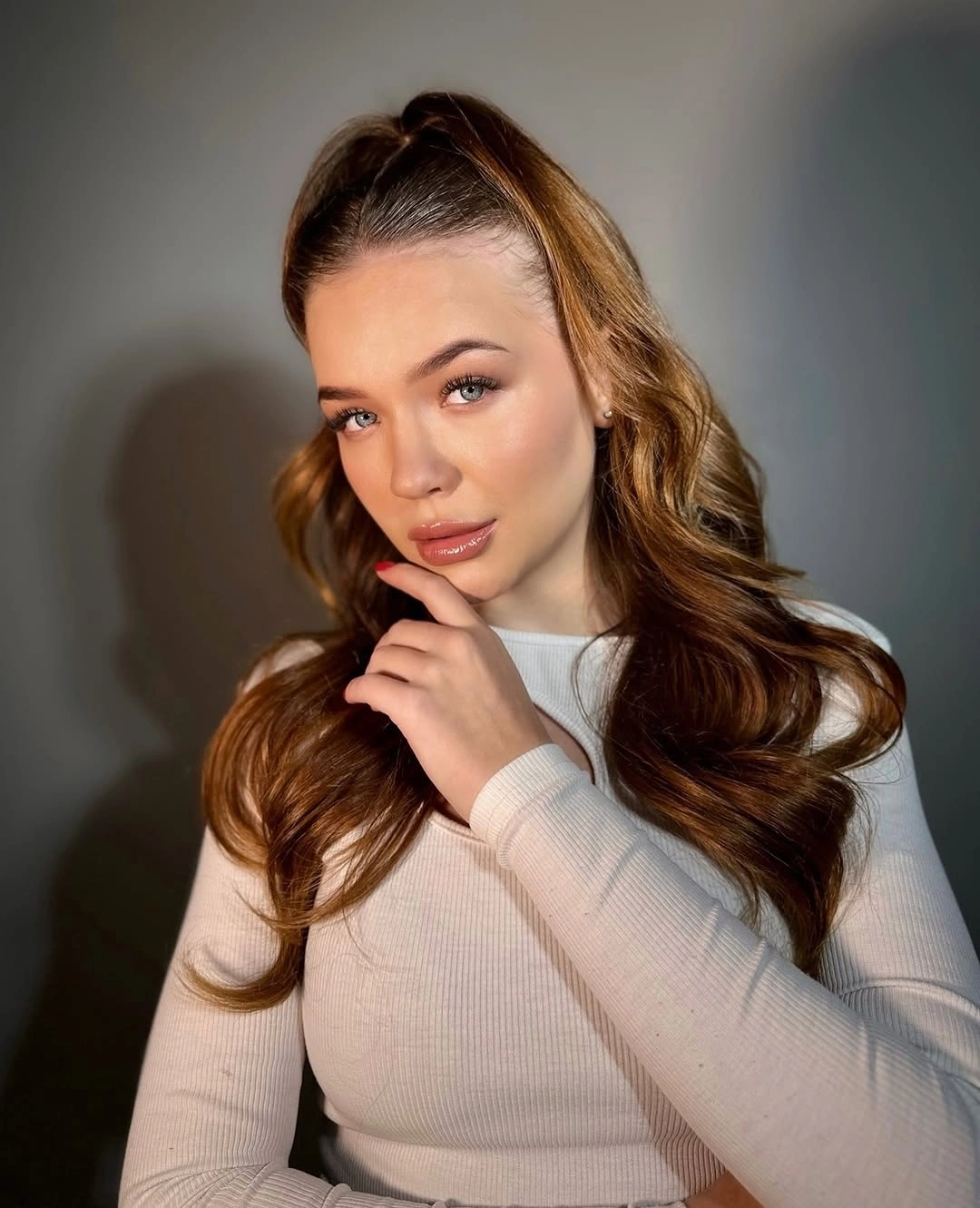
Photo via Instagram
The upper section is relatively compact, while the lower lengths open into larger curved shapes that spread outward on both sides. This contrast between a lifted top and fuller curled lengths gives the style its structure, so the most useful detail to compare is not just the curl pattern but exactly where the hair begins to widen.
For a similar long style, compare high and low gathering points before deciding how much curl you want below them. The position of that anchor can change the entire outline even when the visible length stays nearly the same.
3. Decorative Half-Up Waves Build a Focal Point
This long blonde half-up style keeps most of the length loose while creating a distinct focal point across the upper back. Two black bows sit on either side of the gathered sections, and pearl-like strands drape between them, so the accessories become part of the hairstyle’s visible structure rather than simply sitting on top of it.
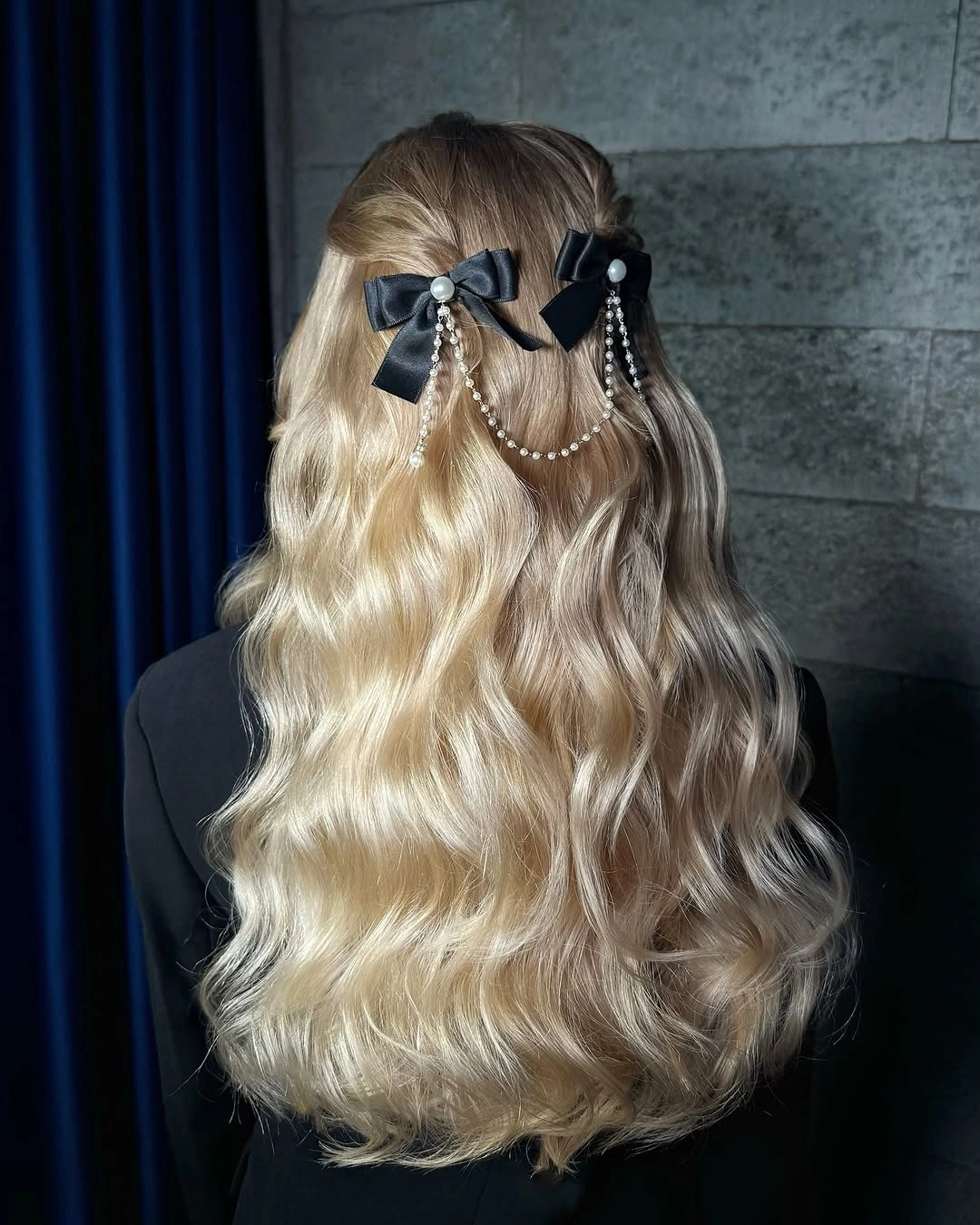
Photo via Instagram
The repeated waves below the accessories create a soft vertical rhythm, while the paired bows introduce symmetry near the crown and the curved bead detail adds a second line between them. Because the lower hair remains fully visible, the hairstyle balances decorative detail with length instead of letting one element completely dominate the other.
A useful decision here is whether you want an accessory to blend into the hairstyle or become one of its main visual anchors. You can also compare how much hair is gathered at the top while preserving the long, loose shape underneath.
4. A Textured Updo Built From Overlapping Sections
This brown updo is built around a compact mass of overlapping loops and folded-looking sections concentrated high at the back of the head. The exact pinning method is not visible, but the irregular arrangement creates depth through direction changes rather than through one smooth twist, while a few narrow strands fall free near the nape.
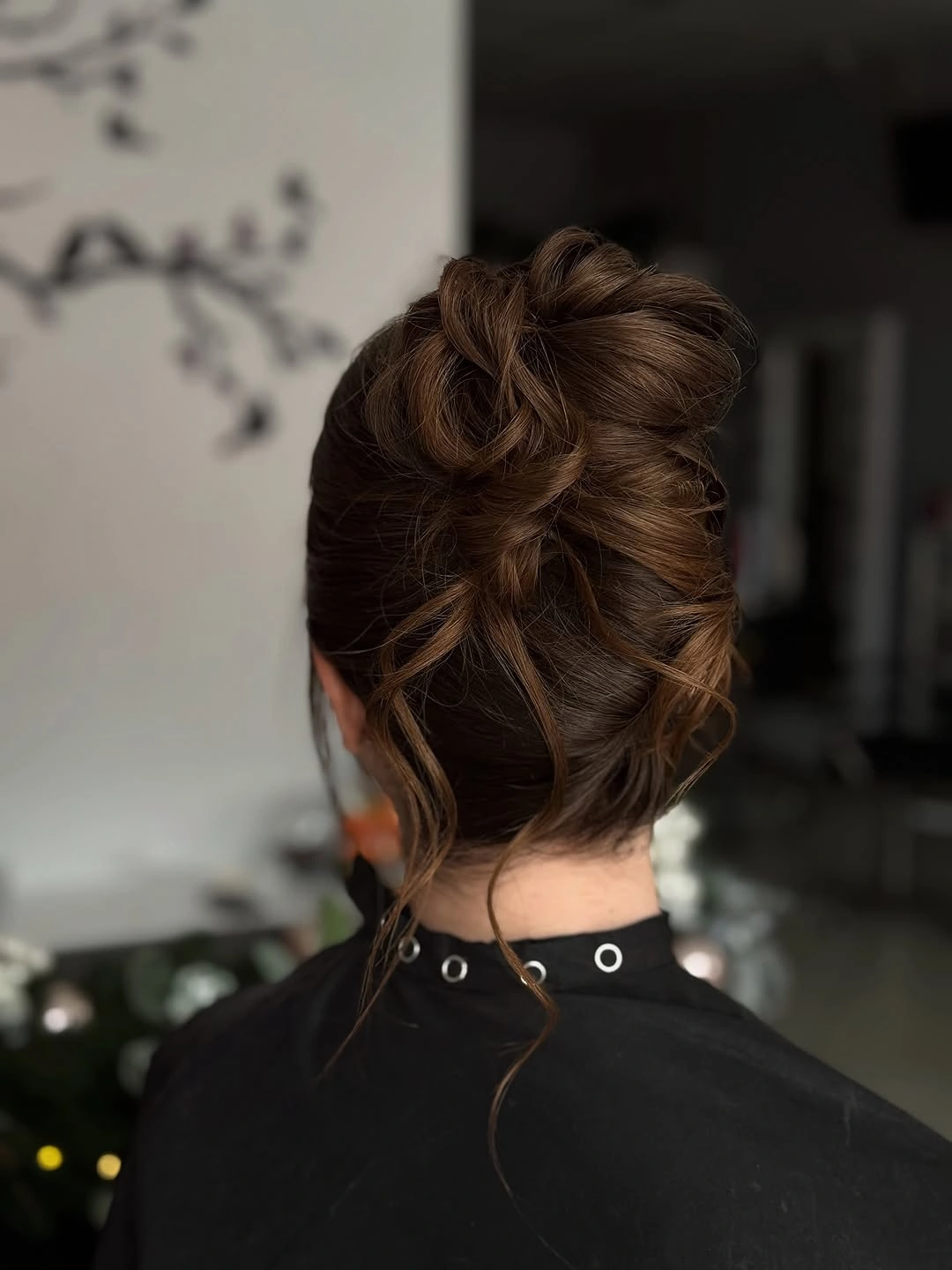
Photo via Instagram
What separates this shape from a sleeker updo is the contrast between the dense gathered center and the lighter edges around it. Some sections curve inward, others cross over one another, and the loose tendrils interrupt the outline, giving the hairstyle a deliberately textured appearance without requiring a claim about how it was constructed.
When using a reference like this, describe the amount of visible overlap, how compact you want the gathered area, and whether you want loose strands at the edges. That language keeps the focus on the finished shape instead of an uncertain styling technique.
5. Long Straight Hair Emphasizes Vertical Continuity
The main statement in this long light-blonde style is its uninterrupted vertical direction. A centered part divides the hair evenly, and the lengths fall very straight past the chest with little visible bend, so the overall silhouette stays narrow and elongated rather than expanding outward through curls, waves, or a gathered section.
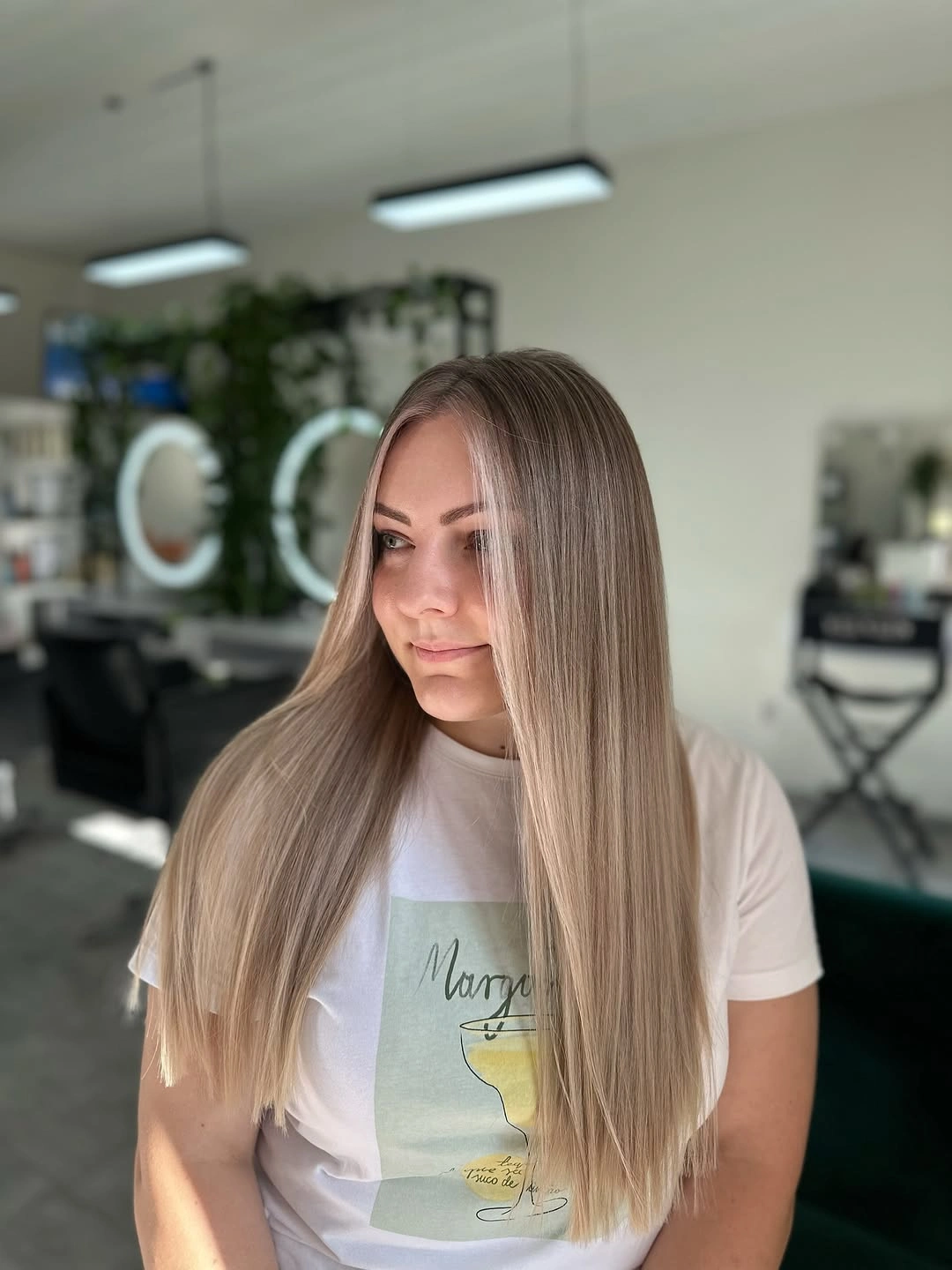
Photo via Instagram
Because the surface remains smooth and the sides run almost parallel, the eye notices length and line before any smaller styling detail. That makes this a useful reference for comparing how much visual impact can come from continuity alone, especially beside long hairstyles where movement begins higher and changes the width of the outline.
If you are comparing long straight references, look closely at how narrow the silhouette stays, how visible the lower edge is, and whether the front remains symmetrical. Those details give you clearer language than simply asking for long straight hair.
6. Small Curls Expand a Long Silhouette
Long pale blonde hair is shaped by a repeated small curl pattern that begins close to the crown and continues through the lower lengths, so texture defines nearly the entire silhouette rather than appearing only at the ends. The curls create a broad outline around the shoulders, with consistent bends and loops giving the style a strong sense of repetition from top to bottom.
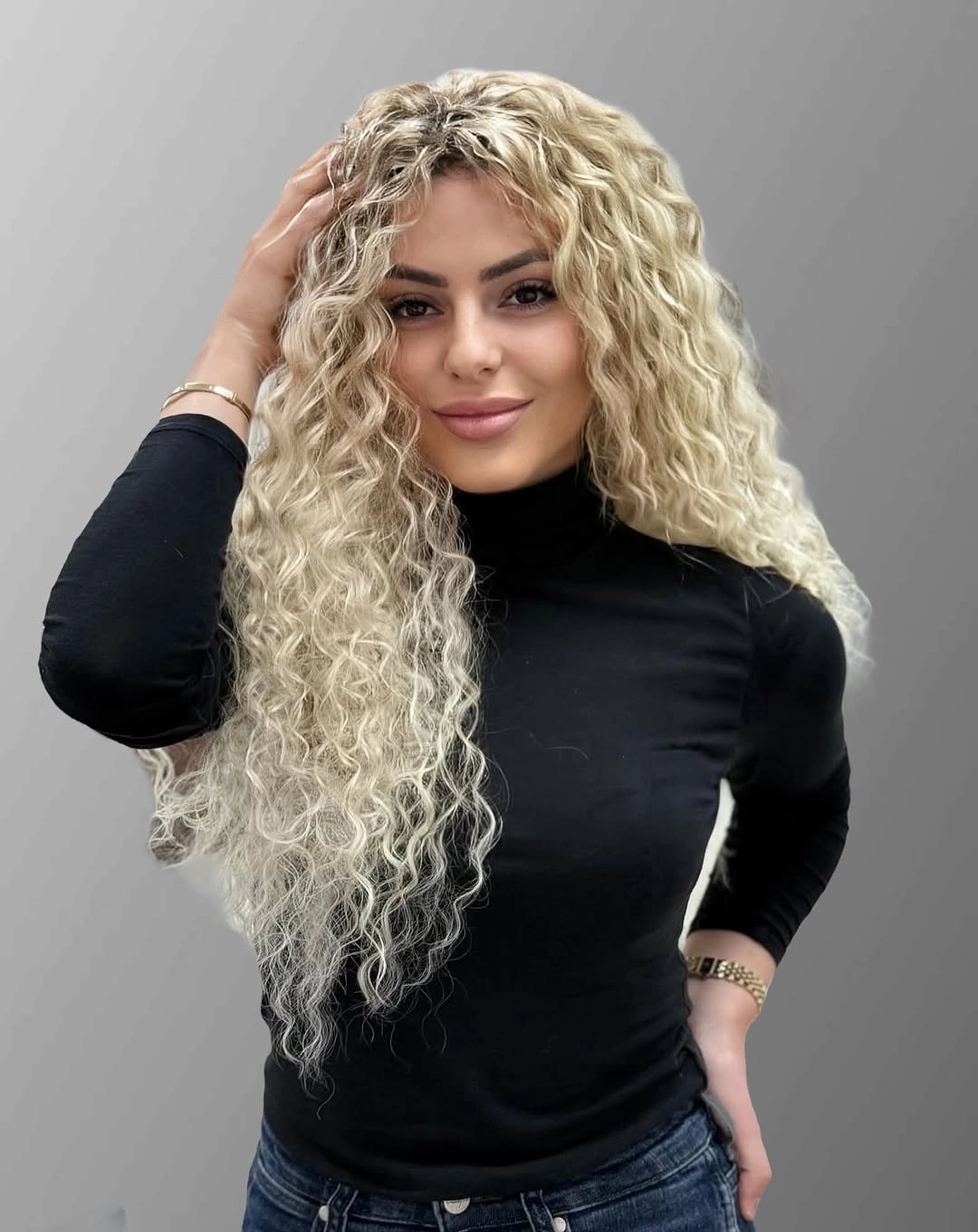
Photo via Instagram
What makes this reference distinct is the scale and continuity of the visible curls. Instead of moving from a smooth upper section into larger waves, the pattern stays active across most of the hair, which creates a wider visual footprint and a more intricate surface while still preserving the impression of substantial length.
When comparing long hairstyles, note both the size of the curl and how far upward the pattern begins. Smaller repeated curls across most of the length create a different outline from large bends that appear mainly through the lower half.
7. Outward Front Sections Lead Into Broad Curls
This medium-long brunette style is organized by broad curls and shorter-looking front sections that sweep outward from a center opening. The front pieces create a clear directional frame before they merge into fuller curls around the shoulders and chest, so the hairstyle reads as a sequence of changing bends rather than one continuous wave pattern.
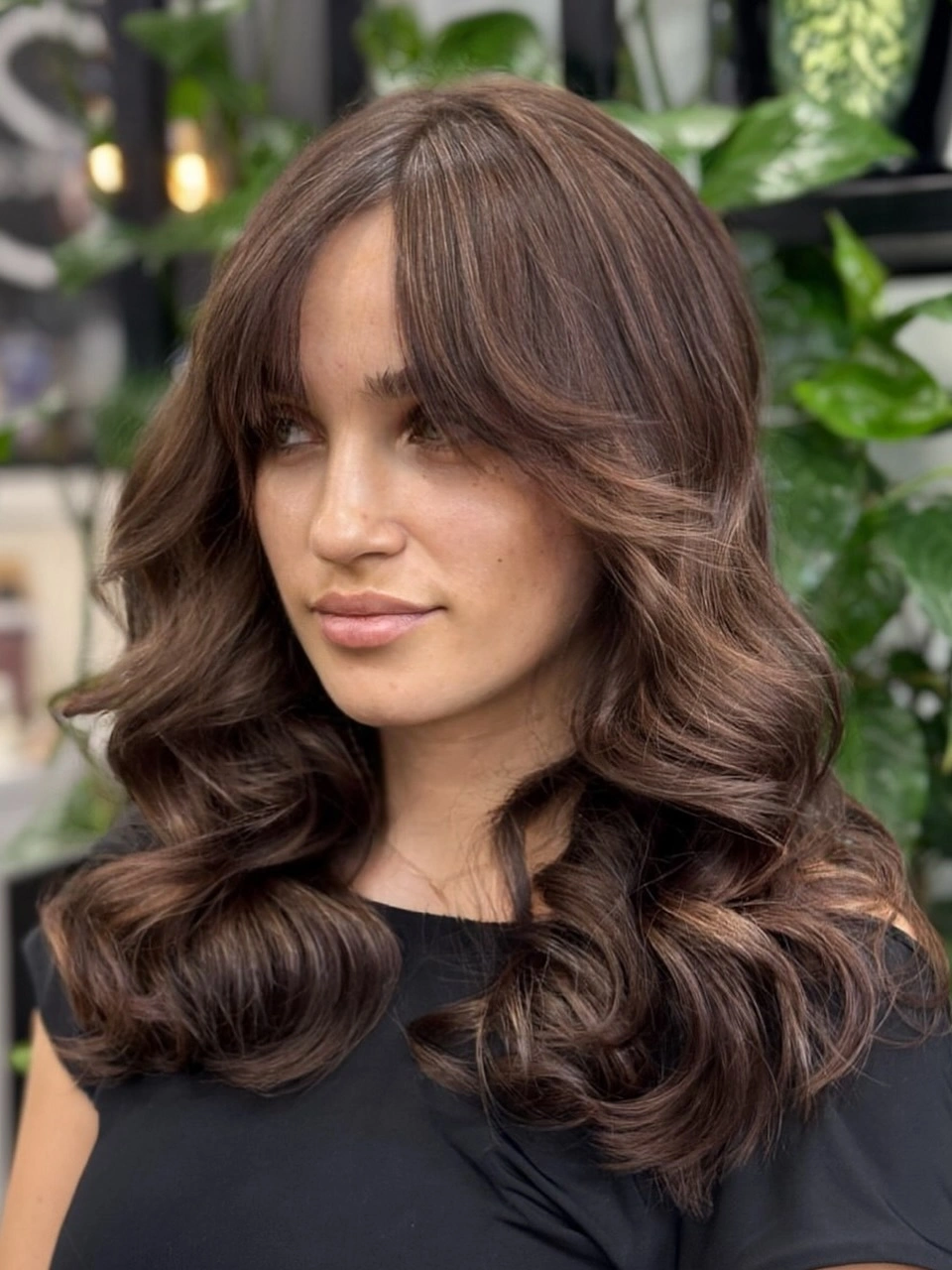
Photo via Instagram
The strongest visual shift happens where the smoother upper sections begin to turn outward and then roll into larger curls below. That transition gives the hairstyle a layered-looking rhythm without requiring a precise claim about the haircut itself, and it makes the placement of each bend more important than the overall length alone.
A useful reference point is where you want the first strong curve to appear and which direction the front should travel. Those choices can make similar medium-long hairstyles read very differently even when both finish with large curls.
8. Straight Length Creates a Narrow Vertical Shape
Long brunette hair falls from a centered part in a very straight, narrow silhouette, with the sides staying nearly parallel as they descend past the shoulders. The surface appears smooth and the lower lengths show only minimal deviation from the vertical line, so the overall effect depends on continuity, symmetry, and restrained width rather than visible curl or gathering.
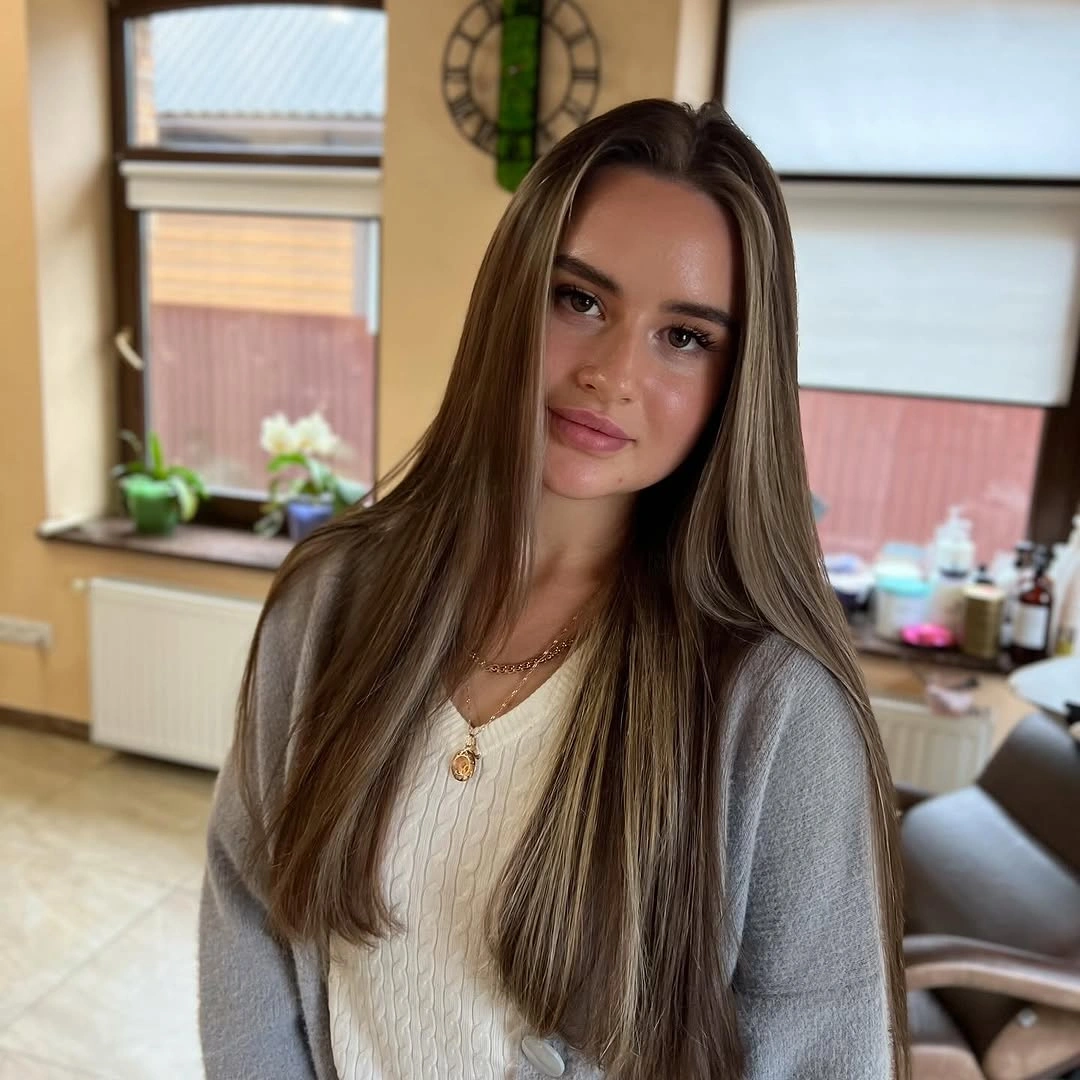
Photo via Instagram
This reference is useful because its structure is quieter than many long hairstyles while still being visually specific. The centered part keeps the front balanced, and the long straight sides emphasize uninterrupted length, making width and line the main points to compare against styles that expand through curls, waves, or lifted sections.
For long straight hairstyles, compare how closely the sides track the body and how much the outline widens toward the ends. Here, the strongest characteristic is the sustained vertical direction rather than a change in texture or a concentrated focal point.
9. Layered-Looking Ends Turn Outward at Multiple Levels
The shoulder-area shape is defined by several visible levels rather than one clean lower boundary. A full front fringe or curtain-like sweep covers much of the forehead, while shorter-looking sections around the face and outward-curved ends create movement at different heights, giving the hairstyle a layered-looking outline without relying on one dominant perimeter.
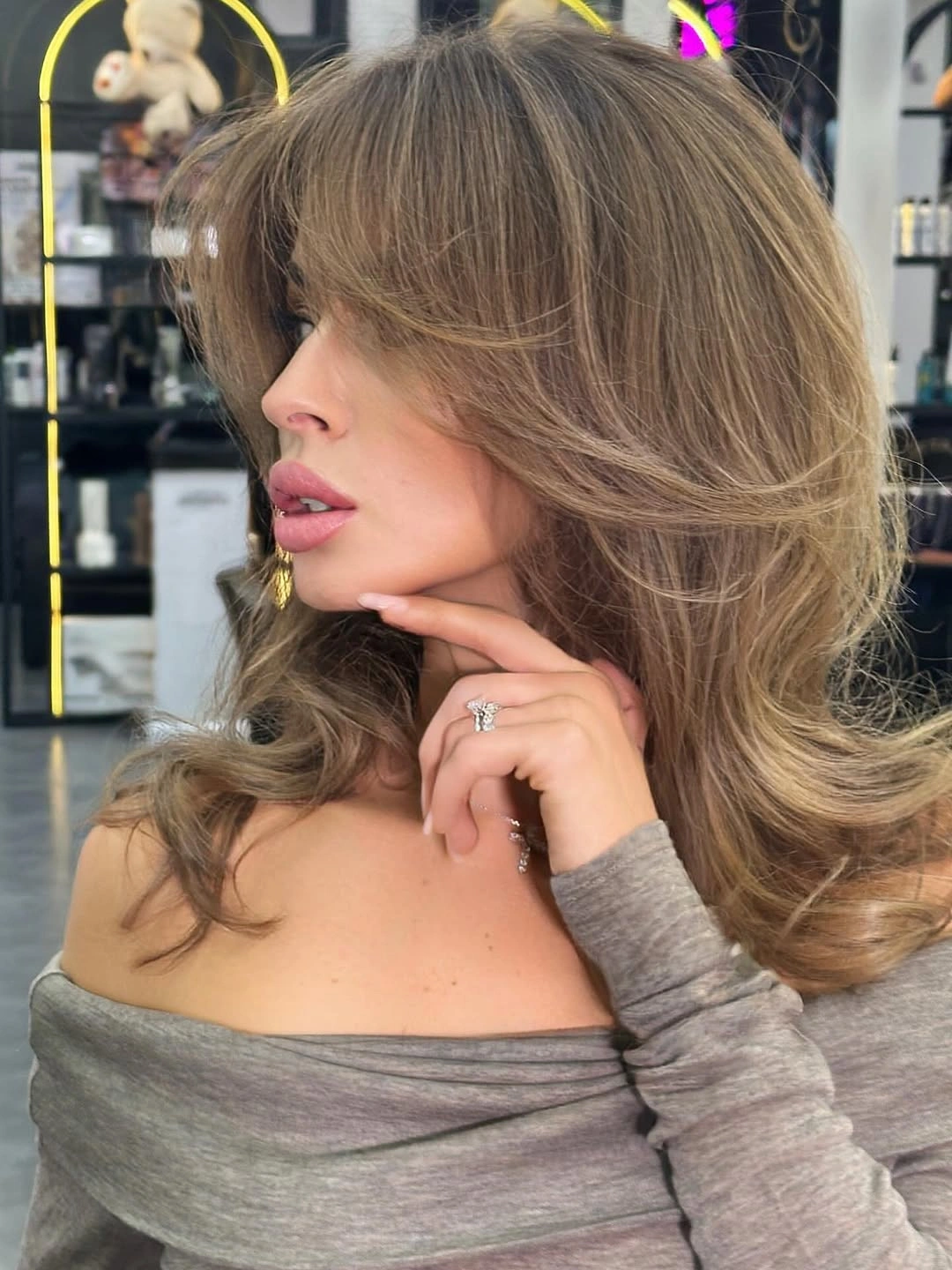
Photo via Instagram
The outward direction at the ends is especially important because it spreads the silhouette sideways instead of letting every section fall straight down. Combined with the front sweep and multiple shorter lengths, those flipped curves create a more broken, airy edge, so the hairstyle feels structured through direction changes rather than through a single blunt line.
If this shape is the reference, useful language includes a sweeping front, visible shorter levels, and ends that turn outward at several points. Those details describe the visible architecture more precisely than assigning the hairstyle a technical haircut name that the styling does not fully confirm.
10. Side Restraint Changes Long Dark Waves
Viewed from the back, the long very dark hair starts with a smooth crown and develops into broad waves through the lower lengths. One side is held back near the ear with a slim clip, introducing a small asymmetry that changes the outline on that side while leaving the main long-wave silhouette fully visible across the back.
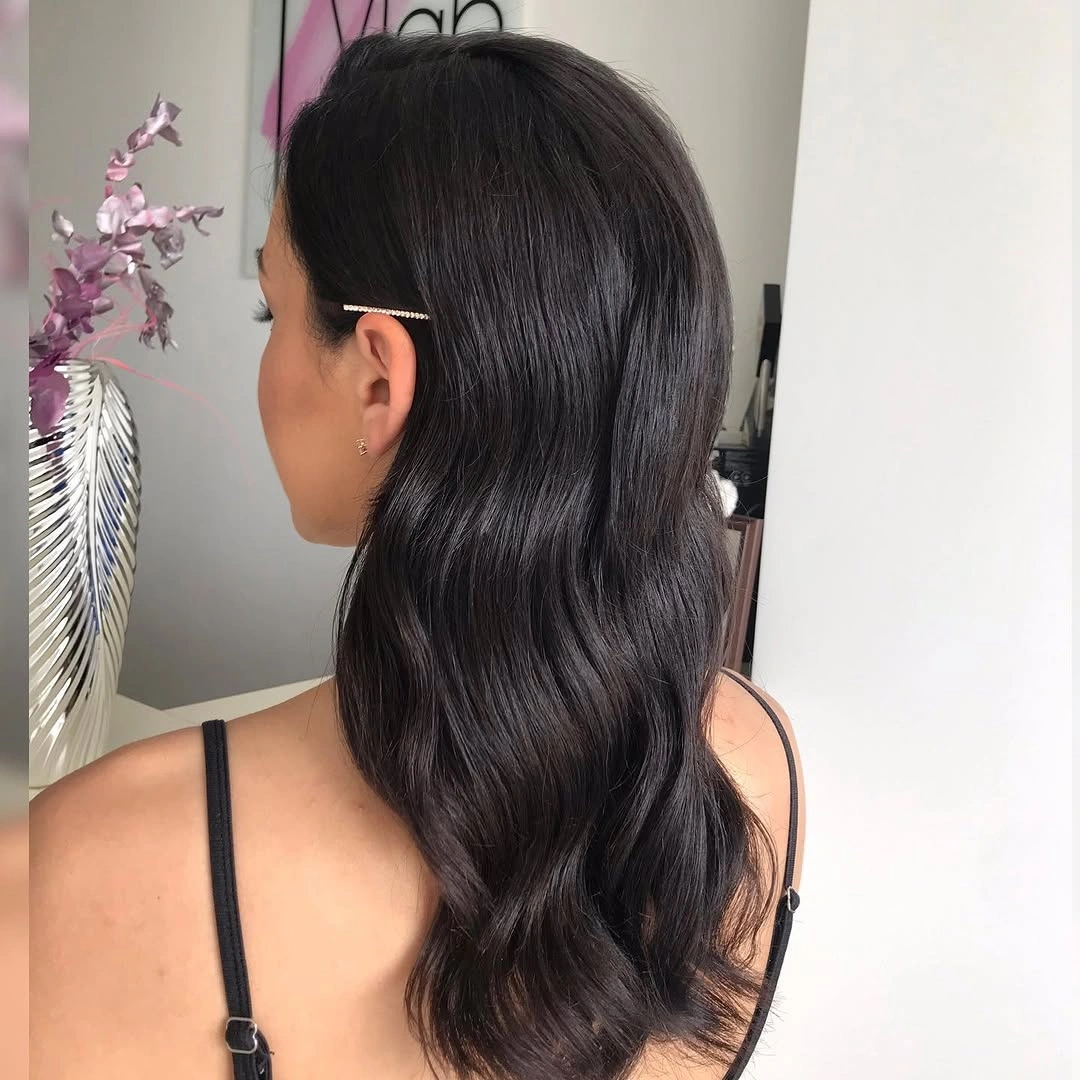
Photo via Instagram
The contrast between the controlled upper section and the softer waves below gives this style two clear visual zones. The side restraint adds another layer of structure by exposing one side more than the other, so a relatively small placement choice becomes the distinguishing detail within an otherwise loose, flowing arrangement.
This is a useful example of how one localized restraint can alter long hair without gathering the whole style. Compare the exposed side, the smooth crown, and the point where the broader waves begin when describing the version you want.
11. A Short Curly Crop With Rounded Shape
This short copper-red curly crop draws its structure from a compact rounded outline rather than from visible length. Small curls cluster across the crown and continue into a curled fringe over the forehead, while the nape stays comparatively short, so the shape reads as close and contained even though the surface remains highly textured.
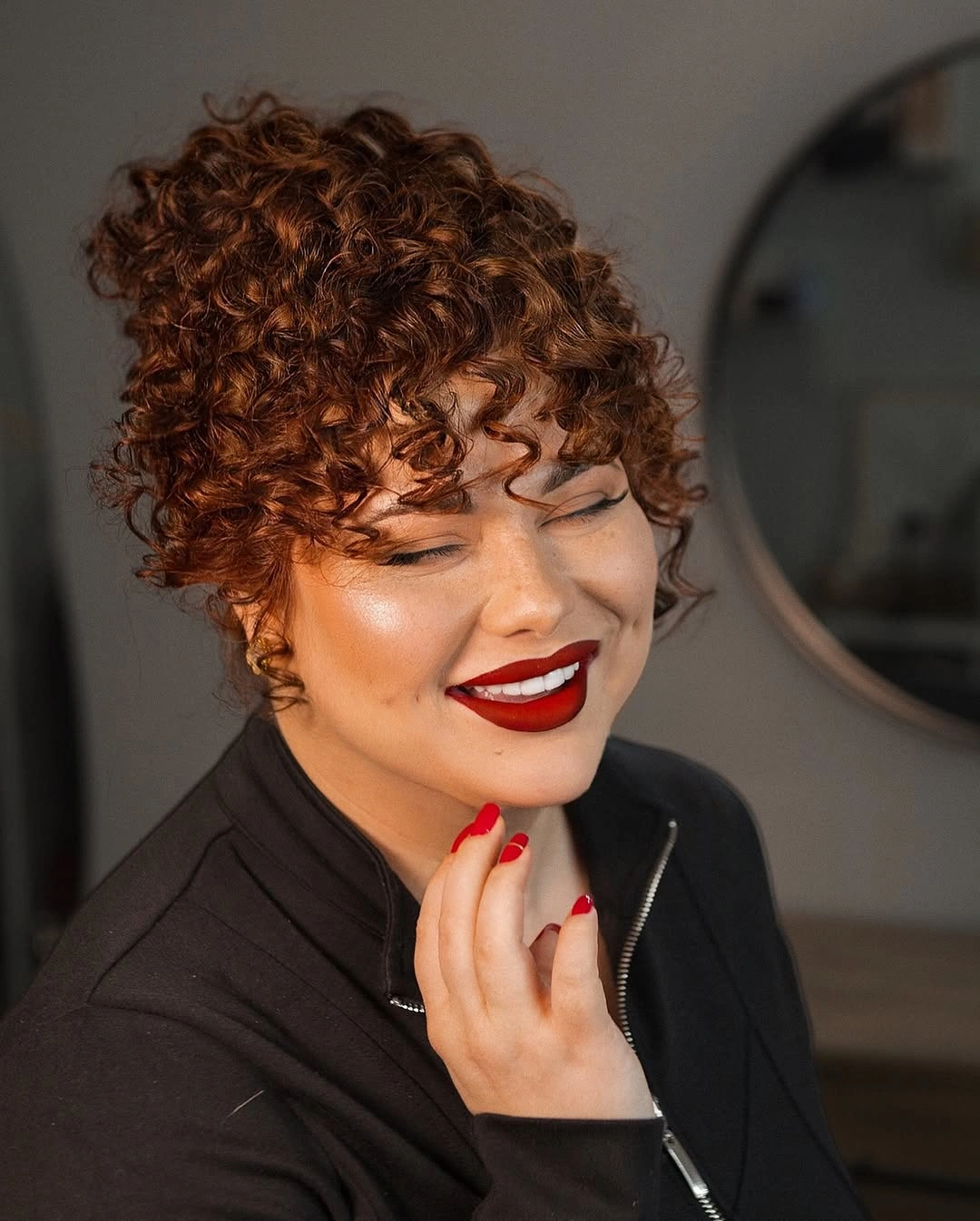
Photo via Instagram
The strongest distinction is how consistently the curl pattern carries from the top into the front instead of giving way to a separate smooth fringe. That continuity makes the rounded silhouette feel unified, while the shorter nape keeps the lower edge from extending far down the neck or competing with the curl-focused upper shape.
For a reference like this, the useful details are the rounded outer shape, the placement of curls across the forehead, and the short lower boundary at the nape. Describing those visible relationships is more precise than forcing a specific pixie label onto a cut whose exact geometry is partly concealed by curls.
12. A Low Updo With Smooth Inward Wrapping
This brown low updo is organized around a smooth outer surface that sweeps inward toward a rounded gathered form at the nape. From the back, the upper sections appear controlled and directional, while one loose curled strand near the side breaks the otherwise close outline and adds a small point of visual contrast.
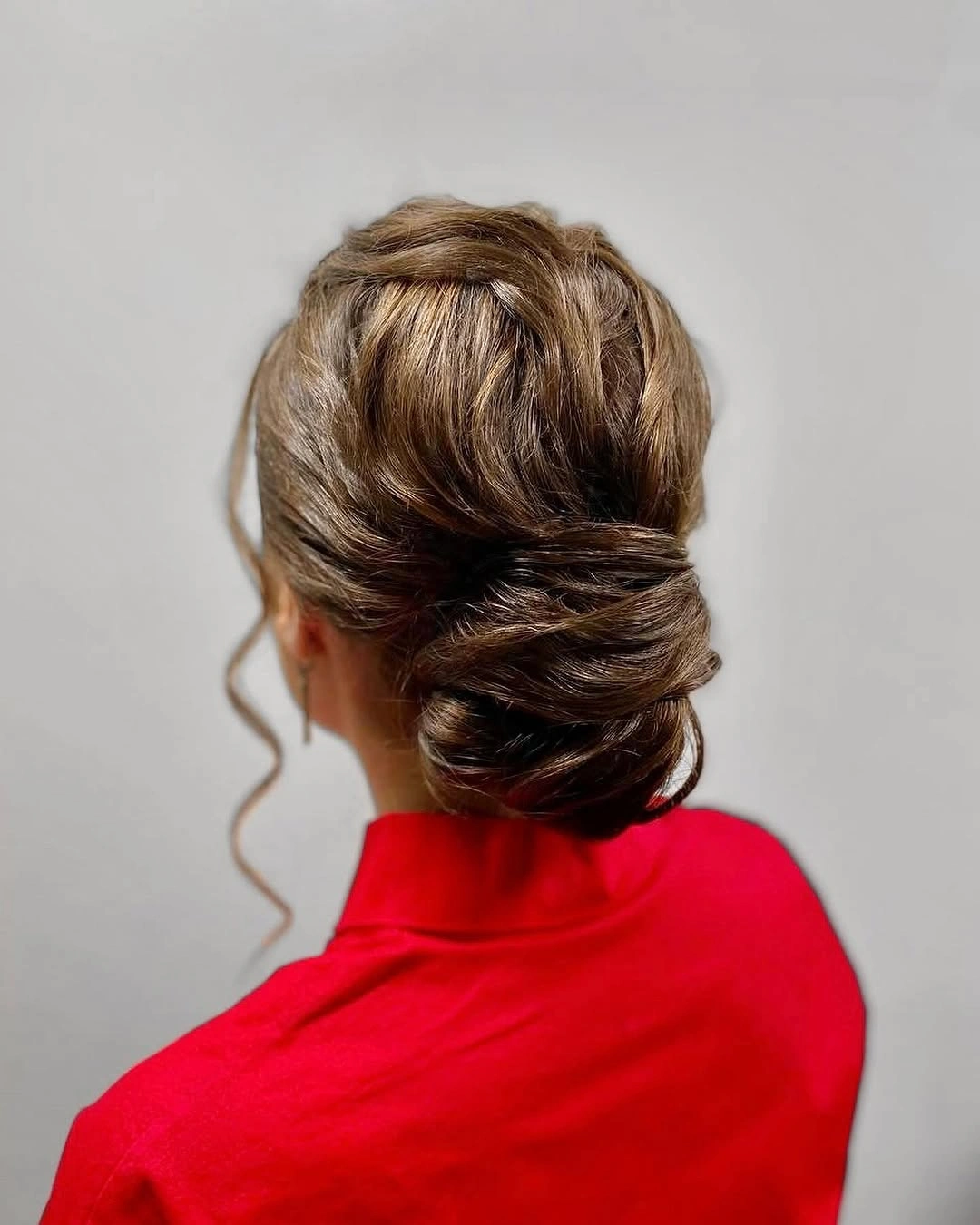
Photo via Instagram
What defines the hairstyle is the contrast between the broad, smooth sweep above and the compact low structure below. The visible wrapping draws attention toward the center back without exposing the exact construction, so the safest way to describe the look is through its low placement, inward direction, and contained nape-level shape.
The gathering point is the key choice to notice because it keeps the visual weight close to the nape rather than lifting it toward the crown. A reader using this as a reference can also distinguish between a fully contained perimeter and the effect of leaving a narrow curled strand outside the main structure.
13. Twisted-Looking Sections Soften a Low Updo
Here the low updo is less uniform, with dark brown sections crossing and folding into an irregular gathered shape near the nape. Several pieces read as twisted-looking rather than smoothly wrapped, and a few loose strands extend beyond the main structure, which keeps the perimeter soft and slightly uneven instead of tightly controlled.
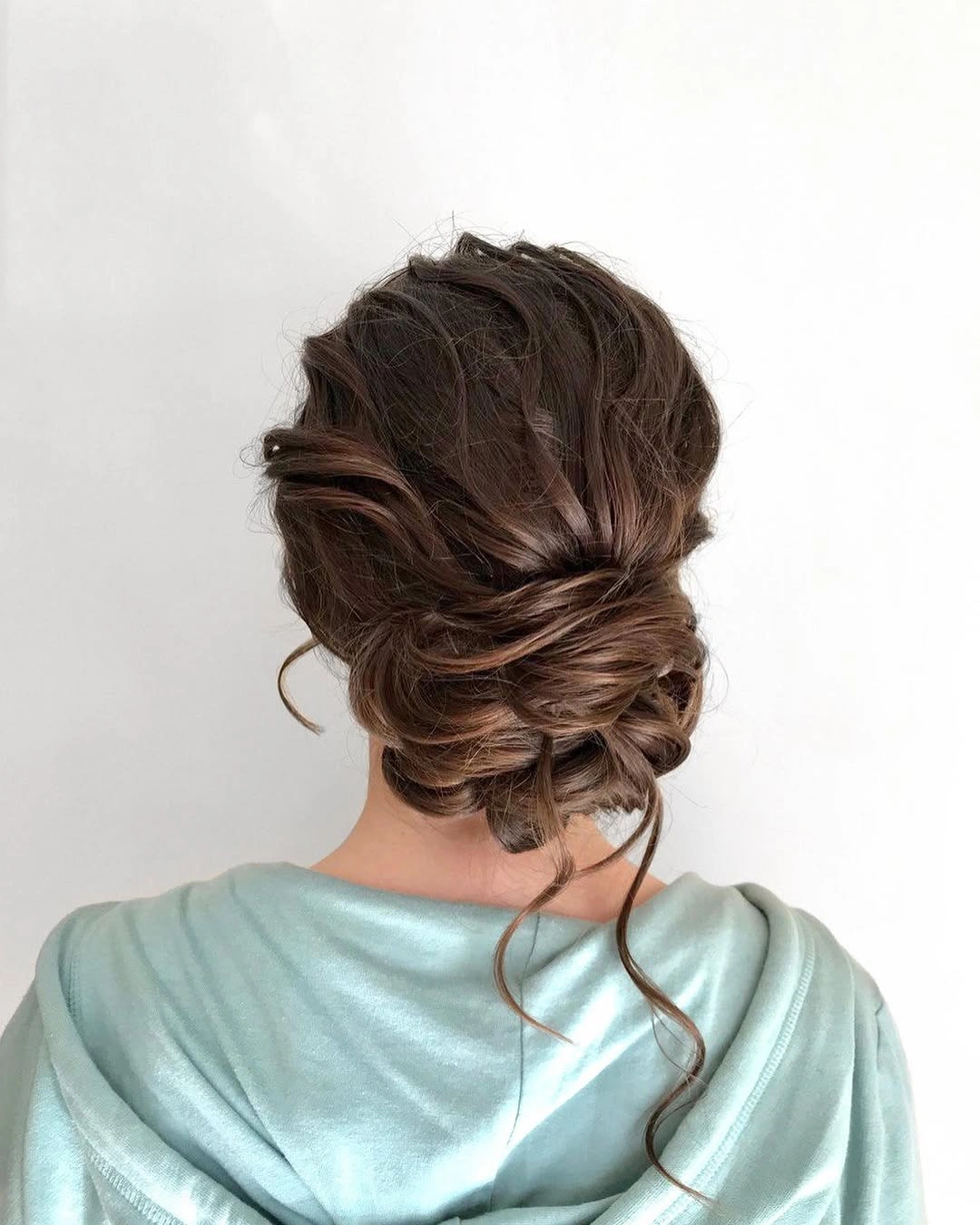
Photo via Instagram
The hairstyle gains depth from overlapping directions rather than from one obvious central roll or polished outer shell. Some sections sweep across the back, others tuck into the lower form, and the free strands interrupt the edge, making the finished shape feel intentionally varied while the exact securing method remains hidden.
This reference is useful for describing how much regularity you want inside a low gathered style. Terms such as overlapping sections, twisted-looking pieces, and a loose perimeter communicate the visible result without assuming how the hair was pinned or assembled.
14. A Rounded Crown Leads Into Broad Ponytail Waves
This copper-red ponytail combines a smooth rounded crown with a lower tail that opens into broad, repeated waves. The hair is gathered around a low-to-mid point at the back, and a small pearl-like accent sits near the tie, creating a compact focal detail between the controlled upper shape and the wider movement below.
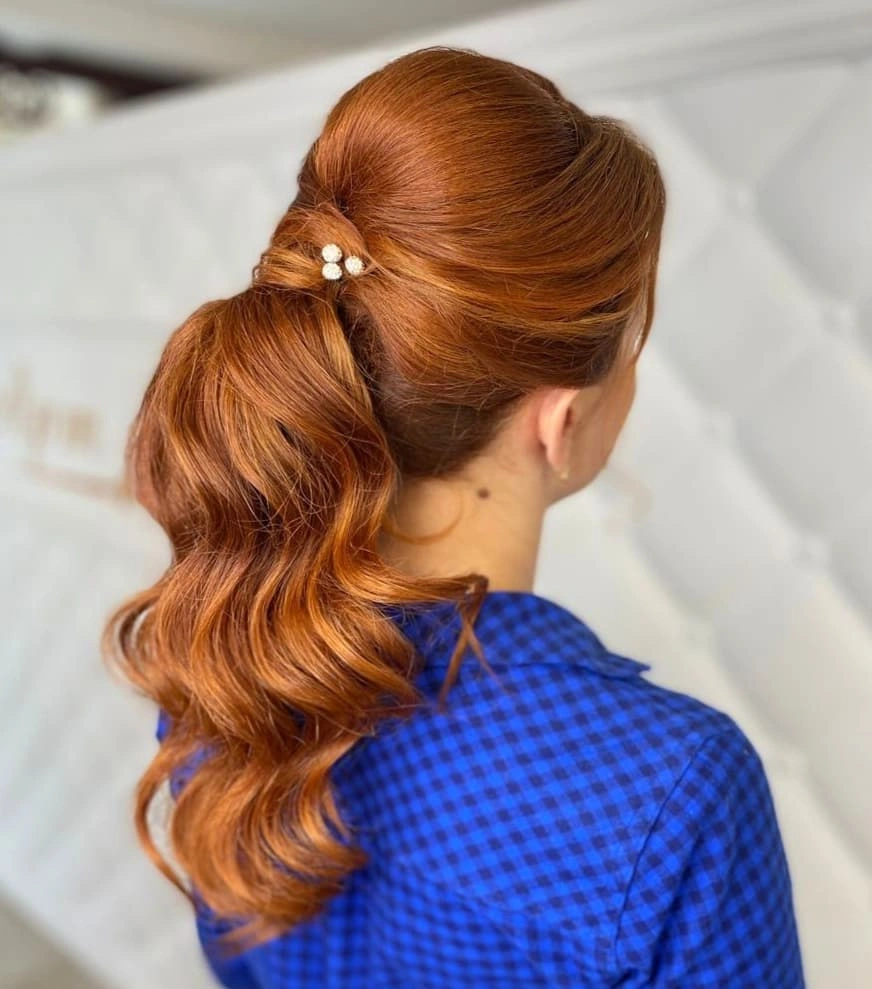
Photo via Instagram
The visual sequence is especially clear from the side-back angle: the crown forms one continuous curve, the gathered point narrows the silhouette, and the tail expands again through large bends. That change in width gives the ponytail its character, while the small accent near the base reinforces the transition without overpowering the hair itself.
Crown shape, gathering height, and the width of the waved tail can be treated as separate decisions when comparing ponytail references. Here, the smooth upper curve and broader lower section create a distinct narrow-to-wide progression that is more informative than describing the style only as a wavy ponytail.
15. Crossed Pins Reshape One Side of Long Waves
Long dark hair stays smooth and close through the upper section, with one side held behind the ear by crossed pins before the lengths develop into deeper waves lower down. The restraint is localized rather than full, so most of the hairstyle remains loose while the pinned side creates a clear asymmetry and a more exposed contour near the temple and ear.
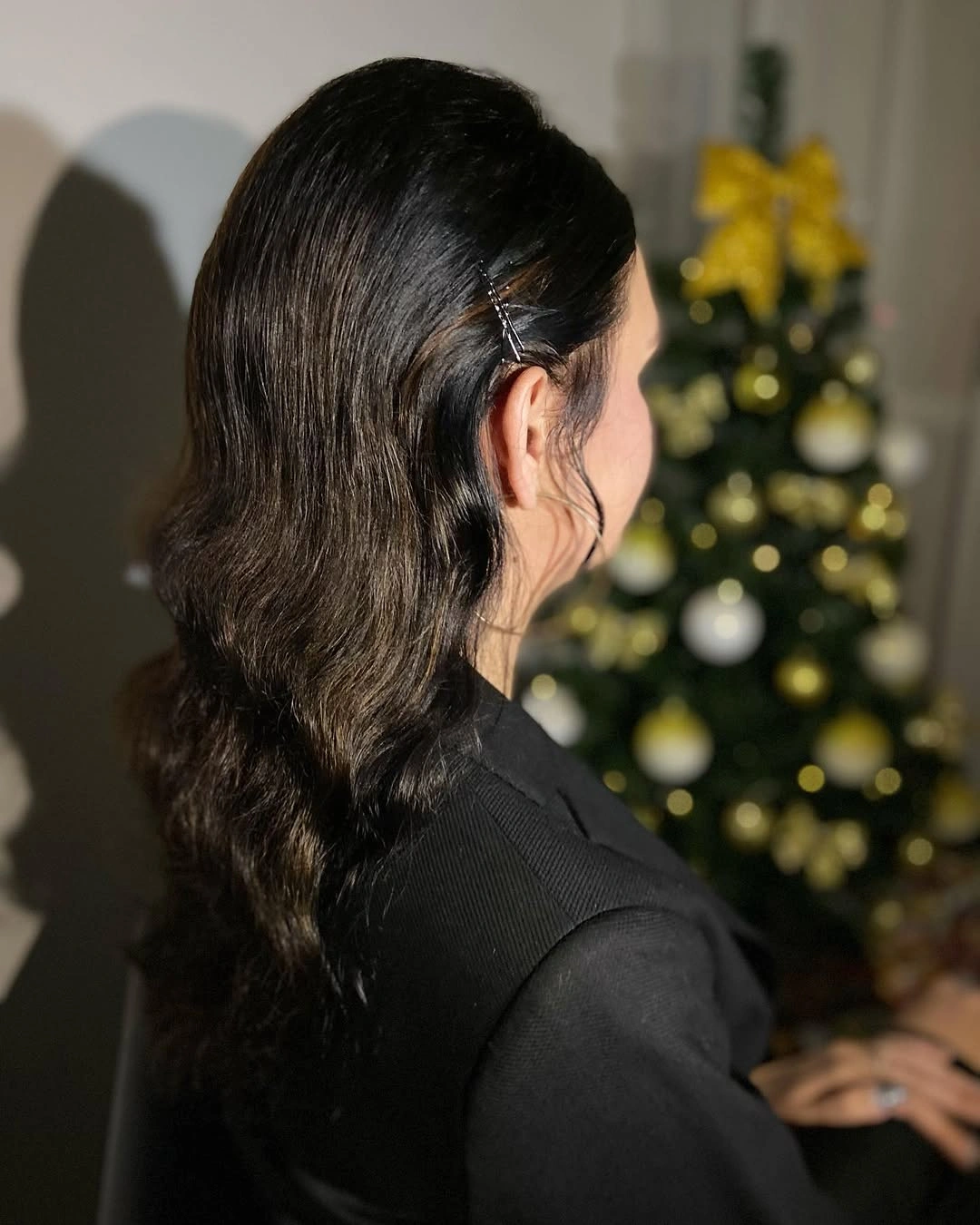
Photo via Instagram
The most useful structural detail is the shift from control to movement: the crown and side remain relatively sleek, then the lower lengths broaden through larger bends. Because only one area is secured, the style keeps its long flowing silhouette while gaining a directional point on the side, making placement as important as the wave pattern itself.
A similar reference can be described through three visible relationships: one restrained side, a smoother upper area, and stronger waves developing farther down the length. The crossed pins matter because their placement changes the side profile without turning the hairstyle into a ponytail or half-up arrangement.
16. High Ponytail Height Leads Into Softer Waves
The defining feature of this dark high ponytail is the elevated gathering point, which pulls the silhouette upward before the tail drops behind the head. The crown reads as smooth and swept back, with a visibly lifted profile, while the long tail loosens into medium-to-large waves that create a softer, wider shape below.
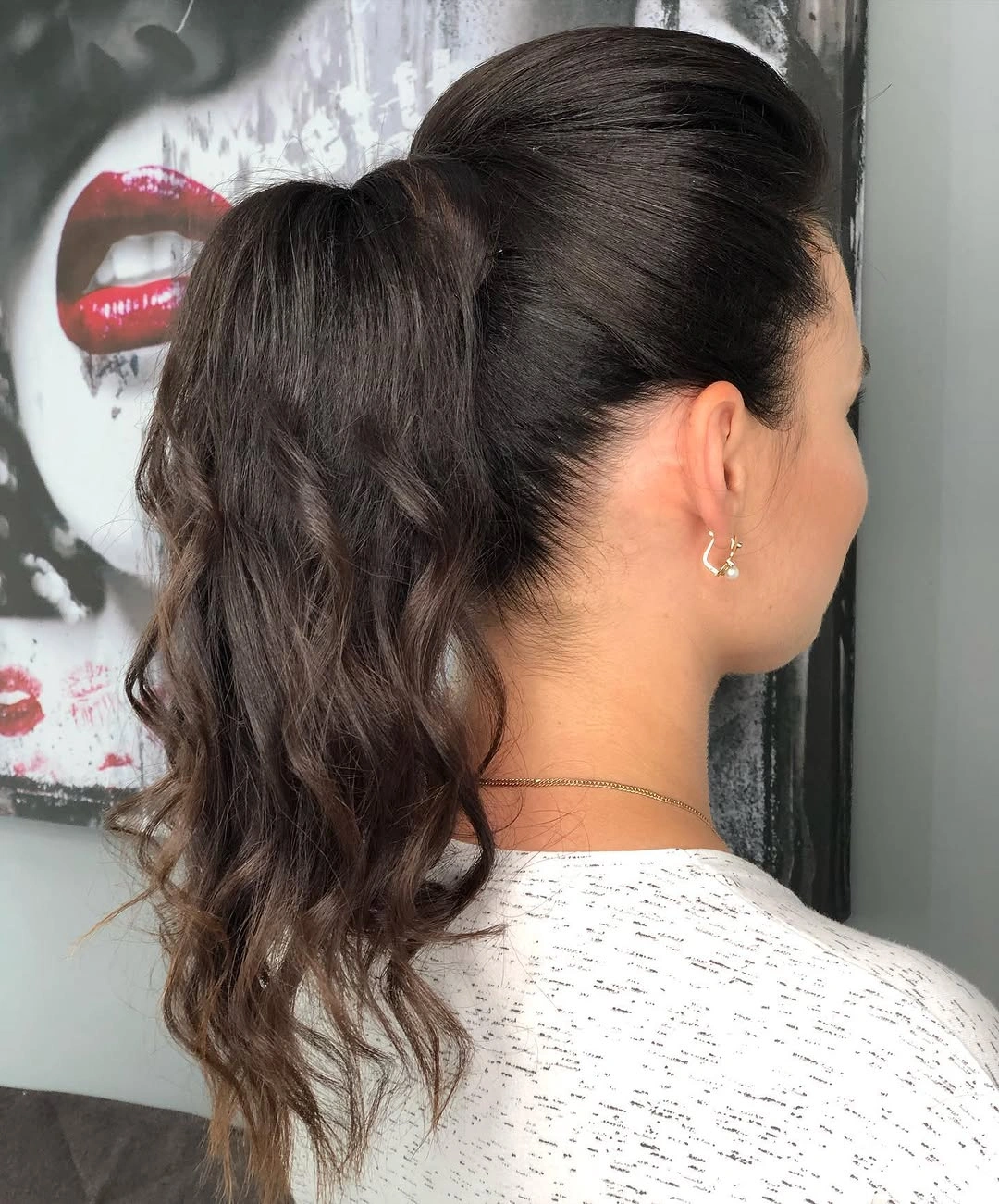
Photo via Instagram
That contrast between a controlled upper area and a more irregular lower section gives the hairstyle its strongest structure. Instead of relying on curl alone, the look changes scale from the close sweep at the front and crown to a fuller tail, so the height of the anchor point becomes the clearest detail to compare with lower ponytail references.
If this shape appeals to you, describe the high anchor point, the smooth swept-back surface, and the amount of visible wave through the tail as separate choices. Those details communicate the silhouette clearly without assuming how the crown height or ponytail was created.
17. Loose Blonde Bends Build Movement Toward the Ends
This light blonde style stays comparatively calm through the upper section, then develops into larger bends and loose curls as the hair approaches the shoulders and ends. The movement is spaced broadly rather than repeated in tight intervals, which lets the upper lengths remain smoother while the lower half gradually becomes more active and open.
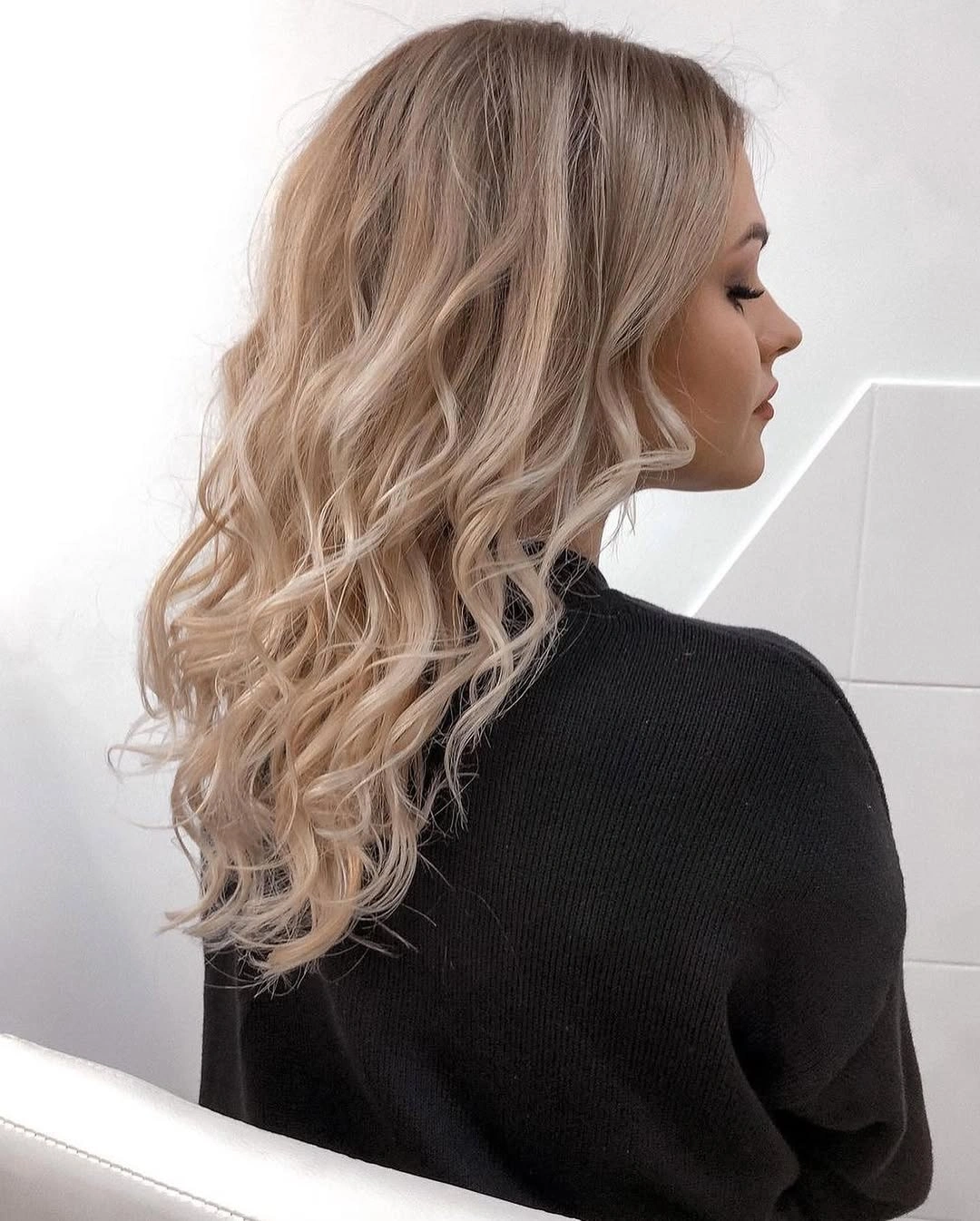
Photo via Instagram
The useful visual cue is where that change begins along the length. Because the strongest curves sit lower, the silhouette does not expand immediately from the crown; instead, it widens progressively toward the ends, creating a softer transition from straight-looking upper sections to more pronounced bends and curls below.
When comparing wavy references, look beyond the simple label and note where the first obvious bend appears. A style with movement concentrated lower on the length reads differently from one with curls beginning near the crown, even when the overall length is similar.
18. Extra-Long Straight Hair Keeps Lines Uninterrupted
Very long blonde hair falls from a centered part in two nearly parallel sections, creating one of the most continuous vertical silhouettes in the set. The surface appears smooth, the sides remain narrow rather than spreading outward, and the lower edge looks fairly direct, so length and line carry more visual weight than curl, lift, or gathering.
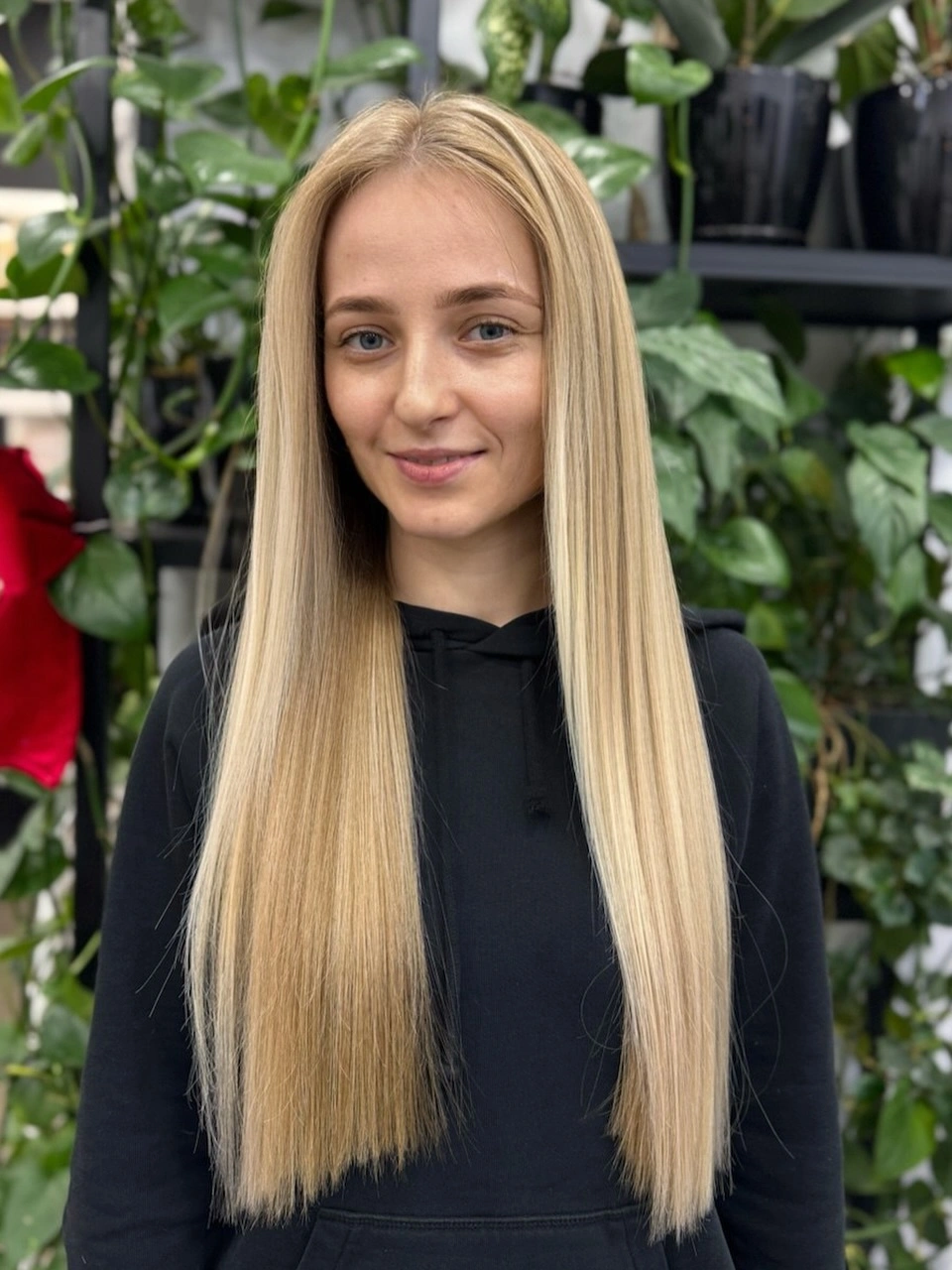
Photo via Instagram
The front view makes the uninterrupted descent especially clear because there is little visible change in width from the upper lengths toward the ends. That restraint turns the centered part, the long side lines, and the visible lower boundary into the main points of comparison, rather than any shift in texture or a concentrated styling focal point.
For a reference like this, useful consultation language centers on how straight you want the side lines to remain and how clearly you want the lower edge to read. You can also compare whether the outline stays narrow all the way down or begins to widen before the ends.
19. A Low Ponytail Creates a Long Descending Line
This long brunette ponytail is anchored low at the back, creating a clear downward line from the smooth upper section into the tail. Near the base, the hair appears gathered into a compact transition, while the lower half opens into larger waves that widen gradually as they travel toward the ends and add shape without lifting the silhouette upward.
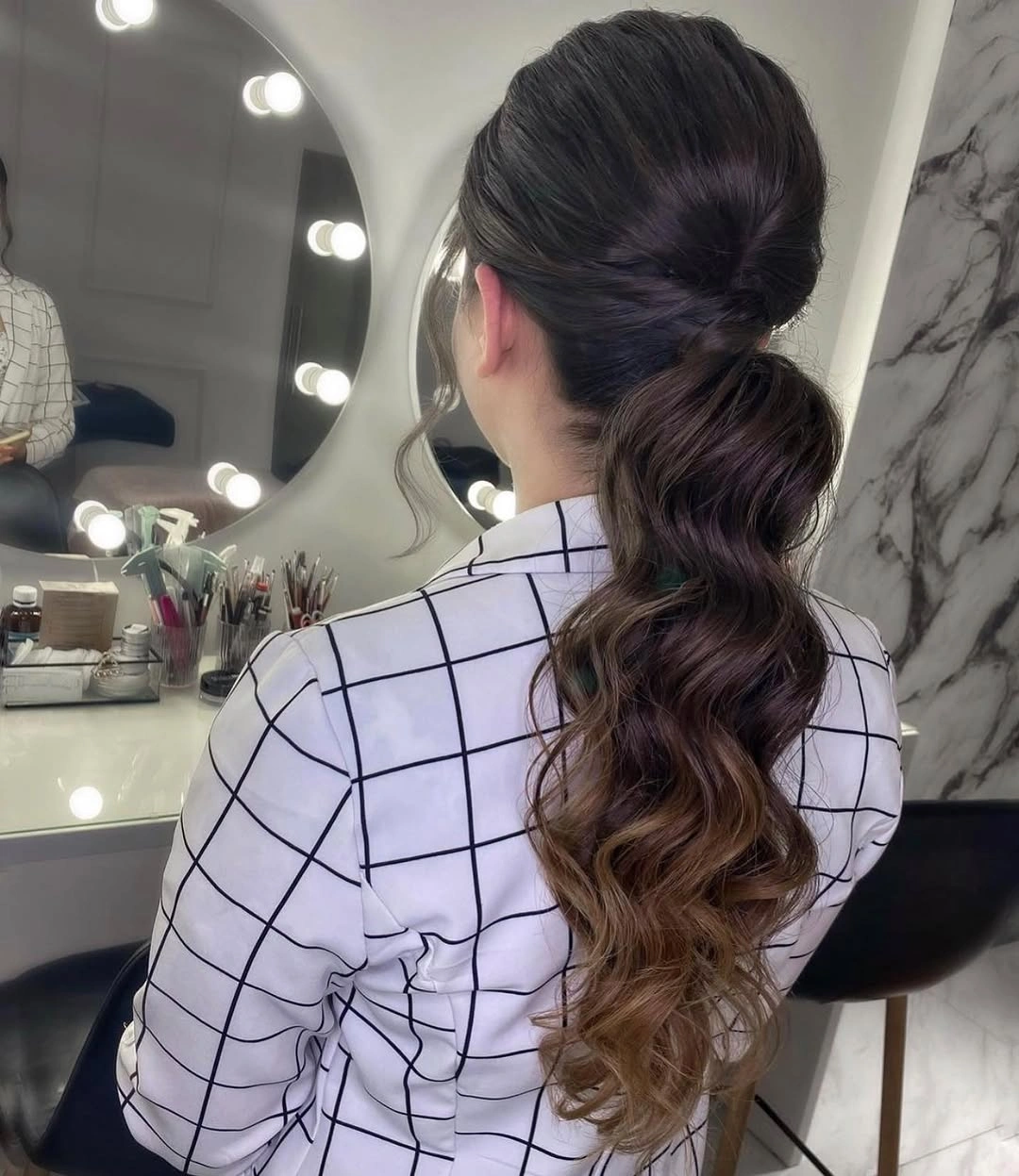
Photo via Instagram
The low placement is what separates this ponytail most clearly from a higher version. Because the tail begins close to the nape and expands farther down, the hairstyle emphasizes vertical length first and broader wave shape second, producing a descending rhythm that remains close to the back before becoming fuller through the lower portion.
A useful comparison is the height of the gathering point and how quickly the tail begins to widen beneath it. Here, the low anchor and larger lower waves work together to keep the top restrained while giving the bottom half more visual presence.
20. Rounded Bob Geometry Shapes the Back View
From the back, this cool gray-silver bob forms a compact neck-level silhouette with a smooth surface and a clearly rounded lower edge. The perimeter appears even-looking rather than jagged or heavily broken, so the shape is defined by its curved boundary and contained width instead of visible layering, waves, or directional pieces.
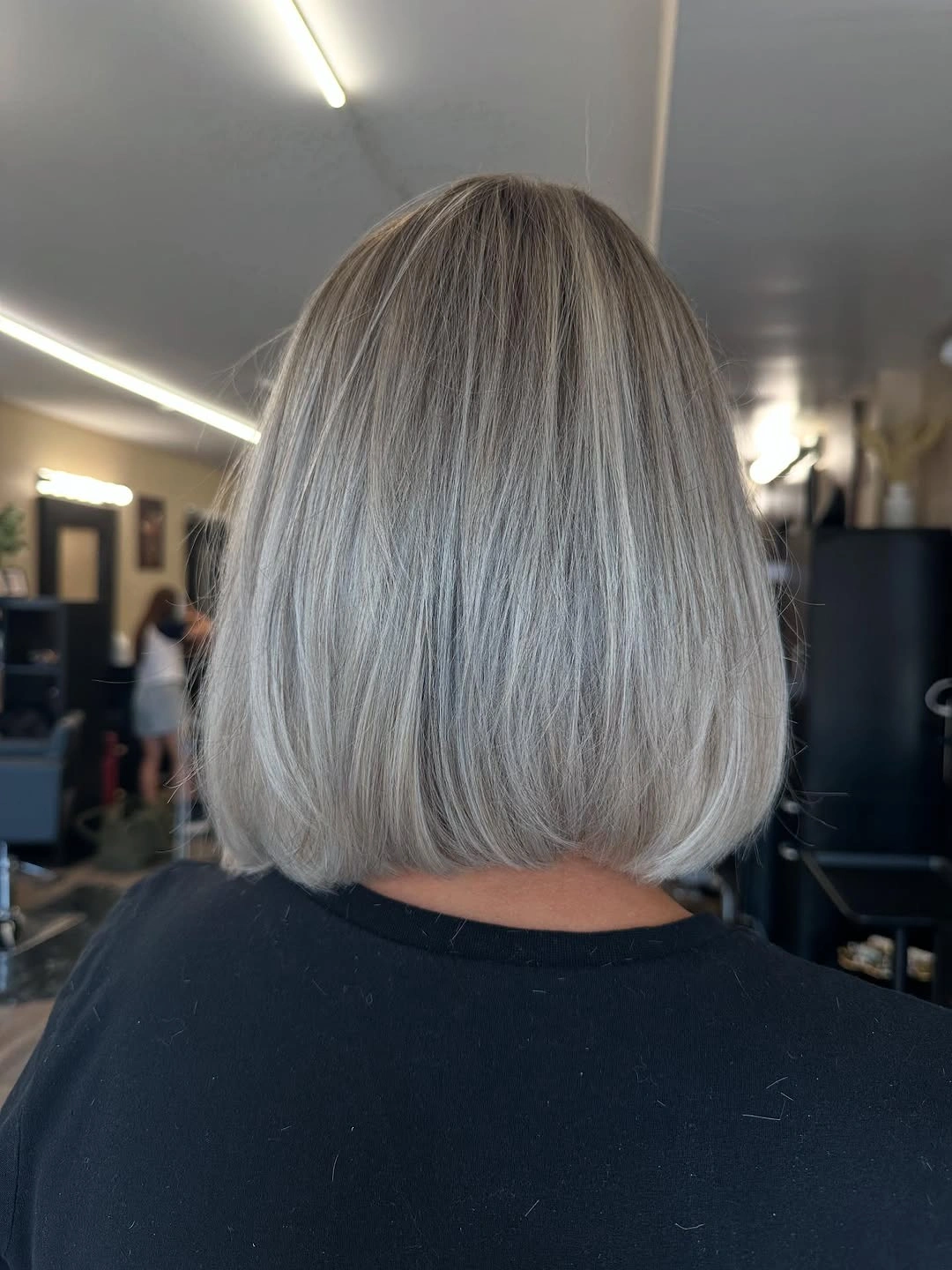
Photo via Instagram
The strongest visual feature is the way the lower line bends gently around the back rather than reading as a sharp straight bar. Because the surface above it stays relatively smooth, that rounded perimeter becomes easy to isolate as the hairstyle’s main structural idea, giving this bob a different back-view geometry from a more forward-angled or visibly blunt-looking reference.
If you are comparing bob shapes, pay attention to where the perimeter meets the neck and whether the back reads as straight, angled, or rounded. This example is useful for describing a compact curved outline without attaching that geometry to any age, hair type, or cutting method.
21. Textured Fringe Breaks Up Long Copper Waves
This copper-orange hairstyle builds its shape from contrast between a full textured fringe and longer sections that move in uneven waves below it. Shorter-looking pieces appear at several levels around the sides, so the outline does not settle into one continuous edge, and the combination of fringe, bends, and separated ends gives the silhouette a distinctly broken rhythm.
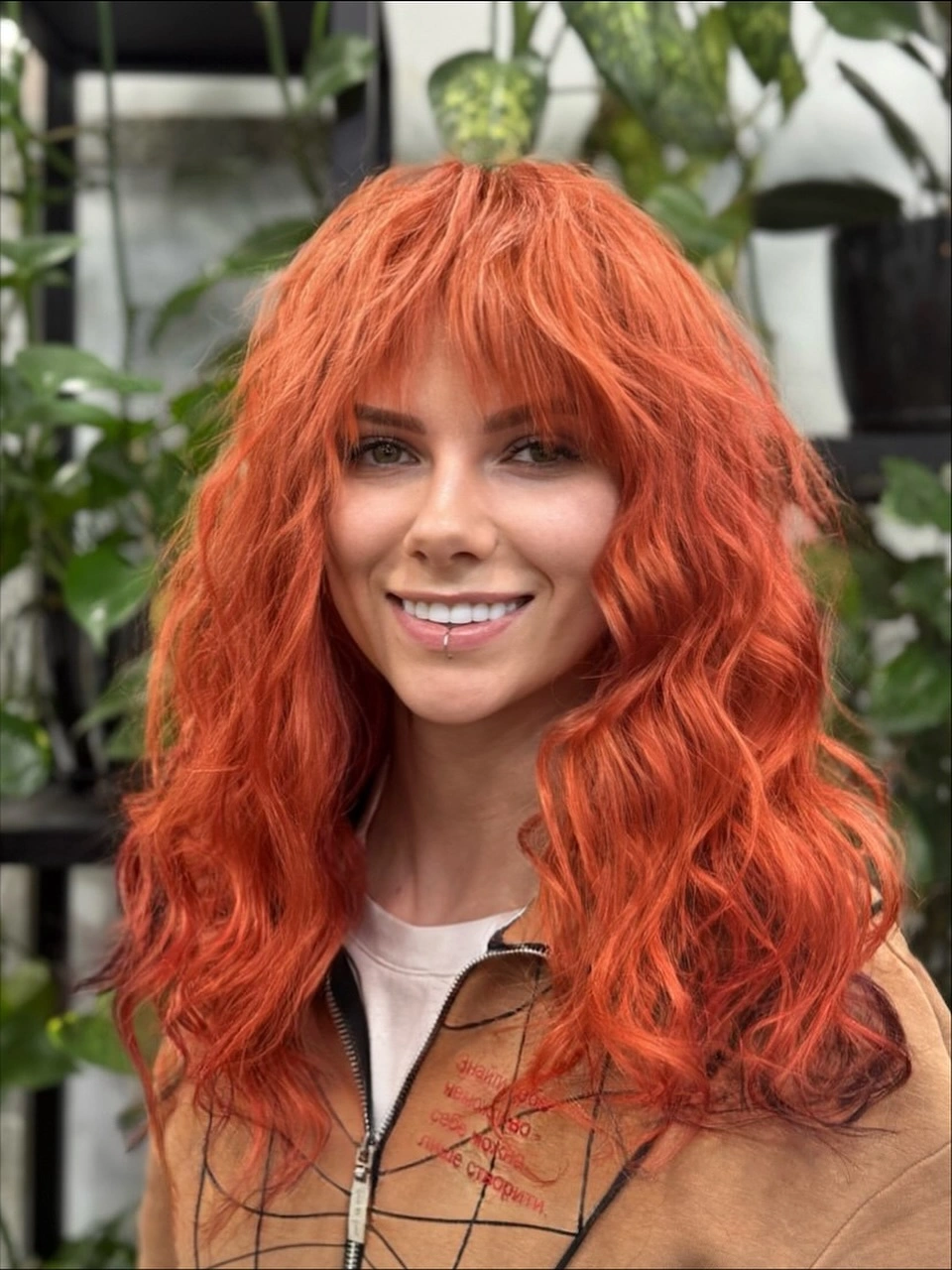
Photo via Instagram
The strongest difference from a smoother layered-looking style is the irregularity of the visible direction. Some sections curve outward, others fall more vertically, and the waves vary in size as they move through the length, allowing the fringe to remain a clear horizontal focal area while the lower hair develops a looser, less uniform perimeter.
If this shape is your reference, terms such as textured fringe, shorter-looking pieces, irregular wave placement, and a broken outer edge describe what is actually visible. Those details communicate the structure without assigning an exact shag label or claiming a specific cutting method.
22. Large Copper Curls Widen Below the Center Part
This vivid copper-orange style begins with a centered upper section and then expands through large, clearly defined curls from roughly the mid-lengths downward. The crown appears deeper reddish than the brighter lower areas, but the hairstyle itself is best read through its shape: a relatively controlled top opening into a broader, more rounded lower silhouette.
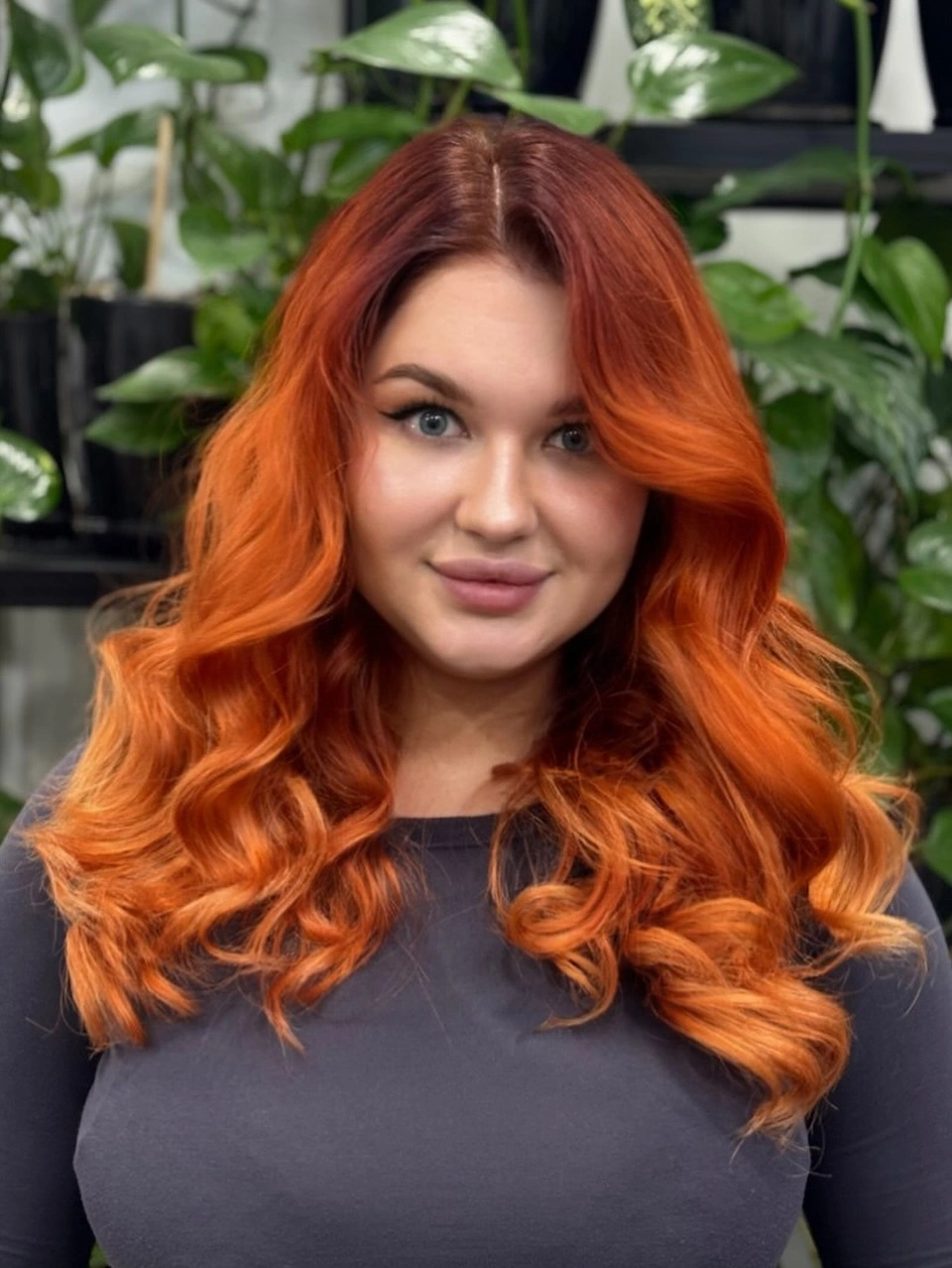
Photo via Instagram
The repeated curl pattern gives this hairstyle a more orderly visual rhythm than references built from uneven waves or separated pieces. Each larger bend adds width through the lower portion while the center part keeps the upper structure visually direct, making the transition from narrower top to fuller curled ends the clearest relationship to compare.
For a similar reference, note where the larger curls begin and how consistently they repeat through the lower length. You can also describe the centered opening and lower expansion without naming a coloring technique or an exact haircut that the curled styling does not fully reveal.
23. Minimal Half-Up Structure Preserves Straight Length
Very long blonde hair falls straight down the back while relatively small side sections are drawn inward and joined at the center, forming a restrained half-up detail. Most of the length remains loose and uninterrupted beneath that point, so the hairstyle changes direction only in the upper area while preserving a narrow vertical silhouette through the lower hair.
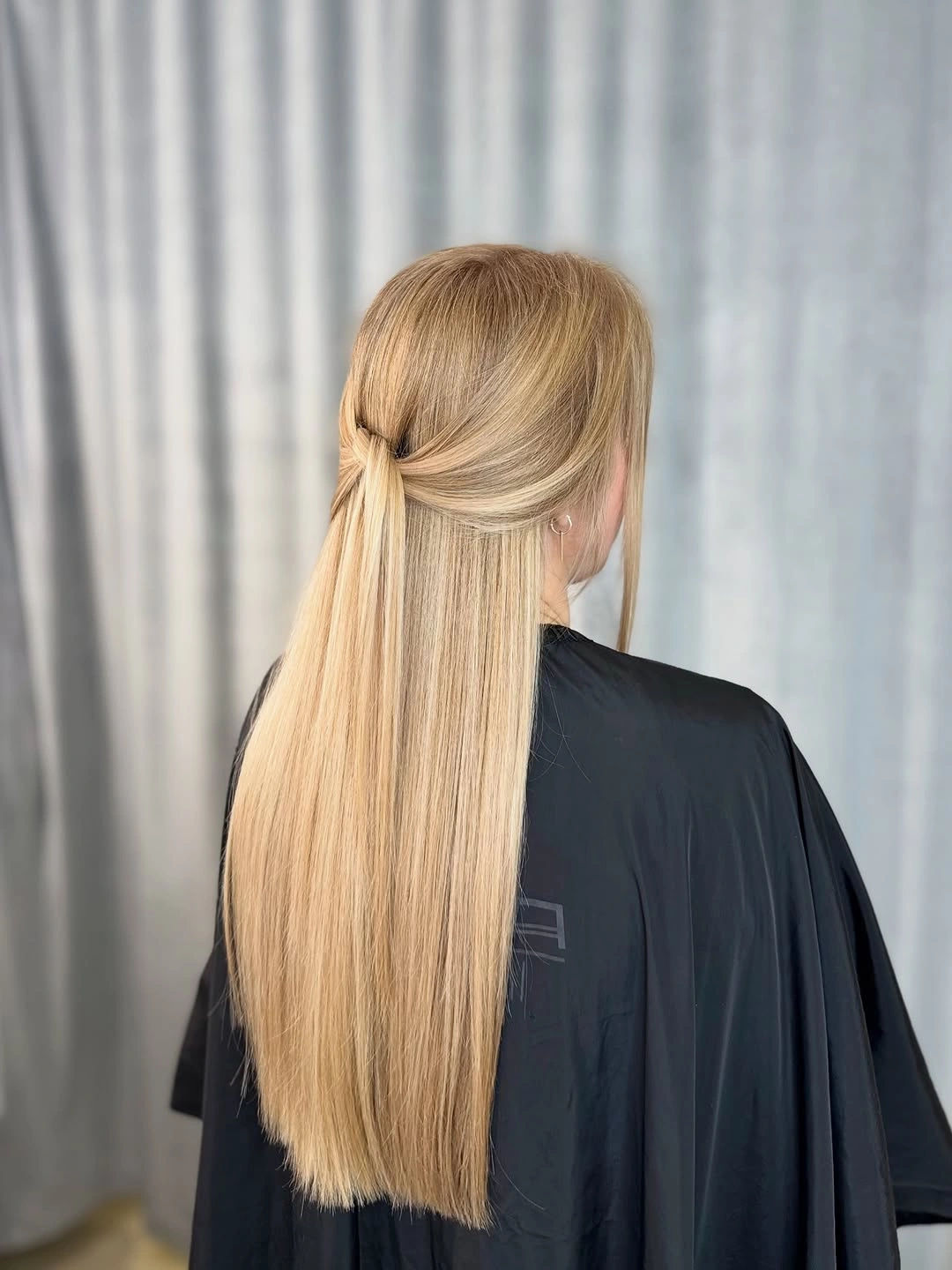
Photo via Instagram
The contrast is deliberately simple: the side sections travel toward one central point, while everything below continues almost straight toward the ends. Because the gathered area occupies only a small portion of the total shape, it redirects attention across the upper back without introducing the height, broad curls, or large gathered mass seen in more elaborate long hairstyles.
A useful way to describe this reference is through the small half-up focal point, smooth side direction, and nearly uninterrupted straight lengths below it. The exact fastening method is concealed, so the visible wrapped-looking structure is more reliable language than naming a particular knot or twist technique.