Braids are a cornerstone of natural hair styling, offering both protection and endless creative possibilities. This year, intricate patterns and decorative elements are taking center stage, with a shift toward glossy natural texture and lived-in color that keeps the look fresh rather than rigid.
Trendy Natural Hair Braids covers 19 ideas that range from low-upkeep weekend styles to high-detail salon looks, working for short bobs, shoulder-length cuts, and mid-back lengths alike. If your braids tend to frizz by day three or you are tired of the same basic cornrow, this collection gives you actual alternatives that hold their shape and still feel like you.
1. Ornate Cornrows To Mid-Back Braids
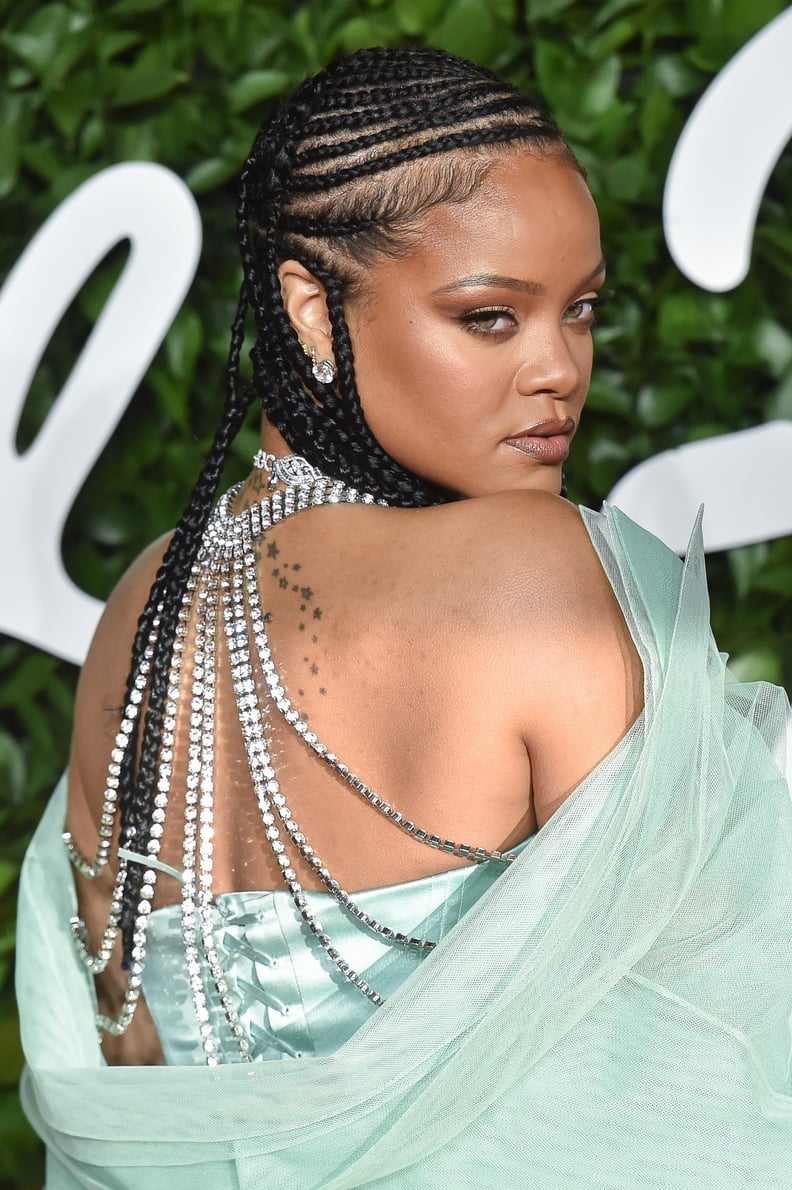
The pattern starts tight at the scalp, where the braider feeds sections of a middle parting into curved rows, then releases each row into a loose braid that falls to the mid-back. That handoff is the whole trick: too much tension up top and the scalp pulls, too little and the ornate lines blur within a week.
Ask your stylist for: ornate cornrows, long loose braids. Straight, mid-back black hair keeps the rows crisp and the hanging length flat and even. A style this built needs a clean, moisturized scalp and a light oil along the parts every few days; loose ends on the hanging braids want a trim every six to eight weeks. Expect a long salon session, and plan on wrapping the length at night to keep the loose braids smooth. For a special event, the ornate cornrows with braids hold their shape through a full evening without a single pin.
2. Mid-Back Box Braids With Amber Beads
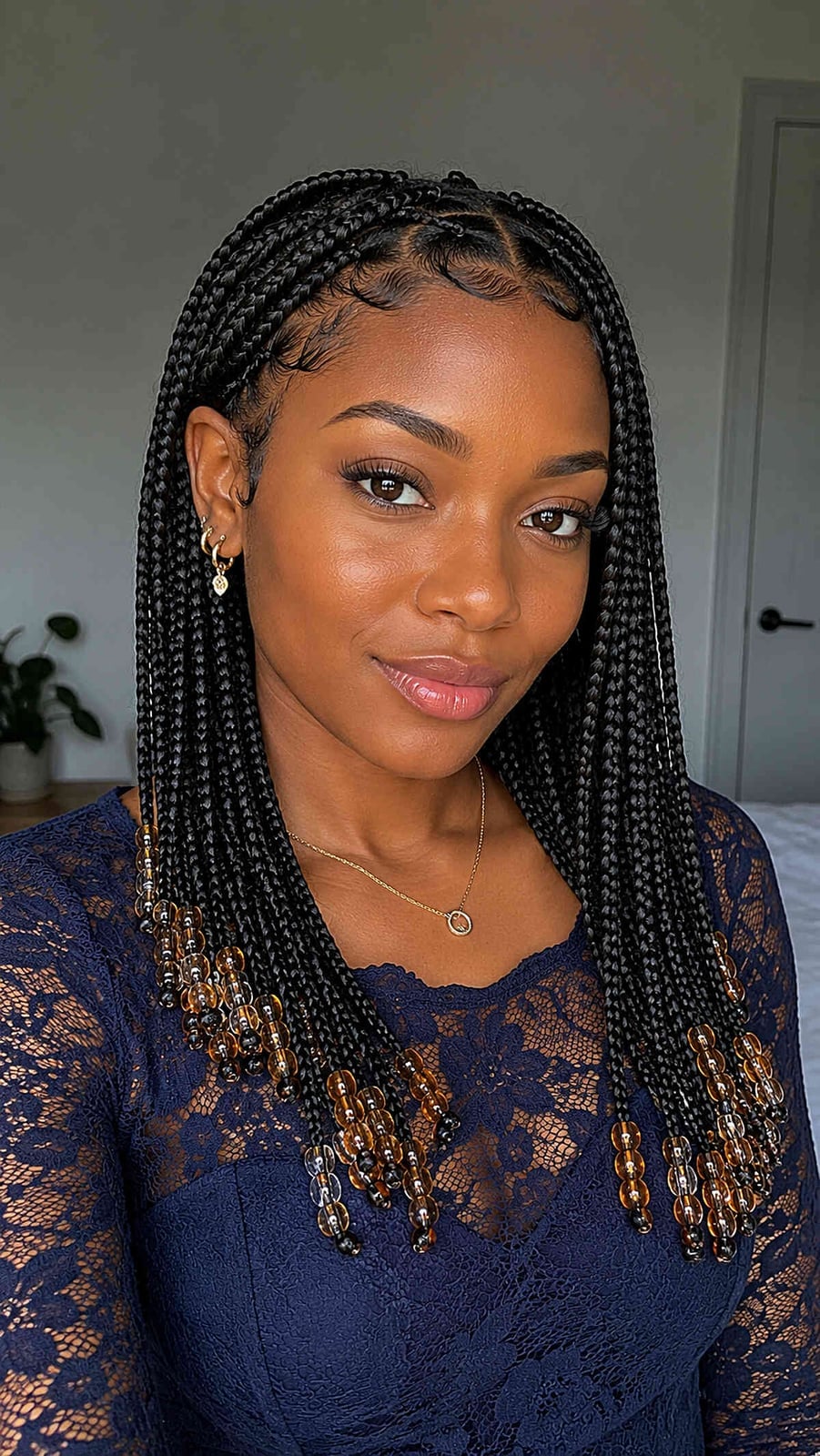
Will box braids make thick, straight hair look bulky? Not at this length. Mid-back box braids in black, parted down the middle, give thick straight hair a clean grid to work from, and the density is an asset: each section grips the braid so the parts stay sharp instead of fuzzing by day three. The amber and clear beads sit near the ends, spaced enough to read as detail, not noise.
Ask your stylist for: mid-back box braids, amber and clear beads. This suits thick, straight hair best; fine hair can wear it too, but the braids may look sparser and need smaller sections. A middle part and mid-back length draw the eye down, which elongates a round face. Beads need a secure fastening so they do not slide, and a scalp condition once a week keeps the roots comfortable. Book a redo every six to eight weeks.
3. Thick Coily Box Braids With Wooden Beads
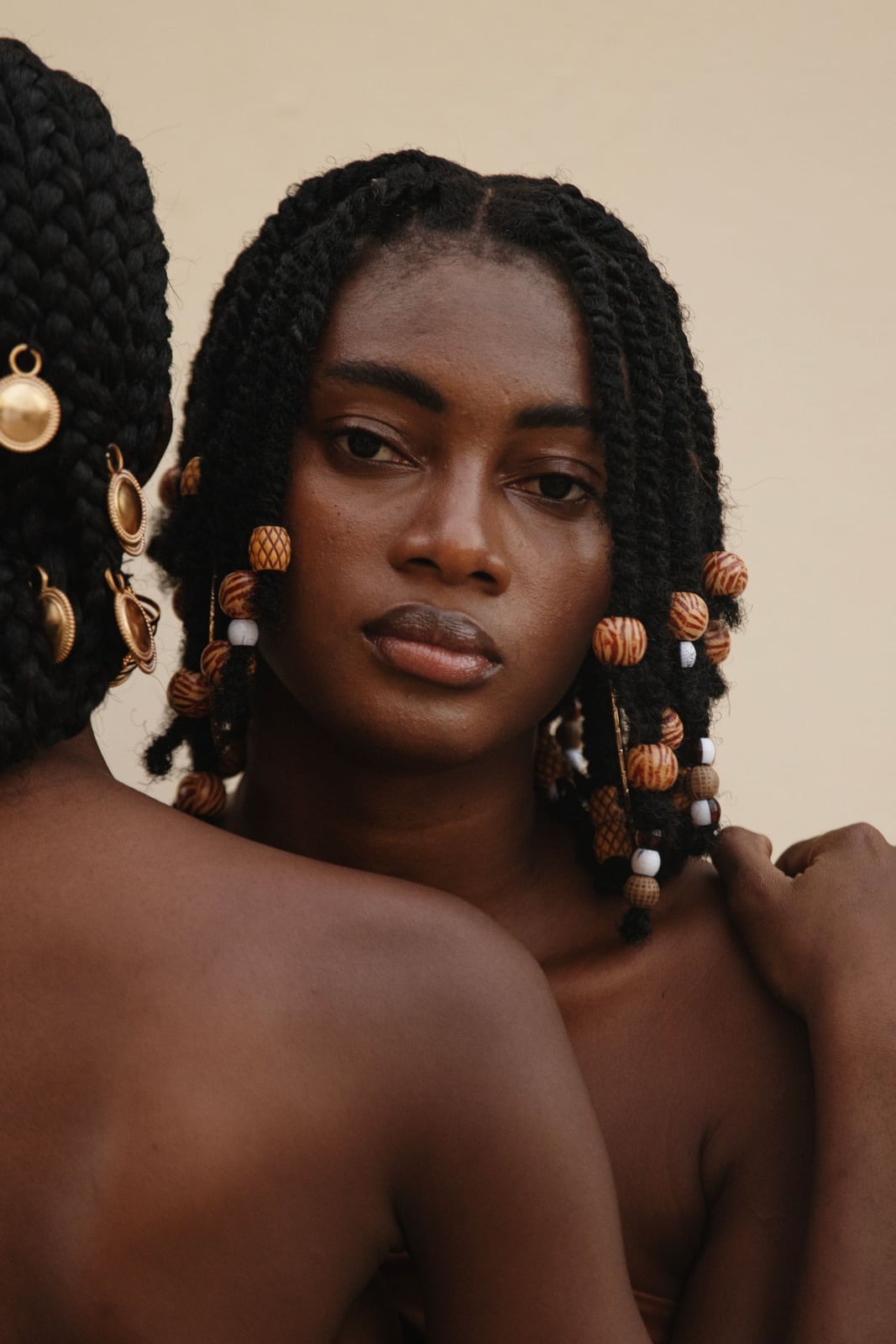
Set these against sleek straight-hair braids and the difference is texture: coily hair gives each box braid a rounder, fuller line, so wooden and white beads read as a deliberate accent rather than a single bright dot on a flat braid. Thick coily hair holds the shape of mid-back box braids without help, and the mixed beads pick up the natural volume. Ask your stylist for: thick coily box braids, mixed wooden beads. Keep the braids off the tension scale, cleanse the scalp gently, and plan on a redo every six to eight weeks.
4. Coily Cornrows With Beaded Ends
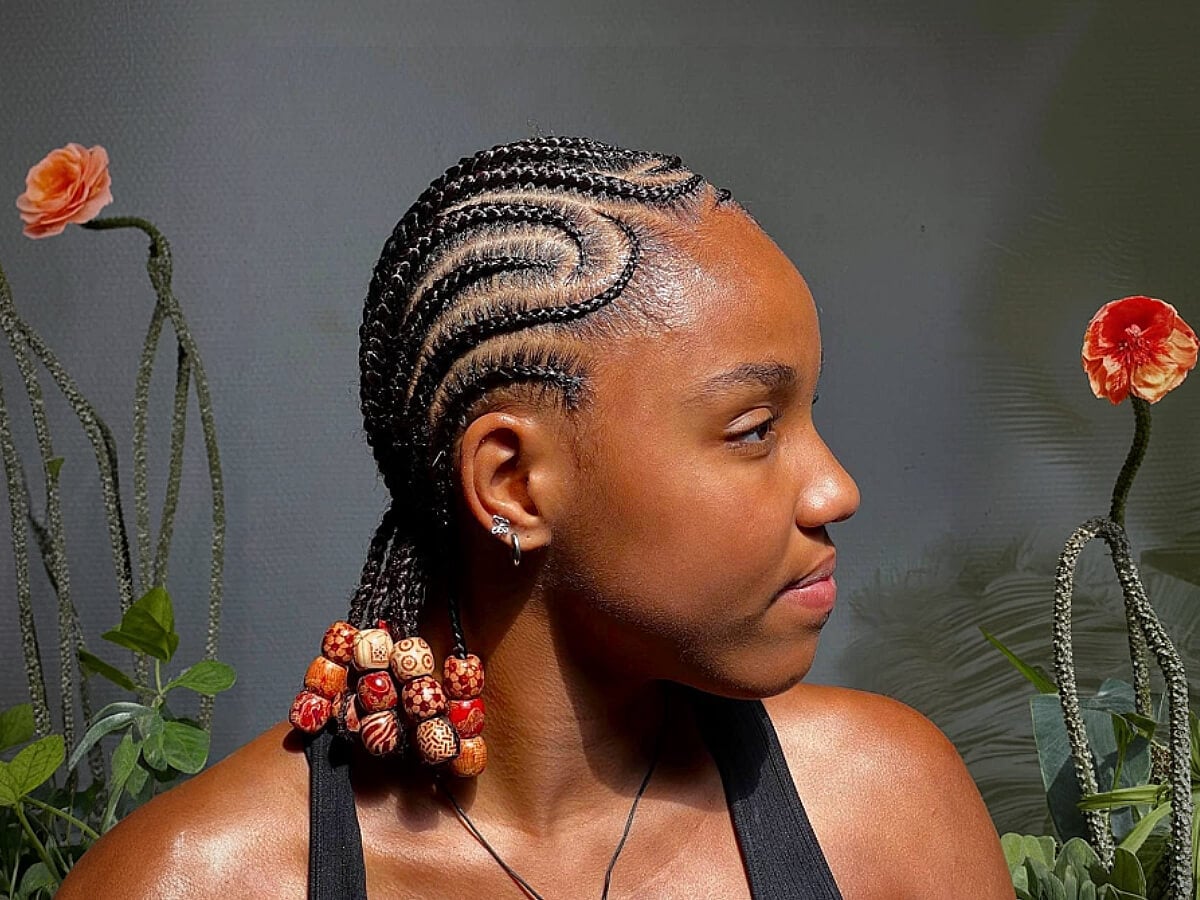
Beads at the tips change how cornrows wear: the weight sits at the ends instead of the scalp, so the rows stay flat while the braids swing. These are thick coily black cornrows with a middle part, ending at the mid-back, with the beadwork clustered at the finish.
Ask your stylist for: mid-back cornrows, beaded ends. Thick coily hair gives the rows enough grip to stay neat for weeks, and a side view shows the pattern cleanly. Beads catch on collars, scarves and car headrests, so tie the length back when you can. Scalp treatments go straight onto the cornrows without disturbing the parts, and a light oil at the roots keeps things comfortable. Expect a redo every six to eight weeks, and check the bead fastenings weekly so nothing slips loose.
5. Sleek Mid-Back Cornrows, Black
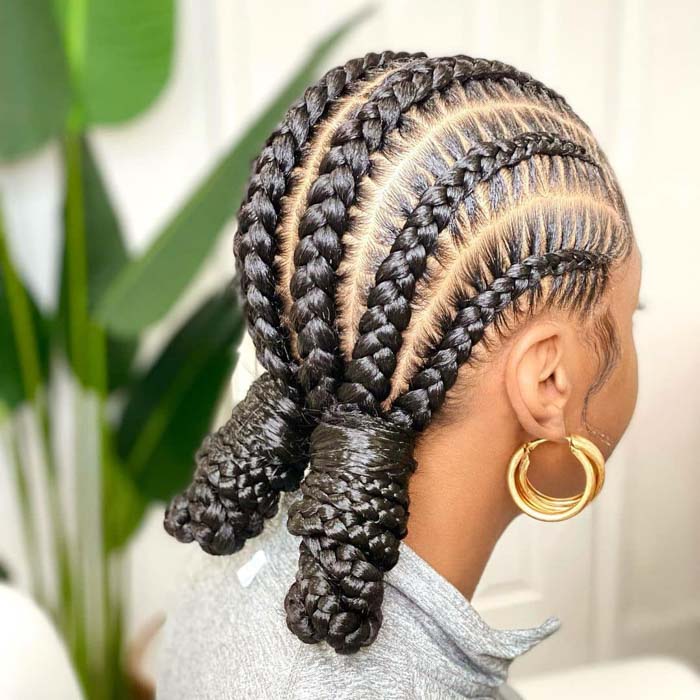
The lines are the point here: uniform rows running back from a clean middle parting, no fuzz between them, the braids falling straight to mid-back. That finish comes from sectioning wet or well-prepped hair and braiding close to the scalp with steady tension, then smoothing each part as the braider works.
Ask your stylist for: sleek mid-back cornrows, middle part. Thick straight black hair takes the sharpest result, since the density keeps the rows even and the length hangs flat. A light pomade or gel along the parts keeps the scalp looking polished, and trimming stray hairs at the edges keeps the outline clean between appointments. This is a salon job: the uniformity is hard to match in a mirror. Book a redo every six to eight weeks, and wrap the length at night so the sleek mid-back finish survives the week.
6. Box Braids With Ombre Blonde Highlights
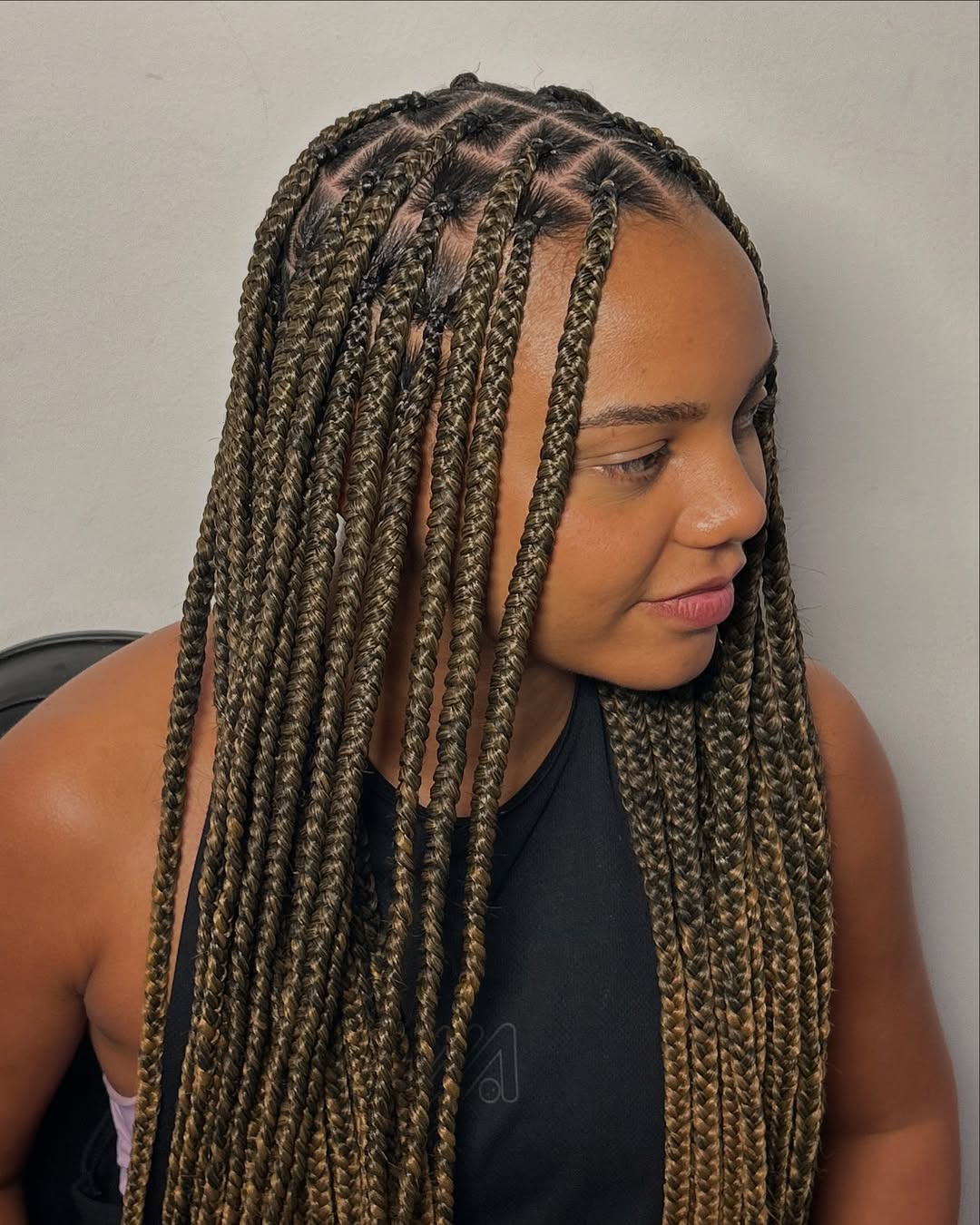
Is there a braided look that functions as a full color service rather than an afterthought? These mid-back box braids answer that question by blending dark brown roots into blonde highlights, with wavy ends that show contrast. The ombre effect means the color shift happens slowly, so the grow-out period is remarkably forgiving. Ask your stylist for: mid-back box braids with dark brown to blonde ombre. This is a salon-only job, but the payoff is a style that works equally well for a beach vacation and a city dinner. The middle parting keeps the dimension visible from every angle.
7. Mid-Back Braids With Gray Highlights
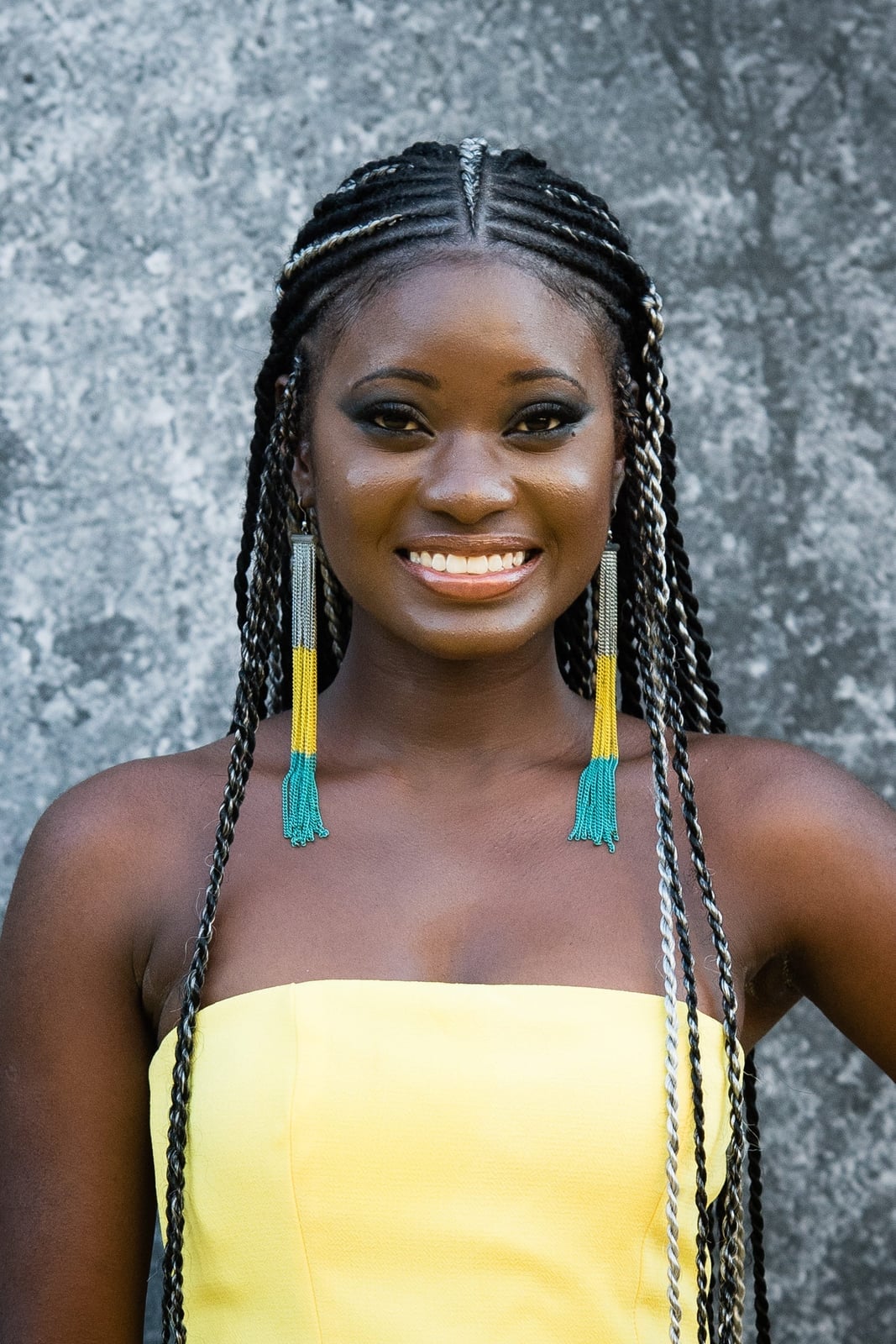
The design here is straightforward: mid-back braids woven from a mix of black and gray strands, creating deliberate contrast that looks fashion-forward. The wavy texture softens the high-contrast effect, and the middle parting keeps the color distribution even on both sides. Ask your stylist for: mid-back braids with black and gray highlights. The trade-off involves the gray tones shifting over time, silver and ash shades tend to pull warmer after several washes, so a toning visit every four to six weeks keeps the contrast sharp. Braids with gray highlights work best on those comfortable with regular color maintenance.
8. Voluminous Mid-Back Braids
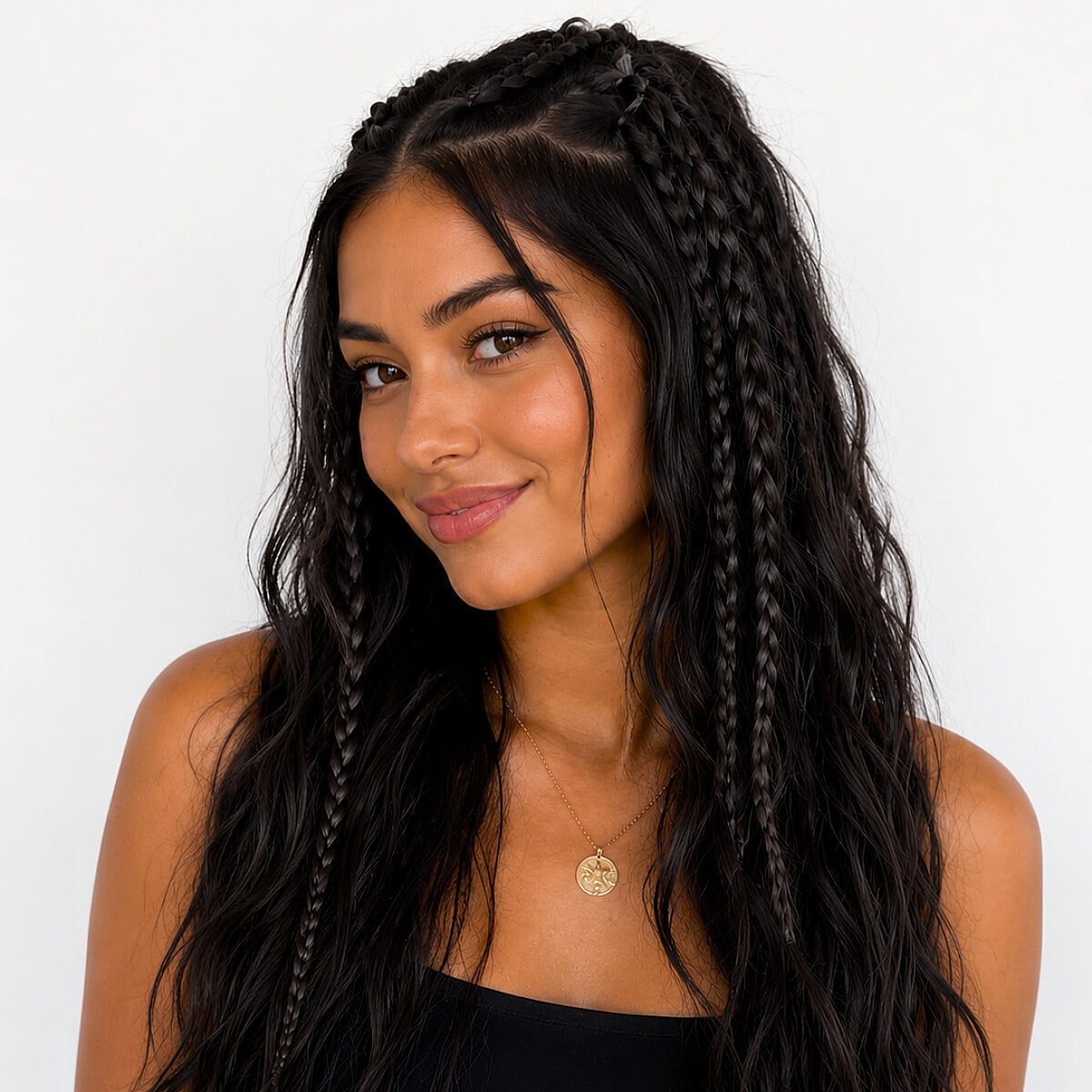
Can a braided style actually look fuller than loose hair? This one does, because the trick is in the distribution. Multiple small braids are parted down the middle and spaced evenly across thick, wavy hair, which creates the illusion of even more density than you started with. Ask your stylist for: voluminous mid-back braids with a middle part. The natural wave of the hair adds body without any extra product, and the black color keeps the focus on the texture. This style suits those with naturally thick hair who want a braided look that still feels voluminous and undone. Fine-haired types may find the individual braids too sparse to carry the intended fullness.
9. Braided Updo With Wavy Strands
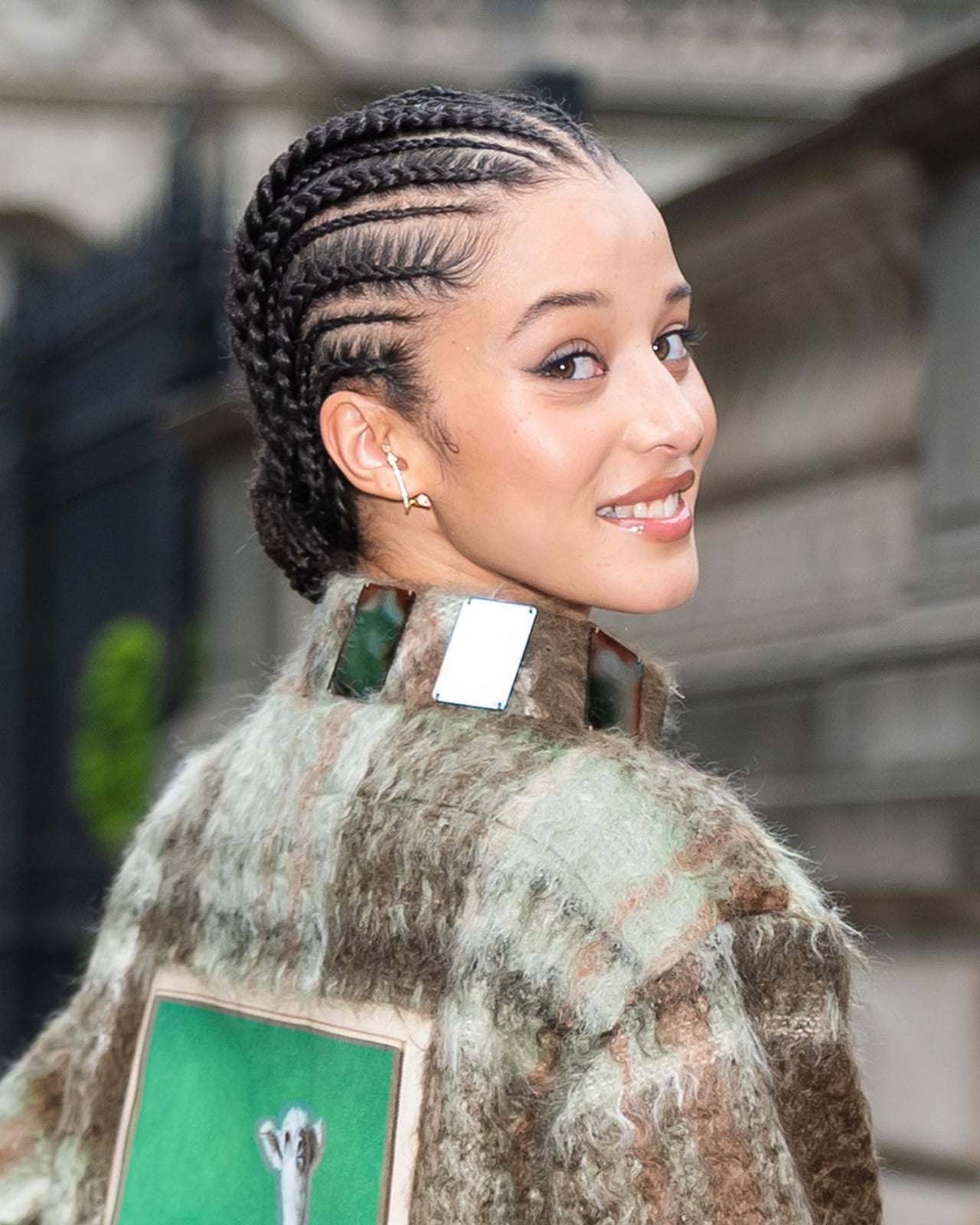
A practical rule for any updo: what you cannot see from the front determines how the style holds. Here, the braids are gathered at the back into a structured shape, but the wavy texture of the hair is visible throughout, preventing the style from looking too rigid. Ask your stylist for: shoulder length braided updo with wavy texture. Specify that you want the braids woven tightly enough to stay put but loose enough that the natural wave still reads. The face-framing strands soften the silhouette. This is a style to request for events where the back of your hair will be visible, like a ceremony or a seated dinner.
10. Shoulder Length Twist Out Braids
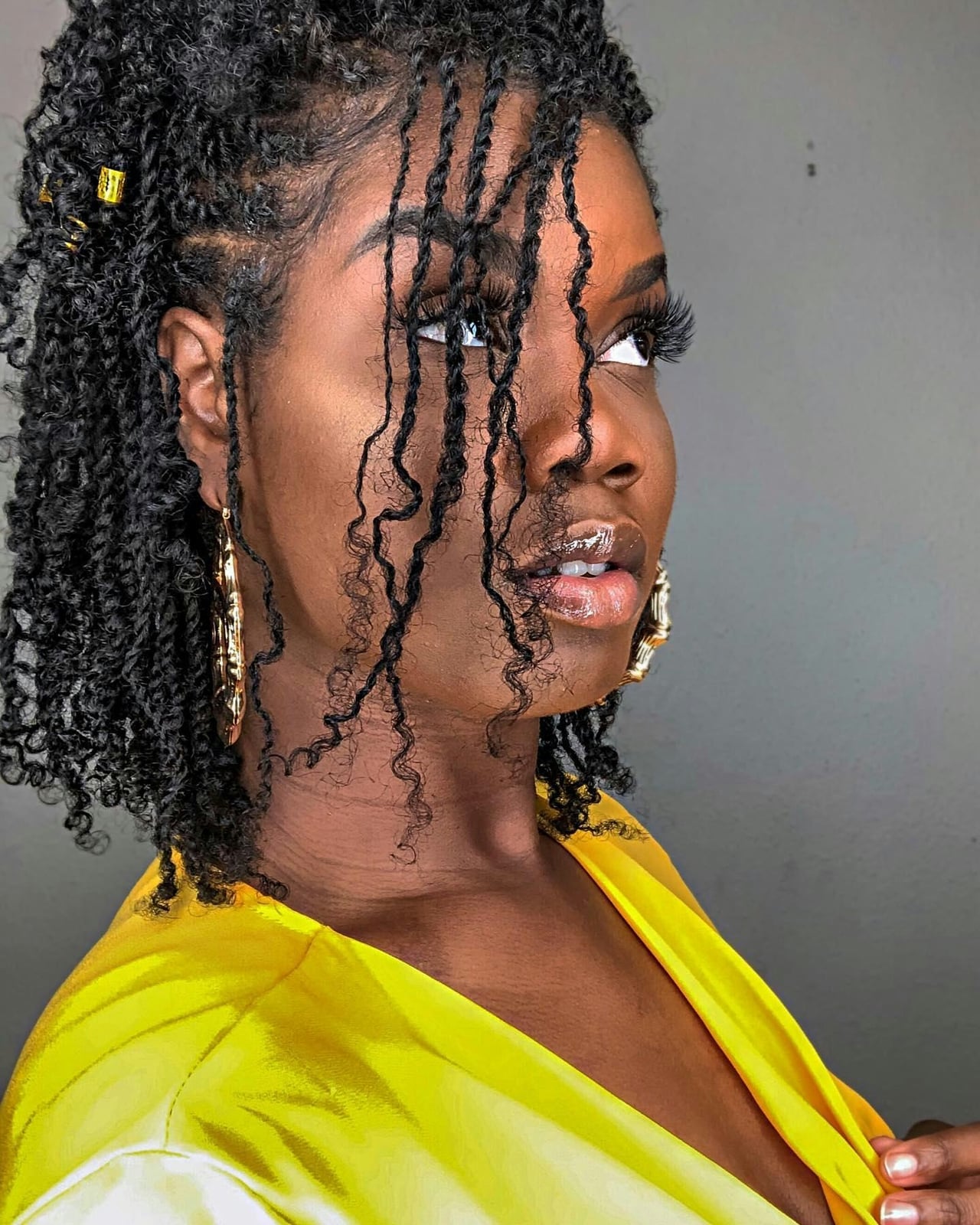
The twist out method means the braids are set by twisting instead of traditional three strand plaiting, which gives these shoulder length braids their distinct coily texture. Gold cuffs are threaded onto some sections, adding a metallic accent that catches movement. Ask your stylist for: shoulder length twist out braids with gold cuffs. The twisted ends will naturally loosen over time, so a light refresh with a setting foam every few days helps maintain definition. The side parting gives the style a more dynamic fall around the face. These are a good choice for anyone who wants the look of a braid but prefers a more textured, less uniform finish.
11. Cornrows With Colorful Beads
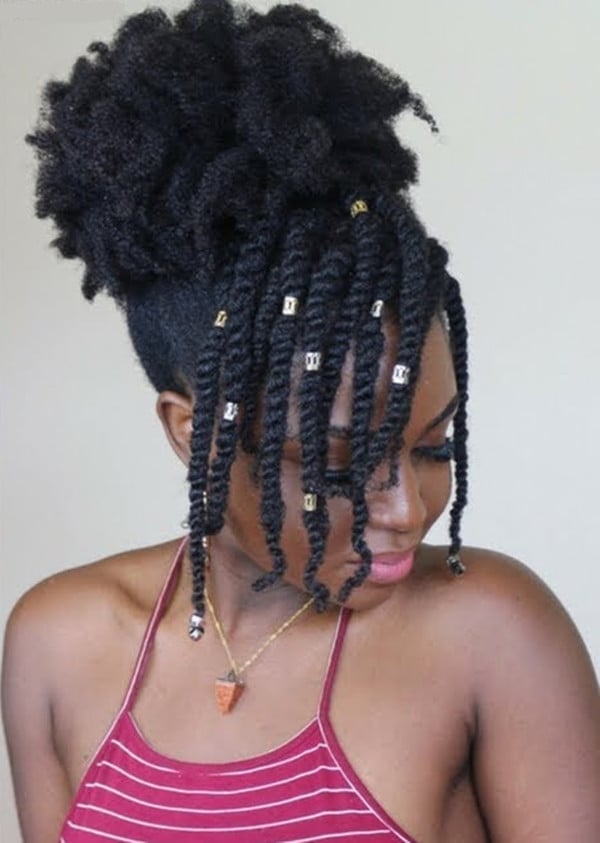
Beads sit at the ends of these shoulder length cornrows, threaded so each one lands at the same point along the braid. That even placement is the whole trick, and it is harder than it looks: the braids have to be tensioned identically or the beads slide to different heights and the pattern goes crooked. Thick, coily hair gives the cornrows enough grip to hold that alignment, and the black and brown base keeps the color accents as a detail, not a theme.
Ask your stylist for: shoulder length cornrows with colorful beads. This is salon work, not a kitchen-table project. Distributing beads evenly across a middle part takes a steady hand and a clear plan before the first braid is started, and a home attempt usually ends with beads clustered on one side. Expect a long appointment, and expect to commit to it again every six to eight weeks as the braids grow out. Anyone who wants to change bead colors weekly should skip this and pick a style with fewer fixed elements.
12. Shoulder Length Micro Braids With Tendrils
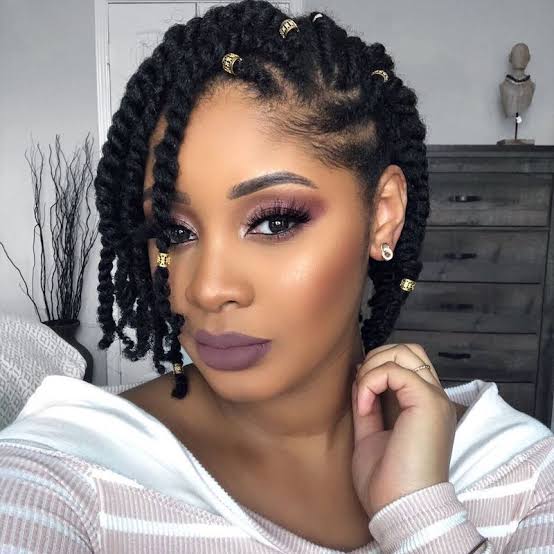
What is the fastest way to ruin fine, coily micro braids? Skip the prep. On fine hair, small braids pull loose fuzz at the root within days unless the hair is stretched and moisturized before braiding, and those loose tendrils framing the face frizz first. Ask your stylist for: shoulder length micro braids with loose tendrils. Leave a few braids free at the front and pin the rest half up, as here, so the middle part stays clean. The drawback is real: fine hair shows every broken edge, so this style rewards gentle handling and a satin pillowcase.
13. Bob Length Micro Braids With Side Swept Bangs
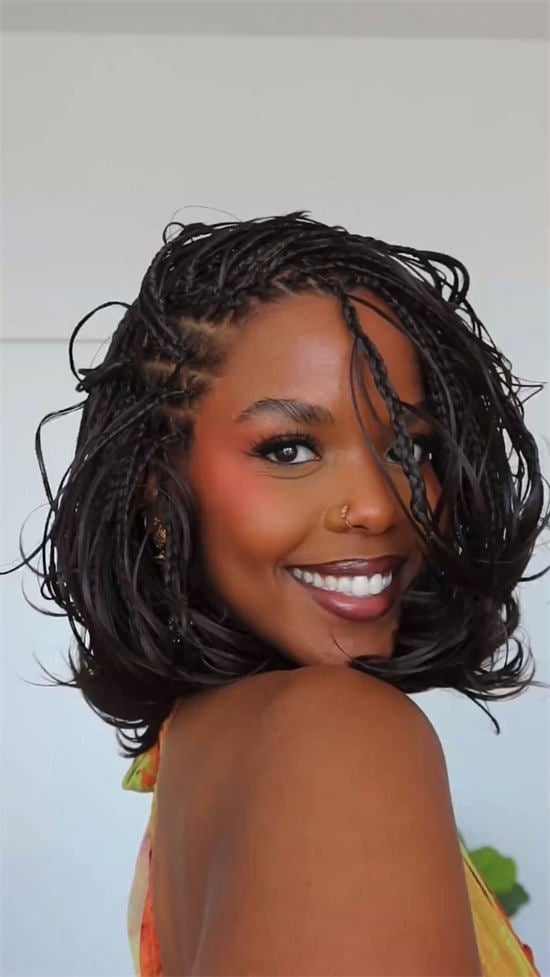
A chin length set of micro braids behaves nothing like the shoulder length version, and that is the point of choosing it. The short bob keeps weight off the neck and holds a side swept fringe in place, while longer micro braids tend to swing forward and need pinning. Ask your stylist for: chin length micro braids bob with side swept bangs. Wavy texture and a side part give the bob movement without styling. Suits fine to medium hair that wants shape over length. Longer braids offer more updo options; the bob offers a finished line with almost no effort.
14. Collarbone Box Braids With Curly Ends
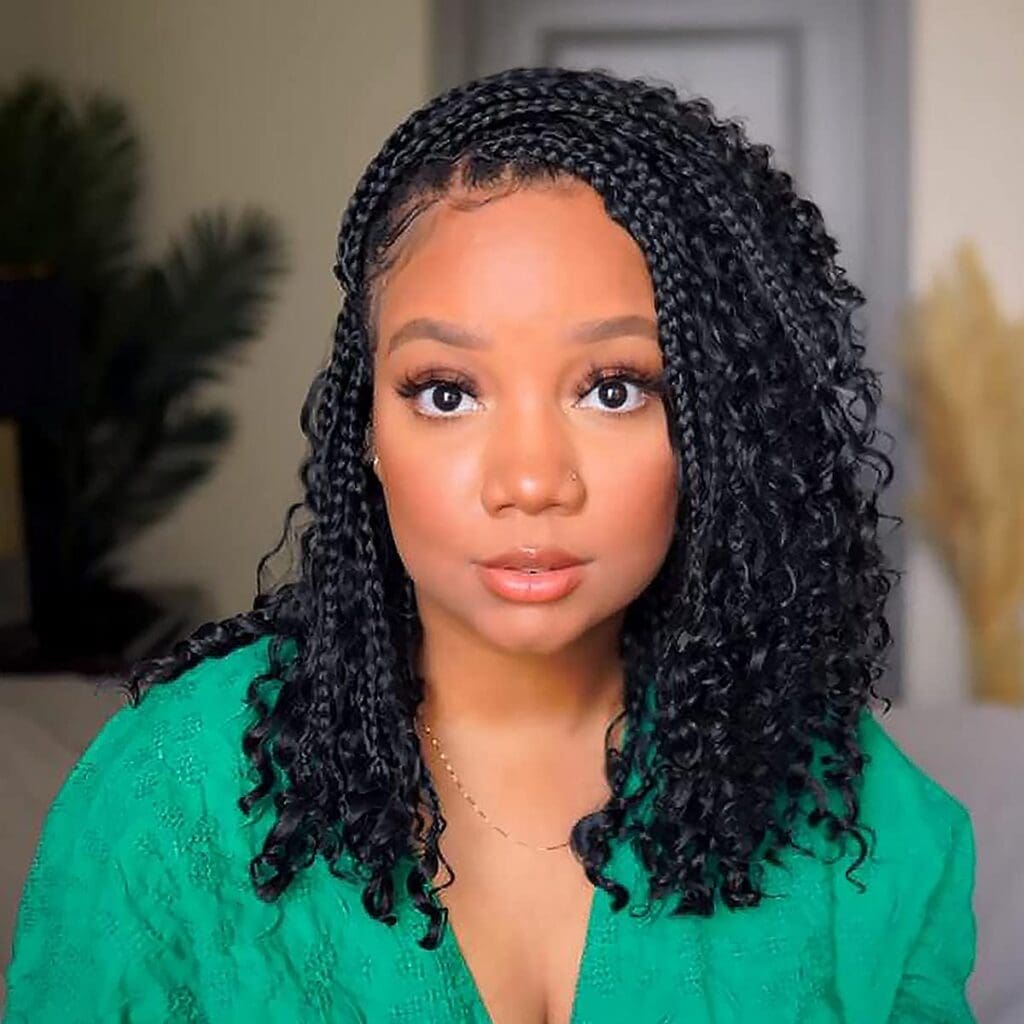
The curl at the tip of each braid is set separately from the braid itself, so the ends finish in a defined curl instead of a frayed tail. Collarbone length box braids in black, parted on the side and wavy through the shaft, land right where a necklace would, so the curly ends sit in plain view. Ask your stylist for: collarbone box braids with wavy texture and curly ends. Here is the trade-off: those defined curls need a curl cream worked through them every few days and they flatten against a pillow overnight. If you want a style you can ignore for a week, choose blunt ends instead. Anyone willing to refresh the tips will get the better version of this look.
15. Cornrows And Curls Combo
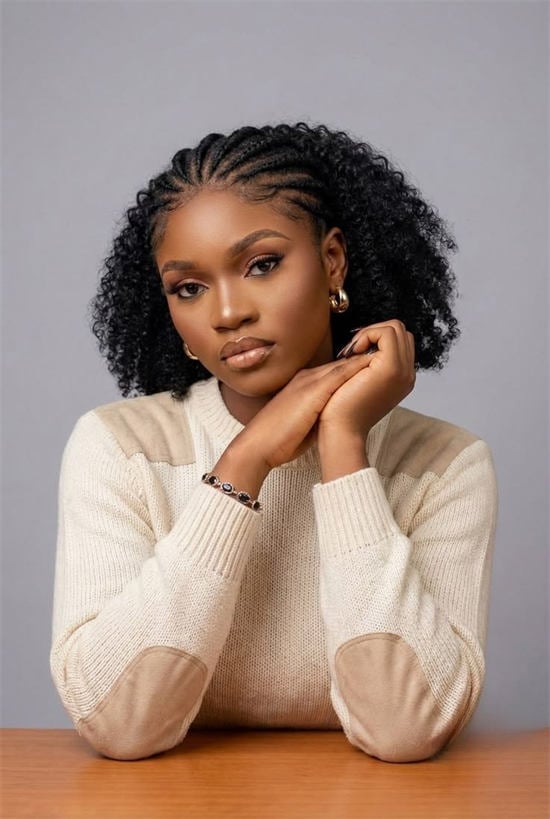
Neat cornrows run across the top and sides, then release into loose curls that fall to the collarbone, with a side swept bang carrying the line forward. The split does the work: braids control the crown, curls supply the volume, and the middle part keeps the two zones from competing. Ask your stylist for: collarbone length cornrows with curly hair and side swept bang. Thick, curly hair is the ideal starting point because the loose section needs density to match the visual weight of the cornrows; fine hair leaves the curls looking sparse next to the braided top. Straight hair can be set into curls, but the texture will drop faster. Moisturize the curly section regularly and keep the cornrow parts clean. Skip this if you want one uniform texture throughout.
16. Geometric Cornrows To Shoulder Length
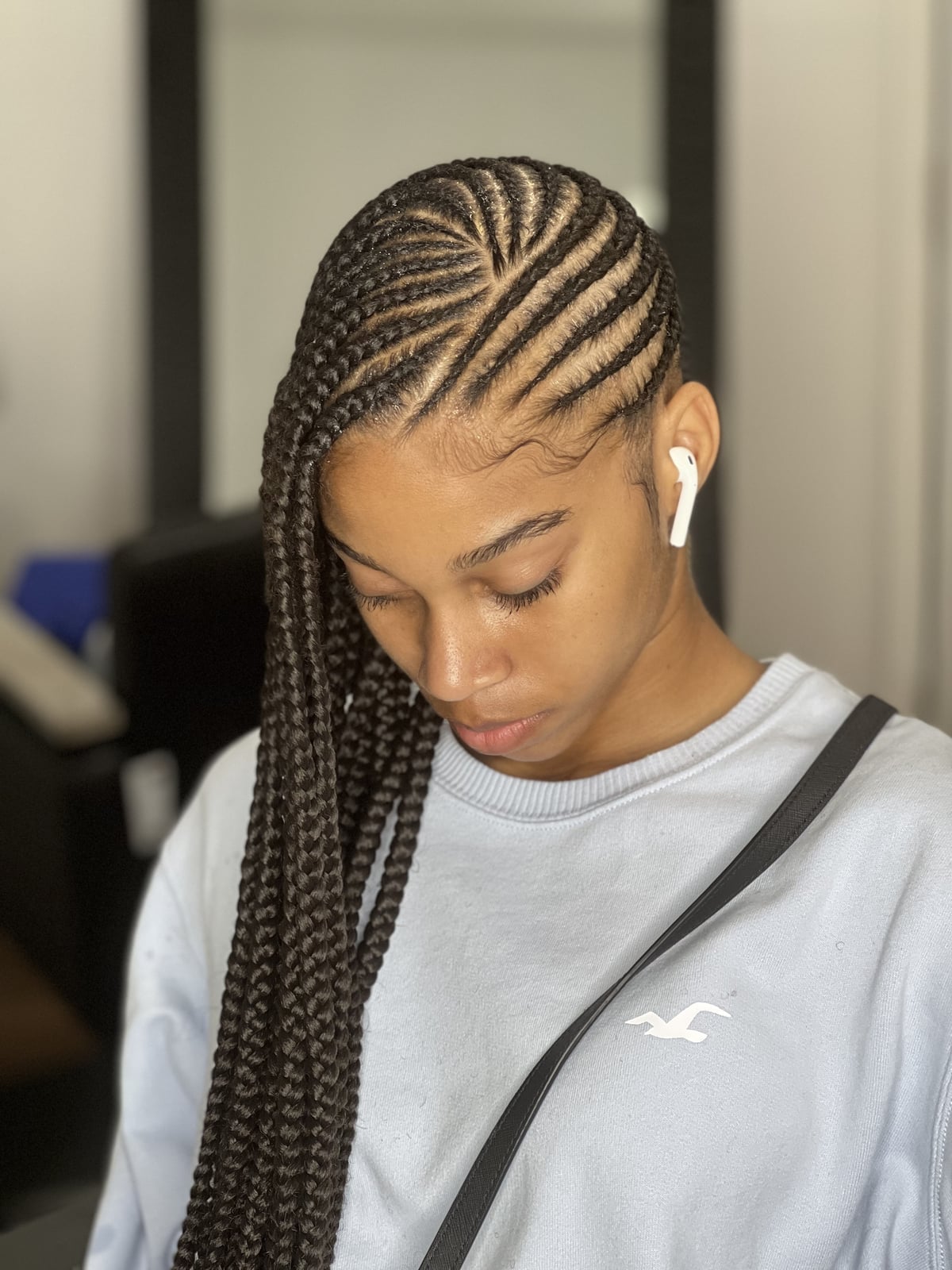
Geometric cornrows live or die by the parting, and a side line that sharp is drawn before a single braid is crossed. The braider sections the hair into clean blocks, then feeds the braid along each edge so the pattern sweeps across the head and drops to the shoulder. Straight, thick hair holds those edges best, since fine strands blur the lines within a few days. The black color keeps the design reading as one graphic shape instead of a busy map. Ask your stylist for: shoulder length cornrows in a geometric pattern. Expect a long appointment, because every corner has to be measured twice.
17. Chunky Side Braids
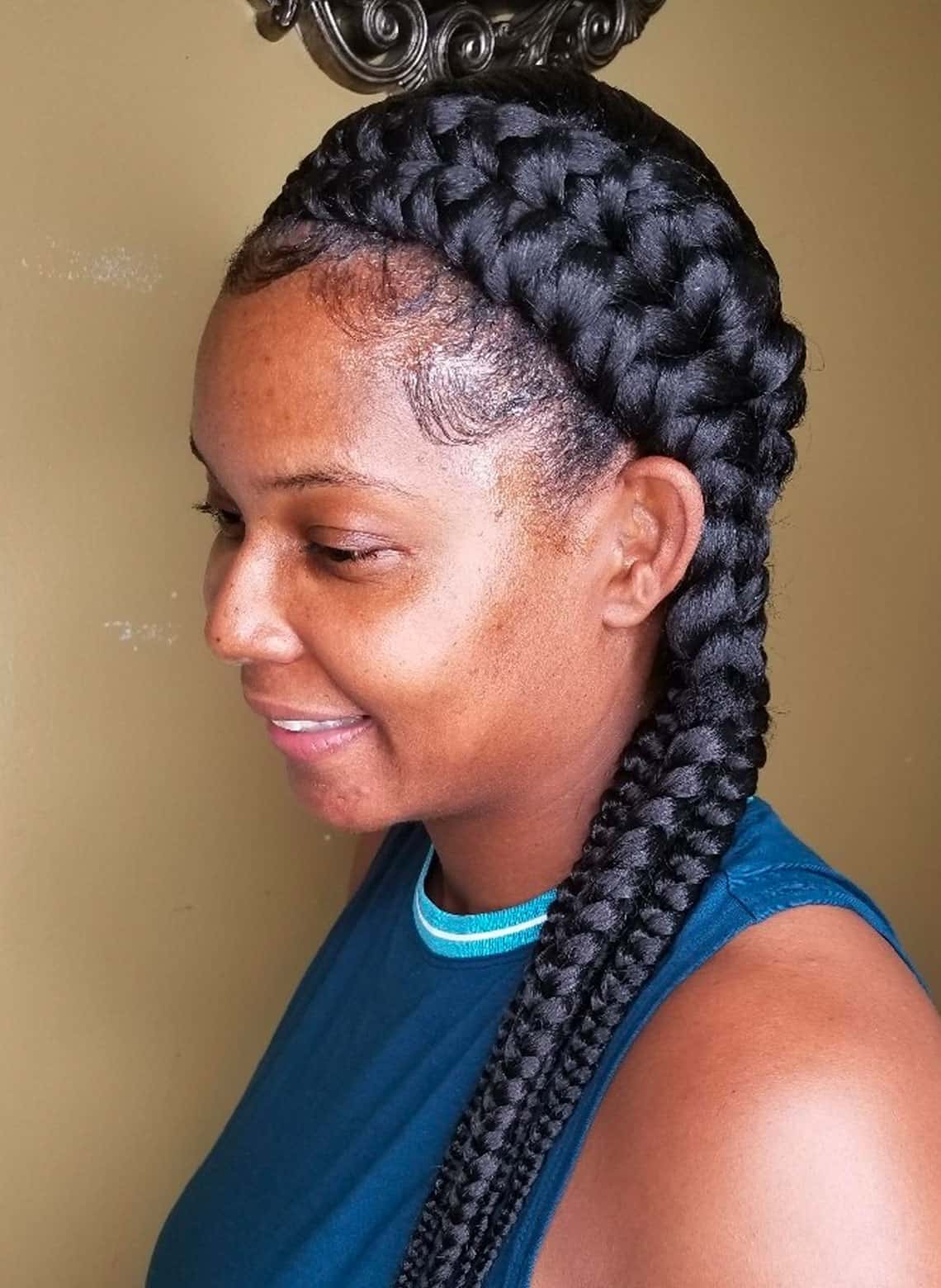
Will two thick braids actually stay put on straight hair? Straight hair is the slippiest customer in the braid world, so chunky braids built on it need a firm base and a middle parting that splits the weight evenly. Black hair at shoulder length gives each braid enough bulk to sit heavy against the head. Ask your stylist for: shoulder length chunky braids, middle part. Between appointments, keep the scalp between the braids clean, since that gap collects product faster than the braids do. A loose braid means a redo, not a rescue.
18. Short Geometric Cornrows
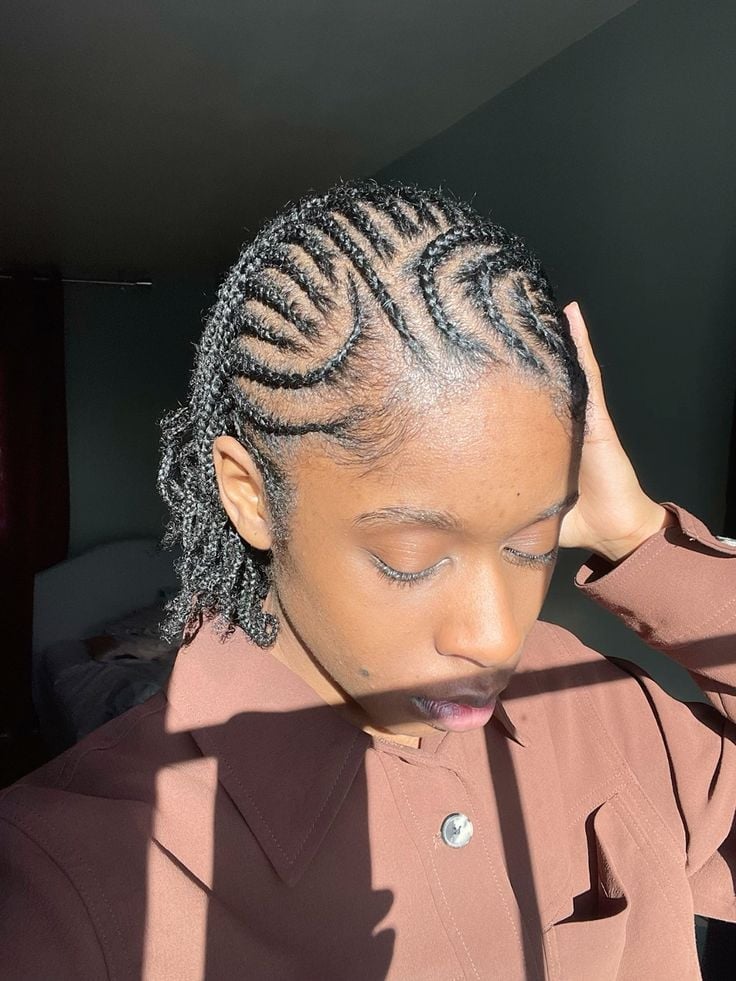
A geometric pattern on short hair turns the scalp into the design itself, and the wavy tendrils at the nape keep it from looking like a helmet. Black braids against the scalp give the pattern its contrast, and shoulder length keeps the whole thing light enough for hot weather. It earns its place at festivals, beach days and any summer event where a full head of loose hair is a liability. Ask your stylist for: short geometric cornrows with nape tendrils. Wavy texture takes the pattern well, and the tendrils soften the edges without hiding the lines.
19. Shoulder Length Mini Braids and Twists
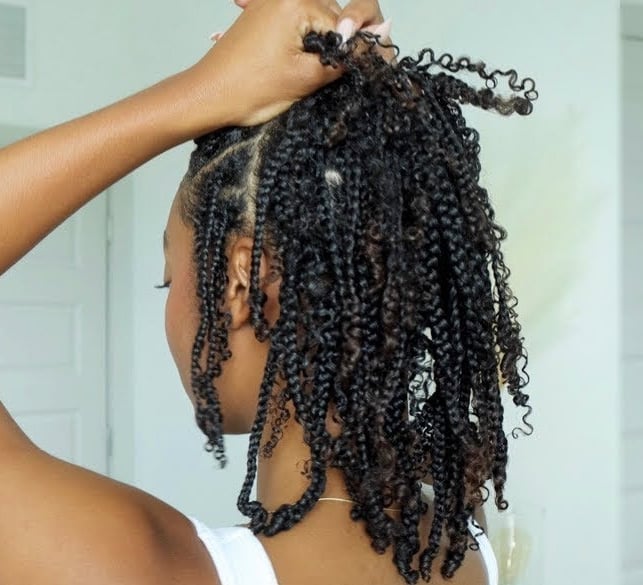
Rule one for mini braids and twists: the smaller the sections, the longer the appointment, and this style runs small. Thick, coily hair is the right starting point, because the texture does half the work of holding each twist’s shape. A side parting lets the defined coils fall where they want instead of fighting a center line. Ask your stylist for: shoulder length mini braids and twists. Doing this at home is possible, but the parting grid and the tension take a practiced hand, and uneven sections show up fast in coily hair. The real drawback is time: expect a long session in the chair, and book it when your calendar is clear.
20. Final Thoughts
For intricate scalp designs like cornrows or geometric patterns, prioritize a skilled stylist. For decorative elements like beads or cuffs, ensure they are securely attached to avoid damage.
- Maintain scalp moisture with a light oil or spray, especially around the hairline, every 2-3 days.
- Protect braids from friction by sleeping with a silk or satin scarf or bonnet.
- Gently cleanse the scalp and braids every 1-2 weeks using a diluted shampoo or braid spray.
- Avoid excessive manipulation or pulling to prevent tension on the scalp and edges.
Braids are more than a style; they’re a canvas for personal expression.