Have you ever pictured yourself crossing a finish line or nailing a big presentation? That’s visualization, a technique where you use all five senses to create a vivid mental scene of a goal. It’s not magic, but when practiced daily, it can sharpen your focus and build the confidence you need to take action. This article walks you through the essentials, step-by-step methods, and common pitfalls so you can start visualizing effectively today.

Key Takeaways
- Visualization engages all five senses, not just sight, to create a vivid mental scene.
- Practice 5-15 minutes daily in a quiet, comfortable space for best results.
- Combine outcome and process visualization to see both the goal and the steps.
- Pair visualization with deep breathing or meditation to deepen focus.
- Always follow up with real-world action; visualization is a complement, not a substitute.
1. What is Visualization and How Can It Help You?
Visualization, also called mental rehearsal or guided imagery, is a technique where you use all five senses to vividly imagine a desired outcome. Athletes and performers rely on it to sharpen focus and build confidence before big events. In personal development, it works the same way: consistent practice trains your brain to spot opportunities and keep a positive mindset. It is not a magic bullet, you still need real-world action, but it makes your goals feel more real and reachable.
2. How Visualization Trains Your Brain
Visualization is a mental rehearsal technique that engages all five senses to create a vivid inner experience of a desired outcome. It is widely used in sports psychology and personal development to boost focus, confidence, and motivation, but it only works if you pair it with real action. Here are the core facts to know:
- Mental rehearsal: Also called guided imagery or visualization.
- Five senses: See, hear, feel, smell, and taste in your imagined scene.
- Brain training: Regular practice strengthens neural pathways linked to your goal.
- Athlete tool: Used by performers to prepare mentally for competition.
- Stress relief: Can reduce anxiety by focusing on positive outcomes.
- Confidence builder: Repeatedly experiencing success boosts self-efficacy.
- Outcome type: Imagine the end result vividly.
- Process type: Mentally rehearse each step to get there.
- Combine both: Most effective when you do outcome then process.
- Consistency matters: Daily 5-15 minute sessions yield best results.
- Not a substitute: Visualization alone will not achieve your goals.
- Clarifies goals: Makes abstract desires feel attainable.
- Mindfulness pair: Works well with deep breathing or meditation.
- Positive focus: Direct energy toward what you want, not what you fear.
- Specificity: Detailed imagery is more impactful than vague pictures.
- Belief factor: Effectiveness links to your belief in the practice.
- Brain activation: Imagining an action can activate similar brain regions as doing it.
3. Essentials for Your Visualization Practice

You do not need much to start visualizing, most items are optional. The goal is a calm, distraction-free environment where you can focus inward. Here is what helps:
- Quiet space: A room where you will not be interrupted.
- Comfortable seat: A chair, cushion, or couch that supports relaxation.
- Calming music: Instrumental or nature sounds to set the mood.
- Journal: For writing insights or feelings after each session.
- Timer: Set 5-15 minutes so you do not watch the clock.
- Dim lighting: Soft light reduces visual distractions.
- Loose clothing: Helps you physically relax.
- Water nearby: Stay hydrated without leaving your spot.
- Blanket or shawl: Keeps you warm and cozy.
- Eye mask: Blocks light if you are sensitive.
- Essential oil diffuser: A calming scent like lavender can anchor your practice.
- Smartphone on silent: Prevents notifications from breaking focus.
- Fan or white noise: Masks sudden household sounds.
- Posture support: A small pillow for your lower back.
- Notebook pen: For quick notes without opening a full journal.
- Stretching mat: If you prefer to lie down while visualizing.
- No tools required: You can visualize anywhere, even on a bus.
4. Step-by-Step: How to Practice Effective Visualization

Effective visualization is a skill you build with practice. Follow these steps to make each session clear, vivid, and productive. Aim for 5-15 minutes daily.
- Find your spot: Choose a quiet room where you will not be disturbed.
- Sit comfortably: Use a chair or cushion that lets you relax.
- Close your eyes: This reduces visual input and sharpens inner focus.
- Take three deep breaths: Calm your nervous system before you start.
- Set an intention: Name one specific goal you want to visualize.
- See the scene: Picture the environment around your goal in detail.
- Hear the sounds: Add background noise, voices, or music to the image.
- Feel the sensations: Notice temperature, texture, and movement.
- Add smells and tastes: Engage all five senses for full immersion.
- Imagine the process: Mentally walk through each step, not just the finish line.
- Feel the emotions: Let pride, joy, or relief wash over you.
- Be specific: Name dates, locations, and people to make it real.
- Stay positive: Only picture what you want, never what you fear.
- Let images flow: Do not force details; gently guide wandering thoughts back.
- Hold the feeling: Stay with the positive emotion for 30 seconds.
- Open your eyes slowly: Transition back to the room without rushing.
- Journal one insight: Write what felt vivid or what shifted in your mindset.
5. Different Ways to Visualize: Outcome vs. Process
There are two main ways to visualize, and knowing which one you need changes what you do in a session.
- Outcome visualization: You picture the end result, what it looks like and how it feels.
- Outcome visualization: You imagine the moment your goal is already achieved and real.
- Outcome visualization: You let the meaning of that achievement land, not just the image.
- Outcome visualization: You notice the emotion tied to the finish line and hold onto it.
- Outcome visualization: You use it to build confidence before a big moment or event.
- Outcome visualization: You keep it specific, so the picture feels like a real memory.
- Process visualization: You mentally rehearse the actual steps you need to take to get there.
- Process visualization: You walk through each action in order, slowly and in detail.
- Process visualization: You picture yourself handling the first small task, not the final reward.
- Process visualization: You imagine obstacles and rehearse how you will respond to them.
- Process visualization: You feel your body moving through the actions, not just watching them.
- Process visualization: You use it to prepare for a presentation, workout or difficult conversation.
- Process visualization: You repeat the sequence until the steps feel familiar and less intimidating.
- Combining both: You start with the successful outcome, then mentally walk through the actions.
- Combining both: You finish on the process, so you leave the session ready to act.
- Combining both: You alternate depending on whether you need motivation or preparation today.
- Combining both: Athletes often use process rehearsal before competing and outcome imagery to stay motivated.
My tip: if you only have five minutes, spend one on the outcome and the rest on the steps.
6. Common Visualization Mistakes and How to Fix Them
Most visualization sessions fail for one of a handful of predictable reasons, and each has a simple fix.
- Only visualizing the outcome: Add the steps between here and the finish line.
- Only visualizing the outcome: Fix it by mentally walking through the actions that get you there.
- Not engaging all senses: Ask what you hear, feel, smell and taste in the scene.
- Not engaging all senses: Fix it by adding one sound and one physical sensation per session.
- Practicing inconsistently: Set a daily 5-15 minute slot instead of waiting for motivation.
- Practicing inconsistently: Fix it by pairing the session with a habit you already do daily.
- Believing visualization alone will achieve goals: Treat it as preparation, then take one real step.
- Believing visualization alone will achieve goals: Fix it by ending every session with one concrete action.
- Focusing on what you don’t want: Redirect your energy toward the outcome you desire.
- Focusing on what you don’t want: Fix it by rewording the scene around what you want to happen.
- Being too vague or general: Name the place, the people and the exact moment you are picturing.
- Being too vague or general: Fix it by adding detail until the image feels like a real memory.
- Forcing the images: Let the scene come naturally and guide your mind back gently.
- Giving up too soon: Expect shifts over weeks to months, not after one session.
- Visualizing while tense: Take a few slow breaths first so your body is relaxed.
- Ignoring distress: If the practice brings up significant anxiety, stop and talk to a mental health professional.
Tip: keep a running list of the fixes that worked, so you can return to them when a session feels flat.
7. Top Tips for Supercharging Your Visualization Practice
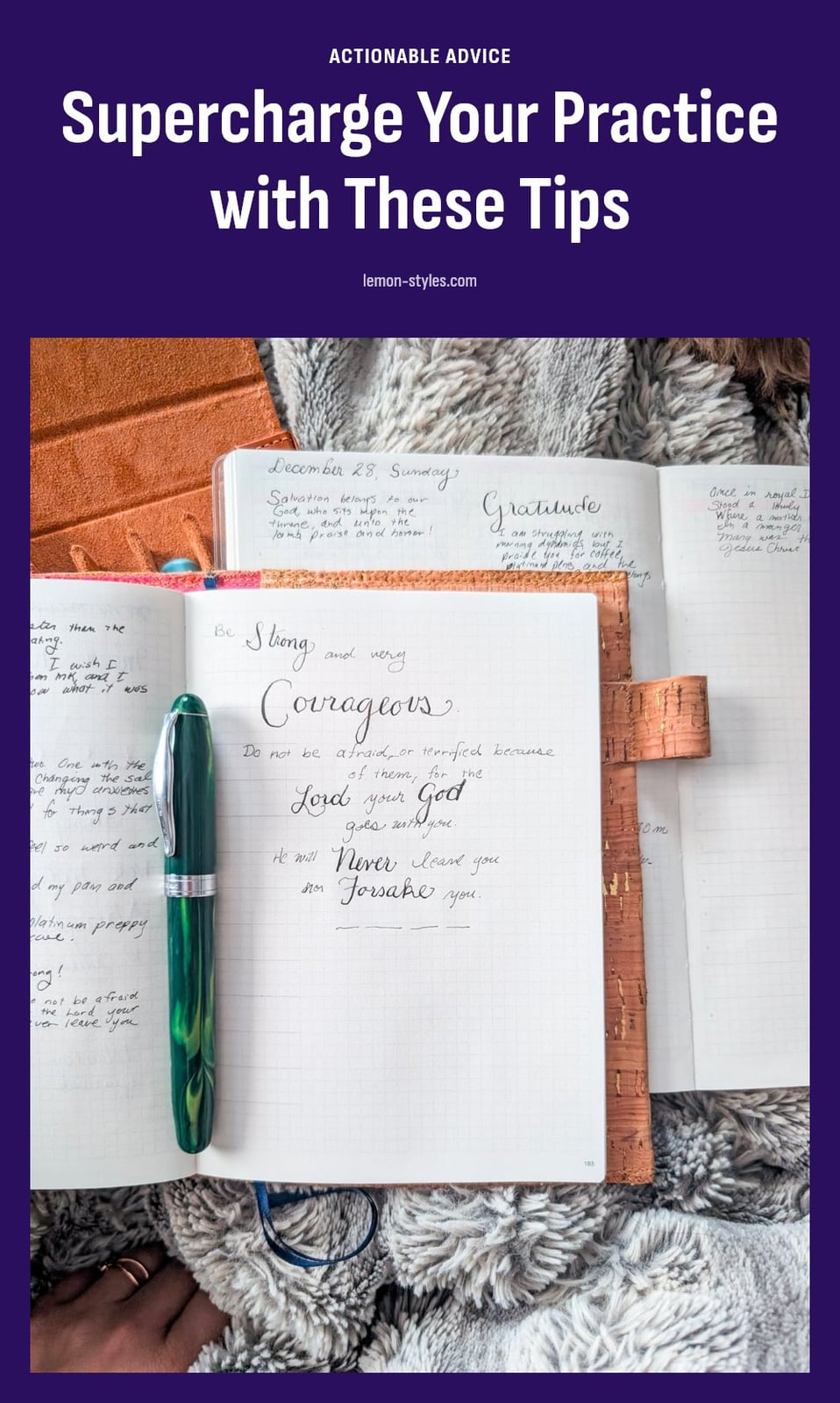
Once the basics feel natural, these adjustments make each session sharper and easier to keep up.
- Combine with mindfulness: Pair your visualization with slow deep breathing to deepen focus.
- Combine with mindfulness: Try a short meditation first so your mind settles before you begin.
- Combine with mindfulness: Breathe out longer than you breathe in to help your body relax.
- Use affirmations: Add one short positive statement that matches the outcome you are picturing.
- Use affirmations: Say it in the present tense to strengthen belief in the result.
- Use affirmations: Keep it to one or two lines, so it stays easy to remember.
- Stay flexible: Do not force images; let them arrive at their own pace.
- Stay flexible: When your mind wanders, guide it back gently instead of scolding yourself.
- Stay flexible: If pictures will not come, focus on sounds and physical sensations instead.
- Reflect and adjust: Use a journal after each session to note what felt good.
- Reflect and adjust: Write down what felt challenging, then change one detail next time.
- Reflect and adjust: Review your notes weekly to see which scenes work best for you.
- Celebrate small wins: Acknowledge any shift in mindset or motivation, however small.
- Celebrate small wins: Note the moment you followed through on a step you had rehearsed.
- Celebrate small wins: Track these wins in the same journal to build momentum over time.
- Celebrate small wins: Let each small success feed the next visualization session.
Good to know: if visualization ever causes significant anxiety or distress, stop and consult a mental health professional.
8. Frequently Asked Questions
How long does it take for visualization to work?
Results vary, but many people notice a shift in mindset or motivation within weeks to months of consistent daily practice. The key is regularity, so stick with 5-15 minutes each day. If you don’t see changes right away, don’t get discouraged; visualization builds on itself over time.
Can visualization help with anxiety?
Visualization may help reduce stress and anxiety by focusing your mind on positive outcomes and calming imagery. It’s often used alongside deep breathing or meditation for this purpose. However, if you experience significant anxiety or distress during visualization, stop and consider speaking with a mental health professional.
Is visualization the same as positive thinking?
No, visualization is more active and detailed. Positive thinking is a general optimistic outlook, while visualization involves creating a specific, multi-sensory mental image of a goal or scenario. It’s a structured practice that engages your senses and emotions, making it a distinct tool.
What’s the best time of day to visualize?
There’s no single best time; it depends on your routine. Many people find that mornings help set a positive tone for the day, while others prefer evenings for reflection. Choose a time when you’re least likely to be interrupted and can sit comfortably, and aim for consistency.
Can I visualize for multiple goals at once?
Yes, but it’s often more effective to focus on one goal per session to keep your imagery clear and detailed. If you have several goals, you can rotate them across different days. Trying to visualize everything at once may dilute the vividness and impact.
9. Final Thoughts
To get the most out of visualization, commit to a short daily session of 5 to 15 minutes, alternating between outcome and process imagery. Expect subtle shifts in mindset and motivation within weeks or months, not overnight changes. Make it a habit, and remember that the real progress happens when you take concrete steps toward your goal. Start small, stay consistent, and let your mind pave the way.
This article is for general informational purposes only and is not a substitute for professional medical or psychological advice. If you have a persistent mental health concern or experience distress during visualization, please consult a qualified professional.