You know the feeling: you set your alarm for 6 a.m., wake up, and spend the next hour dragging yourself around like a zombie. The problem isn’t that you’re not a morning person. It’s that your sleep schedule and your body’s internal clock are out of sync. This article covers the real reasons waking up is hard and gives you a simple, step-by-step plan to shift your routine so you can wake up early and actually feel refreshed.

Key Takeaways
- Keep the same wake-up time seven days a week, including weekends.
- Expose yourself to natural light within minutes of waking to reset your circadian rhythm.
- Stop caffeine at least five hours before your target bedtime.
- Gradually shift your wake-up time by 10-15 minutes every few days.
- Skip the snooze button; it fragments sleep and increases grogginess.
1. How to Wake Up Early and Feel Refreshed
Feeling refreshed at 6 a.m. comes down to two things: sleep hygiene and your circadian rhythm. Setting an earlier alarm without changing anything else just moves your grogginess to a new time. What works is a steady sleep and wake schedule, a bedroom that stays dark, quiet, and cool, and a wake-up time you shift by 10 to 15 minutes at a stretch instead of an hour overnight. Skip the snooze button and put screens away an hour before bed, and most people notice a real difference in morning alertness within a couple of weeks.
2. Why Waking Up is So Hard
Your body runs on a circadian rhythm, a roughly 24-hour internal cycle that regulates when you feel sleepy and when you feel alert. It relies on cues, mainly light and timing, to know what hour it is. When those cues move around, your body gets confused about when to wake up.
What throws it off
- An irregular schedule: Sleeping in on weekends and staying up late on Fridays keeps shifting your internal clock, so Monday morning feels like jet lag.
- Screen light before bed: Blue light from phones and laptops can interfere with melatonin, the hormone that promotes sleep. Less melatonin means it takes longer to fall asleep.
- The snooze button: Each snooze fragments the last stretch of sleep. That fragments rest and can leave you with sleep inertia, the heavy, foggy feeling that lingers after you finally get up.
None of this is a character flaw. It is timing, and timing can be adjusted.
3. Essential Tools for Better Mornings
You do not need much, but a few basics make the whole routine easier to keep.
- A stand-alone alarm clock: Keeping your phone out of reach means no scrolling in bed and no blue light at midnight.
- Blackout curtains or an eye mask: Full darkness supports melatonin production through the night.
- Earplugs or a white noise machine: Blocking street noise and early garbage trucks protects the second half of your sleep.
- A supportive mattress and pillows: Comfort matters more than any gadget for staying asleep.
- A water bottle: Keep it on your nightstand so hydration starts before coffee does.
4. Your Step-by-Step Guide to Energized Mornings
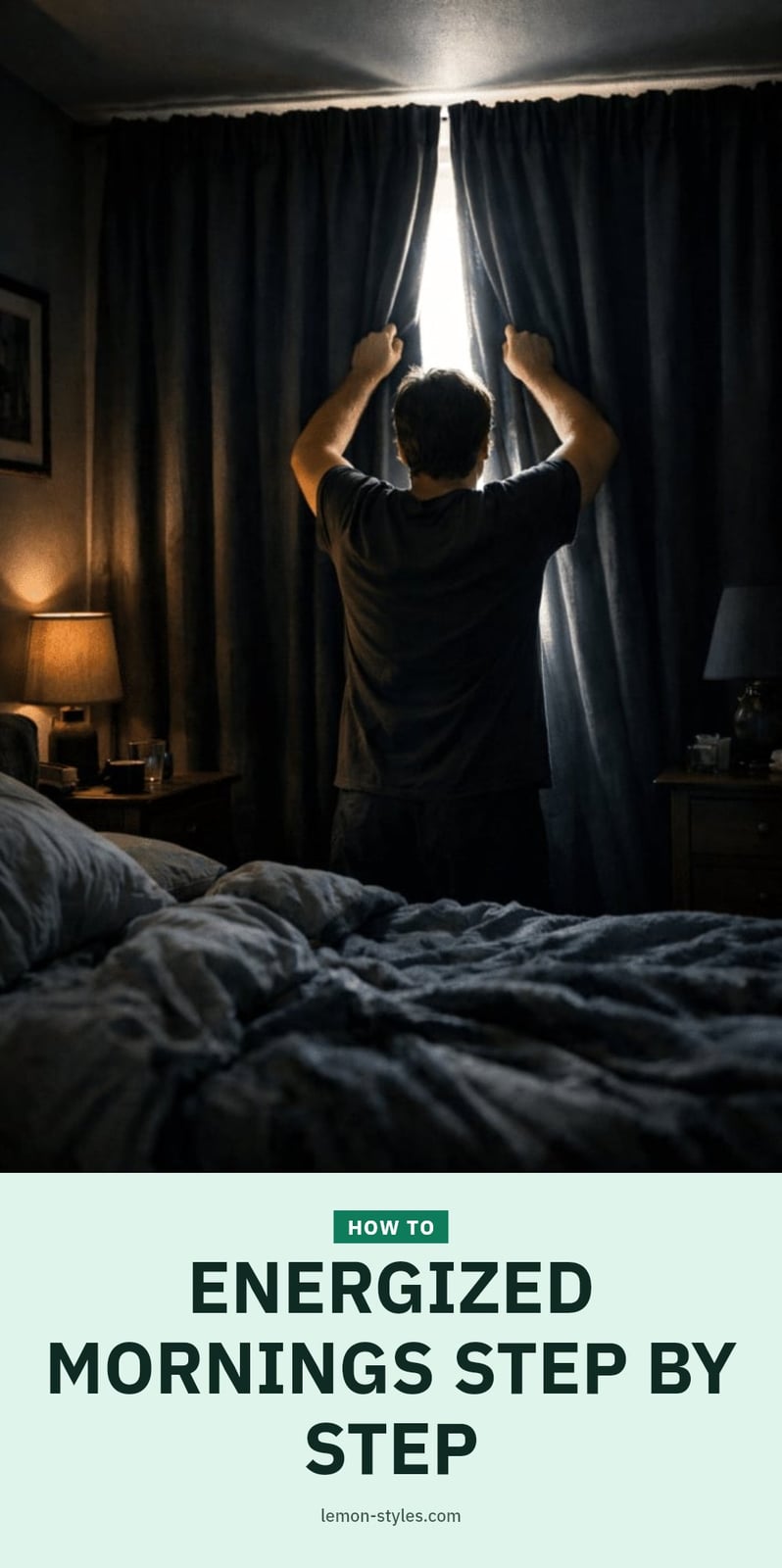
The order matters less than the consistency. Pick the steps that fit your life and repeat them until they stop feeling like effort.
- Set one wake time for all seven days: Go to bed and get up at the same time daily, weekends included. Your circadian rhythm syncs to repetition, not to good intentions.
- Move your alarm in small increments: Shift your wake-up time 10 to 15 minutes earlier every few days. A sudden hour-earlier alarm mostly buys you a miserable week.
- Get light on your face fast: Open the curtains or step outside within minutes of waking. Morning light signals daytime to your body and helps suppress melatonin.
- Cool and darken the room: Aim for 60-67°F (15-19°C), pull the curtains, and cut the light sources. A cool, dark room supports the deeper sleep that makes mornings easier.
- Build a wind-down routine: Read a few pages or take a warm bath in the last hour before bed. A repeated cue tells your body sleep is next.
- Move during the day, not at night: Regular activity can improve sleep quality, but intense workouts too close to bedtime may leave you wired. My tip: schedule hard sessions for the morning or afternoon.
5. Common Mistakes That Sabotage Your Morning
Trying to drastically change your wake-up time overnight shocks your system. Instead, make small, consistent adjustments of 10-15 minutes every few days. Believing that less sleep can be ‘caught up’ on weekends disrupts your circadian rhythm, making weekdays harder. Ignoring the impact of diet and exercise on sleep quality backfires: caffeine has a half-life of 5 hours, alcohol disrupts sleep architecture, and intense exercise too close to bed can be stimulating. Relying solely on an alarm clock without addressing underlying sleep issues is a common mistake. An alarm is a tool, not a solution for poor sleep hygiene. Hitting snooze repeatedly fragments your sleep, leading to more grogginess rather than feeling rested. Using screens right before bed exposes you to blue light, which interferes with melatonin production and makes it harder to fall asleep.
6. Smart Habits for Consistent Energy
Stay hydrated: Drink water consistently throughout the day, but avoid excessive liquids right before bed to prevent nighttime wake-ups. Mind your meals: Avoid heavy meals close to bedtime, which can interfere with digestion and sleep quality. Nap wisely: If you need to nap, keep it short (20-30 minutes) and avoid late afternoon naps that can disrupt nighttime sleep. Create a ‘no-screen’ zone: Keep electronic devices out of the bedroom or at least put them away an hour before bed to reduce blue light exposure. Consistency is key: My tip: The more consistent you are with your sleep and wake times, the faster your body will adapt and the easier mornings become.
7. When to Expect Results and Time Investment
You can notice significant improvements in morning alertness within a few days to a couple of weeks of consistent effort. Full adaptation to a new sleep schedule can potentially take several weeks, as your body adjusts its circadian rhythm. Maintaining these habits is an ongoing process for long-term benefits. The cost is minimal: most recommendations involve lifestyle changes and basic items like blackout curtains or a better alarm clock, not expensive equipment.
8. When to Seek Professional Help
If persistent fatigue or difficulty sleeping significantly impacts your daily life, consult a healthcare professional. Seek advice to rule out underlying medical conditions like sleep apnea, chronic insomnia, or restless legs syndrome. Avoid self-medicating with sleep aids without professional advice, as they can have side effects or interactions. If you experience excessive daytime sleepiness, loud snoring, or pauses in breathing during sleep, it is crucial to see a doctor.
9. Frequently Asked Questions
Why do I feel groggy even after 8 hours of sleep?
Grogginess can happen if your sleep is not restorative. Factors like alcohol, caffeine too close to bedtime, or an inconsistent sleep schedule can disrupt deep sleep stages. Also, your body’s natural wake-up time might not align with your alarm, leaving you in a deep sleep phase when the alarm goes off. Try a consistent schedule and a cool, dark room to improve sleep quality.
Can I really train myself to be a morning person?
Yes, most people can shift their natural preference with consistent effort. Your circadian rhythm is trainable. By gradually moving your wake-up time earlier, exposing yourself to morning light, and sticking to a regular bedtime, your body will adapt over several weeks. It’s not about changing your personality, just your schedule.
How long does it take to adjust to a new wake-up time?
You may notice improvements in alertness within a few days to a couple of weeks. Full adaptation, where waking up earlier feels natural, can take several weeks. Shifting by 10-15 minutes every few days is more effective than a drastic change, and consistency is key.
Is it okay to nap if I wake up early?
A short nap can help if you feel fatigued, but timing matters. Napping late in the afternoon can interfere with your ability to fall asleep at your new earlier bedtime. If you must nap, keep it to 20-30 minutes and aim for early afternoon, ideally before 3 p.m.
How can I stop hitting the snooze button?
Place your alarm clock across the room so you have to get out of bed to turn it off. Once you’re up, head straight to a bright light source, ideally natural sunlight. That light exposure tells your brain it’s daytime and helps you feel more awake, making it easier to stay up.
10. Final Thoughts
If you pick just one change to start, make it a consistent wake time every single day, even on weekends. That one anchor does more for your morning energy than any gadget or app. Realistic expectation: you will likely notice a difference in how you feel within the first week, but give yourself a few weeks for your body to fully adapt to the new schedule. The goal isn’t perfection, it’s progress. Stick with it, and your mornings will stop being a battle.
The information in this article is for general informational purposes only and is not a substitute for professional medical or sleep advice. If you experience persistent fatigue, difficulty sleeping, or if your sleep issues are significantly impacting your daily life, please consult a healthcare professional or a sleep specialist for a proper evaluation.