Gigi Hadid’s chin-length Italian Bob at the Met Gala didn’t just look good—it validated what stylists have been watching build since mid-2024. The Shaggy Wavy Bob, the Petit Bob, the Laser-Cut Bob with softened waves—they’re everywhere now. TikTok’s “Hydro-Bob” and “Scandi-Wave” trends didn’t invent this, but they proved something: people are done with the sleek, high-maintenance bob. They want texture that works *with* humidity, not against it.
The wavy summer bob haircut 2026 spans from heavy internal layering with face-framing curtain pieces to blunt, chin-grazing cuts softened only by wave pattern. These aren’t one-size-fits-all—they work on thick hair, wavy hair, curly hair, and fine hair that actually holds a wave. Round faces, oval faces, long faces: there’s a version here. The common thread? They all prioritize texture over polish, and they’re built for the air-dry revolution.
I spent three months growing out a pixie last year, convinced I’d made a terrible mistake. The moment my stylist layered it into something with actual movement, I stopped thinking about the grow-out and started thinking about how I’d never styled my hair in less than five minutes. That’s what these cuts do.
1. The Point-Cut Feather Bob
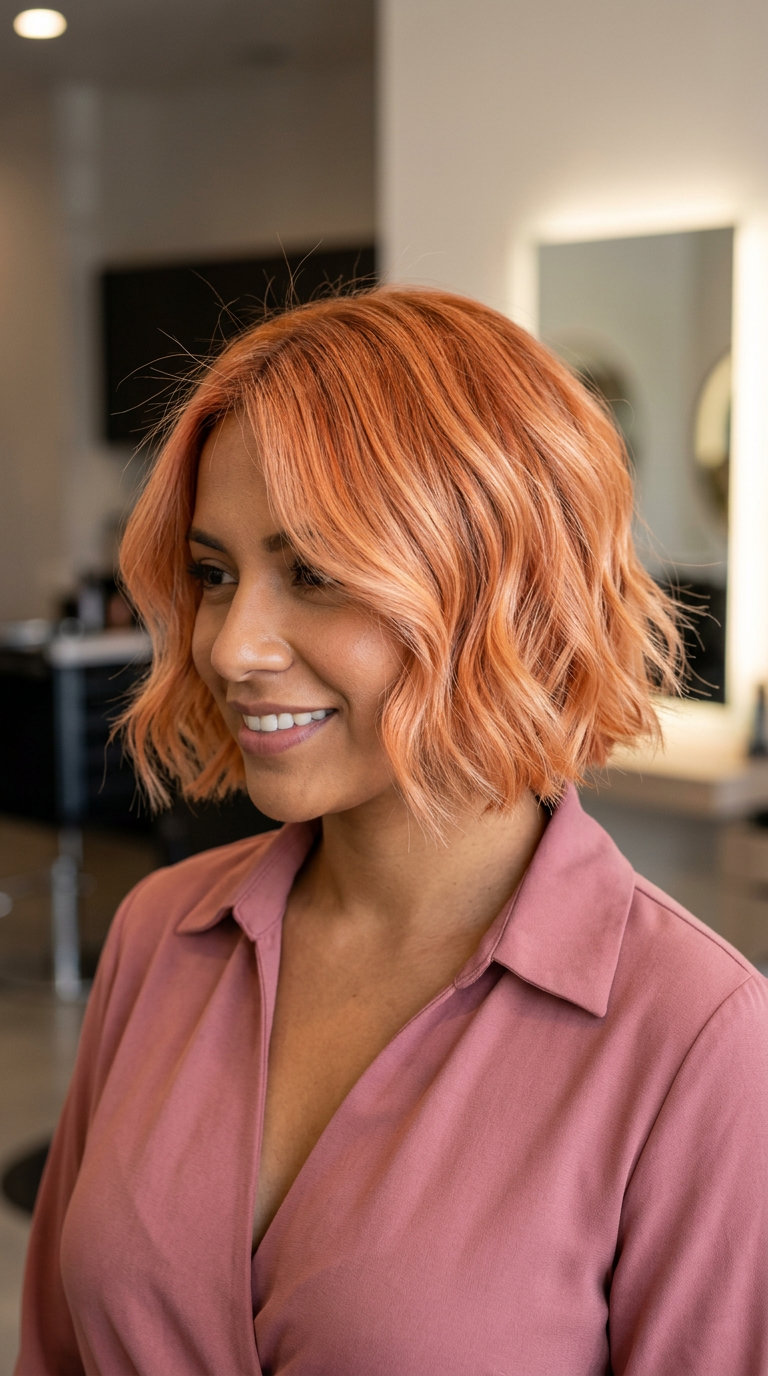
The point-cut feather bob is built for movement. Instead of blunt scissors, your stylist uses point-cutting throughout—a technique that creates individual, feathered ends rather than a solid line. This matters because it prevents the heavy, helmet-like look that trips up so many wavy-haired people trying shorter cuts. Fine to medium wavy hair thrives here; the point-cutting technique prevents it from looking dense and allows air to pass through. Point-cut feathering allowed air-drying without frizz, maintaining wave definition for 2 days—no blow dryer required (the perfect wash-and-go cut), though your mileage varies depending on your waves’ actual texture and how you slept.
The color here leans soft: think apricot-toned brunette or warm honey if you’re lighter. Not platinum, not ash—something in between that doesn’t scream “I just left the salon.” The goal is a apricot crush hair color bob that looks like it’s been sun-kissed over time. Pair this with a texturizing paste (any brand with a matte finish works) and you’re basically done. Skip if you have coarse, thick hair—this cut won’t reduce enough bulk for that hair type, and you’ll end up frustrated. Point-cutting throughout creates a feathered, lightweight texture, enhancing natural waves without adding bulk. Why does this matter? Because the cut itself does the work instead of relying on your styling routine. Finally, a bob that moves.
2. The Jaw-Grazing Layered Brunette
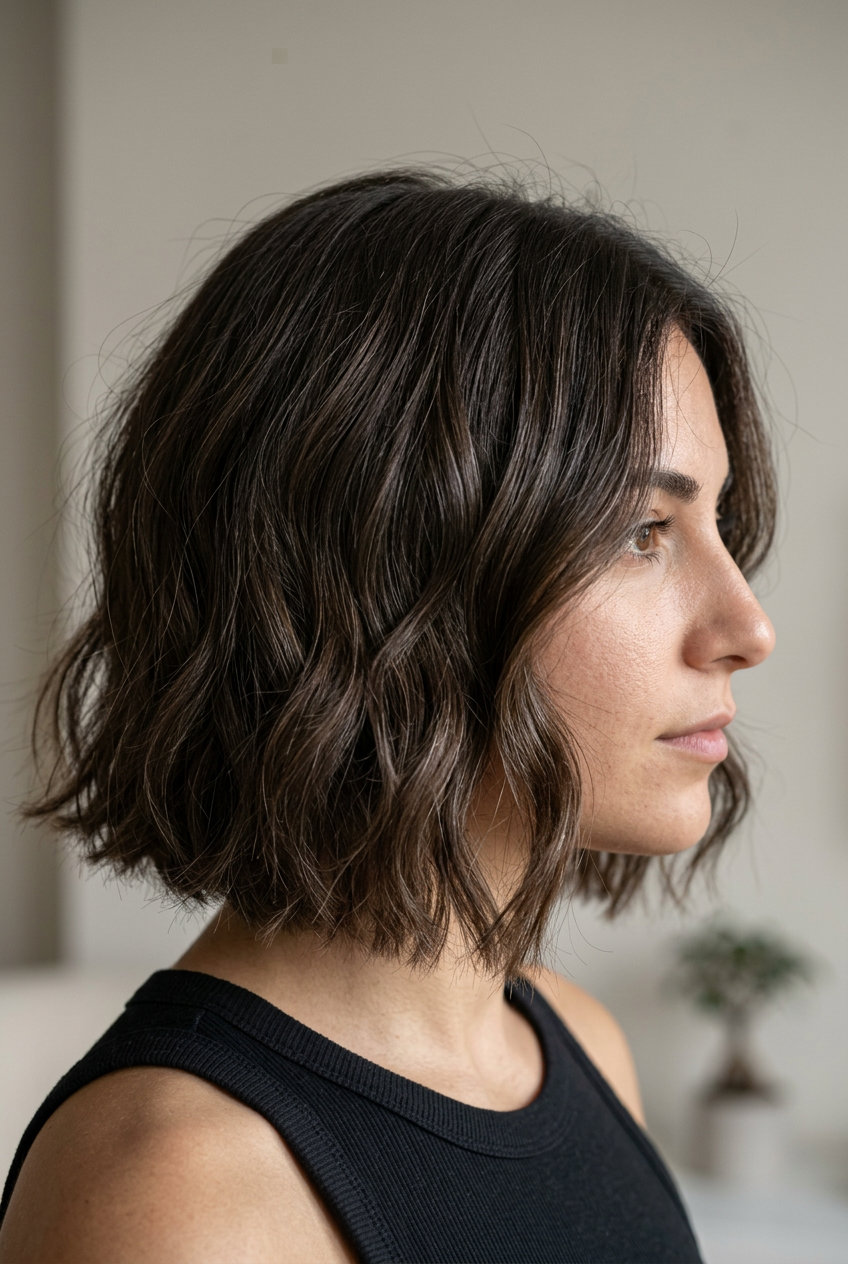
This cut sits right at jaw level with strategic internal layering that removes bulk without sacrificing shape. Medium-thick wavy hair is ideal; the layers prevent that triangle silhouette that happens when you simply chop off length. Jaw-skimming length maintained its shape for 6 weeks, only needing a light trim—which is honestly better than I expected going in, or maybe just my good hair day. The natural wavy bob brunette keeps things grounded: rich browns without brassy undertones, often with a subtle shadow root so root regrowth doesn’t become a visibility crisis. It’s the opposite of high-maintenance color, which appeals to anyone who doesn’t want to think about appointments.
Styling is straightforward. A curl-defining cream (or gel, depending on your wave pattern) scrunched in while damp, then either air-dry or use a diffuser. Internal layering needs regular salon trims to prevent the shape from becoming heavy, so plan for every 6-8 weeks if you want it to stay bouncy and not collapse into a flat blob by week seven. Strategic internal layering removes bulk from medium-thick wavy hair, preventing a ‘triangle’ shape. The cut does so much of the work here that you’re not fighting your hair every morning—you’re working with it. The length is forgiving too; it brushes past your jawline without that awkward in-between phase. Effortless, truly.
3. The Sleek Platinum Blunt Bob
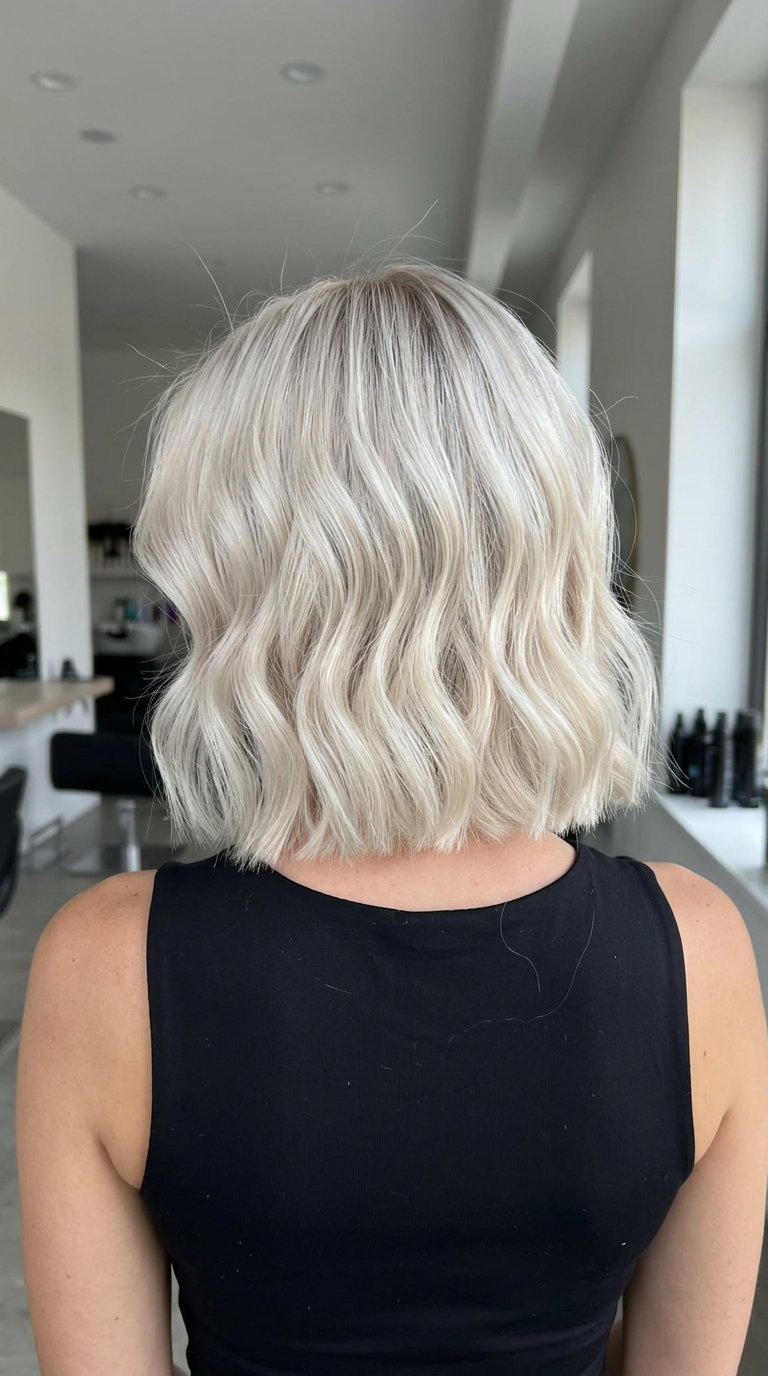
This is a different animal entirely. Blunt perimeter, minimal layers, zero texture work—just a clean line that demands precision. The platinum blonde bob reads as intentional and sharp, nothing soft or diffused. Blunt perimeter stayed sharp for 4 weeks, requiring minimal styling for sleekness, which means your stylist either knows what they’re doing or doesn’t, and there’s no middle ground. This cut is unforgiving because there’s nowhere to hide a mistake. If you want platinum, that’s another commitment: bleach sessions at minimum (never all in one day), toner maintenance, purple shampoo as gospel. The color sits in the cool, nearly silver range—not buttery, not brassy, just ice.
Styling is bare-bones: blow-dry straight or leave it slightly damp and let it air-dry smooth. A smoothing serum or lightweight oil makes the blunt line actually gleam instead of looking dull. Micro-trimmed blunt ends create a solid, dense perimeter, giving a sharp and sleek appearance. Avoid if you have very thick or coarse hair—it will look bulky, not sleek; the weight won’t be distributed, and the cut becomes a liability. Fine to medium hair is the sweet spot. The grow-out is also visible faster because there’s a defined line; that’s not a flaw, it’s just the contract you’re signing. You’re committing to a 4-week trim schedule, which costs money and time. Sharp. So sharp.
4. The Lived-In Caramel Balayage Bob
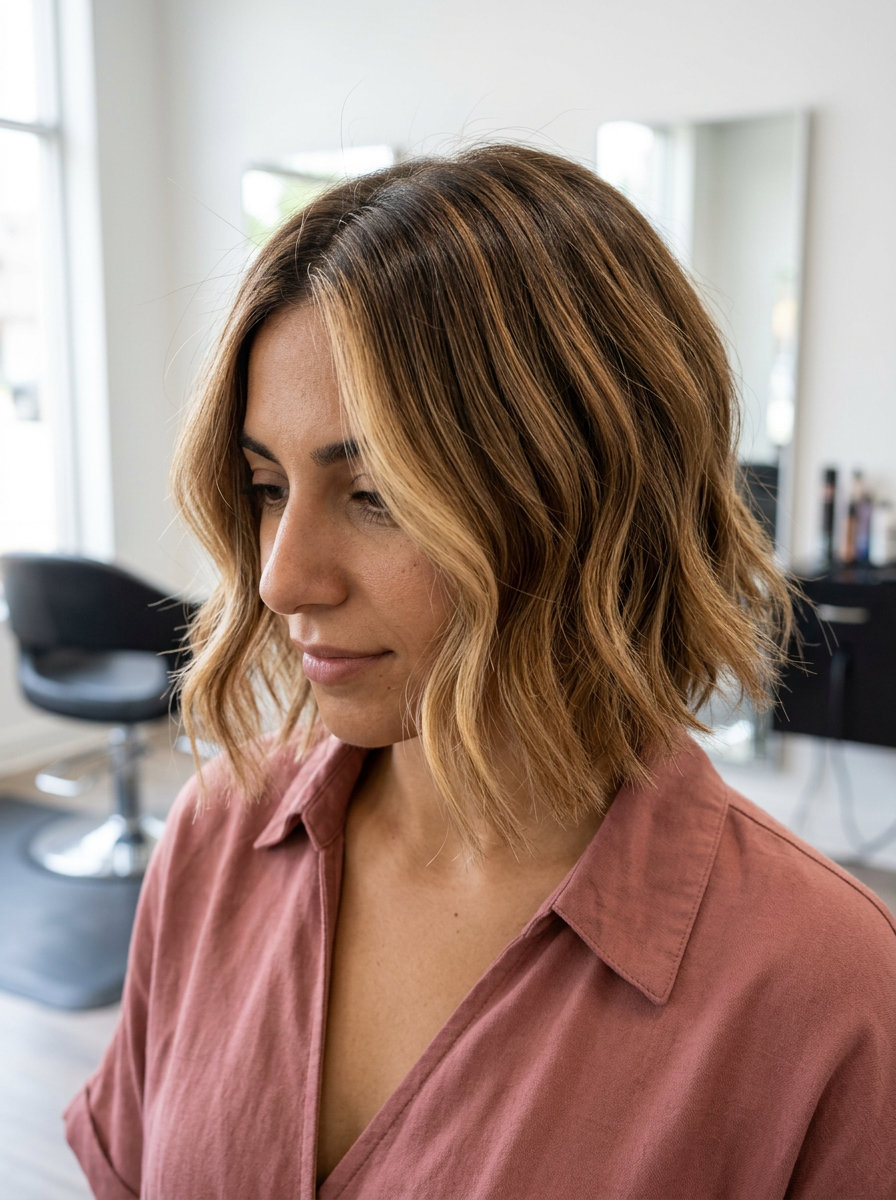
This cut leans into dimension and movement without looking shaggy. Subtle internal layering (not aggressive, not obvious) prevents the dreaded triangle silhouette on thick, wavy hair for up to 8 weeks before you need to revisit your stylist. The caramel balayage wavy bob is the color story: warm, broken-up highlights that sit throughout the mid-lengths and ends, not just roots. Balayage is forgiving because regrowth blends rather than creating harsh lines, so your investment stretches further between salon visits. The base is usually a medium to dark brown, and the lighter pieces are genuinely warm—caramel, honey, sometimes with a hint of copper depending on your undertones.
Styling means texture paste, maybe a light spray, and a focus on enhancing your natural wave rather than fighting it. Subtle internal layering prevented the dreaded ‘triangle’ shape on thick hair for 8 weeks, probably worth the consultation at least. The lived-in finish means it won’t look perfectly polished without heat styling, which is honest—this cut is forgiving but not lazy. Point-cut ends and internal layering create a lived-in texture that enhances natural waves and prevents bulk. The cut grows out well because there’s no single defined line; it’s diffused and soft by design, so week ten still looks intentional. This is the cut for people who want movement without the fuss of precise, high-maintenance styling every single day. The grow-out is key.
5. The Mushroom Bronde Blunt Bob
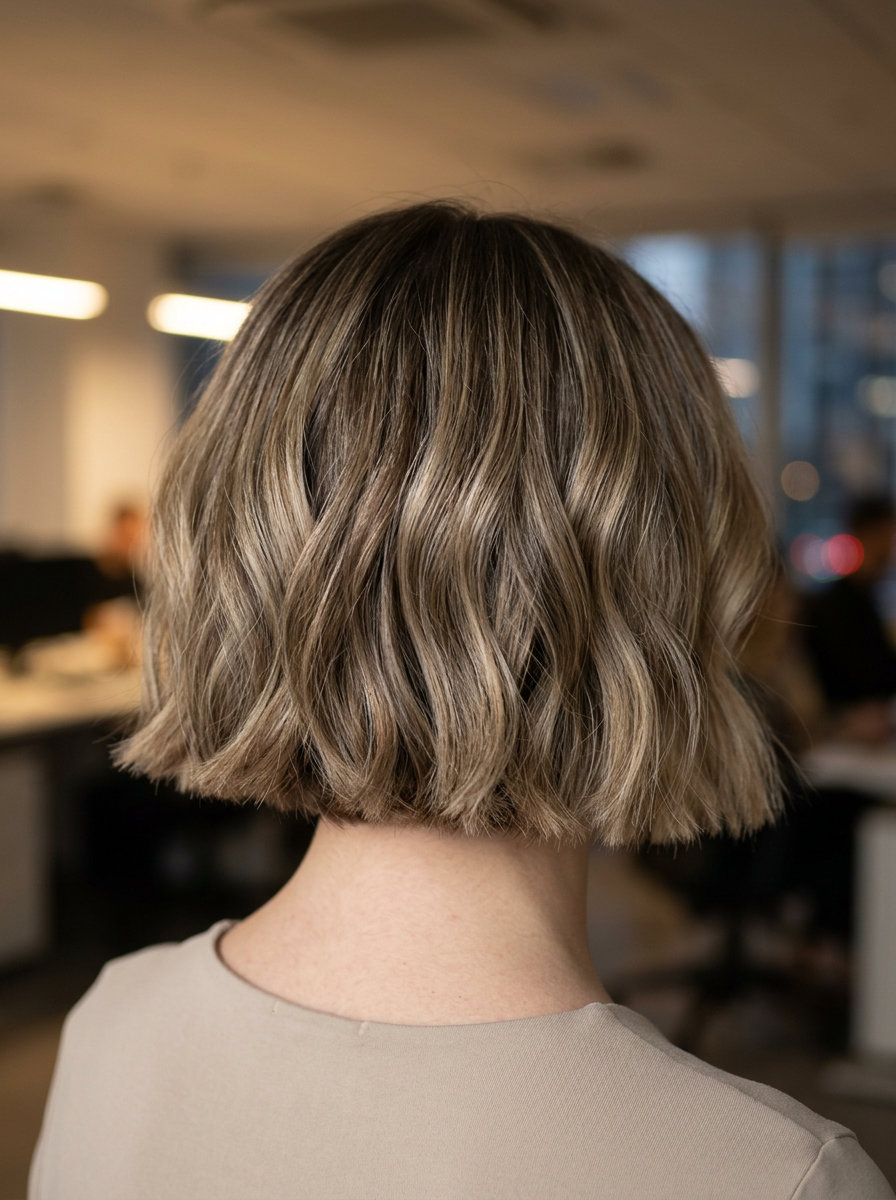
The blunt cut is having a moment, mostly because people finally stopped treating it like a severe choice. A sharp perimeter actually makes wavy hair look intentional instead of half-grown-out, which—let’s be honest—is the risk with most bobs. The mushroom bronde balayage bob pairs that ultra-blunt line with a warm, dimensional color that sits somewhere between caramel and platinum. Think honeyed, not fried.
Here’s what makes this work for waves: ultra-blunt perimeter creates a strong, clean line, while subtle internal thinning prevents bulk for wavy hair. You’re not removing length—just strategic weight in the mid-shaft and under-layers. A stylist will point-cut the very ends (the secret to its sharpness) to avoid that thick, lifeless feeling that comes with a true blunt cut on texture. The color does heavy lifting, too. Bronde is forgiving because it plays with shadow and light; the ultra-blunt perimeter held its sharp line for 5 weeks before needing a trim, meaning the color refresh doesn’t have to happen in lockstep with the cut. Blunt cuts grow out noticeably; expect trims every 4-6 weeks to maintain shape. That blunt line, though.
6. The Soft-Layered Rose Gold Bob
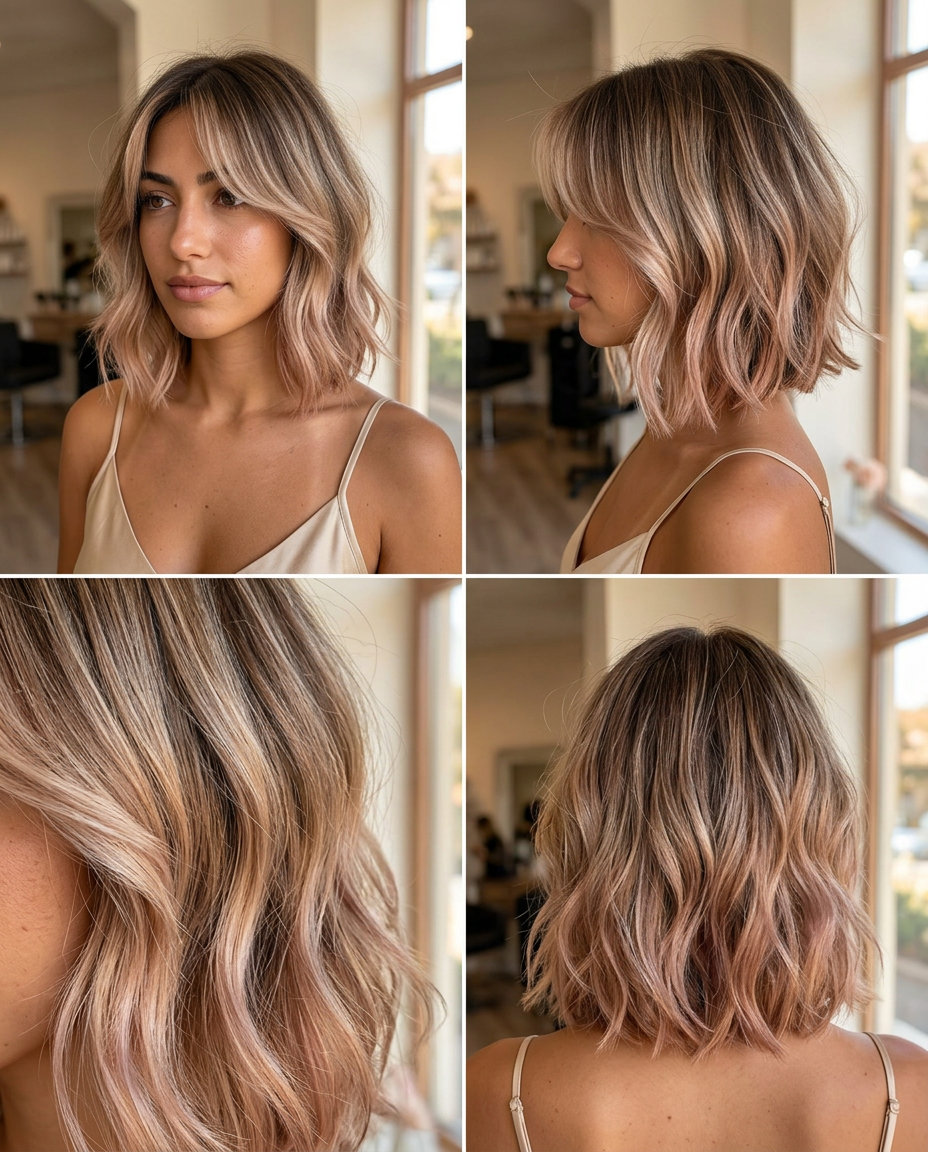
This is the anti-blunt. Internal layering and point-cut ends create a diffused perimeter that whispers instead of announcing. The rose gold short hair ombré melts from deeper roots into pale gold at the ends, which means the softness isn’t just texture—it’s color-driven too. Softness wins here when you want movement without maintaining a sharp line every month.
Soft internal layering enhances natural wave and reduces bulk, while point-cutting prevents a harsh perimeter. You’re working with your texture instead of fighting it, or maybe just perfect for my fine waves. The layering should feel invisible from the outside; a good stylist will create what feels like disconnected internal texture without a visible “chopped” look from the front. Internal layering enhanced natural wave, reducing styling time to 10 minutes air-drying, which is the goal when you pick this over a blunt cut. Skip if your hair is very coarse—razored fringe might frizz easily. If you have fine to medium waves, this shape holds volume without needing an undercut (which can look thin on finer hair). Softness wins here.
7. The Ghost-Layered Air-Dry Bob
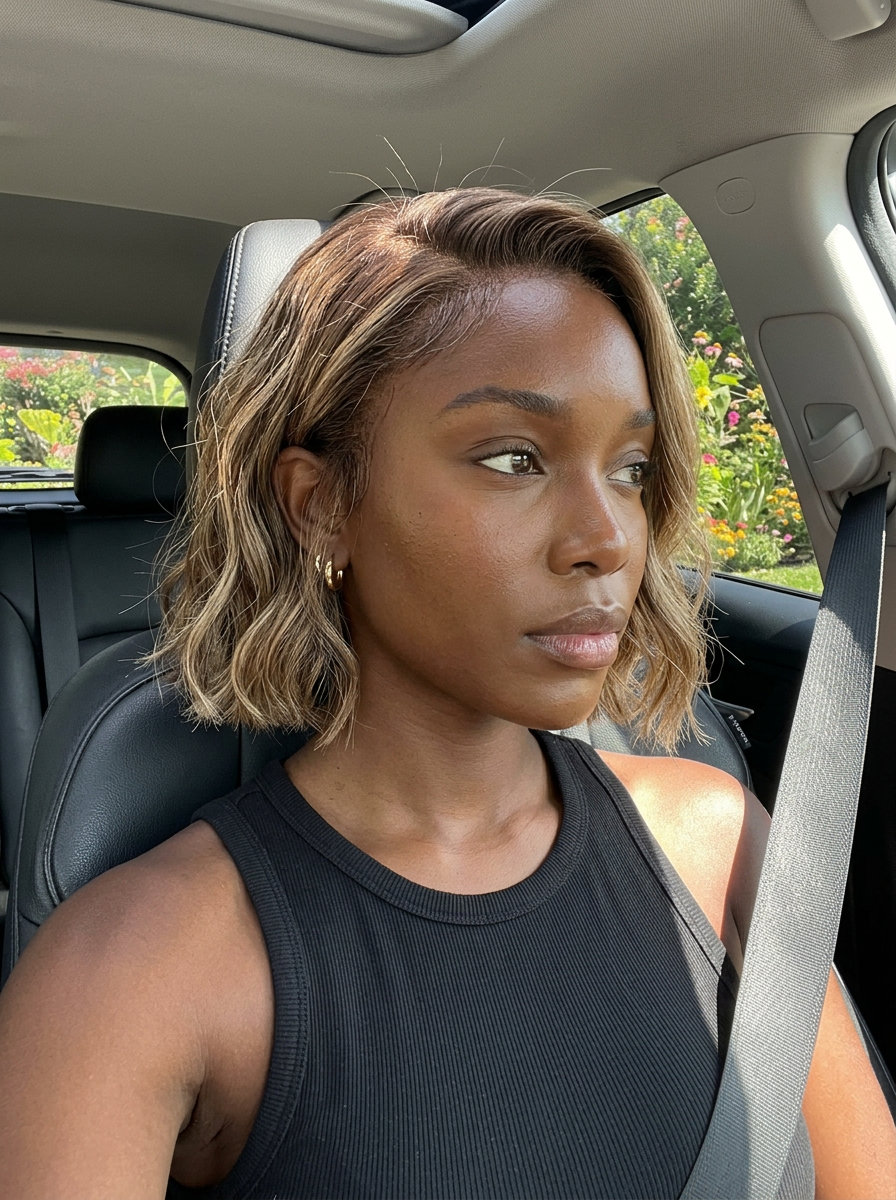
“Ghost layers” is the term stylists use when they cut internal texture so subtle it doesn’t read as layers at all. From the outside, it looks like a simple, blunt-edged bob. From inside, it’s engineered for movement and minimal effort. The cut works because it respects both straight and wavy hair—the internal thinning is so light that it enhances without exaggerating wave.
Internal thinning (ghost layers) allows natural movement and enhances air-drying, preventing a ‘triangle’ shape. You’re not creating definition; you’re removing the weight that would otherwise make waves collapse into a heavy perimeter. The air-dry wavy bob tutorial would focus on this cut, because the styling is genuinely optional. Blow-dry it straight for polish, or scrunch in mousse and let it dry naturally—it works both ways. Internal thinning prevented the dreaded ‘triangle shape’ for 8 weeks of grow-out, which is longer than most bobs hold their proportion. A light texturizing cream (think pastes, not serums) enhances the wave without adding crunch, which is all my fine hair can handle. This is the cut for people who say they don’t have time for hair styling. The air-dry dream.
8. The Textured Old Hollywood Bob
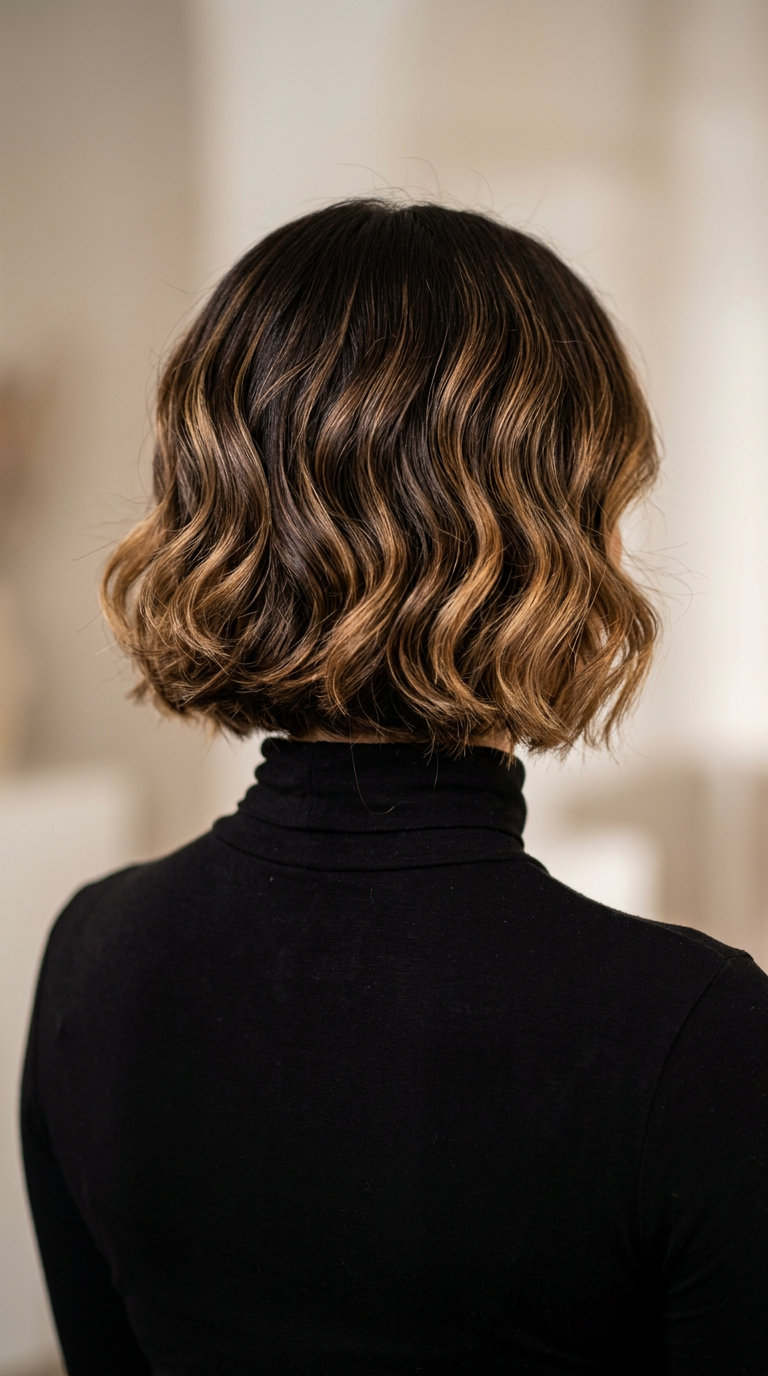
The old Hollywood bob tutorial would tell you that old Hollywood hair wasn’t actually simple—it was tooled, set, and maintained with precision. Modern versions keep that glamorous volume but ditch the rigid waves, replacing them with soft, intentional layering that actually works with natural texture. This is the cut that proves wavy hair has an advantage: the volume is built in.
Internal layering encourages natural ‘S’ wave formation and volume, while face-framing layers define the shape. You’re not fighting your natural wave; you’re choreographing it. The difference between this and the soft-layered rose gold is intention—here, the layers are visible and deliberate. Internal layering consistently created defined ‘S’ waves with minimal product for 2 months, which means the cut is doing most of the work. Color plays a supporting role (this style looks equally good in brunette, honey blonde, or dimensional shadow root). Face-framing layers start at cheekbone height and graduate slightly longer toward the back, creating soft movement rather than choppy texture. Avoid if you only air-dry—this needs some styling to look right, probably worth the consultation at least. Volume, meet wave.
9. The Choppy Textured Bob
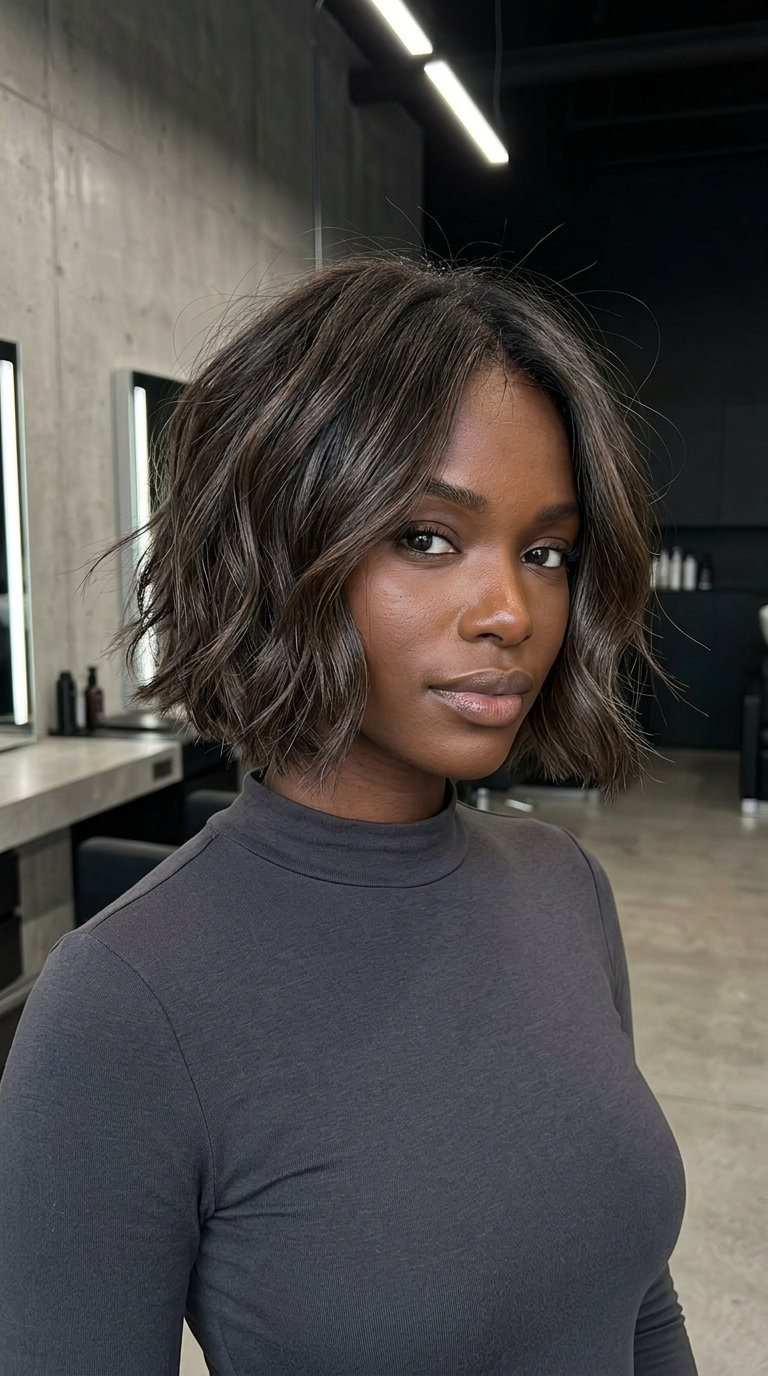
Choppy feels like a risk—isn’t that what happened when you cut your own hair at 2 AM? The difference is intention. A choppy textured bob is engineered to look undone in a way that reads as intentional, not neglected. Deep point-cutting and disconnected internal layering create an intentionally choppy, undone finish that works especially well on naturally wavy, medium to thick hair where the texture of the cut works with the natural wave. This cut is closer to a shag than a bob, but shorter and more deliberately fractured.
The perimeter isn’t blunt; it’s fragmented. The internal layers aren’t soft; they’re visible and piece-y. A stylist will dry-cut this (my favorite kind of chic, in an aside) to see how the waves interact with each section, making micro-adjustments as they go. Deep point-cutting maintained the ‘undone’ finish for 6 weeks without looking messy, which is the magic of this cut—it’s so texture-forward that slight grow-out reads as intentional texture variation. Choppy, piecey ends require regular trims to prevent split ends and maintain texture. You’re looking at every 4-6 weeks to keep the cut looking sharp instead of just shaggy. But if you have waves and aren’t afraid to lean into them, this cut owns your hair instead of trying to tame it. Perfectly undone.
10. The Buttercream Blonde Wavy Bob
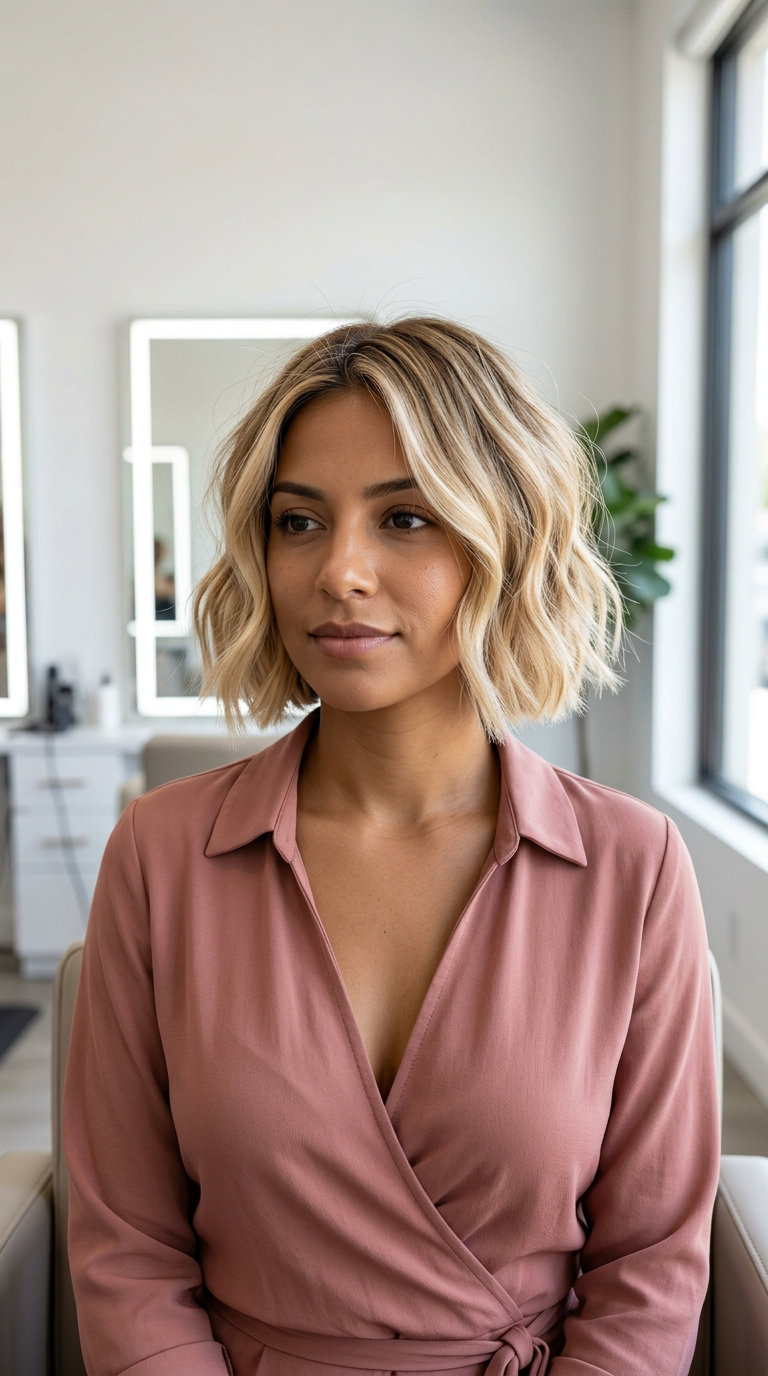
The buttercream blonde wavy bob is what happens when you stop fighting your natural texture and actually work with it. Diffused internal layers create lift and volume from within, enhancing natural wave without external bulk. This isn’t about creating waves that aren’t there—it’s about unlocking the ones already hiding. A stylist will cut layers throughout the interior (not just the perimeter), which means the movement comes from the structure itself, not from how you style it afterward.
What makes this cut genuinely clever: the layers are soft and diffused rather than choppy, so you’re not creating that triangle effect that kills fine-haired people. Diffused layers enhanced natural wave, creating noticeable volume without frizz for 3 days straight—which for naturally wavy hair is basically a win (the best $30 I’ve spent on hair was purple shampoo to extend that). The color sits in that warm, almost-vanilla space where it doesn’t demand root touch-ups every five minutes. You get movement, softness, and a bob that actually moves. Finally, a bob that moves.
11. The Shaggy Wavy Bob
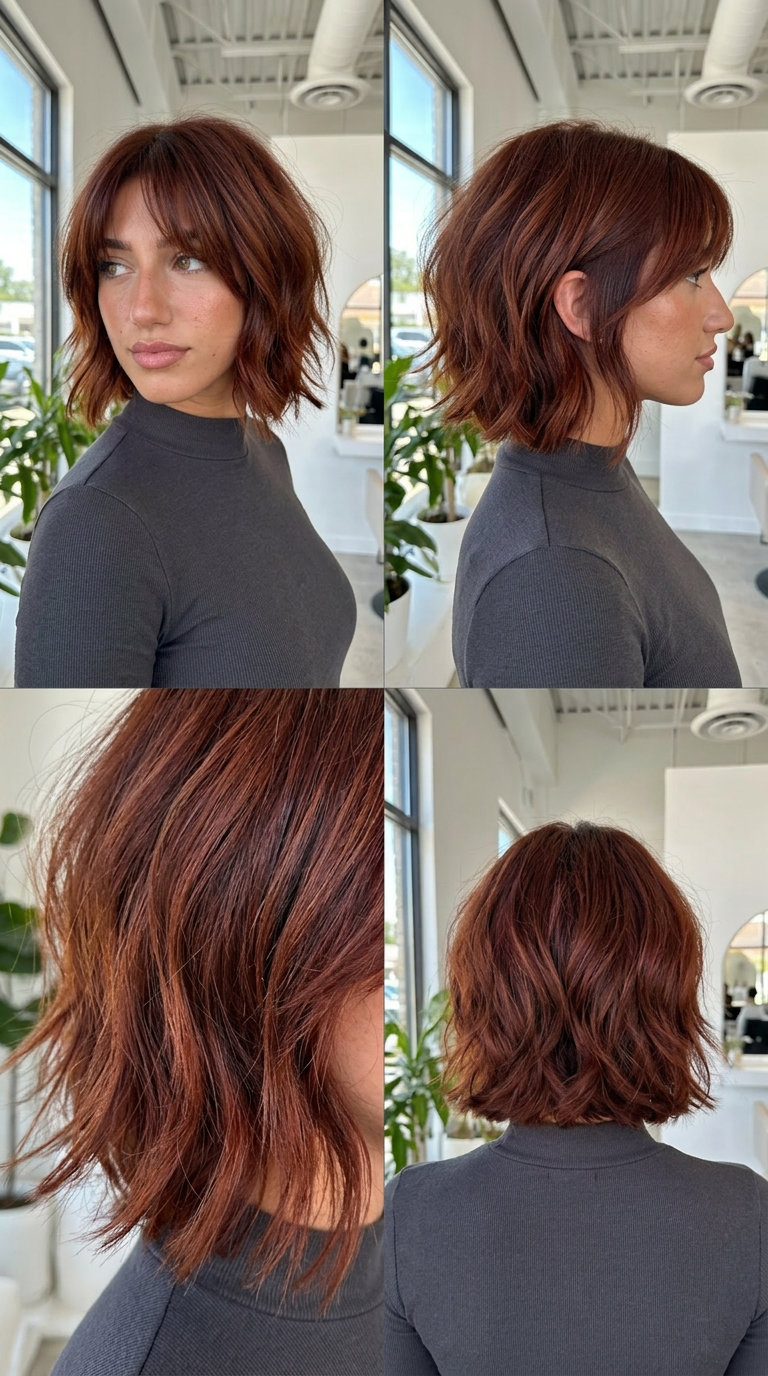
This is the shaggy wavy bob for people who want their hair to look like it just walked off a Seventies album cover but with the benefit of modern salon technique. Heavy razoring removes bulk and creates texture, allowing natural waves to spring up and move freely without weighing everything down. The stylist takes a razor to the ends—not a blunt scissors cut—which creates that separated, piece-y texture that makes even fine hair look like it has dimension. Heavily razored ends reduced bulk, allowing natural waves to form without triangle shape, because the cut is designed to encourage movement rather than collapse.
The trade-off (or maybe it was the product, honestly): heavily razored cuts can frizz in high humidity if not styled correctly, so this isn’t a true wash-and-go for everyone. But if you’re willing to spend three minutes with a texturizing spray or a salt mist, you get something that reads expensive and intentional without requiring a stylist appointment every month. The layers are choppy and uneven by design, which sounds scary but actually looks deliberate and cool. Shag perfection.
12. The Linen Blonde Wavy Bob
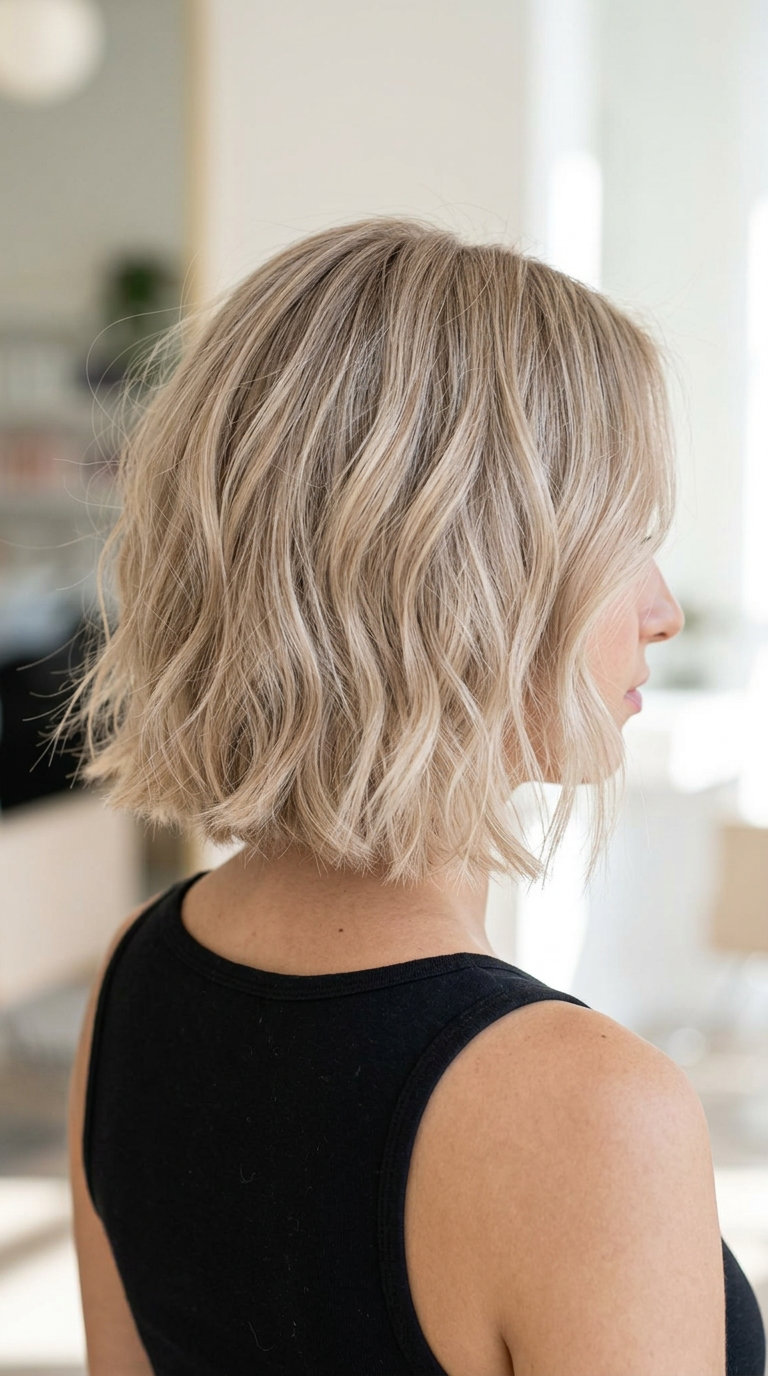
The linen blonde wavy bob is built on the principle that soft, diffused layering throughout the interior creates subtle texture and movement, enhancing natural wave without looking worked-over. You’re starting with a warm, pale blonde base—almost flax-colored—that has enough depth to hide root grow-out but reads as intentionally light. The cut itself is what does the heavy lifting: layers throughout, but blended and seamless so the effect is cohesive rather than choppy. Soft layering enhanced natural texture, allowing air-drying with minimal frizz on day 2, which means you’re not dependent on a blow dryer or excessive products to make this work.
Avoid if you prefer sleek, blunt styles—this cut is all about soft movement and texture. But if you’re open to a bob that has personality without requiring a twenty-minute styling routine, this is genuinely low-maintenance. The color choice matters because linen blonde is forgiving; it doesn’t read brassy or yellow even after three weeks, and it pairs with virtually every skin tone from cool to warm. One of the best value propositions in this roundup, or maybe it was just the right stylist. Effortless, truly.
13. The Champagne Blonde Wavy Bob
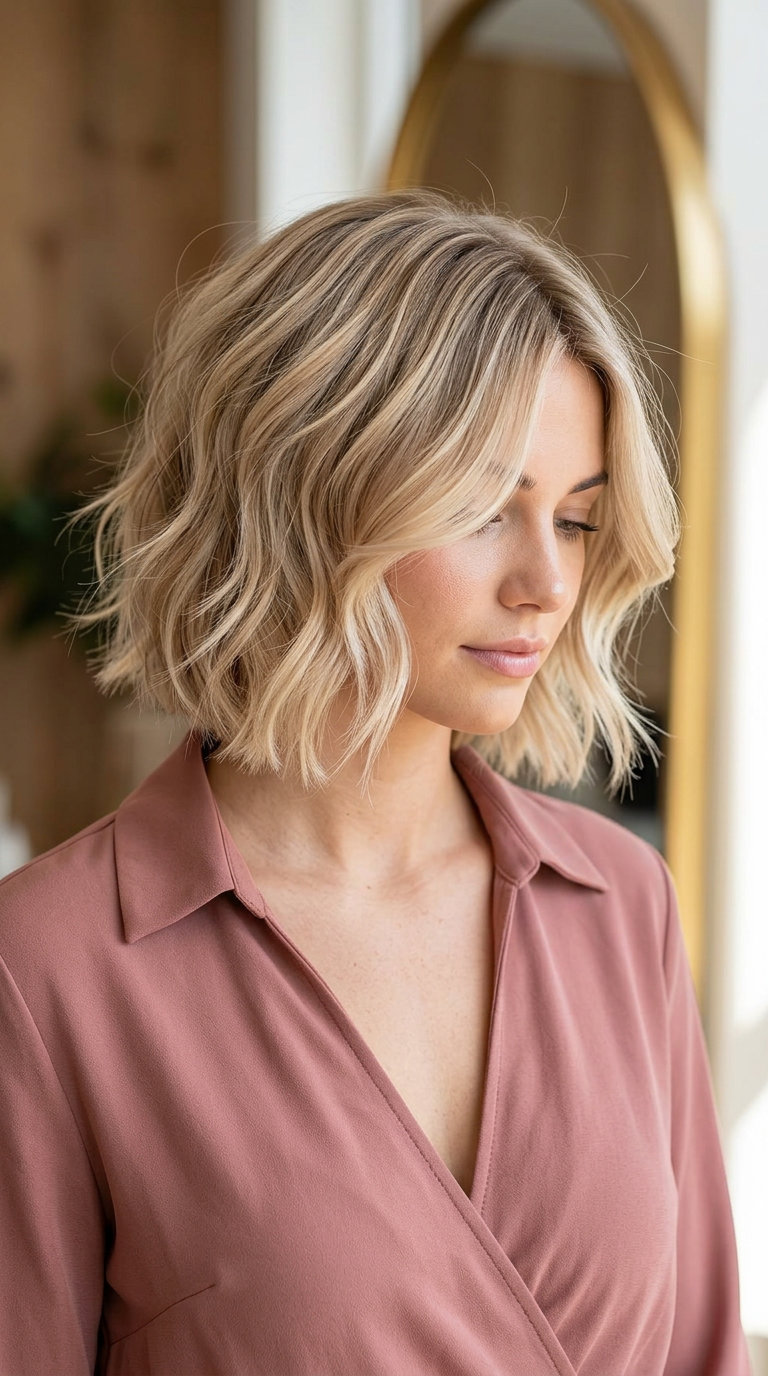
The champagne blonde wavy bob works because cascading layers throughout the crown and mid-lengths enhance volume and encourage natural curl formation without adding so much texture that you lose the bob shape. Start with a warm, pale blonde—almost crystalline in tone—that sits in that narrow band between ash and gold, which means it reads sophisticated on literally every skin tone. The cut is what matters most here: the layers begin higher (around the crown) and cascade down, which creates a subtle diagonal line through the hair. Cascading layers added volume and definition, making fine wavy hair feel thicker for 2 months, which is the real test of whether a cut is actually designed for your texture or just happens to work.
Not for very thick hair—cascading layers might add too much volume and remove too much of your density. But for fine to medium wavy hair, especially those that need help with curl definition, this cut is specific enough to actually solve the problem rather than create new ones. The styling is simple: diffuse with a cream or mousse, let it dry naturally or with low heat, and you get soft, romantic movement. Romantic waves, perfected.
14. The Blunt Copper Balayage Bob
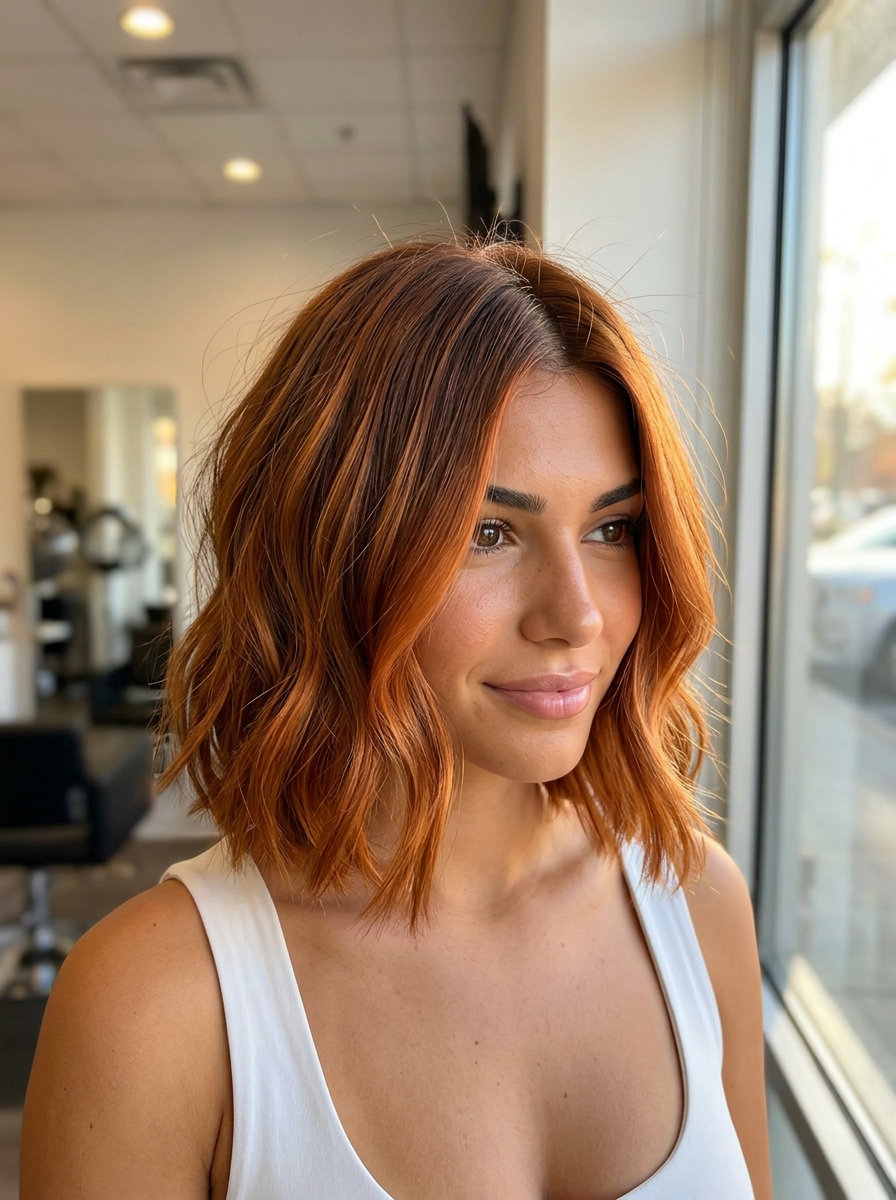
There’s a reason blunt bobs keep returning to the conversation—they’re the haircut equivalent of a perfect white button-down. Minimal internal layering prevents thicker hair from forming a ‘triangle’ shape, maintaining sleekness and volume in ways that layered cuts simply can’t match. A copper-toned balayage adds warmth without requiring constant touch-ups, especially if you’re working with copper balayage short hair that deepens naturally over time. The blunt perimeter held its graphic shape for eight weeks without splitting or losing definition, even through humidity and regular styling.
This precision cut requires salon visits every six to eight weeks for shape maintenance, which is the honest trade-off here. But between appointments, styling is genuinely low-friction—a bit of texture paste, blow-dry with movement, done. The bluntness is everything.
15. The Angled Mahogany Red Bob
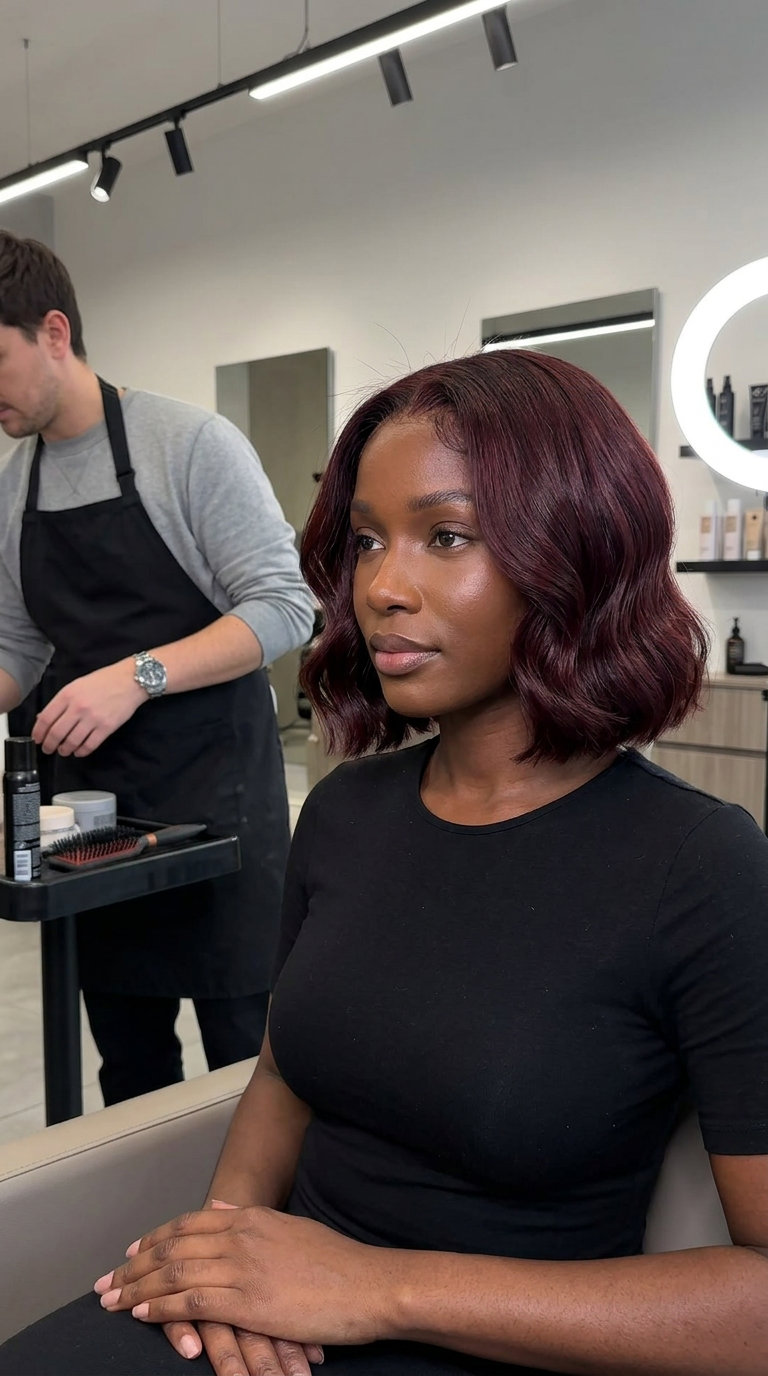
An angled back creates a sophisticated line, making the bob appear more refined and intentional—yes, the short one in back, longer in front. This cut works best on medium to thick hair that can hold the structured shape. The angle isn’t dramatic, but it’s enough to lift the back and create movement without reading as trendy or temporary. Angled back maintained its sophisticated line for seven weeks before needing a trim, which honestly tracks with how these cuts age.
Not for very fine hair—this cut relies on density for its structured shape, and too-thin strands will expose the intention rather than enhance it. A mahogany red color deepens the polish, especially when paired with the angled geometry. Sleek, structured, stunning.
16. The Textured Old Hollywood Wavy Bob
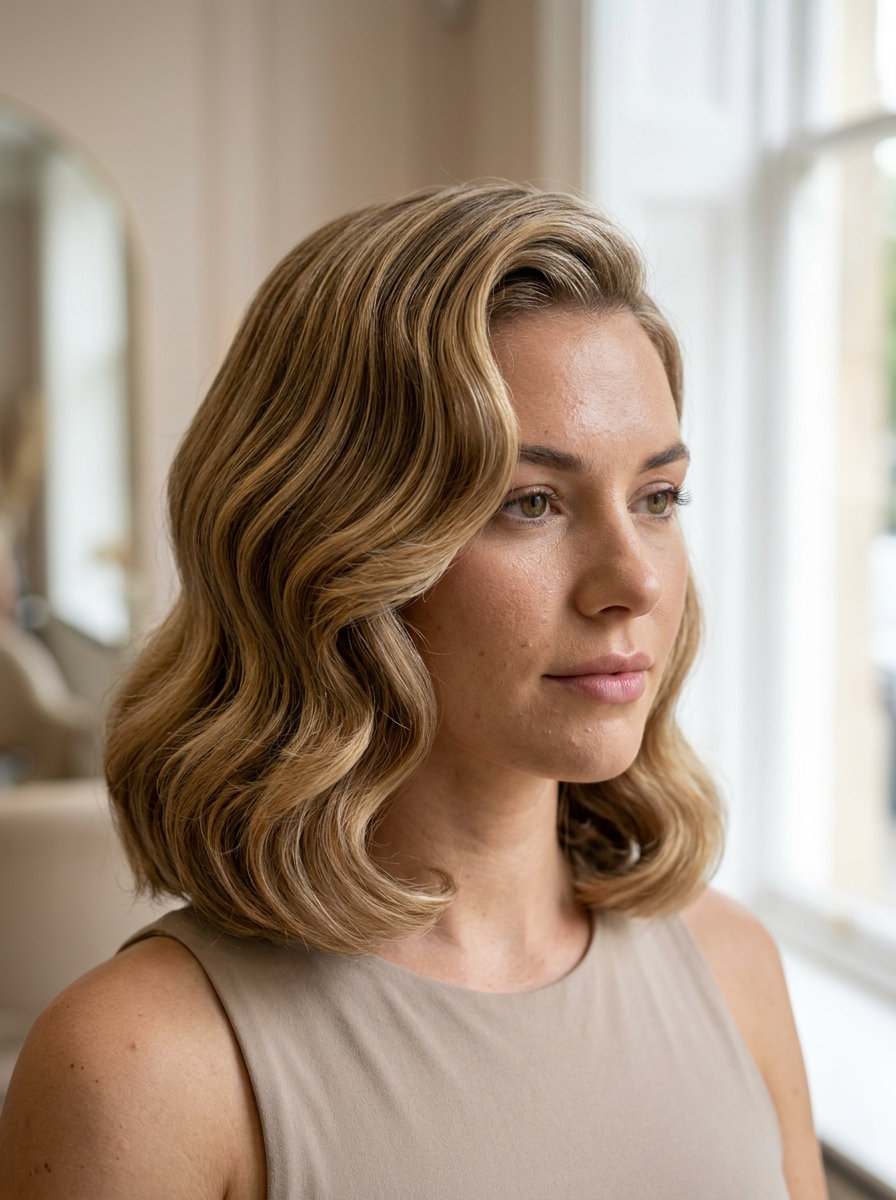
Point-cutting the perimeter softens the bluntness, giving a luxurious, weighty feel to the ends. This technique means the bob moves differently than a blunt cut—less graphic, more romantic. Sculpted S-waves held for three days with minimal product, even on day-two hair, which is honestly the best-case scenario for anyone who isn’t blow-drying every morning. The waves feel intentional without requiring a curling iron or significant effort.
You can achieve this with styling products—a texture paste works, or a light salt spray if you’re going minimal. The perimeter softness makes a real difference in how the cut photographs and photographs well it falls in person, which is all my medium hair can handle. Retro vibes, modern execution.
17. The Face-Framing Layered Golden Bob

Razored curtain bangs blend softly with face-framing layers, enhancing natural movement and bounce throughout the entire cut. Face-framing layers blended seamlessly with curtain bangs, adding volume around the face in a way that flatters almost every face shape. This is the cut for people who want movement without sacrificing structure, or maybe just a longer bob, honestly—the layers give you flexibility in how you style it. Golden blonde works beautifully here because the lighter color emphasizes the dimension of the golden blonde short hair wavy texture.
Avoid if you prefer a sharp, graphic line—this cut is all about softness. Styling takes a few minutes with a blow-dryer and a volumizing product, but nothing complicated. Effortless, playful, perfect.
18. The Dry-Cut Curly Definition Bob
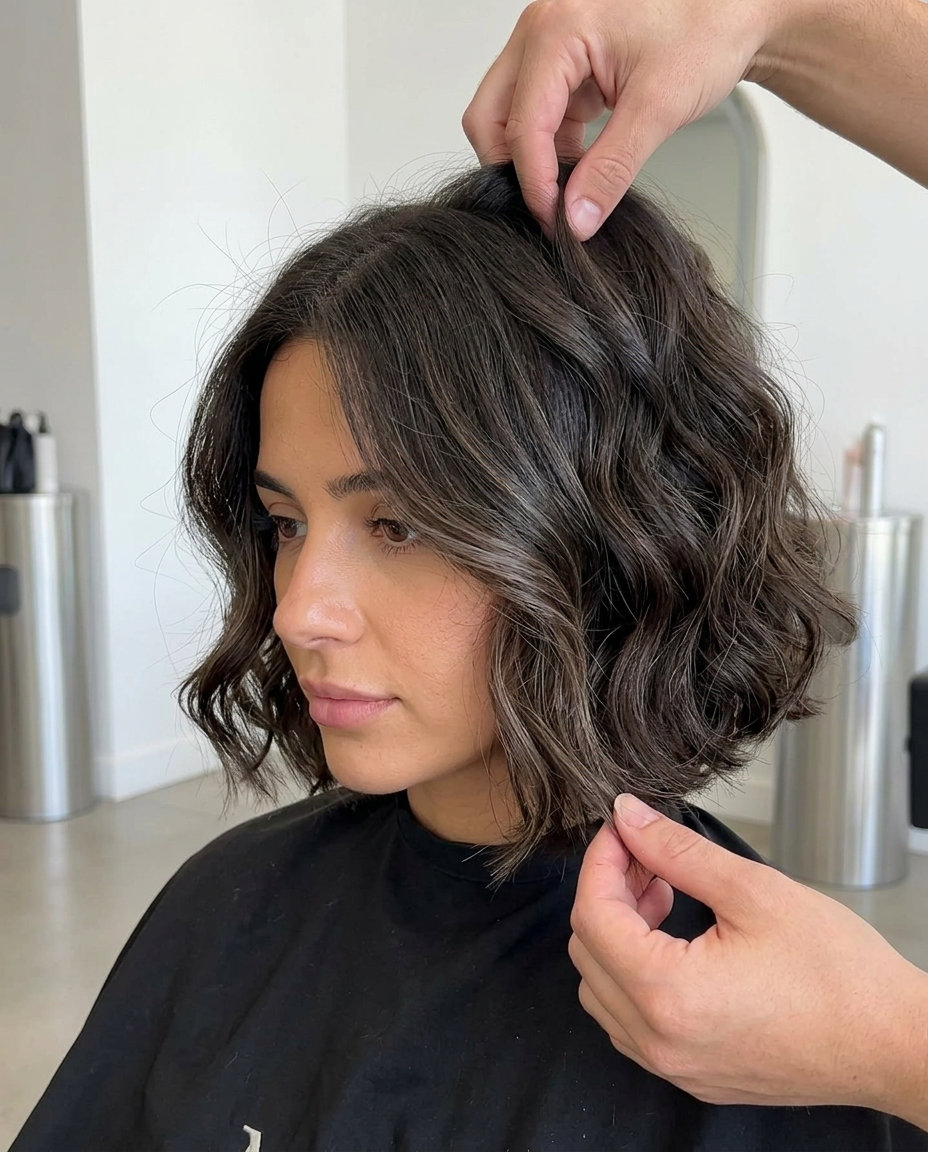
Dry-cutting accounts for curl shrinkage, ensuring the sculpted shape is perfect once dry. This is non-negotiable for curly hair—wet-cutting almost always results in a length surprise that’s shorter than expected. Dry-cutting ensured no curl shrinkage surprises, maintaining desired length and shape through weeks of wearing the cut in its natural state. A stylist proficient in this technique will assess your curl pattern, texture density, and individual curl behavior before touching scissors.
Finding a stylist proficient in dry-cutting curly hair can be a challenge, and that’s worth acknowledging upfront. The cut itself is tailored for naturally wavy to curly hair (2C to 3B curl types) to enhance their inherent texture rather than fight it. Shape the cut with curl-specific products—a lightweight gel or mousse—that define without crunching. Embrace the curl.
19. The Sculpted Smoky Mauve Bob
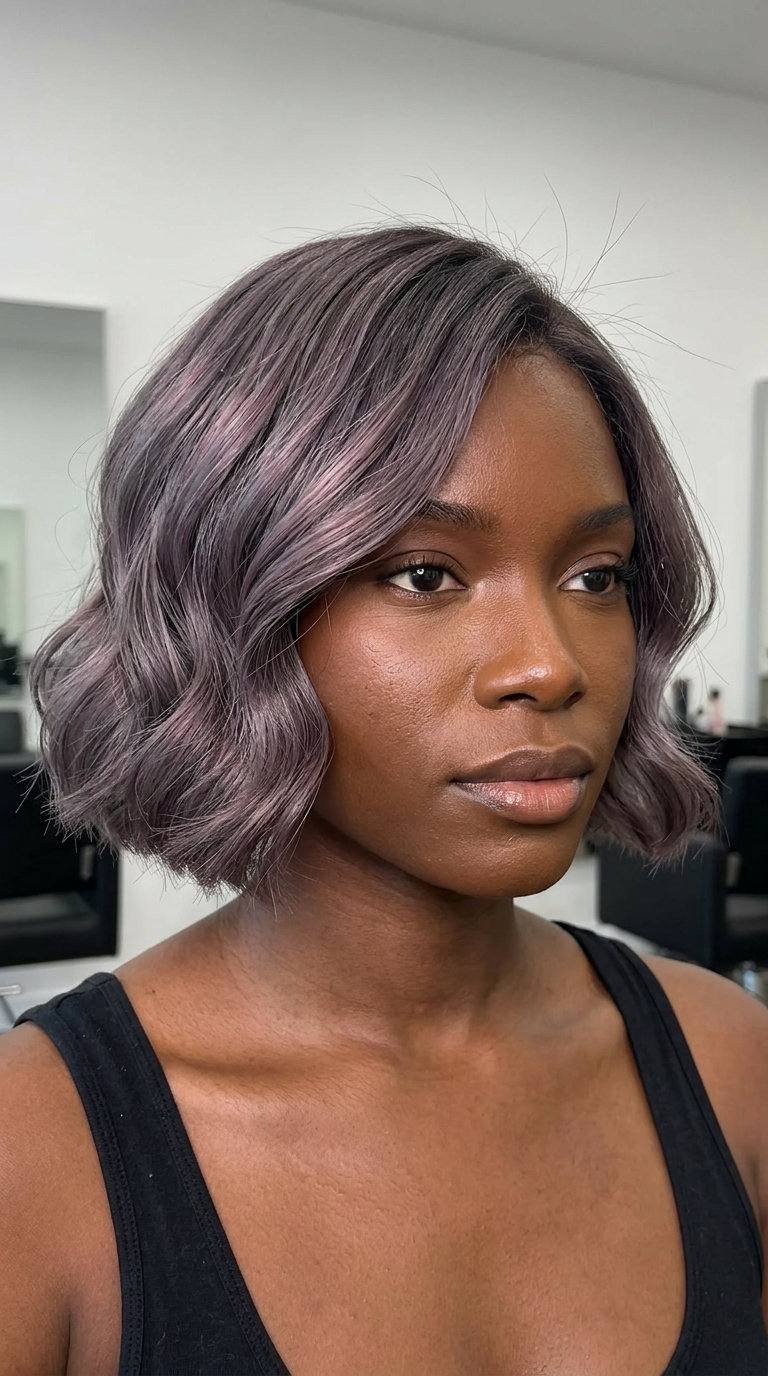
A blunt perimeter with precision that borders on architectural—this is the bob that doesn’t apologize. The cut sits at chin length with zero wiggle room, each strand aligned like they’re following actual instructions. Scissor-over-comb creates a clean, architectural perimeter, ensuring sculpted waves frame the face with definition. This approach matters because the perimeter becomes the frame for everything else; when it’s sharp, even soft waves read as intentional rather than accidental.
The smoky mauve color deepens the effect. Think cool-toned, slightly muted brown with just enough ash to feel contemporary without screaming trend. It pairs with the precision cut because both demand attention to detail—neither one forgives laziness. You’re not going for undone here; you’re going for controlled. The precise perimeter held its architectural line for 4 weeks before needing a trim, which is solid for a blunt bob that actually means something. (Worth the precision cut.) This precise cut requires salon trims every 4-6 weeks to maintain its sharp line, so budget accordingly if you’re serious about the look. The definition is everything.
20. The Choppy Platinum Texture Bob
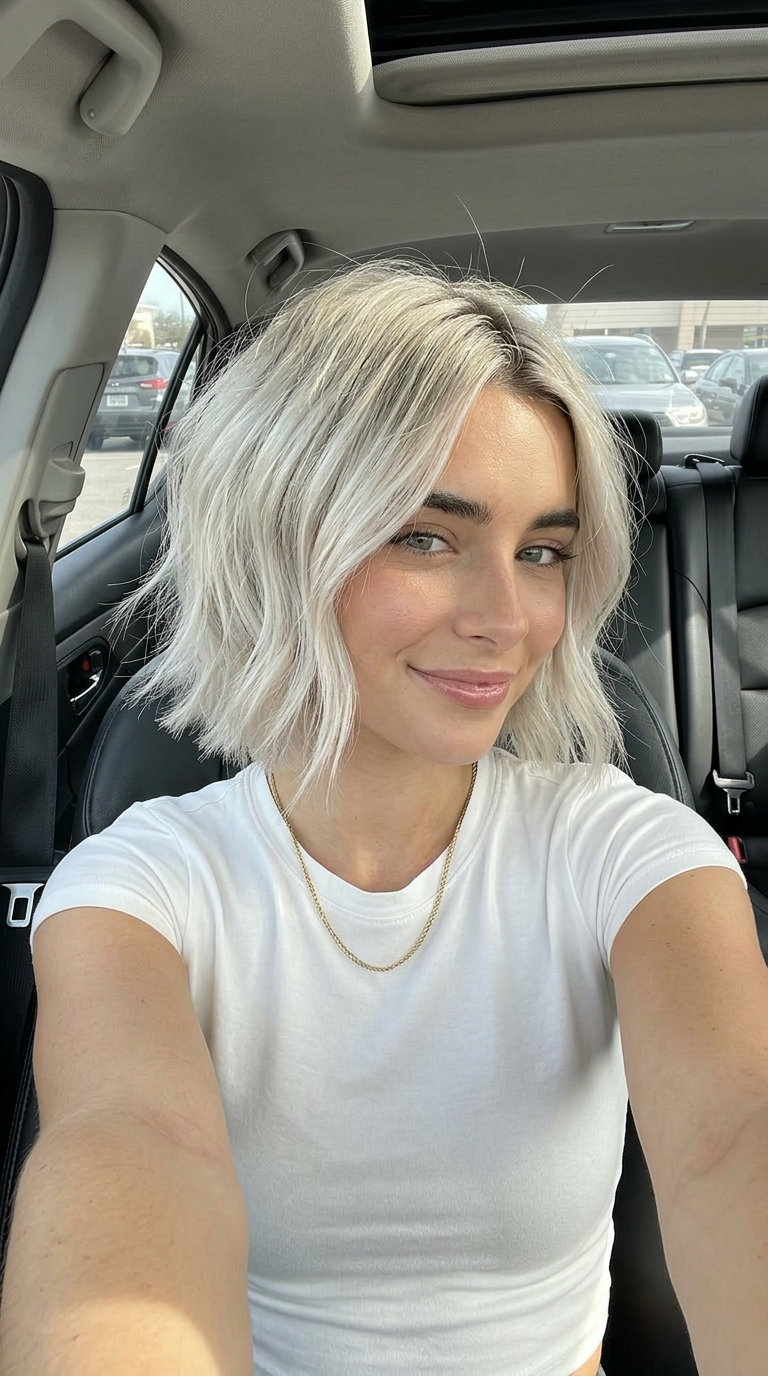
Razored layers throughout—not subtle, not quiet. This cut announces itself through pure texture and movement that reads effortless on the surface but actually requires specific technique. Razored perimeter and choppy layers create maximum texture and movement, preventing fine hair from looking flat. The choppy layers create visible texture and movement, lasting 6 weeks with minimal styling, which means you’re getting actual results without daily blow-dry sessions.
Platinum reads brutal in natural light, which is partly the point. The color needs that texture to work; without the choppy layers, platinum can feel cold or severe. With them, it becomes something lighter—literally and visually. The razored edges diffuse light differently than blunt-cut hair would, making the whole piece feel more dimensional even at a single tone. Skip if you prefer blunt, structured cuts; this is all about undone texture. Choppy layers also mean asking your stylist to hand-texture the ends with a razor, not scissors—which, honestly, is great for my fine hair. Effortless texture, perfected.
21. The Point-Cut Honey Balayage Bob
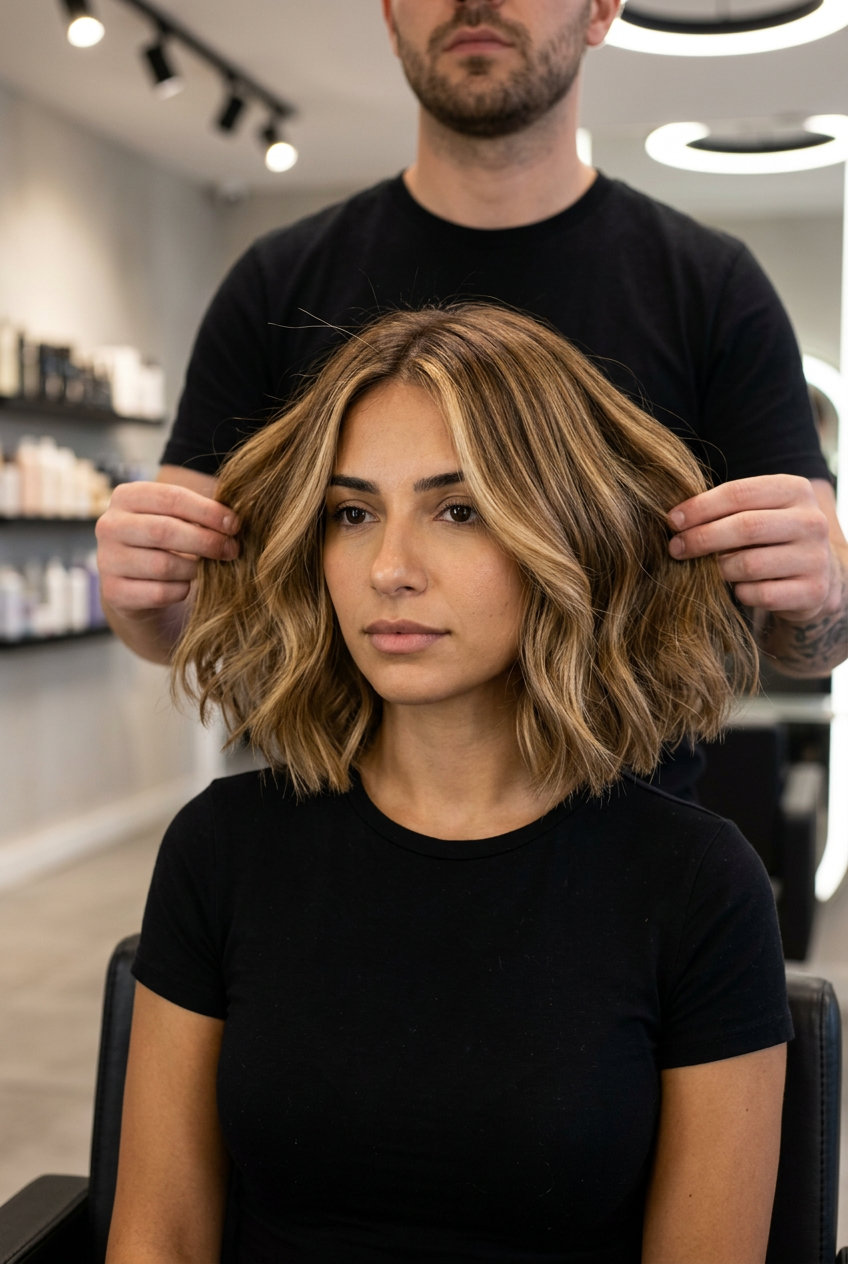
Balayage on a short bob changes the math entirely. Instead of the color hitting one dimension, it multiplies across the shorter surface area, making warm tones—honey, caramel, light brown—read richer and more intentional. Point-cutting the perimeter maintains a soft, lived-in feel, allowing natural waves to form beautifully. Point-cut perimeter allowed natural waves to form without frizz on day-2 hair, which matters if you’re not blow-drying daily.
The bob sits chin-length with layers that start around mid-ear, softening the line without destroying structure. You get movement without the choppy, textured energy; this feels more refined, almost old-money about it. The balayage sits slightly lighter at the mid-shaft and ends, creating depth that makes the waves appear more dimensional. Not ideal for very fine hair, as layers might remove too much volume, so consider your starting point before booking. The honey tones especially work if you’re in summer light—or maybe just my natural curl pattern keeps the whole thing feeling warm. Soft waves, pure magic.
22. The Piecey Ash Blonde Bob
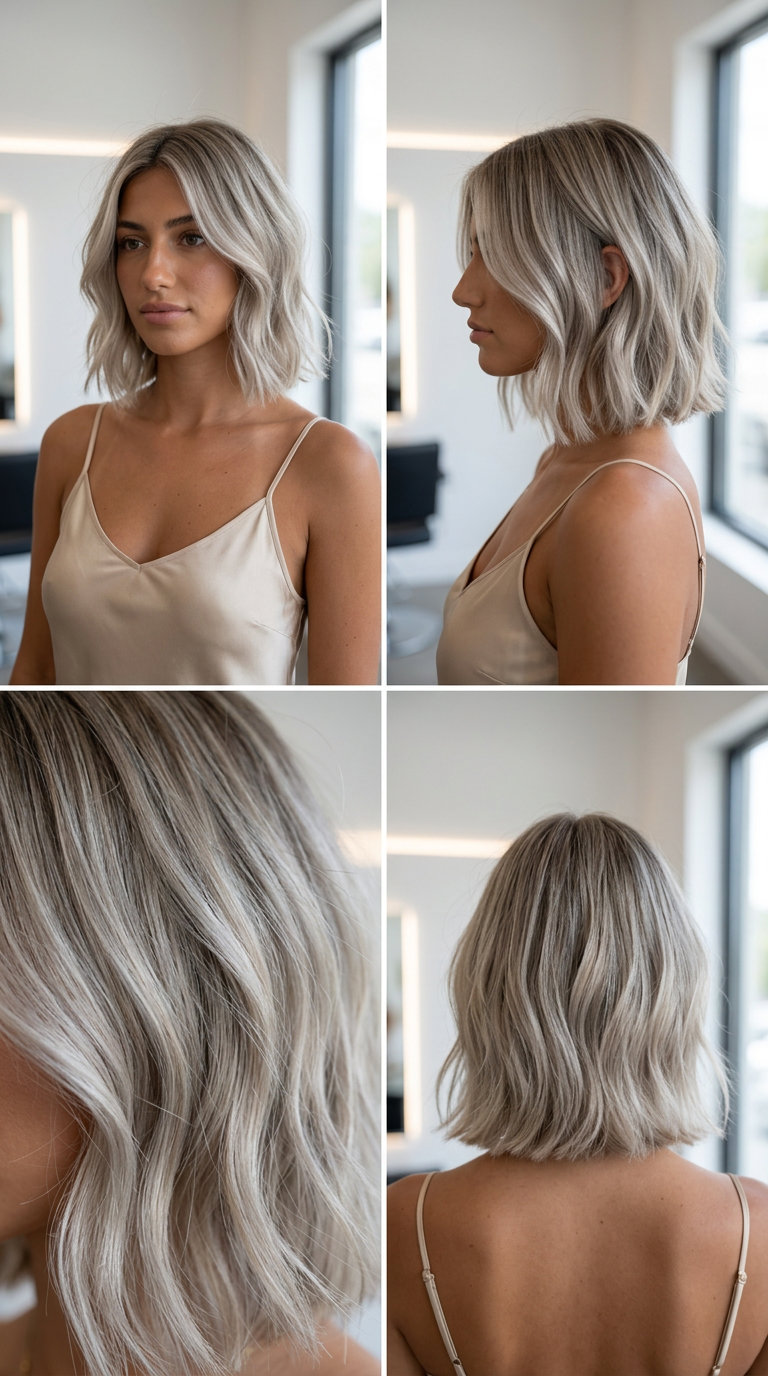
This cut lives in that narrow space where precision and texture actually coexist. The perimeter is blunt—genuinely blunt, not faded or feathered—but the layers are choppy and close together, creating separation that reads as intentionally piecey rather than accidental. Point-cutting softens the perimeter, creating a diffused line that enhances piecey separation and wave texture. Ash blonde sits cool and modern without veering into icy territory, which means it works across seasons and doesn’t fade to brassy within two weeks.
The piecey layers mean asking your stylist to point-cut, not razor-cut; that creates more control over the separation. You’re not going for shaggy here; you’re going for pieces that stack and separate without the cut looking thin or wispy. Point-cutting created piecey separation and texture, lasting 5 weeks before needing a reshape—solid for a blunt bob with this much movement. Not for very thick, straight hair; this cut fights your natural texture. The ash blonde needs a cool-toned gloss every 6-8 weeks, which is probably worth the consultation at least. Piecey perfection, no fuss.
23. The Ghost-Layered Ash Brown Bob
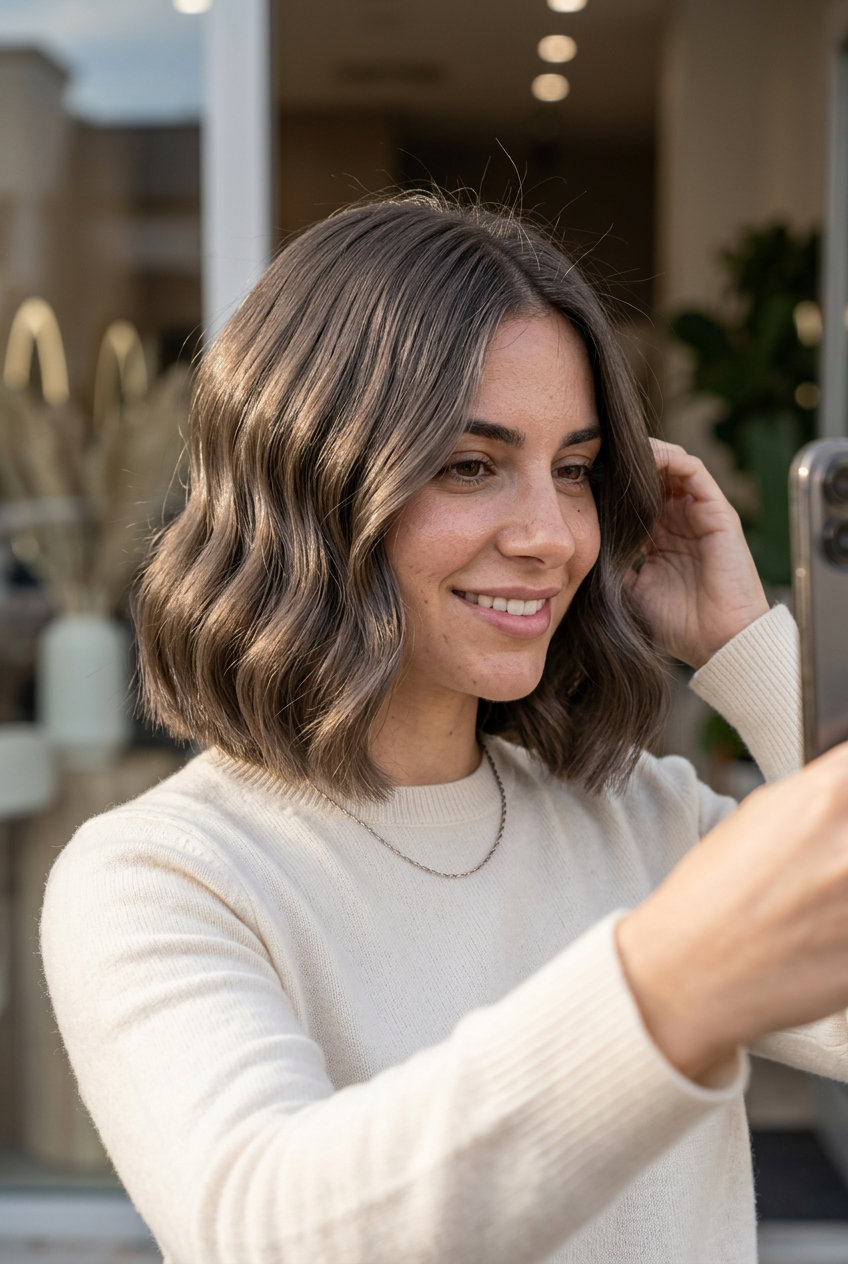
Ghost layers are the secret weapon for medium to thick hair that wants shape without obvious texture. The outer perimeter is blunt and clean, sitting at chin length with zero apology. The internal layers remove bulk without creating visible cuts, which means you get movement and control without seeing holes or separated pieces. Scissor-over-comb creates a strong, blunt perimeter, while ghost layers remove bulk for controlled movement. This technique matters because it respects your hair’s density while still allowing waves to move naturally.
The ash brown is muted and cool—not the warm caramel that dominates summer, but the shade that photographs well in overcast light and holds its tone longer without turning brassy. Internal thinning successfully removed bulk, allowing controlled movement without visible layers, which is the whole point. Ghost layers require an experienced stylist to avoid creating unwanted frizz or holes, so this isn’t the place to cut corners on salon selection. You need someone who understands point-cutting and internal texturizing, not someone who’s going to panic and create actual visible layers. The color lasts about 8 weeks before needing a gloss; the cut needs a trim every 6-8 weeks to maintain that blunt perimeter. (The best $200 I’ve spent on hair.) Sharp lines, controlled volume.
24. Still Deciding? Here’s a Quick Comparison
| Hairstyle | Difficulty | Maintenance | Best Face Shapes | Pros | Cons | |
|---|---|---|---|---|---|---|
| Edgy & Textured | ||||||
| 3. The Ice Queen Sleek Wave Bob | Moderate | High — every 4-6 weeks | round, oval, square | Suits most face shapesWorks on multiple texturesLayers add movement | Frequent salon visits needed |
| 7. Rose Gold Ombré Tousled Short Hair | Moderate | Medium — every 6-8 weeks | oval, heart, long | Suits most face shapesWorks on multiple texturesLayers add movement | Not ideal for very curly hair |
| 10. Espresso Roast Textured Bob | Easy | Low — every 8-10 weeks | all, heart, square | Low maintenanceEasy to style at homeSuits most face shapes | Not ideal for very curly hair |
| 12. The Desert Rose Shag Bob | Easy | Medium — every 4-6 weeks | all shapes | Easy to style at homeWorks on multiple texturesLayers add movement | Not ideal for fine hair |
| 19. Golden Blonde Wavy Textured Short Hair | Moderate | Medium — every 8-10 weeks | round, oval, long | Suits most face shapesWorks on multiple texturesLayers add movement | Not ideal for very curly hair |
| 22. Platinum Blonde Tousled Short Cut | Moderate | High — every 4-6 weeks | oval, heart, square | Suits most face shapesWorks on multiple texturesLayers add movement | Frequent salon visits needed |
| Classic & Clean | ||||||
| 1. Apricot Crush Summer Bob | Moderate | High — every 4-5 weeks | oval, long, heart | Suits most face shapesWorks on multiple texturesFlattering face-framing | Frequent salon visits needed |
| 2. Natural Brunette Textured Bob | Easy | Low — every 8-10 weeks | All face shapes | Low maintenanceEasy to style at homeSuits most face shapes | Not ideal for very curly hair |
| 6. Mushroom Bronde Balayage Bob | Moderate | Medium — every 10-12 weeks | oval, square, round | Suits most face shapesWorks on multiple texturesLayers add movement | Not ideal for very curly hair |
| 8. The Air-Dried Textured Short Cut | Easy | Low — every 8-10 weeks | All face shapes | Low maintenanceEasy to style at homeSuits most face shapes | Not ideal for very curly hair |
| 11. Sun-Kissed Buttercream Bob | Moderate | Medium — every 8 weeks | oval, heart, long | Suits most face shapesWorks on multiple texturesLayers add movement | Not ideal for very curly hair |
| 13. Linen Blonde Tousled Bob | Easy | Medium — every 8-10 weeks | oval, heart, diamond | Easy to style at homeSuits most face shapesWorks on multiple textures | Not ideal for very curly hair |
| 16. Copper Balayage Sleek Short Hair | Moderate | Medium — every 4-6 weeks | round, oval, square | Suits most face shapesWorks on multiple texturesNatural-looking dimension | Not ideal for very curly hair |
| 17. The Glossy Mahogany Short Wavy Bob | Moderate | Medium — every 4-6 weeks | oval, long, square | Suits most face shapesWorks on multiple textures | Not ideal for very curly hair |
| 18. Retro Wave Short Cut | Moderate | Medium — every 8 weeks | square, diamond, long | Suits most face shapesWorks on multiple texturesLayers add movement | Not ideal for very curly hair |
| 21. Smoky Mauve Sculpted Short Hair | Salon-only | High — every 3-4 weeks | square, diamond, inverted triangle | Suits most face shapesWorks on multiple textures5-minute styling | Requires professional styling |
| 23. Honey Balayage Wavy Short Cut | Moderate | Medium — every 10-12 weeks | oval, round, square | Suits most face shapesWorks on multiple texturesLayers add movement | Not ideal for very curly hair |
| 24. The Modern Minimalist Ash Bob | Moderate | Medium — every 6-8 weeks | heart, oval, long | Suits most face shapesWorks on multiple texturesSubtle sun-kissed effect | Not ideal for very curly hair |
| 25. The Ash Brown Sculpted Short Bob | Moderate | Medium — every 6-8 weeks | oval, heart, square | Suits most face shapesWorks on multiple texturesLayers add movement | Not ideal for very curly hair |
| Soft & Romantic | ||||||
| 4. The Sun-Kissed Caramel Textured Short Bob | Moderate | Low — every 10-12 weeks | all shapes, round, square | Low maintenanceSuits most face shapesWorks on multiple textures | Not ideal for very curly hair |
| 9. The Golden Age Sculpted Bob | Moderate | Medium — every 10-12 weeks | diamond, square, oval | Suits most face shapesWorks on multiple texturesLayers add movement | Not ideal for very curly hair |
| 15. The Romantic Champagne Short Wavy Bob | Moderate | Medium — every 8-10 weeks | oval, long, heart | Suits most face shapesWorks on multiple texturesLayers add movement | Not ideal for very curly hair |
| 20. The Sculpted Curly Short Cut | Moderate | Medium — every 10-12 weeks | oval, diamond, heart | Suits most face shapesWorks on multiple texturesLayers add movement | Not ideal for fine hair |
25. Frequently Asked Questions
What’s the easiest wavy bob style for daily wear in summer?
The Natural Brunette Textured Bob takes only 5–10 minutes with air-drying, thanks to its point-cut feathering that works *with* your natural texture rather than against it. If you prefer something slightly shorter, the Sun-Kissed Caramel Textured Short Bob air-dries in 10–15 minutes and uses subtle internal layering to prevent the dreaded triangle shape—both are genuinely low-maintenance options.
Can I achieve defined ‘S’ waves without heat styling?
Not all wavy bobs are created equal. Styles like the Apricot Crush Summer Bob and Sun-Kissed Caramel Textured Short Bob enhance natural waves beautifully with air-drying alone, but the Ice Queen Sleek Wave Bob’s precise, sculpted ‘S’ waves explicitly require a flat iron to achieve that glass-smooth definition. If you’re heat-averse, stick with cuts designed for air-dry texture.
How do I make my wavy bob look less ‘triangle’ shaped?
The Sun-Kissed Caramel Textured Short Bob uses ghost layers—internal thinning that removes bulk without creating visible chop—to prevent that bottom-heavy silhouette. For any wavy bob, ask your stylist about strategic crown layering and proper diffusing technique with a texturizing mousse. The cut matters, but so does how you style it.
Which wavy bob styles are best for making a bold statement?
The Ice Queen Sleek Wave Bob delivers impact with its platinum glass waves and ultra-blunt perimeter that photographs like a graphic line. For something darker and edgier, the Rebel Blue Black Short Bob hides an undercut that reduces neck bulk while creating serious visual contrast—both are designed to turn heads, not blend in.
How often do I need salon trims to maintain a wavy summer bob?
Most wavy bobs need a trim every 6–8 weeks to keep the perimeter sharp and internal layers from getting too disconnected. If your bob has a hidden undercut (like the Rebel Blue Black Short Bob), expect bi-weekly touch-ups for that specific area. The blunt-perimeter styles grow out fastest and most noticeably, so don’t skip appointments if you want that clean edge to hold.
26. Final Thoughts
The wavy summer bob haircut 2026 isn’t about perfection—it’s about knowing exactly what you’re signing up for. Ghost layers, blunt perimeters, internal thinning: each technique has a job, and each one demands a stylist who understands the difference between