Blonde can feel surprisingly personal because the smallest decision changes the way someone reads their own reflection. Winter blonde hair color is less about chasing one perfect answer and more about choosing how much softness, contrast, brightness, or restraint feels like you. The strongest starting point is taste: what feels expressive, what feels comfortable, and what still feels like your own version of blonde.
A thoughtful choice begins with vocabulary, not pressure to make a dramatic change. Instead of asking for a vague refresh, it helps to name the mood you want your color to carry, the amount of change you are comfortable seeing, and the details you want a colorist to understand before any plan is made. That kind of direction keeps the decision personal, polished, and easier to communicate.
1. Soft Beige Roots With Creamy Blonde Waves
The first read is the pale sweep across the front. It falls over one side of the face and then opens into soft waves, so the blonde does not sit like an even cap from crown to ends. The beige root keeps the top calm, while the lightest pieces around the face create the brightness that makes this winter blonde hair color feel gentle rather than flat.
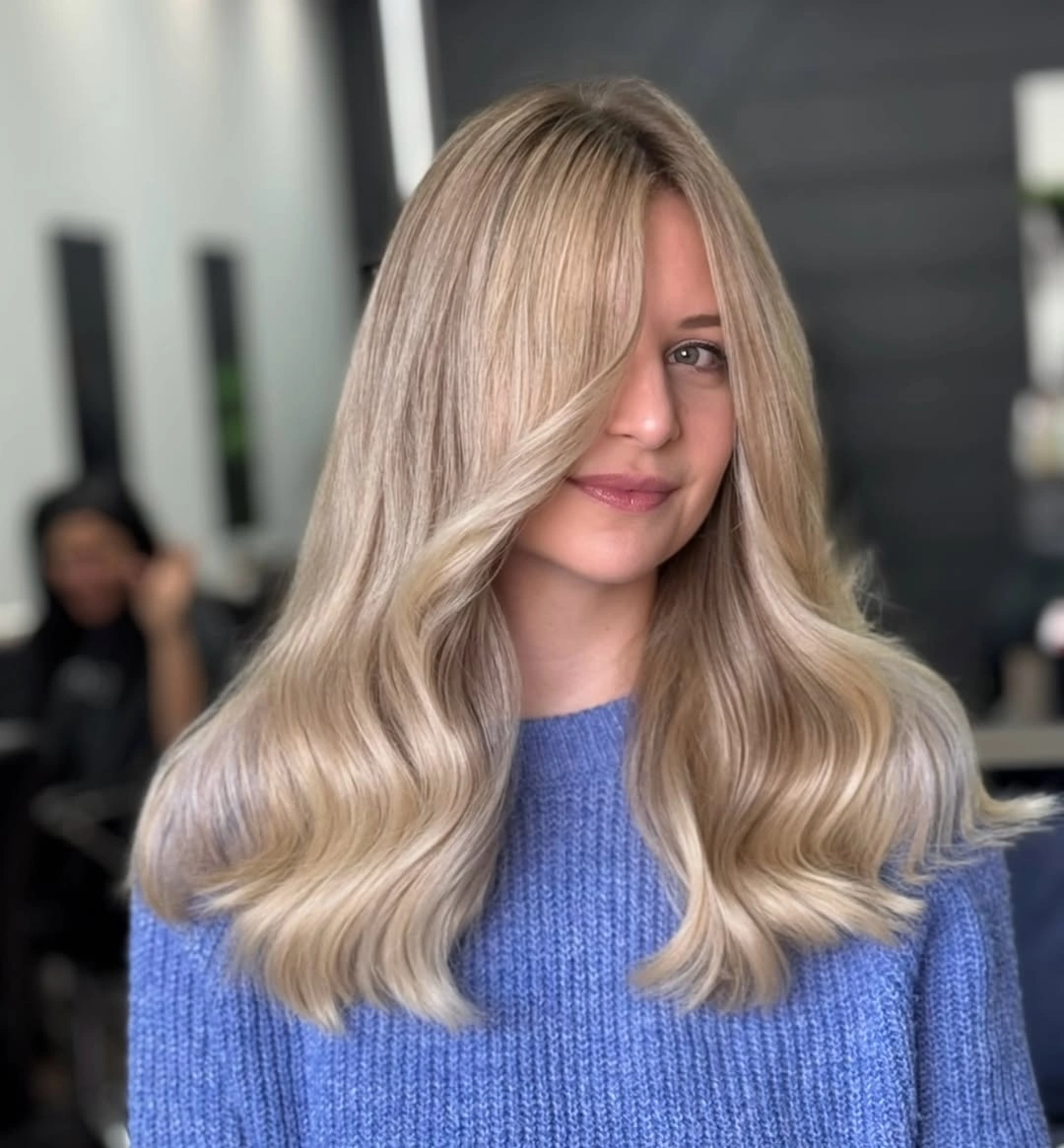
The blue knit top matters visually because it cools the setting around the hair without changing the shade itself. Against that color, the creamy lower waves look slightly warmer, and the deeper root looks more beige than brown. For readers comparing blonde hair for fair skin in a photo, the useful cue is the softness of the face-framing blonde, not a rule about who can wear the shade.
The waves give the pale ends space to breathe, so the color reads airy at the bottom. This is a soft blonde built on separation, not high contrast.
2. Warm Golden Blonde Across Long Loose Waves
Here, the front curtains are the first source of impact. The blonde is warm and golden rather than icy, with the brightest sheets falling on either side of the face and blending into long waves. Because the root area is only subtly deeper, the look stays sunny through the length instead of depending on obvious dark contrast.
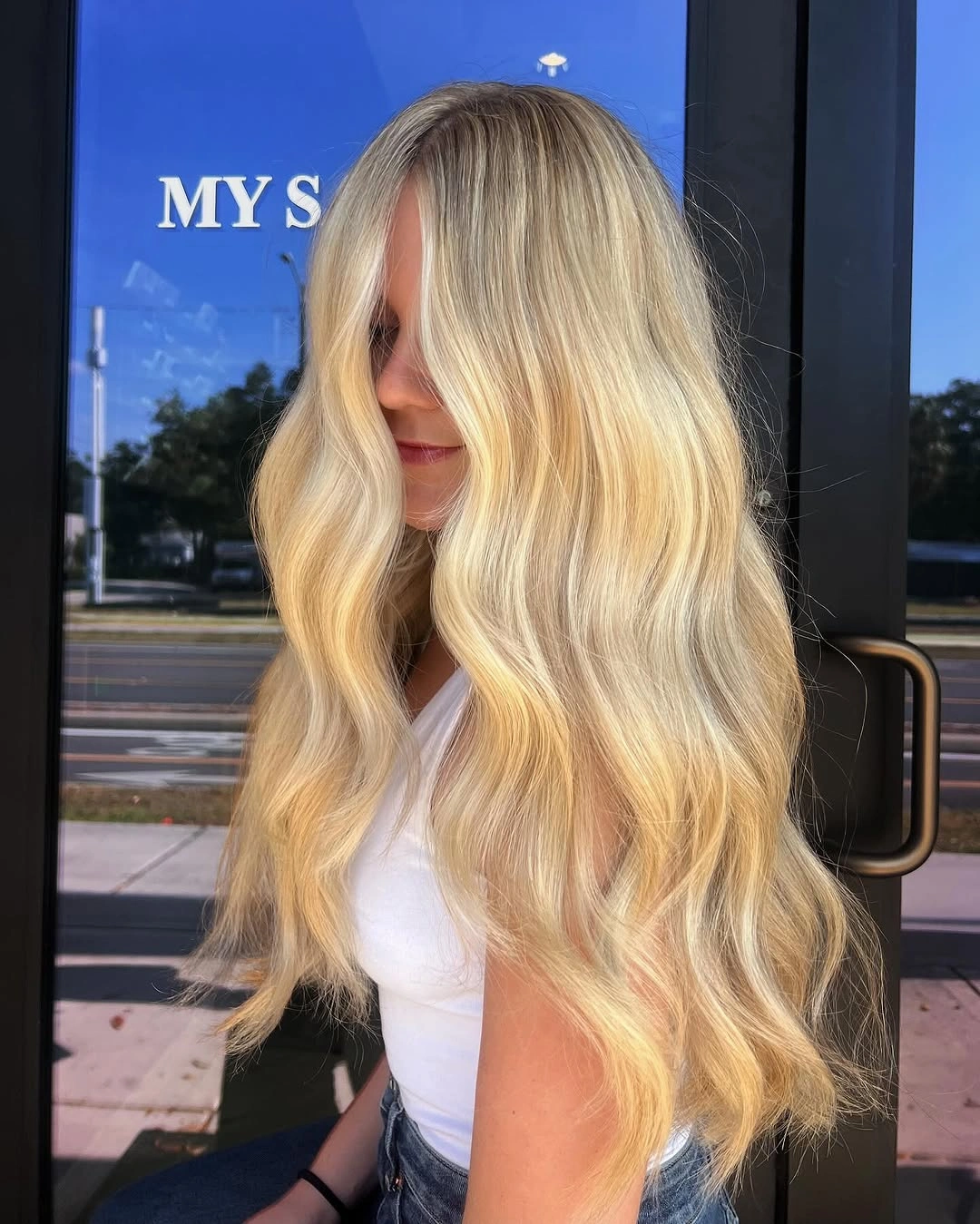
The length is doing a lot of the work. Warm blonde can become too single-note when every strand reads the same, but these waves stretch the color into alternating ridges and softer valleys. The yellow-cream tone looks strongest where the hair bends forward, while the slightly quieter crown keeps the brightness from floating away from the head.
I like how the warmth feels clean rather than heavy. It gives the collection a blonde that glows, but the long wave pattern still keeps the shade dimensional.
3. Cool Pale Blonde With Shadowed Crown Depth
The coolness in this look is not sitting at the scalp. A darker crown and side part create the shadow, then the hair opens into long pale waves that read more silver-cream than gold. That placement makes the blonde feel bright without making the top disappear, which is especially useful on extra-long hair where one pale surface can look too weightless.
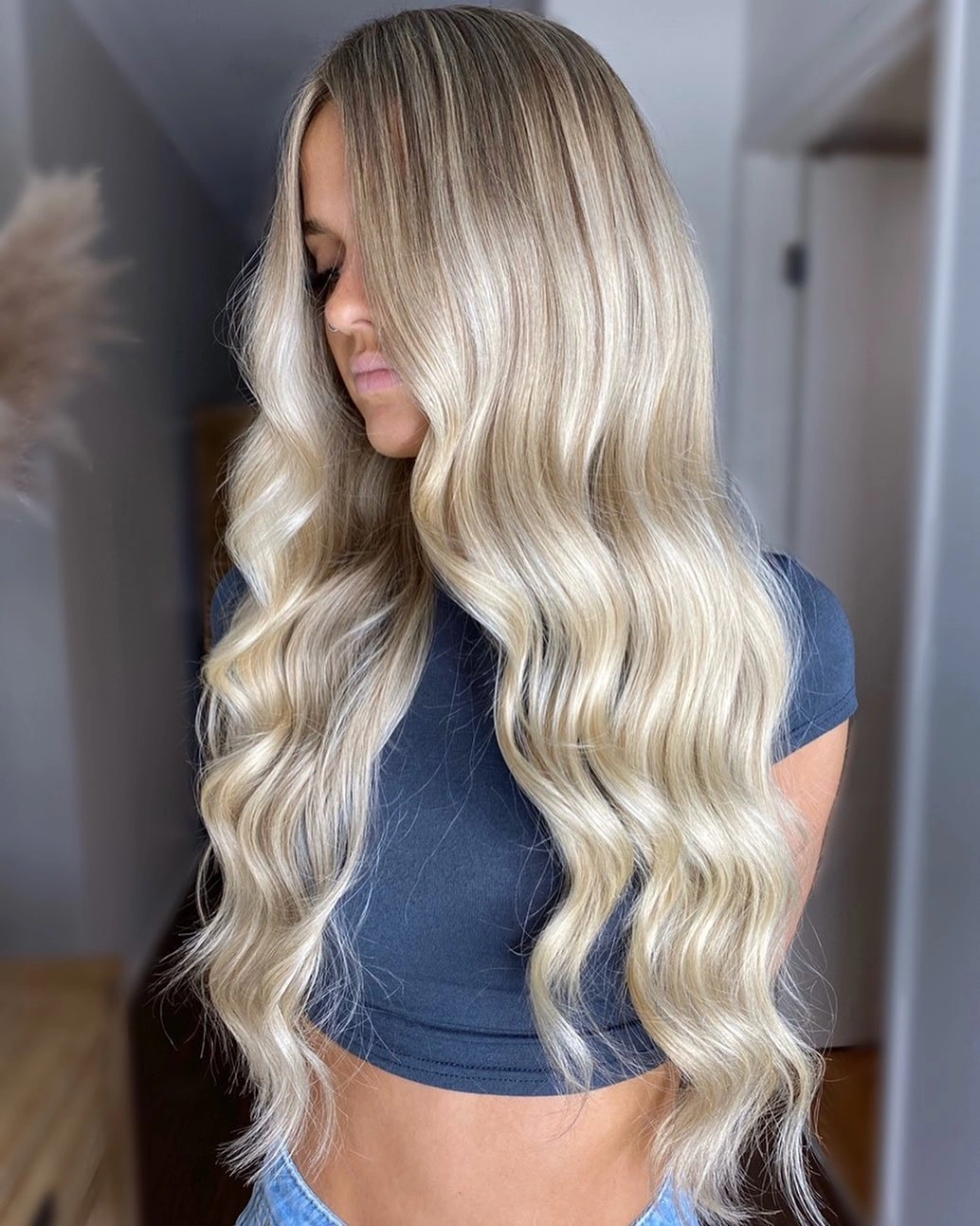
The dark fitted top also sharpens the pale lengths. Against that deeper fabric color, the lower waves show their differences: some ridges look icy, some pockets look beige, and the ends have a softer cream cast. That mix is what makes this cool blonde feel wearable in the photo, not just bright for the sake of brightness.
The wave width matters because it exposes shade changes across each bend. A straighter finish would make this color feel more uniform; the waves let the cool and creamy tones trade places.
4. Medium Blonde Layers With Ash Beige Ribbons
This medium length brings the color closer to the face, so placement matters more than sheer amount of blonde. The front pieces part into soft curtains, with ash-beige brightness near the cheeks and a darker root visible above them. The result is not a solid blonde veil; it is a framed shape where tone and haircut move together.
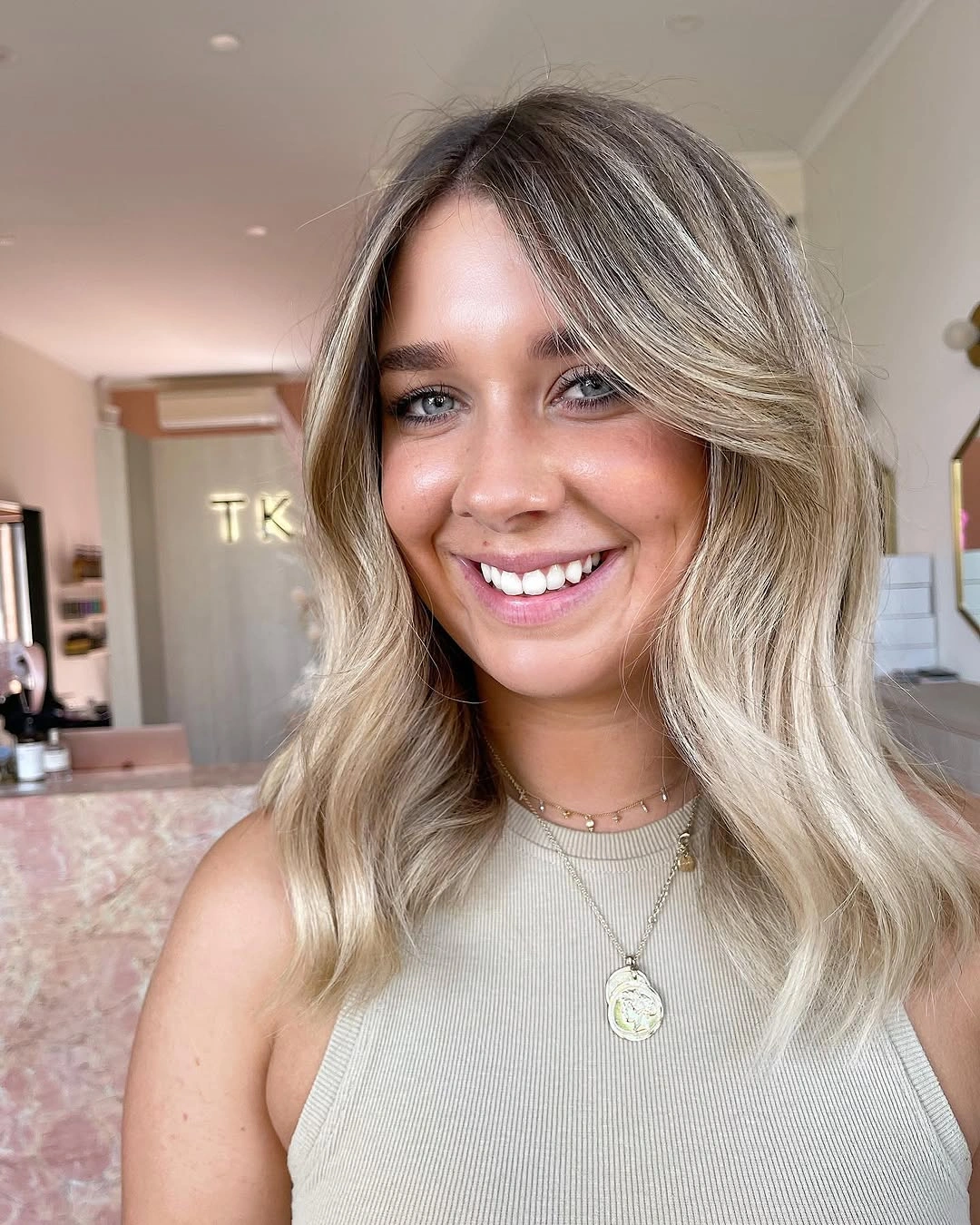
The shoulder-level bends make the blonde highlights easier to notice because the hair turns outward and inward in short sections. Beige, ash, and deeper root tones share the same space instead of separating into harsh stripes. On medium-length blonde hair, that blended spacing keeps the finish polished while still giving the eye something to follow.
The lighter front is the strongest design choice here. It keeps attention near the face, while the darker crown gives the soft bend around the shoulders a little more structure.
5. Dark Center Root With Bright Blonde Lengths
The center root is the anchor in this photo. It is visibly darker than the surrounding blonde, and it runs into bright pale lengths that break into loose, slightly undone waves. That contrast gives the look a stronger personality than the softer rooted examples, because the top and the ends are clearly having different jobs.
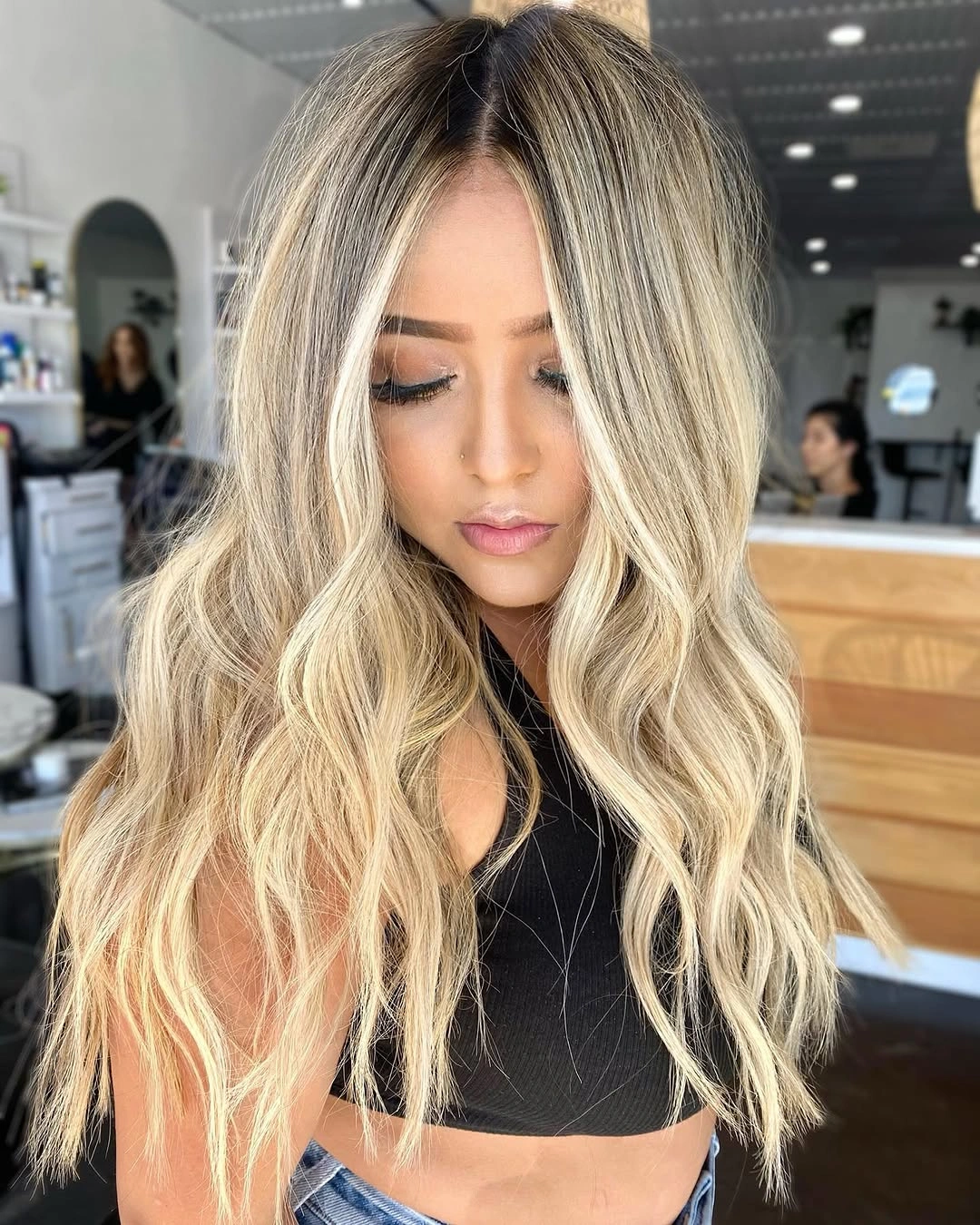
The texture keeps the dark-root-to-light-end relationship from turning into one hard division. Pieces curve, separate, and overlap, so the pale blonde appears in strands rather than in a single solid sheet. Among winter blonde hair color ideas, this one works because the darkness is not hidden; it is part of the design.
The black top makes the ends look even brighter where they fall over it. The overall effect is high contrast, but still loose because the waves keep breaking the blonde into smaller movements.
6. Taupe Depth With Soft Beige Face Panels
This blonde sits closer to bronde than the brighter pale looks before it. The face panels are beige and light, but the interior has a taupe depth that keeps the whole shape muted against the brown top. That balance makes the blonde highlights feel grown into the hair rather than placed only on the surface.
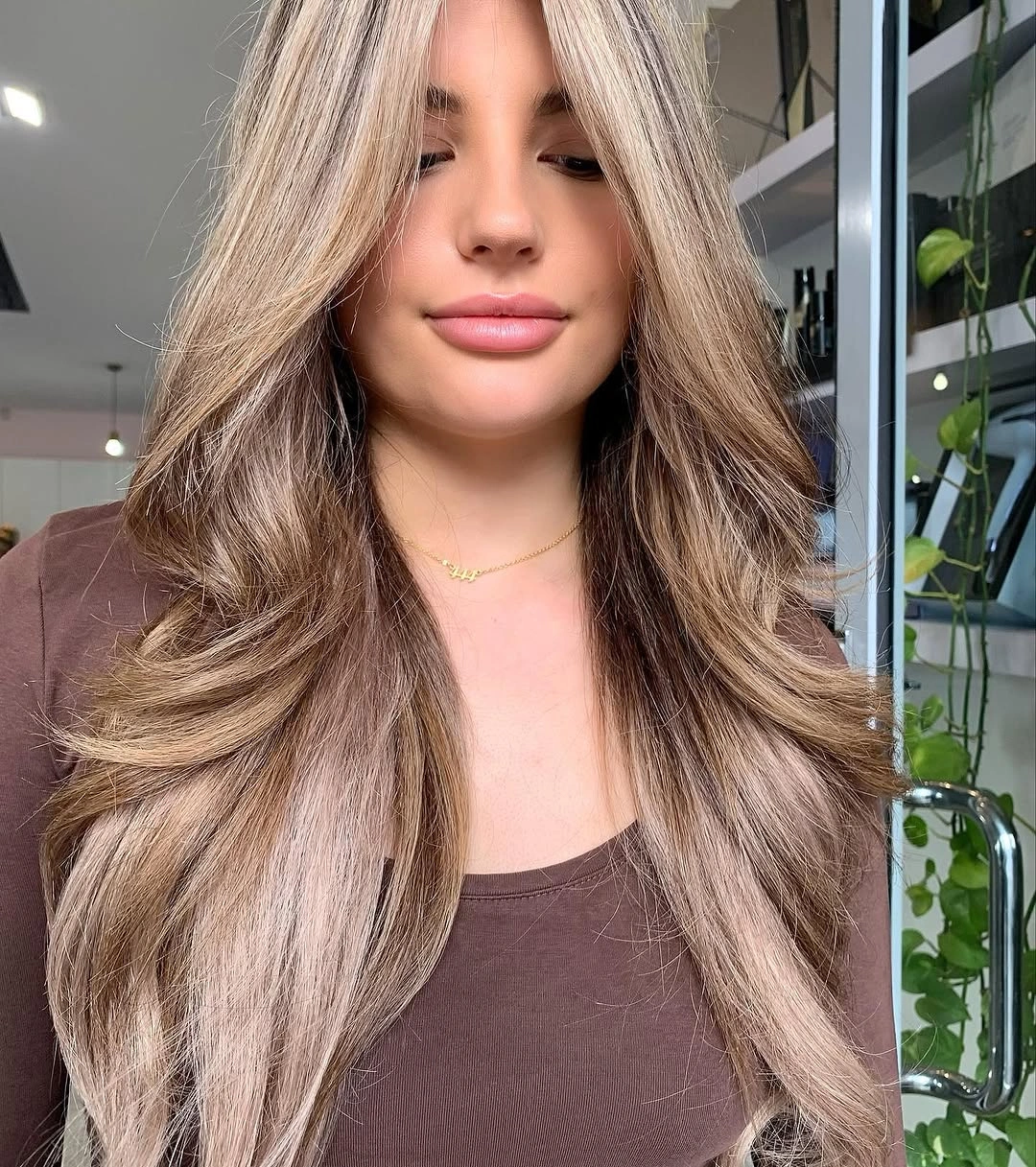
The long layers are important because they let the color shift gradually from the top to the ends. Instead of a sharp root line or a fully icy finish, the hair moves through sandy beige, light brown, and soft blonde pieces. It is a quieter winter blonde choice, but it still has enough brightness near the face to keep the front from looking heavy.
I like this one for its restraint. The color does not chase maximum brightness; it uses depth to make the lighter panels look more intentional.
7. Icy Long Waves From The Back
From the back, the cool blonde reads almost like a sheet of pale ribbons broken by waves. The brightest strands sit on the ridges, while the shadowed crown and a few beige interior pieces keep the color from becoming blank. This is where cool blonde looks most dramatic in the article, but the drama comes from placement, not from a single flat white tone.
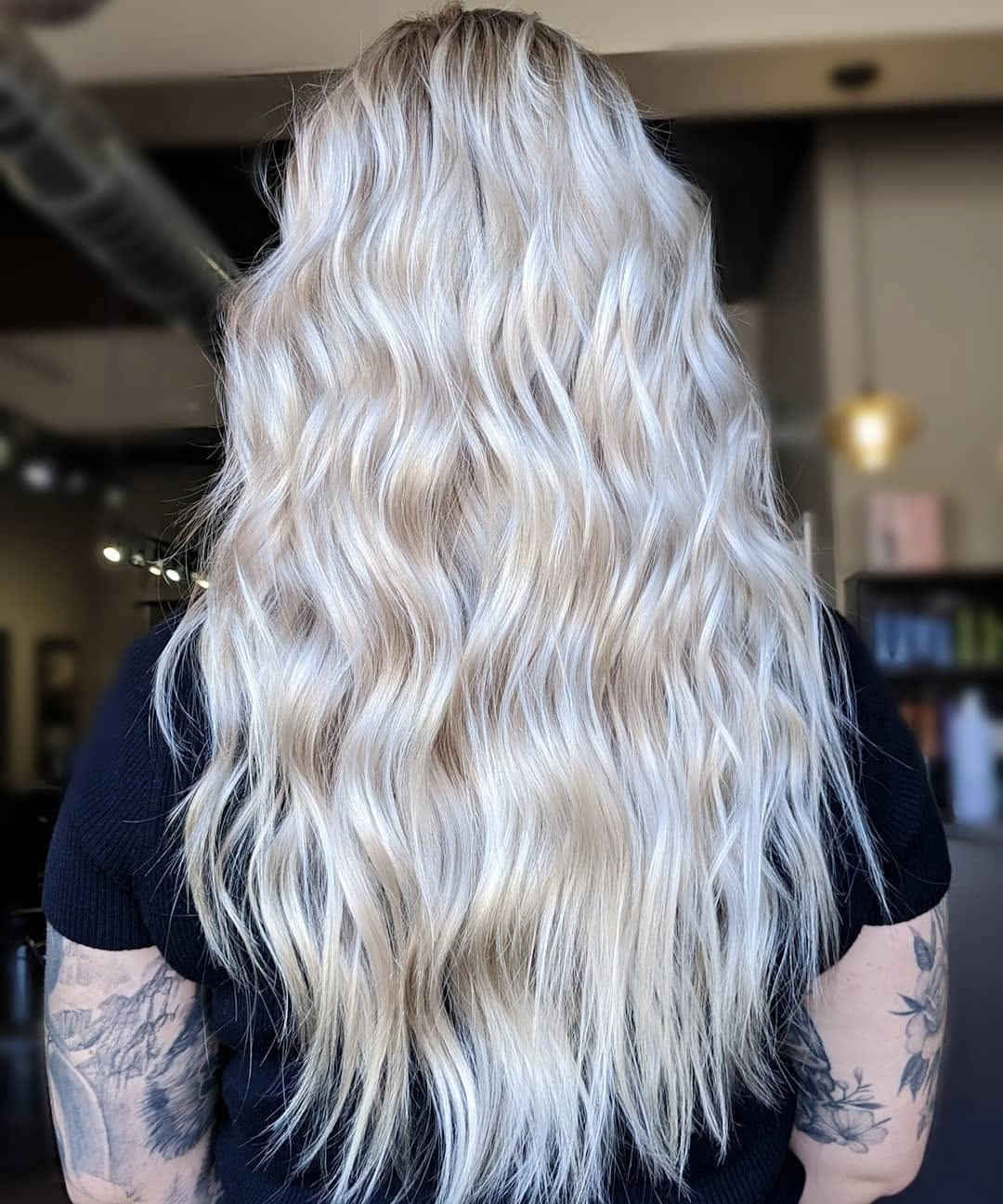
The separated ends give the shade a light, airy finish. Because the waves are loose and uneven, the silver-white pieces do not fall in perfect stripes; they scatter through the length and make the back view feel dimensional. The darker root area matters here because it gives the icy lower color something to push against.
This photo is especially useful because it shows the full head, not just a face-framing section. The reader can see how pale blonde behaves across width, crown, mid-length, and ends.
8. Ash Beige Ribbons In A Close View
The close angle makes this color feel quieter but more detailed. Thin pale ribbons sit beside deeper beige interior pieces, and the waves reveal those shifts in small sections instead of broad blocks. It is a good example of blonde highlights that look blended from this view without needing a dramatic dark root to explain the contrast.
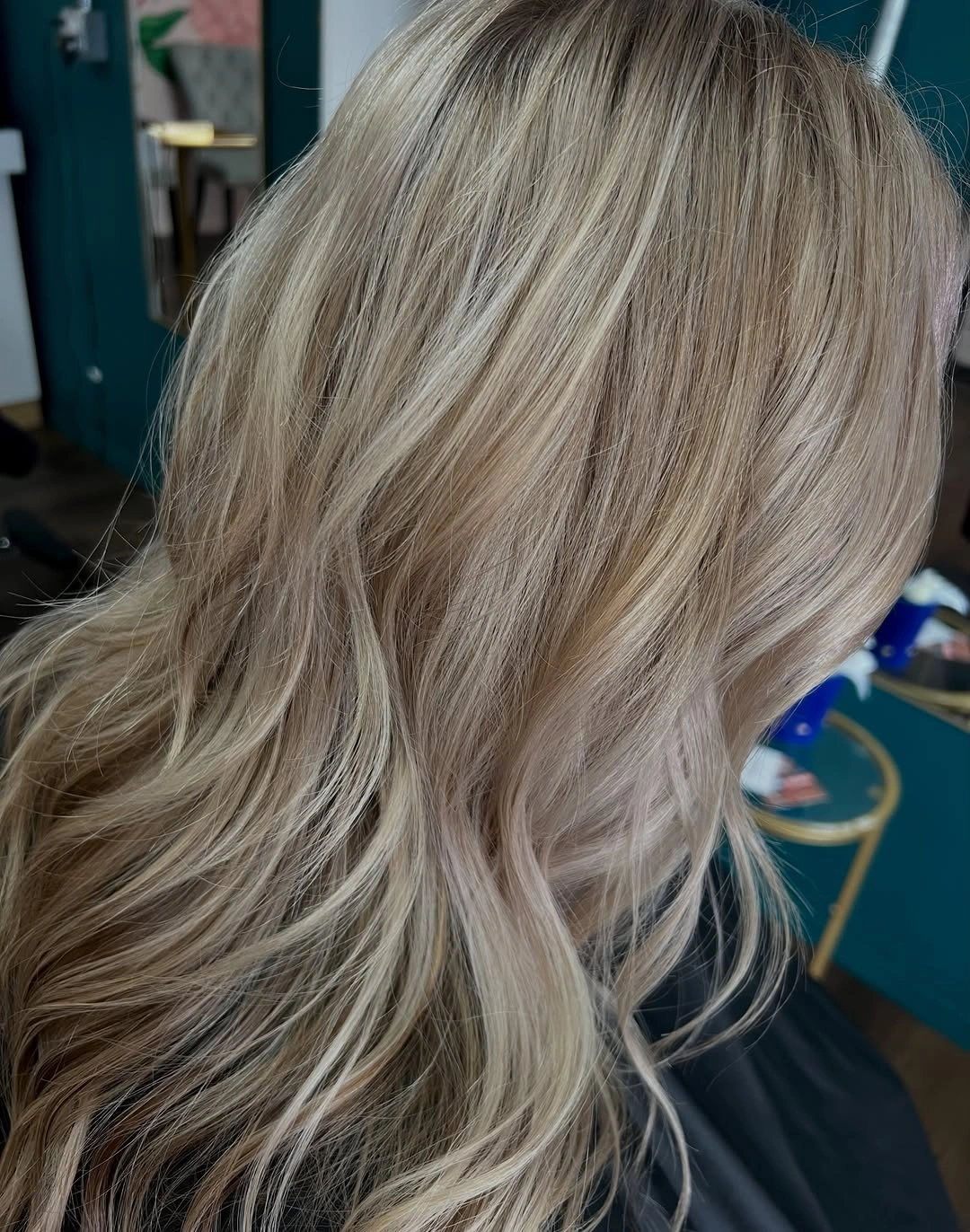
The shade leans ash and neutral rather than golden. That difference matters because the hair still has softness, but it does not have the sunny glow of the warmer blonde examples. The darker inner strands give the color a slight shadow, while the lighter surface pieces keep the waves from collapsing into one taupe-blonde mass.
The beauty of this section is in the small spacing. A few visible light strands are enough to change the read of the whole wave pattern.
9. Straight Rooted Blonde Bob With Blunt Ends
This shorter blonde changes the mood immediately because the line is so clean. The bob-like length sits near the shoulders, with a dark ash root fading into muted blonde ends and a blunt lower edge. Compared with the long waves, the color feels more graphic because there is less length for the transition to soften.
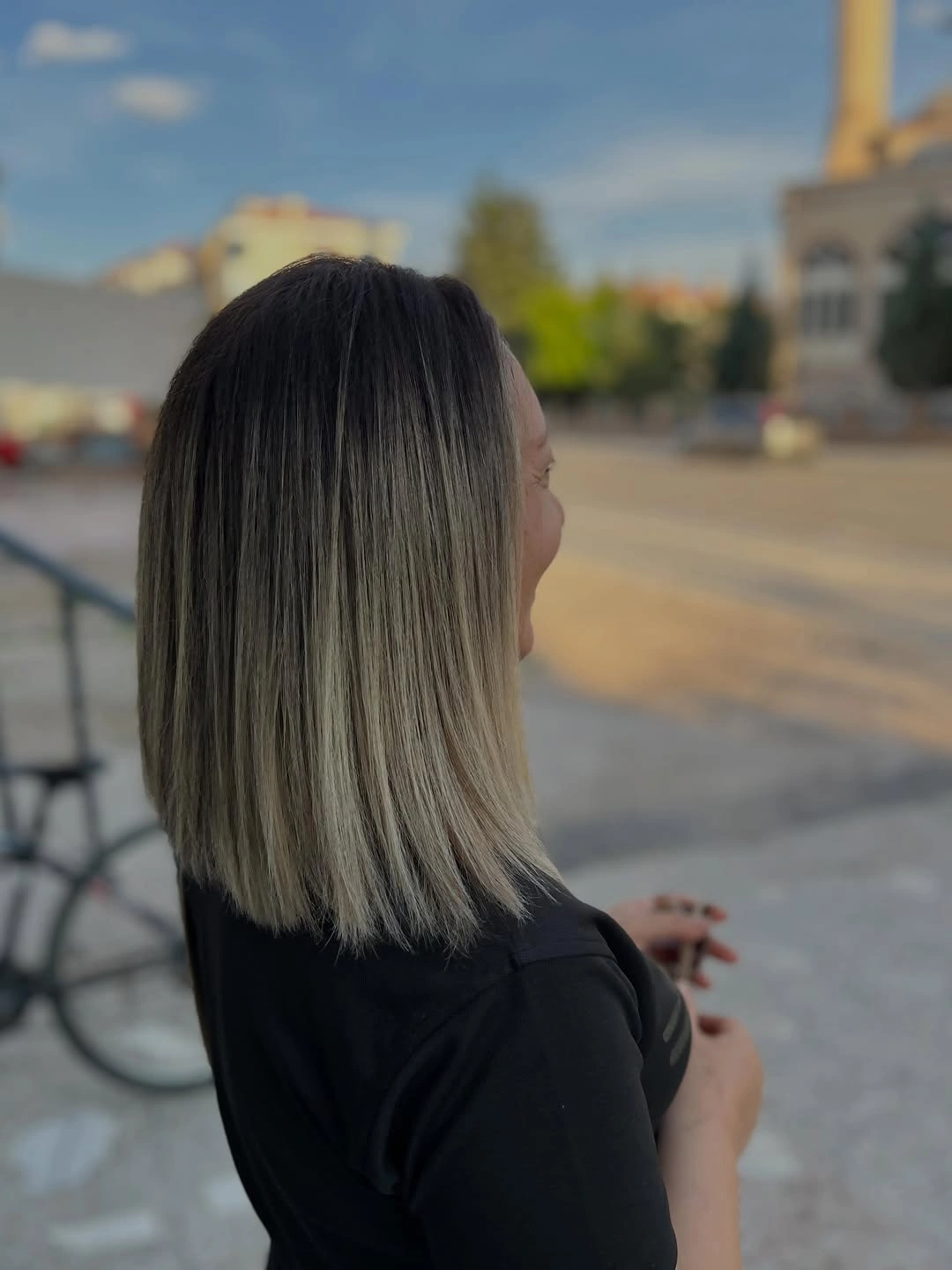
The straight finish makes the root-to-end gradient easier to read. On wavy hair, the bends can scatter the blonde into pieces, but here the smooth surface shows a clearer shift from darker crown to lighter perimeter. That is why this works as short winter blonde hair color: the shape gives the shade structure before any texture enters.
The side-back angle keeps the attention on edge and proportion. It proves a blonde bob does not need heavy brightness to feel deliberate.
10. Wavy Blonde Bob With Creamy Texture
This blonde bob uses movement instead of a sharp blunt line. The root area is shadowed, but the creamy pieces curve through the sides and back, so the lighter color appears in lifted bends rather than in one smooth panel. The shorter length makes every ribbon more noticeable because the eye does not have long ends to travel through first.
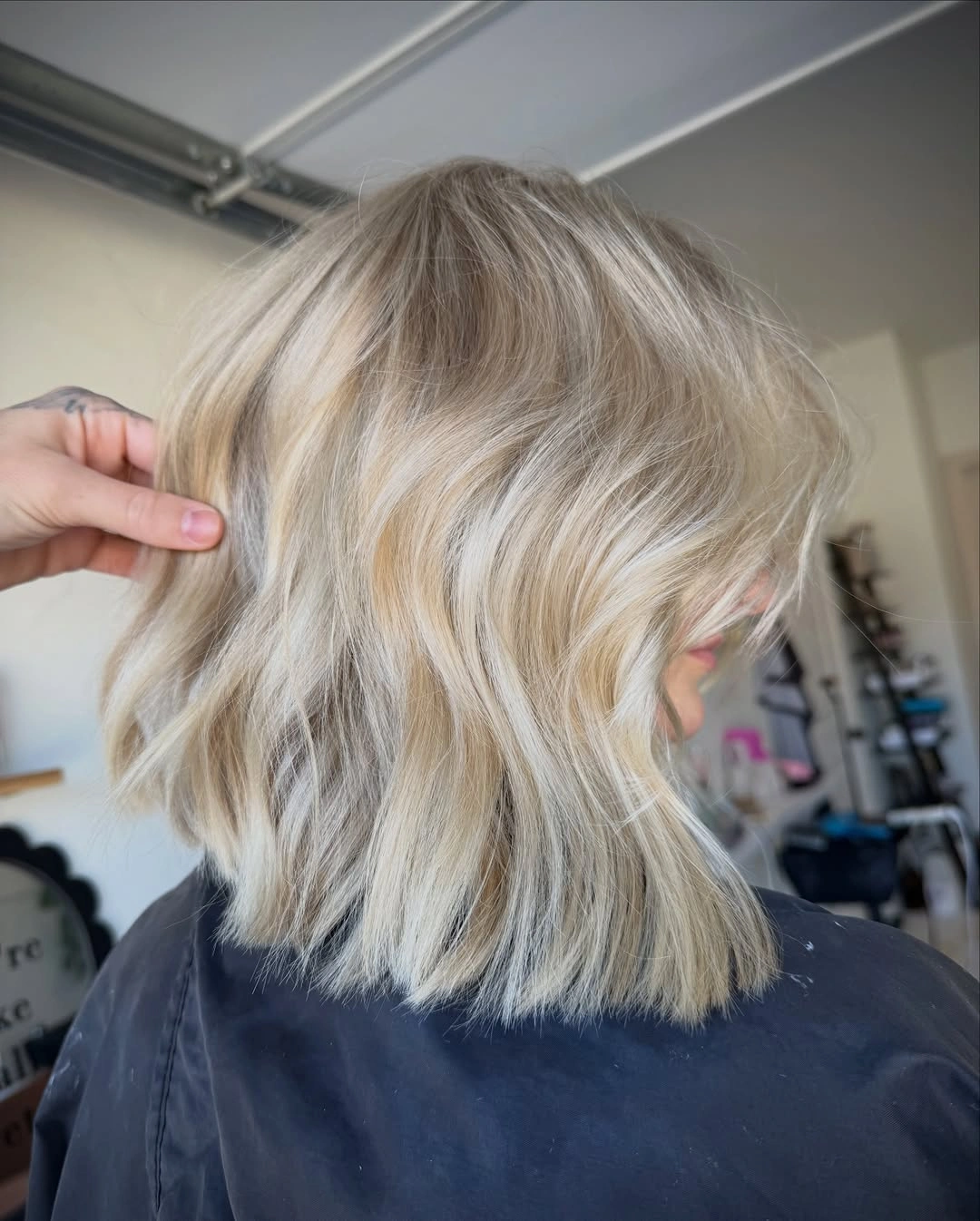
The texture gives the shade a fuller read. Some pieces look pale and creamy, while others sit deeper inside the wave, and that contrast creates volume around the nape and side. It is still a short winter blonde hair color idea, but it feels softer than the straight bob because the curls interrupt the outline.
This is the more playful short shape in the set. The color has enough shadow to keep its depth, while the creamy waves make the blonde feel lively from the back.
11. Warm Straight Blonde With A Blunt Edge
This blonde bob-like length is almost the opposite of the wavy short cut before it. The surface is smooth, the ends form a clear blunt line, and the color reads as a warm peach-gold blonde from crown to tips. Because there are fewer bends to create shadow, the shade feels more uniform and polished than the textured bob.
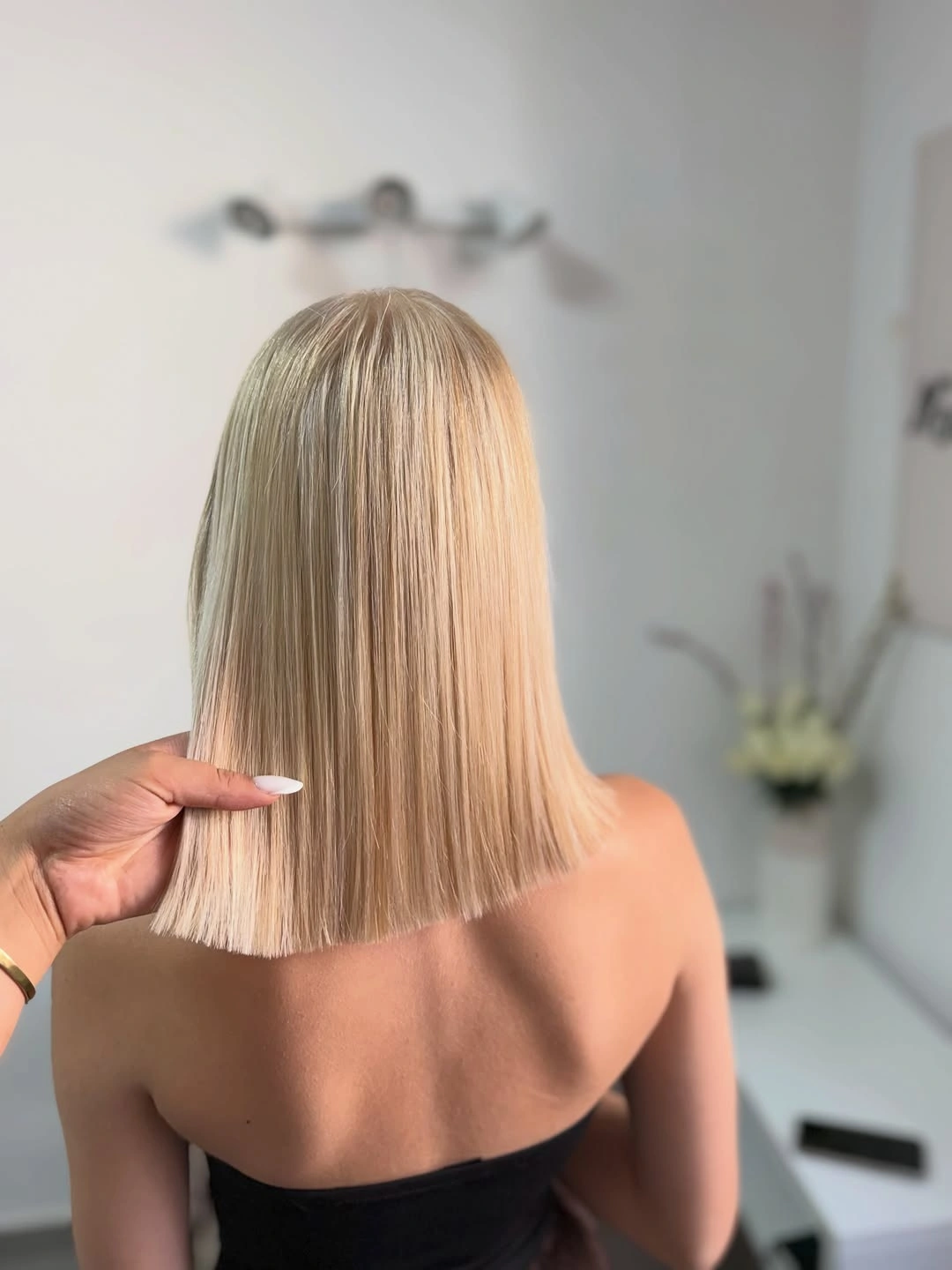
The blunt edge gives the color a clean finish. On this length, even a soft warm blonde can look precise because the lower line is so visible across the back. Instead of relying on strong lowlights or icy contrast, the photo lets warmth become the main detail, with the straight surface showing small tonal shifts in a quiet way.
I like the restraint here because it gives short winter blonde hair color a softer direction. The blonde bob feels deliberate without needing a dark root to carry the whole look.
12. Pearl Blonde Waves With A Polished Crown
This cool blonde looks especially polished because the crown is so smooth. The pale pearl tone continues down into long waves, with the brightest silver-cream pieces gathering through the lower bends. It has less visible root contrast than some earlier looks, so the impact comes from the evenness of the blonde surface and the soft curve at the ends.
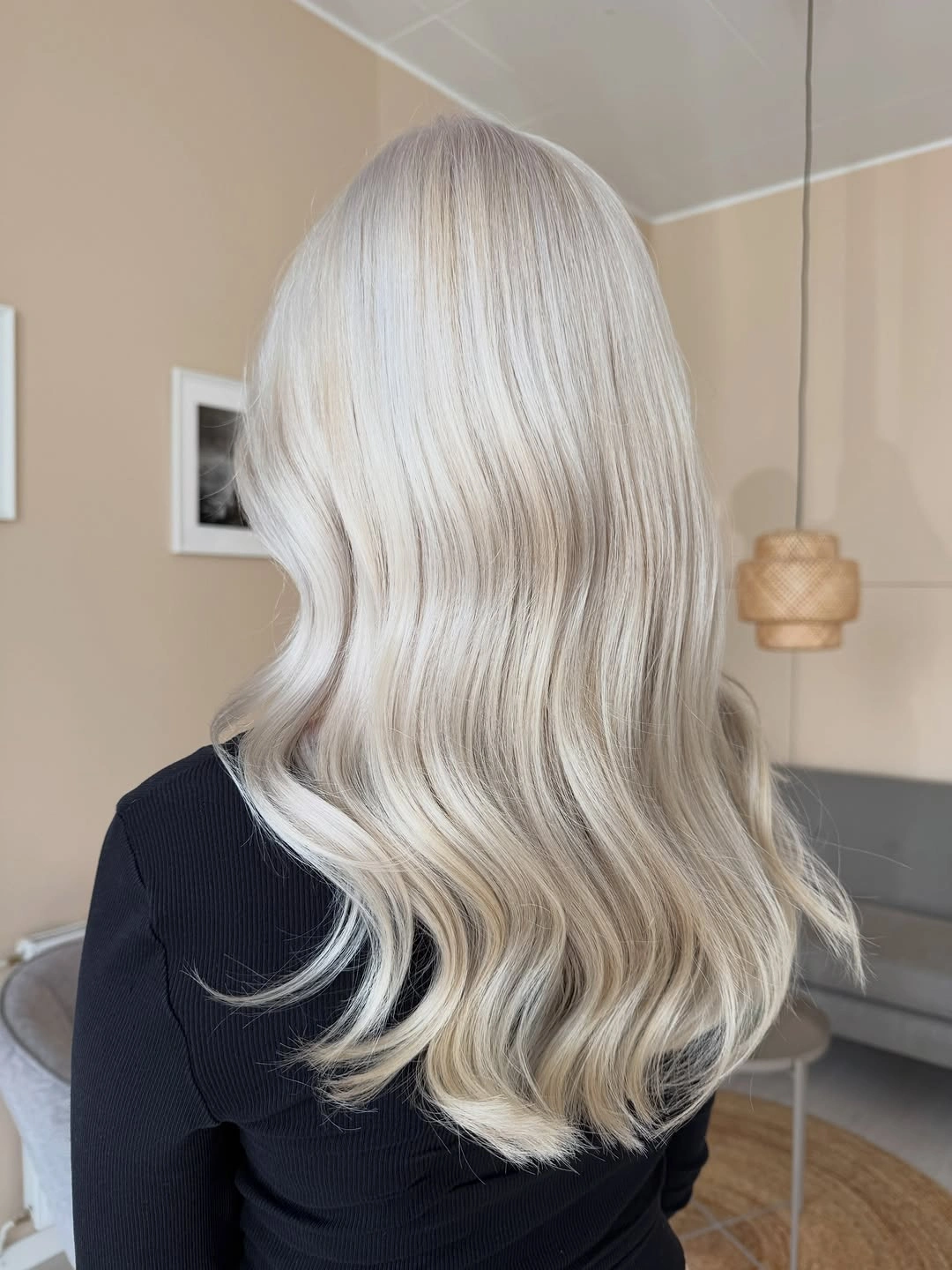
The black top sharpens the lower edge of the hair and makes the pale color easier to read. Against that dark background, the curled ends look cleaner and more luminous, while the mid-lengths stay soft rather than icy-hard. This is a cooler blonde, but it is not severe; the waves keep the shade moving in a controlled way.
The refinement is what makes this photo stand apart. It shows how a cool blonde can feel calm and expensive-looking through finish alone, without needing heavy contrast.
13. Beige Gold Layers With Bright Face Framing
This medium-length blonde has a very readable relationship between cut and color. The darker root gives the top a soft shadow, while beige-gold ribbons move through the layers and brighten around the front. The face-framing pieces do not feel separate from the rest of the hair because the same warm-neutral tones continue into the sides and flipped ends.
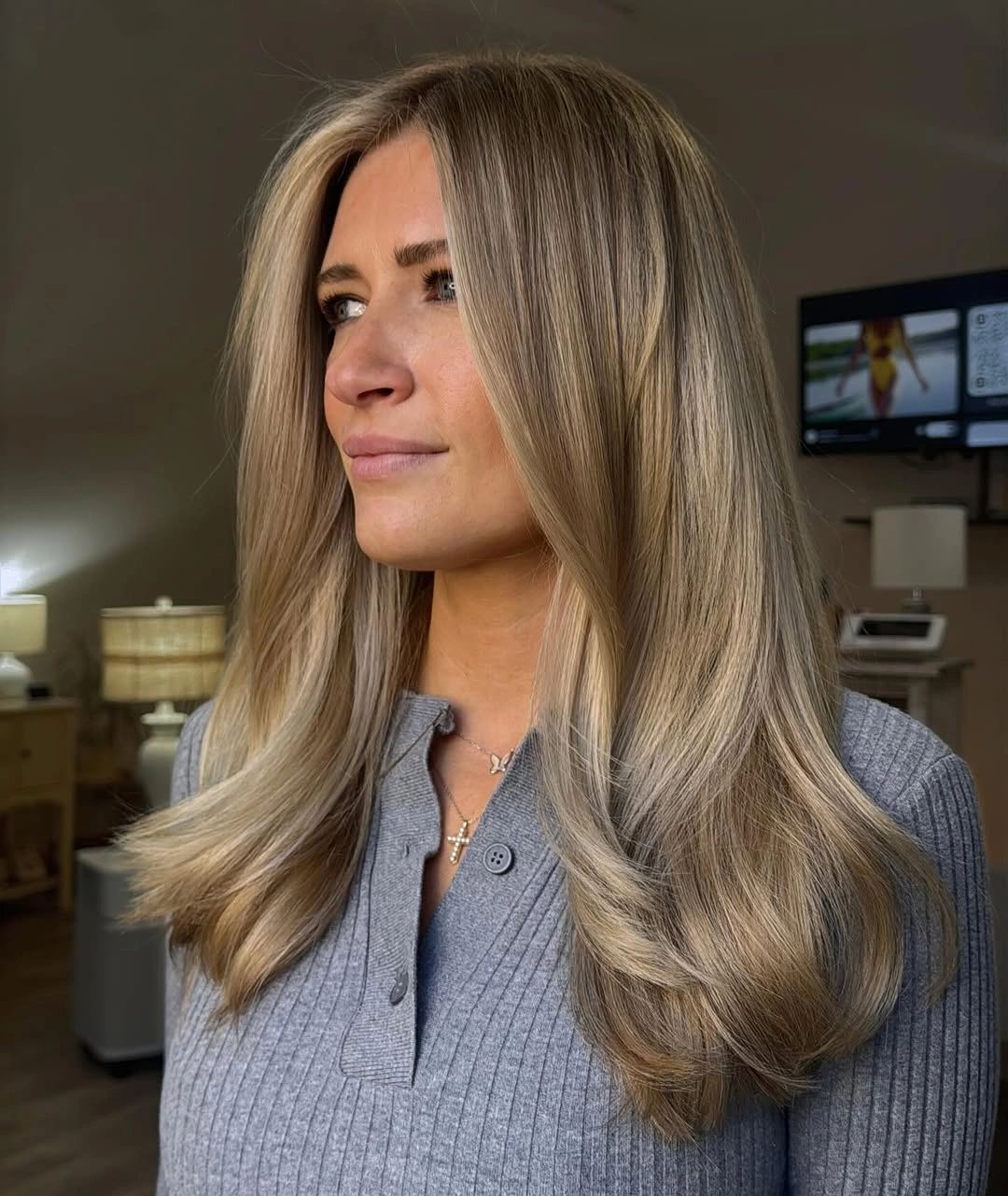
The layered shape helps the blonde highlights show from the front. Where the ends turn outward, the lighter ribbons become more visible, and where the hair falls flatter near the crown, the deeper beige tones settle in. That combination gives medium-length blonde hair a balanced look, with enough brightness near the face and enough depth through the body.
The gray ribbed top also keeps the warmth from looking overly sweet. It lets the beige and gold tones feel soft, but still shaped and grown-up.
14. Dark Blonde Lowlights Under Warm Beige Lengths
This back view has one of the deeper blonde structures in the set. The center and inner sections are visibly darker, while the lower lengths open into warm beige and soft golden blonde. The contrast is not placed only at the root; it runs through the body of the hair, which makes the winter blonde hair color lowlights feel like part of the shape.
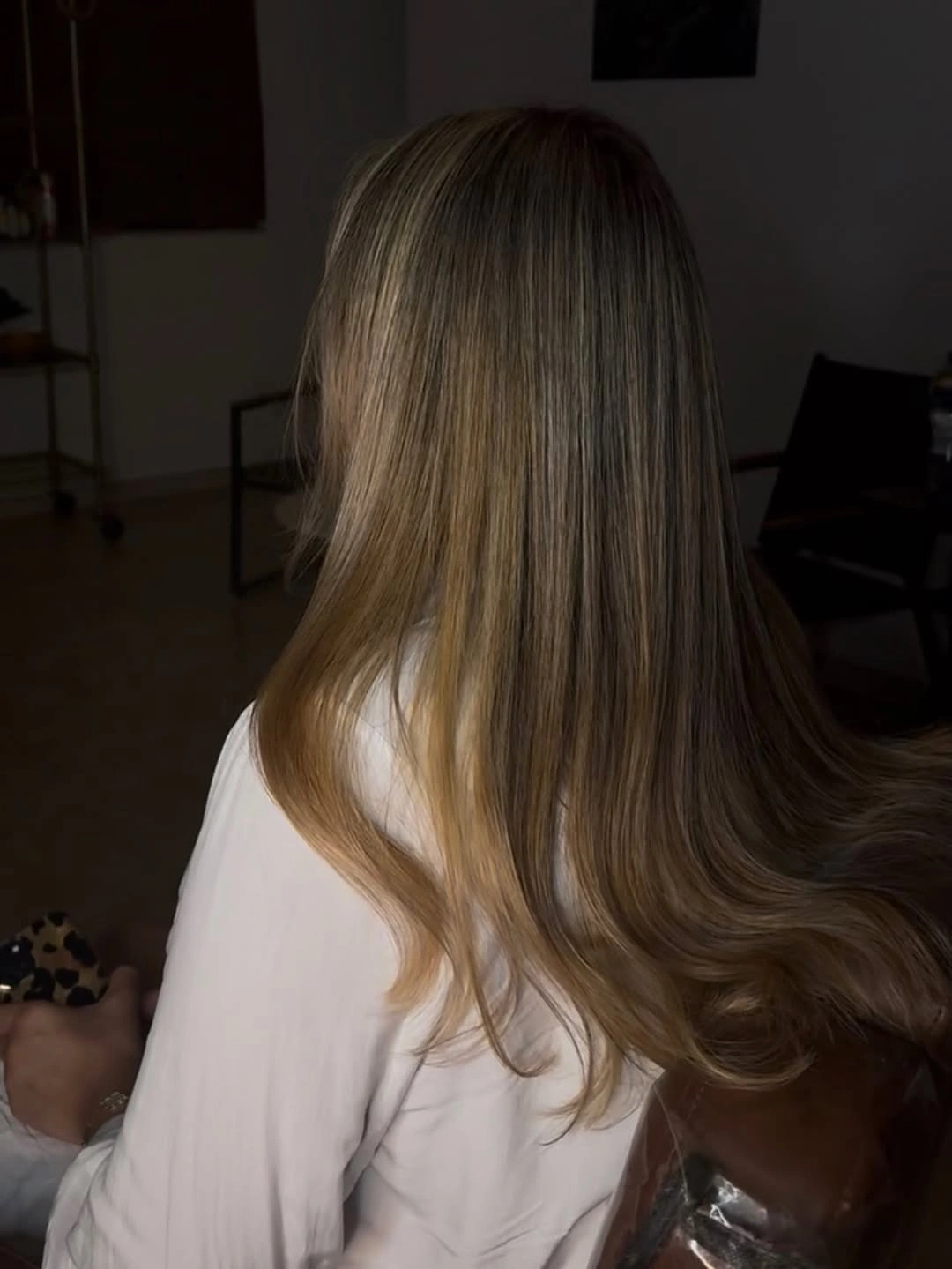
The smooth curled perimeter keeps the darker interior from looking heavy. As the ends bend outward, the beige pieces catch more light and soften the shadow through the middle. That is the nuance I like here: the blonde is not trying to be the palest option, yet it still reads blonde because the lower movement keeps bringing warmth forward.
The back angle makes the lowlights especially useful to study. They sit beneath and between lighter sections, creating depth without turning the whole look brunette.
15. Ash Bronde Waves With Pale Lower Curls
This color lives in a muted space between blonde and bronde. The taupe base spreads through the crown and mid-lengths, while paler curls appear lower down and near the side of the face. Instead of a dramatic top-to-bottom change, the photo shows depth woven through the hair, making the lighter pieces feel softer when they finally appear.
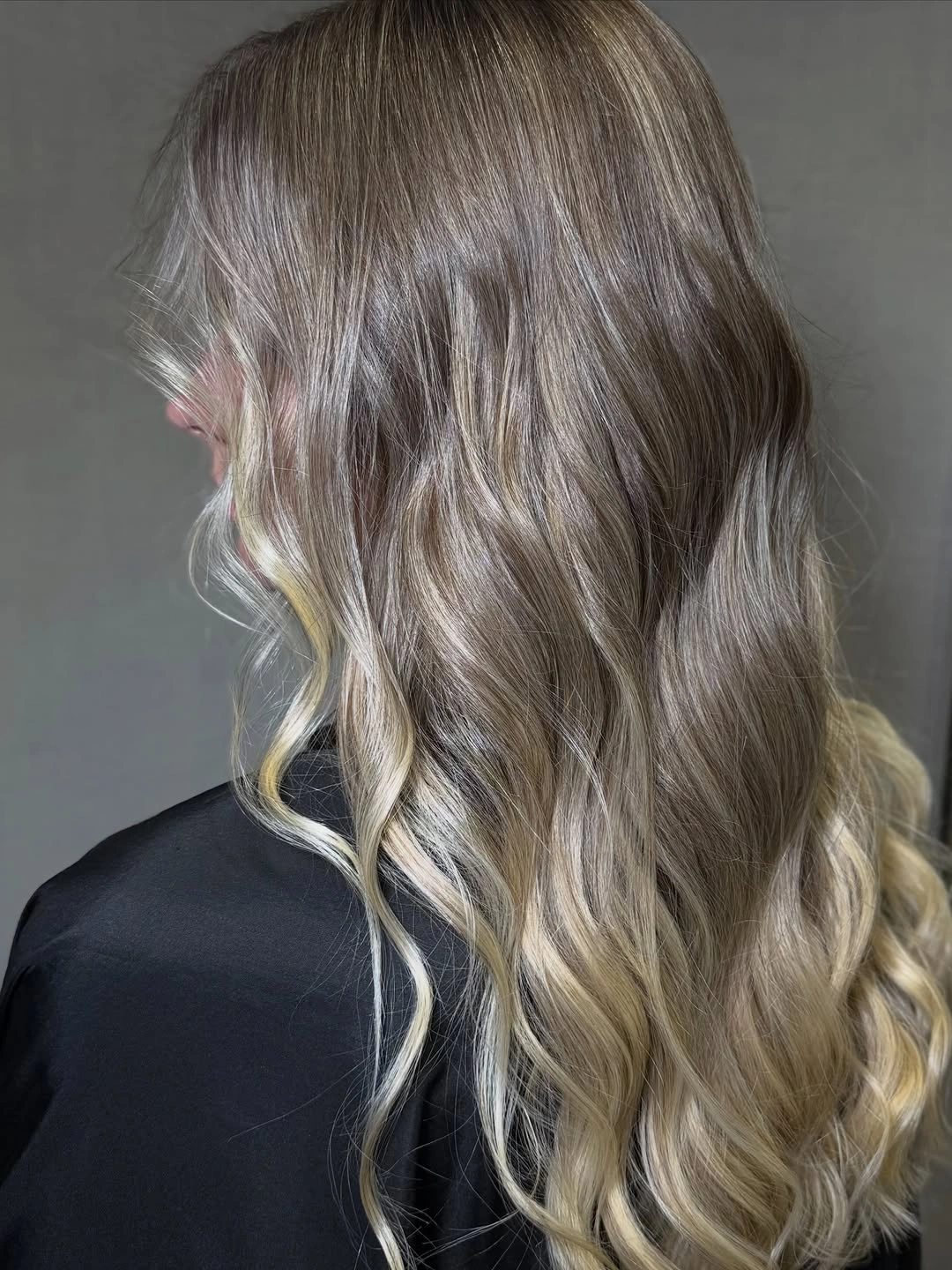
The side-back angle changes how the blonde is perceived. A single lighter strand near the front becomes important because the rest of the visible hair is quieter and more ash-toned. The pale lower curls bring back brightness, but they do it from underneath, so the shade feels layered rather than simply dark at the top and light at the bottom.
This is a good example of lowlights creating atmosphere, not just contrast. The ash depth gives the blonde a wintery hush while the pale curls keep it from feeling dull.
16. Medium Blonde Waves With Soft Lowlit Depth
This medium length has a softer kind of contrast than the darker, more dramatic lowlight examples. The root and upper side pieces are deeper, while beige ribbons move through the waves and turn creamier toward the ends. Because the front layer falls forward over part of the face, the color looks slightly veiled, as though the blonde is being revealed in pieces.
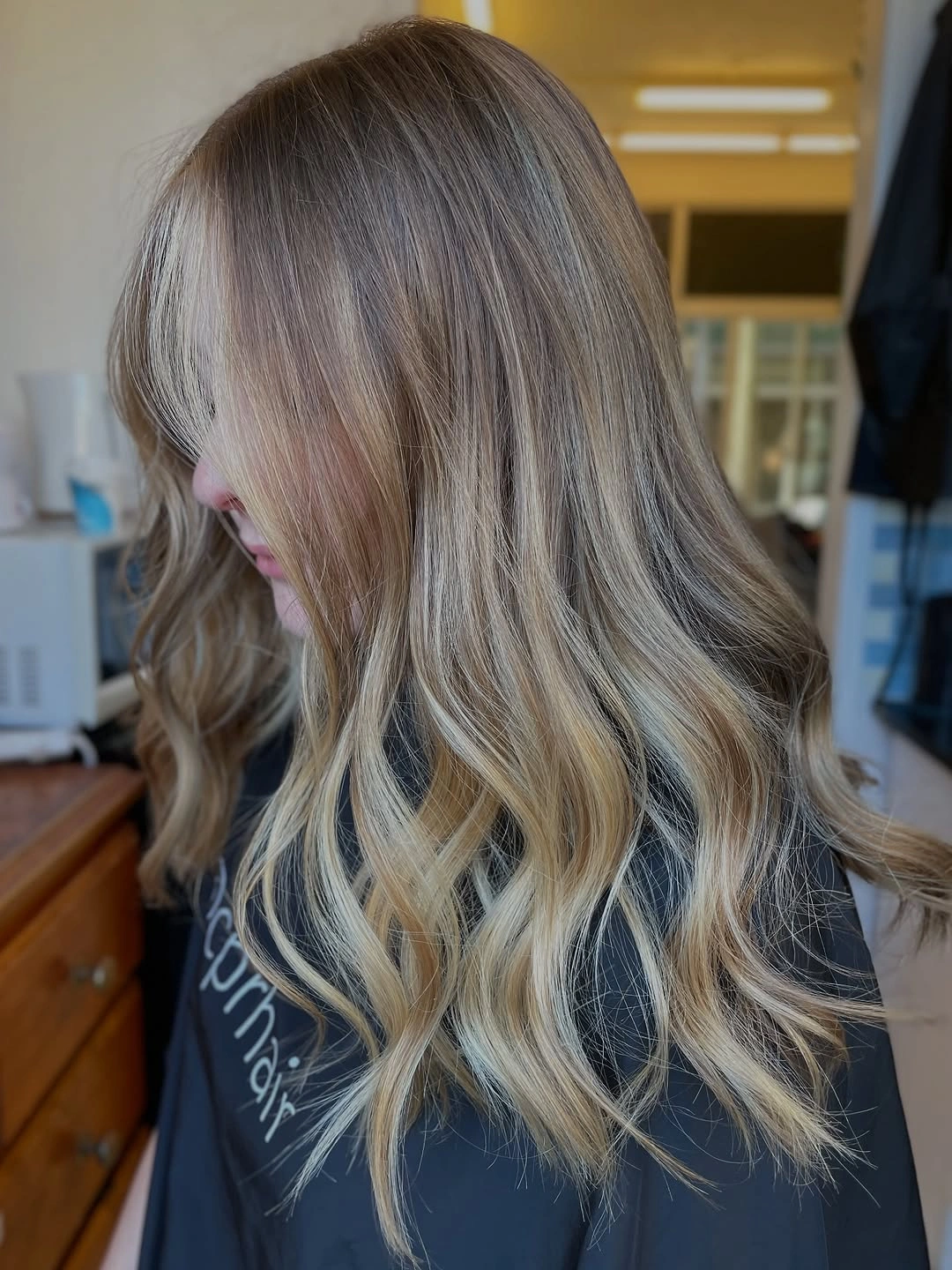
The most useful detail is how the blonde highlights and lowlit depth share the same wave pattern. Nothing looks separated into a dark top and pale bottom; instead, the lighter ribbons sit beside muted beige and taupe pieces through the sides. That makes the winter blonde hair color lowlights feel wearable on medium-length blonde hair, especially when the goal is dimension rather than a stark stripe.
The forward fall gives this color a private, layered quality. It lets the lighter ends glow without making the whole head read bright at once.
17. Chunky Lowlights Through Long Blonde Waves
This back view brings the strongest ribbon contrast in the whole set. Darker lanes run down through the blonde, while pale pieces catch the raised parts of the waves and keep the overall read light. The placement looks chunky from this angle, but the blonde still dominates because the brightest pieces repeat across the width of the hair.
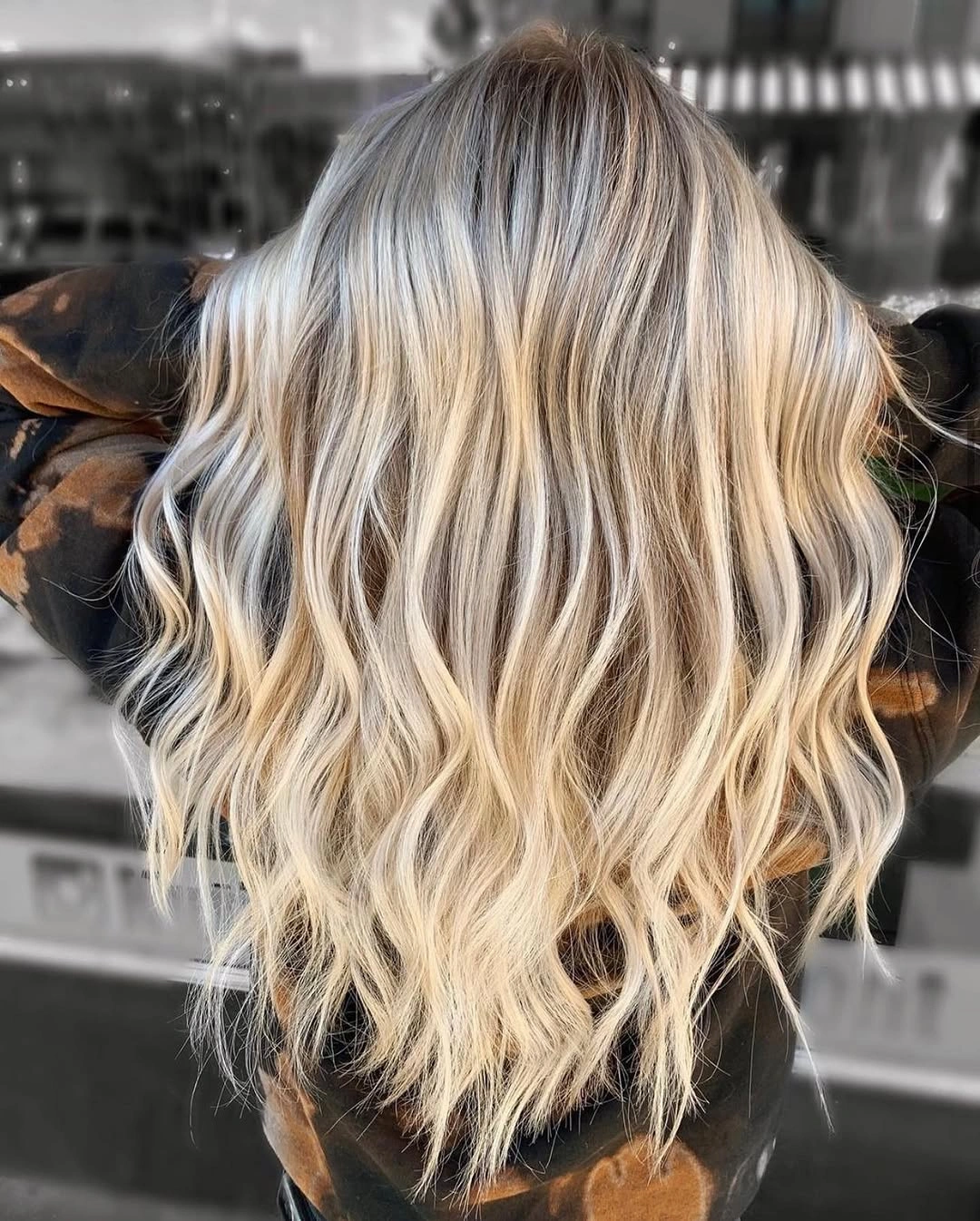
The length gives the lowlights room to matter. On a shorter cut, this much dark-and-light spacing would feel more concentrated, but here the darker ribbons travel down the back and break up the pale waves again and again. That repetition is what makes chunky lowlights feel intentional in the photo, not just a shadow at the crown.
I like that the contrast stays visible even through loose texture. The darker pieces add structure, while the pale blonde waves keep the finish from turning heavy.
18. Warm Champagne Blonde In A Straight Finish
This warm blonde is quiet because the surface is so smooth. The hair falls long and straight from the back, with a soft champagne tone that moves between pale gold and beige rather than pushing into strong yellow. A slight depth near the crown gives the shade a natural-looking top, but the main impression is clean continuity from root area to tapered ends.
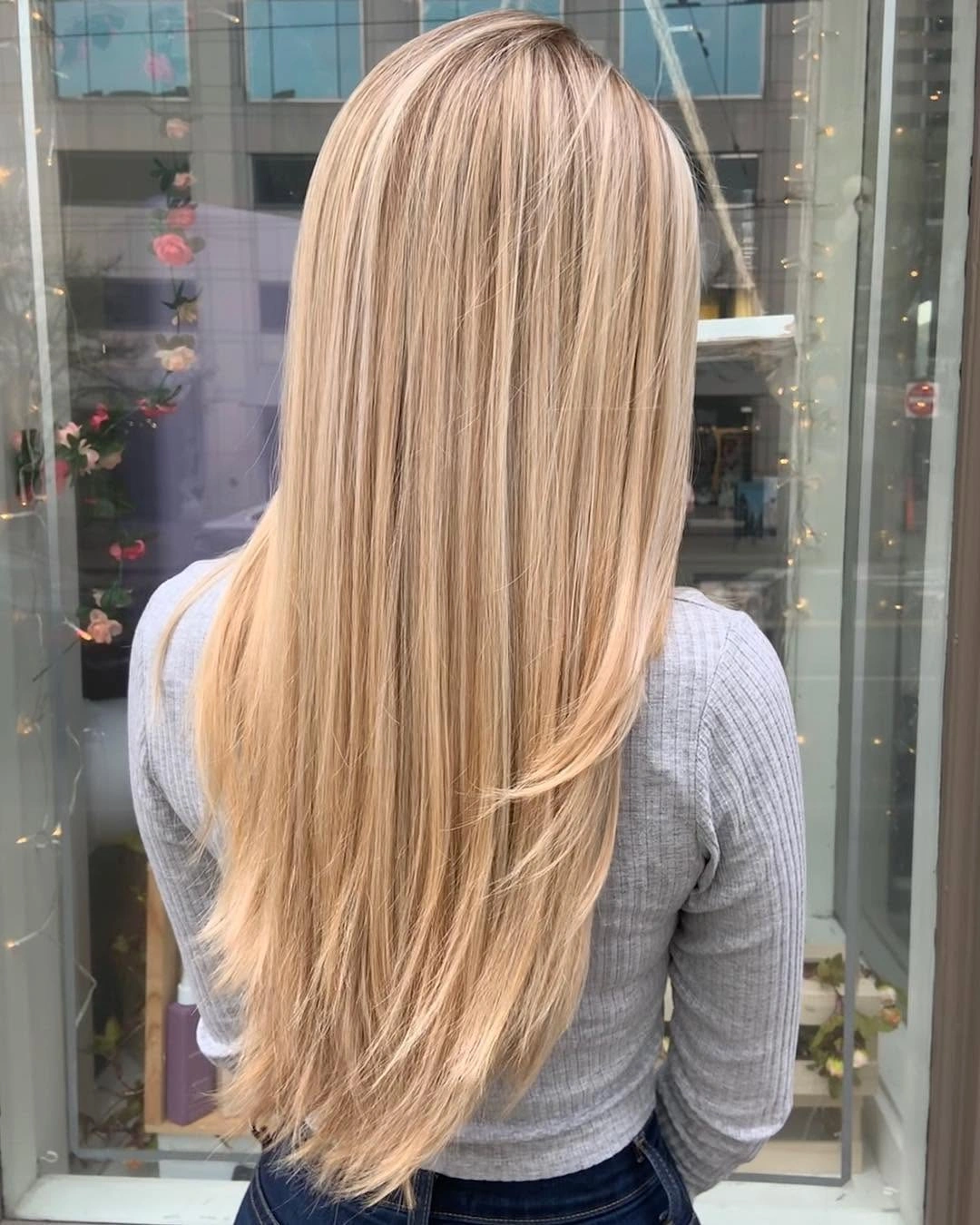
Straight polish changes the way winter blonde reads. Without waves to divide the color into ridges, the eye notices smaller tonal shifts across the surface: a slightly brighter panel here, a softer beige section there, and a warmer cast through the lower length. The rounded ends help the blonde feel fluid instead of blunt, even though the finish is controlled.
This is warm blonde without obvious drama. Its appeal is the long, even fall of color and the way the champagne tone stays soft through the whole length.
19. Sandy Blonde Waves With A Soft Gradient
This very long blonde has a relaxed gradient from the darker top into sandy beige and creamier ribbons. The shift does not stop at a hard line; it moves through the waves, with the brightest pieces appearing where the bends catch the light. That makes it a strong home for a winter blonde balayage idea, as long as the focus stays on the visible gradient rather than naming a process.
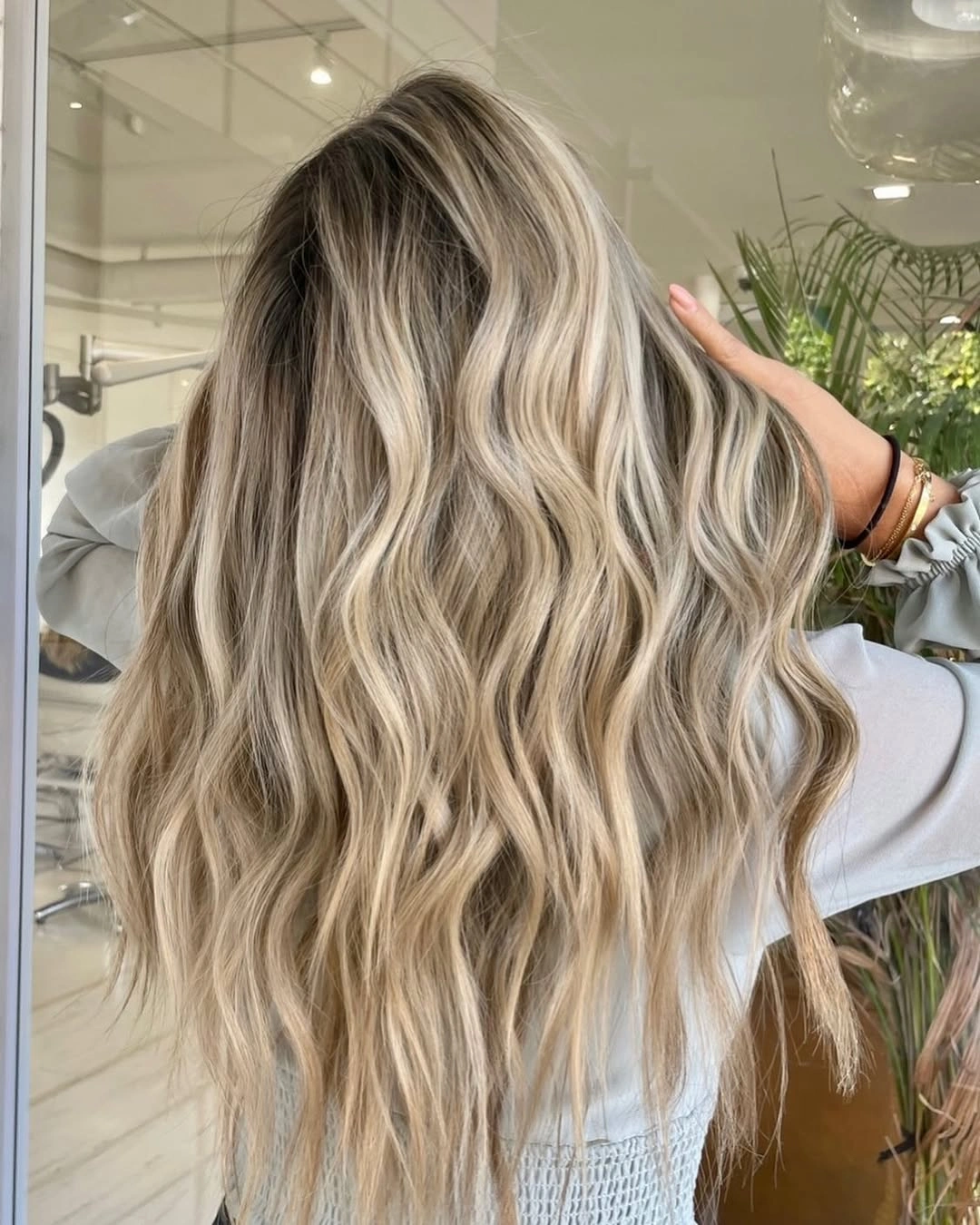
The sandy tone is what keeps the look grounded. It is not as icy as the pale pearl blondes and not as golden as the warmest examples, so it sits in a middle space that feels soft but not washed out. The loose uneven waves help that middle space work, because every bend exposes a slightly different mix of beige, cream, and shadow.
The length turns the gradient into the whole story. There is enough surface for the darker root area, the sandy middle, and the brighter ends to each have room.
20. Wavy Blonde Bob With Bright Chunky Ribbons
This short-to-medium blonde shape finishes with compact contrast rather than long flow. The cut sits around a bob-like length from the back, with a rounded outline, curled texture, dark interior pieces, and bright blonde ribbons moving through the surface. Because the hair is shorter, the lowlights feel concentrated around the head shape instead of stretched down the back.
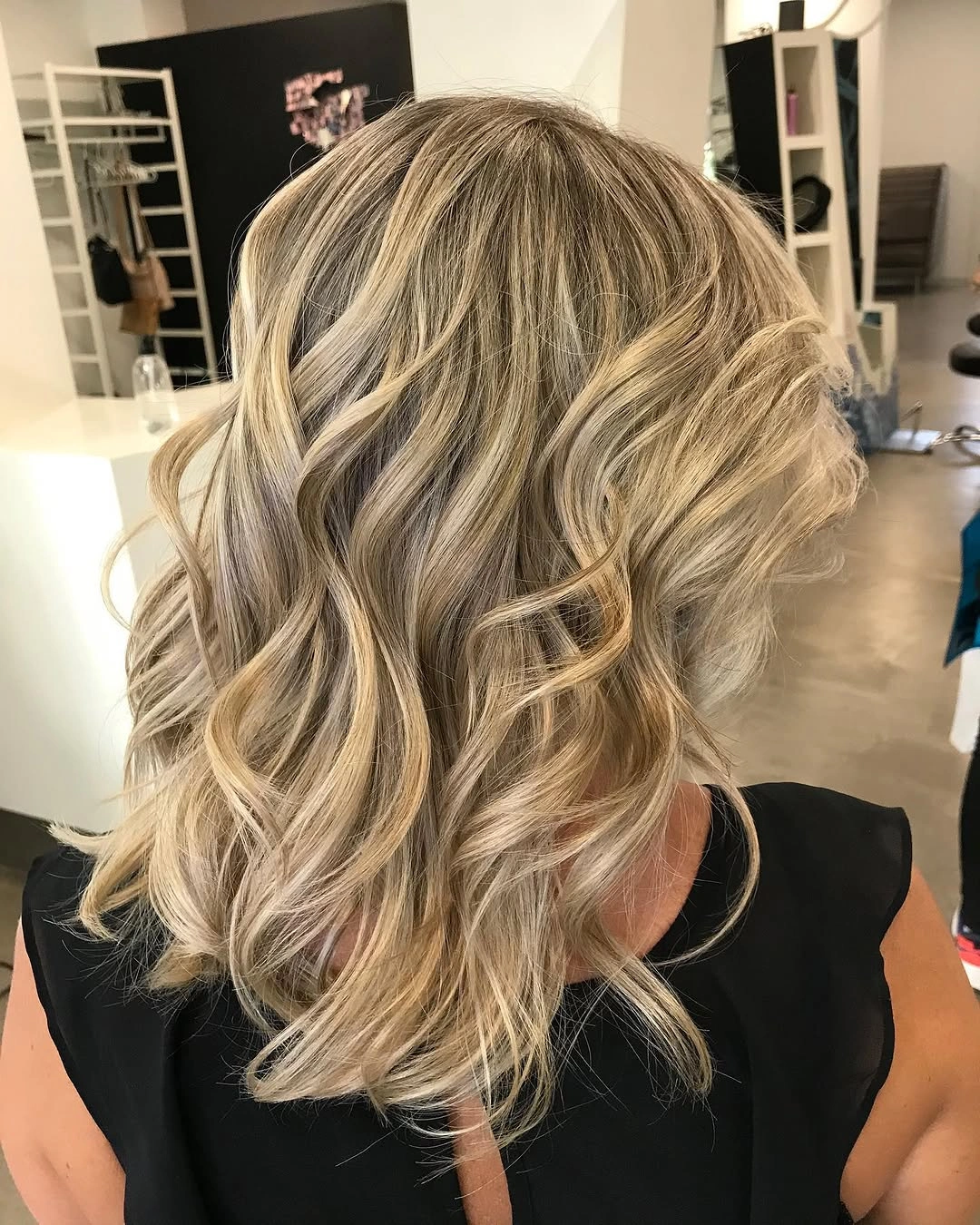
The curls make the contrast livelier. Dark pieces sit inside the bends, while the pale blonde ribbons catch the outer curves and look brighter because of the depth beneath them. It works as short winter blonde hair color because the shape and shade are equally active: the color defines the curls, and the curls keep the blonde from reading like flat highlights.
The strongest detail is the rounded movement at the back. It gives chunky lowlights a softer finish while still letting the blonde ribbons stay bold.