Choosing a winter haircut is often less about copying a single trend and more about finding a shape that supports the way you actually wear your hair. Length, movement, softness around the face, and the amount of styling you enjoy all change how a cut feels from day to day. A good reference should help you notice what kind of silhouette feels like you before you make a decision.
As you look through these ideas, compare the overall balance of each cut with your own routine and natural texture. Think about where you want volume, how much definition you prefer at the ends, and whether you want a shape that grows out gently or asks for regular maintenance. The most useful inspiration is specific enough to discuss with a stylist but flexible enough to adapt to you.
1. Long Layered Waves with Light Ribbons
This long haircut combines a wavy texture with visible layers that keep the shape from looking heavy. The light hair has a darker root area and brighter ribbons running through the lengths, so each level can be read as the waves move. Among winter haircuts, it is less about a dramatic change in length and more about a flowing silhouette where the color and texture make the layers easy to see.
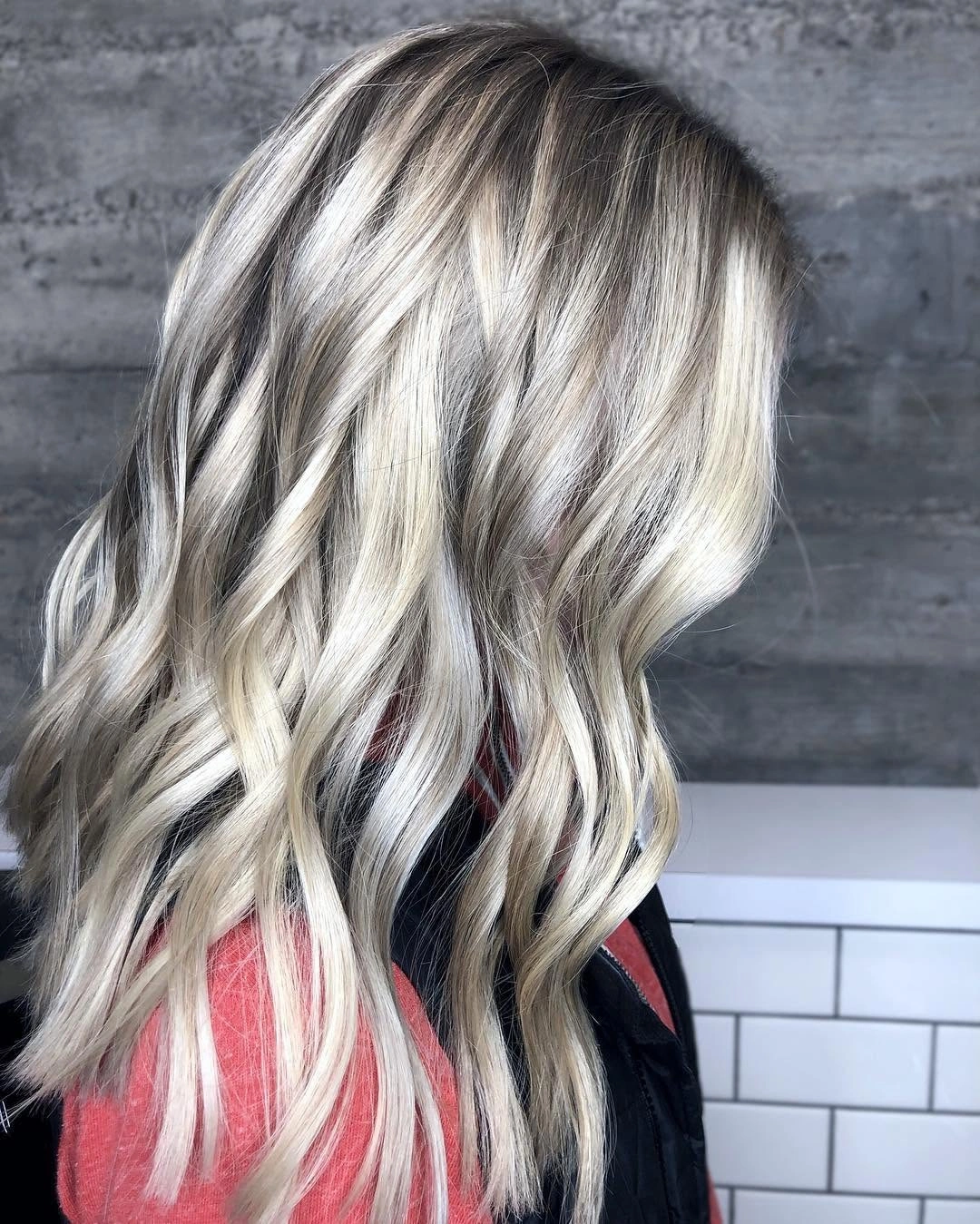
The length remains the defining feature, but the layers keep it from becoming one solid, heavy mass. Wavy sections separate into visible pieces, while the darker area near the roots increases the contrast with the lighter lengths. That difference helps the haircut stay connected to the color and the natural direction of the waves instead of reading as a flat, single-level shape.
Save this as a reference for a long layered shape with clear movement through the lengths. The waves, layers, and alternating darker and lighter areas create the main visual effect.
2. Layered Light Hair with Waves Seen from the Back
This medium-to-long light haircut is shown from behind, making its overall outline and layered distribution especially easy to read. The wavy texture creates soft bends through the length, while the layers keep the lower edge from looking like one straight line. For winter haircuts, it is a clear example of how length and waves can work together without relying on complicated extra details.
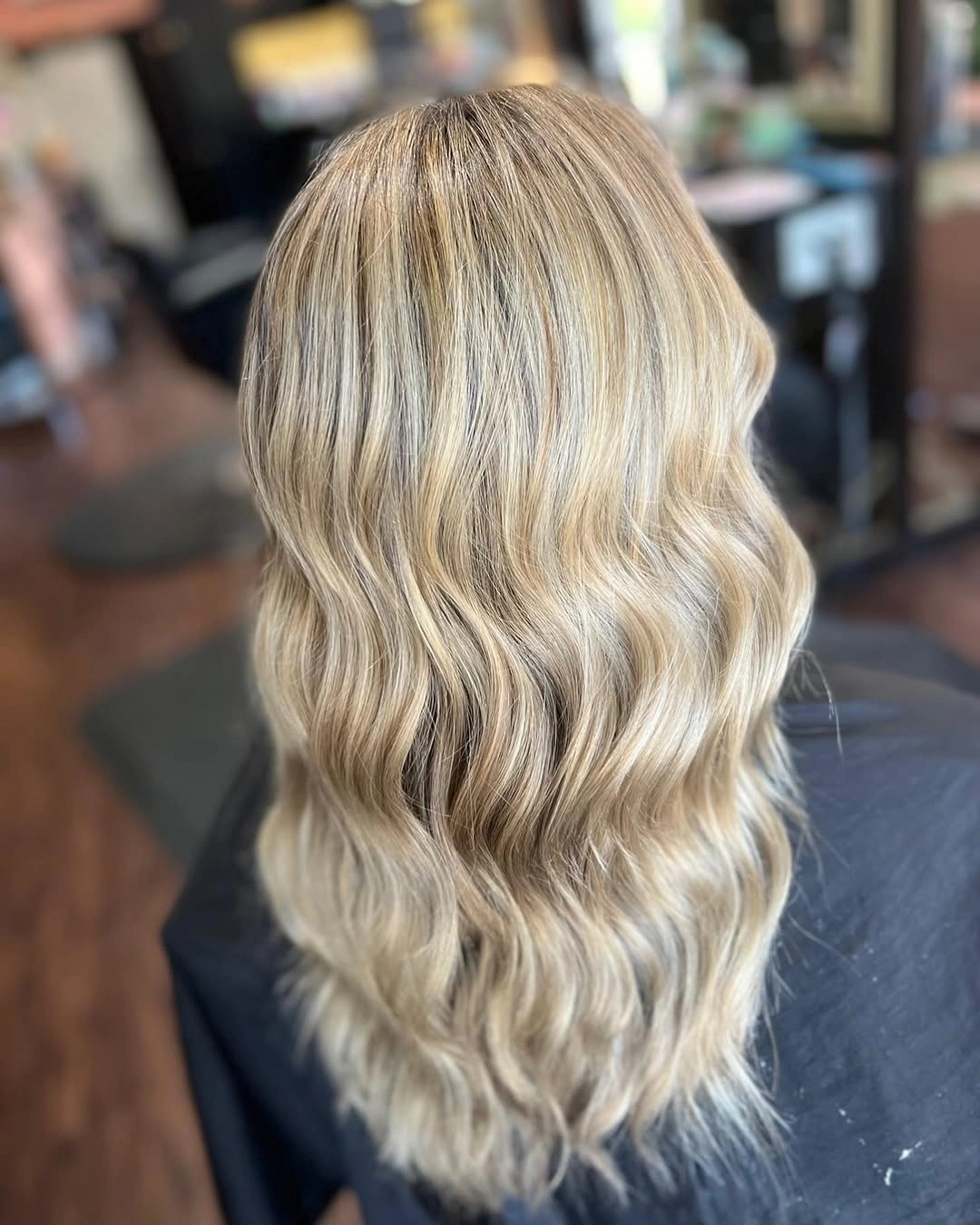
The back view shows not only the length but also the way the waves reveal different levels of the cut. The upper and lower sections do not sit on one plane, so the silhouette feels more dimensional. The light color makes the transitions between strands easier to notice, but the foundation of the look is still the layered, wavy form rather than the shade alone.
Use this photo as inspiration for a longer cut with visible layers and a soft wave pattern. The back angle makes the overall rhythm of the shape particularly clear.
3. Platinum-White Hair with a Clean Blunt-Looking Edge
Long, straight platinum-white hair in this image has a notably even lower contour that looks blunt and clean. Unlike the layered styles, the silhouette is defined by uninterrupted vertical length and a compact line at the ends. Among winter haircuts, this option stands out through its simplicity: straight strands emphasize the length, while the pale color makes the bottom edge even more visible.
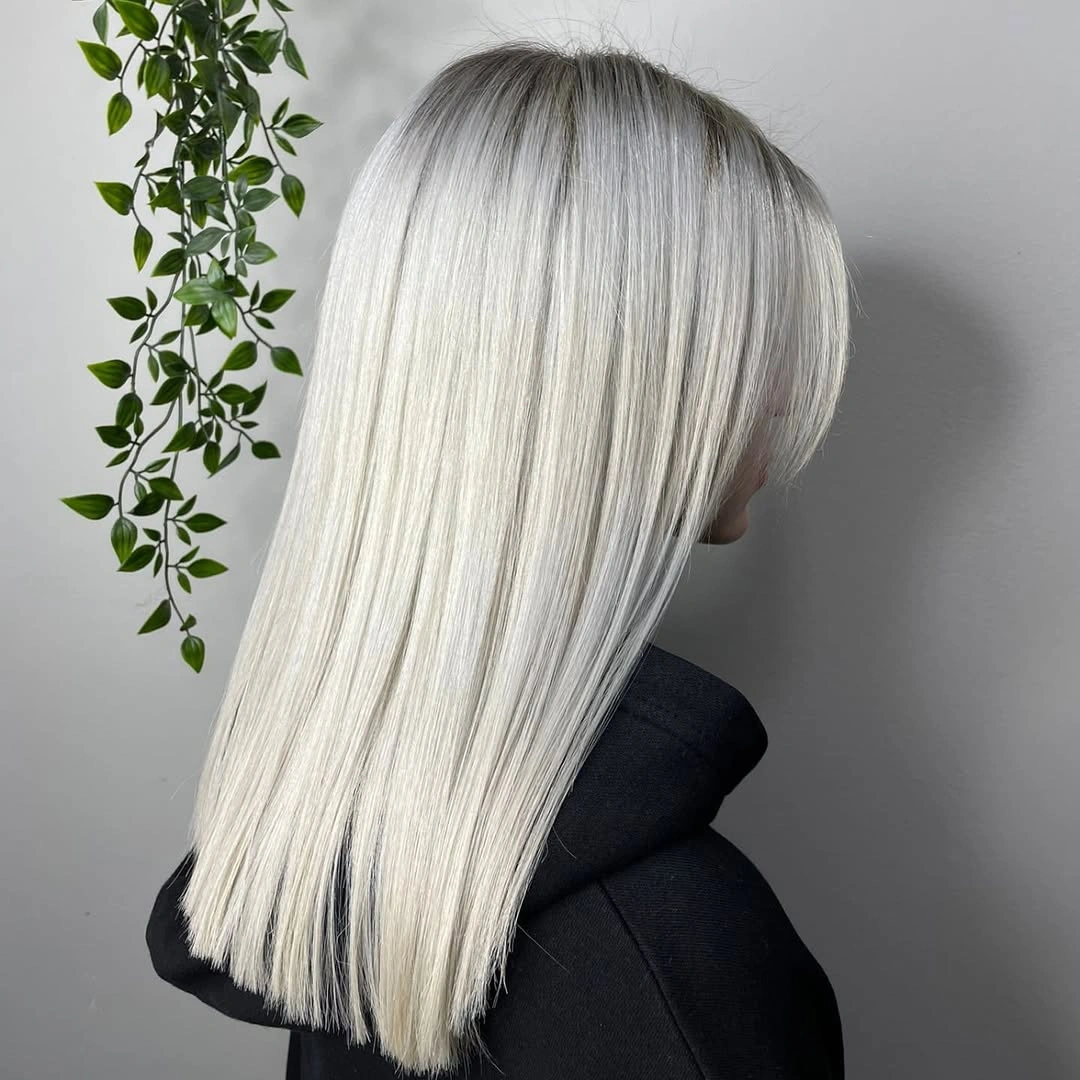
There is no obvious wave pattern or pronounced cascade here, so attention moves to the straight texture and the lower line. The ends appear cut at a fairly consistent level, creating a clear finish across the visible mass of hair. The platinum-white shade does not change the geometry, but it strengthens the graphic and uniform impression of the haircut.
This is a useful example of long hair where the emphasis is on even ends rather than layers. The straight surface makes the clean lower contour easy to study.
4. Very Long Copper-Red Hair with a Straight Cut
Very long copper-red hair falls in an almost straight, smooth line, and the ends have an even blunt-looking contour. Because the length is so substantial, the shape appears especially continuous, with no obvious shorter layers interrupting the vertical silhouette. In a winter haircuts collection, this look shows how a simple long cut can feel distinctive when the lower edge is clear and consistent.
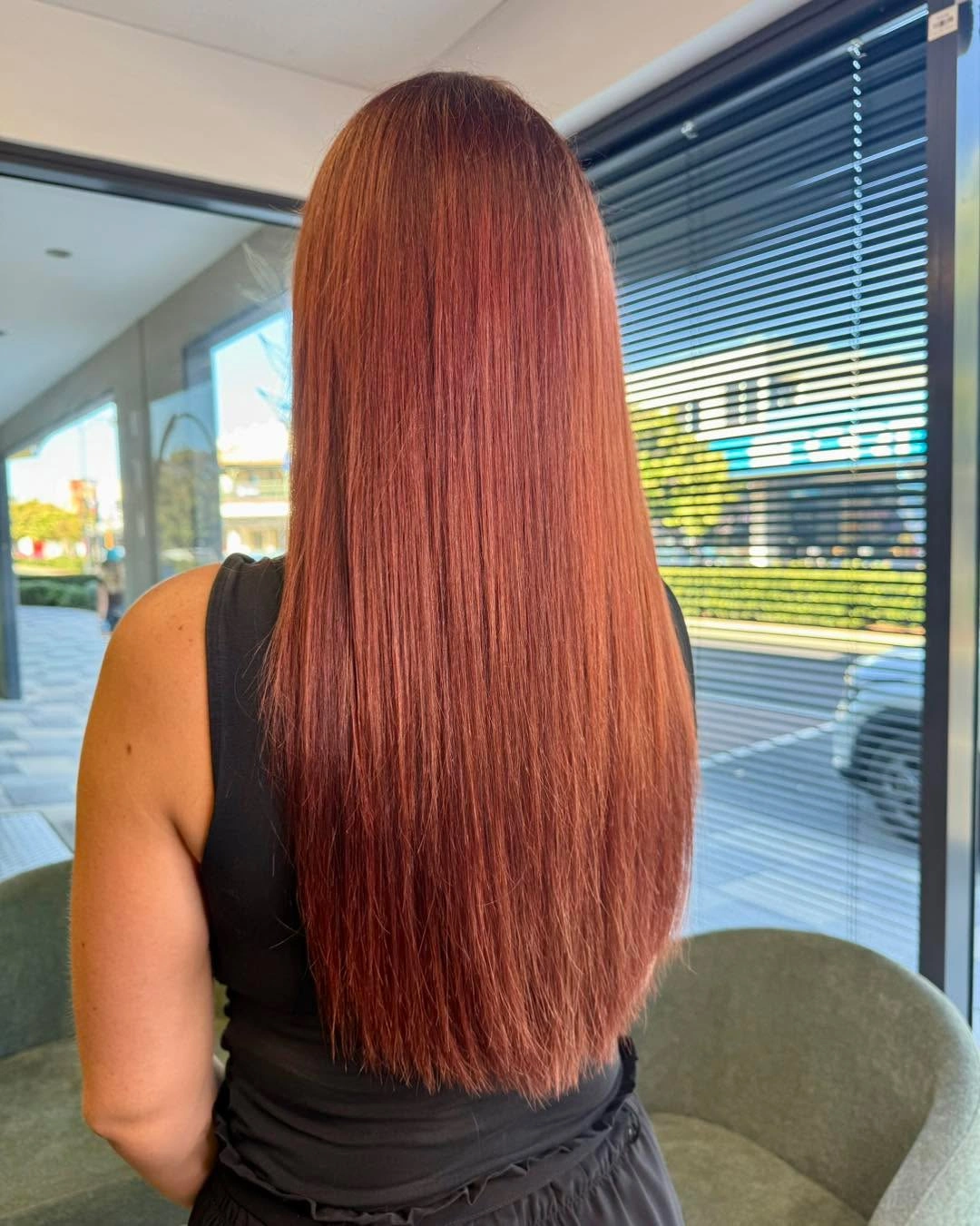
The evenness of the long strands separates this style from the cascading and wavy shapes elsewhere in the article. The lower edge looks dense and straight, so the end of the length is immediately readable. The copper-red color adds presence, but the construction stays restrained: very long straight strands and a distinct line at the bottom.
Save this reference if you like substantial length without obvious layering. The composition depends on the straight silhouette and the precise-looking finish.
5. Wavy Brunette Lob with a Soft Angle
This brunette lob ends around the shoulder area and uses a wavy texture to give the shorter length visible movement. The outline appears slightly angled, so the front and back do not read as one perfectly horizontal line. Among winter haircuts, it is a compact option shaped by the shoulder-length cut, the waves, and a gentle direction in the lower edge rather than a sharp asymmetry.
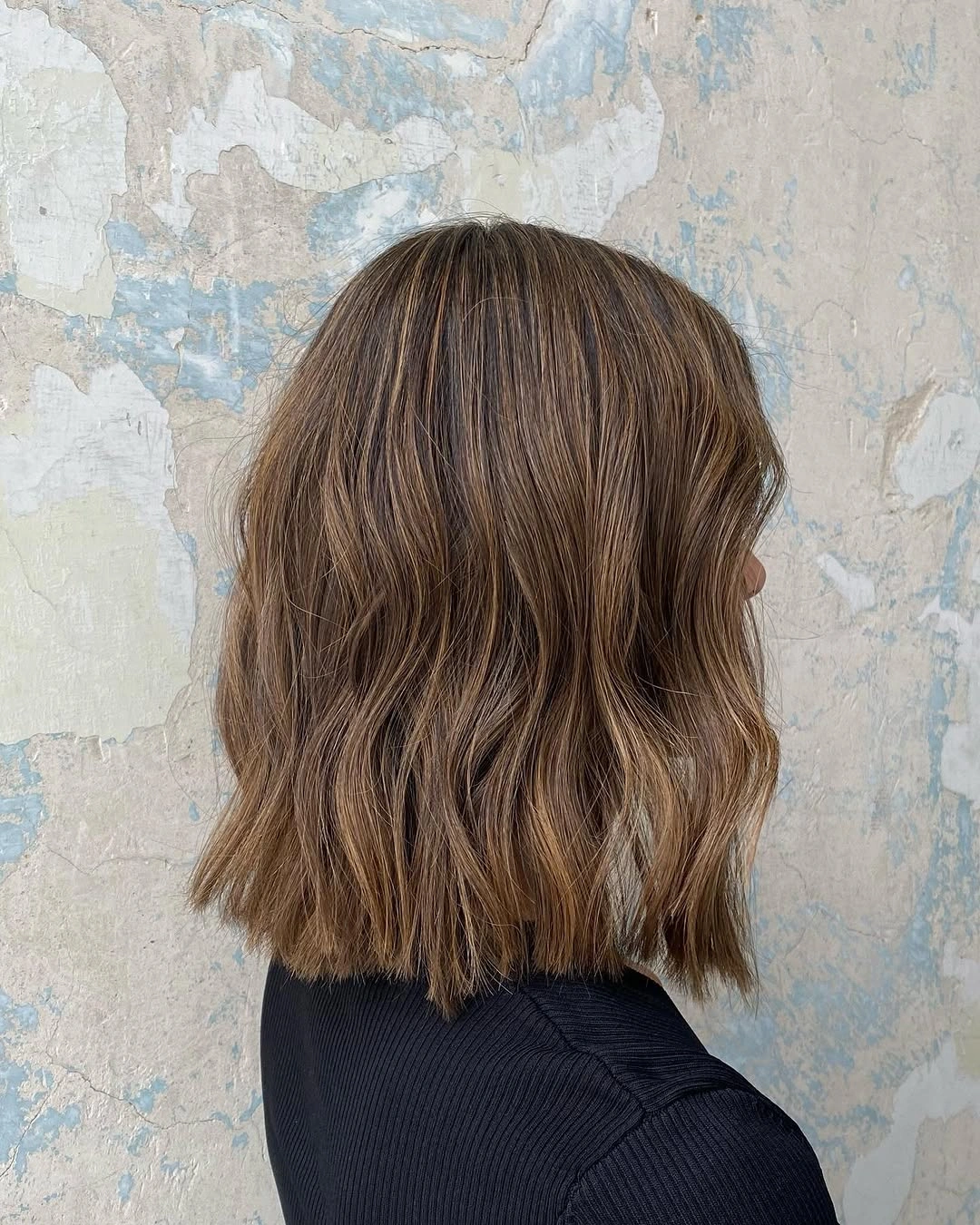
Compared with the very long styles, this silhouette is concentrated close to the shoulders, making the wavy texture particularly noticeable. The slight angle gives the outline direction without turning it into a dramatic asymmetrical cut. The dark hair defines the shape clearly, while the waves soften the geometry and keep the lower edge from looking overly rigid.
This is a clear lob reference where shoulder length meets a soft wave pattern and a delicate angle. It is more compact than the long cuts but still has movement across the visible shape.
6. Light Wavy Bob with Curled Layered Ends
This light, shoulder-length haircut forms a soft wavy silhouette with ends that visibly curl and turn in different directions. The lower section does not look like one straight line, because the individual strands return and separate to emphasize the layered shape. Among winter haircuts, this look combines a compact length with waves and noticeable movement concentrated around the ends.
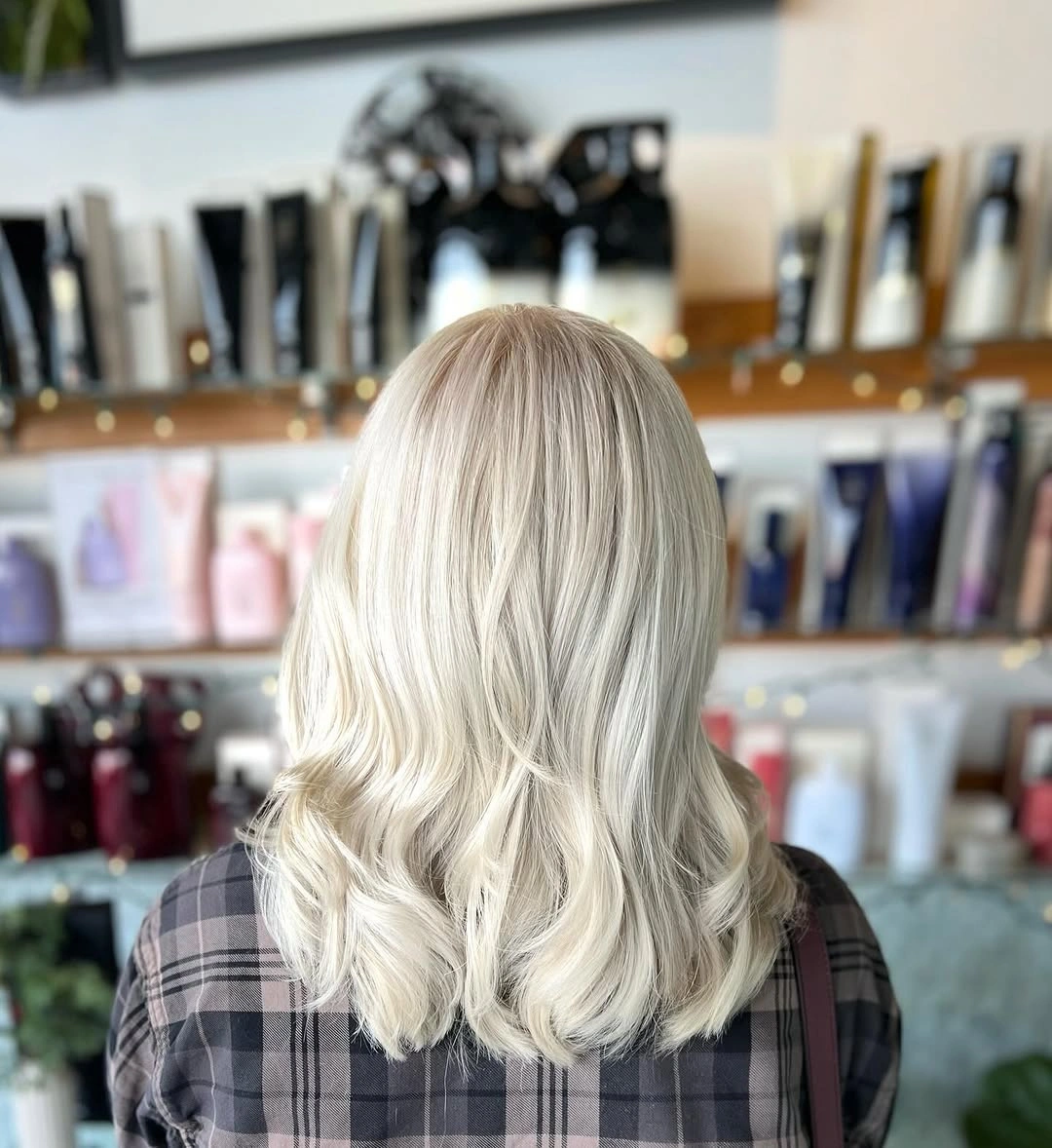
The pale shade helps distinguish the wavy sections, but the form of the lower part is the main feature. The strands do not finish at exactly the same level; curled and layered ends create several visible steps, so the shoulder-length shape feels active rather than static. This differs from a blunt cut because the edge is formed by the movement and direction of separate strands.
This photo shows how a medium length can look layered without a harsh break between sections. The curled ends are the clearest detail and reinforce the soft wavy character.
7. Long Icy Silver Waves Seen from the Back
Long silver hair is shown from behind, so its wavy structure and overall shape can be followed across the full visible length. The cool icy shade emphasizes the alternation between lighter bends and darker recesses inside the waves. In a winter haircuts collection, this style stands out not because of a short outline or sharp layers, but because a long sheet of hair keeps a consistent wave movement from top to ends.
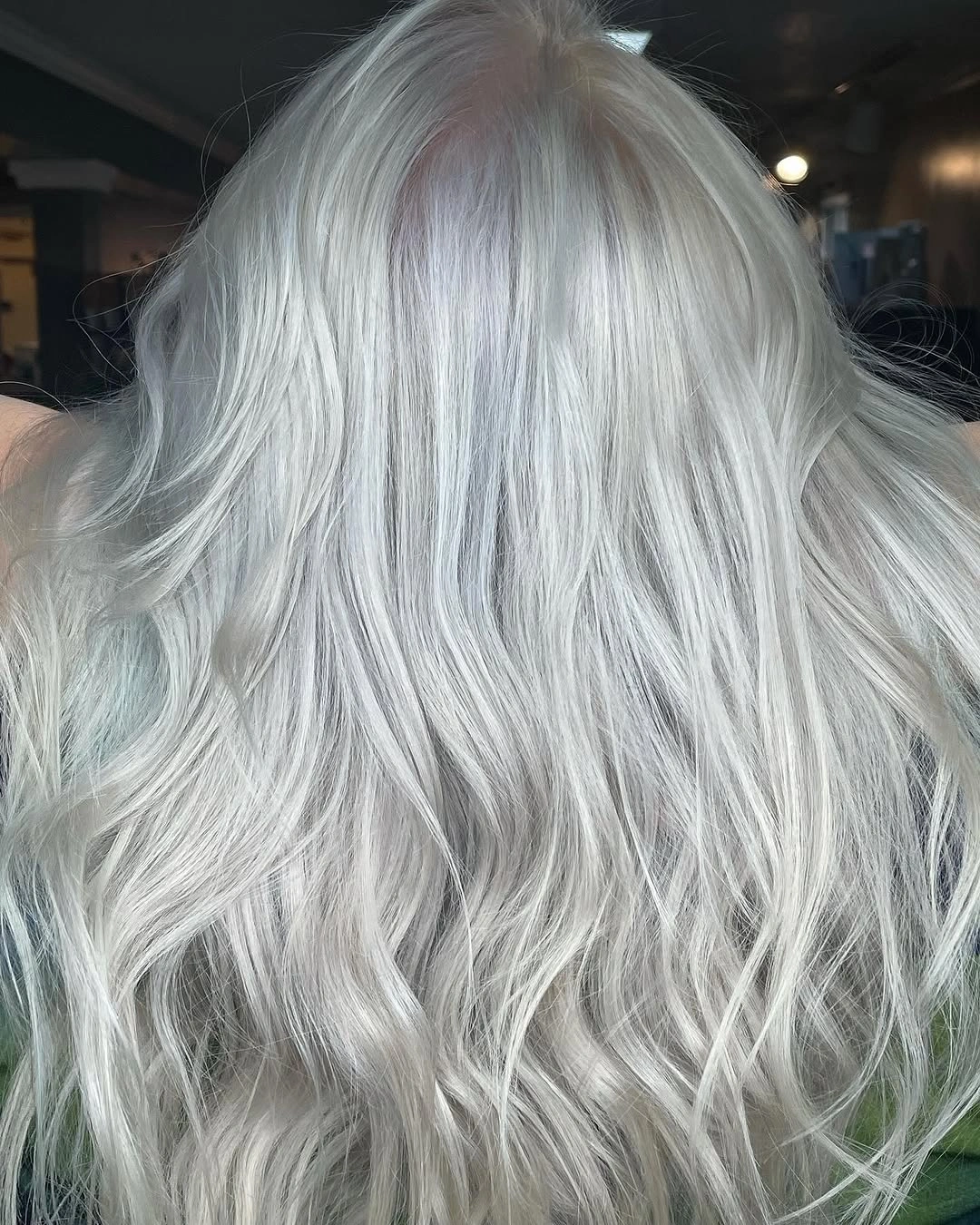
The back view shows how the waves repeat from the upper section through the ends instead of being limited to one area. The silver color makes the rhythm especially visible because each curved strand reflects light differently within the frame. Length remains the dominant haircut feature, while the wavy texture breaks it into a series of soft, readable sections.
Pay attention to the relationship between substantial length and evenly distributed waves. The back angle makes the overall pattern easy to evaluate without front-facing details.
8. Ash Shoulder-Length Bob with a Lifted Layer
Ash-light or gray-toned hair reaches approximately to the shoulders and has a soft wavy texture, while the lower ends look fairly even and dense. In the photo, a hand lifts one section, revealing how the upper layer separates from the hair underneath. Among winter haircuts, this image is useful because it shows the contrast between moving waves above and a more solid-looking lower contour.
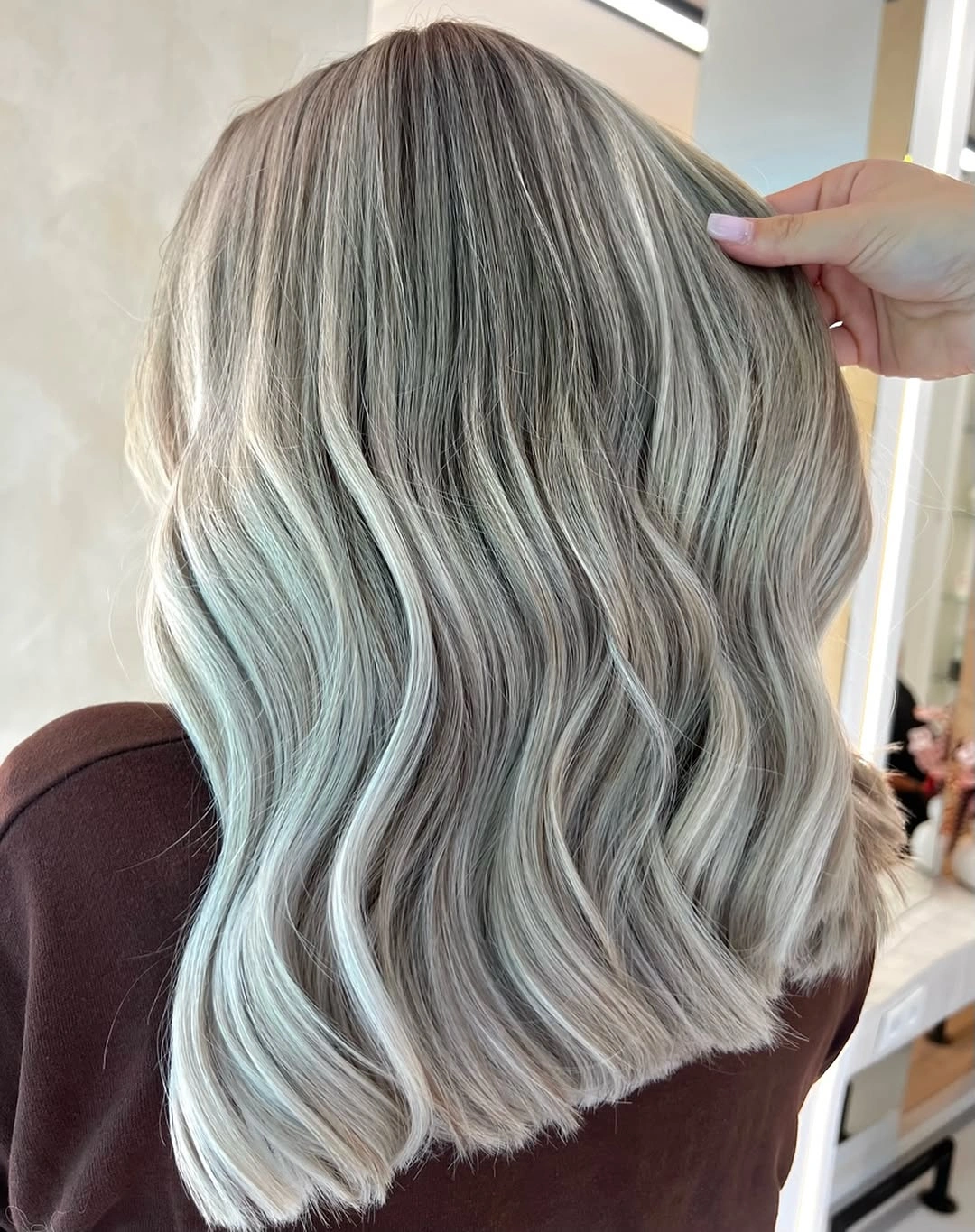
The lifted section makes the layered construction easier to observe without requiring assumptions about how the cut was made. Beneath it, the main body of hair keeps its visible waves and ends near the shoulder line. The ash-gray tone visually unites the levels, while the movement of the strands shows that the silhouette is not completely uniform even with a relatively defined lower edge.
This is a useful medium-length reference where layering and a solid lower contour can be seen together. The lifted section makes the difference between the upper level and the hair beneath especially clear.
9. Long Caramel Waves with Loose Layers
Long caramel-light hair has large, soft waves and loosely distributed layers that do not create a hard geometric boundary. Strands overlap at different levels, so the outline feels gradual and mobile through the full length. For winter haircuts, this is a long shape where the layers are read through the waves and through small changes in the length of individual sections rather than through sharp steps.
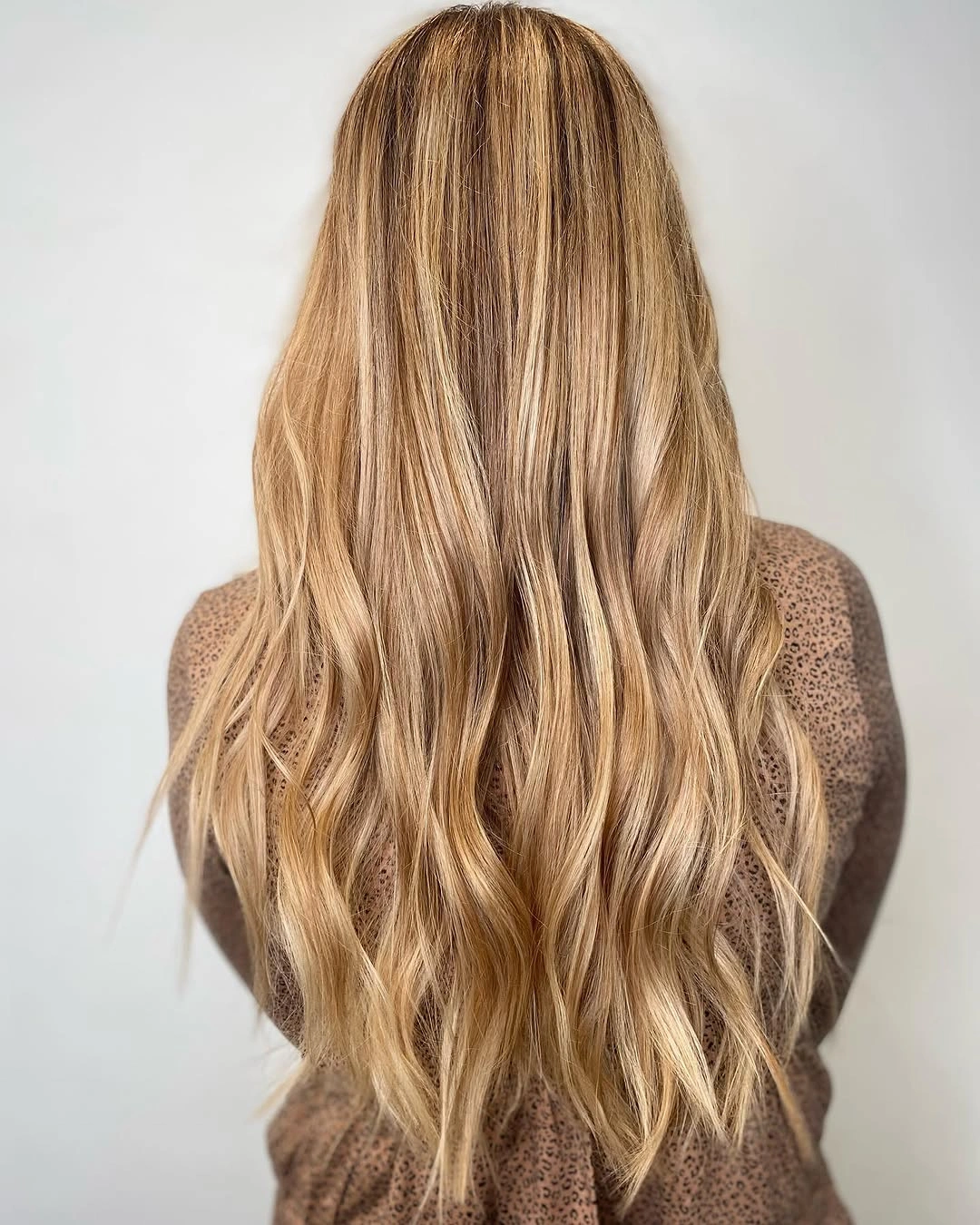
The caramel tone emphasizes the bends, but the haircut itself is defined by the difference between the longer and shorter visible strands. The layers are not sharply cut apart; they flow into one another with the wavy texture. As a result, the lower part does not form one dense, solid line but is made from separate softly curved sections that continue the movement.
Notice how the layers support the wave pattern instead of creating rigid tiers. The substantial length remains visible and gives the whole shape its vertical direction.
10. Sleek Silver-Gray Bob with a Blunt Edge
This silver-gray bob has a smooth straight surface and a clearly blunt-looking lower edge that falls between the chin and shoulder area. Unlike the wavy and layered cuts, its shape is understood through the evenness of the strands and the compact geometric outline. Among winter haircuts, it is a strong example of a shorter length where a clean contour becomes the central visual feature.
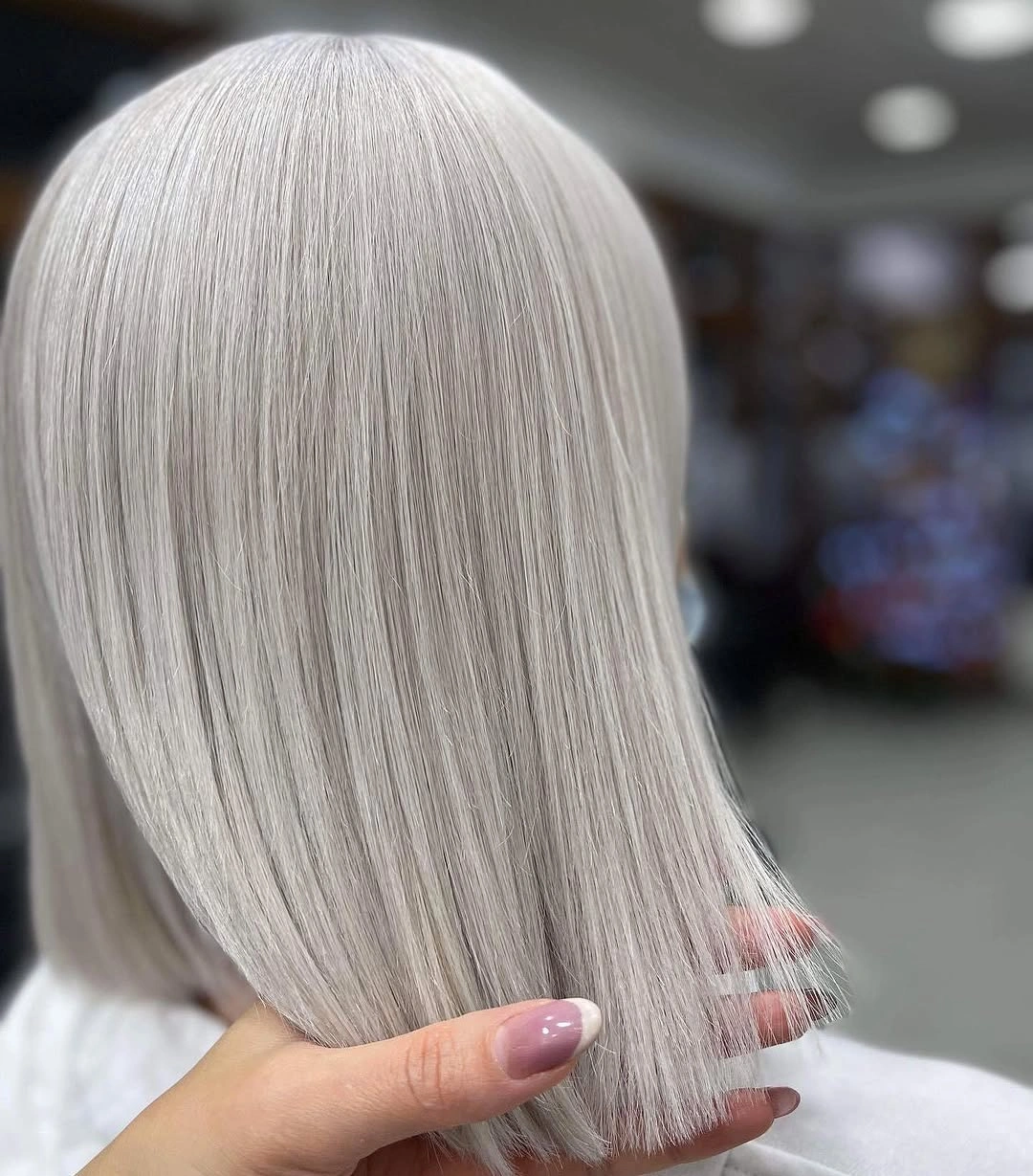
The smooth hair lies close together, so the lower line stays distinct instead of being softened by waves or broken into separate layers. The silver-gray color reinforces the uniform surface, while the chin-to-shoulder length keeps the silhouette compact. The visual emphasis remains on the straight texture and the dense-looking finish at the bottom.
This bob is a straightforward reference for a polished shape with smooth strands and a defined lower edge. Its character comes from the even geometry rather than a complicated layer pattern.
11. Long Dark Waves with Face-Framing Pieces
Long dark brown hair is shown from the front, making it easy to see how a wavy length works with shorter pieces around the face. The front sections open to either side in a soft curtain-like shape, while the main body remains much longer. The haircut is defined by the difference between the front framing and the waves that continue below, rather than by one uninterrupted vertical outline.
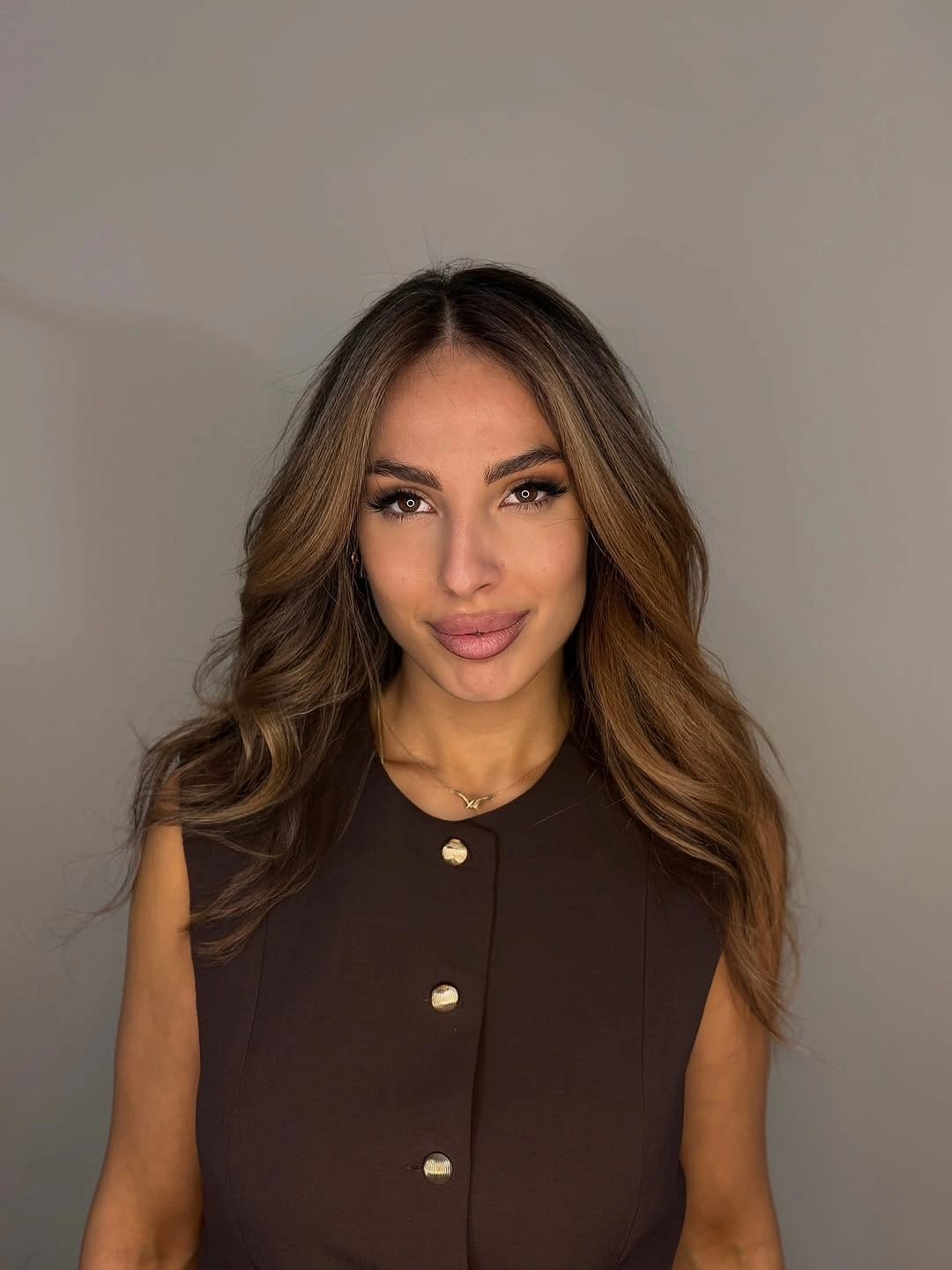
The front angle shows that the upper section does not flow into the length as one solid contour. Shorter front pieces separate from the longer waves and create visible movement near the face, while the center stays symmetrically open. The dark brown color emphasizes the bends and makes it easier to follow the different visible levels of the strands.
The key detail here is the connection between the front sections and the longer shape behind them. The waves soften that transition and keep the layered silhouette readable from the front.
12. Long Ash-Brown Waves with Layers
Long brown hair with an ash cast is shown from behind, where the center part and layered wavy length can be seen clearly. The strands fall away from the part on both sides and then form broad waves that overlap farther down. Different levels remain visible through the full length, so the back silhouette does not read as one completely even mass.
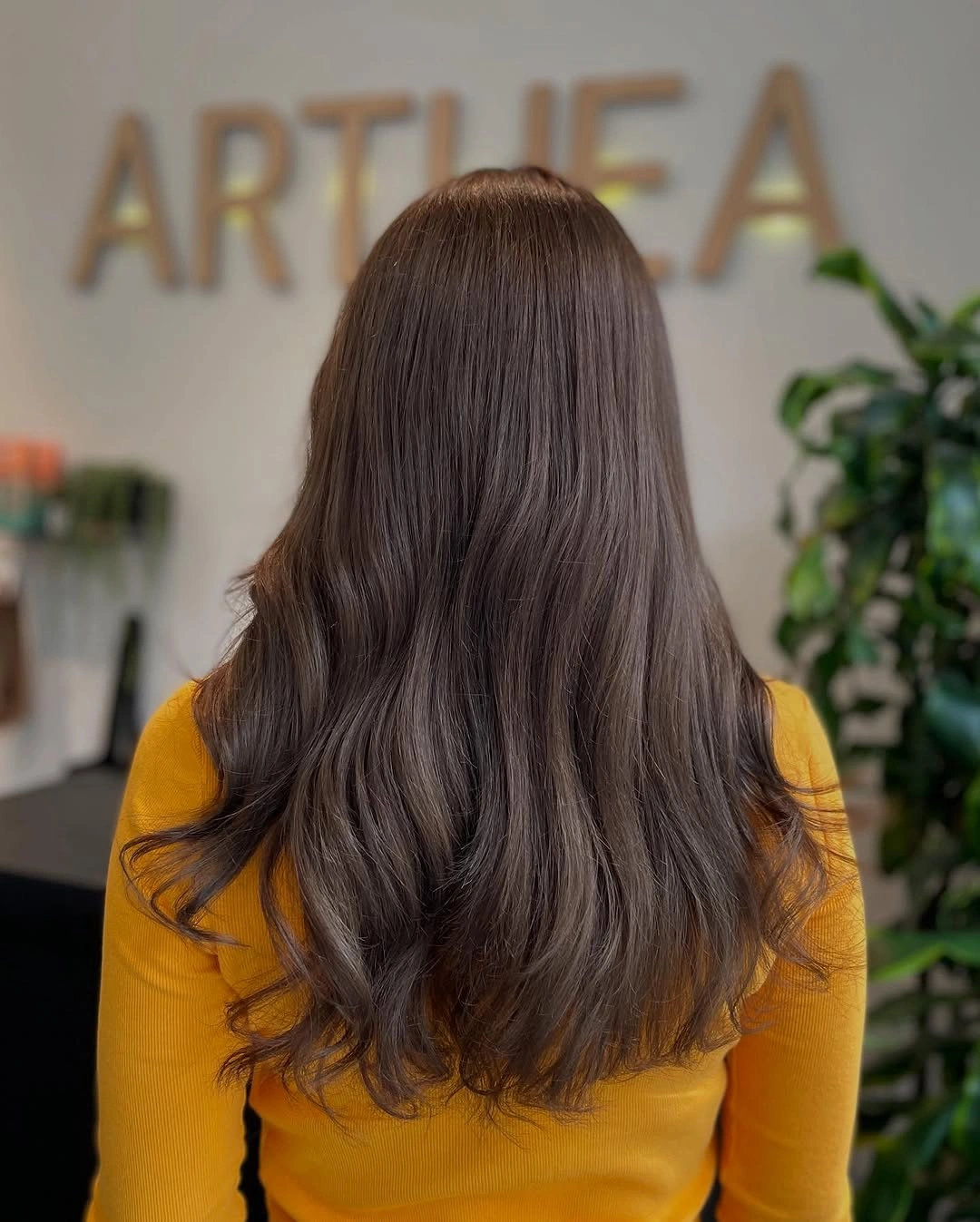
The back view allows the shape to be followed from the center part to the lower wavy sections without distraction from front details. Upper strands move into longer ones, but the levels remain noticeable because the wave direction changes along the length. The ash-brown tone looks fairly consistent, leaving the length, layers, and wavy pattern as the main features of the cut.
This is a long haircut where the layering is easiest to understand from behind. The center part brings symmetry to the upper section, while the waves gradually break it up below.
13. Wavy Medium Length with Warmer Ends
Medium-length brown hair is shown from behind with a soft wavy outline that becomes especially visible in the lower half. The ends look warmer than the main body, so the bottom edge stands out through both shape and tone. The length is more compact than the previous long styles, but the waves still provide enough movement across the visible surface to keep the cut from looking flat.
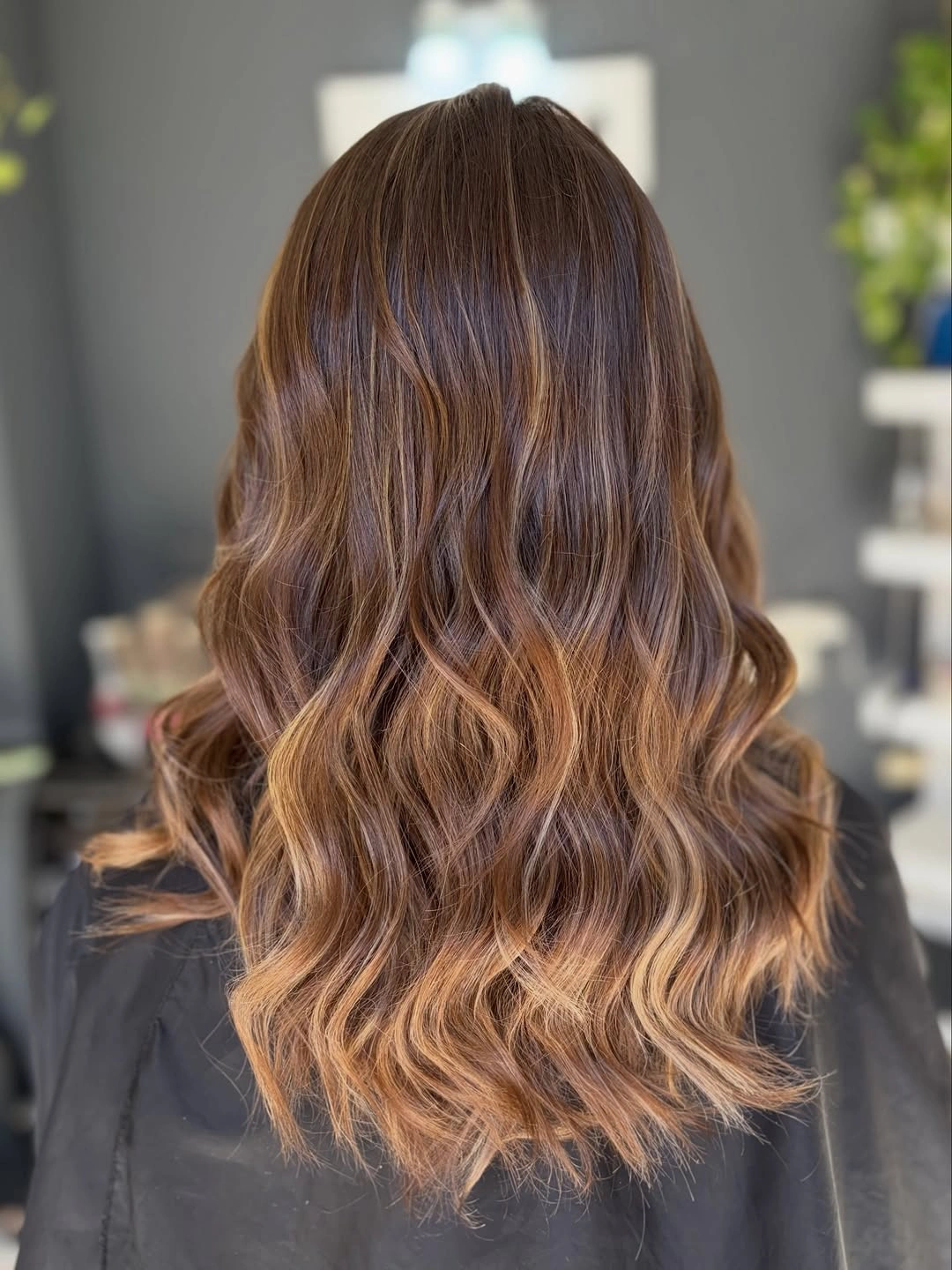
The back angle shows how the wavy texture changes the outline as it approaches the lower edge. The strands do not fall as perfectly straight lines; they form separate bends with lighter and darker areas between them. A warmer tone at the ends further separates the finish from the brown upper section without changing the basic construction of the haircut.
Look at the combination of medium length and a softly wavy finish. The warmer ends make the lower section more noticeable, while the waves still define the main silhouette.
14. Dark Wavy Layers with a Center Part
Dark brunette hair of medium-to-long length is shown from the front with a clear center part and wavy layers on both sides. The front sections fall to different levels, so the shape around the face does not look like one uninterrupted vertical line. Lower down, the waves continue that layered pattern while the dark color keeps the visible mass visually cohesive.
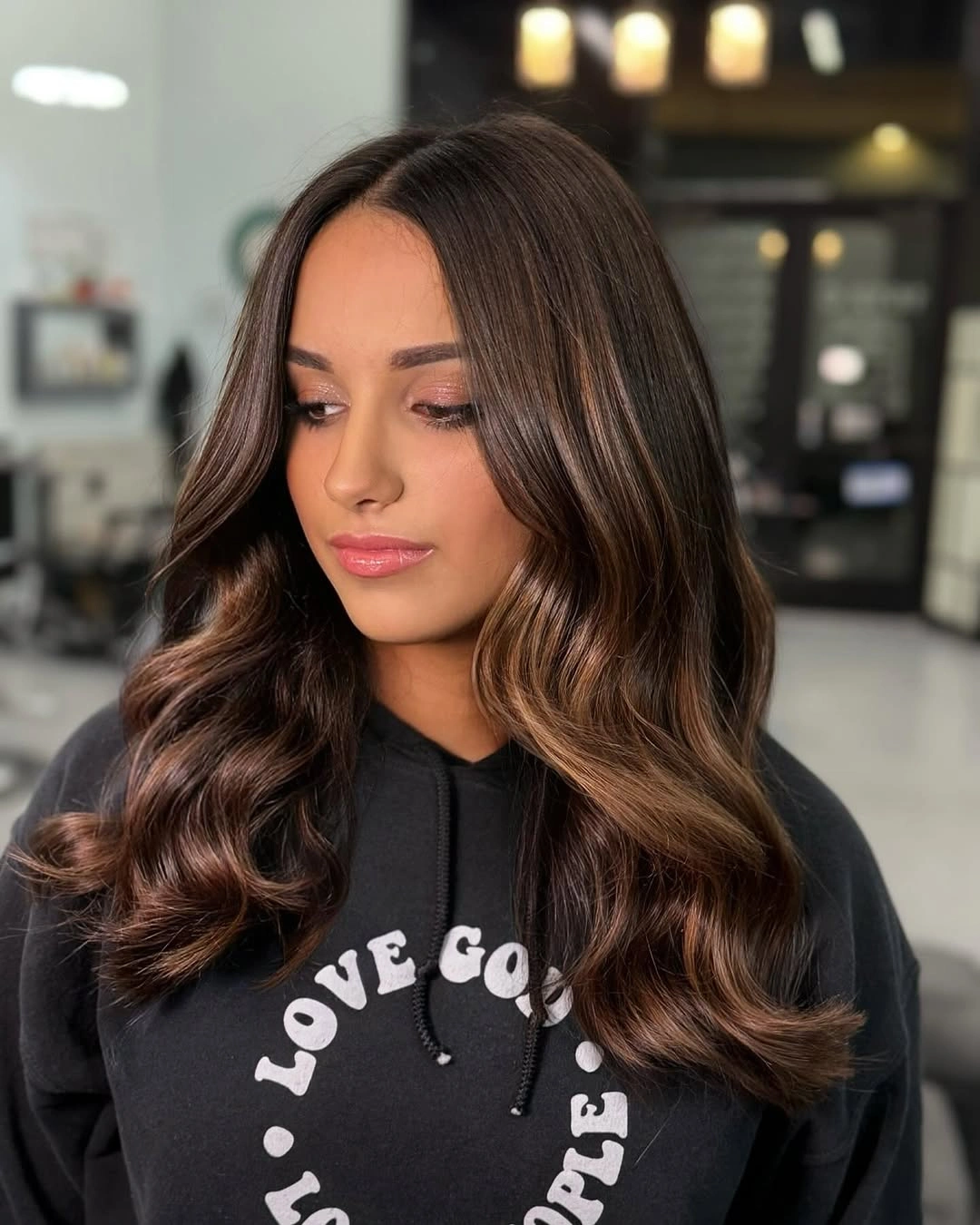
The front view makes the symmetry of the part easy to evaluate while also showing how the layers change the outline on the left and right. Shorter visible sections move into longer wavy strands, and the difference becomes clearer wherever the hair changes direction. The dark brunette shade does not add a separate color contrast, so the waves and the length of the strands do most of the work in defining the form.
This haircut is built around a center part and noticeable layering near the front. The wave pattern helps show each level without turning the transitions into sharp geometric steps.
15. Long Brown Waves with Light Ribbons
Long brown hair is shown from the front in large waves that can be followed from the upper section to the ends. Lighter strands run through the darker base and make individual bends easier to see. The overall shape remains long and wavy, while the contrast between brown and light areas helps reveal the direction and separation of the visible sections.
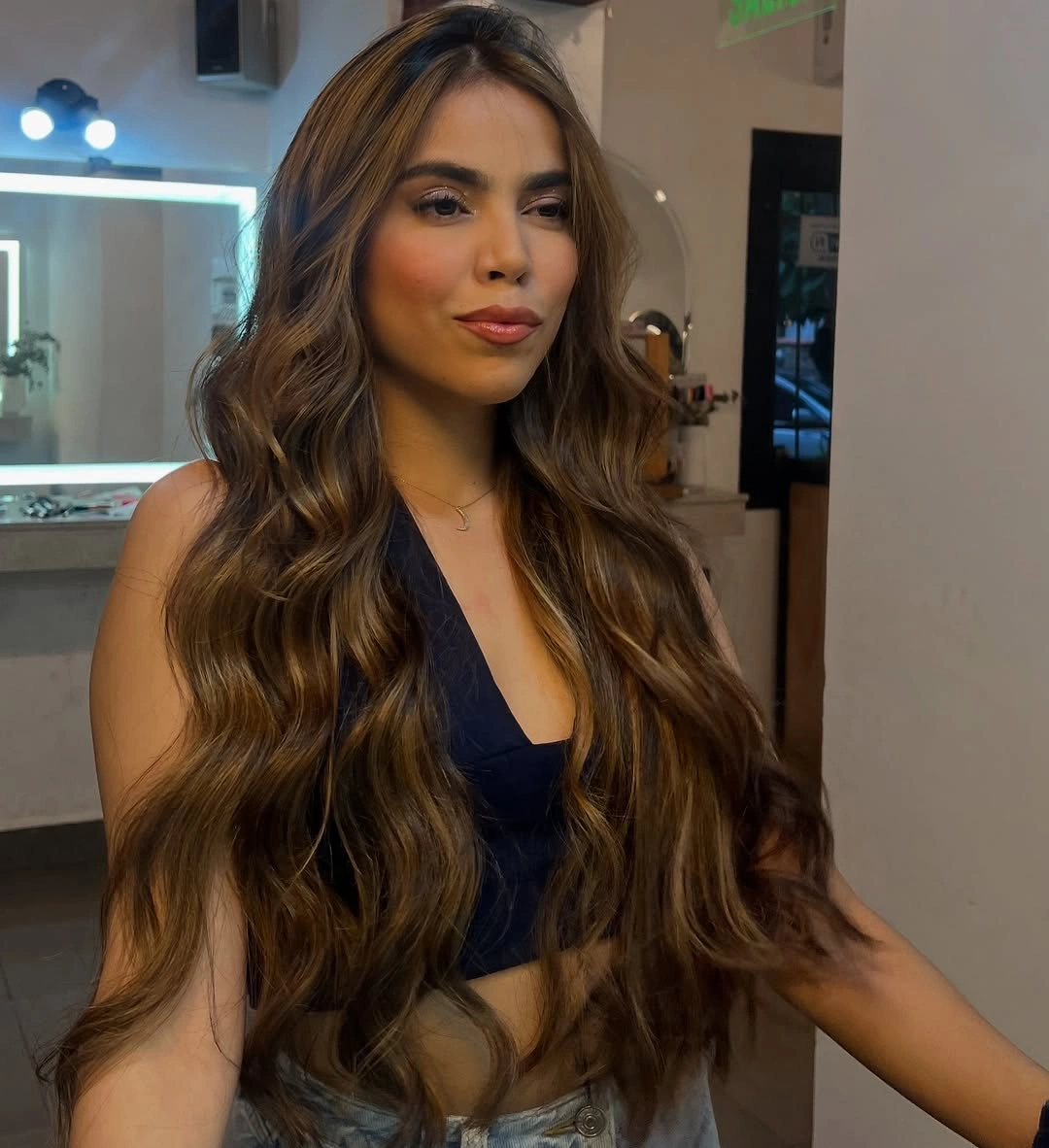
The lighter accents follow the wave movement and visually separate some sections from others. The length still feels unified, but the difference in tone keeps the surface from looking completely flat or uniform. Brown remains the dominant base, while the lighter strands work like visual lines that trace the bends on both sides of the face.
Use this as a reference for a long wavy shape where color helps reveal the structure of the strands. The main haircut idea is still the substantial length and the flowing wave pattern.
16. Dark Shoulder-Length Hair with Soft Curls
Dark brunette hair of medium length is shown from behind, making its overall outline and shoulder-level finish easy to see. Most of the upper section looks relatively smooth, while loose curls appear closer to the lower edge and turn the ends in different directions. The shape does not form one straight line because the bottom is divided into separate softly curved sections.
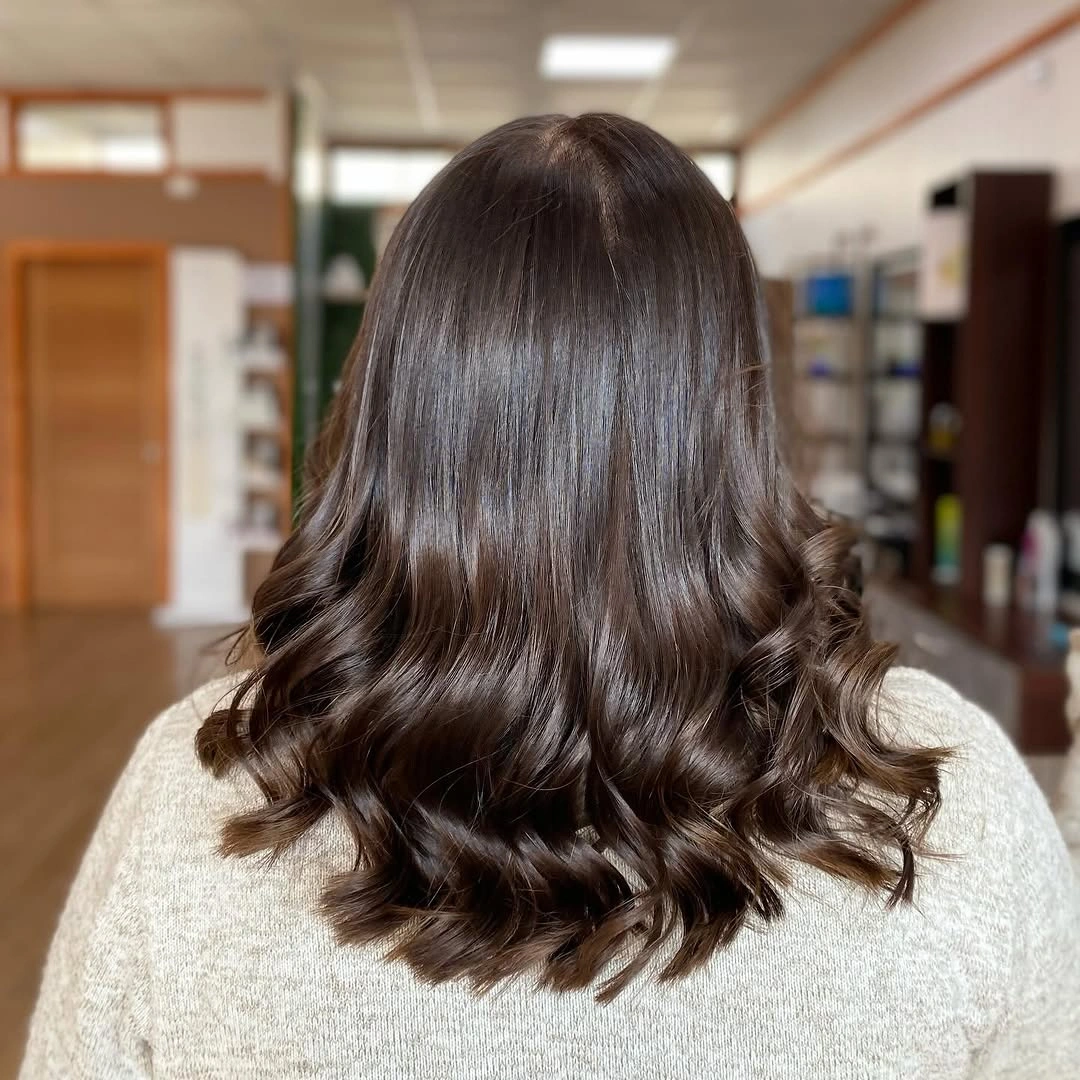
The back angle highlights the difference between the calmer upper section and the more active ends. The strands do not repeat one identical bend from top to bottom; most of the texture is concentrated near the lower area, where the curls separate in different directions. The dark shade keeps the silhouette unified, while the turned ends create visible motion without a dramatic change in length.
The defining detail of this cut sits at the ends rather than throughout the entire surface. The medium length stays compact, while the loose curls soften the lower edge.
17. Long Brown Waves with Light Curtain Bangs
Long brown hair is shown from the front with defined waves and light bangs that part toward the sides to frame the face. The shorter front strands differ from the main length, giving the upper section more levels than one uninterrupted long outline. Below, the hair moves into broad waves that keep the shape active on both sides.
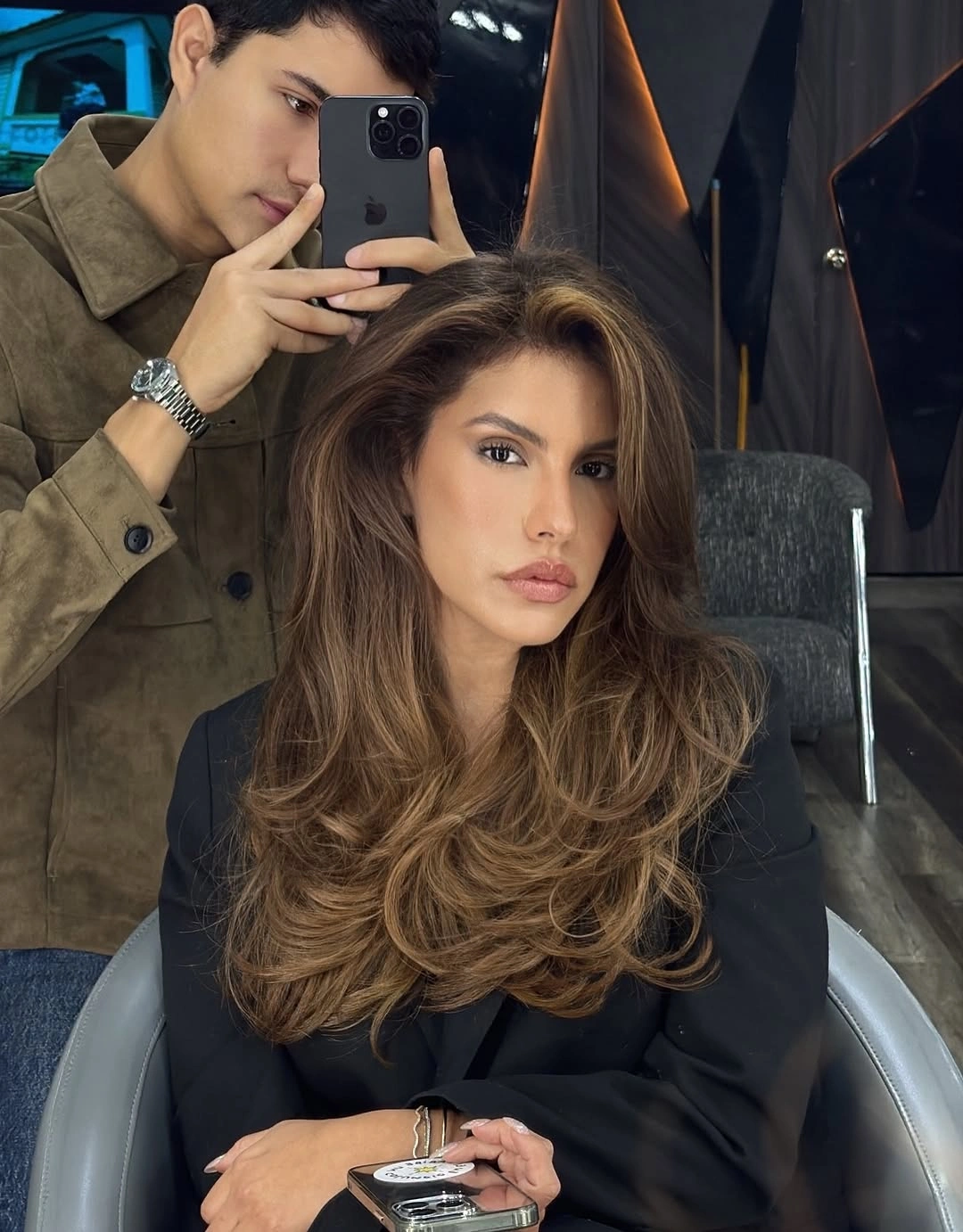
The front angle shows how the light bang pieces move into longer sections around the face. They do not create a dense straight fringe; instead, they remain airy and separated while the main body of hair looks considerably longer. The wavy texture supports this layered silhouette and makes the boundary between shorter and longer strands feel soft rather than abrupt.
This look is built on the contrast between substantial length and shorter front sections. The light bangs add a separate accent near the top, while the waves continue the movement below.
18. Copper-Red Waves with Face-Framing Pieces
Long copper-red hair is shown from the front, and its shape is easy to read through the large waves and shorter pieces around the face. The front sections separate from the main length to create soft framing, while the lower hair falls in longer wavy lines. The rich copper-red tone emphasizes the bends and makes the different strand levels visible within one silhouette.
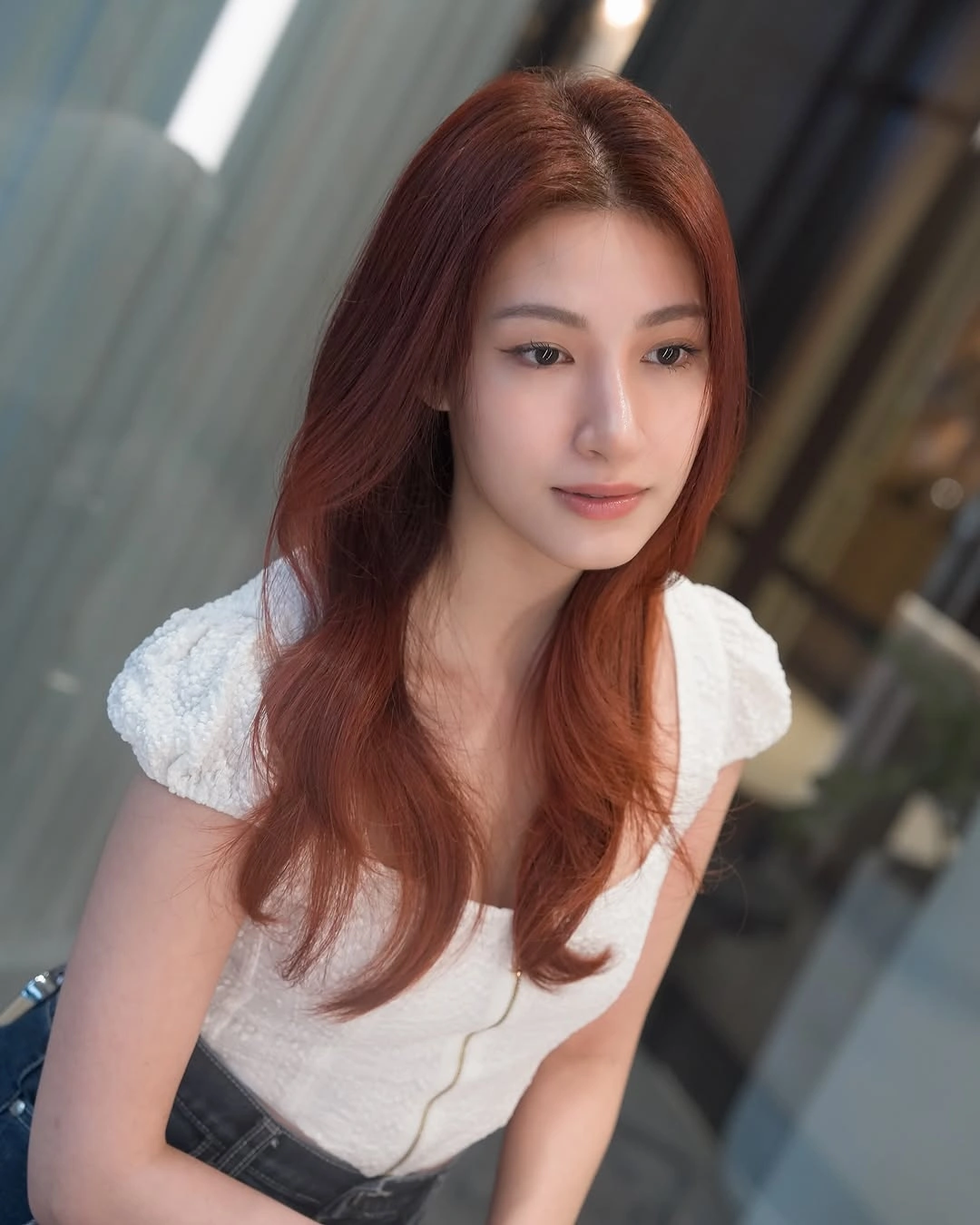
Around the face, the form becomes more layered because the shorter strands finish above the main body of hair. They then visually flow into long waves that continue downward and preserve the overall movement. The copper color does not hide the structure; it helps reveal the bends, especially where lighter parts of the waves turn into darker sections.
The strongest idea here is the pairing of long waves with front framing. The shorter sections add definition around the face without changing the dominant long length.
19. Voluminous Golden-Light Waves at a Long Length
Long golden-light hair is shown from the front and styled into large, voluminous waves that create a wide silhouette on both sides. The strands do not lie flat; they lift and bend at several levels, giving the full length visible movement. The golden tone highlights the lighter areas on the curves and makes the separate wavy sections easier to distinguish.
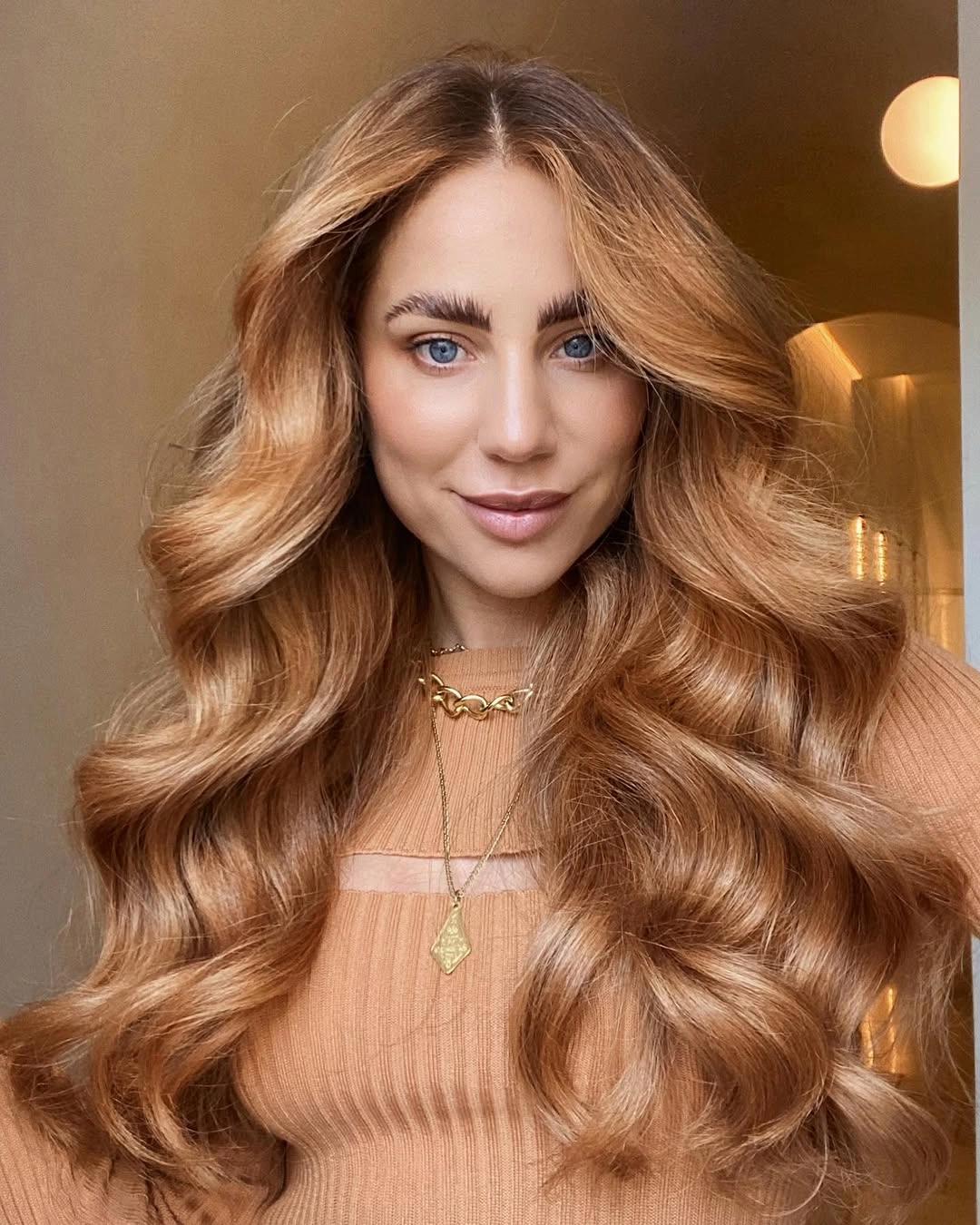
The front angle communicates the width of the shape and the way individual strands overlap through the length. Volume is the clearest feature: the waves move away from the main line of the hair and form several broad curves. The light golden color makes those transitions more visible, but the haircut itself is defined by the substantial length and the scale of the waves.
This option stands out through the size of its wavy silhouette rather than a precise blunt edge. Length and volume work together to create a strong front-facing shape.
20. Dark Wavy Medium-Length Bob
Dark brunette hair of medium length is shown from the front and finishes around the shoulder area. A wavy texture runs through the main body, so the outline does not look completely straight or rigid. The strands bend in different directions and create gentle movement on both sides while keeping a more compact length than the long cuts in the collection.
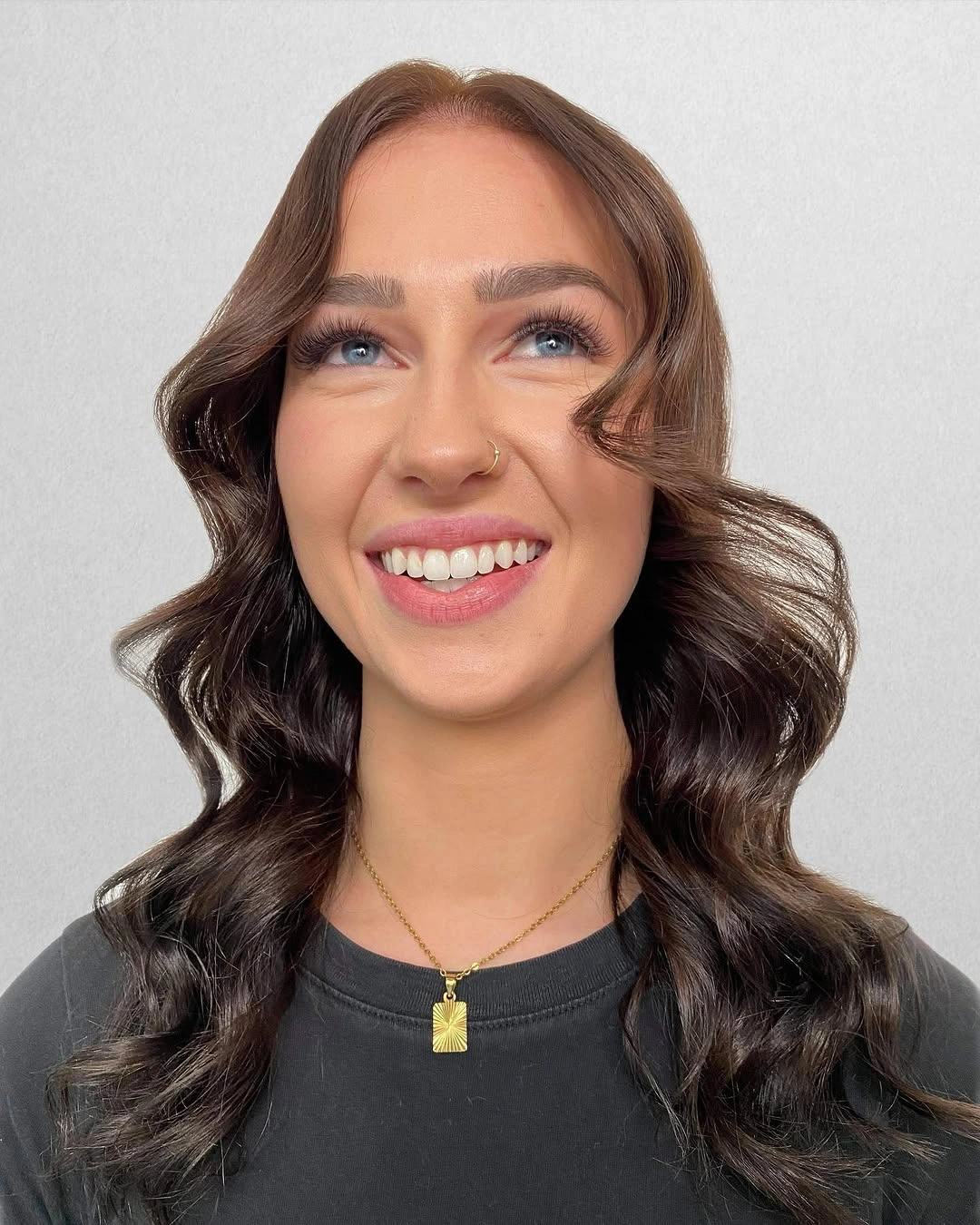
From the front, it is clear that the waves are distributed through the full length rather than being limited to the ends. The dark shade keeps the overall silhouette cohesive, but the changes in direction still make the bends easy to read. Shoulder-level length holds the shape within compact proportions, while the wavy surface keeps it from looking too strict.
This is a straightforward example of medium length working with a wavy texture. The dark color unifies the silhouette, and the soft bends add movement across the visible shape.
21. Long Light-Brown Hair with Soft Layers
Long light-brown hair is shown from the side and partly from behind, making its calm straight outline and gradual change in length near the bottom easy to see. The strands mostly lie smooth, while subtle long layers avoid creating sharp steps or short sections. The haircut keeps the feeling of one continuous length, but slightly different ends make the lower contour less rigid.
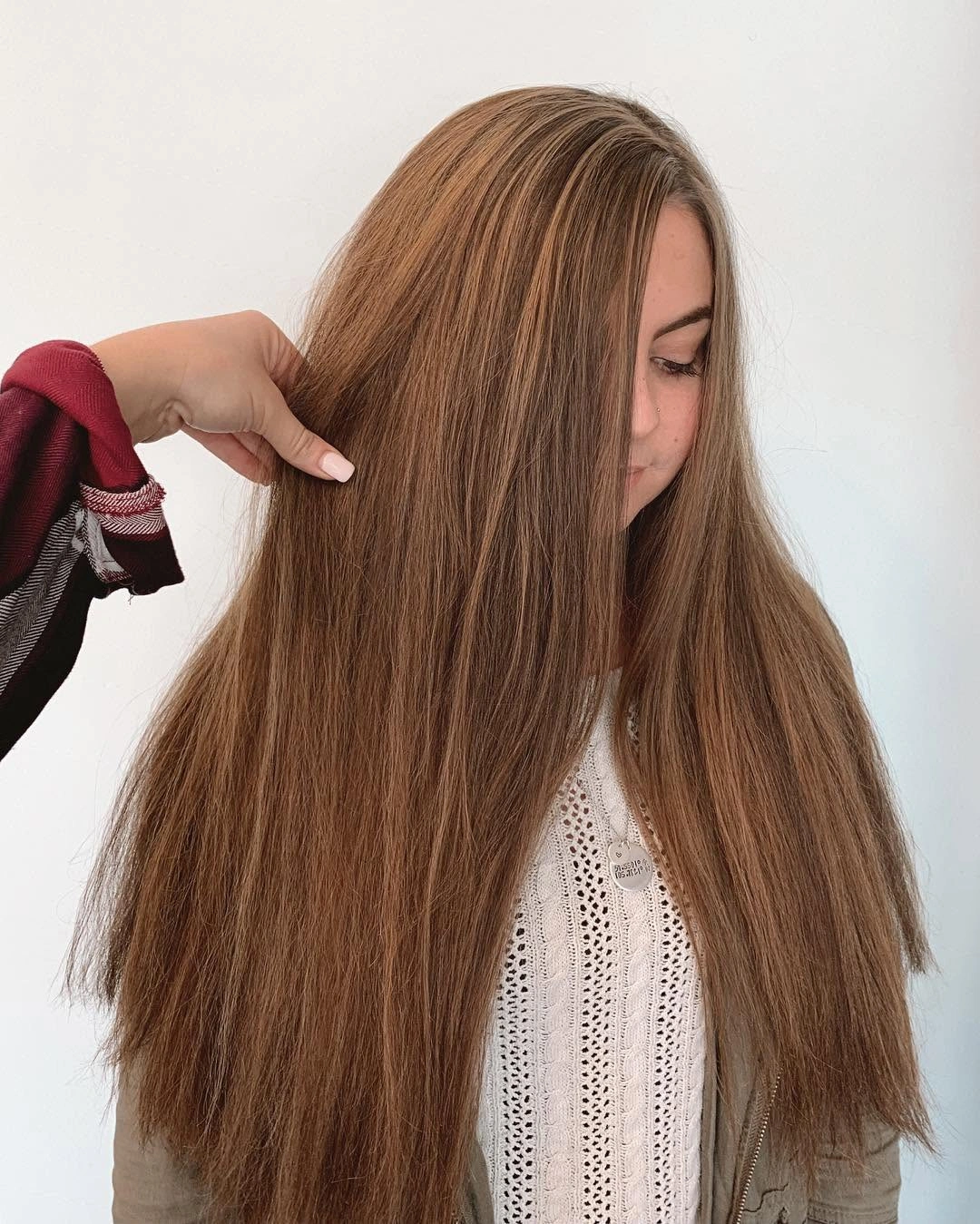
The side and back angle show that the layering is delicate and does not disrupt the main vertical direction. Longer strands create the primary outline, while slightly shorter pieces join it softly near the ends. The light-brown tone appears consistent, so attention stays on the length, straight texture, and small differences between the visible levels.
This haircut is a reference for long hair where the layers remain understated against the overall length. Small changes near the ends distinguish it from a completely even straight cut.
22. Short Rounded Bob to the Jawline
This short brown bob is shown from behind and has a clear rounded silhouette that ends around the jawline. The hair forms a compact shape around the head, with no long lower strands extending beyond the short outline. The back view communicates the curve of the haircut particularly well and shows the difference between the volume above and the shorter finish below.
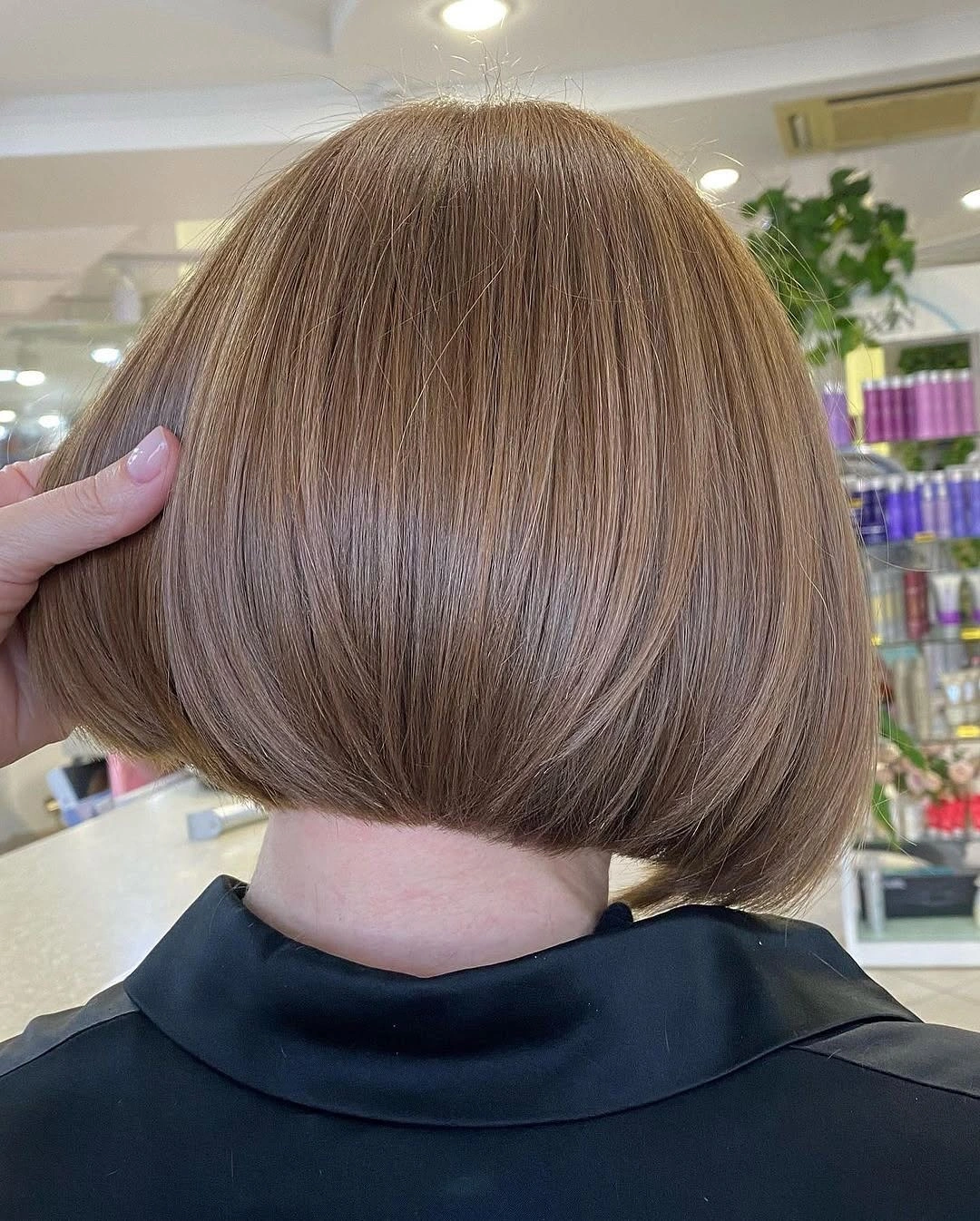
There are no long waves or extended lower sections here, so the focus shifts entirely to the compact geometry. Brown hair creates a smooth arc from the back, while the length stays close to the jawline. The lower part does not break into separate long pieces, allowing the rounded outline to read as one unified form from the upper area to the short edge.
This bob is clearly more compact than the long haircuts in the collection. Its strongest visual features are the short length and the rounded back silhouette.
23. Long Wavy Strands in a Soft Pink Tone
Long hair in a pale pink or light rose tone is shown from the front and forms soft waves through the full visible length. The strands fall below the shoulders and bend in broad, smooth lines, so the silhouette does not look straight or tightly geometric. The light pink shade makes the wavy surface especially visible because the perceived depth changes across every curve.
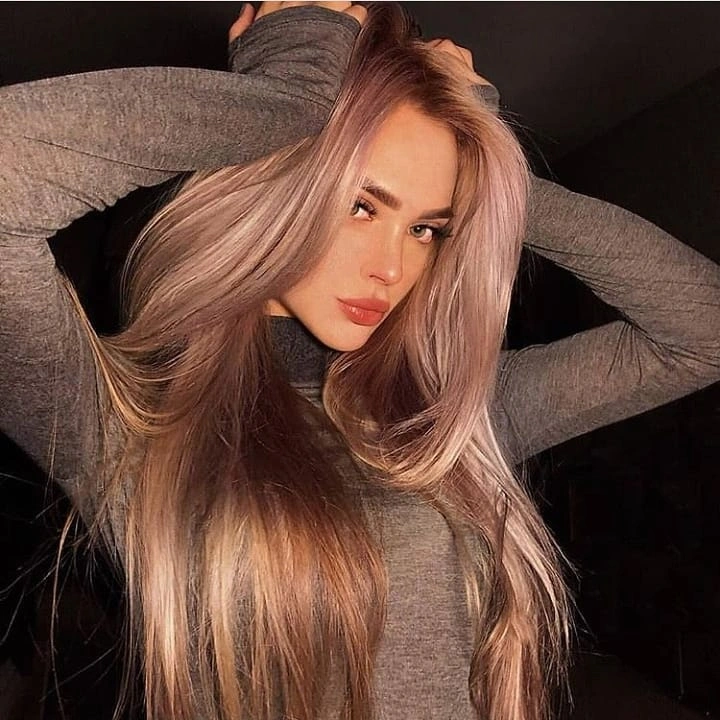
The front view lets the wave pattern be followed on both sides at once and shows how individual strands overlap. Length remains the foundation of the shape, while the waves add width and movement through the middle and lower sections. The pale pink tone covers the visible mass consistently, so the main contrast in the image comes from the curves of the strands rather than from multiple colors.
This look combines substantial length, a light pink tone, and a clearly wavy texture. The waves create the movement, while the color softly emphasizes the visible surface.