The most difficult hair-color decision is not choosing a shade you like in isolation; it is deciding how much change should remain visible after the hair returns to its normal shape. A color can look striking in a carefully arranged finish and feel disconnected when the hair is worn casually, while a quieter shift can keep the haircut and the person wearing it at the center. That tension is where a useful September reference begins.
Choose a color idea by studying the relationship between contrast and silhouette before naming a formula. Notice whether the movement, parting, ends, or root transition makes the color easier to understand, then ask how that relationship would behave on a less polished day. A strong reference gives you language for placement and maintenance without pretending that one image can prove an exact process, permanent result, or universal fit.
1. Cool Brown Waves Carry Soft Beige Ribbons
The long waves here have a cool medium-brown base, with lighter beige-blonde ribbons appearing through the bends and lower lengths. Because the hair falls in broad S-shaped movement, the lighter pieces are revealed gradually rather than as sharp stripes. The result is dimensional but quiet: the color adds light where the wave catches it, while the length and rounded ends preserve a soft, continuous silhouette.
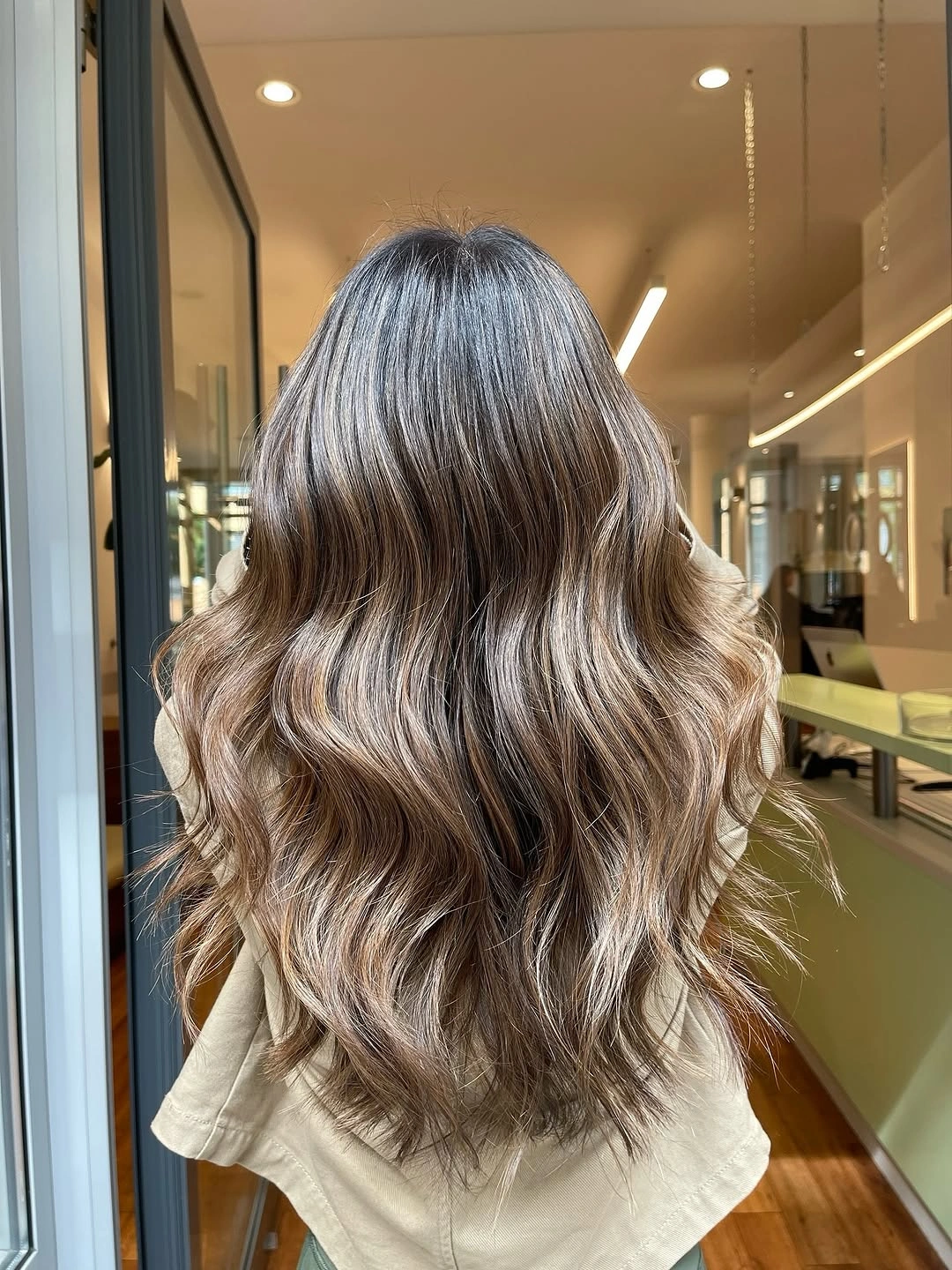
The placement works because the lighter strands travel with the movement instead of cutting across it. A straight finish would make the ribbons look more linear, while these waves break the contrast into smaller shifts that feel blended from a distance. The darker base also gives the pale pieces something to sit against, so the overall result has depth without requiring a very bright blonde surface across every section.
If you want a similar direction, bring a reference that shows both the color and the wave pattern, then ask for beige dimension that follows the shape rather than a uniform lightening effect. The softly blended idea sits close to the logic of dimensional brunette hair color, where contrast supports the base instead of replacing it. Keep the styling simple enough to reveal the placement. The tradeoff is maintenance at the ends: long waves can hide or scatter lighter pieces when the finish loses definition, so the chosen color should still look acceptable when the hair is less polished.
2. Airy Front Layers Lighten Long Brunette Lengths
This long brunette shape is defined by a center direction and front layers that curve away from the cheeks before joining the longer ends. The base color stays close to a soft chocolate brown, so the main change comes from the haircut’s movement rather than from strong highlights. The front pieces stop the length from forming one heavy curtain and give the face area a lighter, more open outline.
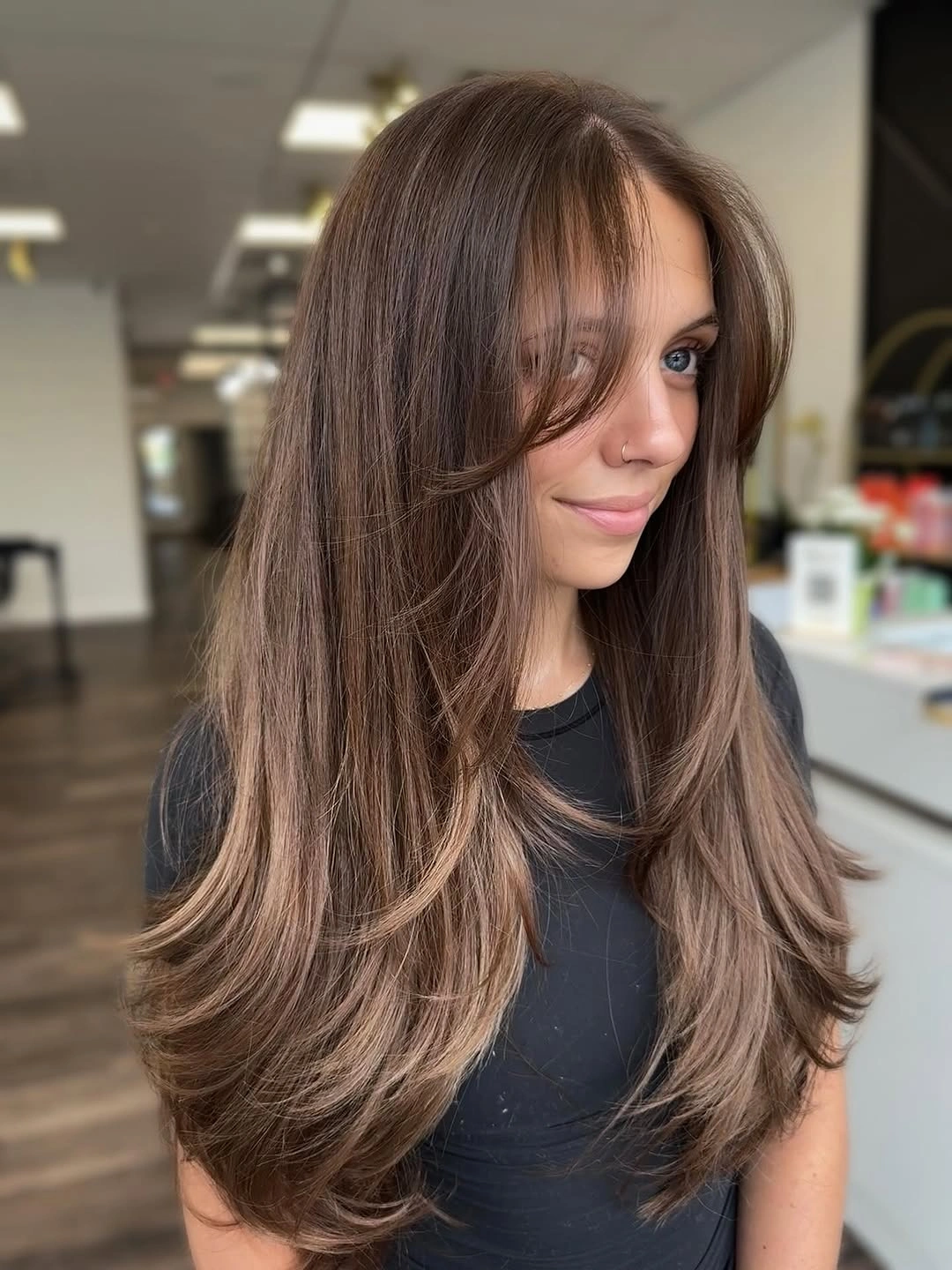
The reason this works is the relationship between length and direction. Most of the hair remains long and full, but the front layers create a small release of space near the face, while the bent ends keep the shape connected. It is a useful example of adding visible movement without turning the style into a short layered cut or relying on a dramatic color change that would become the only thing people notice.
For an adaptation, ask for long face-framing pieces and bring attention to how you prefer them to move when parted in the center or slightly off-center. A smoother finish will make the shape more polished, while a loose bend will make it softer. The limitation is that the front layers need direction to show their purpose, so a fully unstyled finish may look more uniform than the reference suggests.
3. Warm Blonde Waves Make Root Contrast Look Gentle
These long waves begin with a darker honey-brown root and transition into creamy beige and golden blonde ribbons through the length. The highlights are brightest along the outer curves, where the wave pattern catches light, so the color feels dimensional rather than evenly pale. The broad shape is smooth enough to look polished, yet the ends still move enough to prevent the blonde from becoming a flat sheet.
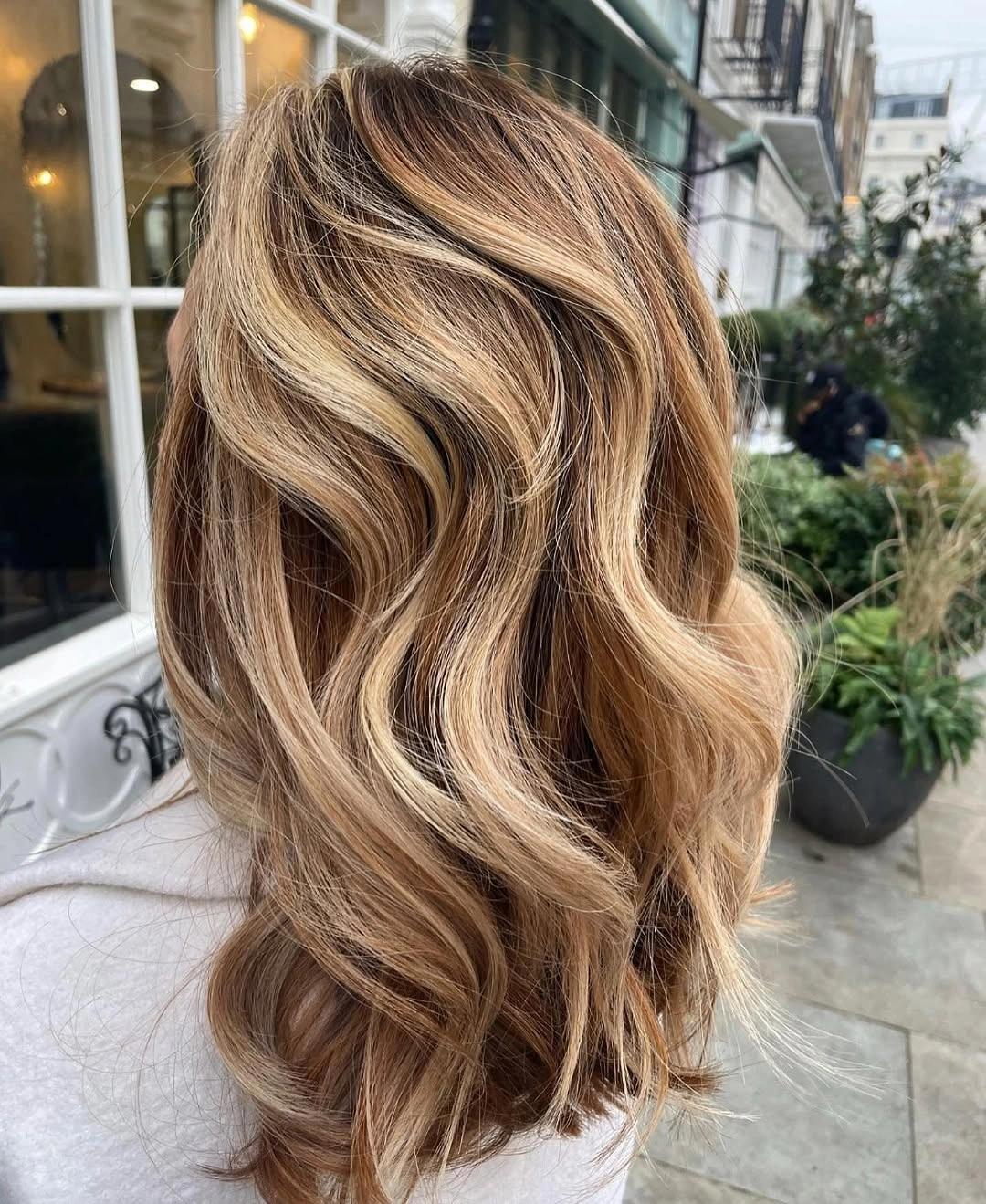
The darker root is doing useful visual work: it keeps the top from feeling disconnected from the lighter lengths and gives the wave pattern a point of depth. Creamy pieces around the bends then create a gradual rhythm toward the ends. Because the contrast remains within warm beige and golden territory, the effect is softer than a high-contrast stripe and easier to read as blended dimension.
When discussing a similar result, describe the desired root depth and the level of warmth you can comfortably maintain rather than naming an exact formula. Broad waves will show the blend differently from straight hair, so ask how the placement will look in both finishes. The tradeoff is that a soft transition can appear subtle when the hair is tied back, making the style less about a bold color reveal and more about movement when worn loose.
4. Cool Beige Brightness Follows Feathered Layers
The brown base in this side view is broken by cool beige pieces around the face and through the lower layers. The hair sits around the chest with feathered ends that turn softly outward, giving the light strands a path to travel from the front into the rest of the shape. Instead of a single bright panel, the color feels distributed through the layered silhouette, where the ends and face framing share the attention.
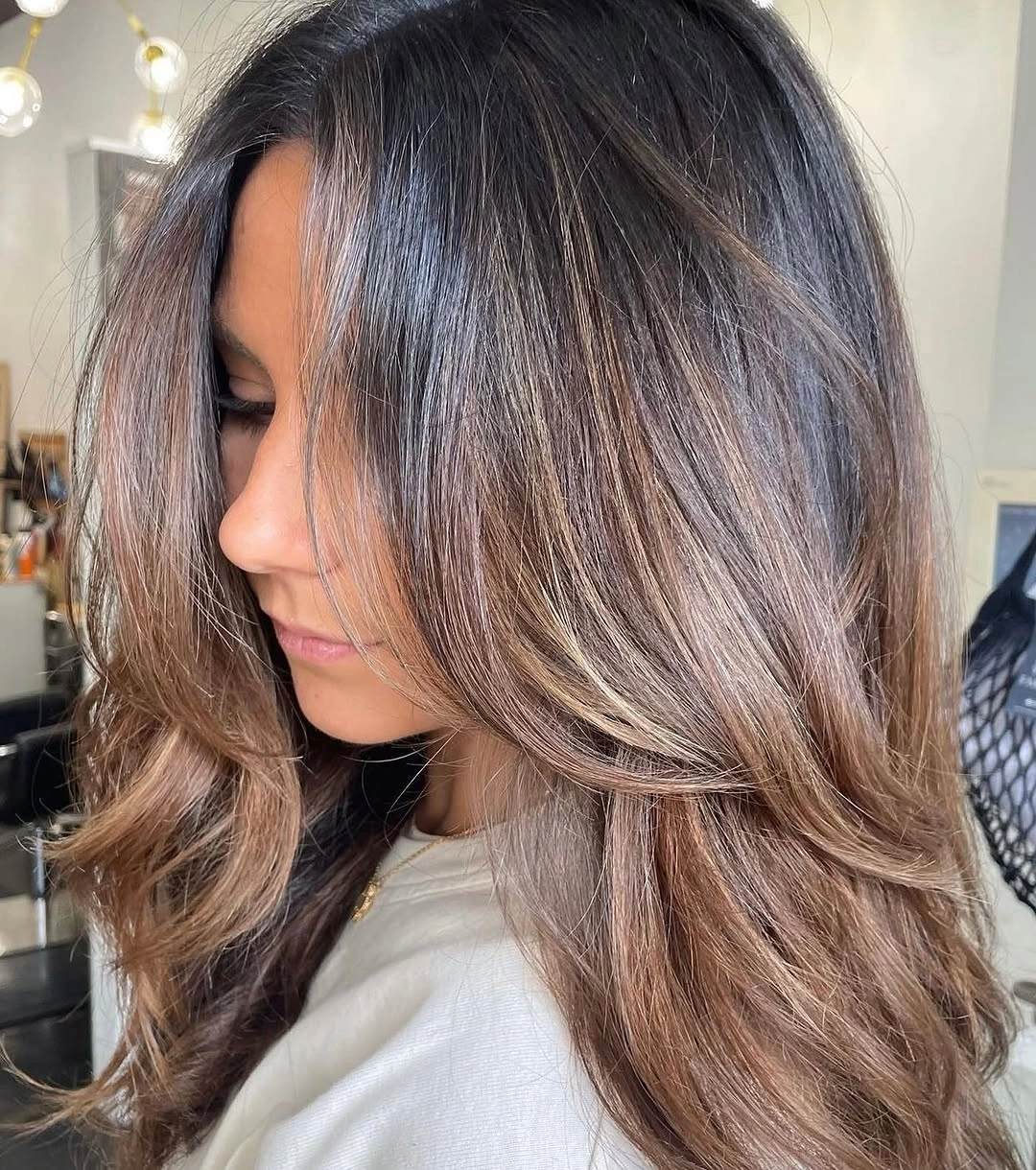
The combination works because the haircut and color point in the same direction. Feathered ends create air at the perimeter, while the lighter pieces make that movement easier to notice around the face. The brown base stays strong enough to keep the style grounded, so the result does not depend on every strand being pale. It is a good reference for visible dimension that still reads as brunette overall.
Ask for the lightness to be placed where the layers already move, especially if you prefer a softer contrast instead of a single bright streak. A straighter finish will make the placement look cleaner and more linear, while a bend will emphasize the feathered effect, much like the movement used in fall hair color ideas with balayage-style dimension. The limitation is that outward-turning ends require some styling direction, so the color alone will not reproduce the same airy shape on a blunt finish.
5. Low-Contrast Beige Blonde Looks Calm In Waves
This long style stays within a gentle range of darker blonde roots, beige mid-lengths, and pale cream ends. The waves are rounded and consistent, giving the color room to shift gradually rather than breaking into obvious streaks. Nothing in the palette is sharply separated, which makes the overall impression calm and cohesive even though the hair has enough variation to avoid looking one-dimensional.
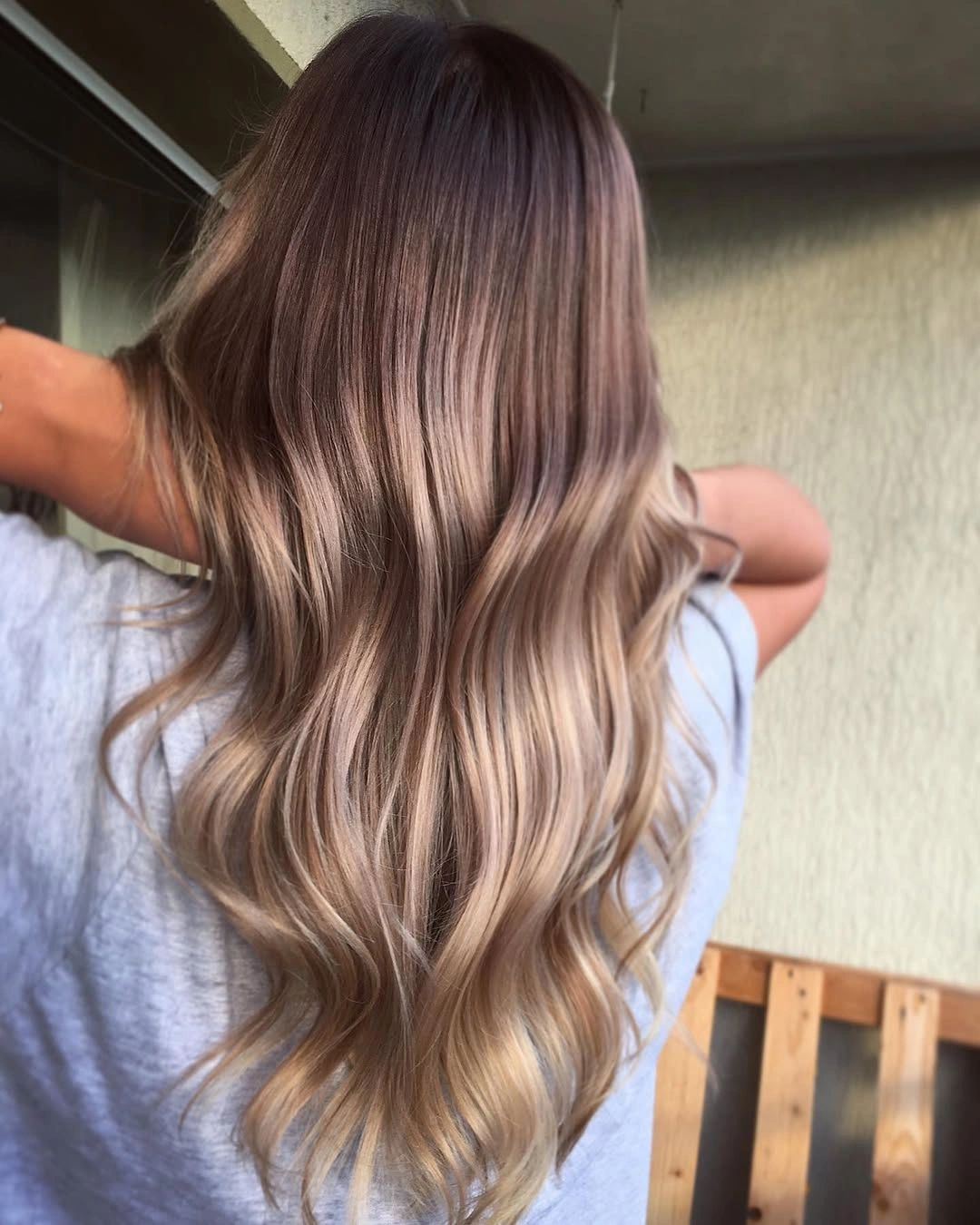
The soft contrast is effective because it supports the wave pattern instead of competing with it. Each bend catches a slightly different value, so the hair looks fuller through movement without needing a dramatic highlight line. The darker root also gives the pale lengths an anchor, while the muted beige keeps the result more neutral than a strongly golden blonde direction.
If you prefer subtle color, use this kind of tonal vocabulary and show how you want the transition to look when the hair is straight as well as wavy. A smoother finish will make the color more understated, while defined bends will reveal more of the tonal change. The pale neutral direction is close to the calm effect explored in beige blonde hair color. The tradeoff is visibility: low contrast can be easy to miss in flat light, so it is best when you want refinement rather than an obvious transformation.
6. Warm Ribbons Give A Medium Cut More Movement
This medium-long brunette style uses warm beige ribbons around the face and lower layers, with ends that turn outward and create a soft flick. The base remains brown, but the lighter pieces are placed where the haircut already opens and moves. That makes the color feel connected to the cut instead of painted uniformly through the lengths, and it gives the shorter perimeter more presence than a single dark tone would.
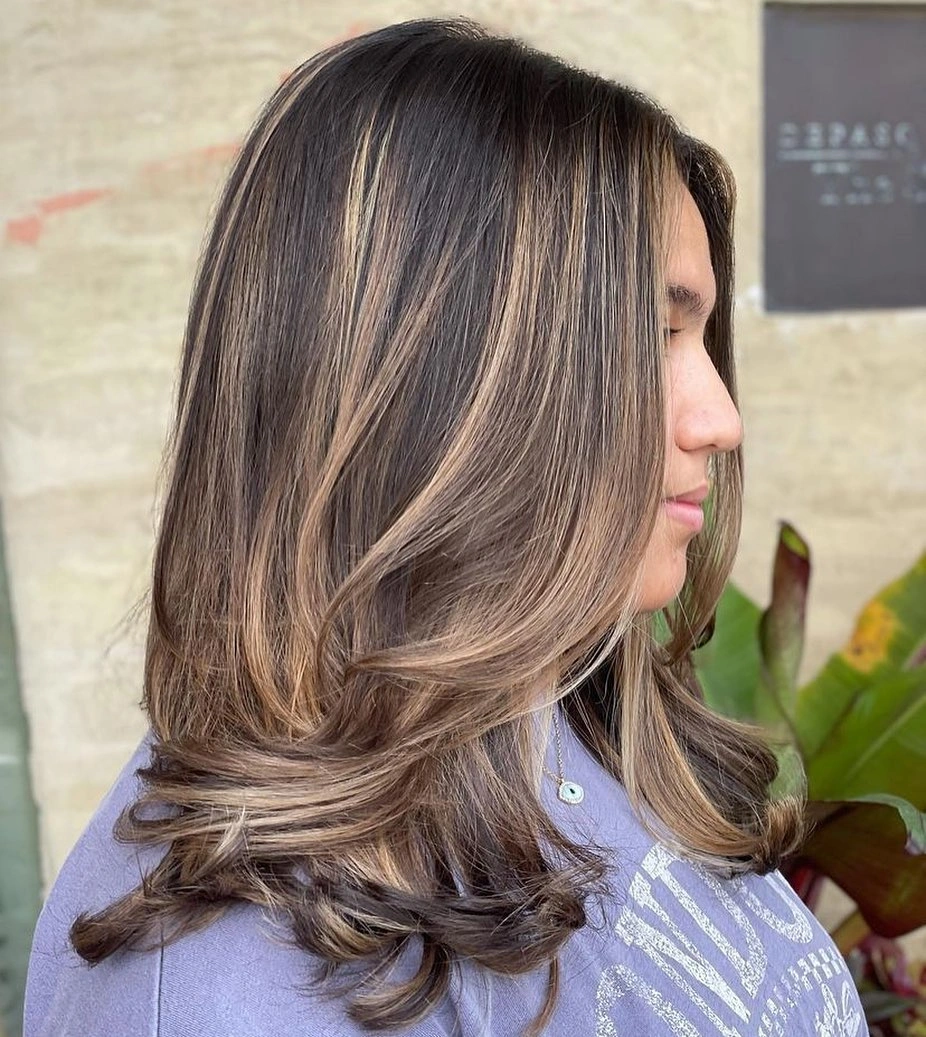
The visible reason it works is contrast at the edges. The face-framing pieces brighten the front, while the outward ends catch light and make the layered shape easier to read. If the same hair were styled completely straight, the color would likely look quieter and the haircut less animated. Here, the warm beige and the flipped finish share the same purpose: they keep a medium length from forming a heavy, unbroken line.
Bring a reference like this when you want movement that is noticeable but still anchored in a brunette base, and decide whether you prefer the ribbons to stay warm or move toward taupe. A round-brush bend can emphasize the ends, while a natural-looking wave will soften them. The limitation is that visible flips depend on styling direction, so a low-maintenance version should be planned around how the hair behaves without daily shaping.
7. Loose Face Pieces Keep A Low Ponytail Soft
The pale blonde hair is gathered into a low ponytail with a gentle bend through the length and a few loose strands around the face. The gathered section exposes the neckline and makes the color look clean and concentrated, while the relaxed pieces keep the silhouette from becoming severe. The style is less about a complicated finish and more about the contrast between a tidy base and deliberately softer edges.
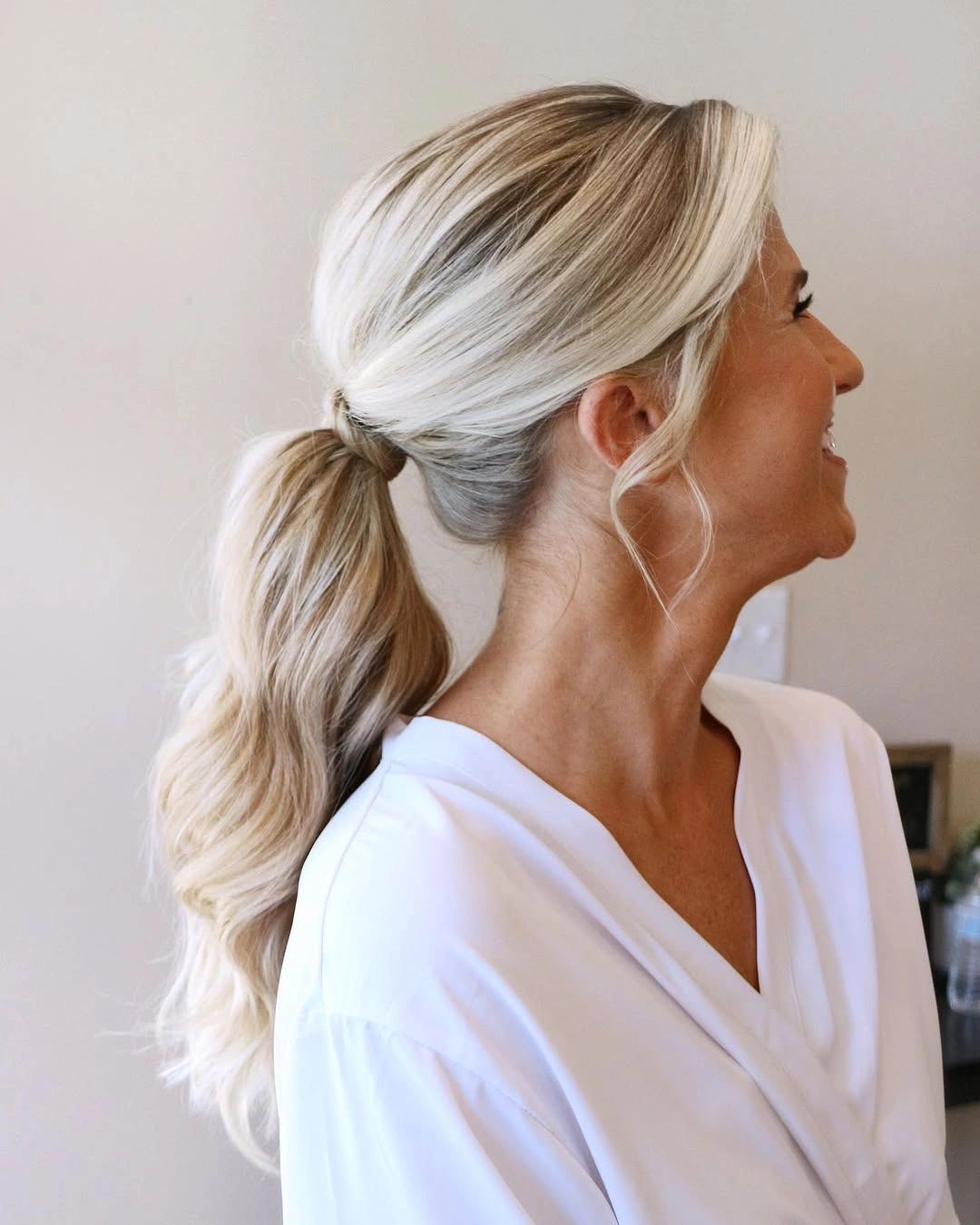
The face-framing pieces matter because they create movement where the ponytail itself is controlled. That small release keeps the pulled-back shape connected to the softness of the pale color, and it gives the front a more relaxed line than a fully slick finish would. The bent ponytail adds another quiet variation, showing that even a simple gathered style can carry shape instead of falling as one straight block.
To adapt it, gather the hair low and decide whether you want the front pieces wispy, smooth, or more clearly curled before securing the length. The same color will look more formal if every strand is tucked away. The tradeoff is control: loose strands can move during the day, so the style is best when a little imperfection is part of the intended finish rather than a problem to eliminate.
8. A Shadowed Root Adds Depth To Beige Waves
The hair here moves from a deeper shadowed root into beige-blonde lengths, with loose waves that make the transition visible in soft bands. The darker top gives the scalp area depth, while the mid-lengths and ends stay light enough to catch attention. A bright pink top sits behind the hair, but the main contrast remains within the root-to-length gradient and the full, rounded wave shape.
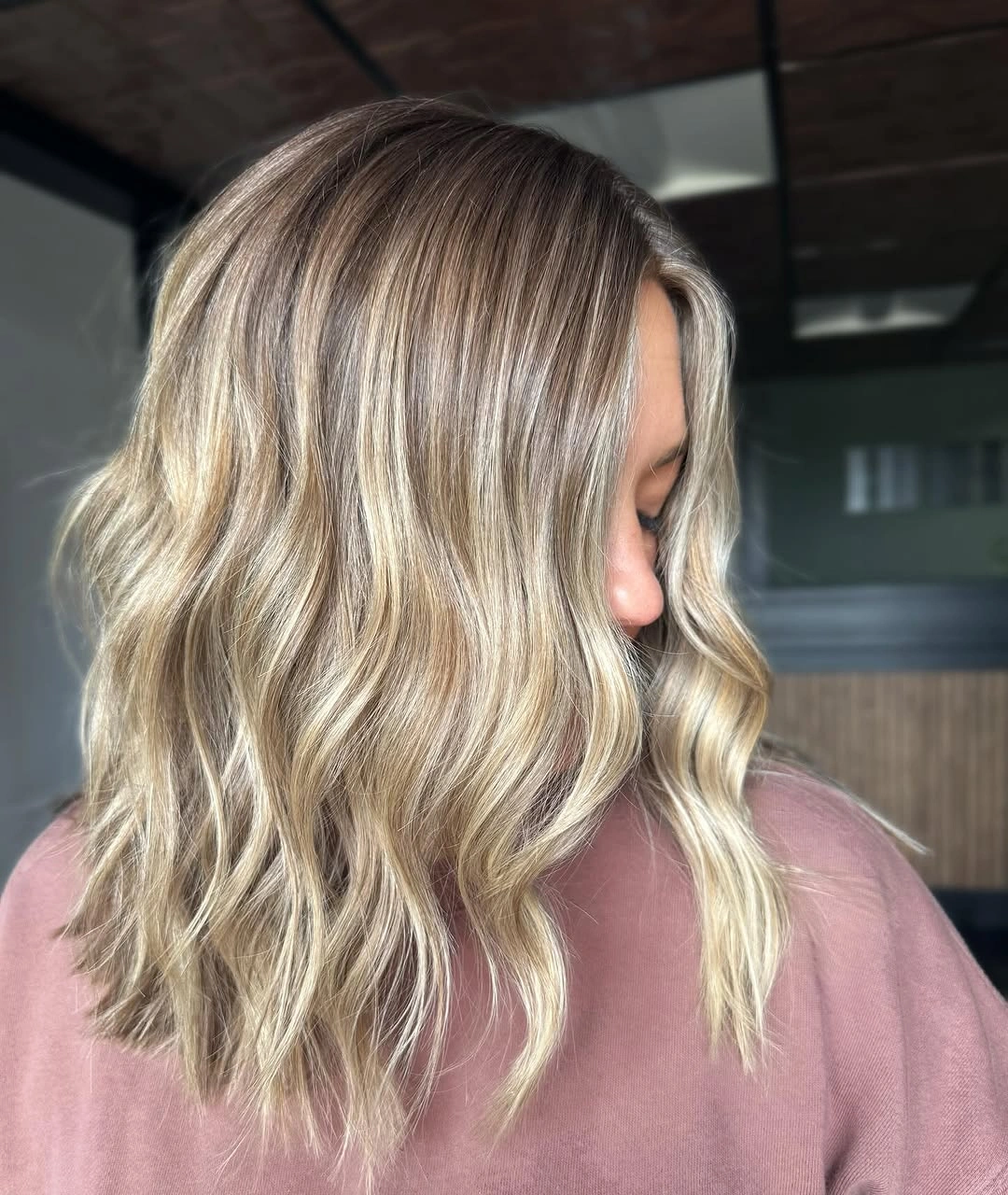
The color feels dimensional because the root is not treated as an afterthought. It establishes a darker starting point, then lets the pale lengths open gradually through the waves. That transition also makes the lower hair look more substantial than a single flat blonde tone might, especially when the waves overlap and create small changes in value from section to section.
If you are drawn to this direction, decide how much root depth you actually want visible when the hair is parted, and keep the length color within a tone that works with your natural contrast. Defined waves will show the gradient most clearly, while straight styling will make it more graphic. The limitation is that a noticeable root-to-blonde shift becomes part of the maintenance conversation, so consider how you want it to look as the root grows.
9. Three Color Zones Turn Long Waves Graphic
This long wavy style is divided into a mint-green crown, silvery pale lengths, and vivid red ends. The zones are clearly separated, so the color placement becomes as important as the hair’s movement. The center part and repeated waves keep the three colors running down the same vertical shape, while the red tips create a strong finish that remains visible even where the waves overlap.
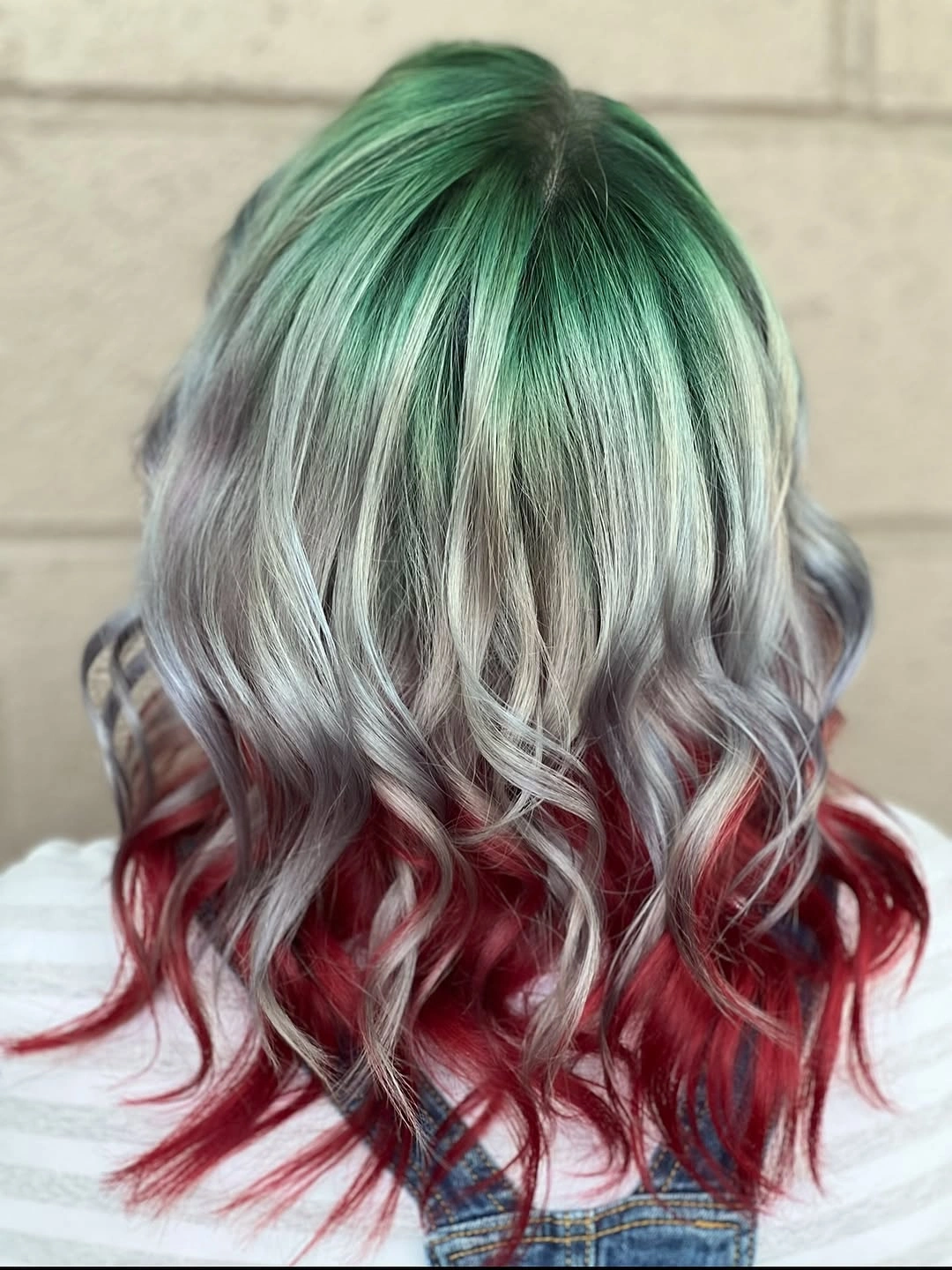
The graphic effect comes from the order of the colors rather than from a random mix. Mint draws attention to the crown, silver creates a light middle field, and red gives the lower edge a deliberate endpoint. Because the hair is waved, the boundaries are softened slightly by movement, but they remain bold enough to read as intentional blocks. Simple styling therefore helps the palette stay legible instead of fragmenting it.
For a more wearable variation, keep the three-zone idea but reduce the contrast between the middle and end, or use a single vivid color only at the tips. Bring a reference that shows the placement clearly and ask how it will behave in straight, wavy, and tied styles. The tradeoff is commitment: high-contrast zones draw attention immediately and may offer less flexibility when you want a quiet or understated finish.
10. Subtle Brunette Dimension Appears Through Movement
These long dark waves stay close to an espresso-brown base, with only restrained warm brown dimension appearing where the bends catch light. The color is not built from bright ribbons; it is built from depth, gloss-like variation, and the rounded rhythm of the waves. A simple top keeps the focus on the hair, whose full length and continuous shape make the understated palette feel deliberate rather than unfinished.
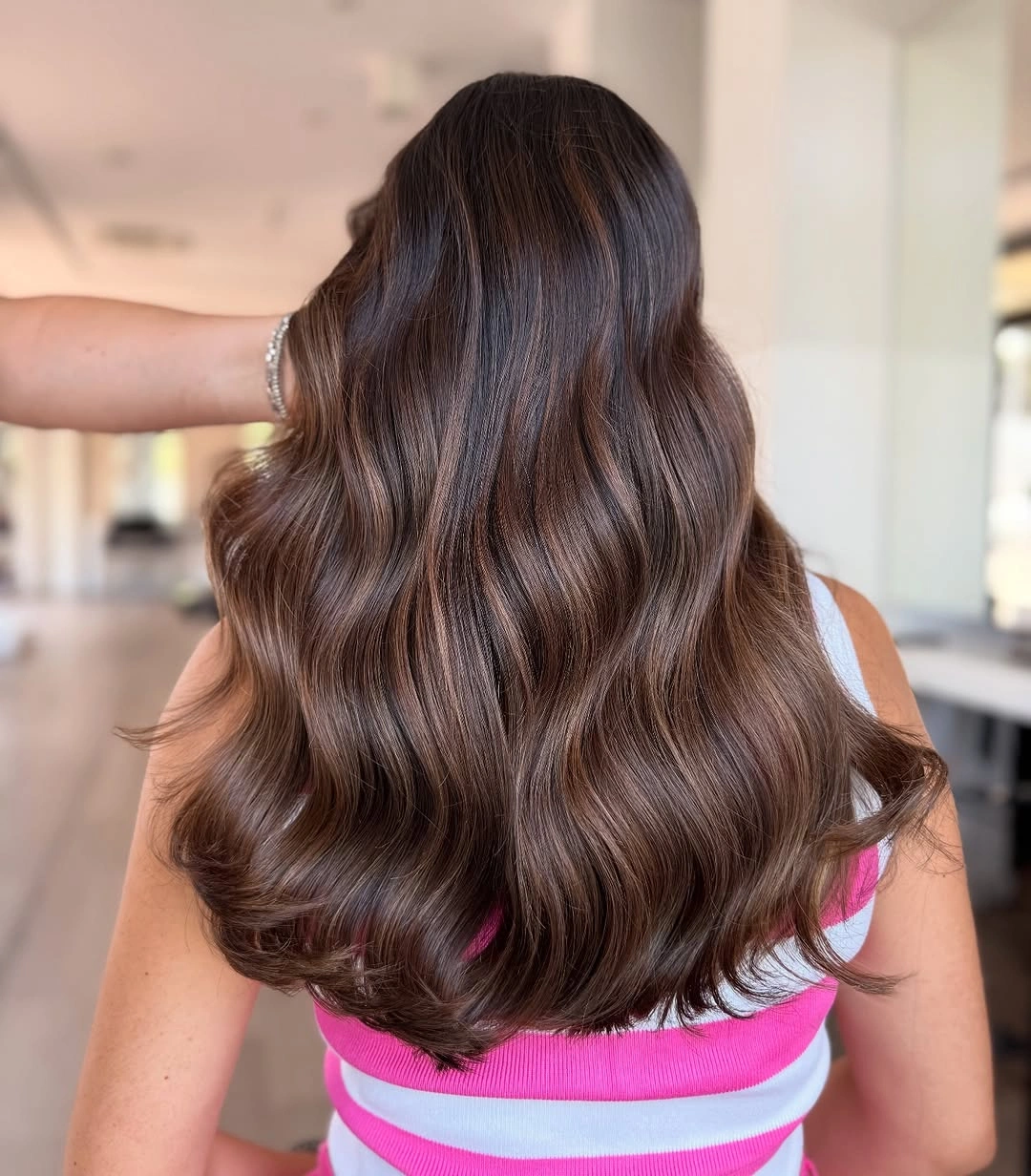
The lower contrast is useful because it changes the surface without changing the identity of the hair. Warm notes appear softly inside the dark base, so the result stays brunette even when the waves move. Straightening the hair would reduce the visibility of those shifts, which shows an important point for color decisions: some dimension is designed to be discovered through texture rather than announced in a static line.
Choose this kind of direction if you want a quieter update and are comfortable with color that looks most noticeable in motion or direct light. Ask for warmth that remains close to the base instead of specifying a dramatic highlight. The tradeoff is that subtle dimension may not show strongly in every photograph or indoor setting, but it can be easier to live with when you want the haircut and natural depth to stay central.
11. Saturated Copper Lets Soft Waves Stay Simple
The long hair is an even saturated copper-auburn tone, with gentle waves providing nearly all of the variation through the shape. The color runs consistently from the darker-looking top into the lower lengths, so the eye follows the wave pattern instead of searching for separate highlights. The silhouette remains full and uncomplicated, which keeps the warm shade from becoming crowded by too many cut details.
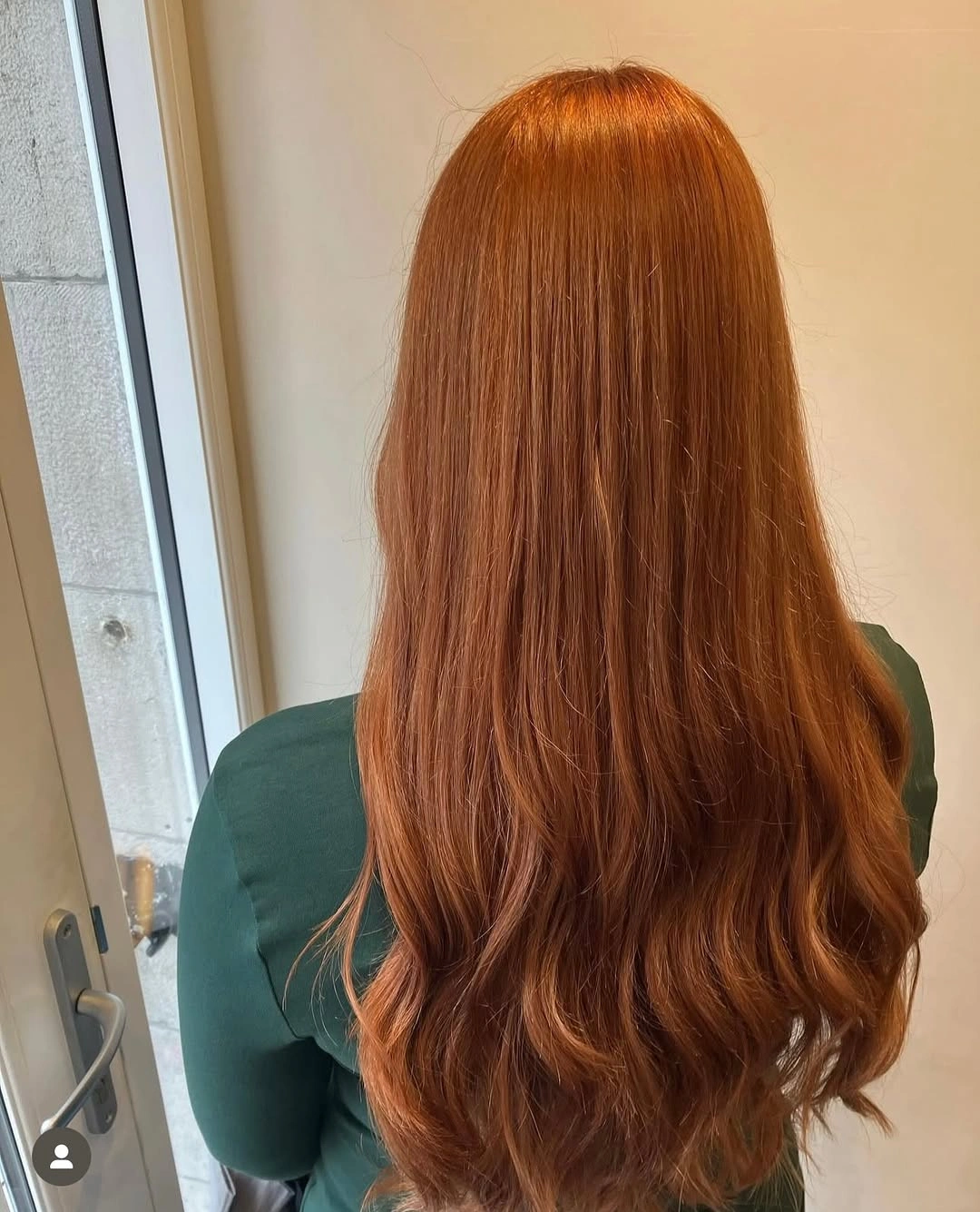
This is a strong example of using one color and one texture in partnership. The copper creates the visual statement, while the waves stop the surface from looking flat and give the ends a softer outline. Because the tone is vivid, a complicated layered shape would add another source of movement; the simpler length lets the color remain the main decision and makes the result easier to understand.
If you like this idea, discuss the level of copper and the amount of depth you want at the root, then keep the styling loose enough for the color to move. A straighter finish will make the shade look cleaner and more uniform. The limitation is upkeep: a saturated warm tone becomes less convincing when the ends look uneven or the surface loses smoothness, so the desired color should be weighed against the care you can actually provide.
12. Red Panels Create A Deliberate Flame Effect
This long style uses deep burgundy at the sides with bright red and orange-red panels through the center. The hair is mostly straight with only a slight bend, which makes the vertical placement easy to see from the back. The ends are strong and clean enough to support the graphic arrangement, so the color becomes a designed pattern rather than a blended wash that changes gradually from root to tip.
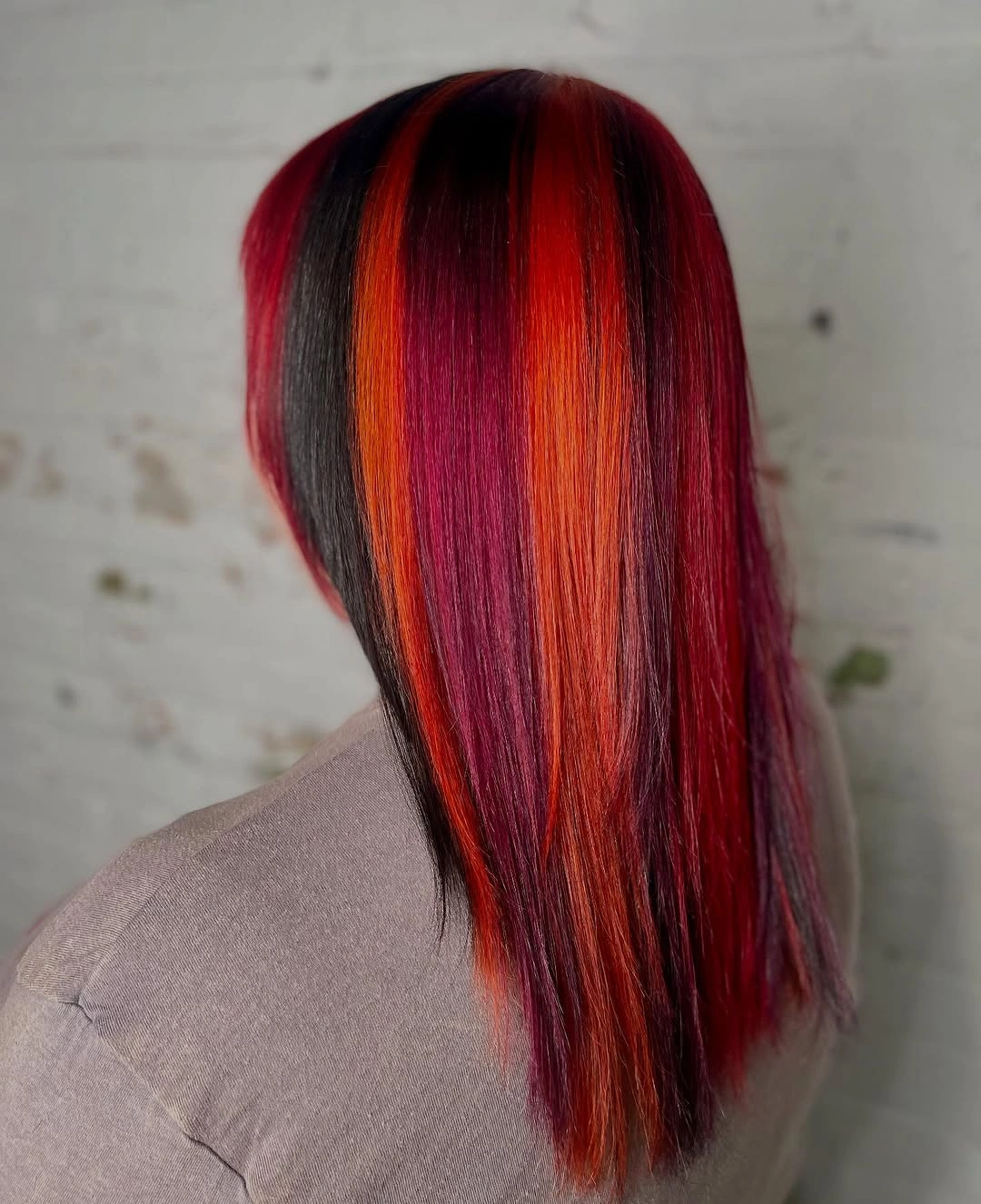
The central panels work because the surrounding burgundy gives the brighter reds a frame. If every section were equally vivid, the eye would lose the direction; here, the darker side areas create contrast and make the warm center feel almost illuminated. Straight styling reinforces the order of the colors, while a loose wave would soften the boundaries and produce a less graphic reading.
When considering a panelled result, decide whether you want the color to be symmetrical, concentrated near the face, or more diffused through the sides, and show the reference from several angles. Keep the cut clean if the placement is the main feature. The tradeoff is flexibility: graphic panels can look striking in a simple style but may be harder to disguise or soften when you want a more neutral appearance.
13. Bright Orange Waves Make The Silhouette Feel Energetic
The saturated orange-red color is the first thing the eye notices, but the defined waves give it a clear outline instead of letting the shade read as a flat block. The hair is long and full, with movement concentrated through the mid-lengths and ends. A dark top provides a quiet background, keeping attention on the warm color and the way each wave catches a slightly different tone.
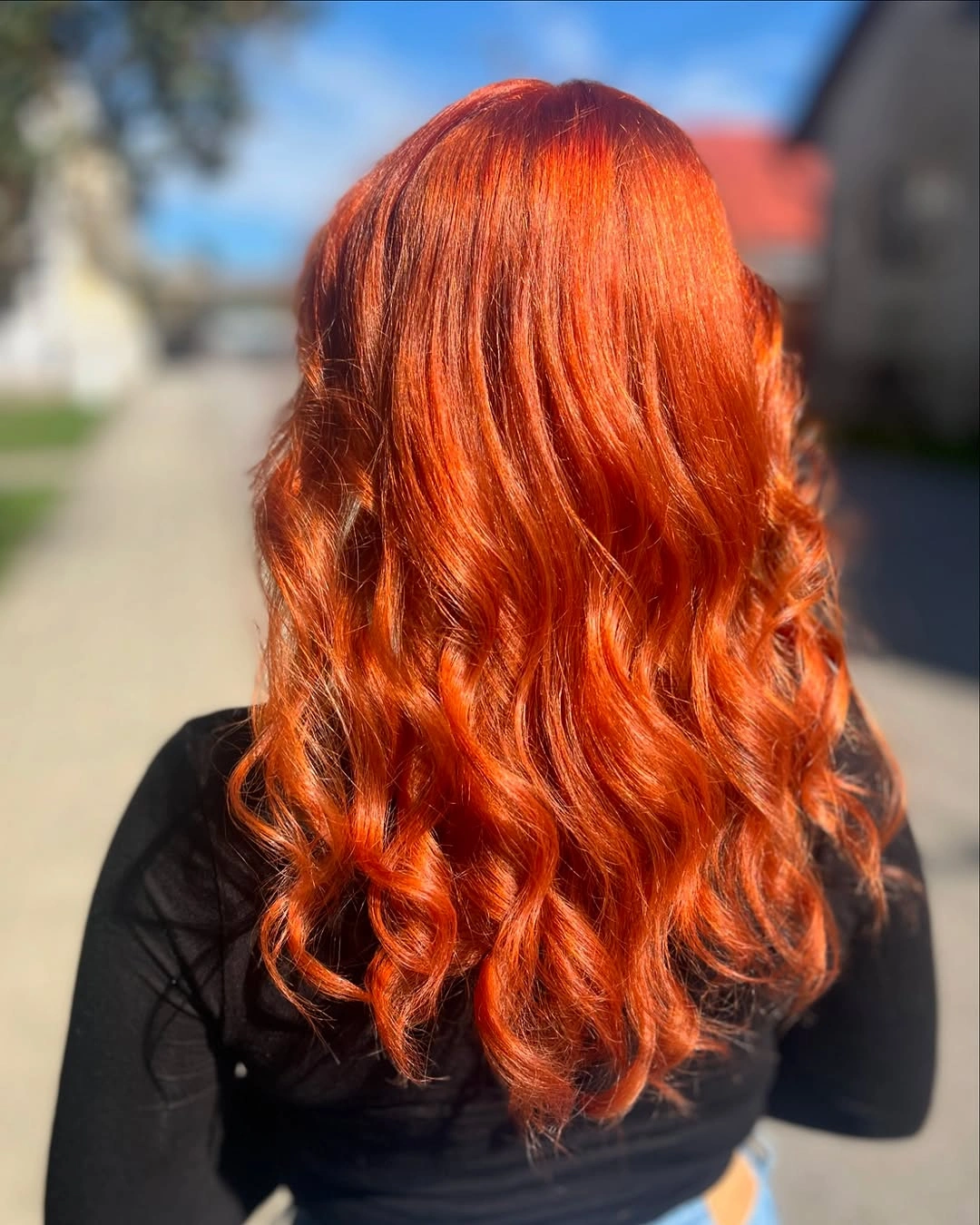
The style works because the color is strong while the shape stays familiar. Soft wave spacing breaks the orange into curved sections, allowing depth to appear without adding separate highlights. The result feels energetic but still coherent: the tone provides the drama, and the hair’s natural-looking movement gives the drama a softer edge than a blunt straight panel would.
To adapt it, choose whether you want a true orange-red, a copper direction, or a deeper auburn, then decide how much wave definition fits your routine. A simple cut will keep the color central, while layers can add more movement around the face. The limitation is visual dominance: a vivid warm shade quickly becomes the focal point, so it may need calmer clothing and accessories if you want the overall look to feel balanced.
14. A Tonal Ribbon Turns A Pastel Braid Into A Detail
The pale pink hair is gathered into a centered braid that narrows the long length into a clean vertical shape, then finished with a deeper pink satin bow. The color remains soft from crown to end, while the bow adds a small change in value and texture. Because the braid controls the hair’s movement, the pastel tone looks more like a coordinated design than a loose wash spread through many separate waves.
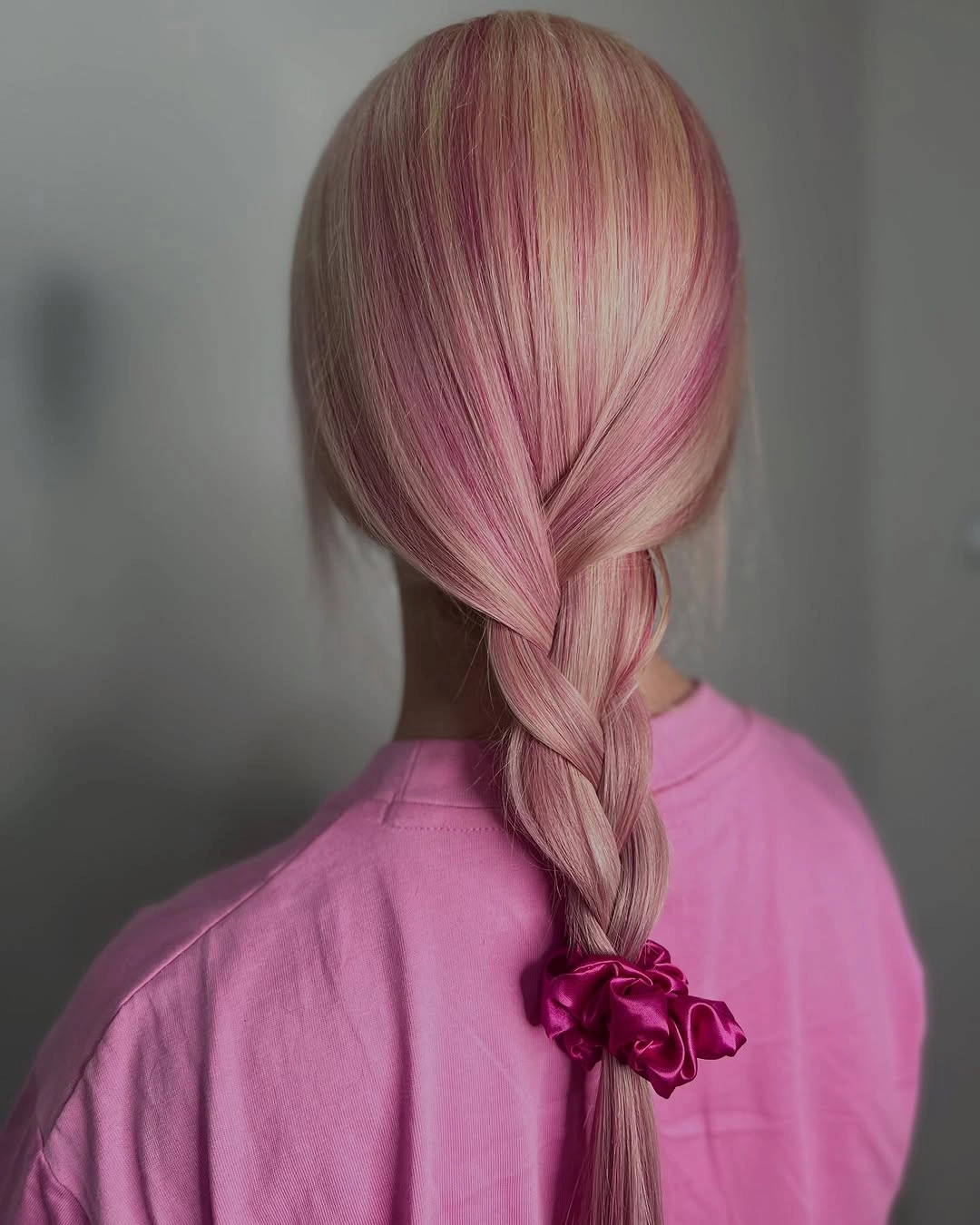
The accessory works because it repeats the hair color family without copying the exact shade. It gives the braid a clear endpoint and makes the simple structure feel intentional, while the crossed sections create enough texture for the pale color to show dimension. This is a useful reminder that a soft shade does not need high contrast to feel finished; a small tonal detail can provide the focus instead.
For a quieter adaptation, use a small tie or ribbon in dusty rose, mauve, or a close neutral and keep the braid loose rather than tightly pulled. Wearing the hair down will reveal more length but less of the accessory-led composition. The tradeoff is that a decorative finish depends on the braid staying centered and secure, so choose it when you want the styling detail to be part of the day rather than an invisible convenience.
15. A Half-Up Twist Gives Straight Beige Hair Structure
The honey-beige hair is long and straight, with the upper sections crossing into a small half-up twist at the back. That single detail creates a horizontal interruption in an otherwise clean vertical length, while the smooth ends keep the color consistent from crown to hem. The tone stays within warm beige and light caramel, so the hairstyle’s construction rather than a dramatic contrast is what catches attention first.
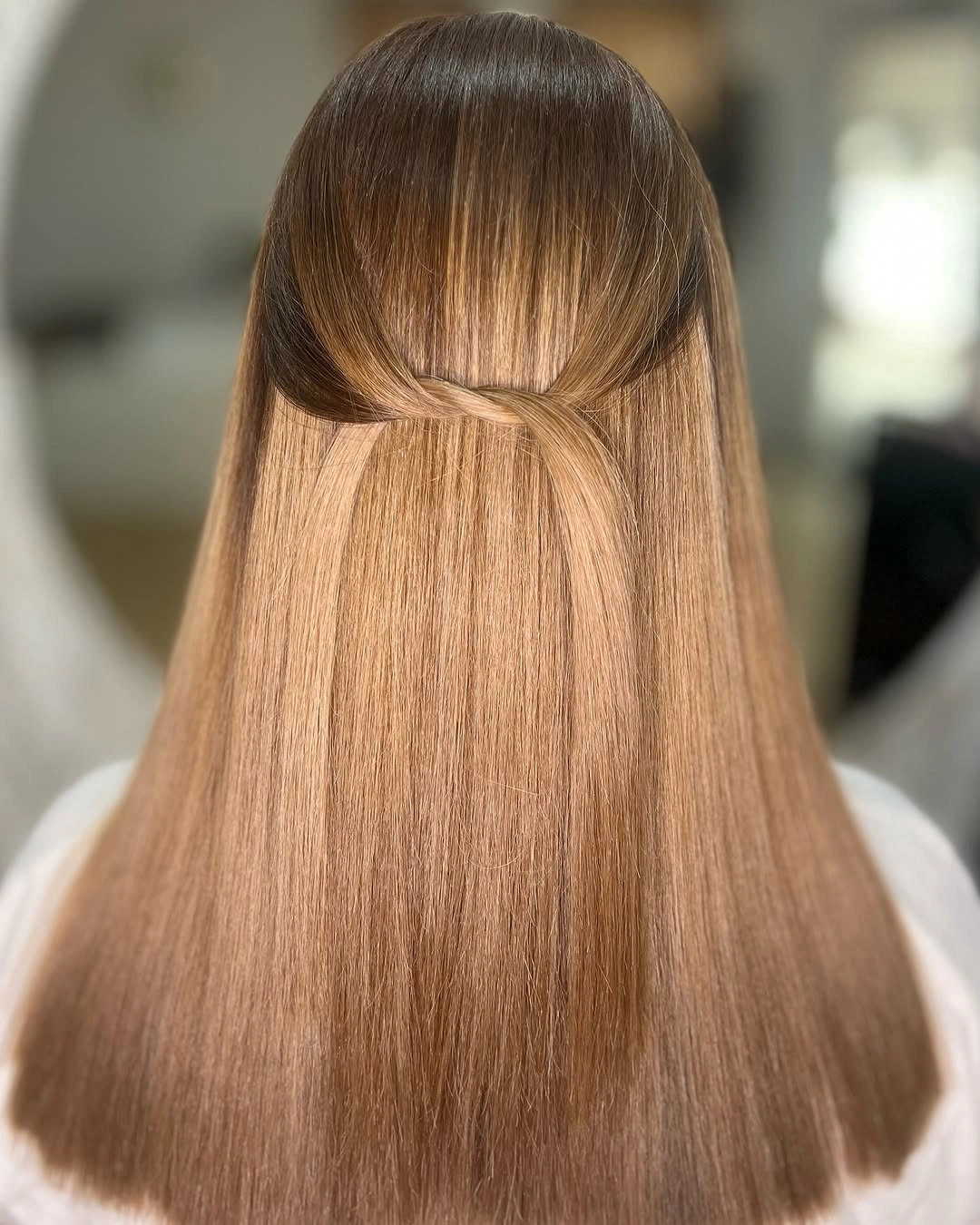
The half-up detail works because it adds shape without taking away the length. The straight surface makes the crossing easy to see and gives the pale color a neat background, while the lower hair remains free to form one continuous line. This approach feels more structured than wearing the hair fully loose but less formal than a tightly secured updo, which makes the variation easy to understand and adapt.
Try the idea with a small twist, clip, or low half-up tie, keeping the lower lengths straight if you want the cleanest color effect. A slight bend will make the result softer but may blur the construction. The limitation is that the detail relies on smooth separation and secure placement, so fine flyaways or a very textured finish can change the impression from crisp to relaxed.
16. A Blunt Red Shape Makes Color Look Precise
The red hair ends around the shoulders in a smooth rounded hem, with a deeper burgundy root transitioning into bright coral-red lengths. The surface is straight and clean, so the blunt shape and color shift are equally visible. There are no loose waves or obvious layers to distract from the geometry, which makes the hairstyle feel precise and compact even though the color itself is vivid and warm.
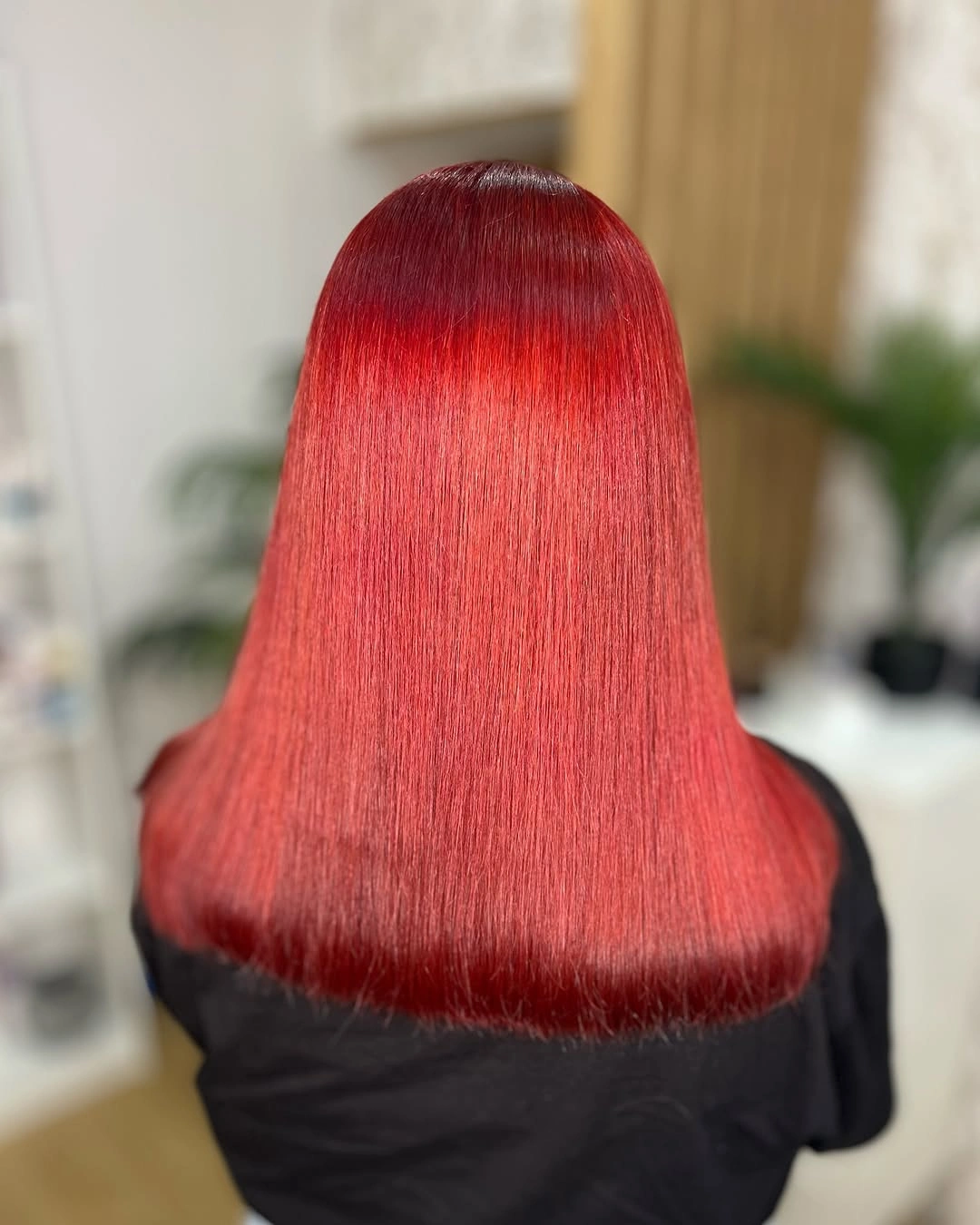
The crisp hem gives the color a strong frame. Bright red looks more graphic when it ends in a controlled line, while the darker root supplies depth at the top and prevents the pale background from making the style feel weightless. This is a shape-led approach to color: the shade is memorable, but the clean perimeter is what keeps the overall result polished instead of diffuse.
If you want a similar result, discuss the exact length and how rounded or straight you want the hem before focusing on the red tone. A slight bend will soften the geometry, while a smooth finish will show the root transition most clearly. The tradeoff is maintenance of the outline: a blunt shape depends on the ends staying even, so the clean look may require more regular reshaping than a layered cut.
17. Broad Blonde Waves Let A Soft Root Fade Naturally
The long blonde hair has a darker neutral root that melts into creamy lengths, with broad waves creating a full silhouette through the middle and ends. The pale color is bright but not stark, and the wave pattern gives it a softer seasonal feeling than a straight, highly reflective finish would. The pink sleeves add warmth in the background, while the hair keeps its own neutral beige and cream palette.
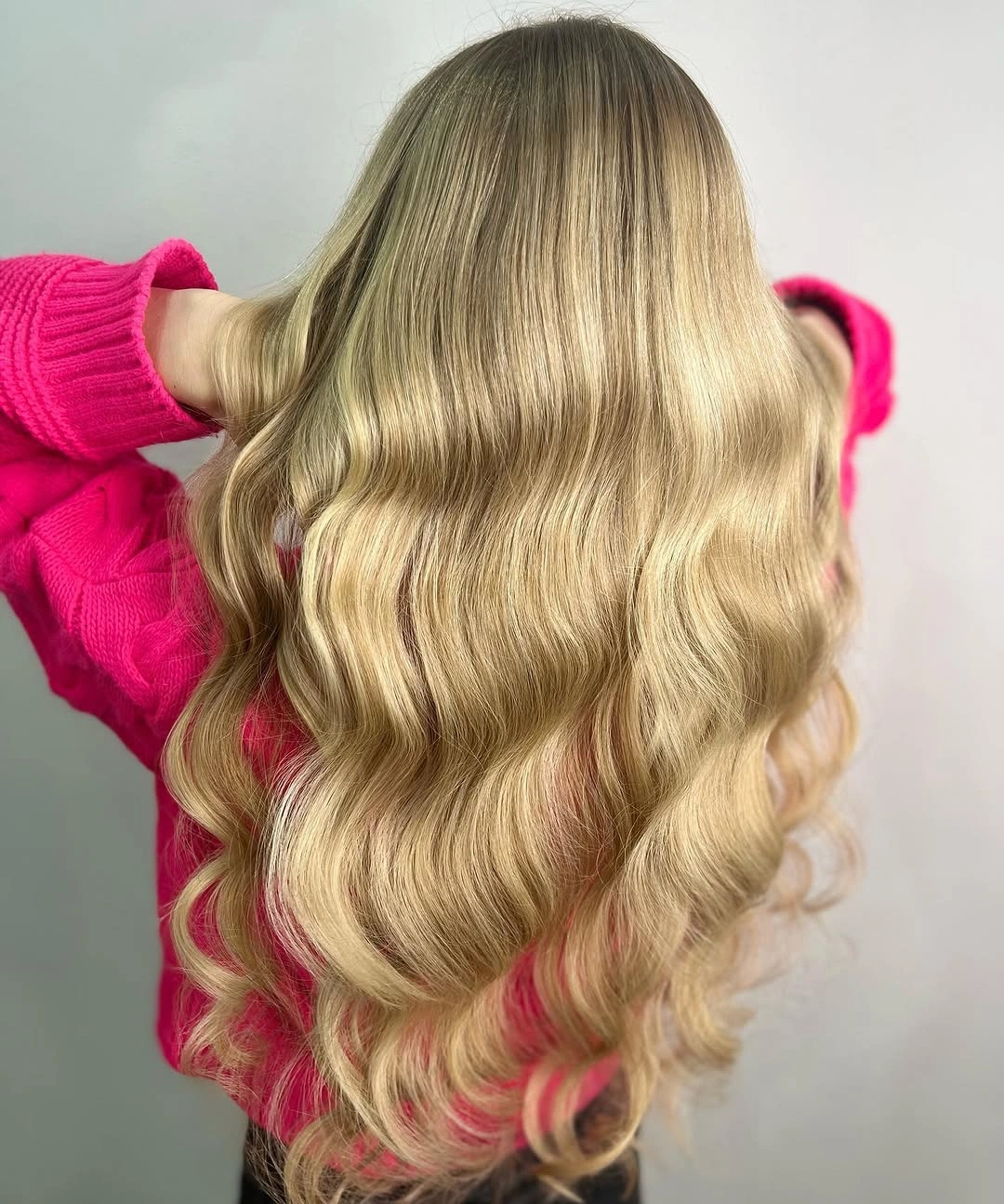
The broad waves help distribute the lightness so the hair does not read as one uniform pale surface. Each curve catches a slightly different value, and the darker root provides a point of depth that makes the length feel more dimensional. This is why the style looks full without needing an exaggerated cut: the volume and tonal transition are working together through the same repeated movement.
When choosing a similar blonde, decide whether you want the root to remain clearly visible or fade more closely into the length, then consider how often you wear your hair in waves. Straight styling will make the transition cleaner and more obvious, while a looser finish will blur it. The limitation is that high lightness can make surface condition more noticeable, so the final choice should include how the ends will look between polished styling days.
18. Icy Blonde Gets Its Definition From The Hem
This very pale blonde style is straight and ends in a blunt shoulder-grazing line, with almost no visible layering to distract from the clean outline. The tone is close to icy cream against a neutral gray background, and the smooth surface keeps the color uniform from top to bottom. Because the palette is so light, the shape has to do the work of giving the hair presence and visual direction.
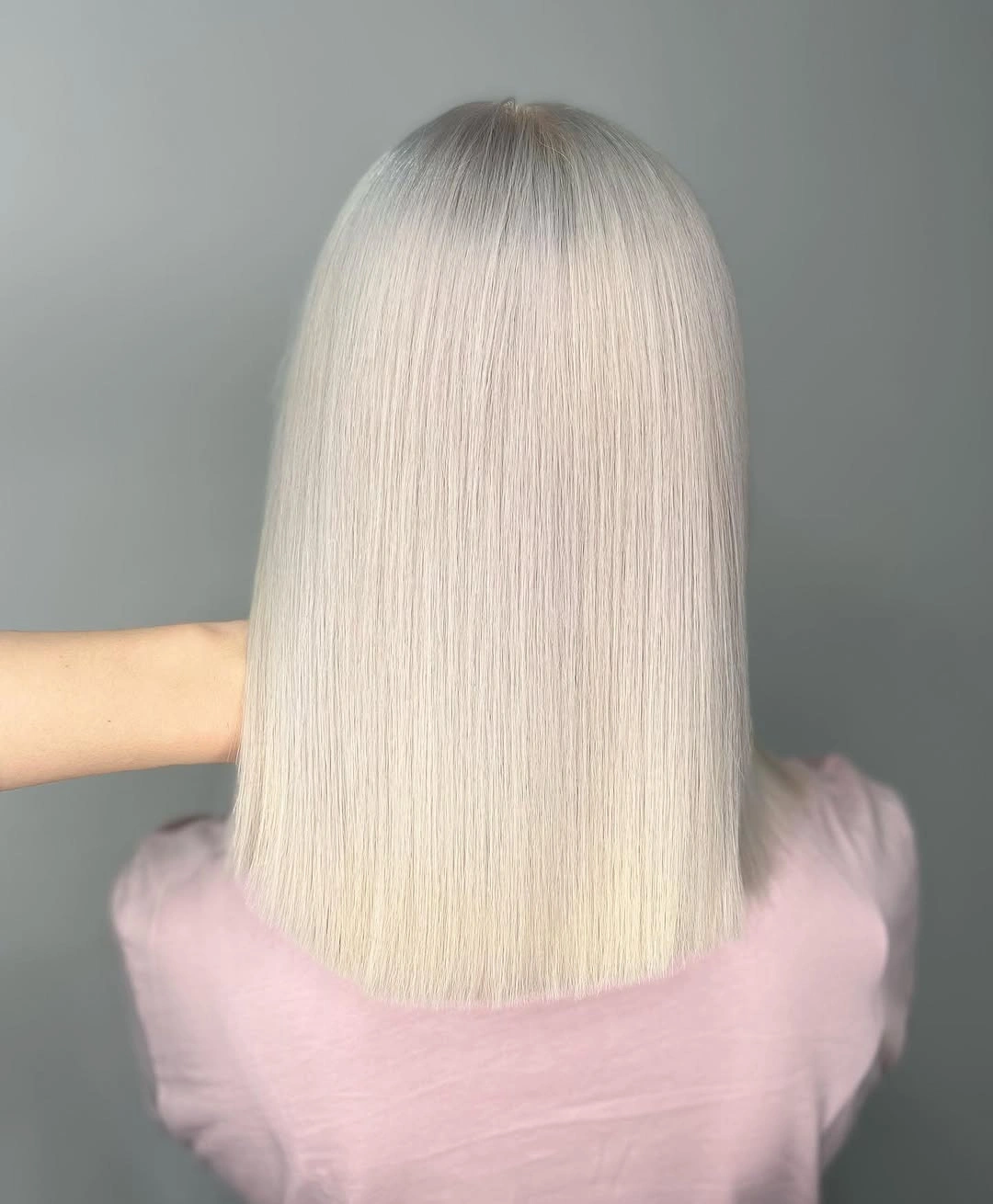
The blunt perimeter creates contrast against the softness of the pale color. It makes the style look deliberate, while the straight finish allows the near-white tone to remain the central impression rather than breaking into waves or separate ribbons. This is a useful reference for anyone deciding whether a color change needs layers to feel interesting; here, restraint in the cut is exactly what makes the shade look graphic.
For an adaptation, discuss how pale you want the result and whether the hem should be sharp, rounded, or slightly textured, then keep the styling surface clean enough to show the decision. A bend will make it softer but may reduce the geometric effect. The tradeoff is upkeep: very light color and a precise blunt shape both reveal changes in texture or uneven ends more readily than a looser layered style.
19. A Wavy Bob Makes A Fringe Feel Rounded
The short dark bob sits around the chin and neck, with loose waves, rounded ends, and a full curtain fringe that opens across the forehead. The color stays deep brunette, so the shape and movement carry the visual interest. Volume is concentrated near the face, making the style feel compact and soft rather than severe, while the fringe creates a clear front detail that connects to the curved ends.
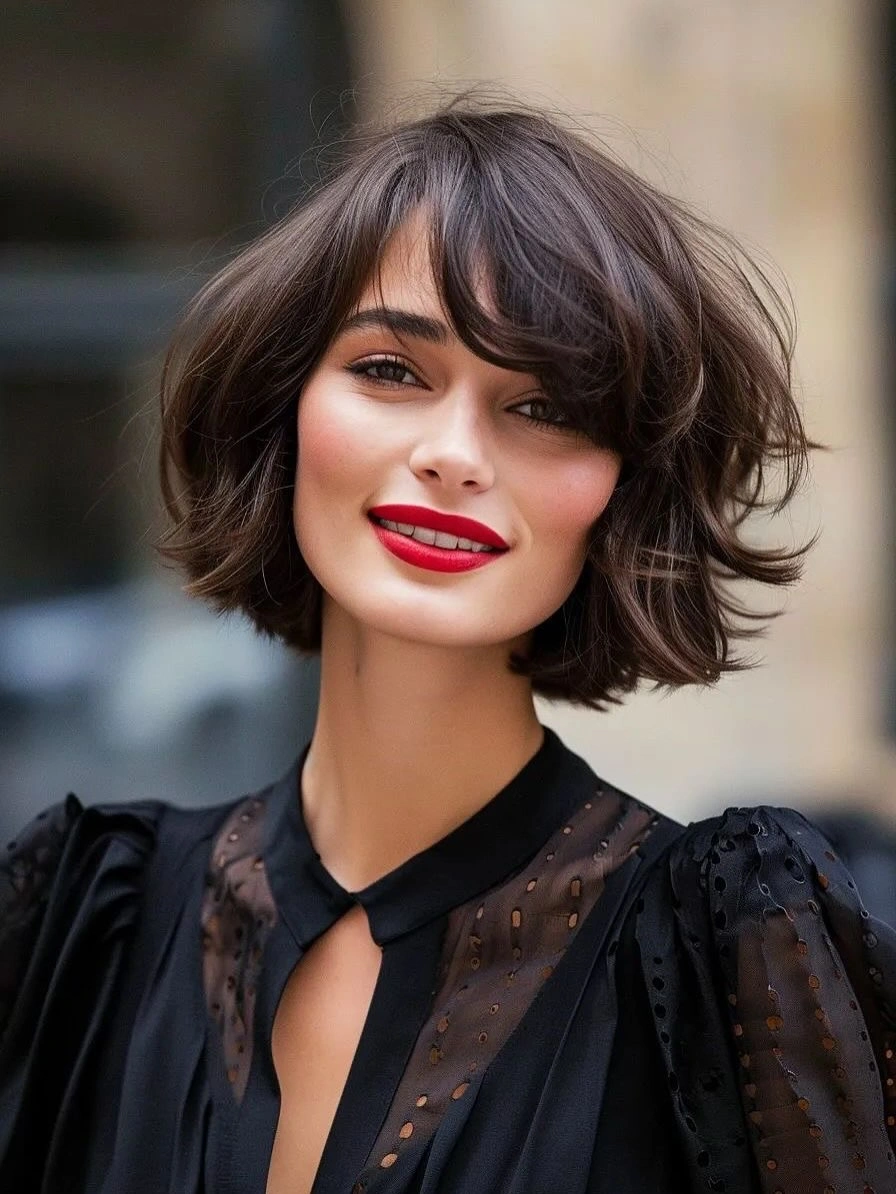
The bob works because the fringe and ends share the same rounded language. The front opens but does not create a sharp straight line, and the waves keep the perimeter from looking too geometric. With a dark base, that movement is especially important: it creates changes in light across the hair and prevents the shorter shape from becoming one solid, heavy mass around the face.
If you are considering a similar cut, bring attention to how much fringe you want and whether you prefer it to split softly or sweep more strongly to one side. The parting decision can be compared with the options in middle parting hairstyles, where the opening at the front changes the whole silhouette. A straighter finish will make the bob cleaner, while a loose bend will keep it relaxed. The limitation is that a curtain fringe needs direction after washing, so the cut should match your willingness to spend a little time shaping the front.
20. Bright Face-Framing Ribbons Open Long Brunette Hair
The long brown hair keeps a deep base through most of the length, but pale beige ribbons are placed prominently on both sides of the center part. Those front pieces create the strongest contrast near the face, while the rest of the hair falls in loose waves and remains more blended. The result is more visible than subtle brunette dimension because the placement is concentrated where the eye naturally starts.
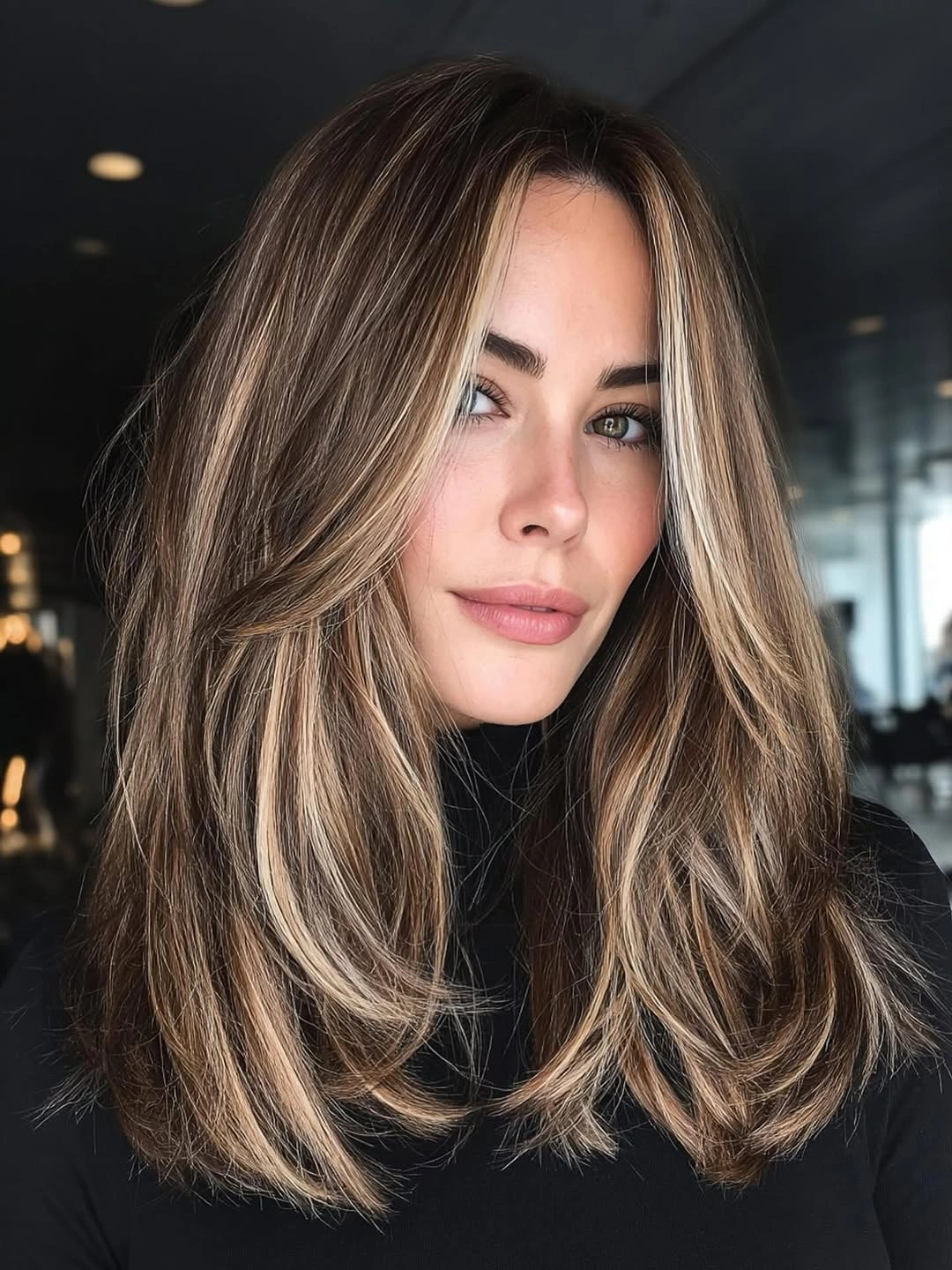
The front placement changes the balance of the entire style without requiring every section to become light. The beige ribbons draw attention toward the center, then soften as they move into the longer waves, creating a transition from graphic brightness to quieter depth. That makes the color easy to notice when the hair is worn down, while the brown base keeps the overall silhouette grounded and recognizable as brunette.
To adapt it, decide whether you want a high-contrast front, narrower ribbons, or a closer beige-brown blend, and ask how the pieces will look when the hair is tied back. A center part makes the symmetry clear, while an off-center part will make the effect less even. The tradeoff is visibility: face-framing contrast is expressive and easy to notice, but it will also shape the first impression of the hairstyle more strongly than hidden highlights would.
21. A Small Half-Up Lift Keeps Long Waves Controlled
The deep brown hair falls in long soft waves, but the top sections are gathered into a small half-up twist that opens the side of the face and lifts the crown. The lower lengths remain full and fluid, so the style keeps the movement of loose hair while gaining a modest point of structure. The white shirt stays secondary, helping the dark brown shape and its clean fastening detail remain central.
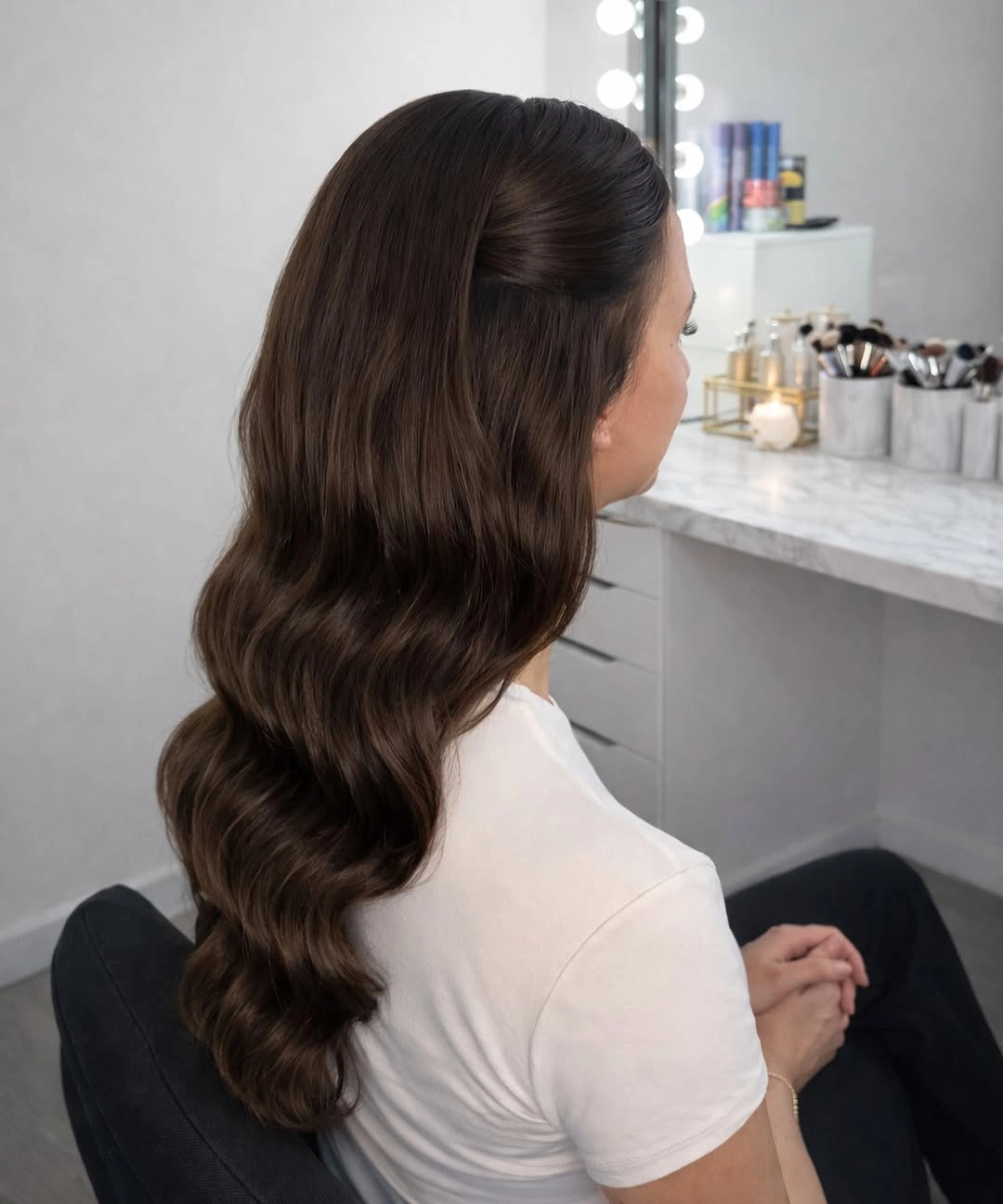
This variation works because it changes the direction of the upper hair without sacrificing the length below. The half-up section creates a small horizontal break, and the waves then continue as a broader shape through the back. That contrast is useful when long hair starts to feel visually repetitive: one controlled detail can give the silhouette a new rhythm without turning it into a fully pulled-back style.
Try the same idea with a small clip, twist, or low half-up tie, keeping the lower section in its natural bend or a soft wave. The flowing base has the same everyday appeal as long body-wave hairstyles, but the half-up detail gives it a little more control. A larger lift will feel more styled, while a tiny fastening will remain understated. The limitation is that the exact method is not visible, so the best adaptation is the one that stays secure and comfortable for your routine rather than copying an unseen construction step.