The best seasonal color is not always the darkest one. A shade earns its place when it changes the mood of your hands without forcing the rest of your wardrobe, makeup, or routine to follow. Fall manicure colors become more personal when you treat them as a question of atmosphere rather than a fixed list of approved tones.
Use a simple test before committing: choose the temperature that makes your skin look awake, then ask whether the finish supports the way you actually use your hands. If the surface needs constant protection to stay convincing, the problem may be the proportion rather than the color itself. A good seasonal choice should still feel like yours when the first excitement has worn off.
1. Glossy Black-Brown With Clean Long Edges
Long square nails in a near-black brown rely on one dark glossy color and a precise straight edge. The surface reflects narrow highlights that reveal the warmth hiding inside the shade, so it feels less flat than pure black while keeping the same visual authority. With no accent art to interrupt the color, the silhouette and the quality of the shine become the entire design language.
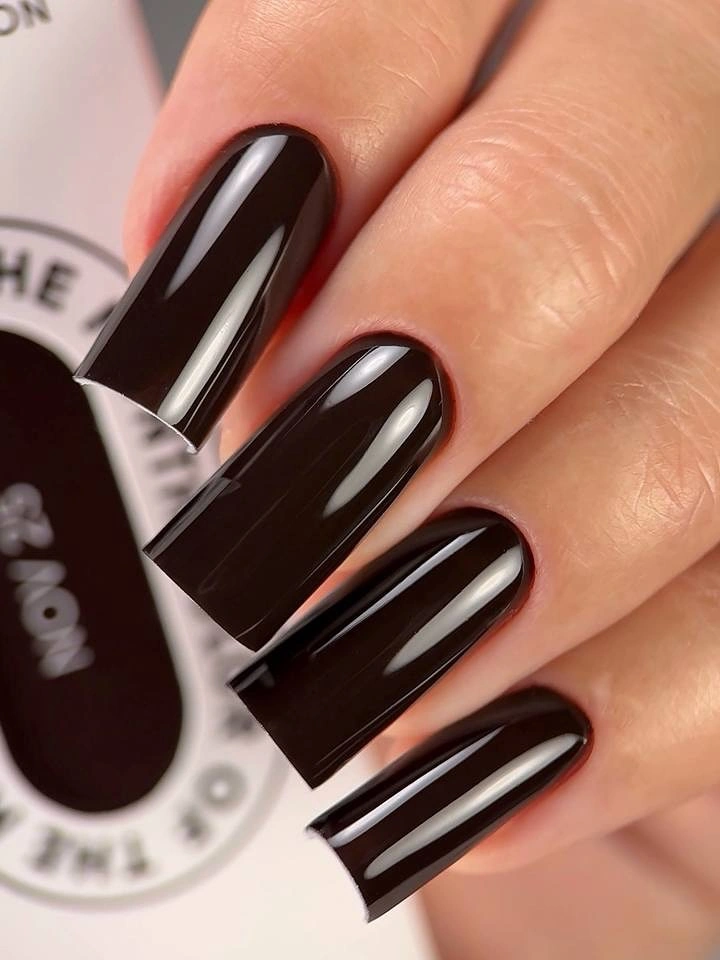
For a more wearable fall version, choose espresso or black-brown on a medium square and keep the finish smooth from cuticle to tip. A slightly warmer brown will soften the contrast, while a cooler charcoal-brown can make the same shape feel more graphic. If you want a deeper comparison before deciding, the mood can be checked against dark fall nail colors without copying their exact treatment.
Dark gloss shows chips, dents, and uneven sidewalls quickly, especially on long square tips, so the simplest palette is not automatically the simplest upkeep. Medium length lowers the practical cost and still lets the deep color feel deliberate. Refreshing the shine and smoothing one edge will usually do more for this manicure than layering on decorative detail.
2. Cherry Red On A Soft Rounded Shape
Medium rounded nails in glossy cherry red feel warm and direct, with the compact silhouette keeping the saturated color approachable. The matching red sweater in the setting reinforces the color family, but the manicure itself remains a clean solid with no separate motif. That restraint lets the rounded edge soften the intensity that a long square or sharp point would have added.
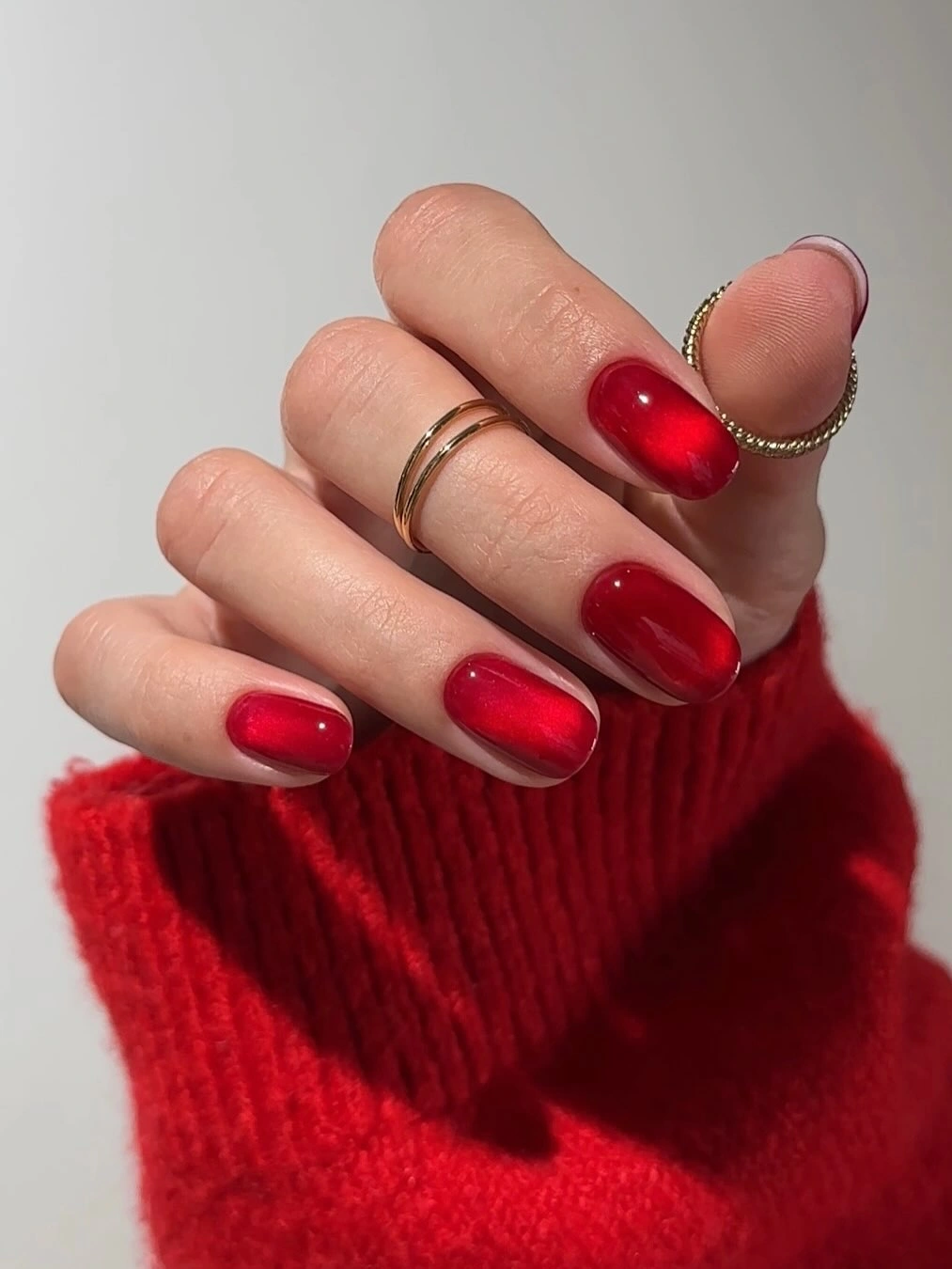
Move the shade toward cranberry, brick, or dark cherry if you want a stronger fall temperature without changing the layout. A medium oval will keep the hand soft, while a short square will make the same red more graphic and precise. The color is already the focal point, so use a close red variation only if you want a subtle shift on one accent nail.
Bright red is easy to refresh but quick to advertise a chip, which makes the medium length a useful compromise. Keep the cuticle edge even and the surface glossy, since texture or extra art would interrupt the directness of the shade. If the color begins to feel too vivid for daily wear, a translucent top layer or a deeper red is a gentler adjustment than changing the shape.
3. Pale Sage As A Short Square Neutral
Short square nails in pale sage green show how a muted color can function like a neutral without becoming beige. The tone is light, soft, and slightly seasonal, while the compact squared tips keep the manicure clear and practical. With the color repeated across every visible nail, the hand feels calm and current rather than decorated for one particular occasion.
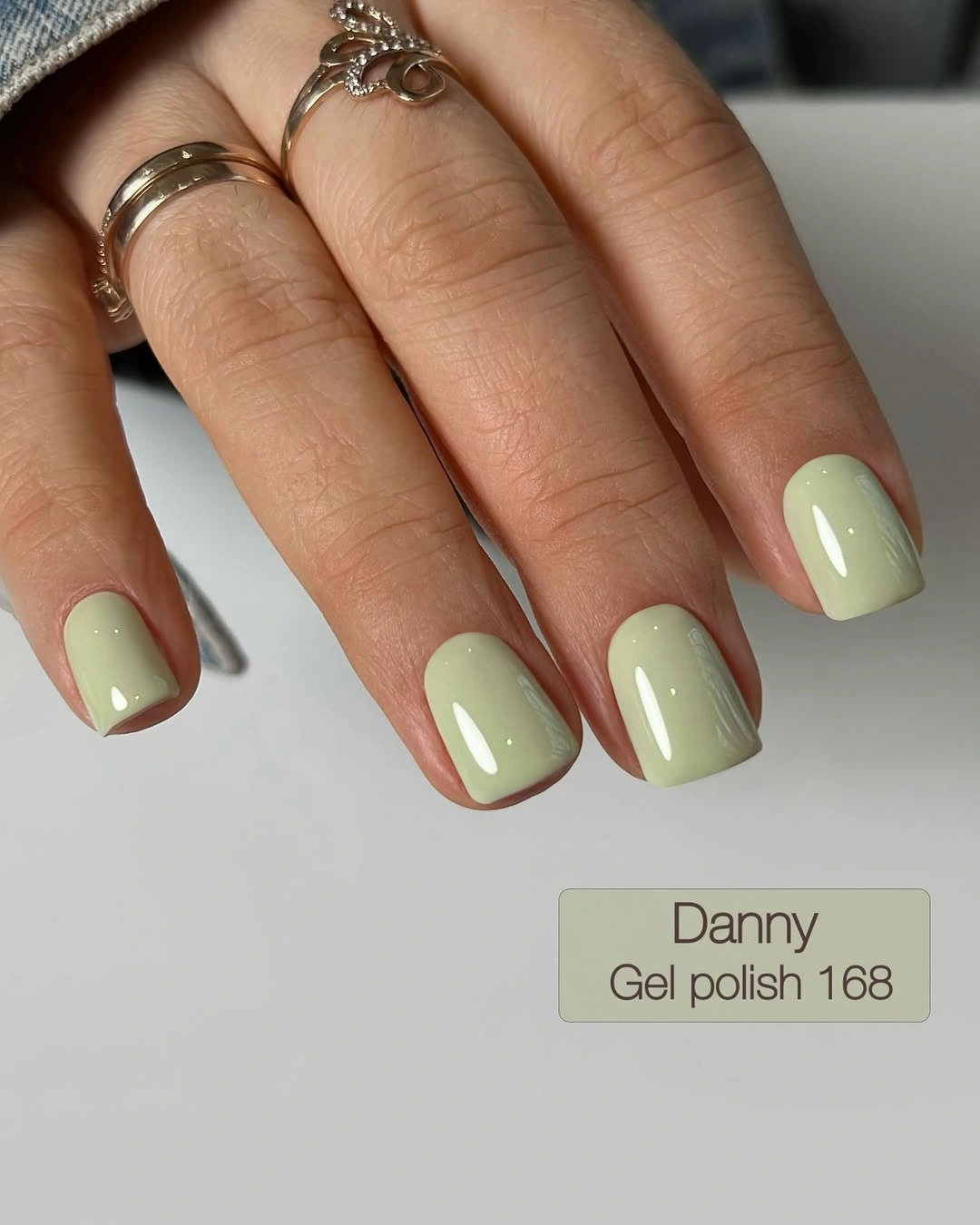
If you want more depth, shift the sage toward dusty olive, eucalyptus, or a soft moss tone while keeping the short square proportion. A sheer cream accent nail can make the green look lighter, but it is not necessary if the goal is a clean everyday color. Avoid adding multiple small marks, because the strength of this version comes from letting the muted shade remain uninterrupted.
Short square nails are a practical home for pale color, although light shades can show uneven edges and surface texture more clearly than dark ones. A smooth finish and consistent corner shape will keep the set looking intentional as it grows. If the color begins to feel too cool, a warmer sage is a better fix than introducing an unrelated brown or red.
4. Glossy Fuchsia With A Crisp Square Tip
Medium square nails in vivid fuchsia make saturation the whole point, using a smooth glossy surface and a blunt edge instead of separate art. The color is more electric than cherry red, and the square shape gives it a sharper, cleaner attitude. Because every nail repeats the same decision, the set looks fresh through confidence and clarity rather than complexity.
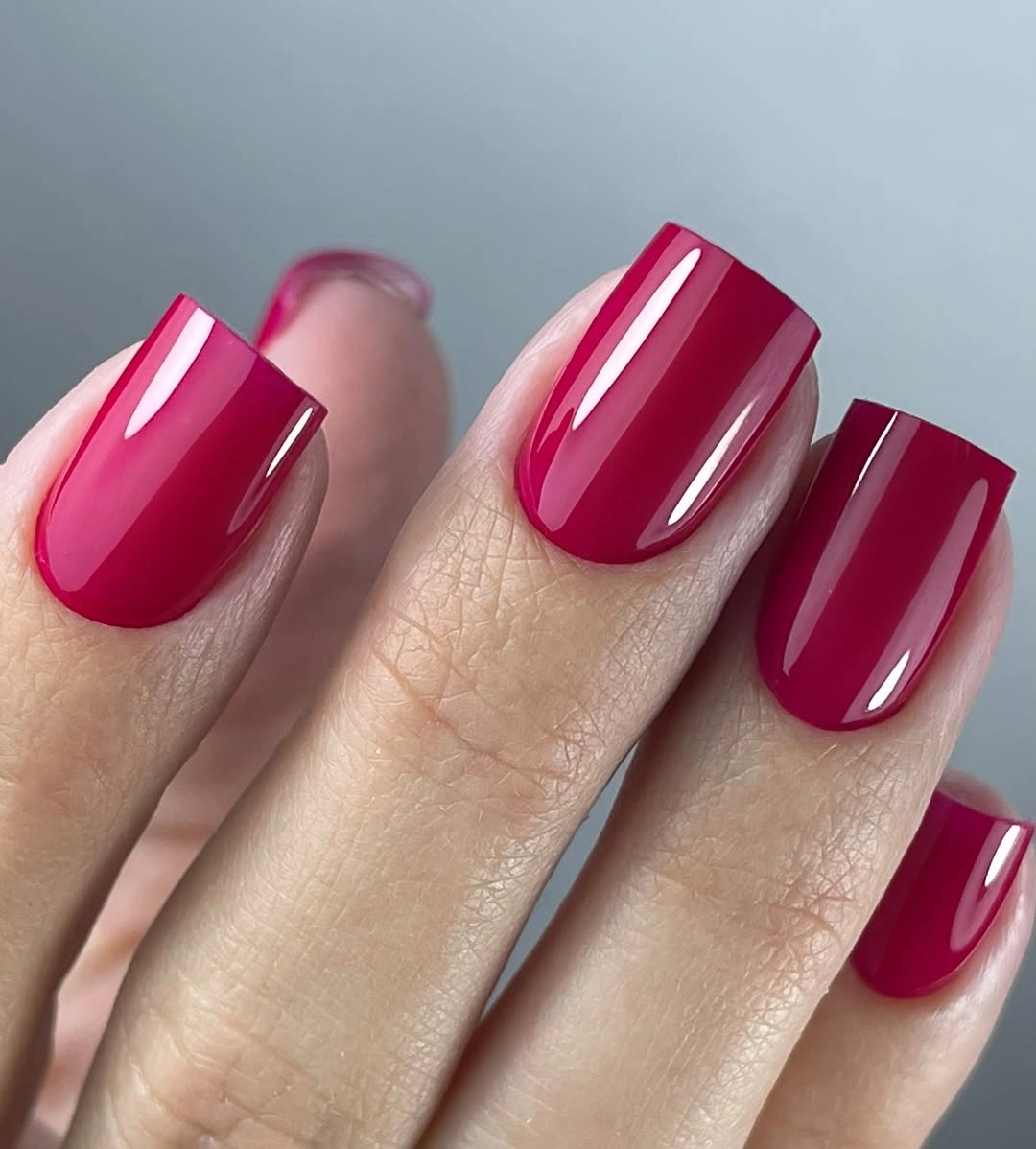
For a fall update, move the fuchsia toward raspberry, magenta, or berry while keeping the same medium square outline. A close tonal shift on one nail can add interest, but a different bright color would compete with the crispness of the set. If the square edge feels too hard, soften the corners slightly without changing the overall length or the uninterrupted color.
Saturated pink draws attention to uneven tips, so the shape should be refreshed before the color needs changing. Medium length keeps the manicure visible without making every task feel constrained, and the glossy surface is easy to restore. If you want less intensity, choose a deeper berry rather than covering the fuchsia with glitter, which would change the clean color-first character.
5. Wine Burgundy With Subtle Reflective Depth
Deep burgundy on long almond nails sits between red and plum, gaining dimension from a fine reflective sheen rather than a visible motif. The pointed silhouette makes the color feel elegant and dramatic, but the palette remains simple enough to coordinate with many fall textures. That combination is why a wine tone often feels richer than bright red without needing additional decoration.
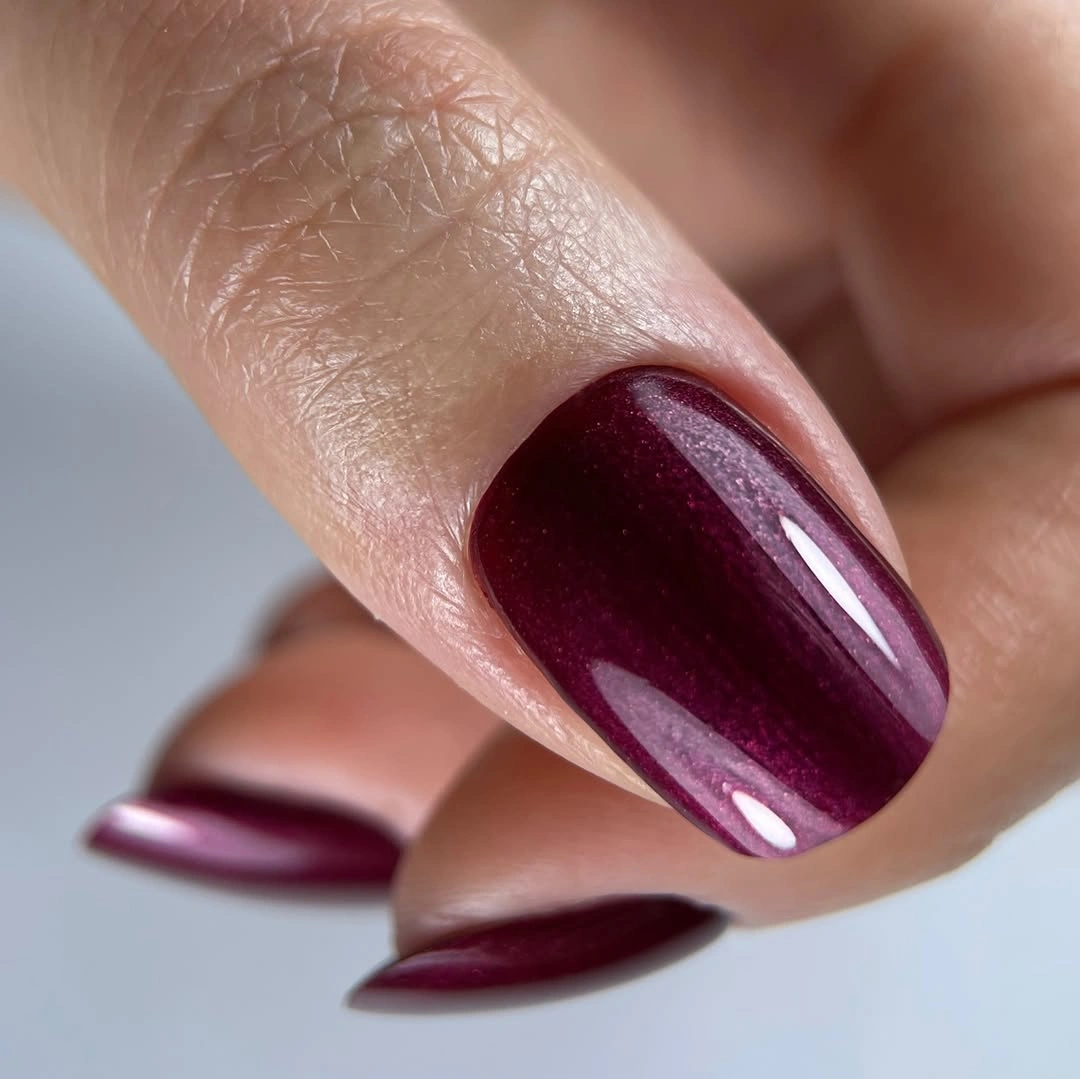
A medium almond will keep the same color relationship while making the design easier to wear, and a warmer brick-wine version can suit clothing with rust or camel tones. If plum undertones feel too cool, shift toward dark cherry; if the shade feels too flat, a restrained sheen is enough, as with the deeper palettes in fall nails with autumn designs. The important choice is to keep the base deep and the surface uncluttered.
Long almond tips amplify the color but make growth and edge upkeep more visible, so shortening the shape is the most honest practical adjustment. Dark red can hide small tonal differences, yet it will still reveal chips and uneven cuticles. Refresh the surface and outline first, then decide whether the shade itself needs changing.
6. Gunmetal Shimmer As A Cool Fall Neutral
Medium rounded nails in charcoal gray use fine metallic shimmer to keep a dark neutral from looking flat. The surface catches light evenly, moving between gunmetal and silver-gray while the rounded shape softens the cooler palette. It is a useful bridge between black and pale metallics because it carries depth without the visual weight of a fully black manicure.
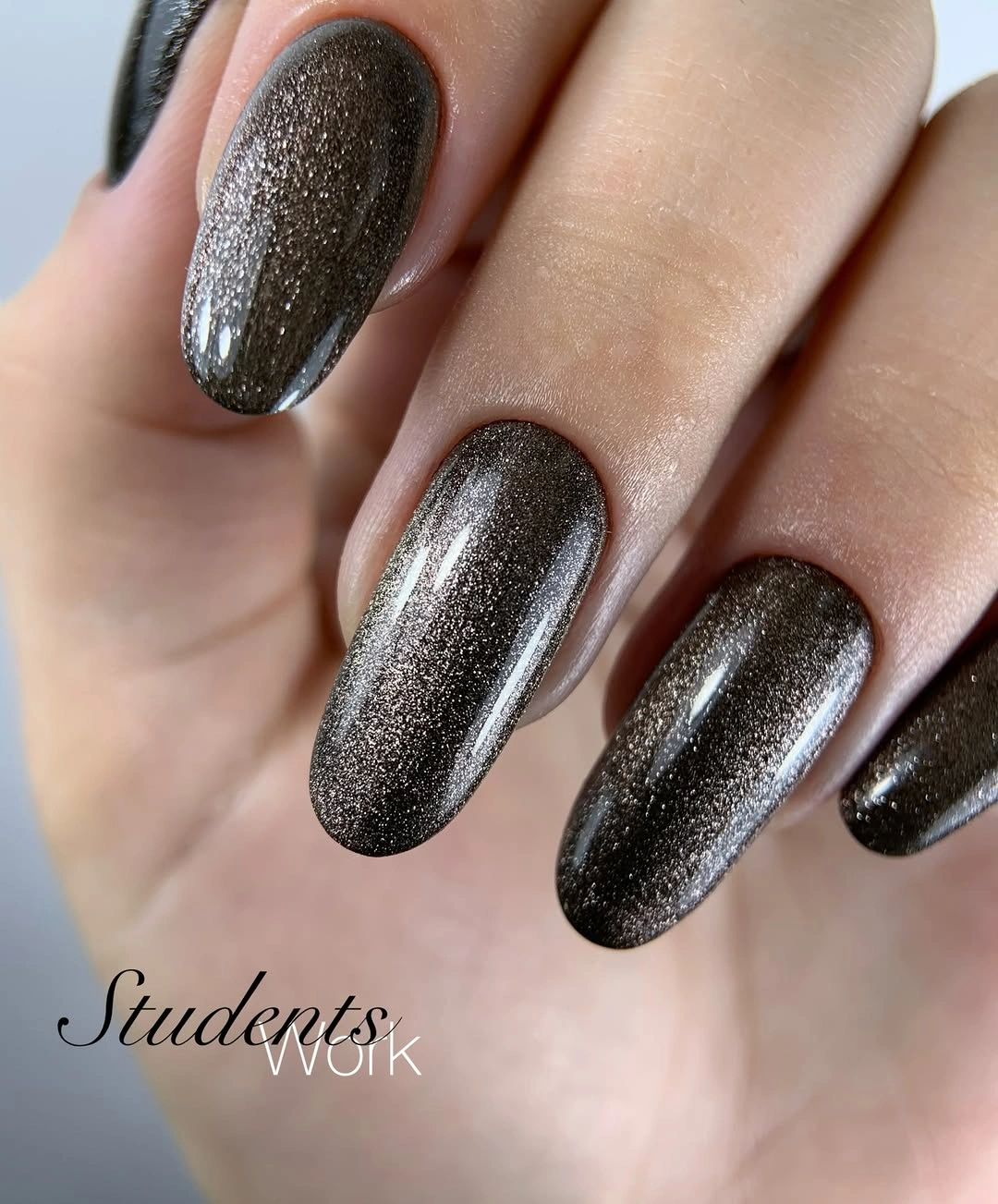
For a softer version, choose pewter or graphite and keep the rounded oval shape so the color remains quiet. A deep teal-gray will bring more color into the set, while a matte base with only a glossy accent nail would reduce the overall shine. If you want to stay fully minimalist, let the shimmer change the mood and leave every nail the same shade.
Metallic finishes can reveal brush direction and uneven surfaces, but the medium length makes the look less demanding than a long pointed version. Keep the edges clean and refresh the sheen before adding any artwork. If the gray feels too cool against your wardrobe, a warm graphite or brown-gray will adjust the temperature without losing the reflective depth.
7. Mauve With A Bright Green Tip
Long square nails use a soft mauve base and place bright green sparkle at the tip, creating a two-color contrast that is more focused than a full multicolor set. The green is concentrated at the edge, so it reads as a flash rather than a second dominant field. This placement lets a muted base carry an unexpected seasonal color while the square silhouette keeps the division precise.
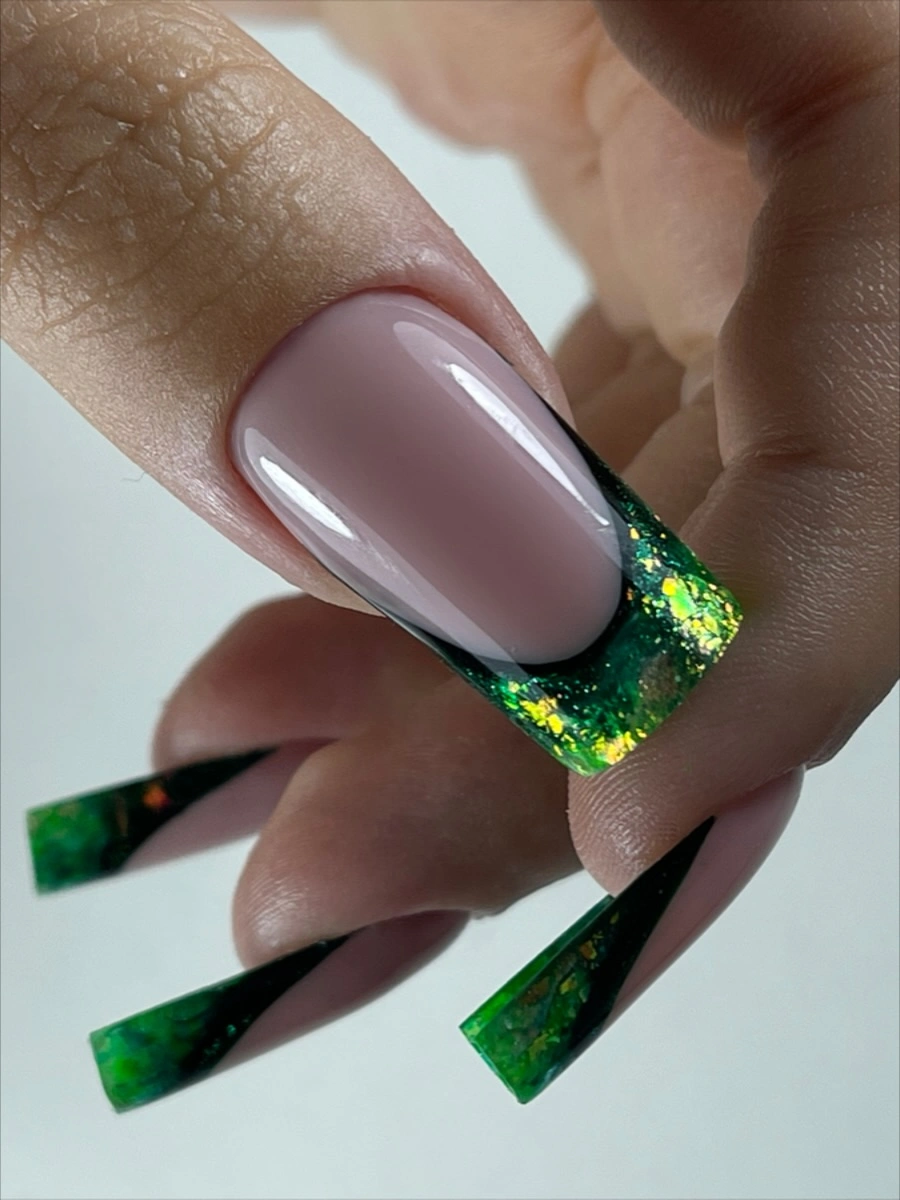
Medium length can keep the tip narrow and shift the green toward forest, teal, or olive if bright contrast feels too sharp. A dusty pink or taupe base will work in the same way, while a soft square can make the edge transition gentler. If you prefer a cleaner result, use the green tip on two accent nails and keep the other nails mauve.
Colored tips are easier to refresh than complex art, but long square edges make any uneven boundary immediately visible. Medium length lowers that precision burden and keeps the bright color from becoming the whole hand. When the tip grows out, repaint the edge first; changing the base would remove the contrast that makes the color pairing work.
8. Oxblood Gloss For A Deep Red Statement
Long square nails in glossy oxblood look almost brown in shadow and richly red where the light lands. The color has enough depth to feel seasonal without a pattern, and the clean surface keeps the manicure modern rather than vintage or ornate. A blunt square tip gives the dark red a graphic frame, which makes it read differently from the softer wine almond earlier in the set.
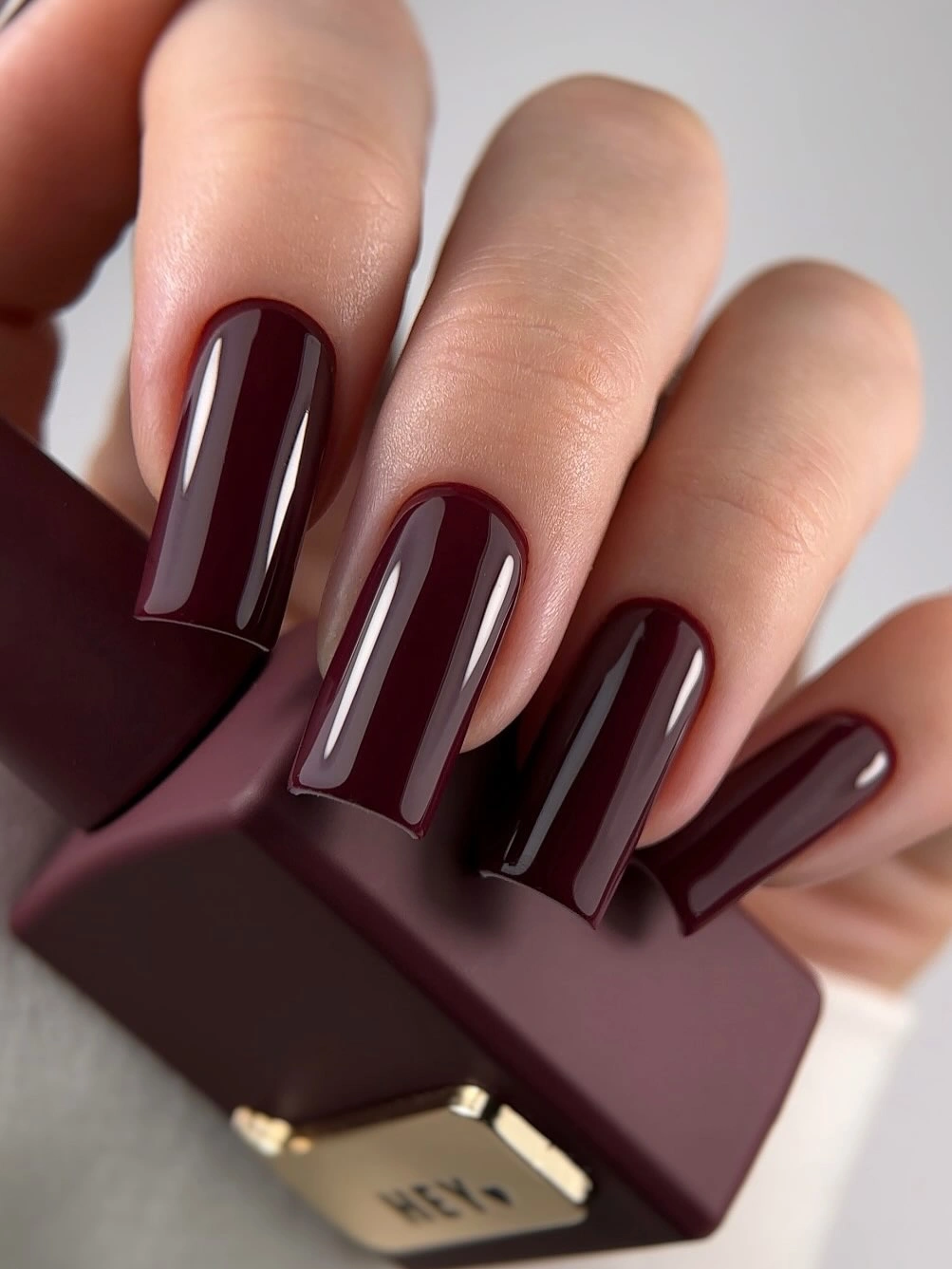
For medium length, choose dark cherry or brown-red and keep the shape square if you want the same directness. A medium oval would soften the color, while a short square would make it more practical without losing the high-contrast surface. If the shade feels too heavy, use it on two nails and a close warm nude on the rest rather than adding an unrelated bright accent.
Dark gloss is straightforward to coordinate but unforgiving when the tips chip, so long square length increases the maintenance cost. Shortening the tips and keeping the base free of texture will make the set look fresh for longer. Reapply shine evenly; a patchy surface will make oxblood appear dull even when the color itself remains strong.
9. Pale Pink With Repeated Reflective Dots
Medium-to-long square nails in pale pink use repeated small pearl-like dots to introduce a light-catching rhythm without adding another strong color. The base remains soft, and the dots are placed in rows or clusters that give the hand a clear visual beat. This is a useful way to turn a gentle color into a finished manicure while keeping the overall impression delicate.
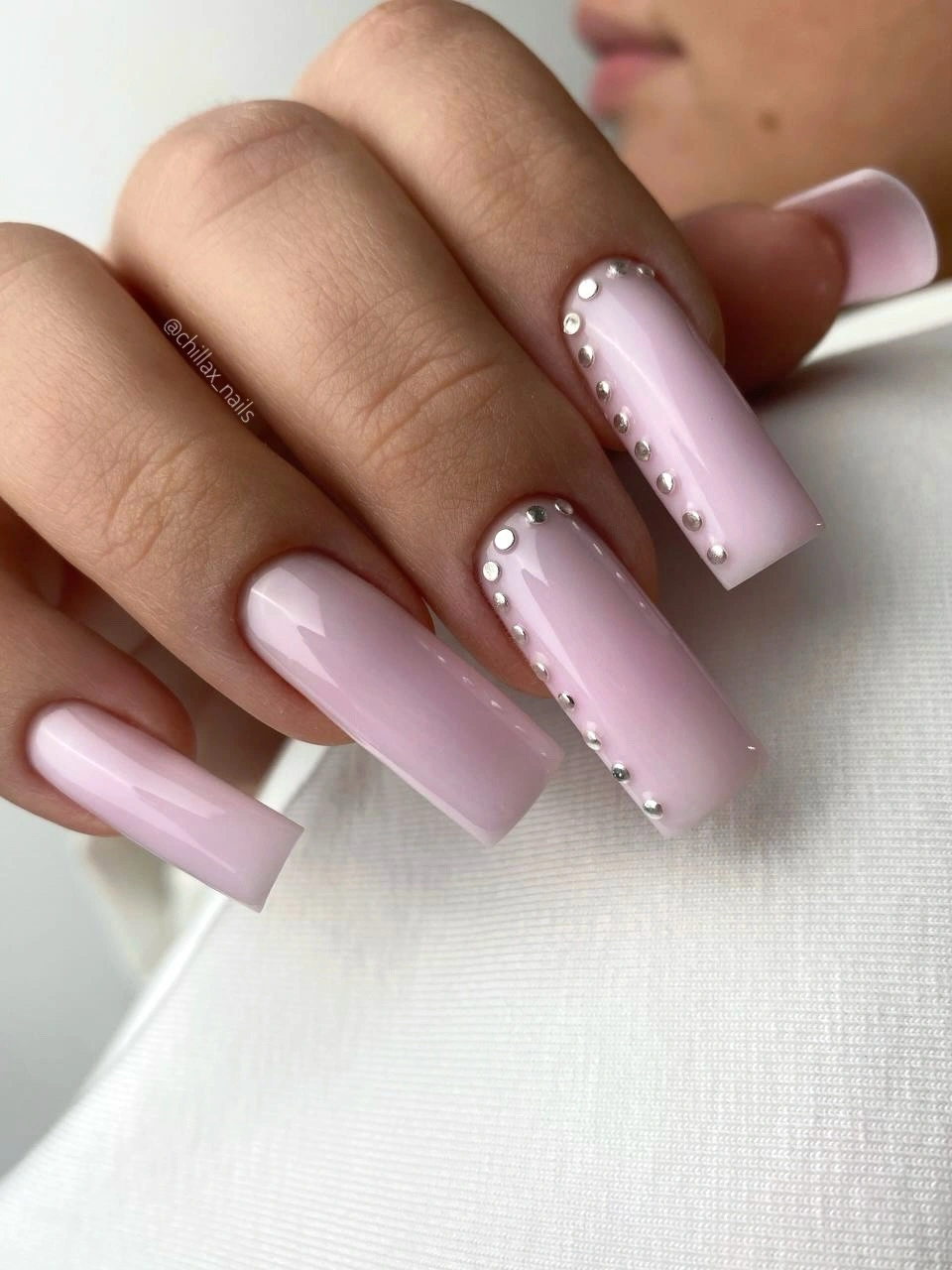
On medium length, use one row near the cuticle or side edge and keep the rest of the surface glossy pink. Silver, warm bronze, or pale champagne can change the temperature, but the dots should stay close in brightness to the base. If the design feels too decorated, remove the dots from the index and middle nails first so the focal rhythm remains on the accent fingers.
Even spacing matters more than the exact shape of each small accent, and shorter nails often benefit from fewer larger points. The pale base will show chips, but a medium square offers enough room for a clean, repeatable layout. For a softer finish, compare the same color family with fall matte nails and keep only one glossy dotted nail as the light-catching exception.
10. Pale Nails With Black Curved Graphic Lines
Medium square nails use a pale nude or white base with black curved lines that arc across the tips and side areas. The contrast is immediate, but the curves keep the design from becoming a rigid two-tone block. The base color remains open and visible, so the manicure feels graphic while still retaining the softness of a pale fall neutral.
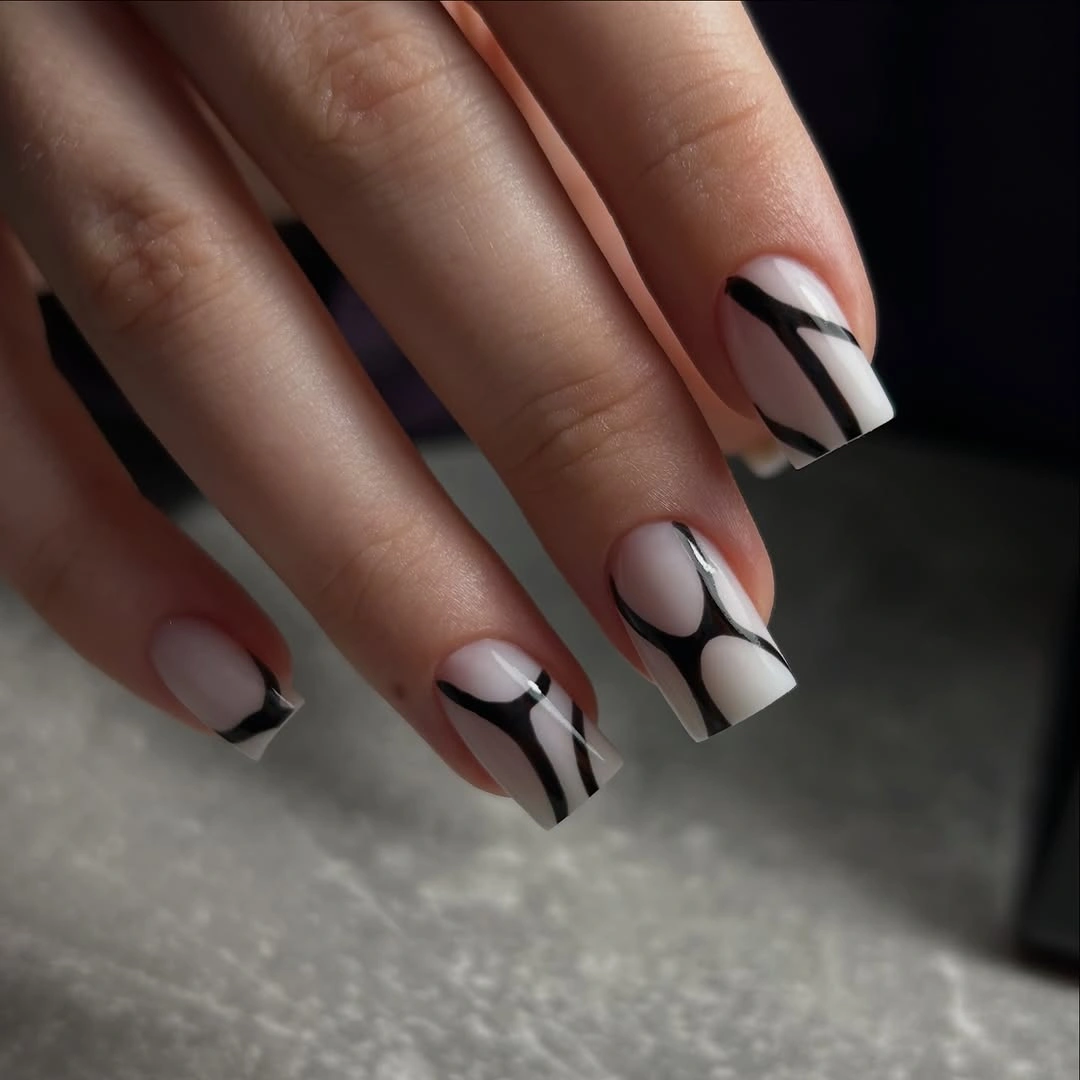
A warmer adaptation can replace black with dark brown, burgundy, or espresso, especially if the white base feels too stark. Keep the curves broad on a shorter nail and let one or two tips carry the strongest line so the pale space remains generous. If you want more structure, repeat the direction of the arcs rather than adding more colors.
Line work is easier to repair than a dense motif, but high contrast makes uneven curves visible, particularly on a square edge. Medium length gives enough room for clear placement without the maintenance of a long tip. Refresh the most visible arc first and leave the quieter pale nails simple if the design begins to lose its crispness.
11. Vivid Red On Long Square Proportions
Long square nails in bright red are deliberately uninterrupted, using length and gloss to make a familiar color feel more graphic. The straight tips turn the shade into a strong visual block, while the even surface keeps the hand from needing any additional motif. It is the same basic color family as cherry red, but the proportion makes the mood bolder and more assertive.
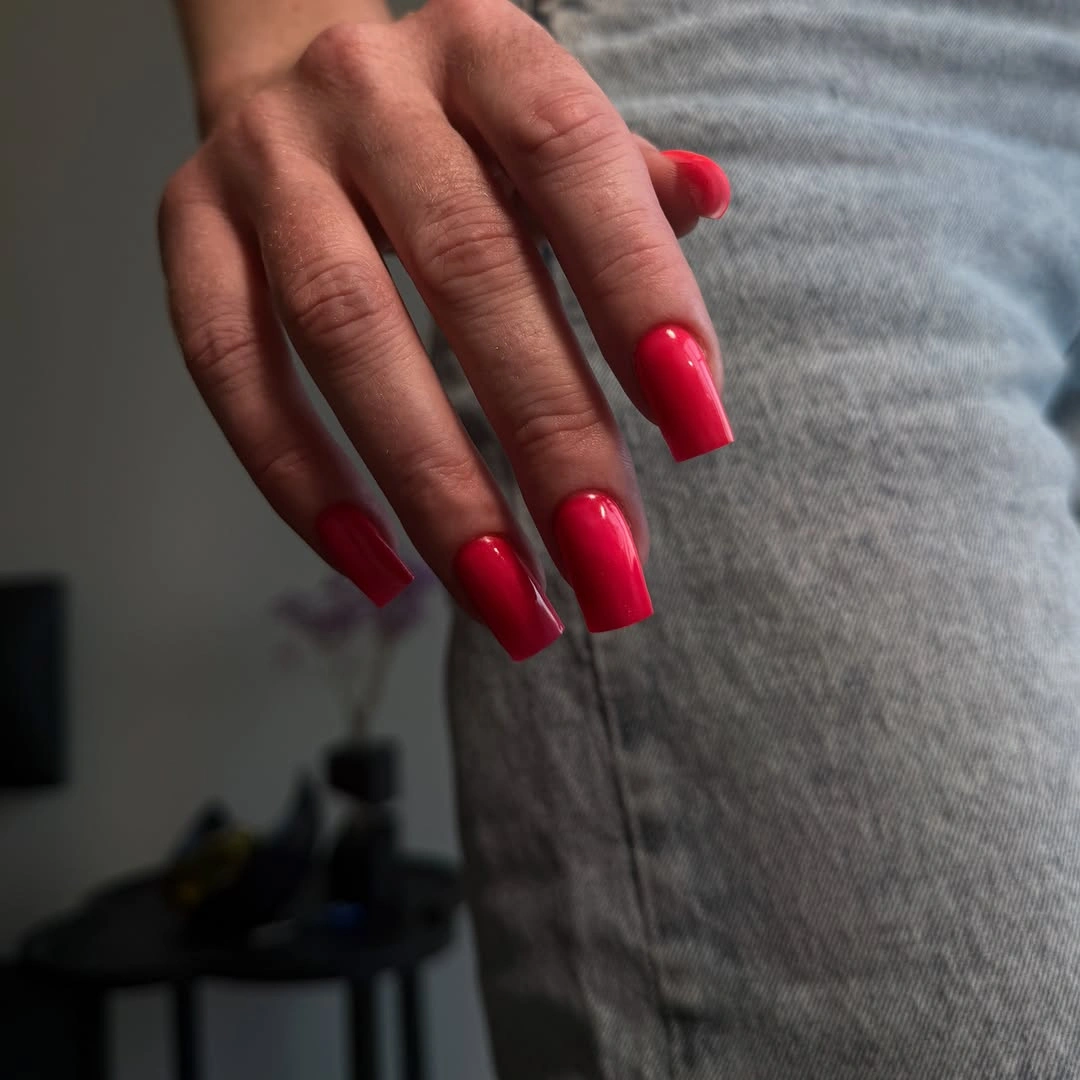
For an easier fall version, keep the long square idea but move toward brick, paprika, or cranberry, or shorten the tips to medium length. A close dark-red accent nail can add depth without breaking the one-color discipline. If you want to keep the bright red exactly as it is, pair it with simple clothing textures rather than more nail decoration.
Long square edges expose wear and can make a bright chip hard to ignore, so the visual drama comes with a clear maintenance cost. A medium square retains the crisp proportion while making daily wear more realistic. Since the color already creates the focal point, smoothness and consistent length are more valuable than any extra finish.
12. Dark Chocolate On A Soft Long Oval
Long oval nails in glossy dark chocolate brown create warmth through color and softness through shape. The deep brown catches elongated highlights but remains less stark than black, which makes it feel like a useful autumn neutral rather than a dramatic costume color. The rounded end keeps the hand balanced even though the length is substantial.
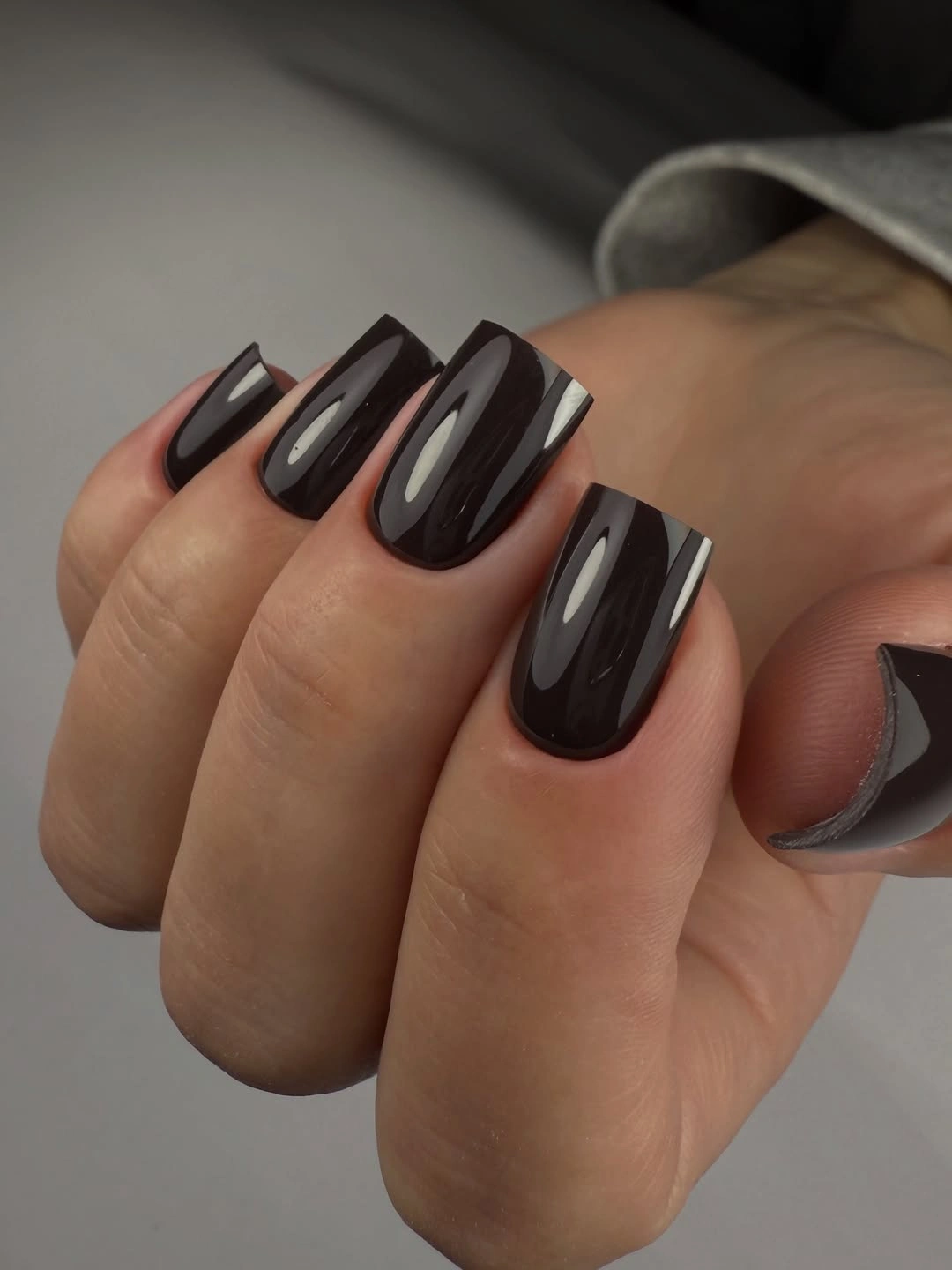
A medium oval will preserve the same warm-dark relationship with less edge exposure, and cocoa or chestnut can lighten the result without changing the silhouette. If you want a little contrast, use a close latte-brown accent rather than a bright color that would pull attention away from the rich base. Keep the surface glossy if you want the brown to read as polished rather than muted.
Dark brown is easier to coordinate than pure black but still reveals chips and cuticle gaps, particularly when the oval begins to grow unevenly. Shortening the length is more useful than adding art, and a smooth top layer will keep the warmth visible. If the color feels too dark, a softer brown undertone will open it up without losing the seasonal depth.
13. White And Black Bands On A Pale Coffin
Long coffin nails use a pale base, black tips, and thin stacked bands to create a structured two-tone color story. The black sections provide strong contrast, but the narrow lines keep the design more layered than a plain dark tip. The tapered square shape gives the bands enough room to repeat, so the manicure feels graphic and intentional from nail to nail.
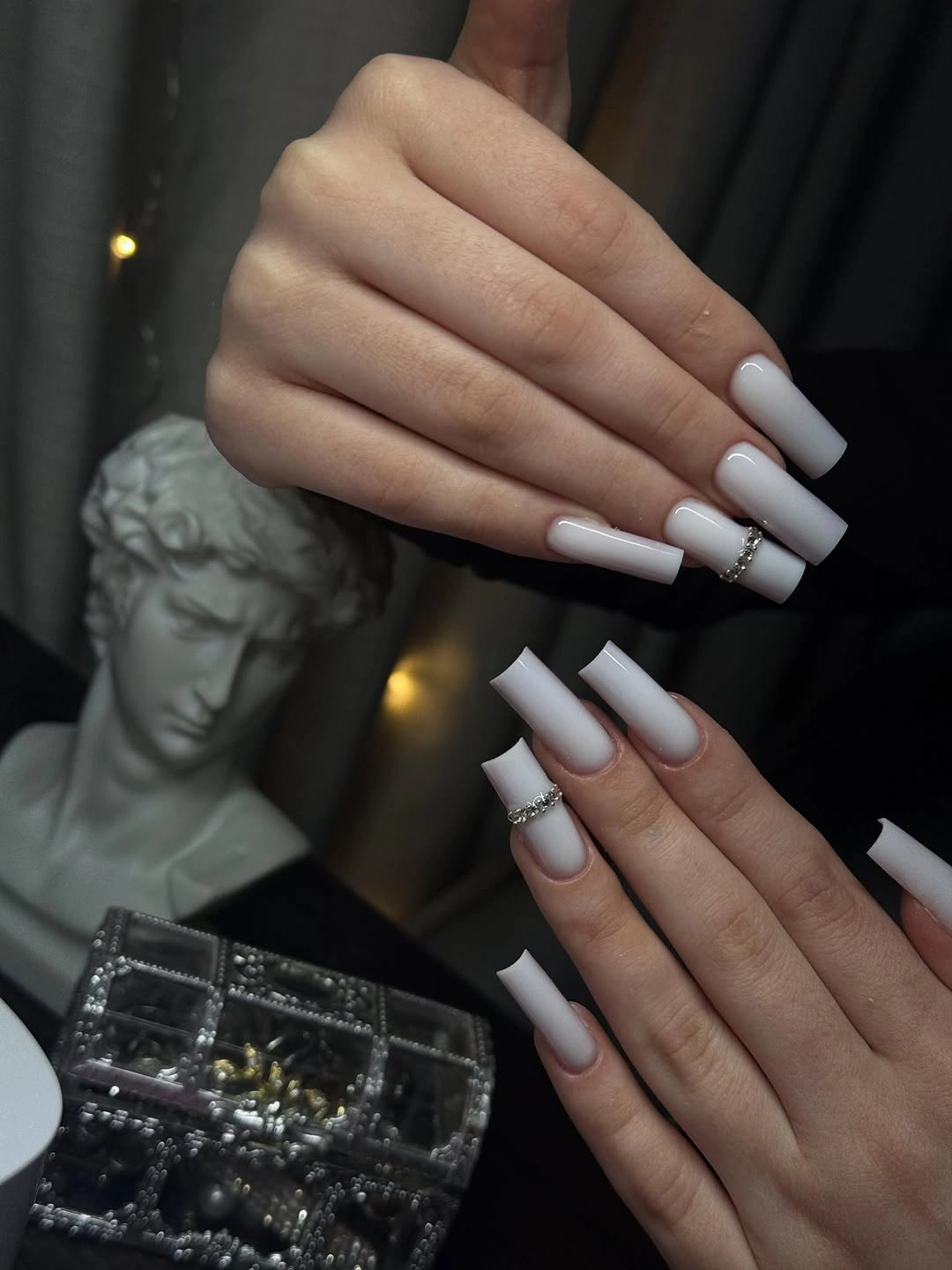
On medium length, reduce the number of bands and keep them wider so they remain visible against the pale base. Deep brown or wine can replace black for a warmer fall palette, while a soft nude base will make the contrast less stark than white. If the coffin shape feels too long, a medium square can preserve the banded structure with a cleaner everyday proportion.
Linear designs depend on consistent placement, and long tips make small shifts in the bands easier to notice. The pale base may show chips, but the black accents can help disguise slight tonal changes if the lines remain intact. Refresh the tip and the strongest band before repainting the entire hand, since the layout is more important than perfect uniformity.
14. Pearly Ivory On An Extreme Stiletto
Very long stiletto nails in pearly ivory cream create drama through silhouette and light rather than contrast or pattern. The pale surface glows against the dark background, and the sharp point makes the single color feel editorial even though the palette is quiet. This is a useful reminder that a soft shade can still look bold when the proportion is extreme.
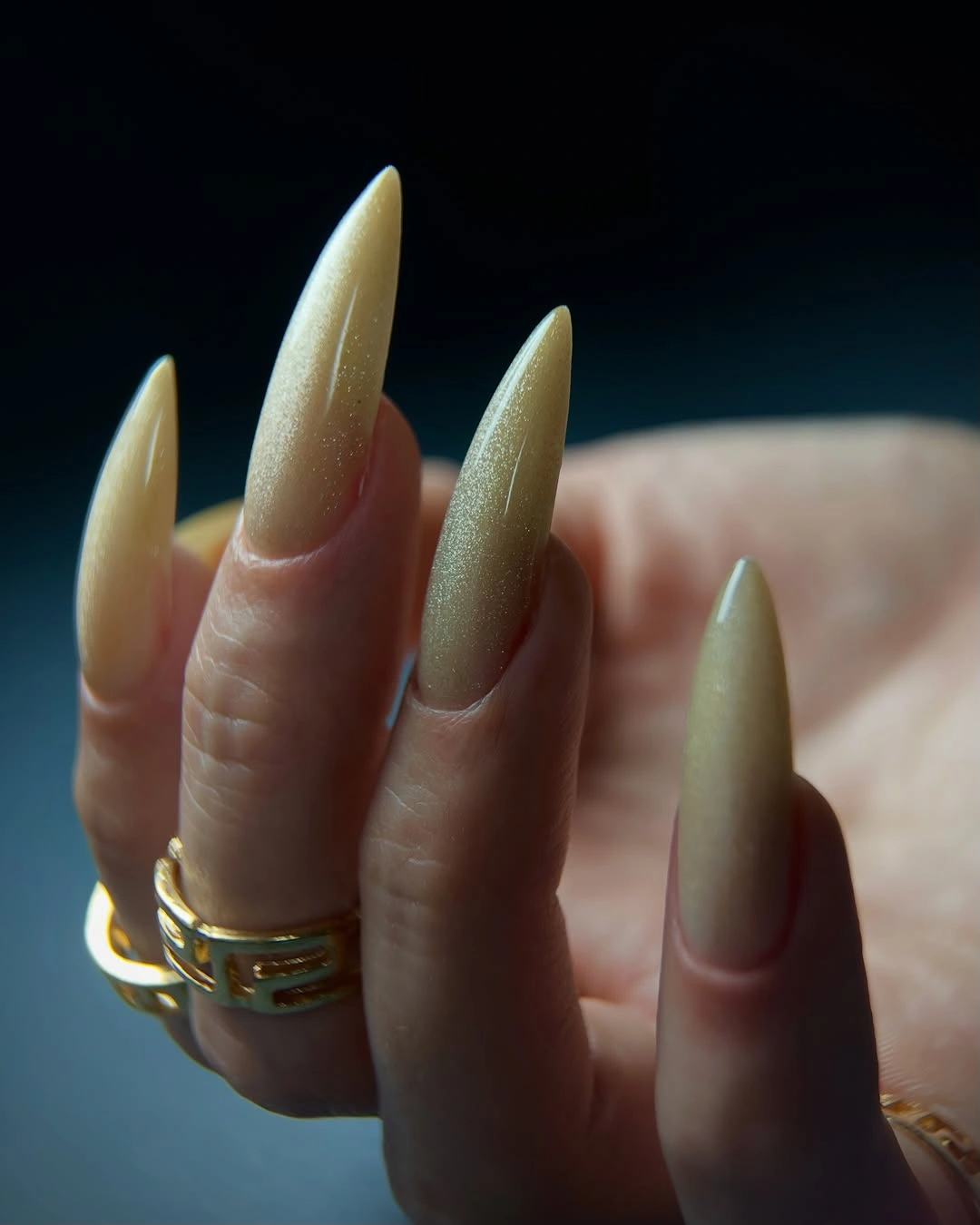
For a wearable fall version, shorten the point into a medium almond and choose warm cream, ivory, or pale champagne. The color can stay fully uniform because the shape already creates the focal point, and a small glossy accent would be enough if you want additional light. Avoid layering several pale finishes together, since the clean glow is what makes the idea feel strong.
The stiletto length is the obvious tradeoff, with daily tasks and breakage carrying more weight than the color itself. A medium almond keeps the luminous surface while making the set easier to protect and refresh. If the pearly finish becomes too cool, a warmer cream will change the mood more effectively than adding dark line work.
15. Milky White On A Medium Oval
Medium oval nails in milky white use no visible pattern or contrast, letting a warm pale color and a soft silhouette do the work. The result is gentler than the extreme ivory stiletto because the length is contained and the surface feels everyday rather than editorial. A textured light sweater in the setting reinforces the quiet seasonal mood without becoming part of the manicure itself.
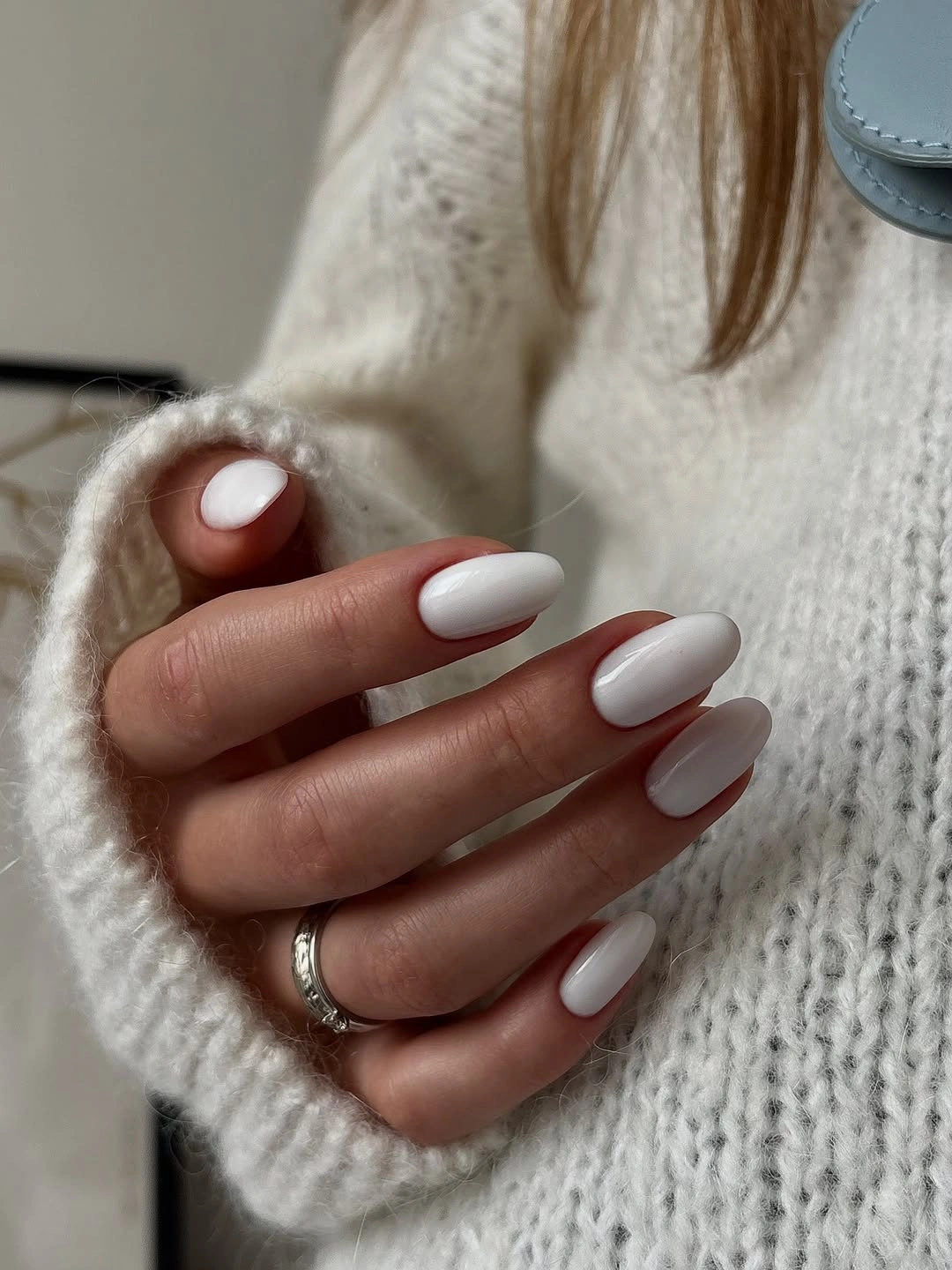
Choose creamy white, soft beige-white, or a hint of blush depending on how warm you want the manicure to feel. The oval shape can become a short oval if you want maximum practicality, while a slightly longer version will make the pale color more visible. Keep the design plain unless a single accent is needed to break the quietness; too much art would remove the strength of the neutral.
Pale colors show surface texture and cuticle gaps, but medium oval proportions are forgiving enough to make regular maintenance realistic. A smooth top layer and even edge will keep the shade from looking flat or clinical. If pure white feels too sharp, warm the base rather than adding glitter, since the soft color relationship is the main point.
16. Icy Blue White With A Pink Accent
Long coffin nails blend icy blue and white with a soft pink panel and fine silver-looking line detail. The cool base gives the manicure a clean, light feeling, while the pink interruption prevents the palette from becoming distant or overly wintery. Thin lines add structure to the pale fields, but the broad color relationship remains more important than the small details.
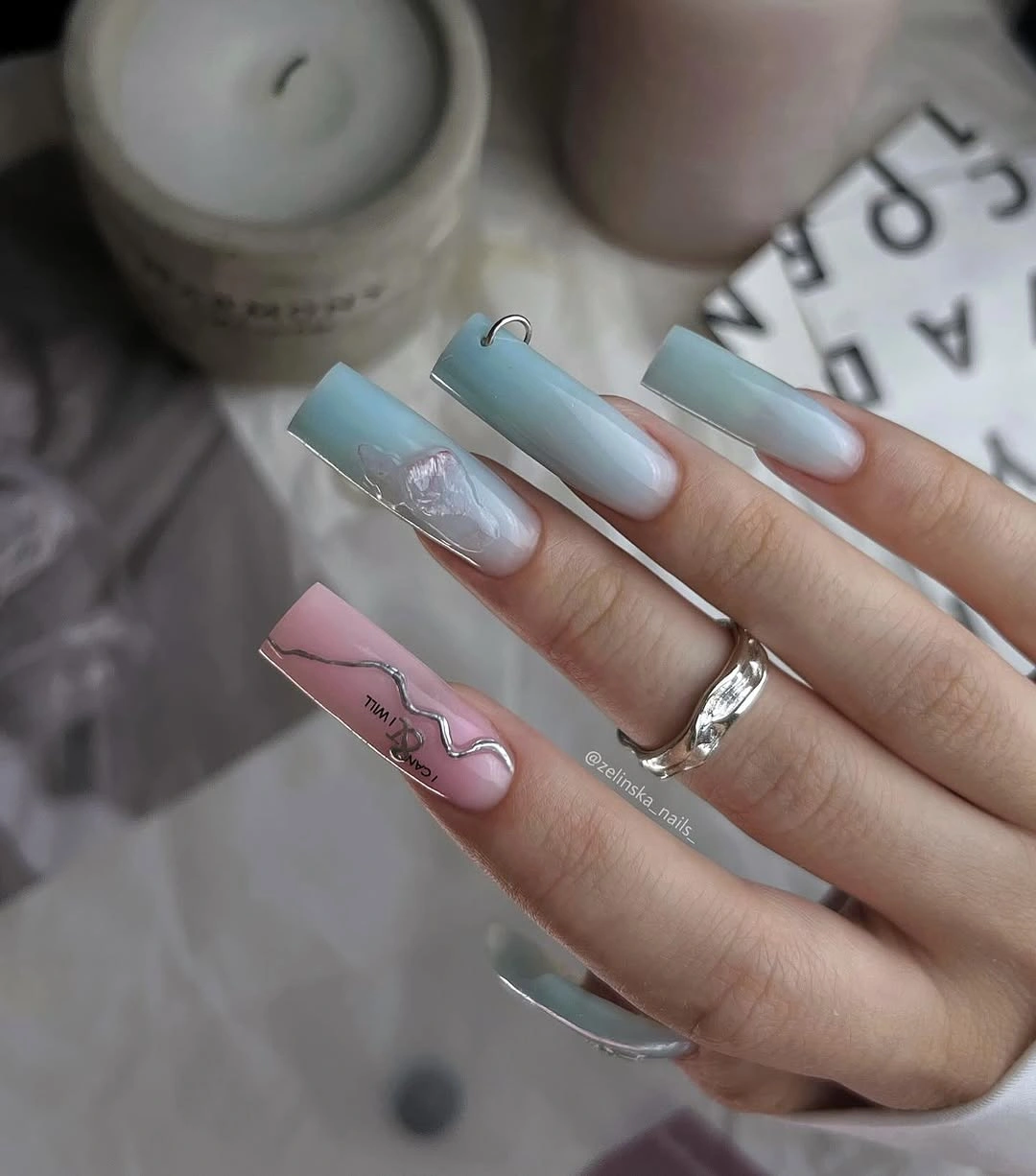
For fall, shift the blue toward dusty teal or slate and the pink toward mauve, keeping the pale base visible between them. A medium coffin makes the gradient easier to maintain, and the silver line can be limited to one accent nail so the surface stays open. If the colors begin to compete, make one side of the hand quieter instead of adding a third strong shade.
Pale gradients can hide small differences in exact color, but long coffin length still makes edge repair important. A medium square or shorter coffin will retain the light contrast while lowering the risk of a broken tip changing the whole composition. Refreshing the line detail selectively is enough when the base remains even and the pink accent still has clear space around it.
17. Glossy Navy On An Almond Silhouette
Medium-to-long almond nails in deep navy blue offer a cool dark alternative to black, brown, and burgundy. The glossy surface reflects bright highlights that make the blue visible even when the color is very deep, while the almond point keeps the hand elegant rather than blunt. The design is completely solid, but the hue itself creates a more distinctive statement than a generic dark neutral.
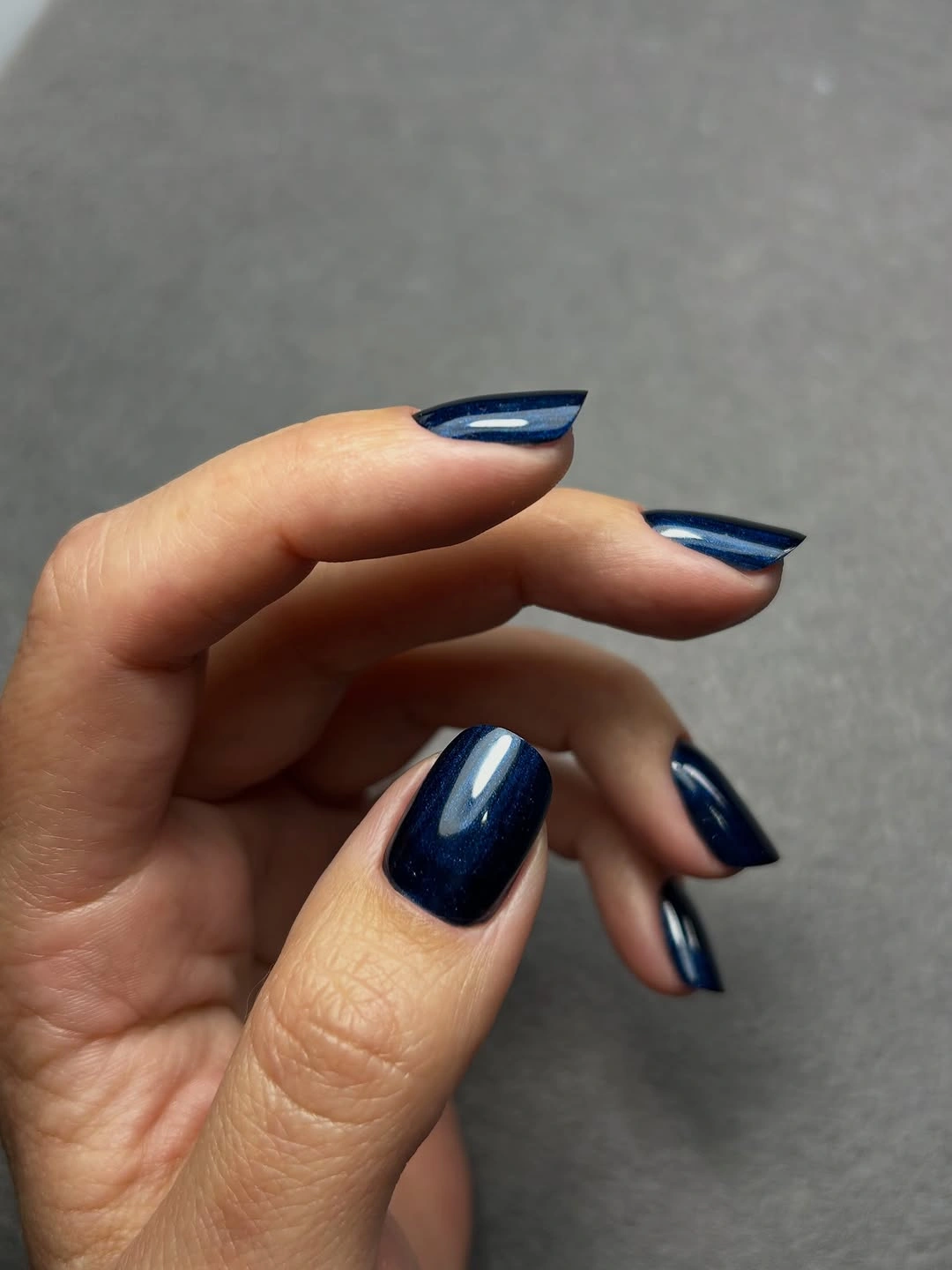
Choose ink blue, slate navy, or blue-black depending on how much contrast you want, and keep the almond length medium if daily wear is a priority. A single lighter blue accent nail can add depth, but the plain version is often stronger because the color has enough character. If you want a warmer fall connection, navy can pair with a brown or bronze accent rather than losing its cool identity.
Dark blue shows chips and uneven points, so consistent shaping is still essential even though the color is calmer than red. Medium almond proportions reduce the upkeep and keep the hand balanced, while a smooth glossy surface maintains the color’s depth. If the navy feels too severe, soften the length or use a slightly grayer blue before reaching for decoration.
18. Reflective Turquoise Gold And Purple Shift
Medium oval nails shift between turquoise, blue, purple, warm gold, and pink as the reflective surface catches different angles. The color change supplies variety across the hand without requiring separate motifs, and the rounded shape keeps the effect compact rather than futuristic or sharp. Because the surface can look cool in one moment and warm in the next, the manicure feels more animated than a fixed metallic shade.
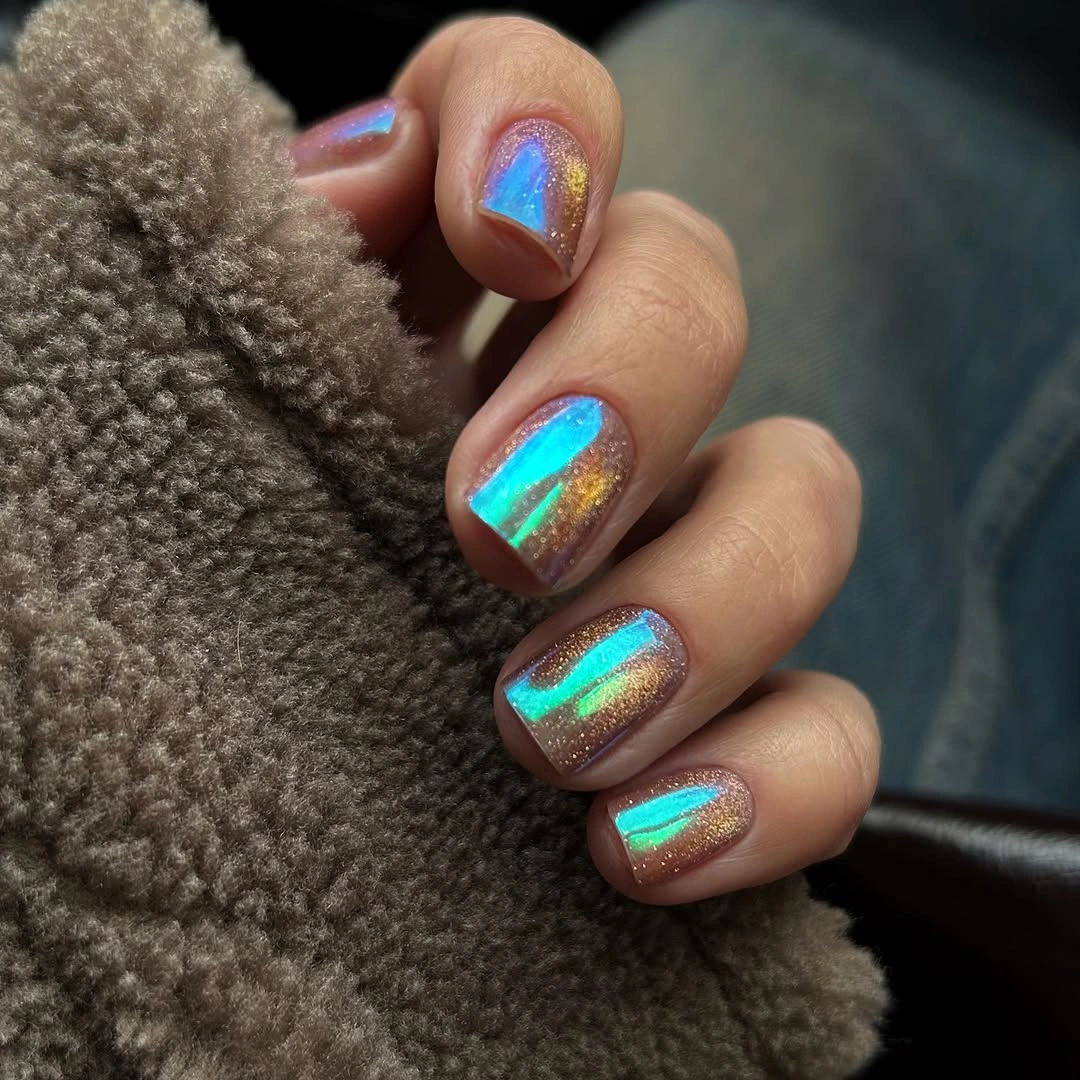
For fall, choose a darker teal-purple shift or keep the strongest color change on two accent nails. A medium oval is already a sensible proportion, but a short oval will make the reflective effect feel quieter and easier to pair with everyday clothes. If you want more structure, add one plain deep teal nail rather than layering graphic lines over every shifting surface.
Reflective finishes can hide small differences in color but may reveal rough texture when the light hits from the side. The compact length lowers the maintenance cost, so focus on preserving a smooth surface and even edge. If the effect becomes too bright for your palette, choose a darker shift rather than covering it with matte color, which would change the defining quality.
19. Dark Brown With One Lime Spotted Accent
Most nails are medium square and glossy dark brown, while one bright lime nail carries black irregular spots that create a sharp contrast. The brown acts as an anchor, making the unusual green feel edited rather than fluorescent across the whole hand. Because the accent is limited to one finger, the manicure stays grounded even though the color pair is intentionally unexpected.
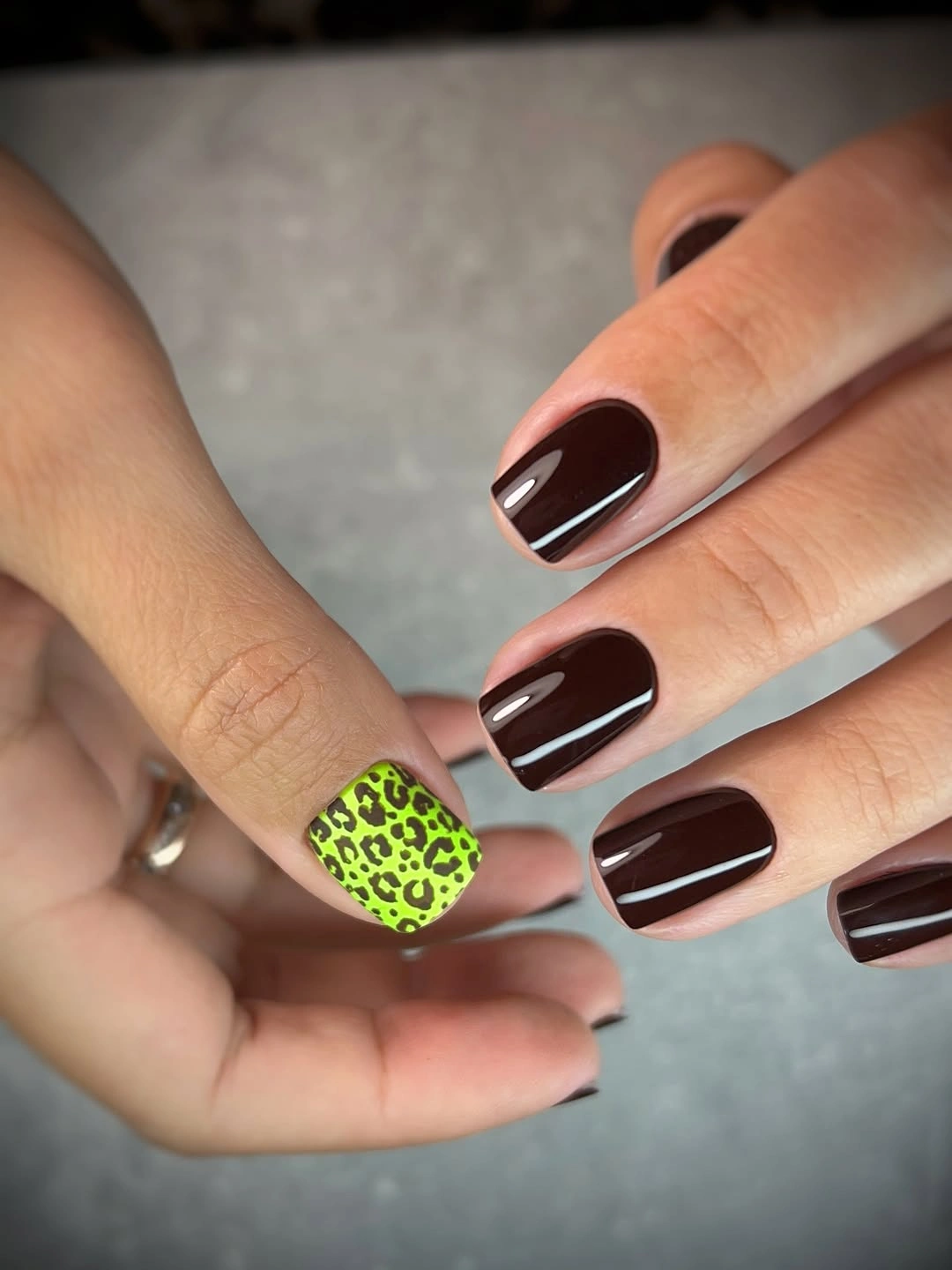
For fall, replace lime with olive or muted chartreuse, or keep the bright green but use fewer larger spots on a shorter nail. The brown base can move toward espresso or cocoa without changing the balance, and one accent nail is enough to hold the contrast. If you want a warmer palette, a rust or amber spot color will keep the idea bold while feeling less acidic.
The single patterned nail is easy to repair and the brown base hides small shifts in tone, making this more practical than a fully mixed set. Medium square tips keep the graphic contrast clear, although the accent needs occasional cleanup because the light-dark difference shows uneven spacing. Resist adding a second patterned nail unless the first no longer feels like a focal point, and use fall nails for medium skin tones as a contrast check when choosing the brown and green temperature.
20. Blush Pink With Minimal Silver-Looking Points
Short-to-medium oval nails in soft blush pink use only a few tiny bright points and dark micro-lines to create structure. The accents are small enough that the pale color remains the first impression, while the rounded shape keeps the set gentle and everyday. This is a useful choice when you want a finished manicure but do not want a visible pattern to dominate the hand.
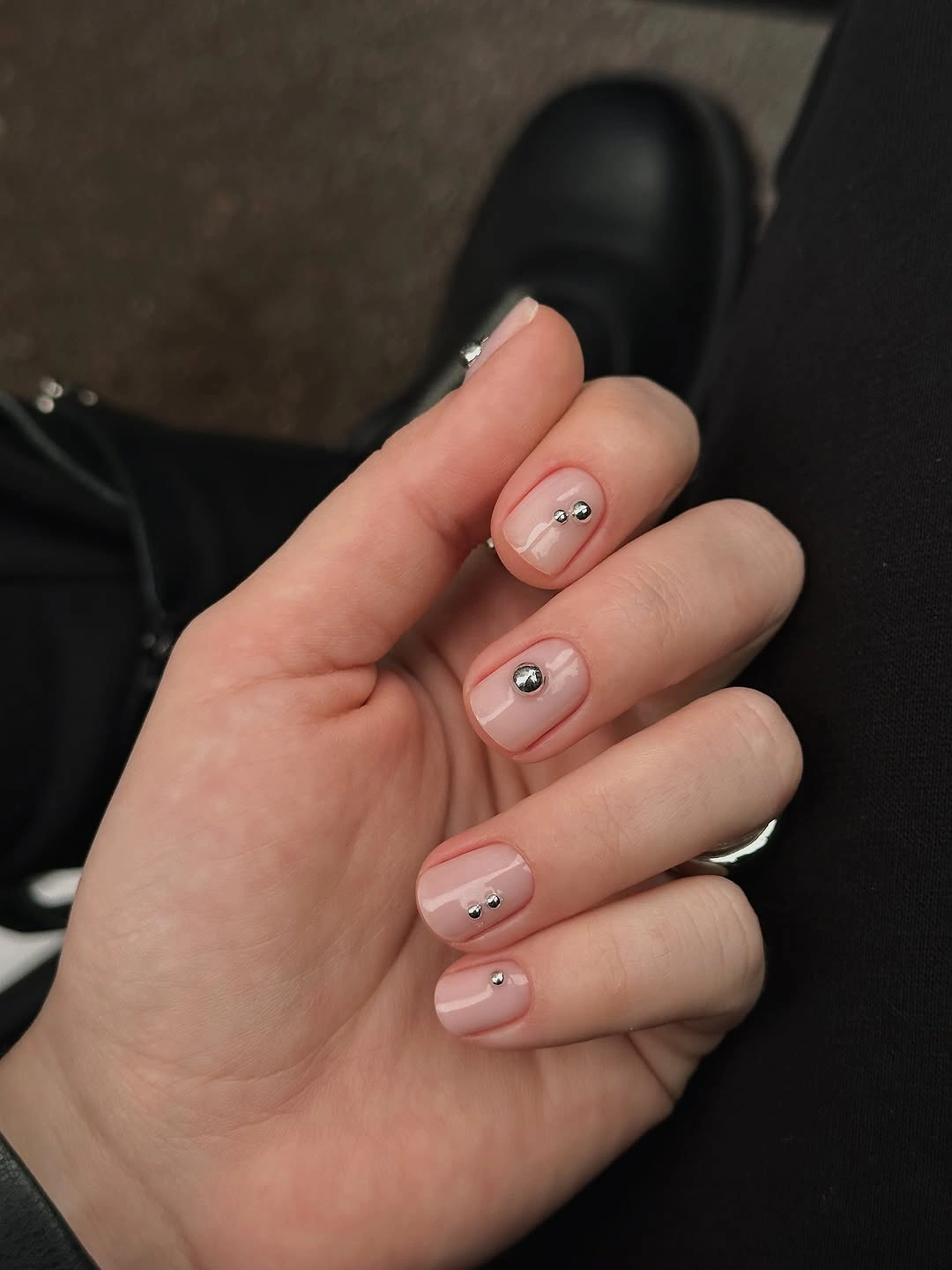
For fall, warm the blush toward dusty rose and change the tiny details to bronze, brown, or muted silver. Keep the marks near the center or cuticle and use them on two or three nails so the compact surface does not feel crowded. If you need an even simpler version, retain the pale color and place one small point on each ring finger.
Short oval length makes this one of the easiest designs to maintain, although small marks can blur before the base color needs a refresh. Clean edges and a consistent glossy surface will keep the manicure looking intentional. If the points begin to feel too decorative, remove them and keep the blush base; the color and shape still provide a complete result.
21. Black And White With One Wavy Accent Nail
The final set alternates solid black, milky white, and pale pink nails, then adds a black-and-white wavy accent with a fluid, almost marbled rhythm. The strong solids create a clear base, while the single moving pattern prevents the hand from becoming a simple checkerboard of colors. Square tips make the alternating blocks easy to read, but the wave softens the otherwise sharp contrast.
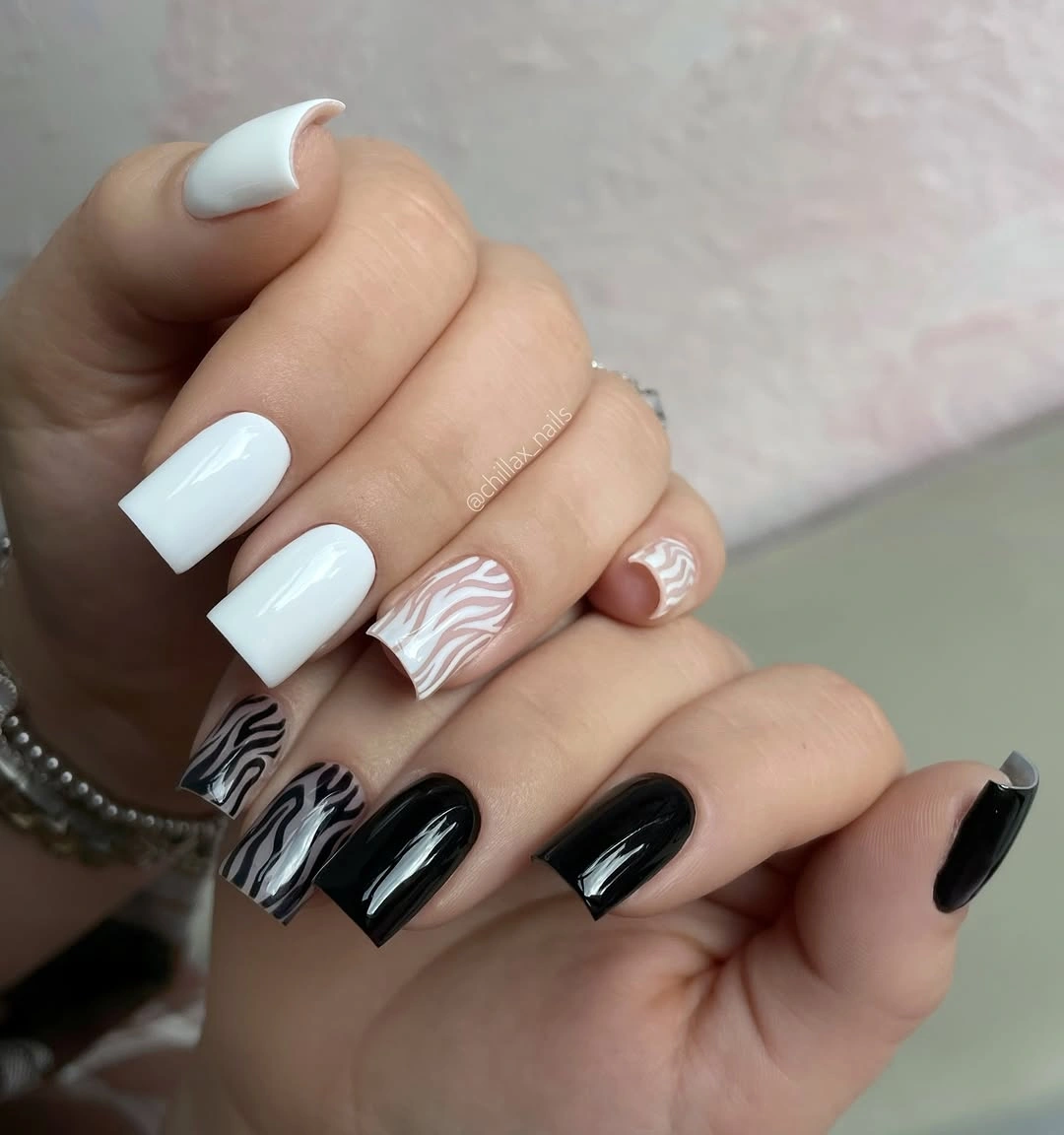
A warmer fall adaptation can replace black with espresso or deep brown and keep the white, pink, and wavy accent unchanged. On medium length, use broader waves and leave the solid nails plain so the pattern remains a focal point. If you want more color, add one muted olive or burgundy nail rather than putting a new shade into the wavy design.
The wavy accent is easier to simplify than to repair in tiny detail, so broader lines are the practical choice when the tips are shorter. Alternating solid colors will remain legible as the set grows, and a medium square reduces the risk of the long edge breaking the composition. For more ideas about balancing contrast and artwork, compare this restraint with existing fall nail art ideas, then keep only the detail that gives your palette a clear focal point.