An accent nail earns its place when it changes the reading of the hand. If every nail competes for attention, the eye stops distinguishing the focal point and the design loses its reason to be called an accent. Fall accent nail designs are less about adding a seasonal symbol than about controlling where contrast begins, where it ends, and how long the main idea remains legible.
Set a scale limit before choosing the detail. Decide how much surface can carry the focal mark without making the neighboring nails feel unfinished, then leave a deliberate pause around it. The most reliable test is simple: if the eye cannot settle on one place after a quick glance, reduce the detail before changing the base color or adding another accent.
1. Peach Nails With Tiny Autumn Illustrations
Short square nails in warm peach carry small orange drawings with dark outlines, including pumpkin-like and leaf-like shapes that vary from finger to finger. The base is light enough to let the illustrations stay readable, while the compact shape keeps the seasonal story playful rather than costume-heavy. Each nail contributes a different mark, but the repeated peach, orange, and brown family gives the set a visual frame.
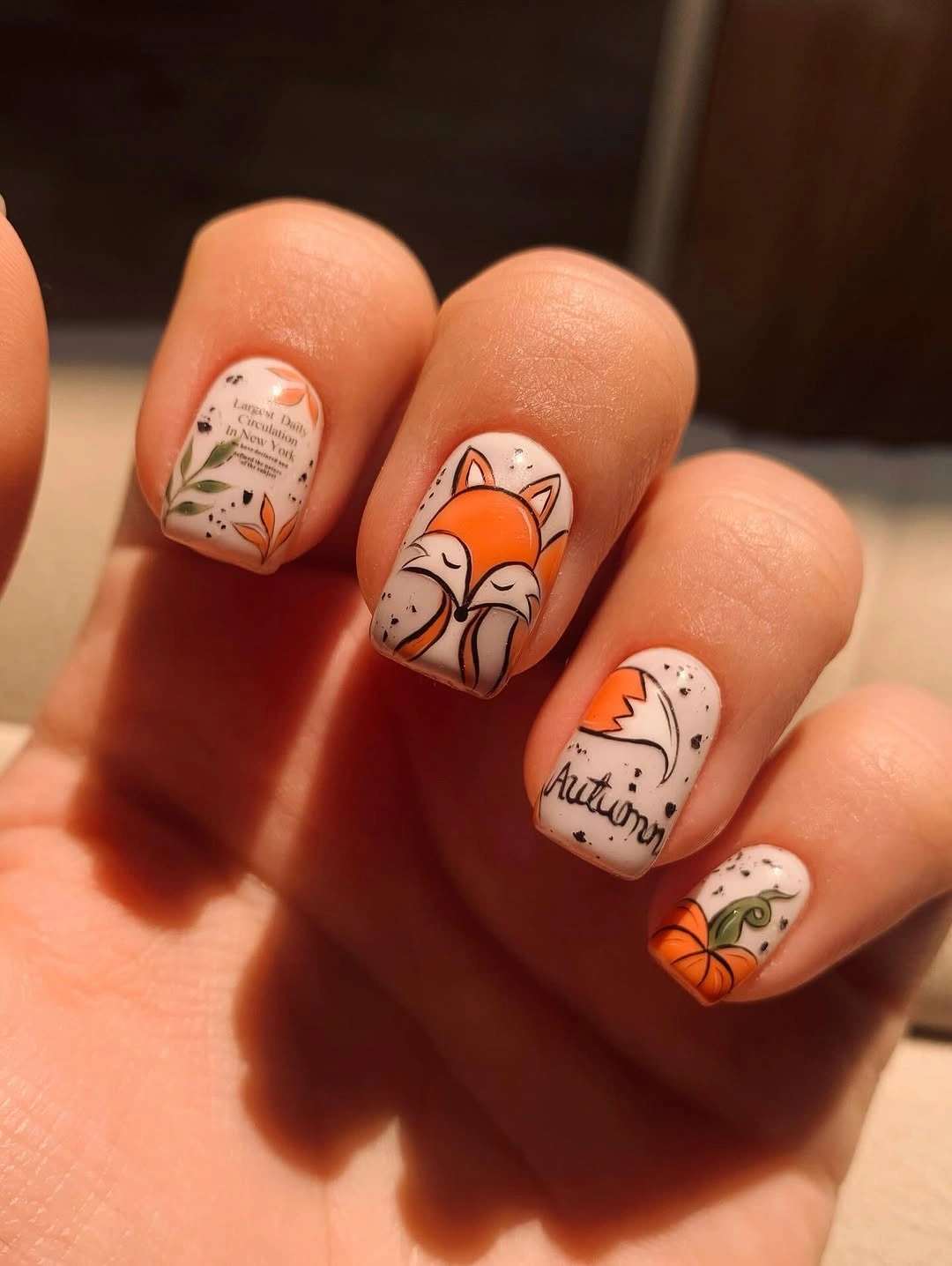
For a cleaner accent plan, repeat one motif on two nails and leave the remaining nails as glossy peach. If you want a deeper fall mood, trade the peach for cream or muted terracotta and keep the dark outlines thin; a pumpkin-like accent can also be compared with existing fall nails with pumpkins before you settle on the scale. A medium square can hold slightly larger drawings, but a shorter nail benefits from one clear shape instead of several small elements competing for space, as shown by the placement logic in fall nails with an accent nail.
Illustrated accents are most convincing when the background remains calm, so adding glitter or another contrasting color would weaken the small drawings. The short length is already practical, although fine lines may blur first near the tip and can be refreshed without changing the base. If you want more warmth, the hand-painted feeling can stay loose and imperfect; too much precision would make the tiny motifs look stiff.
2. Pale Almonds With Delicate Warm Details
Long almond nails use a pale pink or cream base and place tiny warm accents, flower-like details, and light-catching marks near selected tips and centers. The design is ornamental without becoming dense, because most of the surface remains quiet and the details stay close to the soft palette. The almond point gives those small accents a delicate frame, while the pale base keeps the whole hand visually open.
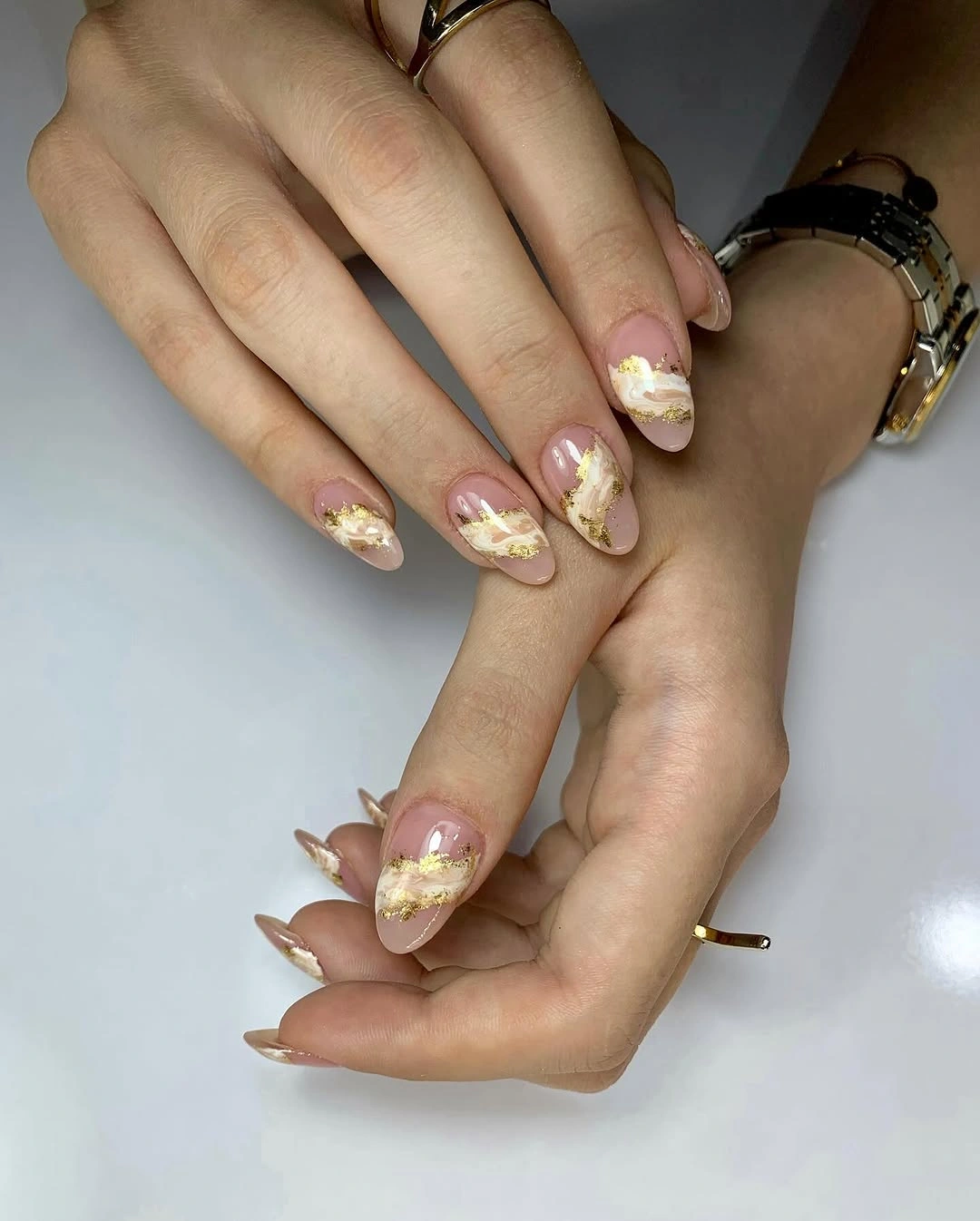
On medium length, let one nail carry the more detailed flower-like mark and use simple pale tips or small warm dots on the others. Champagne, bronze, and soft gold can all create a similar seasonal lift, but using only one warm family will keep the accents from disappearing into visual noise. If the base is very light, place the detail slightly away from the edge so it does not vanish against the pale tip.
Fine pale accents can be beautiful from close range but may lose definition in ordinary light, which is a useful tradeoff to accept rather than fix with extra decoration. A shorter almond makes the set easier to wear and gives the details less room to crowd the point. Keep the base glossy and the embellishment sparse if you want a soft accent manicure that feels finished without demanding constant repair.
3. Mixed Bright Colors Held By Black Lines
This medium square set mixes yellow, cobalt blue, nude, white, and black, then uses curved dark lines and small graphic marks to make the changes feel related. The colors are not arranged as a quiet gradient; each nail has a different job, so the repeated line becomes the visual glue. That detail-first structure gives the manicure energy while still leaving enough pale space for the square shape to remain legible.
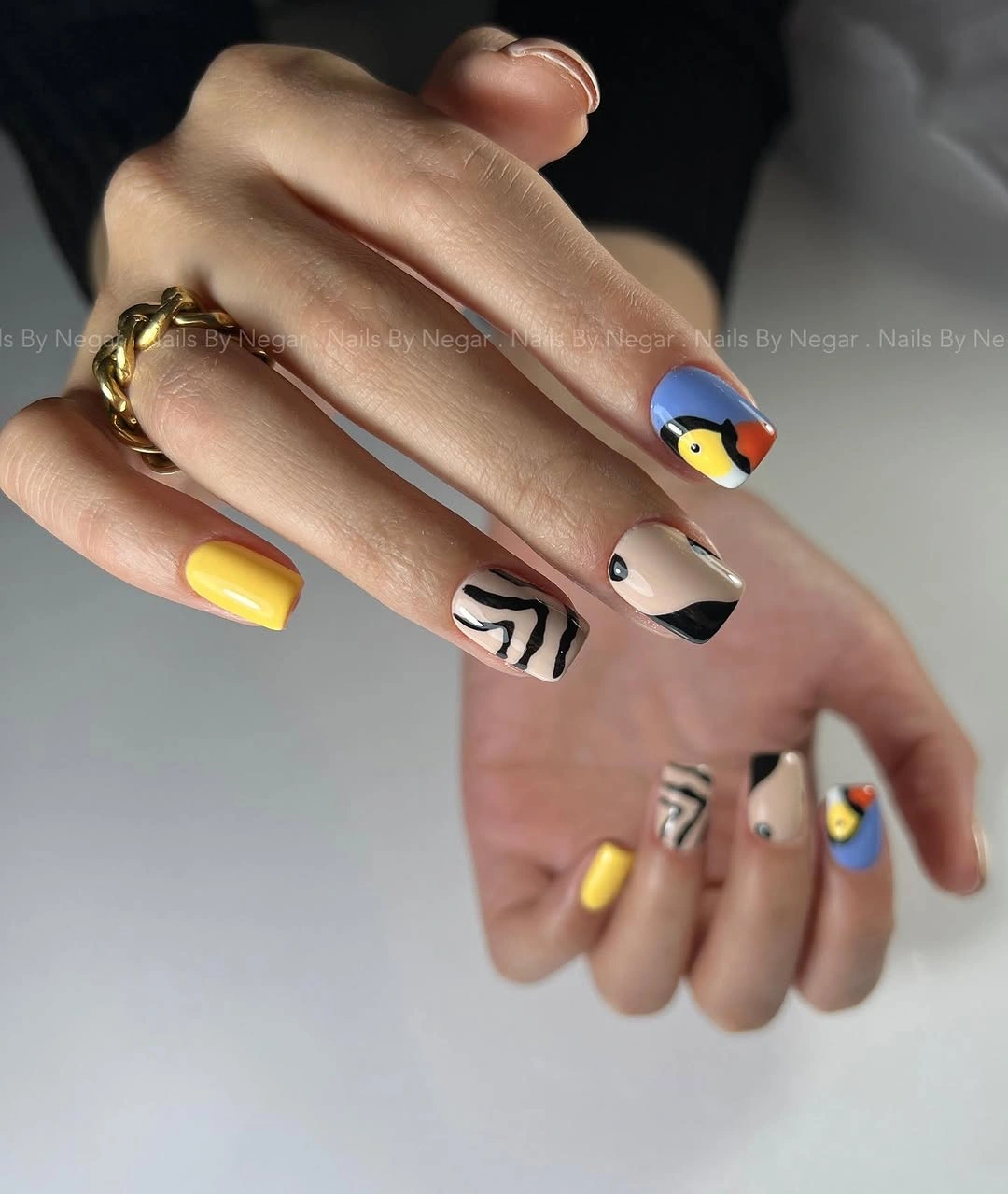
For fall, shift the yellow toward ochre, cobalt toward ink blue, or keep only one bright color and let black do the separating. A shorter square should use broader curves and fewer small marks, since thin graphics can disappear as the surface contracts. If the palette feels too wide, choose two colors plus nude and repeat the black line in the same general direction on each accent nail.
The strength of this design is its rhythm, not the exact number of colors, so adding another motif would make it less coherent. Medium square length gives enough room for the graphic contrast, but even edges matter because the black lines naturally draw attention to the outline. Refresh the strongest accent first and leave the quieter nails plain if the set begins to feel visually crowded.
4. White As A Buffer Between Bright Accents
White, soft yellow, turquoise, pink, and glittery details share these medium square nails, with white acting as the pause between stronger accents. The hand feels cheerful because the colors are clear and bright, but the pale nails prevent turquoise and yellow from merging into one noisy block. A few small details appear on selected fingers, yet the composition stays open because no single nail is overloaded.
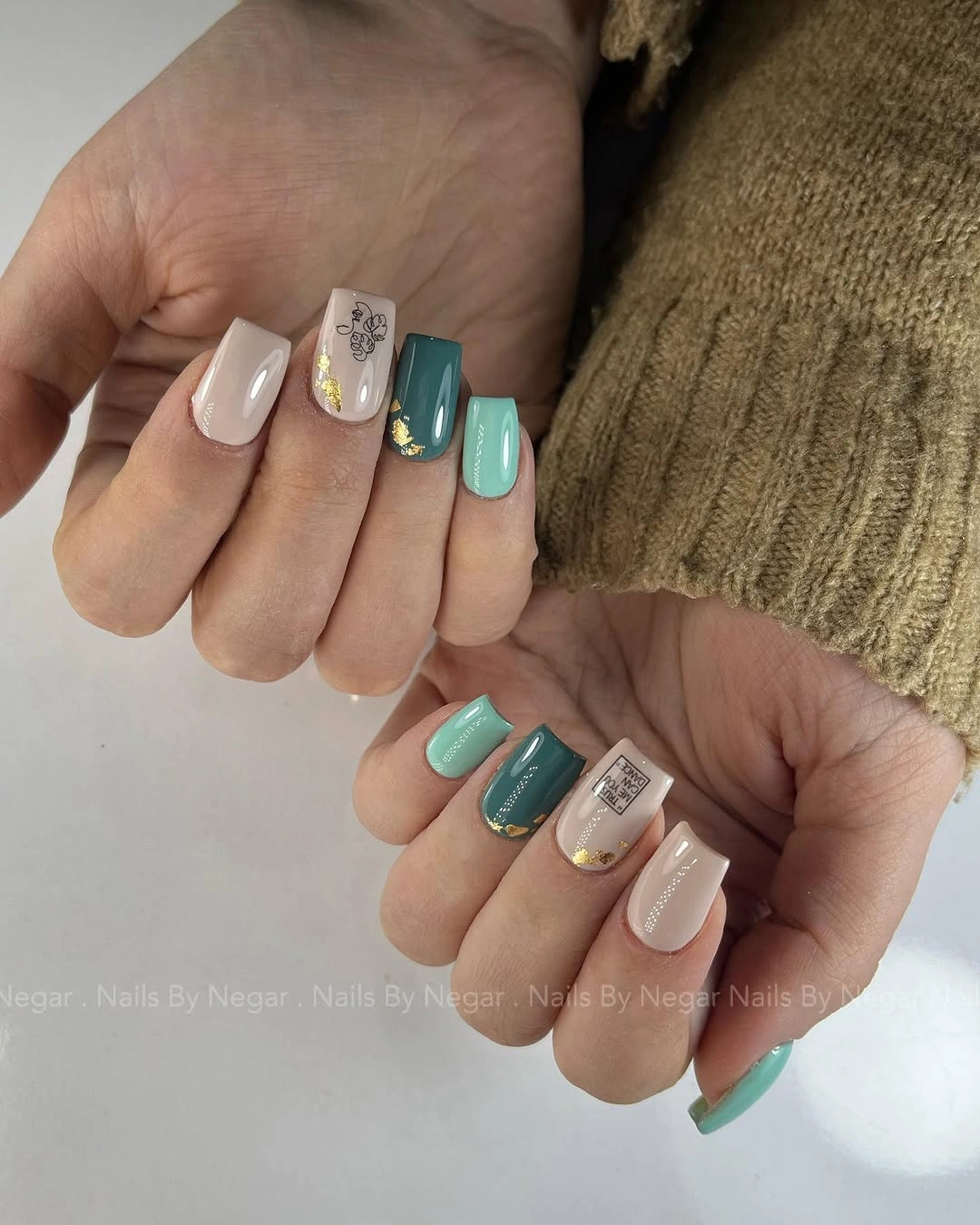
A fall version can replace turquoise with teal and yellow with muted ochre while keeping the white anchors exactly where they are. If you need a simpler adaptation, choose one glitter accent, one turquoise or teal nail, and let the rest alternate white and pale nude. The buffer works because it creates distance, so do not fill every pale nail with tiny art.
White surfaces show uneven edges more easily than darker colors, but the medium length makes the layout practical enough for regular refreshes. Keep the sparkle away from the cuticle if you want the design to grow out more quietly, and use a warm white when a cooler base makes the colors look harsh. The main limitation is not wearability but balance: too many bright accents can erase the usefulness of the white pause.
5. Fuchsia And Purple With Spaced Light Accents
Long square nails alternate saturated fuchsia and purple, then add a few small bright points that look reflective against the strong base colors. The two shades are close enough to repeat as a pair, but different enough to give each finger a role. Because the accent marks are spaced rather than scattered, they lift the manicure without competing with the color contrast that makes it immediately recognizable.
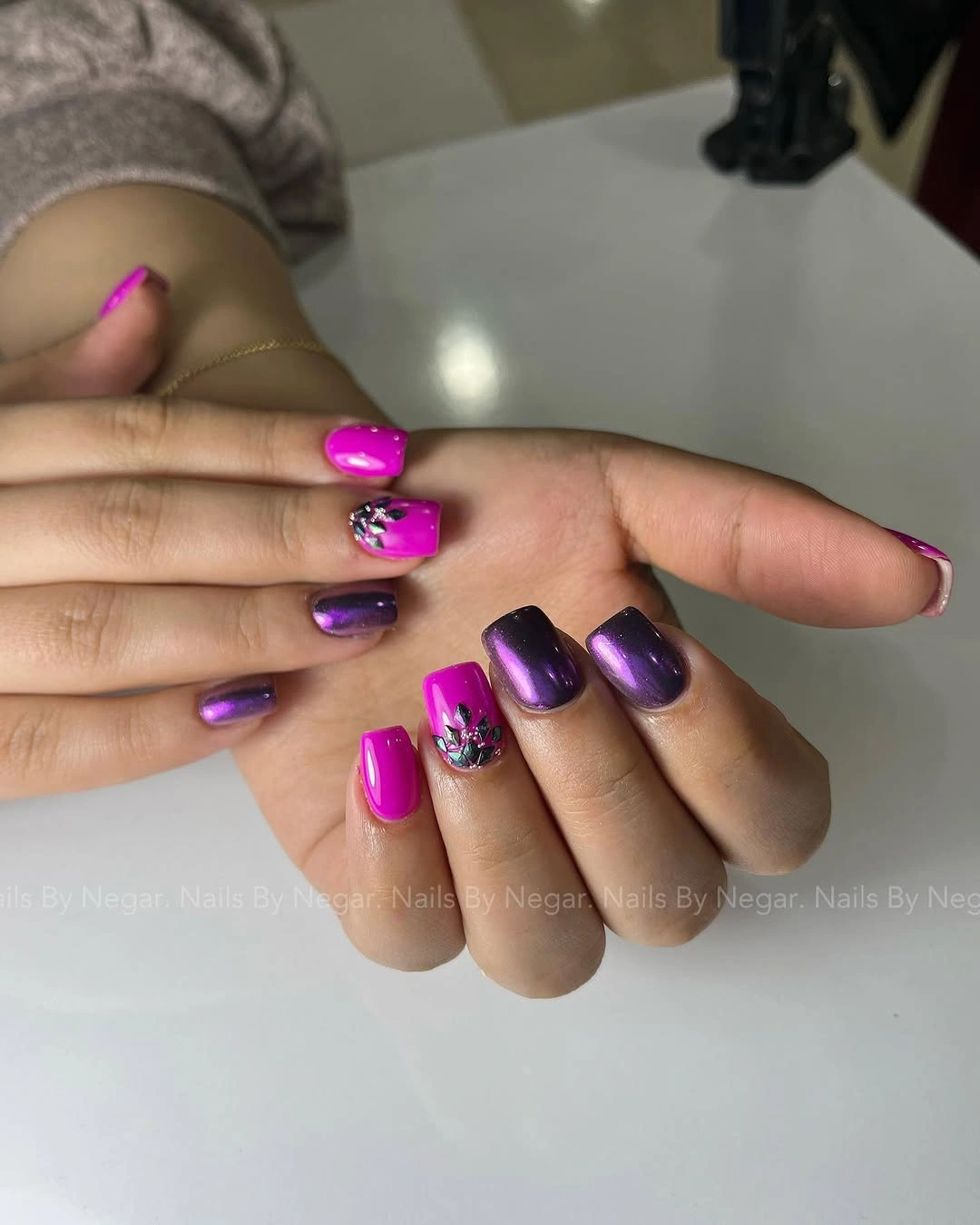
Medium length can keep fuchsia on two nails and purple on the rest, with the light detail limited to the ring finger or thumb. For a fall adjustment, move fuchsia toward cranberry and purple toward plum, preserving the paired-color relationship. If the surface is smaller, remove the tiny marks before removing the second color; the alternating palette is the main structure.
Bold color makes edge wear visible, especially on long square tips, so the cleanest maintenance choice is to keep the accent marks few and easy to refresh. A medium square will reduce the impact of a chipped corner and still carry the saturated pairing. If you want more restraint, use one glossy accent nail in the second color and let the rest share the deeper base.
6. Short Almonds With Several Earthy Motifs
These compact almond nails use orange, olive, red, brown, and cream in several small motifs, including tortoiseshell-like patterning, a green accent, and a red floral-looking detail. No single nail carries the entire story, but the earthy palette keeps the different marks connected. The shorter length is important because it stops the varied accents from feeling overly formal or heavy.
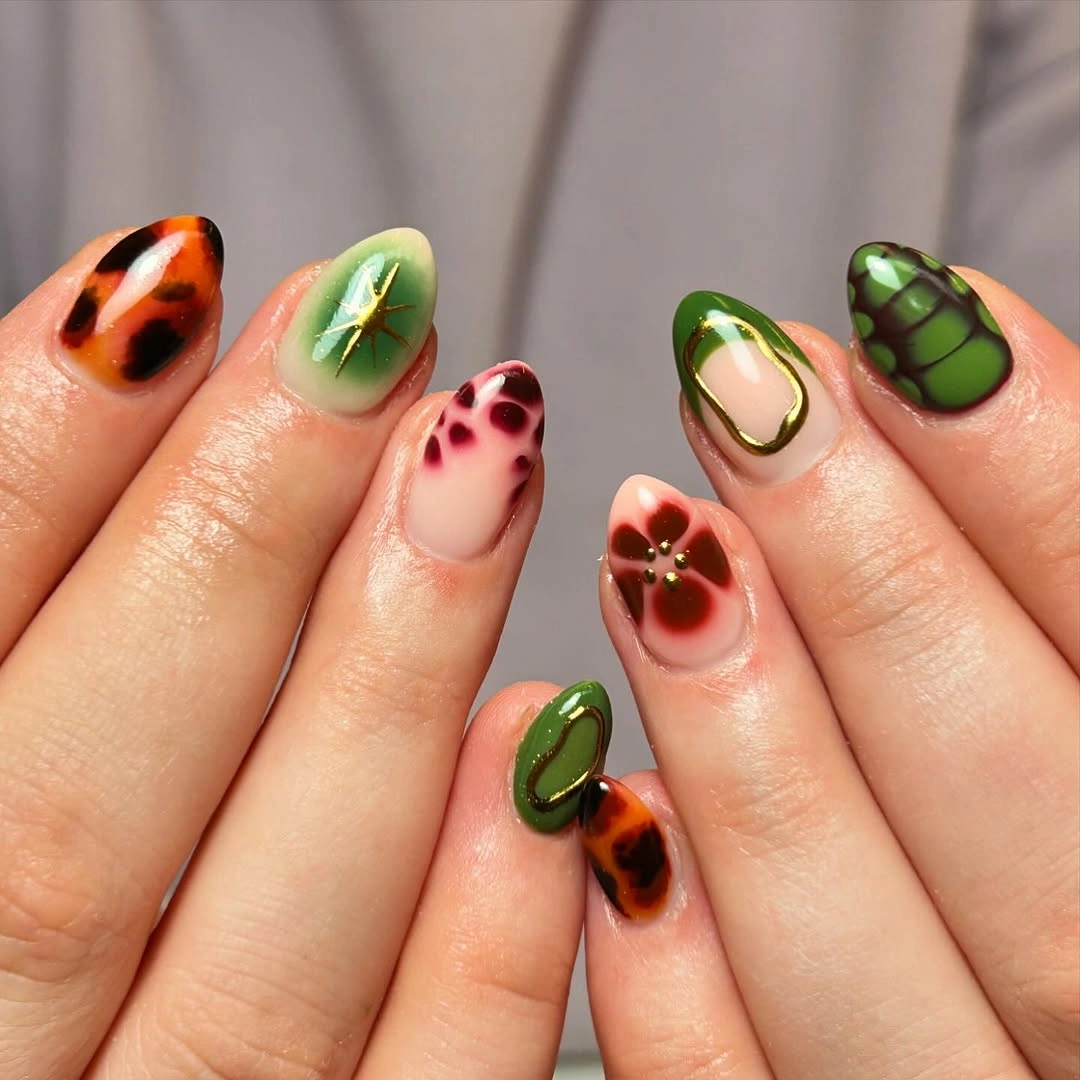
If you want a less busy version, choose tortoiseshell, olive, and one small flower as the three core ideas. A medium almond gives those motifs more room, while a short oval would make them feel even softer and less graphic. Keep the base colors warm and let one green or red accent break the brown-orange group so the manicure has a clear point of contrast.
Small mixed motifs are forgiving when one detail wears down, but they can look untidy if every nail is repaired with a different shape or line weight. The most practical approach is to maintain the shared base palette and refresh only the motif that has become unclear. For a more editorial result, remove one accent rather than adding another to fill an empty space.
7. Pale Pink With One Dark Patterned Nail
Most of these medium square nails are pale pink or cream, while one selected nail uses dark irregular spots and a few other fingers carry tiny warm details. The dark pattern works because it is contained; it sharpens the pale set without turning every nail into an animal print. Small warm accents near the cuticle create a second rhythm, but they remain subordinate to the one high-contrast nail.
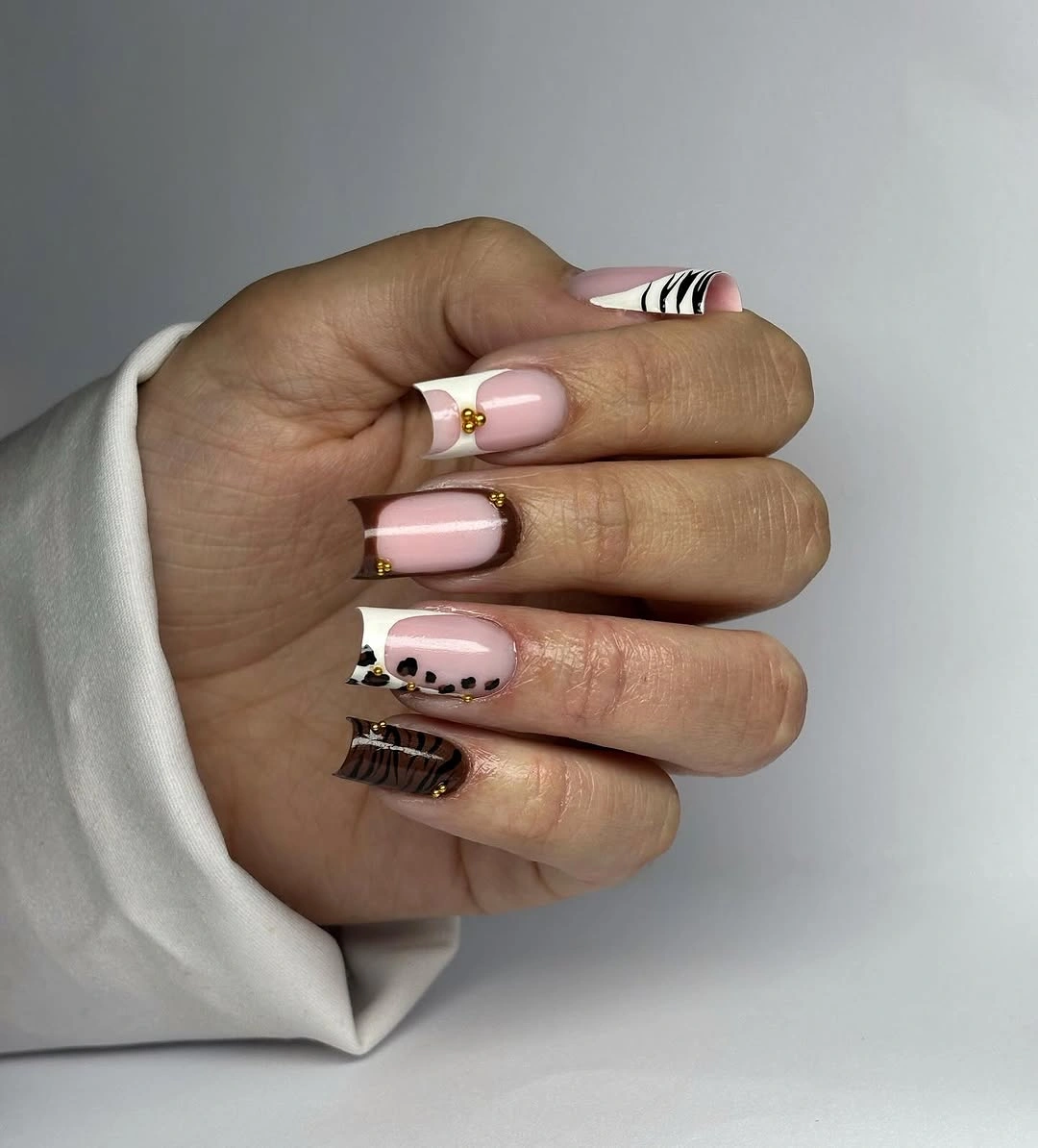
For fall, tortoiseshell can replace the dark spots if you prefer a softer earthy connection, or you can keep the print black and warm the base toward blush-beige. The accent nail should retain enough open space for the irregular marks to read as intentional, especially on medium length. If your nails are shorter, use larger fewer spots rather than shrinking the pattern into a collection of dots.
This layout has a useful maintenance advantage because one patterned nail can be repaired without disturbing the pale support nails. The square tips make the accent boundary clear, but light bases show chips quickly, so a consistent edge matters. Resist the urge to add matching spots everywhere; the contrast works precisely because the dark pattern stops after one focal point.
8. Glossy Black With One Oversized White Bow
Very long square nails are solid glossy black except for one large white bow-like accent, which changes the scale of the whole manicure in a single move. The dark base is deliberately plain, allowing the pale focal shape to read immediately against it. That contrast makes the design feel dramatic even though there are only two visible colors and one primary decorative decision.
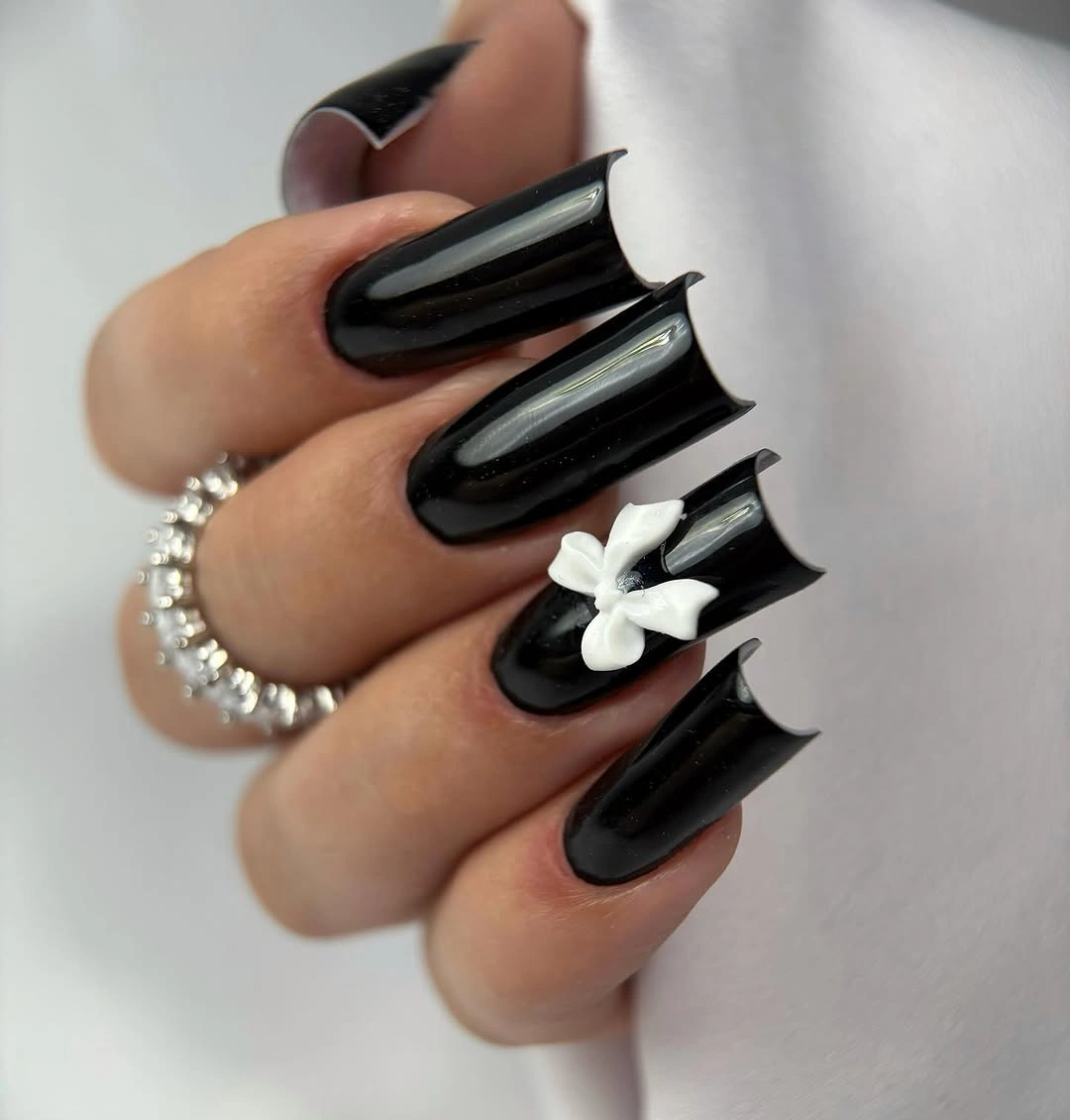
A medium square adaptation should keep the oversized detail on the ring finger or thumb and shorten the rest of the nails so the focal point does not become cumbersome. A smaller pale loop, pearl-like dot, or flat ribbon mark can suggest the same contrast if a large accent is impractical. For another seasonal direction, compare the scale of this idea with existing Halloween nail art and keep only the level of drama that suits your wardrobe.
The extreme length is the main tradeoff, not the color pairing, and a raised-looking accent may catch on clothing or hair. Keeping the black base glossy makes repairs straightforward, but a damaged focal detail can be more noticeable than a chipped plain nail. If you want the visual impact with less upkeep, use the bow-like shape on one medium nail and leave the other fingers black or deep burgundy.
9. Magenta Glitter With A Single Large Accent
These long square nails use dense magenta sparkle as the base and place a large pale reflective bow-like form on one nail. The design is maximal, but it still has a clear hierarchy: the glitter creates the atmosphere and the oversized accent tells the eye where to stop. The result is more decorative than the glossy black version because both color and surface shine are working before the focal detail even appears.
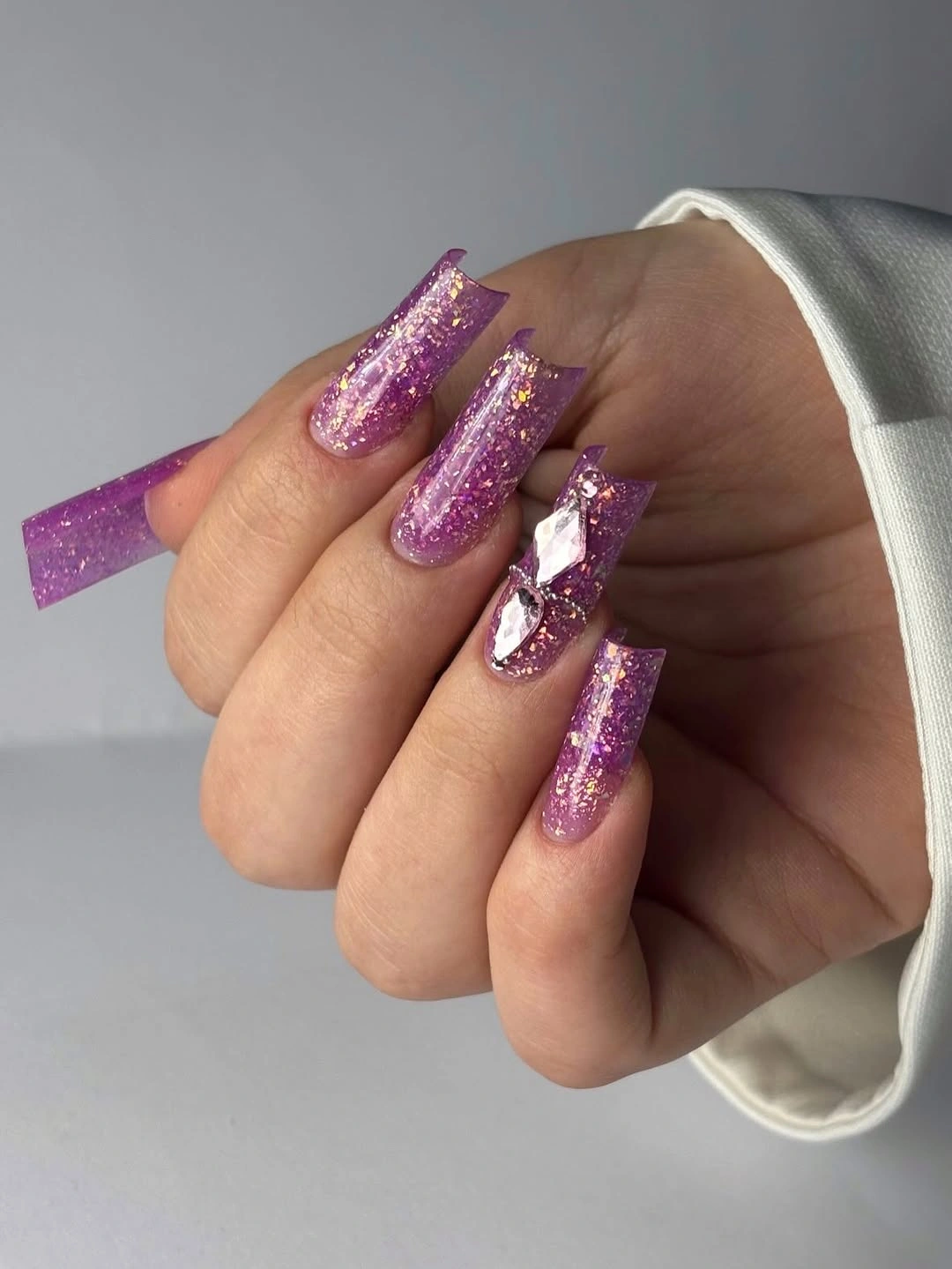
For medium length, keep the glitter on two or three nails and use a smaller accent on one finger so the hand has room to breathe. Cranberry, berry, or blackberry can shift the magenta toward fall, while a pale silver or champagne accent will keep the same contrast. If you prefer a lower-key design, preserve the glittery base and replace the bow-like form with one bright curved mark.
Dense sparkle and a large accent both add weight, so shortening the nail is the most effective practical change. A simpler base also makes it easier to refresh the focal nail without rebuilding the whole hand, and the glitter can hide small color differences between fingers. Avoid adding several smaller embellishments just because the long version has a bold center; the single large interruption is what keeps it organized.
10. Olive Green With One Playful Pink Texture
Olive green covers most of these medium oval nails, with tiny warm accents and one prominent fluffy pink ball-like detail creating an unexpected contrast. The earthy base makes the pink interruption feel playful rather than sugary, while the rounded shape keeps the design friendly and compact. Small dots and bow-like marks add support, but the tactile-looking pink accent remains the clear focal point.
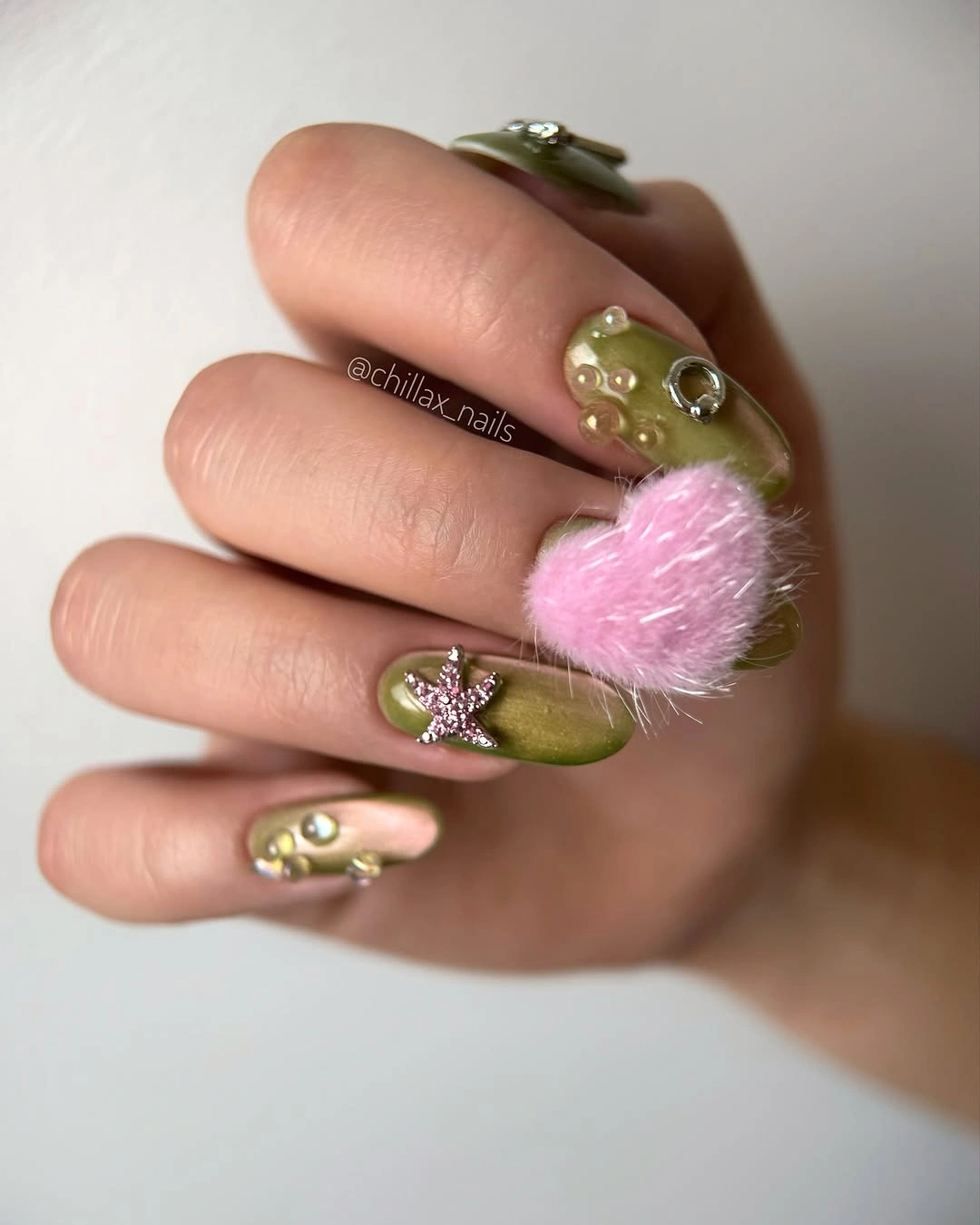
If a bulky accent is not practical, use a small pink bow, satin-like dot, or glossy pink oval in the same position. Olive can shift toward moss or muted khaki, while a dusty rose accent will make the contrast softer for fall. Keep the accent on one nail and let the remaining fingers stay simple; spreading the texture would erase its surprise.
The medium oval proportion already offers a good balance, but a raised-looking detail may catch on knitwear or hair and could require more frequent repair. The olive base is forgiving when small marks soften, so maintain the focal nail separately instead of adding more decoration to compensate. If the pink feels too loud, warm it toward berry rather than replacing the grounded olive foundation.
11. A Collage Of Turquoise Pink And Graphic Lines
Long square nails mix turquoise, pink, white, black, and metallic-looking details in a collage of color blocks, stripes, and small graphic marks. Each nail has a different surface role, yet repeated lines and light separators keep the set from dissolving into unrelated ideas. The long square shape gives the accents room, but it also makes the variation feel deliberately editorial rather than casual.
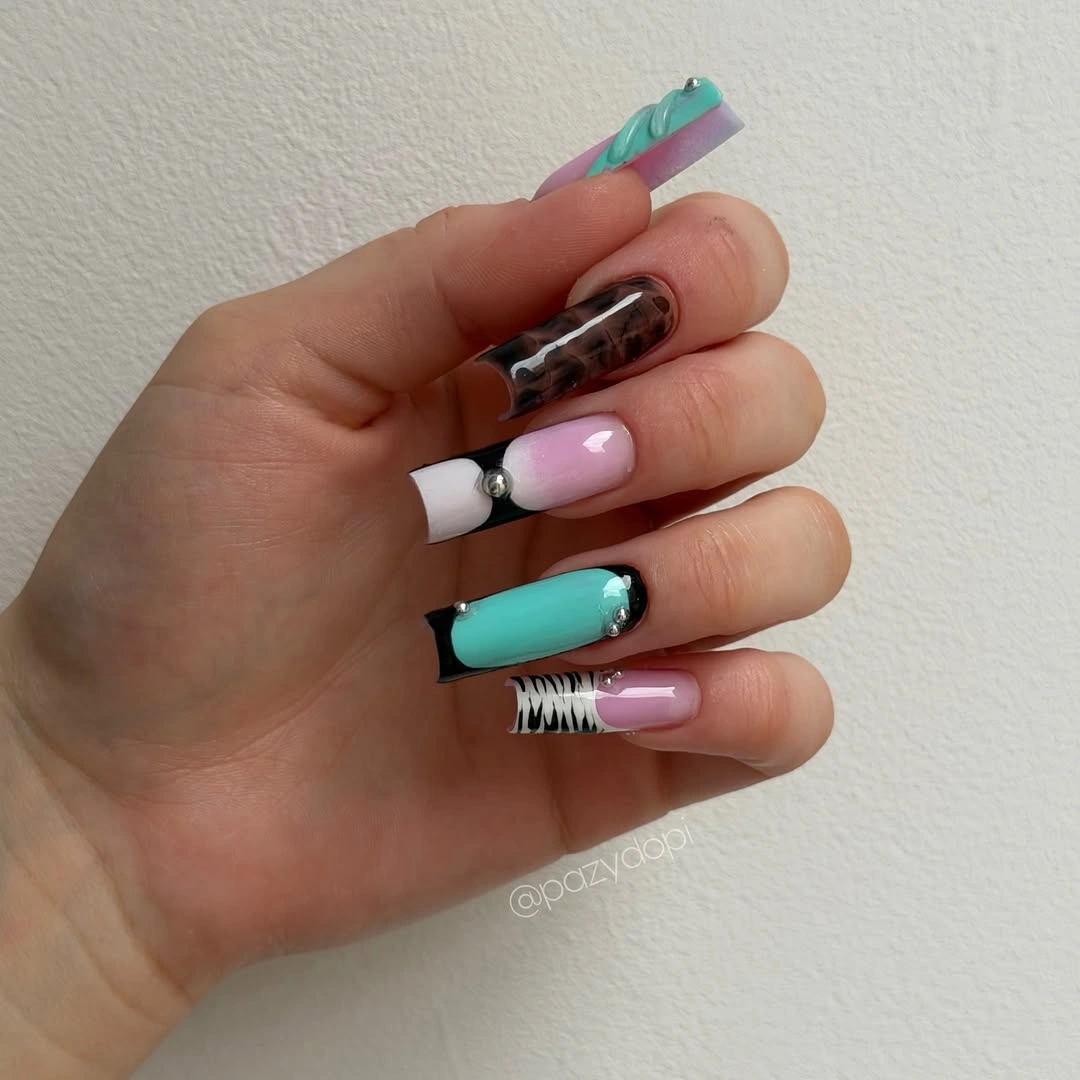
To make this work at medium length, choose turquoise or teal as the main color, keep pink or berry on one accent nail, and repeat one black line across the set. White can remain the separator because it gives the brighter colors breathing room. If the design still feels crowded, remove small symbols first and leave the larger color blocks intact so the collage logic survives.
Highly varied sets depend on consistent shape and line weight, which means the long square tips require more precision than the playful palette may suggest. A medium square will make maintenance easier, while the varied color can hide small differences between individual nails. The honest limitation is time: this kind of accent plan rewards editing before application, not improvising a new detail on every finger.
12. Cool Blue With Repeated Round Details
Medium rounded blue nails use a cool metallic-looking surface and repeated circular or medallion-like accents. The palette stays close to steel, sky blue, and silver, so the repeated round shapes are what introduce texture and rhythm. This is a quieter accent design than the multicolor collage, but the circular details give the plain blue base enough structure to avoid looking unfinished.
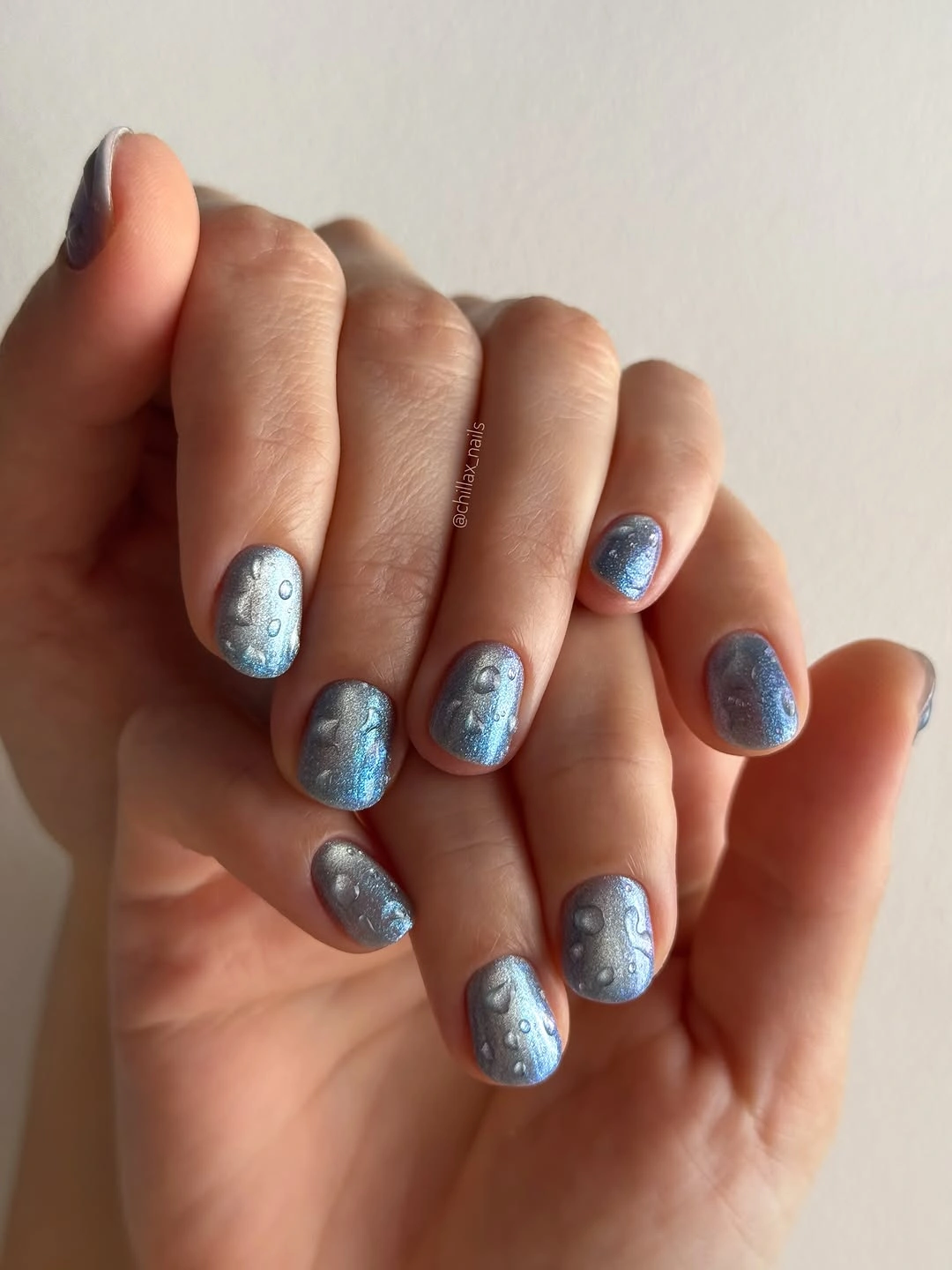
For fall, move the base toward slate, deep teal, or muted blue-gray and keep the circular detail on two or three nails. A shorter nail can carry one larger round mark better than several tiny ones, while an oval shape will soften the cool graphic edge. If you want a more minimal adaptation, use the same blue on every nail and reserve the reflective circles for the ring fingers.
Repeated dots or circles are easier to maintain than a complex drawing, although their spacing can make the difference between deliberate and scattered. The medium length helps because the design does not depend on a long canvas, but the reflective surface may show texture if the base is uneven. Keep the pattern centered and let the remaining nails provide clean negative space around it.
13. Nude Coffin Nails With Rose-Gold Sparkle
Long coffin nails begin with a pale nude base, then concentrate rose-gold glitter and reflective details on selected fingers. The base stays quiet enough for the warm sparkle to act as the accent, and the tapered square tip gives the glitter a clear boundary. Instead of changing color from nail to nail, the set changes density, which creates a more controlled kind of contrast.
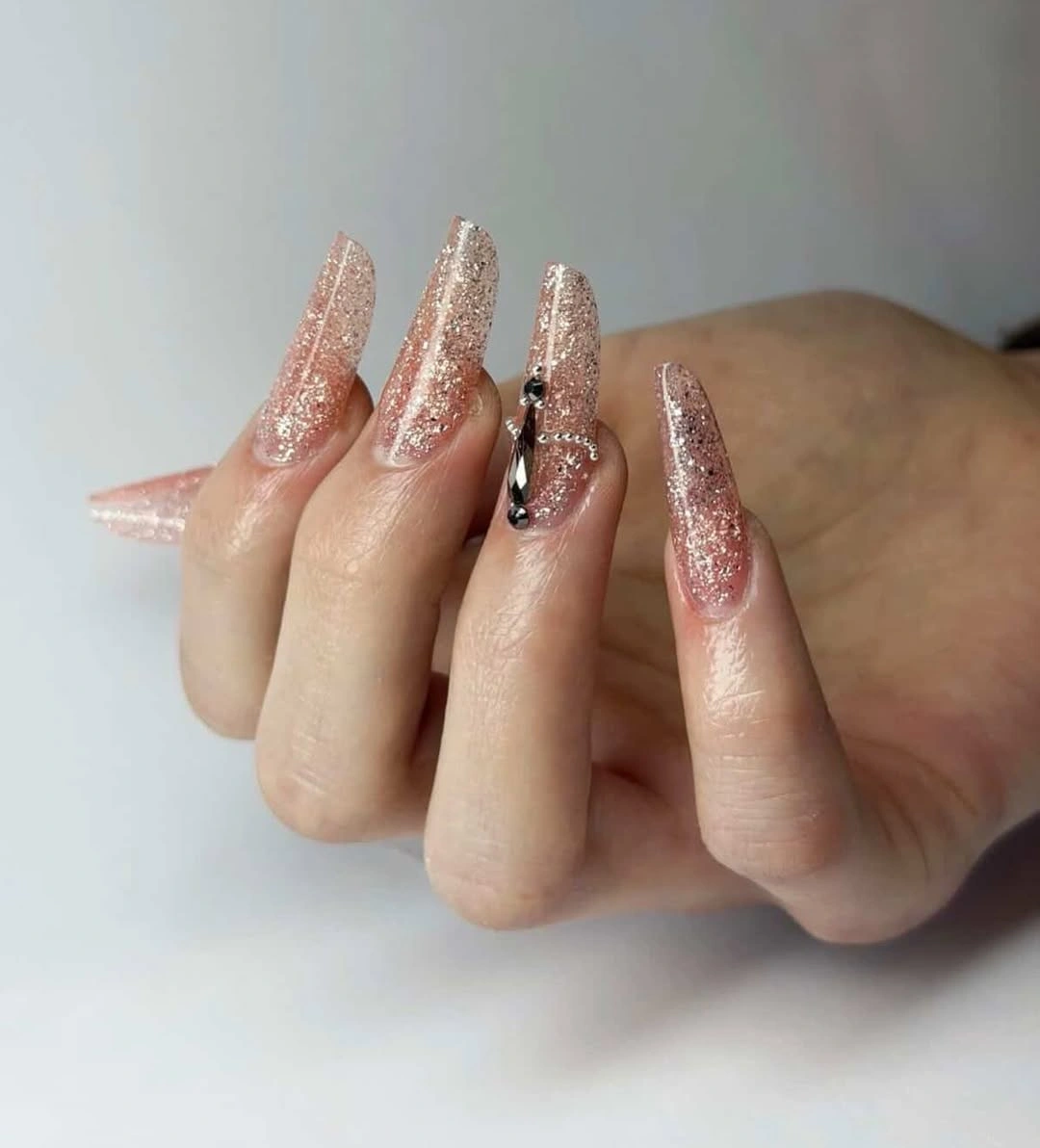
A medium coffin can keep the sparkle on the ring finger and one thumb while leaving the rest nude and glossy. Bronze or copper will make the look even more autumnal, whereas pale champagne keeps it airy. If the nail surface is smaller, use a band or central cluster rather than trying to repeat several tiny reflective details along the full length.
Warm glitter catches light beautifully but can make the tip feel heavier as it grows out, especially on a long coffin shape. Shortening the nail lowers that visual weight, and keeping the embellishment centered makes repairs less disruptive. The nude base can remain useful between refreshes, so the practical choice is to maintain the focal nails instead of rebuilding every accent at the same time.
14. Champagne Sparkle Across A Long Almond
Fine warm sparkle covers these long almond nails almost continuously, with slightly denser reflective sections giving the set gentle variation. There is no separate motif to interpret; the accent comes from how the light travels across one coherent champagne-like surface. The long almond shape keeps the sparkle elegant, but the finish remains the dominant decision from cuticle to tip.
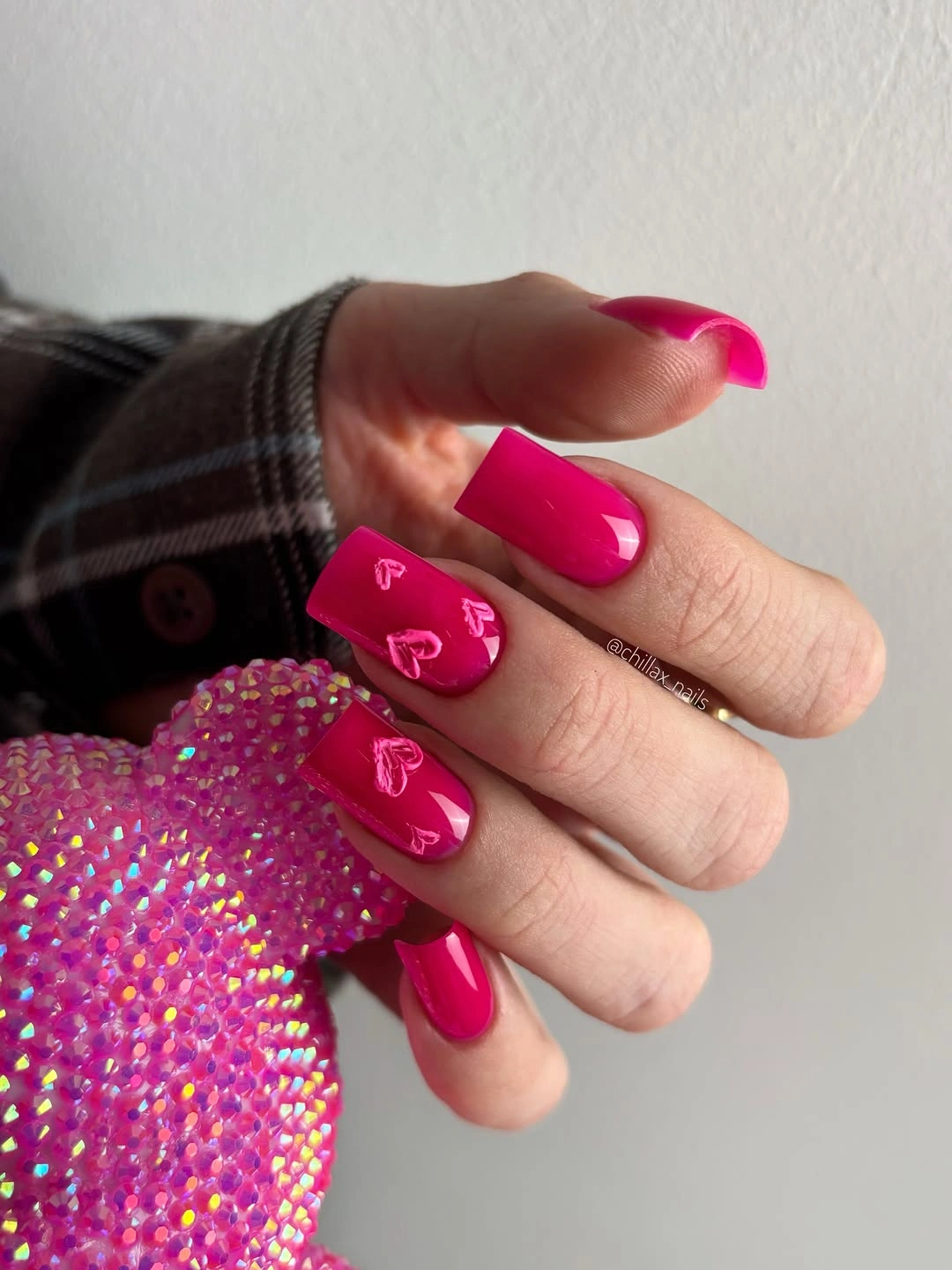
For medium length, use the full sparkle on two nails and a sheer nude on the rest if you want more contrast and less density. A soft copper or muted rose-gold can bring the finish closer to fall, while a pale silver shift will make it cooler. Keep the reflective field broad rather than breaking it into many designs, because the uninterrupted sheen is what distinguishes this idea.
Continuous sparkle is simple to coordinate but can make long length feel more dramatic than expected, so a medium almond is the practical compromise. Light-catching finishes may reveal uneven surfaces, yet they also disguise small shifts in exact color between nails. If the set starts to look flat, refresh the shine rather than adding a new accent; the finish already provides the needed movement.
15. Hot Pink Doodles With Berry Contrast
Vivid pink nails are balanced by deeper berry-red accents, small white doodles, and bright dots that give the set a playful graphic rhythm. The strong colors could easily become overly sweet, but the darker nails create enough contrast to make the tiny marks feel edited. The medium square shape keeps the manicure compact, while the doodles add personality without requiring a full illustrated scene on every finger.
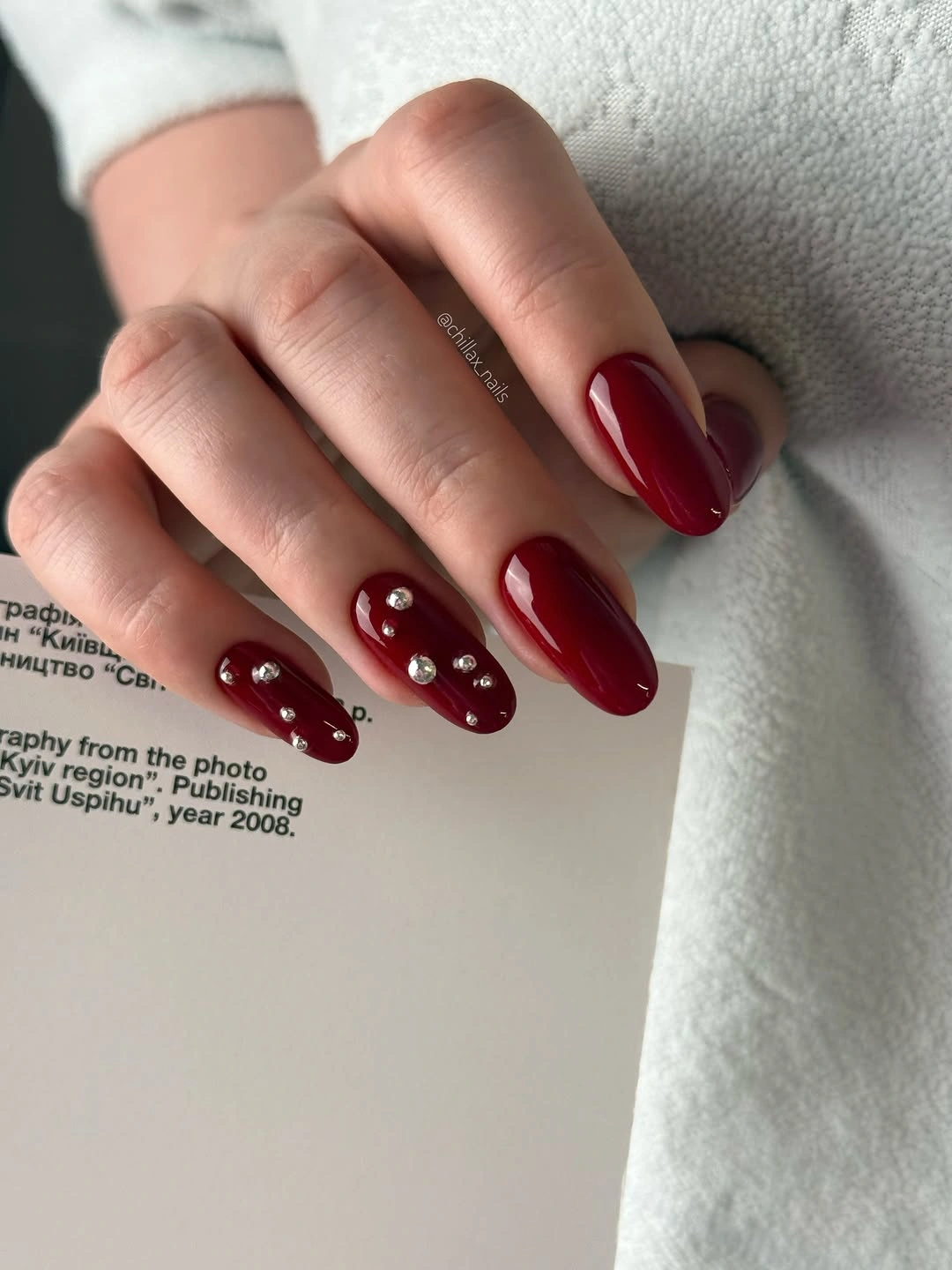
For fall, shift the hot pink toward raspberry or dusty rose and keep cranberry as the deeper counterpoint. One small symbol per accent nail is enough on a medium square, and the white marks should remain sparse so the color blocks stay visible. If you prefer a cleaner set, use the doodle only on the ring finger and let the berry nail provide the contrast elsewhere.
Small graphics can blur or chip before a solid color does, so a compact design benefits from a simple repair plan. Refresh the berry base and bright pink first, then redraw only the marks that still have clear space around them. The visual tradeoff is intentional unevenness: a playful accent can tolerate slightly different doodles, but it cannot tolerate too many competing symbols.
16. Burgundy And Black With Ornamental Punctuation
Long almond nails in deep burgundy and black use dotted panels, fine lines, and small gold-looking ornamental clusters as punctuation. The dark base carries most of the mood, while the warm details add a formal glint without turning the set into all-over sparkle. Placement matters here: the small accents sit against open dark space, so they are noticed as deliberate marks rather than surface clutter.
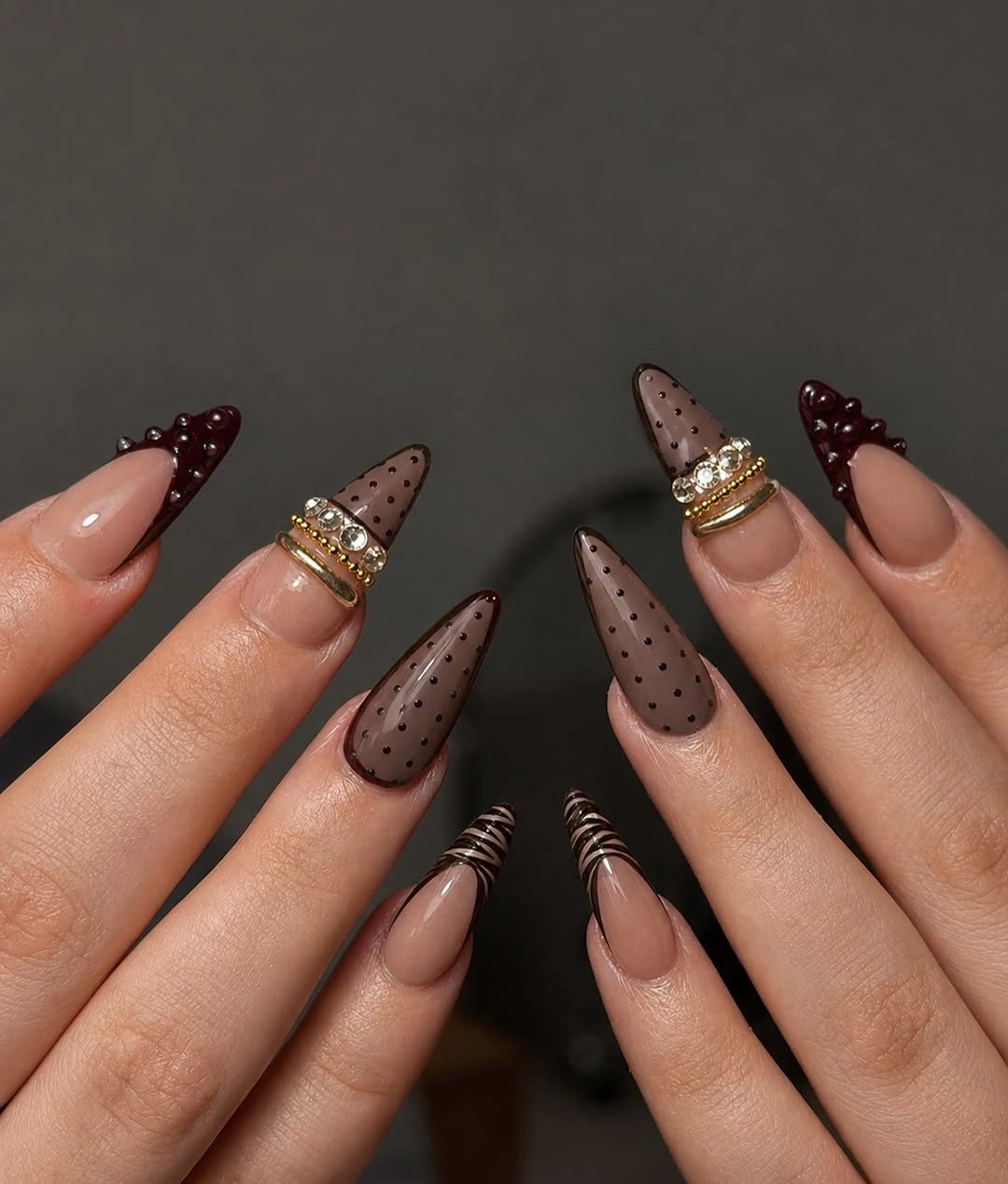
On medium length, keep the burgundy base and move the ornament to two nails, using one line or dot cluster per accent. Bronze will feel warmer and more autumnal than a bright yellow metal tone, while removing the fine dots can make the set cleaner without losing its depth. Let the almond curve remain visible, because dark decoration near every edge will make the nail look narrower and busier.
Dark color and fine placement both reveal mistakes, so the design rewards a measured application and a consistent shape. A medium almond lowers the commitment, and the ornamental nails can be repaired individually as details wear. If the hand begins to feel too formal, replace the cluster with one small dot and keep the rest of the surface glossy burgundy.
17. Turquoise Blocks With Pale Open Areas
Turquoise dominates these compact square nails, but pale and translucent-looking sections interrupt the strong color on selected fingers. The open areas act as breathing room, making the saturated shade feel lighter and more wearable than an all-over turquoise set. The design is simple in its ingredients, yet the alternation between covered and pale space gives it a clear accent structure.
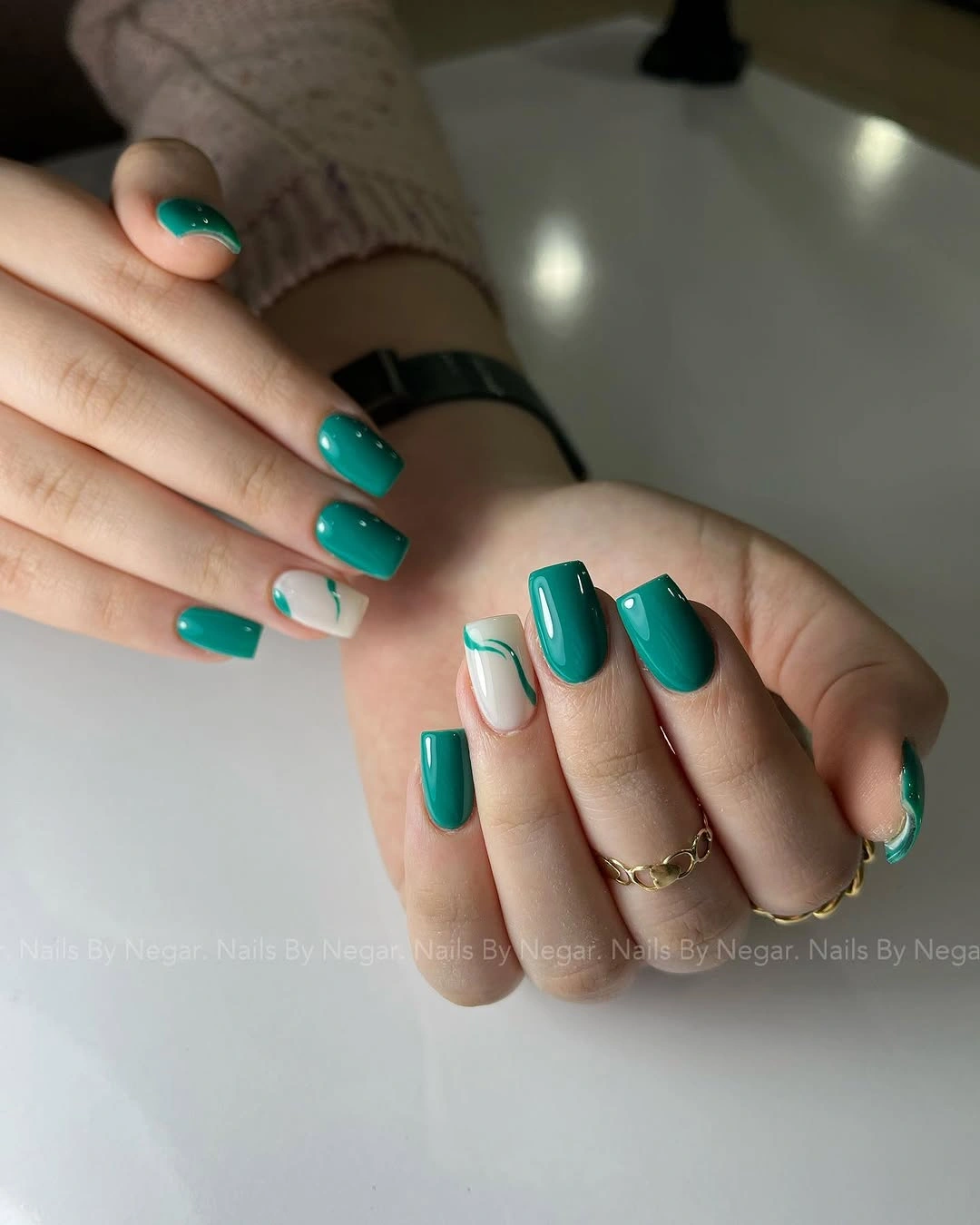
A fall version can use teal, pine, or blue-green with the same pale blocks and a soft nude base. On shorter nails, keep the color division broad and clean instead of adding thin lines that would make the surface look fragmented. If the full turquoise feels too bright, reserve it for two nails and let the pale sections become the main support color.
The block layout is easy to scale and refresh because it does not depend on tiny artwork, but clean boundaries are essential. Medium square length keeps the accents readable, and the pale areas can make small growth changes less obvious than a full solid color would. Do not fill the open sections with extra glitter unless you are willing to lose the visual pause that makes the design work.
18. Purple With One Spotted Pale Accent
Most of these medium almond nails are glossy purple, with lighter purple and white details plus one pale nail carrying black spotted marks. The spotted accent adds a high-contrast interruption, but the surrounding purple keeps the hand from becoming a full animal-print manicure. The almond shape softens the graphic moment, making the design feel playful without losing the moody color focus.
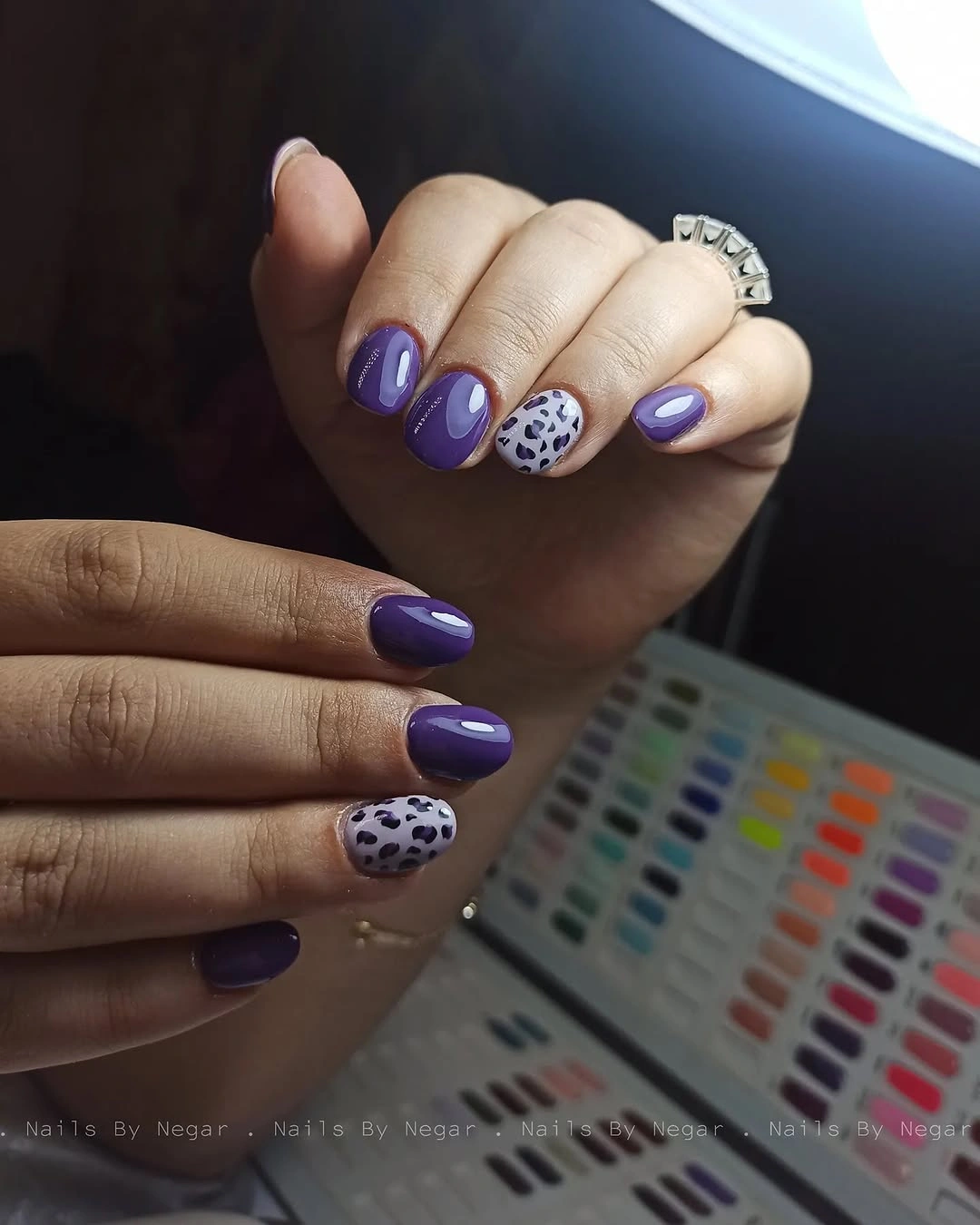
For fall, use plum or aubergine in place of purple and keep the spotted nail pale so the contrast remains clear. On a smaller nail, fewer larger spots will read better than many tiny ones, and a single accent is enough to change the balance. If the pattern feels too literal, replace the spots with irregular dots while keeping the same pale-versus-dark relationship.
The tonal purple base is comparatively forgiving as it grows, while the spotted nail needs occasional cleanup because high contrast reveals uneven spacing. A medium almond is practical enough for the design, and the accent can be refreshed independently. The key tradeoff is visual clarity: adding a second patterned nail may seem symmetrical, but it would reduce the surprise that makes the first accent useful.
19. Maximal Jewel Colors On Sharp Stiletto Tips
Very long stiletto nails use orange, yellow, green, blue, pink, and purple with gold-looking lines, dots, and clustered accents. Every nail has a different color role, so the set is intentionally maximal rather than built around one quiet focal point. The sharp silhouette amplifies that variety, making the hand feel like a small collection of separate jewels held together by length and shine.
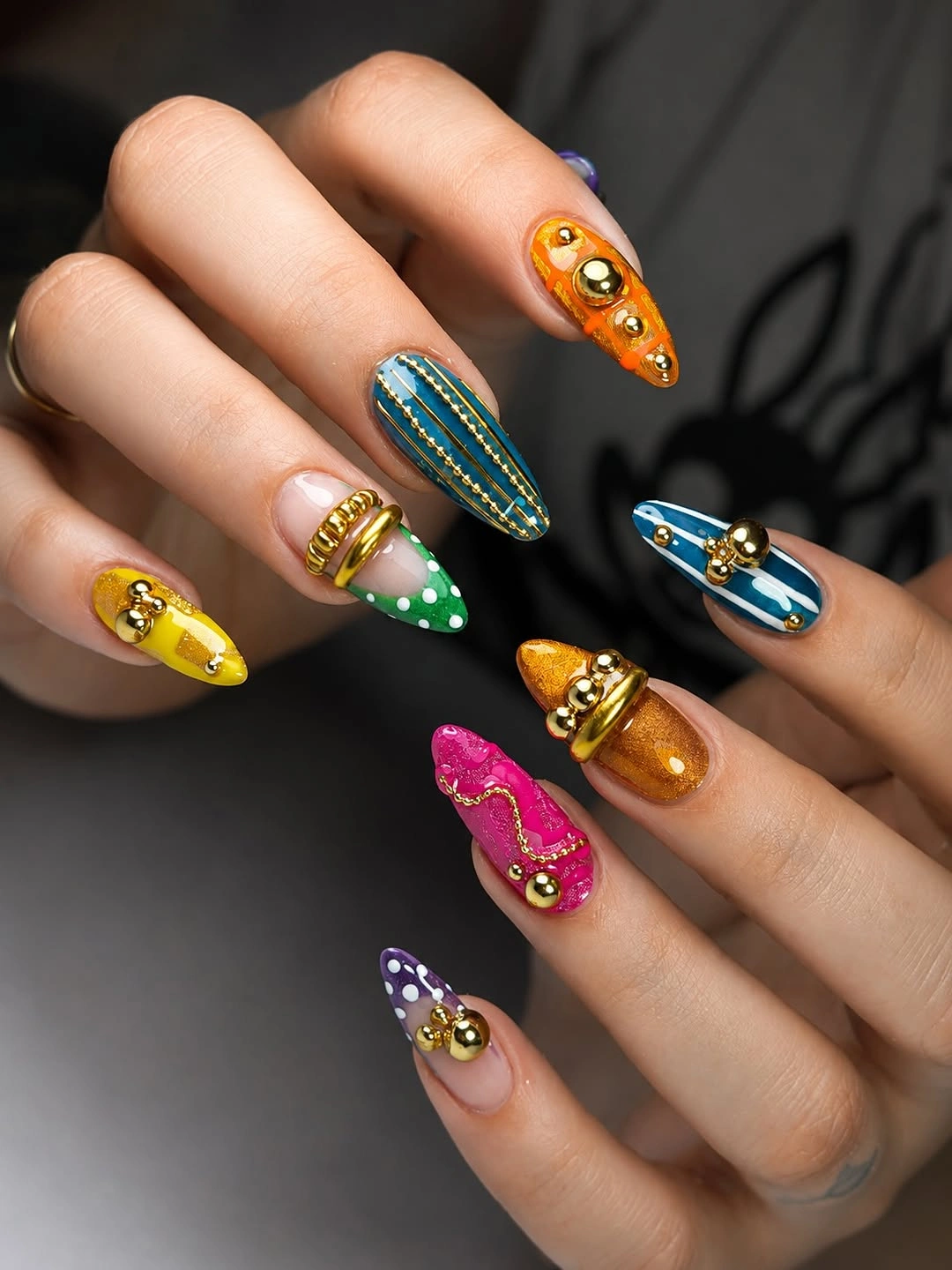
To adapt the idea for everyday fall wear, choose burnt orange, forest green, and berry as the core trio, then put warm detail on one or two nails. A medium almond or pointed oval will preserve the directional feeling without the extreme stiletto commitment. Keep the color changes broad and remove the smallest charms first if the surface begins to look crowded.
The honest limitation is practical: extreme length, sharp points, and many embellishments create more opportunities for catching, breakage, and visual fatigue. That does not make the design unusable, but it does make editing part of the concept rather than an afterthought. For more controlled fall nails with autumn designs, keep the color abundance on the accent fingers and let the rest support it quietly.
20. Blush Pink With Cool Framed Ovals
Medium oval nails combine blush pink, pale blue, and gray-blue framed accents, with tiny light marks adding detail inside or near the rounded panels. The cool blue structure gives the soft pink a graphic edge without using black, so the contrast stays gentle rather than severe. The oval shape echoes the framing motif, creating a repeated curve that makes the mixed colors feel related.
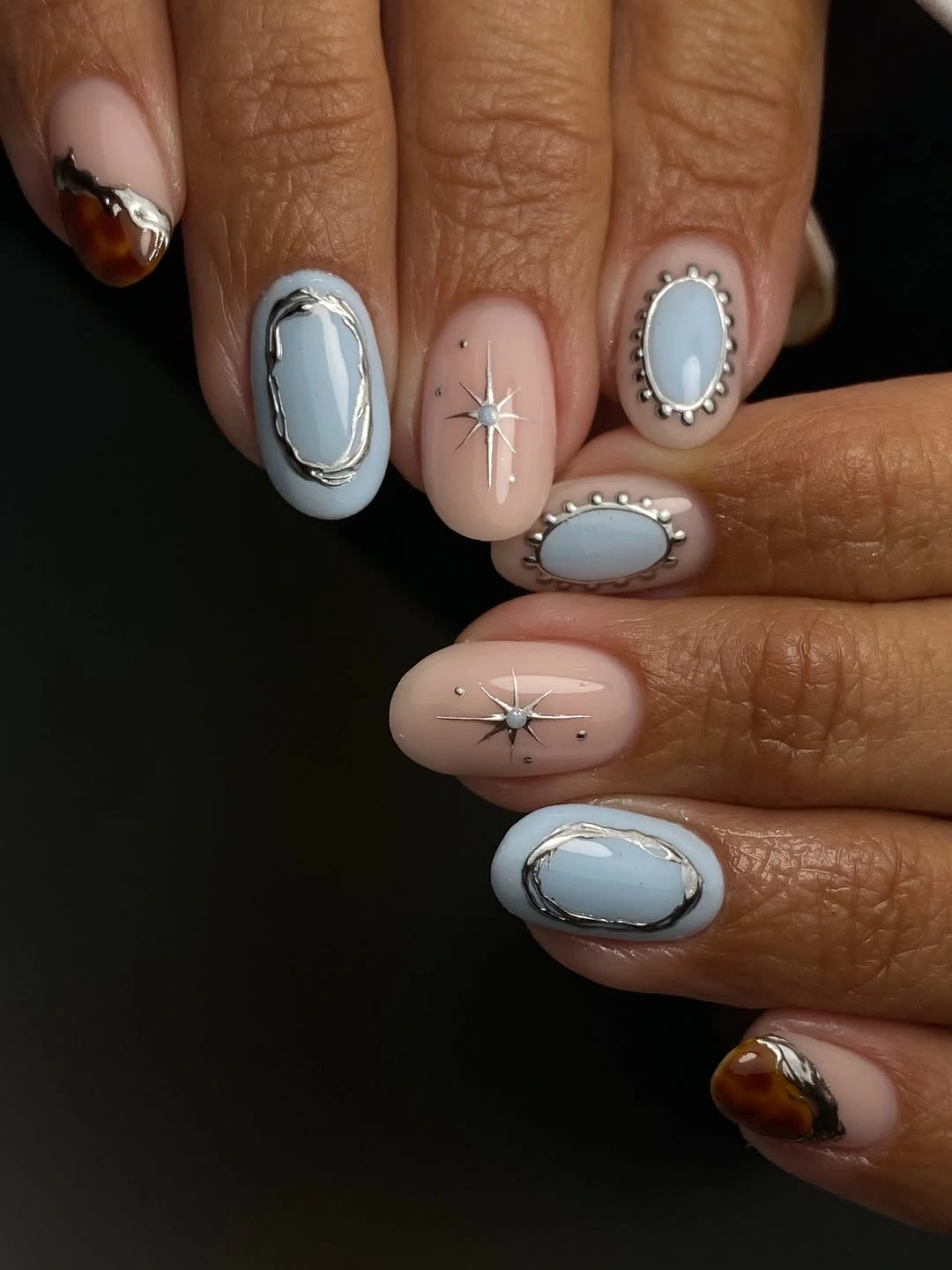
For fall, replace the pale blue with muted teal, slate, or smoky blue and keep the blush base slightly warm. Thin frames work better than thick borders on medium length because they preserve the open center and keep the oval shape visible. If you want a simpler version, use the cool frame on two nails and carry the blush color across the rest without extra marks.
This is one of the more practical accent ideas because the shape and color contrast do most of the work, but uneven borders will be noticeable when the nail is rounded. Refreshing the frame is enough to restore the design, and small marks can be omitted if they begin to blur. The balance depends on softness: a very dark outline or dense center would change the manicure into a harder graphic style.
21. Milky Almonds With Amber Tortoiseshell Panels
Long almond nails finish the set with a pale base, amber-brown tortoiseshell-like panels, fine warm lines, and small dark accents. The patterned areas are distributed across the hand but surrounded by open milky space, so the design feels detailed without becoming a full-coverage pattern. Warm brown gives the pale base its fall direction, while the thin lines create structure around the irregular panels.
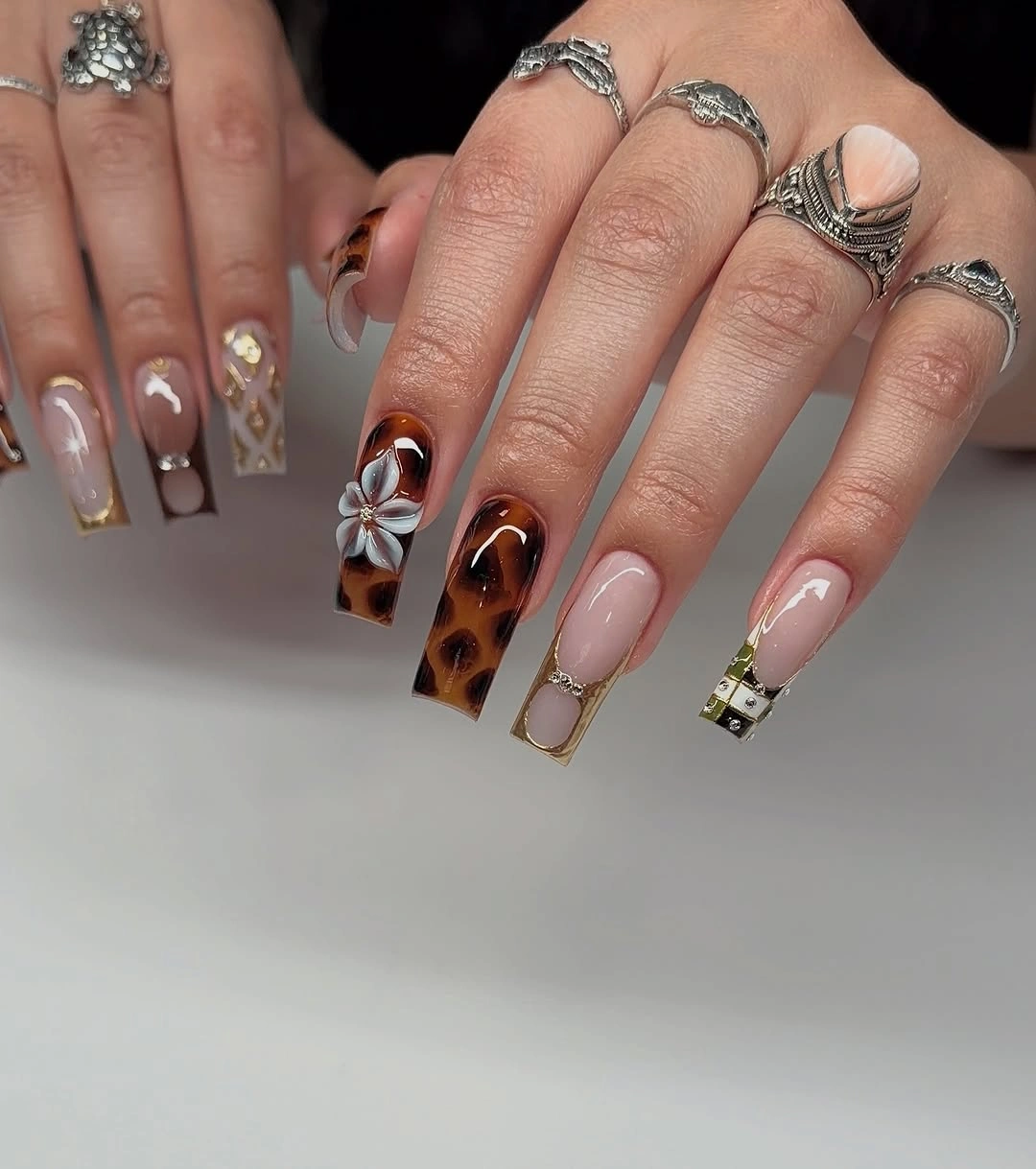
On medium length, keep one tortoiseshell panel and one fine line accent, then let the rest of the nails stay milky or softly nude. Cocoa, caramel, or muted olive can replace amber depending on how earthy you want the result, but the pale space should remain visible. If you prefer more restraint, use the pattern only on the ring finger and move the warm line to the thumb.
The open base makes this easier to wear than a full mixed-color set, although long almond tips still require attention to edge shape and grow-out. Patterned panels can be repaired without repainting the pale nails, which helps keep upkeep reasonable. For a final edit, compare the density with other fall nail art ideas and remove any mark that does not improve the focal balance.